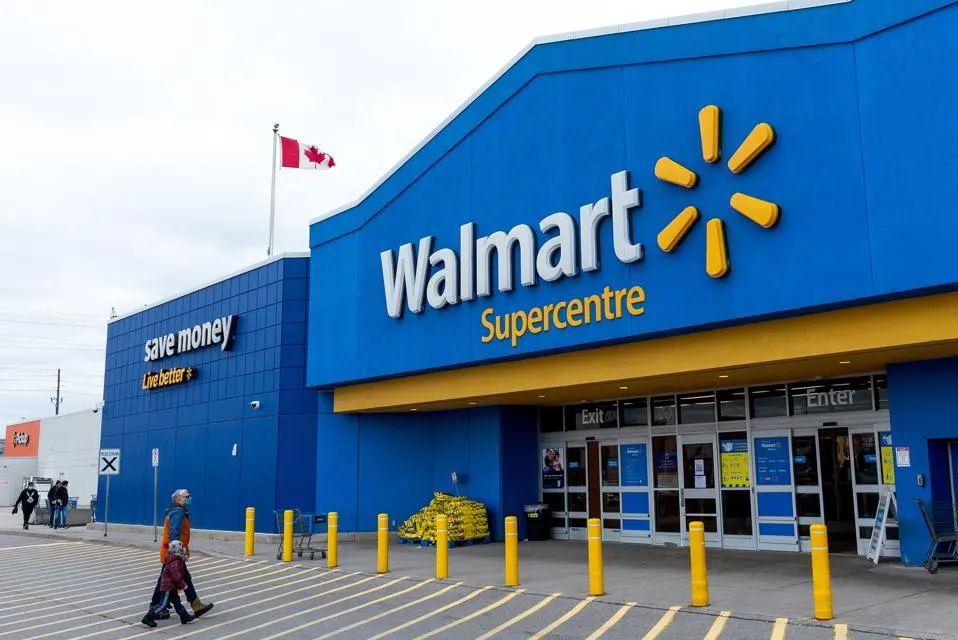
Many retailers in Canada are in turmoil amid store closures due to COVID-19 (coronavirus), and the situation isn’t likely to get much better as stores start to open in parts of the country this spring. Many retailers are in a restructuring phase and some are now examining bankruptcy protection. Some retailers have already announced that they will shutter permanently. This will transform our neighbourhoods and shopping centres for years to come with many retailers and foodservice businesses becoming nothing but a memory.
Vacant storefronts from permanently closed retailers and foodservice providers will create gaps on streets that were once vibrant, and landlords of multi-tenant shopping centre properties may look to redevelopment opportunities. COVID-19 couldn’t have come at a worse time in this country — already, more than 1,000 individual store locations in Canada were set to close forever in the first quarter of 2020 in what was already a challenging time for many retailers. Shifting consumer spending patterns, a rise in online shopping and record-high household debt levels were partly blamed for the downturn.
COVID-19 saw most ‘non-essential’ retailers close in Canada temporarily in March, and the lost sales have put a strain on cash reserves as a result. For at least the first two weeks of store shutdowns, many retailers paid employees which resulted in added expenses at a time of little revenue. At the same time, most landlords have demanded that rents be paid by retail tenants either in full or with government assistance, both of which have created further financial burden for businesses. Adding to this are the crippling debt loads that some retailers are carrying with deadlines for payment — some retailers were in the process of upgrading their units to attract consumers, which means that COVID-19’s arrival was catastrophic for some and as a result, some retailers are already insolvent without brick-and-mortar retail sales.

Some retailers in Canada are already throwing in the towel, and more are expected to follow in the coming weeks and months. On Saturday, Vancouver-based Army & Navy, referring to itself as “Canada’s original discount department store”, announced that it would be permanently closing its five remaining units after 101 years in operation. That includes a large Army & Navy flagship store in downtown Vancouver as well as stores in New Westminster, Langley, Edmonton, and Calgary. Jacqui Cohen, who owns four of the five stores outright, may look to redevelop the sites into new uses.
Other retailers in Canada will also be announcing that they are closing permanently. Also on the weekend, unique Toronto-based variety retailer Lavish & Squalor announced that it was shutting its Queen Street West store after 25 years in operation. Last month, Vancouver-based footwear chain Ronsons announced that it is shutting its 18 stores after 32 years of operations. Many other retailers in Canada are struggling at this time, including major chains. One source Retail Insider interviewed said that some of the retailers looking to file for bankruptcy protection are “household names” and that we should be prepared for some shocking news.
Some of that shocking news arrived last week when Montreal-based footwear retailer Aldo announced that it had filed for and obtained bankruptcy protection in Canada and the United States. Plans are in place to close almost half of the company’s storefronts with a goal to remain operational in the future. Privately held Aldo was already in financial trouble before the COVID-19 store closures. For the 12 months ending February 1, 2020, Aldo lost $74.8 million in Canada and $52.8 million in the United States. The company’s debt stands at $287 million and that’s not including rents owed for April and May of this year — the company failed to pay rents which has also put landlords in a bind.

Other retailers reported to be struggling include Montreal-based fashion retailer Reitmans, which will require a cash injection to remain operational. Some sources have said that the 94 year old chain could end up shutting entirely if things are not sorted out in time. Canada’s largest camera retailer Henry’s announced this month that it wasn’t able to to pay debts owing and that it planned to close several of its stores.
Several major chains are said to be looking to file for bankruptcy protection in the coming weeks and we’ll report on these as they happen. And the filings are expected to be staggered over the coming months, according to Henry Louis who is the Editor-in-Chief of Ontario-based online publication Insolvency Insider. He said in an interview that some retailers will hold off filing for bankruptcy until physical stores are permitted to open so that clearance sales can commence.
Some retailers that do reopen will attempt to grow their brick-and-mortar business in the coming months leading up to the fall of 2020. However, it is expected that consumers will not spend like they once did for a variety of reasons. Some will hesitate to go out in public as much as they did before out of fear of catching the COVID-19 virus. At the same time, many Canadians have lost their jobs which is adding to financial strain. Wealth has been lost due to a declining stock market and incredibly low oil prices. Those that are working may continue to work from home, which means that there may be a decrease in fashion purchases in the coming months. As with other recessions, there is expected to be increased frugality as well as a shift away from conspicuous consumption which could result in a significant hit to some high-end brands, especially those displaying prominent logos.

After attempting to regain sales numbers without success, more retailers in Canada are expected to file for bankruptcy protection in the fall, according to Mr. Louis. This will result in substantially more store closures for the remainder of 2020 and into January of 2021 and beyond. While the December holiday shopping season is typically a robust time for retailers, lower sales could see even more retailers collapse.
Some retailers and foodservice providers also haven’t yet filed for bankruptcy protection due to government support such as wage, loan and rent relief. That has resulted in a situation where businesses can remain a going concern in the short-term until government monies are cut off. To date, government efforts to halt an industry collapse have for the most part been a failure.
At the same time, costs for retailers that do reopen stores are expected to escalate in the coming months. New safety measures and cleaning protocols will be costly at a time when fewer customers might be allowed into a store at one time — if there are any customers at all. Industry expert and recruiter Suzanne Sears, CEO of Retail Staffing Canada and Best Retail Careers International said that she expects retailers will need to pay employees more to work in stores, if retailers are able to secure required staff at all.


Other potential challenges include a potential second wave of the COVID-19 pandemic in the fall, which coincides with the annual flu season. This could compound existing problems and scare the consumer for a second time. Given the heightened emotions due to the pandemic as well as constant messaging from governments, medical groups and the media, the fear in many consumers will last for an extended period. At the same time, consumers are becoming more accustomed to shopping online and the habits being formed could become permanent.
Many international retailers are also filing for bankruptcy protection, and some will never survive. This will also have a profound effect on retail in Canada for those brands that have stores in this country. US-based fashion chain J. Crew filed for bankruptcy this month, which could result in its remaining Canadian stores shuttering permanently as well. Other struggling US chains with stores in Canada include Ascena (which operates Ann Taylor and LOFT stores here), L Brands (including Victoria’s Secret), GNC, Gamestop (which operates EB Games in Canada), and others. And even if some international chains are able to restructure their operations, some may choose to close stores in Canada given the high cost of doing business in this country.
Commercial landlords could see mass vacancies across the country as a result. To make matters worse, restaurants and fitness concepts are also struggling. We reported last week that 70% of restaurants in Canada will see a liquidity crisis over the next three months, which will result in many locations closing forever. For those restaurants that do reopen, mandated physical distancing will result in reduced occupancy — given the low margins in the restaurant industry, reduced occupancy will lead to losses that will result in further bankruptcies.

The fitness industry will also have to grapple with physical distancing rules. This could particularly affect the boutique fitness concepts that have sprouted up across the country over the past several years. Across the country, fitness concepts had moved into retail spaces formerly occupied by retailers and were seen as a saviour for landlords that had lost retail tenants in the past.
Retailers and malls, for their part, will look to gain consumer confidence through a variety of measures. That includes offering consumers such things as hand sanitizer and masks while implementing expanded cleaning protocols. Limited hours, limited occupancy, spacing configurations for physical distancing, curbside pickup and other measures are hoped to bring consumers back. Many consumers are expected to stay away out of fear of catching the potentially deadly illness regardless.
Malls that have opened already, including the Dallas Galleria in Texas, have remained quiet despite having attempted to gain consumer confidence. In Manitoba, malls such as CF Polo Park in Winnipeg opened last week as well and foot traffic is nothing near where it was though at the same time many retailers have not yet reopened.
Some industry analysts are saying that they expect vacancies in some malls, even the strongest, could surpass 30% by early 2021. What could result is an acceleration of the redevelopment of some mall properties to include housing and other uses. Some mall landlords may consolidate their remaining tenants to reduce the size of retail space and may demolish parts of the property for other uses. A lack of covenant-holding anchor tenants will help speed up the process greatly, resulting in many jobs in the construction and real estate fields.

Landlords owning street-front properties could be in a bind when trying to find new tenants and uses. Many Canadian cities have mandated by law that ground floor space on some streets be for commercial uses. What could result is shuttered storefronts that become unsightly and socially challenging — unless creative solutions can be found. The face of our cities and towns could be much different in the years to come.
There are a few silver linings, however. Entrepreneurs are looking at ways to serve consumers amid a ‘new normal’ and are looking to innovate with new multi-channel concepts. Programs are being announced to help get retailers to shift sales online, and some announcements will soon be made about new artificial intelligence technologies. Chefs of restaurants that have closed are looking to new opportunities in smaller spaces such as food halls. Other entrepreneurs are coming up with ways to financially benefit from the situation with products and services intended to help the industry get back on its feet.
It will be important for everyone to remain strong. This is an unprecedented time and many are struggling. Businesses will need to adapt to a ‘new normal’ in a world that will never be the same as it was. Life will still go on and as Canada is a consumer society, and things will indeed get better in the years to come.