A ‘Perfect Storm’ for Criminal Activity: US-Style Smash-and-Grab Retail Crime Expected for Canada [Feature] (Image: Anadolu Agency/Getty Images)
The COVID-19 global pandemic has been responsible for the spawning, or acceleration, of a number of different trends since the onset and spread of the virus. It’s influenced a more digitally-savvy consumer, sparked a reimagination of the service and experience retailers provide and introduced a new way of working for many. In short, it’s changed, at least in some small way, just about every aspect of the retail operation, forcing an evolution in the way things are done and a financial reconfiguration of the retail balance sheet. For loss prevention professionals, the new retail landscape and expanding ecosystem changes their jobs substantially, presenting them with a host of new challenges and threats to consider and address. Not least of these potential threats, according to industry expert and President of retail consultancy Bottom Line Matters, Stephen O’Keefe, are incidents of smash-and-grab style attacks against retail locations similar to those that are occurring with frequency in California. And, they are incidents that he warns will inevitably occur north of the border as a result of a ‘perfect storm’ for criminals operating across the country.
“There are a few factors that have been contributing for some time toward the creation of a scenario that’s ideal for the type of criminal activity that they’re currently experiencing on the West Coast of the United States,” he asserts. “Reductions to law enforcement budgets and the number of active police officers in provinces and cities across the country has been a growing issue over the course of the past decade or so. It’s a serious problem on its own for a number of different reasons. However, when you combine that fact with a Canadian legal system that’s reluctant to tie up the courts with crimes that they often consider petty, in favour of more serious crimes, then you’ve got a system that isn’t addressing these threats against the industry. And, because there is an understanding that nothing will be done to prosecute retail crimes like shoplifting and theft, most retailers have instituted ‘no stop’ policies in order to avoid violent incidents that put the health and safety of their employees at risk. The result is a scenario which presents criminals with very little risk and plenty of potential reward, and retailers everywhere with a serious dilemma.”
Copycats in Canada?
O’Keefe also points to unfortunate economic conditions that have been brought about by the pandemic as another layer of influence adding to the complexities of the ‘perfect storm’, rendering certain areas of the country more susceptible to crime. South of the border, San Francisco is an example of one such place that’s been blighted by smash-and-grab crimes against retail locations. The trend began some time ago shortly after the onset of the pandemic with a handful of isolated incidents that seemed to fly somewhat under the radar without catching the attention of law enforcement. However, it wasn’t long before the crime trend spread throughout the city, growing to involve multiple individuals in organized groups and planned attacks against retailers. Many of these attacks have targeted high-end luxury retailers with perpetrators leveraging tools and weapons like hammers to smash glass display cases in order to grab items like jewelry and other valuable merchandise. It’s an alarming situation, and one that O’Keefe believes should serve as a warning of sorts to retailers operating in Canada.
“Circumstances in San Francisco, and now other parts of California, have gone from bad to worse,” he says. “It’s concerning for everyone involved. It’s led many retailers in the affected areas to barricade their premises and for local law enforcement to increase their presence within the city’s retail districts. However, what’s perhaps most worrying is the fact that there have been copycat incidents cropping up across the United States in urban markets like Minneapolis, Chicago, Nashville, and elsewhere, by groups that are leveraging the same methods and behaviours to commit their crimes as those that originated in San Francisco. Because of this factor, these crimes are catching the attention of quite a few retailers in Canada. They’re starting to ask whether or not these types of crimes will migrate north of the border. And the short answer is: yes, they absolutely will, unless the threat is dealt with appropriately by retailers and law enforcement.”
Developing appropriate response
It’s a situation that O’Keefe explains has been made that much more difficult to accurately understand and address as a result of a lack of reporting on the part of retailers. In both the United States and Canada, he says, industry players often refrain from doing so to law enforcement because retail crime, incidents of shoplifting in particular, do not receive adequate attention from the legal system. Non-reporting lends to the creation of inaccurate data that skews perception and undermines the seriousness of the crimes being committed. And, with the smash-and-grab trend sweeping across the United States, O’Keefe says that there are considerable concerns mounting here at home with respect to the ways in which the threat of these types of crimes can be properly dealt with.
“There are a number of retailers in Canada that are looking at these incidents in the United States and trying to figure out how they can remove that target from their stores,” he says. “And this is when the theory of crime displacement is often considered when attempting to determine the appropriate way in which to respond to the threat. For instance, in most traditional cases, cameras have been used as a critical tool in helping to curb shoplifting. The idea is that if someone wants to steal without being identified, cameras will significantly mitigate the risk of theft. However, the criminals committing these smash-and-grabs in the U.S. are masked. And, given that we’re living through COVID-19, a time when everyone needs to be wearing a mask for public health reasons, the cameras do little to remove the threat of these crimes being committed. Because of this, retailers are being advised to respond to these incidents by backing off and calling 9-1-1. There are many within the industry who aren’t satisfied with this advice and have been left feeling as though their hands are tied behind their backs.”
The power of loss prevention management systems
Retail Loss Prevention
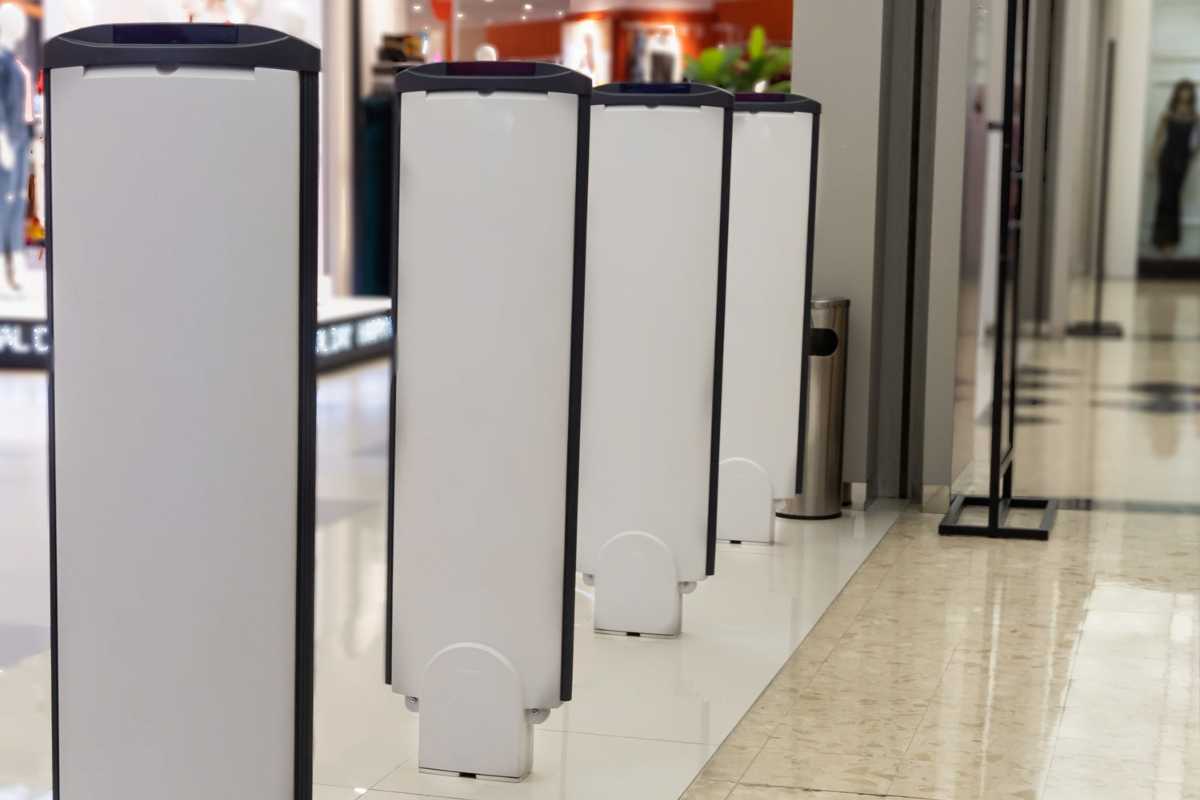
Although barricading a storefront seems completely unreasonable, and in-store cameras will not serve to prevent these types of crimes against retailers, O’Keefe suggests that there are ways in which merchants can safeguard their stores, merchandise and employees. By properly maintaining and adhering to their loss prevention management systems, they can more accurately detect trends like these smash-and-grabs and help the business determine the tools and measures that need to be in place in order to effectively address the situation. In fact, according to the veteran loss prevention expert, it may just be the most important aspect of the retail business when it comes to quelling the effects of the ‘perfect storm’.
“For retailers that have made the decision not to arrest shoplifters stealing from their stores, they need to do what they can in order to make themselves softer targets to criminals. And, to do this most effectively, they’ve got to rely heavily on their loss prevention management systems – the underlying foundation of the company that allows everything to operate optimally and safely. It’s a system that assists retailers in understanding the strategies and methods that are required in order to appropriately address the crimes that are being committed. It allows them to develop and sustain a logical thought process to guide and direct decision-making. It helps in identifying technologies that can be implemented to mitigate and, in some cases, eliminate the threat of theft altogether, including smash-and-grab incidents. And, until law enforcement and the Canadian courts treat these incidents of crime with the seriousness that they deserve, it will likely serve as the most significant mechanism at retailers’ disposal, preparing them and equipping them to take the matter of retail crime into their own hands.”
For consumers, the in-store experience has become increasingly more important in how they decide where to shop and spend their dollars.
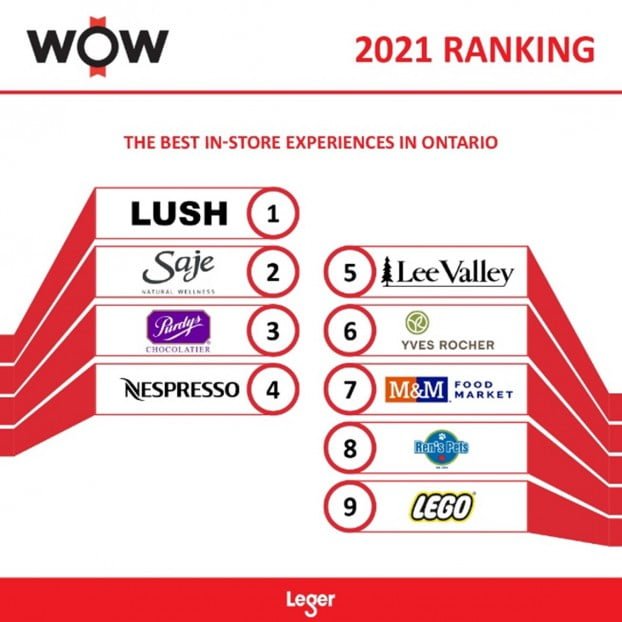
This year’s WOW Study, by Leger, surveyed 13,000 Ontarians about their in-store experience at 153 retailers across 20 different sectors.
The top retailers for best in-store experience in 2021 were:
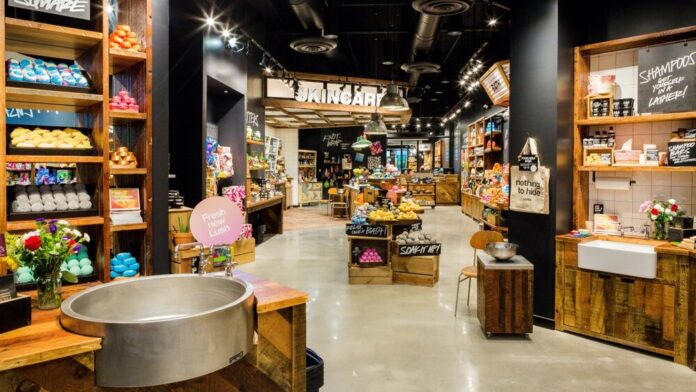
Lush
Saje Natural Wellness
Purdys Chocolatier
Nespresso
Lee Valley Tools
Yves Rocher
M&M Food Market
Ren’s Pets
Lego
Christian Bourque, Executive Vice President and Senior Partner at Leger, said the theory and science behind customer experience is still evolving.
Christian Bourque
“It used to be that we believed as market researchers if you as a customer are satisfied you will come back. We were only aiming to jump this high for satisfied customers. But very soon we figured out that being satisfied is not a predictor of loyalty, of coming back, of recommending the store, of making something out of your brand that was bigger than what it actually was. So that’s where people said you can’t only make people just be satisfied with their experience,” said Bourque.
“In order to predict the future behaviour of people, you need to go one step beyond. That’s where customer experience came in and people said you need to look at how people experience your store. You need to deliver above and beyond just making them satisfied. You need to have the proper visuals, colours, smells, sounds that basically appeal to your target audience. So that’s where the whole customer experience became very popular probably 10 or 15 years ago.
“Now we’re slowly moving into a new sphere which they call the human experience to what extent people are relating to what’s in the store, relating to the brand. The brand corresponds to what they want and need in terms of quality of life that suits their lifestyle but also their values, beliefs and their fundamental needs. We believe we’ll be going beyond customer experience and now into human experience moving forward.”
THE 2021 RANKING OF THE BEST IN-STORE EXPERIENCES IN ONTARIO
The WOW study also looked at the drivers of a sense of belonging: a person has a sense of belonging when they identify with a store and embrace its values, mission, actions and the image it conveys. A strong sense of belonging gives the impression of belonging to an organization, being part of its community, supporting it and contributing to its development. A sense of belonging is also associated with a strong emotional connection and translates into commitment, said Leger.
“This dimension of the in-store customer experience has the greatest impact on recommending a retailer across all sectors. There is also a very strong correlation between a sense of belonging and the WOW Index. The top retailers in this year’s ranking all scored well on this dimension compared to other players in their sector,” said the report.
“An excellent way for a retailer to create a sense of belonging is to positively contribute to its customers’ quality of life. Retailers can adopt strategies to reduce stress, make customers happy, offer flexibility, be available, etc. Remedy’sRx, Kiehl’s, Nova Cannabis and Saje Natural Wellness are examples of retailers that stand out on this driver. Corresponding to its customers’ values and beliefs (production methods, packaging, product type, etc.) is also an important driver of a sense of belonging. Zero-waste retailers, those with responsible packaging and those in the eco-friendly and organic universe, such as Lush, Yves Rocher and MAC stand out on this driver.
“Having happy, committed employees who are passionate about their work also contributes to creating a strong sense of belonging: Lululemon, Lego and Lee Valley Tools perform very well on this driver. The sectors with the highest sense of belonging are beauty, cannabis, men’s clothing, pharmacy and specialty boutiques.”
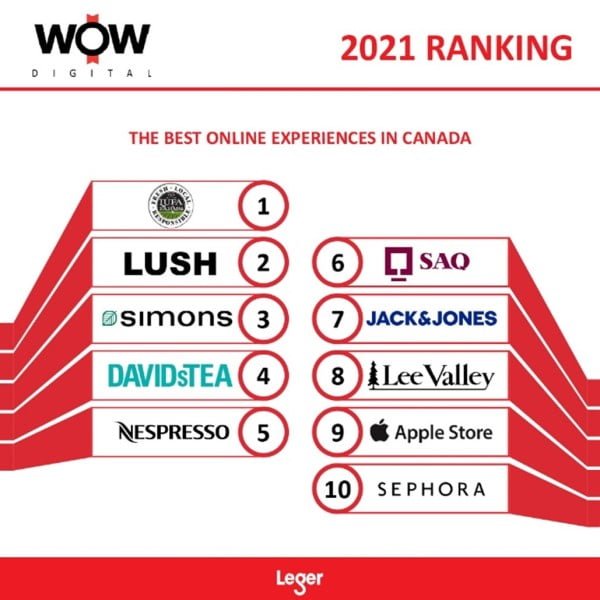
The WOW Digital Study also evaluated the online customer experience in Canada of 184 Canadian websites and apps on 22 dimensions, allowing companies to identify their strengths and weaknesses at each stage of the online shopping experience, from online shopping to delivery.
THE 2021 RANKING OF THE BEST ONLINE EXPERIENCES IN CANADA
In 2021, the companies that offered the best online customer experience in Canada are:
Lufa Farms
Lush
Simons
DAVIDsTEA
Nespresso
SAQ
Jack & Jones
Lee Valley Tools
Apple Store
Sephora
In the overall study, Leger also identified the Most-Appreciated Mobile Apps.
“The Simons mobile app tops the ranking of the apps Canadians appreciate most. It stands out with respect to several aspects: its visual appeal, the personalization of the customer experience and the presence of interesting additional content. CIBC’s app, ranked second, is especially appreciated for its usability and the relevance of the features it offers,” said the report.
“Finally, the SAQ app, which came in 3rd place, is appreciated for its discounts and promotions, its visual appeal, the relevance of its functionalities and the level of personalization of the customer experience.
Desjardins is in 4th place in the ranking of the mobile apps most appreciated by Canadians, while Tangerine, Brunet, Lush and Nespresso are all tied in 5th place. Finally, Chocolats Favoris came in 9th place, and Amazon Canada came in 10th.”
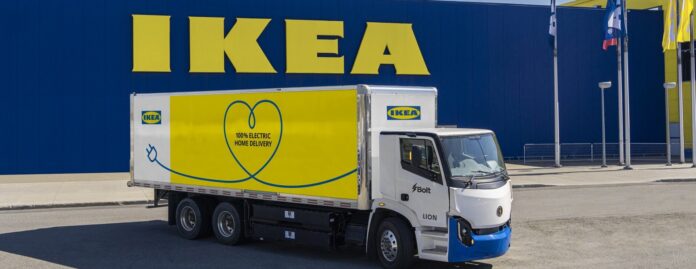
The company said the deployment accelerates GoBolt’s mission to be carbon negative by 2023 and IKEA Canada’s goal to reach 100 per cent zero-emission deliveries by 2025.
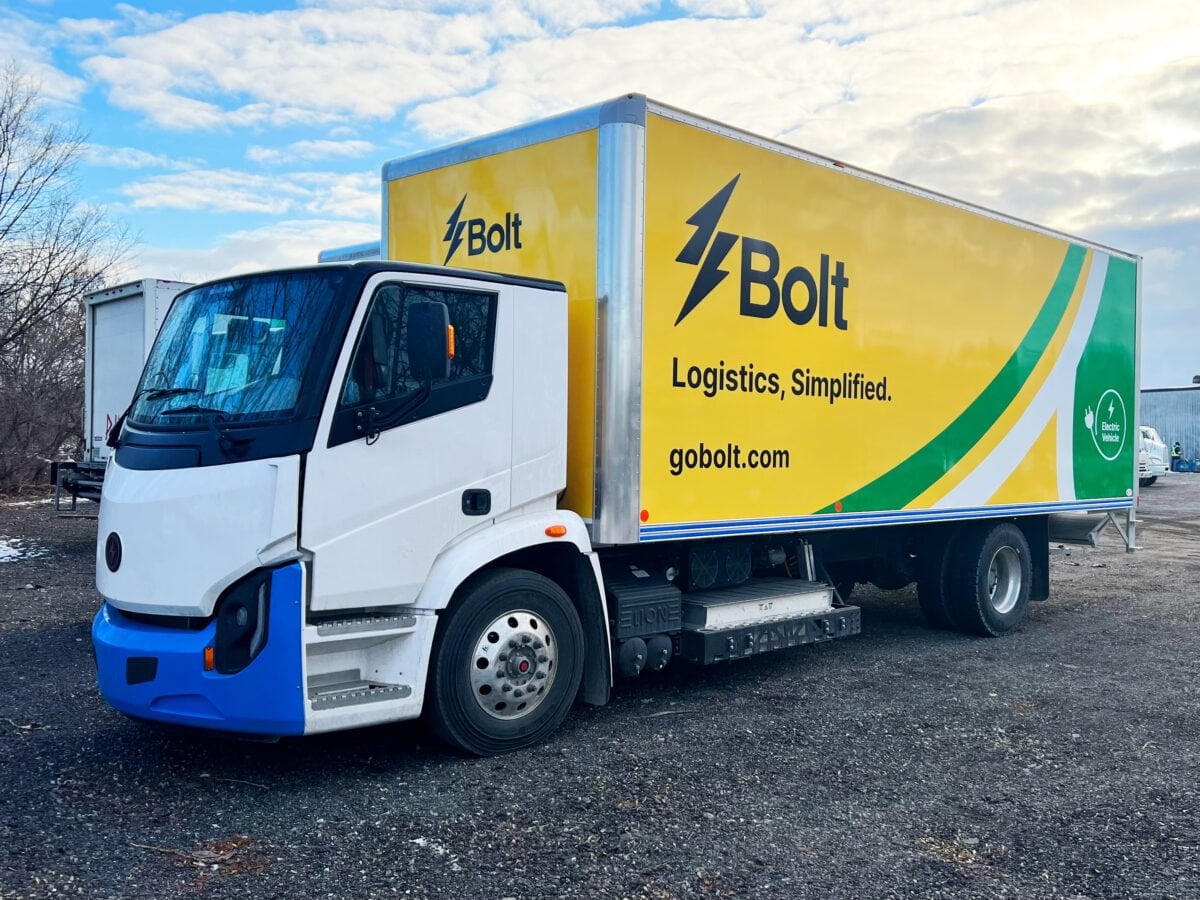
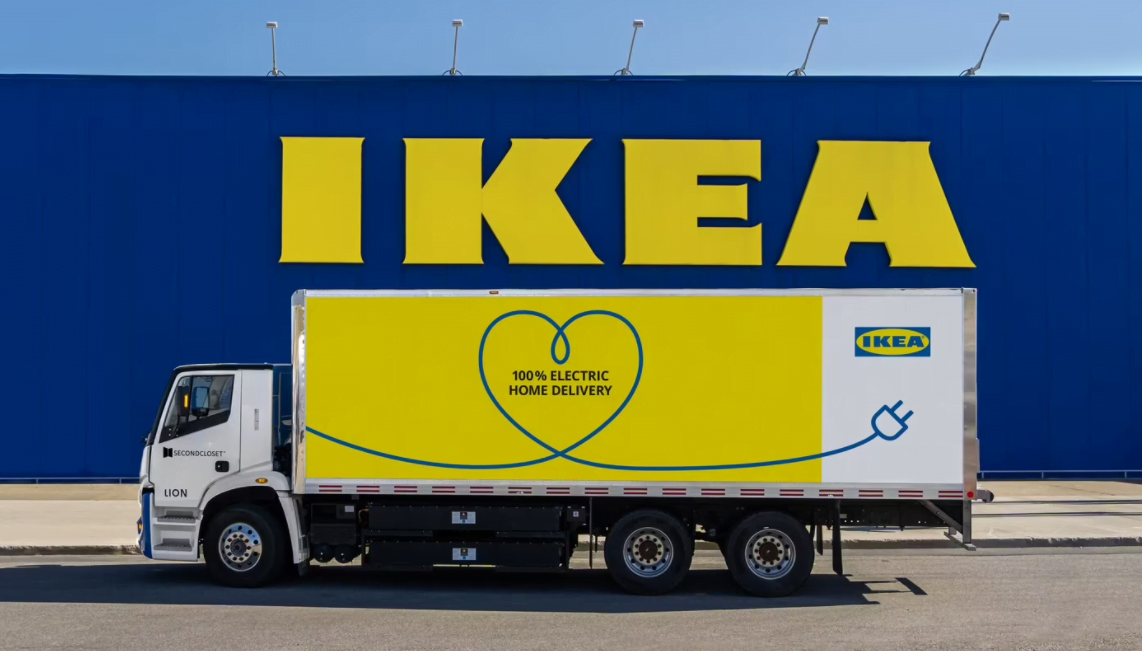
GoBolt, a leading Canadian technology-enabled ecommerce fulfillment and last-mile delivery provider, will deploy 30 electric vehicles (EVs) across the country in 2022 in partnership with leading global home furnishing retailer IKEA Canada. It marks one of Canada’s largest zero-emissions, medium-duty vehicle distributions for commercial deliveries to date.
IKEA Canada 2021 Report
Mark Ang
“GoBolt is committed to being a planet positive business. We’re demonstrating this commitment through our laser focus on becoming a carbon-negative logistics company by the end of 2023. This involves making a conscious investment to help ensure we can provide a zero-emission, carbon-negative last-mile delivery solution, while funding carbon sequestering initiatives around the globe” said Mark Ang, CEO of GoBolt. “We are thrilled to be working with IKEA Canada on this initiative and look forward to continuing to collaborate on building smarter and greener supply chains.”
GoBolt’s first zero emission delivery trucks have officially hit the road earlier this year, with 29 to follow across British Columbia, Quebec and Ontario this year.
Melissa Barbosa
“With transportation being one of the largest contributors of the global climate crisis, IKEA Canada is committed to eradicating carbon emissions and electrifying its last-mile delivery service, utilizing the benefits of electric vehicles to further transform the market,” said Melissa Barbosa, Head of Sustainability at IKEA Canada. “The value-add of deploying zero emission vehicles accelerates our goal of becoming more accessible, affordable, and sustainable for our customer network.
“We have some lofty ambitions, a positive strategy. One of those ambitions as an organization is to be 100 per cent circular and climate positive by 2030. Within that ambition we have a subset of goals and zero-emission delivery and services by 2025 is one of those goals. So globally we are as an organization all trying to achieve this goal of zero-emission transport by 2025 and GoBolt has been one of our trusted partners. Their values are very aligned with ours.”
Ang said the company, based in Toronto, started in 2017 as a storage company that would pick up, store and return consumer items. People would go to the website, fill in a simple request for what they wanted stored and then the company, called Second Closet, would show up at a date and time they had selected to pick their things up and bring them back to storage.
Image: GoBolt
“We took a big step back. We wanted to try and drive a little bit more direct value as a business versus this dormant space. Storage is obviously pretty sleepy and it wasn’t really in line with what we wanted to be when we grew up,” he said.
“The good news is that we really built a supply chain network for big and bulky product. We had warehouses, people, technology, and processes built around handling big and awkward things that were already pre-built and needed to be protected and brought to storage and so to store and deliver them to customers with a white glove level of service and connect our facilities with technology to orchestrate was in the realm of possibility and we were already doing it in a small way.
“So what GoBolt has become is a B2B complex logistics and delivery company where we store products – pick and pack sort of facilities and then conduct a final mile with our truck fleet. We rebranded from Second Closet to GoBolt as a show that we were now a 100 per cent B2B business. The name GoBolt comes from a desire to be quick at what we do because lightning strikes fast but also electrify our entire final mile.”
Ang said GoBolt originally started speaking with IKEA about ways it could support their business back in 2019.
Image: IKEA & GoBolt (Formerly Known as Bolt Logistics and before that, Second Closet)
“As it so happened, it was a pretty normal time. There was no COVID and everything was just kind of running business as usual. We got to a point where we started to integrate with them and really align culturally that we wanted to both be positive businesses and if we could find a way to work together that would be really nice synergy to drive our electrification goals forward faster,” said Ang.
“Then COVD struck and we were in a position where we could start supporting them immediately. So the working relationship started then and our planning and implementation behind the scenes around EV continued to increase in velocity. That’s how the relationship started. We started off with one location in Toronto and now we support properties in Toronto, Montreal, Ottawa and Vancouver. This is going to help us expand our electrification footprint to all those four markets in Canada.”
Ang said GoBolt’s aspiration is to help light the fire in innovation in the logistics space. It wants to move the market toward more electrification.
“We think that the more that companies can leverage electrification the better all of the infrastructure become, the better the vehicles become the more cash flow these OEM (Original Equipment Manufacturer) to drive more R&D to build additional versions of a previous, the better infrastructure becomes utilities get more equipped and better prepared to actually support the overnight lows to support these swaths of vehicles,” said Ang.
“That’s what we want the future to look like . . . It’s going to be a consumer demand that businesses are conscious about their carbon footprint. And logistics takes up a massive amount of companies’ carbon footprints. I think this is one of the obvious areas to focus on.”
IKEA Canada is part of Ingka Group which operates 389 IKEA stores in 32 countries, including 14 in Canada. Last year, IKEA Canada welcomed 31 million visitors to its stores and 117 million visitors to IKEA.ca.
Retail Insider is streamlining its Canadian retail news from around the web to include a handful of top news stories that can be viewed quickly during the day. Here are the top stories from the past 24 hours.
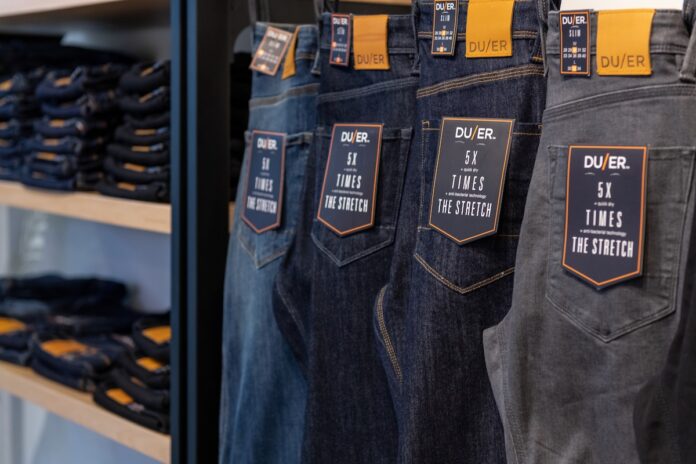
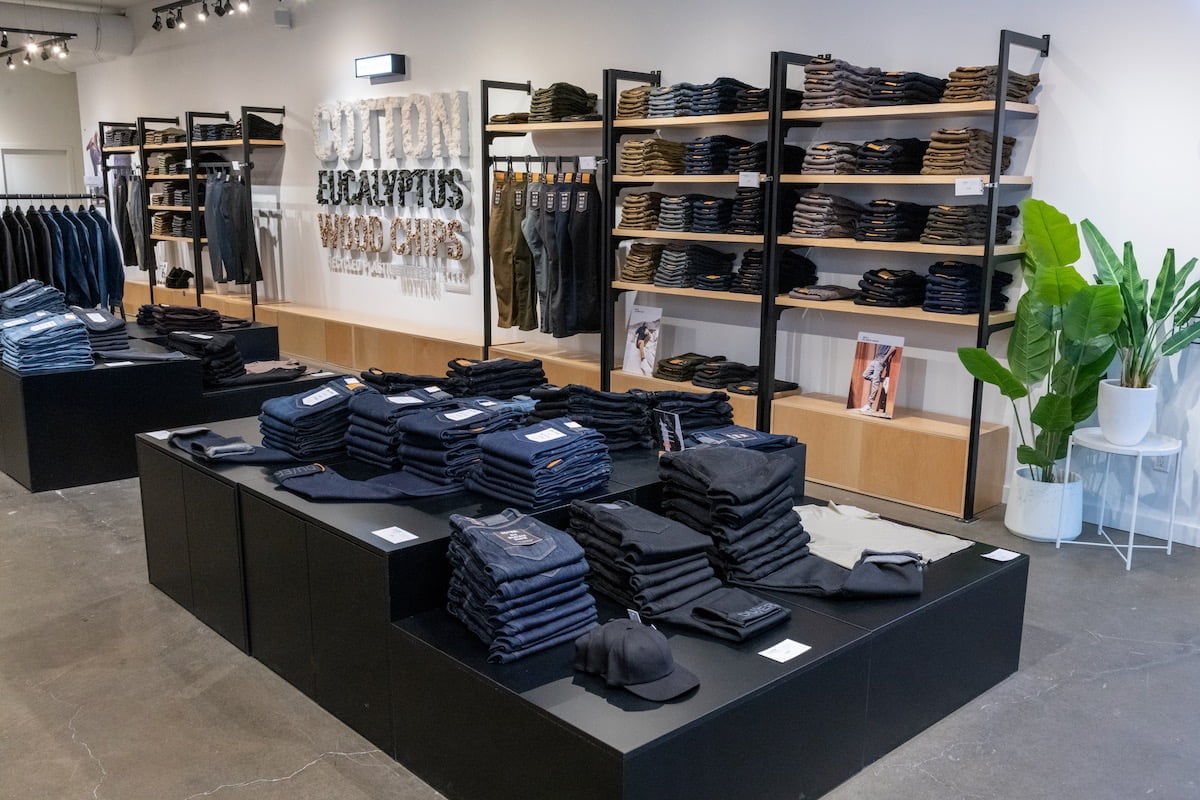
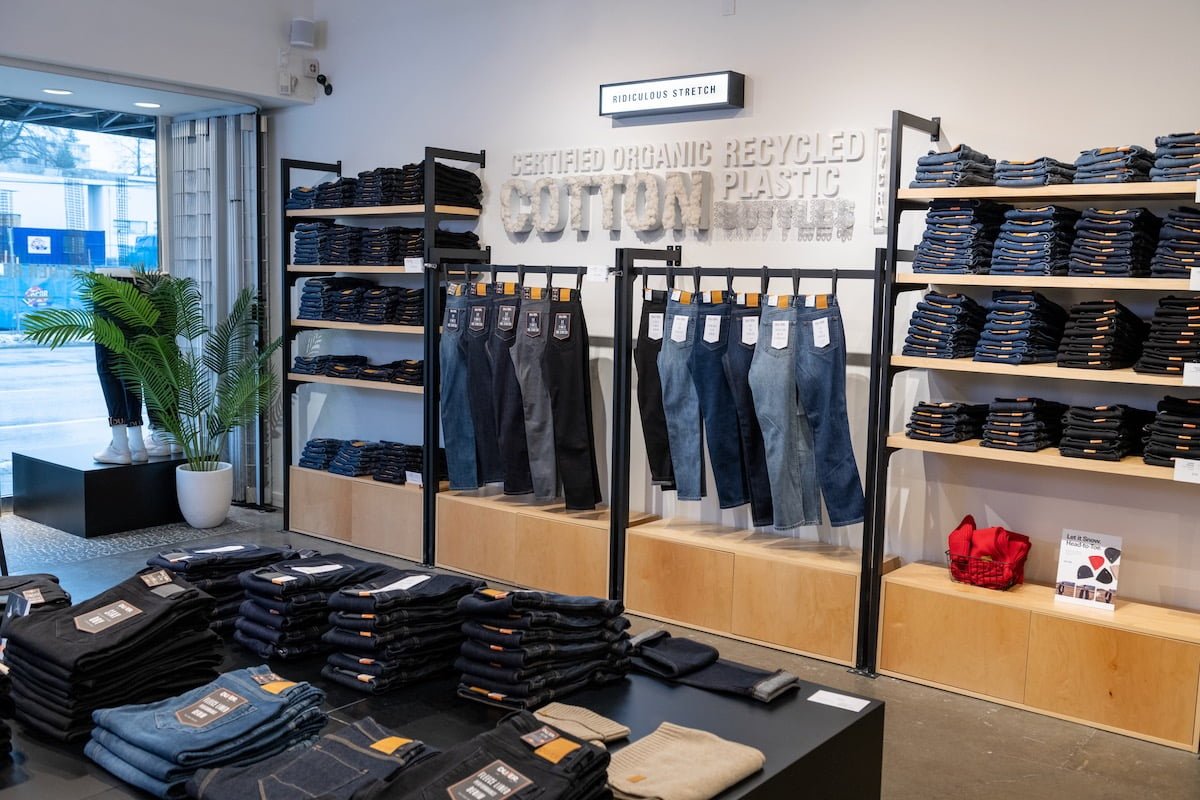
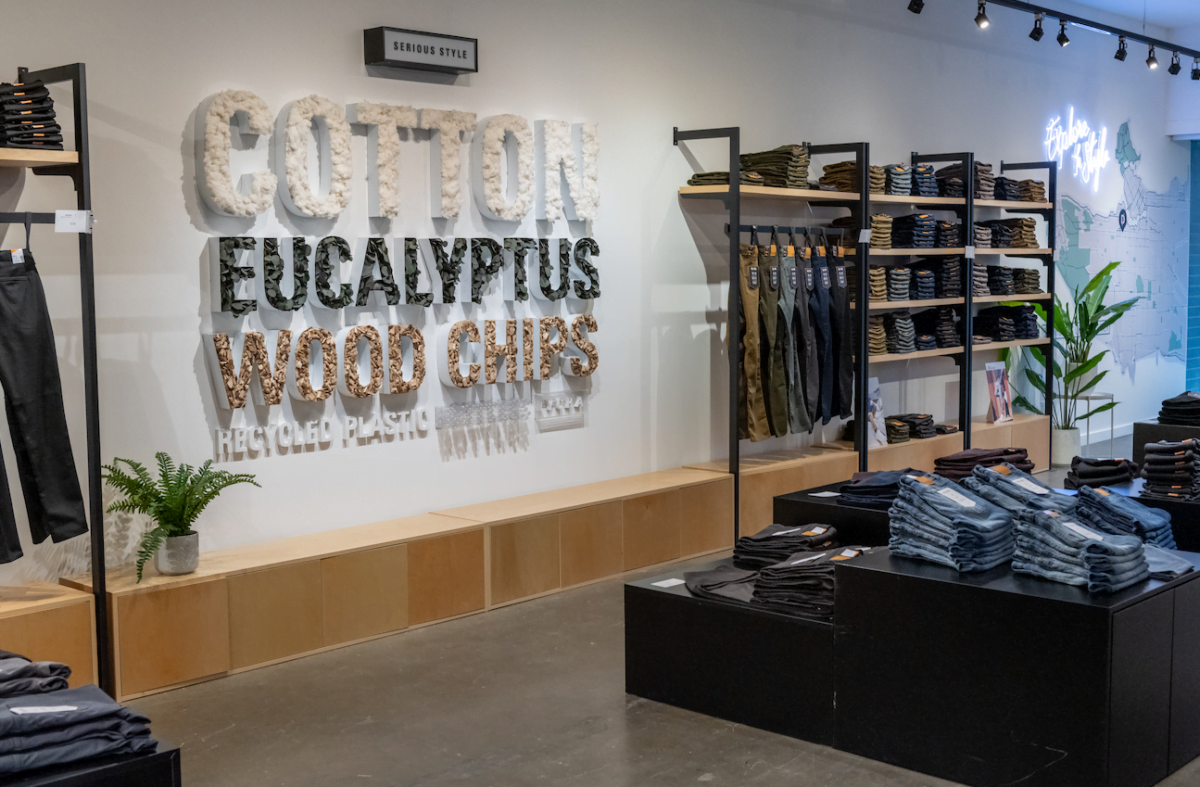
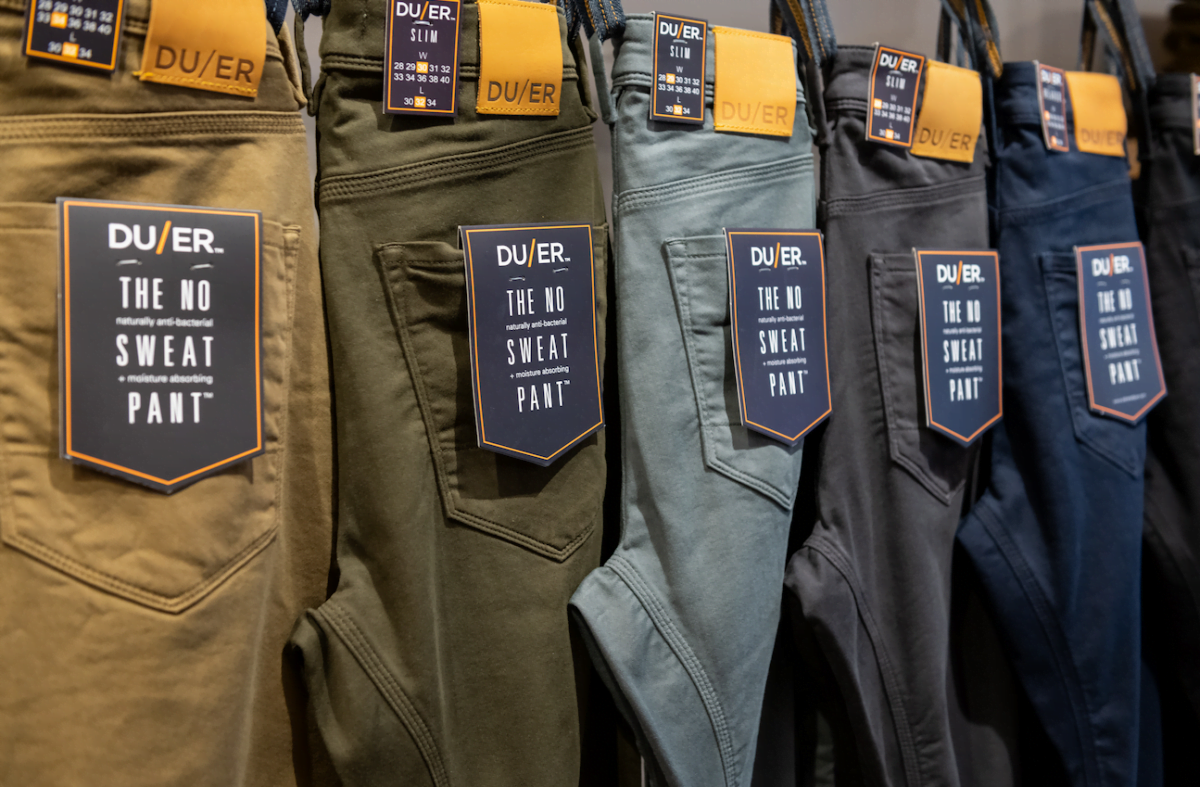
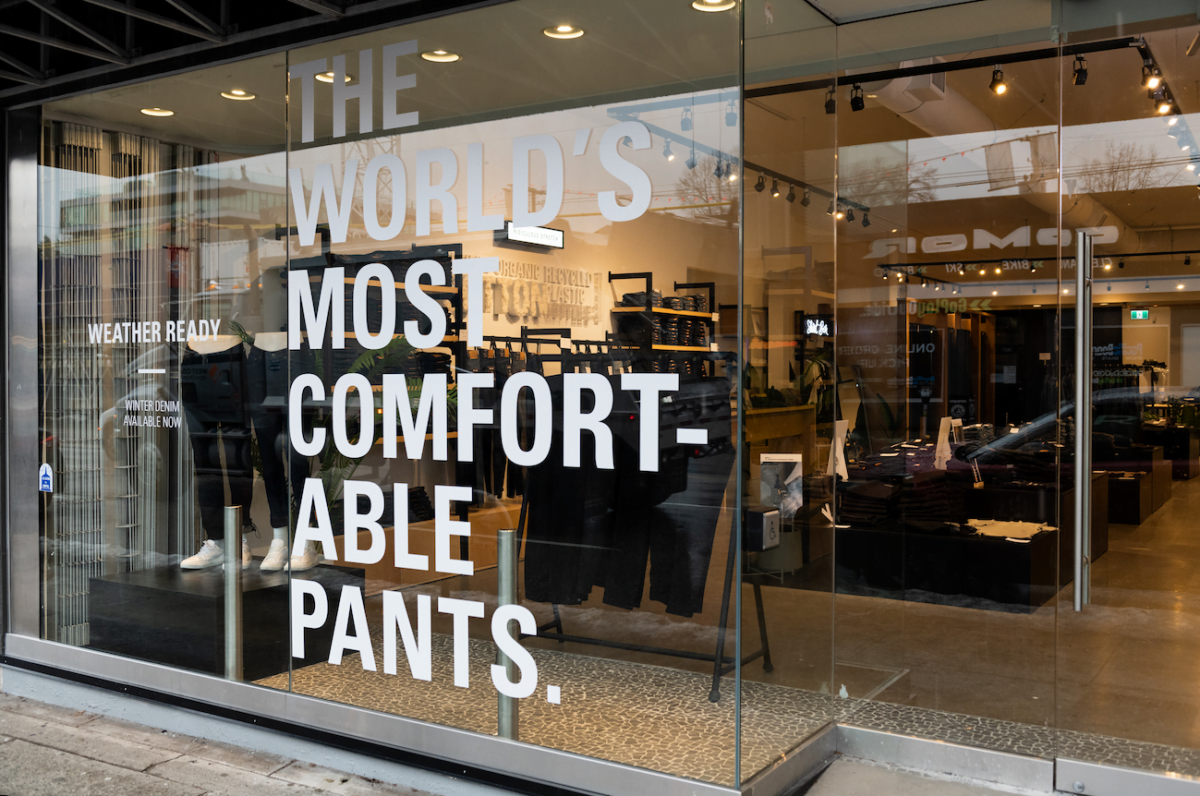
Canadian performance apparel brand DUER has officially opened its new flagship location in Vancouver’s Kitsilano neighbourhood, replacing its first-ever storefront that opened in the city’s Gastown area in 2016.
Gary Lenett
The 2,100 square foot Kitsilano store is located at 1757 West 4th Avenue.
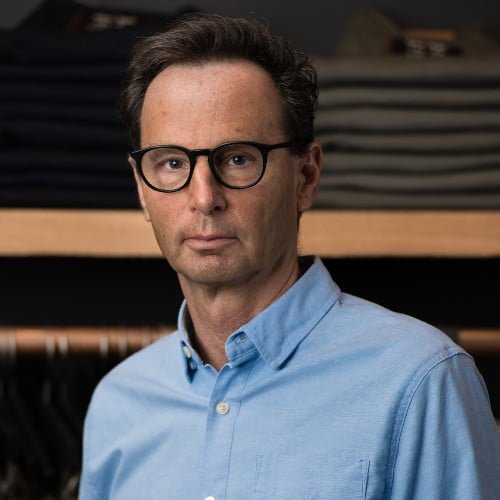
“I believe experiential retail is about to have its moment – far beyond anything we’ve seen before,” said Gary Lenett, Co-Founder of DUER.
“There’s a big market opportunity for brands like ours that can turn retail spaces into testing grounds offering a memorable experience for consumers.”
“We’ve created a space where people can feel, see, and touch our brand’s values,” said Nadia Gillies, Director of Brand.
“We’ve re-envisioned our retail spaces to be brand hubs where customers can be introduced to lifestyle brands outside of DUER – Rad Power Bikes will be stationed throughout as one example.”
DUER opened its first location in Vancouver with a Gastown storefront in 2016 and has since established Canadian physical brick & mortar stores in Calgary and Toronto.
DUER has continued to grow its global business throughout the pandemic, which has included significant investment in the US market with openings in Denver (2020) and Los Angeles (2021). The brand now has a distribution model of over 800 independent wholesale retailers and store-in-store offerings at REI and Nordstrom.
Since 2014, Retail Insider has been keeping a tally on international retailers entering Canada. In 2021, Retail Insider counted 21 international brands that entered the Canadian market by opening stores, and the momentum will continue this year. Despite the pandemic, the Canadian market is still a target for many international brands that do not already have stores in this country.
Twenty-one new retailers in 2021 is an impressive number all things considered given the pandemic, leapfrogging the 13 international brands that entered Canada in 2020 by opening stores.
The Toronto market was home to the overwhelming majority of new entrants in 2021 and for the first time, Nanaimo BC saw a retail first. In terms of location nodes, Toronto’s Yorkdale Shopping Centre saw a total of four new first-to-Canada retailers, Toronto’s Queen Street West saw three first-to-Canada retailers, and Toronto’s Bloor-Yorkville also saw three firsts in terms of retailer openings last year.
Our breakdown of geography in terms of the first-to-Canada retailers is as follows:
Toronto/GTA: 13
Vancouver/Lower Mainland: 3
Edmonton: 3
Montreal: 1
Nanaimo BC: 1
The following is Retail Insider’s count of the international brands that entered Canada in 2021 by opening standalone stores. The list is chronological from earliest to most recent openings.
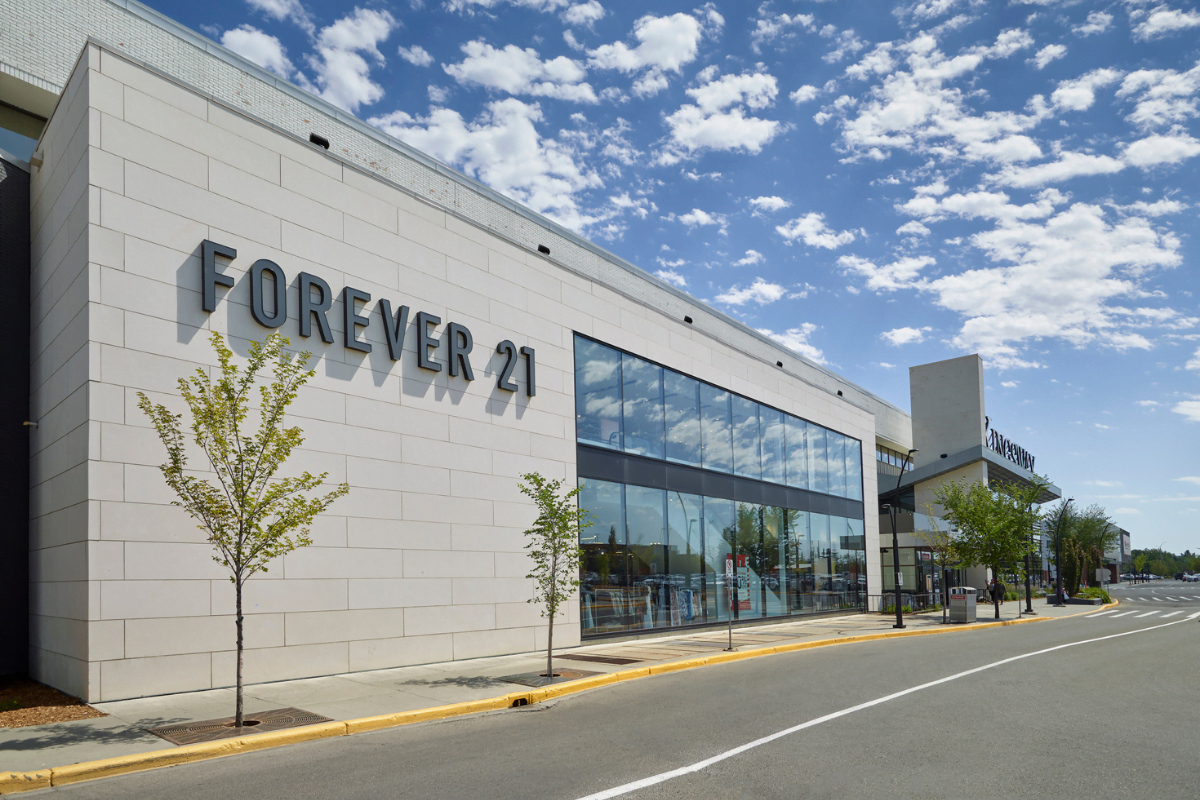
Forever 21 (Kingsway Mall, Edmonton)
Forever 21 at Kingsway Mall (Image: Kingsway Mall)
In January of 2021, US-based fast-fashion brand Forever 21 re-entered the Canadian market with standalone stores operated by new licensee, Toronto-based YM Inc. The first of the new stores opened at Kingsway Mall in Edmonton. Several more subsequently opened and in April of 2021 we reported on the YM expansion of Forever 21 into Canada.
The move to open stores in Canada followed Forever 21’s shuttering all locations as part of a bankruptcy filing in 2019. YM Inc. acquired many of Forever 21’s leases after the retailer exited Canada. YM subsequently opened stores under various banners in the former Forever 21 locations including Urban Planet, Urban Behaviour and Stitches. Many of the Forever 21 stores saw few changes to the retail spaces following the shuttering of the original chain, possibly in anticipation of re-introducing the Forever 21 banner to the Canadian market.
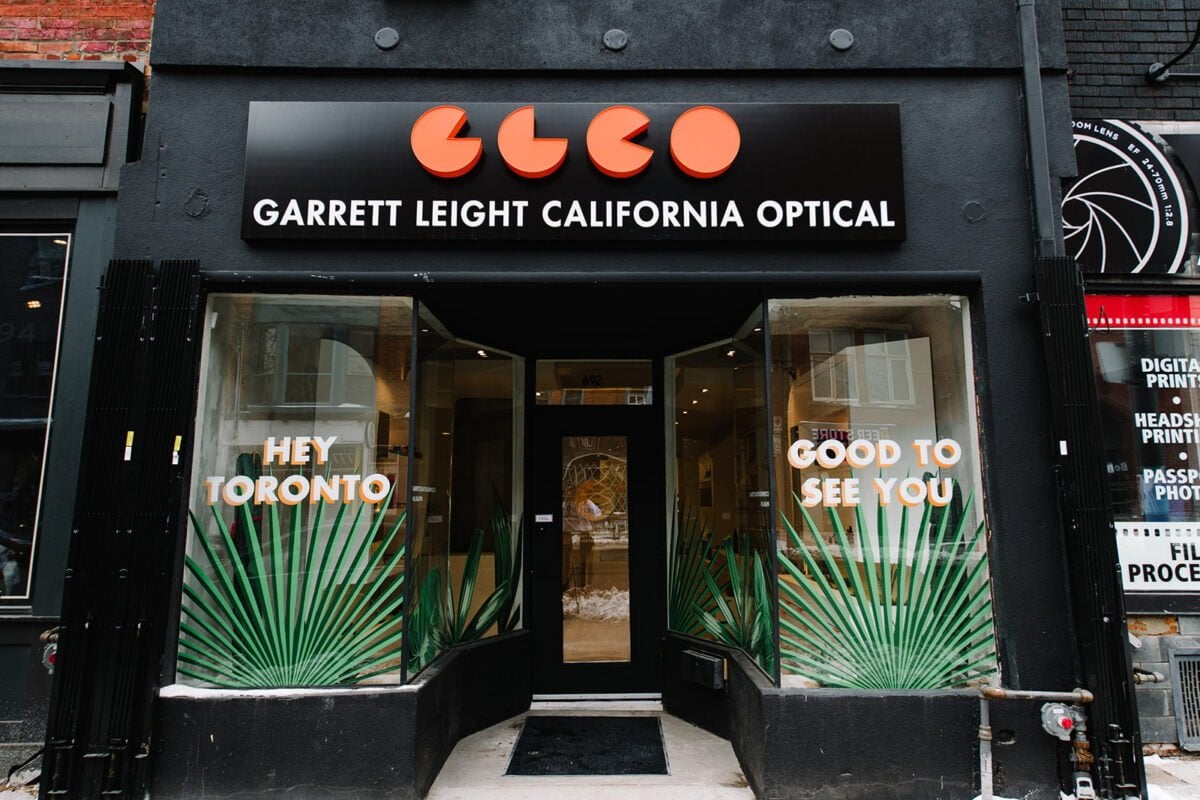
Exterior of new Garret Leight store on Toronto’s Queen Street West. Photo: Katherine Barcsay
In February of 2021, US-based optical retailer Garret Leight California Optical (GLCO) entered the Canadian market with its first storefront opening in Toronto at 692 Queen Street West spanning approximately 950 square feet, including the in-house lab and the back office.
GLCO was founded in 2010 by Garrett Leight, the brand’s creative director and son of eyewear entrepreneur Larry Leight, who founded the luxury brand Oliver Peoples. Offering eyeglasses and sunglasses for men and women, GLCO aims to bring a modern spin to classically tailored eyewear, with a focus on quality craftsmanship.
The brand said in February that it had no plans for further stores in Canada. GLCO entered a very crowded optical market with numerous homegrown and international retailers fighting for market share.
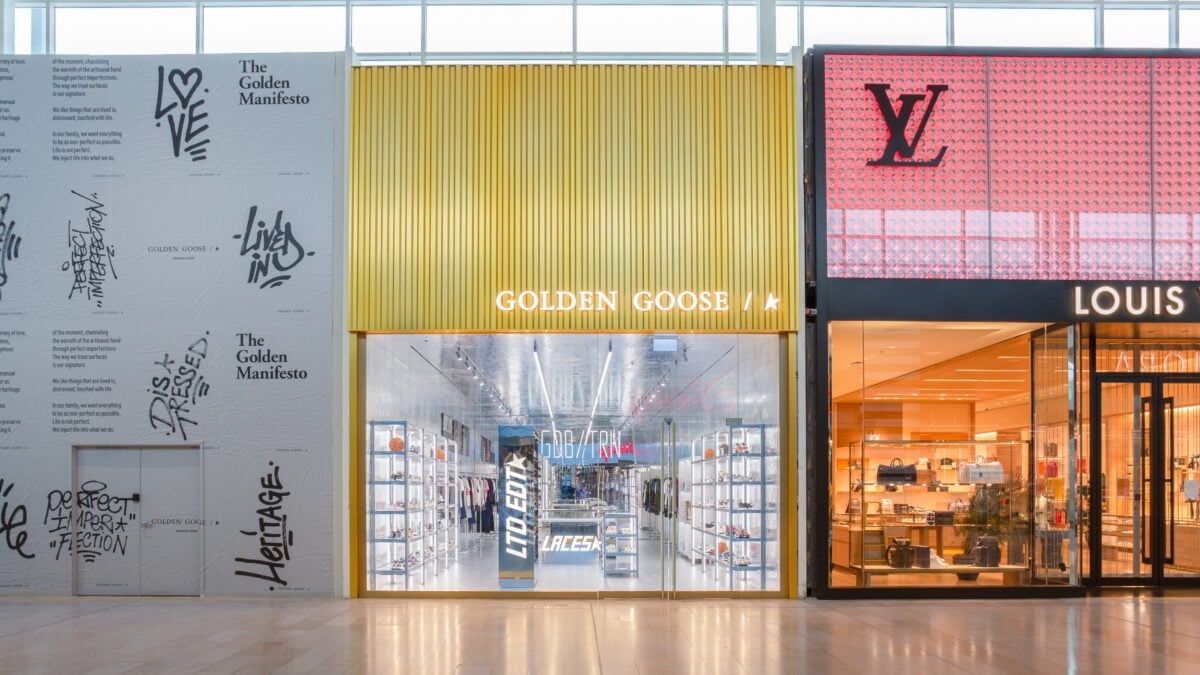
Upscale Italian fashion brand Golden Goose, known particularly for its pricey sneakers, opened its first Canadian storefront in February of 2021 at Toronto’s Yorkdale Shopping Centre. More Canadian locations could follow with Vancouver expected to be a target.
The Toronto location is eye catching. The 1,600-square-foot store’s interior is immersed in metallic silver — the walls, floors, and ceilings are entirely covered with aluminium foil. Fixtures are made of galvanized steel and super mirror stainless steel. The retail space focuses on Golden Goose’s most iconic sneakers with a full collection for women, men, and children, as well as accessories and small leather goods which are only available in selected stores and not available elsewhere in Toronto.
The brand was founded in Venice, Italy in the year 2000 by Alessandro Gallo and Francesca Rinaldo. The company was owned by Italian fund DGPA SGR between 2013 and earlier this year when Golden Goose was sold to investment firm Permira.
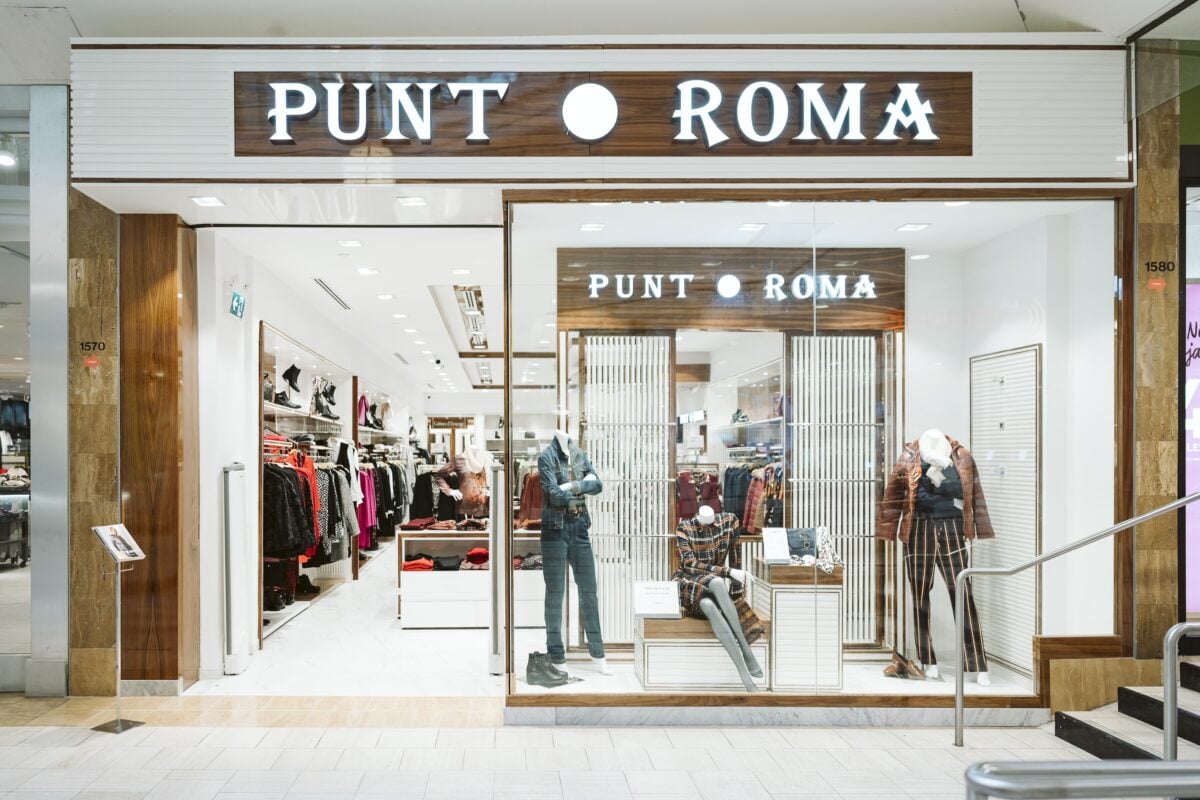
Exterior of new Punt Roma store in Rockland Centre in Montreal. Photo: Rockland Centre
In March of 2021, Spanish fashion brand Punt Roma opened its first Canadian store at Montreal’s Rockland Centre. Barcelona-based Punt Roma features women’s fashions in sizes 8 to 24 at a mid price-point, with dresses priced in the $90-$120 range and shirts in the $50-$60 range, for example.
Prior to the pandemic, the Montreal-based franchisee for Punt Roma said that he had planned to open five stores in Quebec and Ontario over a five-year period, and plans were halted once the reality of a changing world due to COVID-19 took hold. The franchisee was considering a downtown Montreal location amid a more gradual expansion when we interviewed him last year.
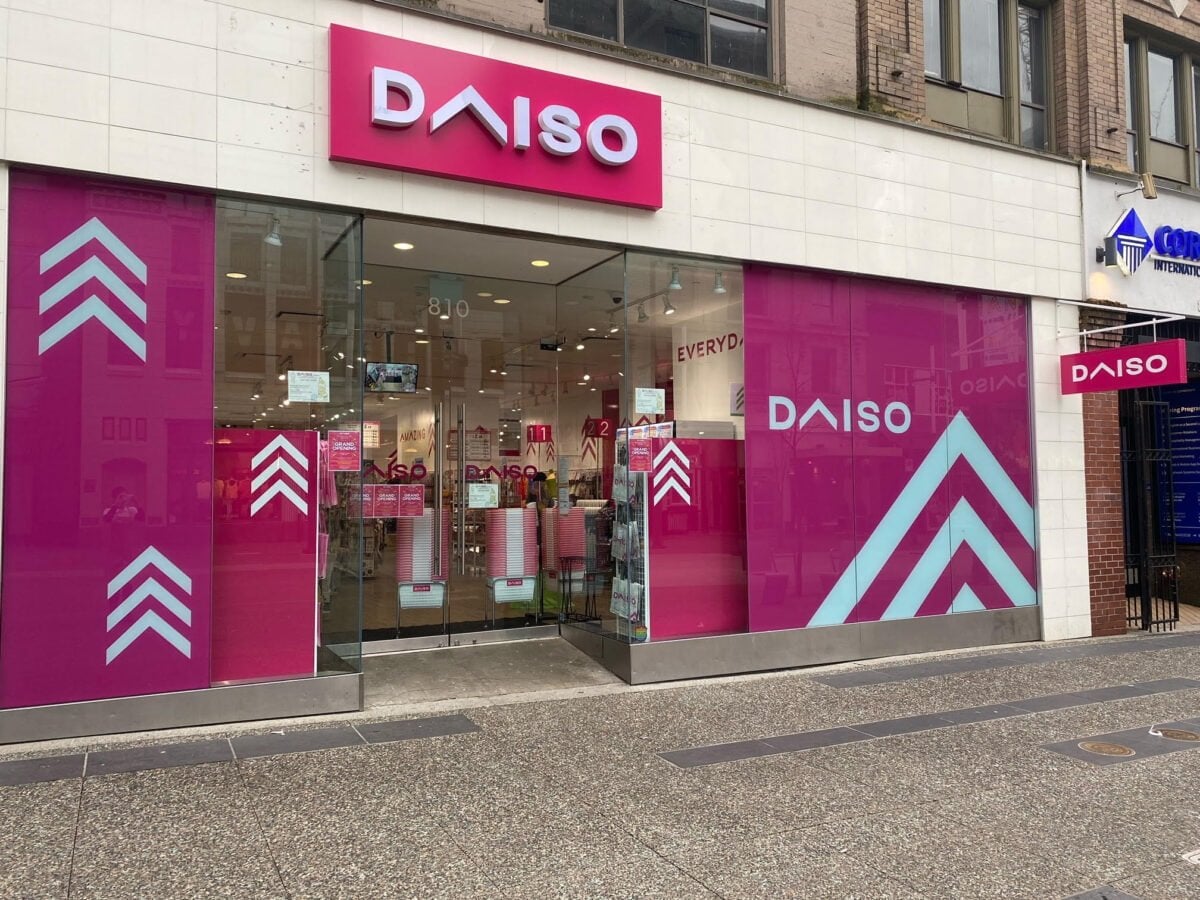
In April of 2021, value-priced Japanese variety retailer Daiso expanded into Canada with its first corporate store opening in downtown Vancouver. The retailer is testing the waters in Canada prior to launching a larger national expansion. JLL Canada represents Daiso in its further expansion into the Canadian market.
The 4,700-square-foot downtown Vancouver store is located at 810 Granville Street, which was formerly occupied by an Indigo Spirit bookstore. A wide range of products from stationery to cosmetics to home goods is carried in the Daiso store. Origami paper and other traditional Japanese items can be found as well — the product assortment is known to be of a high quality for the price point which has resulted in Daiso’s success with more than 5,000 stores globally.
In 2003, the Fairchild Group opened a franchised Daiso store at the Aberdeen Centre in the Vancouver suburb of Richmond which operated for about 16 years. In August of 2019 Fairchild converted the 23,000-square-foot space to an Oomomo nameplate and the Vancouver-based Japanese-themed variety retailer continues with its own store expansion throughout Canada.
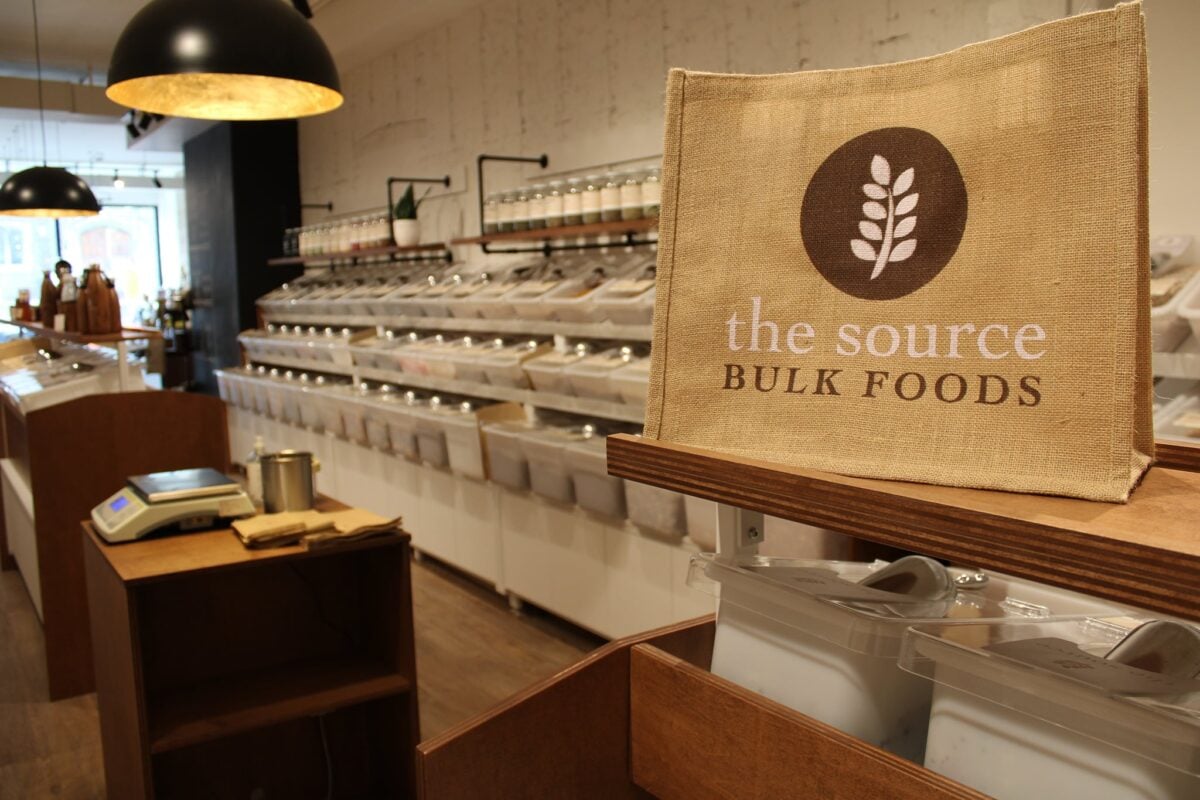
The Source Bulk Foods (Image: Roncesvalles Village BIA)
Small-format Australian zero-waste grocery chain The Source Bulk Foods opened its first Canadian storefront on Roncesvalles Avenue in Toronto in April of 2021. A second location subsequently opened in Vancouver and the expansion continues with new locations in Toronto’s Leslieville area as well as in North Vancouver for this year.
At the store, customers bring reusable containers to the front of the store to be weighed and recorded. Then, visitors fill the jars with one of over 400 items and once done, all is weighed to determine price. Retail Insider was unable to secure an interview to report on this store opening.
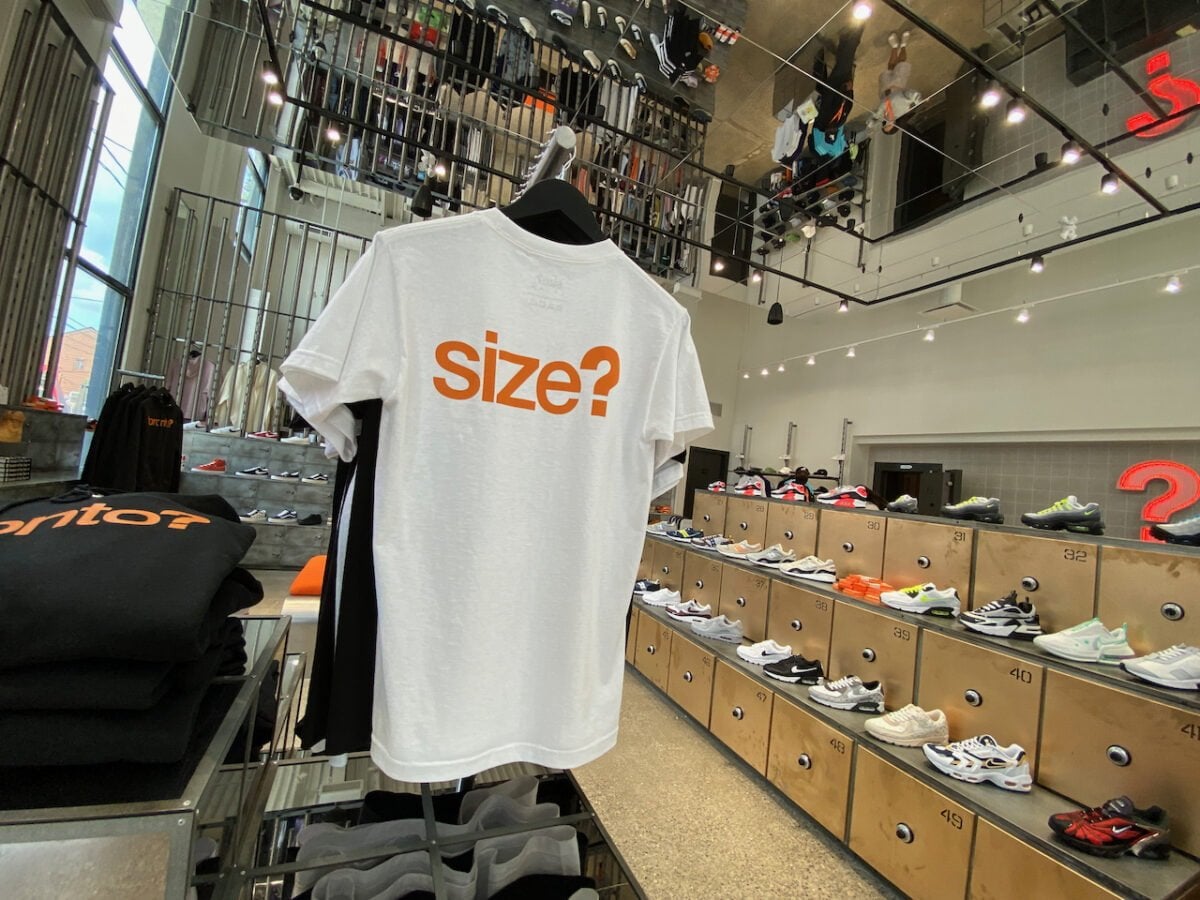
Size? (Toronto, 1000 Queen Street West)
size? Toronto – Photo by Dustin Fuhs
In the summer of 2021, UK-based JD Group expanded its ’Size?’ sneaker and apparel-focused retail banner into Canada with a storefront at the north-east corner of Queen Street West and Ossington in Toronto. A second Canadian location has officially been confirmed in Vancouver in a retail space on Bute Street about a half block south of Robson Street and more are to come — Jordan Karp of Savills Canada is handling the expansion.
Size? was founded in 2000 and is known for stocking limited-edition sneakers, fashions, and accessories that are primarily classified as ‘streetwear’, with some product launches classed as global exclusives. The retail concept was initially launched by JD Group to trial edgier product collections before introducing them to the mass market through the JD fascia. Size? currently has stores in the UK, Ireland, Belgium, Denmark, France, Germany, Italy, the Netherlands, and Spain.
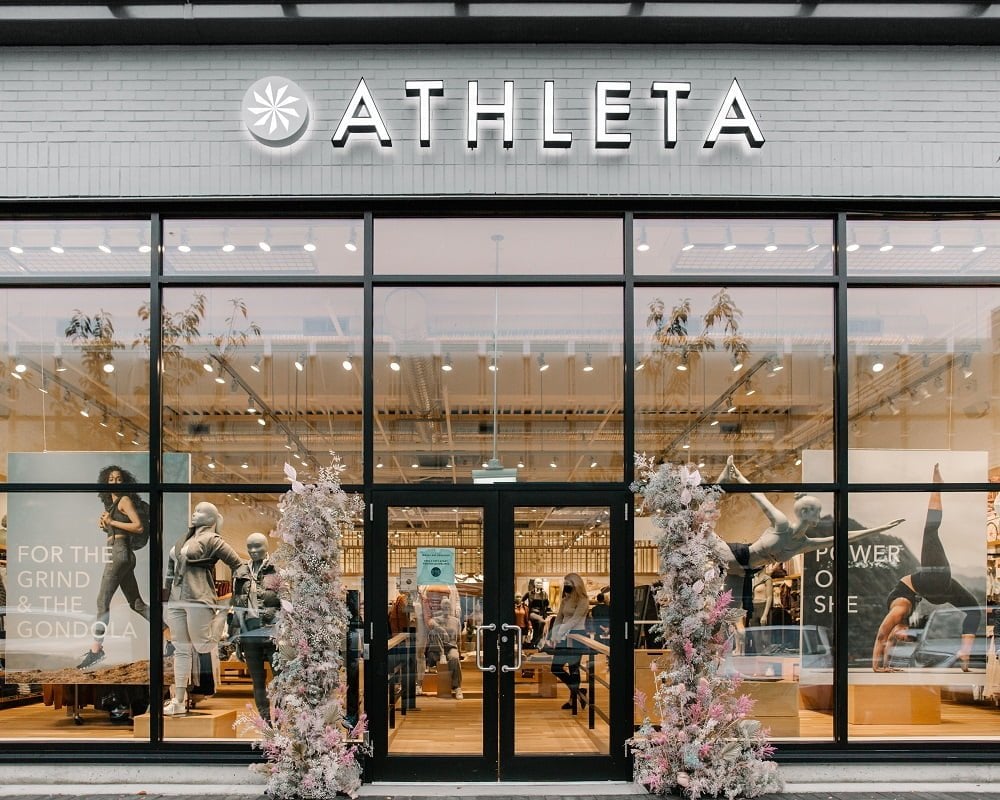
Main entrance of Athleta at Park Royal Shopping Centre in West Vancouver, BC (September 2021). Photo: Athleta and Mariel Nelms Photography.
San Francisco-based Gap Inc. announced in April of 2021 that it was expanding its women’s and girls’ brand Athleta into the Canadian market. In September of last year the brand opened its first store in Canada at the Park Royal Shopping Centre in West Vancouver, and in November a second location opened at Toronto’s Yorkdale Shopping Centre.
Athleta was founded in San Francisco in 1998 and Athleta Girl was launched in 2016. The company says that its mission “comes to life through inclusive and sustainable product design, connecting with customers through unique experiences in stores, online and within local store communities.” It’s a message somewhat similar to competitor Lululemon.
More Athleta locations are expected for Canada, and the company is being tight-lipped on details.
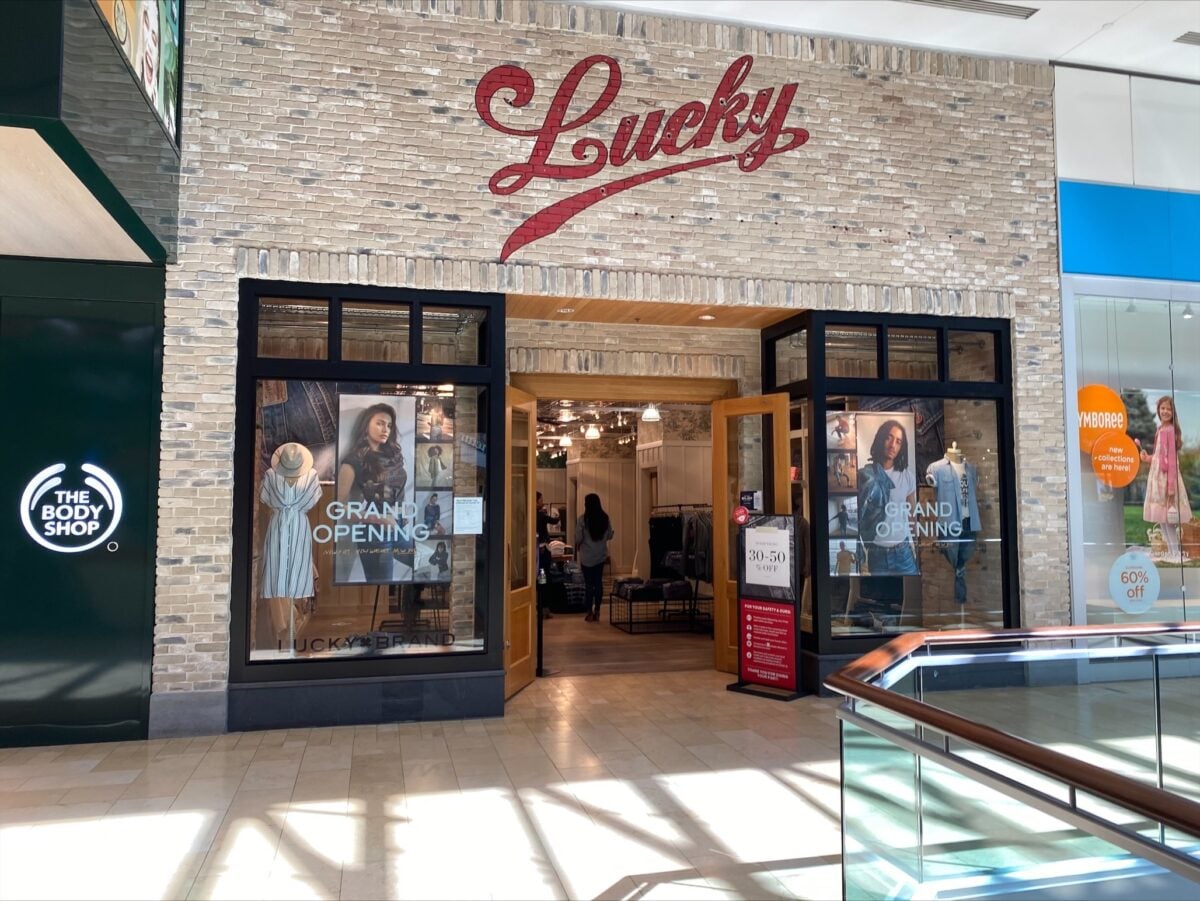
In the spring of 2021, US-based denim and fashion brand Lucky Brand re-launched in Canada with physical stores after exiting the country about two years before. The company’s Canadian rights were acquired by Thriftys Family of Brands (Bluenotes, Aéropostale Canada) and more than 10 locations had opened by May. The first Canadian location was confirmed to have opened at the Vaughan Mills centre near Toronto.
The partnership with Thriftys Family of Brands also means a selection of Lucky Brand merchandise started to be carried in select Bluenotes and Thriftys by Bluenotes stores last fall.
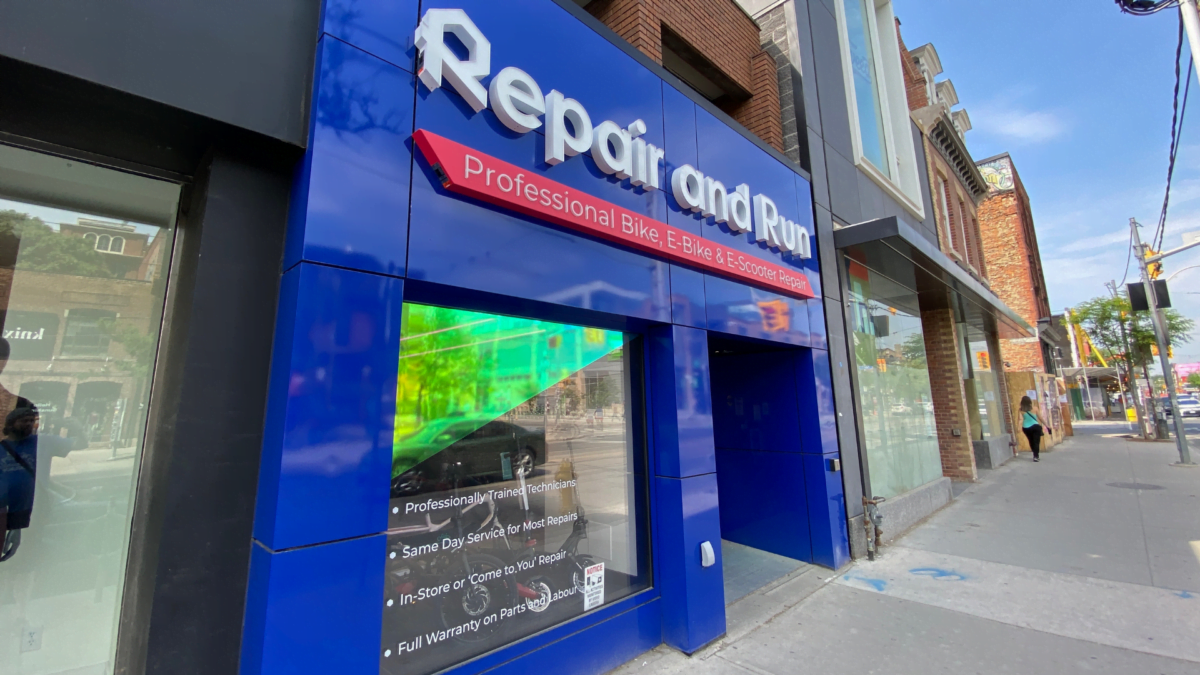
Repair and Run at 363 Queen West – Photo by Dustin Fuhs
In the summer of 2021, French retail concept Repair and Run opened its first Canadian location on Queen Street West in downtown Toronto. The store opened in partnership with several of the people who founded Mobile Klinik, the Canadian chain of smartphone and tablet repair shops. More Repair and Run locations are expected and Retail Insider will provide updates.
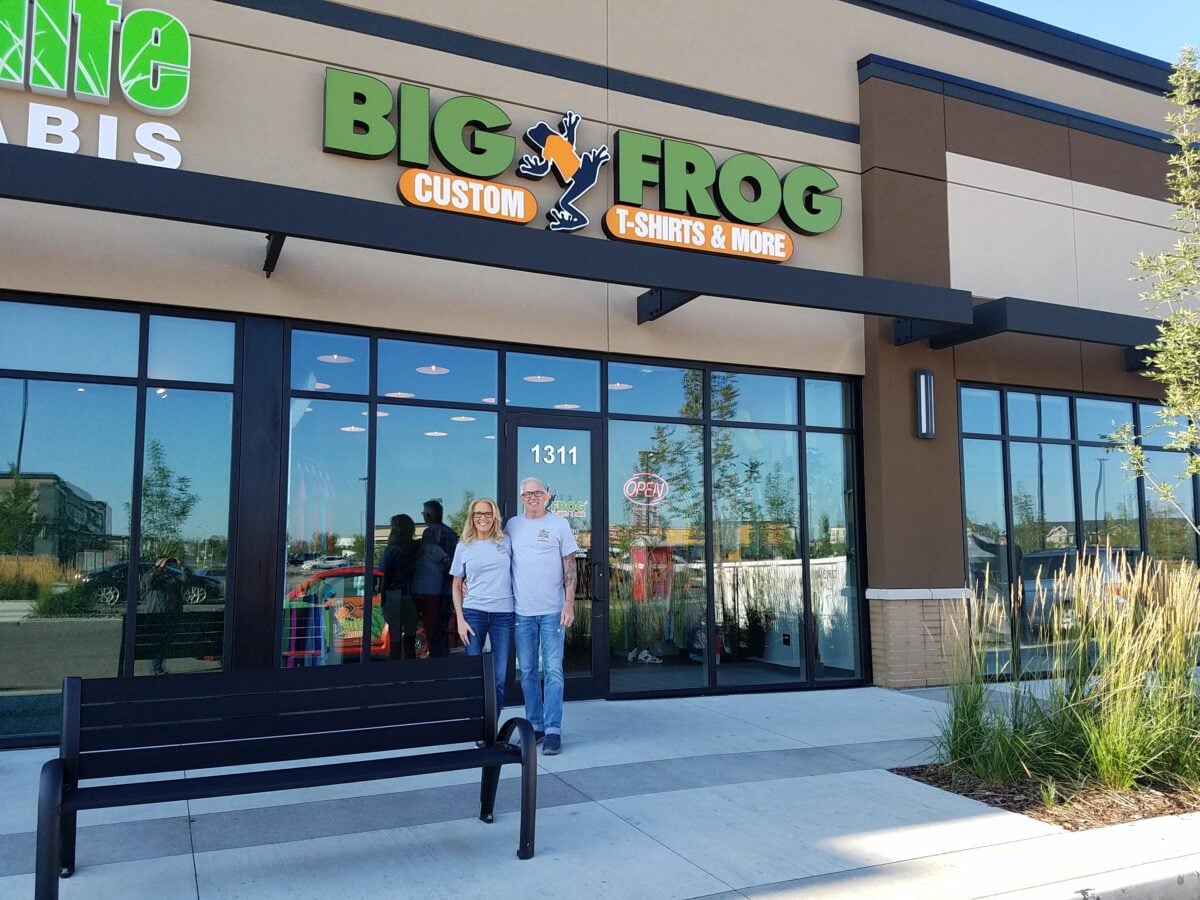
US-based t-shirt retailer Big Frog opened its first Canadian store in Edmonton’s Windermere area in the fall and the franchised concept will see more locations open across the country. The expansion will start with the Edmonton and Calgary markets.
The plan is to have locations across Canada according to Big Frog, which is described as being a high-tech, light manufacturing retail garment decorating boutique which has 80 locations in 26 states in the US. The company started franchising in 2008.
Grace Loves Lace Toronto Showroom – Photo by Dustin Fuhs
In September of 2021, Australian bridal retailer Grace Loves Lace entered the Canadian market with a storefront at The Distillery District in downtown Toronto. The Distillery District is one of the top wedding venues in Toronto, which will allow for a seamless transition from the showroom into the event.
The Toronto location is at 39 Parliament Street. The company has 16 showrooms in Australia, the UK and the US. It’s unknown if more Canadian locations will open.
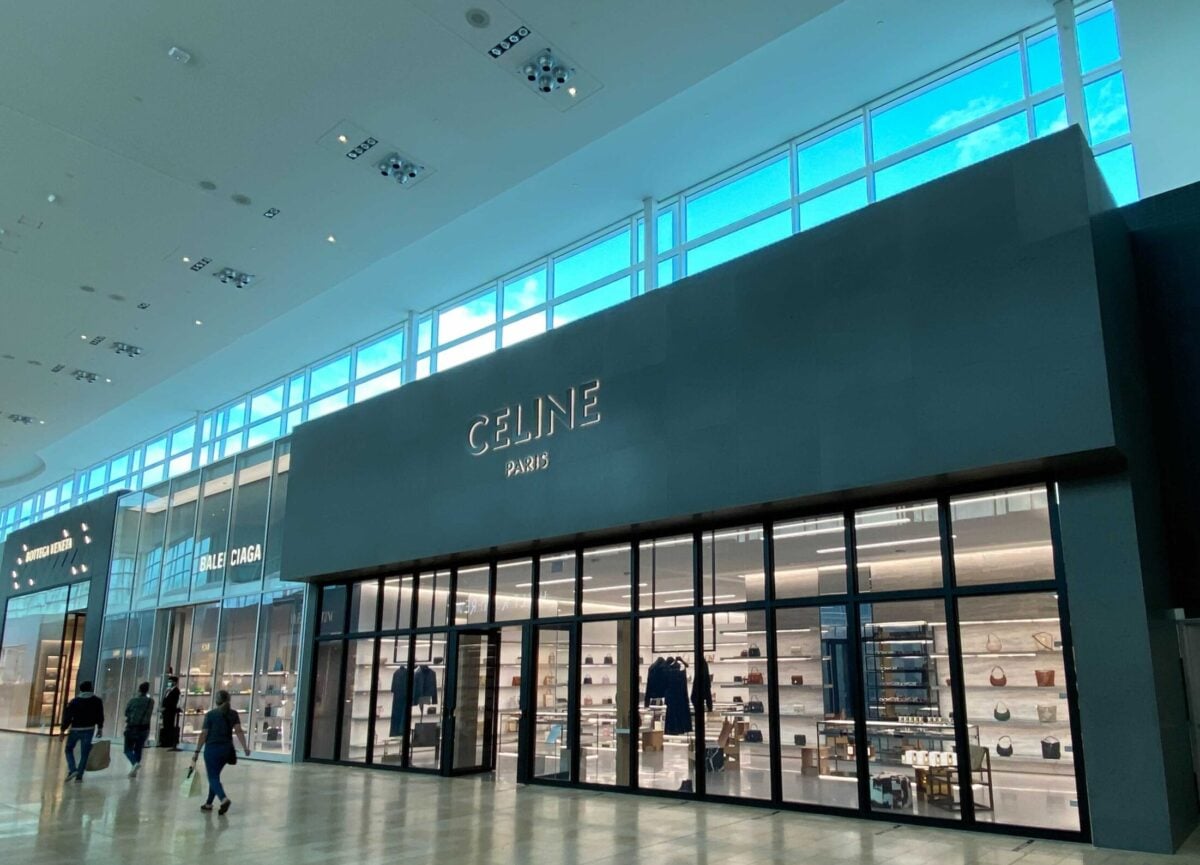
Celine at Toronto’s Yorkdale Shopping Centre (Photo: Craig Patterson)
In September of 2021, LVMH-owned luxury fashion brand Celine opened its first standalone Canadian storefront at Toronto’s Yorkdale Shopping Centre. It’s unknown if more standalone stores will open for the brand in Canada and Vancouver would be a likely market if it did. Celine also operates several concessions in the Canadian market within Holt Renfrew stores.
Celine’s Yorkdale location is across from Holt Renfrew’s enlarged flagship at Yorkdale in an expansion wing of the mall that opened in 2012. Celine occupies just over 2,200 square feet in an L-shaped configuration.
Celine is known for its womenswear and in the fall of 2019, the brand also launched a menswear line for the first time. The Yorkdale Celine store recently added some menswear. LVMH has owned Celine since 1996. The Celine brand was founded by Céline Vipiana in 1945, and was considered to be one of the first luxury brands in the industry.
In Canada over the past couple of years, Celine has expanded its direct-to-consumer operations through luxury retailer Holt Renfrew. Celine’s concessions at Holts are separated into categories in dedicated departments, with separate shops for leather goods and accessories, women’s ready-to-wear, and men’s ready-to-wear.
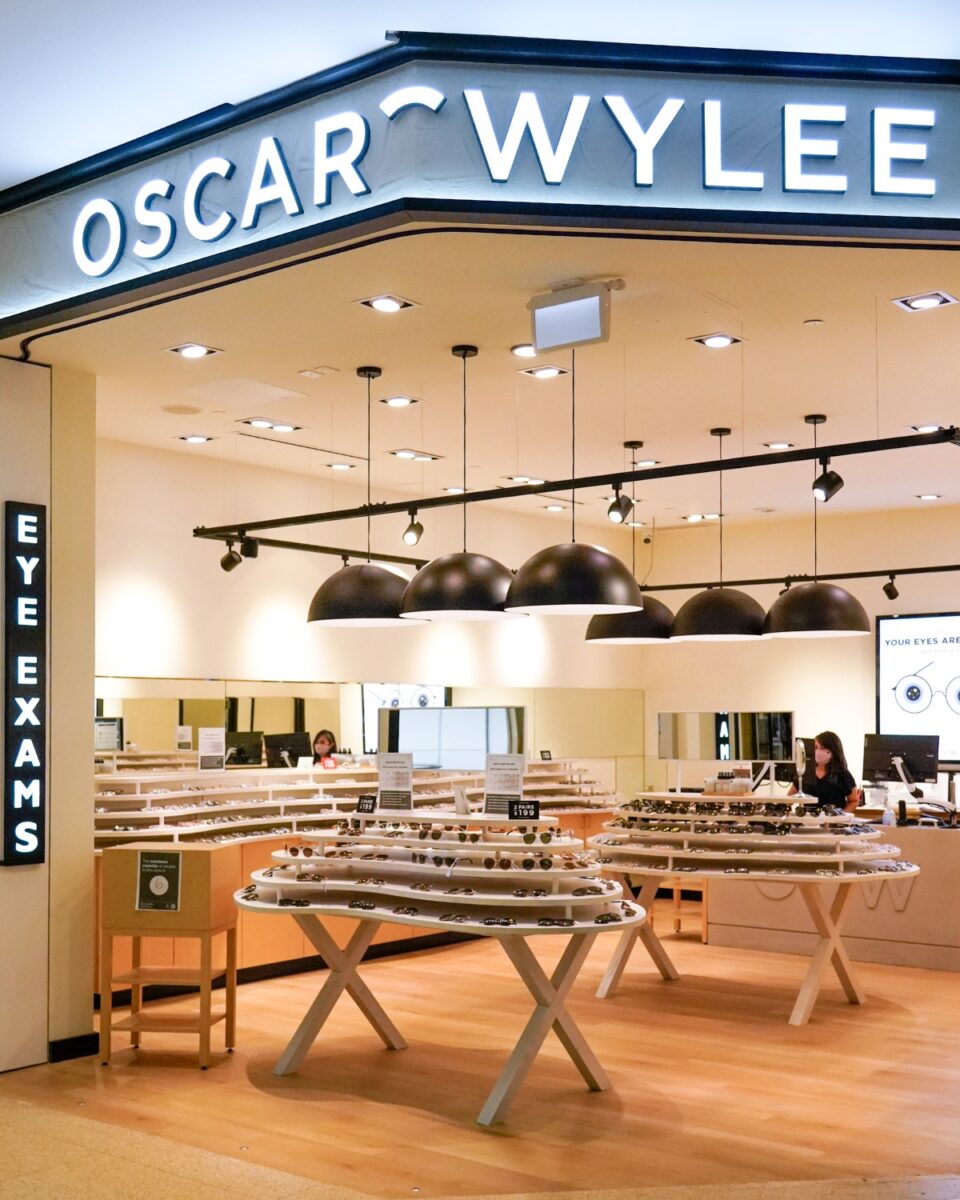
Oscar Wylee at West Edmonton Mall (Image: West Edmonton Mall)
Australian eyewear retailer Oscar Wylee expanded into Canada in the fall of 2021 with six store locations and more to come this year. Its first storefront opened in September at West Edmonton Mall in Edmonton, and a second opened in October at the Halifax Shopping Centre in Halifax. The brand says that is it known for its high-quality, affordable eye glasses and eye test services. Oscar Wylee already has over 100 stores and over 800 team members across Australia, New Zealand and Singapore. Broker Tony Flanz of Think Retail is working with Oscar Wylee in Canada.
The family-run company began as an e-commerce business and in 2015 after acquiring the company, brothers Jack and Bob Teoh opened the brand’s first physical stores in Australia. The stores are designed with a clean and modern aesthetic that aim to create a relaxing experience.
A joint-venture program allows the company to grow by partnering with optometrists to offer patients quality professional eye care and an exceptional retail experience. Designs are considered to be “modern, fresh and fashion-focused” and the brand is known for its “2 Pairs From $199” price point for both its optical and sunglass ranges.
Specsavers Store Exterior Woodgrove Centre B.C. (Image: Specsavers Canada)
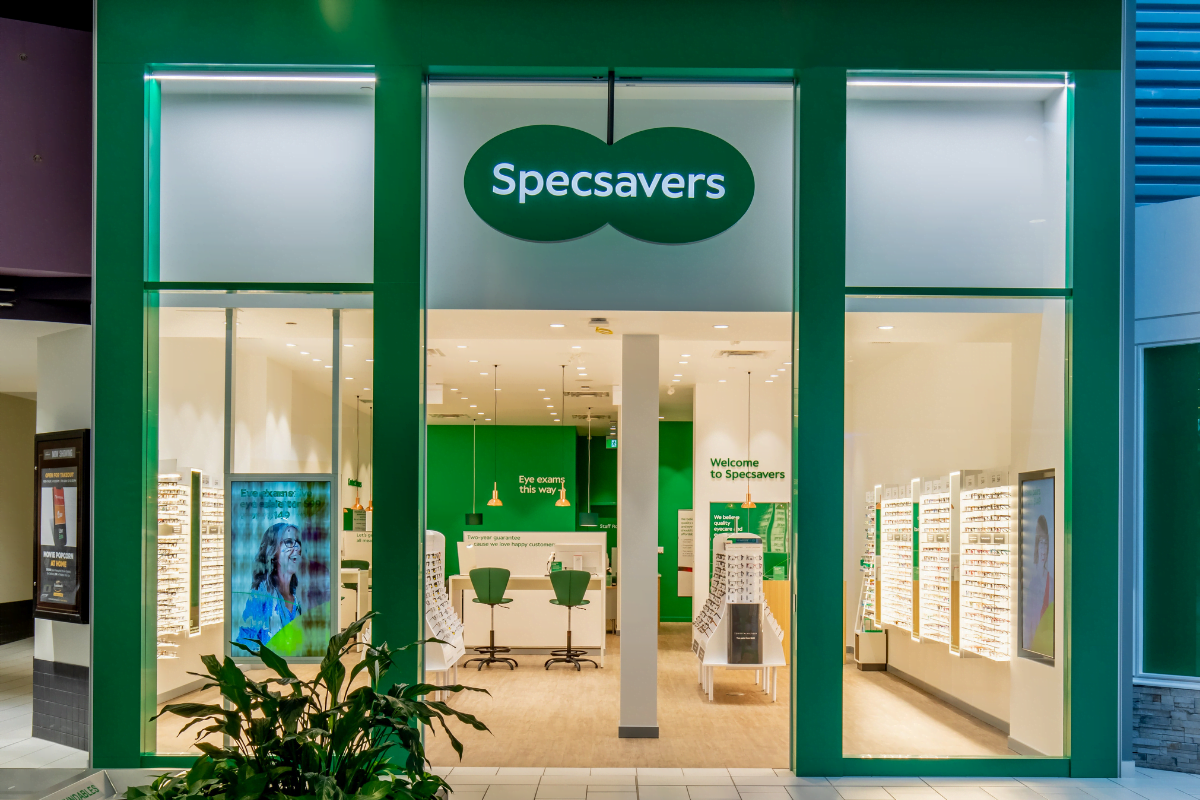
In early 2021, UK-based discount eyewear retailer Specsavers quietly entered the Canadian market by acquiring a chain of optical stores in British Columbia. The first branded Specsavers storefront subsequently opened in November at Woodgrove Centre in Nanaimo BC and many more are said to be on the way. Incredibly, this week the company confirmed that it would be opening 200 more Canadian locations.
Specsavers was founded nearly 40 years ago in the U.K. by optometrist husband and wife team, Doug and Mary Perkins, who set out to provide best-value, quality eyecare to everybody. There are now more than 2,300 Specsavers locations serving 41 million patients and customers in the U.K., the Republic of Ireland, the Netherlands, Sweden, Norway, Denmark, Finland, Spain, Australia, and New Zealand – and now Canada.
Acquired stores in British Columbia will be converted to Specsavers banners into March of this year, and a much bigger expansion is planned in Canada as the retailer looks to gain market share from competitors. This will be one to watch as it could put competitors under as it has in Australia and other new markets it has entered.
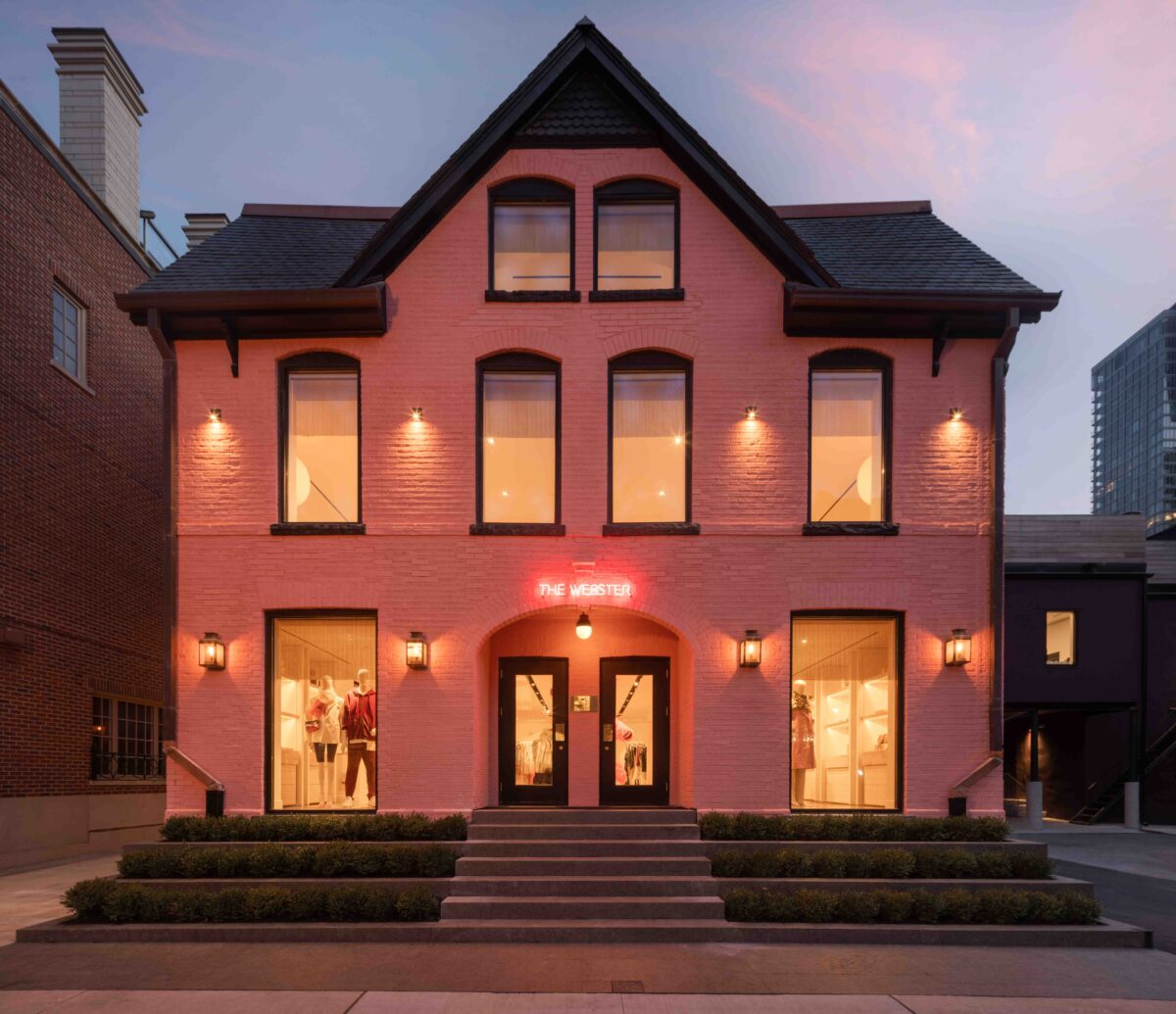
In November of 2021, unique Miami-based luxury multi brand retailer The Webster officially entered the Canadian market by opening its first international storefront in Toronto’s Bloor-Yorkville area. The impressive space spans three levels.
The Webster’s new Toronto storefront at 121 Scollard Street measures about 6,500 square feet. The pink brick exterior is adorned with a neon light of The Webster logo while a flamingo wind vane sits at the top peak of the structure in honour of the mascot created by iconic fashion illustrator Michael Roberts.
It is the eighth storefront for The Webster which was founded in Miami Beach in 2009, and the first international location for the retailer which is seeing remarkable success and sales growth even over the course of the pandemic. Founder Laure Heriard Dubreuil for years developed relationships with key brands and obtains some merchandise via consignment. Prior to founding The Webster, Ms. Heriard Dubreuil lived in Paris and worked as a top merchandiser for Balenciaga and Yves Saint Laurent.
It is currently not known if any more locations for The Webster will open in Canada.
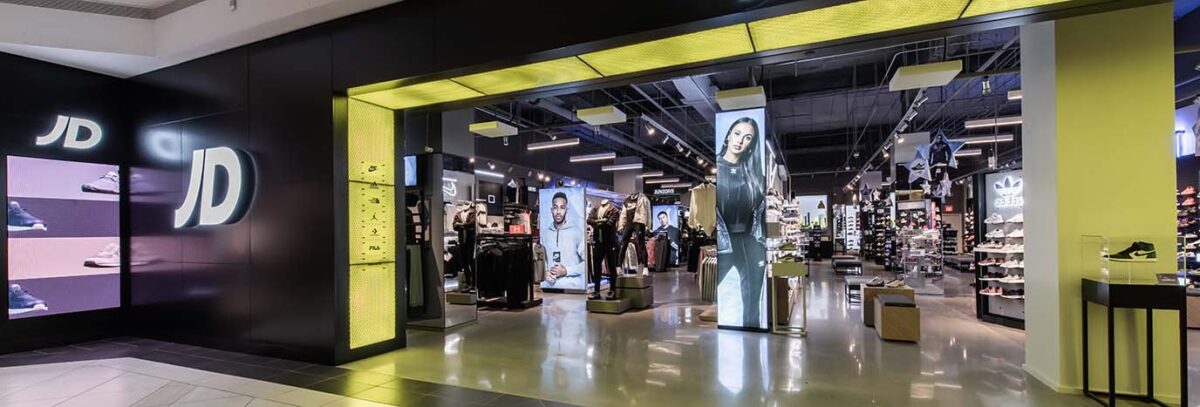
UK-based sports fashion retailer JD Sports expanded into Canada in November of 2021 with a storefront at CF Fairview Mall in Toronto. More locations will follow including Guildford Mall near Vancouver and next year at West Edmonton Mall in Edmonton with leasing being handled by Jordan Karp of Savills Canada.
JD Sports began in 1981 with its first store in Bury, Greater Manchester, and is now in 20 territories around the world with almost 900 stores globally including Ireland, Singapore, South Korea, and Portugal, to Germany, France, and of course the UK and US. JD Sports is a sports fashion retailer of branded sports and casual wear, combining globally recognized brands such as Nike, adidas, Puma and The North Face, with strong private labels such as Pink Soda and Supply & Demand.
Dozens of stores are expected for the Canadian market over the next several years with details to follow.
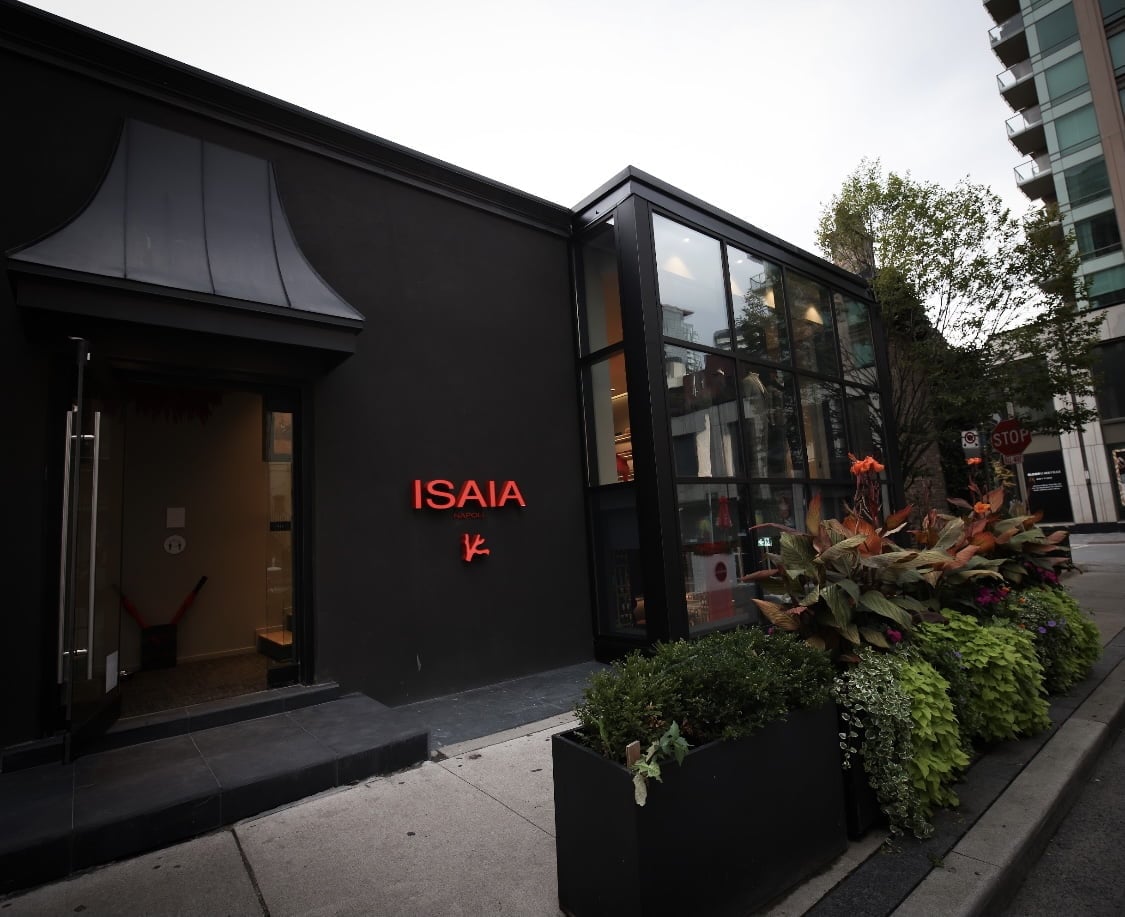
In the fall of 2021, Italian luxury menswear brand Isaia opened its first standalone Canadian store in Toronto’s Yorkville area. The Toronto flagship opened in a unique heritage building at 77 Yorkville Avenue. An upper level spanning more than 1,500 square feet includes rooms housing the brand’s range of ready-to-wear, made-to-measure clothing, leather goods, accessories and footwear as well as a tailor shop. The lower level includes a social space resembling a bar spanning about 800 square feet called the Vesuvius Lounge with windows facing onto Bellair Street.
The brand is priced at the high-end with suit jackets in the $3,500-$5,000 range, sweaters typically in the $1,000-$1,700 range, dress shirts are priced from $500, and trousers that start at about $675.
In an interview, CEO Gianluca Isaia said that he would like to open a second Canadian Isaia store in Vancouver, noting the strength of the market. Similar to Toronto, the brand would seek out a unique retail space ideally with heritage elements and other unique design features.
The Isaia brand is recognizable by its tiny red coral logo which is considered to be a good luck charm in Naples. Isaia was founded by Enrico Isaia in Naples, Italy in 1920 as a fabric store. In 1957, brothers Enrico, Rosario, and Corrado Isaia relocated the business to a village near Naples and converted the brand to a men’s tailoring company. The business continues to be family run with 18 stores operating globally as well as stockists in some of the world’s most prestigious multi-brand stores.
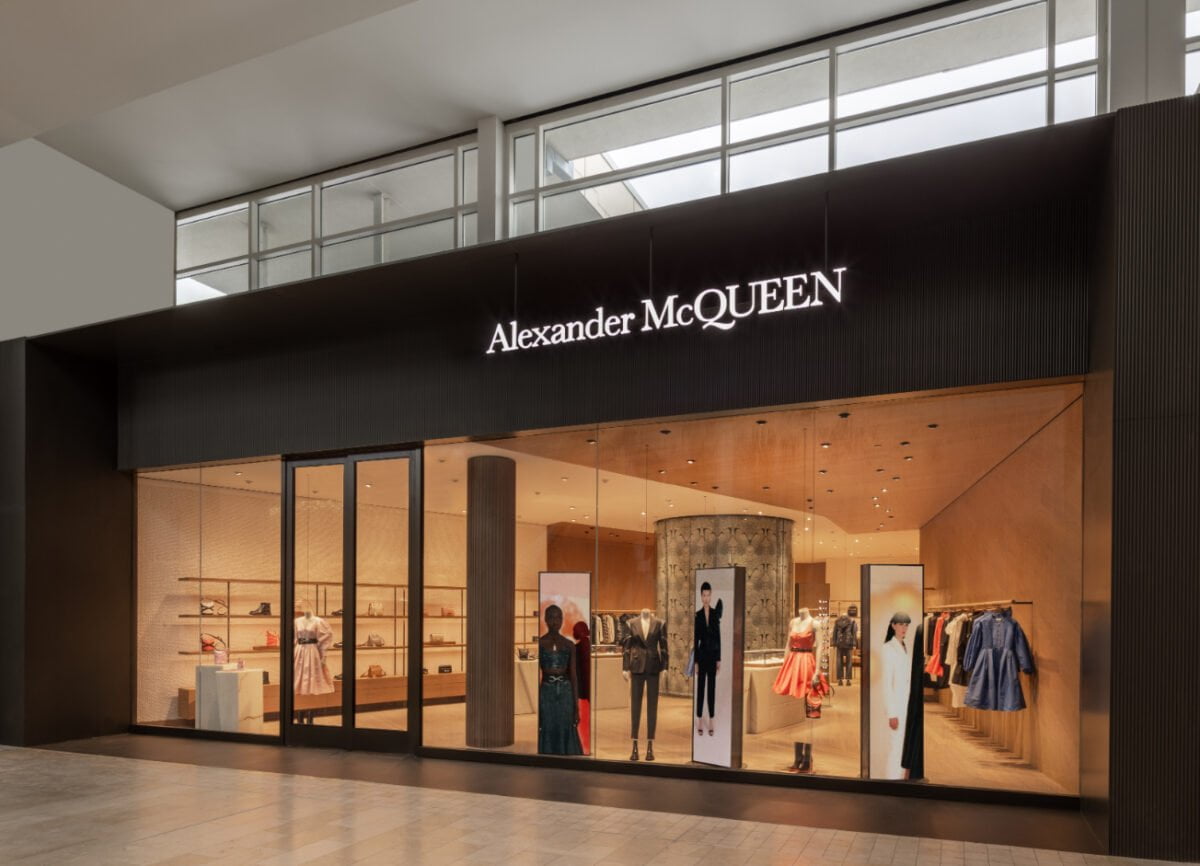
Alexander McQueen (Toronto, Yorkdale Shopping Centre)
Alexander McQueen at Yorkdale Shopping Centre (Image: Alexander McQueen)
In December of 2021, Kering-owned, UK-based luxury brand Alexander McQueen opened its first Canadian storefront at Toronto’s Yorkdale Shopping Centre. The boutique features a range of apparel, bags, footwear and accessories. The 4,000 square foot store’s design was conceived by creative director Sarah Burton in collaboration with the architect Smiljan Radic. Inside, McQueen clad mannequins hang from the ceiling throughout the store which the brand says references the narrative of the runway collections.
McQueen is located in the mall’s former J. Crew space between Montblanc and Burberry boutiques in the mall’s original luxury wing. It is not yet known if Alexander McQueen will open any more Canadian stores. The Vancouver market would be the likely next target for a standalone store, as would Toronto’s Bloor-Yorkville area.
The Alexander McQueen brand was founded by fashion designer, Lee Alexander McQueen, in 1992. He tragically died of suicide on February 11, 2010 at the age of 40.
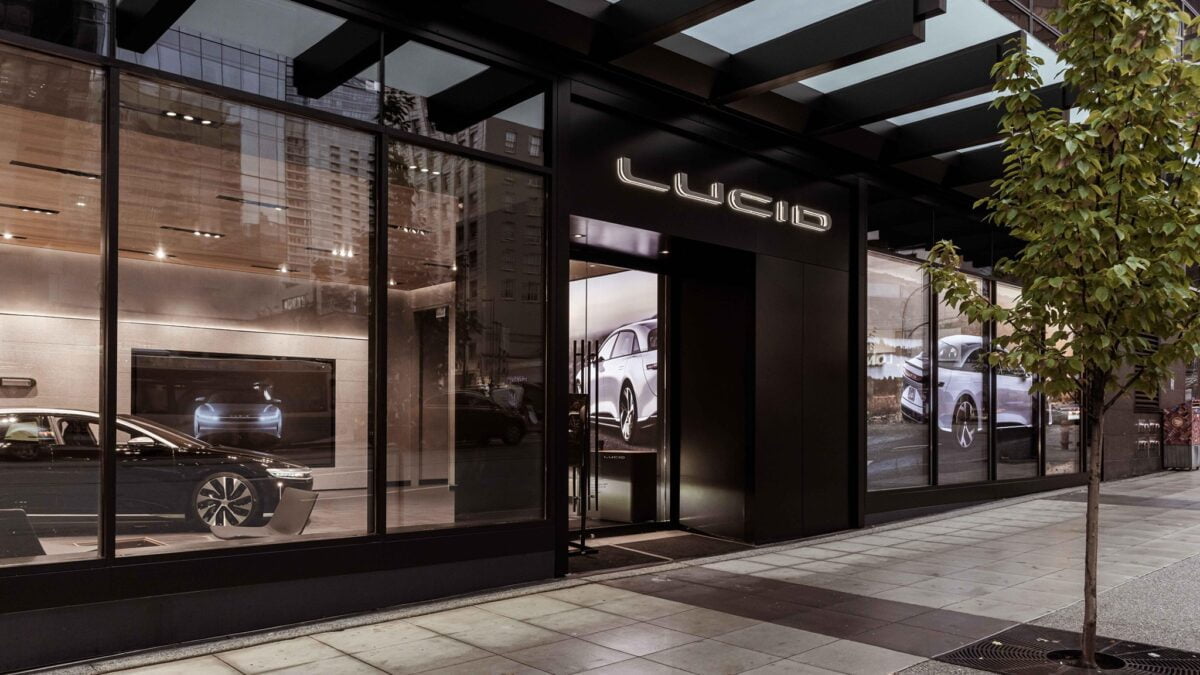
In December of 2021, US-based electric car brand Lucid Motors opened its first showroom in Canada at CF Pacific Centre in Vancouver. The store is in a retail space vacated by fashion brand Michael Kors. The storefront is located at street-level facing onto W. Georgia Street, allowing for vehicle access directly into the showroom.
A second Canadian location is under construction at Toronto’s Yorkdale Shopping Centre and several more are expected.
Lucid Motors is a new luxury electric vehicle company based in Newark California. The design of the Lucid Air, the company’s first vehicle, is said to have been influenced by the state of California. The interior of the Lucid Air including its colours, materials and finishes, is said to be inspired by the diversity of landscapes and geography of the state creating a “post luxury” aesthetic, according to the company.
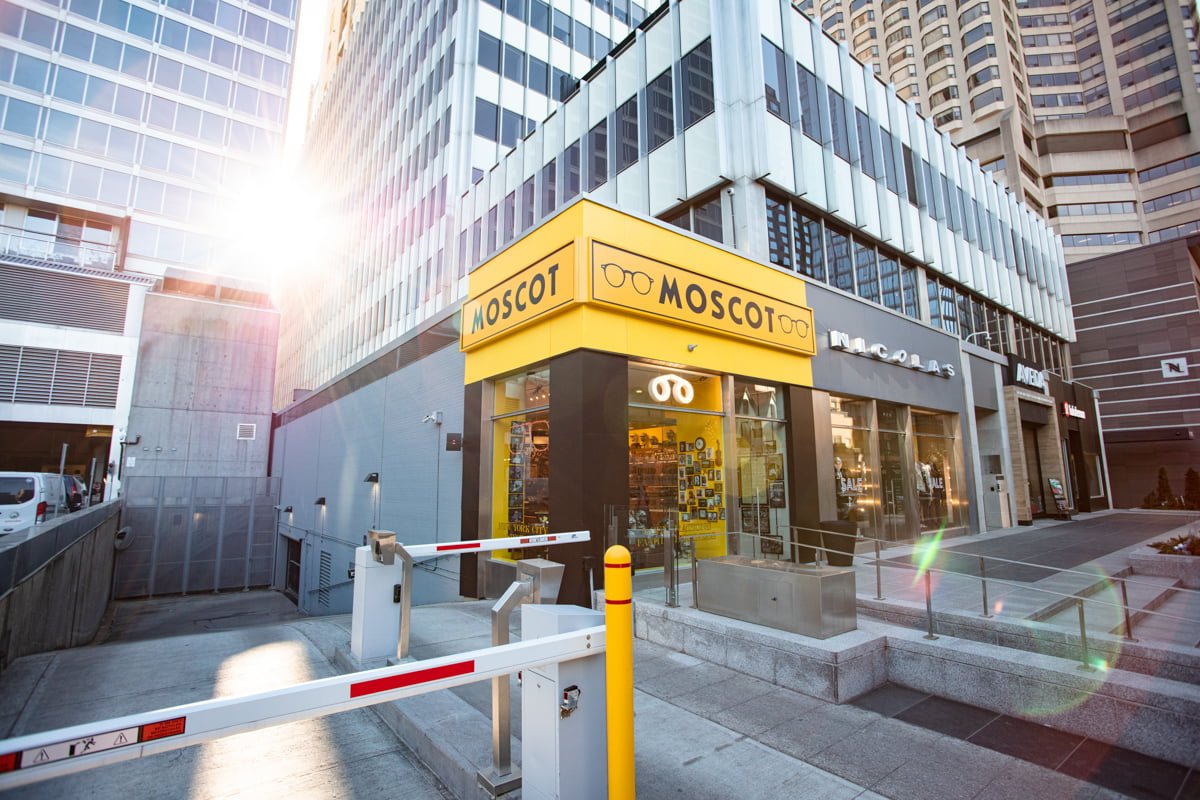
In December of 2021, historic upscale New York City-based optical frame and sunglasses brand MOSCOT entered the Canadian market by opening its first standalone store location in downtown Toronto. After testing the market, a Montreal location could follow according to the family-owned business which spans five generations and has just 18 stores in 12 cities globally.
The Toronto MOSCOT storefront opened at 153 Cumberland Street in Toronto’s upscale Yorkville area spanning more than 800 square feet replacing SEE Eyewear that occupied the space for about three and a half years. The MOSCOT store’s interior references historical elements found in the retailer’s stores in New York City including photography and a bright yellow colour scheme. MOSCOT’s full range of glasses frames are now available for the first time in Canada in the new store with some styles costing into the hundreds of dollars a pair.
Besides the retailers above, Retail Insider also reported on several first-to-Canada food and beverage concepts and we were first to report on Kisses From Italy and Jon Smith Subs entering the Canadian market with locations.
Retail Insider will continue to track international retailers entering Canada in 2022. This year is expected to see more than in 2021 given what brokers are saying in terms of interest from international retailers, and we have already reported on several of them. And next week we’ll report on new international entrants that have already opened in January, kicking off a positive start to the year at least in terms of store openings.
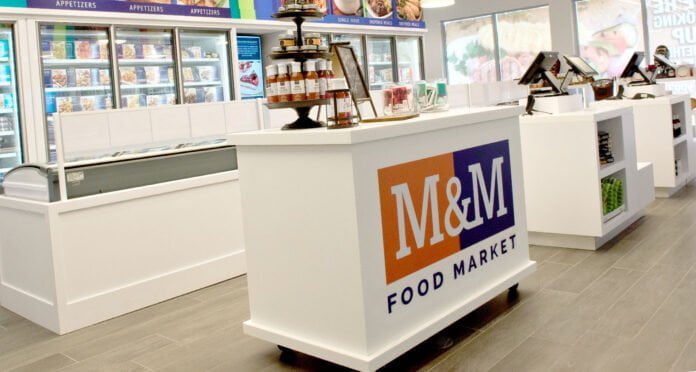
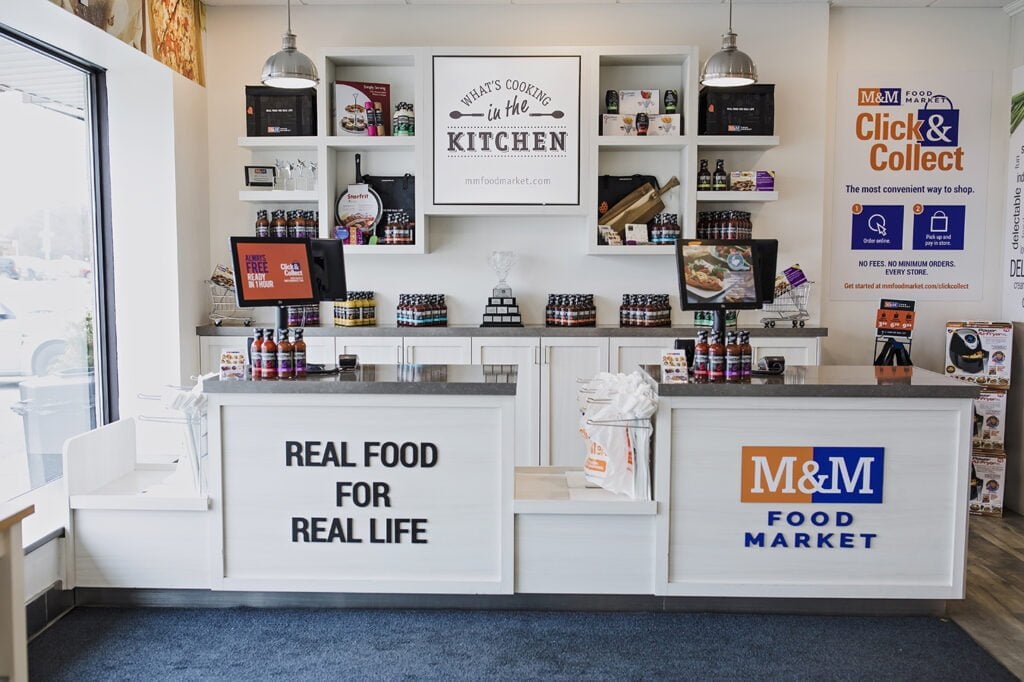
Parkland Corporation, a leading operator and consolidator of convenience retail and fuel marketing businesses, announced Tuesday it has entered into an agreement to acquire M&M Food Market, a premium, restaurant-quality frozen food retailer.
The acquisition includes over 300 well-located standalone franchise and corporate owned stores, over 2,000 M&M Express locations, and a well-established rewards program with approximately two million active members.
The deal is worth about $322 million, which will be funded out of existing credit facility capacity, said Parkland.
Ian White
“This acquisition provides a platform to grow our food offer, expand our proprietary brands, and advance our digital and loyalty strategy,” said Ian White, Parkland’s SVP Strategic Marketing & Innovation, in a statement. “Consistent with our commitment to create convenience destinations, M&M’s national store network, and innovative approach to food preparation and menu development positions us to offer high-quality food that complements our growing quick-serve restaurant offerings.
“We will grow these capabilities in all our operating regions and bolster our digital connection to customers by combining M&M and JOURNIE rewards programs. We look forward to bringing ON the RUN and M&M together to help customers make the most of every stop.”
White said the ON the RUN brand and its convenience store format is a critical component to the Parkland strategy.
Image: M&M Food Market
“We see M&M playing a significant role in bolstering our desire to become a convenience destination for our customers. M&M actually combines two great brands and teams with a proven track record of success and growth,” he said.
“For Parkland, a big component of M&M is their food first culture and their ability to allow us the opportunity to support our convenience as a destination but do it through a quality food offer. It will be complementary to our branded food program as well.”
The existing M&M locations will continue as the company has a “terrific” franchise network and standalone business, added White.
“By combining the M&M business and the ON the RUN business, we’ve got a very strong value proposition,” he said, adding that bringing those together can form a new concept to meet the needs of the changing convenience consumer.
“The way to think about this is a scenario in the future . . . as people spend more time at convenience stores with a place they want to go versus have to go. What we want to be able to do is provide an environment where there’s a branded food offer, where there’s seating, where there’s opportunity for take home that M&M would provide in a welcoming and sort of enjoyable environment.”
ON THE RUN
Currently, M&M Express is in 140 Parkland locations.
“We’ve committed to 50 ON the RUN standalone locations by 2025 and we think combining that standalone ON the RUN location with an M&M’s would be very beneficial,” explained White. “We see the ability for between 20 and 30 per cent growth over the next five years with the M&M brand and even more than that combined with ON the RUN.
“We think there’s hundreds we’ll call it of broader application to the M&M Express program and probably between 200 and 300 locations that are applicable for the ON the RUN network.”
White said the current M&M leadership will remain in place as it’s an important component of the transaction.
In Canada, Parkland has 1,994 retail company and dealer sites, 632 in the US and 655 internationally.
Parkland sees a long runway of growth opportunity with M&M. Currently, Parkland has about 350 ON the RUN flagship convenience stores and is on track to grow that to 1,000 over the next few years with M&M playing a key role and contributing to that growth and being part of these new stores with great opportunity in Parkland’s US and international business.
Andy O’Brien
“Parkland’s ON the RUN brand is a convenience retail leader and we are excited to combine our two offerings,” added Andy O’Brien, CEO of M&M, in a statement. “M&M and its franchise partners share Parkland’s customer focus and passion for quality food. The combination of our innovative food capabilities and Parkland’s more than 3,000 retail locations in 25 countries creates an immediate runway of growth and expansion opportunities.
“Today marks the start of a bold new chapter for our company and stands as a testament to the vision and tireless work of our dedicated team. After a comprehensive examination of our experience, our products, profitability, dedicated franchise partners, impressive store network, and our business strategy, Parkland concluded that M&M will be an essential part of achieving their long-term goals in the food industry.”
M&M Food Market was founded in 1980. It rebranded in 2016 including the name change from M&M Meat Shops, a new store design, new products and packaging, a new website, and newly trained Meal Advisors. It is headquartered in Mississauga with locations in all 10 provinces, Yukon, and the Northwest Territories.
Parkland is a leading convenience store operator and independent supplier and marketer of fuel and petroleum products. Parkland services customers across Canada, the United States, the Caribbean region and the Americas through three channels: Retail, Commercial and Wholesale.
Photo: M&M Food Market
Parkland said the acquisition represents one of many steps it is taking in its retail diversification strategy to expand its proprietary food offer, customer reach and innovation pipeline.
“Led by an experienced management team who have a proven track record of growth and a food-first culture, M&M will create quality food options that our customers can consume fresh-from-frozen, both on site and on the go, and prepared from frozen at home. We will leverage these capabilities throughout our existing network and soon to be launched standalone ON the RUN convenience locations,” said the company.
Parkland said the acquisition enables key elements of its strategy:
Advances its enterprise food strategy by adding a proprietary brand, experienced team, franchisee network, and a scalable fresh and fresh-from-frozen food growth platform across all our markets. “We will leverage M&M’s expertise and track record of developing successful menus in its innovation kitchen to evaluate and develop additional fresh and quick-serve food choices across our network.”;
Advances its digital strategy and creates a premier Canadian loyalty program by combining JOURNIE and M&M’s reward programs which has two million active members. It will create extensive cross-promotional opportunities and form one of Canada’s premier loyalty programs;
Enhances its ON the RUN customer value proposition and M&M Market is integral to it growing On the Run network, bolstering its in-store, e-commerce and home delivery offers, and supporting its standalone convenience concept;
M&M leverages a well-established, highly efficient food preparation and distribution network, requiring limited capital investment to efficiently serve its retail locations;
M&M’s royalty fee-based operating model creates a ratable stream of cash flow. Parkland aims to grow M&M’s Canadian annual run rate Adjusted EBITDA to approximately $55 million in three years.
Searchlight Capital Partners acquired M&M in 2014 and today it operates 315 franchised stores and over 2,000 M&M Express locations through innovative partnerships with top retailers including Rexall, Beaudry-Cadrin and Home Hardware.
“We are excited about the next chapter for M&M and applaud Parkland’s innovative integrated retail approach that is poised for strong expansion of the brand,” said Erol Uzumeri, Founding Partner of Searchlight Capital, in a statement. “We extend our warm appreciation and gratitude to M&M’s stellar management team, employees, and franchise partners as they have established M&M as a high-quality, trusted food brand for Canadians nationwide.”
The transaction is expected to close in the first quarter of 2022.
M&M Food Market was advised by RBC Capital Markets, CG Sawaya Partners, and Goodmans LLP.
Podcast [Interview] Speaking with Sean Tarry, New Editor-In-Chief of Retail Insider the magazine
Craig and Sean discuss this year’s launch of the Retail Insider the magazine, including what it will entail and how it will fit into an expansion of the Retail Insider Media business in 2022.
The Interview Series podcast by Retail Insider Canada is available on Apple Podcasts, Stitcher, TuneIn, Google Play, or through our dedicated RSS feed for Overcast and other podcast players. Also check out our The Weekly podcast where Craig and Lee discuss popular content published on Retail Insider which is part of the The Retail Insider Podcast Network.
Retail Insider content discussed this episode:
Sean Tarry, Editor-in-Chief, Retail Insider the magazine
Drop us a line at Craig@Retail-Insider.com. You can also rate us in Apple Podcasts or recommend us in Overcast to help more people discover the show!
Background Music Credit: Hard Boiled Kevin MacLeod (incompetech.com). Licensed under Creative Commons: By Attribution 3.0 License. http://creativecommons.org/licenses/by/3.0/
January 18, 2022 —Montréal, Quebec—Rose Buddha, the renowned Montréal eco-friendly clothing brand, is proud to introduce a new financial partnership with the cofounders of Frank And Oak, through funding from the Noble Pace investment fund.
Image: Maxime Morin
This collaboration coincides with Rose Buddha’s 5th anniversary, a milestone the brand intends to mark with an ambitious growth plan. In the years ahead, the team envisions becoming much more than a clothing company. Over the course of 2022, they will announce several major growth initiatives, including a revamping of Méditations Rose Buddha, one of the most downloaded meditation apps in Quebec.
“We launched Rose Buddha in 2016, with an initial investment of $300. Today, our sales turnover is more than $5 million. We need to work with the best if we want to keep serving our customers and fulfilling our mission,” says Maxime Morin, Rose Buddha cofounder and president.
Ethan Song and Hicham Ratnani—entrepreneurs and Noble Pace partners
Ethan Song and Hicham Ratnani
Ethan Song and Hicham Ratnani are the Canadian duo behind the well-known brand Frank And Oak. Founded in 2012, Frank And Oak designs conscious, fashionable clothing through sustainable, eco-responsible processes. The B Corp certified company has become popular in both Canada and the United States. In 2020, it was sold to UCG, an American investment fund.
“This will be our first investment with our Noble Pace fund. We created Noble Pace so that we could continue to support businesses that strive to make a positive impact on our planet. Rose Buddha won us over with their team and their values. We believed in the company’s potential to expand its identity and establish itself as more than a clothing brand,” says Hicham Ratnani, now a Rose Buddha partner.
“For us, it’s amazing to have Ethan and Hicham on board. Long before Rose Buddha came to be, we were loyal clients and obsessed with the brand—yes, we loved the clothes, but their values also really spoke to us,” says Rose Buddha cofounder Madeleine Arcand.
A new addition to the Rose Buddha management team
Marie-Ève Lemay, fashion designer and yoga teacher
Marie-Ève joined Rose Buddha as a project manager in March 2021. Her experience in the fashion world includes over five years at Logistik Unicorp Inc., where she worked as a technical designer, garment designer, and product development coordinator. It didn’t take long for her to become a cherished member of the Rose Buddha family. The management team has recently welcomed her as a partner.
“I love being able to count on Marie-Ève’s talent and I’m thrilled to have her on board as a partner. Beyond her flair with fashion, she completely embodies Rose Buddha’s values,” says Maxime Morin.
Lise-Marie Cayer and Stéphane de Sampaio, among Rose Buddha’s first collaborators
Lise-Marie and Stéphane have been part of the Rose Buddha adventure from the beginning. For the past five years, the powerhouse duo has run Fil et Crayon, a Montréal-based company offering a range of à la carte services in the apparel and branding industry. A cherished collaborator, Fil et Crayon was instrumental in several of Rose Buddha’s flagship products. Before founding Fil et Crayon, Lise-Marie was a key player behind the brands Voyou and Blank. So, she’s well versed in the challenges of retail and fashion.
Dominic Gagnon, serial entrepreneur and cofounder of Connect&GO
Dominic Gagnon
A prominent entrepreneur in Quebec’s tech world, Dominic Gagnon is known for his role as president at Connect&GO, the global leader in smart bracelets for leisure, sports, and entertainment. The active, well-rounded investor is also a major player at Centech where he works as an Entrepreneur in Residence. On top of that, he serves on the Board of Directors at Zù, a unique and creative not-for-profit founded by Guy Laliberté. You can read Dominic’s blog every week at LesAffaires.com.
“I chose to invest in Rose Buddha because I could see they had a fabulous team with the potential to build a strong brand throughout Quebec, Canada, and internationally,” says Dominic Gagnon, new Rose Buddha partner and board chair.
Leading experts to support dynamic growth
With the arrival of these new partners, Rose Buddha is ready to launch a major growth plan that stays true to the brand’s core values. In the last year alone, the company has grown more than 400% and 2400% over four years.
About Rose Buddha
Rose Buddha is a B Corp certified company that creates long-lasting athletic wear and accessories out of recycled materials and natural, organic fabrics. From idea to shipping, each product is made in Canada, following fair trade, ethical practices that respect the brand’s creators and the planet.
Retail Insider is streamlining its Canadian retail news from around the web to include a handful of top news stories that can be viewed quickly during the day. Here are the top stories from the past 24 hours.