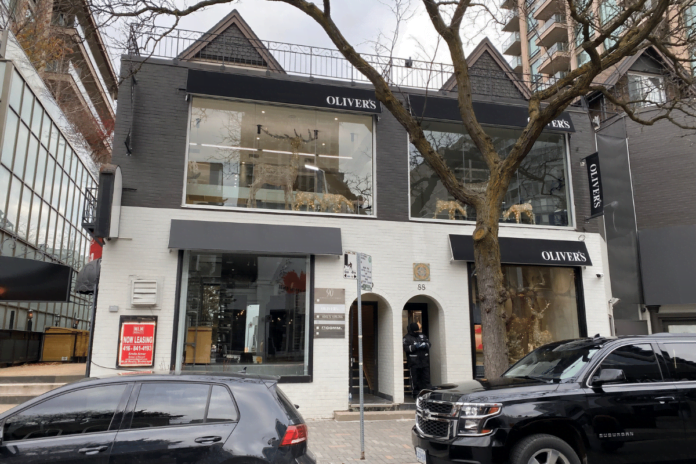
EXTERIOR OF NEW BOUCLAIR CONCEPT STORE. PHOTO: BOUCLAIR
After a restructuring process that included the closure of about a third of its stores, Bouclair, a leading destination for home decor in Canada, has embarked on an ambitious initiative to launch new concept stores in the chain.
Cesar Morales, Marketing Operations Manager of Bouclair, said the new Bouclair concept was first launched last year with the openings of the Brossard, Boucherville, Boisbriand, Mascouche, and St-Jérôme stores. “Bouclair continues to grow and plans to open more new concept stores in 2021,” he added.
“When you arrive you feel at home,” he said. “We basically have a multi-sensorial environment where you feel cozy and welcome by the fragrance that we have. We have a curated playlist. All the products are placed in an easier way to shop for people and with our store advisors that will help you find the right solutions for you.”
“We have images by collection showing you how to decorate so you are also learning at the same time that you are shopping through the different images and the different setups that we have there.”
Sid Lee Architecture partnered with Bouclair to design the prototype and subsequent stores.
BOUCLAIR PLANS TO ADD MORE CONCEPT STORES IN 2021
The company currently has 55 stores open in Canada in Alberta, Manitoba, Quebec, Ontario, and New Brunswick. The first store opened in 1970 in Montreal.
“Bouclair is basically a home furnishing retailer that offers coordinated decor to customers. We are their interior designer for them with complete decor solutions they can apply to their home,” said Morales.
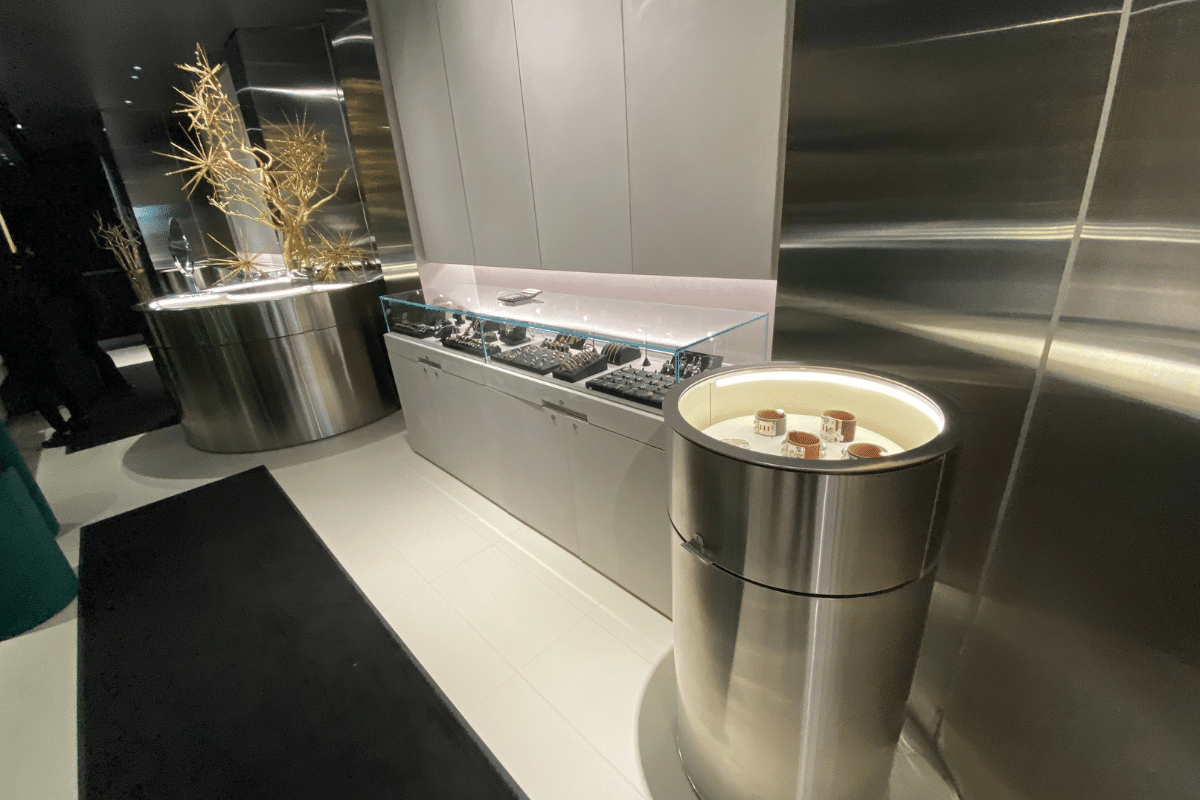
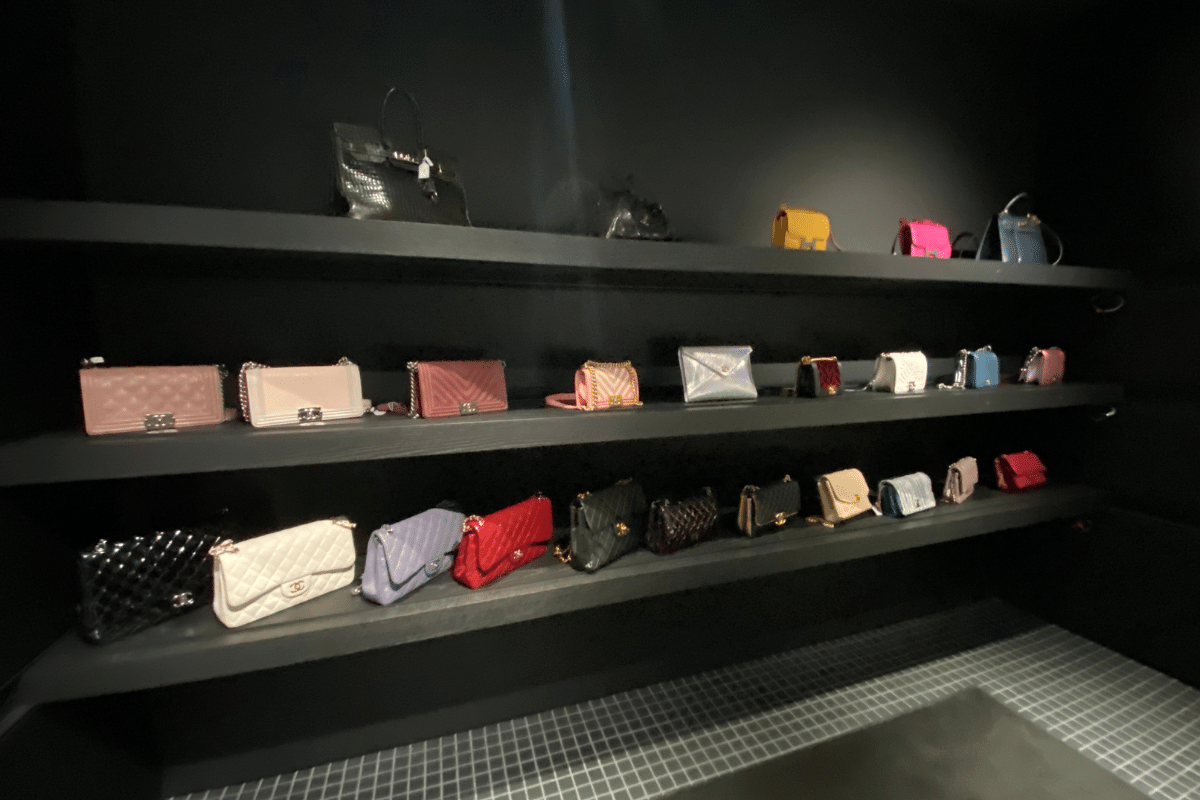
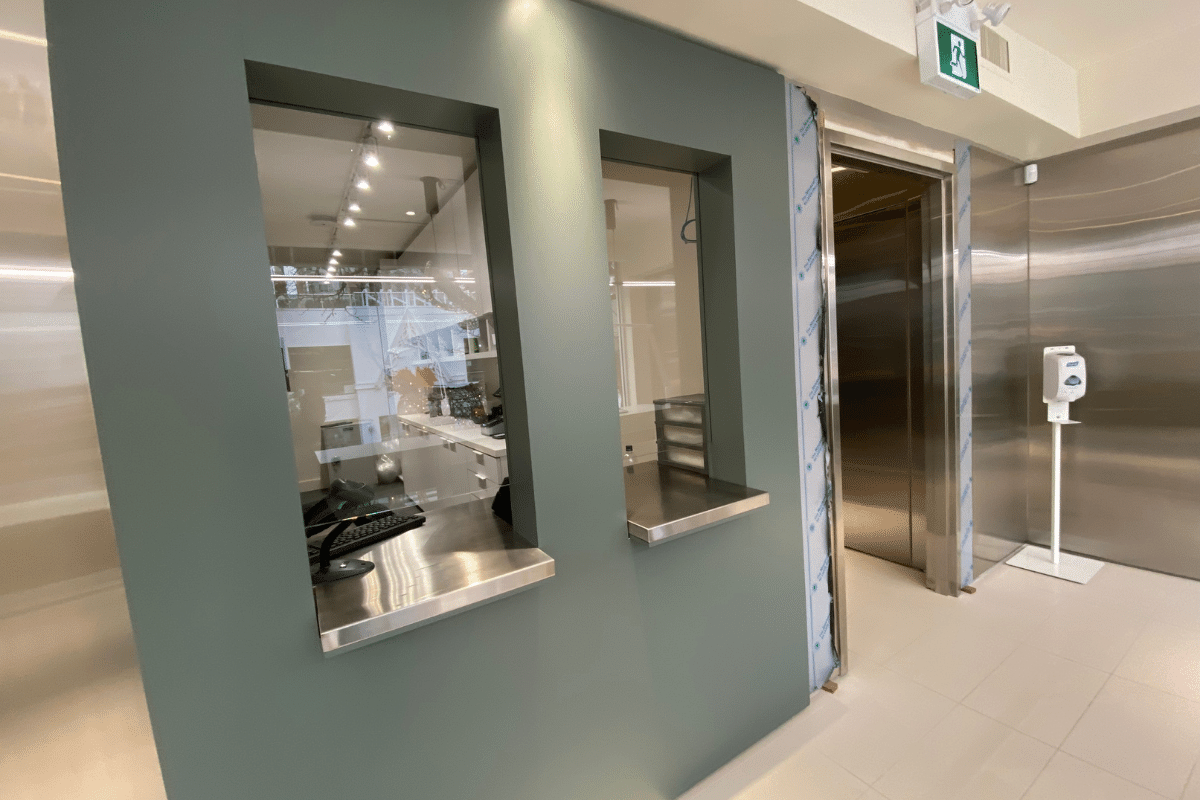
PHOTOS OF INTERIOR OF NEW BOUCLAIR CONCEPT STORE. PHOTOS: BOUCLAIR
1 of 7
Chicoutimi and Barrie, as well Mega Centre Sainte Foy and Les Galeries de la Capitale, both located in Quebec City, will all undergo a transformation of their current brick-and-mortar concept to one that offers a multi-faceted experience where customers can easily imagine recreating the looks in their own home, making it more enjoyable to shop for home decor pieces.
Morales said customers will enjoy the new Bouclair atmosphere and be inspired by decor accents displayed in a way that showcases each collection’s style, furniture displays full of arrangement ideas, rich visual tools that express the vibe of each collection, and decor experts available to help with any decor project. Each store has been revamped with the black store logo and storefront, along with natural woods mixed with greenery, adding to the brand’s new, sleek and trendy image.
“We are also going to be renovating 10 more stores next year,” he said.
Morales said through its restructuring process Bouclair kept the company’s stronger and best locations.
“We have also been growing the ecommerce to support the markets where we don’t have stores. For us, it’s very important that our customers are still able to order our products. We have seen a tremendous increase in demand where people are still in many markets that we don’t have stores and are ordering now online,” he said.
“It’s actually basically working very well for us. The online business is something that we’re growing. We have every week a new decor to propose to our customers on our home page so we can inspire them. We have videos where we basically show them how to dress their windows, decorate and we are also trying to have new gadgets for people to visualize the decor on their houses.”
It was the summer of 2017 when Taza Collections was created with a mission and goal to create a better world for those in need.
Through the art of jewelry, two young entrepreneurs Tahir and Zakiya Natha started in Calgary what would today be known as Taza Collections. Siblings Tahir was 12 and Zakiya was 10 when their online business began.
“I personally have always had an entrepreneurial mindset,” said Tahir. “My parents from a young age decided you know what why don’t you guys try starting something and they kind of knew someone in the wholesale bead industry. It was an easy way to start something, gain some experience, gain some knowledge around it.
“So we started this bracelet business. It was surrounded by the fact that maybe this was something we can create for ourselves. So we’ve been selling bracelets and recently we started selling clothes on there to support the Black Lives Matter movement.
“A lot of our focus is charitable based. We’ve partnered with the Aga Khan Foundation at one point. We’ve partnered with the Ronald McDonald House. We’ve partnered with the Calgary Women’s Emergency Shelter. And all in an effort to just give back to the community. That was one of the main points as to why we started this.”
TAHIR NATHA
ZAKIYA NATHA
ALL TAZA COLLECTIONS PRODUCTS ARE SOURCED IN CANADA
Tahir said all the products sold on the ecommerce site are sourced in Canada.
“It takes time to grow and I think slowly we’re seeing that growth pattern upwards a little bit. It was definitely a slow start but now I think we’ve built a little bit of a brand reputation within our own customer base and that’s where predominantly we see people coming from,” he said.
“But we’ve done a lot of efforts in terms of marketing and trying to get a large social media presence. So we’re seeing a slight upwards trend for sure. Just like anything it takes time.”
TAZA BEADED BRACELETS. PHOTO: TAZA
The retailer’s target audience is shoppers who focus on spending local. The company therefore has a big push for local and made in Canada products.
“We try to provide something that feels like it could be in the luxury market but we try to bring it at an affordable price. So it’s kind of more available to all. That’s the model. Luxury made affordable,” said Tahir.
“We have two large demographics which is the millennial age group and then you have the 65 plus age group.”
Going forward, the siblings would like to continue to expand the venture into different areas. Right now they are looking at ways to expand the concept and build its focus and perhaps look at a larger charitable component to it.
Would they consider a physical store location?
“Definitely a thought we’ve had and potentially in the future. I think right now the largest focus is growing the ecommerce side of things and seeing how far we can push that,” said Tahir. “And then maybe down the line in a couple of years, considering maybe not a permanent but even a pop-up shop in different places contributing to that.”
Tahir and his sister run the business but their parents are there to support them when needed.
They don’t have official titles but Tahir is like the CEO of the business while Zakiya supports on the design side of things.
Tahir is currently in Grade 11 and Zakiya is in Grade 9. They are doing online school this year through the Vista Virtual School. Tahir also works at a software development firm part-time.
Global commerce platform Lightspeed has announced the initial availability of Lightspeed Subscriptions, a new module that allows local retailers using Lightspeed Payments in North America to collect recurring revenue seamlessly through their POS in time for the holidays. Gaining a foothold within the thriving health and wellness vertical, Lightspeed introduces the new feature to provide retailers with an innovative tactic to build customer loyalty and future-proof their business.
Nearly half of consumers will fundamentally change the way they shop as a result of COVID-19, with 34 percent indicating they would pay more for local products. Coupled with an increase in demand for subscription boxes and services driven by the global pandemic, Lightspeed Subscriptions equips independent businesses with a vital sales strategy as consumers use their holiday dollars to shop local and support their communities this gift-giving season.
Lightspeed Subscriptions supports a multitude of complex SMBs at the core of Lightspeed’s retail customer base. For example, retailers can sell subscriptions that will regularly replenish a buyer’s favourite products or surprise customers with new specialty items every month. Other businesses like gyms or spas can offer subscriptions that grant consumers access to regular services or exclusive rewards.
“The introduction of Lightspeed Subscriptions further adds to our comprehensive toolbox of solutions for complex retailers,” said Dax Dasilva, Founder and CEO of Lightspeed. “We’re approaching a fundamentally different 2020 holiday sales season, and local retailers need to gear up for a dramatic shift in shopping habits. With this in mind, we’re equipping merchants with an exciting new service that promises a source of uninterrupted revenue and will continue to fuel their businesses into the New Year.”
LIGHTSPEED SUBSCRIPTIONS
Key Advantages of Lightspeed Subscriptions for Local Retailers:
Provides Stable Revenue: Recurring payments guarantees income at regular intervals, which merchants can depend on during unpredictable times
Builds a Loyal Customer Base: Convenient and personalized product/service offerings boost brand loyalty and customer retention
Integrates Directly into POS: As an add-on to Lightspeed Retail, ensures simple and unified set-up within the existing POS platform
Ensures Secure, Automated Payments: Credit card information is securely stored for future automatic Subscription sales with customer consent (PCI Compliant). Failed payments are also automatically reprocessed and expired cards will continue to work, even as the bank replaces the physical card to ensure minimal interruption for the customer
This latest solution follows several other recent Lightspeed innovations for retailers such as Mobile Tap, Digital Wallet, and Analytics Core. Following this initial launch, Lightspeed also will be developing plans to roll out Lightspeed Subscriptions for eCommerce.
Retailers have been in a quandary for several months, not knowing if they should hire during the COVID-19 pandemic. The question many are asking is: what if everything shuts down again?
Overall, there has been next to no signs that consumers are worried about the second wave of COVID-19. FACT: Consumer spending was up at least 5% by mid-September. This figure is identical to how consumers were spending in January 2020. While spending certainly tanked in April of this year, that trend was gone by the end of June with no signs of abating so far.
Surprisingly, of all the retail categories to return to former levels, clothing sales showed the strongest revival. Are we amazed? Yes clothing, jewellery, and gift sales are actually up 1.5% over last years results.
Yet at the same time, most retailers are reporting they have only returned to 40% of their previous staffing levels.
The question becomes: How can sales be up and staffing levels are drastically down? Were retailers really overstaffed by 60% last year? Or is something else going on?
Most retailers only brought back their highest performers from layoff. The old 20/80 rule might be rewritten as the 40/60 rule. Meaning, that a small percentage of your staff generate the most volume. The rest of the staff is “dragged along” because no one can be bothered to retrain or replace them.
Did retailers suddenly get that much more efficient? Did training levels increase this drastically during lockdown? Perhaps.
If this theory is true, that you only need the best staff and not the rest, what steps do retailers need to take to improve the entire talent pool?
An important question to ask: If sales continue to rise, do you really have enough staff to generate the maximum sales? (The principal being it takes 6 staff on the sales floor to generate $1 million in clothing sales).
Retailers, are you working your best players to death, loading them with so much work that they will likely leave you? Are you afraid to replace your furloughed weaker staff with higher talent for fear of looking like mean guys?
There are two sides to the story.
From the retail talent pool, they will tell you they feel like they are working in sweat shops, they are so understaffed. They are burning out quickly and don’t feel the holiday selling season will be maximized at all. Many are planning their exit from retail altogether. Working in retail is no longer “fun”. The drudgery of crowd control, infection control, high strung customers, and lack of inventory is wearing even seasoned retailers.
From the executive suite, which is completely baffled as to why sales are up at all, massive skepticism leads it to believe the bottom will fall out any day and so it’s best to keep staffing levels low. After all, isn’t online shopping the way retail is headed? Not exactly.
Nearly to the minute all physical stores reopened following COVID-19 shutdowns, online sales began to decline and physical brick and mortar stores began to rebound. The major problem is not the lack of shoppers so much when compared to the lack of seasonal inventory. Orders got cancelled. Nearly every store at September 1 had only 25% of their prime selling space stocked with current goods.
The daily headlines of retail chains filing for protection has most retailers terrified to do much “growth” planning.
However, if they followed their own sales reports and ignored the external drama, their decisions would be very different. They would be staffing up for a likely strong holiday shopping season. The evidence is clear. Consumers want to shop.
HIRE, AND HIRE FAST
This is the time retailers should be culling their weakest performers, retraining the salvageable, and actively seeking to hire new top performers.
Remember, retail was short 10% of optimum staffing levels before COVID-19 hit. Now it is worse as staff are moving away from retail careers.
Either retailers believe the evidence from their own data and accounting, which indicates sales are consistent and growing, or they follow disaster headlines and plan to shrink. Few-to-no retailers have ever shrunk their way to success.
Hire, and hire fast. Grab this spending surge while you can.
My firm, Best Retail Careers International, launched a recruit-by-membership program to help the industry retain the best talent. For luxury retailers, we also launched Luxury Careers Canada which is working with the top brands and retailers, and features a job board with available positions. We have access to over 50,000 potential candidates directly and even more through word-of-mouth.
Suzanne Sears is the President of Best Retail Careers International and Luxury Careers Canada.
By Anthony Panacci and Emily La Mantia, Filion Wakely Thorup Angeletti LLP
A great deal of planning is required before opening a retail location in Canada. From an employment perspective, retailers need to consider not only the applicable laws, but also local best practices and workplace norms. This article provides American retailers with five key issues to consider when planning to expand into Canada.
Workplace Laws Vary Between Provinces
Each province in Canada has its own unique set of workplace laws. For example, each province has different laws regarding minimum wage, public holiday, work schedules, and overtime. While there are similarities from province to province, retailers need to be aware of the legal requirements in the specific province where they plan to operate. Retailers also need to tailor or redraft policies to comply with the laws in all of the provinces where stores will be located.
“Employment at-Will” Does not Exist in Canada
In the United States, many states permit “at-will” employment, meaning that both the employer and employee can end the employment relationship at any time without advanced notice.
“At-will” employment is not permitted in Canada. Absent exceptional circumstances, such as wilful misconduct, employees are generally entitled to notice (or pay in lieu), before their employment is terminated. The minimum amount of notice varies from province to province based on the laws of the particular jurisdiction.
However, employees can be entitled to much more than the minimum amount of notice if their employment agreement does not expressly restrict their entitlement to the statutory amount. Without an enforceable limiting contract, employees will generally be entitled to what is known as “common law reasonable notice”. Common law notice is often considerably greater than the minimum notice required under employment standards legislation.
For this reason, we strongly recommend that retailers use written employment agreements that limit employees’ termination entitlements. In our experience, retailers can save a significant amount in termination costs and legal fees by properly implementing employment agreements before employees begin work. In some cases, an enforceable employment agreement can mean the difference between owing an employee 8 weeks of notice or 24 months of notice!
Certain Policies are a Legal Requirement, Not Just a Best Practice
Having clear, articulate, and consistently enforced workplace policies is generally seen as a best practice in most jurisdictions around the globe. However, in Canada, certain policies are required by law. Examples of workplace policies that are commonly required across Canadian provinces include:
occupational health and safety policies;
workplace violence and harassment policies;
anti-discrimination policies; and
accessibility policies.
Retailers should identify all of the provinces and territories where they plan to operate and determine which policies are required by law.
Training is Required by Law
Many Canadian jurisdictions require employers to provide training to their staff on various labour and employment issues. An example of training that is commonly required is occupational health and safety training, which includes training on workplace violence and harassment. Some jurisdictions also require employers to train employees on how to interact with, and accommodate, people with disabilities.
Retail Managers are Often Entitled to Overtime Pay
In contrast with many jurisdictions in the United States, managers at retail locations are often entitled to overtime pay. In Canada, overtime pay exemptions depend on the duties that are actually performed by an employee, as opposed to how that employee’s job is characterized by the employer or the employment contract. In addition, the exemptions vary from province to province. For example, retailer managers in Ontario will only be exempt from overtime pay if they: (1) perform managerial or supervisory duties; and (2) refrain from performing non-managerial or non-supervisory work, except on an irregular or exceptional basis. If a manager regularly performs non-managerial tasks, such as serving customers, stocking shelves, or working cash, the manager will likely be entitled to overtime pay, regardless of whether the manager is compensated on an hourly basis or by salary.
While the above suggestions are not complicated, they do require some planning in advance of a decision to open a retail location in Canada. In addition to the above, it is also important to recognize the requirements of French language laws in existence in the province of Quebec.
Anthony Panacci and Emily La Mantia are lawyers with Filion Wakely Thorup Angeletti LLP, one of Canada’s leading management-side labour and employment law firms. Anthony and Emily provide advice to both unionized and non-unionized organizations on all aspects of the employment relationship. This includes assisting employers with hiring, terminations, health and safety matters, and employment policies. They regularly provide employers with day-to-day advice and also defend employers in legal proceedings. For further information, Anthony can be reached at apanacci@filion.on.ca, and Emily can be reached at elamantia@filion.on.ca
Hudson's Bay, Queen Street, Toronto, 2017 - Photo by Hudson's Bay
The Hudson’s Bay Company has announced the launch of a real estate arm to capitalize on assets at a challenging time for the company. The division, called HBC Properties and Investments, will look to convert some of Hudson’s Bay’s real estate into mixed-use developments.
The Hudson’s Bay Company owns or controls (either entirely or with joint venture partners) about 40 million square feet of gross leasable area across North America, including retail banners Hudson’s Bay in Canada, Saks Fifth Avenue and Saks OFF 5TH. As part of the HBC Properties and Investments initiative, the company is utilizing the 40-year-old large-scale US-based property development company Streetworks Development, which HBC acquired last year, to create “transformative multi-use environments” that marks a milestone in the Hudson’s Bay Company’s shift to a holding company structure with distinct portfolio businesses that operate “at the intersection of retail and real estate”.
HUDSON’S BAY
“This is an exciting phase of our company’s transformation and provides us with a significant opportunity to unleash the full potential of our real estate and investments business, said Richard Baker, CEO and Executive Chairman of the Hudson’s Bay Company. “Under this new organization, we will build upon our strong foundation of valuable real estate assets in key demographic areas.”
“We will also continue our strong track record of maximizing our portfolio and generating value from these assets, as we did through the sales of the Lord + Taylor flagship building (on 5th Avenue in New York City) and our interest in European real estate assets,” said Baker. “With the team’s deep expertise and forward-thinking approach to capitalizing on the intersection of retail and real estate, HBC Properties and Investments is well-equipped to further elevate and increase the value of our portfolio.”
Ian Putnam has been appointed as President and CEO of HBC Properties and Investments — he previously served as President, Real Estate and Chief Corporate Development Officer of HBC. Putnam will lead the real estate portfolio and investments including Streetworks Developments.
Real estate veteran Kenneth Narva, Chairman and Chief Development Officer at HBC, will direct the Streetworks Development team in the planning and execution of projects that modernize properties to “unlock value-enhancing opportunities across the company’s real estate assets”. The new division will focus on creating multi-use spaces that feature a range of services and experiences across the workplace, retail, residential and entertainment categories.
Mr. Putnam said, “With HBC’s valuable portfolio of real estate and investments, including marquee flagship properties in prime metropolitan markets, coupled with Streetworks Development expertise, HBC Properties and Investments is well positioned to succeed in today’s landscape. As consumers continue to change the way they live, shop, and work, we are committed to capitalizing on these shifts while maximizing the productivity of our properties, including the physical locations of HBC’s retail operating companies”.
RENDERING OF A RENOVATED HUDSON’S BAY STORE IN MONTREAL, SANS TOWER. PHOTO: HUDON’S BAY
“At the end of the day, this is a strategic play to split real estate assets from retail operations. Is the intent to launch a REIT or sell off real state that’s more valuable than the retail operations?” said George Minakakis, CEO of Inception Retail Group. “There is no way to be certain in this climate. However when the virus gets under control you want to be in a position to dispose of underperforming assets or develop real estate for additional uses that would create more value. I believe it’s about ensuring you are prepared to exit. But as a holding company the only reason you make these releases is because you have a bigger plan,” he went on to say.
“The viability of Department Stores as a ‘species’ of retail has been in question for many years, first with the advent of enclosed malls, more recently with the vast array of brands selling directly to shoppers,” said David Ian Gray, Principal and retail strategist at Vancouver-based DIG360. “The DIG360 2017 study of Department Stores in Canada highlighted the rocky footing of The Bay in the wake of the demise of Sears Canada. This was in the face of the tremendous success of Winners and the growth of Nordstrom, La Maison Simons and the threat of Nordstrom Rack. HBC failed dramatically with Saks in Canada and has not overcome the gap in shopper experience between a few flagships and the suburban stores. More importantly, the ongoing erosion of easy to find, well-trained service staff means a reduced advantage over those selling similar fashions online.”
He went on to say, “For a number of years the mantra from the financial sector has been ‘HBC is a real estate play’. Is this move another signal that Mr. Baker is throwing in the towel on retailing? If so, this chain still represents a substantial dollar value and volume of apparel across the country in a ‘normal’ year. Large reductions in its footprint would mean a lost option for the older demographic that was continuing to patronize The Bay, even if less frequently. Of course, this would have a disruptive impact on vendors.”
Already, development applications are being made to transform some of the Hudson’s Bay Company’s storefronts in Canada. A recent proposal to the City of Montreal to modify the historic 655,000-square-foot downtown Hudson’s Bay flagship store could result in the building of a massive office tower along with a reduction in the footprint of the retail space within in the building. What would result is a real estate asset that would feature substantially more office space than retail space.
The proposal seeks permission to demolish the unattractive circa 1964 back-end of the Bay building facing onto Blv. Maisonneuve (intended at one time to become a 200,000-square-foot Saks Fifth Avenue) and replace it with a 400-foot-tall office tower with 25 floors. The total office space, including levels five to eight of the retail store as well as the new tower, would span 678,000 square feet. The retail space in the building would be downsized to five levels (basement up to level four) spanning about 295,000 square feet.
1890S RENDERING OF COLONIAL HOUSE, THE FIRST NAME OF THE MORGAN’S DEPARTMENT STORE ON STE-CATHERINE ST. W. IN MONTREAL IMAGE VIA HBC ARCHIVES
The Sainte-Catherine Street side of the Bay building, referred to as ‘Colonial House’, is proposed to be restored as well as to see the addition of a public terrace overlooking Philips Square. The new grey glass and aluminum-clad office tower would feature a staggered design at floors nine, 14, and 20. A green roof is proposed as well.
The Montreal Bay store was built between 1891 and 1964, with the oldest part of the store facing onto Ste-Catherine Street. It was built as an upscale Henry Morgan department store which catered to the carriage trade (Macleans in 1953 referred to it as “most courtly department-store keepers in Canada”). Morgan’s expanded into Ontario before going into decline and being acquired by the Hudson’s Bay Company in 1960. In 1972 the Ste-Catherine Street Morgan’s store was converted to the current Hudson’s Bay store.
A French language report in La Press noted that the Montreal Hudson’s Bay building had been for sale through brokerage CBRE, as was the Vancouver Hudson’s Bay flagship store recently. The Hudson’s Bay Company still owns some of its stores, though in years past some assets have been sold including the flagship Queen Street Hudson’s Bay building and adjacent office tower in Toronto which Cadillac Fairview bought in 2014 for $650 million. The Hudson’s Bay Company exited European operations in markets including the Netherlands and Germany last year and also shut down its Canadian Home Outfitters division, among other recent moves.
Hudson’s Bay stores are currently unprofitable according to Mr. Putnam. Store shutdowns in March of this year created a major financial issue for the company which began canceling and downsizing orders from some vendors while extending payment terms. Now that stores have reopened, consumers are still hesitant to return to Hudson’s Bay stores or to shop at all for that matter. Some have complained that Hudson’s Bay had not done enough to ‘COVID-proof’ stores which feature credit card point-of-sale devices requiring manual password entry, for example.
The fall in sales during pandemic shutdowns were massive at some locations according to recent court filings by Cominar REIT which is suing the Hudson’s Bay Company for outstanding rents with threats of eviction. Cominar said that HBC hasn’t paid rent since April at Rockland Centre in Montreal (monthly rent $86,200), Mail Champlain in Brossard (rent $110,200/month), and at Centre Laval in Laval (rent $20,500/month). Notices of default were sent in June and notices of termination followed last month. In total, damages and unpaid rents claimed amount to $3.68 million for Rockland Centre, $26.95 million for Mail Champlain, and $2.21 million for Centre Laval. All three Bay stores in those malls are currently open.
HUDSON’S BAY STORE IN MAIL CHAMPLAIN. PHOTO: MAIL CHAMPLAIN
Oxford Properties is suing HBC for more than $2.29 million in unpaid rents at two shopping centres including Galeries de la Capitale in Quebec City (monthly rent of $220,000) and Promenades Gatineau near Ottawa ($145,900/month rent). Litigation documents noted that HBC had not paid rents for eight of the 11 Oxford-owned malls in Canada containing Hudson’s Bay stores.
The Hudson’s Bay Company claimed that the Oxford-owned malls are no longer “first class” and are not doing enough to attract shoppers. As a result, HBC says it is withholding rents. It wasn’t revealed which of the three Hudson’s Bay stores’ rent was paid, though one might guess that Toronto’s Yorkdale location and Square One were likely included given past sales numbers and the overall importance of those stores.
In April, at the worst of the pandemic, the number of transactions at the Promenades Gatineau Bay store near Ottawa fell by 99.1% (from 16,090 to just 149) compared to the same month of the previous year. Sales were down a whopping 99.5% (from $1.07 million to $ 7,926). Five months later, in September, transactions were still 35% lower than a year earlier (9,962 versus 15,337 12 months earlier). Sales were down nearly 29% (from $1.07 million to $759,000) over the same period.
The return to previous sales numbers were even slower at the Galeries de la Capitale near Quebec City, with sales in September being 39% lower than a year ago (from $1.73 million to $1 million). As for the number of transactions, it was down 43% from 22,425 to 12,684 over the same period.
In Quebec as well, Dorval Property Corporation, a Toronto real estate company that owns the Les Jardins Dorval shopping centre in Montreal, is suing HBC for unpaid rents amounting to almost $ 660,000.
Larco, owner of Park Royal in West Vancouver, is suing HBC for outstanding rents estimated to be about $365,000 and growing. Hudson’s Bay’s monthly rent is about $61,000 at Park Royal.
In the United States, 24 Lord & Taylor and 10 Saks Fifth Avenue locations are the target of a US $846.2 million foreclosure lawsuit by Wilmington Trust. Hudson’s Bay held the Lord & Taylor locations despite selling the retailer to Le Tote last year. The complaint alleges the borrowers missed the April 1 payment on a $846.2 million loan and have failed to make payments since. The April payment was the first one due after the COVID-19 outbreak caused widespread shutdowns.
Saks Fifth Avenue stores targeted for foreclosure under the loan include the following locations:
Tysons Galleria near Washington DC in McLean, Virginia,
Phipps Plaza in Atlanta,
Fashion Show Mall in Las Vegas,
Dadeland Mall in Miami,
Walt Whitman Shops in Huntington Station, New York,
Chicago Place (700 N. Michigan Avenue) in Chicago,
Beverly Hills, California (9600 Wilshire Blv.),
Somerset Collection near Detroit in Troy, Michigan,
North Star Mall in San Antonio, Texas, and
Beachwood Place near Cleveland in Beachwood, Ohio.

Employees from HBC’s offices in Brampton Ontario are being moved to offices on Lawrence Avenue in Toronto. The company notes that it’s part of a “new way of working” as the world shifts amid the COVID-19 pandemic.

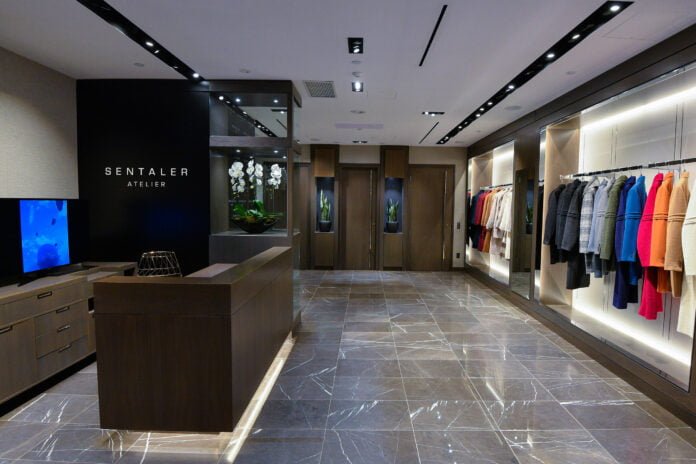
The Hudson’s Bay Company is the oldest continuously operating corporation in North America. It once owned much of Canada’s land mass and is now a retailer with 89 stores across Canada as well as an e-commerce site. Recently Hudson’s Bay announced that it would shutter stores in downtown Edmonton and in downtown Winnipeg, marking the end of a history where the Hudson’s Bay Company founded those communities and anchored retailing for decades.
BLURRY IMAGE OF SHOPPING MALL AND CUSTOMERS DURING HOLIDAY SEASON
A new report suggests Canadians will pull back on their holiday spending this year as the devastating impact of the COVID-19 pandemic continues to hit the struggling retail industry.
According to PwC Canada’s Holiday Outlook report, Canadians expect to spend an average of $1,104 this year which is down nearly 31 percent from last year’s $1,593.
HOLIDAY SPENDING IS FORECASTED TO BE DOWN 31% FROM LAST YEAR DUE TO COVID-19
The survey reached out to 1,000 consumers in Calgary, Montreal, Toronto, and Vancouver.
“Many Canadian consumers and retailers aren’t sure what to expect as we approach the 2020 holiday season. This year, the impact and implications of the COVID-19 pandemic are top of mind for consumers. Canadian consumers plan to do more of their shopping online than in stores this holiday season, as they focus on convenience, health and safety, rather than the shopping experience itself,” said Myles Gooding, National Retail Leader, PwC Canada.
“One thing is clear: successful retailers will be those who adapt to our quickly changing business environment and understand what a more digital world means for how they interact with consumers.”
Gooding said the spend between gifts and travel historically has roughly been the same in terms of dollar value.
“That’s where this year it took the biggest hit, primarily because of travel restrictions for COVID-19, leaving the country. The travel industry in itself has taken a pretty big hit overall in the economy,” he said. “When we look at the specifics with travel being down nearly 60 percent is really what is taking the wind out of a lot of the spend this year. That followed by entertainment. At the time of the survey entertainment is probably going to be down around closer to 20 percent. It may take a bigger hit as new restrictions are starting to take place.”
The survey said 86 percent of Canadian consumers expect to spend the same or less this holiday season, with deep cuts in travel spending. When asked how the pandemic will affect their personal spending capabilities for the holiday season, 57 percent of respondents said it’s had a negative or slightly negative impact. Also, 85 percent of Canadian consumers plan to use their credit card at some point during the holiday season. Among those, 79 percent of them aren’t worried about debt.
In 2020, Canadians will spend $630 on gifts (versus $647 in 2019) , $308 on travel (versus $743 in 2019), and $166 (versus $204 in 2019) on entertainment.
MILLENNIALS ARE EXPECTED TO SPEND THE MOST THIS HOLIDAY SEASON
Among the generations, Millennials are set to spend the most. When looking at overall holiday shopping, Gen Z (17-24 years old) and Millennials (25-38 years old) plan to spend $1,216 on average, compared to $1,058 for Gen X (39-53 years old) and Baby Boomers (54-73 years old), said the report.
“Another major trend accelerated by the pandemic is curbside pick-up, with 33 percent of shoppers choosing this method for their online purchases, compared to 13 percent last year. Unchanged from last year is the fact that Gen Z and Millennials are most likely to use this method either regularly or on occasion. When it comes to in-store shopping trends, we’re seeing a big generational divide: 60 percent of those planning to do at least three-quarters of their holiday shopping in stores are aged 55-plus. When it comes to what influences consumer purchases, we’re seeing another big generational divide: younger generations are much more likely to be influenced by online and social media advertising,” said PwC.
Gooding said COVID has accelerated the pace of growth in day-to-day online shopping and online cross-border shopping is also increasing. The online shopper is becoming more of a global shopper. People are also shopping earlier this year because they want to make sure their purchases arrive in time for Christmas.
A Leger survey commissioned by Moneris shows that 76 percent of Canadians intend to shop local this season, and 70 percent will do more shopping online.
The survey found women are significantly more likely than men (80 percent versus 72 percent) to want to support local businesses and increase their online shopping (74 percent vs 66 percent).
Peter Goldsztajn, Moneris Director, Corporate Data Analytics, said the trend to local shopping is indicating a shift in overall sentiment.
“I think people are trying to support local — keep the money local. It’s a call to action for small businesses — local businesses — if you’re not online this is the opportunity to do so. It’s not too late,” he said.
He added that 28 percent of Canadians plan to give more gift cards which will fuel the ecommerce boom and 16 percent plan to give more experiential gifts.
RALPH LAUREN STORE AT VAUGHAN MILLS. PHOTO: PAGAN VIA GOOGLE IMAGES
The Polo Ralph Lauren off-price division in Canada is looking to hire for three management positions in the Toronto, Vancouver, and Winnipeg markets. For more information on these positions, see below or contact Suzanne Sears at Luxury Careers Canada at: best-retail-jobs@live.ca
Retailers looking to post positions with Luxury Careers Canada may also contact Suzanne Sears or Craig Patterson at: craig@retail-insider.com
The Toronto-area assistant manager job posting is for the Polo store at Vaughan Mills, the Vancouver-area posting for assistant manager is for the Polo store at Tsawwassen Mills, and the Winnipeg general manager position is for the store at Outlet Collection Winnipeg.
The following is a description of the company followed by the three job postings:
Company Description
Ralph Lauren Corporation (NYSE:RL) is a global leader in the design, marketing, and distribution of premium lifestyle products in five categories: apparel, accessories, home, fragrances, and hospitality. For more than 50 years, Ralph Lauren’s reputation and distinctive image have been consistently developed across an expanding number of products, brands and international markets. The Company’s brand names, which include Ralph Lauren, Ralph Lauren Collection, Ralph Lauren Purple Label, Polo Ralph Lauren, Double RL, Lauren Ralph Lauren, Polo Ralph Lauren Children, Chaps, and Club Monaco, among others, constitute one of the world’s most widely recognized families of consumer brands.
Vaughan Mills: Polo Factory Stores, Assistant Manager
Position Overview Our Polo Ralph Lauren Assistant Managers direct the store team to exceed in their goals of optimizing customer engagement, developing talent, increasing productivity, and delivering financial plan, while leading with the highest level of integrity standards.The key to our success is hiring PEOPLE who are: Passionate, Enthusiastic, Outgoing, Poised, Leaders, and Engaged.
Essential Duties & Responsibilities
• Act as a Customer Experience Leader; owning the results interactions with the internal/external customer, the product, the look and the energy of the store. (40% of time) • Lead the opening duties including daily planning and sales rally(s), general store communication and strategy, Work Force Management maintenance, and financials review. (10% of time) • Lead the closing duties of the daily communication wrap-up and update the Customer Experience Leader tracker with daily results. (10% of time) • Prioritize goals, assignments, daily and weekly tasks; conduct audits of store processes including Back of House, Point of Sale, Markdowns, Signage, RFID, On-boarding, and Ralph Lauren Capture. (20% of time) • Support maintenance of product presentation and educate team on current product knowledge. (10% of time) • Participate in identifying, recruiting and selecting high-caliber, non-exempt talent; provide feedback, coaching and guidance to support others in their development. (10% of time)
Experience, Skills & Knowledge
• College Degree or equivalent preferred • Minimum of four years retail management experience as an Assistant Manager or above in a complex, high-volume, high-profile or multi-unit specialty retailer environment • Strong business acumen and skill-set which enables the management and development of staff • Strong communication and inter-personal skills • Enthusiasm and ability to build and maintain an environment which projects a high level of taste and sophistication consistent with Polo’s lifestyle philosophy • Ability to maneuver around the sales floor, stock room and office • Ability to operate the register and fold merchandise • Ability to work a flexible schedule to meet the needs of the business, which will require evening, weekend and overnight shifts; some travel may be required • Ability to build and maintain positive working relationships with customers, management and co-workers. (Moderate lifting and climbing required)
Tsawwassen Mills: Polo Factory Stores, Assistant Manager
Essential Duties & Responsibilities
• Act as a Customer Experience Leader; owning the results interactions with the internal/external customer, the product, the look and the energy of the store. (40% of time) • Lead the opening duties including daily planning and sales rally(s), general store communication and strategy, Work Force Management maintenance, and financials review. (10% of time) • Lead the closing duties of the daily communication wrap-up and update the Customer Experience Leader tracker with daily results. (10% of time) • Prioritize goals, assignments, daily and weekly tasks; conduct audits of store processes including Back of House, Point of Sale, Markdowns, Signage, RFID, On-boarding, and Ralph Lauren Capture. (20% of time) • Support maintenance of product presentation and educate team on current product knowledge. (10% of time) • Participate in identifying, recruiting and selecting high-caliber, non-exempt talent; provide feedback, coaching and guidance to support others in their development. (10% of time)
Experience, Skills & Knowledge
• College Degree or equivalent preferred • Minimum of four years retail management experience as an Assistant Manager or above in a complex, high-volume, high-profile or multi-unit specialty retailer environment • Strong business acumen and skill-set which enables the management and development of staff • Strong communication and inter-personal skills • Enthusiasm and ability to build and maintain an environment which projects a high level of taste and sophistication consistent with Polo’s lifestyle philosophy • Ability to maneuver around the sales floor, stock room and office • Ability to operate the register and fold merchandise • Ability to work a flexible schedule to meet the needs of the business, which will require evening, weekend and overnight shifts; some travel may be required • Ability to build and maintain positive working relationships with customers, management and co-workers. • Moderate lifting and climbing required
Outlet Collection Winnipeg: Polo Factory Stores, General Manager
Essential Duties & Responsibilities
• Own sales and profit performance in assigned store, ensuring that sales and margin goals are met • Partner with Senior Management to develop operating budgets and monitor performance • Achieve store shrinkage goals and establish/implement new and existing loss prevention procedures • Own the recruitment, selection, supervision, and development of leadership team to maximize sales and profit performance • Coach and mentor staff to achieve optimal results; including succession planning for current and future positions • Promote and maintain an exceptional employee experience; lead by example at all times • Establish, monitor and work with all managers to ensure successful implementation of brand presentation • Direct the execution of promotional strategies and programs, assuring that they support marketing and profit objectives • Maintain a leadership role in community and charity events • Provide consistent feedback to buyers and planners to identify merchandise classifications of high sales or profit potential
Experience, Skills & Knowledge
• College Degree or equivalent preferred; Associate/Bachelor’s degree preferred or equivalent experience • 3-5 years of Retail Management experience with at least 3 years supervising others in a retail and/or multi-unit environment • Ability to communicate with customers and store personnel • Ability to maneuver around the sales floor, stock/dressing room, cashwrap and office • Ability to operate the register • Ability to stand, move and walk for multiple hours • Ability to work a flexible schedule to meet the needs of the business, which will require day/evening, weekend and may include overnight shifts • Ability to build and maintain positive working relationships with customers, management and co-workers. • Lift up to 30 pounds and moderate climbing required
Retailers looking to post positions with Luxury Careers Canada may also contact Suzanne Sears or Craig Patterson at: craig@retail-insider.com
Retail Insider has partnered with Luxury Careers Canada to support the industry. For more information, contact Craig Patterson at: craig@retail-insider.com
An off-schedule podcast discussion with Darryl Julott, Managing Lead of Digital Main Street. Craig and Darryl discuss the challenges small retailer and other businesses are facing in Canada, what’s being done and what the future might hold.
Podcast:
The Weekly podcast by Retail Insider Canada is available on Apple Podcasts, Stitcher, TuneIn, Google Play, or through our dedicated RSS feed for Overcast and other podcast players.
SWIMCO LOCATION AT CF CHINOOK CENTRE. PHOTO: CALGARY HERALD
Long-time Calgary-based retailer Swimco has announced it is closing its doors.
On its website, the company said “It’s Time We Say, Sea You Later.”
“After 45 years in business, Swimco must close its doors. Thank you for all the support and memories you gave us during this adventure. Canada is a country built on family business, and with that drive and determination we will see bluer skies and greener seas in the future.”
Earlier this year the national swimwear company had filed a Notice of Intention, under creditor’s protection, to restructure its operations as it responded to the devastating impact of the COVID-19 pandemic.
But on October 13, a Certificate of Assignment into Bankruptcy was filed to the Office of the Superintendent of Bankruptcy Canada by Deloitte Restructuring Inc., which is the licensed insolvency trustee in the matter.
OCTOBER 10 WAS SWIMCO’S LAST DAY IN OPERATION
A sign on Swimco’s former CF Market Mall location in Calgary said: “As of October 10, 2020, all retail locations are closed and will remain closed until further notice.”
LORI BACON
“On June 11, 2020 Swimco Aquatics Supplies Ltd. and Swimco Partnership each filed a notice of intention to make a proposal . . . pursuant to section 50.4 of the Bankruptcy and Insolvency Act. Subsequent to filing the NOI, the Debtor was unable to make a viable proposal within any court granted extensions and is thereupon deemed to have made an assignment into bankruptcy effective October 10, 2020.”
Lori Bacon, Owner and CEO of the company, could not be reached for comment.
“Does anybody mourn the loss of a legacy chain of Canadian retail stores? It’s a sad day on the Canadian retail scene with the demise of the homegrown Swimco aquatic fashion stores following 45 years in business,” said Michael Kehoe, a retail real estate specialist in Calgary with Fairfield Commercial Real Estate. “Swimco was the quintessential entrepreneurial retailing dream come true. From humble beginnings at the family home in Calgary in the matriarch’s basement manufacturing swimwear, Swimco grew organically by catering to local Calgary swim clubs and into a national chain with 20 stores.
“The firm led by their visionary female co-founder mastered the art of personal service catering to women in the highly specialized swimwear business. In the Darwinian struggle of fashion retailing, Swimco was hit hard by the COVID-19 pandemic that shut down the cruise ship industry and international vacation travel. In Calgary Alberta, an entrepreneurial hot spot in Canada, the loss of the local iconic Swimco brand, a family owned and operated legacy fashion retailer will be mourned.
“We should all take note that the multi-pronged factors that plague retailers in these challenging times are; the economic downturn in certain Canadian provinces, the pandemic lockdown and the disruption of bricks and mortar retailing due to COVID-19, ineffective government programs that may have sustained retailers like Swimco in these tough times and in some cases a lack of landlord cooperation.”
SWIMCO LOCATION AT SQUARE ONE SHOPPING CENTRE. PHOTO: RETAIL INSIDER
The retailer opened its first store in Calgary in 1983 but Swimco actually had its roots as a home-based, mail-order business started by Bacon’s mother Corinne Forseth a few years before the retailer opened its first location.
“We’re looking to be a smaller company. We’re at 20 (stores) and we envision staying there,” said Bacon in an interview with Retail Insider during the summer. At that time, she confirmed that the company had about $6.5 million in unsecured claims and that included about $1.6 million in landlord rent.
Swimco had reduced its head office by about half. The company had 45 staff in its corporate head office but that was reduced to about 20. Retail staff was about 200 but fell to about 120 during the summer.
Bacon said then that the COVID crisis came around spring break which meant no travel for people.
“With all stores being shut and still having your rent looming over you, you go in the hole pretty quick. At first, I think everyone was just in a state of shock. ‘For two weeks we’re going to close.’ But it readily became apparent that this was not a two-week thing. We laid everybody off temporarily. We closed the stores on Monday March 16 and we quickly laid off all our store people and most of our head office people and by the following week we had laid off everybody,” she said.