Retail Insider is streamlining its Canadian retail news from around the web to include a handful of top news stories that can be viewed quickly during the day. Here are the top stories from the past 24 hours.
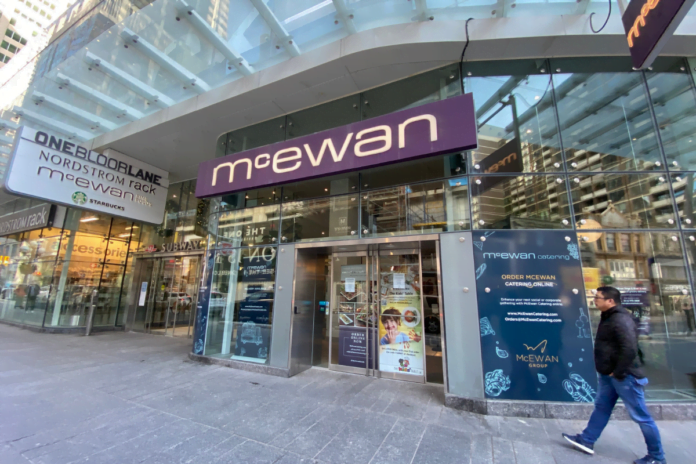
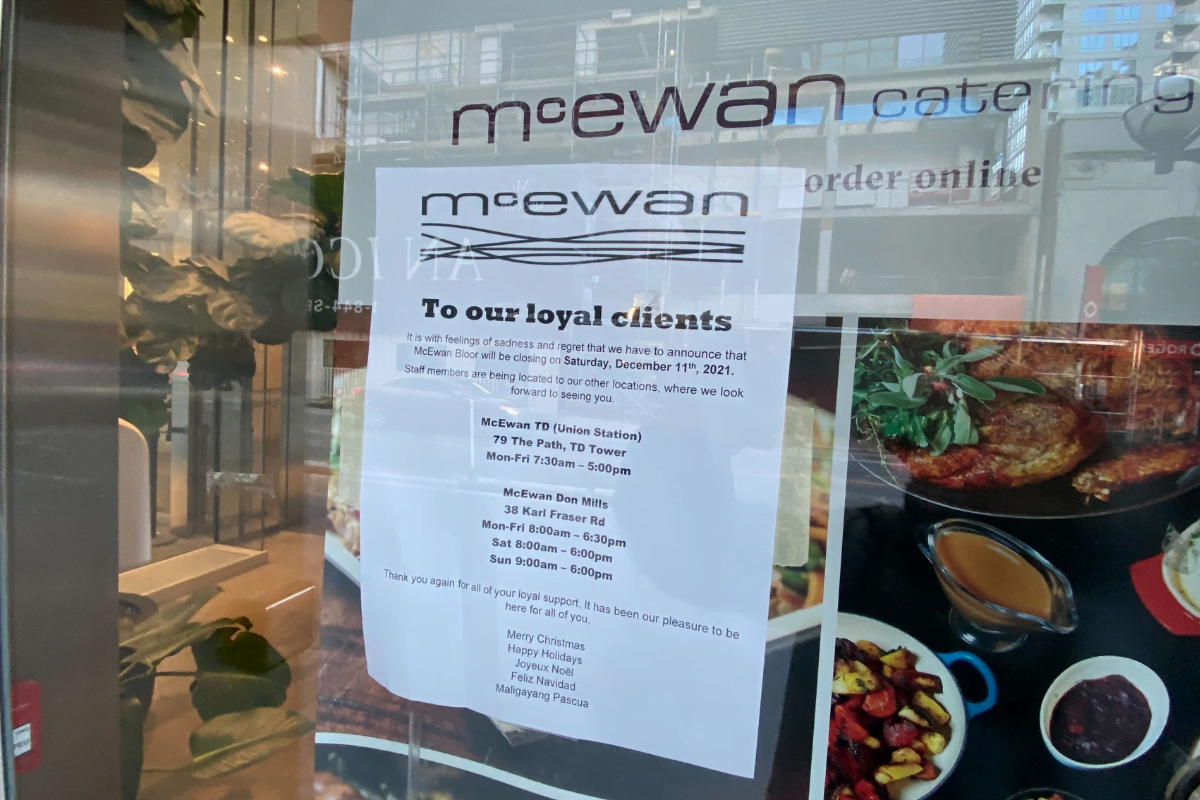
The McEwan grocery store near the corner of Yonge & Bloor Streets in downtown Toronto has closed after chef Mark McEwan’s business empire filed for bankruptcy protection at the end of September. Landlord First Capital REIT had reportedly contested the store’s closure.
The 17,000 square foot store opened in January of 2019 on the concourse level of 1 Bloor East complex. It included a mix of grocery items as well as grab-and-go and sit-down dining options.
The store was one of several in the area which has the highest concentration of grocery retailers in Canada. Prices at McEwan were generally higher than most of the competitors nearby and its location on busy Yonge Street was removed from many of the wealthier households who live West of Bay Street in the Yorkville area.
In court filings, McEwan noted challenges with the Yonge and Bloor grocery store. “This location has created significant strain on the Company’s liquidity,” said the Application Record of McEwan Enterprises Inc. “With an extensive footprint and significant lease and operational costs, combined with disappointing sales results, McEwan Yonge & Bloor has had the most detrimental impact on the Company’s overall financial performance. With the benefit of hindsight, the Company would not have entered into operations at this location based on the existing lease terms. McEwan Yonge & Bloor has been a significant challenge since its opening and currently remains a material issue for the Company.”
After we announced in October that the grocery store would be closing, the Globe & Mail reported that landlord First Capital REIT was contesting McEwan’s application under the Companies’ Creditors Arrangement Act (CCAA) to restructure its operations by transferring most of the business to a new company held by the same owners. A subsidiary of Fairfax Financial Holdings Ltd. owned 55 per cent of McEwan Enterprises, and the rest was owned by Mr. McEwan’s holding company, McEwan Holdco Inc.
First Capital argued that McEwan Enterprises should be required to test the market by undergoing a sale process for the business and in a factum from October, the landlord’s lawyer argued that the the proposed transaction would be an “abuse” of the CCAA process.
McEwan Enterprises had been losing money even before the COVID-19 pandemic according to court filings. That includes several restaurants as well as another large-format grocery store at CF Shops at Don Mills in Toronto as well as a smaller grocery concept store in Toronto’s Financial District.
It remains to be seen what tenant will occupy the basement space that McEwan has vacated in downtown Toronto. It includes an entrance foyer at the street level facing Yonge Street which is flanked by a Chick-fil-A restaurant to the south and a Nordstrom Rack store to the north.
Toronto’s Bloor-Yorkville continues to boast a high density of grocery retailers. That includes Italian concept Eataly that opened nearby at the Manulife Centre in November of 2019, joining a Loblaw City Market grocery store in the basement, Whole Foods at Yorkville Village, Pusateri’s on Bay Street, Longo’s at the Hudson’s Bay Centre, and three Rabba stores nearby. Shoppers Drug Mart has also expanded grocery offerings at its two-level storefront at Yonge and Charles Streets.
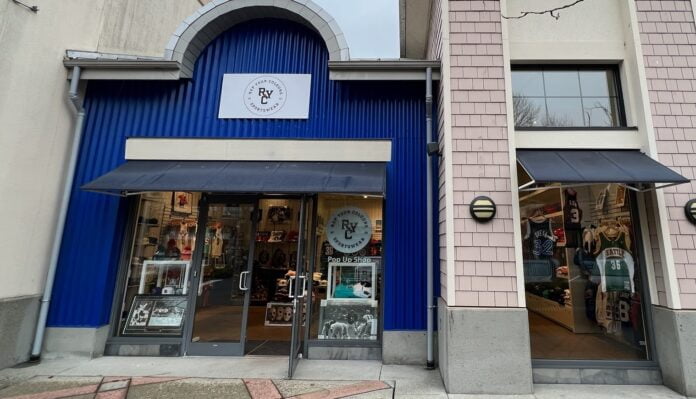
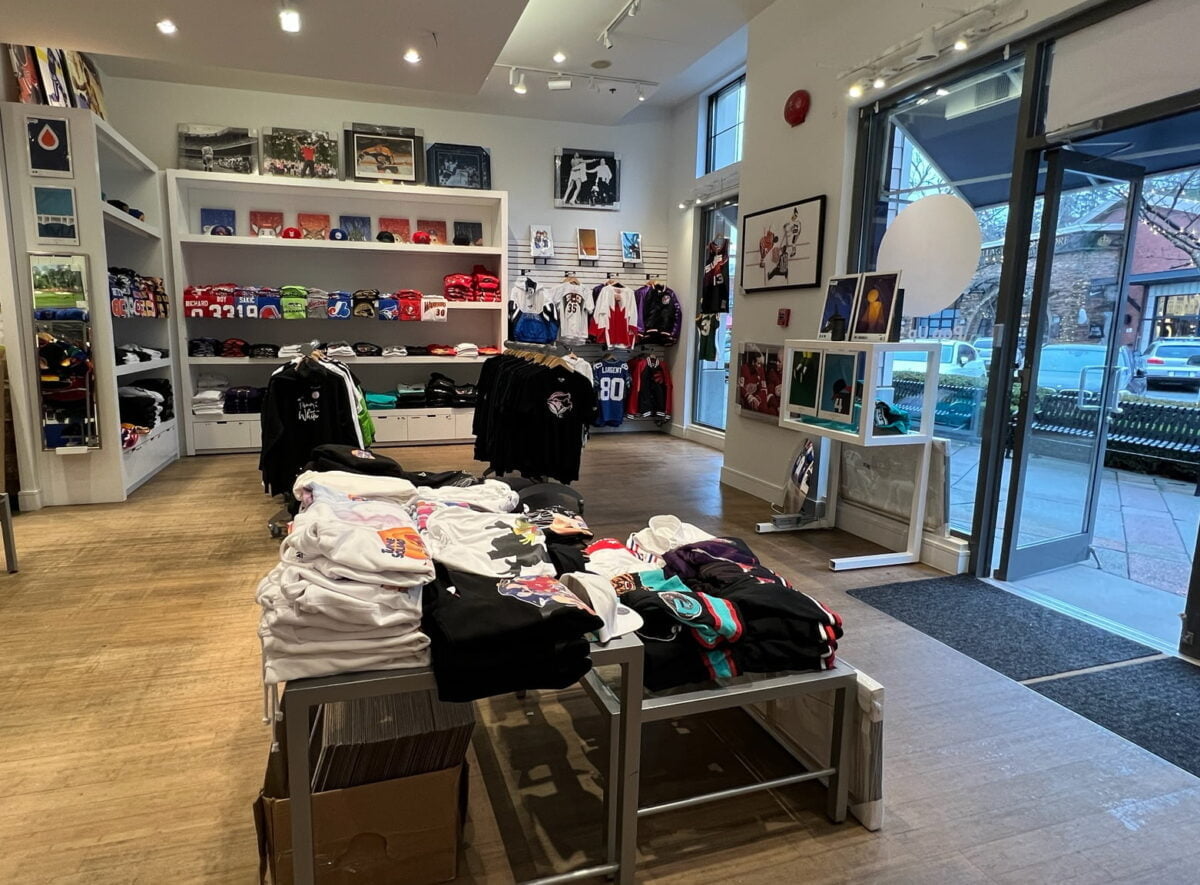
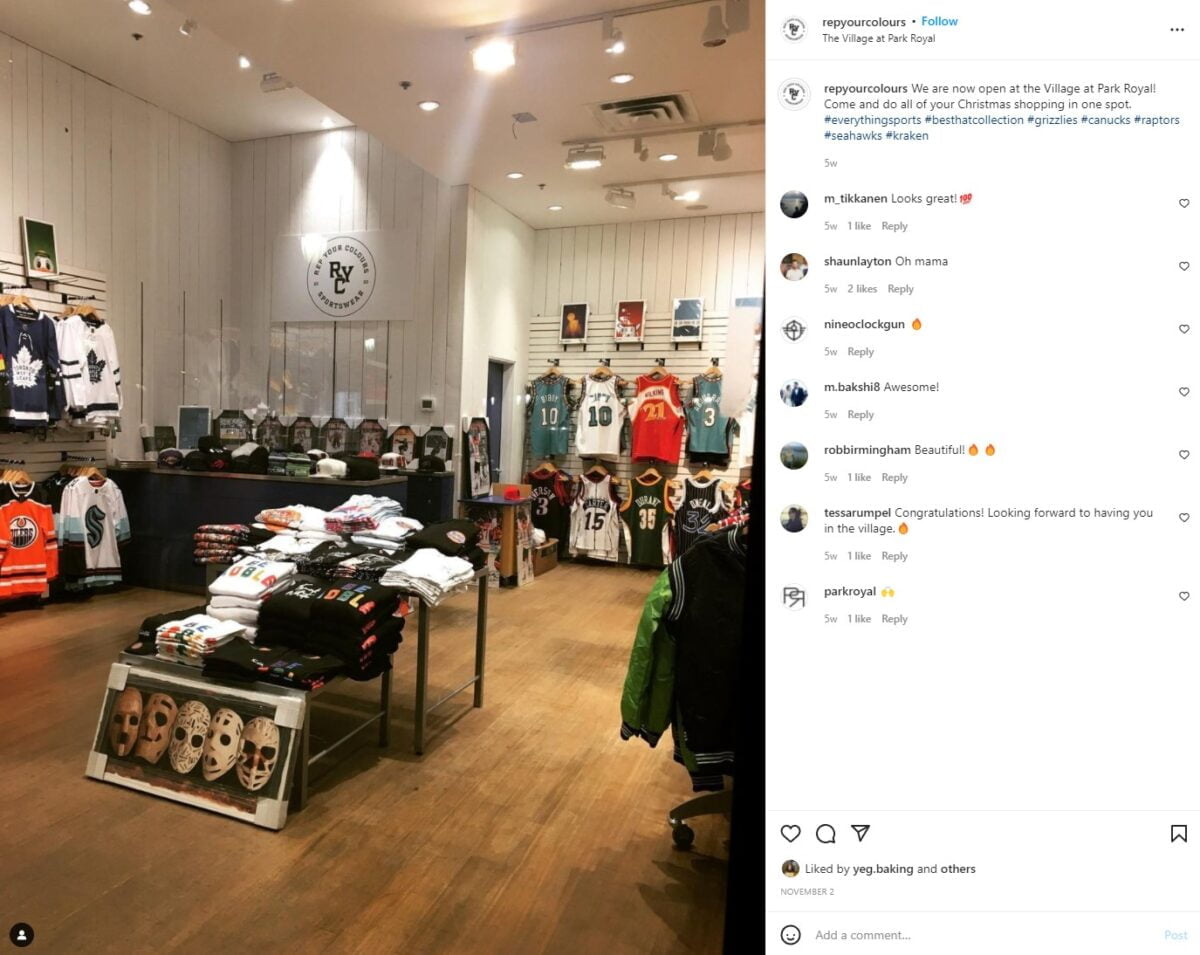
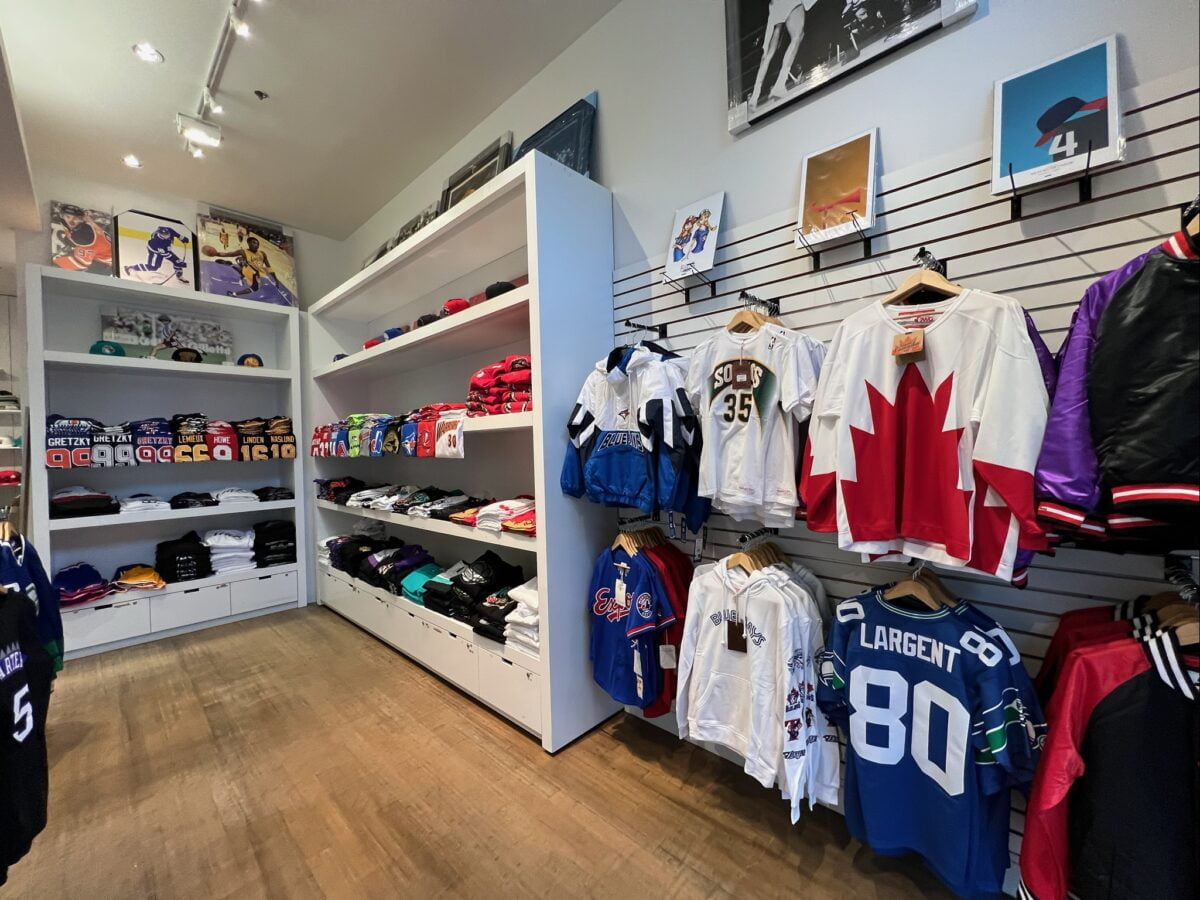
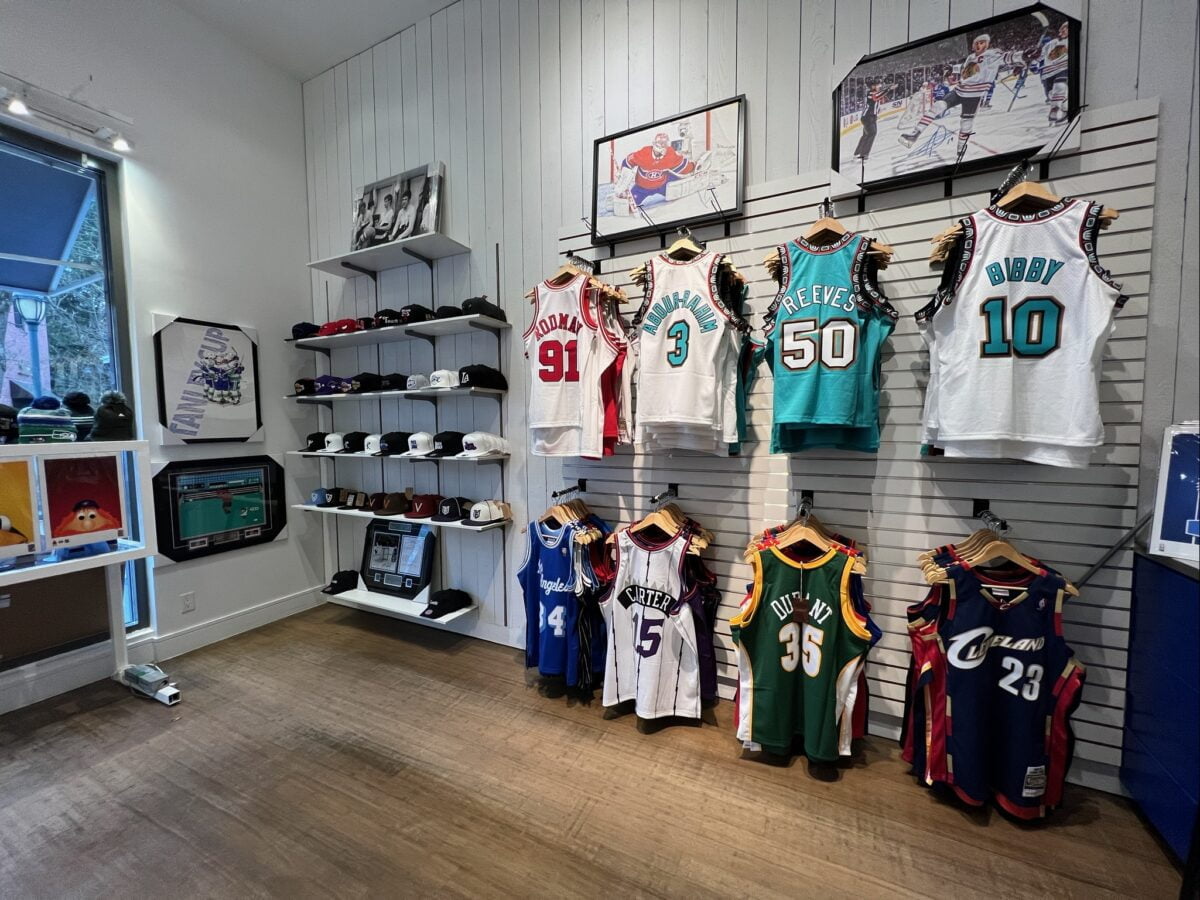
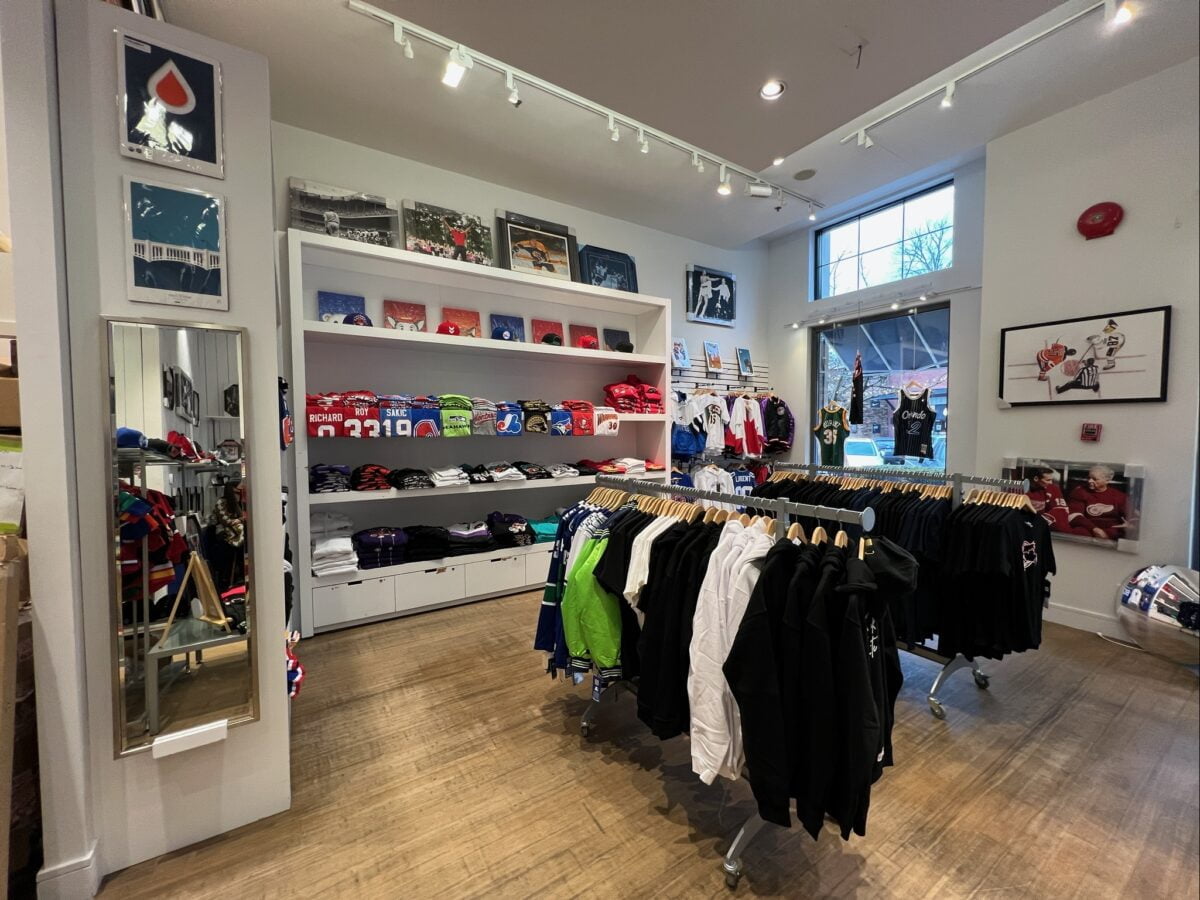
Rep Your Colours is owned by Phil Kinninmont and has geared the concept for sports fans to find everything from wearable jerseys to represent their favourite team to memorabilia for the serious collectors. The store opened on November 2, 2021 and will remain open until December 31, 2021.
The first pop-up location for Rep Your Colours was at Park Royal Shopping Centre a year ago within the main “South” indoor shopping mall. After trying a pop-up in CF Richmond Centre, the retailer has returned to Park Royal Shopping Centre for this Christmas holiday season.
Interior of ‘Rep Your Colours’ pop-up at Park Royal in West Vancouver, BC. Photo: Lee Rivett. ‘Rep Your Colours’ Grand Opening. Photo: Rep Your Colours Instagram.
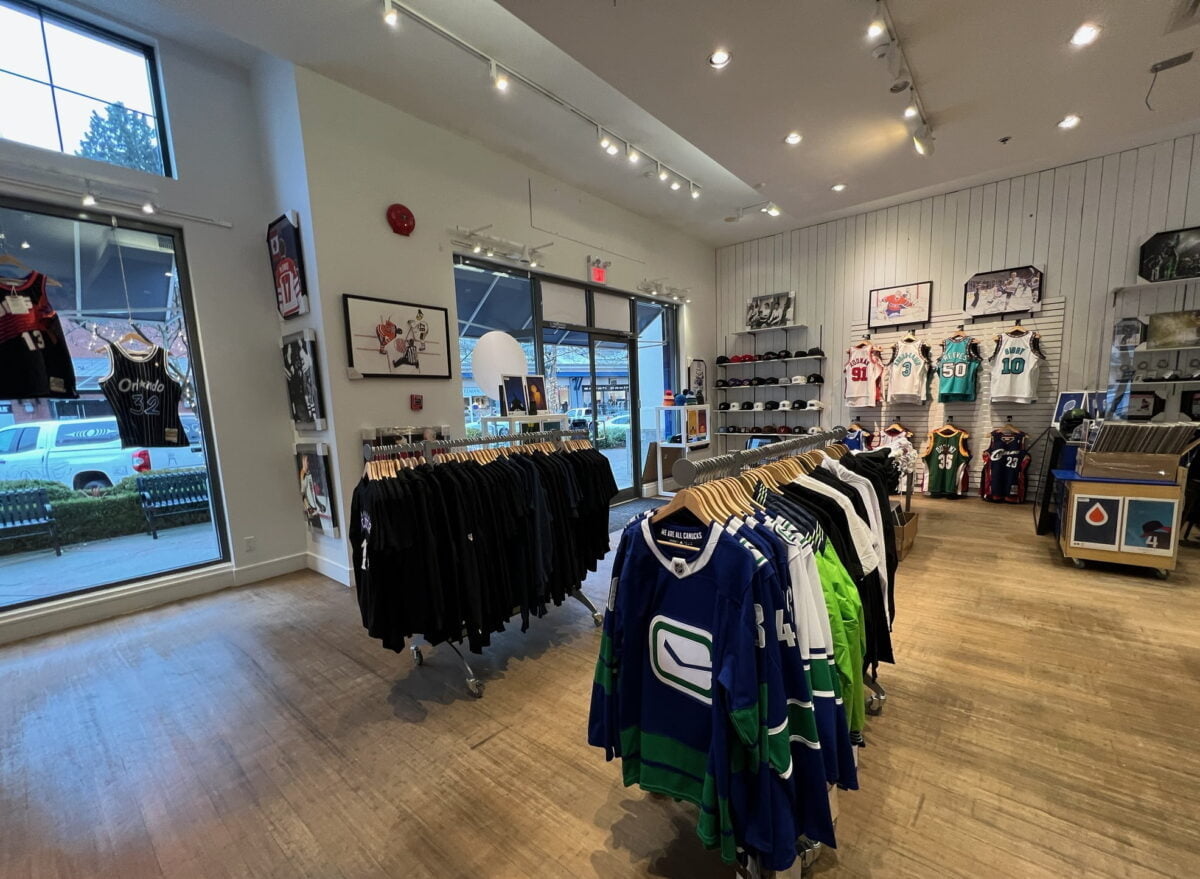
While the first pop-up location for ‘Rep Your Colours’ was within the indoor portion of Park Royal, this new location for the retailer is located in the outdoor-focused “The Village” portion of the shopping centre.
Interior of ‘Rep Your Colours’ pop-up at Park Royal in West Vancouver, BC. Photo: Lee Rivett. Interior of ‘Rep Your Colours’ pop-up at Park Royal in West Vancouver, BC. Photo: Lee Rivett. Interior of ‘Rep Your Colours’ pop-up at Park Royal in West Vancouver, BC. Photo: Lee Rivett. Interior of ‘Rep Your Colours’ pop-up at Park Royal in West Vancouver, BC. Photo: Lee Rivett.
There’s been a fair bit of media coverage about how the pandemic is shaping retail these days and how the protracted supply chain issues are impacting the holiday shopping season across the country. And, who better to ask than Michael DeLong?
Michael DeLong
Michael is a GetintheLoop Local franchisee in Hamilton, Ontario and is one of nearly 100 GetintheLoop Local Owners across the country who work with local businesses every day. He became a GetintheLoop Local owner at the very outset of the pandemic, and today he works hand-in-hand with local businesses providing marketing support and connecting his partners to GetintheLoop’s shop local community.
When asked what is different about this Christmas season compared to last year, Michael is quick to point out, “last year was mostly about telling people “we’re open.” This year, it’s more about creating a sense of urgency because of reduced inventory caused by supply chain problems.”
Despite the concerns of increased demand, product shortages, staffing shortages, and continued uncertainty caused by the evolving pandemic regulations, many positive, growth-minded business owners believe that we’re in a little better situation than we were last year. Michael notes, “I think with the way things are going, businesses are happy that people are starting to come back into the stores finally.”
1. Be positive and growth-minded
The optimistic business owners are the ones that are adapting and adopting new technologies like GetintheLoop. They are doing things to help better their business, whether online or usingother initiatives to help drive revenue.
On the other hand, Michael adds, “with this much uncertainty though, it’s still very unsettling for a lot of people. There are rumours of another lockdown, and many people are fearful of what that could do to their businesses. It’s kind of 50-50 as to where we are, but I think in the long term, we’re all going to be stronger.”
Michael notes, “I work with a lot of local businesses that sell unique, Canadian-made goods, and there does seem to be a common theme I’m hearing from a lot of local business owners. Consumers are coming in with their lists, they’re checking to make sure that they’ve got something that might be on their list, but they’re not buying it at that time. Owners are struggling with how to get them to make the purchase right then to avoid losing out when they return.
2. Unique and novel concepts
Image: Rustic Daisy’s
Many would agree that the silver lining of the pandemic has been a raised consciousness about the importance of shopping locally. But Michael explains the pandemic has also spun off several new, innovative businesses that are growing and thriving, “I’ve actually partnered with a unique business in town called, That’s my Jam Sandwiches. They opened in May of 2021, right amidst the pandemic. This local entrepreneur, Nikoo, creates gourmet fruit fusion jam sandwiches, each built with a layer of jam to make it unique while at the same time promoting local artists. They hire artists in the restaurant and do art night events. So guests get to learn from an artist, and that engages people. It’s bringing people back to the heart of the city; it’s creating a culture within the downtown area that allows businesses to find a unique way to sell a product.
According to DeLong, these are among five of Hamilton’s most adaptive and innovative businesses that have turned pandemic lemons into lemonade.
It seems many people want to try something different, and by providing something that has a little flair, something a little different that makes it unique and, better yet, customized in some way that novelty can drive business.
3. Connect with consumers digitally
GetintheLoop is helping businesses like That’s my Jam Sandwiches by connecting them with people in the community who want to support local businesses through the GetintheLoop app and audience network.
GetintheLoop is helping local businesses reach local consumers with the annual Holiday Loop. Michael adds, “we’re featuring several businesses in our Holiday Loop this year. It’s great because it enables those businesses who are a part of GetintheLoop, extra exposure for their holiday offerings. The holiday offers are all in one place at the top of the app. This is great for the consumer; it’s one click, and they can see all of the great holiday offers in the community.”
While it’s anyone’s guess what this time will look like next year, the resilience of retailers and small businesses across the country has been remarkable. It also seems that those business owners that choose a curious, positive mindset are more likely to adapt and grow.
If you’re a retailer and would like to learn more about how GetintheLoop can help grow your business connect with us.
GetintheLoop is a franchise, and if you’re interested in bringing GetintheLoop to your community contact us today.
Masai Ujiri and Harry Rosen Come Together for Humanity in 2.0 Capsule Collaboration
Iconic Canadian retailer Harry Rosen has taken another step in its journey to support diversity in partner designers.
Harry Rosen has teamed up with Toronto Raptors Vice-Chairman and President and Giants of Africa Founder Masai Ujiri to present the Humanity capsule collection in its second consecutive year.
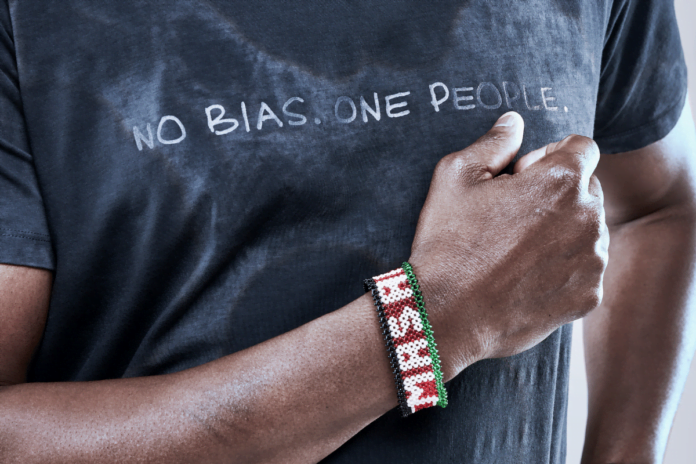
Building on the #ThatsHumanity movement that Ujiri launched in 2020, the 10-piece athleisure curation is inspired by values of diversity, inclusion and community partnership.
The 2.0 capsule collaboration is between business leader and philanthropist Ujiri and celebrated Canadian luxury designer Patrick Assaraf.
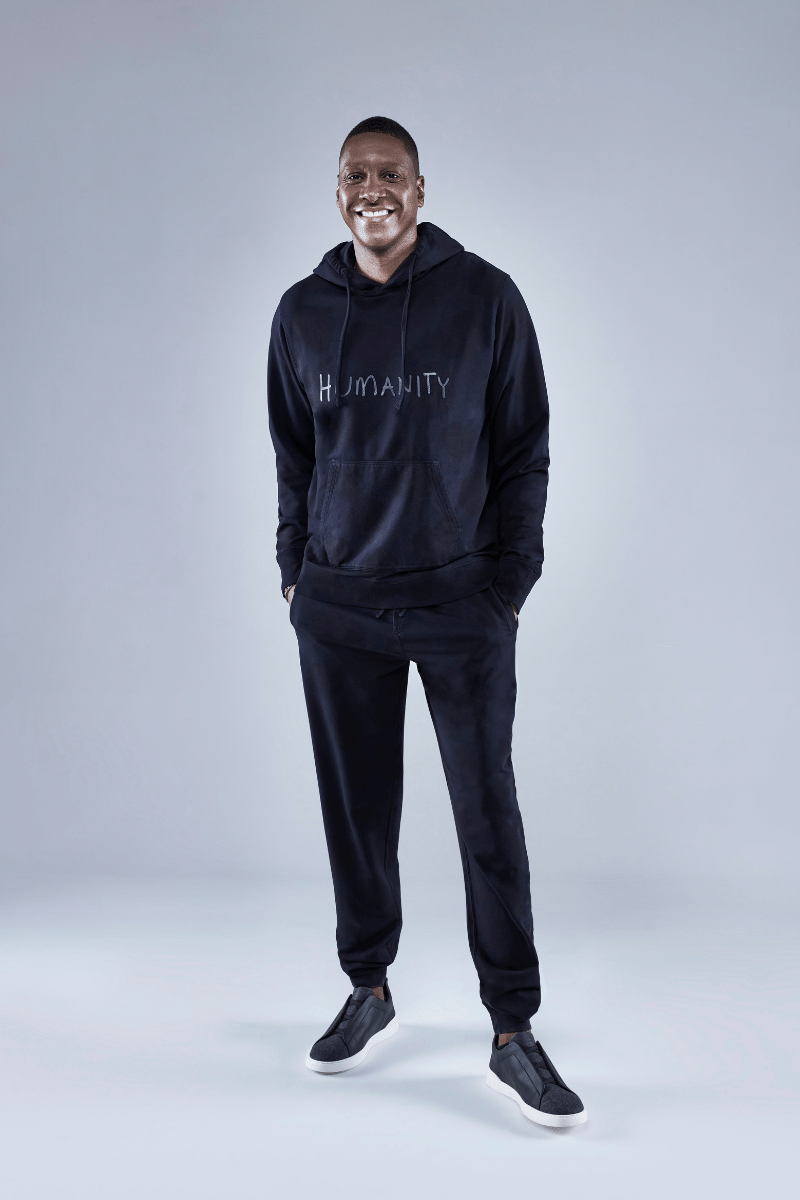
Image: Masai Ujiri & Harry Rosen 2.0 capsule collaboration with designer Patrick Assaraf.
Trinh Tham
Trinh Tham, Harry Rosen’s CMO, said the partnership is one the company is thrilled to be bringing back with Masai Ujiri for the second consecutive year.
“We reached out at the beginning of 2020 to see if Masai would be interested in partnering with us. We got talking and our values are very much the same. He’s a leader and we’re very much about being seen as leaders and supporting a lot of our customers who are leaders. Inclusivity and diversity is a really important value of Harry Rosen’s and that’s obviously something that Masai Ujiri I think everyone knows has been a champion of both for the Raptors and through his efforts with Giants of Africa.
“We got to talking and he was just about to launch the movement #ThatsHumanity and we wanted to express our support for #ThatsHumanity through fashion. Masai’s a very stylish person, leader, and it just all kind of came into place.
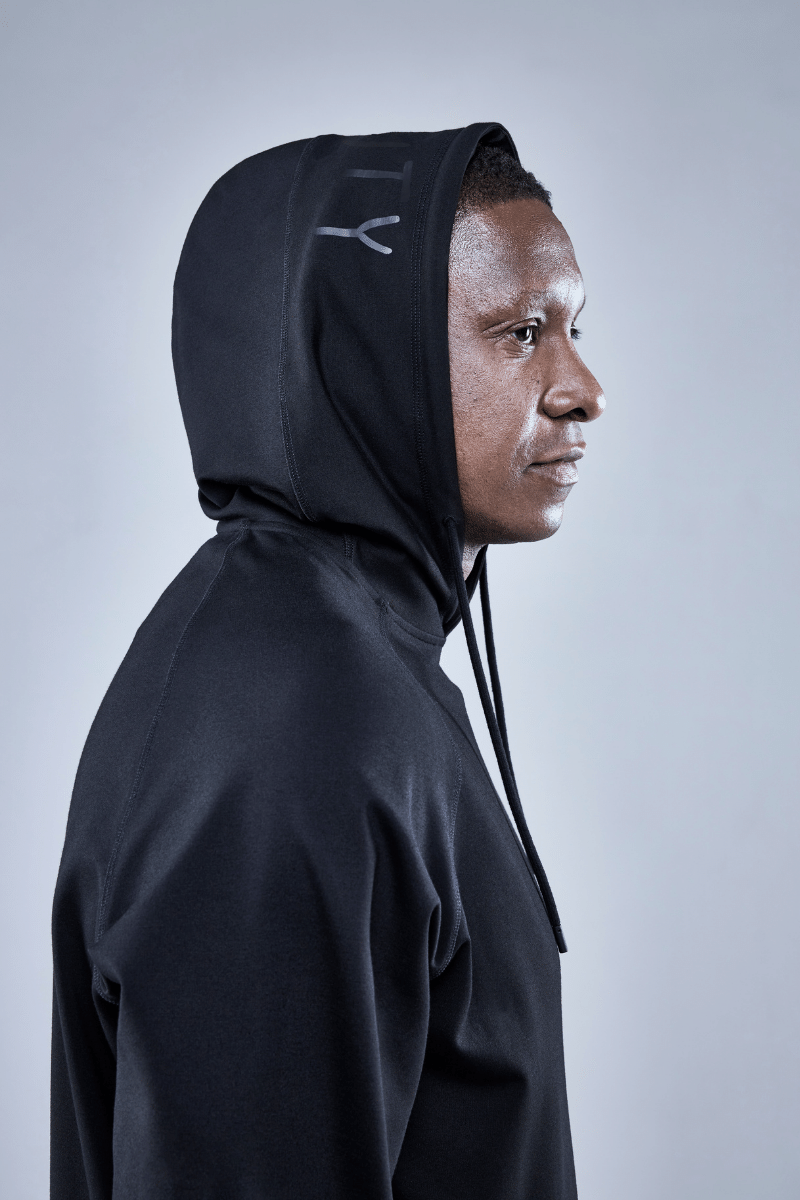
“This 10-piece athleisure collection that we created is inspired by the values of diversity, inclusion and community partnership. We did a collection last year, a seven-piece capsule, and it sold out almost immediately and did very well. Last year’s collection featured a hoodie with the word Humanity created across the front and Masai’s actual handwriting.
Masai Ujiri and Harry Rosen Come Together for Humanity in 2.0 Capsule Collaboration
Masai Ujiri and Harry Rosen Come Together for Humanity in 2.0 Capsule Collaboration
“This year the collection is comprised of various hoodies. We’ve added a tie-dye fleece option with matching sweatpants and an assortment of logo print T-shirts and a full-zip Humanity logo merino sweater as a very special limited collection piece.”
Tham said one of Harry Rosen’s values has always been inclusivity.
“The organization has been undergoing a business transformation, a digital transformation, and a transformation to really reach out to a younger and different demographic of customers. As part of our brand evolution, our brand refresh actually, that we also launched in the fall of 2020, we decided that we wanted to work with role models – role models who exhibit the same values that we believe in – leadership, creativity, passion and inclusivity,” she said.
“We started wondering who in Canada could exhibit those and Masai Ujiri came to us right away. And we really wanted to focus on supporting the BIPOC community. In fashion, the BIPOC community is one of the areas that we as an organization believe very strongly that we need to do more to support. We have a commitment internally to bring on more designers from the BIPOC community, supporting and nurturing that community from a fashion perspective as well with our internal staff.”
Masai Ujiri and Harry Rosen Come Together for Humanity in 2.0 Capsule Collaboration
Masai Ujiri and Harry Rosen Come Together for Humanity in 2.0 Capsule Collaboration
The collection will be available in time for the holiday season exclusively at Harry Rosen in early December, in-store and online. The capsule items will join shelves that also feature lines from new BIPOC designers Bohten and Aller Retour.
“The #ThatsHumanity movement is meant to challenge all of us to seek out and embrace the things that make us human,” said Ujiri. “Inspired by Nelson Mandela’s fight for equality for all people, it is expressed through stories, shared experiences and art—all of which is represented here in the beauty of fashion.”
John Millar
A key component of the 2021 Humanity capsule project will be a donation to community partner Water First Education & Training Inc. Founded in 2009 to bring drinking water resources to rural schools in Uganda, Water First began working in Canada in 2012. The Water First Internship Program supports young Indigenous interns to become certified water treatment plant operators within 15 months—with 90 per cent of the pilot Internship graduates employed or pursuing further education within weeks of completion.
Larry Rosen
“Absolutely everyone should have sustainable access to safe, clean water,” said John Millar, Executive Director and Founder of Water First. “This support from Harry Rosen and Masai is a critical investment in Indigenous youth and communities that will help solve water challenges independently, and in the long-term. We are inspired to have new friends from diverse walks of life join us in making a meaningful impact together.”
Larry Rosen, CEO of Harry Rosen, said the company is thrilled to partner in this project.
“It is a priority for us to raise funds for charity, support local communities and remind the world that there’s more that unites us than divides us,” he said.
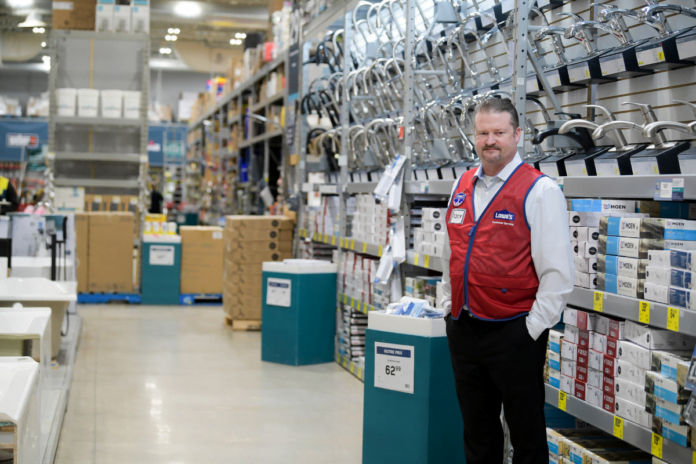
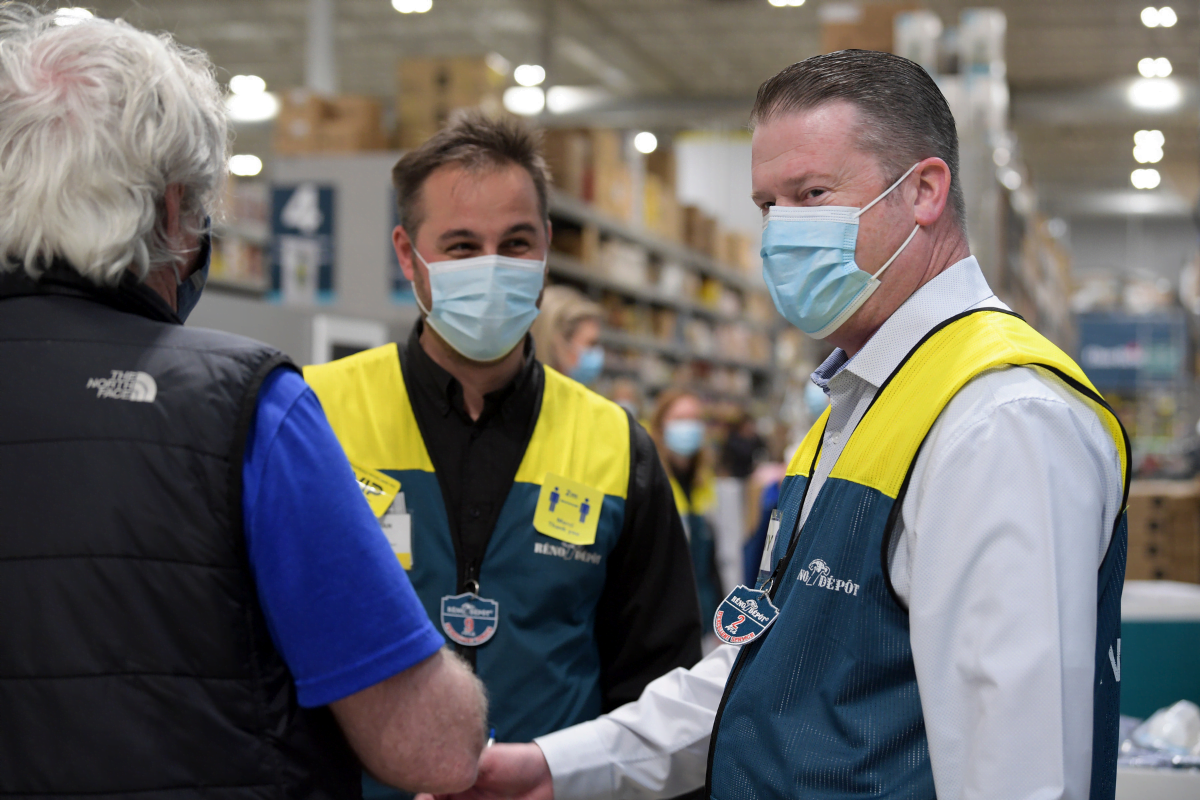
Tony Hurst knows home improvement. With more than 25 years of experience working within the sector, serving in just about every role from frontline customer service to executive leadership positions, he’s amassed a great deal of knowledge and understanding concerning the entirety of the home improvement retail operation. Specializing in enterprise strategy and transformation, Hurst joined the Lowe’s team in 2019 as the company’s Division President of the western United States. And after only a little more than a year, in January 2020, he was appointed to the position of President of Lowe’s Canada – a role in which he’s been charged with leading the strategic direction of the Canadian businesses and accelerating profitable growth. It’s a responsibility in which Hurst recognizes the inherent challenges. But it’s also one that he says he and his team have been relishing as they continue their work toward the integration and harmonization of the Canadian business.
“Retail is about being innovative and making sure that the organization is firmly grounded in the fundamentals of the business,” he asserts. “It’s about understanding consumer trends and the macroeconomic environment, and ensuring that everyone on the team around you remains students of the business in order to identify and understand all of the changes that happen within the industry on an ongoing basis. At the end of the day, we sell things and take care of our customers in the communities that we operate in. Focusing on these aspects of the business allows us to uphold our principles of execution and consistency within our stores, both in Canada as well as the U.S. However, our business model is dramatically different in Canada as compared with our U.S. operation. Lowe’s Canada runs different banners and has different store sizes and formats. And there’s also a different language to consider when we think about Quebec and our French customer-base. It’s been really important over the course of the past year or so that we focus a lot of our effort on making sure that each of these different brands represents Lowe’s Canada as a whole. There’s been a lot of work involved and a lot of moving parts to consider in order to standardize the Canadian side of the business.”
Unification of systems
Image: Lowe’s Canada
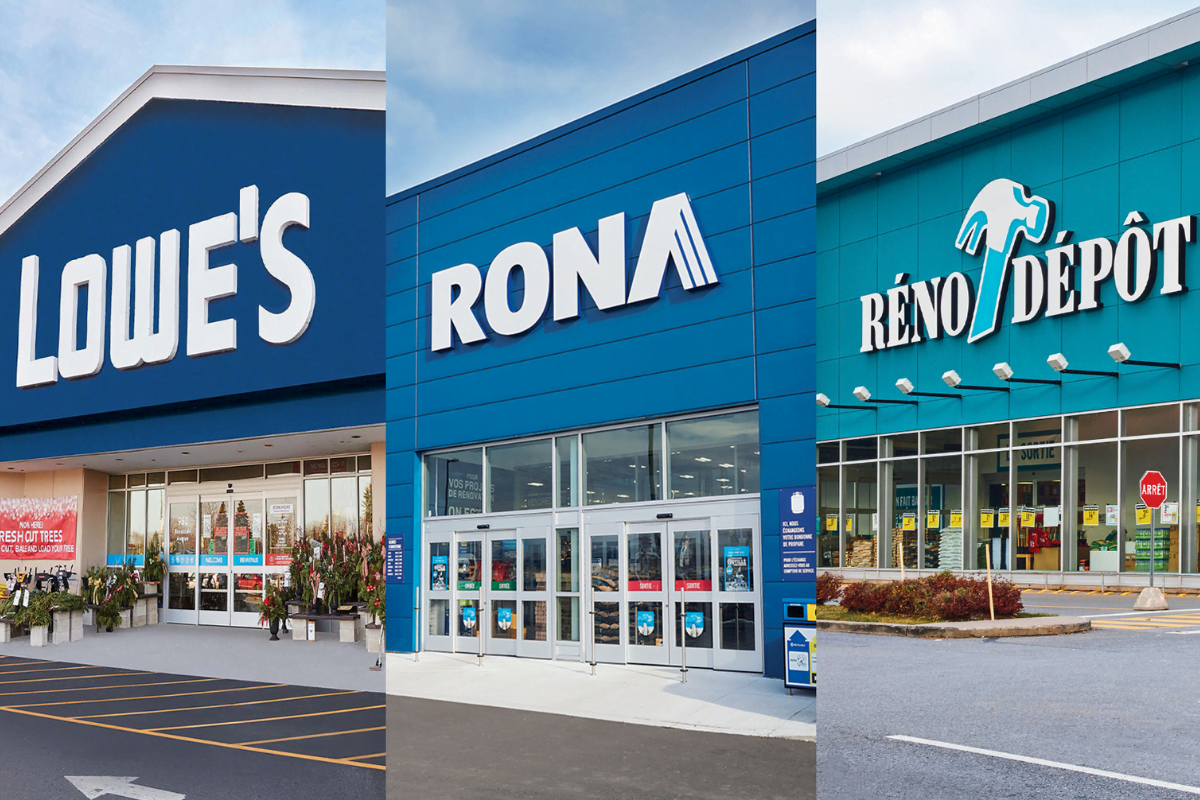
There’s been a lot of work involved, indeed. When Lowe’s acquired RONA in 2016, it added a host of locations to its Canadian enterprise. Now, with stores under the Lowe’s, RONA, Réno-Dépôt and Dick’sLumber banners, the retailer operates more than 450 corporate and independent affiliated dealer locations in the country. Hurst explains that at the time of the acquisition there wasn’t a lot of focus and effort paid toward integrating RONA stores to a standardized business model, with much of the attention instead going to the reformatting of stores. Though he recognizes the importance of that sort of work toward the overall harmonization of the Lowe’s Canada store network, Hurst believes that the most critical change that’s required, posing the most significant improvements for both the company’s associates as well as its loyal customers, is the unification of systems across its banners.
“When you have distinct operating systems that don’t talk to each other, a lot of pressure is placed on the business’ ability to operate effectively,” he says. “In those scenarios, you’ve got to train specific skillsets for different systems, resulting in a disjointed experience for employees and customers. Over the past year, we’ve been focused on harmonizing the business in order to make it easier and more efficient for our associates to execute and for our customers to understand our brand identity. If you think of RONA stores, for example, we’ve got RONA big box stores, RONA proximity stores, Building Centres, Building Centre Plus stores, and we also have a dealer network. That’s a really confusing go-to-market strategy from a customer brand expectation perspective. So, we’ve been doing a lot of work around the ways we market to our customers and how we set an accurate expectation around the experience they’ll receive when they come into our different store locations across the country. We’ve also spent some time evaluating our assortment in the stores. And, in order to optimize our assortment, we’re paying a lot of attention to understanding what our best selling skus and categories are, and how they’re penetrated in the different stores, using that information to identify where we need to contract or expand.”
Empowering teams
Prior to joining Lowe’s, Hurst began his career at the competition, spending 14 years within senior management positions at The Home Depot where he rose to the ranks of Regional Vice President of the Pacific north region of its network. After acquiring substantial skills and knowledge related to the execution of strategies and initiatives, he then undertook a new challenge at JCPenny. It’s where he says he was exposed to operations for the first time, gaining invaluable experience concerning aspects of the business, like process development and IT integration, before moving on to serve in a merchant role in which he was responsible for negotiations and setting costs, sourcing, product innovation, private brand development, and more. He ended his stint at JCPenny as SVP of Stores, overseeing a network of more than 800 locations across the United States. Hurst’s involvement in a breadth of roles within retail organizations has equipped him with a proficiency concerning the many different functional areas of the business. And, it seems to have also helped shape his philosophies as a leader.
“Because I’ve had the opportunity to work within virtually every role, from cashier to leadership positions related to a number of different areas of the organization, I feel fortunate to have developed a unique perspective on leadership,” he says. “It helped me learn early on about the value of humility. When a leader thinks they know everything they stop listening, and then people don’t have much to say. We seek input from our entire team, particularly from those that are closest to our customers. Our associates carry a lot of weight in their message because they’re living the Lowe’s experience every day. One of the greatest responsibilities of a leader, however, is having the ability to empower your teams and to be courageous in decision-making. You’ve got to be able to make the tough decisions and provide clarity to your team around the direction that the company’s taking. It helps everyone understand the vision and objectives of the organization and creates buy-in, motivating the team to achieve its goals. And, a leader must also be able to identify the strengths and weaknesses of individuals and the collective team, bringing out the best in everyone, and helping them grow and develop so they’re more effective in their roles and careers.”
Inspiring leadership
Tony Hurst (Image: Lowe’s Canada)
Hurst goes on to explain that, in addition to the qualities that he mentions as integral to a great leader, he believes that a strong work ethic is also required in order to set an example for others to follow. It’s a quality and way of thinking that he says was instilled in him through the influence of his father. He credits him as one of his earliest inspirations, adding that he always admired his focus and determination. And, because he’s enjoyed the opportunity to work with a number of different leaders throughout his career to this point, he says that he’s also been able to learn and draw from a number of different styles and philosophies. However, he recognizes Marvin Ellison, current CEO of Lowe’s, as one of the most capable and influential leaders that he’s been exposed to.
“Marvin’s a very humble leader,” Hurst points out. “He listens. And he listens not to respond, but to absorb input from people. He’s made sure that the culture at Lowe’s inspires everyone to be all in, to be committed to winning and to put in the hard work that’s required to achieve those wins. His leadership evokes dedication and commitment. When you approach tasks with that kind of attitude, any challenge can be overcome. And when it’s a collective effort from everyone, when the entire team buys in and aligns, moving in the right direction, it results in an incredibly powerful business tool for success. Marvin’s done a tremendous job of making sure that these are the characteristics that continue driving Lowe’s forward.”
Enhanced digitization
The dedication and commitment that Hurst talks about has helped the company overcome some of the recent challenges that were precipitated by impacts of the COVID-19 global pandemic. He says that the company’s primary concern at the onset of the virus’ spread was to ensure the health and safety of its customers and associates, which required quick pivots to adhere to newly introduced safety protocols and standards. However, from a business perspective, he says that the disruptions caused by lockdowns and restrictions highlighted some of the improvements that Lowe’s Canada needed to make in order to provide a great online experience for its customers.
“We have three separate .ca platforms – Lowe’s, RONA and Réno-Dépôt – and realized immediately that greater harmonization was required in order to provide our customers with a seamless and consistent experience across these platforms,” he asserts. “In addition, when Ontario entered a curbside-only period, it really brought forward some operational aspects of the digital experience that we hadn’t yet thought through. During the early stages of the pandemic, the number one project that customers were undertaking was painting their homes. And if you think of the in-store paint buying experience, customers walk up to the paint chip wall and pull out colours and imagine them in their homes. But you can’t offer that experience to them when they aren’t in the store. So, with the help of one of our vendor partners, Sico, we developed an online paint tint selector so customers could still compare colours and order them online to be collected curbside. We also invested in pickup lockers so customers could enjoy a contactless experience when picking up orders. And we developed an online curbside scheduler so customers could schedule a time to pick up their products. In the end, we invested in a number of different technologies in order to make this omnichannel experience for our customers a reality, giving them the ability to shop when, how and where they want to shop with us.”
Same-day delivery
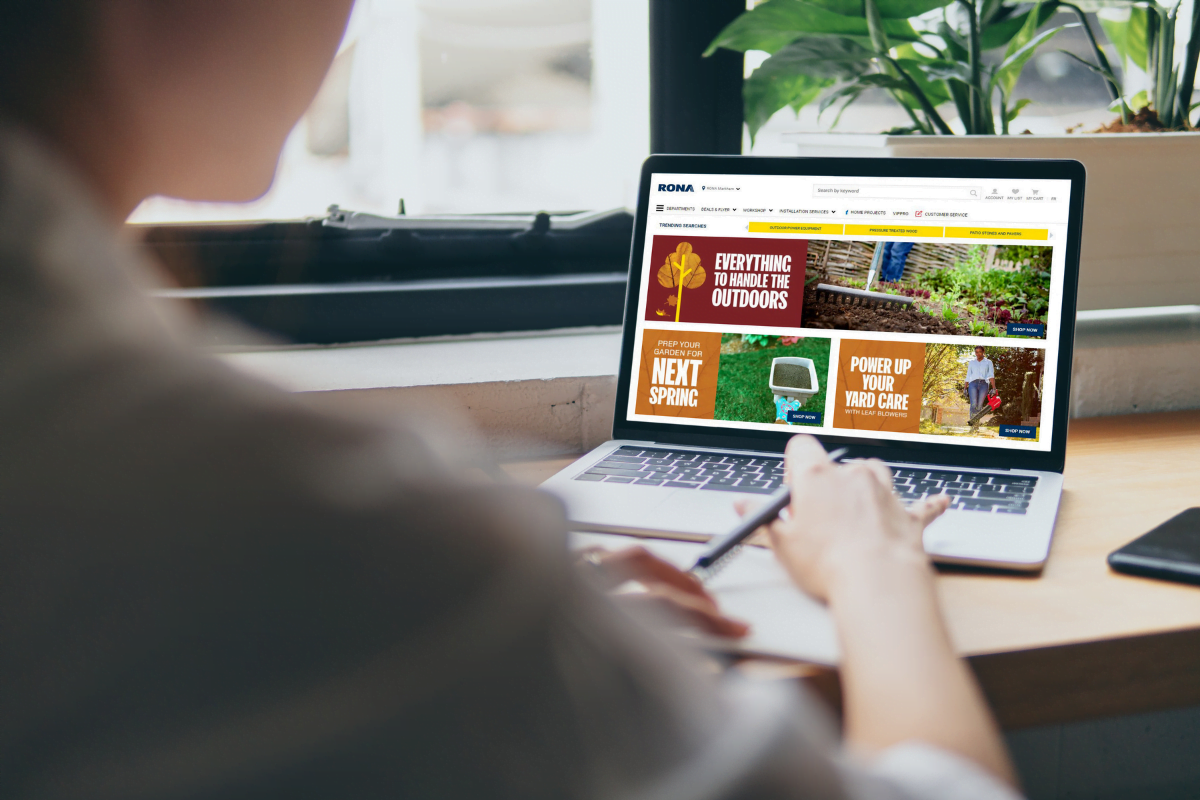
Image: Rona.ca
In addition to these investments to help enhance the evolving retail shopping experience for its customers, Lowe’s Canada recently announced the launch of its new same-day delivery service in over 140 Lowe’s, RONA, and Réno-Dépôt corporate stores across the country. As a result of the introduction of this key service, Lowe’s adds another layer to its already excellent customer service and experience. It also allows it to continue its positive trajectory with respect to meaningful digital investments and enhancements. And, as Hurst points out, it provides Lowe’s Canada with a speed of service that significantly benefits their home improvement professional and DIYer customer-base, differentiating the brand from its competition.
“When considering best-in-class retailers from an online perspective, it’s those that are recognized by the speed with which they can deliver product,” he says. “For our customers, especially the professional base, time is money to them. When they send workers into the store to find and select items, it results in unproductive payroll. This enhancement enables us with the ability to provide that speed of delivery and service that saves them valuable time and effort so they can continue working. Again, it’s really about giving the customer the choice to decide exactly how they want to shop with us and how they want to receive their product. To do this, we’ve leveraged our retail footprint across the country, shipping directly from stores, in order to eliminate transportation costs and increasing efficiency of service. It’s representing a really big piece of our strategy around truly becoming an omnichannel retailer for our customers.”
Increased assortment
In order to support the digitization of the business and bolster the online Lowe’s Canada experience, Hurst says that the company will also be investing heavily in broadening its online assortment, adding 120,000 skus next year to bring the total number of products online to 300,000. It’s an attempt, he explains, at achieving organic growth for the business while helping to elevate the brands’ digital offering. However, the exploration and introduction of new products isn’t limited to the Lowe’s Canada online environment. In fact, Hurst says that there are also really big opportunities for the company to make sure the right breadth and quality of product is available in-store as well, enabling it to capture the attention and spend of one of the most important customers in every home.
“The female customer is the one making the majority of the decisions in every household concerning things like décor and appliances,” he says. “Lowe’s U.S. is number one in market share in appliances. So, we see that as a big opportunity to make sure that we carry and feature top appliances as well as other innovative products that are on trend and presenting great value in order to attract the interest of the female customer. We’ve also made enhancements to some of our core décor departments like flooring, paints, blinds and cabinets. These improvements, along with the enhancement of our online offering, really positions us well to continue broadening our customer-base and reach as many home improvement professionals and DIYers as possible.”
Moving the brand forward
The veteran retail leader says that there’s still a lot of work to do for him and his team in order to harmonize the business and create consistent in-store experiences for each of its three banners and across their related websites. However, he also admits that he’s pleased with the progress that’s been made to this point, adding that there are many more improvements and enhancements on the horizon with respect to the continued development of the Lowe’s Canada omnichannel experience. He lauds the team around him concerning their contributions to the transformation, describing them as an “exceptional group of people”. However, when talking about the achievements that he and his team have realized since his appointment to President of Lowe’s Canada, he seems most impressed by the character of those involved and their focus and commitment to serving the brand’s loyal customers as they continue to move the Lowe’s Canada brand forward.
“We’ve accomplished so much as a team over the course of the past 20 months or so. But what I’m most proud of is the work that Lowe’s as an organization has done, both in Canada and the U.S., to take care of our communities during a time when they’ve needed us most. We’ve been on the forefront, whether it’s been through donations or working in the community or our Heroes campaign which has generated record amounts of money over the last two years, giving back to our customers and the neighbourhoods we serve. Lowe’s gives our stores the ability to take on local non-profit initiatives. I’ve been extremely humbled by the amount of passion that our associates have to not only take care of each other, but to take care of the communities that we’re a part of as well. And we’ll continue to focus on contributing to causes that are important to our core values as a company and serving the needs of the valued Lowe’s customer.”
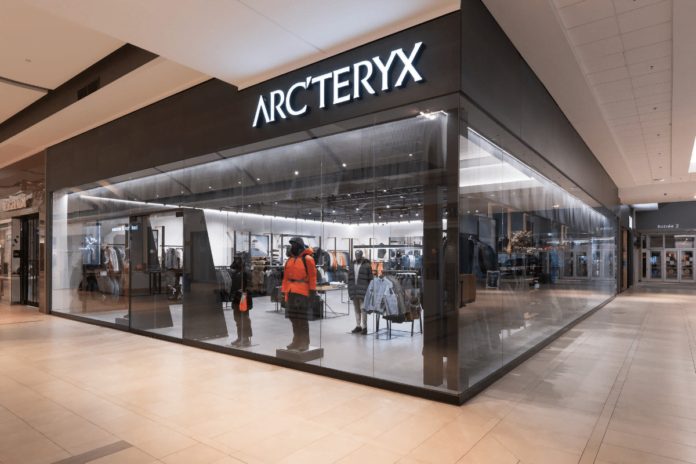
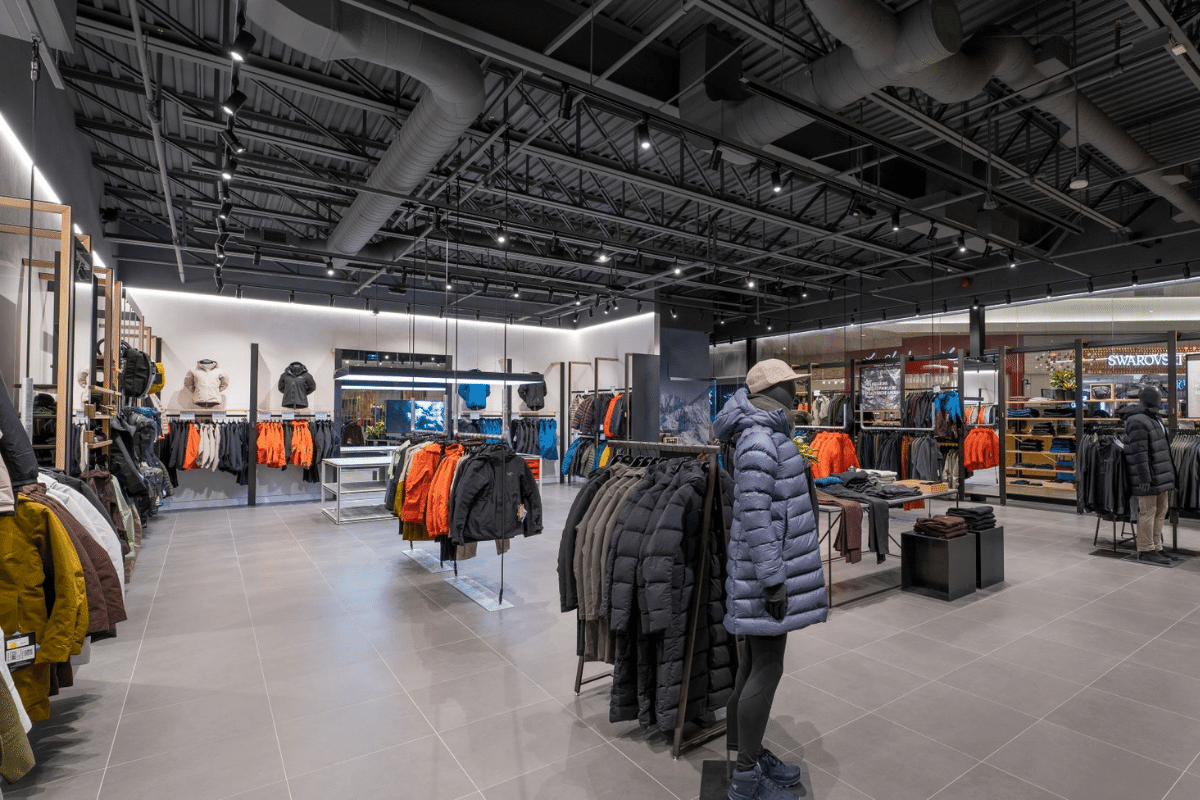
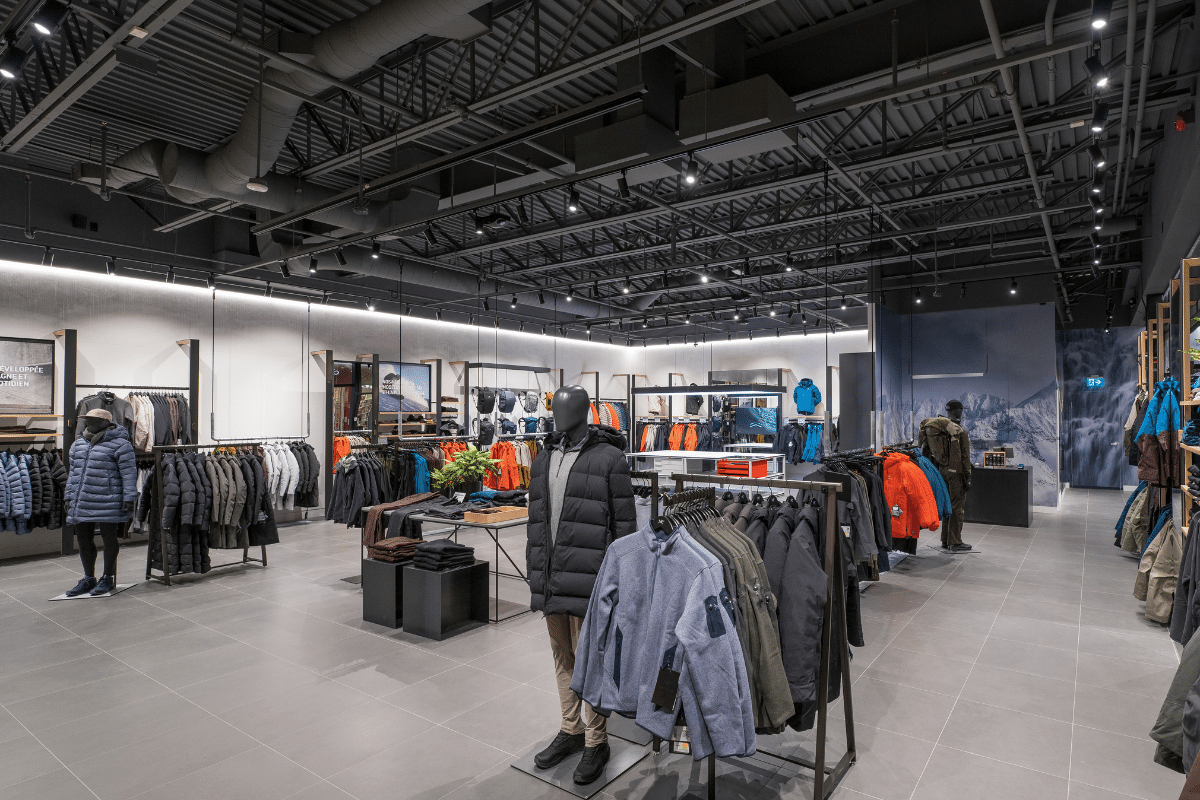
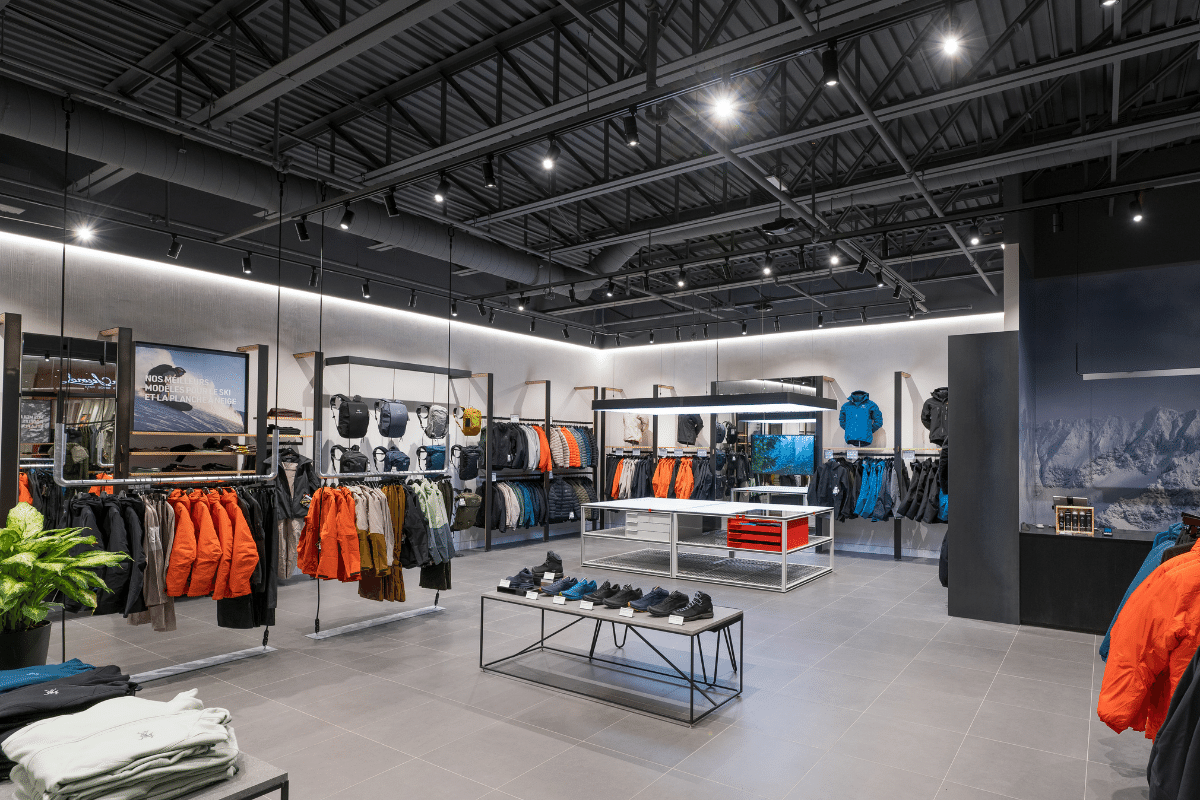
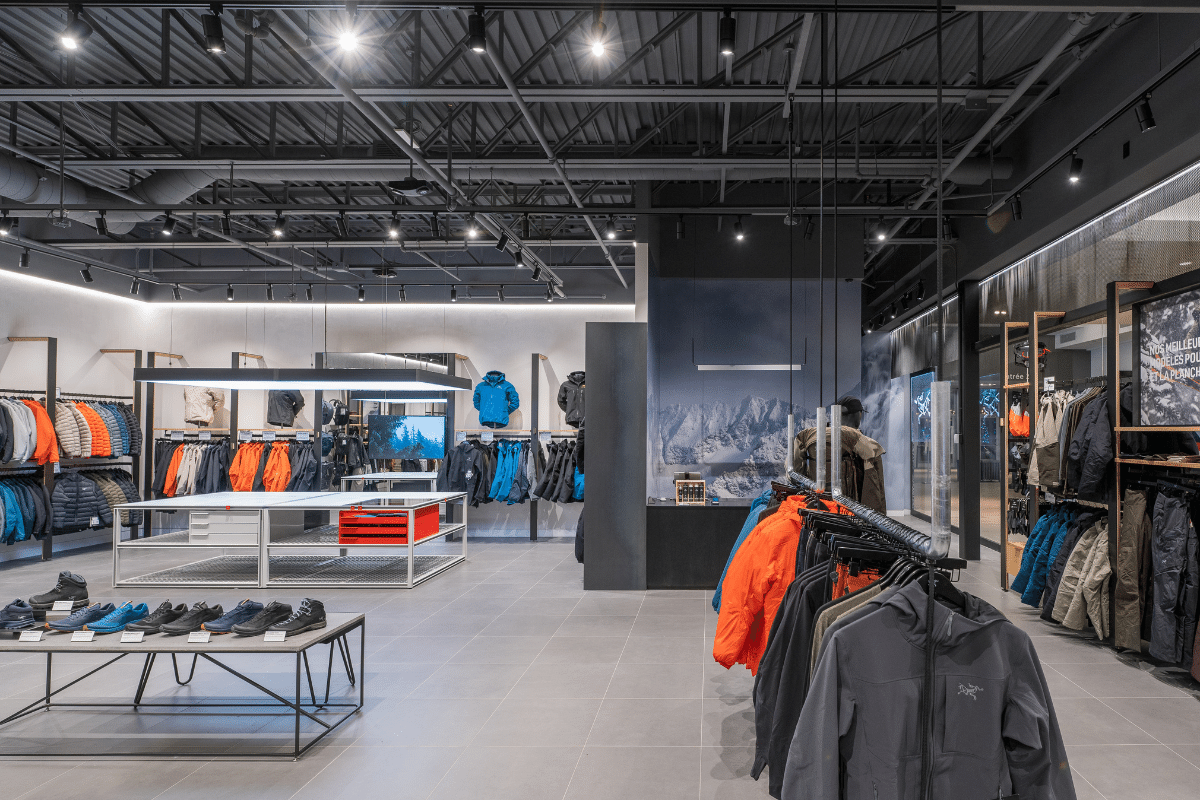
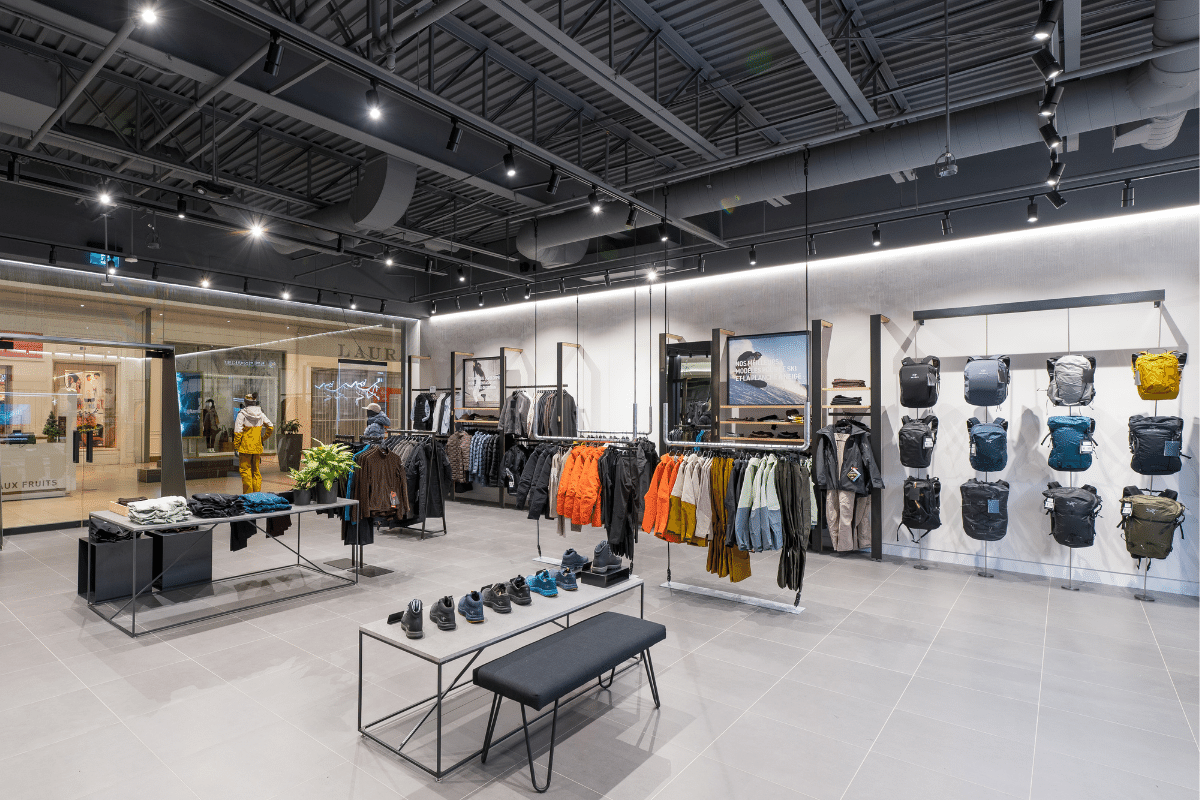
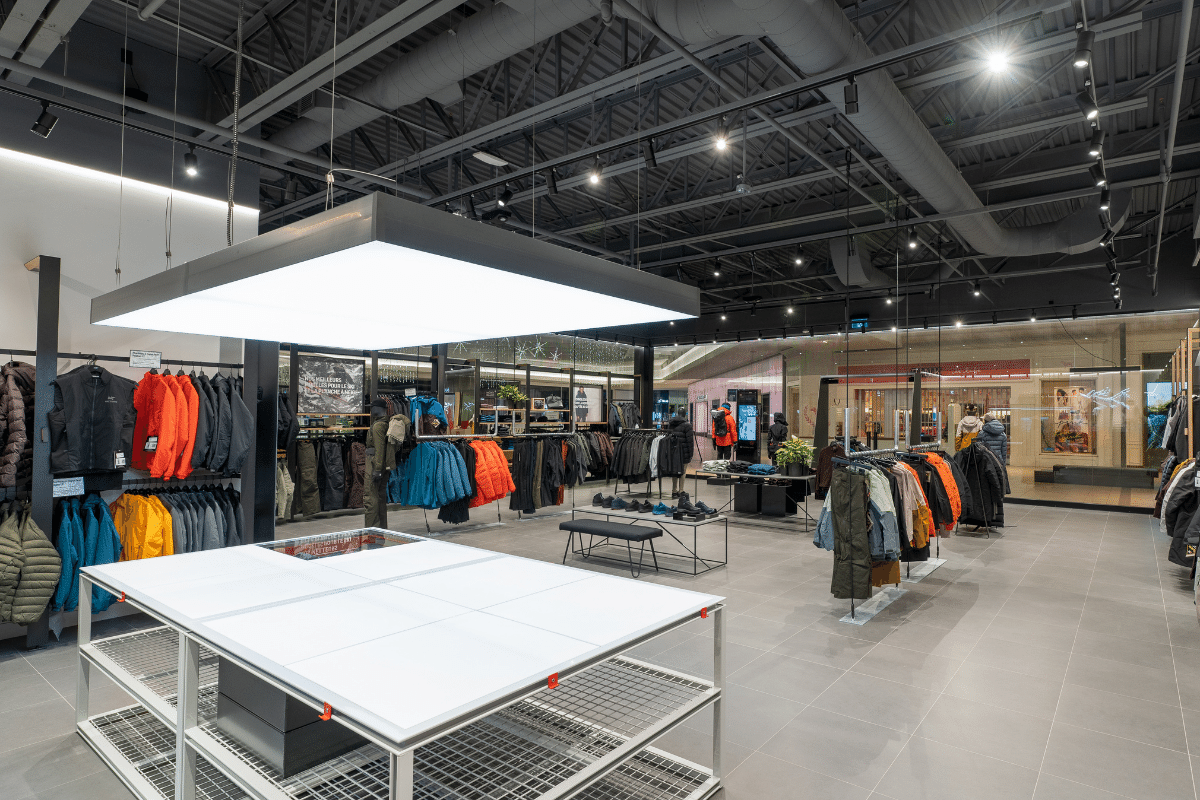
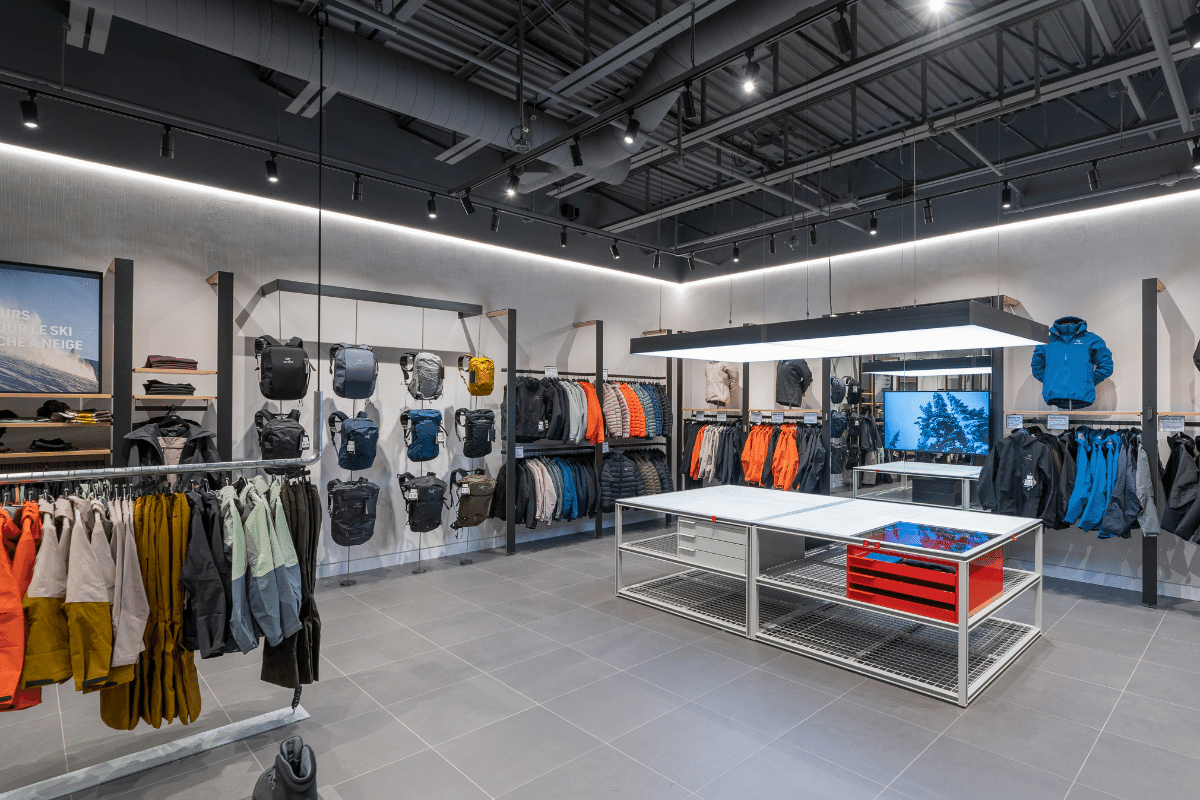
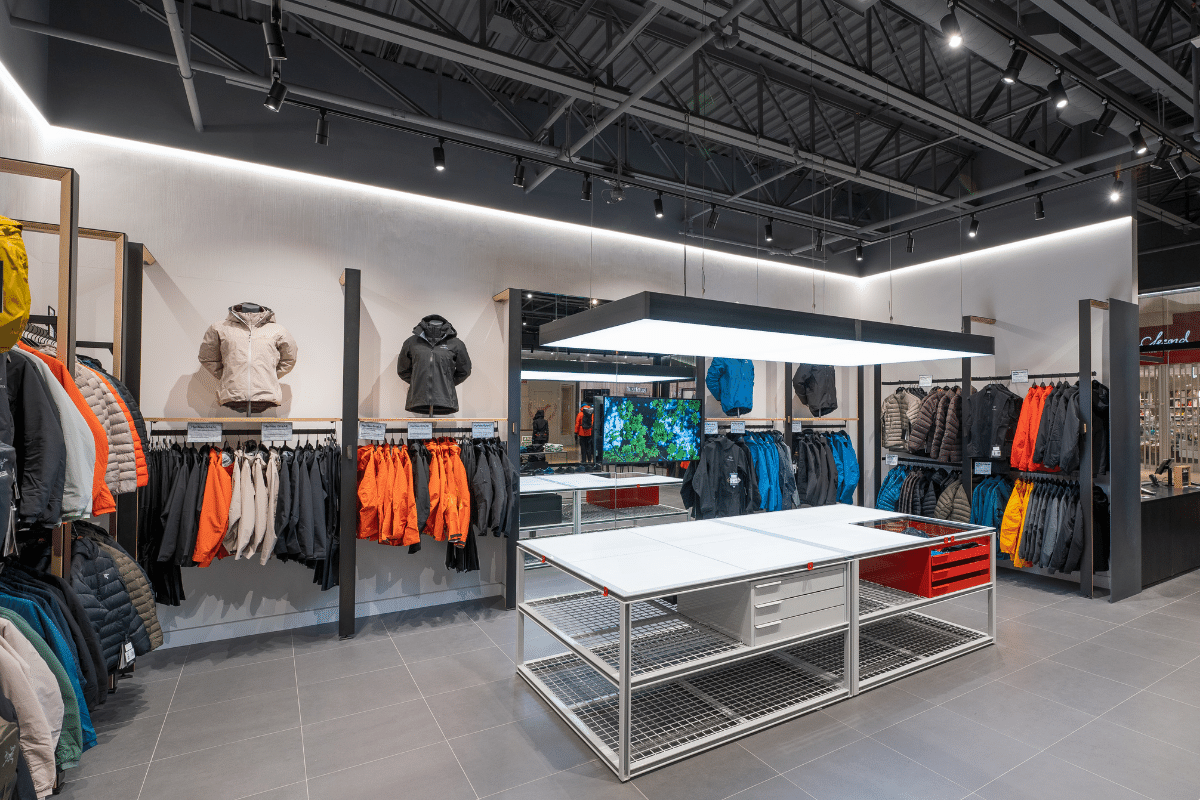
Vancouver-based technical apparel and equipment brand and retailer Arc’teryx has continued its Canadian expansion with the 14th location in the market with a new store at CF Carrefour Laval near Montreal.
The 2,028 square foot store is the third location in Quebec for the brand which operates a network of direct-to-consumer stores as well as wholesale operations.
“As we continue our expansion in Quebec, Arc’teryx Laval is our third location in Montreal,” shared Megan Cheesbrough, VP Canada & Global Guest Services at Arc’teryx. “The Rue Sainte-Catherine store was of the earliest locations we opened when starting our vertical journey over 10 years ago. Since opening on Rue Sainte-Catherine, we saw continued success and a dedicated community following, which was our motivation to build the Beta lounge instore equipped with a bouldering wall.”
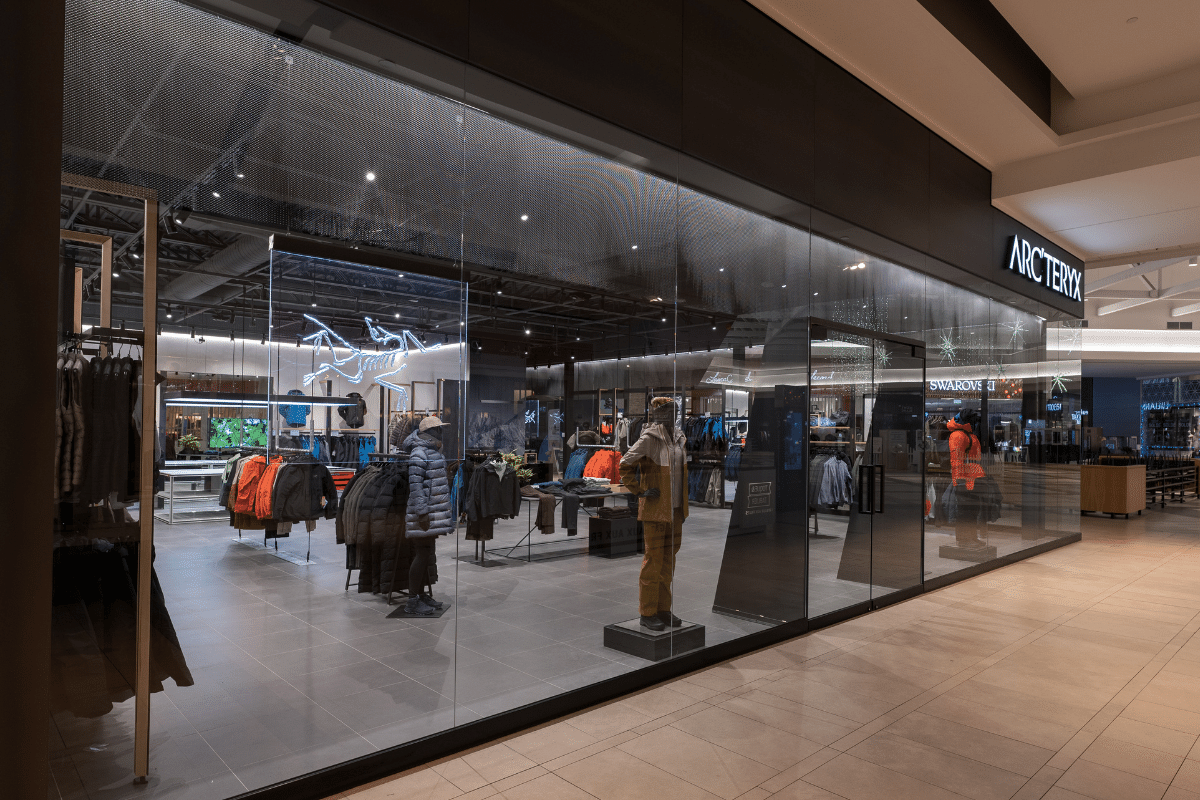
Arc’teryx at Carrefour Laval (Image: Arc’teryx)Arc’teryx at Carrefour Laval (Image: Arc’teryx)
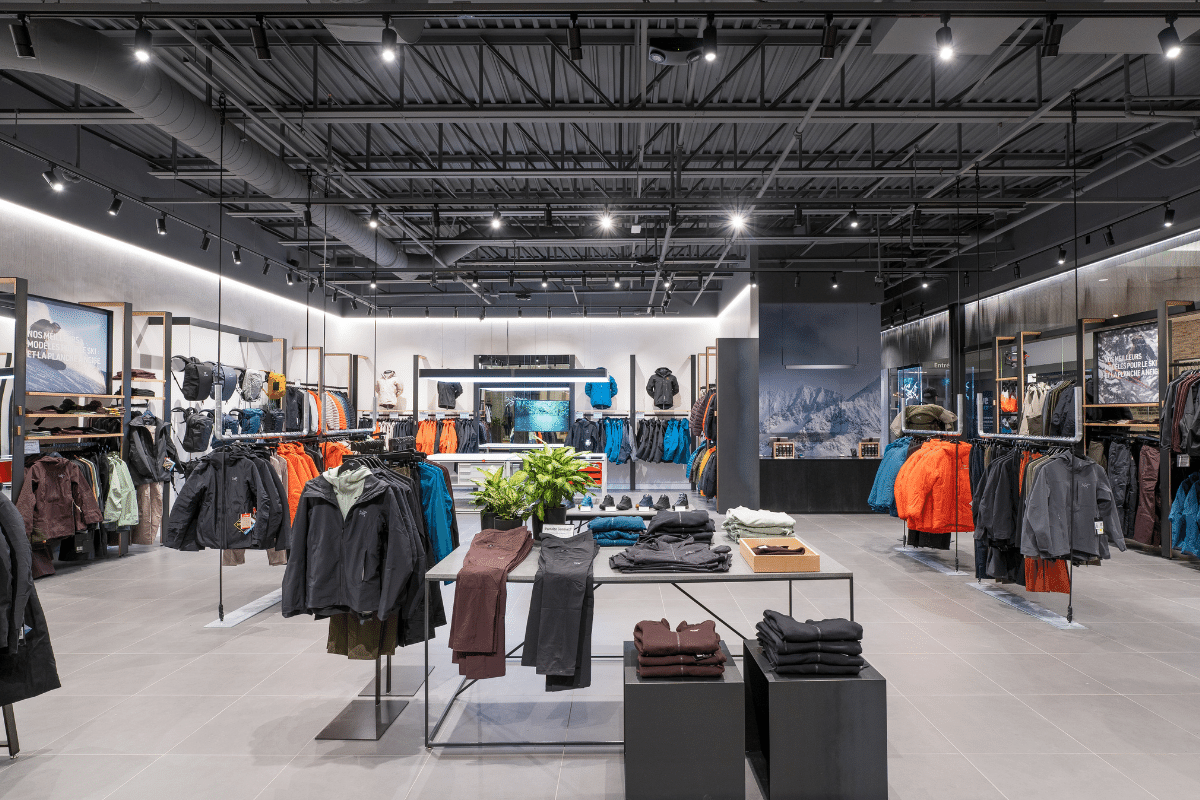
“The community growth encouraged us to open a smaller neighbourhood store in Westmount offering a selection of our most iconic products in early fall of 2021. Our latest store in Laval is home to a growing jacket destination where guests can select from a large selection of weatherproof products to compliment various activities and requirements.”
“The store also has a deep connection to the community and is working on a selection of events that introduces guests to various activities including ski & split board touring, hiking and local runs. The Laval store is our first mall location in Montreal and services the largest suburb of Montreal north of the island.”
As Arc’teryx expands into new markets, the strategy will evolve based on the location.
“The community has responded so well since we opened the doors at the Laval location the week of Black Friday. Every time we open a store, we get clarity on what our community requires in terms of product, experiences, and education. We will continue to open stores taking consumer insights, in depth community reviews and looking at how/where guests are using product to inform what size store and where we open.”
Arc’teryx products are distributed through more than 2,400 retail locations worldwide and includes 115 branded stores in the chain.
Arc’teryx at Carrefour Laval (Image: Arc’teryx)Arc’teryx at Carrefour Laval (Image: Arc’teryx)Arc’teryx at Carrefour Laval (Image: Arc’teryx)Arc’teryx at Carrefour Laval (Image: Arc’teryx)Arc’teryx at Carrefour Laval (Image: Arc’teryx)Arc’teryx at Carrefour Laval (Image: Arc’teryx)Arc’teryx at Carrefour Laval (Image: Arc’teryx)Arc’teryx at Carrefour Laval (Image: Arc’teryx)
Retail Insider is streamlining its Canadian retail news from around the web to include a handful of top news stories that can be viewed quickly during the day. Here are the top stories from the past 24 hours.
Podcast [Interview] Entrepreneur Daniel Lewis Discusses Daniel's Chai Bar
Craig and Daniel talk about Daniel’s New Daniel’s Chai Bar concept which launched this month, with plans to grow. It’s an upbeat conversation with the former musician and personality who is bullish on the future.
The Interview Series podcast by Retail Insider Canada is available on Apple Podcasts, Stitcher, TuneIn, Google Play, or through our dedicated RSS feed for Overcast and other podcast players. Also check out our The Weekly podcast where Craig and Lee discuss popular content published on Retail Insider which is part of the The Retail Insider Podcast Network.
Drop us a line at Craig@Retail-Insider.com. You can also rate us in Apple Podcasts or recommend us in Overcast to help more people discover the show!
Background Music Credit: Hard Boiled Kevin MacLeod (incompetech.com). Licensed under Creative Commons: By Attribution 3.0 License. http://creativecommons.org/licenses/by/3.0/
Despite dealing with a series of restrictions, lockdowns, and nightly curfews, Montreal retail sales in 2021 have increased by 22 per cent compared with 2020 and by five per cent compared with 2019.
Luciano D’Iorio
Luciano D’Iorio, Regional President and Managing Partner of CDNGLOBAL Quebec, said the retail landscape is looking good for Montreal but it continues to be in transition like it was pre-pandemic.
“Before the pandemic we saw a lot of apparel retailers looking at ways of reusing their spaces and looking at ways of maximizing their leases and so you saw a lot of that,” said D’Iorio.
“Now I’m getting a lot of interest for retail space from QSR (quick service restaurants) users, surprisingly because you think that some of the restaurants didn’t do well during the pandemic but the QSR guys are always looking for spaces. Grocery is still very much strong. I think it’s really the apparel business that’s in flux, entertainment as well. As things start to pick up and people want to go out and enjoy being together, I think you will see a lot more of those things coming to malls and coming to the retail scene.”
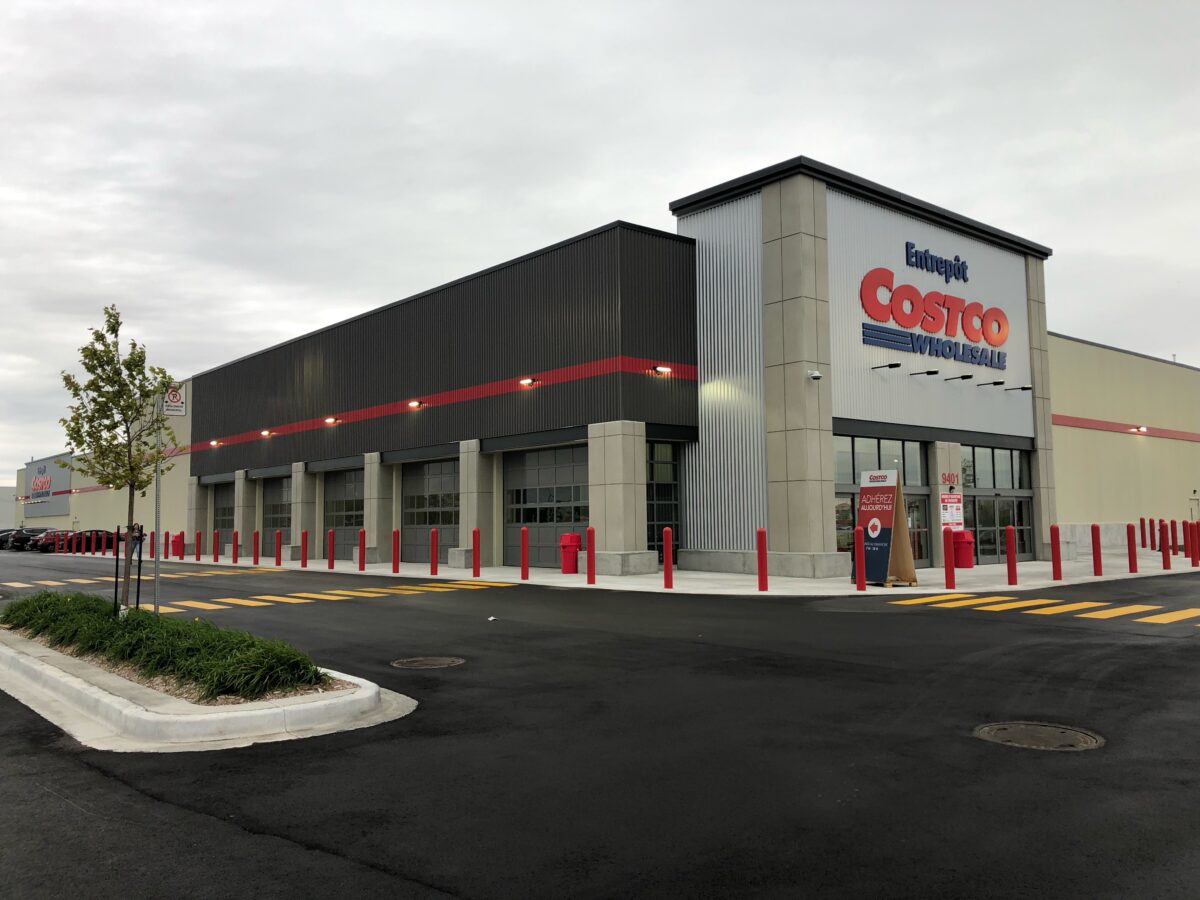
COSTCO WHOLESALE OPENS NEW WAREHOUSE CLUB IN ANJOU, QUEBEC
“They basically built a warehouse that’s 20 per cent larger than their former warehouse and their former warehouse which is not far from their new one they’re still going to operate it but as a business enterprise warehouse. So they’re going to have the business enterprise concept and then they have the Costco that you and I know. They opened that at the end of October. So I foresee in that neighbourhood it’s going to have some effects in terms of retailers.”
D’Iorio said retail vacancy in the downtown area is not that bad compared to other major cities, particularly in the US.
“It says a lot about Montreal in general. The city centre of Montreal is basically fuelled by three factors – the student population, the office worker population and then the tourist population.
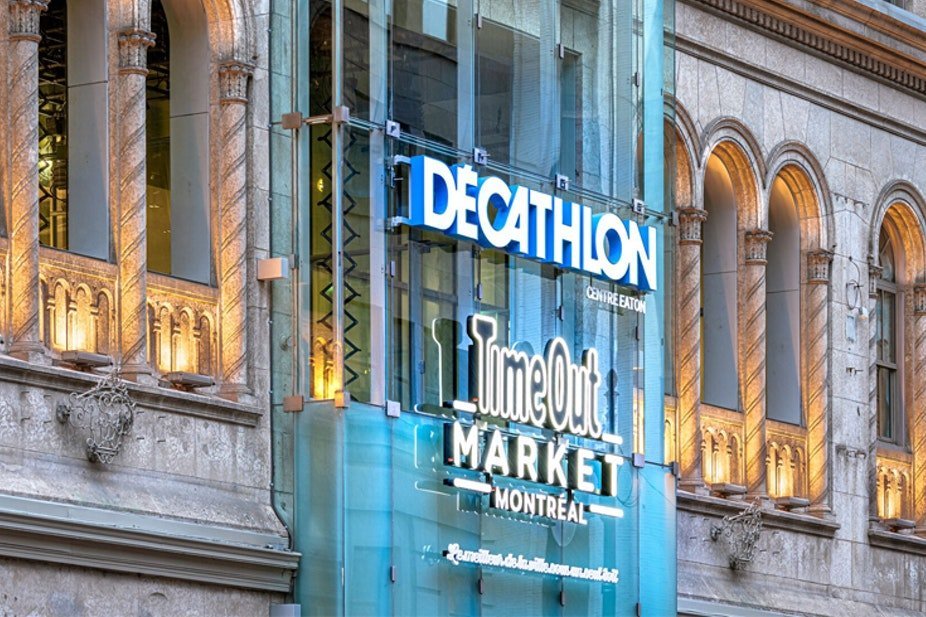
Image: Montreal Eaton Centre
“The students came back in September and both McGill and Concordia returned to in-person classes. Ninety per cent of university students were back in person and over 50 per cent of office workers were back full time or in a hybrid situation,” he said.
“The missing piece here I see is obviously the other 50 per cent of the office workers and then the tourism because in August when we opened the land border to American US citizens coming into Montreal we started to see hotel occupancies increase and of course that just bodes well for retailers. As things start to come back, a street like St. Catherine Street will start to pick up.
“Bricks and mortar is still important to some retailers. Some others they were probably suffering during the pandemic but some of these were suffering pre-pandemic. It’s just the evolution of the way people are shopping.”
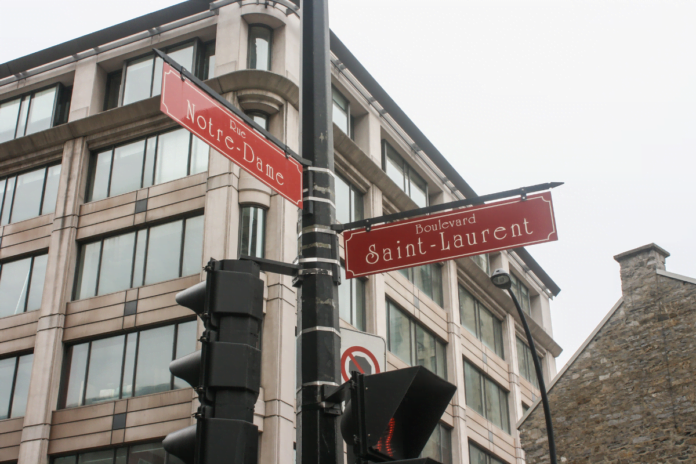
Downtown Montreal (Image: Dustin Fuhs)
A fall retail report by commercial real estate firm JLL said the Montreal retail market has seen considerable improvement in leasing activity this year, but not yet to the levels of 2019. A series of restrictions, lockdowns, and nightly curfews has impaired the ability of many retailers to make plans and expand.
“Those who have expanded are focusing on the suburbs and urban areas outside the city’s core, as many office workers have stayed outside of the downtown areas and worked from home,” said the report.
“Montreal’s City Centre Report registered an increase in the percentage of downtown Montreal stores that were vacant or temporarily closed, from 28 percent in Q4-20 to 34 percent in Q1-21. The same study also revealed that the retail vacancy/temporary closure rate in downtown shopping malls surged from 20 to 34 percent. Sainte-Catherine Street experienced a slight increase.
“While net effective rents for occupied space decreased by three percent in 2020, they’ve now rebounded to 2019 levels. As retailers continue their path to recovery and landlords collect more rent, discussions surrounding rent relief, base-rent concessions, and adoption of percent sales agreements have faded.”
The report added that the ramp-up to the recovery of food services will certainly be slow as Quebec’s 2021 sales are down 29 per cent from pre-pandemic levels. After recovering much of the foot traffic in the summer, full-service restaurants in Montreal will likely see a weakening in business as the fourth wave moves through and the weather cools. Having fully recovered, QSRs will continue to perform better.
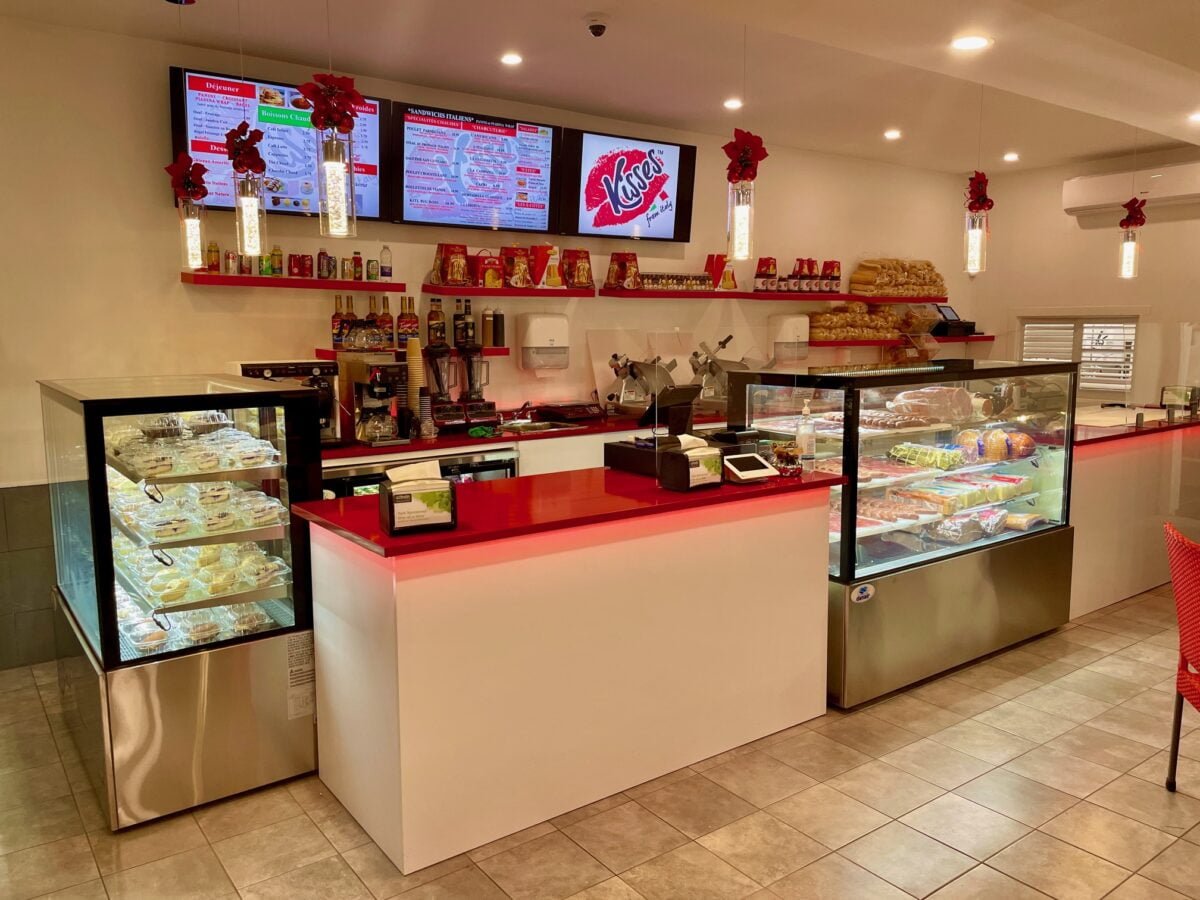
Image: Kisses from Italy Montreal
“Montreal has made great progress with the reopening of the economy, with increased visits to retail and recreational places. Compared with pre-pandemic levels, visits were down 62 percent in January 2021 but only down 14 percent in August. During the summer, visits to workplaces remained stable, down 35 percent from pre-pandemic levels, while August’s transit station visits were down 42 percent,” it said.
“Downtown foot traffic is set to rise in the long run as office workers, students, and tourists slowly return. More than 300,000 workers used to visit the downtown area every day. The redesign of Sainte-Catherine Street continues to progress, and construction work between Robert-Bourassa and Mansfield should be finalised this fall. The city will still be upgrading Philips Square and Union Avenue through 2022.
“The recent relaxation of quarantine for international visitors improved the prospects for downtown. Montreal hotels saw a considerable jump in their metrics during the summer. In July, occupancy sat at 42 percent, more than twice as much as July 2020.”
Manon Larose
Manon Larose, Senior Vice President, Retail with JLL, said she recently toured the principal malls and she noticed that consumers are more enthusiastic than ever.
“The consumers just want to go back. They bought nothing for the past 18 months. So they have some money to spend,” she said.
“In terms of retailers coming on the street, there are some very, very well-known banners that are looking at St. Catherine Street. I’m just thinking about three of them, which I cannot name for the time being, but I could say a prominent shoe brand who will soon be opening on St. Catherine. Electric cars are also looking at showrooms. So there is increasing demand for downtown and for St. Catherine.
“There are also a lot of companies that did pretty well on the web that are looking for brick and mortar now. I think a lot of the retailers that have postponed some of their projects are now ready to go and operate.”
“In the downtown core, there was already an element of vacancy and obviously the pandemic has exacerbated that situation. That said, there have been numerous new players that have entered the market over the last couple of years and that is helping invigorate and I guess rejuvenate the scene. So there are positives most definitely,” he said.
“In the last year and a half, we’ve opened Uniqlo with their largest store in Canada on Sainte-Catherine Street. We’ve reopened a larger and enhanced Sephora on the street. We had Victoria’s Secret that we had done. These are just things that we did from our own office. The full opening of the Ogilvy Holt Renfrew. There is new store development, there are things happening. Is it enough? Well it’s never enough but I would say Montreal hasn’t fared worse than the other major cities in Canada. As a matter fact, maybe because we do have a considerable amount of residential in our downtown core, it’s helped it be less empty compared to some of the other major markets over the course of the pandemic.”
Berkowitz said the main challenge that the retail real estate industry will have to live with, which will continue over the next couple of years, is the construction on the high street with the roadway being dug up section by section.
“That is a very disruptive factor for retail. I also think the city maybe needs to find a better way to deal with that project. So far, the sections that they’ve closed off have not really been properly. They haven’t made it as user friendly, pedestrian friendly when they closed the street off to vehicles. So hopefully the city will find its way to be more supportive to the retail environment while they’re getting the work that they have to do done,” he said.