COSTCO WHOLESALE OPENS NEW WAREHOUSE CLUB IN ANJOU, QUEBEC
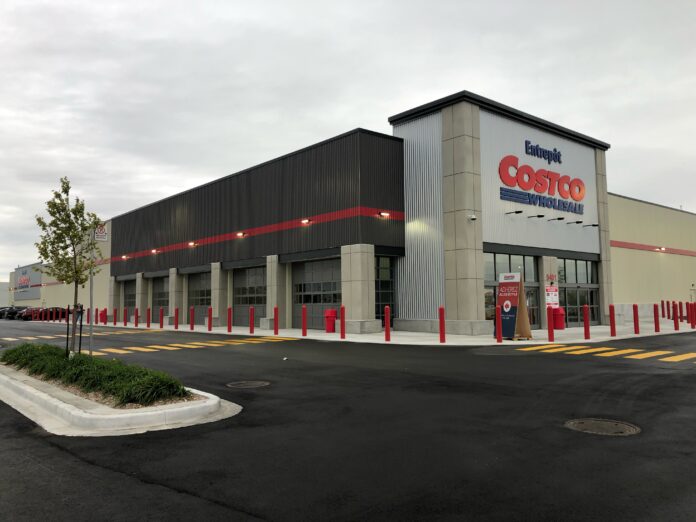
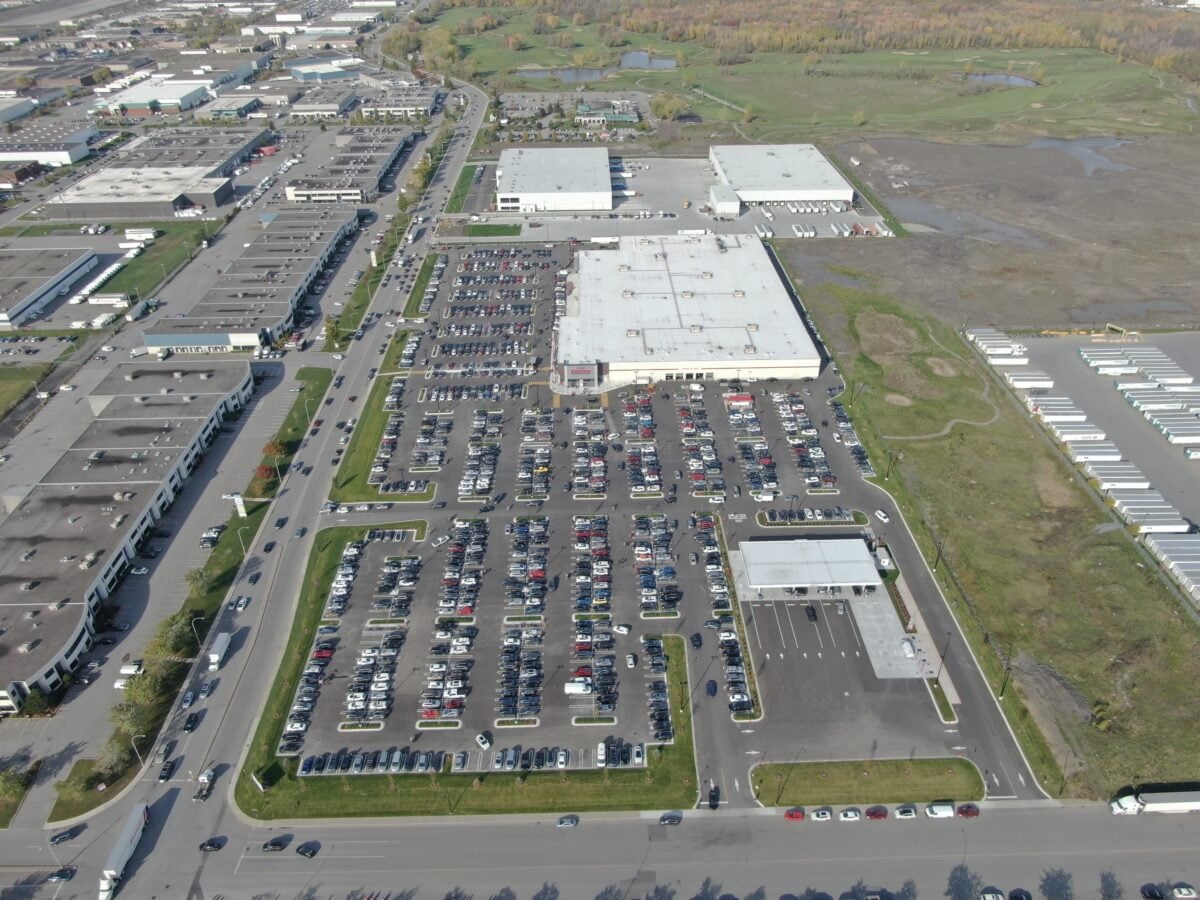
Costco Wholesale Canada has opened a new 155,733 square foot location in Montreal’s Anjou area to replace a former location which will be converted to a Costco Business Centre.
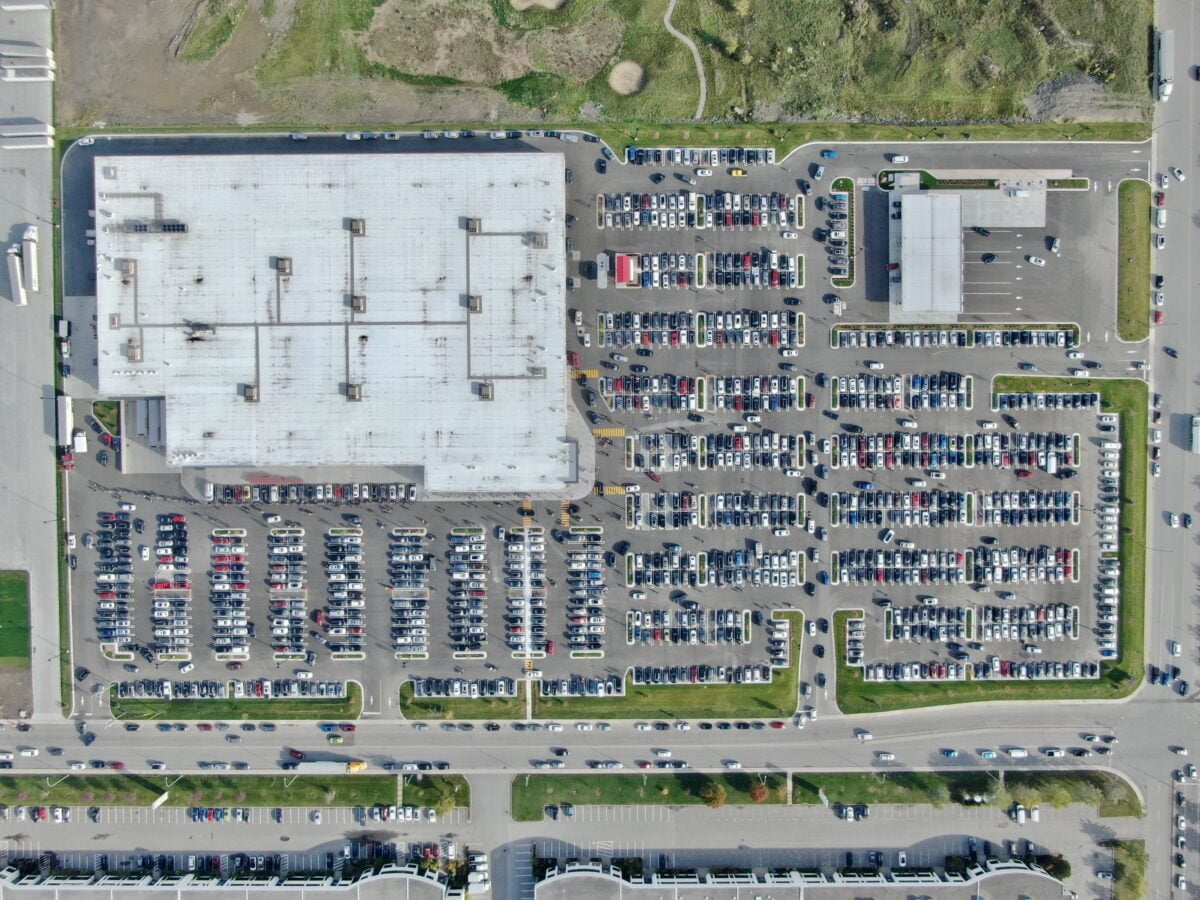
The new location is 20% larger than the former location with 13 checkout registers, six station self-checkout section, 1000 shopping carts, 900 parking spots and more than 3,800 product skus.
“With the opening of this new warehouse, we can serve all of our members in the Anjou and surrounding area and can bring new consumers and businesses to uncover the benefits of a Costco membership,” said Pierre Riel, Senior Vice-President and Country Manager, Costco Wholesale Canada. “We are very proud to share this new location with our valued members and member businesses in the local community and throughout the area.”
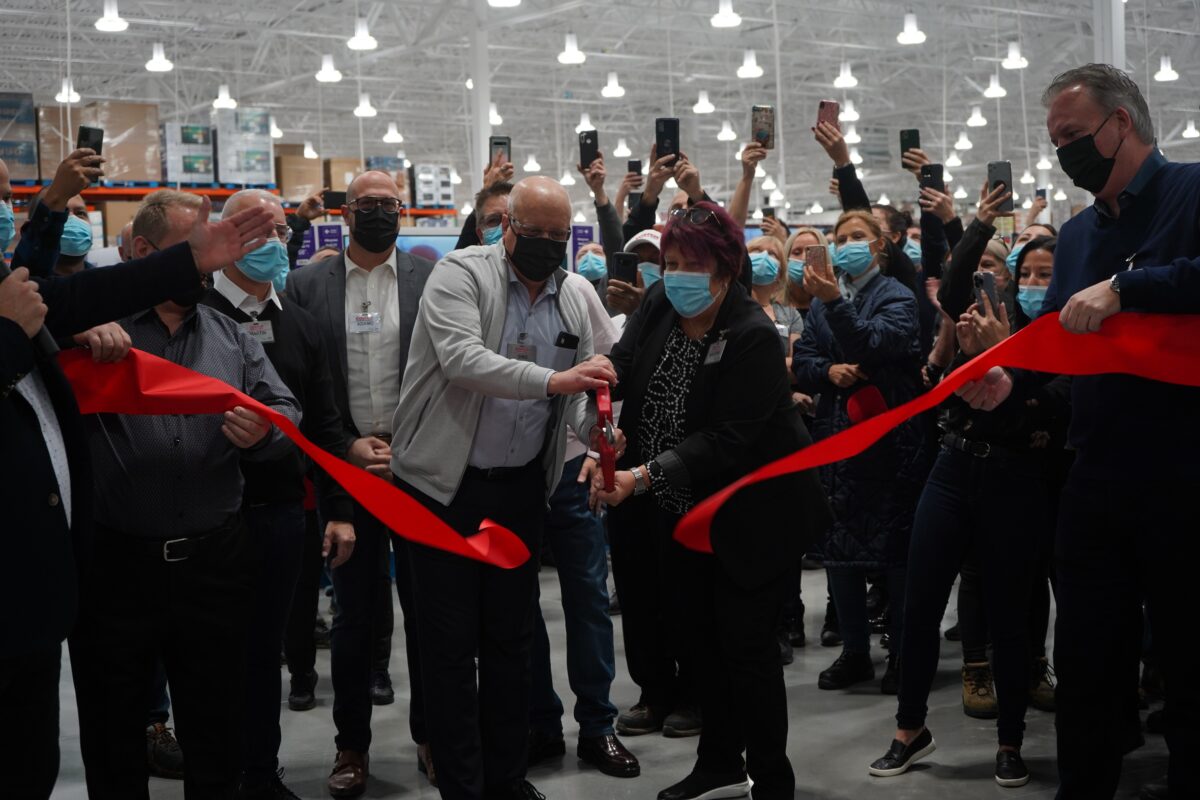
Costco Anjou Ribbon Cutting, October 27, 2021. Pictured in the ribbon cutting photo (from the left) are: Gino Dorico, Senior Vice-President & General Manager, Costco Wholesale Eastern Canada; Martine Bouthillier, Costco Anjou Warehouse General Manager; and Randy Martel, Vice-President, Costco, District 1
Costco Wholesale currently operates 817 warehouses worldwide and 105 warehouses across Canada. The first Costco Wholesale location opened in Burnaby, BC in October 1985.
The first Quebec location opened in St. Laurent (Montreal), QC in 1986 and has since closed.
Costco Wholesale employs over 40,000 people in Canada, with 9,605 employees currently in Quebec.
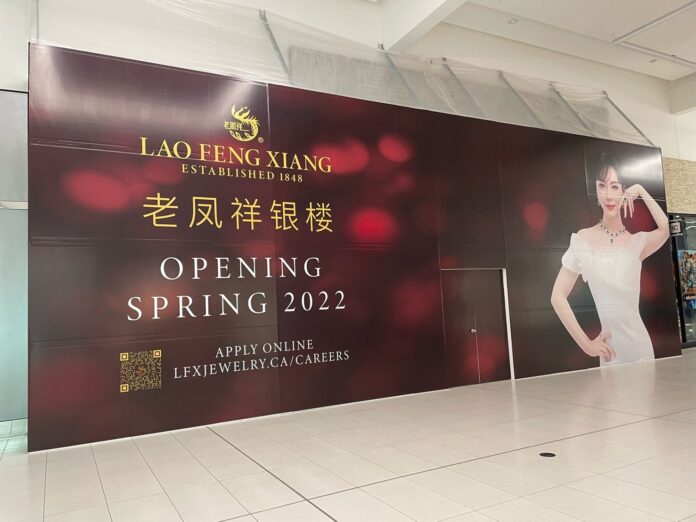
Lao Feng Xiang Construction Signage at Park Royal Shopping Centre (Oct 2021). Photo: Shanon Thornley (LinkedIn).
China’s premier fine jewellery brand Lao Feng Xiang will open its third Canadian location at the Park Royal Shopping Centre in West Vancouver this year. It will become the retailer’s fourth North American location as there is one boutique located outside of Canada on New York City’s Fifth Avenue.
Lao Feng Xiang is China’s oldest jewellery brand, as well as the world’s 16th-largest luxury goods company. Founded in Shanghai in 1848 (during the Qing Dynasty), Lao Feng Xiang retails fine jewellery featuring gold, silver, diamonds, coloured gemstones, jade, pearl and enamel, as well as a robust bridal business. The company has over 2,700 retail stores throughout Mainland China and one in Sydney, Australia. Lao Feng Xiang is particularly known for its 24-karat gold and jade creations.
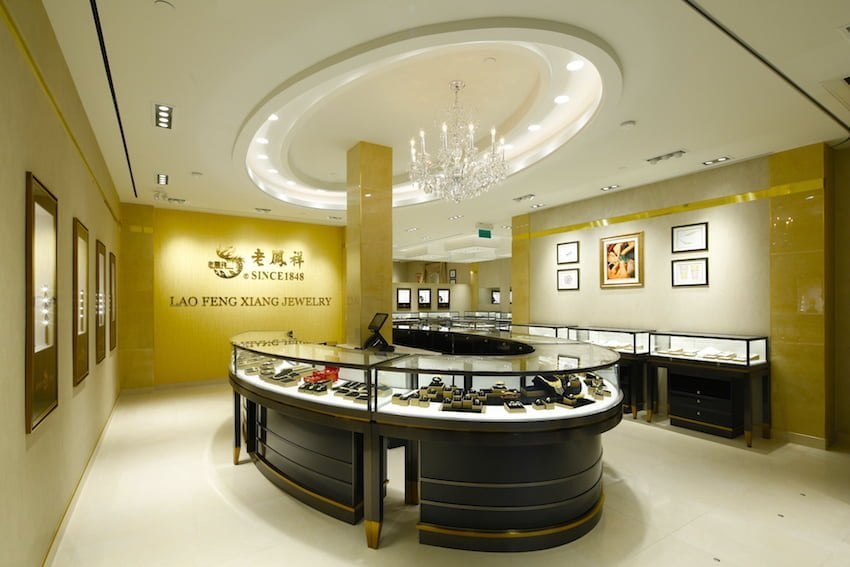
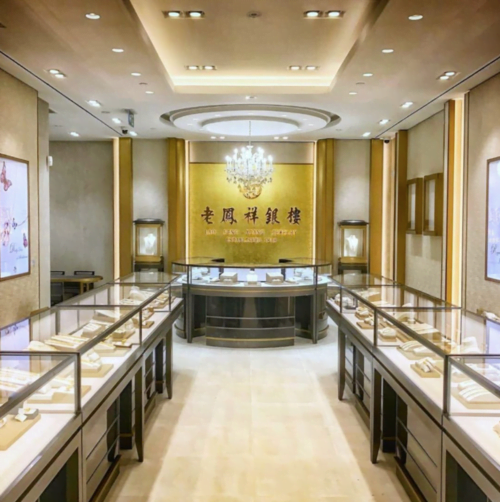
Interior of Lao Feng Xiang on Alberni Street in downtown Vancouver. Photo: Lao Feng Xiang
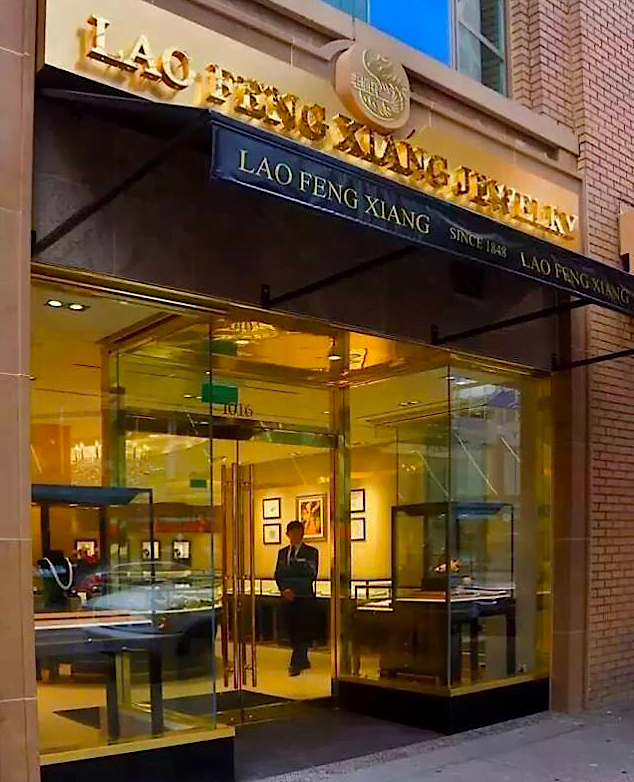
Facade of Lao Feng Xiang on Alberni Street in downtown Vancouver. Photo: Lao Feng Xiang
Lao Feng Xiang
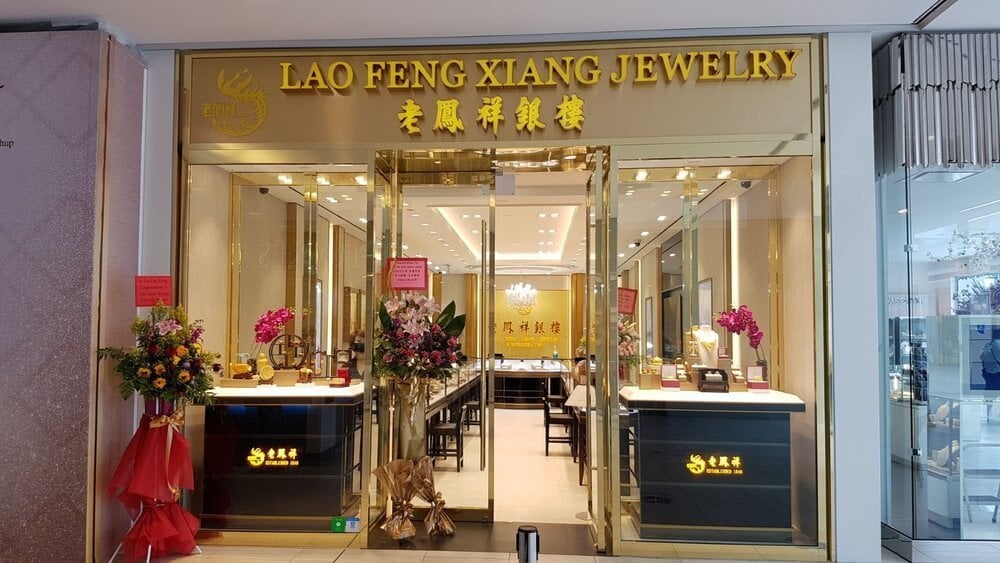
Facade of Lao Feng Xiang at CF Richmond Centre. Photo: Ritchie Po
INTERIOR OF LAO FENG XIANG AT CF RICHMOND CENTRE. PHOTO: MARTIN MORIARTY
The Park Royal Shopping Centre has located the new Lao Feng Xiang boutique in the “Park Royal South” indoor shopping centre. This new jewellery brand will be an addition to the long list of jewelery retailers at the shopping centre, including:
Birks
Lugaro
Rolex
Omega
Michael Hill
Arctic Fame Diamonds
Blue Ruby Jewellery
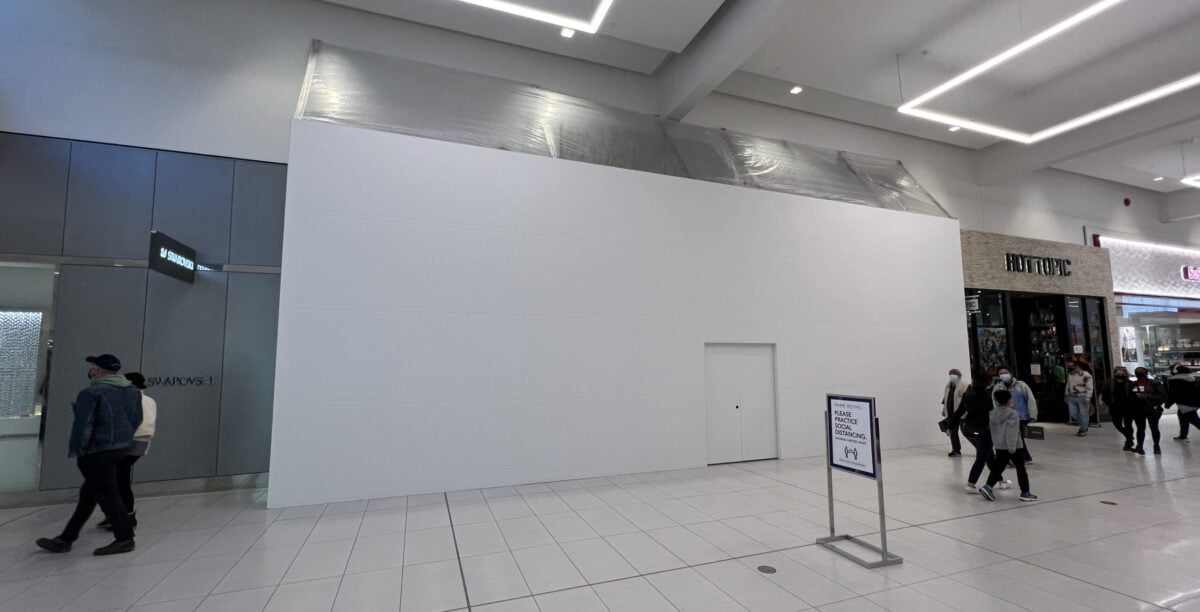
The new Lao Feng Xiang location will be nestled between the Austria-based Swarovski boutique featuring crystal luxury goods, including jewelery and Hot Topic, a privately owned counterculture-related clothing and accessory retailer based out of California.
Marcus & Millichap negotiated the lease deal for the new boutique space on behalf of the retailer under the direction of Martin Moriarty.
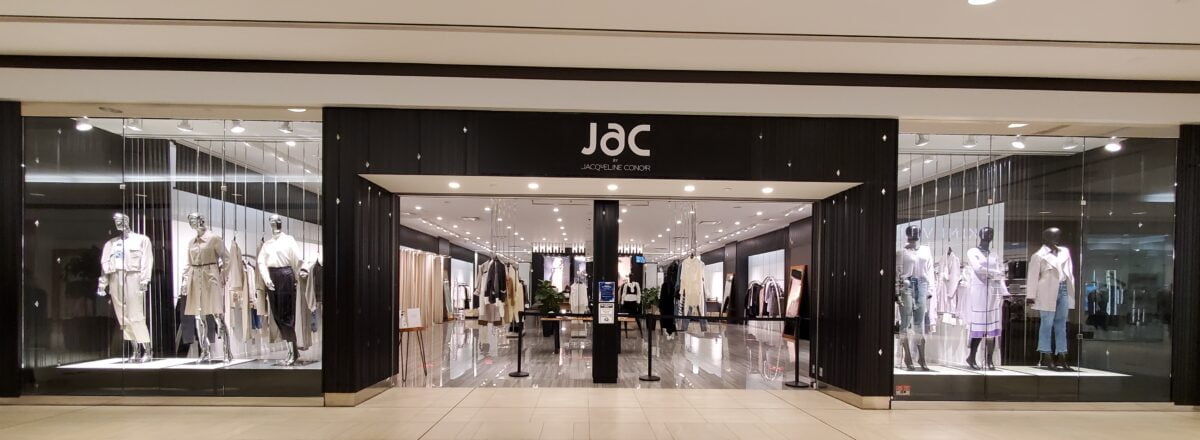
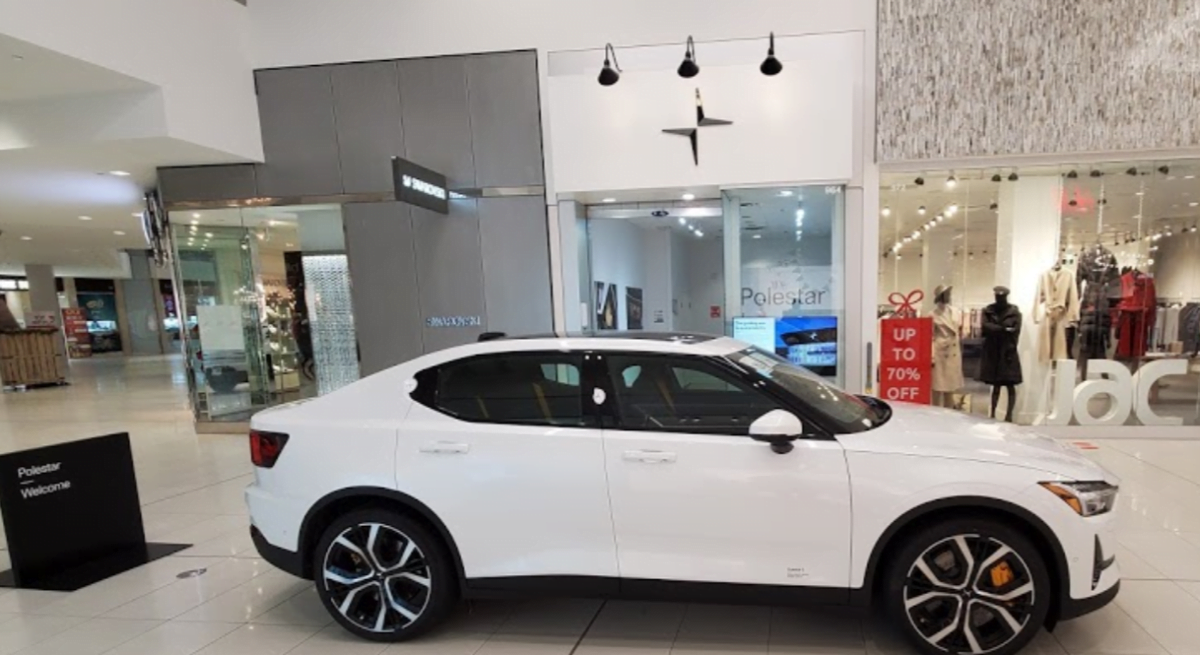
Former Polstar (temporary location) and former JAC by JC retail locations with construction boarding erected (October 10, 2021). Photo: Lee Rivett.
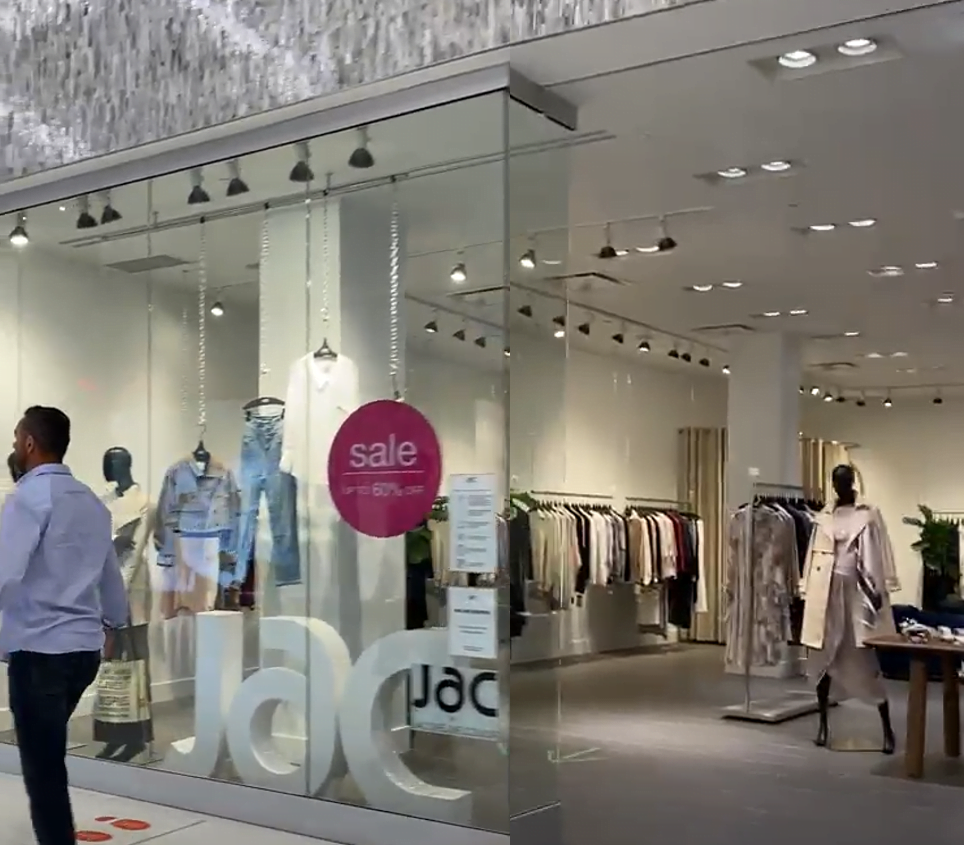
Former JAC by JC at Park Royal during Retail Insider video tour (September 2020). Photo: Lee Rivett.
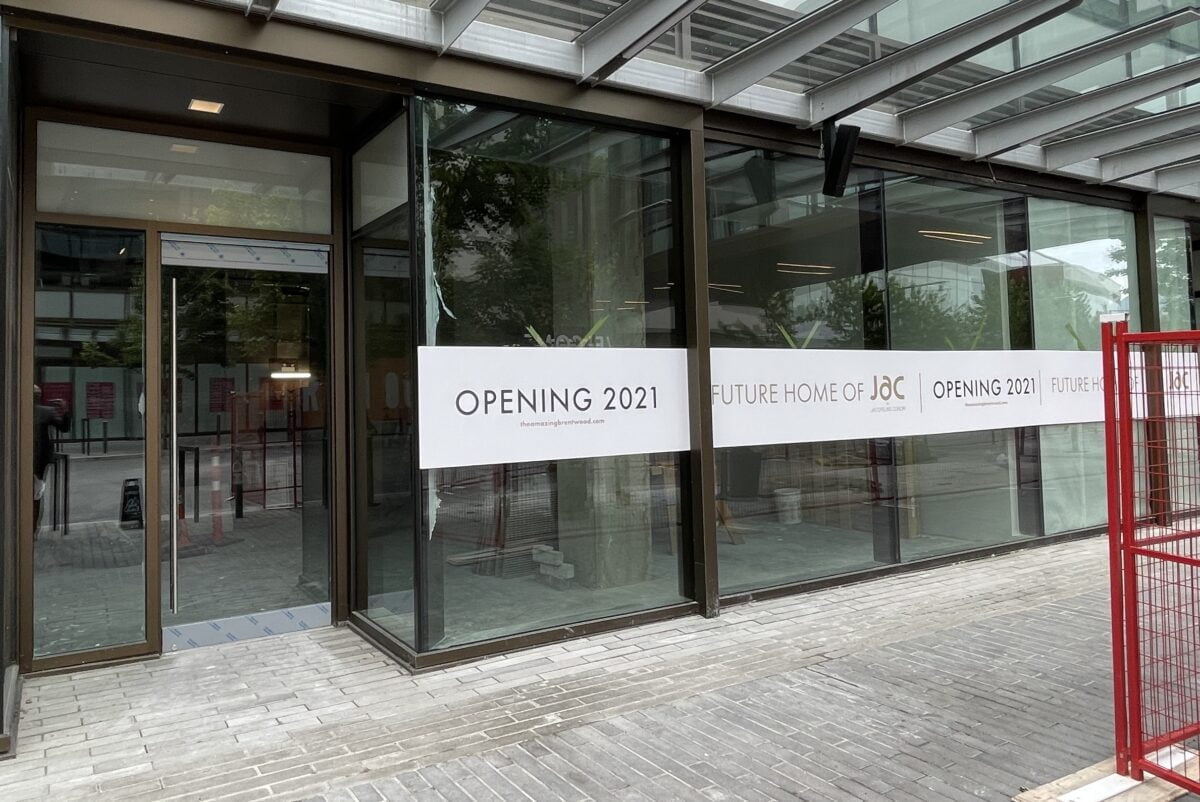
Upcoming JAC by Jacqueline Conoir at The Amazing Brentwood (June 2021). Photo: Lee RivettJAC by Jacqueline Conoir at CF Richmond Centre. Photo: Geetanjali Sharma
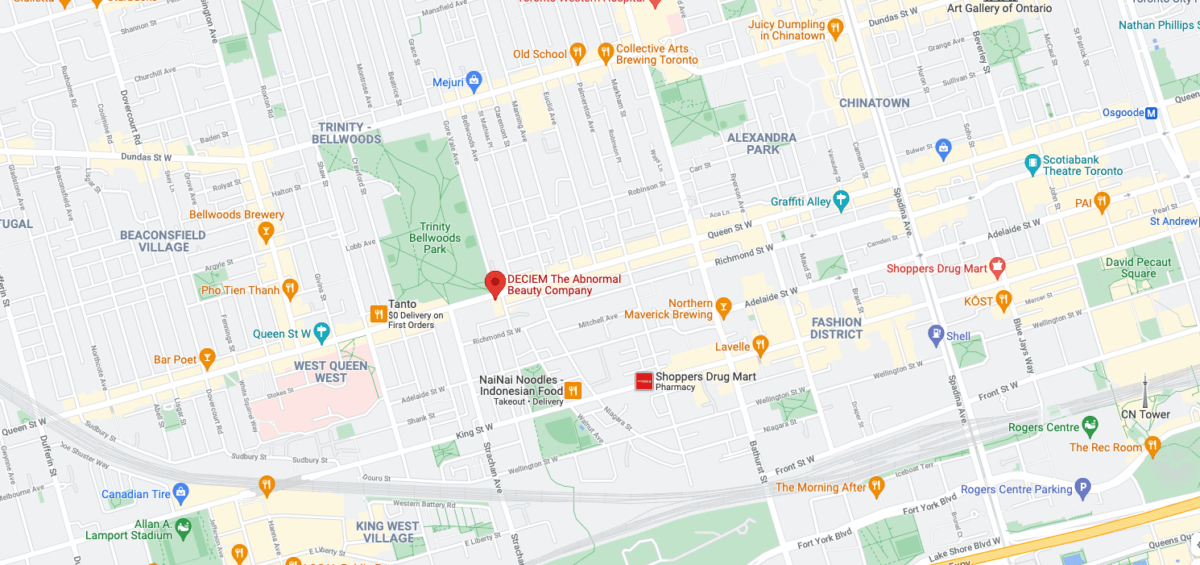
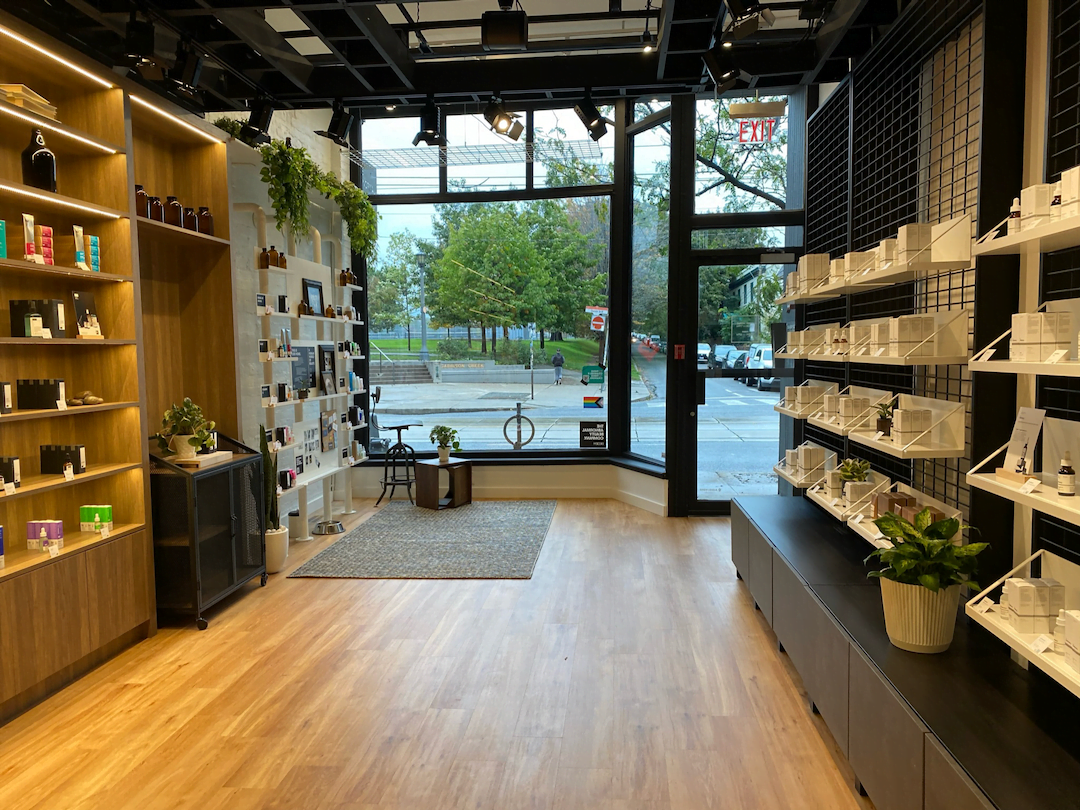
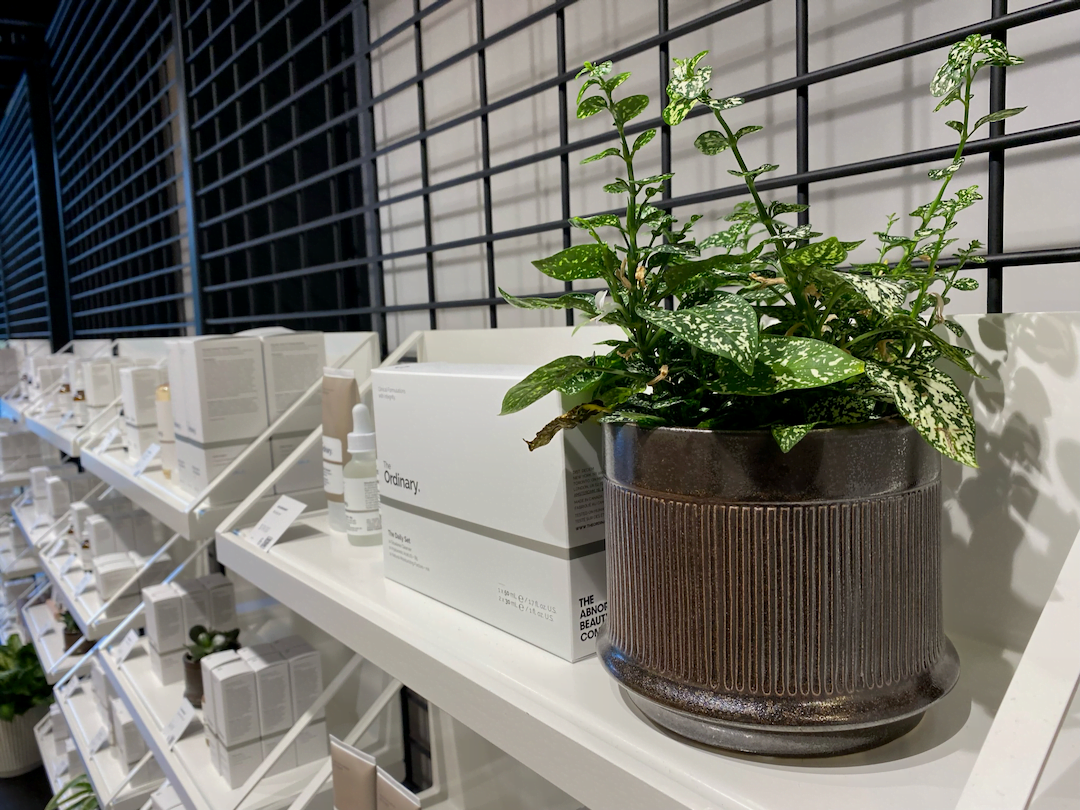
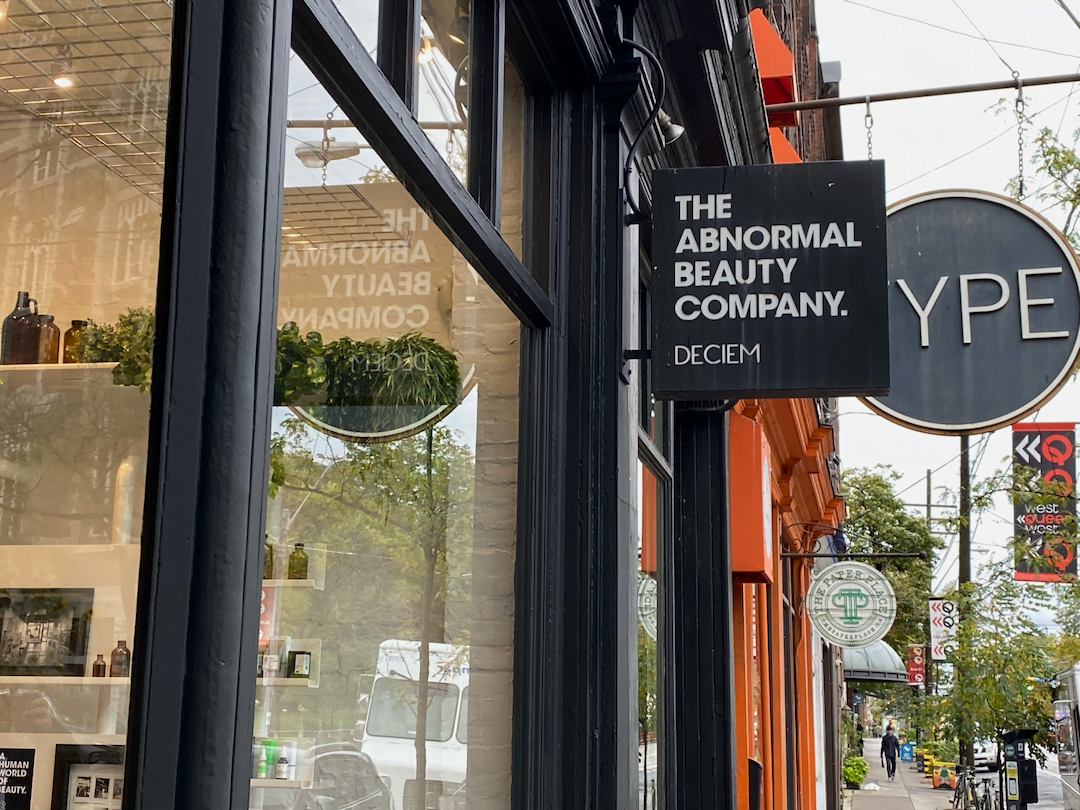
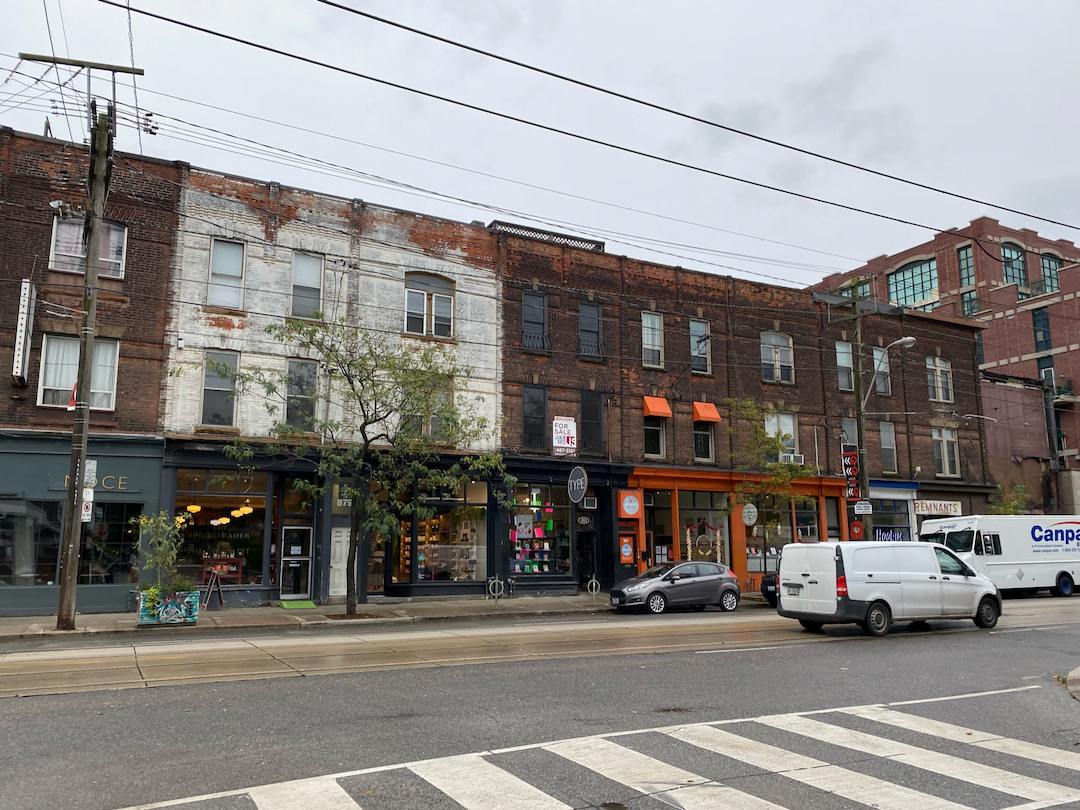
DECIEM The Abnormal Beauty Company at 881 Queen Street West - Photo by Dustin Fuhs
Toronto-based beauty retailer DECIEM has debuted a community-orientated store concept in the brand’s first-ever store location which opened in Toronto in 2016.
Located at 881 Queen Street West, the 808 square foot store saw six weeks of construction with a full redesign to create the concept store.
“Queen Street was the first ever home of a DECIEM store in the World, which is why It will always remain one of our most special locations,” shared CEO Nicola Kilner. “We are incredibly excited to launch our new ‘home’ store concept, operating with the purpose to facilitate human connections.”
Interactive Google MapDECIEM The Abnormal Beauty Company at 881 Queen Street West – Photo by Dustin Fuhs
The new design is a complete shift from the current iteration of DECIEM, with features that compliment the future plans of the brand.
“Our local team will host community brand partnerships and Abnormal experiences. Our first this weekend is with Breadhead Bakery, some of the tastiest donuts in the neighbourhood by founder and renowned Canadian baker and pastry chef Lucy Kirby. We look forward to welcoming our audience back.”
Retail Insider was able to walk through the updated store with Sydney Petrovic, Brand Experience Manager for DECIEM | THE ABNORMAL BEAUTY COMPANY on October 25th, the day that the concept was opened to the public.
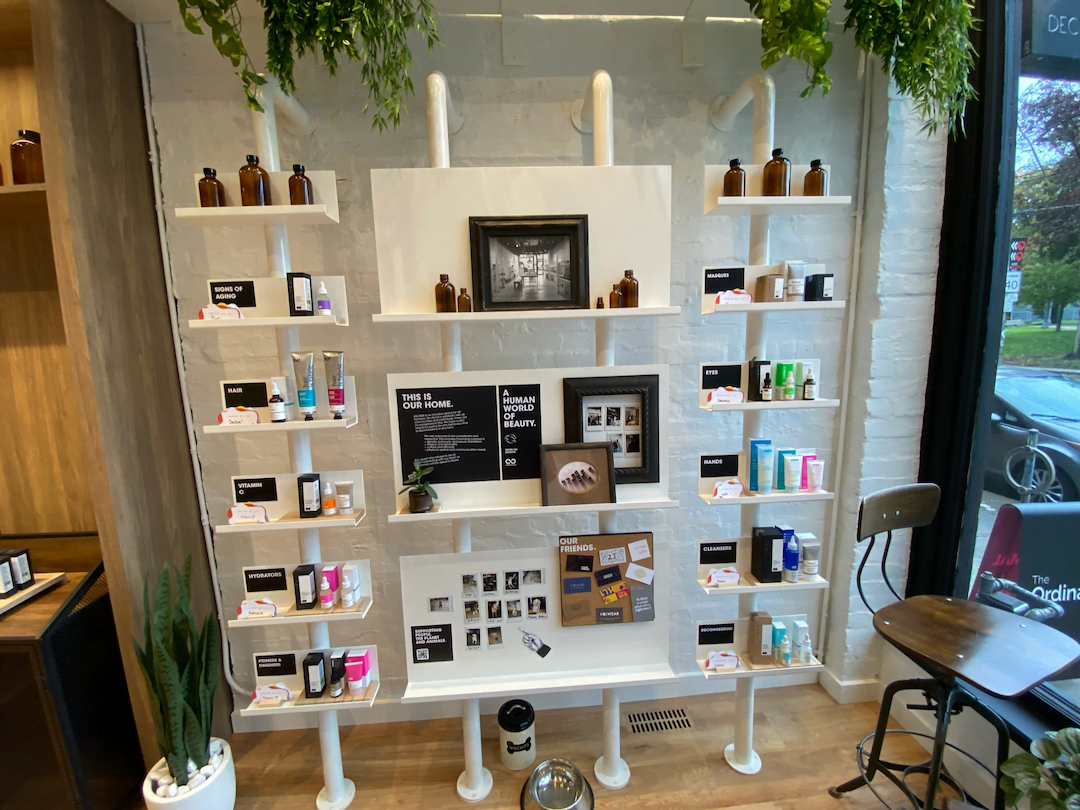
The “Good” wall at DECIEM The Abnormal Beauty Company at 881 Queen Street West – Photo by Dustin Fuhs
“When we were conceptualizing this space, we had to ask ourselves ‘what was the future of retail for DECIEM,” said Petrovic. “What does that look like and how should that feel? How do we want customers to experience our stores and rather than going for investment in technology, we wanted to reach back to our roots.”
This is evident through the space, which has a number of distinct sections.
“The ‘Good’ wall is the first thing that customers will encounter when they walk into the store. This fixture was designed with the goal of sharing all the good that the brand is doing internally and in the community.”
In addition to the photos and slogans, the wall also includes a community section which allows for staff to share local brands and businesses that make an impact in the surrounding area.
What really connects DECIEM to the market is that we call ourselves a “family” and we are very community orientated. This is why this concept is called the “Home Store”, and the focus of this store is to integrate into the local neighbourhood.
The community business kiosk at DECIEM The Abnormal Beauty Company at 881 Queen Street West – Photo by Dustin Fuhs
There is an event activation space, which will be available for local businesses to operate on location as a pop-up style experience. Brands can reach out to community@deciem.com or can reach out via instagram stories.
The new concept takes shape in the design of the sales floor.
“Everything has been changed and updated. It was a complete overhaul. Before, we had rolling racks with utilitarian style. The new design is completely custom and has a different look.”
“We know that our products are popular, so we’ve added QR codes directly onto the store displays. This allows for customers to experience DECIEM in an omni-channel experience, as they can scan codes and link directly to the online stock for purchase.”
Redesigned product cards at DECIEM The Abnormal Beauty Company at 881 Queen Street West – Photo by Dustin Fuhs
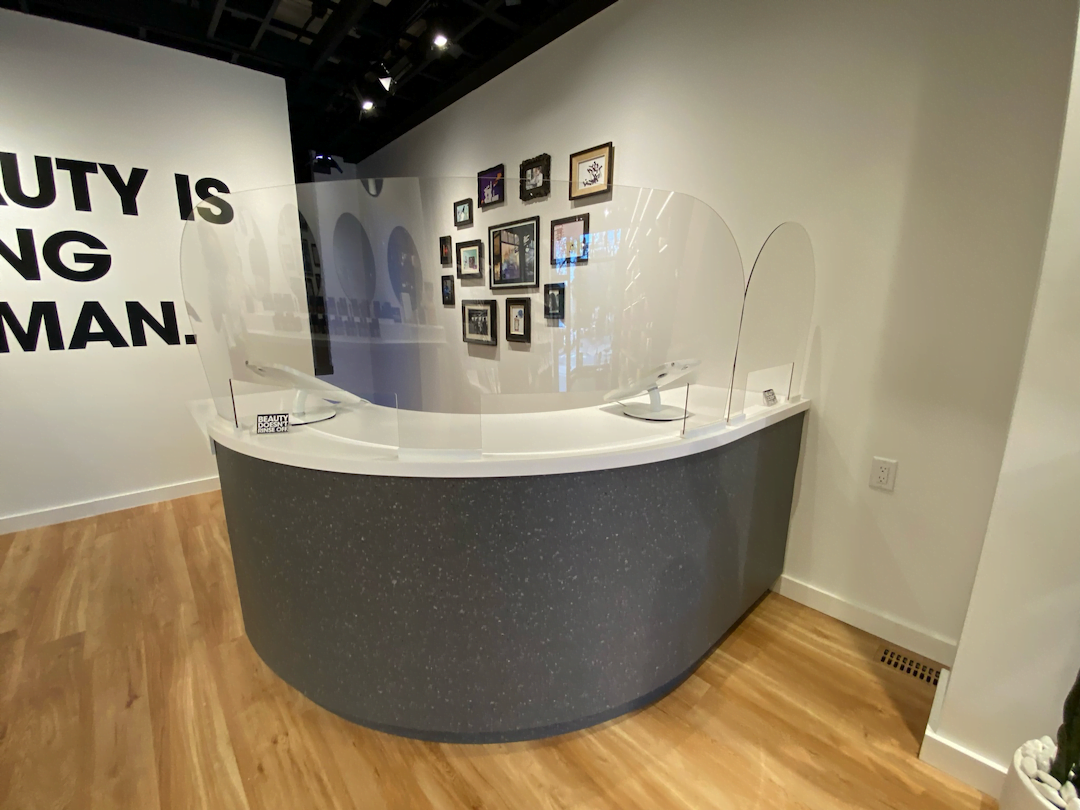
In addition to a new POS and high-tech cash experience, the checkout area also features a “family” wall – another feature of the store concept.
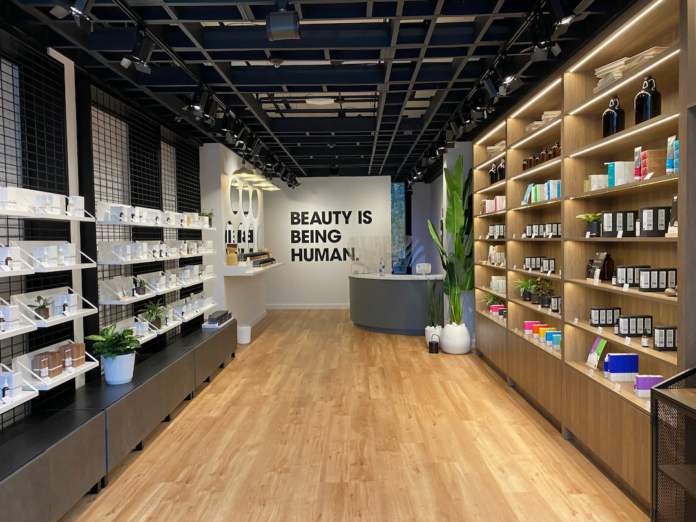
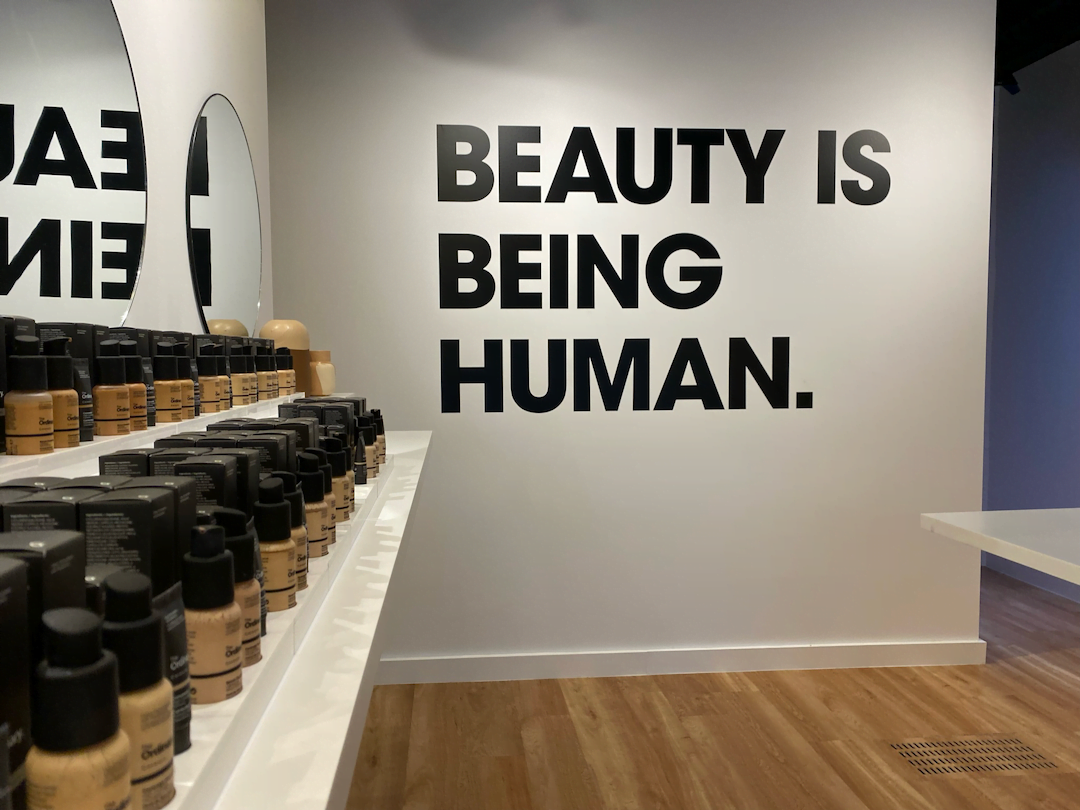
A trademark of a DECIEM store is the unique quote that is displayed on the back wall. The “Beauty is Being Human” mural design for 881 Queen West was original to the location and received attention from the design team.
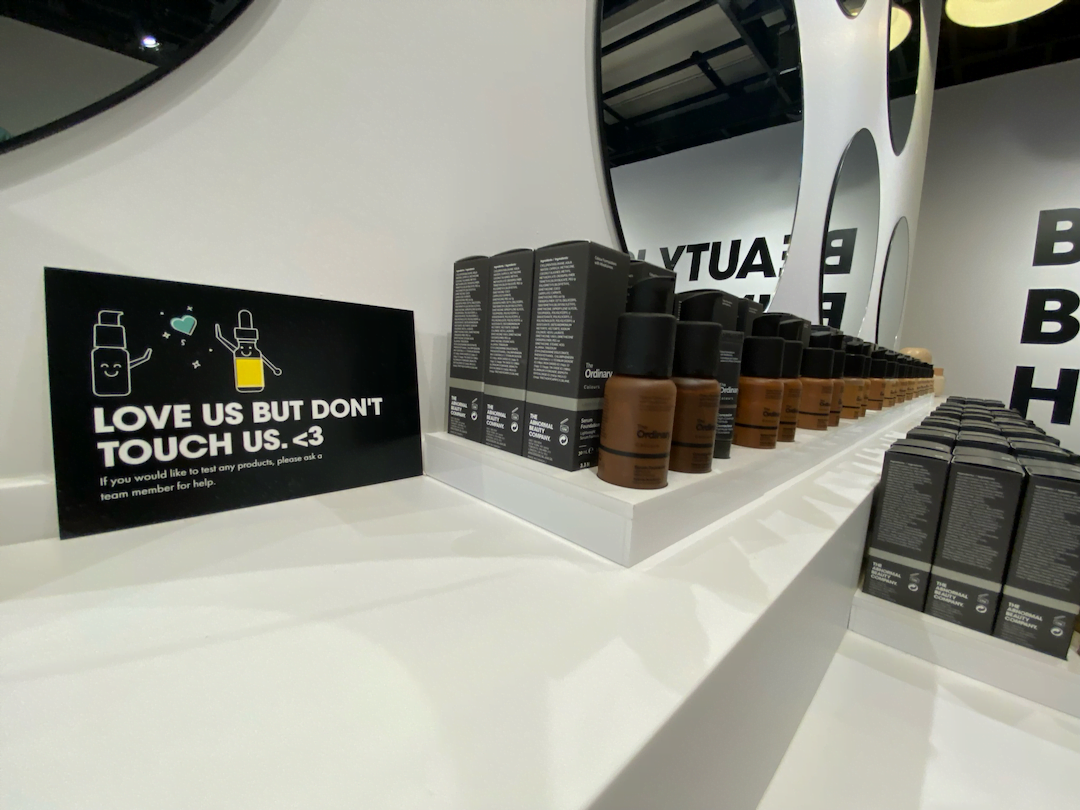
The brand integrated recent product launches into the ‘Home Store’ design, which included concealers.
DECIEM The Abnormal Beauty Company at 881 Queen Street West – Photo by Dustin Fuhs
“All of our staff are trained on the product line, and we do employ a number of individuals who have makeup artist backgrounds who take a special interest in the foundation matching. We also have a 365 day return policy, so you can always go home and test it out and if it’s not the right fit, you can always return it.”
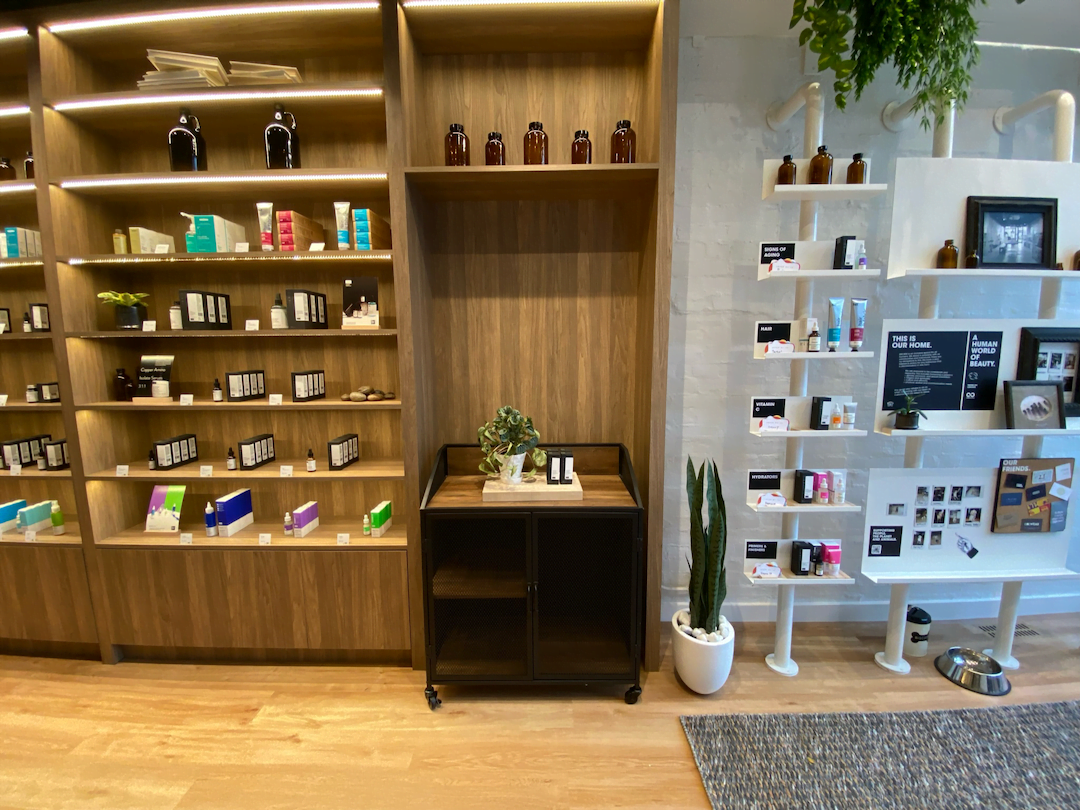
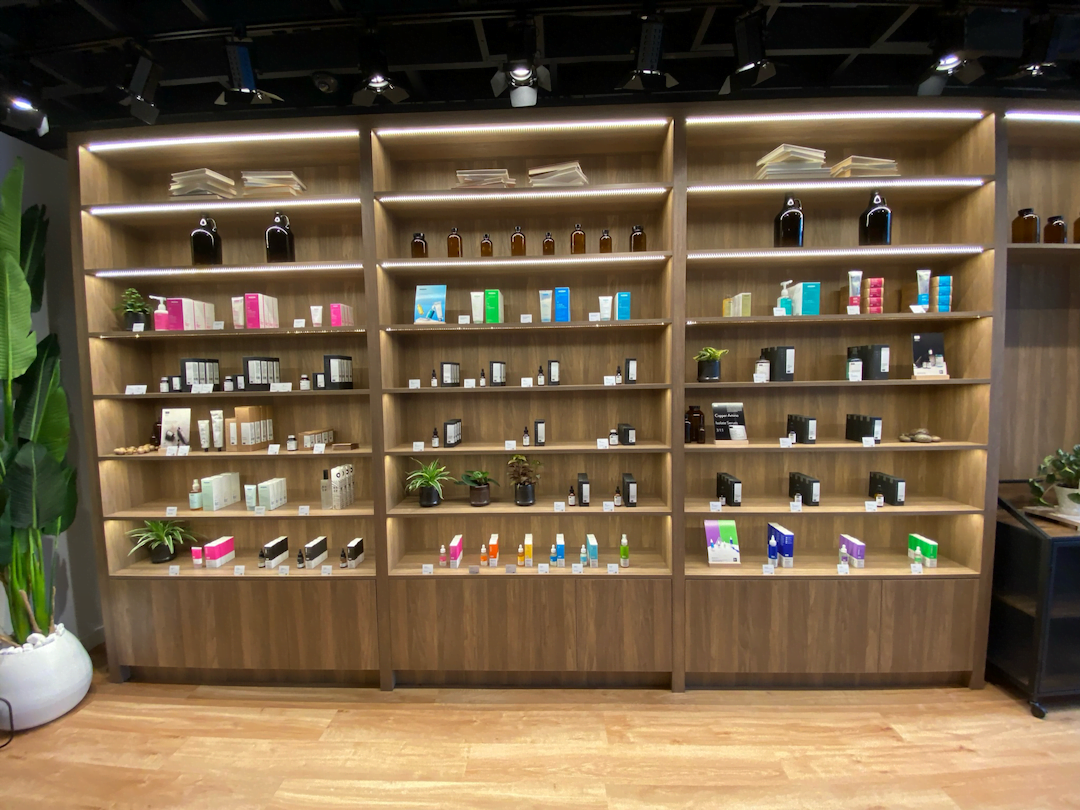
The modular shelving walls are a highlight to the store, which was received well by the operations team and in-store staff. The classic design of off-white shelving units are limited – so the new merchandising opportunities are endless.
With the construction taking six weeks, the team took advantage of the time to also refresh the back-of-house areas. The stock room was updated and employee break area received a full redesign.
The final concept was constructed for future decisions, including window animation displays and functional event decor.
Modular Shelving on the Sales Floor at DECIEM The Abnormal Beauty Company at 881 Queen Street West – Photo by Dustin FuhsThe new sandwich board at DECIEM The Abnormal Beauty Company at 881 Queen Street West – Photo by Dustin Fuhs
A new sandwich board was designed and will be launched across the chain, with the goal to provide an element of consistency while also giving the store teams the opportunity to share store events. The board itself is magnetic and has a black overcoat with sunken letters that illuminate the florescent pink sign.
DECIEM has click & collect in store, which allows for customers to order online and pick-up in store for items that are available.
“It’s very exciting to think about the opportunities to bring this concept into the chain and although we can’t share details right now, we are excited to incorporate the ‘home’ design into new and existing locations,” shared Petrovic. “Sourcing for these locations brings the community front and centre. When you think about Queen West and Trinity, the neighbourhood feeling describes this store perfectly.”
The DECIEM store was designed for a post-pandemic environment. There are processes in place currently that the team has implemented for pandemic regulations regarding safety and high-touch products and will adapt with the municipal guidelines when required.
Toronto-based DWSV Realty negotiated several DECIEM store leases in Toronto under the direction of David Wedemire, Stan Vyriotes and Vanessa Lynch.
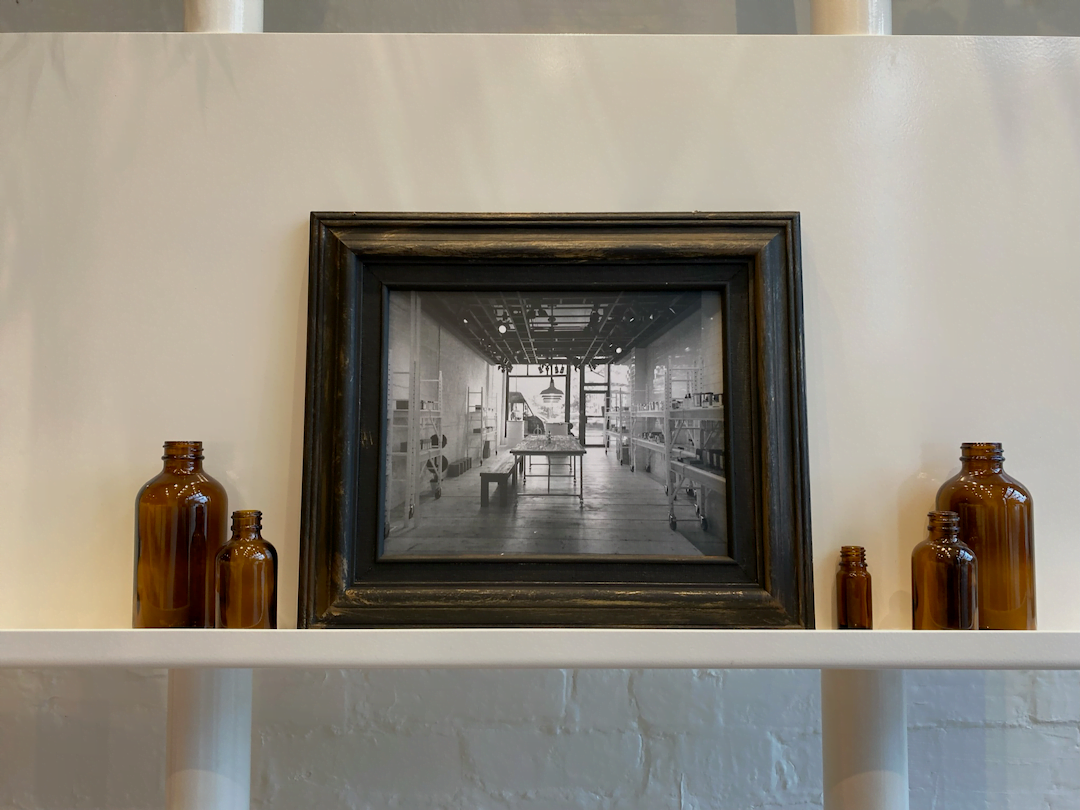
DECIEM The Abnormal Beauty Company at 881 Queen Street West – Photo by Dustin FuhsPandemic Signage at DECIEM The Abnormal Beauty Company at 881 Queen Street West – Photo by Dustin FuhsDECIEM The Abnormal Beauty Company at 881 Queen Street West – Photo by Dustin FuhsThe Family Wall at DECIEM The Abnormal Beauty Company at 881 Queen Street West – Photo by Dustin FuhsThe team recommendation wall at DECIEM The Abnormal Beauty Company at 881 Queen Street West – Photo by Dustin FuhsThe POS and Cash Wrap at DECIEM The Abnormal Beauty Company at 881 Queen Street West – Photo by Dustin FuhsHistorical stylized photo of the original store DECIEM The Abnormal Beauty Company at 881 Queen Street West – Photo by Dustin FuhsDECIEM The Abnormal Beauty Company at 881 Queen Street West – Photo by Dustin Fuhs
It’s almost that time of year again – the most critical period on the Canadian retail shopping calendar. And, as we approach closer to the 2021 holiday shopping season, merchants across the country are gearing up their efforts, refining their services and offerings and prepping their physical and online storefronts to welcome shoppers and realize opportunities to make up for a bit of a shortfall that they’ve suffered over the course of the past year-and-a-half. And, according to PwC’s recently released 2021 Canadian holiday outlook, it seems that conditions leading up to the festive period may be ideal for the fruition of these opportunities and the start of a demand-fuelled recovery. In fact, they are conditions that Myles Gooding, Partner, Global Consumer Markets Advisory Leader, PwC, says are lending to a season that’s more positive than that of 2020.
“The holiday shopping season is much more anticipated by the industry than it was last year,” he says. “We’re really getting a sense that as we continue to emerge from the pandemic and steer clear of economic shutdowns, that the upcoming season is feeling considerably different than 2020. There’s a lot more optimism as consumers are now able to start planning their spending with a bit more certainty. And, many are expecting to spend more on gift-giving and travel than they did last year. It’s all adding up to great news for retailers in the country, providing excellent signs that the trajectories of the economy and consumer sentiment are heading in a positive direction, resulting in quite a bit of excitement and confidence heading into the 2021 holiday shopping season.”
Increased holiday spending
Cause for excitement and optimism, indeed. According to PwC’s outlook, the average Canadian consumer expects to increase their individual holiday spending by 29 percent over last year, represented by an estimated average spend of $1,420. Though these numbers are still below pre-pandemic levels, 11 percent shy of what they were in 2019, it’s still positive news for those operating within the industry. What’s perhaps most interesting about consumer intentions this holiday shopping season, however, is the ways in which they plan to allocate their holiday spending. According to the outlook, Canadians are planning to spend most on gifts for their family and entertaining those closest to them, with an anticipated spend of $768, an increase of 18 percent over last year. In addition, Canadians are expecting to splurge on themselves over the next few months, 76 percent more over 2020, reflected in an outlay of $478 on personal pampering and luxury items. It’s all part of the positivity surrounding the upcoming shopping season, says Gooding, and a result of pent-up consumer demand for experiences and enjoyment.
“We’re already starting to see the demand-fuelled recovery take place as restrictions continue to lift and retailer activity increases,” he says. “It’s supported by a willingness of the Canadian consumer to spend. And, their spending on open venues and events, which is a symbol of pent-up demand and a consumer that’s ready to spend on experiences. It’s obviously the result of the economic uncertainty that’s lingered over the course of the past year-and-a-half – uncertainty that’s correlated to subsequent savings in the wallets of Canadians. So, the money is there. And all indications seem to point to the fact that Canadians are going to spend it this holiday season, in particular the higher earners who have come out of the pandemic period a little more robust with respect to their bank accounts and savings.”
Online shopping behaviour
Though pent-up demand and increases in retail activity across the country over recent months are buoying a sense of enthusiasm among retailers and industry observers, it’s paramount that they understand how their consumers are intending to shop in order to realize the full potential of the upcoming holiday shopping season. PwC’s outlook projects that lingering health and safety concerns associated with the pandemic will continue to influence consumer behaviour. And, combining their ever-growing penchant for convenience and cost-savings with their desire to shop seamlessly across channels, the need for retailers to align their online and physical offerings is going to be critical in order to attract consumer spending.
In fact, according to the outlook, Canadian consumers plan to split their holiday spending evenly, with 52 percent projected to occur online and 48 percent in physical retail settings. And, although home delivery will continue to be the primary service opted for by Canadians shopping online, the number of those who regularly or occasionally opt for curbside pickup jumped to 50 percent this year, up from 33 percent in 2020. Of those surveyed who said that they regularly pick up their orders, 45 percent state their motivation to be based on cost-savings. Though they are all behavioural trends that have been caused or accelerated by the pandemic, Gooding suggests that it’s part of an evolution toward a new normal for the industry.
“The most significant change that we noticed in the shopping habits of Canadians over the course of the past year-and-a-half is their propensity to be online,” he asserts. “It means that their behaviour is being influenced and shaped by channels that continue to evolve and are being leveraged to support the shopping journey and experience. Social media is playing an increasing role in inspiring and enticing consumers to shop with brands. And so, the online environment is becoming an even more meaningful component within the retail shopping ecosystem, often serving today as the starting point for many shoppers, informing them of the products that they’re interested in purchasing and how they’re going to complete the purchase, whether online or at a physical brick-and-mortar retail location. It’s all representative of the digitization of retail, heightened expectations of today’s consumer concerning a seamless omnichannel experience, and the need for organizations everywhere to adjust to these new realities.”
Cross-border conundrum
Niagara Falls USA Canada Border
When it comes to the expansion of the omnichannel world and vastness of today’s online marketplace, it’s clear that there are numerous opportunities for retailers to focus on and seize. However, it also presents one of the banes of the industry in Canada – that of cross-border shopping. Though the borders have only recently opened to travellers, dampening the physical cross-border shopping intentions of Canadians up to this point, it’s anticipated that the act of doing so online will continue to intensify. According to the outlook, an estimated 38 percent of Canadian consumers plan to cross-border shop online this holiday shopping season, up from 28 percent in 2020. Despite this growing sentiment, however, a vast majority of respondents to the survey cite a patriotic appreciation as a motivator for their spend, with nearly two-thirds (62%) stating that they want to show loyalty to Canadian retailers and brands, while more than half (55%) say that they want their shopping dollars to stay in Canada in order to help the country’s economy. And Gooding suggests that Canadian retailers are doing everything they can to support those intentions.
“The traditional drivers of cross-border shopping for Canadian consumers still exist today,” he explains. “There’s a perception that there’s a greater assortment at a lower price on the websites of US retailers, even if that math doesn’t always hold up to be true. Canadian retailers are doing a really good job at the moment of keeping those dollars in Canada. Many are increasing their assortments and offering deals that are on par with their American counterparts. And, with an aim to capture the spend of those consumers displaying intentions to spend with Canadian businesses, there’s an increased emphasis on featuring Canadian brands and products that are made in Canada. Heading into this holiday shopping season, the Canadian consumer wants to be loyal to the brands in this country. And it’s going to be important for Canadian retailers to recognize this and deliver value through the product and experiences that they offer.”
Demonstrating values
Living up to all of these heightening consumer expectations seems like a daunting task for any retailer, which includes ensuring the availability and fulfillment of product, and the delivery of an exceptional experience, all within a seamless omnichannel experience. Gooding explains that when retailers can meet or exceed the expectations of today’s consumer, they’re able to engender a trust in them for their brand. It helps to develop or enhance the perception of a brand’s reliability and comfortability with respect to the shopping experience they offer. However, lending perhaps more so toward the cultivation of trust than anything else a brand can do, suggests findings within PwC’s outlook, is the values it stands for. Of those surveyed, 45 percent say that they’re likely or extremely likely to shop with socially and environmentally responsible retailers, an increase from 35 percent in 2020. It’s a huge consideration among consumers, says Gooding, adding that it’s another sentiment that is not likely to subside any time soon.
“There’s a lot of focus today being placed on environmental, social and governance issues,” he says. “And, it’s an area where retailers can really focus on their values and demonstrate those values to the consumer in tangible ways that align with the things that are most important to them. Depending on the retailer and the product or service that they offer, improving components of the business through initiatives like ethical sourcing, ethical labour practices, sustainable product and the sustainable manufacturing of products will go a long way toward instilling trust in the consumer. And, measuring how well they’re doing and sharing results with the public will provide the transparency and accountability that consumers are increasingly looking for from brands. Values are quickly becoming the new business currency. And the retailers and organizations that stay true to those values are going to be the ones that build their brand and create much-needed stickiness with their customers.”
Opportunities abound
It’s been a turbulent past 18 months for retailers in every region across the country. It’s been a time riddled with instability and uncertainty. However, as social restrictions continue to abate, consumer sentiment around spending maintains its positive momentum and the 2021 holiday shopping season advances unhindered, the signs are positive, indicating a successful period for merchants in Canada. And, if findings within PwC’s 2021 Canadian Holiday Outlook manifest, the opportunities that will be available for retailers from coast-to-coast-to-coast to engage and inspire Canadian consumers this holiday shopping season will be boundless, truly making it the happiest time of the year for everyone within the industry.
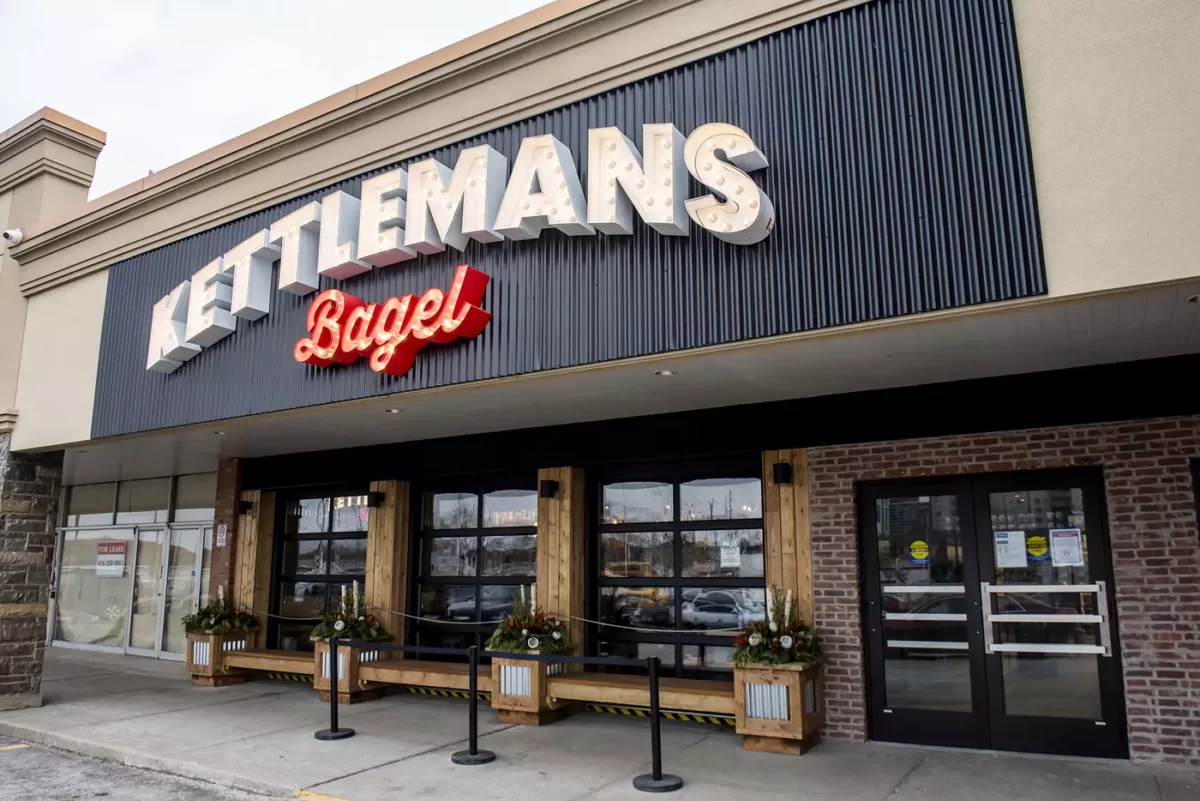
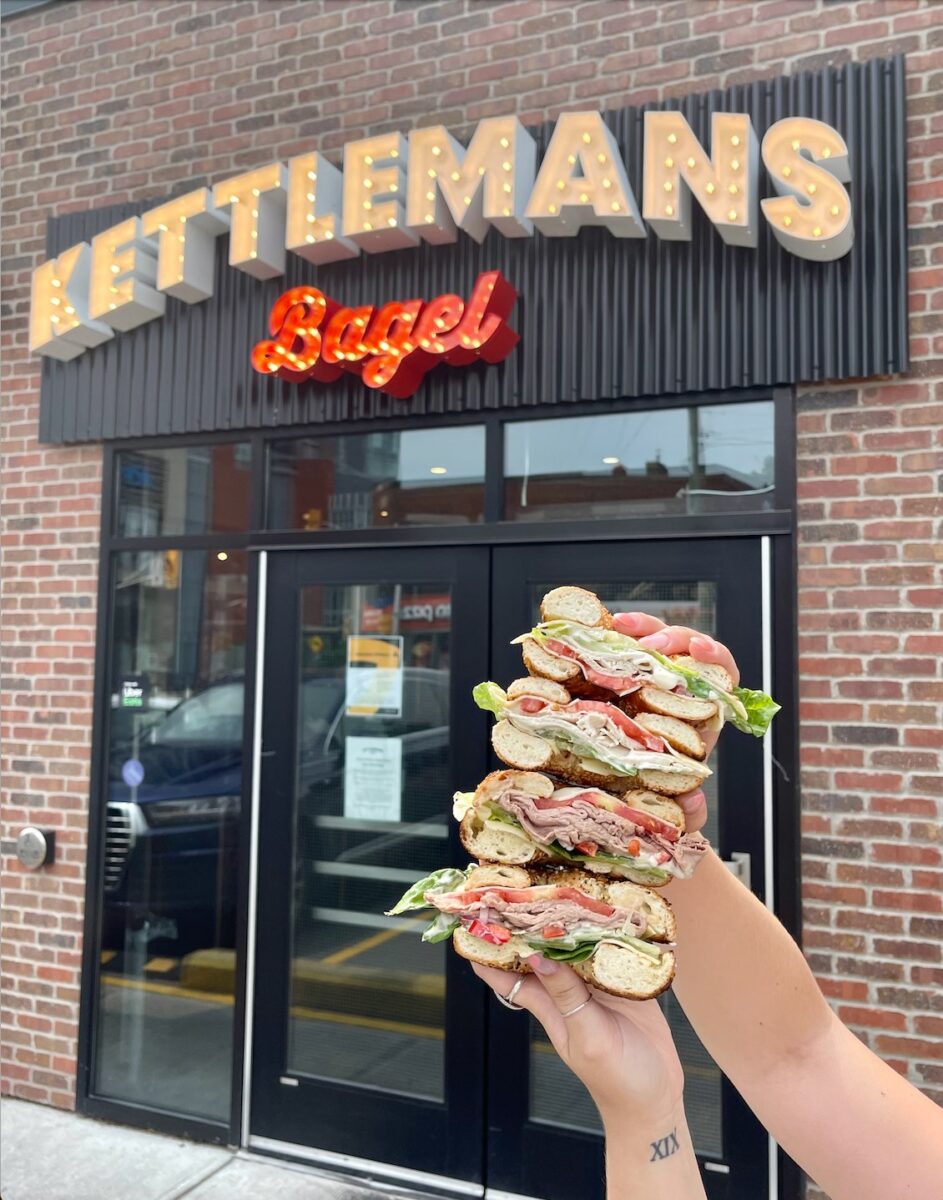
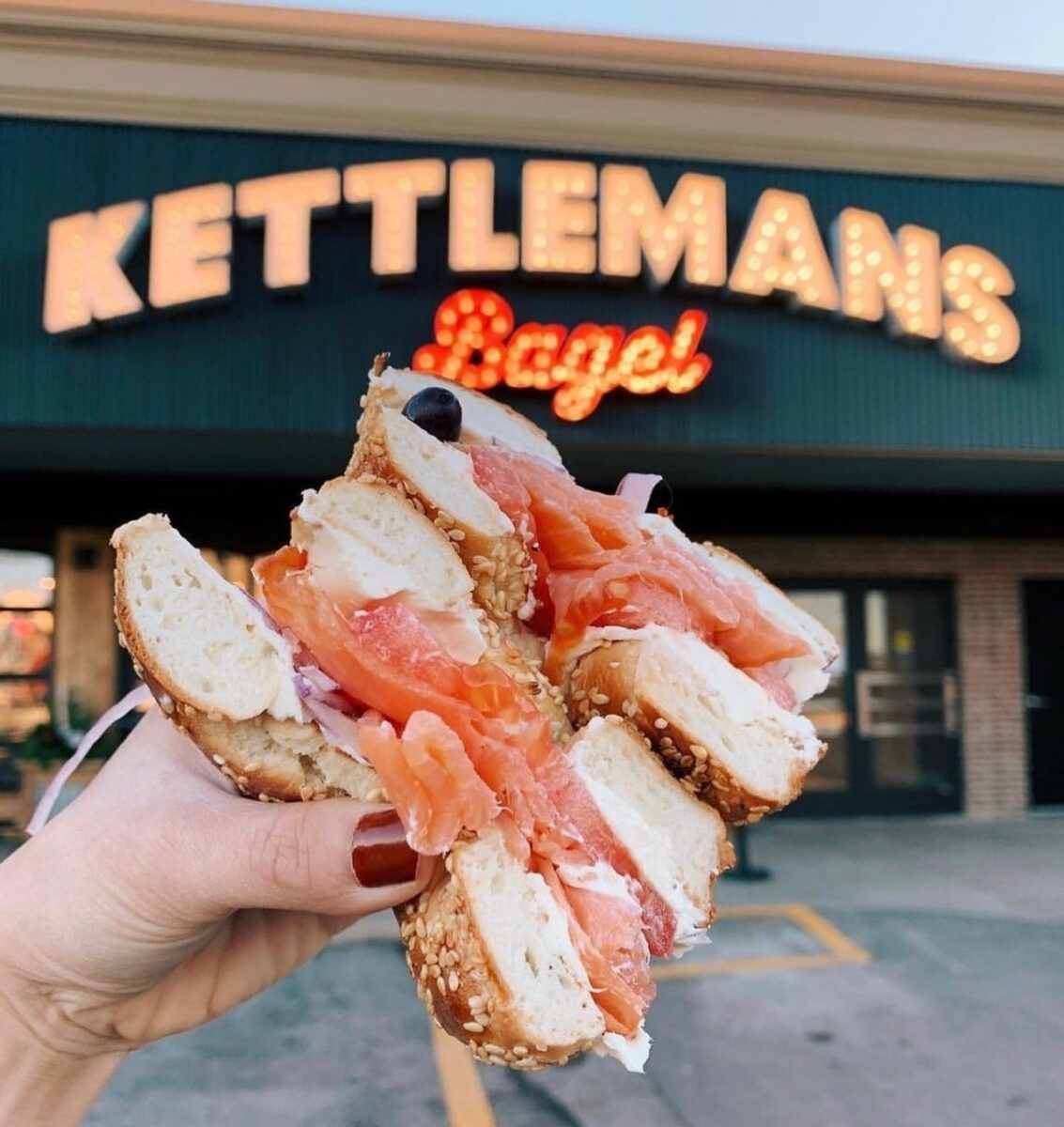
Ottawa-based Kettlemans Bagel is expanding its footprint in Ontario and will be establishing a location in Montreal where the company has its roots.
The first Kettlemans store opened in August 1993 in Ottawa along the busy Bank Street, across the street from the iconic Lansdowne Park area – a vision of Montreal native Craig Buckley to bring the Montreal-style bagels to the nation’s capital.
Daniel Reyes Cocka
The company currently has four locations, three in Ottawa including the original location, and one in Etobicoke.
Daniel Reyes Cocka, Director of Marketing and Communications for the company, said the Montreal-style bagels are made in the traditional recipe of hand rolling the dough which is done in front of customers, the air is pressed out of the dough and once the bagel is formed it is boiled in honey water giving it a sweeter taste on the exterior. The bagel is then finished in a wood burning oven.
“That creates a crunchy sweet exterior with a fluffy light airy interior to the bagel,” he said.
Image: Kettlemans Bagel
Reyes Cocka said the company will be expanding to the Montreal market in early 2022 at Av. des Canadiens-de-Montréal, across the street from the Bell Centre. The company is also opening a fourth and final location in Ottawa and a second location in Toronto is slated for the corner of Bathurst and Niagara. Plans are also for locations at Yonge and Eglinton and one in Whitby. Bathurst will open in the coming months. The Whitby store as well as the one at Yonge and Eglinton will open in 2022.
Five locations will open within the next year.
“The company is essentially doubling in size in the next year,” said Reyes Cocka.
“It was important for us to obviously expand into the GTA market because of the sheer size of it. Financially it made sense. Etobicoke was our first foray into the Toronto space but of course respecting the fact that Torontonians are pretty adamant about their neighbourhoods, opening up downtown Toronto on Bathurst will be a whole new experience for us, which is very exciting.
“Going into French Canada and ultimately bringing the brand back to Montreal as our founder is from there is very important for us as well because that is the capital of Montreal-style bagels obviously. After that the plan is to expand into the United States therefore offering us the opportunity to grow in the American market and hopefully get an IPO.”
Image: Kettlemans Bagel
Reyes Cocka did not have a potential number of how many stores the company could grow to in the future but he did say it would look at as many as they possibly could do.
“For the time being the next five are the focus until the end of 2022. After that it will most likely be our foray in 2023 into the American market,” he said.
While the majority of customers for the brand pick up bagels and go, there is in-store dining available at the locations.
“One of the reasons we are so successful is that we offer our customers a “no-wall” experience. When patrons walk into our bagel shop, the first thing they see is the Kettlemans Bagel Roller working and rolling fresh bagels, cutting the dough with a knife, and boiling the bagels in honey water to seal moisture,” said the company on its website.
Image: Kettlemans Bagel
Image: Kettlemans Bagel
“Behind the Bagel Roller is the baker who finishes the bagels with fresh poppy or sesame seeds and bakes them for about twenty minutes in our wood-burning oven. Once the process is complete, and it is an active process of carefully turning over the bagels away from the open hot wood flames, the bagels are ready to be eaten.”
Reyes Cocka said the name of the company is a reference to what they used to call people who made Montreal bagels using a kettle which was boiled in honey water.
“People resonate with bagels and with Kettlemans Bagels specifically because it’s the experience from start to finish. It’s walking into the store and having that smell of the wood oven. It’s our exceptional team members that make sure that every guest leaves happy. And it’s that consistently delicious bagel when you bite into it. It’s quite the experience. It’s a very memorable moment in your life when you have your first Montreal bagel,” he said.
In 2019, global supply chains moved more than US$19 trillion in exported goods. The production and sale of many items we need and use — including toys, clothes, food, electronics and home furniture — depend on global supply chains.
For most of us, supply chains are no longer an abstract concept. The COVID-19 pandemic raised our awareness about the interdependence of our economic systems. We now understand the many ways these chains directly shape and impact our lives.
A supply chain is a set of organizations — like suppliers, manufacturers, distributors and retailers — that work together to provide end customers with a specific product or service.
The supply chain becomes global when the product or service crosses multiple international boundaries. Global supply chain organizations are directly and indirectly dependent on each other.
In practice, the decisions made and actions taken by each organization affect the performance of the entire supply chain. A problem at any point feeds other problems at different stages of the chain.
The pursuit of financial efficiency has shifted global production to low-cost regions, increased the flows of freights, caused port congestion and eroded the resilience of supply chains. Cutting costs above all else became a race to the bottom. It resulted in global economies with limited redundancies, contingencies and safeguards.
Fragile global supply chains are exacerbated by the fragmentation of decision-making processes, limited collaboration between buyers and suppliers and transactional management. There is no obvious centralized business or authority commanding and controlling these chains. Instead, several companies co-operate and compete for the value created.
The world needs robust supply chains that are founded on sustainability, collaboration, trust, transparency, visibility and diversification of supply. That new model of supply chains could help combat economic fragility, climate change and inequality.
Global supply chains connect businesses and markets across all layers of economic, social and ecological systems. That means customers, governments and other stakeholders should encourage the emergence of robust and sustainable supply chains.
Responsible decision-making within supply chains has the potential to contribute to economic progress and societal well-being while maintaining the environmental integrity of the planet. Our preliminary research on sustainable blueberry supply chains, to be published soon, indicates that sustainability contributes to resilience.
More preliminary research we’ve conducted on personal protective equipment supply chains in British Columbia, also to be published in the weeks to come, shows that collaboration between the supplier and customer reduces costs and risks by at least 17 per cent. Effective collaboration contributes to supply chain resilience and helps avoid future disruptions.
Building effective collaboration means rewarding responsible and long-term management of global supply chains and discouraging short-lived gains. Global supply chains should promote sharing the gains and the pains among buyers and suppliers.
Incentives need to be created to encourage this collaboration. Digitization of the economy will also contribute to better transparency and traceability in global supply chains.
Nonetheless, moving towards robust global supply chains isn’t straightforward because historically, they’ve been focused on short-term rewards. For decades, we’ve justified the development of fragile and fragmented global supply chains in the name of economic growth and financial efficiency. This may have provided short-term benefits, but it has created our current supply chain crisis.
By Adel Guitouni, Associate Professor, International Business, University of Victoria, Cynthia Waltho, Postdoctoral Research Fellow, Business, University of Victoria and Mohammadreza Nematollahi Postdoctoral Research Fellow, Business, University of Victoria
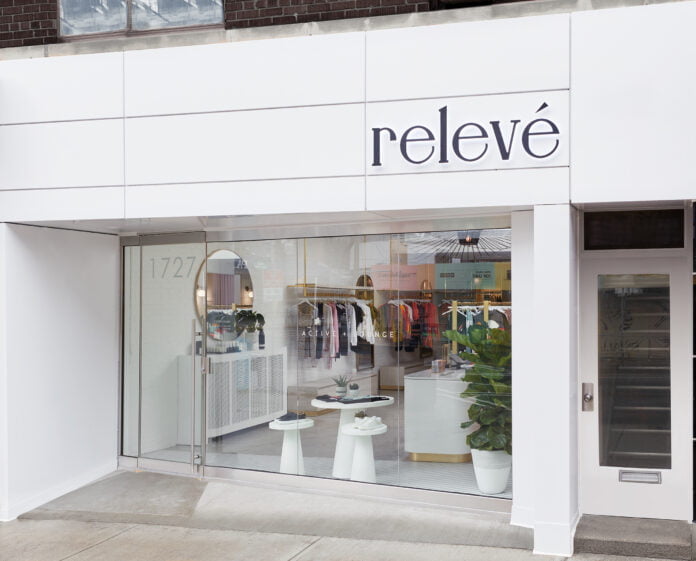
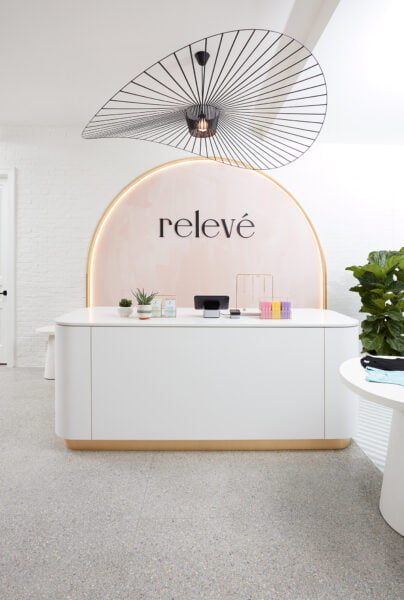
Toronto-based women’s activewear retailer relevé has opened a storefront in Bayview Leaside, just south of Eglinton Avenue.
The 1,200 square foot store, named for a ballet term that means “rise up”, opened in Spring 2021 after having the pandemic lockdowns interrupt the original opening. Ecommerce and social media strategy became the focus for the duration, as the team behind the brand had invested resources and energy into a physical location that would have capacity limits.
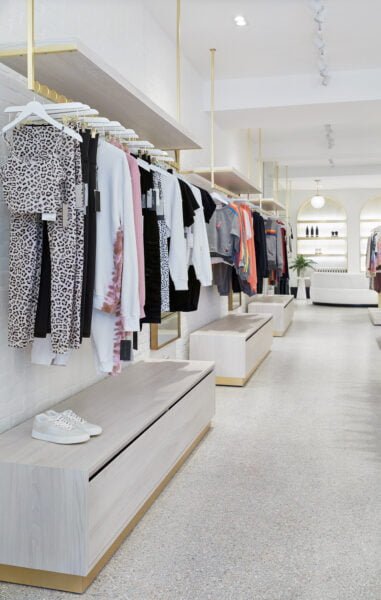
“At relevé, we have a thoughtful collection of high quality active and loungewear from popular name brands including: alo, P.E. Nation, L’urv, Beyond Yoga, Aviator Nation, to name a few. Our clothing is made from luxurious fabrics like bamboo, cotton blends and some with recycled material to create ultimate breathability and comfort,” shared Gillian Medina, owner of relevé.
Image: relevé
Located in the Bayview Leaside BIA, the store has found a community of small businesses that are able to work together during difficult times. In addition to utilizing social media to attract local shoppers, the community has been inviting residents to see their stores in-person with creative marketing.
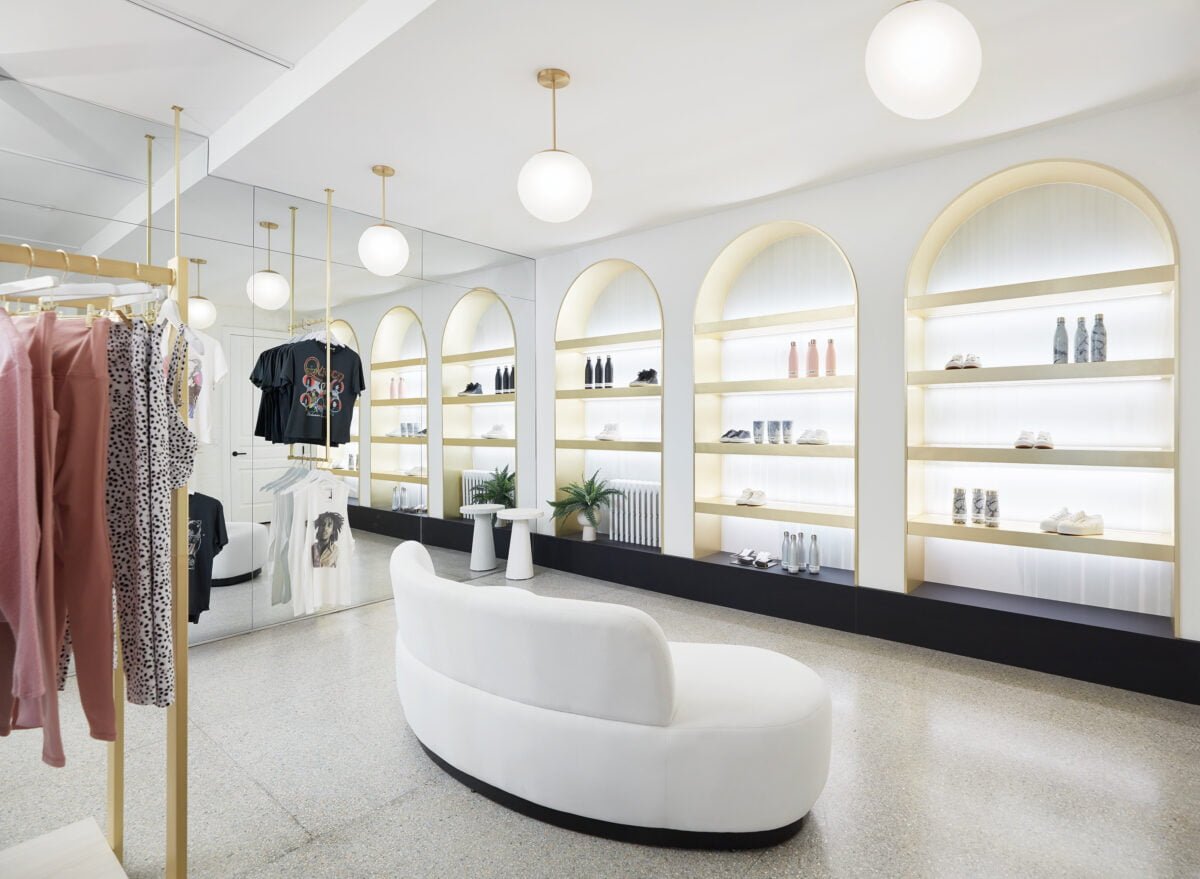
The store itself was a project that was created to be more of an experience than a traditional storefront.
“When planning the design of the store, I wanted to create a relaxed ambience; almost a spa-like feel,” shared Medina. “I envisioned an elegant environment in sync with the quality athleisure wear that we carry”
Vancouver-based Rack Attack is opening Canada’s first location for a branded store for Swedish-based Thule, a global designer and manufacturer of roof racks and carriers, and it will be located in the Park Royal Shopping Centre in the West Coast city.
Alexander Welbers
The store, which will open in December, is the second branded Thule store in North America with the first one in Denver, Colorado, which opened in June.
“We have worked with Thule for 25 years at Rack Attack, and we’re proud to be continuing this venture together as their dedicated partner to operate the Thule brand stores in North America,” said Alexander Welbers, CEO of Rack Attack.
“We successfully opened the first store in Denver, Colorado, and look forward to Canada’s first store opening. Our position as the leading rack retailer with the extensive market knowledge and expert advice on Thule’s entire portfolio of products will set the foundation for success with Thule to serve customers in West Vancouver and future locations in the U.S. and Canada.”
Rack Attack began in Vancouver more than 25 years ago. The first store was in Vancouver in 1996 which was near the company’s flagship location now in the Olympic Village. The same summer the company opened a store in Toronto and continued further expansion in Canada and the United States.
By the end of this year, the company will have 30 locations as it will be opening up three more stores including the Thule store in Vancouver.
Rack Attack is a specialty retailer that sells and installs automotive racks and hitches.
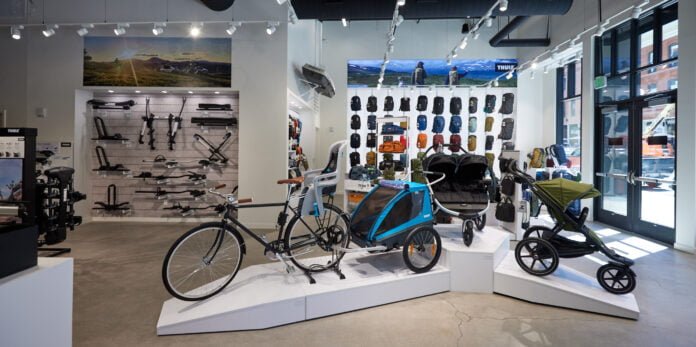
The new Thule retail store will offer local Canadian customers a first-of-its-kind shopping experience by showcasing all of Thule’s product categories in one space.
Welbers said the Thule store will be conveniently situated among other top outdoor and active brands. The 2,000 square- foot space will give visitors the opportunity to explore the entire breadth of Thule’s active lifestyle portfolio and will build awareness of newer categories.
Hilary Hartley
“Continuing the momentum after a successful summer with our new Thule Store Denver, we are excited to continue growing our partnership with Rack Attack,” said Hilary Hartley, President, Region Americas, Thule Group.
“Our first store in Denver is proving that the formula of best in class products, together with a passionate and highly-trained staff, is a winning combination we want to expand on and bring to our Canadian customers starting in the Vancouver region.”
Welbers said Park Royal is one of the prime retail shopping centres in Canada.
“And it’s right in the heart of our customer community. Very outdoor, lifestyle driven people that like to go skiing in the winter and biking or water sport activities in the summer,” said Welbers. “So we love that area. Vancouver is our home base. We have two Rack Attack stores in Vancouver and now we add the first Thule store in Canada to our Vancouver mix as well.
“Thule is definitely one of the prime sport and outdoor brands. We’ve sold and partnered with Thule for 25 years since we started doing business. So there’s a long, very positive partnership that we have with Thule. That’s why Thule basically decided to give us the right to operate the official Thule stores in North America, in Canada and the US.
“We’re planning to go into several other Canadian and American markets over the next years wherever outdoor and active lifestyle driven people are living. It’s a good market for us.”
The Vancouver store will feature Thule’s well-known vehicle accessory products for bike, water, and snowsports, as well as award-winning products from their newer categories, including child carriers and strollers, premium luggage, innovative daypacks, hiking & backpacking packs, and durable rooftop tents.
The Thule brand was established in 1942. Its products are sold in more than 140 countries.