Home Blog Page 926

London Drugs Completes Renovation of Robson Street Location in Vancouver

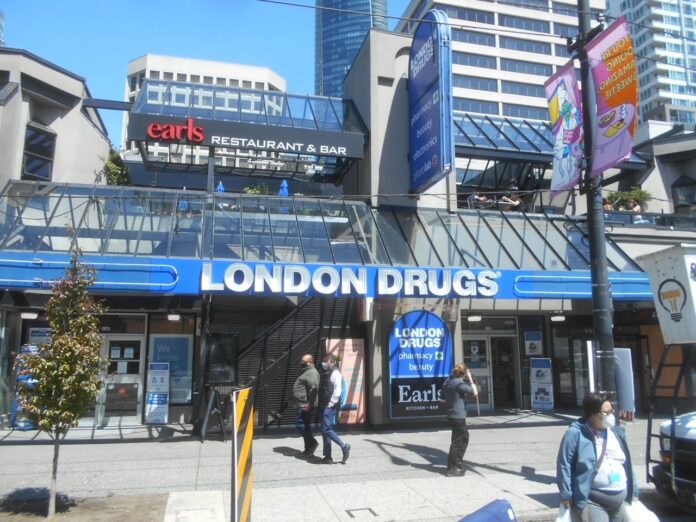
London Drugs Robson Street - Image: London Drugs

Richmond-based retail pharmacy chain London Drugs has re-opened its 1187 Robson Street location in Vancouver after months of renovations.

The store first opened in November of 1984 and has since welcomed locals and tourists to the uniquely designed location, which is memorable partly because of the precarious stairway that lead to the Earls Restaurant above.

“London Drugs is thrilled to be able to celebrate its newly renovated London Drugs with an in-person event on one of the most iconic streets in Vancouver, Robson Street,” said Sean Kim, London Drugs store manager. “The West End and Robson Street community has been incredible to work with throughout this time as we have continued to work with all health and safety protocols in place. Having serviced this community for decades, customers can continue to expect the same services from London Drugs in a refreshed and bright environment. Being a local, Canadian company means we are committed to the communities we serve and are pleased to give a donation to Vancouver’s A Loving Spoonful.”

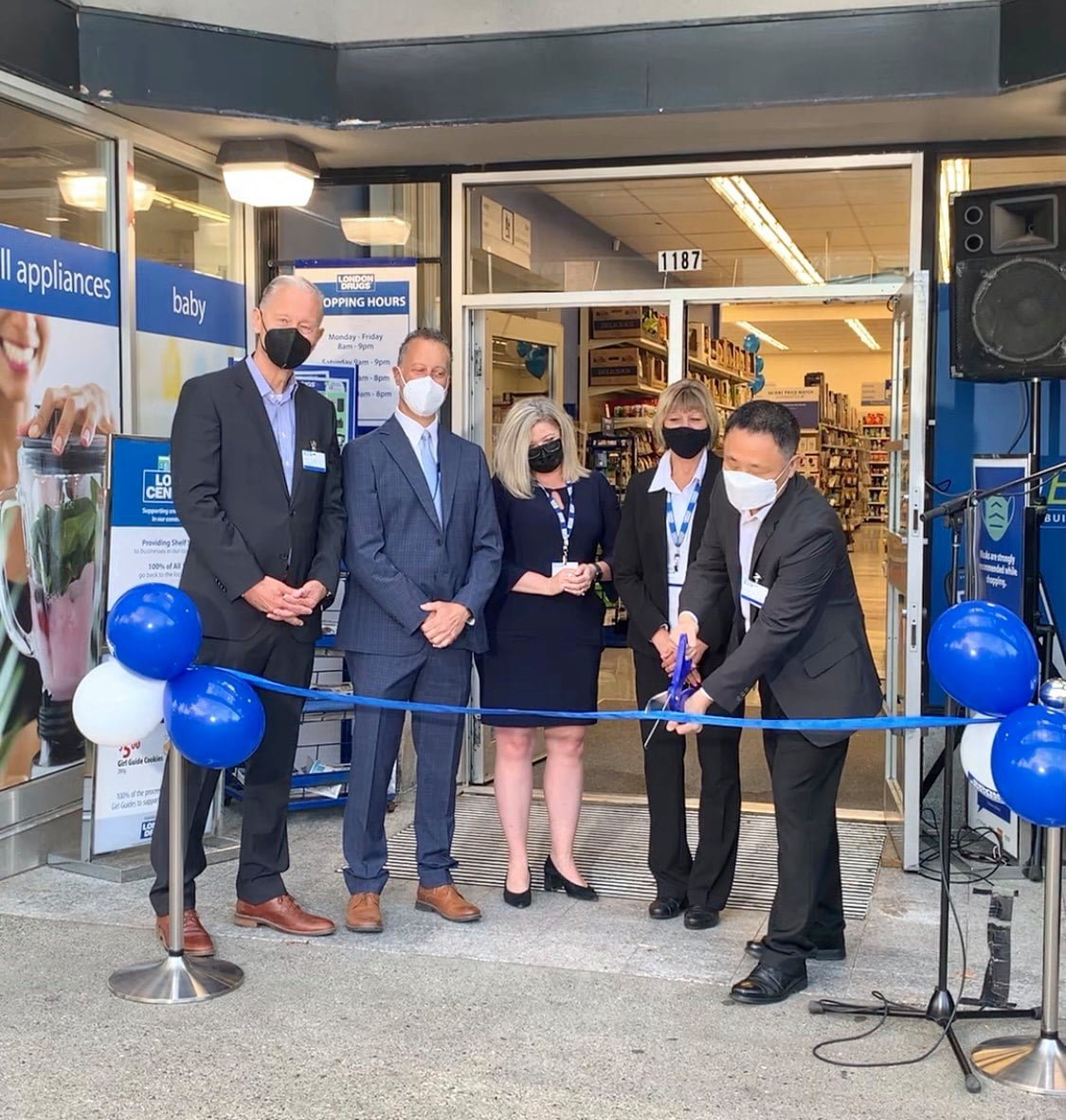
On July 16th at 7:45 a.m., members of the London Drugs executive team were joined by Vancouver City Councillor Lisa Dominato to mark the completion of renovations at one of Vancouver’s long-standing retailers with speeches and a formal ribbon cutting. To commemorate this event and its history in the West End, London Drugs will donate $5,000 to A Loving Spoonful, another Vancouver fixture and important charity that has been servicing residents of Vancouver since 1989.

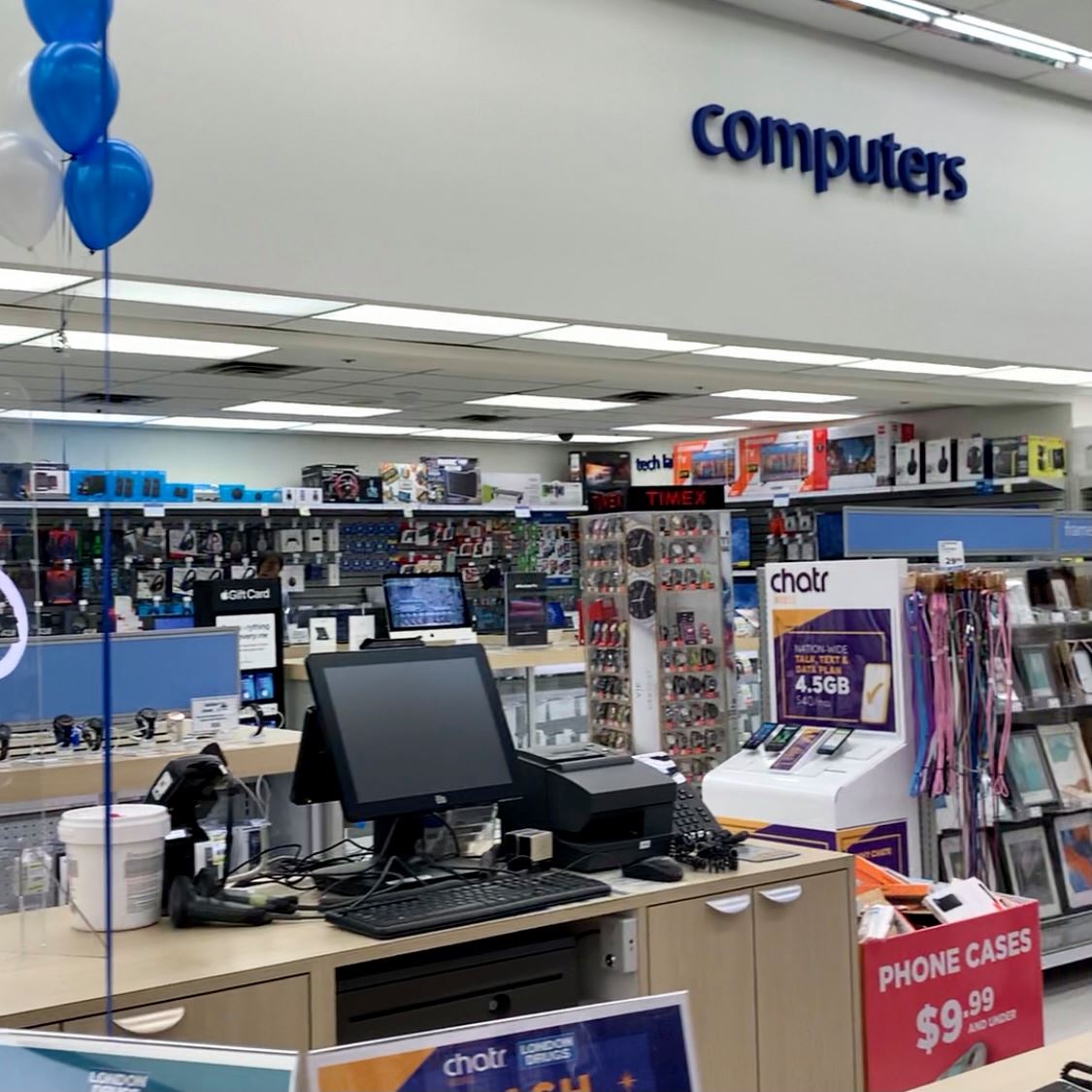
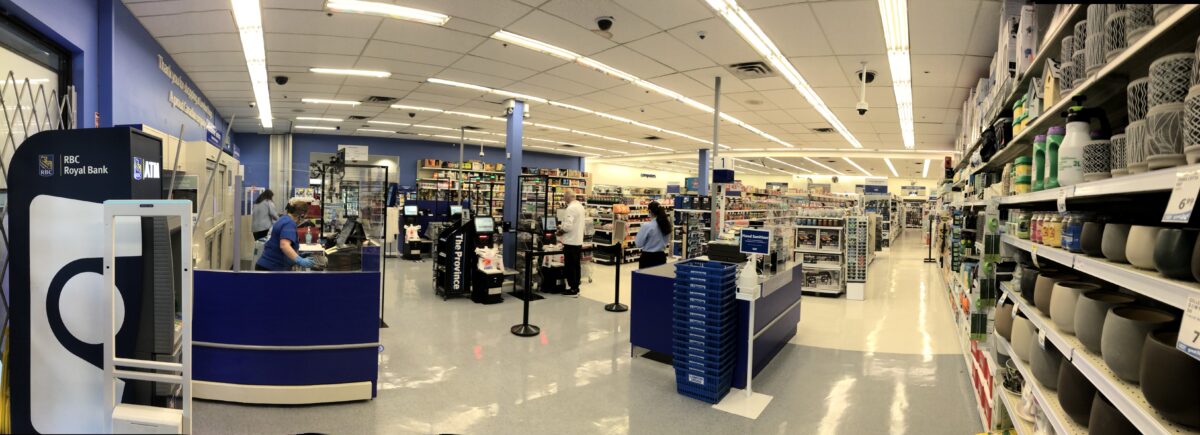
London Drugs Robson Street Interior – Image: London Drugs

London Drugs was founded in 1945 in B.C. and has grown to 82 physical stores in 35 major markets in British Columbia, Alberta, Saskatchewan and Manitoba.

Liberty Clothing Opens in The Distillery Historic District

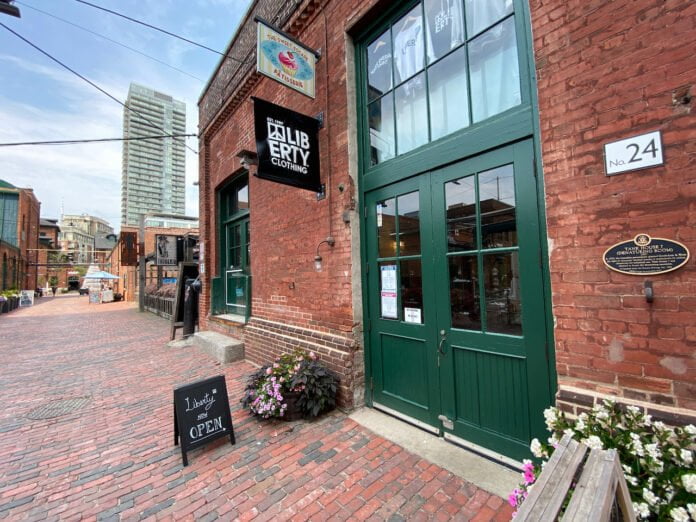
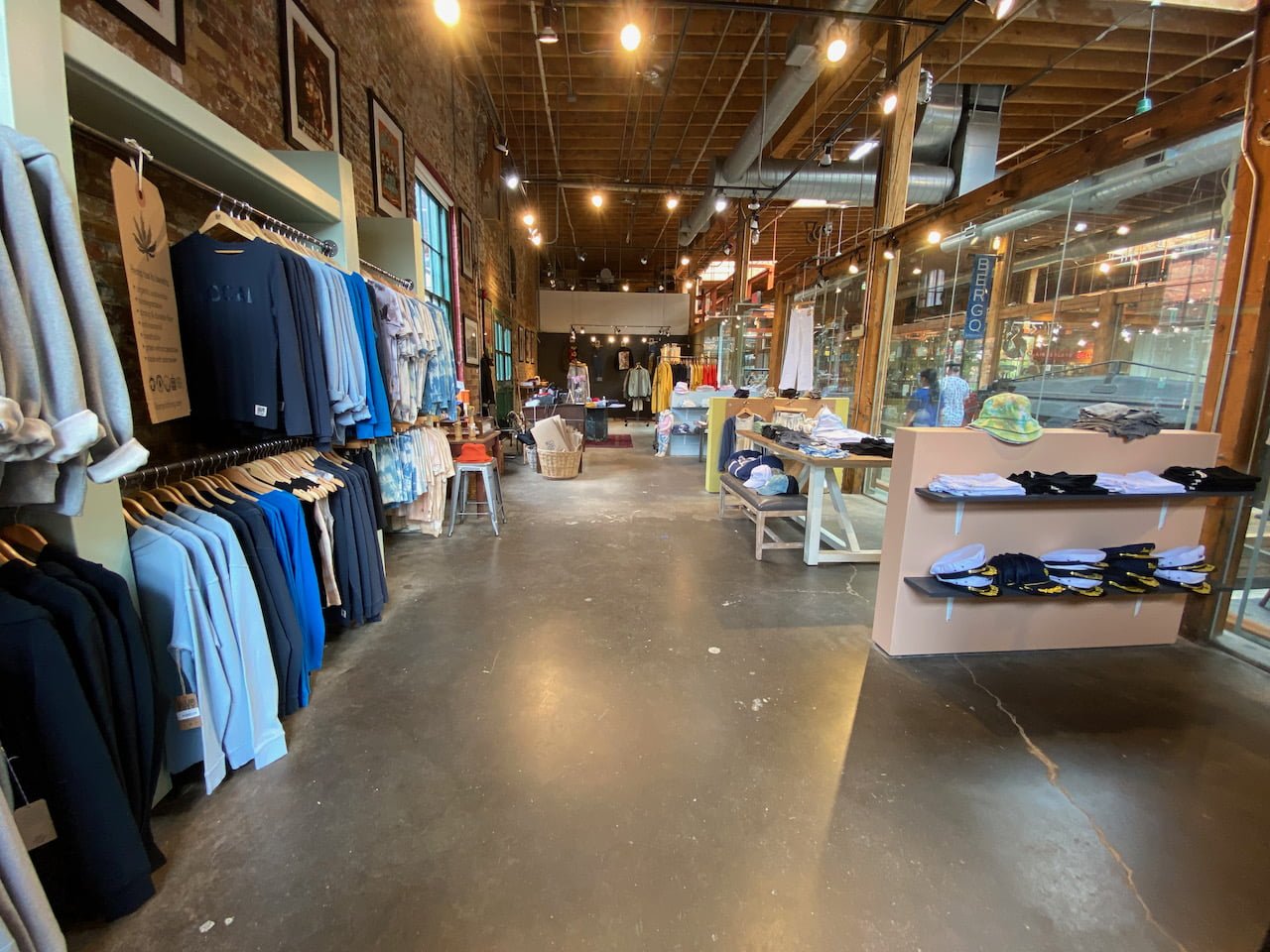
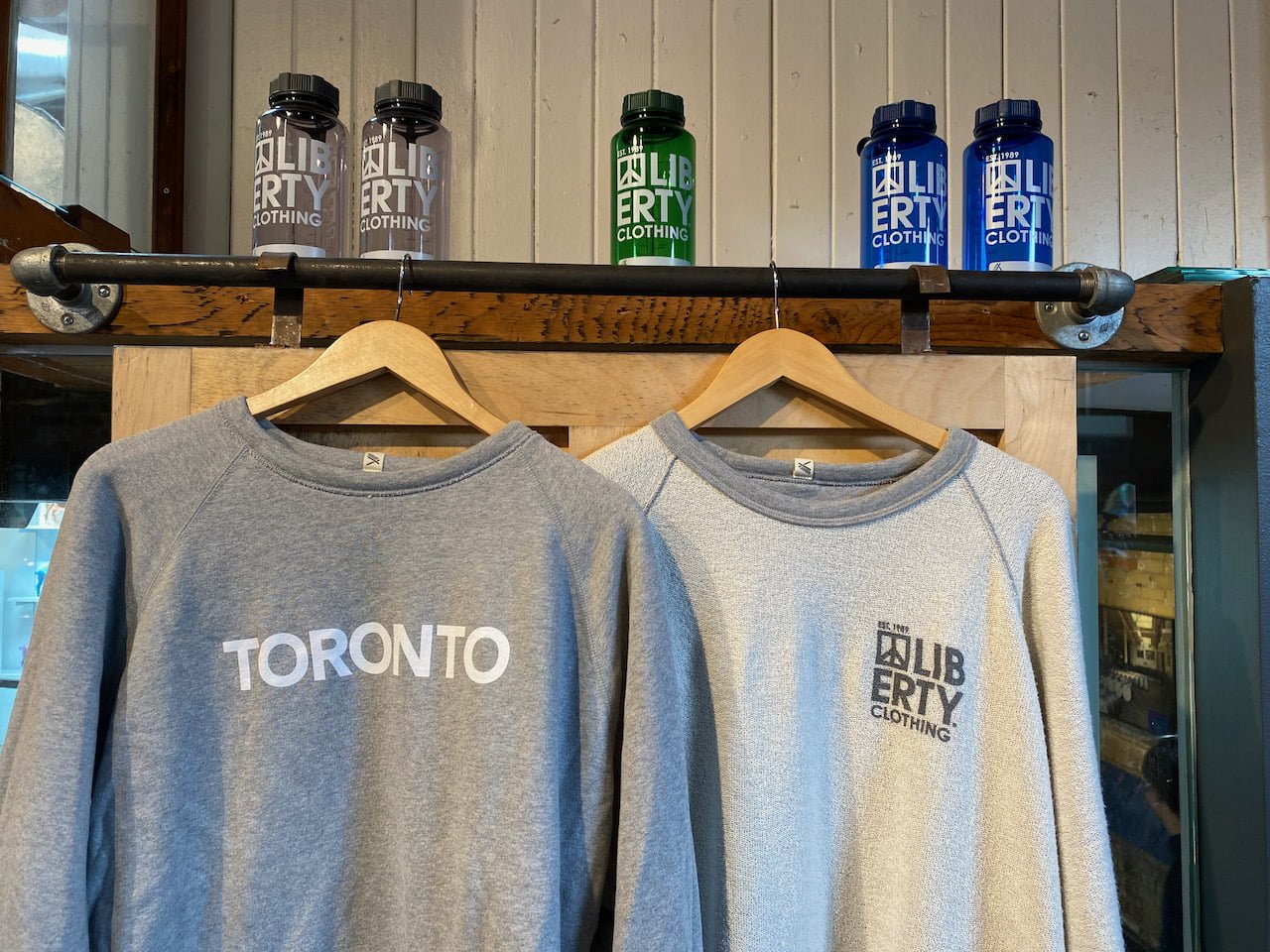
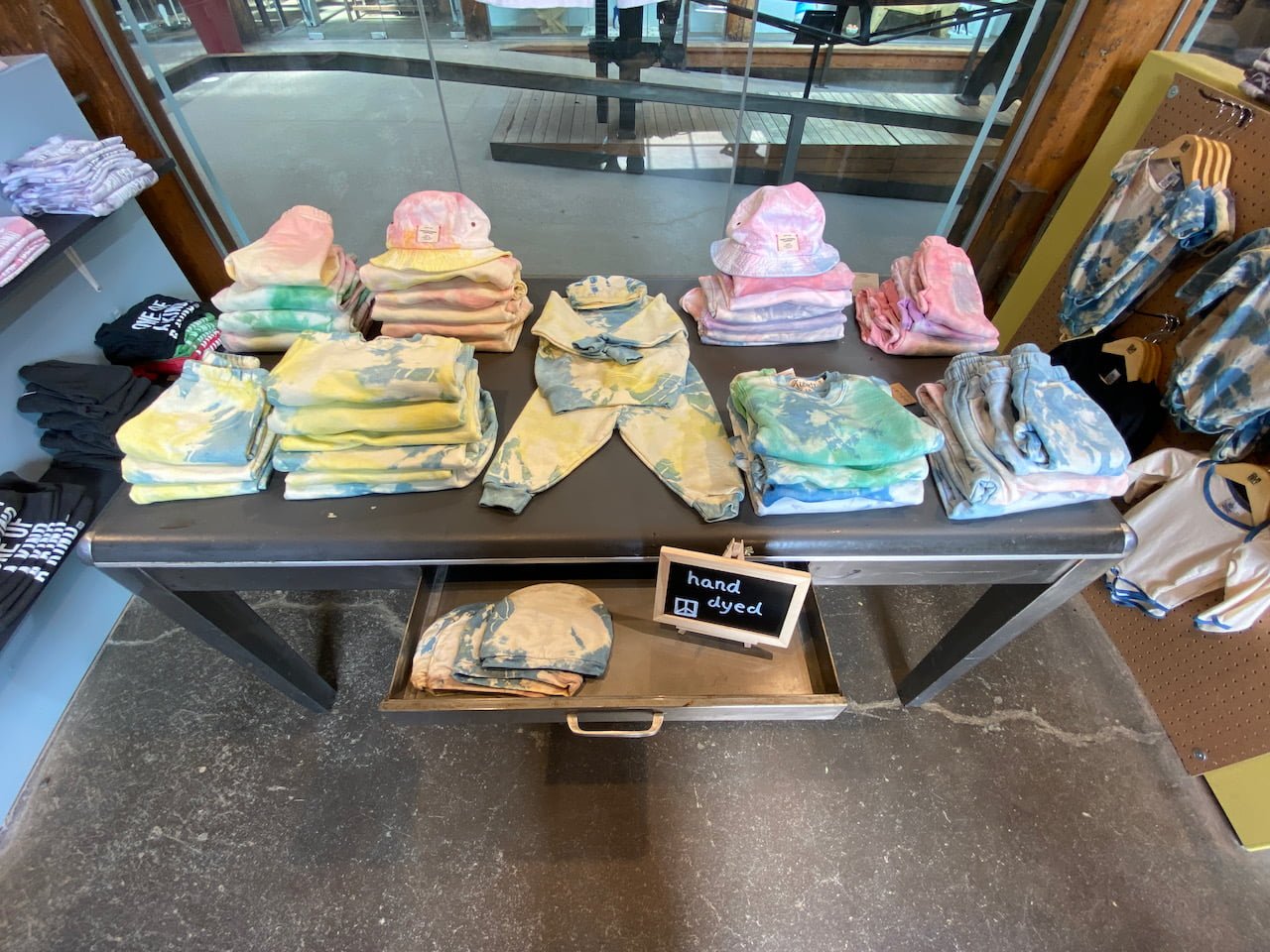
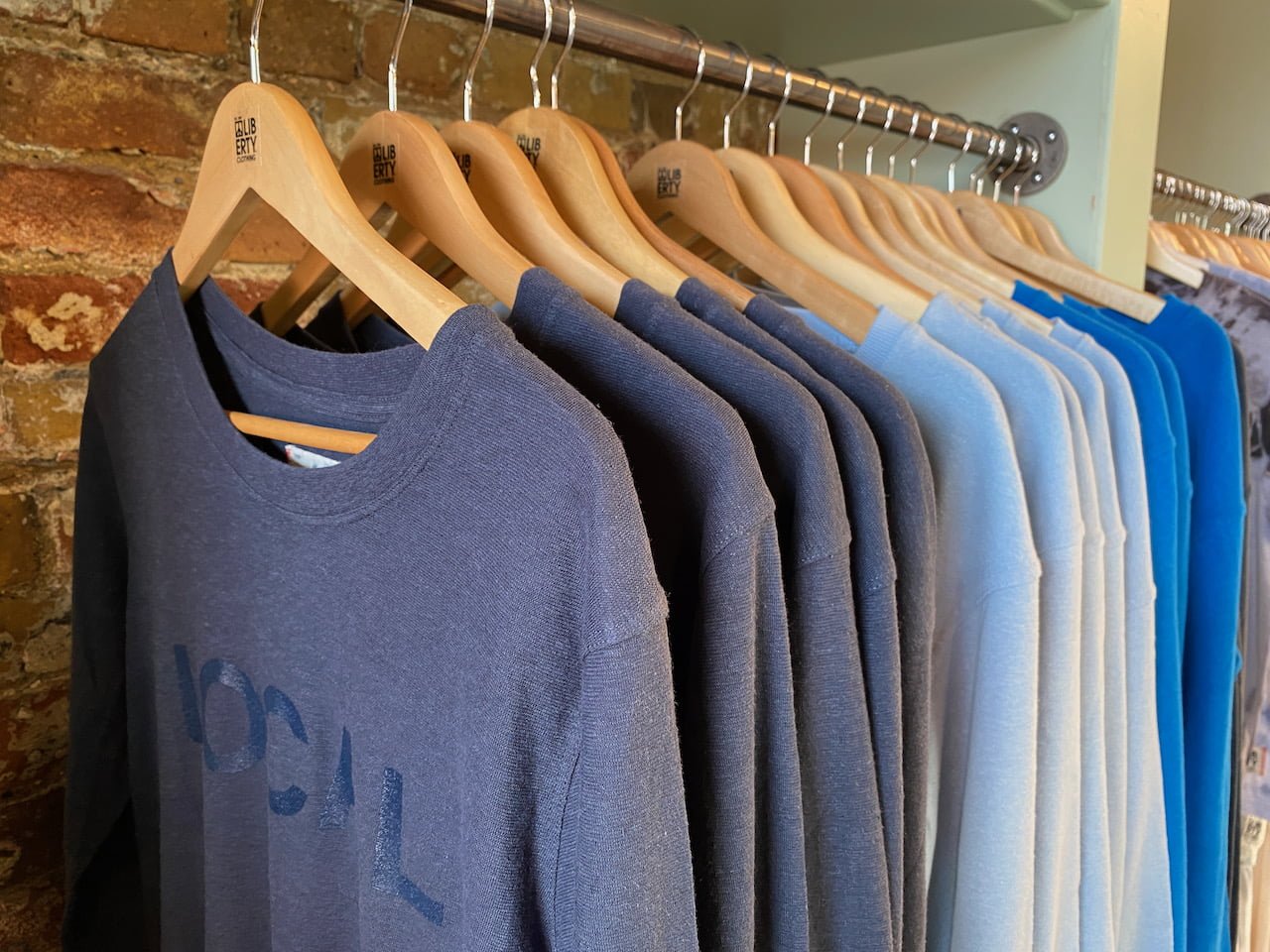
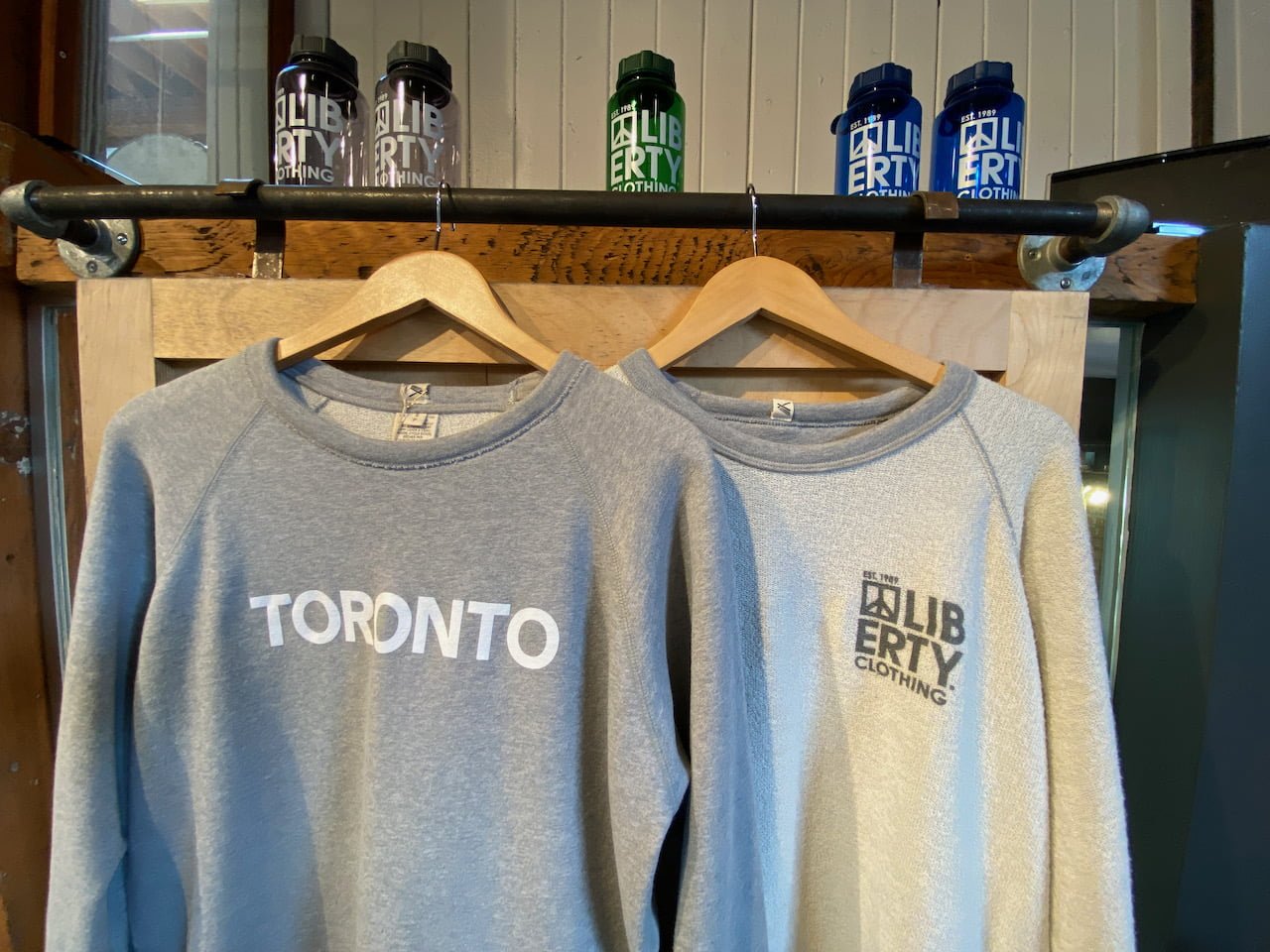
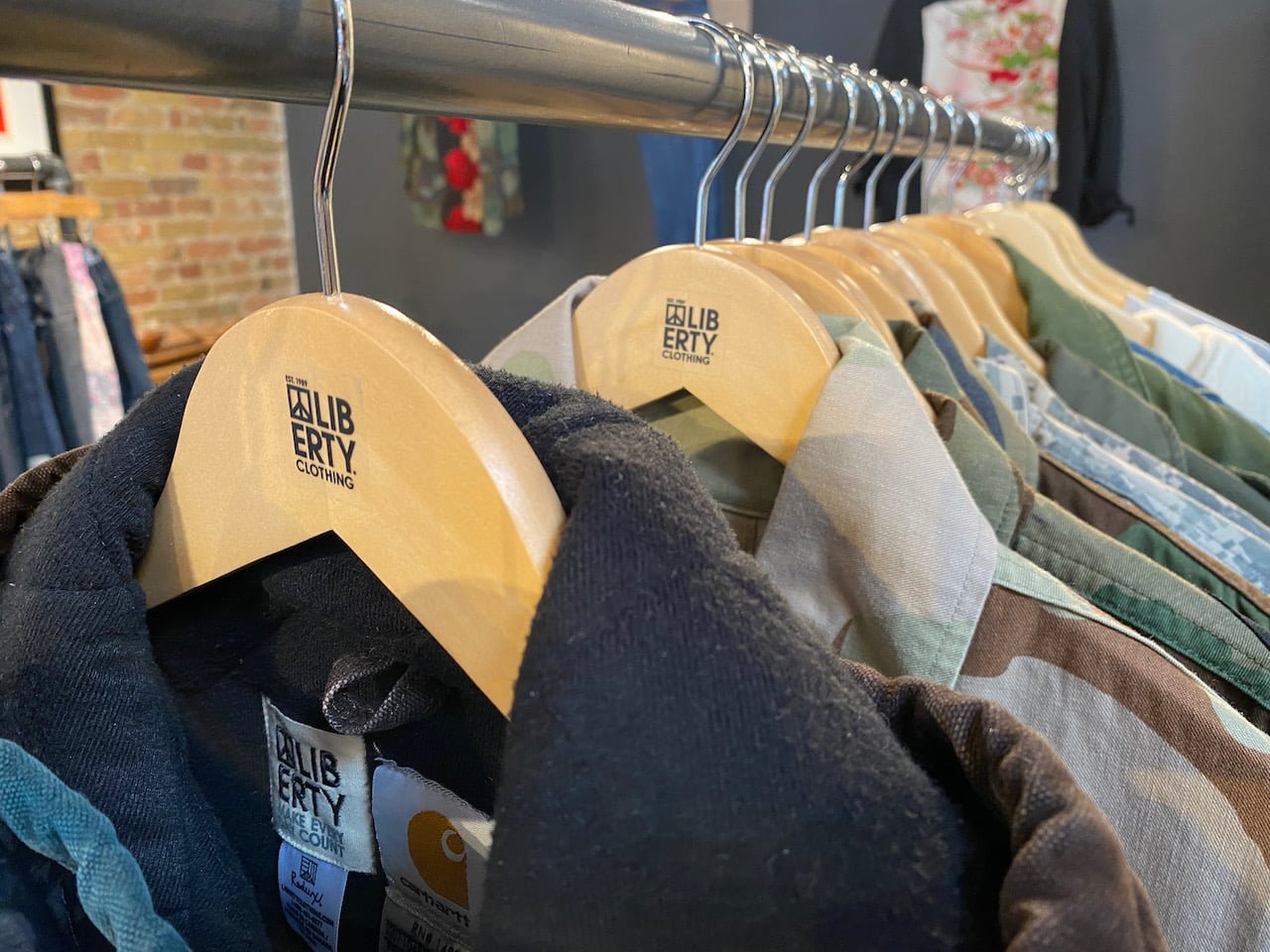
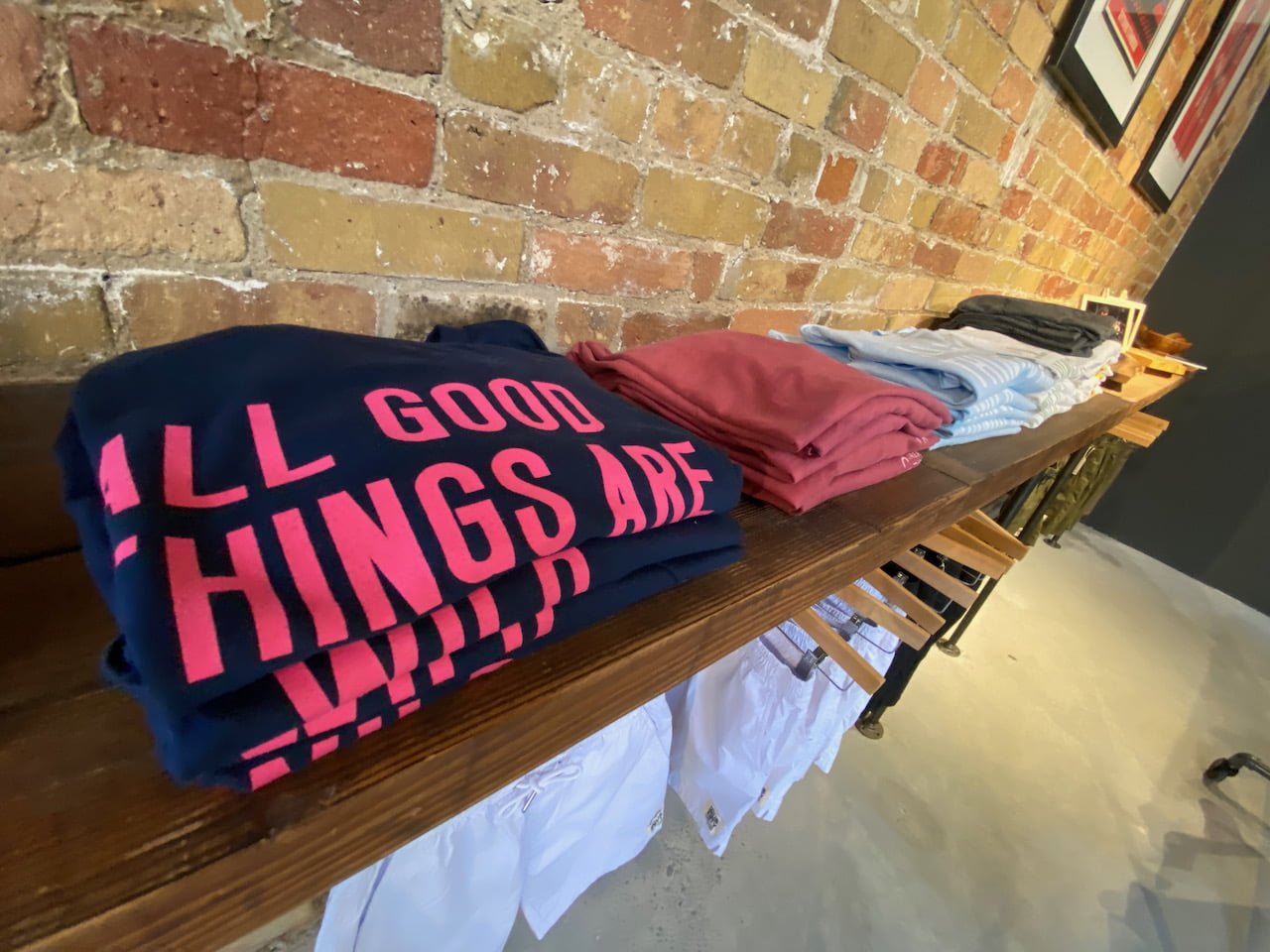
Liberty Clothing at the Distillery District - Photo by Dustin Fuhs

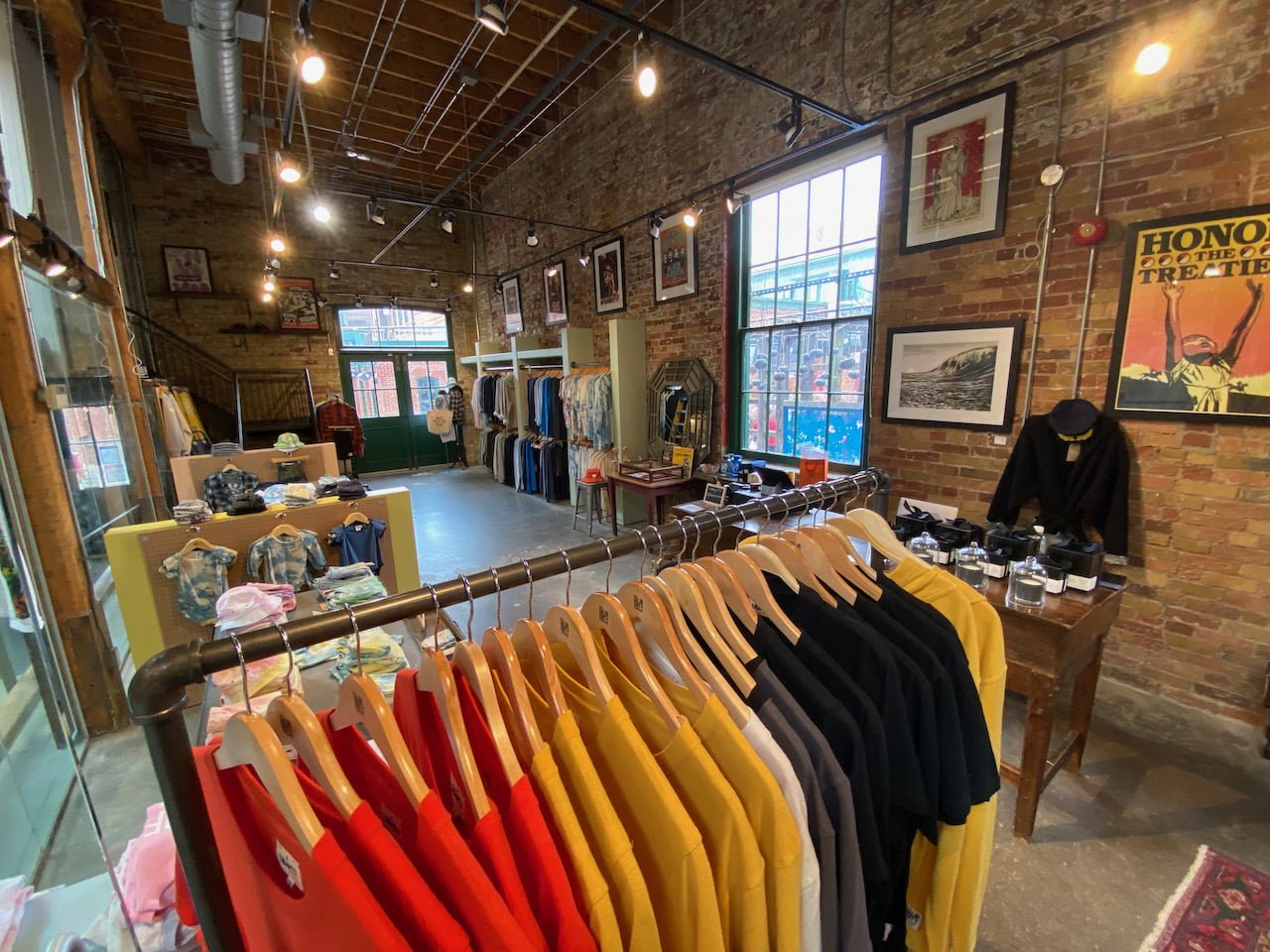
Canadian clothing brand Liberty Clothing has joined the growing community in The Distillery District with two separate locations, with a pop-up and brick & mortar location.

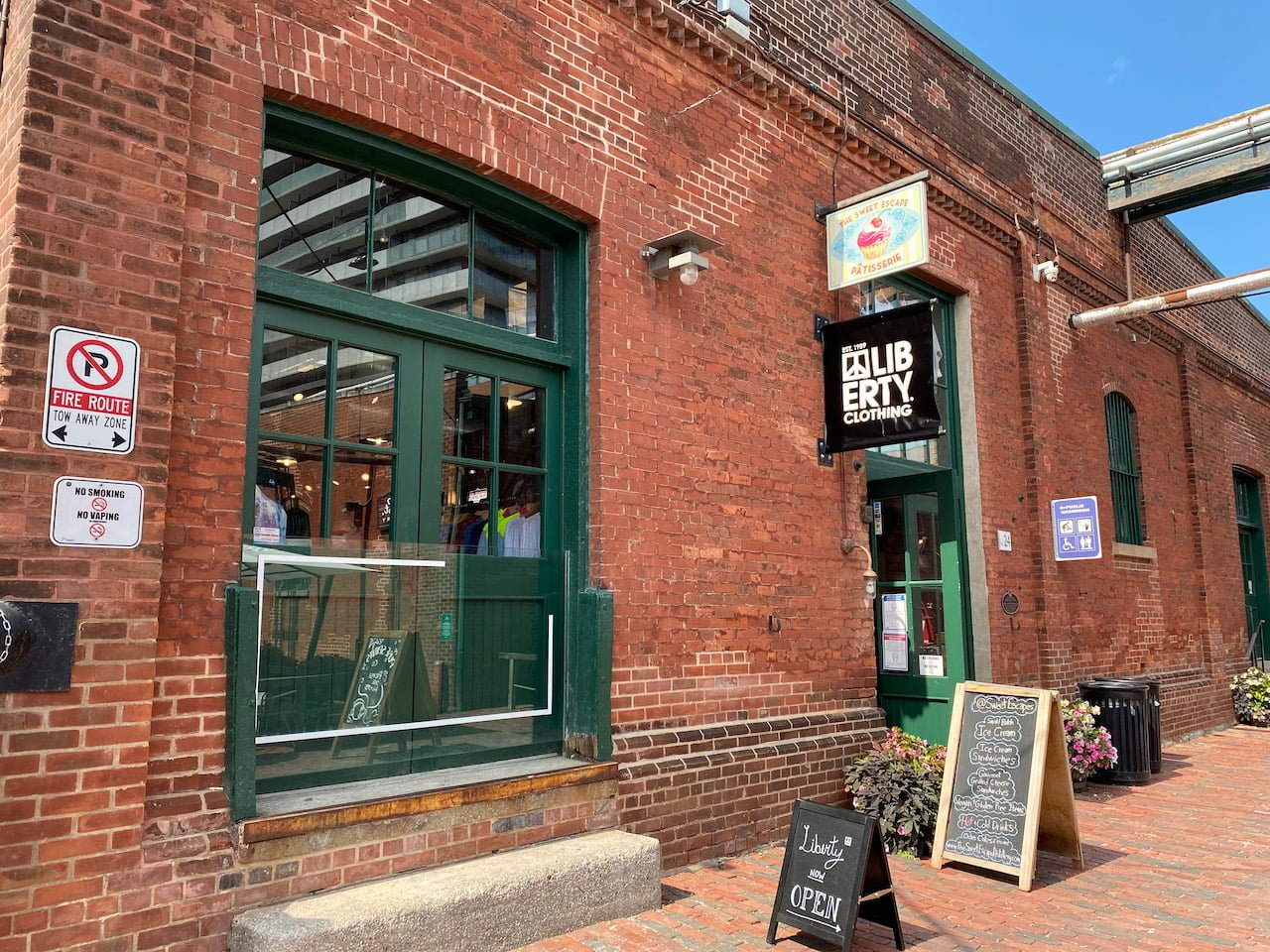
The brand is one of six brands that are scheduled to move into a set of pop-up retail containers that will be opening in the summer of 2021, when Founder Anne Joyce was given an opportunity that she couldn’t pass up. The Distillery District had an interruption in the installation and construction of the containers due to the recent Ontario lockdown and reached out to provide a temporary solution – moving into a recently vacated storefront at 24 Tank House Lane.

Anne-Marie Joyce

The location in The Distillery District is a testament to the dedication of the team, which saw a 5-day turnaround between receiving the keys and opening the doors. After opening and seeing the potential of the space, the conversation around making this a long-term home started.

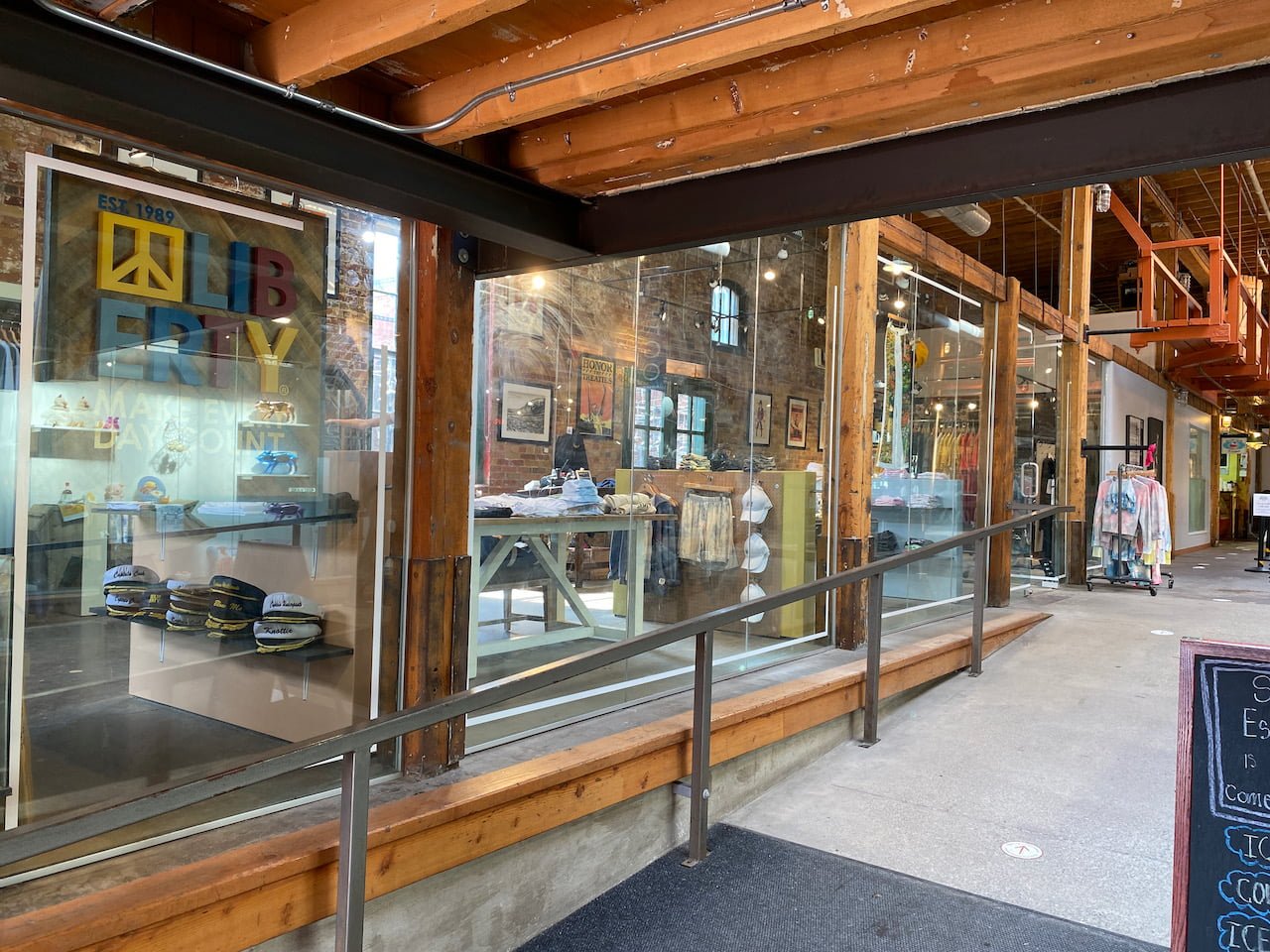
Liberty Clothing is now signed for a multi-year lease to be in 24 Tank House Lane and will also be opening a pop-up in the containers for added exposure during the summer in the tourist-focused district.

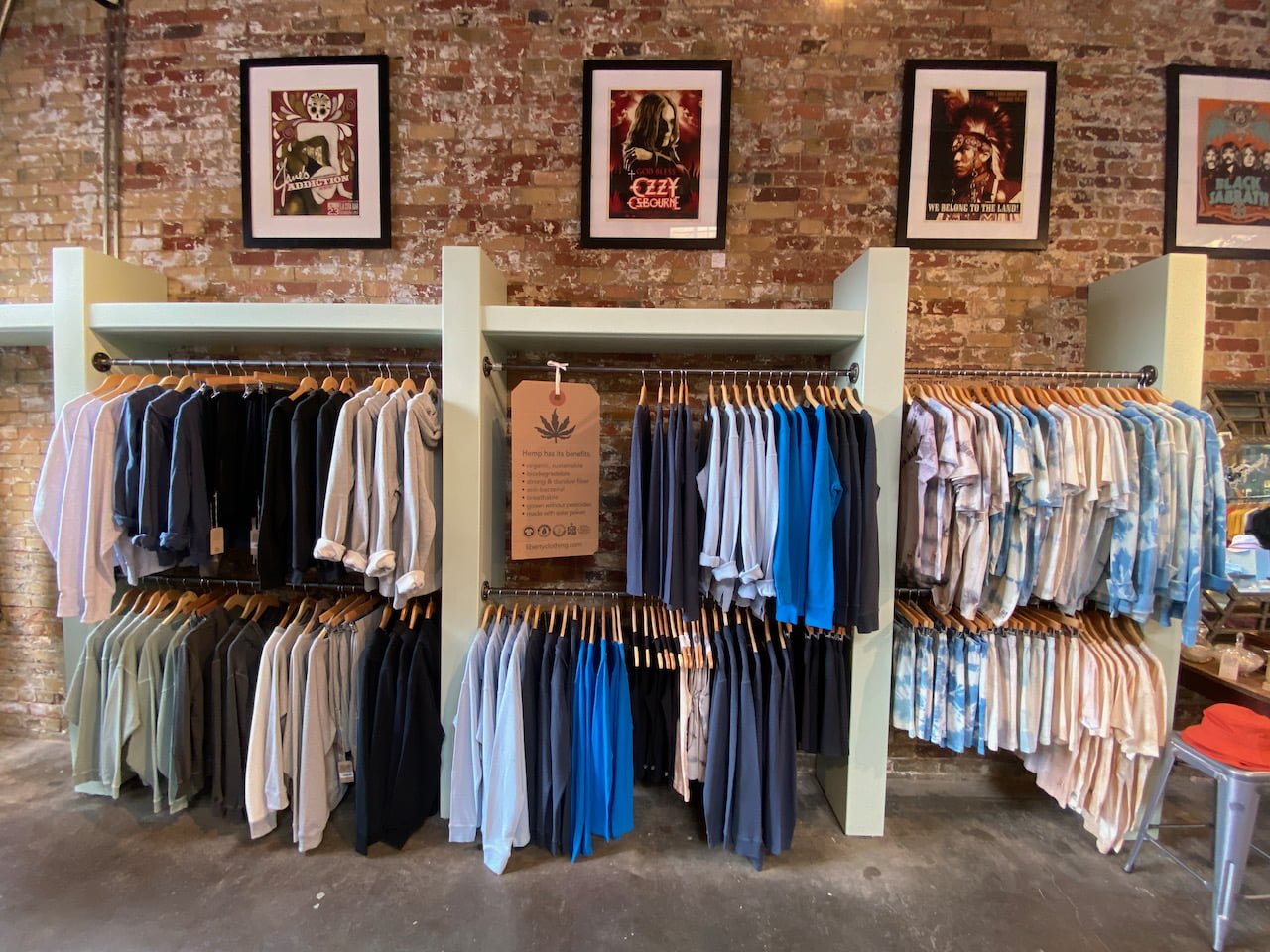
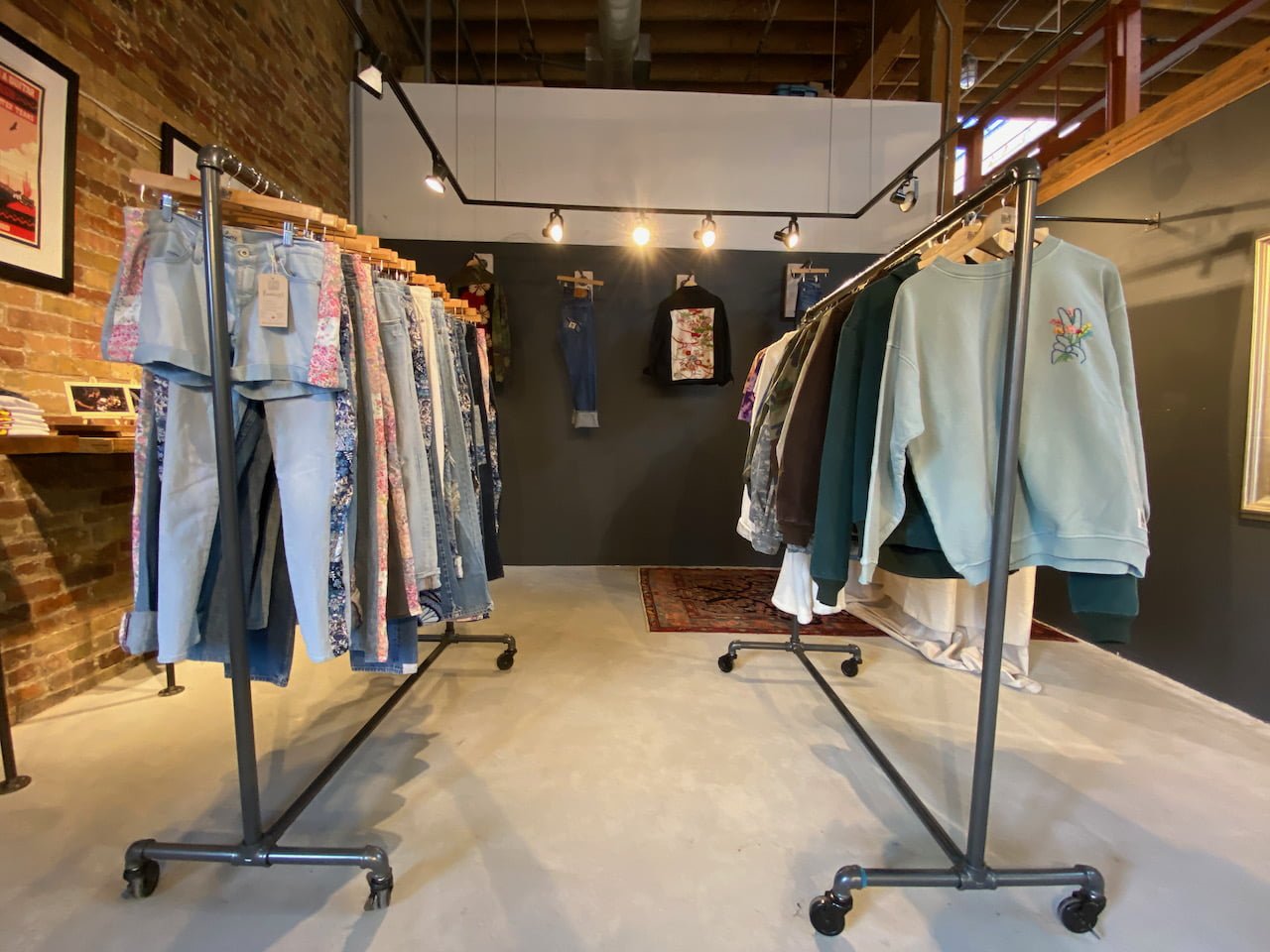
Liberty Clothing at The Distillery District – Photo by Dustin Fuhs

Previous to Liberty, Stratford-based fashion business Distill called 24 Tank House Lane home for 15 years. They subsequently left the Distillery, relocating to Queen Street East before exiting Toronto completely in 2019. The space found a new retailer in Tank House General, who left during the pandemic.

When Anne Joyce, Founder at Liberty Clothing discussed the personality and culture at her company – the alignment was evident on all levels. “We at Liberty are so excited to be a part of this vibrant community within the Distillery where we have been warmly welcomed by local residents and tenants alike.” 

Joyce shared that the Distillery location will grow into a Flagship for the brand, which already has a brick & mortar location in Canmore, AB and multiple pop-ups, including the SWS Marina in Minett.

“We love the idea of setting up our flagship right here in our native city and being a part of a community where everything has been thoughtfully curated and restored keeping that vintage heritage and vibe.  That resonates with us in a big way because our brand is all about developing and creating high-quality, affordable and eco-friendly apparel , some with a vintage twist.”

“We’re excited to have Toronto’s own Liberty Clothing set up their flagship store at The Distillery District, which prides itself on offering locally-made, locally-sourced, unique, quality items for our shoppers,” said Elena Price, general manager of The Distillery District. “By having a permanent store-front on Tank House Lane and taking on one our pop-up containers, visitors will have double the chance to experience what makes Liberty Clothing so special.” 

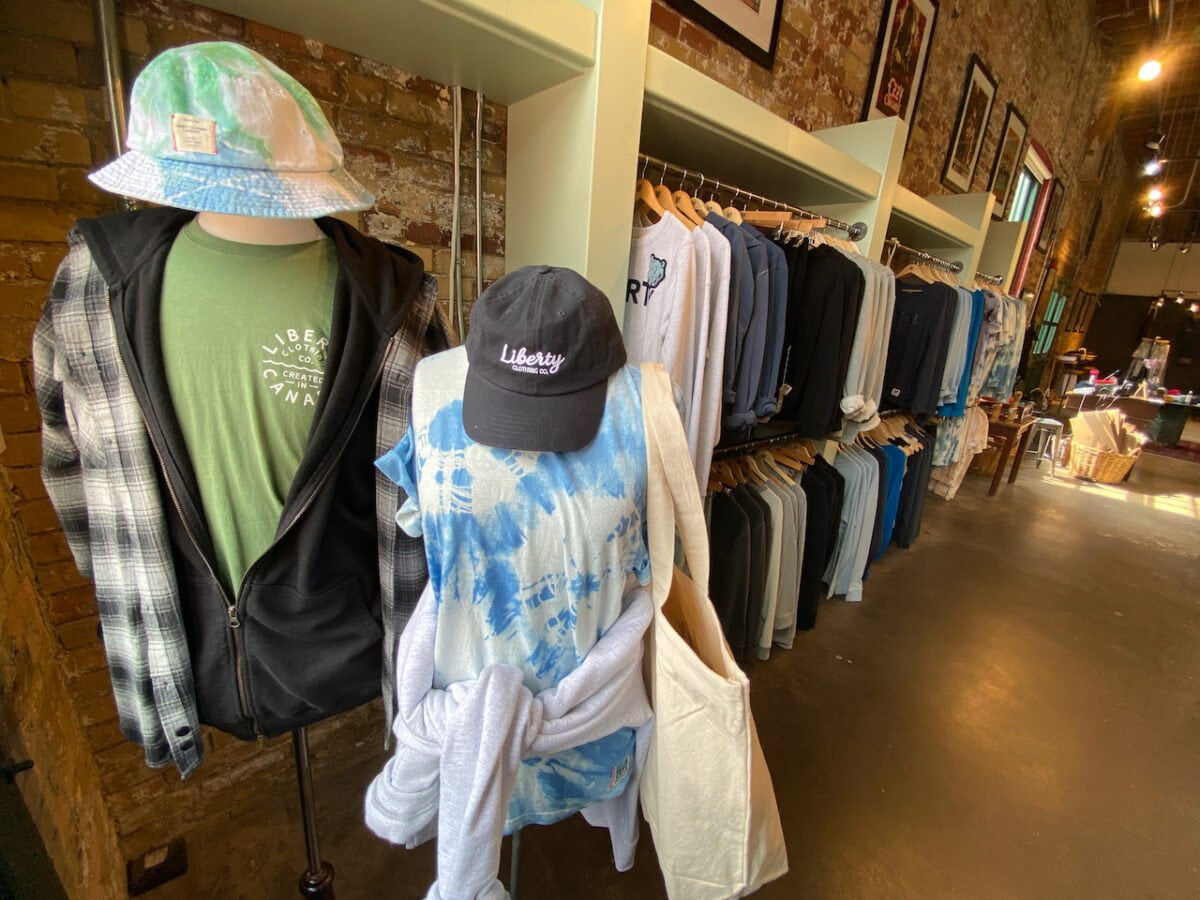
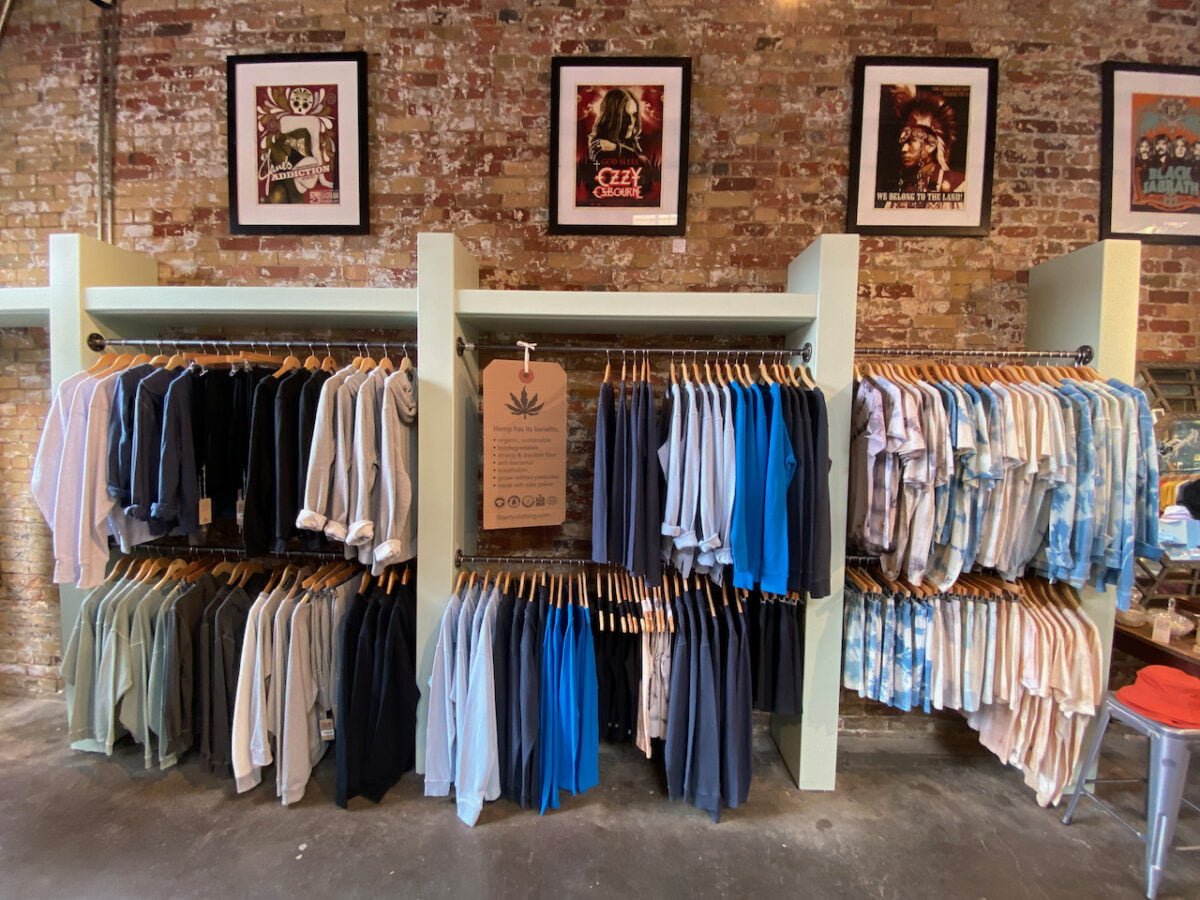
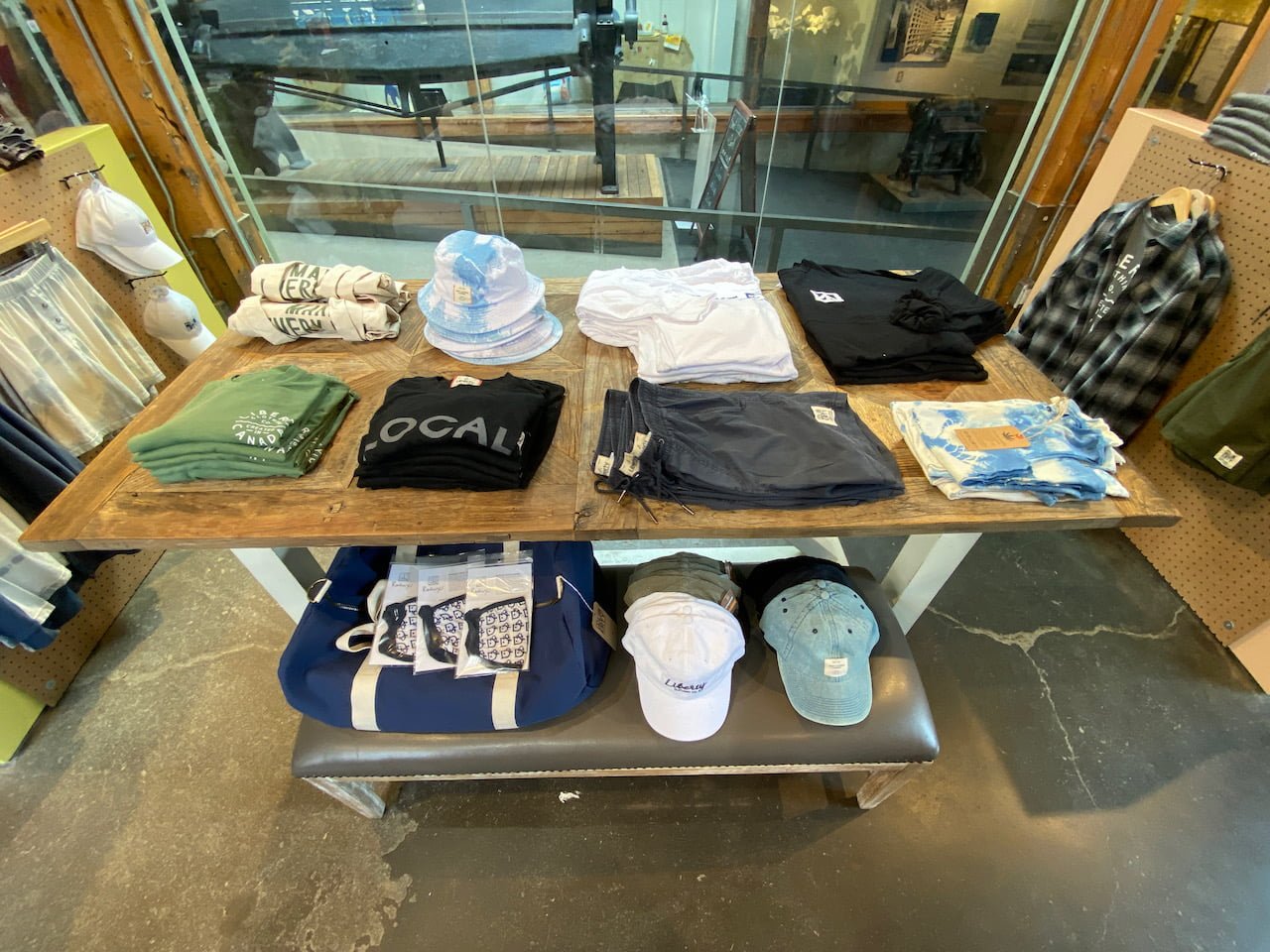
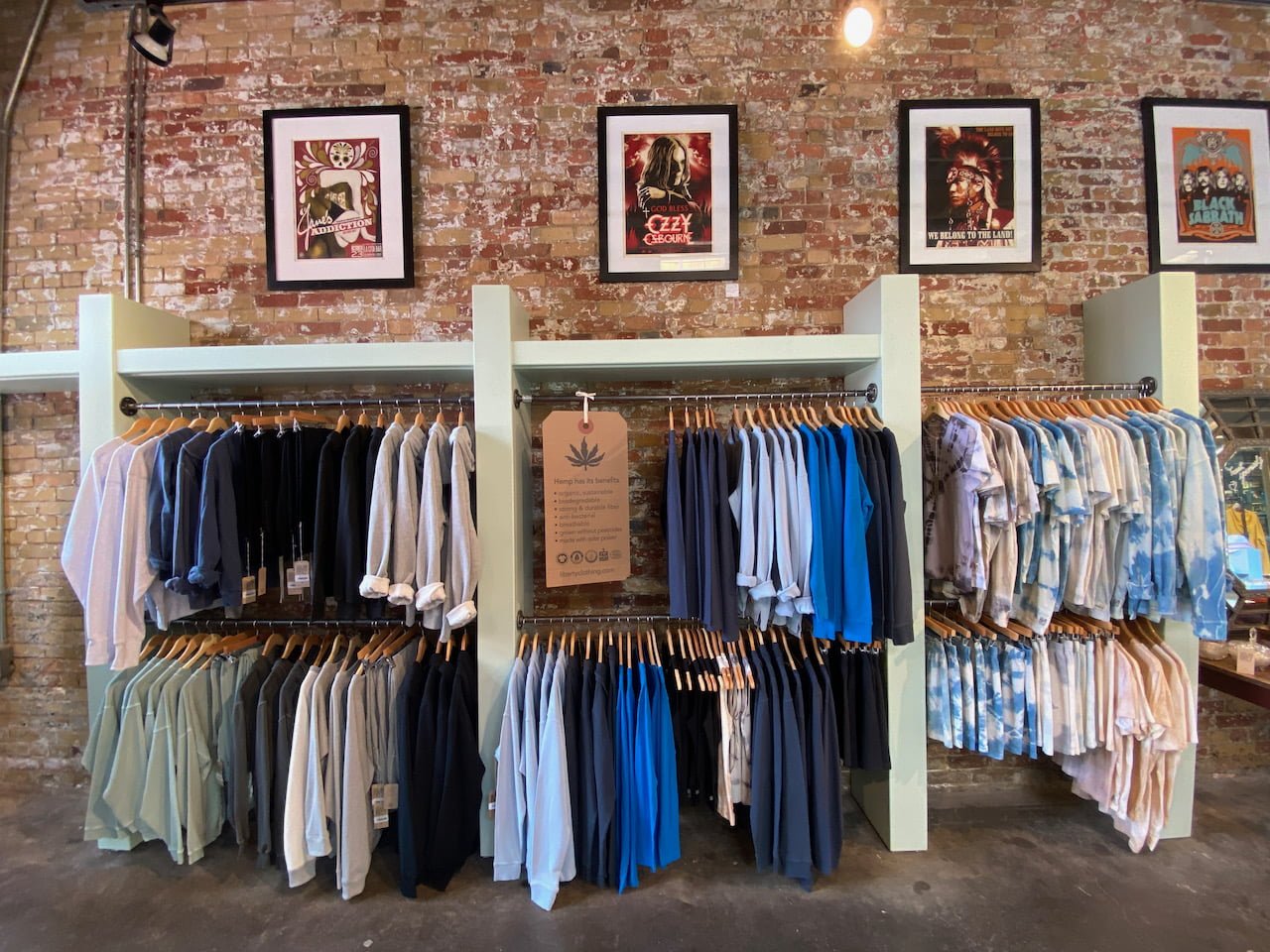
Current offerings in the store focus on the hits from the brand, including the High Line collection, which showcases tee’s, hoodies, bottoms and long sleeves made from hemp and organic cotton. The Redux collection is also on display, which features pieces that are unique and no two items are identical.

“In fact our mission is to inspire people to make sustainable shopping choices while providing quality clothing that can be a part of those everyday moments.  Thats what drives us.  Nothing inspires me more than when we are able to make one of a kind apparel pieces from recycled or up cycled fabrics or through the use of hemp and organic cotton in our high line collection where we do our part to reduce the carbon footprint!”  

“Being able to provide that piece of clothing that could mean so much to someone even years down the road is a wonderful thing, so do what we do at Liberty and make everyday count”!  

Interior of Liberty Clothing at The Distillery District – Photo by Dustin Fuhs
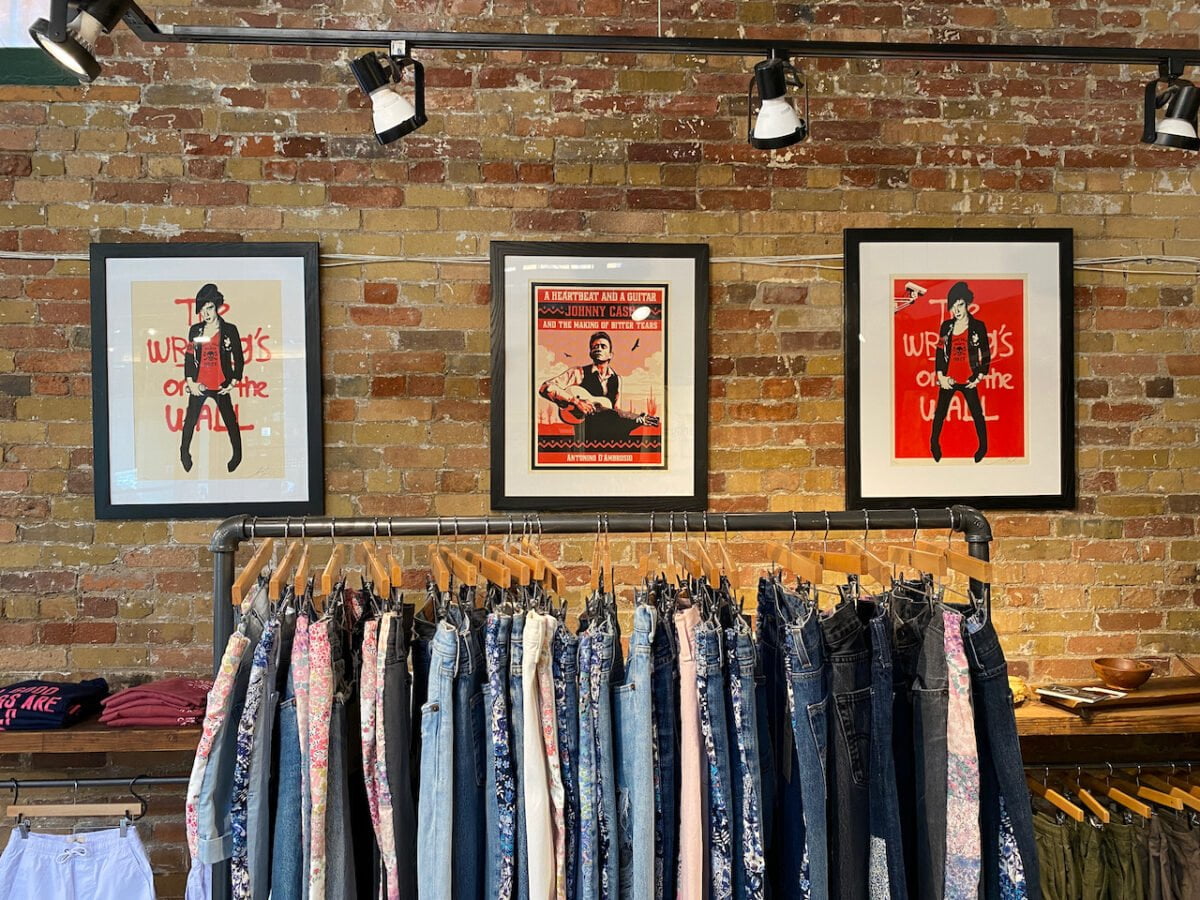
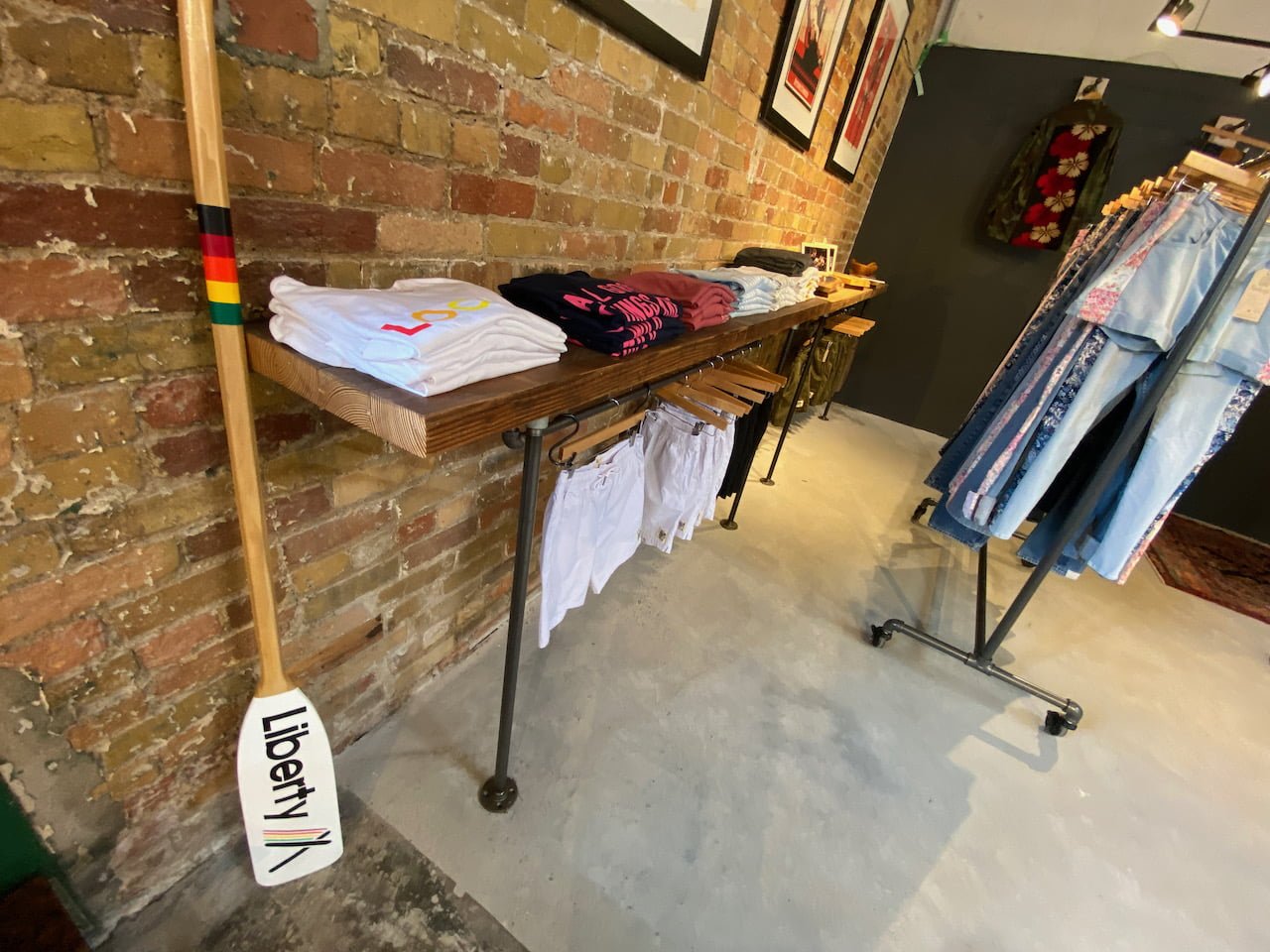
Liberty Clothing at The Distillery District – Photo by Dustin Fuhs

Podcast [Interview]: DECIEM CEO Nicola Kilner Discusses the Future of the Brand

Craig and Nicola Kilner, CEO of Toronto-based beauty brand DECIEM, discuss the company’s expansion including stores, growth during the pandemic as well as future plans for the rapidly growing iconic brand.

The Weekly podcast by Retail Insider Canada is available on Apple Podcasts, Stitcher, TuneIn, Google Play, or through our dedicated RSS feed for Overcast and other podcast players.

**Podcast Sponsor (Adyen): From in-store to in-app, unify your payments data across channels. Business. Not Boundaries [Read more]

Discussed this episode:

Subscribe, Rate, and Review our Retail Insider Podcast!

Follow Craig:

Follow Retail Insider:

Listen & Subscribe:

Share your thoughts!

Drop us a line at Craig@Retail-Insider.com. You can also rate us in Apple Podcasts or recommend us in Overcast to help more people discover the show!

Background Music Credit: Hard Boiled Kevin MacLeod (incompetech.com). Licensed under Creative Commons: By Attribution 3.0 License. http://creativecommons.org/licenses/by/3.0/

Canadian Retail News From Around The Web For July 16th, 2021

Canadian Retail News From Around The Web

Top Stories: National

Central/Eastern Canada News

Western Canada News

Tips Should be Included in Menu Prices as Restaurants in Canada Reopen: Op-Ed

By Sylvain Charlebois and Poppy Nicolette Riddle

Tipping is a cultural practice strongly supported in Canada, with most patrons feeling good about their experiences. However, gratuities can have hidden consequences for those working in food service.

With staff recruitment a problem as the easing of pandemic guidelines are allowing restaurants to re-open, our research suggests it may be time for the industry to think seriously about how to manage tipping differently. And incorporating tips as part of the price of a meal should be an option.

Our report released a few weeks ago on the future of tipping was a pulse check of patrons’ perceptions of food service tipping and their anticipated behavioural changes as we exit the pandemic.

While our survey plainly asks how people are feeling about tipping during the pandemic, prior research provides evidence of how tipping contributes to detrimental working conditions for restaurant staff.

Some are suggesting that the sector needs a “great reset”. The COVID-19 pandemic has severely disrupted Canada’s food service industry. With restrictions, limited hours, take-out or delivery-only options, revenues have dropped significantly. Many businesses have taken on substantial loans in order to stay afloat.

In a May report by Restaurants Canada, 10,000 food service businesses have permanently closed. As vaccination counts increase and provinces begin to relax restrictions, resuming our previously normal behaviours may in fact become a problem.

A pro-social behaviour

Our report investigated tipping as a pro-social behaviour, in which giving money results in positive feelings.

Though 71 per cent surveyed did not anticipate changing their tipping habits, 20 per cent are planning on tipping more and are happy to do so. Additionally, 60 per cent of respondents contribute the same tip percentages in all restaurants, but 40 per cent tip more in their favourite restaurant.

In the short term, this is good news for servers in restaurants. Patrons may have the financial security to tip more as personal savings rates have increased dramatically over the pandemic, according to Statistics Canada. But this may not last.

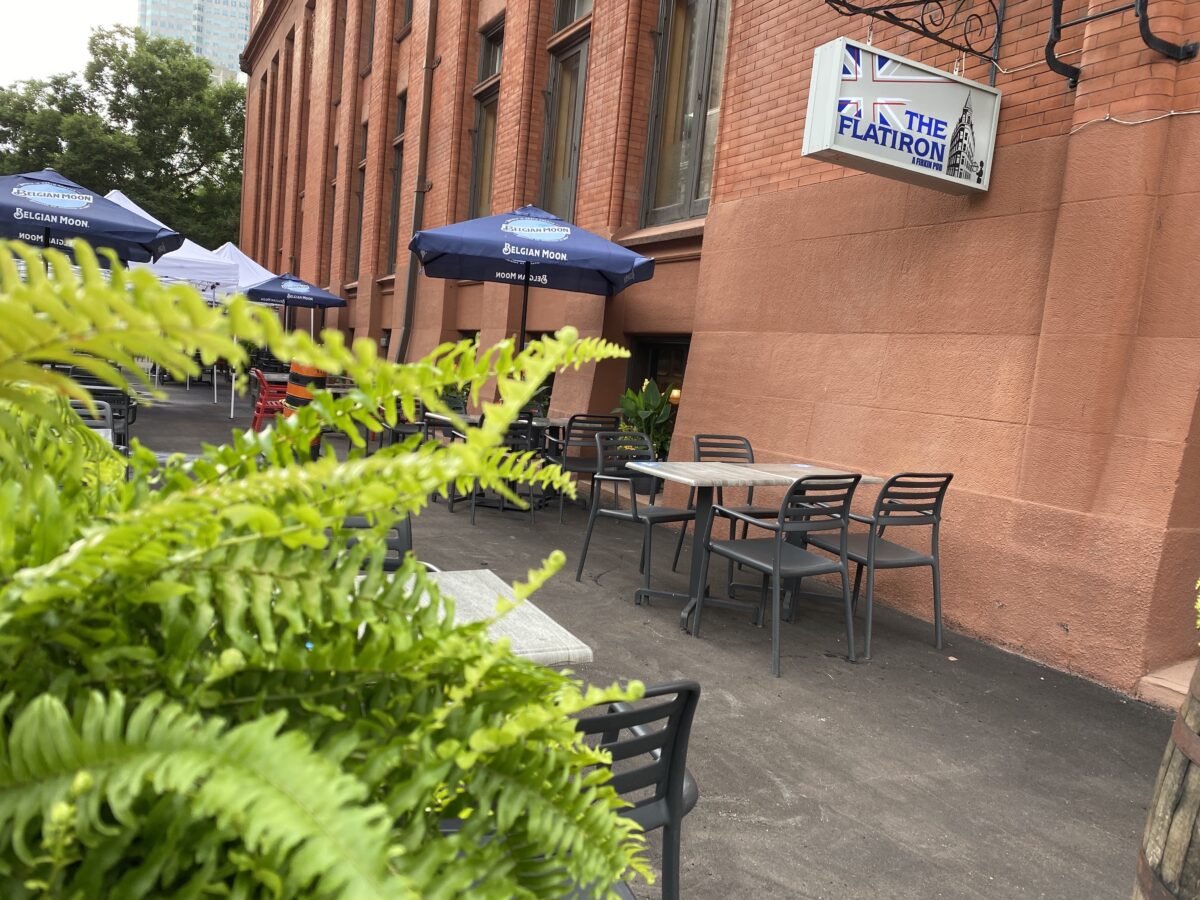
The Flatiron: A Firkin Pub – Photo by Dustin Fuhs

Beyond the customers’ ability to tip, tipping also has a darker side to it.

Cultural expectation

There is evidence that tipping is a strong cultural expectation in Canada, to which patrons willingly conform — and some are even motivated to exceed expectations.

However, there are issues that are not evident when patrons are paying the bill. Tipping has been documented to play a contributing factor in income instability, high employee turnover rates, discrimination — and even sexual harassment.

Food service typically deals with a 70 per cent turnover rate, which has likely increased due to the pandemic. Tip-dependent incomes have not recovered to pre-pandemic levels. About 80,000 workers are still technically employed, but have no hours according to Restaurants Canada.

Studies from tipping behaviour researchers have shown that there are not only racial and gender prejudices about tipping amounts, but tipping creates a power dynamic in how patrons and servers treat each other and perceptions of service quality.

Harvard Business Report publication cites 90 per cent of women and 70 per cent of men report experiences of sexual harassment as food service workers, with most going unreported to managers due to the culture of “the customer is always right” or it’s just “part of the job.”

Additionally, the food service sector is behind all others in terms of recovery. As of May, Statistics Canada revealed there are still over 300,000 jobs to fill in the sector. This means a new, inexperienced population are likely to fill food service jobs, unaware of the challenges facing them.

As patrons, we are largely unaware of the negative consequences, and tipping remains a pleasurable experience.

Feeling the ‘warm glow’

Termed a “warm glow” by researchers Elizabeth Dunn of the University of British Columbia, Lara Aknin of Simon Fraser University and Michael Norton of Harvard Business School, the effect we feel from tipping fulfils a basic human need of feeling in control, seeing the immediate effect of your decisions, and feeling a social connection through the exchange.

Respondents prefer to follow their own tipping formula, though some do not like included tips or service charges. Most surveyed feel like their tips make a difference and that tipping makes the job worthwhile or contributes to motivation. Tipping yields positive feelings that justify current and future behaviour for the patron.

Even so, more than one third of those surveyed indicate they do not support tipping in food service and would like to see it prohibited or regulated.

Restaurants Canada reports that nearly 50 per cent of Canadians know someone in food service and 22 per cent choose food service as their first job. With so many people experiencing tipping firsthand or through people they know, it is surprising that the support for tipping is still so high despite previous research indicating high support for tipping alternatives.

What’s the true cost?

The true cost of the bill currently includes other social burdens that are not evident at the time of the tipping experience. Increasing tips, while with good intentions, will only prolong dealing with the issues of income instability, employment security, discrimination in all its forms and sexual harassment.

If we want to address these issues, we need to acknowledge the less visible impacts of our actions. By encouraging our restaurants and delivery services to move away from tipping, we are doing more in the long run to make sure that our restaurants and their staff have a sustainable, long term future that will survive the next large scale disruption.

Because menu prices would go up by incorporating tips, such a change would require a policy shift coupled with support from industry. However, our data shows we still have a long way to go.

The pandemic has proven we can get through challenges together and we can still feel that “warm glow” by knowing that when we pay the bill, everyone benefits.

This article is republished from The Conversation under a Creative Commons license. Read the original article.

Hillberg & Berk Debuts New Store Design with Calgary Southcentre Location

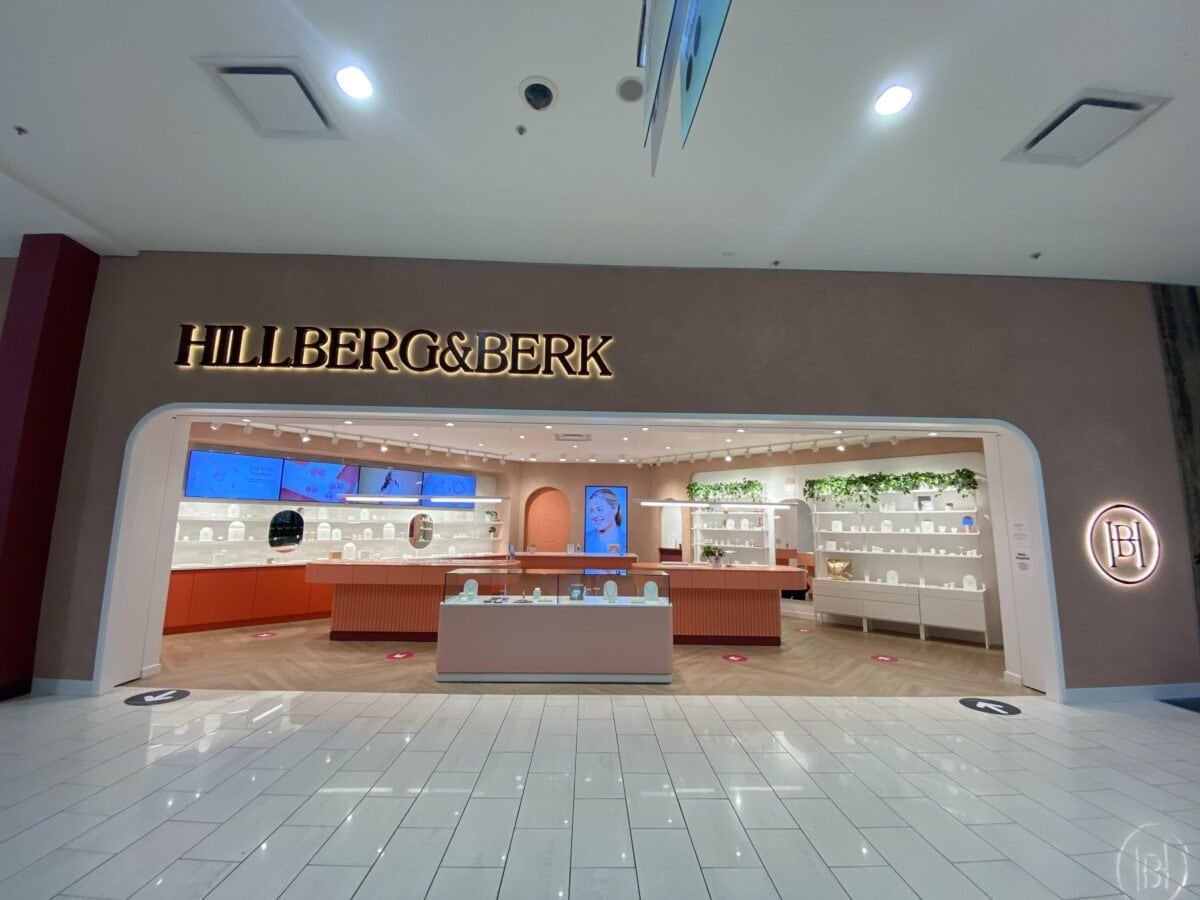
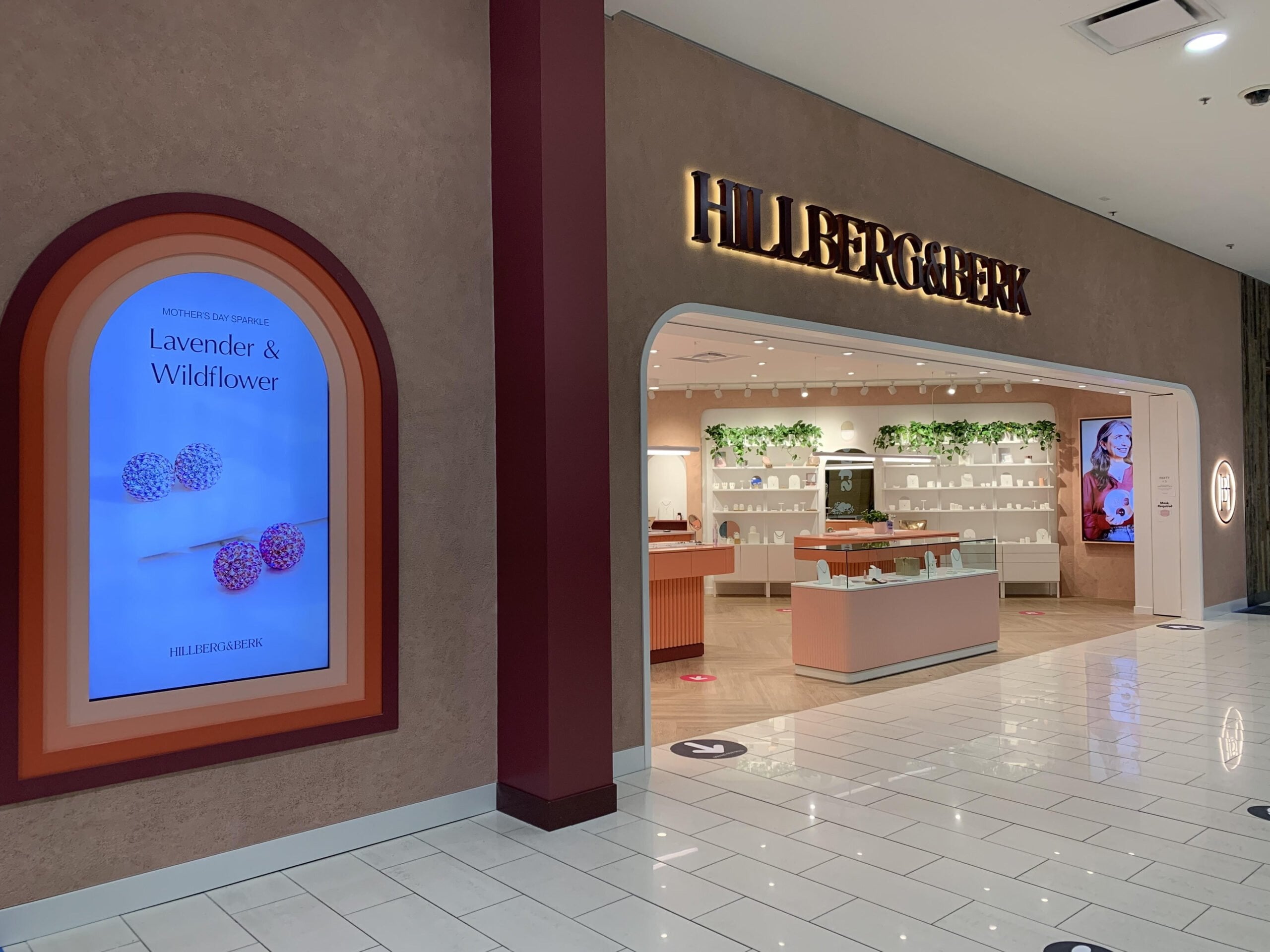
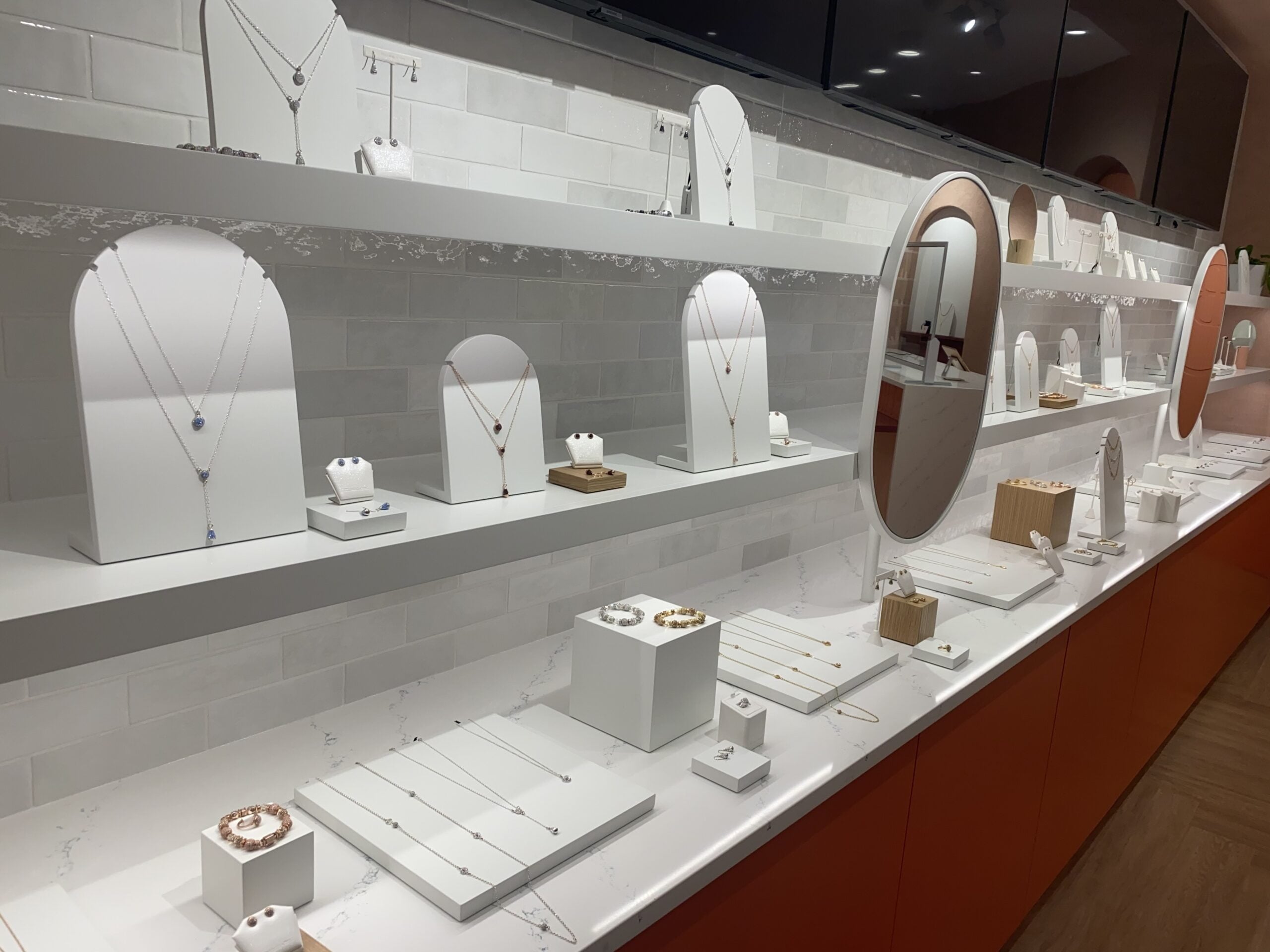
Hillberg & Berk Southcentre Mall (Image Hillberg & Berk)

Hillberg & Berk is continuing to expand its west-coast roster with its first post-pandemic store-opening in Alberta.

The Saskatchewan-based female-owned jewellery company has expanded into its tenth retail storefront, located in Calgary’s Southcentre Mall. The Oxford-managed property was a location of choice — previously Hillberg & Berk had a kiosk in the mall known as a ‘sparkle bar’.

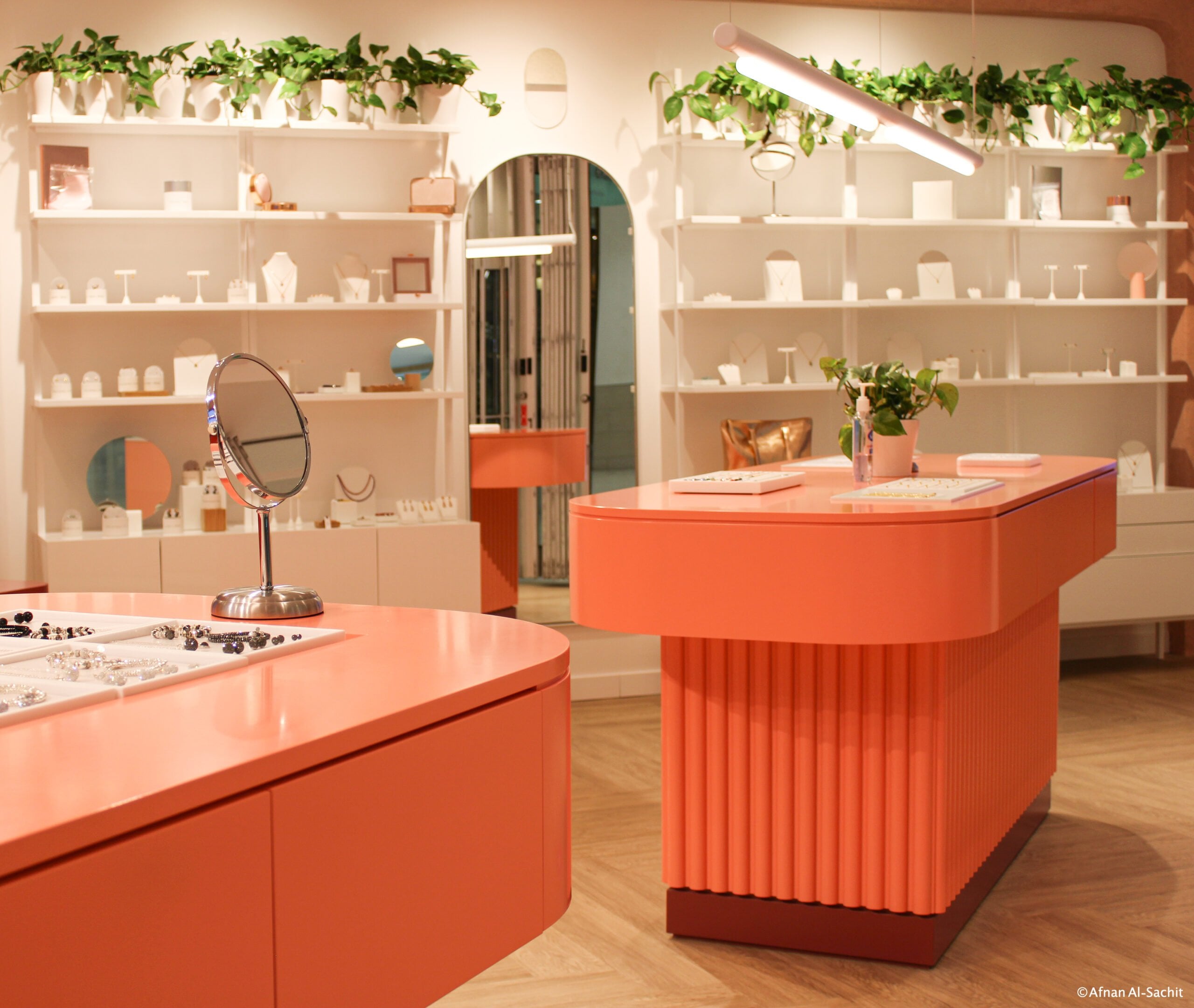
The new store location was designed by KaBen Design Group and built by JAX construction, which was tasked with bringing H&B’s visual identity and brand experience to life.

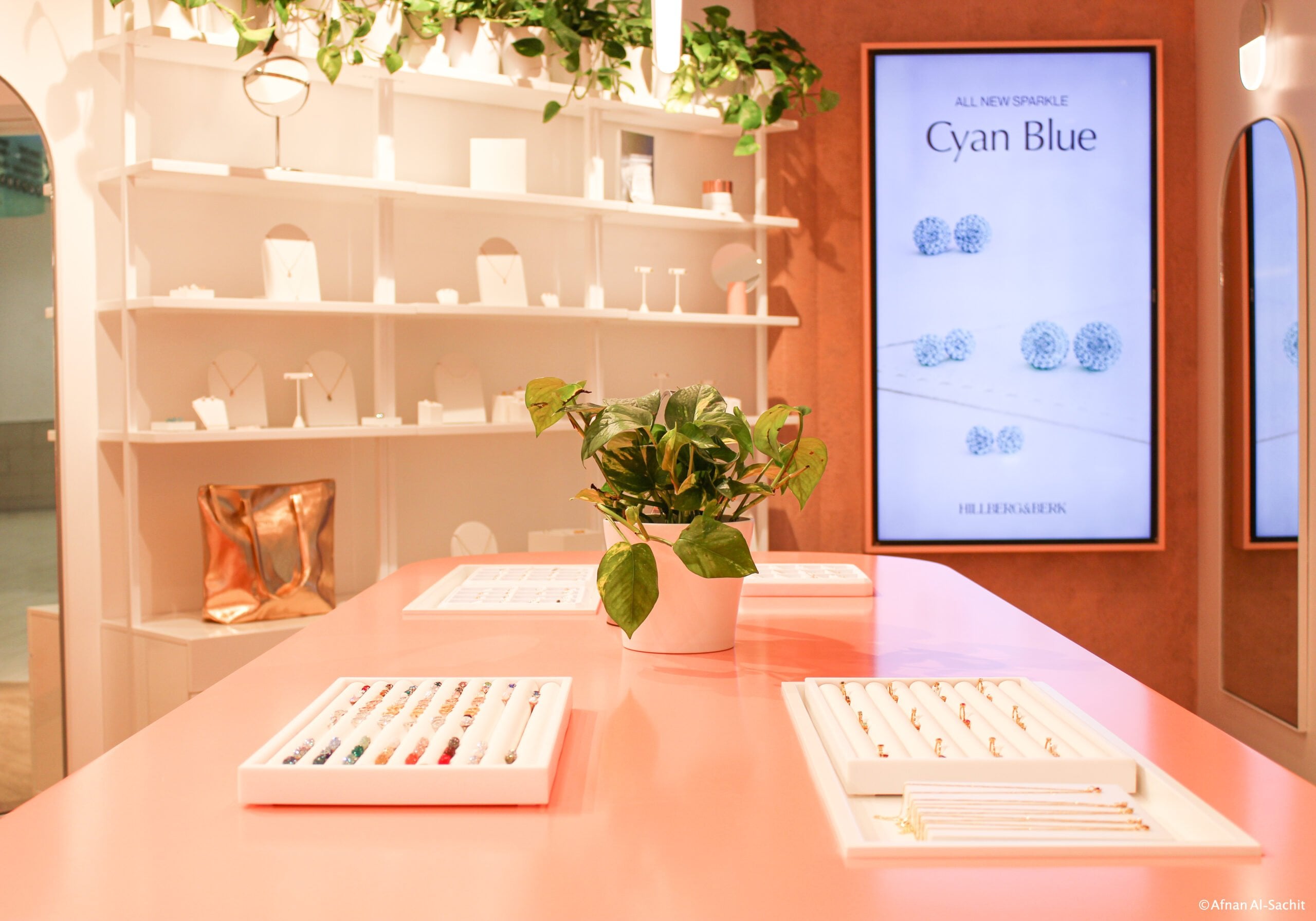
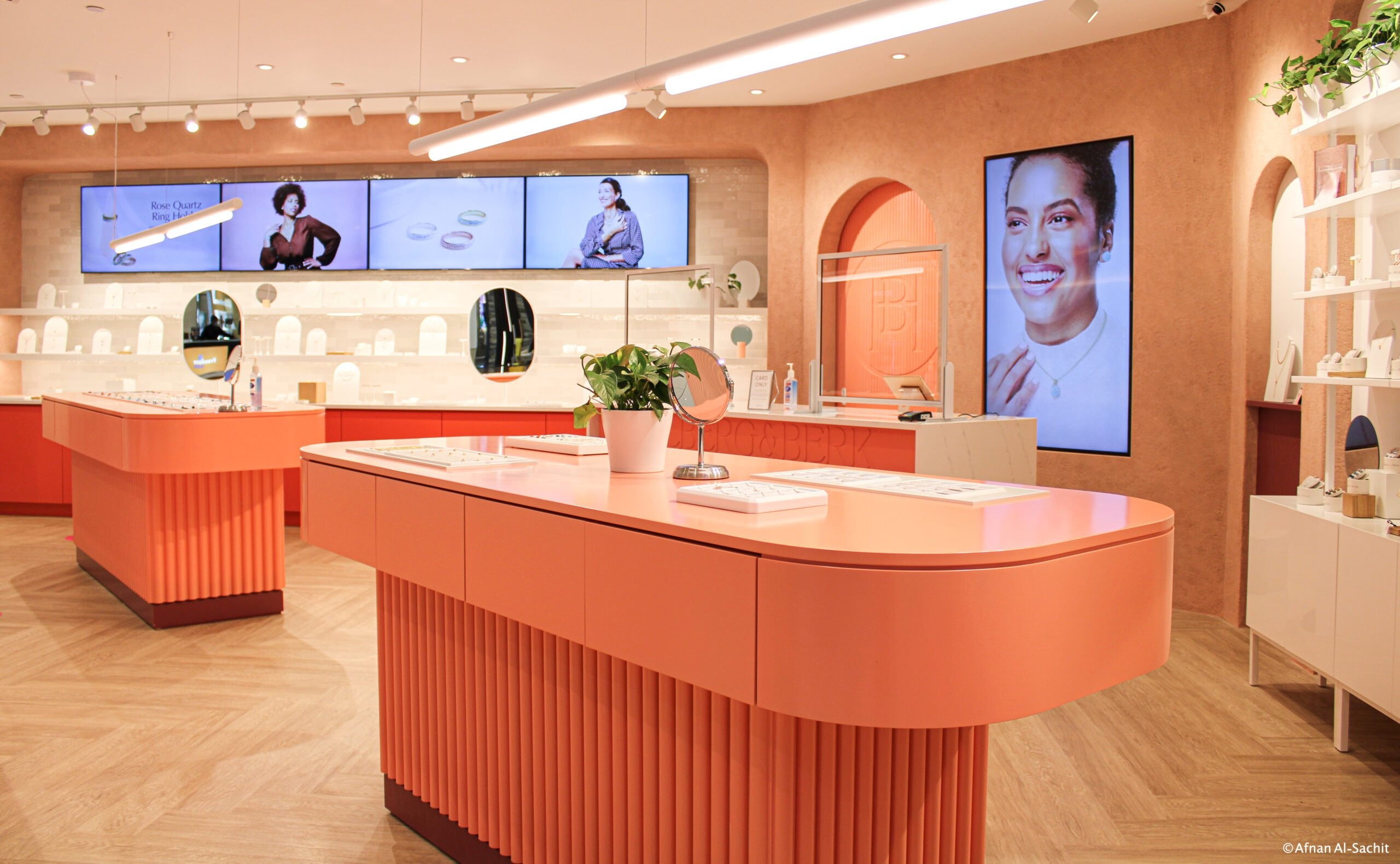
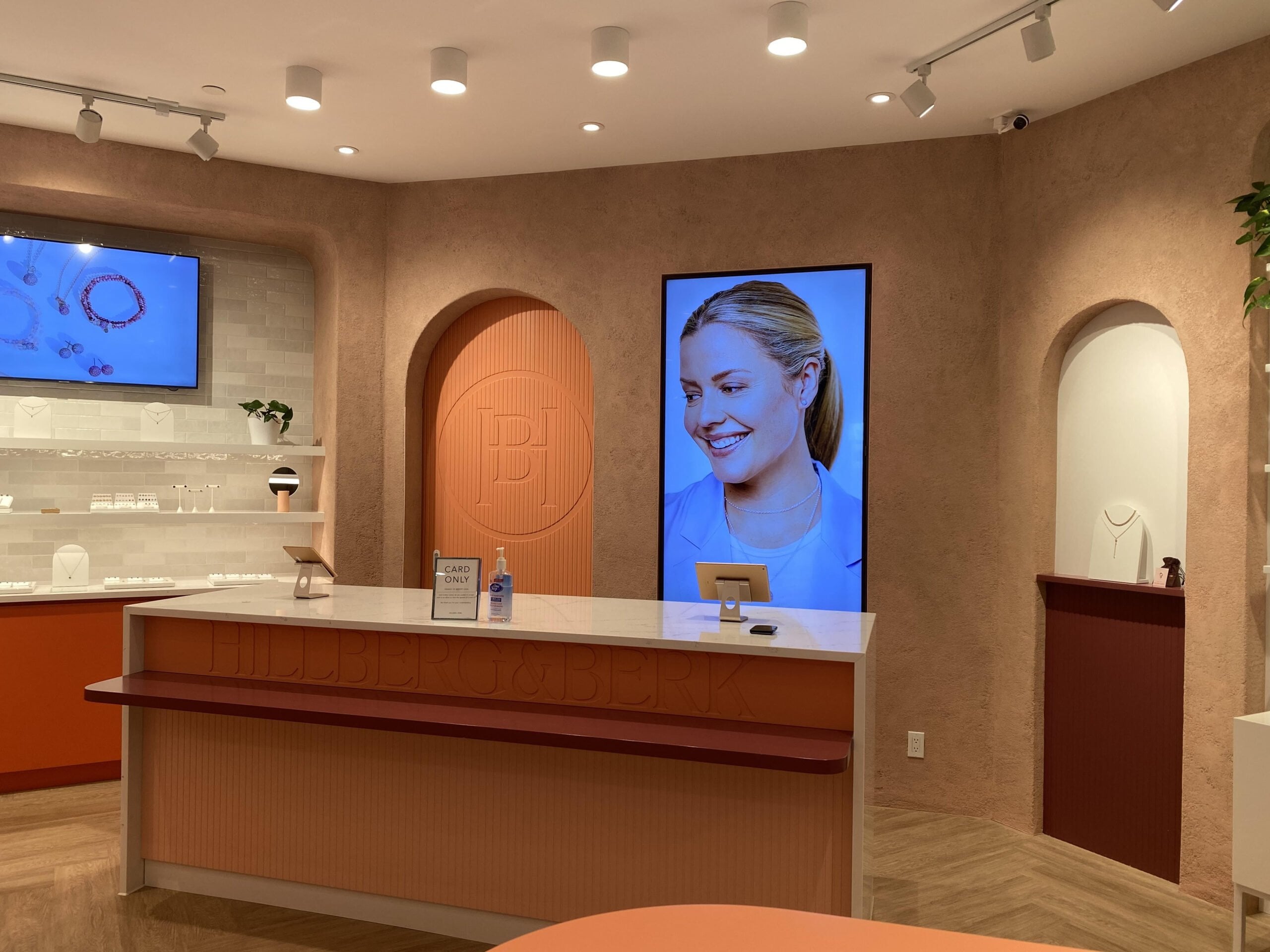
It’s important to note that the location is unique in that it’s the first store build that features the company’s new brand and store design. These projects were in process during the pandemic, with H&B being able to implement it for a post-pandemic roll-out.

Jeri Brodie of Aurora Realty Consultants negotiated the deal and represents Hillberg & Berk in terms of real estate needs in Canada.

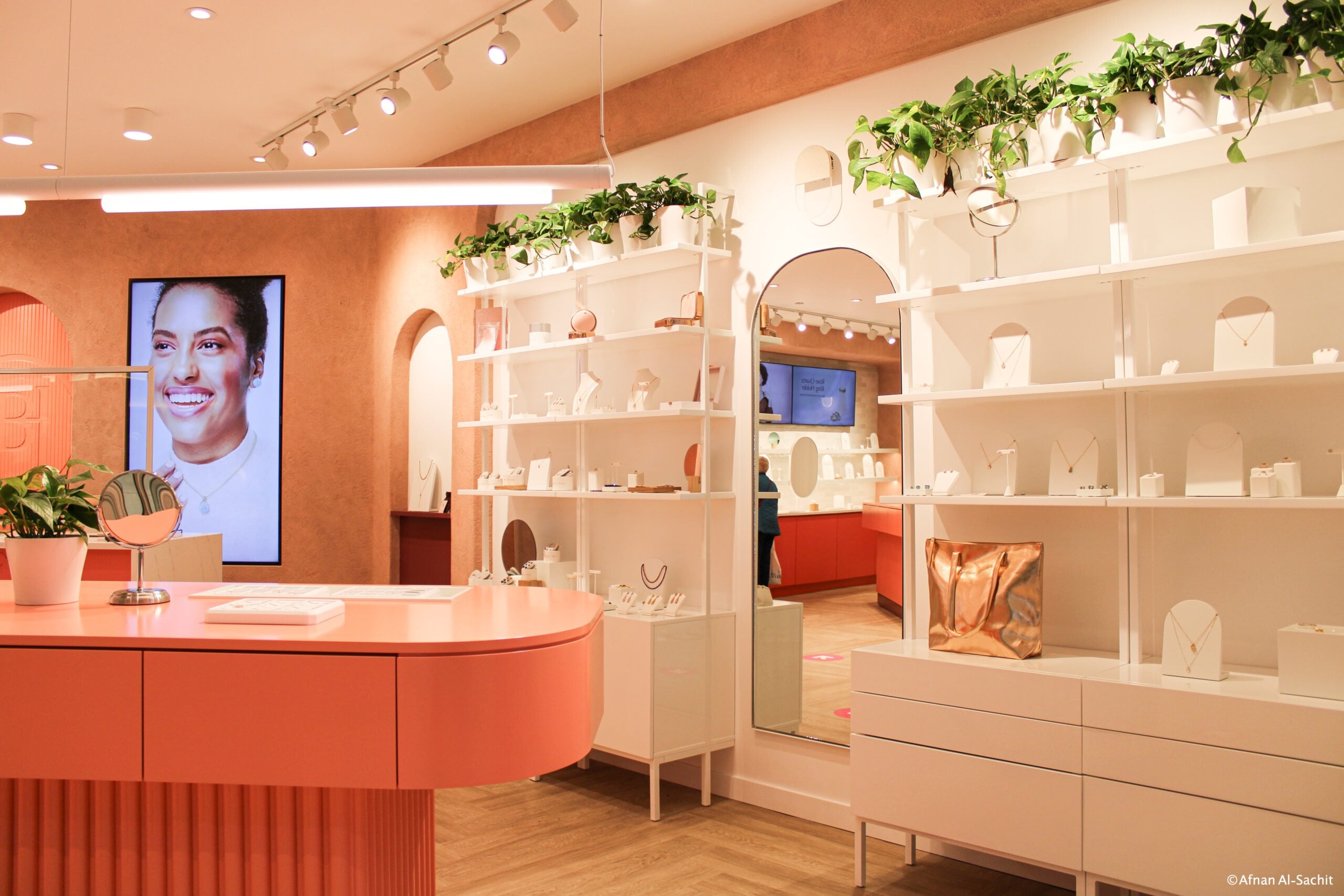
Hillberg & Berk Southcentre Mall (Image Hillberg & Berk)

The stores act as a community hub for clients, bringing together the personality and design of a recognizable brand with an added element of empowerment and expression.

We’ll be working with H&B Founder Rachel Mielke and her team on a number of announcements, including multiple new West Coast stores that will be coming in 2021 and 2022.

This is in addition to having Rachel as a guest on a future The Weekly Podcast, which will see Craig sit down with the H&B founder and talk about her story.

Pandemic Mental Health Crisis Hits the Canadian Retail Industry: Analysis

As cities and communities in provinces and territories across the country continue with gradual progress toward a full reopening, retailers and other businesses are busy fine-tuning their environments as they welcome more eager shoppers back into their physical spaces. With the reopening, which has been awaited patiently by retailers and consumers alike for more than 16 months now, there comes an anticipation and excitement, perhaps even exhilaration for some, at the prospect of returning to society as we knew it; to once again socialize, engage and enjoy the full value of community. However, as those operating within the industry prepare to ramp up their efforts in order to provide the unique and inspiring experiences that brick-and-mortar retail is known for, it’s being suggested in many circles that special attention ought to be paid to the frontline retail employees who support the execution of those experiences and the ways in which their mental health may have been negatively impacted by the strains and pressures of the pandemic period.

“There is no doubt that the pandemic has taken its toll on employees working across a variety of industries, including retail frontline workers,” recognizes Katharine Coons, National Workplace Mental Health Specialist at the Canadian Mental Health Association (CMHA). “While many were able to quickly shift to a remote work environment virtually overnight, retail remained open which had a profound impact on employee mental health and wellbeing. We still don’t fully understand all the factors that are at play because the retail industry is still being impacted. We’ll have to wait for research to come out as soon as these unique and challenging times pass. The research we’ve seen at the CMHA so far suggests that fears and risk of contracting the virus, job instability and lack of permanent work, uncertainty and the unknown, isolation and customer demands have all played a role in having a negative impact on the mental health of retail frontline workers.”

Mental health on the decline

Although, as Coons points out, there is very little in the way of research and surveys that have been conducted and completed around the impacts of the pandemic on frontline retail employees, preliminary polling data concerning the impacts on those living in Ontario – perhaps the hardest hit province in the country – provides a glimpse into the severity of the issues concerning the mental health of both in-store and office employees. Commissioned by the CMHA, Ontario Division, numbers released in March of this year show that only a third of Ontarians (35 percent) consider their current state of mental health as ‘very good’ or ‘excellent,’. This represents a significant decrease from 52 percent as recorded in May of 2020. In addition, nearly 80 percent of Ontarians now believe we’ll be in a serious mental health crisis post-pandemic, up from 66 percent in August of last year. The poll highlights the significant effects that feelings of isolation and loneliness have had on people with 36 percent of Ontarians saying they’re experiencing very high or high stress (up from 30 percent in August), 35 percent feeling very high or high anxiety (up from 30 percent in August) and 17 percent admitting to always or very often feeling depressed (up from 13 percent in May).

“Employee mental health has long been one of the most important and common issues facing workplaces,” asserts Coons. “Every week at least 500,000 Canadians miss work due to mental illness. We all bring our mental health to work with us, we can’t just leave our concerns at 9 and pick them up at 5. The pandemic has, however, helped push mental health into the spotlight. It’s no longer a nice-to-have but a need-to-have for organizations. According to CMHA research conducted with UBC 41% of people in Canada say their mental health has eroded since the onset of COVID-19. And we’ve also seen a sharp increase in suicidal thoughts and feelings.”

Impact on retail employees

This presents an obvious challenge for everyone going forward given the fact that many people have been away from their jobs or out of the workforce altogether for a year or more. And, combined with further impacts of the pandemic that have helped accelerate a shift in shopping and purchasing behaviour toward online channels, changing the means by which retailers provide their product and services to the customer, the roles and responsibilities of many have changed in their absence. This factor, along with many others, says Suzanne Sears, President of Luxury Careers Canada and retail staffing expert, are set to precipitate a massive challenge and potential conflict that retailers will need to overcome quickly if they are going to succeed through to a post-pandemic world.



“Perhaps the most detrimental result of the pandemic on the workforce is the working relationships that have been damaged,” she says. “People have lost friends who were terminated during the pandemic. And as we continue to reopen, new hires are taking their places. When people are hired and onboarded outside of the view of current employees, when there’s this kind of disruption, there’s a tendency for them to feel uncertain and to become disconnected. It can lead them to question their value within the organization and whether or not they’re working the right job for the right company. So, they’re coming back into the workforce with disrupted relationships while being required to develop new ones, leading them to feel incredibly insecure. In addition, job descriptions are changing and evolving. So, in many cases, the job that someone was originally hired for either doesn’t exist or has changed so dramatically that those impacted are wondering whether they even want to work in those roles. These factors are posing a huge problem that retailers need to find a solution for in a hurry.”

Communication and compassion

Sears goes on to explain that there are other emotions that employees might feel as a result of their perceived isolation and disconnection. Many will devolve into anger and resentment, she says, emotions triggered by sentiments of abandonment which can manifest in many ways through their behaviour and performance. The potential fallout can be disastrous, presenting impediments to the satisfaction and further development of an employee, stunting the efficiency of the retailer. It’s something that organizations need to address, making it a priority when reopening to employees. In fact, according to Sears, it’s going to be critical that retailers do so, and in a thoughtful and compassionate manner, in order to quell the uncertainty and resentment that could be their ultimate undoing.

“When COVID happened, a lot of people were either laid off or were forced to work from home in an unorthodox environment, away from their peers and the resources that they’ve become used to,” she says. “In many cases, those who have been laid off have received very little communication from their employer during this time. But, as they’re called back to the workplace, employers are going to expect loyalty, hard work and all of the other things that they truly haven’t earned from them. the cost here is an angry employee. And when there’s anger in retail, it expresses itself in many ways. A lot of it is passive aggressive where individuals will refuse to accept the workload or will do their job with intentional sloppiness and lack of care. It can also result in loss prevention issues in which the individual might be ‘getting even’ because they feel that they haven’t been treated right. So, there’s a lot of emotion that needs to be discussed and blotted out. Retailers need to deal with this issue upfront, which is something that they haven’t traditionally been good at doing. They’ve often taken the stance that it’s easy to replace minimum wage and lower paid people. But that’s not the case anymore. Companies need to speak to their employees and perhaps consider hiring some social workers and mental health professionals in order to do some one-on-one investigations and polling to find out how people are really feeling.”

Return to the retail workplace

It’s a notion that’s also subscribed to by CMHA’s Coons, agreeing that open and transparent communication between employers and their returning staff is going to be vitally important in their attempts to properly and effectively reintroduce employees to their physical spaces. And, she goes one step further, suggesting that retailers and other businesses should developed formalized ‘return-to-work’ plans, involving input from employees, in order to deal with some of the issues that are sure to arise upon the return to ‘normal’ in many workplaces.

“The return to workplace following COVID-19 will require a great deal of communication between managers and employees to ensure that everyone can be happy and healthy, while balancing the needs of workers and of the workplace,” asserts Coons. “Having a clear return-to-work plan that includes information on accommodations, should employees need them, is a good first step. Engaging your employees in the creation of this plan may also be helpful in opening lines of communication, increasing transparency in the planning process and allowing employees to feel included and heard. The back to workplace plan and ‘re-onboarding’ process should be based on the physical and mental wellbeing of employees and consider psychological health and safety. Have an open and honest conversation with the employee one-on-one and discuss their concerns. It is understandable that people will feel anxiety with this return to the workplace and ongoing changes. And it can be helpful to validate that to your employees.”

Opportunity to support

Coons also points out that because many employees spend most of their lives at work, employers have an incredible opportunity to support and nurture their positive mental health. Aside from it of course being the right thing to do, she says, organizations who invest in the mental health of their employees by creating a psychologically healthy and safe work environment can expect to see a positive return on their investment, ensuring that they avoid many of the negative ramifications associated with a dissatisfied and disgruntled workforce

“The writing is on the wall,” she says. “Research has shown that there are many positive benefits when employers invest in employee mental health and many risks when they do not. Higher turnover rates, higher long-term health care and disability claims, reputational risk, increased absenteeism and presenteeism are some of the many risks that come from a psychologically unsafe work environment. In contrast, when we work in a healthy, psychologically safe workplace, employment can have positive impacts on employee mental health including higher employee retention and attraction, improved employee engagement, more creativity and innovation and enhanced productivity.”

Levers and resources

To assist retailers in their efforts to create for their employees the psychologically healthy and safe work environment that Coons refers to, there are a variety of tools and resources that they can leverage. The National Standard for Psychological Health and Safety in the Workplace is a resource for organizations that provides a set of voluntary guidelines for organizations to follow. And, the CMHA offers training on the Standard and a variety of customized organisation-specific training and speaking sessions, as well as its nationwide Not Myself Today program – an evidence informed program filled with physical and virtual materials designed to help employers support the positive mental health of their employees, while also providing opportunities for employees to learn skills in order to support their own mental health. Along with available resources offered by associations like CMHA and others, Sears calls attention to some other initiatives that retailers can undertake that will help complement the re-onboarding process that Coons references and ensure a smoother transition back into the physical workspace.

“Companies, particularly those with larger offices and workspaces, should create a ‘buddy’ system so people aren’t returning to work alone,” she recommends. “They should team people up and provide the support that will be required. Many people have been working from home for the past 16 months. It can be overwhelming to return to an office of up to 100 people. And they should also consider arranging small social events on the side, like lunches for six, to help maintain a strong social program within the company. In addition, organizations, whether you’re talking about in-store or office talent, are going to need to offer their employees greater flexibility with respect to hours worked, days worked and time away. The pandemic has created a new social and workplace dynamic. Retailers have got to find the levers that are going to allow them to transition their returning employees in a healthy and positive way.”

Validating value and importance

It’s clear that, as retailers and other businesses across the country continue their staged reopening, the value and importance of the retail workforce has never been greater. Helping to deliver the retail experience, executing on a company’s vision and elevating its reputation among visitors, the retail employee is imperative to everything that a brand does and all that it intends to do. As a result, an effective return to their jobs is essential in order for retailers to reopen with success. But, despite the resources and levers that are utilized to do so, Sears underscores the fact that a healthy and positive culture and the importance of re-onboarding retail employees in the best possible way has to come from the top.

Canadian Company Flow Water Commences Trading on the Toronto Stock Exchange

Toronto-based Flow Beverage Corp. began trading common shares on the Toronto Stock Exchange (TSX) on Wednesday under the ticker symbol “FLOW”. It’s a significant milestone for the company that has been expanding rapidly with its various flavours of water in eco packaging. 

CEO Maurizio Patarnello and Flow founder and Executive Chairman Nicholas Reichenbach virtually rang the TSX opening bell at 9:30 am. ET on Wednesday. 

Reichenbach stated, “Today’s listing of Flow as a public company on the TSX is the result of the last seven years of incredibly hard work and dedication by the Flow team, the enduring support of our loyal shareholders, numerous celebrity influencers and brand ambassadors, our retail partners, and our incredible customers. It’s a very exciting time for Flow as we are now fully capitalized for our next stage of growth. We look forward to welcoming a host of new investors to the Flow family who support our mission to make products that are healthier for our customers and the planet.”

Patarnello said, “Flow’s entrance into the public markets is a major milestone that will help us focus on our growth strategy. We will continue investing in expanding distribution, increasing velocity, and our burgeoning direct-to-consumer model. We aim to increase brand awareness and establish Flow as a leading premium ‘better-for-you beverage’ brand in North America. Flow has tapped directly into the modern consumer’s desire for high quality sustainably packaged water and functional beverage products. The wave of support we have been receiving from our shareholders, retail and distribution partners, and our consumers, is further encouragement that we can take Flow to the next level”.

Flow is one of the fastest-growing premium water brands in North America and has grown its retail distribution rapidly. The company has fans such as musical performer Sean Mendez. 

Flow’s alkaline spring water is offered in original unflavoured and a range of organic flavours in sizes ranging from 330-ml to 1-liter. Using artesian spring sources, Flow products contain naturally occurring electrolytes and essential minerals. Its original and flavoured water products have an alkaline pH. Flow recently introduced a new line of collagen-infused waters with natural flavours.

Nicholas Reichenbach founded Flow in 2014 with a purpose to “bring wellness to the world through the positive power of water.” Flow set out to be a sustainable brand, packaging its products in up to 75% renewable-resource-based Tetra Pak™ cartons utilizing sustainable operations.

Flow beverage products are available online at flowhydration.com, and are sold at over 20,000 stores across Canada and the US. 

For more information, Flow Beverage’s Annual Information Form, MD&As, and further filings are available on SEDAR at: http://www.sedar.com/.

Canadian Retail News From Around The Web For July 15th, 2021

Canadian Retail News From Around The Web

Top Stories: National

Central/Eastern Canada News

Western Canada News

Gucci to Expand and Renovate Hotel Vancouver Store into Flagship

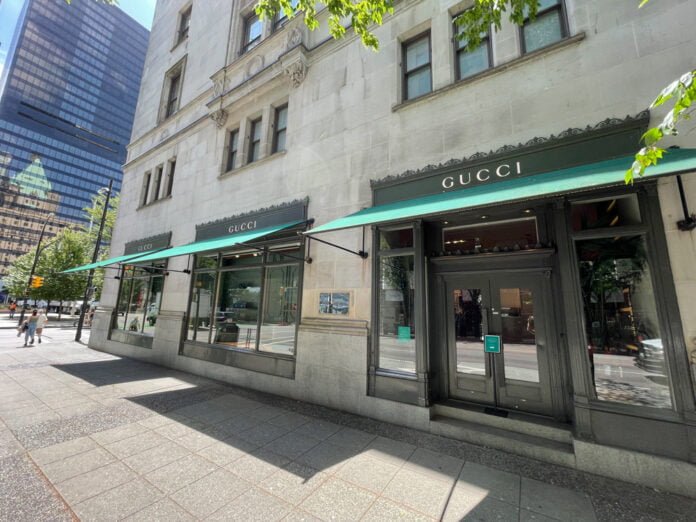
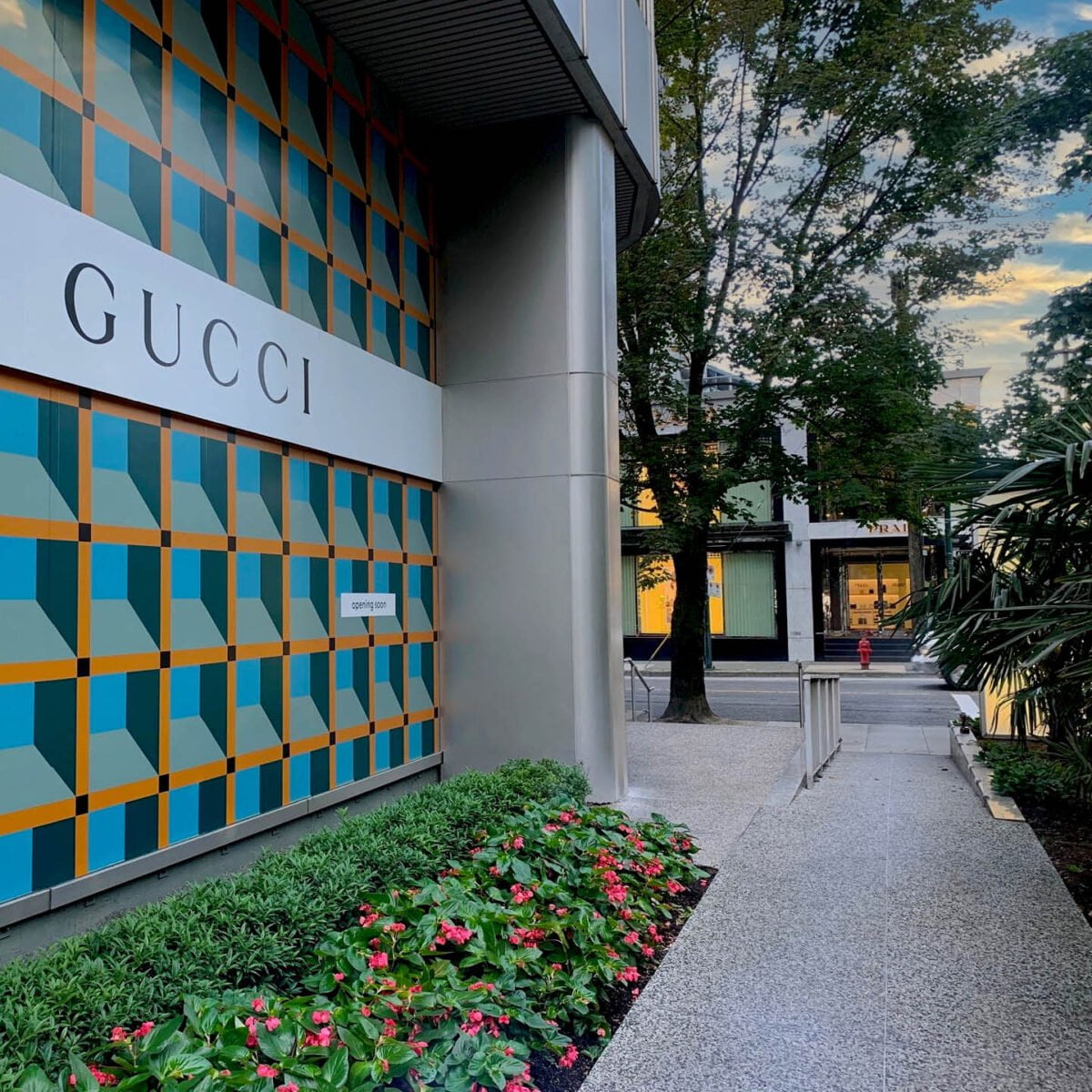
Gucci exterior at Fairmont Hotel Vancouver (June 2021)
Gucci exterior at Fairmont Hotel Vancouver (June 2021). Photo: Lee Rivett.

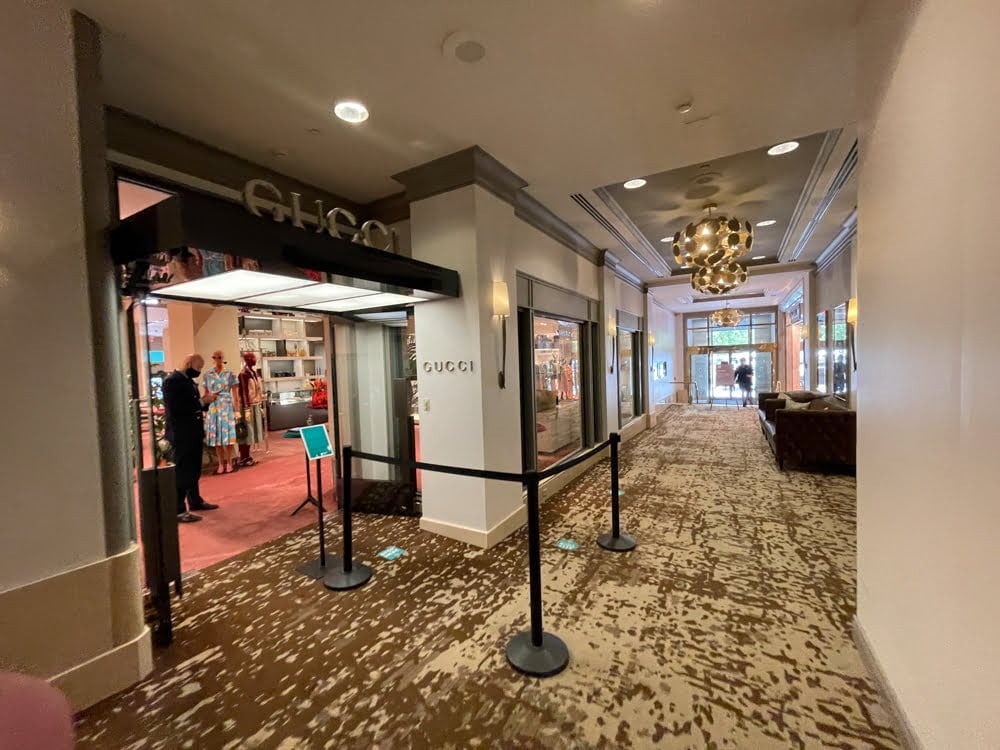
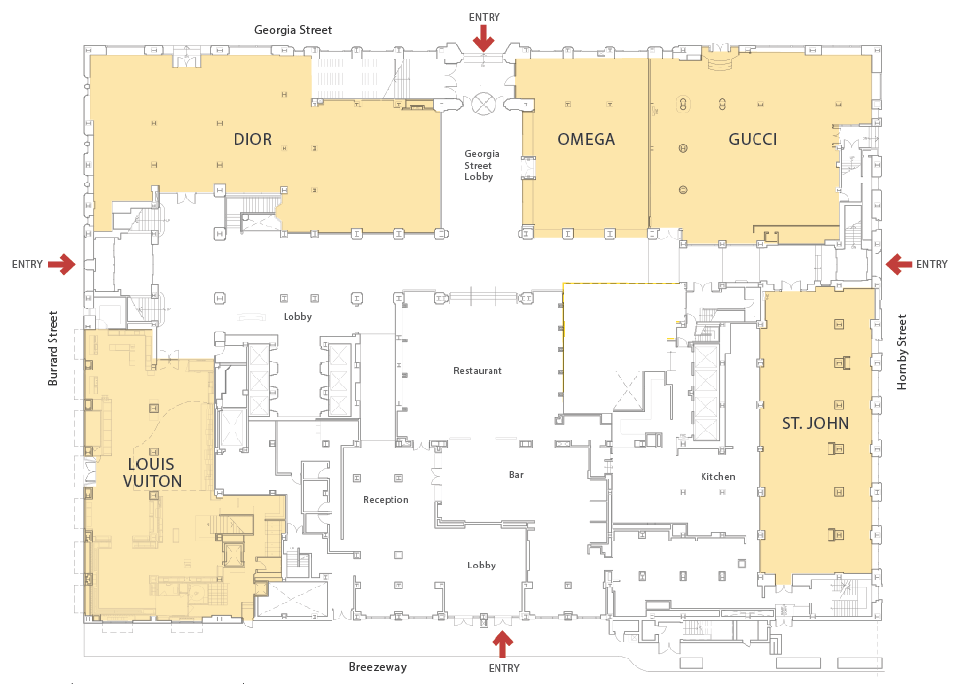
Sources say that Italian luxury brand Gucci will renovate and expand its standalone downtown Vancouver store at the Fairmont Hotel Vancouver by annexing an adjacent space currently occupied by an Omega jewellery store. Gucci will relocate to a temporary location nearby at the northeast corner of Thurlow and Alberni Streets for the construction. 

The current 3,900 square foot Gucci store, which opened in the Hotel Vancouver in 2006, will annex the 2,300 square foot Omega store next to it to create a flagship-sized 6,200 square foot location to house Gucci’s entire collection of ready-to-wear for women and men as well as bags, accessories, footwear, jewellery and other categories. The current Gucci store does not carry the men’s ready-to-wear line which is available nearby at Vancouver’s Holt Renfrew store. 

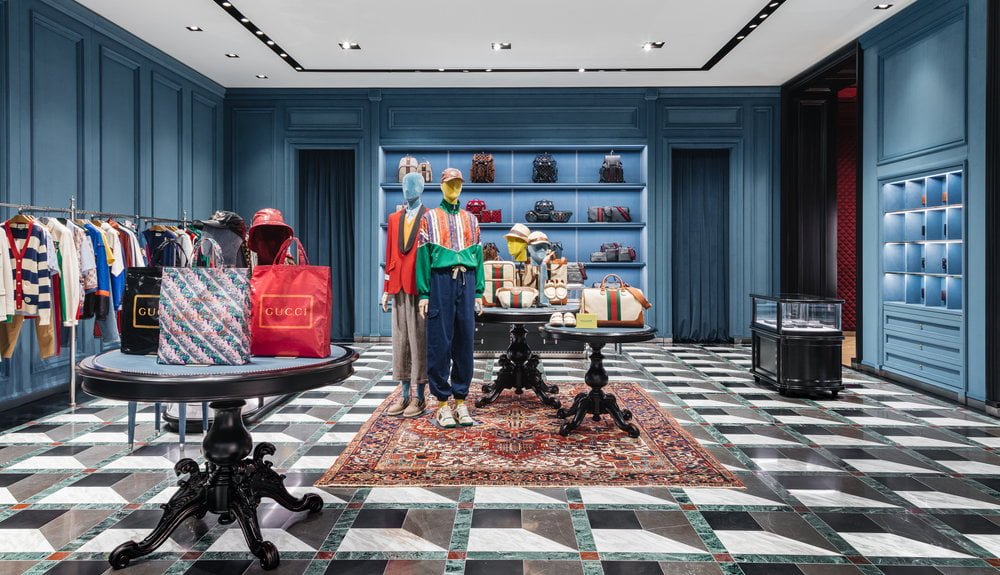
The expanded Hotel Vancouver store will feature Gucci’s most updated store concept that was recently rolled out with new Gucci stores at West Edmonton Mall in Edmonton and a renovated Bloor Street flagship store in Toronto. Interiors will be plush with velvet, marble and wood. 

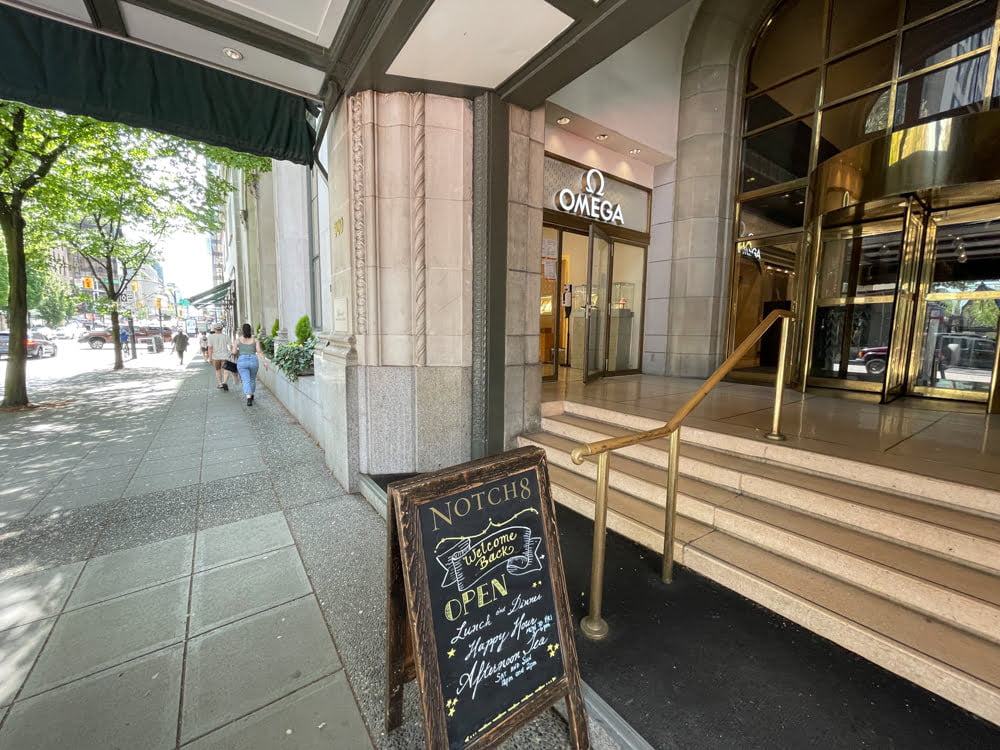
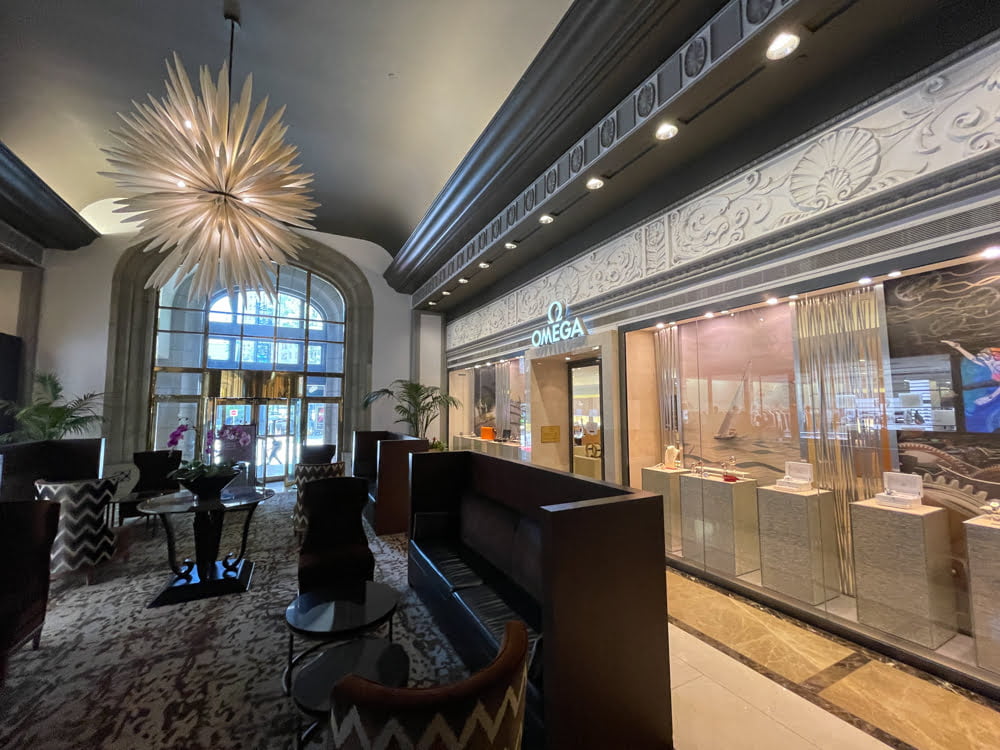
OMEGA exterior at Fairmont Hotel Vancouver (June 2021)
OMEGA exterior at Fairmont Hotel Vancouver (June 2021). Gucci will be taking over the space in early 2022 according to sources. Photo: Lee Rivett
OMEGA interior entrance at Fairmont Hotel Vancouver (June 2021)
OMEGA interior entrance at Fairmont Hotel Vancouver (June 2021). Photo: Lee Rivett.

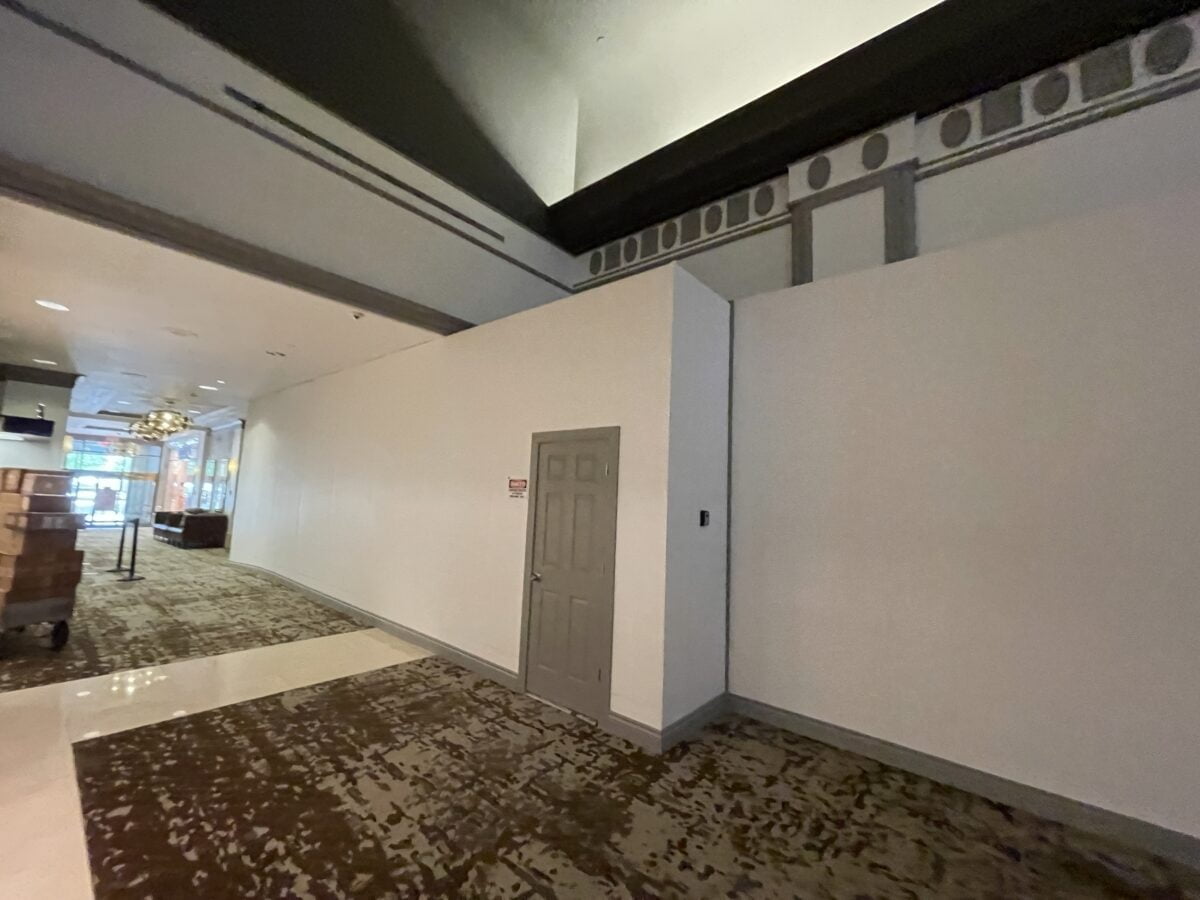
Watch and jewellery brand Omega is relocating its Hotel Vancouver store within the hotel podium to an interior space that will lack a street-front presence. The Omega store is currently located in a prime location with frontage facing the hotel’s West Georgia entrance and street with a dedicated exterior door. Omega opened at its current location before the 2010 Vancouver Olympics as a pop-up and was expanded to become a permanent location because of its success. 

GUCCI interior entrance at Fairmont Hotel Vancouver (June 2021)
GUCCI interior entrance at Fairmont Hotel Vancouver (June 2021). Photo: Lee Rivett.
Older lease plan of the retail main floor of the Fairmont Hotel Vancouver
Future Omega location within Fairmont Hotel Vancouver (July 2021).
Future Omega location within Fairmont Hotel Vancouver (July 2021). Photo: Lee Rivett.

Signage went up for a temporary Gucci location at 710 Thurlow Street in a retail space vacated several months ago by German women’s luxury fashion brand Escada. Mario Negris and Martin Moriarty of Marcus & Millichap negotiated the temporary Gucci lease deal. A building proposal shows that the retail base of the 1090 W. Georgia Street office tower where the temporary Gucci store is located will eventually be expanded to the sidewalk with about 8,000 square feet of retail space and a future tenant is not yet known. 

710 Thurlow Street. Photo: Martin Moriarty via LinkedIn

Gucci also has a presence at Holt Renfrew in Vancouver where it operates concession boutique spaces for women’s ready-to-wear on the upper level, a men’s boutique space downstairs in the men’s store as well as a bag and accessory boutique on the street-level of the Holt Renfrew store. 

Historically, Gucci has had a presence in Vancouver for decades in Holt Renfrew. A small boutique for bags and footwear operated in the former/smaller Holt Renfrew store at CF Pacific Centre in the 1990s and the brand expanded its presence to include ready-to-wear as Vancouver’s locals and tourists began increasingly purchasing luxury goods. Between 1985 and 1987 when Gucci had a lower price-point, the brand had a bag and accessory boutique in the Hudson’s Bay flagship store in downtown Vancouver at 674 Granville Street.  

Gucci – Toronto, ON – Holt Renfrew Yorkdale. Photo: Gucci

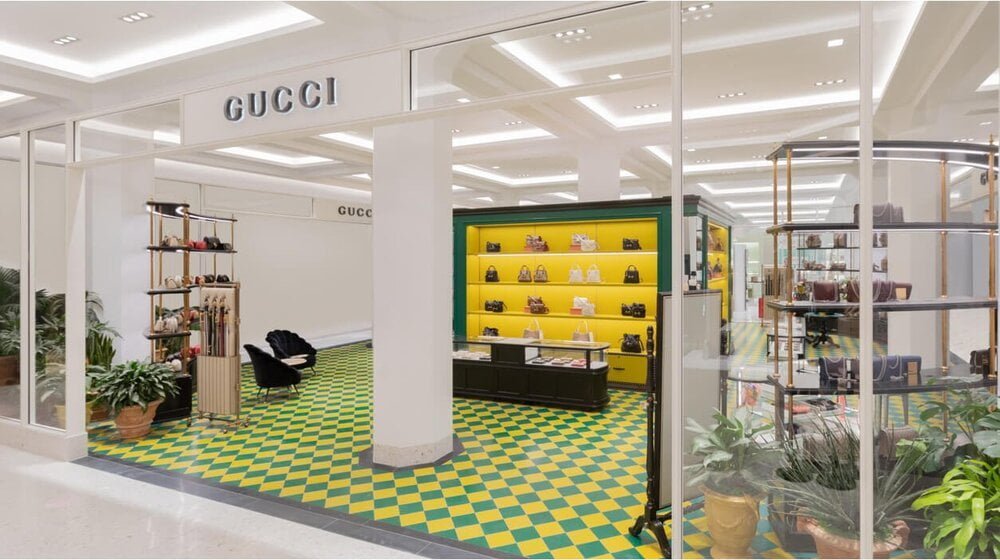
Gucci has been investing heavily in the Canadian market for several years. Most recently the brand opened a 5,000 square foot storefront at West Edmonton Mall, marking a milestone for North America’s largest shopping centre which has been adding luxury brand storefronts to the mix. Several months ago Gucci also renovated its 6,500 square foot flagship at 130 Bloor Street West in Toronto to reflect the brand’s most updated store design. Since 2019 Gucci has unveiled concession spaces for women, men, footwear and accessories at Holt Renfrew Ogilvy in Montreal — the accessory shop on the main floor features a unique green checkered floor pattern. In the summer of 2019 Gucci unveiled a stunning 6,000 square foot ‘world of’ concession at Holt Renfrew in Toronto’s Yorkdale Shopping Centre which to many would appear to be a standalone store, given its dedicated mall entrance. 

GUCCI bag/accessory boutique at Holt Renfrew Ogilvy in Montreal. Photo: Maxime Frechette

Gucci also has a presence at Holt Renfrew in Calgary where it has separate concession boutique spaces for women’s and men’s ready-to-wear and bags/accessories. At Square One in Mississauga, Gucci operates a bag/accessory concession with a facade facing onto the mall corridor. In Toronto, Gucci also operates a bag/accessory concession at the Nordstrom store at CF Toronto Eaton Centre. Gucci shoes and belts are also carried at Nordstrom and Saks Fifth Avenue stores in Canada.

In terms of off-price, Gucci also operates a large outlet store at Toronto Premium Outlets which opened in late 2018, coinciding with the closure of Gucci’s outlet store at Montreal Premium Outlets which operated for several years.

Gucci is one of the world’s leading luxury brands with billions of dollars in annual sales. Gucci was founded in 1921 and is now part of the Kering conglomerate of luxury brands. Gucci operates about 500 stores globally. In the United States, Gucci operates a network of standalone stores as well as boutique spaces in large-format/department stores such as Neiman Marcus, Saks Fifth Avenue, Bloomingdale’s, Nordstrom, and Macy’s (Manhattan store only).