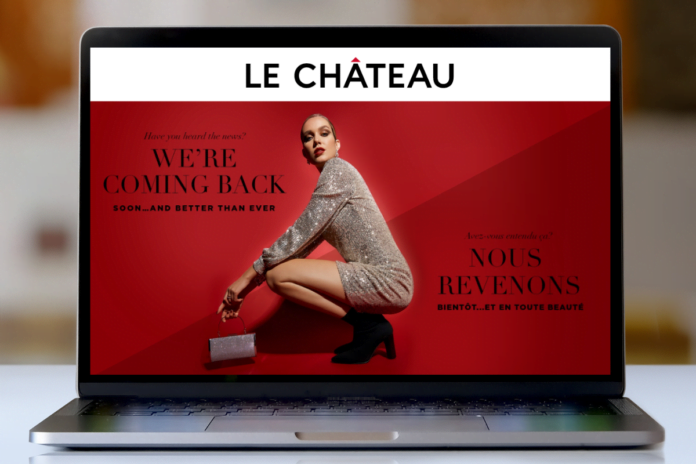
The Le Chateau brand is returning to Canada this month under new ownership. The iconic fashion brand was acquired by Montreal-based Suzy Shier over the summer. A new Le Chateau website will launch this month and in-store distribution for the brand will commence in the spring of 2022.
On Tuesday November 16, Suzy Shier will relaunch the Le Chateau brand online with a ‘Glamour capsule’ consisting of a range of dresses and other formalwear for women. The launch will be available on the newly launched lechateau.com website. In early 2022, the spring relaunch will be available in-person in select Suzy Shier stores in Canada.
It is currently unknown if Suzy Shier will launch standalone Le Chateau stores in the Canadian market. Suzy Shier operates a network of womenswear fashion stores across Canada.
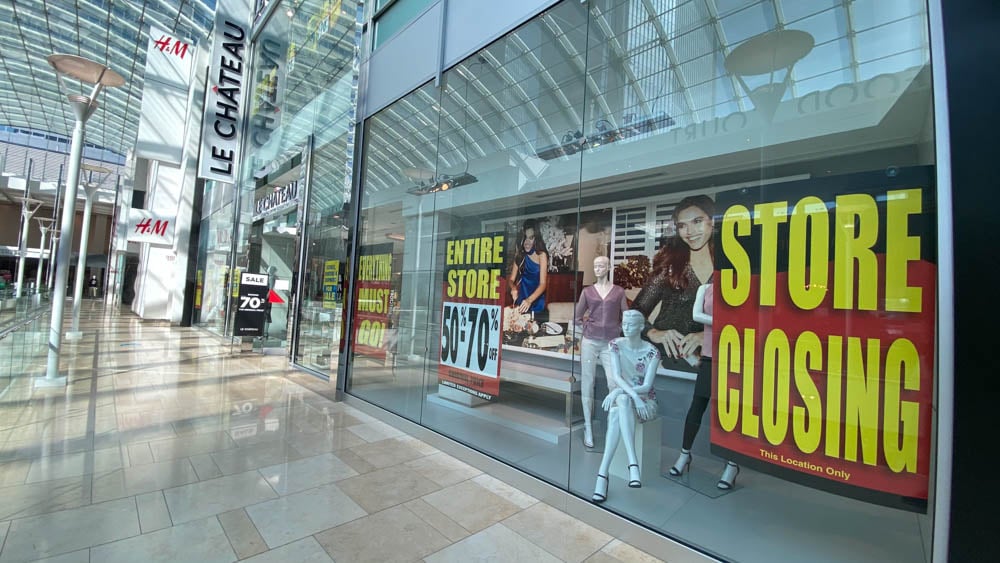
Le Chateau (Closing) at “The Core” in Calgary. Photo: Jessica Finch.
Retail Insider announced in October of 2020 that Le Chateau would be shutting all 123 of its Canadian storefronts after the 60-year-old retailer filed for bankruptcy protection. The COVID-19 pandemic was the final straw for the struggling retailer which had been attempting to turn its operations around.
Le Chateau was founded in 1959 in Montreal by Herschel Segal as a menswear store. In 1962 womenswear was added including European fashions from places such as Carnaby Street in London. It was the first to introduce bell bottoms to Canada and in its early years was considered to be a trendsetter. The company’s IPO on the Toronto Stock Exchange was in 1983. The company had closed about half of its stores since 2015. Last quarter saw the company turn its first profit in about 13 years. In 2019 we reported that Le Chateau had planned to expand into the United States through a new e-commerce site.
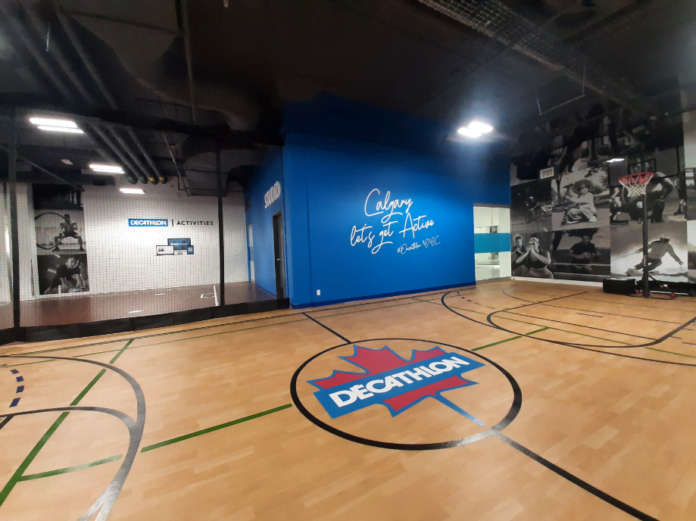
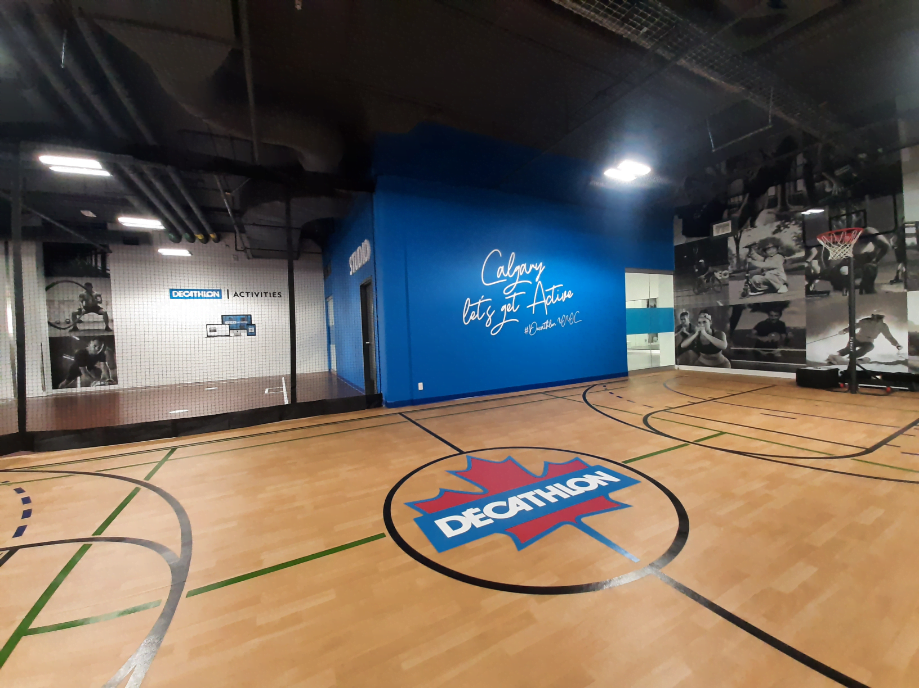
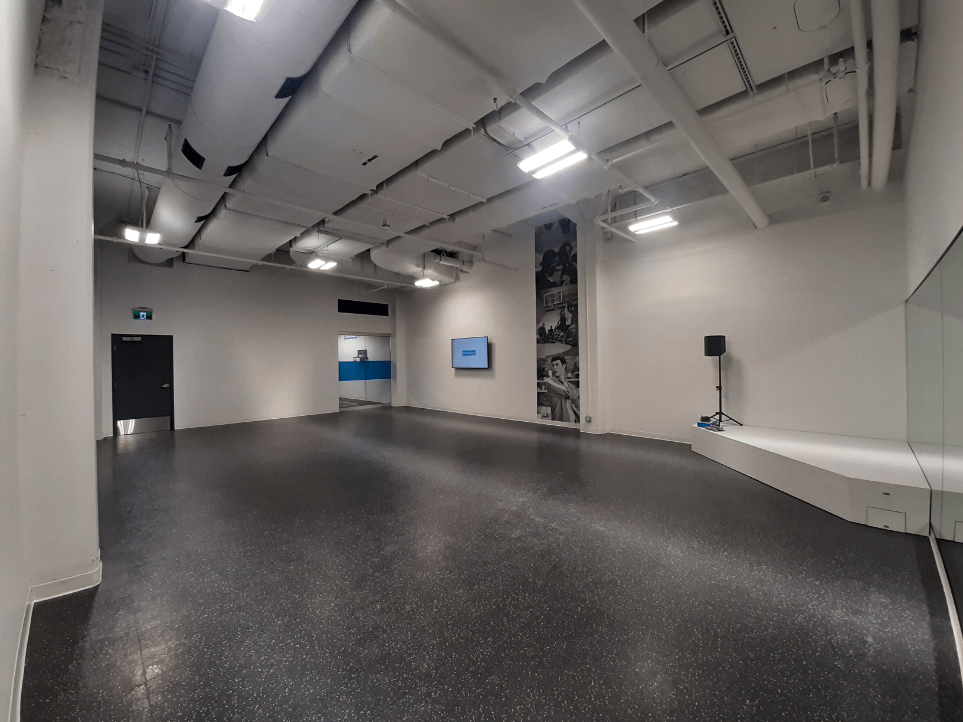
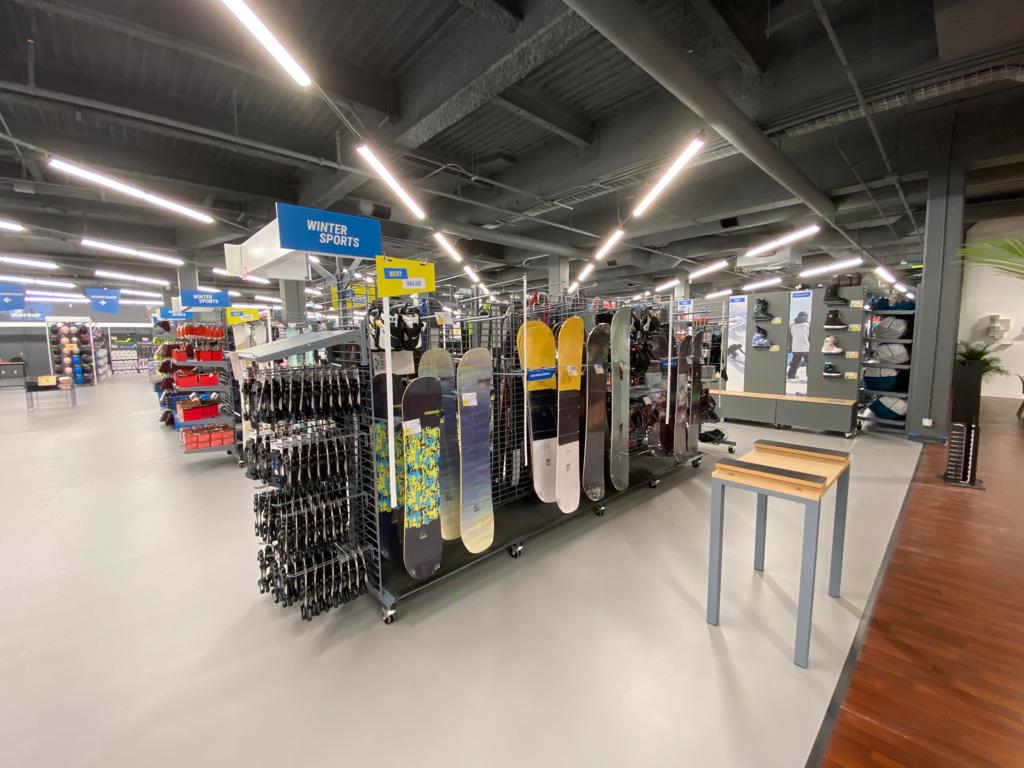
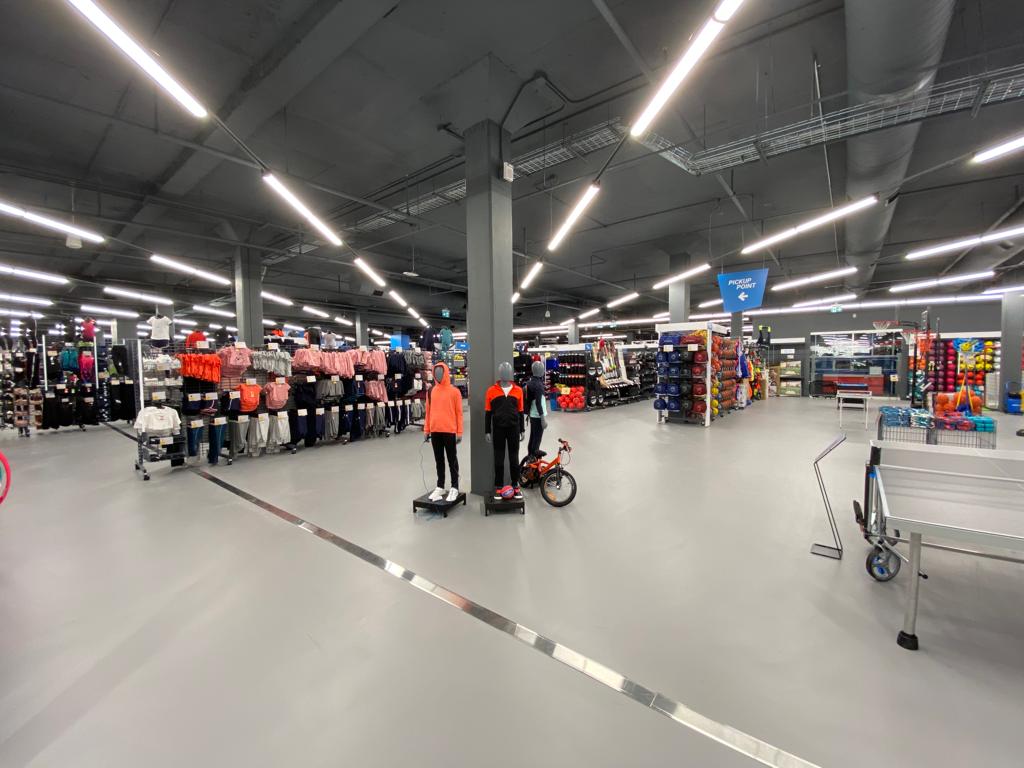
Decathlon Canada will be opening its first Western Canada store at Southcentre Mall in Calgary, with a grand opening scheduled for November 6th, 2021. The 63,000 square foot location is the 10th store and includes an additional 7,000 square feet for an automated warehouse featuring 27 robots.
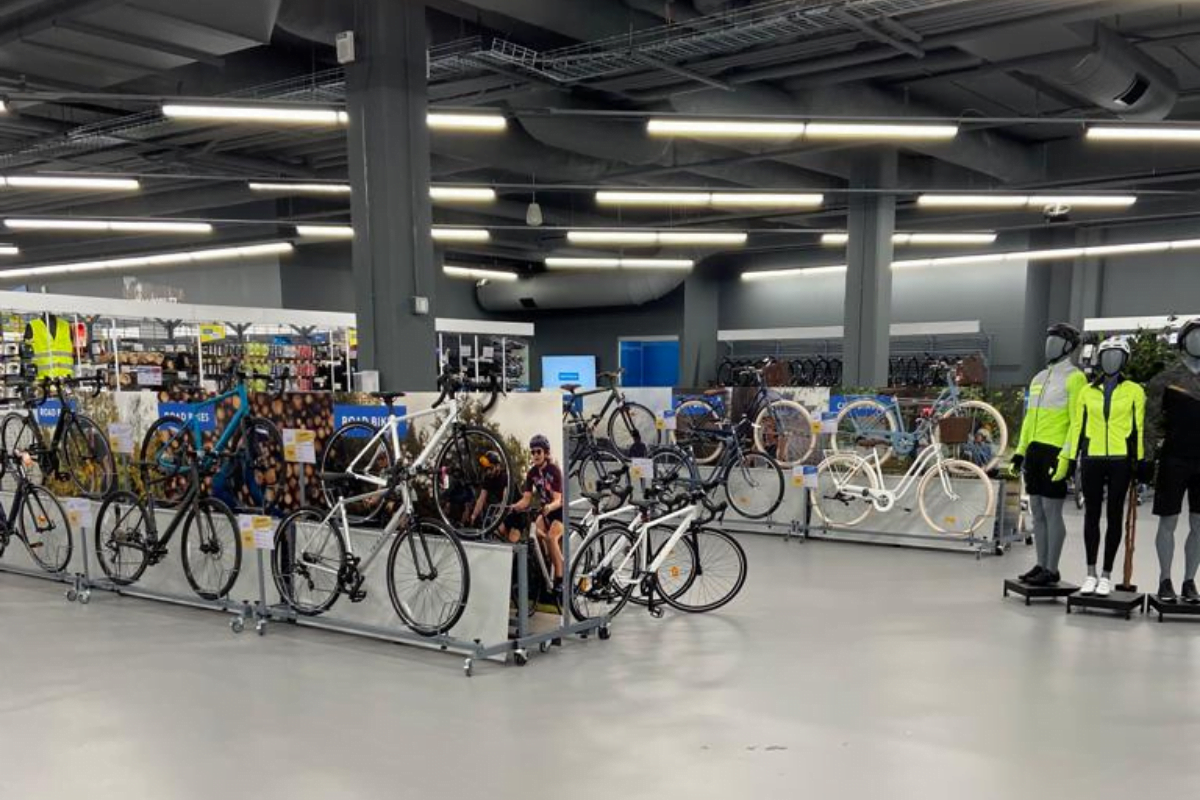
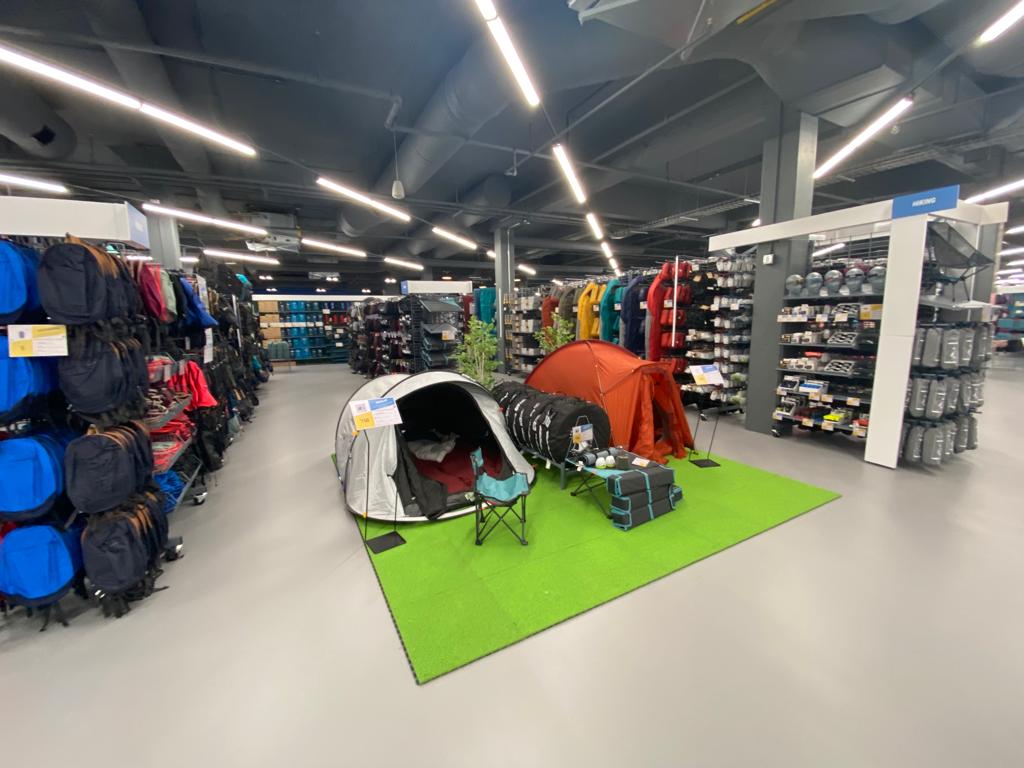
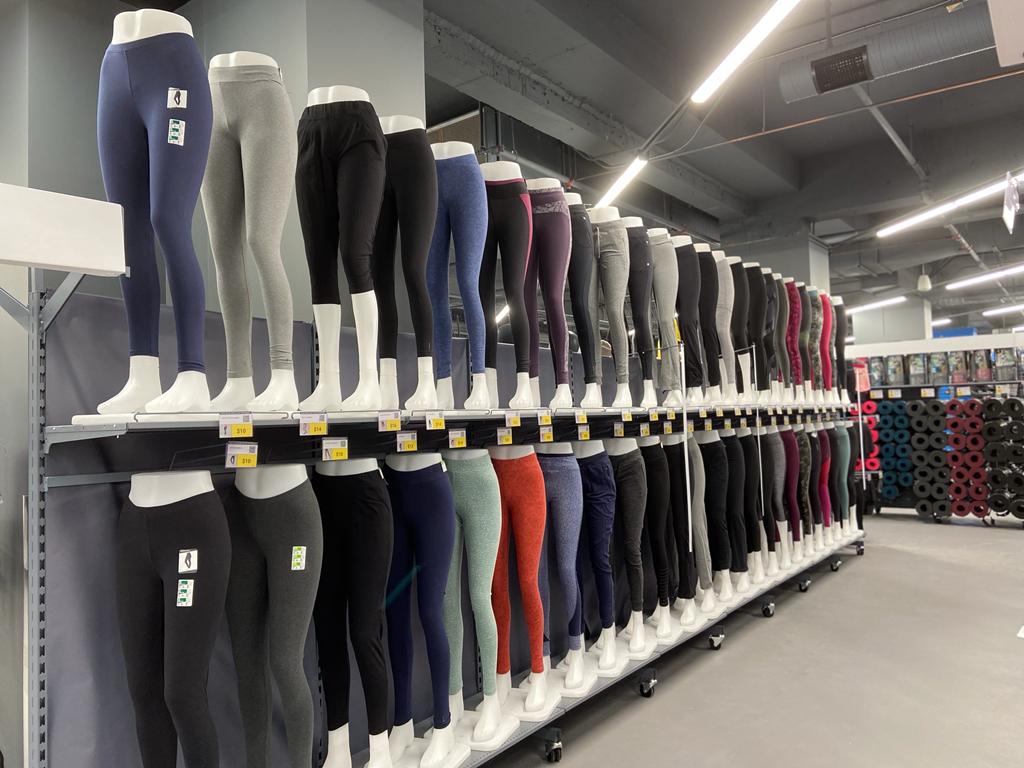
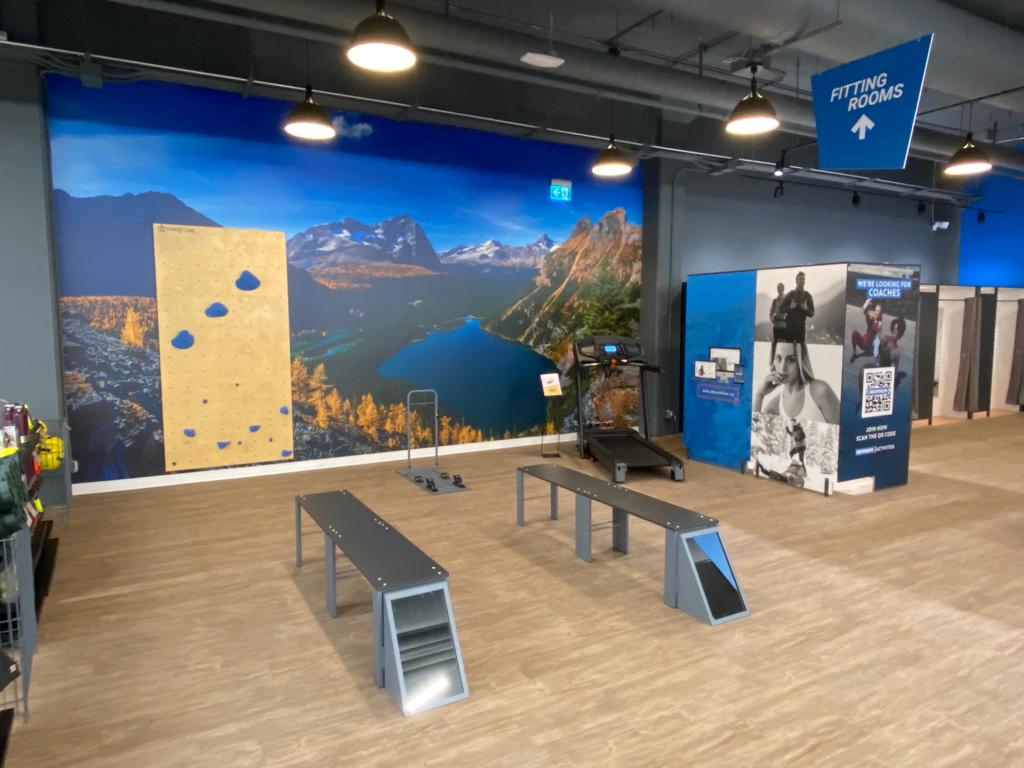
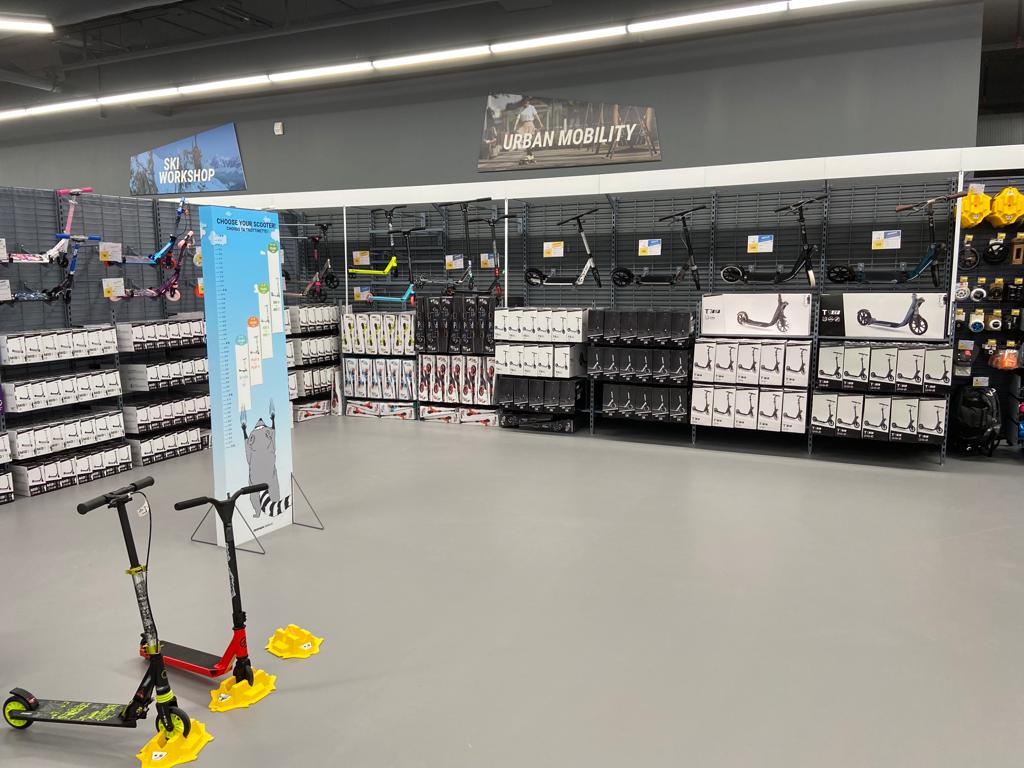
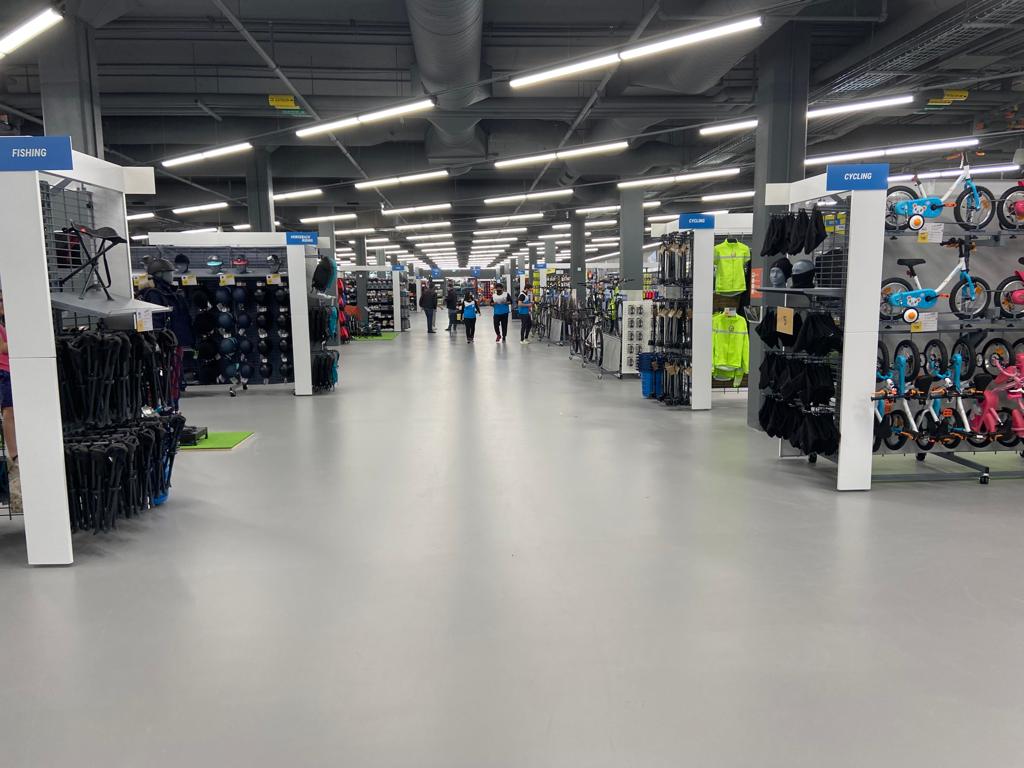
The Calgary location is unique in the chain for the sales floor layout, as the automated warehouse functionality has allowed the store to house one-third less physical inventory. The selling floor is set up for more product displays and showrooms of select products and categories, which will make the store more of a visual experience. Retail Insider covered the announcement of the store in June 2021.
Jason Bos
“The addition of Decathlon to the Southcentre portfolio is a significant milestone indicative of the economic growth currently taking place in our city,” says Jason Bos, General Manager, Southcentre Mall. “With Decathlon now open, the shopping centre is at 90 percent occupancy, and we are proud to introduce this first-to-market retail experience to the community as we continue to establish Southcentre as a first-class shopping destination. We hope Calgarians will enjoy getting to know Decathlon, not only as a sporting goods retailer, but also as a leader in innovation, technology and sustainability.”
Decathlon Calgary will be offering more than 7,000 products featuring over 65 sports and activities. In addition to hiking and outdoor, cycling, winter and summer sports, team sports and running – the brand will have products for horseback riding, fishing, dance, archery, racquet sports and more.
Image: Decathlon Calgary Image: Decathlon Calgary
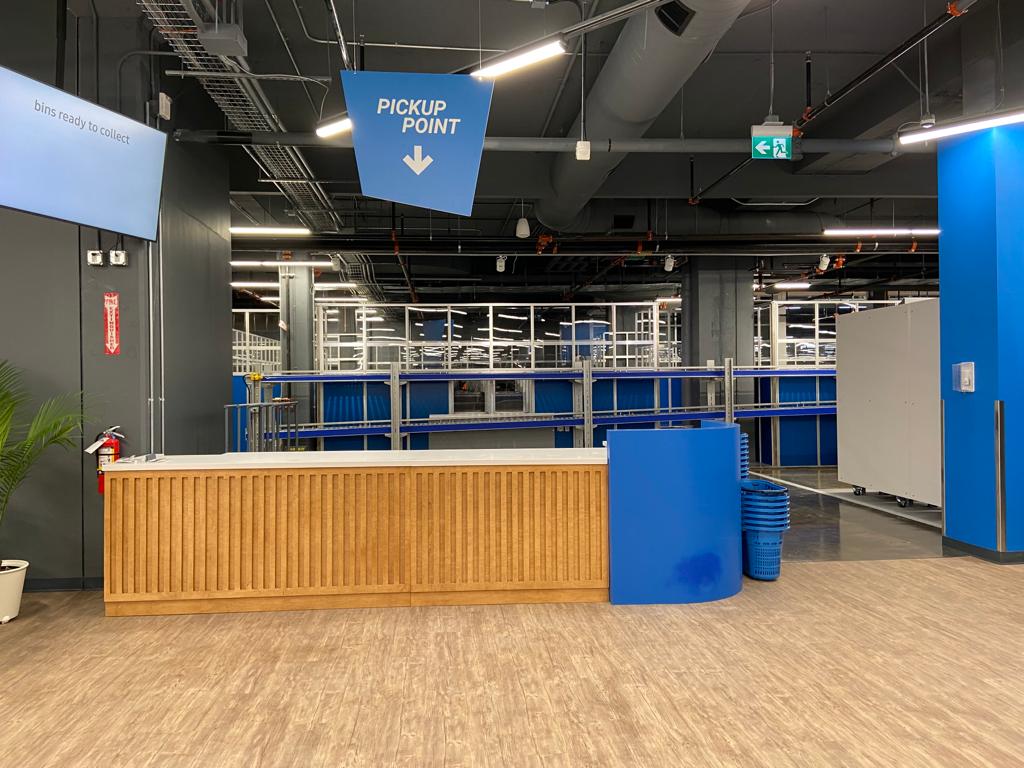
The automated warehouse in the store will allow for a redistribution of staffing, focusing more on the customer-facing roles and creating a highly experiential retail environment. Systems allow customers to request items from the warehouse and have them available for pick-up at a designated location in the store. This will be accomplished through a store collaborator or via a dedicated app.
The 27 robots will be staffed by a team of 6 and can be viewed from two in-store viewing locations.
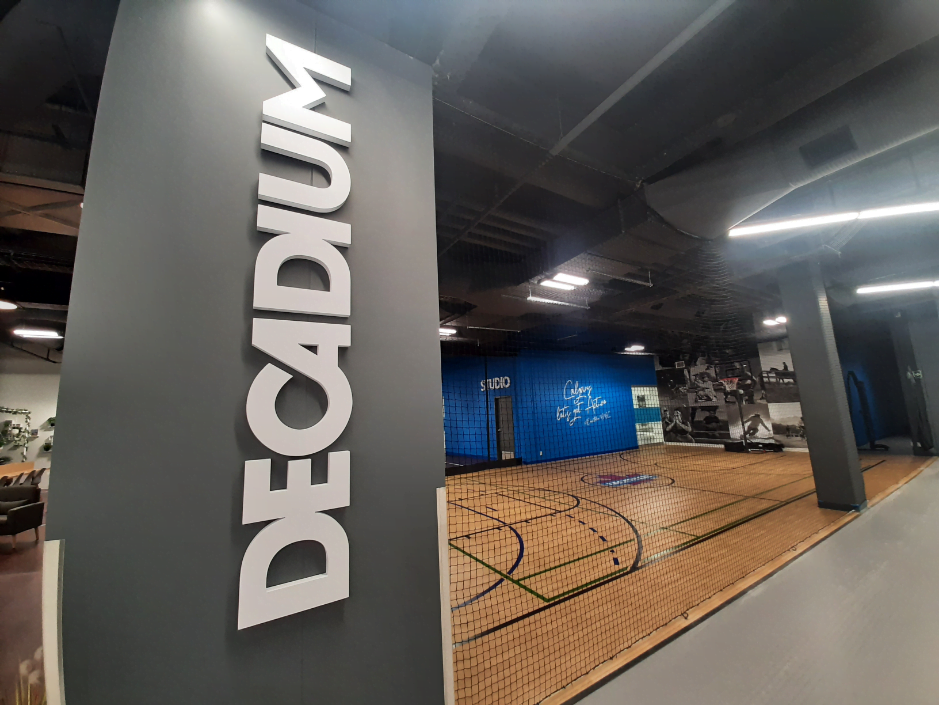
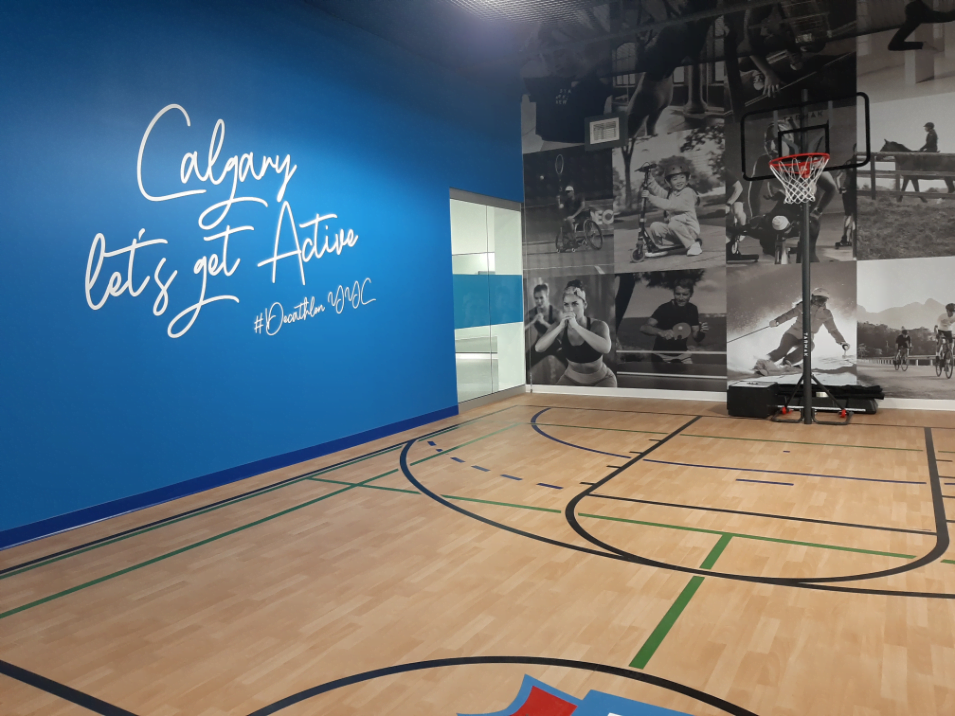
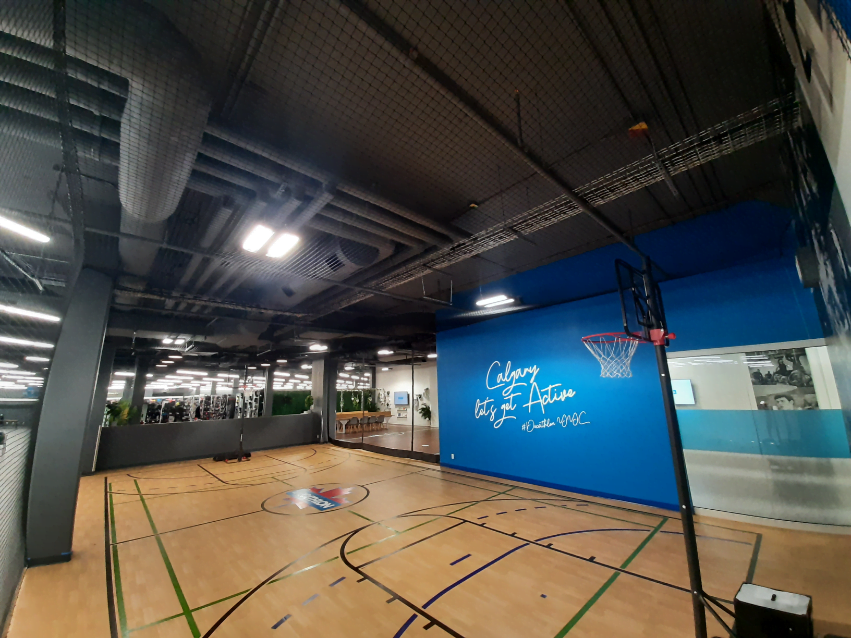
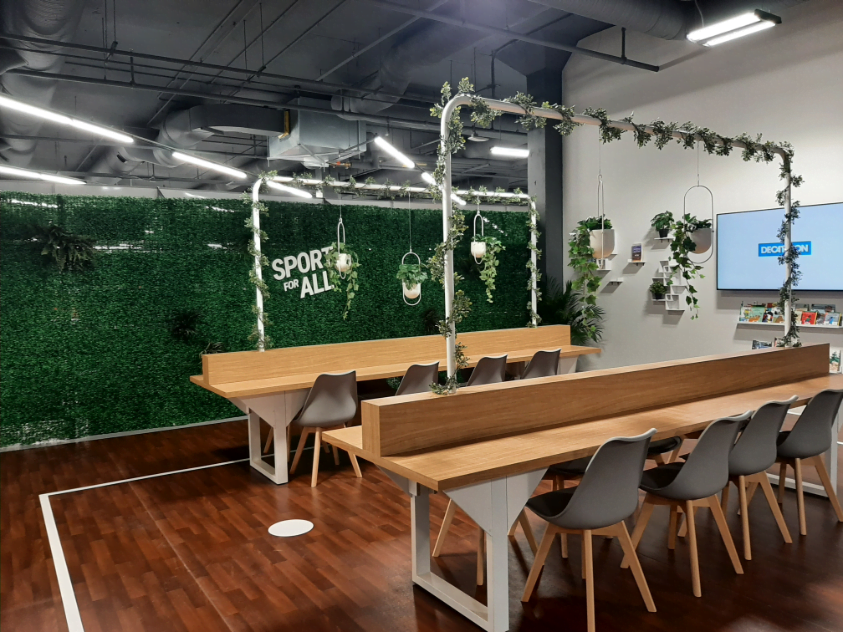
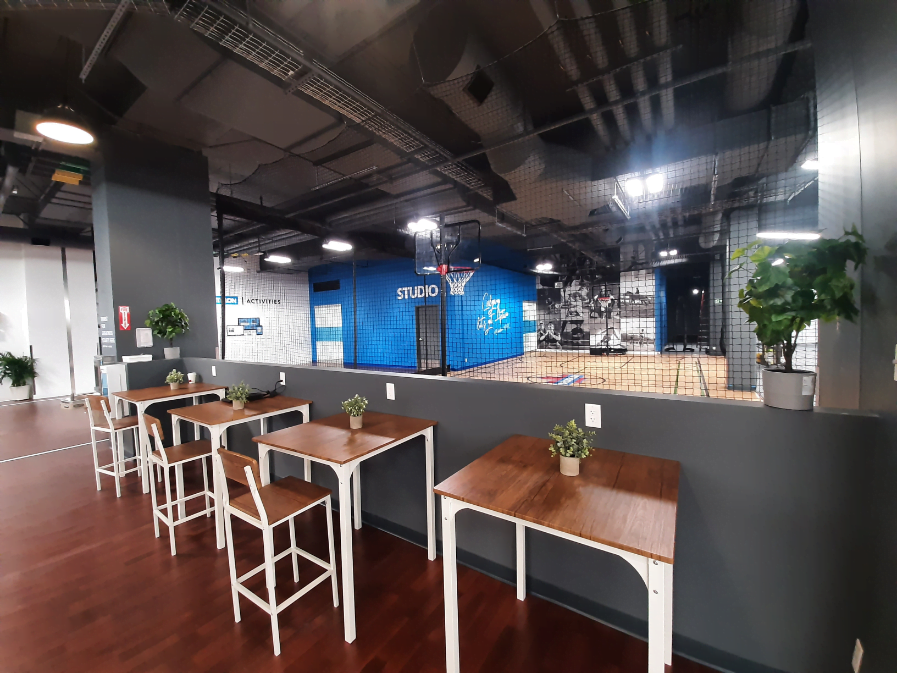
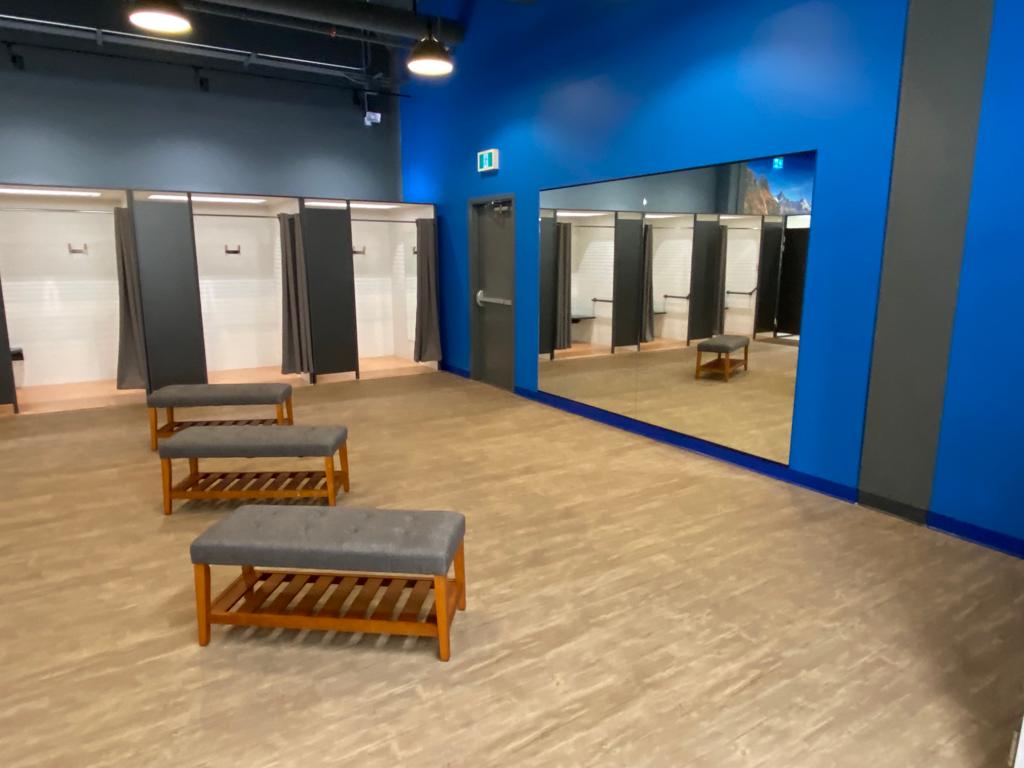
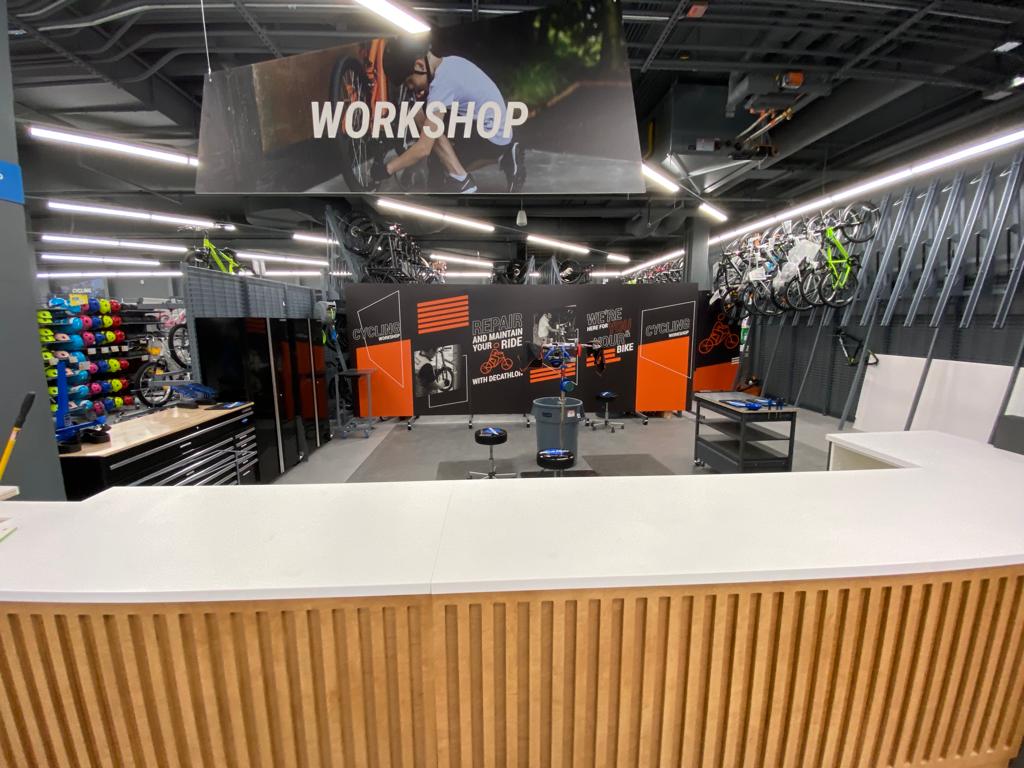
The store also features an entire section dedicated to backyard activities and ways to keep active at home. All Decathlon Canada stores include test zones, after sales service workshops (bike tune-ups, ski fitting, skate sharpening, etc), co-working space, and dedicated spaces for sports activities.
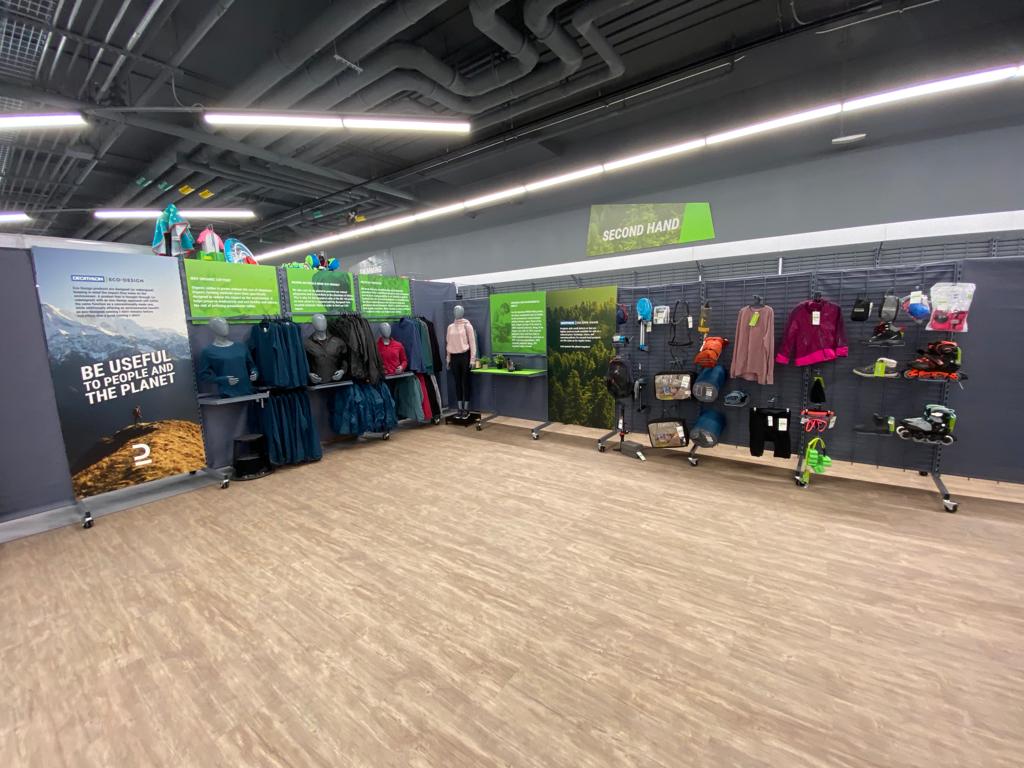
“From the wide range of sports we offer at affordable and fair prices, to in-store activities, to service workshops, to second-hand and eco-designed products, we aim to be a trusted partner for people in Calgary looking for solutions to getting and staying active,” said Craig Binch, store leader for Decathlon Calgary.
Image: Decathlon Calgary
Decathlon Canada opened the first store in Brossard, Quebec in 2018 and has since grown to 10 locations in Canada, including:
Dartmouth, NS
Sainte-Foy, QC
Brossard, QC
Laval, QC
Boisbriand, QC
Downtown Montreal, QC
Ottawa, ON /
Vaughan, ON
Burlington, ON
Future locations that are being considered for the expansion include Vancouver and Winnipeg.
Decathlon was founded in 1976 in Lille, France and has grown to 1,709 stores in 60 countries and employs 103,138 teammates (as of August 2021)
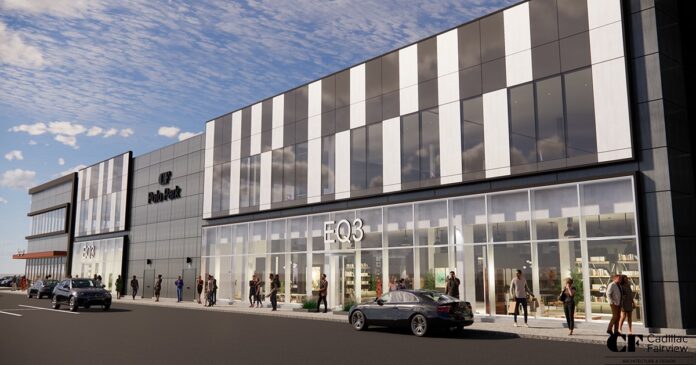
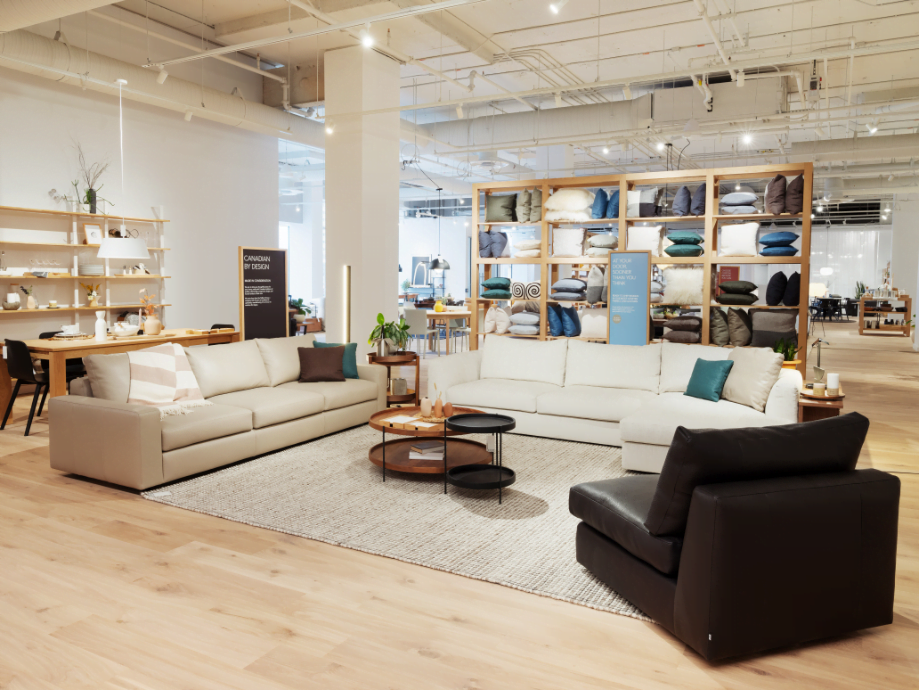
EQ3, a premier Canadian designer, manufacturer and retailer of furniture and home goods, has opened its flagship store in its hometown of Winnipeg at CF Polo Park.
Mark Letain
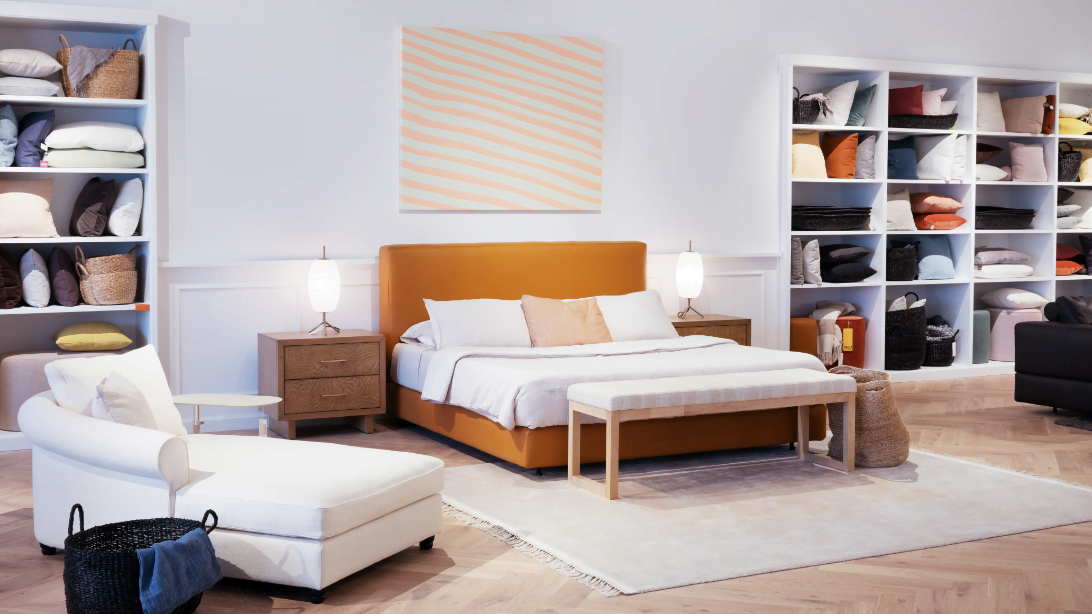
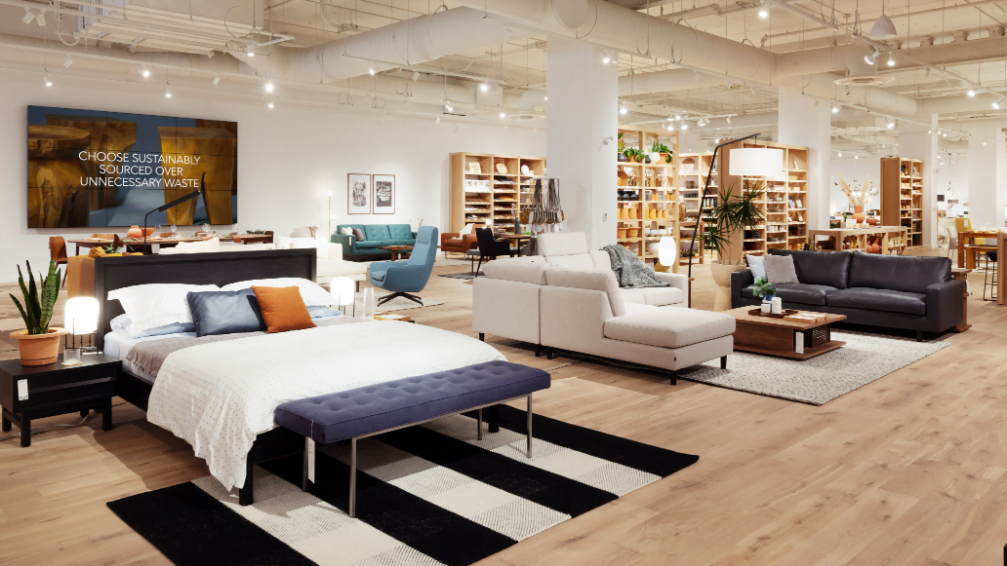
It is the brand’s largest showroom by far with a reimagined retail experience in 44,000 square feet – about four times what a typical store would be. It also incorporates a cafe featuring in-house dining by award winning Deer + Almond chef Madel Hitzer as well as EQ3’s new concept collection, Palli Home + Company.
“It’s definitely our new flagship location for Canada,” said Mark Letain, President of EQ3. “This is our hometown. Winnipeg is sort of a renowned test market too. It used to be one of the two test markets in North America for new concepts. The idea was if you can make it in Winnipeg, you could probably make it in other cities just because of the conservative nature of the city and the demographics and the socio demographics.
“We were already close to Polo Park, the mall, and that mall Polo Park is a super regional. Probably one of about a dozen in Canada that are considered super regional malls. We were already on the periphery of it – sort of in the parking lot.
EQ3 CF Polo Park
“When the Sears location closed (a few years ago) we began to have conversations with Polo Park about moving inside the mall but we were thinking about our original format space. As things progressed over time, we realized they were looking for an anchor tenant. I had some discussions with the ownership and we decided to say ‘hey you know what, why don’t we be that anchor tenant and why don’t we try something different? Why don’t we try a larger format store and really make our foray into experiential retail?”
The retailer has 17 locations with 12 in Canada.
Working alongside Winnipeg-based architectural firm Number TEN, the flagship’s slatted exterior was designed by former EQ3 Creative Director Thom Fougere. The interior was designed by current Chief Design Officer Enri Tielmann.
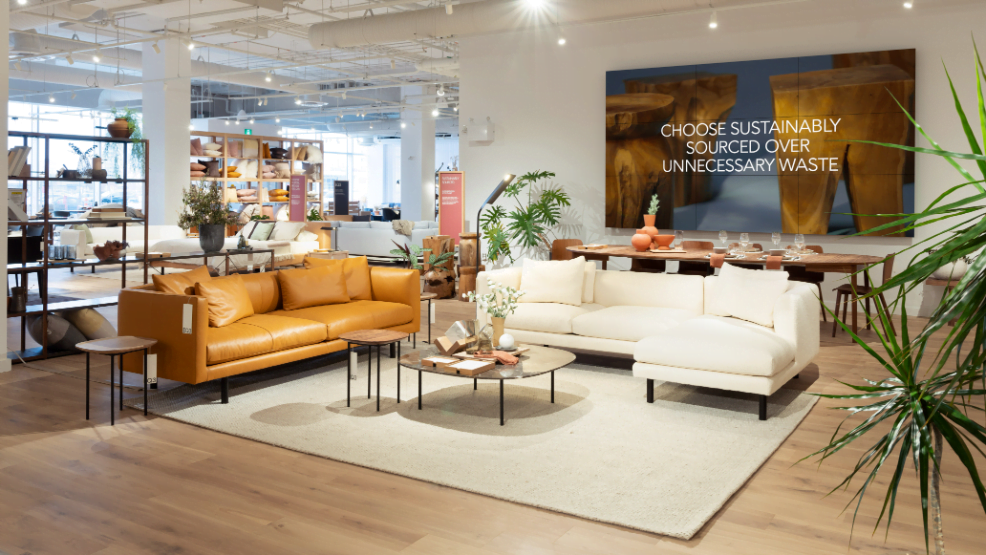
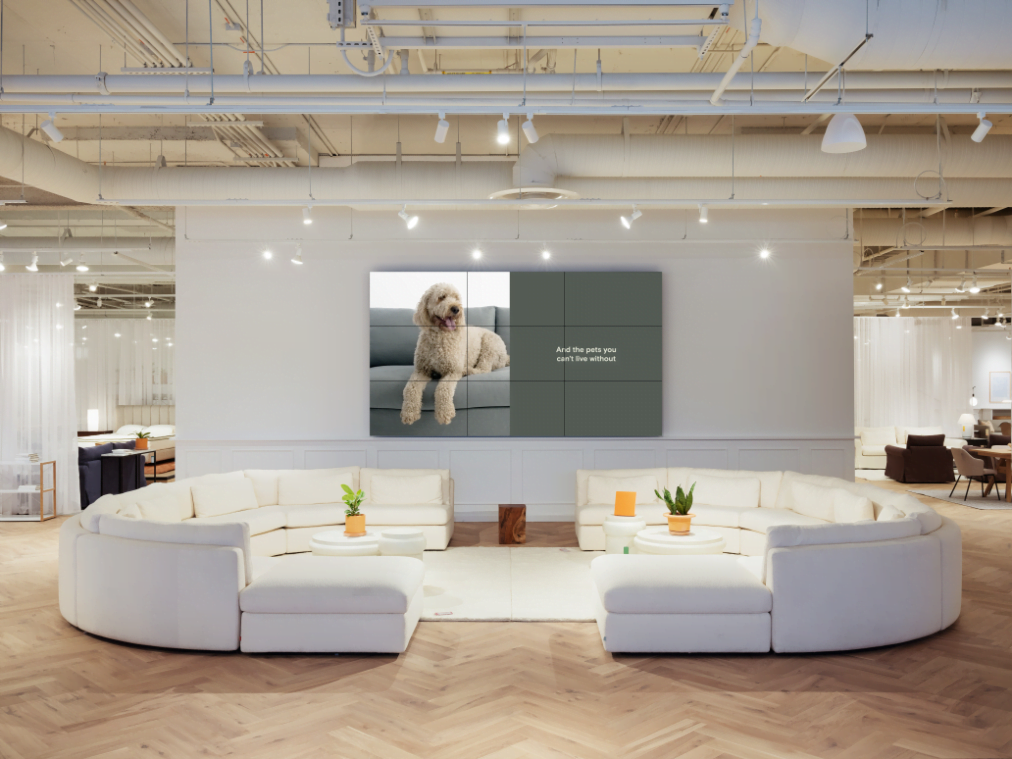
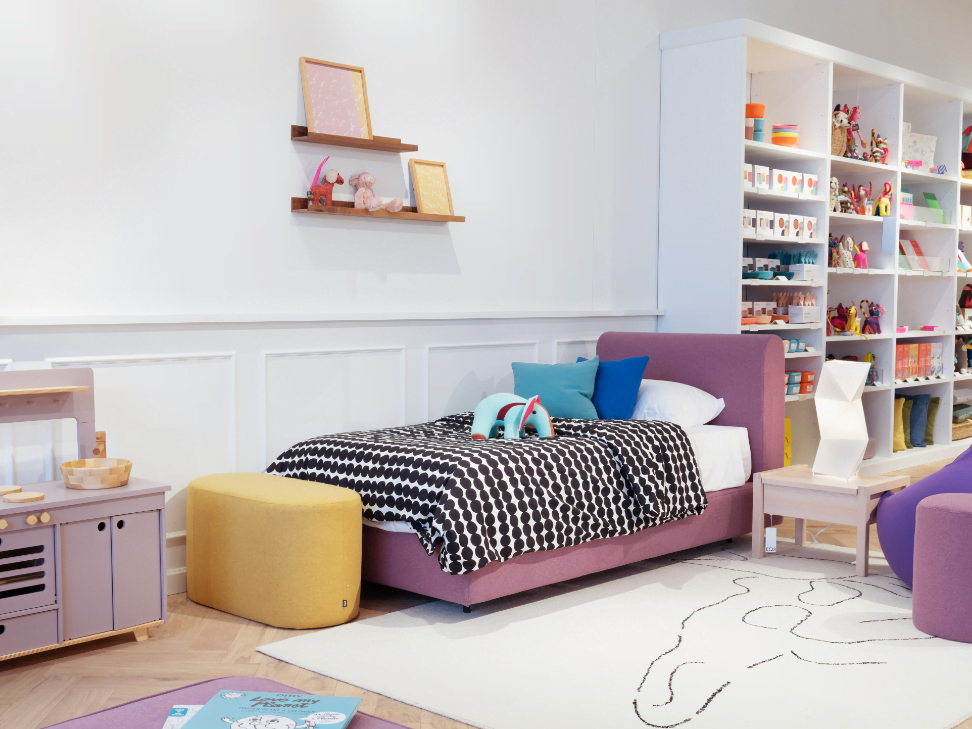
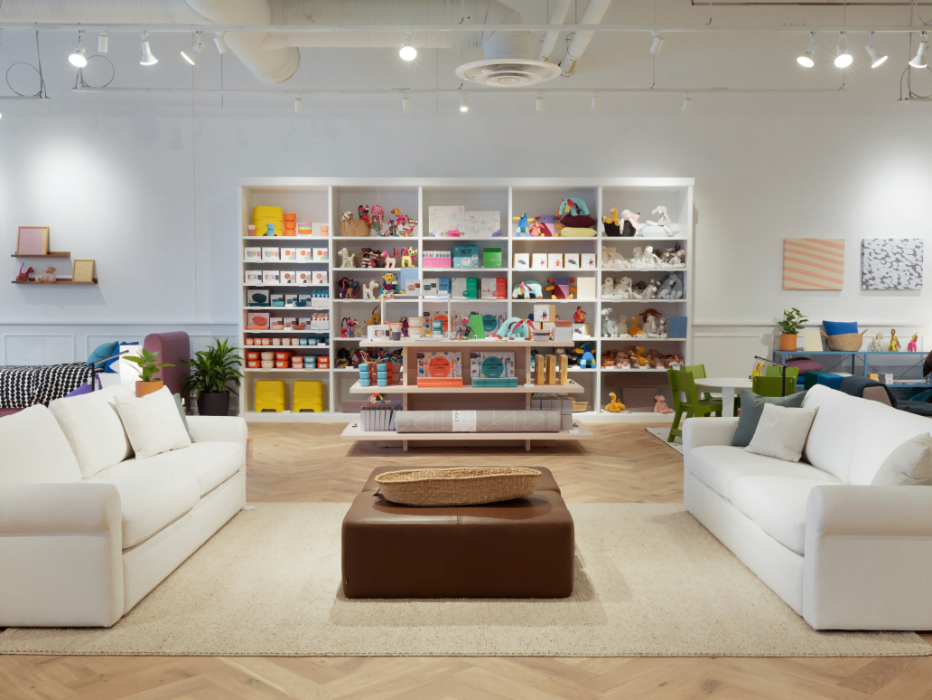
The company said the alluring new showroom brings to life everything quintessentially EQ3 with the addition of unexpected elements. The architecture and interior of the store pairs references to the Prairies with elements of warmth, incorporating features of herringbone flooring, traditional wainscotting, and pastel millwork.
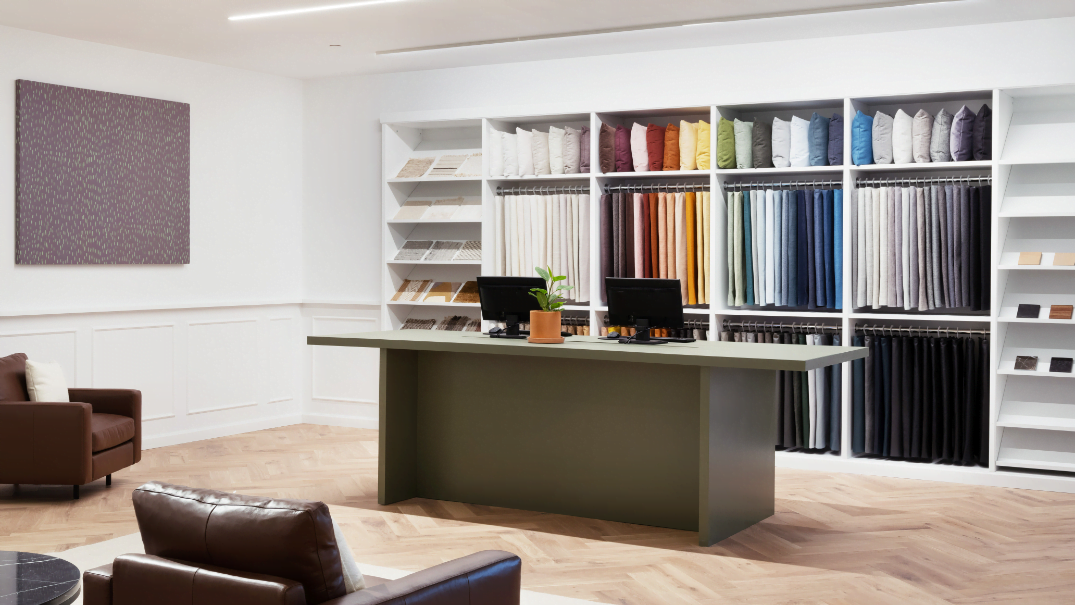
“The new location also acts as a hub of innovation for EQ3, bringing forward new products and technologies. Three dedicated design centres provide customers and interior designers areas for one-on-one consultation with sales associates and access to all the brand’s fabrics, finishes, rug swatches, as well as 3D visualization software. Digital video walls and QR codes directing customers to detailed product information appear throughout the space to deliver an immersive experience,” said EQ3.
EQ3 CF Polo Park
“The EQ3 café, with its monolithic bar design and 40 dine-in seats, anchors the expansive space. The café’s menu, created by internationally renowned chef Mandel Hitzer, features a fresh take on casual dining influenced by local ingredients and California-modern cuisine, complemented by a full bar and unique wine list.”
Peter Tielmann
Peter Tielmann, founder and CEO of EQ3, said the company is taking a holistic approach to transform how people reimagine their homes.
“We’ve created pockets of discovery in the store giving customers space, tools and even nourishment, while they take the time to physically interact with the products and personalize designs,” he said.
“EQ3 is proud to open our first ever Canadian flagship store here in Manitoba and serve the community that has helped shape who we are through the expansive possibilities of this space. Our uniquely Canadian approach to design is deeply inspired by our hometown of Winnipeg, so we’re honoured to share this work with customers, friends, and family at our new showroom.”
EQ3 CF Polo Park
The Polo Park store is the only new store the retailer has opened this year and Letain said no new stores are planned right now.
“We’re going to really test this concept out and see how it works because if it works then this is something that we would like to do in other markets with a larger format store. But we’ll see what we learn from this,” he said.
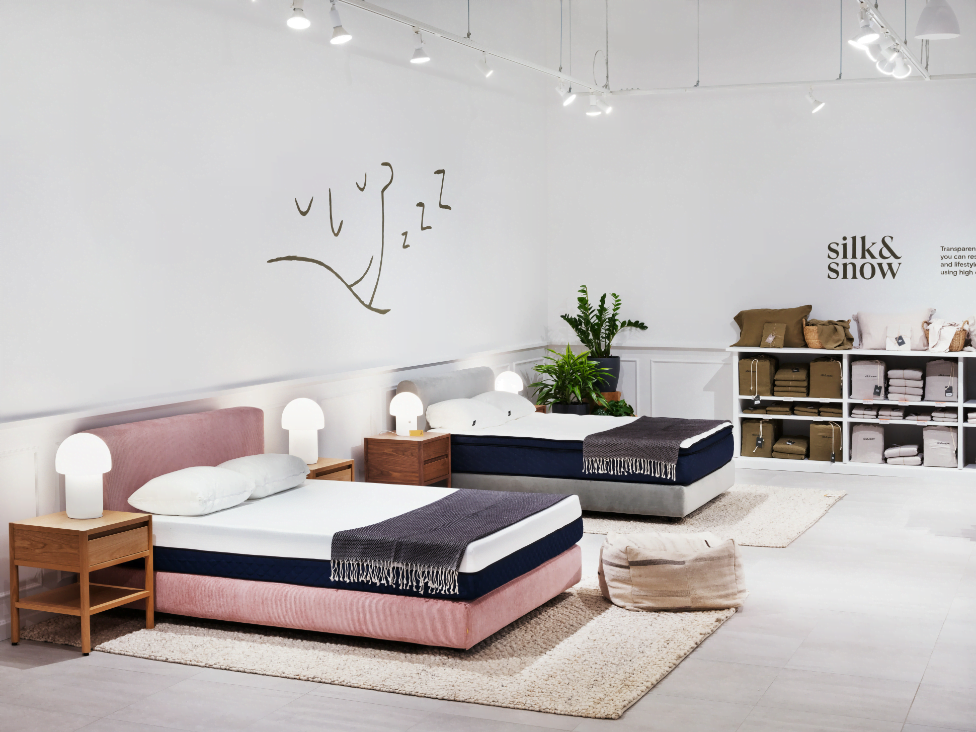
EQ3 is working with new brands, such as Global Trunk, OMY, The Dough Project, QWOO, Alessi, and Silk & Snow, to merchandise its kids, pets, and plants sections of the store, which are unique to the Winnipeg location.
The new flagship also launches EQ3’s new concept collection, Palli Home + Company, of vibrant furniture, rugs and accessories. The line features larger pieces of furniture with an emphasis on functionality and durability. As with the core EQ3 collection, all the upholstery items are manufactured in Winnipeg. The collection will be available at all EQ3 stores and online by early 2022.
EQ3 CF Polo Park
Enri Tielmann
“The new Palli Home + Company collection is made for modern living,” said Enri Tielmann, EQ3’s Chief Design Officer. “Designed to create endless solutions for unique environments, the upholstery collection combines modularity and function, complemented with playfulness and ease of care. Sectional configurations can be configured, reconfigured, expanded, reduced and mirrored. All made with materials and craftsmanship of the highest quality featuring sustainable performance covers combined with feather and memory foam comfort.”
EQ3 was established in 2001. Its five US stores are in New York, California, Connecticut, and Chicago.
The company stands for “emotional quotient in three dimension.”
The concept of EQ3 was launched as a wholesale initiative at the High Point Market in North Carolina in 2001 as an extension of a product line of Palliser Furniture. Palliser Furniture Upholstery Ltd. is a furniture manufacturing company headquartered in Winnipeg. It manufactures and distributes upholstery furniture products throughout Canada, Mexico and the United States.
Garage celebrates the GARAGE FOR ALL unisex collection (CNW Group/Garage)
Cutting-edge Canadian fashion brand Garage has launched its first-ever collection of unisex apparel.
The Montreal-based retailer, which was established in 1975 and today has 190 stores across North America, says the collection, officially dubbed GARAGE FOR ALL, is anchored in everyday basics and novelty pieces with a special focus on earth tones and heavy fleece.
“I think it’s important for us as a brand that we’re a safe environment, we’re a platform for all. So like it was why leave anybody out. We’re really about self-acceptance, self-love, and the whole point of the brand was really Garage for All and unisex gave us the opportunity, that window, to say everybody loves everybody for who they are and with no exceptions,” said Mary Ann Vitale, the company’s Senior Director Merchandising.
“There are no more boundaries. You are who you are . . . It’s no longer a him, her, she . . . It’s people . . . We’re about radical self-acceptance. So really about making a breakthrough with the community and being self-aware of who you are with no boundaries and just being yourself. That’s what brought us to launching the unisex brand.”
Image: Garage
Currently, the initiative is primarily online but the concept has been in a few pop up stores – a shop in a shop. Right now, it’s in the downtown Montreal store.
There will be a drop of the collection every month.
“It’s continuous. We’re not doing this as a one-time rodeo, pony show. We believe in this. We’re going for it as a brand. So we will have a drop every month. We are definitely committed to moving forward with this initiative as part of our brand,” said Vitale.
“We will continue to open up potentially some pop up stores. Now we are in Montreal. In November, we will potentially open up one in Toronto as well. And in Chicago we’ve done it as a pop up as well.”
The GARAGE FOR ALL unisex campaign was directed by film director Mikey Alfred, known for directing the film North Hollywood, shot by famed photographer Sandy Kim, and styled on both female and male cast members to showcase its range of interchangeable looks.
Rooted in functionality and comfort, the GARAGE FOR ALL capsule features timeless basics including t-shirts, crewnecks, sweatshirts, chunky knit sweaters, cozy button ups, and woven cargo pants. With a focus on modern neutral colours such as ginger, walnut, deep amber and pebble grey, the GARAGE FOR ALL unisex line offers versatile styles and shades perfect for the transition between seasons, while remaining fluid between male and female styles, said the retailer.
“Working with such a dynamic group of individuals on this campaign was a way for our brand to showcase the relaxed yet bold range of the collection,” said Stacie Beaver, Chief Merchandising Officer, Groupe Dynamite Inc., which operates the brands Garage and Dynamite.
“The slightly heavier fabrics allow for a more premium look and feel while still remaining accessible to our customers. We’re excited to expand our community with this new line of comfortable yet cool pieces designed for everyone to share.”
Vitale said the unisex collection will include all the different apparel that are being carried in the regular line.
The target customer market for the unisex collection is basically the same as the typical Garage demographic which is about 16 to 25 years old.
“I think it goes beyond making this right for the brand. I think it just makes it right for the community . . . Obviously there’s a financial gain for it for sure but that was not the initial purpose. The initial purpose was really making sure that we heard our audience of customers and where they’re going and what they believe in and we believe in the same things so really just amping up and building our community as one was really the primary objective of all of this,” added Vitale.
Montreal-based luxury jewellery and timepiece retailer Maison Birks has launched a 1,500 square foot service centre in the city.
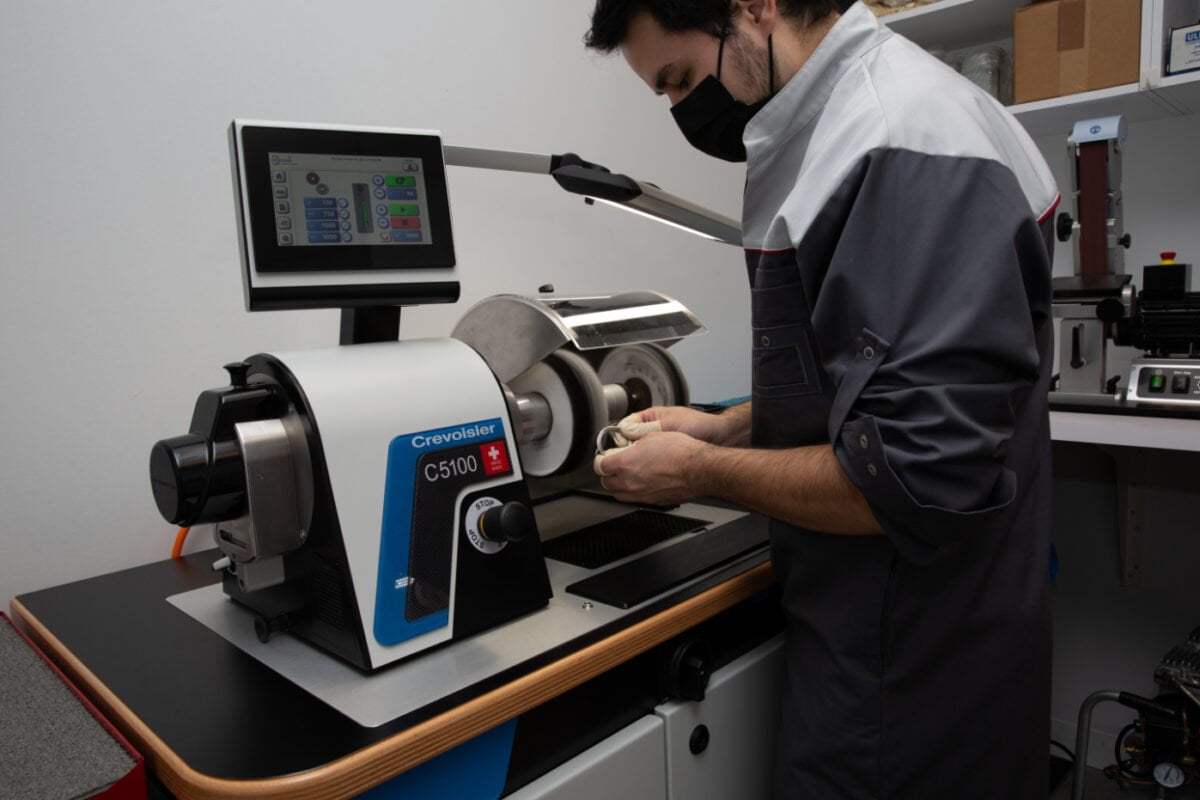
The Maison Birks Atelier offers technical services, polishing and advanced restorations according to the retailer. It was inspired by workshops in Switzerland and features floor to ceiling windows and provides the watchmakers with the optimal space for the tasks.
“We’re proud to be Canada’s leading multi-certified destination for high-luxury timepieces,” says Jean- Christophe Bédos, President and CEO, Birks Group Inc. “Haute Horology is increasing in popularity, and the Maison Birks Atelier will provide unparalleled professional watchmaking services to our clientele across Canada.”
There are four areas in The Atelier which provide the ultimate space for servicing luxury timepiece brands: The Watchmaking Laboratory, The Movement Cleaning Room, The Polishing and Refinishing Studio and the Administrative Area.
Image: Maison Birks Atelier
The Polishing and Refinishing Studio is equipped with optimal Swiss equipment allowing complexes refinishing techniques in order to restore the original luster and shape of any case and bracelet. Lap polishing, satin brushing and case restoration are just some of the techniques used with metals like Platinum, Gold, Titanium and Stainless Steel.
The Cleaning Room houses high-tech, ultrasonic machines that delicately clean even the finest of watch movements using preprogrammed sequences and diverse cleaning formulas.
The Watchmaking Laboratory is where highly skilled watchmakers perform technical services and advanced repairs. Specialized hydraulic adjustable benches line the central area, offering ergonomic support for the watchmakers throughout the day. Surrounding these specialized benches are avant-garde watertightness measuring equipment that can detect impermeability in watchcases, using compressed air or water up to an impressive pressure of 1200 meters, 120 Atmospheres or 1800 PSI. The laboratory is also equipped with advanced Swiss precision measuring computers that allows the watchmakers to calibrate and time each movement to its exacting standards.
Image: Maison Birks Atelier
Image: Maison Birks Atelier
Maison Birks Atelier features a team of eight professional watchmakers. Each member has studied and graduated from respected watchmaking institutes and participate in ongoing training, evaluations and certifications for internal and partnered brands.
Maison Birks, owned by Birks Group Inc., has 26 Canadian stores and four flagship locations including Toronto, Vancouver, Calgary and Montreal.
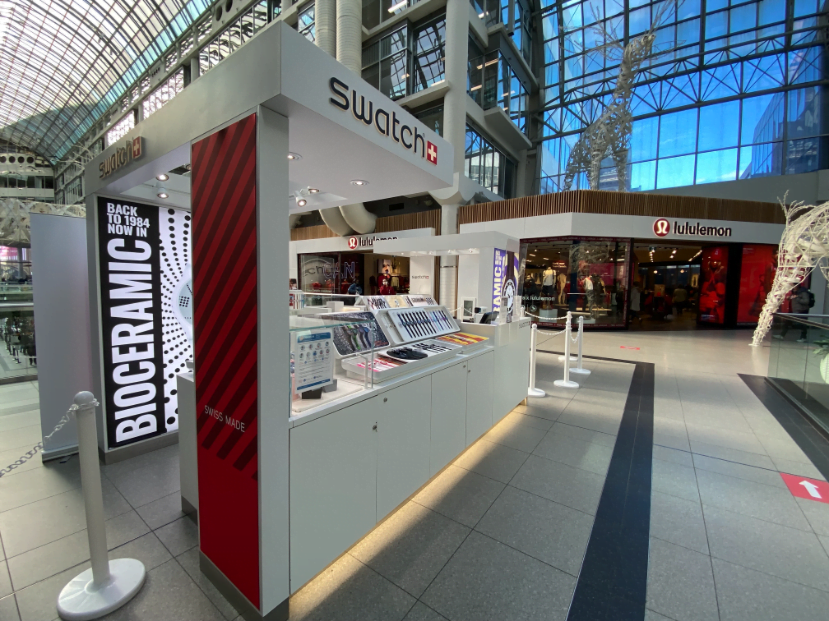
Swatch Construction at CF Toronto Eaton Centre - Photo by Dustin Fuhs
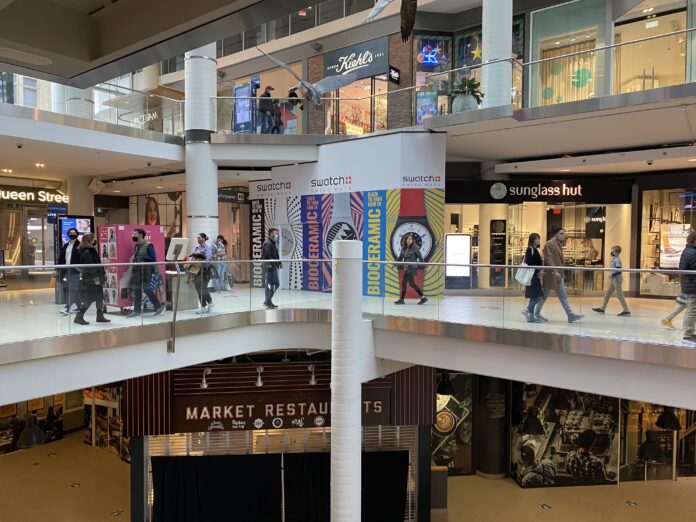
The Swiss-based watch brand Swatch has installed construction hoarding for a permanent storefront on the 2nd floor Queen Street entrance at CF Toronto Eaton Centre, which is scheduled to open in December 2021.
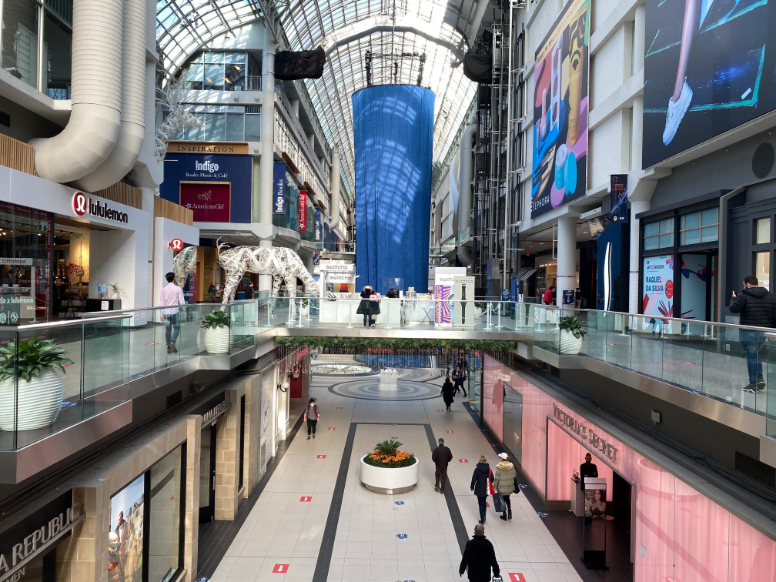
Taking over the former Godiva Chocolate location at the Queen Street entrance to the shopping centre, Swatch will be gaining a high-profile spot after being in the mall for years in a kiosk on the 3rd floor.
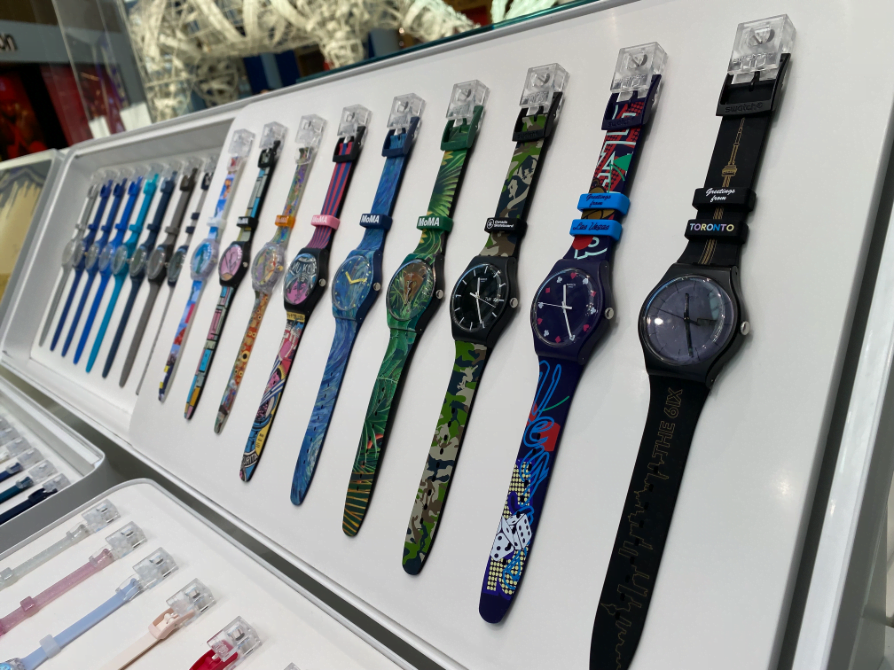
Swatch currently operates full-standing corporate locations, kiosks and store-in-store offerings at Hudson’s Bay across Canada.
The “second watch” or ‘Swatch’ was born in March 1983, and has since sold hundreds of millions of units to the global market.
Swatch Kiosk at CF Toronto Eaton Centre – Photo by Dustin Fuhs
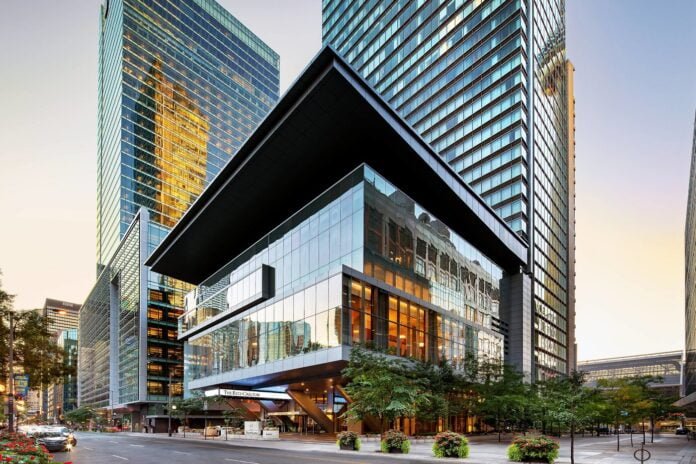
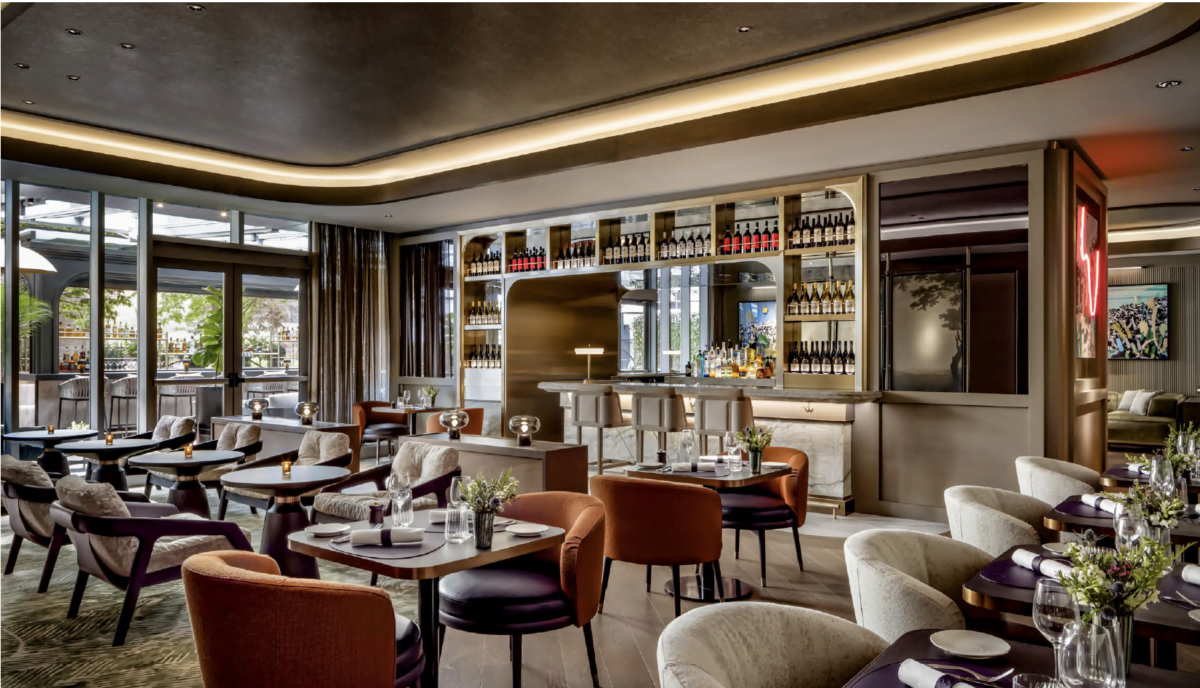
The Ritz Carlton Hotel in downtown Toronto recently unveiled its new EPOCH Bar & Kitchen Terrace. The reimagined British Gastrobar offers mix of casual and imaginative food and cocktails in an elegant setting that resulted in several months of planning and renovations.
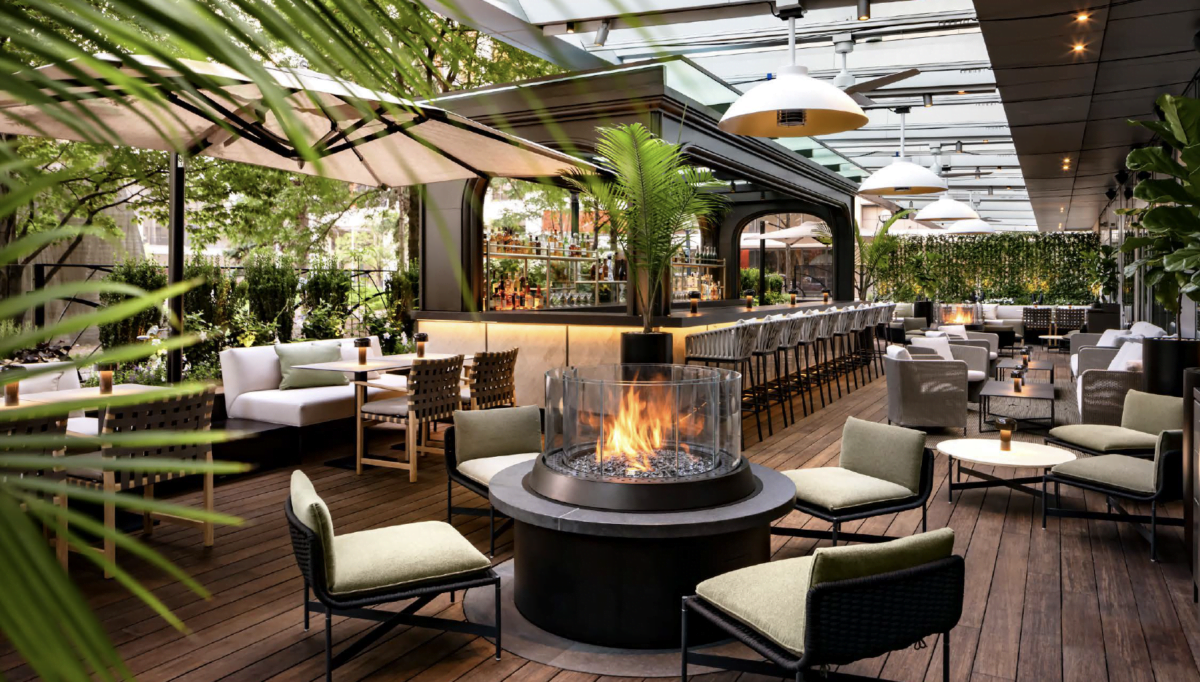
The restaurant space features 61 seats in the dining room and an additional 88 sets on a south-facing terrace overlooking Simcoe Park. The terrace includes a centrepiece bar with a wood-fired stone even.
Global interior design firm DesignAgency says that it drew on the romance of travel and the area’s glamorous role as host of the annual Toronto International Film Festival to create the restaurant’s interiors and lush outdoor terrace, including an open-air kitchen and bar that faces Simcoe Park. “Epoch is a venue for the ages,” says Allen Chan, founding partner of Design Agency. “The Ritz-Carlton is the gold standard for luxury and service around the world, and Epoch brings those values to an engaging social space that’s intimate, elegant and relaxed.”
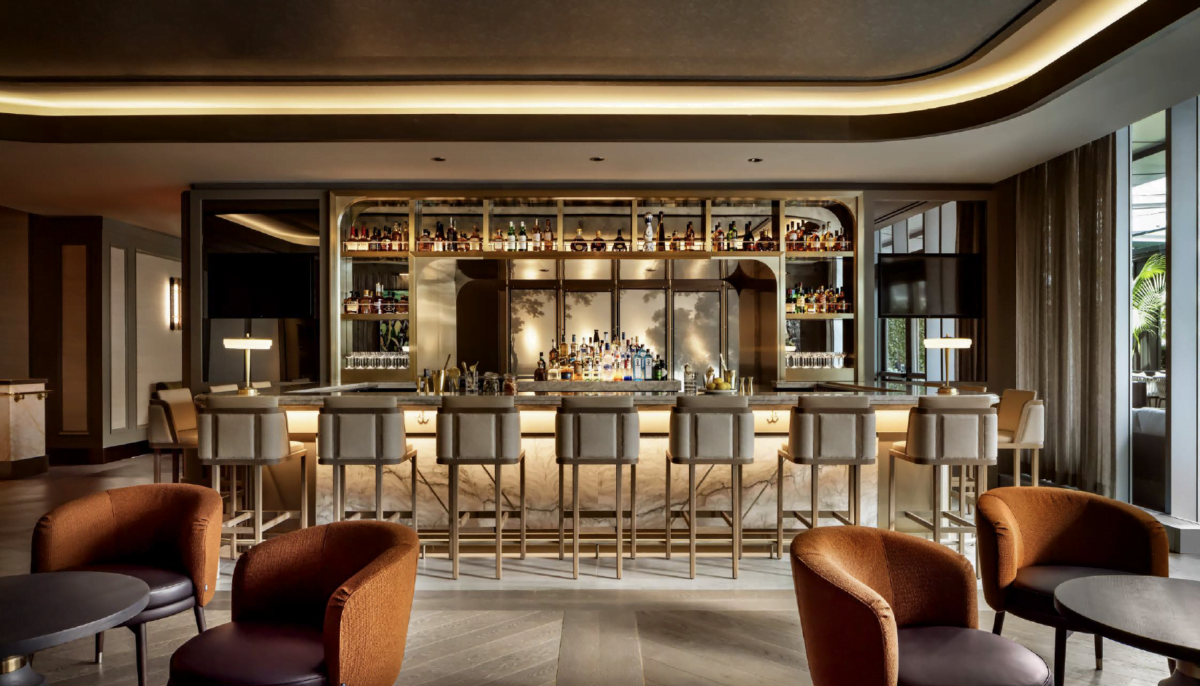
Bar area, photo: DesignAgencyOutdoor terrace, photo: DesignAgency
The landscaped outdoor terrace brings together woven patio seating with sleek fireplaces. Mossy green banquettes and low-slung lounge chairs arranged in cozy clusters invite conversations around bronze-trimmed tables. A panelled screen printed with a panoramic landscape is set-off with subtle lighting throughout.
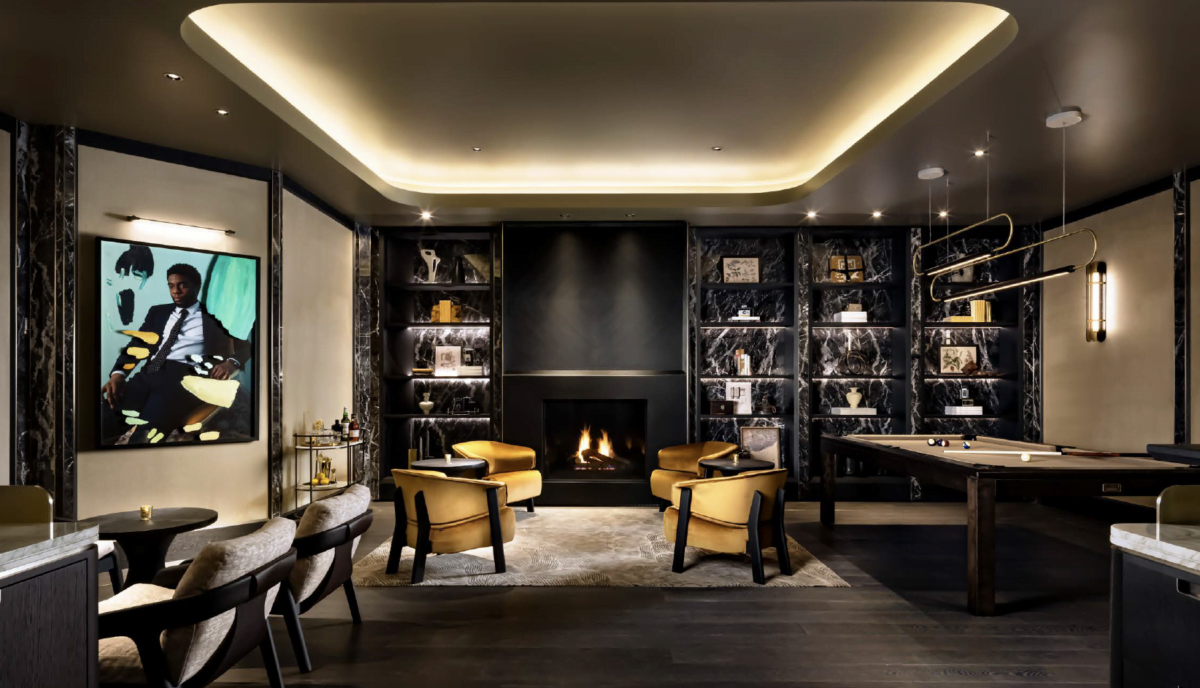
A wrap-around bar offers a focal point with pale stone countertops with bullnose edges echo other curved and arched details throughout the space. “We designed every element for an overall exceptional experience,” said Chan. And for private gatherings, The Green Room – a name that winks at Toronto’s reputation as Hollywood North – can be separated from the main lounge by sliding wood and fluted glass pocket doors. A billiard table, bookshelves panelled with dark stone, and a fireplace surrounded by caramel leather wing chairs have the feel of a cinema lover’s well-appointed library.
The design firm also reimagined guest rooms and Club Level suites in the hotel, and also conceptualized updates to the Club Lounge and Spa My Blend by Clarins on-site as well.
Chef Jeff Crump is leading the new restaurant — Crump is considered to be a pioneer in the slow-food movement and it founder of Earth to Table: Organic Farm, and Earth to Table: Bread Bar.
Crump has authored two books on the ‘eat local’ concept and his newest venture at the Ritz Carlton Hotel in Toronto is a reflection of that. The EPOCH Bar & Kitchen Terrace menu is described as being “a culinary homage to Chef’s earth-to-table philosophy and his roots in the UK gastrobar scene at The Fat Duck and The Hind’s Head.” Thoughtfully-sourced ingredients and an emphasis on seasonality is said to be of paramount importance to his menu concepts which are described as approachable and seasonally inspired.
Cocktails on the menu are already popular. Bar Manager Jason William Griffin is an award-winning bartender and hospitality professional based in Toronto with nearly two decades of experience in the industry. Jason brings his signature flair and prolific knowledge to EPOCH Bar & Kitchen Terrace’s cocktail program.
“Retailers need to adopt four pillars to future-proof their business for the long-term amid the challenges they are going to face in the coming years,” says retail expert George Minakakis in his new book.
George Minakakis
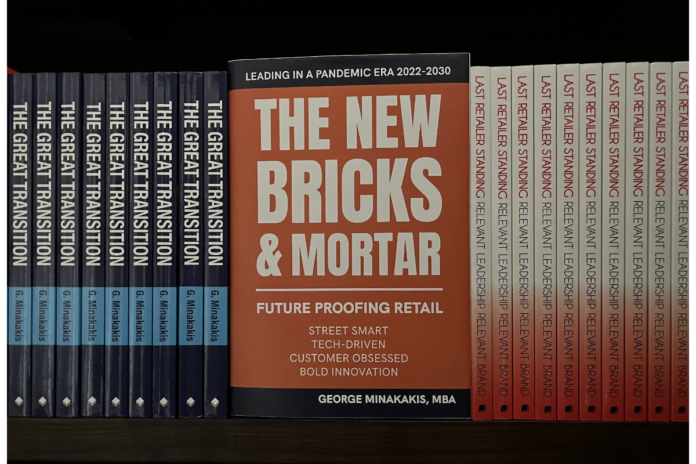
The book, The New Bricks & Mortar, Future Proofing Retail, outlines those pillars as starting with getting back to grassroots retailing which he calls “Street Smart” followed by brand development that is “Technology-Driven,” building a robust “Customer Obsessed” culture, and investing in “Bold Innovation.”
“52 per cent of business executives worry about the pandemic continuing, couple that with current supply chain issues, persistent inflation and there are even signals of a consumer slow down, that would push us near a level 3 risk management. Which to me as a trained board director means potentially threatening and damaging outcomes to businesses. Retailers must ask themselves and their teams one question. What else can we do?” said Minakakis, who leads advisory firm Inception Retail Group.
“The harder they push that question the more it strengthens their strategic and tactical thinking. It matters because retailing is a measure of economic health. Retailers must rebuild their volumes to pre-pandemic levels, or the risks spread to others, such as commercial property owners, financial institutions, and workers.”
Minakakis said he wrote the book to help businesses better understand how they’re going to have to change, modify their thinking, modify their organizations and their cultures, to be better at responding to change.
“Look, I’m an operator. I’ve run large businesses. And I can tell you that what we thought a year ago is clearly irrelevant today. And now things are moving so quickly what you thought a month ago is irrelevant. I’ve led businesses during 9/11, SARS and the Financial Crash successfully, this is very different, you need to be rethinking 2022 and 2023 in a dynamic way” he said.
“The book was written based on that premise and to help businesses start thinking differently in their approaches to competing and remaining relevant. Retailing is an imperfect industry it’s not a cookie cutter business it needs a strong culture, talent, vision, strategic planning, and flawless operational execution. Continue to get better at that and hit repeat.”
“These are the four pillars for how I view what’s important for businesses and their journey for the balance of this decade.”
Street Smart
In looking at the first pillar, being ‘Street Smart’, Minakakis said, “this is about knowing your markets and how to compete in each of them. Businesses now must have a level of street fighting that allows them to use all their assets, engage customers locally and globally. Afterall there really are no selling barriers today. I still believe that ‘boots on the ground’ operational skills and behaviors are very important. There is still a lot of traffic walking into stores, and it can’t be ignored just because your efforts are focused on e-commerce or social selling.”
Technology-Driven
“There’s no way in the world that you can move through retailing today without having some good, honest level of investment in technology that actually is helping you run your business day to day. Whether that’s the collection of data, how you interact with your customers, in person, your website or through social channels. You cannot succeed without a sound investment in technology that works for you,” said Minakakis.
While writing the book he coined a phrase ‘data and supply chains are kingmakers of retail.’ And they are. “However, technology is going to play a much bigger role in retailing than it even does today. I believe that too many retailers remain very conservative in their approach and those that believe they are doing well are only dabbling. For example, based on today’s issues with supply chains, you are going to need a far more robust and integrated systems with real time data on suppliers, manufacturing sources and shipping overseas and locally. Not to forget customer data and their purchasing patterns and monitoring market trends. It’s a mistake not to be planning with more diligence and technological intelligence.”
“Customer Obsessed” culture
Minakakis said productivity gains over the years have always been driven by technology which has led to reducing hours on the front lines. “When you reduce productivity hours at the store level, you also diminish your ability to deliver great customer service and revenue.”
“I am an advocate that you need a very powerful motivation within an organization whether that’s one store or one thousand. A customer obsessed culture is far more powerful than being customer centric. There is more emotion and purpose with an obsession to satisfy customers. Being centric as a company is fine but it isn’t passionate enough. Service in retailing is about passion and you can extend that in all service attributes related to a brand. An obsession with service draws in everyone. Being centric only surrounds the concept as a focal point. The goal is to deliver a great customer experience, you need to start with understanding what those expectations are. You can’t do that without a customer obsessed culture.”
Bold Innovation
Minakakis said bold innovation involves creating the advantage that differentiates a retailer from competitors. “By being bold, it also means breaking away from your comfort level on products and service and continuously innovating. Most organizations stop with that just one great idea and it withers away. Retailers need to continue to build on that foundation at an unprecedented level. As executives we never worried about competitors and what their position was. We were focused on competing in the marketplace with our own assets and created advantages internally to ensure our continued growth.”
Bold innovation can come in the area of products sold, service, the store environment itself.
“We did a poll about what drives consumers. Convenience is number one, fast service and price,” he said. “But the fourth one that got least support from consumers was about getting a luxury experience. That they wanted a high end experience. A small percentage wanted that. So there’s a big shift that’s happened and that shift is impacting everything on these four pillars.
‘What these four organizational initiatives do is allow a business and its leadership to continually challenge and renew long before change is needed. Far too many wait past the expiry date of their last great ideas and market wins.’
‘Research we did for the book shows that convenience, speed of service and price are now provoking change in retail. Responding to these changes you must be street smart to learn and adapt, tech-driven to have real time information to respond with, couple that with a customer obsession and continuous bold innovation and you have the potential for business longevity and the ability to build market dominance.’
Minakakis was a former Luxottica executive having led four retail chains as a Country General Manager in Canada and as CEO for China, responsible for the international expansion of over 200 locations. This is his third book. He is frequently interviewed by the media and is a podcast co-host for The Business of Retail.
The New Bricks & Mortar, Future Proofing Retail book is available at Amazon and other participating booksellers. The book is offered as an e-book, paperback, and hardcover.
The National Basketball Association (NBA) has a long-standing connection to Canada and this year to celebrate the 75th year of that relationship the league has launched a special retail experience for fans in the country.
“NBA 75th Shop,” is a new digital retail experience for fans in Canada that pays tribute to the iconic players and moments that have shaped the growth of basketball and the NBA across the country in celebration of the league’s 75th Anniversary Season.
Fans have been invited to sign up to get notified of ‘drops’ of products throughout the season. There will be 12 of them of 75 units or less of various products that commemorate a specific moment in NBA history.
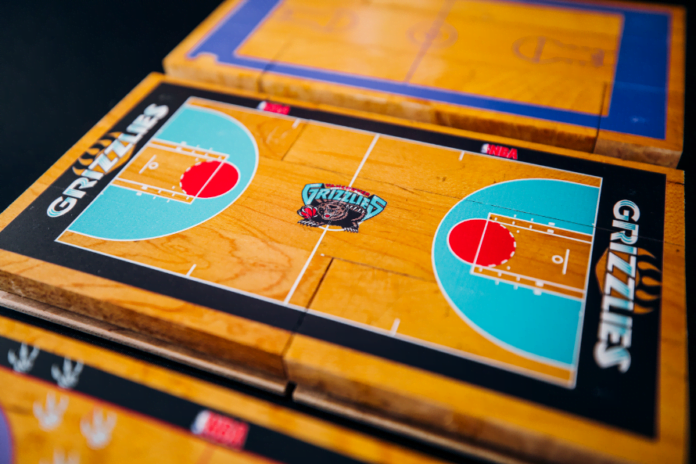
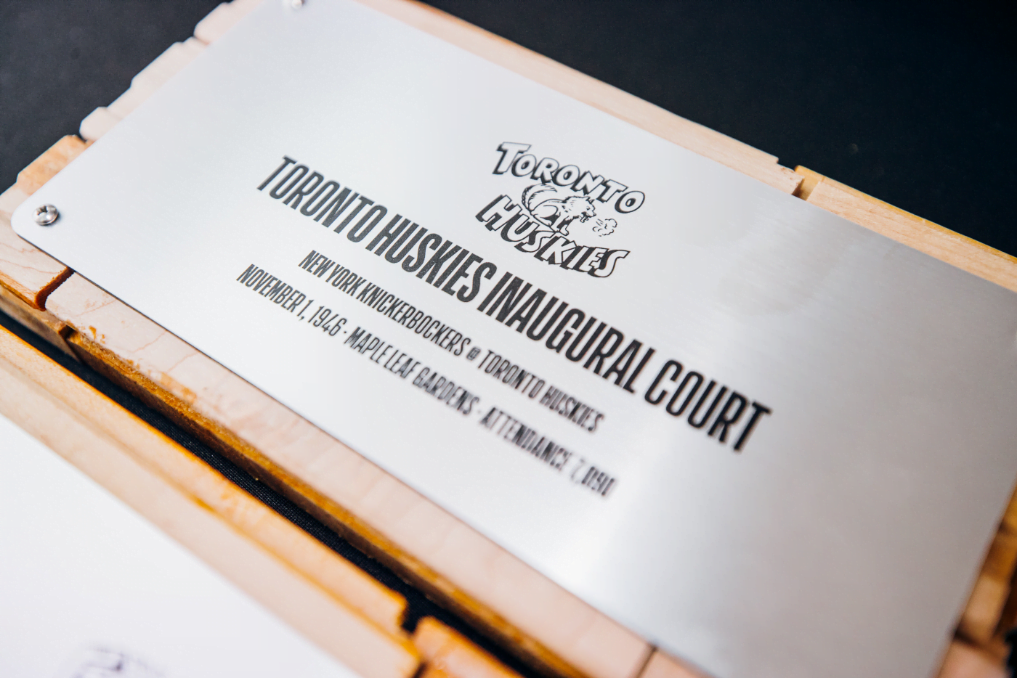
For example, the first drop was November 1 and included a three-pack of NBA mini courts. Each mini court is printed on official hardwood from the 2011 NBA All-Star Game that was played at the Staples Center in Los Angeles. The original design was painted on the product from the first court in 1946 which was the NBA’s inaugural season with the first game held in Toronto at Maple Leaf Gardens on Nov. 1, 1946, when the Toronto Huskies played the New York Knickerbockers.
Image: NBA 75th Shop Mini Courts
The product design also included the first court that the Toronto Raptors used in 1995 and the first court the Vancouver Grizzlies used in 1995.
Leah MacNab
“The NBA 75th Shop is an ecommerce experience for fans in Canada and it’s really designed to both celebrate iconic people and moments in Canadian history during the NBA’s 75 years,” said Leah MacNab, Managing Director for the NBA in Canada.
“We managed to sell out that first 75-unit run in less than a minute.”
MacNab said the initiative will run for the entire NBA season with drops until June. She said a total of 13 products will be delivered over the 12 moments.
“We’re really excited. We’re celebrating everything from that first game at Maple Leaf Gardens to Dr. James Naismith who was a Canadian and invented the game all the way to big moments in Raptors’ history in addition to other Canadian players that have made big names for themselves throughout our 75-year history,” she said.
Through the NBA 75th Shop, the league will unveil 13 new, custom-designed products that will initially be released in limited quantities of 75 units or less, at key moments throughout the 2021-22 season. Five products will be sold for $75 or less. Fans can visit 75thShop.ca to register their interest and stay up to date on new product releases and on-sale dates.
Products in the NBA 75th Shop will celebrate these iconic players and moments:
Canadian Dr. James Naismith, who invented the game of basketball in 1891;
The inaugural seasons of the Toronto Raptors, Vancouver Grizzlies and the Basketball Association of America (BAA), the precursor to the NBA;
Wilson, the official NBA game ball for the league’s first 37 seasons, including the NBA’s first-ever game, held in Toronto in 1946. Wilson has returned as the new game ball partner, beginning with the 2021-22 season;
The NBA Drafts in Toronto (1995) and Vancouver (1998), the first NBA Drafts to be held outside the U.S.;
The long-standing tradition of NBA games on Christmas Day;
Two-time NBA MVP, Naismith Memorial Basketball Hall of Famer and Canadian Steve Nash, the current head coach of the Brooklyn Nets. Nash is a member of the NBA’s 75th Anniversary Team;
Eight-time NBA All-Star and former Toronto Raptor Vince Carter;
Former NBA player Damon Stoudamire, the Raptors’ first-ever draft pick in 1995;
Current players Aaron Gordon (Denver Nuggets) and Zach LaVine (Chicago Bulls), the two finalists from the 2016 NBA All-Star Slam Dunk Contest in Toronto, the first NBA All-Star to be held outside the U.S.;
The game-winning buzzer-beater in Game 7 of the 2019 Eastern Conference Semifinals that sent the Raptors to the franchise’s first NBA Finals; and
The Raptors’ first NBA Championship in 2019, which marked the first NBA Championship for a team based in Canada.
“Reflecting on my time playing in Canada, I was fortunate to witness the passion that Canadians fans have for basketball and the NBA,” said former Raptors guard and current Boston Celtics assistant coach Damon Stoudamire. “It’s an honour to be recognized among this group of iconic players and Canadian basketball moments, and I hope fans across the country share my excitement around this ‘mighty’ piece of history.”
The NBA has established a major international presence with games and programming available in 215 countries and territories in more than 50 languages, and merchandise for sale in more than 100,000 stores in 100 countries on six continents.
“This retail experience is unique in that we created it essentially as a digital pop-up. So in the same way you might imagine a shoe drop in basketball culture, we’re doing an NBA history drop with the physical product, 12 times in our season this year,” said MacNab.
“Essentially at the end of the season this experience will go away. So it is a digital pop-up for lack of a better term.”
The NBA has several licence partners across Canada including retail giants such as SportChek and Canadian Tire to specialty, niche retailers.
Image: NBA 75th Shop
“Our retail revenues have risen about 17 per cent on average over the last five years. We have about 50 plus active licensees in Canada so that would be everything from jerseys to hats to pen sets and stationery for back to school,” she said. “Net total we don’t really share the absolute numbers but . . . anecdotally probably NBA products have been outperforming other licensed leagues in the last year and a half and that’s something that we’re hoping to capitalize on and grow even more in the upcoming years.”
In 2019, the Toronto Raptors won their first NBA championship.
MacNab said the championship run that year was a “massive” moment. It became a pop culture moment across Canada.
“We have grown our fan base to about 17 million fans in Canada and what I loved about the run was not just that everyone that could get their hands on Raptors’ products were selling it but we saw fans from right across the country support the Toronto Raptors and do it in a very public way,” she said.
“So to go back to that moment in 2019 we saw upwards of 40 cities across the country do their own versions of Jurassic Park, which was something that for me really had symbolized the inclusiveness of basketball and the fact that there really is a place for every Canadian in the game of basketball. So whether you’re bouncing a ball yourself or you’re a spectator at home or in one of our stadiums we are really a game that can embrace every single Canadian.”
The NBA and Nike also recently unveiled all-new 2021-22 Nike NBA City Edition uniforms in honour of the NBA’s 75th Anniversary season on the anniversary of the first-ever NBA game played between the New York Knicks and the Toronto Huskies (November 1, 1946). The 2021-22 Nike NBA City Edition uniforms will be available for sale on Monday, November 15 at NBAStore.com, Nike.com and select retailers globally.