By Avi Behar and Matthew B. Winn
As our economies open back up and we begin to emerge from our government and self-imposed isolation, we are often asked about our predictions for the “new normal” in commercial real estate. Our standard response is that it is too soon to know.
Almost every industry and all of commercial real estate has been affected by COVID 19. These shock waves will be experienced for many years to come and will influence our industry as a whole. There are degrees of reinvention that will need to occur as we return to some routine in life, at work, and at play.
So, while we can’t predict exactly what will happen, below are some of the things we hope will happen as we define our new world.
WE ARE ALL IN THIS TOGETHER
Retail and retail real estate are two areas which must completely reinvent themselves in order to thrive in the new world. How we learn, adapt, pivot, and work together as partners will determine how quickly we turn the corner. Right now, everyone has each other’s backs, but like many moments of shared human experience, that can quickly be a fleeting sentiment after the crisis has “passed”.
With creativity, innovation, and strong human resolve, we can establish a new set of social norms and rules which will enable our society to emerge stronger than ever. Landlords and tenants have talked about partnerships.
In the past, that often referred to the Landlord who felt that making a large tenant improvement contribution should be looked at as a type of partnership with a tenant. In a post-COVID world, we hope to see new lease structures emerge, based on true occupancy costs, shared profits and shared equity in retail and real estate. This alignment of interests might seem hopeful in a world of securitized loans and private equity returns, but perhaps it is a path to long term prosperity for all.
A NEW RESPECT FOR SPACE, CLEANLINESS AND PERSONAL SAFETY
In Japan, where over 126 million people live in a relatively small area, there is a sense of serenity rather than chaos in daily life. Along with highly efficient technological advancements, the Japanese have established a system of social order which is largely rooted in respect for others and their ‘space’.
The famed Japanese ‘bow’ of the head very much speaks to the concept of respecting others. It is also a no touch way of greeting people. Their respect for cleanliness and the things that will happen after they occupy a space are some of the foundational elements of Japanese society.
These may also guide us and help define our meeting protocols for the near future as we return to the office. If we are able to adapt the way that people treat one another and their environment in Japan, and begin to implement that in our day to day lives, there is little doubt that our new normal will become more orderly and pleasant.
IT’S THE LITTLE THINGS
Speaking of cultural norms, wouldn’t it be great if the change from mass production to local, organic (meaning spontaneous not certified pesticide free), and craft business continued? It started with “The Sesame Street effect” where a new generation began to see our urban core as safe again.
Since then, we have seen an explosion of new businesses — boutique clothiers, local restaurant groups, and new services — flourish in our cities. The explosion and diversity of businesses is akin to the transition from local television to cable where specialty channels found underserved audiences who wanted to be part of a new “tribe”.
The era of the 1,000-store chain in the same mall format in the US may be over. Wall Street has officially changed its tune and is now rewarding individual unit profitability over global market share. We have chosen to vote with our wallets for local and interesting over consistent.
RESPECT THE PROCESS
Speaking of the little things, another trend that we hope to see accelerate in the post-COVID world is the respect for the craftspeople that create our products. More and more we are seeing a focus on the source, supply chain and process around our goods.
So often now we see the farm where the food was grown as part of the menu. We have transitioned from the food court to the food hall. We are focusing not only on how the food tastes but on our health and overall lifestyle.
Perhaps more than we’ve seen in our lifetimes, consumers will be driven to work, shop, and play locally. These patterns have already started. Support for one’s community will emerge as a key motivating factor as social activity begins to ramp up. We want to know not just the people that are selling us our goods, but the farmer or garment worker that made them. We want to be part of the brand story and members of these new tribes of commercial cool.
“IT’S THE CUSTOMER, STUPID…”
To paraphrase Bill Clinton’s campaign message, “It’s the customer, stupid”. We need to change our focus. There is little doubt that the population has now fully embraced online retailing for anything that is purely transactional, and that web-based purchasing is here to stay.
More than ever before, bricks and mortar retail stores must establish an omnichannel presence, with a very strong and efficient online portal and overall experience.
Additionally, retailers will need to develop a strong understanding of what makes consumers comfortable, and how to make their shopping journey as safe and easy as possible to get them to come back to the store. They must deliver a safe, smooth, and engaging customer experience.
DON’T FORGET THE LITTLE GUY
Speaking of going back to the store, don’t forget EVERYONE who makes your store experience possible. In addition to our waitstaff, our sales associates, cashiers, and the public faces of our retailers, let’s try to remember and reward the cooks, the people who stock the shelves, the cleaning crew and the rest of the unseen army that makes our store experience not only possible but enjoyable.
Their hard work is often invisible to us, but it is as important as the supply chain in keeping our bricks and mortar retail up and running. Only good things will come from a greater display of gratitude and appreciation.
FLEXIBLE HOURS AND SPACES
Let’s face it, it is a 24/7/365 world. One of the advantages often cited by the doom merchants peddling grim pictures of physical retail’s future like the ghost of Christmas future in A Christmas Carol, is that you can always get things on your phone.
True. But, you can’t always get them delivered. So, what if rather than requiring retailers to be open at the same time, we allowed retailers to use the space when they need it and to operate flexible hours with no minimums. Wonder how many new hybrid, fusion uses will be created?
GETTING PEOPLE TOGETHER
Speaking of new uses and ways to utilize space, do you know what makes a place cool? Not sure we do either, but we know it when we see it, hang out in it, dine in it, and shop in it.
Yes, great store design will be important to retail revival, but so will the way those stores are aggregated. Great destinations like Jamestown’s Ponce City Market or Toronto’s Yorkdale Shopping Centre are as much about the variety of the merchandise as they are about the environment that brings us together.
A food hall would feel like a food court (with really good food) if it weren’t for the public realm that surrounds it. These pocket parks, niches of activity, great seats, and other synergies are amenities that transform bricks and mortar from transactional to experiential.
MIX OF USES VERSUS MIXED USE?
Speaking of places that bring us together, going forward, we will continue to see mixed-use development as a focus in the urban real estate world to address the changes in customer acquisition strategy with a change in real estate format.
For the past two decades, mixed-use developments have been established as focal points for urban markets across North America. Combining asset classes has led to better communities where people can live, work and play within the same neighbourhoods.
In its simplest form, mixed-use development entails the amalgamation of more than one use — retail, office, residential, hotel, educational, medical, or others. As we emerge from months of self-isolation, with many businesses unable to survive the closures, we must look ahead and focus on how to thrive in this next phase of history. The retail square footage is likely to be less a part of the economic value and more a part of the brand identity of these spaces going forward. If people are shopping on a hyper-local basis, then retail will be the reason that apartments or offices rent to the right tenants at a premium rate.
DENSITY OR DYNAMITE
The way these new developments connect to the rest of the urban infrastructure is important. There is clearly a greater need for urban innovation. Forward-thinking ways of handling public transit, transportation, architecture and design will be critical, along with the establishment of responsible guidelines for all public gatherings.
We are believers that there will be sites that will be winners when additional density is developed, and that dynamite will repurpose the rest. However, it is the human factor that will ultimately determine how we all move ahead from this pandemic and prepare for the next one.
SO WHAT DOES IT ALL MEAN?
We wish we could come up with a 50-word, 3-step summary and wrap it with a bow. If we could, we would likely be sitting on our private island instead of writing this article. What we do know, however, is that things will change. So, when we say “re-open the economy”, we are really suggesting a re-imagining of the economy.
Now is our opportunity to do things differently and to create new best practices which, as a society, could make the “new normal” a better one for us as businesspeople, consumers and citizens.
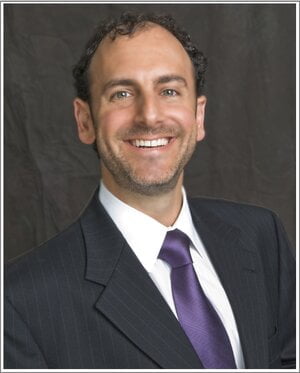
Avi Behar is Chairman and CEO of The Behar Group of Companies. Since 1995, he has been actively involved in commercial, industrial, and investment transactions. Amongst other areas of focus, The Behar Group is one of the most active brokerages in Canada in retail, hospitality, and the food & beverage space.
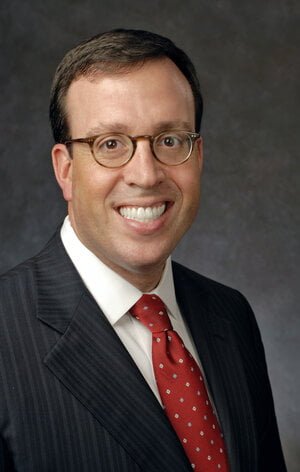
Matthew B. Winn is the Chief Development Officer for the What If…Syndicate, a portfolio of growing restaurants in Chicago that includes the 12th highest grossing restaurant in the US (Maple & Ash). In addition, he is a strategic advisor for a new off-site meeting concept called Meet In Place, and is working on a variety of projects in the real estate development and operating sector as a mixed use development asset management consultant. He was formerly the Global Retail COO of Cushman & Wakefield.