PERSON USING CREDIT CARD AND LAPTOP TO SHOP ONLINE
A new survey suggests Canadians are much more concerned about the safety of online shopping compared with consumers in the United States.
The survey, which was commissioned by ClearSale and conducted by Sapio Research, found that 26 percent of Canadians say online shopping is somewhat or a lot less safe than brick-and-mortar retail compared to 13 percent of Americans who felt that way.
Rafael Lourenco, EVP and Partner at ClearSale, which specializes in e-commerce fraud protection services, said when it comes to credit card fraud the retailers will have to pursue the money lost in the transaction and swallow the losses.
“Even though there is not a direct financial loss (for consumers) obviously the inconvenience is there meaning if someone (compromises) your credit card you may have to get another one and as a consumer they may be afraid of personal data being utilized in other types of fraud,” said Lourenco.
“Consumers don’t want to have their personal data info getting involved with fraud attempts and with fraud-like behaviour. On the other hand, consumers don’t want to have a bad customer experience by any of those extra layers of protection on the website blocking them from making their purchase.
“The concern on the merchant’s side should address both concerns on the consumer’s side.”
Some key findings of the survey include:
77 percent of survey respondents say they would be more likely to shop online from vendors that offer fraud protection;
38 percent of respondents said that they would never order from that merchant again if a merchant declined their payment (compared to 33 percent of Americans);
25 percent said that would likely post a negative comment on social media after having a transaction denied by a merchant;
46 percent said they would not even try one more time if a merchant declined their payment (instead, they would move on to another merchant); and
40 percent of Canadians said they have abandoned a purchase online because of a checkout process that was too long or too complicated.
Lourenco said there is an important shift these days to online channels and ecommerce is becoming an important sales channel for many retailers. It is therefore important for them to make the purchase experience for consumers as seamless as possible and to alleviate any concerns about fraud by putting protective measures in place.
Stephen O’Keefe, a Toronto-based veteran of the retail industry and loss prevention industry, said retailers need to protect themselves against fraud and even thefts like ‘porch pirates’.
“The loss prevention focus is really in its infancy and because of the geographic climate it’s very expensive to conduct physical surveillance and so just as the customer is shopping using technology the retailer also needs to invest in technology that will protect themselves,” he said.
O’Keefe is President of Bottom Line Matters, a web-based loss prevention and risk management solutions company for small to mid-sized retailers.
He has had many years of experience with some of the giant retailers in Canada and globally. O’Keefe was Walmart Canada’s VP Loss Prevention & Risk Management. He currently advises on loss prevention affecting shrinkage and profitability for retailers and has more than 30 years experience in retail theft prevention with some of Canada’s largest retailers.
He is considered a leading authority on loss prevention, security, risk management, health and safety, and process improvement.
The retailers’ focus is so much on the growth in the online market and a race to the finish. But O’Keefe said there are preventative measures that should be incorporated with the operation of an online business.
“For example, the porch theft. If a customer calls and says ‘hey I didn’t receive my package’ the retailer is not going to challenge that and say that the customer did receive it. They’re going to assume that it was stolen and they’re going to replace the item and they’re going to offset the cost of the replacement through a customer service account.”
Retailers are faced with a decision of whether they increase operating costs with a risk mitigation plan or do they accept the risk and operate with lower quality of service.
“That’s a question that a lot of businesses are going to have in the near future if not already,” said O’Keefe.
The ClearSale report outlined five key trends:
The Increase in Frequency of Online Shopping
Almost half of online shoppers shop at least once every two weeks with many saying their online shopping has increased recently. People are shopping online because it’s quicker, cheaper and has a wider selection.
The Fear Around Online Fraud
Many believe online shopping is safer or at least as safe as high street shopping, however the biggest concerns for those who disagree are around the storing of their personal details and security measures used by the retailers they’re buying from. Shoppers would be more likely to use a website if reassured they were protected by the retailer instead.
Awareness and Protective Measures
Nine in 10 agree security is very important when shopping online. However only half always take security measures such as checking website legitimacy and using eWallets instead of card numbers. This indicates a mismatch between what they want and what they do on their part, though there is not much of a difference between those who have been victims of fraud and those who have not.
Differences Between the Older and Younger Generations
Older shoppers are more aware of fraud and more open to methods of protection. Although they are less put off from risks than younger shoppers, if they become victims they will be much less likely to return to the same website.
Shoppers are Happy to be Protected
Two thirds believe retailers should use tech for protection, and many would not be put off from online shopping by this. This suggests a willingness and openness to change. Change could be important, as a third believe it’s the website’s responsibility to protect them and would not return if they became a victim of fraud.
COVID-19 Pandemic has changed the way many businesses in the world operate. Every business has a story to tell on how they were affected. Many Canadian Retail businesses could not operate using cash and had to find other solutions. In the process, some store owners started taking payment alternatives, which involves cashless means, to keep business still going.
The truth is: contraction of the disease takes any form, and everyone is trying to be safe during this time. Therefore, most stores would rather you pay with debit or credit card, e-Wallet, Cryptocurrency, etc., than receive cash as payment. On the other hand, a few stores still accept cash payments. According to The Bank of Canada, the choice depends on the seller whether to receive or not.
Also, there are limitations to the use of these cashless payments in retail businesses. For instance, Michael Bryant, who is the CCLA (Canadian Civil Liberties Association) Executive Director and General Counsel, believes that cashless policy is quite discriminatory against a special set of people. Examples of people who may not find the alternative payment, i.e., debit/credit card, quite easy include Seniors, Handicaps, the Less-privileged, and so on. He says: “Stores are taking out opportunities from these people, and it threatens their survival.”
Before the Pandemic, Canada had the option of a card-based payment for about 70% purchases. However, two popular industries that used the cashless payment method were Online Gaming and eCommerce.
Industries that Used Cashless Payment Before the Pandemic
Internet based industries have been using online payments for years, E-commerce shops and online gaming are great examples of industries that have successfully implemented cashless payments.
The Online Gaming industry has several options available for paying online. When playing online for real money you must make sure to have a secure and safe way to deposit your money. Most online casinos accept payment via e-Wallet (Neteller, Skrill), Card (VISA, MasterCard), or Cryptocurrency (Bitcoin). Bank wire transfer is not exempted either.
While many online casinos in Canada have already started using PayPal, many European countries like Ireland still don’t have as many online casinos that accept PayPal as a payment method. That means cashless payments in casinos varies depending on the country.
The Ecommerce Industry has also been growing tremendously over the years and there is no doubt the use of online payment methods has added to this success. Several people rather stay at home and order for their personal needs online, such as fashion items, gadgets, and so on. In a bid, they are prompted to card payments, which is quicker and faster.
According to Statista, the use of a credit cards while shopping online has been growing drastically since 2014. In comparison to European countries like France, where the use of credit cards is growing but not as fast. The upside of this is that the ecommerce industry would not be affected by the Pandemic in terms of payment.
Also, there are more cashless payment organizations in Canada, compared to Europe. Thus, the survival of the industry depends on this factor.
“We want to tightly control the audience exposure this new support product offers so that posters and advertisers will no longer be inundated with non relevant applicants. Our goal is to be the go-to hub for all luxury retail news and staffing in Canada. We are launching with Toronto’s luxury market first to ensure a smooth transition in Canada’s other luxury retail regions. Posting ad rates will be significantly less than traditional sponsored positions; where only luck determines if the retailer reaches their target candidate audience.”
Contact Luxury Careers Canada:
To learn more about the benefits and fees of Luxury Careers Canada, click Here.
To kick start their program, Luxury Careers Canada is offering free promotional job postings of up to 10 positions for the first 10 retailers who register. Also introductory fees for all job postings for the first 30 days will be offered at 50% of the regular fee.
Be the first to access this unique and curated premium luxury job platform. Simply click the link below for direct contact. Additionally, feel free to reach out to Craig Patterson from Retail Insider directly at: craig@retail-insider.com. He has rate information at hand to support luxury retailers.
Retailers also indicated they were struggling to connect quickly with qualified candidates within the Bloor-Yorkville area in Toronto, and Yorkdale Shopping Centre in North Toronto. It was glaringly obvious a better solution was required, as an alternative to the typical commercial job board ad posting.
Working with her own developers, Luxury Careers Canada has been carefully constructed to support retailers who want to reach elite candidates in the Toronto regions of Yorkdale and Bloor-Yorkville. The plan is to expand to other regions in Canada later this year.
MALL INTERIOR WITH LUXURY STORE
“We noticed a shortfall in the luxury sector where retailers could directly broadcast their open positions to a target audience of qualified candidates. With our massive network of followers and business connections approaching 50,000 retail employees, we were uniquely positioned to speak directly to the labour pool luxury retailers wanted to reach quickly” said Ms. Sears.
Luxury Careers Canada will operate as a daily broadcasting of luxury retail careers through Retail Insider’s daily email newsletter, and daily postings on the Best Retail Careers International Inc. LinkedIn page.
By Retail Insider
Best Retail Careers International Inc. is excited to announce the launch of Canada’s first premium luxury job platform. It’s part of a partnership with Retail Insider offering a deluxe job board for luxury retailers.
After months of market research, Suzanne Sears, President of Best Retail Careers International Inc. and Retail Staffing Canada Inc., came to understand that marketing in Canada for luxury retail staffing was severely lacking career support services, specifically dedicated to this sector.
FILING TABS NAMED INSOLVENCY, LIQUIDATION, CREDITORS DEBTS
The COVID-19 pandemic has left a trail of devastation for many companies who have struggled just to stay alive amid the vicious economic downturn.
RETAIL AND CANNABIS HARDEST HIT WITH INSOLVENCY FILINGS DUE TO COVID-19
But an expert in insolvency said the overall number of businesses filing for insolvency, bankruptcy, and creditor protection so far this year hasn’t changed much from a year ago, except for two industries — retail and cannabis.
Henry Louis, Founder and Editor of the Insolvency Insider publication, said people would think that insolvency filings would be up across the board due to the challenges COVID has created for so many companies in Canada.
“But if you look at the statistics it’s actually pretty flat in comparison to last year,” he said. “They’re at very similar levels to last year. Everybody talks about the big storm that is coming and I think it’s coming but we’re not there yet for sure.
“The one thing we have seen less of, believe it or not, is receiverships. Receiverships are when banks initiate enforcement proceedings. Specifically if a company defaults and the lender basically wants to realize on their security they appoint a receiver to basically go in and realize on all the assets and pay back the bank. For the most part, that activity is on hold. The banks are being a lot more gracious with their borrowers. They’re giving them extensions, they’re forbearing. And from what we’re seeing and what we’re hearing a lot of these forbearances are basically to sometime in the fall when these forbearance agreements are being kind of extended to.
“Everybody kind of senses at some point the banks are going to begin enforcement proceedings. It just hasn’t happened yet.”
But currently there are some exceptions to the fact that filings are flat right now.
“Retail filings are definitely higher than we’ve seen historically. There’s been a lot of retail insolvencies that have been quite well covered – Reitmans, Laura, Aldo, Moore’s clothing just got protection last week. Without question the pandemic is creating a huge blow for these retailers. They’re carrying huge overhead at these physical locations and when sales dry up many of them just can’t hang on,” said Louis.
“I don’t think it’s fair to put all the blame on the pandemic. Many of these retailers were already struggling prior to COVID. I think the pandemic has just tipped them over the edge especially the ones that were maybe not as well capitalized as others.
“Retail filings are definitely up. I don’t think we’ve seen the end of that. There’s a lot more coming down the pipeline.”
The other industry Louis has definitely noticed more filings is the cannabis industry.
“It’s not a COVID-related issue. These filings are more just a shake out from the growing pains of a new industry,” he said. “It’s a brand new industry and everybody made assumptions as they were ramping up in terms of what the market demand would look like and how to prepare for this new industry. And a lot of those assumptions haven’t yet materialized.
“The demand is just not what everyone expected yet. There’s almost too much supply right now for the current demand and the investors’ appetite to put more capital has just completely dried up. Everybody kind of realized they overshot the mark and now nobody’s putting more money into it. As a result, any of these producers that were under capitalized – and were spending a lot of money to ramp up – now because sales haven’t materialized as they expected they can’t raise any more money and therefore they need to file for creditor protection.”
Insolvency Insider was founded in 2014. The publication provides the news for the restructuring community such as bankruptcy trustees, insolvency lawyers and everyone involved in the industry. It reports on all the new insolvency filings across Canada and important court decisions out of insolvency proceedings.
“We basically keep all the professionals in the loop on what’s happening in the industry,” said Louis.
The news recently has had many stories of retailers, and many well-known retailers, filing for creditor protection. There are two mechanisms for that. One is through the Companies’ Creditors Arrangement Act. There is also the Bankruptcy and Insolvency Act where companies can file a Notice of Intention to file a proposal.
“They basically do the same thing. They give you a timeout from your creditors. All enforcement proceedings are stayed or stopped. So nobody can take action against you and it gives you time to formulate a plan for how you plan to address your debts,” explained Louis.
He said every industry will be affected in some way because of the economic fallout from COVID. Retail and restaurant are obvious industries to be impacted initially.
REAL ESTATE INDUSTRY WILL POTENTIALLY FACE ISSUES IN NEAR FUTURE
The one industry that might have some issues in the near future is real estate, explained Louis.
“Every industry has some angle of real estate in it. Most businesses have a physical presence and as businesses struggle landlords are going to get sucked into all these insolvency proceedings and they’re going to take a hit,” he said.
“And I think the second area of concern with real estate is the fact that the pandemic has really made people second guess how important their physical locations really are . . . Now more people are working from home and people feel maybe it is a viable option. These companies don’t need to be in the middle of downtown paying expensive leases for all their employees. I think there might be some real fundamental changes with tenants which will have an impact.”
The company has hosted somewhere in the region of 450 warehouse and pop-up sales events since its inception a little more than 20 years ago. It’s worked with some of the world’s most iconic brands, including Nordstrom, Holt Renfrew, Dolce & Gabbana, Levi’s, Lacoste, The Gap, Ted Baker, Hugo Boss, TOMS, Tommy Hilfiger, and dozens more. The success it’s enjoyed at its events has been immense, often selling out entire inventories for its brand partners. And the trust and respect that its built among an engaged and adoring community of ‘style democrats’ means that its reputation in the liquidation space often precedes itself. Despite all of this, however, Oliver Berg, Vice President of Style Democracy, believes that the company has the potential to be even more.
OLIVER BERG
He is the latest in a line of hugely successful Bergs, inheriting leadership of a business that has an extensive and storied history, one that was started by his great-grandfather, Ira, back in 1929. The company originated as a small women’s boutique before expanding in scope during the decades that followed to become known as one of the premier retailers for designer labels in the country. Through the years, leadership of the company was passed down from one generation to the next, with Russel Berg and Michael Berg (Ira’s son and grandson) subsequently at the helm of the business for 50 and 20 years, respectively. A combination of detrimental effects resulting from a low Canadian dollar, increasing clothing tariffs and the rise of cross-border shopping led to the demise of Ira Berg, with the retailer closing its doors in 1997.
Ira Berg didn’t go out with a whimper, however. Instead, the family business closed with a liquidation sale unlike anything that it had ever seen. On the heels of its success, Michael Berg immediately recognized the interest and appetite among the store’s patrons for a “can’t miss sale”. It was only a few short years later when the family business – one responsible for introducing Torontonians to brands like Prada, Celine, Louis Vuitton, Benetton, DKNY and Kiehls, to name a few – retooled and renamed itself, marking the beginning of one of the leading warehouse liquidators for brands in North America.
Building on Success
With a pedigree and lineage like this, one could perhaps be forgiven for resting on the family’s earned laurels and simply staying the course. But this isn’t the philosophy of Oliver Berg, whose leadership and vision are guiding Style Democracy into an entire new age of growth and possibility. In fact, the company just celebrated its most successful year to date. It’s an achievement that Oliver almost seems to take in confident stride, but it’s one that isn’t lost him, either.
“We’re grounded in our roots,” he says modestly, “and we stay focused on what we do well for our consumers and the brands that we work with. But Style Democracy continues to grow and succeed as a result of the work, commitment and vision of everyone within the company today.”
Oliver became involved in the business at a very early age, attending some of his father’s shows on weekends to help box and unbox event materials behind the scenes. He was only 21 when he took on the role of events manager, planning coordinating and managing all aspects of the warehouse events leading up to the show and on the show floor itself. And soon after, around the age of 24, his dad Michael started to integrate him more and more into some of the company’s day-to-day operations, including greater involvement in client relationships, sales and business development.
“I quickly realized at that point that it’s a side of the business that really appealed to me,” he explains. “I started to quickly really understand the economics of the business. And I recognized then that these were areas that were more suited to my strengths. As much as I enjoyed event planning and management, I really started to enjoy the hustle of the sale. In a good year, we do about 12-15 warehouse sales, so every event and each client is lucrative to our success. Everything about the pursuit of that next big client and the sale and the potential that it posed for our business started to mean a lot to me.”
A Fresh Perspective
Today, Oliver Berg has developed into one of the industries brightest young talents. Though he is quick to recognize the teachings that were passed down to him by his father, he’s increasingly being recognized by peers as a leader who has been able to provide a fresh perspective, instilling a nimbleness and flexibility into Style Democracy’s operations that allow it to pivot more easily and to continue to find opportunities during challenging times.
The most obvious and recent example of this is in Style Democracy’s operational response to the COVID-19 crisis. For a company that not only specializes in the in-person warehouse sales event, but indeed relies on it, the pandemic presented some interesting, if not critical, challenges for it to overcome.
“We became aware early on that, because of health restrictions, we wouldn’t be doing any in-person shows anytime soon,” he explains. “And so, in trying to understand the long-term ramifications of COVID, we realized that this might actually be providing us with an opportunity, and we didn’t want to waste it. So, we acted quickly to set up an ecommerce platform and have now run six online warehouse sales in the last two months.”
In addition to building a platform that would allow Style Democracy to host sales online, the company also repurposed its team to be able to manage various roles of ecommerce and even brought on a couple of experienced ecommerce consultants to help advise the team. And one could figure that during a time when there is so much excess inventory, the sky could be the limit concerning the company’s foray into omnichannel services.
“We’re definitely optimistic that we’ll be returning to in-person warehouse sales soon. But the results that we’ve experienced so far with our online sales are very positive. Because of this, we think that we have an incredible opportunity to offer both types of sales to our clients and customers. It’s opening up a much wider audience for us. Ecommerce provides us with greater opportunity to utilize technology to scale, allowing us to think bigger, to think outside of Canada, to think globally and sell around the world. It’s really just a matter of how we integrate physical and online sales effectively.”
What’s up Next
As it seems, so far so good. Style Democracy just last week wrapped up it’s latest online warehouse sale for Ted Baker and another huge success for the company. And it’s also already lined up two more (a multi-branded luxury streetwear sale featuring Off-White; Anti Social Social Club, and Palm Angels, and a multi-branded luxury footwear sale featuring Gucci and Prada), as well as three physical warehouse sales, including the first Canadian sale for Sandro/Maje (SMCP) Canada.
During a moment in time when the landscape seems to offer businesses more challenges than opportunities, Style Democracy has, through innovation and savvy, begun to navigate a way forward, positioning the company in excellent stead for the future. Nonetheless, Oliver Berg remains grounded and concentrated.
“Its all about the results, and we deliver results for our clients. It’s what we’ve always focused on, and we’ll continue to do so. We’re always going to be a warehouse sales company, but we don’t consider ourselves to be a retailer. In what we do, though, we become the most powerful retailer for retailers and brand for brands. We view these relationships as partnerships. And our priority will always be to provide great representation for all the partners we work with.”
This week Craig & Lee break exclusive details on the Oakridge Shopping Centre retail transformation in Vancouver, British Columbia. The discussion touches upon tenant closures, accelerated construction schedule and what the final community will look like for Vancouver. Some history about the centre is also discussed, including the enclosure of the mall in 1984 which saw Woodward’s relocate its flagship to Oakridge, as well as Canada’s first Abercrombie & Fitch as it once was in decades past.
The Weekly podcast by Retail Insider Canada is available on Apple Podcasts, Stitcher, TuneIn, Google Play, or through our dedicated RSS feed for Overcast and other podcast players.
Drop us a line at Craig@Retail-Insider.com. You can also rate us in Apple Podcasts or recommend us in Overcast to help more people discover the show!
Share your thoughts!
Drop us a line at Craig@Retail-Insider.com. You can also rate us in Apple Podcasts or recommend us in Overcast to help more people discover the show!
Background Music Credit: Hard Boiled Kevin MacLeod (incompetech.com). Licensed under Creative Commons: By Attribution 3.0 License. http://creativecommons.org/licenses/by/3.0/
Almost all of the retailers at Vancouver’s Oakridge Centre will close their doors at the end of September until 2024 to help accelerate the process of the mall’s incredible overhaul. When Oakridge reopens, the mixed-use ‘city centre’ will be unlike anything in Canada and will be the single biggest development in Vancouver’s history.
“Not only does this repositioning allow for existing and additional retailers to be in the redeveloped shopping centre sooner, it also means that the public park will come online in an earlier phase of the development,” said Andy Clydesdale, Executive Vice President of Retail for QuadReal Property Group, one of the co-developers of the new Oakridge city centre along with Westbank Corp. “We are committed to opening the reimagined Oakridge as quickly as possible and look forward to welcoming back our world-class tenants.”
Some retailers in the mall had already closed ahead of the redevelopment. That includes Harry Rosen, Michael Kors, Coach, and others.
AERIAL VIEW RENDERING OF RENOVATED OAKRIDGE CENTRE. RENDERING: QUADREALRENDERING OF EXTERIOR OF RENOVATED OAKRIDGE CENTRE. RENDERING: QUADREAL
A handful of retailers will stay open throughout the construction process. That includes the 182,000-square-foot Hudson’s Bay anchor store which before 1993 was the flagship location for local department store chain Woodward’s. The Crate and Barrel store at Oakridge as well as the food court and services such as medical/dental offices will also remain open during construction.
Shutting most of the mall is a bold move given the prior productivity of the shopping centre. The Retail Council of Canada Shopping Centre Study in 2018 (authored by Retail Insider’s Craig Patterson) showed that annual sales per square foot for Oakridge were approaching $1,600 and were growing quickly, particularly given the mall’s high-end stores such as Tiffany & Co. and Harry Rosen.
The original plan was to renovate the retail centre in phases while keeping most retailers open during the process.
A representative from QuadReal said that the landlord made the decision to shut most of the mall temporarily to “dramatically accelerate large portions of the development” which will allow the majority of the retail component, community amenities, international-style food hall and nine-acre park to open and serve the Vancouver community upon completion in 2024.
The new Oakridge Centre, which is envisioned as a mixed-use community in the heart of Vancouver’s affluent West Side, will be a mixed-use, transit-oriented neighbourhood hub that will offer nearly one million square feet of unique, experiential retail in addition to office space, residential towers, and a nine-acre public park and community centre, in addition to many other amenities that support the arts, seniors and the neighbouring community.
The existing 574,000-square-foot shopping centre, which sits on 28 acres of land will be transformed into a major 4.5 million square foot hub of retail, residential, workspace, parks, and civic space. Included will be a massive community centre, public library, performance facility, dance academy, daycare, culinary experiences, a park, office space, and residential towers that will house about 6,000 people in more than 2,600 homes.
1 of 4
Oakridge Centre Vancouver
New Entrance Canada Line Oakridge 41st Avenue Station
Oakridge Centre Vancouver
The Kitchen Food Hall at Oakridge Centre
Oakridge Centre Vancouver
Oakridge will anchor an up-zoned neighbourhood that is projected to grow by more than 50,000 people within a kilometre radius over the next two decades. QuadReal partnered with Westbank Corp. and together engaged Henriquez Partners Architects, Tokyo-based interior design firm Wonderwall, and other design partners for this initiative that will be a model for future high-density retail mixed-use redevelopments globally.
About 26 million shoppers are expected to visit the expanded centre annually, making it one of Canada’s busiest malls in terms of footfall. Oakridge’s retail component will see an overhaul that will be almost unrecognizable, with the existing retail space set to almost double in size to about 1-million square feet, including indoor retail as well as an outdoor pedestrian street.
The retail centre itself will include a collection of conceptualized streets that will house a variety of retail tenants. These are described with terms such as “luxe run”, “trend experience”, and a “high street”. The mall’s “luxe run” is expected to house more than 20 international luxury retailers, including some that currently lack a presence in the market or in Canada. Given the real estate constrictions of downtown Vancouver, Oakridge could end up housing tenants that would ultimately have the centre become a second ‘luxury zone’ for Vancouver.
Oakridge’s pedestrian-only high street will be part of the mall’s outdoor component that will run north-south along the length of the mall’s western perimeter. A new perimeter road will also run along the western edge of the property.
The updated retail centre will feature two larger anchors, as well as several junior anchors that will be part of the retail mix. Hudson’s Bay will continue to be Oakridge’s largest anchor tenant in a brand new 140,000-square-foot ‘next generation’ store which will replace the existing Bay location. Oakridge will also house a major grocery tenant, Sobeys, which will replace the centre’s existing Safeway store (both are owned by Empire Company).
JOGGERS ON A PATHWAY IN THE NEW PARK AT OAKRIDGE. RENDERING: QUADREALOakridge Centre google Map – Click for Interactive Map
QuadReal said that it is is working to bring back former key retailers including Harry Rosen, Apple, and Tiffany & Co. to create unique experiential concepts that will be aligned with its future thinking for retail.*
Other future-proofing for the centre will include provisions made for e-commerce fulfillment — a trend that has already accelerated quickly amid the COVID-19 pandemic. Other offerings at the new Oakridge will include ‘five-star concierges’ for shoppers with capabilities of being able to deliver packages to one’s car or residence, for example.
Approximately 6,000 parking spaces are planned for the centre, the majority of them with electric vehicle charging stations. Valet parking will be an important part of the mix. Underground bicycle silos will allow riders to quickly stow their bikes below ground in a secure 11-metre deep well. With a simple swipe of a pass, bikes will be retrieved or stored in about 13 seconds. QuadReal said that it is planning for a future where transportation will be different as self-driving cars are expected to proliferate in the coming years.
The Oakridge Centre redevelopment will be one of the most interesting in Canada to watch over the next several years. Its scale is unprecedented and its design is groundbreaking. The centre is anticipating to eventually see about 42-million visitors a year, including 26-million shoppers, five-million cultural visitors, five-million park visitors, four-million residential visitors, and two-million library patrons.
*This article has been updated to reflect updated information from the landlord.
COUPLE LAB-GROWN DIAMONDS TO OPEN CANADIAN FLAGSHIP AT YORKVILLE VILLAGE
New York City-based Lab-grown diamond brand Couple Diamonds will soon be opening its first permanent store at Toronto’s Yorkville Village shopping centre. The 900-square-foot boutique will become Couple’s Canadian flagship store as part of a retail expansion for the brand.
The Couple retail space will be located on the upper level of Yorkville Village across from Myodetox which opened last year. Couple specializes in lab-grown diamonds which it claims are identical to mined diamonds down to the atom. The raw diamonds are cut and polished and graded by the International Gemological Institute before undergoing a 12-step quality control process to ensure they meet an exceptionally high standard.
MAP OF YORKVILLE VILLAGE WITH RED ARROW INDICATING LOCATION OF NEW COUPLE DIAMONDS STORE
Earlier this year Couple opened a pop-up space in The Colonnade at 131 Bloor Street West in Toronto where it operated for several months prior to the COVID-19 store shutdowns.
Eric Sherman, VP of Retail for First Capital Realty’s Yorkville real estate, said, “Couple is another incredible fit in Yorkville Village. Having a strong omnichannel retail model is extremely important in today’s retail climate and this physical flagship will compliment their extremely strong online presence perfectly. They are at the forefront of burgeoning lab-grown diamond industry with all their diamonds 100% ethically sourced and produced – again fitting with FCR’s core values of social responsibility”.
Earlier this month we reported that Polestar would be opening three Canadian showrooms, including one at Toronto’s Yorkville Village. Mr. Sherman explained that Polestar will span about 2,000 square feet over two levels. That will include frontage onto Avenue Road as well as an upstairs area, as well as space in the mall’s parking garage for new vehicle deliveries and customer pick-ups.
“We are extremely excited to welcome Polestar’s Canadian flagship to Yorkville Village. Not only is Polestar a leader in vehicular design and performance with a spectacular retail model but their core values rooted in environmental responsibility align perfectly with First Capital’s core focus on corporate responsibility and sustainability,” said Mr. Sherman in a statement.
NORDSTROM RACK ANNOUNCES 1ST VANCOUVER-AREA STORE OPENING DATE
RENDERING OF EXTERIOR OF WILLOWBROOK SHOWING NORDSTROM RACK AND WINNERS. RENDERING: WILLOWBROOK
Nordstrom’s off-price retail concept Nordstrom Rack will open on September 17 at Willowbrook Shopping Centre in Langley. It will be the first location for Nordstrom Rack in British Columbia and will serve the Vancouver area.
Nordstrom Rack will span about 30,000 square feet and will feature a full range of fashion and footwear as well as other categories such as accessories and home goods. JLL Canada represents parent company Nordstrom and negotiated the deal.
In Canada, Nordstrom Rack operates six stores and, as of September 17, seven stores in Canada. Nordstrom Rack’s first Canadian store opened at Vaughan Mills near Toronto in the spring of 2018. The retailer has since expanded to open at 1 Bloor Street East in Toronto, Heartland Town Centre near Toronto, Ottawa Train Yards in Ottawa, South Edmonton Common in Edmonton, and Deerfoot Meadows in Calgary.
Larger Nordstrom mainline stores are located in Vancouver (CF Pacific Centre), Calgary (CF Chinook Centre), Ottawa (CF Rideau Centre), as well as in three malls in Toronto (CF Toronto Eaton Centre, Yorkdale, CF Sherway Gardens).
CANADIAN MEN’S BRAND S. COHEN FOR SALE AMID RESTRUCTURING
OLYMPUS DIGITAL CAMERA
St. Laurent Quebec-based menswear brand S. Cohen, founded in 1923, is up for sale after filing a Notice of Intention to file for creditor protection amid a restructuring. That’s according to a report this week in Insolvency Insider.
According to filing documents, S. Cohen has about $5.1 million in liabilities including about $2.1 million to TD Bank. Even prior to the COVID-19 store shutdowns, the brand was facing declining sales and reduced foot traffic to its stores. The financial hit from mandated store closures further crippled the company. The work-from-home trend again saw the company struggle with revenue and over the past few years men were already dressing more casually. Filing documents noted that men’s suits require exceptional fit and that customers usually require in-store visits to try on product.
As part of the process, S. Cohen is selling its business and assets. PWC is the proposal trustee and Kugler Kandestin is counsel to the company according to Insolvency Insider.
S. Cohen was founded in 1923 by Benjamin Cohen, who emigrated from Russia in the early 1900’s, and sold tailored clothing to locals from a horse and buggy. His son, Saul, helped him start the men’s fine tailored clothing business and guided it through the turbulent 1930’s and 1940’s. In 2017, S. Cohen became the first company in North America to ship custom made-to-measure suits within 15 days. The company grew rapidly and can be found in more than 1,000 multi-brand stores in North America.
HUDSON’S BAY AND TEAM CANADA REVEAL OFFICIAL TOKYO 2021 COLLECTION
MODEL WEARING TEAM CANADA COLLECTION OUTERWEAR JACKET. PHOTO: HUDSON’S BAY FACEBOOK
Hudson’s Bay, the Canadian Olympic Committee, and the Canadian Paralympic Committee have revealed the Tokyo 2021 Team Canada Collection outerwear that will be worn by the athletes at the Olympic and Paralympic Games in 2021.
The launch supports the Team Canada Return To Sport program as athletes prepare for their extended road to the Games. The Team Canada Collection, which includes athlete outfits for Opening and Closing Ceremonies, Podium, and Athletes’ Village, is available for purchase now in-store and at thebay.com.
“As the Official Outfitter of Team Canada, Hudson’s Bay has heard firsthand the strong sense of patriotism our Canadian athletes feel when they wear their official Team Canada uniforms,” said Iain Nairn, President and CEO, Hudson’s Bay.
The 26-piece Collection seamlessly blends classic fashion pieces with a street style aesthetic for a collection that is fashionable and ‘unapologetically Canadian’. New for the Tokyo Olympic and Paralympic Games, Hudson’s Bay collaborated with iconic denim brand Levi’s to design key elements featured in both the Opening and Closing ceremony looks.
The Canadian Olympic Committee will be re-distributing 10% of the proceeds from the Tokyo 2021 Team Canada Collection into the Team Canada Return to Sport program which was established earlier this year.
The official Tokyo stripe backpack and red village baseball cap are also available for purchase with a portion of the proceeds supporting the Canadian Paralympic Team. This marks the first time items from an Official Paralympic Games Collection are available for purchase by the Canadian public.
NATIVE TOUCH’S AUGMENTED REALITY MOBILE CONTENT BOOSTS CONSUMER BRANDS
COUPLE WEARING CLEARLY FRAMES. PHOTO: CLEARLY
Native Touch, an advertising technology company that combines creativity and technological acumen, has created an augmented reality campaign for Clearly, a leading online Canadian eyewear retailer.
At the height of pandemic-triggered retail restrictions, Native Touch provided Cleary customers with an engaged and immersive platform that allowed them to virtually try on a variety of eyewear frames.
“There’s been interest in augmented reality in advertising before, but retail restrictions accelerated its adoption because it fills the try-before-you-buy vacuum,” said Saad Uddin, Founder and CEO, Native Touch. “The appetite for AR advertising innovation is surging as we move into the most critical retail period. Online research is now, more than ever, a key part of shopping, and augmented reality can make the difference between browsing and buying.”
Clearly featured 3 of its most popular eyewear styles in the AR campaign that was included within an ad that ran pre-dominantly in-app. Consumers were able to virtually try on eyewear using the front-facing camera on their mobile devices. The AR concept performed 2 times greater than industry benchmarks in terms of user engagement and 10 times greater in terms of post engagement activity.
Native Touch continues to be at the forefront of mobile advertising as AR mobile advertising fills a void that supports both e-commerce and in-store sales at a time when consumers rely on research and planning prior to purchasing.
CALGARY’S SOUTHCENTRE MALL CELEBRATES BEES
PHOTO OF SOUTHCENTRE’S URBAN HIVES BEING ASSEMBLED ON THE MALL’S ROOF BY HONEY MEADOW FARMS. PHOTO: SOUTHCENTRE MALL
August 17 marked World Honeybee Day and to celebrate the occasion Southcentre Mall has taken steps to help support the local bee population with their own urban hives.
While the initiative helps local beekeepers working diligently to maintain local bee populations through rural apiaries and urban hives, the Southcentre hives also give back to the Calgary community by donating more than 100 jars of harvested honey to the Meals on Wheels ‘Weekends and More’ hamper program — a program that has continued to provide food hampers to thousands of Calgary students and their families during the pandemic.
Southcentre’s urban hives were adopted as part of the shopping centre’s ongoing commitment to actively supporting the local community and promoting sustainability. The honeybees help pollinate and maintain the health of plant life throughout Willow Park, Bonavista, Haysboro, and other surrounding areas, in addition to the other countless benefits bees are known to have on local environments. Southcentre’s hives currently house a growing population of about 100,000 honeybees who gather nectar from up to 3km away each day.
The hives are maintained by Honey Meadow Farms, a family owned and operated apiary located just South of Calgary.
CADILLAC FAIRVIEW AND CANADA UNITED COLLABORATING TO SUPPORT LOCAL POST-COVID
As part of its focus to power retail recovery, Cadillac Fairview has partnered with nationwide initiative, Canada United, to encourage Canadians to shop and dine locally and help kick-start the economy after the COVID-19 shutdown.
Canada United was created by RBC in partnership with over 60 companies and organizations to bring Canadians together to support local businesses. The movement, which is highlighted by Canada United Weekend (Friday, August 28 to Sunday, August 30, 2020) hopes to spark support and engage shoppers in buying local and supporting their communities.
With this in mind, Cadillac Fairview is offering Canadians a chance to win one of 50 $5,000 prizes for a total of $250,000 going back into the retail economy. This, in addition to the $250,000 in cash prizes available to be won for shopping or dining local during Canada United weekend, provides benefits to both consumers and local businesses to stimulate spending in this vital industry.
“From local designers and businesses to national brands big and small, it’s extremely important that we continue to foster relationships and make meaningful connections between brands and shoppers across our national retail portfolio,” said Jose Ribau, Executive Vice President, Digital & Innovation, Cadillac Fairview. “The Canada United movement comes during a critical time when local businesses need our support and we’re proud to collaborate with RBC to extend our commitment and find new opportunities to help accelerate business recovery.”
Shopping local helps small business and larger Canadian retailers for future prosperity To help get the word out about Canada United, and qualify for available shopping spree prizes, CF is encouraging Canadians to take action and spread the message of the movement by:
Downloading the LiVE by CF app (available in iOS and Android), or for those who already have the app, look for a contesting tile on the home screen;
Following their chosen CF property on Instagram and sharing a picture of themselves shopping at a CF property that tags their local CF property and uses the #CanadaUnited hashtag.
“Canada United is all about Canadian companies coming together to rally support for the small and local businesses that make up our communities,” said Mike Dobbins, Chief Strategy and Corporate Development Officer, Royal Bank of Canada. “We’re thankful to have a great partner such as CF who shares our passion and dedication to helping local businesses as they focus on safely re-opening. Our collaboration is a great example of what can be done when we come together with one voice and one purpose.”
More than five months into the pandemic, we can start seeing how life will look like on the other side. At the grocery store, some changes will disappear while others will stay with us for the foreseeable future.
FOOD PRICES ARE INCREASING IN CANADA DUE TO COVID-19
Food is getting more expensive everywhere, including Canada. We are expecting food prices to increase by 4%. Additional costs to do anything these days are too much to absorb for farmers, processors, and distributors. Financial results were impressive for the first few quarters, to be sure, but sunny days for food companies will not last. Many companies are pivoting and trying to reach consumers who are looking for new options. The foodservice industry is barely at 60% of what it was before COVID-19, but starting to pick up, and consumers are finding new ways to get food by adopting fresh habits.
Products like beef have gone up by as much as 20% since January. Some factors have nothing to do with the pandemic, but COVID-19 unquestionably did not make things easier for financially insecure consumers. Food security was a challenge in Canada even before COVID and the pandemic has made matters worse. The ratio of Canadians who have experienced food insecurity at least once in the last 12 months went from 1 in 8 to 1 in 7. In other words, almost 700,000 more Canadians have now experienced food insecurity. That is why organizations like Second Harvest and Food Banks Canada play such a critical role. No government programs, not even CERB, can help Canadians so quickly. And given that CERB will end in September, we desperately need food rescuing to help those in need.
Perishables are more in fashion now since we spend more time in the kitchen. Staying at home will get consumers to process their own food more often. Non-perishables were highly popular at the start of the pandemic, but consumers got more acquainted with ingredients they can cook within recent months. With more people working from home, or from anywhere but work really, we are expecting to see more consumers buying fresh more often.
This spells bad news from brand companies, the ones you find in the middle of the grocery store. You know the ones. As such, portfolios are likely to shrink, and less choice will be offered to consumers in months to come. Carrying more than 39,000 food items in one store can be expensive, so “less is more” will be our grocers’ new motto. But who needs Twinkie-flavored milk, really? And yes, it exists.
GROCERY ECOMMERCE IS THRIVING IN THE WAKE OF COVID PANDEMIC
Another massive change we are experiencing is online food purchasing. In only five months, we have seen many markets in Canada go from being severely underserved to being offered several options. Liquor stores, specialty stores, and of course mainstream grocers are out there delivering food within two hours, sometimes even faster. It is now socially normalized to let a stranger pick your food; if you live in a city of over 200,000 inhabitants in Canada now, it is very reasonable to expect your online order to be delivered within two hours, with little or no substitutions. That is the new benchmark. Instacart, Voilà by Sobeys, Longos in Ontario, all are looking at new standards and expectations. Accuracy has also changed and orders are being fulfilled with accuracy rates higher than 95%.
In 2017, grocers got their wake-up call when Amazon acquired Whole Foods, but these grocers barely committed to online delivery. We saw the timid emergence of Clicks and Collects everywhere, which was nowhere near good enough for pandemic-stricken households. Now, the online game is on. Of all food sales, online purchases were under 2% before the pandemic, but by the end of this year, online food sales could reach almost 4%. Canada will be less of a lagging country – the Unites States is at 7% while the United Kingdome is at 10%.
However, if you do order online, expect to pay more. On average, including delivery fees, consumers will pay 7% to 10% more for delivered food compared to a regular visit at the grocery store. Quite the difference, perhaps even problematic for those who are stuck home, for one reason or another. The disabled, elderly, and people in self-isolation are compelled to pay more. Optics may make things appear to be unfair, but the socioeconomics of home food delivery will evolve and likely become more competitive.
As for the plexiglass, arrows on the floor, masks, and cart-cleaning staff, they will go away. Maybe. Eventually.
Dr. Sylvain Charlebois isDean of the Faculty of Management at Dalhousie University in Halifax. Also at Dalhousie, he is Professor in food distribution and policy in the Faculty of Agriculture. His current research interest lies in the broad area of food distribution, security and safety, and has published four books and many peer-reviewed journal articles in several publications. His research has been featured in a number of newspapers, including The Economist, the New York Times, the Boston Globe, the Wall Street Journal, Foreign Affairs, the Globe & Mail, the National Post and the Toronto Star. Follow him on twitter @scharleb.
RENDERING OF THE EXTERIOR OF NEW UNIQLO STORE IN THE MONTREAL EATON CENTRE. RENDERING: UNIQLO
Popular Japanese fashion retailer Uniqlo has announced that its Montreal flagship store will open on October 23 of this year. The store will become the largest Uniqlo location in Canada and will occupy a prominent retail space at the corner of Ste-Catherine Street West and Boulevard Robert-Bourassa in the overhauled Montreal Eaton Centre.
MONTREAL UNIQLO FLAGSHIP WILL BE CANADA’S LARGEST LOCATION
The two-level Uniqlo store will feature about 32,000 square feet of retail space in a leased space spanning more than 40,000 square feet. The store will feature a ‘flagship’ design and will house Uniqlo’s fashion collections for women, men, children, and babies. Uniqlo is known for its well-priced basics including its LifeWear line.
“We are pleased to open this new store in Montreal as part of the Eaton Centre renewal, making our high-quality, functional, and thoughtfully-created LifeWear apparel accessible to more Canadians,” said Yuichiro Kaneko, CEO of Uniqlo Canada. “During these challenging times, we have seen continuous demand for Uniqlo and LifeWear by our customers, as we continue to offer products designed to fit new and emerging lifestyles.”
The LifeWear is described as “meeting the needs of everyone’s daily lifestyles to make their everyday life better and more comfortable. Whether that is to protect you against a cold winter wind, keep you dry on a rainy day or to look smart for an important occasion, LifeWear is simple, high-quality, everyday clothing with a practical sense of beauty that is always evolving. LifeWear is available in a variety of colours and styles for people of all ages.”
MAP OF STREET LEVEL OF MONTREAL EATON CENTRE SHOWING NEW UNIQLO STORE. IMAGE: MONTREAL EATON CENTRE. CLICK IMAGE FOR INTERACTIVE MALL MAPMAP OF 2ND LEVEL OF MONTREAL EATON CENTRE SHOWING NEW UNIQLO STORE. IMAGE: MONTREAL EATON CENTRE. CLICK IMAGE FOR INTERACTIVE MALL MAP
When the store opens in October, Uniqlo says that it will follow public health and local guidelines. That includes physical distancing while shopping, frequent cleaning of high-traffic areas in front and back of house, hand-sanitizing stations located at the entrance of the store and at cash registers, and acrylic barriers at checkout counters and fitting room counters. All staff will be subjected to a daily temperature check and will be required to wear personal protective equipment. Such precautions have also been rolled-out in other Uniqlo stores in Canada as well as globally.
Uniqlo’s Montreal flagship is expected to be the first of multiple locations for the retailer in the province of Quebec. Uniqlo has been expanding its Canadian operations since its first store opened almost four years ago in Toronto. Jeff Berkowitz of Aurora Realty Consultants represents Uniqlo as broker in Canada and he negotiated all of Uniqlo’s store leases in Canada.
In September of 2016, Uniqlo’s first store in Canada opened at CF Toronto Eaton Centre in Toronto. It is currently the largest Uniqlo store in Canada spanning nearly 33,000 square feet over two floors. Last year the store added a 4,500 square foot mezzanine space to house a first-in-Canada ’UT’ shop-in-store showcasing the retailer’s graphic t-shirt collection.
FUTURE STORE ENTRANCE ON STE-CATHERINE STREET WEST. PHOTO: MAXIME FRECHETTEINTERIOR OF UNIQLO STORE. PHOTO: UNIQLO
A second Uniqlo store opened in October of 2016 at Toronto’s Yorkdale Shopping Centre, also considered to be a flagship store in terms of size and presence with more than 30,000 square feet over two levels. Following that opening, Uniqlo began to expand further into the Greater Toronto Area as well as into the Vancouver market for the first time.
The Toronto area is now home to Uniqlo stores in Oshawa Centre east of Toronto, Upper Canada Mall in Newmarket, CF Markville in Markham, Square One in Mississauga, Vaughan Mills near Toronto, and last fall a pop-up opened at First Canadian Place in Toronto’s Financial District.
In British Columbia, Uniqlo’s first store opened in October of 2017 at Metropolis at Metrotown in Burnaby, in a 20,630-square-foot, two-level space. That was followed by the opening of a 17,900-square-foot location at Guildford Town Centre in Surrey in March of 2018, followed by stores at CF Richmond Centre in Richmond and Coquitlam Centre in Coquitlam. Uniqlo is noticeably absent from downtown Vancouver and a location is expected to be announced when a lease is finalized.
UNIQLO IS DUE TO EXPAND MORE AGGRESSIVELY INTO ALBERTA IN THE NEAR FUTURE
The Montreal area is Uniqlo’s fourth major market to see Canadian stores which could eventually number in the dozens if all goes as planned.
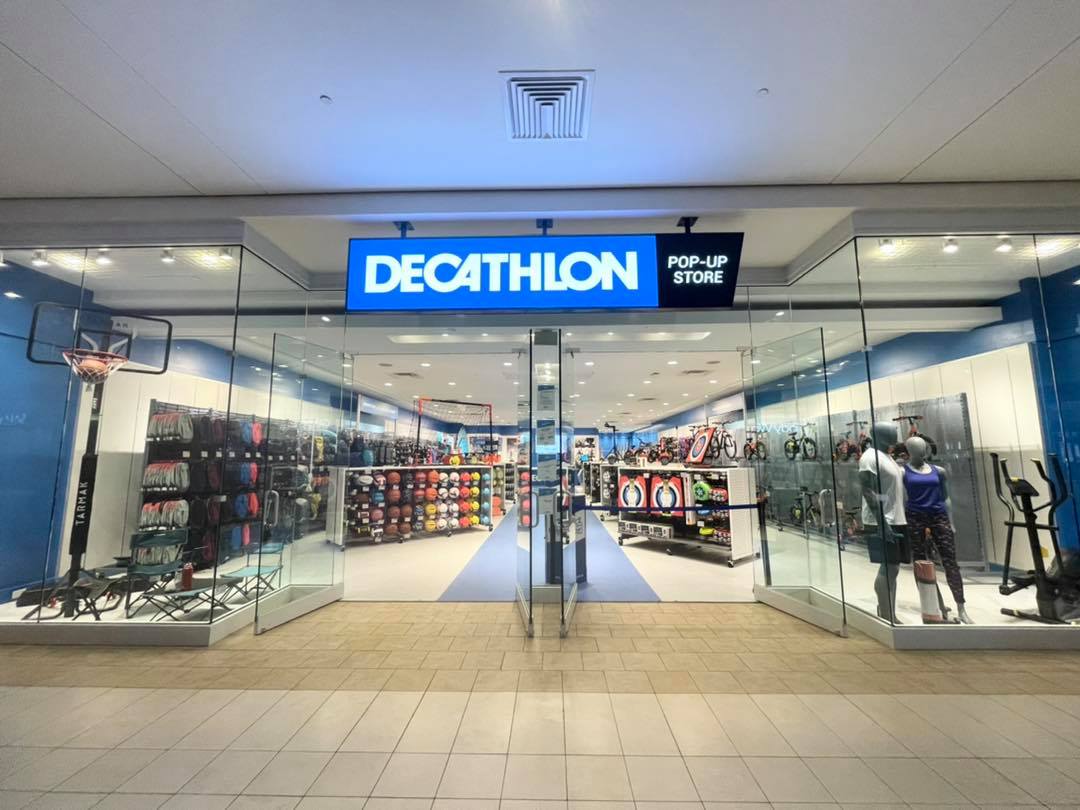
Landlord Ivanhoe Cambridge spent more than $200 million to merge the adjacent Complexe Les Ailes and Montreal Eaton Centre into one downtown centre that is now anchored by French sport retail behemoth Decathlon as well as a Time Out market food hall that recently reopened after COVID-19 closures. New retail additions to the Montreal Eaton Centre include a renovated Sephora store, a first-in-Canada concept for Pandora and and Quebec's first Samsung store which opened this month.
We’ll update this article in October when the Montreal flagship store officially opens.
*Thank you Maxime Frechette for providing information for this article.