Advertisement
Home Blog Page 934

Concerns Among Retailers as Canada Emergency Commercial Rent Assistance Program Ends this Week

BUSINESS OWNER CALCULATING BUSINESS COSTS

The Canada Emergency Commercial Rent Assistance program is scheduled to come to an end on Friday and groups across Canada are urging the federal government to continue the initiative but to also improve it so it can help more small businesses struggling to survive through the COVID-19 pandemic.

RENT RELIEF REMAINS CRITICAL FOR CANADIAN SMALL BUSINESSES AS CECRA COMES TO AN END

According to the Canadian Federation of Independent Business, a survey indicates one in three small businesses say rent relief remains a critical missing piece for their recovery.

“Three months into the launch of the program, it is now abundantly clear that while CECRA has helped some, it has left many more stranded without relief. How is it fair that the dry cleaner on one side of the street will survive because their landlord is using CECRA and the one on the other side will go under because they can’t access the program? Another problem is the bar to access the program is extraordinarily high even with a willing landlord,” said Laura Jones, Executive Vice-President at CFIB.

“We need provincial finance ministers to help Ottawa fix this, now. Waiting to see if more landlords apply for CECRA by the application deadline would be a big mistake not in keeping with sensible recovery plans. Rent relief needs an overhaul now to ensure a successful economic recovery for the small business community.”

The CFIB said federal government records show that less than 10 percent of the funding committed to CECRA has been spent to help 29,000 small business tenants. An additional 25,000 applications are predicted before the submission deadline at the end of August (program ends in July, but applications are open until the end of August), which still leaves the program underutilized.

CFIB IS ENCOURAGING PROVINCIAL GOVERNMENTS TO WORK WITH THE FEDERAL GOVERNMENT TO AID SMALL BUSINESSES AMID COVID-19

The CFIB is recommending provincial governments work with the federal government to allow tenants to directly apply for and access CECRA funding. CFIB has also recommended the forgivable portion of the Canada Emergency Business Account be expanded as an alternative way to provide rent relief.

In an open letter to Canada’s Finance Ministers, the CFIB said there is an urgent need to fix rent relief for small business owners across Canada.

“On behalf of the businesses that have been left out of a program that can make or break their future, we are urging you to fix this by repurposing the money left in the CECRA budget to get help directly to tenants. One in three businesses say rent relief remains a critical missing piece for their recovery—a failure to address this would represent a serious failure in any economic recovery plan,” said the letter.

“Rent relief needs an overhaul now. Ideally, provincial and federal finance ministers should work together to fix CECRA by establishing an alternative way to get rent relief money directly to tenants who need it. However, if this is not possible to do quickly, CFIB urges provincial governments to immediately pull their portion of CECRA funding and redirect those funds to directly support small business tenants that have not been able to access the program. This pivot to assist local businesses that have been denied access to rent relief is critical to economic recovery.”

David Lefebvre, Restaurants Canada Vice President, Federal and Quebec, said CECRA has been beneficial for some restaurants who were able to access that support over the past few months.

“For those participating in the program, this could make the difference between being viable and being able to remain open and having to close,” he said.

“At this point from the conversations we’ve had with the government it seems right now the only possibility is an extension. There’s no indication in the short term that there will be major changes to the program but they’ve been open to extending it for a few more months like they did with the wage subsidy. But in the wage subsidy you had some positive changes in the program.

“Also at this point being in the middle of the summer, there’s not a lot of movement in terms of the government.”

The main thing Restaurants Canada has been asking from the beginning is for the program to be better for tenants, explained Lefebrve.

“Right now the landlord has a veto right to enter or not to enter into an agreement under the CECRA program. This is definitely a problem. We’d like to have something like if a tenant fulfills some kind of checklist they could force an agreement on the landlords under the program,” he said. “This is something we’d like to see – some way to make it compulsory for landlords to participate in the program.

“We’d also like to see applications to be more streamlined and easier to do for operators.”

RETAIL COUNCIL OF CANADA SAYS CECRA IS TOO COMPLICATED

The Retail Council of Canada said CECRA is too complicated, too restrictive with the threshold for revenue loss for tenants too high at 70 percent, and it is voluntary, requiring landlords to apply on behalf of tenants which it appears was not successful based on the lack of pick up.

“There’s been a challenge with the program from the get-go with respect to landlord participation,” said Karl Littler, Senior Vice President, Public Affairs at the Retail Council of Canada. “The program is a weird one which is if you benefit from it, it’s a godsend right. And if you do not benefit from it, it’s utterly useless to you.”

Another issue with CECRA is that only small business tenants paying less than $50,000 per month in gross rent in a given location are eligible which leaves out many bigger retailers.

Jon Shell, Managing Director & Partner of Social Capital Partners in Toronto, and Co-Founder of Save Small Business, a grassroots coalition of small businesses across Canada, said the CECRA program doesn’t really do very much.

“Not very many people use it. I think for the very few businesses that have it you might as well extend it. It doesn’t cost very much money. So why not?,” said Shell.

“They don’t have any alternatives that they’ve proposed. I think not extending it is nonsense but even extending is not that important. It’s super important for the very few companies that get it but so few companies get it. It’s had almost no impact. We’d like it to be replaced with something useful.

“The government announced $3 billion for rent relief. I’m assuming that the reason they did that is because they thought rent relief was important and the $3 billion was the right amount of money to provide to small business in order to pay the rent. They have spent a fraction of that money. So the question is do they still believe that rent is important and if so what’s the plan with all the money. Our suggestion is creating a simpler mechanism to deliver that money directly to tenants as opposed to going through the landlords.”

Retail E-Commerce Explodes in Canada Amid COVID-19 Pandemic

ONLINE SHOPPERS USING ECOMMERCE PLATFORM WHILE INSIDER BRICK AND MORTAR STORE

Retail e-commerce sales reached a record $3.9 billion in May in Canada, a 2.3 percent increase over April, and a 99.3 percent increase over February ($2.0 billion), according to Statistics Canada.

Year over year, e-commerce sales more than doubled—with a 110.8 percent increase compared with May 2019.

THE EXPLOSION OF ECOMMERCE HAS THE POTENTIAL TO RESTRUCTURE THE CANADIAN RETAIL INDUSTRY

The federal agency said small businesses are increasingly turning to e-commerce platforms and are using these platforms in innovative ways. The degree to which Canadians continue to choose e-commerce purchasing options or return to traditional purchasing methods has the potential to change the structure of the retail trade industry in Canada. Clearly, the retail landscape will evolve, it said.

“These record gains in e-commerce occurred as total retail sales experienced record declines. The impact of COVID-19 is best highlighted using April data. Retail sales plummeted to $33.9 billion in April, a 29.1 percent decline from February and a 26.4 percent decline from April 2019. While e-commerce saw a 63.8 percent monthly increase in April, in-store sales dropped 25.3 percent. In May, total retail sales started to recover, reaching $39.3 billion,” said the federal agency.

“Retail e-commerce sales have risen steadily, with the proportion of online sales rising from 2.4 percent in 2016 to 4.0 percent in 2019. The month of April highlights the peak of the COVID-19 impact, with the proportion of retail e-commerce sales jumping from 3.8 percent in April 2019 to a record high of 11.4 percent in April 2020. In May, as the Canadian retail environment allowed for more in-store purchases, the proportion of retail e-commerce sales was 10.0 percent.”

The report said e-commerce sales increased more among non-essential retailers. All 11 retail trade subsectors with e-commerce sales saw an increase in online sales as a result of COVID-19. From February to April 2020, only the food and beverage subsector experienced an increase in in-store sales (+3.3 percent) and a surge in e-commerce (+107.0 percent).
StatsCan said In-store sales declined for general merchandise stores (-15.1 percent), building material and garden equipment and supplies dealers (-15.8 percent), and health and personal care stores (-16.1 percent). These subsectors had relatively moderate declines compared with other brick-and-mortar operations, it said.

“In contrast, other retail trade subsectors — such as furniture and home furnishings stores (-69.6 percent); sporting goods, hobby, book, and music stores (-79.0 percent); and clothing and clothing accessories stores (-84.2 percent) — saw much sharper declines in in-store sales from February to April 2020. As in-store sales decreased for these subsectors, e-commerce sales increased.

“Mandated business closures that prevented retailers from making traditional in-store sales resulted in a greater shift toward e-commerce. Meanwhile, food and beverage stores — essential services that were allowed to remain open — saw a 38 percent increase in grocery sales in the second week of March compared with 2019, and a surge in sales of certain personal care products.”

EXPERT BELIEVES THAT BRICK AND MORTAR WILL STILL APPEAL TO CUSTOMERS AS ‘NEW NORMAL’ SETTLES

Michael Kehoe, broker/owner of Fairfield Commercial Real Estate in Calgary, said the mandated business closures that prevented retailers from making traditional in-store sales over most of the past five months was a black swan event.

“The spike in retail e-commerce sales over this period is no surprise but there is a robust return to customer visits to physical stores that will likely lead to similar customer footfall levels over the medium term that were seen before the COVID-19 pandemic,” said Kehoe, a veteran of the consumer real estate industry with 45 years of experience.

“Small businesses in the retail sector have increased their e-commerce platforms but as things normalize across the country retailers will rely on their bricks and mortar locations that are essential to any omni-channel retailing strategy. Retailers are the heart and soul of the country we have realized during the pandemic. Shopping will normalize over time as Canadians return to their favourite venues.”

COVID-19 HAS ACCELERATED DIGITAL FULFILLMENT IN THE CANADIAN RETAIL INDUSTRY

Gary Newbury, a retail supply chain strategist and serial transformation executive, said the impacts of COVID-19 for Canadian retailing prompted full attention to digital fulfillment, especially for those non-essential retailers who were forced to close, but also for those in essential businesses as they deployed “in store” fulfillment models.

The figures at 10 percent do not show the potential. This potential is split between three key factors, he said:

  1. Canadian’s propensity to order abroad having their items imported (which are not tracked by Stats Canada);
  2. How retailers choose to report their online sales, there are some classification challenges; and
  3. The lost opportunity for many retailers to “shine” during this time with a combination of curbside and home delivery services to help drive brand loyalty during a period of extreme uncertainty for many consumers.

“The significant uptick in volume of online order fulfillment is an important trend. It also is a time for reflection for retailers who were often forced to ‘get their digital side of their business up and running’, to attempt to scale their services from a standing start, or were, frankly, in their element as they had already been operating at volume and welcomed the extra demand, especially if their stores were closed to consumers,” said Newbury.

“Given many consumers are fearful or, at best, reluctant to “get back to normal” with their shopping habits, it begs the question, will the recent rise in online sales continue to grow?

“My thoughts are that there are many factors that relate at category, brand and consumer level. I believe there will be a massive flight to value during this year and early next and uncertainty will prevail for 18-24 months. This seismic demand movement will tend to mean there is no prospect of profit for many retailers looking to operate an online business. Only those making significant investments now will likely be in good shape to buck this trend. Those still looking at eComm as a bolt on to their store distribution network will run into all manner of problems and will conclude the best way forward will be to close the online store.”

He said retailers are starting to rethink their merchandising approaches and are looking to have more clear propositions both in store and online, often by removing proliferating SKU (stock keeping unit) assortments and going back to basics.

At the end of the day, whether the percentage online will grow, stabilize, or reduce will be as a result of consumer perceptions of value, how quickly they want to acquire products and the relative friction they experience between channels (store and online), much of which is in the retailers hands to manage, he added.

“Many people experienced online services for the first time over the last four months, some had a great experience, some not so great. If somewhere in the order of 50 percent of people would prefer to avoid retail stores (lots of friction currently), this is a big prize for retailers to go after, however, they need to approach this opportunity with care, ensure they elicit the help of digital fulfillment experts, be open to look at digital retailing in a different way (skip the extended aisles and pricing mechanisms etc), and ensure they fully comprehend the financials of online if they are going to develop a profitable online business,” said Newbury.

Bruce Winder, author of RETAIL Before, During & After COVID-19 and President of Bruce Winder Retail, said the Statistics Canada report confirms what many people hypothesized: as brick and mortar retail softened in many cases, e-commerce sales soared during the key months of the pandemic (thus far).

“The multi-million-dollar question is what will e-commerce sales look like from now until a potential vaccine is developed and administered and what will e-commerce sales look like post vaccine,” he said.

“One can argue that the growth in e-commerce during wave one of the pandemic allowed consumers to sample the convenience, safety and endless aisle of online shopping - leading to a permanent uptick in this channel. Sadly, we will probably see wave two sometime soon which will reinforce online shopping's benefits.

“An important point however, is to recognize that existing e-commerce infrastructure is lacking as witnessed by countless order delays, missing products and charging errors during wave one. As we have already seen from Walmart and Empire, retailers (and suppliers) have begun to pivot to quickly increase online shopping and delivery capacity to meet anticipated needs.”

STORE COUNTS WILL DIMINISH BUT BRICK AND MORTAR WILL PREVAIL

This will have, as we have already seen, retailers reviewing store counts and closing unproductive locations that have been pushed into the red. There will be fewer stores from many legacy brands as a result, added Winder.

“New digitally native brands will emerge though and have the benefit of building brick and mortar infrastructure based on this evolving environment. They will integrate all channels so that the shopping experience involves less friction than today's incumbents,” he said.

“The tough part for retailers is learning how to make money on e-commerce sales - especially if they don't sell their own brand. Even with the required scale, technology and partner infrastructure, it won't be easy and net profit margins could be considerably less than traditional brick and mortar channels that have been refined for decades. Will suppliers help pay for this gap as per Walmart's announcement to add new discounts to vendors last week?

“Nevertheless, this is a transition that must happen as the customer is demanding it. Those that can make the successful jump to profitable e-commerce will survive, those that cannot will be swept away as online retailers like Amazon, who have been readying for this day for decades, will dominate."

National Swimwear Retailer ‘Swimco’ Files for Creditor Protection: CEO Interview

SWIMCO STORE AT SQUARE ONE SHOPPING CENTRE. PHOTO: SWIMCO

Long-time Calgary-based retailer Swimco, a national swimwear company, has filed a Notice of Intention, under creditor’s protection, to restructure its operations as it responds to the devastating impact of the COVID-19 pandemic.

Lori Bacon, Owner and CEO of the retailer which opened its first retail store in Calgary in 1983, said the NOI gives the company up to 90 days to put a proposal together for the creditors.
“Here’s how we see our business. Here’s what we’re doing for leasing expenses, for staffing, for everything and provide them with a business plan of how we think we can be viable, profitable into the future,” she said.
PHOTO OF LORI BACON STANDING IN FRONT OF TWO WOMEN MODELLING SWIMCO.

“And also a payment plan for the amounts owing them. And they vote on that. Hopefully they see that there’s a way forward together and we carry on. We’re hopeful that by the end of September that we are through this process and have launched our Swimco version 2.0.

“We’re looking to be a smaller company. We’re at 20 (stores) and we envision staying there.”

Pre-COVID it had 25 stores in operation.

Bacon confirmed that the company has about $6.5 million in unsecured claims and that includes about $1.6 million in landlord rent.

Swimco reduced its head office by about half. The company had 45 staff in its corporate head office but now that has been reduced to about 20. Retail staff was at about 200 and today is sitting at about 120.

“Integral to this plan is renegotiations with landlords and getting our rent expenses in line with where we see sales will be for the next few years because they are going to be dramatically different,” explained Bacon.

The five stores to be closed include three in Ontario, one in Vancouver where a lease has not been renewed, and one other store is currently in lease negotiations.

Bacon said the COVID crisis came around spring break which meant no travel for people.

“With all stores being shut and still having your rent looming over you, you go in the hole pretty quick. At first, I think everyone was just in a state of shock. ‘For two weeks we’re going to close.’ But it readily became apparent that this was not a two-week thing. We laid everybody off temporarily. We closed the stores on Monday March 16 and we quickly laid off all our store people and most of our head office people and by the following week we had laid off everybody,” she said.

“And really you know, I have to give credit to my husband Dave who for lack of nothing to do he kept coming into the office and the only one in the building and then his financial assistant joined him and they just started modelling things. Like sort of what if, what if, what if. I needed some convincing that there was a way forward and we’ve been working with some retail advisors . . . just modelling things and then realizing that this was an option for us to file a Notice of Intention to restructure. It was our opportunity to get out of some leases that were prior to COVID not profitable and certainly wouldn’t be during COVID.

“It just allows us to stop for a moment, put something in front of our creditors and we’ve had such positive support from both our bank and our vendors. They want this to work and I’ve become convinced that we do have a way forward and that our relative small size gives us a lot of nimbleness in terms of product offering and how we operate. We’ve done this throughout our 45 years but this time it’s much faster. The required moving into another lane. The adjusting. The evolving. It’s just got to happen fast. That’s what we’re prepared to do and that’s what we’re working on. We’re fighting for it and holding hands with our vendors and our landlords and think we can get there and be profitable next year and then ahead where we really see things opening up which is in 2022.”

Swimco actually had its roots as a home-based, mail-order business started by Bacon’s mother Corinne Forseth a few years before the retailer opened its first location.

Dyson to Open 3rd Canadian Retail Space in Calgary

CF CHINOOK CENTRE. PHOTO SUPPLIED BY DYSON

UK-based household and technology ‘reinvention’ brand Dyson will open its third standalone Canadian location at Calgary’s CF Chinook Centre in September. It follows Dyson’s first Canadian showroom that opened in Toronto in late 2017, as well as a Vancouver location that opened in January 2020.

THE DYSON DEMO STORE IS SET TO OPEN AT CF CHINOOK CENTRE IN SEPTEMBER

The Calgary ‘Dyson Demo’ store will showcase the brand’s latest technology courtesy of a trained team of employees, while also providing visitors the opportunity to purchase various Dyson products. On display will be products such as supersonic hairdryers, air purifiers, commercial hand dryers, and various vacuum models. The store will sell LED lights which were created by Jake Dyson, son of company founder Sir James Dyson. Amid COVID-19, the air purifiers may be a draw — the Calgary storefront will showcase Dyson’s  full range of air treatment products including the Dyson Pure Hot+Cool, which launched in January 2019. It’s essentially an air purifying fan and heater that detects particulate matter and gasses with intelligent sensing and then automatically captures them so they are removed from the air.

Construction hoarding went up last week for the new Calgary Dyson Demo store, which will be located on the main floor of CF Chinook Centre across from the entrance to the mall’s Saks Fifth Avenue location and one storefront away from the mall’s highly productive Louis Vuitton store. The Calgary Dyson space measures about 2,340 square feet according to lease plans supplied by landlord Cadillac Fairview

CF CHINOOK CENTRE DYSON LOCATION HIGHLIGHTED IN RED. CLICK IMAGE FOR INTERACTIVE MALL FLOOR PLAN
EXTERIOR OF DYSON STORE. IMAGE: DYSON

The first Dyson Demo store in Canada opened at Toronto’s Yorkdale Shopping Centre in December of 2017, spanning about 2,000 square feet. The Vancouver location is about 2,500 square feet in a prime location at CF Pacific Centre and was open briefly before the COVID-19 store shutdowns. Sources say that there has been interest in a location at West Edmonton Mall in Edmonton and possibly in downtown Montreal. 

Dyson’s first store in the world opened in Tokyo in the spring of 2015, followed by locations in Paris, Moscow, Jakarta, and London. More have since opened in major centres globally. The United States is home to four Dyson Demo stores in New York City, San Francisco, suburban Washington DC, and most recently a location opened at Westfield Century City in Los Angeles.

THE DYSON DEMO MODEL COULD BE ADOPTED BY OTHER RETAILERS DUE TO COVID-19

The Dyson Demo store model could be one that more retailers utilize as chains downsize amid crippling rent payments. With one location per city, Dyson’s presence allows for a local ‘foot on the ground’ while creating legitimacy, education and brand awareness for the region. While visitors to a Dyson Demo location may not make a purchase in the retail space itself, a subsequent purchase online or in a wholesale retailer is another possibility. Dyson’s wholesale distribution in Canada is extensive. Many major retailers across the country carry Dyson products, including Canadian Tire, Best Buy, Hudson’s Bay, Bed Bath & Beyond, Walmart, Costco, Leon’s, The Brick, Lowe’s, and others. 

Last-Mile Delivery Most Inefficient Part of Retail Supply Chain in Canada: Experts

Last-mile delivery is the most inefficient process for more than half of North American Transportation & Logistics companies, says a new global report commissioned by SOTI in partnership with Arlington Research.

STAKES HAVE NEVER BEEN HIGHER FOR TRANSPORTATION AND LOGISTICS COMPANIES AS CONSUMER HABITS SHIFT

In an era where e-commerce is exploding and consumers are expecting rapid, often same-day deliveries, the report titled The Last Mile Sprint: State of Mobility in Transportation and Logistics, said 78 percent of companies in Canada in Transportation & Logistics say last-mile delivery is the most inefficient process of the entire supply chain. In comparison, 59 percent of those companies in the U.S. felt that way.

“The stakes have never been higher for transportation and logistics companies in North America as consumers increasingly embrace a delivery culture,” said Shash Anand, Vice President of Product Strategy, SOTI, the world’s most trusted provider of mobile and IoT management solutions, with more than 17,000 enterprise customers and millions of devices managed worldwide.

“By implementing a robust mobile-first strategy, companies will not only be able to provide better customer experiences, but will increase speed, minimize costs, ensure transparency in the delivery channel for the customer and end consumer, and edge out the competition.

“Ensuring your technology is constantly updated and having an integrated mobility and IoT management platform in place is an effective operations strategy that helps minimize disruptions to your business and maintain high levels of customer satisfaction.”

Companies such as ShipperBee have launched in an Uber-like way, though ShipperBee is currently operating in the Greater Toronto Area only though it has plans to expand.

Gary Newbury, a retail supply chain strategist and serial transformation executive, said he agreed with the survey’s main point; the last-mile delivery is the most inefficient process in the retail supply chain. And Canadians tended to be much more aware of the gaps.

“The volume of online versus total retail in Canada has historically been below five percent (up to COVID-19). Much of the approach retailers have taken has been focused on the ‘marketing’ side of the digital business stream. As a result the assumption for many retailers has been ‘it’s just a small change and so we can bolt it onto our existing distribution network’,” he said. “And to a degree, they were able to think this is all they needed to do with relatively low/incidental volumes. Retailers brought in digital marketing experts, but not digital fulfillment experts. To cover for this knowledge gap they tended to either try and ‘skunk work’, a fulfillment process internally (bending process and systems to accommodate), or relied on a third party logistics service to do the heavy lifting, relying on their tech platform for ‘visibility’ of shipping through to the doorstep. Often, the retailer may have found their tech platform was more geared towards B2B tracking, rather than B2C.

“Approaching a key future line of revenue in this ad hoc way has exposed many retailers to an unprofitable business stream, and as they attempted to scale this, the losses just got worse, the customer service often suffered, through lack of transparency of where their order was in the fulfillment process. For many consumers, up to COVID-19, it has been a hit and miss process.

“The reason why I think they got this wrong is retailers’ distribution networks are designed to move mass merchandising from Point A (a supplier) to Point B (a store) via a distribution centre. Typically, the lowest unit that is shipped in this way is a case. Online is very different, it is all about individual pieces, and often a localized mixed, being ordered electronically, with an expectation of speed, to either the store (for pick up) or to a point of convenience (such as a residential address).”

COVID—19 HAS EXPOSED THE RETAILERS WHO WERE SLEEPING ON INITIATIVES SUCH AS CLICK AND COLLECT

Newbury said, “the eComm supply chain design, for many retailers, needs a deep rethink. COVID-19 has exposed many retailers — missing the boat by not having a click and collect or home delivery service, or having services which did not scale, and where they did, caused the retailer to lose more money than staying shut”.

“It is the most labour intensive and resource consumptive part of their proposition, but rather than just have small cube, high margin products online with a scheduled service for their delivery (and restricted geographical coverage), many retailers, being under-informed about the cost profile of fulfillment of online orders, unfortunately followed the trend of other retailers and felt it was something they had to do to keep their proposition competitive,” he said.

“The rethink is to look at the stores as potential inventory distribution points, consider automation, and, currently, look into using Micro Fulfillment Centre methodology. This is not the end game, but it’s a start to bring control and predictability to the outrageous costs of manual picking in the DC and the costs of shipping lots of small individually packed orders across Canada, of often low margin products.

“The rethink must return to a re-evaluation of the retailing proposition and what is required to be presented in store and that which is presented online. Often retailers, desperate for extra sales extend the online assortment which serves to compound complexity and drive high costs in serving customers.”

Newbury said there are five or six key areas for retailers to address before they can turn a profit on online orders:

  1. Financial record-keeping can hide the end to end costs of fulfilling online orders – when there is a spike in demand, extra costs are surfaced in fulfilling demand;

  2. SKU (Stock Keeping Unit) proliferation – retailers must look carefully at what their overall proposition is and how this is presented “in store” and online. Often online (extended aisles) can cause significant complexity and cost. Consumers are very savvy and, within a click, they can pick off all the low margin items and switch to other retailers (i.e. they will split their baskets to maximize their shopping dollars/value);

  3. High customer acquisition costs compared to life-time value (e.g. Wayfair);

  4. On demand fulfillment versus scheduled fulfillment – the choice of strategy can have a big impact on capacity, customer satisfaction and costs – retailers need to think carefully how best to structure their fulfillment processes to best optimize their proposition;

  5. Free delivery, porch piracy and “hassle free” returns – there’s not such a thing as a free lunch in business, nor is there in the virtual world; and

  6. “I mindfully add a sixth component in the sense that retailers know stores, what they know less of is digital. Approaching online as a bolt on is the worst of all worlds. Using a case/pallet distribution network for singles fulfillment will stop retailers growing online business, profitably. It looks good on paper, but the execution can be seriously profit draining.”

Some other key findings from the SOTI research include:

  • 82 percent of respondents in the U.S. and 88 percent in Canada agreed that it is critical for T&L companies to ensure a mobile-first strategy around last-mile delivery. A mobile-first strategy is defined as viewing smartphones, tablets and task-specific apps as the primary tools for getting work done;

  • Companies know that a mobile-first strategy for last-mile delivery can transform their business operations. 74 percent in the U.S. and 80 percent in Canada agree that their organization would benefit, or have already benefited, from an effective mobile-first strategy for last-mile delivery. 49 percent of respondents in North America with a mobile-first strategy in place for last-mile delivery said that it has effectively reduced their operational costs;

  • In North America, more than half (58 percent) of T&L professionals said a mobile-first strategy has enabled them to gain visibility into critical aspects of their supply chain; and

  • 49 percent of T&L companies globally said their technology is outdated. In Canada, nearly 68 percent of T&L companies indicated their technology is outdated, and 41 percent in the U.S.

‘Canada United’ Initiative Aims to Support Local Businesses with Major Partnerships

A national movement — Canada United — has been launched to support local businesses in communities across the country.

The initiative was spearheaded by RBC which brought together more than 50 of Canada’s leading brands, the national Chamber of Commerce network, and business associations to rally Canadians to “show local some love” by buying, dining, and shopping local.

CANADA UNITED PLANS TO KICK-START AN ECONOMIC REBOUND FOR SMALL BUSINESSES

“As Canadians continue to work hard to limit the spread of COVID-19, it is more important than ever to come together with one voice to safely support the re-opening of Canada’s local businesses and our economy,” said Neil McLaughlin, Group Head, Personal & Commercial Banking, Royal Bank of Canada.

CANADA UNITED LOGO. PHOTO: CANADA UNITED FACEBOOK

“Canada United was created to kick-start an economic rebound by rallying consumers to give local businesses the support they need to re-open during these uncertain times. By bringing together government, business associations, and corporate Canada, we are looking to start a movement to get Canadians to buy local and support businesses across the country. We are genuinely excited by the energy that all of our partners are bringing to this effort.”

Officials said Canadians are invited to join the Canada United movement by buying and dining local, including celebrating and supporting local businesses during the Canada United Weekend from August 28 to 30.

Canadians are also encouraged to watch the Canada United videos online at GoCanadaUnited.ca, like posts from @GoCanadaUnited on social media and use #CanadaUnited on Twitter to demonstrate their support. For each of these actions until August 31, RBC will contribute five cents up to a maximum contribution amount of $2 million to the Canada United Small Business Relief Fund.

The Fund will provide small Canadian businesses with grants of up to $5,000 to cover expenses related to personal protective equipment (PPE), renovations to accommodate re-opening guidelines, and developing or improving e-commerce capabilities.

“If there has been one silver lining in all the tragedy and sacrifices of the current crisis, it has been the spirit of collaboration and unity of purpose that has been evident between levels of government, across provinces and across sectors,” said Rocco Rossi, President and CEO of the Ontario Chamber of Commerce. “We are calling on that same unity of purpose with Canada United. Small, local businesses are the heart of our communities, our Main Streets and our economy. Together, it is time to show locals some love.

“We were blown away by the scope of vision that RBC had to do something to really celebrate and help small business across the country that has been hit so hard by this crisis. There are lots of great buy local campaigns across the country. But no one has put together this kind of coalition of iconic Canadian brands and media companies that in addition to wanting to do a media campaign to encourage people to support local businesses, to buy local, support small business, to add a component that each time there’s a social media interaction, a tweet, a post, a share, a like, that RBC and the coalition is prepared to put five cents into a fund that then will be used to fund relief grants for small businesses to help them with PPE (personal protective equipment) and restructuring costs to open safely.

“That breadth of vision was extremely attractive and the unity of purpose that it represents because these are large businesses that understand that small businesses are at the heart of our economy. They’re key to the supply chain. They’re key to our Main Streets and the vibrancy of our towns and cities. So for them willing to say ‘look Canada we’ve got to show local some love’ is a pretty powerful message.”

Rossi said the businesses continue to face a very rough time and thousands of businesses have already been lost due to the economic crisis.

“We will end up losing more as we go because going into the crisis the average small medium size business had 20 to 30 days of cash on hand. We’re into four months. So they’ve blown past what they had and yet the bills keep coming. They’ve maxed out their credit cards. They’ve borrowed from friends and family. They’ve taken out what loans they can. They’ve tried to take advantage of whatever programs, and there have been many programs that the government has introduced,” said Rossi.

“But even with all of that, we’re going to lose more businesses.”

Mike Dobbins, Chief Strategy and Corporate Development Officer at RBC, said the bank has been working with small businesses throughout the crisis.

“In order for them to fully recover you need to have a massive economic stimulus. That kind of led us to what role can we play and ultimately what we concluded was we really needed to create unity of purpose. We need to band together and create something large enough but in one voice. Send the right message to Canadian consumers to support their Main Streets,” said Dobbins, adding that the media campaign is intended for any business to plug into.

“If you’re a small business, you have the benefit of a massive advertising campaign that obviously small businesses can’t run.”

The intent is that in one voice with unity of purpose to create a movement.

“We want customers to come out and take micro actions,” said Dobbins.

CANADIAN RETAIL GIANT ROOTS HAS JOINED THE MOVEMENT

Retail giant Roots announced it was joining Canada United.

“Roots was started in 1973 by two friends who opened a small footwear store in Toronto,” said Meghan Roach, Chief Executive Officer of Roots. “Without the support of Canadians, we would not have grown into the brand and business we are today. We have partnered with RBC and joined Canada United to encourage all those living in Canada to support their local small businesses during this challenging period. Our support is needed today so these incredible businesses can thrive well into the future.”

Darryl Julott, Senior Manager at Digital Main Street, which is a supporting partner in Canada United, said one-third of small businesses are at risk of closing their doors due to the crisis created by the COVID-19 pandemic.

“I think a movement like this is at the right time,” said Julott.

“What’s really interesting about this campaign now, and the way it’s positioned around Canada United, is we are seeing this conscious shift within consumer behaviour. It’s not just a fad. We’re at a time right now where the consumer is justifiably changing their habits. Having something like this, bringing together some of the largest organizations in the world and some of the associations that represent this industry in Canada and some of the niche groups like Digital Main Street, I think you’ve got a very unique opportunity.

Digital Main Street is a non-profit organization that supports the growth of small businesses through the adoption of digital tools and technology.

Small business owners who are interested in the program can visit GoCanadaUnited.ca to learn more about grant application details, including eligibility criteria, and to apply.

Brief: Jaeger-LeCoultre Opens 1st Corporate Store in Canada, Bayview Village Innovates Virtually

JAEGER-LECOULTRE CORPORATE STORE IN TORONTO’S YORKDALE SHOPPING CENTRE. PHOTO CREDIT: “JM”

Jaeger-LeCoultre Opens 1st Corporate Store in Canada

JAEGER-LECOULTRE CORPORATE STORE IN TORONTO’S YORKDALE SHOPPING CENTRE. PHOTO CREDIT: “JM”

Swiss luxury watch brand Jaeger-LeCoultre opened its first standalone corporate store last week at Toronto’s Yorkdale Shopping Centre. The boutique, located amongst other luxury brands including TAG Heuer, Hublot, Van Cleef & Arpels, Montblanc, and others.

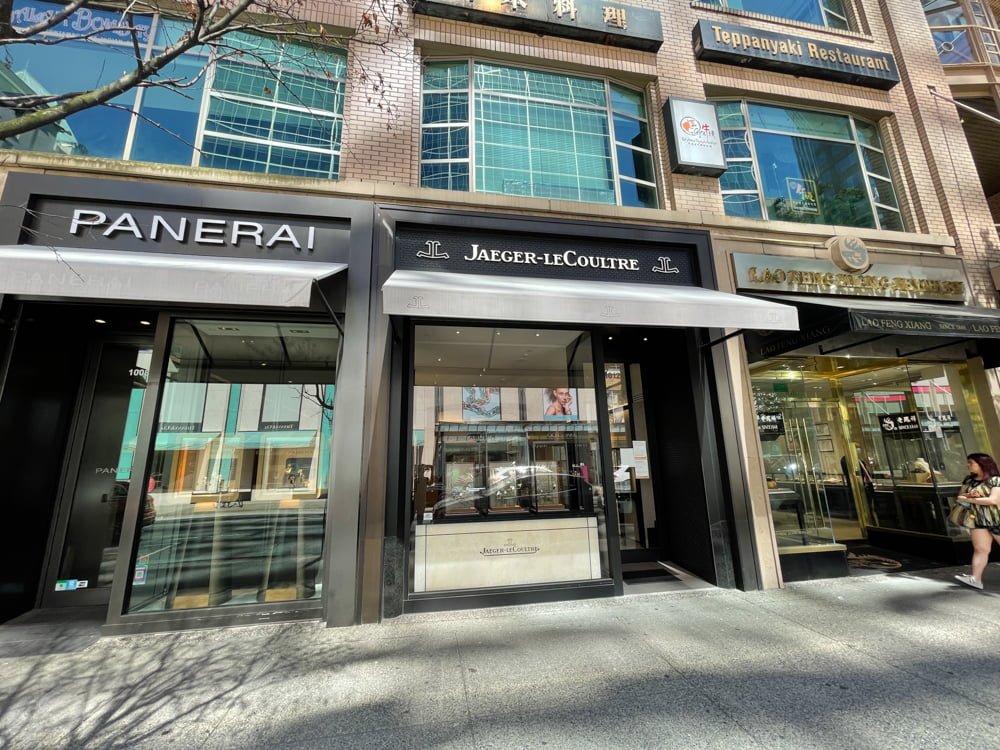
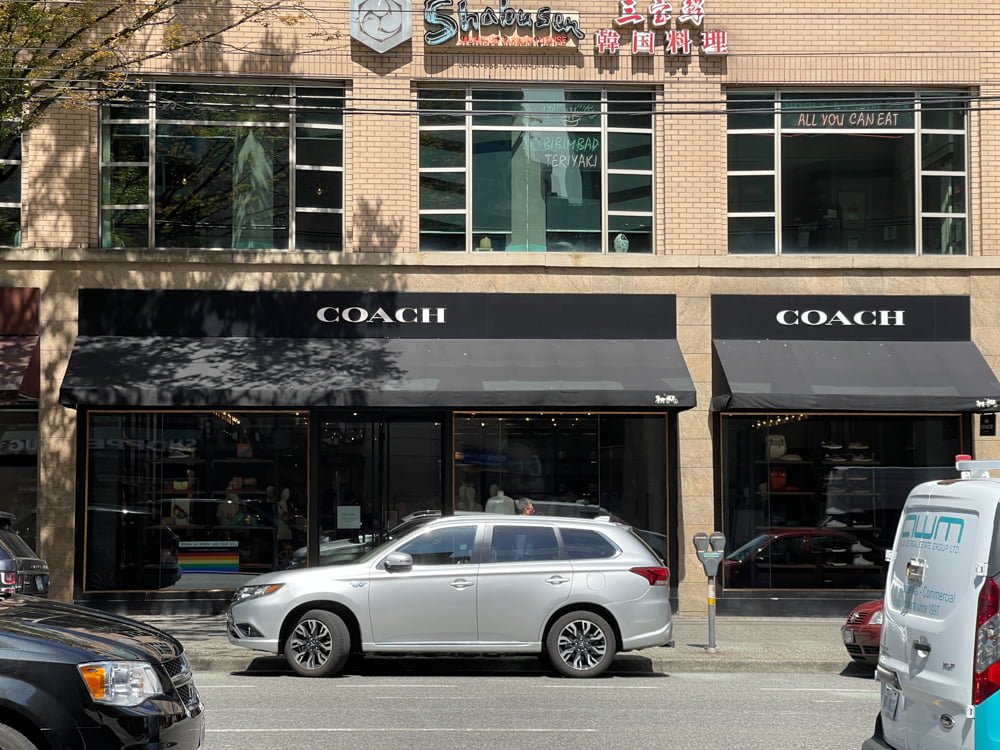
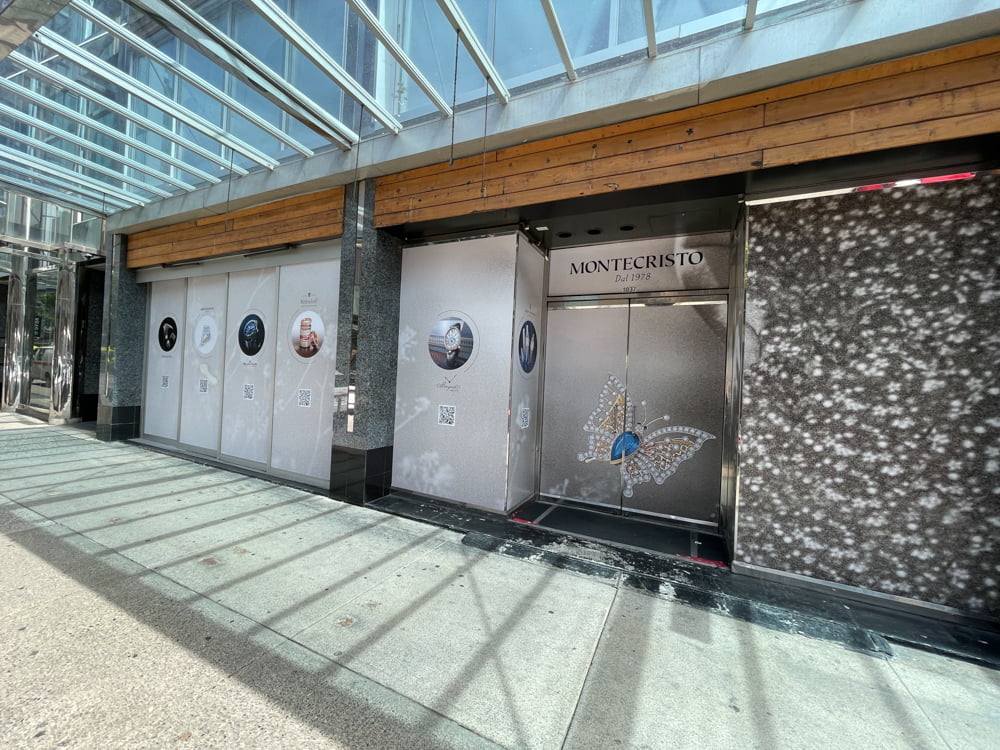
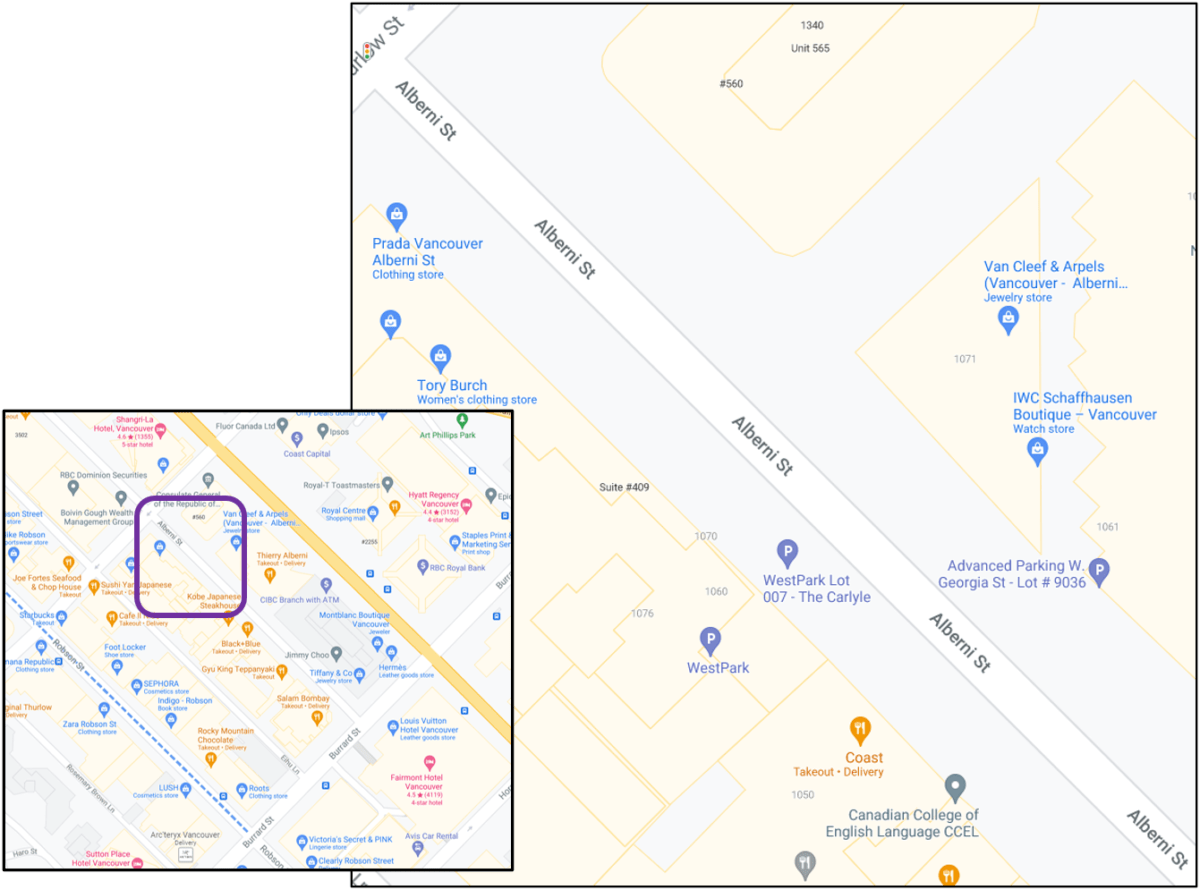
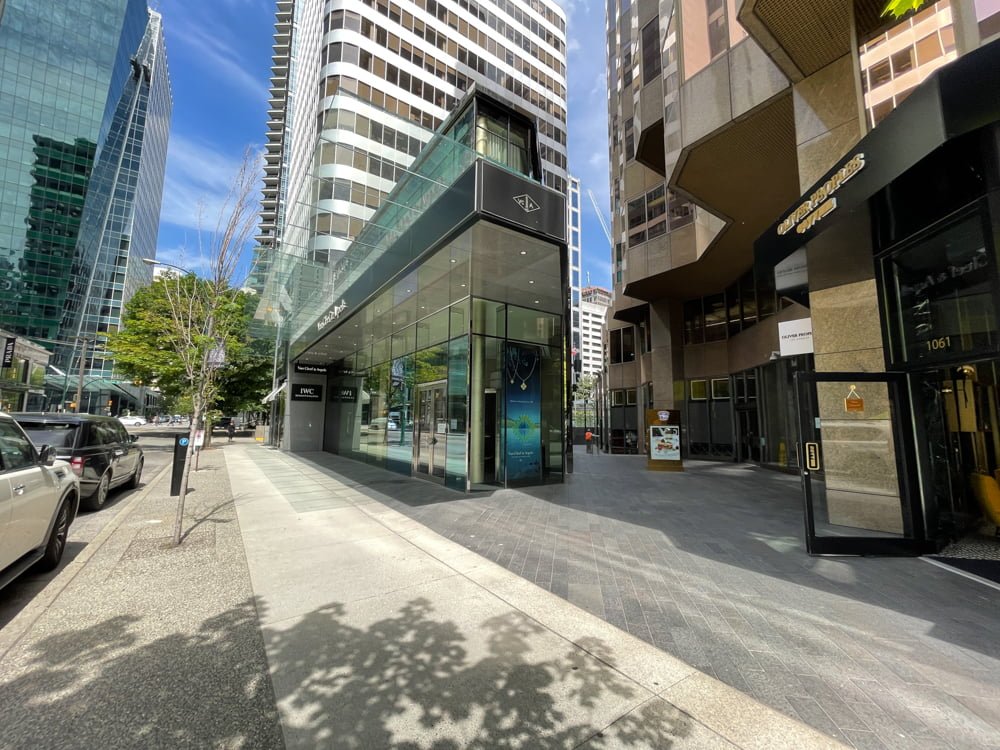
The 495-square-foot boutique replaces a franchised Jaeger-LeCoultre boutique that was located nearby and was operated by multi-brand Raffi Jewellers. The Raffi-operated boutique opened in 2015. In Vancouver, a licensed Jaeger-LeCoultre boutique also opened in 2015 on Alberni Street which features a similar mix of luxury brands as Yorkdale.

The stunning new Toronto Jaeger-LeCoultre boutique features the brand’s most updated retail design, including a bold facade as per the photo above.

Yorkdale Shopping Centre recently received the prestigious TOBY Award for excellence in commercial real estate in the Retail category at the International Building Owners and Managers Association (BOMA) Awards. The Outstanding Building of the Year (TOBY®) Awards is the most prestigious and comprehensive program of its kind in the commercial real estate industry recognizing quality in commercial real estate buildings and rewarding excellence in building management. Competing against shopping centres around the world, Yorkdale was recognized for its building standards, community impact, tenant relations, energy conservation and sustainability. The centre was also Canada’s most productive last year in terms of sales per square foot

Lao Feng Xiang Opens 2nd Canadian Boutique

FACADE OF LAO FENG XIANG AT CF RICHMOND CENTRE. PHOTO: RITCHIE PO

Shanghai-based luxury jewellery retailer Lao Feng Xiang has opened its second Canadian storefront at CF Richmond Centre south of Vancouver. The first boutique opened in October of 2015 at 2016 Alberni Street in downtown Vancouver.

INTERIOR OF LAO FENG XIANG AT CF RICHMOND CENTRE. PHOTO: MARTIN MORIARTY

Lao Feng Xiang is China’s oldest jewellery brand, as well as the world’s 16th-largest luxury goods company. Founded in 1848, the brand boasts a network of 2,800 retail stores in China as well as a handful internationally including a flagship in New York City. Lao Feng Xiang is particularly known for its 24-karat gold and jade creations.

The beautiful store features a prominent facade and opulent interior, as well as a range of product with some prices well into the thousands of dollars. CBRE Vancouver negotiated the lease deal on behalf of the retailer under the direction of Mario Negris and Martin Moriarty.

Bayview Village Launches Virtual Food Marketplace

FACADE OF BAYVIEW VILLAGE SHOPPING CENTRE. PHOTO: BAYVIEW VILLAGE

Toronto’s Bayview Village, considered to be one of Canada’s most prestigious shopping centres, has announced the launch of GASTRONOMER, a virtual marketplace and food concierge service that allows customers to shop a curated product assortment assembled from Bayview Village’s food and beverage tenants.


View this post on Instagram


Foodie friends—it’s finally here! #Gastronomer, BV’s virtual marketplace and food concierge, is officially open for delish business. Visit bayviewvillageshops.com/gastronomer (or, click the link in bio) to be the first to place an order.⁠ ⁠ Here’s how it works:⁠ ⁠ – Peruse our drool-worthy offering.⁠ – Choose your yummy adventure.⁠ – Pay.⁠ – Select your preferred pick-up time.⁠ – Drive up to one of our curbside stalls.⁠ – Our Concierge will deliver your order.⁠ ⁠ Plus, every order comes with a complimentary set of haute BV coasters, while supplies last.⁠ ⁠ Bon appétit!⁠ .⁠ .⁠ .⁠ #thehautelife #bayviewvillage #bvshops #toronto #torontolife #torontorestaurants #torontoeats #blogto #dineto #dailyhiveto #narcitytoronto #dailyhive #instagood #the6ix #yyz #torontofood #tastetoronto #torontofoodie #tofoodies #torontolifestyle #northyork #delish #gourmetfood #tastethesix #foodlover #gtafood #eeeeeats #countdown⁠

A post shared by Bayview Village (@bvshops) on

The initiative launched on July 20 on the Bayview Village website. The one-stop online shop gives customers the opportunity to purchase gourmet items including prepared dishes, DIY meal kits, and gift baskets from select tenants, with items ranging in price from $6–$270. Customers can place their orders at least 24 hours in advance and select a preferred pick-up time to for contactless curbside pick-up.

“Highlighting the best of the best of Bayview Village’s culinary options, this is a service for–as the name suggests–lovers of gourmet food,” says Melissa Evans-Lee, VP of Retail, National Marketing at QuadReal Property Group. “In addition to providing convenient gourmet options for our customers, this is meant to directly help our food and beverage tenants during a very challenging time.”

Among the gourmet options to go are BBQ Grilling Kit from Pusateri’s Fine Foods, Mezza Cottage Kit from Tabulè Middle Eastern Cuisine, Pizza and Plant-Based Meal Kits from Il Fornello, Cleanse Kits from ELXR Juice Lab, Butter Chicken Meal Kit from Goa Indian Farm Kitchen, and Burmese Chicken Curry Meal Kit from Pōpa. With every order, customers will receive a complimentary set of four “haute” BV coasters, while supplies last.

Follow @bvshops for the latest updates regarding GASTRONOMER and other exciting initiatives in 2020

RioCan Lunchbox Challenge

CONSTRUCTION WORKERS ENJOYING ‘THE LUNCHBOX CHALLENGE’ PROGRAM. PHOTO: RIOCAN

RioCan Real Estate Investment Trust teamed up with its development and construction partners to participate in ‘The Lunchbox Challenge’, delivering more than 1,200 lunches to construction workers at nine development sites across Canada this month. The challenge, which began in BC and has since spread across the country, asks owners and construction companies to buy lunch for their workers on site to encourage and recognize their hard work. The meals are purchased from local restaurants and tenants who may be struggling due to COVID-19.

‘THE LUNCHBOX CHALLENGE’ IN PROGRESS. PHOTO: RIOCAN

“We were inspired by the challenge and teamed up with our development and construction partners to maximize our impact,” says Andrew Duncan, Senior Vice President, Development, RioCan. “RioCan and our partners work with many construction companies on development projects. The challenge was a great way to express our appreciation to hundreds of dedicated workers across the country while also supporting our restaurant tenants who have been affected by the pandemic.”

Participating construction sites included The Well in Toronto, Frontier in Ottawa, and the East Hills Shopping Centre in Calgary. In total, RioCan and their partners were able to support 13 restaurants with the initiative. The initiative is ongoing.

Pusateri’s Fine Foods Delivers to Muskoka

EXTERIOR OF PUSATERI’S FINE FOODS AT BAYVIEW VILLAGE. PHOTO: PUSATERI’S

Toronto-based Pusateri’s Fine Foods has launched a grocery delivery service in Muskoka to accommodate Canadians opting for staycations this summer. As many are enjoying domestic trips due to COVID-19 restrictions, Muskoka is set to see many new visitors this year and Pusateri’s is hoping to reduce the need for people to visit grocery stores. The service will deliver one to two times a week to the Ontario region, with a grocery delivery service for a central drop-off/pick-up spot at Don’s Bakery in Bala. Delivery options will be for Thursdays with a pick-up window between 12PM and 1PM and are free for orders over $250 (otherwise it’s $39.99).


View this post on Instagram


If you’re taking a break from cooking but don’t want unhealthy take-out visit our counters for a variety of hot prepared items ready for lunch or dinner.

A post shared by Pusateri’s Fine Foods (@pusaterisfoods) on

For more information or to place an online grocery order go to pusateries.com and select Muskoka for delivery at the checkout. Pusateri’s also recommends checking out their family meal options for cottagers here.

McEwan Fine Foods Launches PEI Meal Kits

FACADE OF MCEWAN FINE FOODS. PHOTO: MCEWAN FINE FOODS

Toronto-based McEwan Fine Foods, in collaboration with Canada’s Food Island in Prince Edward Island, have launched meal kits featuring an array of PEI’s exceptional culinary products.

The premium meal kits are a ‘Prince Edward Island Patio Party’ in a box and include PEI’s five core products lobsters, mussels, oysters, beef, and potato, as well as chef-inspired recipes created by the McEwan Fine Foods culinary team.

“Every year Prince Edward Island puts on a month-long festival showcasing all of the wonderful products that the island has to offer. This year due to the pandemic, McEwan Fine Foods is bringing a taste of the island to Toronto with our Prince Edward Island Patio Party boxes. PEI produces some of the best, sustainable lobster in the world and incredible grass-fed beef with full traceability. Our chefs have created unique Surf & Turf packages with all the trimmings so our guests can bring delicious PEI flavours home for easy summer meals,” says Jessica Rodrigues, Director of Communications for The McEwan Group.


View this post on Instagram


Posted @withregram • @mcewanfoods McEwan Foods has partnered with Canada’s Food Island in Prince Edward Island so you can bring a taste of PEI home with our Prince Edward Island Patio Party Boxes. McEwan’s chefs have created 3 unique meal kits: a Surf Box, a Turf Box and a Surf & Turf Box so you can indulge in culinary creations from the coast in the comfort of your home. . Order online at: www.mcewancatering.com Call 416 444 6262 ext. 228 or email: orders@mcewancatering.com and allow 48 hours. #fallflavourspei #DiscoverPEI #WeLovePEI #CanadasFoodIsland #food #foodie #BBQ #foodstagram #instafood #foodlover #foodies #delicious #foodstories #Canada #exploreCanada #canadian #patioparty

A post shared by Mark McEwan (@chefmarkmcewan) on

The Prince Edward Island Patio Party have three options to choose from, a Surf Box, a Turf Box, and a Surf & Turf Box with recipes like a chilled lobster Cobb salad, PEI grass-fed strip loin steaks with truffle compound butter, PEI oysters with McEwan’s cocktail sauce & mignonette, and PEI mussels with a choice of lemon, white wine & bacon sauce or tomato, fennel, chili and preserved lemon sauce. The curated boxes mean Ontarians can now enjoy a PEI patio party from the comfort of their own homes.

“Canada’s Food Island, Prince Edward Island is famous for its genuine people that work together to harvest and innovate premium food products and host experiences from land and sea. We look forward to celebrating our Island flavours with our Ontario friends/family by creating a unique Canada’s Food Island experience for you to enjoy in the comfort of your own home.” said Mitch Cobb, Chair of Food Island Partnership.

The collaboration between McEwan Fine Foods and Canada’s Food Island started after travel restrictions inhibited Ontario residents from being able to travel to PEI due to COVID-19. The two organizations have an established working relationship as the McEwan Groups’ Chef Mark McEwan has hosted many events during two of PEI’s flagship festivals, The PEI Fall Flavours Festival and the PEI International Shellfish Festival.

The bespoke boxes are available for purchase for Ontario residents only. To purchase, visit: mcewancatering.com or in-store at McEwan Don Mills or McEwan Yonge & Bloor McEwan. To ensure there are fresh products in every box, McEwan Fine Foods requires 48 hours to prepare, so customers are asked to consider this when ordering.

Planet Fitness Implements Masks

EXTERIOR OF PLANET FITNESS LOCATION. PHOTO: PLANET FITNESS

One of North America’s largest and fastest-growing franchisors and operators of fitness centres, Planet Fitness, has announced that members and guests will be required to wear a mask at all times while inside all open stores, beginning August 1.

In Canada, Planet Fitness locations have reopened in British Columbia, Alberta, Saskatchewan, and in some regions of Ontario that are in phase 3 of reopening since the COVID-19 pandemic. Currently, all Planet Fitness employees are required to wear masks. 

“As we continue to face the COVID-19 pandemic, amid an ongoing global health crisis, wellness has never been as essential to our collective community as it is today,” said Chris Rondeau, Chief Executive Officer at Planet Fitness. “Gyms are part of the solution and a key element of the healthcare delivery system, providing much needed access for people to exercise and stay healthy. Given our leadership position within the industry, we believe it’s our responsibility to further protect our members, employees, and communities so that we can all safely focus on our health, which is more important now than ever before.”

The gym and fitness centre has already taken several additional steps to strengthen its existing cleanliness policies and procedures to help keep members, guests, and employees safe. These include enhanced cleanliness and sanitization policies and procedures, extensive training for employees, physical distancing measures in its spacious and well-ventilated stores, and reducing physical touch points with touchless check-in. Earlier this month, the Company also launched a Crowd Meter feature on its free mobile app to allow members to check club capacity before coming into the gym.

A Post-COVID Wishlist for Commercial Real Estate

COMMERCIAL REAL ESTATE IN DOWNTOWN VANCOUVER. PHOTO: VANCOUVER COURIER

By Avi Behar and Matthew B. Winn

As our economies open back up and we begin to emerge from our government and self-imposed isolation, we are often asked about our predictions for the “new normal” in commercial real estate. Our standard response is that it is too soon to know.

Almost every industry and all of commercial real estate has been affected by COVID 19. These shock waves will be experienced for many years to come and will influence our industry as a whole. There are degrees of reinvention that will need to occur as we return to some routine in life, at work, and at play.

So, while we can’t predict exactly what will happen, below are some of the things we hope will happen as we define our new world.

WE ARE ALL IN THIS TOGETHER

Retail and retail real estate are two areas which must completely reinvent themselves in order to thrive in the new world. How we learn, adapt, pivot, and work together as partners will determine how quickly we turn the corner. Right now, everyone has each other’s backs, but like many moments of shared human experience, that can quickly be a fleeting sentiment after the crisis has “passed”.

With creativity, innovation, and strong human resolve, we can establish a new set of social norms and rules which will enable our society to emerge stronger than ever. Landlords and tenants have talked about partnerships.

In the past, that often referred to the Landlord who felt that making a large tenant improvement contribution should be looked at as a type of partnership with a tenant. In a post-COVID world, we hope to see new lease structures emerge, based on true occupancy costs, shared profits and shared equity in retail and real estate. This alignment of interests might seem hopeful in a world of securitized loans and private equity returns, but perhaps it is a path to long term prosperity for all.

A NEW RESPECT FOR SPACE, CLEANLINESS AND PERSONAL SAFETY

In Japan, where over 126 million people live in a relatively small area, there is a sense of serenity rather than chaos in daily life. Along with highly efficient technological advancements, the Japanese have established a system of social order which is largely rooted in respect for others and their ‘space’.

The famed Japanese ‘bow’ of the head very much speaks to the concept of respecting others. It is also a no touch way of greeting people. Their respect for cleanliness and the things that will happen after they occupy a space are some of the foundational elements of Japanese society.

These may also guide us and help define our meeting protocols for the near future as we return to the office. If we are able to adapt the way that people treat one another and their environment in Japan, and begin to implement that in our day to day lives, there is little doubt that our new normal will become more orderly and pleasant.

IT’S THE LITTLE THINGS

Speaking of cultural norms, wouldn’t it be great if the change from mass production to local, organic (meaning spontaneous not certified pesticide free), and craft business continued? It started with “The Sesame Street effect” where a new generation began to see our urban core as safe again.

Since then, we have seen an explosion of new businesses — boutique clothiers, local restaurant groups, and new services — flourish in our cities. The explosion and diversity of businesses is akin to the transition from local television to cable where specialty channels found underserved audiences who wanted to be part of a new “tribe”.

The era of the 1,000-store chain in the same mall format in the US may be over. Wall Street has officially changed its tune and is now rewarding individual unit profitability over global market share. We have chosen to vote with our wallets for local and interesting over consistent.

RESPECT THE PROCESS

Speaking of the little things, another trend that we hope to see accelerate in the post-COVID world is the respect for the craftspeople that create our products. More and more we are seeing a focus on the source, supply chain and process around our goods.

So often now we see the farm where the food was grown as part of the menu. We have transitioned from the food court to the food hall. We are focusing not only on how the food tastes but on our health and overall lifestyle.

Perhaps more than we’ve seen in our lifetimes, consumers will be driven to work, shop, and play locally. These patterns have already started. Support for one’s community will emerge as a key motivating factor as social activity begins to ramp up. We want to know not just the people that are selling us our goods, but the farmer or garment worker that made them. We want to be part of the brand story and members of these new tribes of commercial cool.

“IT’S THE CUSTOMER, STUPID…”

To paraphrase Bill Clinton’s campaign message, “It’s the customer, stupid”. We need to change our focus. There is little doubt that the population has now fully embraced online retailing for anything that is purely transactional, and that web-based purchasing is here to stay.

More than ever before, bricks and mortar retail stores must establish an omnichannel presence, with a very strong and efficient online portal and overall experience.

Additionally, retailers will need to develop a strong understanding of what makes consumers comfortable, and how to make their shopping journey as safe and easy as possible to get them to come back to the store. They must deliver a safe, smooth, and engaging customer experience.

DON’T FORGET THE LITTLE GUY

Speaking of going back to the store, don’t forget EVERYONE who makes your store experience possible. In addition to our waitstaff, our sales associates, cashiers, and the public faces of our retailers, let’s try to remember and reward the cooks, the people who stock the shelves, the cleaning crew and the rest of the unseen army that makes our store experience not only possible but enjoyable.

Their hard work is often invisible to us, but it is as important as the supply chain in keeping our bricks and mortar retail up and running. Only good things will come from a greater display of gratitude and appreciation.

FLEXIBLE HOURS AND SPACES

Let’s face it, it is a 24/7/365 world. One of the advantages often cited by the doom merchants peddling grim pictures of physical retail’s future like the ghost of Christmas future in A Christmas Carol, is that you can always get things on your phone.

True. But, you can’t always get them delivered. So, what if rather than requiring retailers to be open at the same time, we allowed retailers to use the space when they need it and to operate flexible hours with no minimums. Wonder how many new hybrid, fusion uses will be created?

GETTING PEOPLE TOGETHER

Speaking of new uses and ways to utilize space, do you know what makes a place cool? Not sure we do either, but we know it when we see it, hang out in it, dine in it, and shop in it.

Yes, great store design will be important to retail revival, but so will the way those stores are aggregated. Great destinations like Jamestown’s Ponce City Market or Toronto’s Yorkdale Shopping Centre are as much about the variety of the merchandise as they are about the environment that brings us together.

A food hall would feel like a food court (with really good food) if it weren’t for the public realm that surrounds it. These pocket parks, niches of activity, great seats, and other synergies are amenities that transform bricks and mortar from transactional to experiential.

MIX OF USES VERSUS MIXED USE?

Speaking of places that bring us together, going forward, we will continue to see mixed-use development as a focus in the urban real estate world to address the changes in customer acquisition strategy with a change in real estate format.

For the past two decades, mixed-use developments have been established as focal points for urban markets across North America. Combining asset classes has led to better communities where people can live, work and play within the same neighbourhoods.

In its simplest form, mixed-use development entails the amalgamation of more than one use — retail, office, residential, hotel, educational, medical, or others. As we emerge from months of self-isolation, with many businesses unable to survive the closures, we must look ahead and focus on how to thrive in this next phase of history. The retail square footage is likely to be less a part of the economic value and more a part of the brand identity of these spaces going forward. If people are shopping on a hyper-local basis, then retail will be the reason that apartments or offices rent to the right tenants at a premium rate.

DENSITY OR DYNAMITE

The way these new developments connect to the rest of the urban infrastructure is important. There is clearly a greater need for urban innovation. Forward-thinking ways of handling public transit, transportation, architecture and design will be critical, along with the establishment of responsible guidelines for all public gatherings.

We are believers that there will be sites that will be winners when additional density is developed, and that dynamite will repurpose the rest. However, it is the human factor that will ultimately determine how we all move ahead from this pandemic and prepare for the next one.

SO WHAT DOES IT ALL MEAN?

We wish we could come up with a 50-word, 3-step summary and wrap it with a bow. If we could, we would likely be sitting on our private island instead of writing this article. What we do know, however, is that things will change. So, when we say “re-open the economy”, we are really suggesting a re-imagining of the economy.

Now is our opportunity to do things differently and to create new best practices which, as a society, could make the “new normal” a better one for us as businesspeople, consumers and citizens.

Avi Behar

Avi Behar is Chairman and CEO of The Behar Group of Companies. Since 1995, he has been actively involved in commercial, industrial, and investment transactions. Amongst other areas of focus, The Behar Group is one of the most active brokerages in Canada in retail, hospitality, and the food & beverage space.

Matthew B. Winn

Matthew B. Winn is the Chief Development Officer for the What If…Syndicate, a portfolio of growing restaurants in Chicago that includes the 12th highest grossing restaurant in the US (Maple & Ash). In addition, he is a strategic advisor for a new off-site meeting concept called Meet In Place, and is working on a variety of projects in the real estate development and operating sector as a mixed use development asset management consultant. He was formerly the Global Retail COO of Cushman & Wakefield.

Generating Increased Traffic, More in-Store Sales, and a Deeper Understanding of the Customer

As people and communities all over the world slowly and collectively pull themselves from the clutches of the pandemic that has gripped the planet over recent months, there are now signs that a return to normal, or at least a new normal, is on the horizon. Soon, these communities will open up again. Groups, gatherings and events will recommence in full swing. And retailers everywhere will welcome customers looking to once again shop unhindered at their favourite stores. But when they do, they’ll be faced with the challenge of incenting traffic to the stores, converting a greater percentage of sales per visit and cultivating a deeper understanding of the customer’s purchase decisions in order to succeed and continue growing in the face of mounting online competition.

These are retail challenges recognized by Jim Bark and Stefan Rettig, founders and developers of KYSSMET – a game-based mobile app that’s been designed to help provide solutions to modern retail challenges.

“Small and mid-sized retailers are under significant pressure from their ecommerce competitors,” says Jim. “They have been losing a lot of their business to online players in the market, and many are finding it difficult to compete.”

According to eMarketer, retail ecommerce in Canada accounted for just over $64 billion in 2019, up 21.1% from 2018, representing fully 10% of all retail sales in the country. It’s a trend that’s helping to bolster the industry as a whole. But it’s also one that is presenting massive challenges to brick and mortar retailers who need to attract visitors to their stores to stand a fighting chance. And that challenge has only been exacerbated by the recent circumstances surrounding COVID-19 and the associated precautionary health measures which have largely prohibited in-store visits.

THIS IS WHERE KYSSMET COMES IN

In the months ahead, the KYSSMET app could serve as a crucial piece to the retail puzzle in helping to generate foot traffic to stores. Easy for consumers to download and play, it provides them with the chance to win personalized discounts on retail items. And because the game can only be played in-store after scanning an item, it is a fun and exciting catalyst to push consumers to visit brick and mortar stores. By getting consumers offline and in the physical retail space, retailers have a fighting chance to claw back some of the share that’s been lost to online competitors.

As the use of mobile devices has become ubiquitous within Canadian society (the Consumer Technology Association reports an astounding 86% of Canadians own and use a smartphone daily), the idea to leverage mobile technology as the vehicle to provide these solutions was an obvious one.

“There’s a lot of great technology already in the stores,” says Stefan. “But consumers are holding the most powerful technology in their hands all the time. We decided to take advantage of that to engage the customer with the retailer in a meaningful way and provide the retailer with an opportunity to convert a sale.”

Another benefit to engaging the customer while they shop with a mobile app is the fact that it presents a compelling dissuasion from showrooming. According to Canada’s Internet Factbook, a report published by the Canadian Internet Registration Authority in 2018, 55% of Canadian consumers regularly visit physical retail stores to touch, test and feel products before purchasing from an online competitor. Because the discounts won by interacting with the product on the KYSSMET app cannot be redeemed anywhere else but that physical location, the incentive to make the purchase right then and there becomes a powerful one.

KNOWLEDGE IS POWER

Beyond the ability to generate foot traffic, prevent showrooming, and convert sales, however, the real game-changer is the customer insights that the KYSSMET app captures. By leveraging the technology to engage consumers, data is generated with each item scanned, each game played, and each discount redeemed, providing the retailer with critical information concerning the customer’s browsing and purchasing behaviour – a goldmine for small to mid-sized retailers.

“Without knowledge about each individual customer, the retailer is competing with one arm tied behind their back,” says Jim. “Ecommerce businesses know everything about the customer from the moment they log on to their computer or device. The KYSSMET app will help address this data imbalance for brick and mortar retailers. They’ll now have a much better understanding of what it is that the customer is looking for when they’re in their store and what kind of incentive is enough to tip them over the line, closing the gap in that last mile of purchase conversion.”

As Stefan points out, the app accomplishes this by offering that ‘little bit more’ clarity into the consumer’s path to purchase. Something most other retail data technologies currently being used are unable to do.

“Most of the tools in stores right now do a decent job of monitoring and tracking traffic, allowing the retailer to know which part of the store customers are visiting and spending time at most,” he says. “But because KYSSMET has put the technology in the hands of the consumer, the retailer can now transform from being an outside, reactive observer to being the inside driver, leveraging a deeper understanding and knowledge of the customer they are serving.”

In this new retail era when knowledge is more powerful than ever before and the need to evolve the shopping experience is paramount, retailers must position themselves with the digital tools to help them meet some of their toughest challenges. Given its simplicity and range of benefits to the user, the KYSSMET app may be just what brick and mortar retailers need in order to compete and succeed against their online competitors.

HOW KYSSMET APP WORKS

  1. Pick & Scan: Consumers scan products in participating stores and discover items that are eligible for a discount.
  2. Play & Win: Consumers then play a simple game in the app for a chance to win a discount with every store visit.
  3. Buy & Share: Consumers buy the items they want with the discounts they’ve won and can share their discounts with their friends.

LEVELLING THE PLAYING FIELD

For retailers interested in integrating the KYSSMET app into their store operations, Jim and Stefan have made it easy. The onboarding process is simple and painless. And because the technology behind the KYSSMET app plugs into the backend of Shopify – the platform KYSSMET currently leverages – there is no need for costly investment in hardware tech infrastructure.

“The KYSSMET app and all of the benefits that come with it can really help level the playing field for smaller, independent Main Street retailers,” says Jim. “It’s one of the reasons we developed the app. In addition to helping them compete against ecommerce players, we want to equip them with the tech and data they need to compete against larger retailers. We understand that independent retailers are challenged with respect to investing in traditional retail tech, putting them at a disadvantage against their larger competitors. KYSSMET is a software-based solution, so there are no significant upfront hardware installation costs, making it cost-effective for independent retailers. And, because retailers only pay fees to KYSSMET when sales are generated by the app, a win-win scenario is created, aligning the focus and objectives of KYSSMET with the retailer.”

To learn more about the KYSSMET app and how it can help your business increase traffic to your store, grow sales and develop a deeper understanding of your customers’ purchase decision-making, visit kyssmet.com, or contact inquiry@kyssmet.com

*The KYSSMET app/platform currently leverages Shopify, with plans to soon integrate with other major ecommerce platforms.

All Ann Taylor, LOFT and Justice Stores Closing in Canada as US Parent Ascena Files

OPENING OF THE CF TORONTO EATON CENTRE ANN TAYLOR STORE ON OCTOBER 5, 2012. PHOTO: TORONTOISFASHION.COM

Ascena Group Inc. filed for Chapter 11 bankruptcy in the United States as per an announcement Thursday which includes shuttering all of its stores in Canada. That includes four Ann Taylor stores, nine LOFT stores, and almost 40 Justice stores.

ASCENA PLANS TO EXIT THE CANADIAN MARKET AMID RESTRUCTURING

A statement by Ascena said, “As part of the balance sheet restructuring contemplated by the RSA, the Company will optimize its brand portfolio and strategically reduce its footprint with the closing of a significant number of Justice stores and a select number of Ann Taylor, LOFT, Lane Bryant, and Lou & Grey stores. This includes the exit of all stores across brands in Canada, Puerto Rico, and Mexico and the closure of all Catherines stores.”

In 2015, Ascena acquired Ann Taylor and LOFT which had already expanded into the Canadian market. In 2012, Ann Taylor opened its first Canadian store at CF Toronto Eaton Centre which was followed in November of 2012 with a unit at Toronto’s Yorkdale Shopping Centre. Ann Taylor subsequently opened stores at CF Sherway Gardens as well as at Square One in Mississauga. The Yorkdale store was said to have been one of the company’s top performing units and is located in the mall’s 2012 expansion wing which is now home to several notable luxury brands as well as an expanded Holt Renfrew store.

LOFT, which opened its first store in Canada at Toronto’s Yorkdale Shopping Centre in November of 2012, operates eight other units in Canada including at CF Toronto Eaton Centre in Toronto, Square One in Mississauga, CF Markville near Toronto, CF Lime Ridge in Hamilton, Metropolis at Metrotown near Vancouver, Guildford Town Centre near Vancouver, Park Royal in West Vancouver, and at West Edmonton Mall in Edmonton. LOFT is a more casual and younger brand compared to the classic styles found at Ann Taylor stores.

LOFT STORE AT WEST EDMONTON MALL. PHOTO VIA YELP

Both Ann Taylor and LOFT operate mall-based stores in some of Canada’s top centres. Stores are generally in the 4,000-6,000 square foot range.

Justice, which has 38 stores, are located more in suburban retail centres such as strip malls, big-box centres, and outlet malls. That includes 24 stores in Ontario, seven in Alberta, two in British Columbia, two in New Brunswick, and one in each of the provinces including Manitoba, Saskatchewan, and Nova Scotia. Boy’s fashion brand ‘Brothers’ shut all Canadian stores several years ago.

ASCENA WAS STRUGGLING PRIOR TO COVID-19

Ascena, which was already struggling financially, was hit hard by COVID-19 store closures. The company entered into a restructuring agreement with over 68% of its secured terms lenders and prior to the outbreak, the company liquidated its Dressbarn stores and sold its Maurices chain.

JUSTICE STORE AT EMERALD HILLS IN SHERWOOD PARK, ALBERTA. PHOTO: CANADA247.INFO

One landlord for LOFT in Canada said in an interview that vacated spaces would be easier to fill in prime malls, though a wave of store closures means that there will still be vacancies in its shopping centres.

Over the summer of 2020, more than 1,500 individual store locations in Canada will close permanently, likely an all-time record. More closures are expected into the fall as well as into early 2021 as retailers grapple with finances. Some bankruptcy filings won’t lead to many or any store closures — last week Quebec-based Tristan filed for bankruptcy protection and says that it will remain operational while keeping stores open.

Landlords in Canada will have to deal with considerable vacancies in the months to come as chains downsize and shutter. We recently reported in Retail Insider about a wave of store closures that is hitting Canada this year as retailers struggle after non-essential stores closed as mandated by governments due to the COVID-19 pandemic.