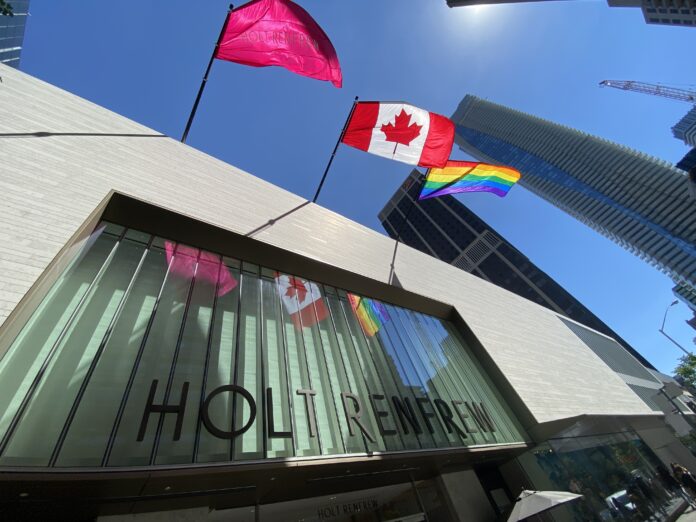
Toronto-based luxury multi-brand retailer Holt Renfrew is the first retailer in Canada to set approved science-based targets for carbon reduction. It’s part of a larger initiative by Holts to make its store operations more sustainable.
In a released statement, Holt Renfrew said that its announcement “places sustainability at the heart of Holt Renfrew” and that the company is “committed to reinventing retail for a better future, alongside the global Selfridges Group of stores.”
As part of the initiative, Holts is aiming to reduce its emissions with levels required to meet the goals of the Paris Agreement. These targets include reducing greenhouse gas emissions from the retailer’s operations (Scope 1 and 2), as well as Scope 3 which is consistent with reductions required to keep global warming to 1.5°C.
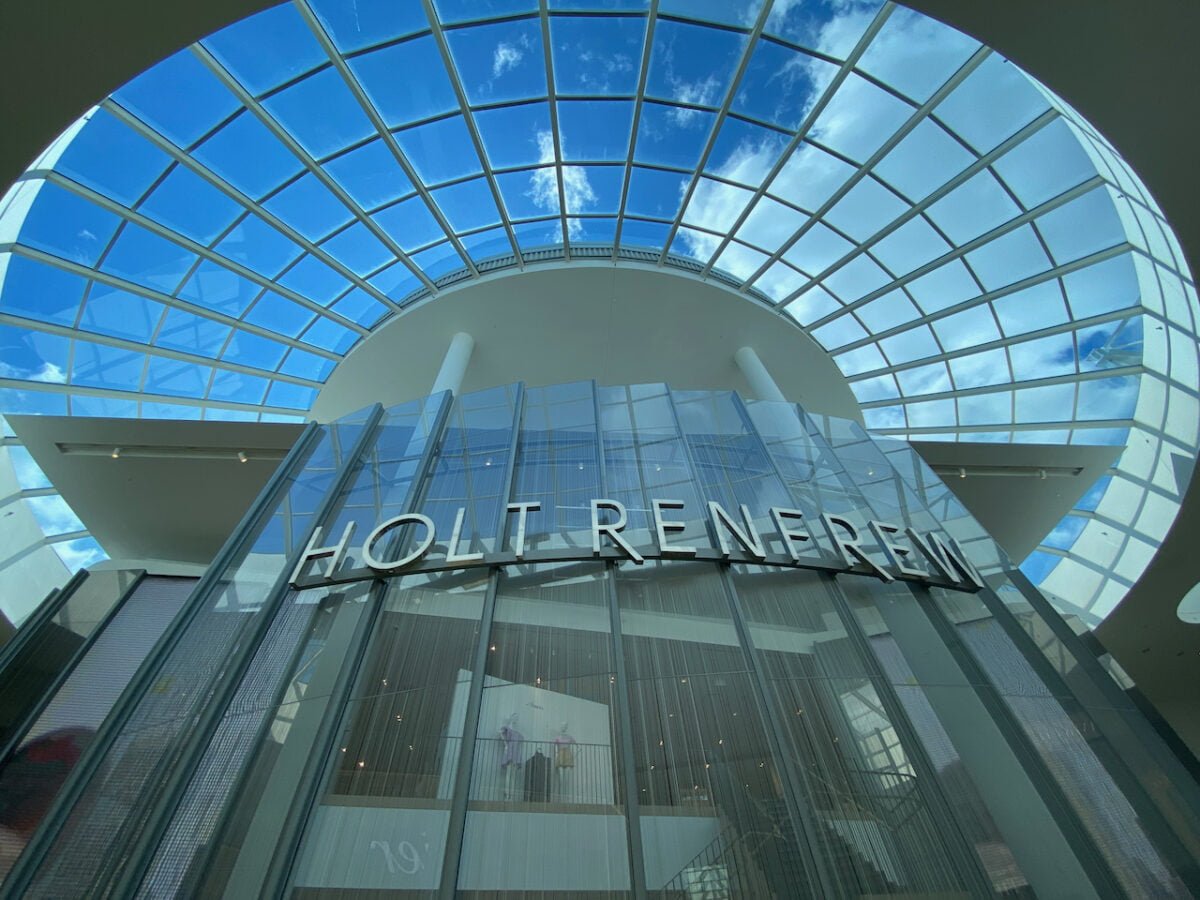
Holt Renfrew at Yorkdale Shopping Centre – Photo by Dustin Fuhs (July 31st, 2021)
The specific targets include:
A reduction in absolute Scope 1 and 2 GHG emissions by 65% by 2030 (from a 2019 base year),
A reduction in absolute Scope 3 GHG emissions by 28% by 2030 (from a 2019 base year), and
a move where 67% of Holt Renfrew’s suppliers, as well upstream and downstream transportation, will have science-based targets by 2025.
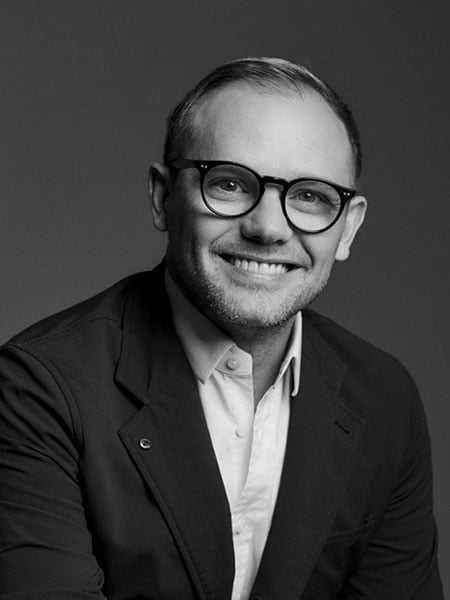
Sebastian Picardo
Holt Renfrew’s President and CEO Sebastian Picardo said, “Since joining Holt Renfrew last year, the team and I have been listening to our customers, our employees, and our communities across the country to better understand what they want from Holts. Our customers are at the centre of our business, and we want to ensure that sustainability and innovation are at the forefront of their experience at Holts.”
Picardo went on to say, “Retail can be a force for good, and we know that our customers want to make trusted, responsible purchases. Our 360-degree commitment to sustainability removes the barriers for them, allowing them to shop with confidence, in a responsible way.”
Adding to this week’s announcement are other sustainability commitments on the part of the retailer. Holt Renfrew says that the most environmentally impactful materials across its business will come from certified/verified sustainable sources by the end of 2025 which will include a focus on cotton, leather, down and feathers, plastic packaging, palm oil, and forest-derived fibres such as paper, wood and cellulosic.
By the end of this year, Holt Renfrew will stop selling all animal fur and exotic skins in a partnership with the Humane Society International/Canada. Holts will also stop selling cosmetic products that contain plastic glitter.
By the end of 2024, Holt Renfrew will improve waste diversion rates in all of its stores by 85% and by the end of 2025, denim sold at Holts will come from certified/verified sustainable sources.
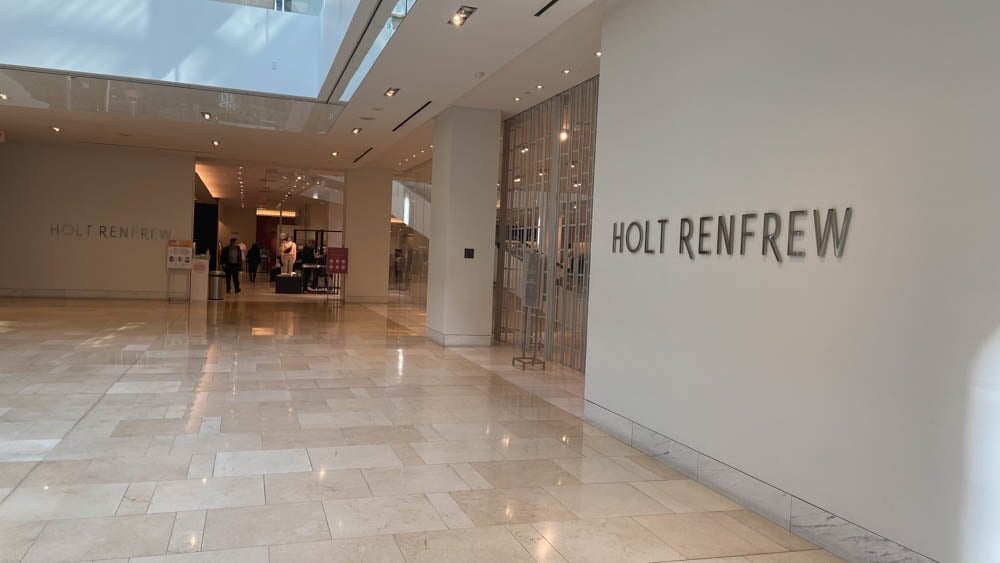
Holt Renfrew 2nd Level entrance at “The Core” in Calgary. Photo: Jessica Finch.
Construction is commonplace in Holt Renfrew stores as the company has been investing heavily in its fleet. In an effort to be more sustainable, the retailer says that it has developed Green Build Guidelines for design, visual and construction teams that outline requirements for sustainable building materials and products that benefit the planet and also cultivate heathy indoor air quality.
A recently announced partnership with TerraCycle has allowed Holt Renfrew to facilitate recycling beauty products and packaging collected in Holt Renfrew stores across the country. It’s an initiative seen in other retailers such as Sephora.
Holt Renfrew operates six large stores in the Vancouver, Calgary, Toronto and Montreal markets. That includes stores at CF Pacific Centre in downtown Vancouver, The CORE in downtown Calgary, 50 Bloor Street West in Toronto, Yorkdale Shopping Centre in Toronto, Square One in Mississauga, and a massive Holt Renfrew Ogilvy store in downtown Montreal. Holts also operates a standalone men’s store at 100 Bloor Street West in Toronto as well as an expanding e-commerce site with thousands of designer products for women and men.
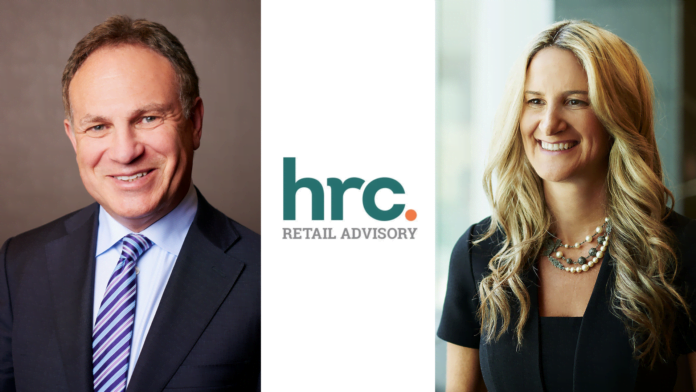
Retail Insider interviewed Antony Karabus, CEO and Farla Efros, President respectively of HRC Retail Advisory on the top priorities for Retailers following the COVID pandemic.
The following is the Q&A interview:
Retail Insider: It seems that COVID-19 had a very different impact on retailers, depending on their sector.
HRC Advisory: Yes, that is correct. Some retailers had their best years ever, including food retail, home improvement, drug, pet, auto parts and outdoor fitness and fitness apparel. Others had been severely challenged, including department stores, specialty apparel, luxury and most stores that were based in enclosed malls.
Retail Insider: Many retailers filed for creditor protection. Can you describe the key causes that led to that situation and whether it turned out to be a good thing for some retailers?
HRC Advisory: While the pandemic was not the primary cause of most retailers that filed for credit protection, it was a major contributor. Many retailers that filed had significant balance sheet/debt challenges and could not manage their debt service when they lost their brick & mortar sales. Others had not transformed their businesses from brick and mortar-dominated to creating strong digital capabilities. In both situations, benefits of creditor protection gave the retailer the runway to transform their businesses and shed their unproductive locations and very high-cost leases. Some of our clients finally had the opportunity to exit leases in malls that were costing them rent of $ 250-300 per square foot, while their sales were well under $ 600 per square foot, effectively resulting in the avoidance of the recurring large annual losses in those stores. For numerous retailers, the transfer of sales from stores to online has been transformative with online sales often increasing from under 20% of total sales to as much as 40-50%. The cannibalization effect further eroded profits due to the high fulfilment, handling and returns cost of online sales.
Retail Insider: That is interesting, how does that impact retailers’ priorities for managing in 2021 and beyond?
HRC Advisory: The absolute top priority for retailers is to strengthen their balance sheets so that they have the runway to successfully operate and transform their businesses to profitably operate and serve their customers. Many well-known, debt-laden retailers that filed for credit protection have emerged from creditor protection with much stronger balance sheets and new shareholders and are now investing in technologies that will enable more effective omni-channel selling to and communication with customers in the way they want to engage. Fortifying liquidity/balance sheets was the single most crucial priority in 2020. It remains important for the numerous retailers that took on more debt during the pandemic.
Retail Insider: Where do retailers go after they have strengthened their balance sheet?
HRC Advisory: The rapid transformation of the customer from a primarily brick and mortar customer to an omni-channel customer has created the need for substantial capital spending to enable digital capabilities, and has also exposed the reality that numerous retailers have very old technology capabilities that need to be modernized. As well, retailers need to invest in their stores to create an improved, modern experience to reflect their brands and investment into the customer. The customer is even more key now, given their willingness to move to digital and their acceptance of digital as an engagement and shopping channel. The balance of power has increasingly shifted to the customer. This will maintain additional pressure on retailers to ensure they effectively and consistently meet customer needs.
Retail Insider: How are retailers going to allocate their capital spending?
HRC Advisory: The Retail CFO is best positioned to ensure capital is directed, allocated and prioritized towards the most important strategic and operational value-drivers to ensure the most important new and improved capabilities receive funding. Additionally, the business cases must be tracked by someone in the CFO’s organization so that the anticipated benefits are produced. To do this, retailers must develop and install a rigorous capital allocation policy to ensure the capital is spent in the right places to get the best payback and the benefits are obtained.
Retail Insider: What other steps do retailers need to take for the future?
HRC Advisory: “First and foremost, retailers need to develop a new business operating model to profitably compete over the next few years.
The business operating model will involve making key decisions around issues such as:
“Is your inventory placed in the right spot? Forecasting is going to be important in terms of how much is going to be online, how much demand is going to be in what stores?”
“Do you have the liquidity/cash flow to sustain your business with sufficient runway as you transition to a more relevant business operating model to profitably serve the omni-channel customer and to reduce risk.
“What should your new store fleet size be, what stores are no longer located in the right places and what decisions need to be made to maintain profitability at a time of seamless integration between stores and digital channels?”
“Which application systems need to be modernized to enable the digital and fulfilment capabilities to effectively serve the omni-channel customer?”
“Who is your customer? Where are they in their lifecycle? How do we best service them?”
“Last but not least, is your supply chain properly configured for the new digital environment?”
“How do you still make acceptable profits given the higher cost of fulfilling online orders?”
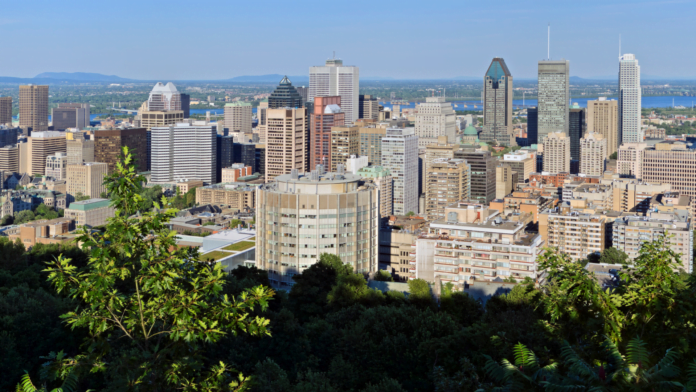
The combination of more office people and students working from home, store closures and a decline in tourism took its toll last year on the downtown Montreal retail market as the COVID-19 pandemic swept across the province.
But there were some positive signs in the sector and now with vaccinations rising and COVID cases falling there is hope a buzz of activity will return to the core of the city.
Manon Larose, Senior Vice President, Retail with JLL, said an important element of the retail industry in the Quebec city during the pandemic was the collaboration that took place between the landlords and their retailers.
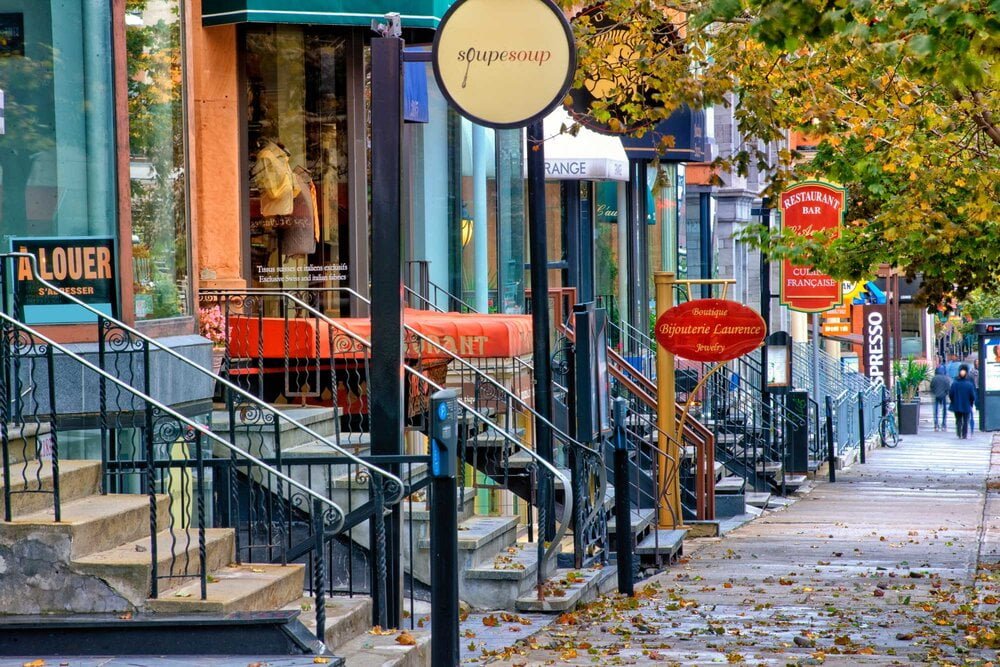
MONTREAL SHOPPING STRIP. PHOTO: DEPARTURES
“Everybody was in the same boat. Some landlords really jumped in to help and to help the retailers to go through that period. I also have a lot of sympathy for the landlords because nobody gave them some free mortgage period. It was pretty challenging,” said Larose.
“What I see is a lot of dynamism and a lot of people who are interested to come back to business. Whenever there is a disaster there are opportunities as well. But downtown Montreal suffered the most because of the lack of the office workers, the tourists, the students. We had the strictest measures in Montreal. So everybody really suffered.
“But now one thing I’m really seeing talking to a lot of people is that the honeymoon of working from home is over and people want to come back to a real life as quickly as possible.”
She said annual retail sales in 2020 fell by five per cent.
According to a JLL retail market report, the Montreal retail market environment remains challenging, as Quebec has now experienced several lockdowns. Although Toronto implemented one of the longest lockdowns in the country, Montreal has implemented probably the strictest lockdown measures, it said.
“Effective rents for occupied space fell by three per cent in the second half of 2020 as the result of rent concessions and discounts by landlords. In addition, lower retail sales in Q4 reduced rents in sales-based lease agreements,” said JLL.
“A recent report showed that 28 per cent of downtown Montreal stores were vacant or temporarily closed in Q4. The same study also revealed that the retail vacancy/temporary closure rate on Sainte Catherine Street increased from 18 per cent in Q2 to 23 per cent in Q4, and in shopping malls from 18 to 20 per cent.
“The redesign of Sainte Catherine Street continues to progress, and work is currently taking place in Phillips Square and the section between Robert-Bourassa and Mansfield.”
Larose said retail categories that were on the rise during the pandemic included cannabis, wine and beer, building materials, everything related to groceries, electronics and appliances, sports and fitness.
“The top performing brands in 2020 were Amazon, Apple, Wayfair, lululemon, Peloton and Restoration Hardware as well as Shopify,” she said.
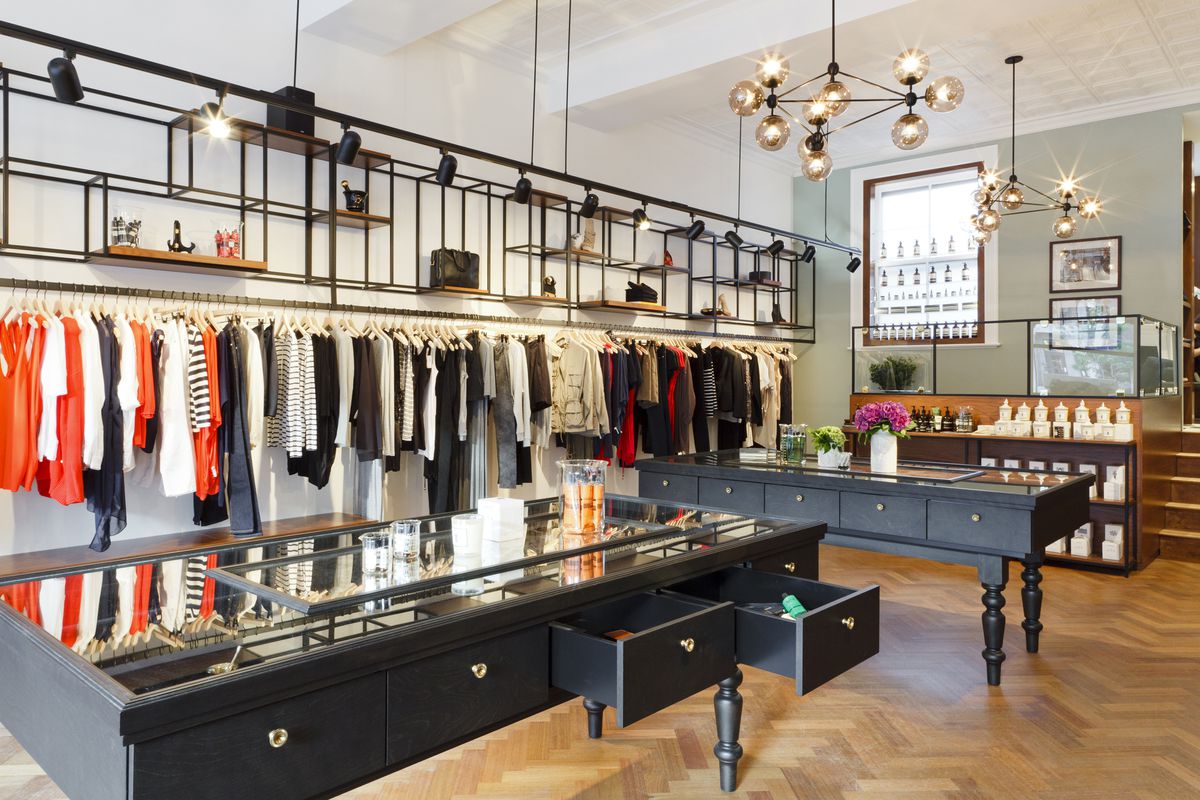
The WANT Apothecary Montreal. Photo by THE WANT Apothecary.
The JLL report said Montreal-born fashion boutique WANT Apothecary surprised everyone in March when it announced that it was closing all brick-and-mortar locations to focus on its online brand WANT Les Essentiels. The retailer closed its flagship store on Sherbrooke Street West in Westmount, adding another empty storefront to the noticeable vacancy on the street.
“As in several Canadian cities, retailers in Montreal have been concerned that downtown could become a permanent ghost town. Office workers, tourists, and students haven’t traveled to the area since COVID broke out. Montreal downtown workers have adapted well to working from home, which raised the question of whether most of these 300,000 employees will ever go back to the office. In Q4, more than half of businesses based in office towers were vacant or temporarily closed,” added the report.
“Famous for a tourism market that helps propel retail, and especially luxury, downtown Montreal’s hotels have suffered. While 2019 occupancy rates were an average 74 per cent, in 2020 occupancy rates never rose above the 20 per cent mark set in April of 2020.”
The report said Montreal City Hall is lining up a series of summer initiatives in partnership with local organizations, setting aside more than $30 million in investments. These include support for bars and restaurants to reopen, greater flexibility for patios, and free-street parking on weekends.
“Robust pre-COVID fundamentals are indicative that downtown Montreal can recoup its daytime population quickly once tourists return and students shift back to in-person classes, which includes 120,000 students from local universities,” said the report.
Image: Ivanhoé Cambridge
Larose said the impact on downtown Montreal in the past year “was terrible in a way.”
But there were positive notes, she added.
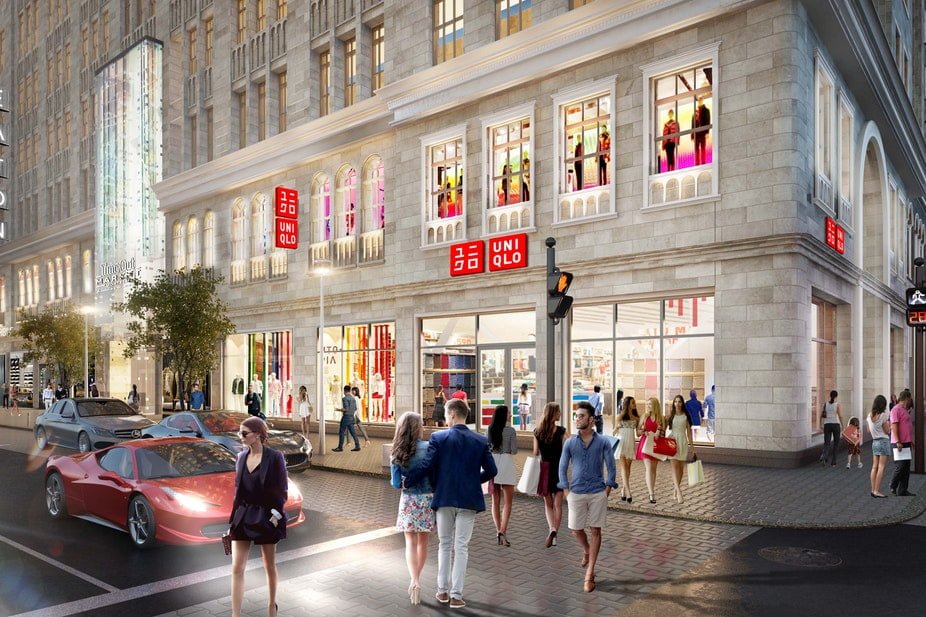
For example, Japanese fashion brand Uniqlo opened its largest store in Canada at the Eaton Centre. The two-storey downtown store is streetfront and carries a selection of home goods, which other locations don’t.
The Montreal Eaton Centre has seen several notable openings, including Time Out food hall, Decathlon, and Sephora. Samsung Canada, and Pandora also opened locations. The Samsung store was its first in Quebec and sixth Samsung Canada Experience Store.
French fashion brand ba&sh, whose global expansion is backed by LVMH, opened its second standalone Canadian store in Montreal’s affluent Westmount area last summer. The retailer opened its first store in Toronto’s Yorkville in early 2020.
“There were some openings and some good stories,” said Larose. “And from what I hear Uniqlo’s sales are extremely good. So you can just imagine what it will be when the students and everybody will be back downtown.
“I think creativity is the word of today and that goes for everybody. For the landlords as well as for the retailers. You have to reinvent yourself. I see a bright future. I know the physical stores are there to remain especially when you see an Amazon of this world opening some physical point of sales. I think it says it all.”
Hudson’s Bay Flagship Store – Downtown Montreal Ste Catherine Street. Rendering: Hudson’s Bay Company
Larose said the pandemic accelerated some of the trends the retail world was already experiencing such as ecommerce and online shopping.
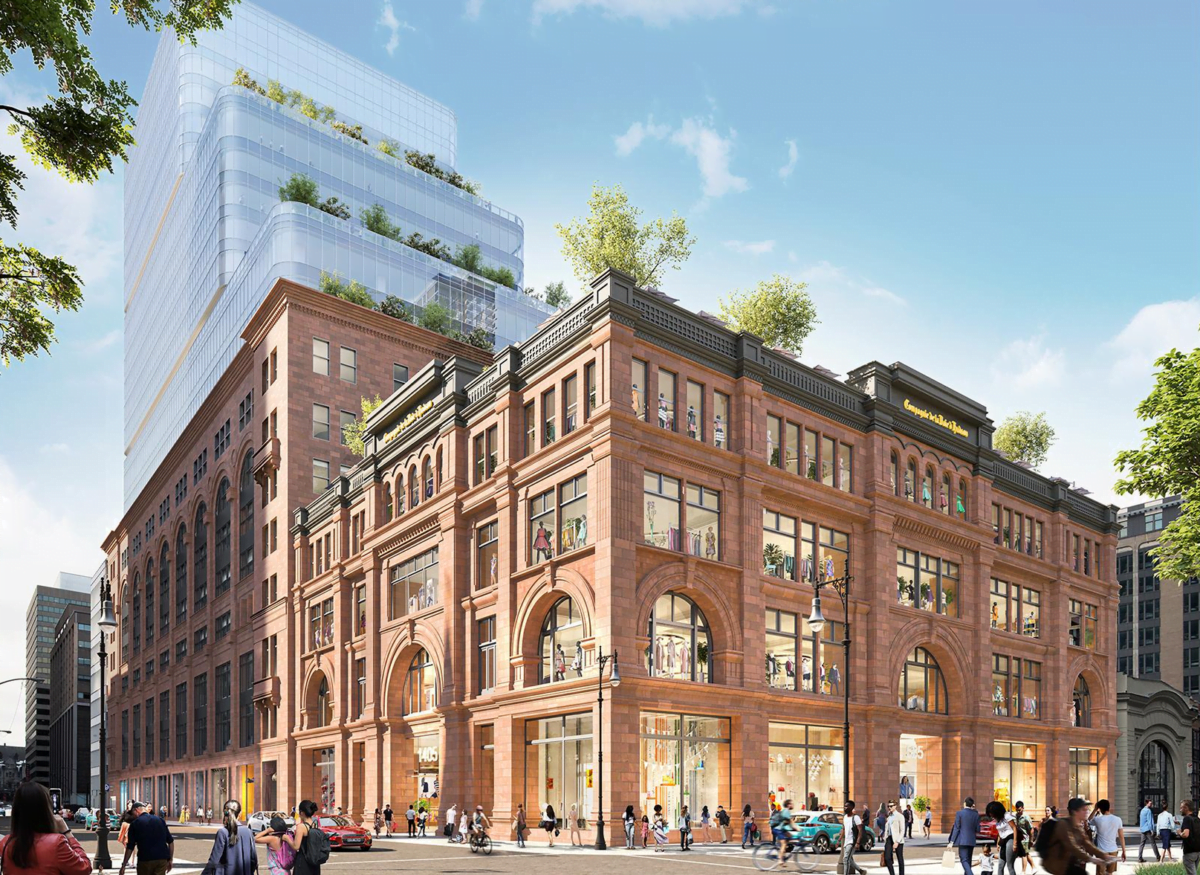
The JLL report said HBC and RioCan will pursue the redevelopment of HBC’s downtown Montreal property into a 25-storey office tower and the downsizing of the existing Hudson’s Bay retail space. The Sainte-Catherine Street store will continue to operate throughout the construction process.
The opening of the Royalmount complex near the intersection of highways 15 and 40 has been postponed to the summer of 2023 due to the pandemic. In February of 2020, developer Carbonleo unveiled a second version of the project with less retail, entertainment and office space and more residential and green space, added JLL.
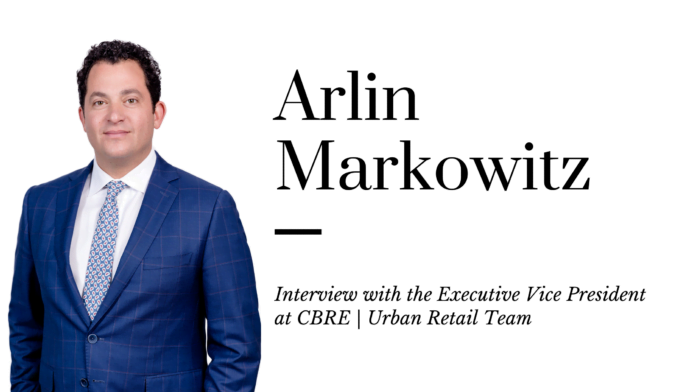
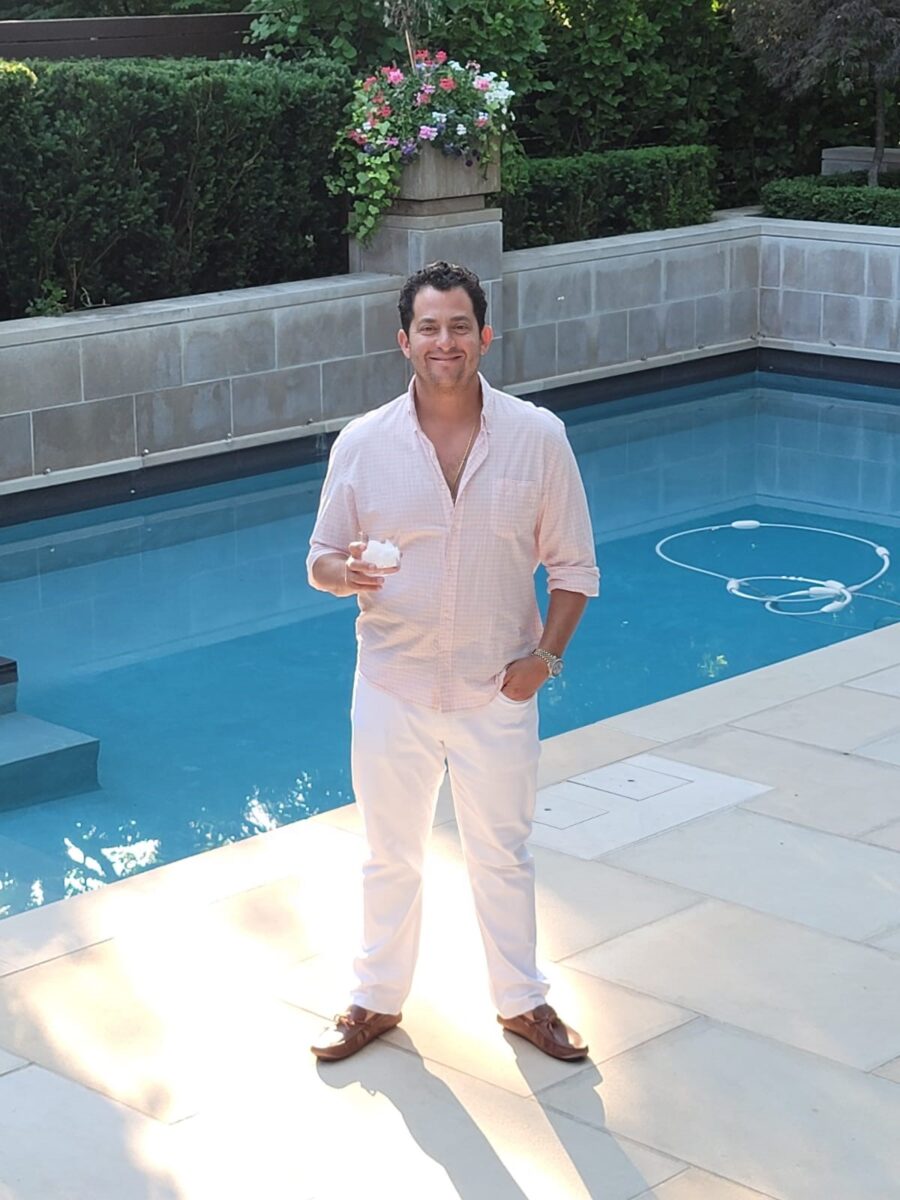
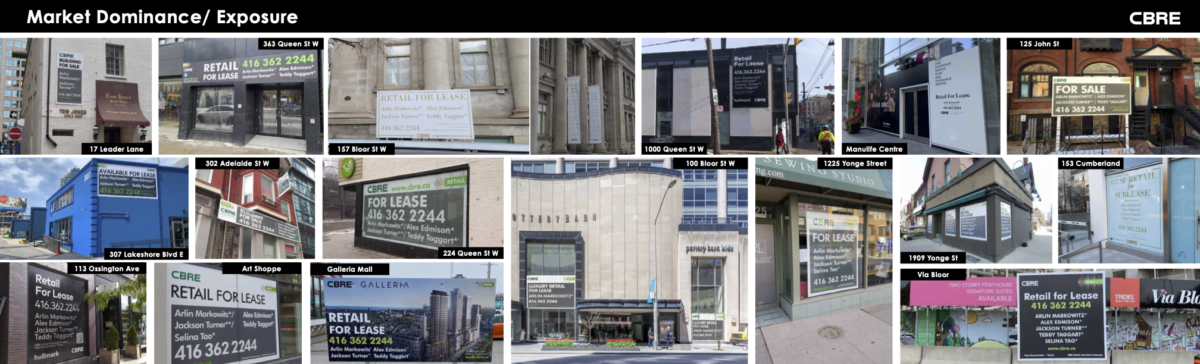
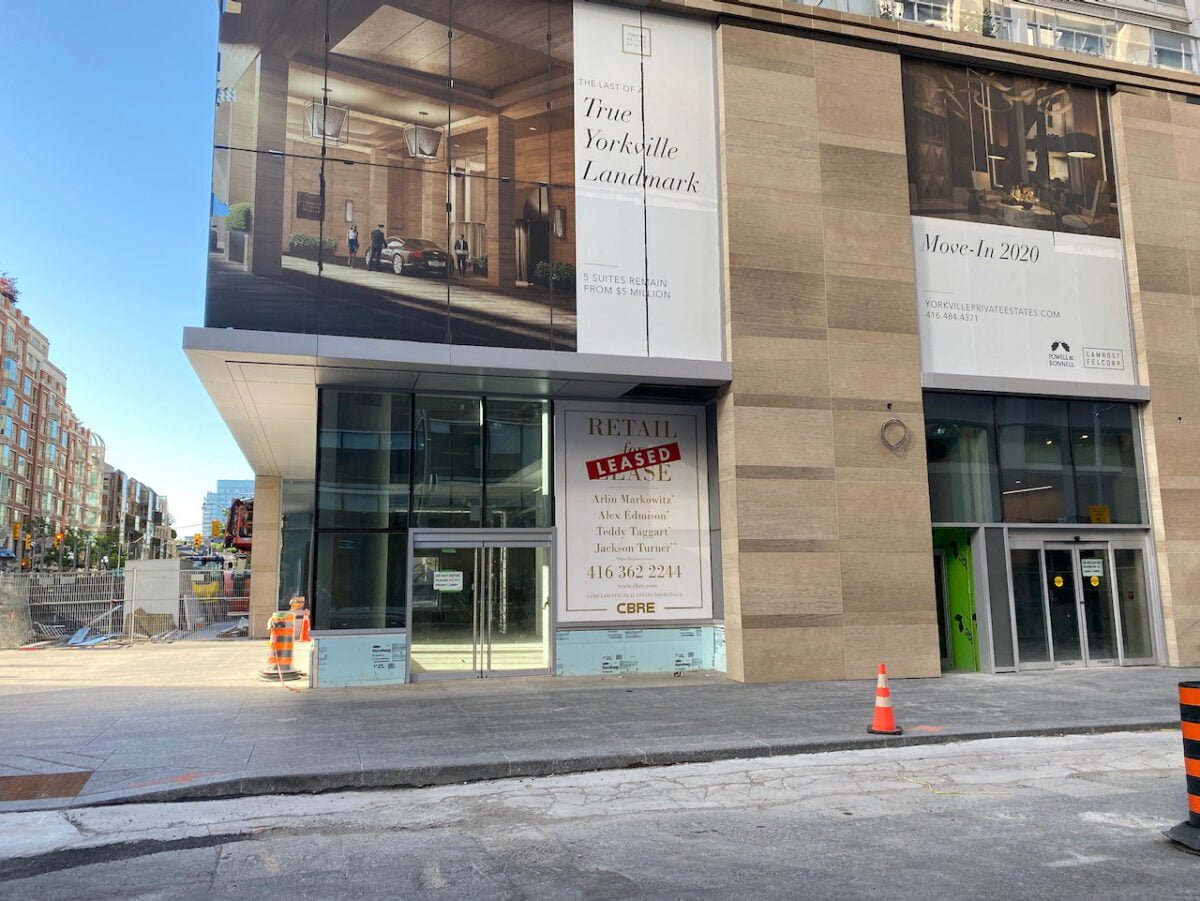
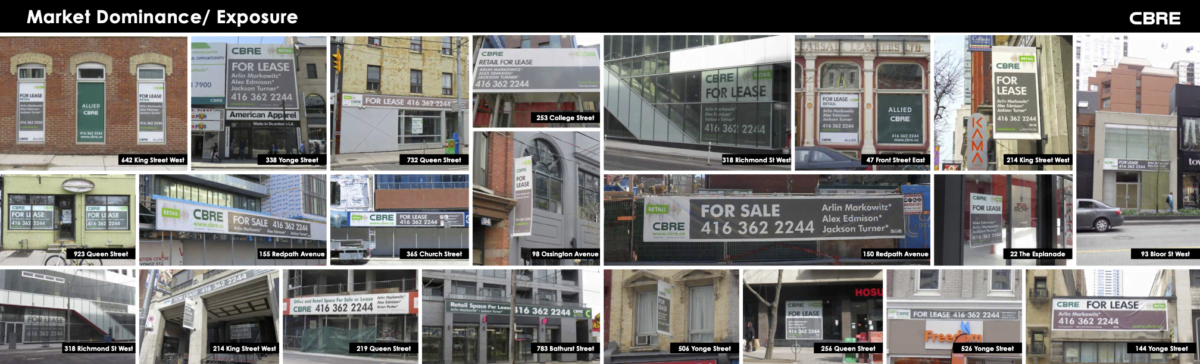
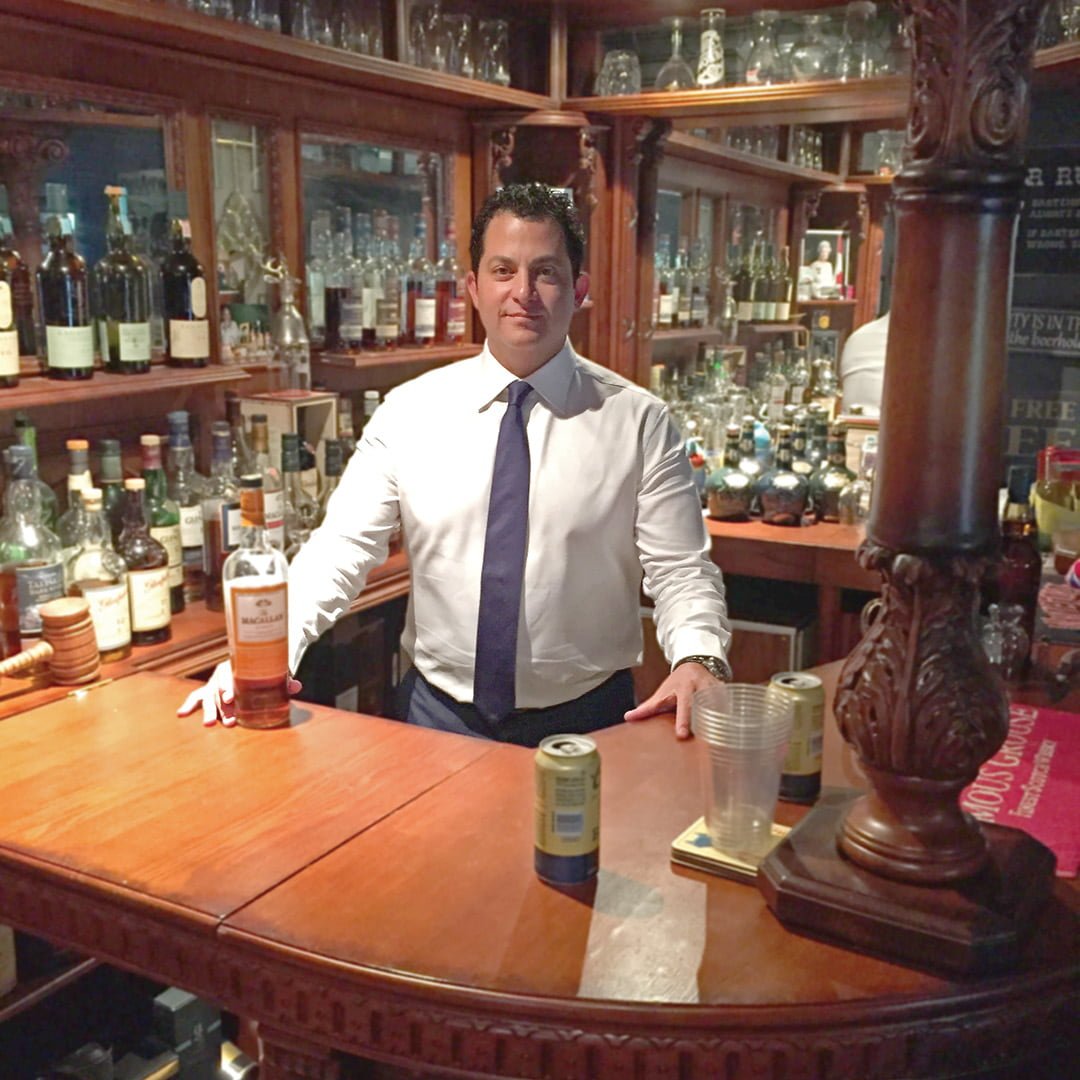
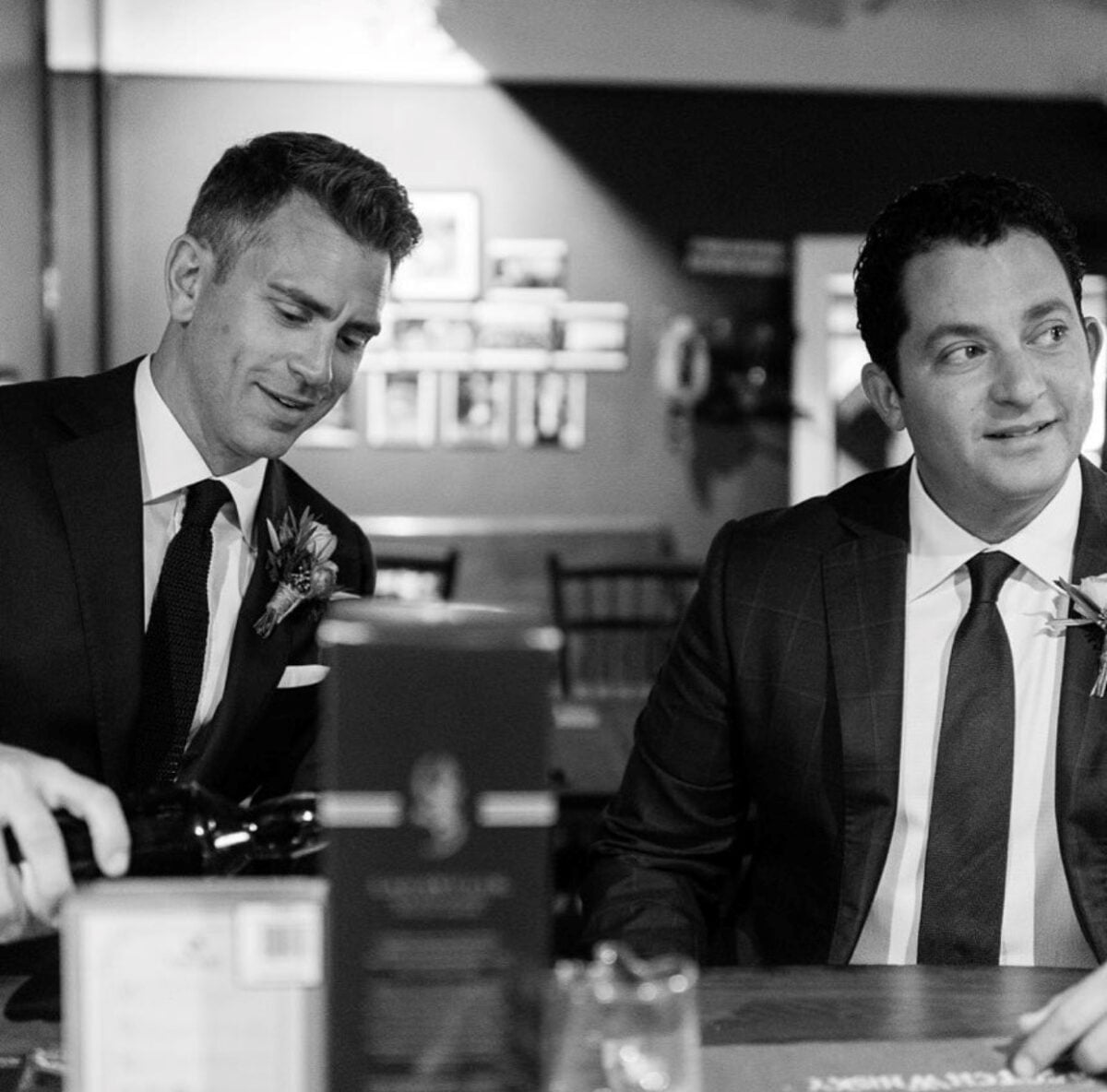
If you’ve spent a day in Toronto, it’s more than likely that you’ve seen his name. Dominating the city’s urban retail real estate market, it appears on just about three quarters of the ‘For Lease’ and ‘For Sale’ signs that pop up on vacant storefronts throughout the ‘416’ and is the name behind the successful brokering of many of Toronto’s more exciting and lucrative deals. It’s a name that’s held in high regard within the realms of both commercial leasing and retail alike and is often attached to and credited for some of the most amazing streetfront transformations that the city has ever seen. But who is Arlin Markowitz – the man behind the name – and what makes him so damn good at what he does?
“Before I got into brokerage, I grew up in my family’s shoe business – David’s Footwear,” he explains. “I spent most of my childhood, including weekends, summers, holidays, and every other minute that I wasn’t in school, within the retail industry, working at the shoe store as a shoe salesman. Because of this, the vast majority of the time, I was working at the corner of Bay and Bloor in Yorkville, one of the most exciting and fast-paced retail presences in the city. During that time, I developed a thorough understanding of the neighbourhood and of the commercial activity that took place there. So, when I decided, for a plethora of reasons, that the retail business wasn’t for me and that I wanted to get into real estate, it was obvious that I should focus on what I knew best, which was retail in the Bloor-Yorkville node.”
Sharp rise to success
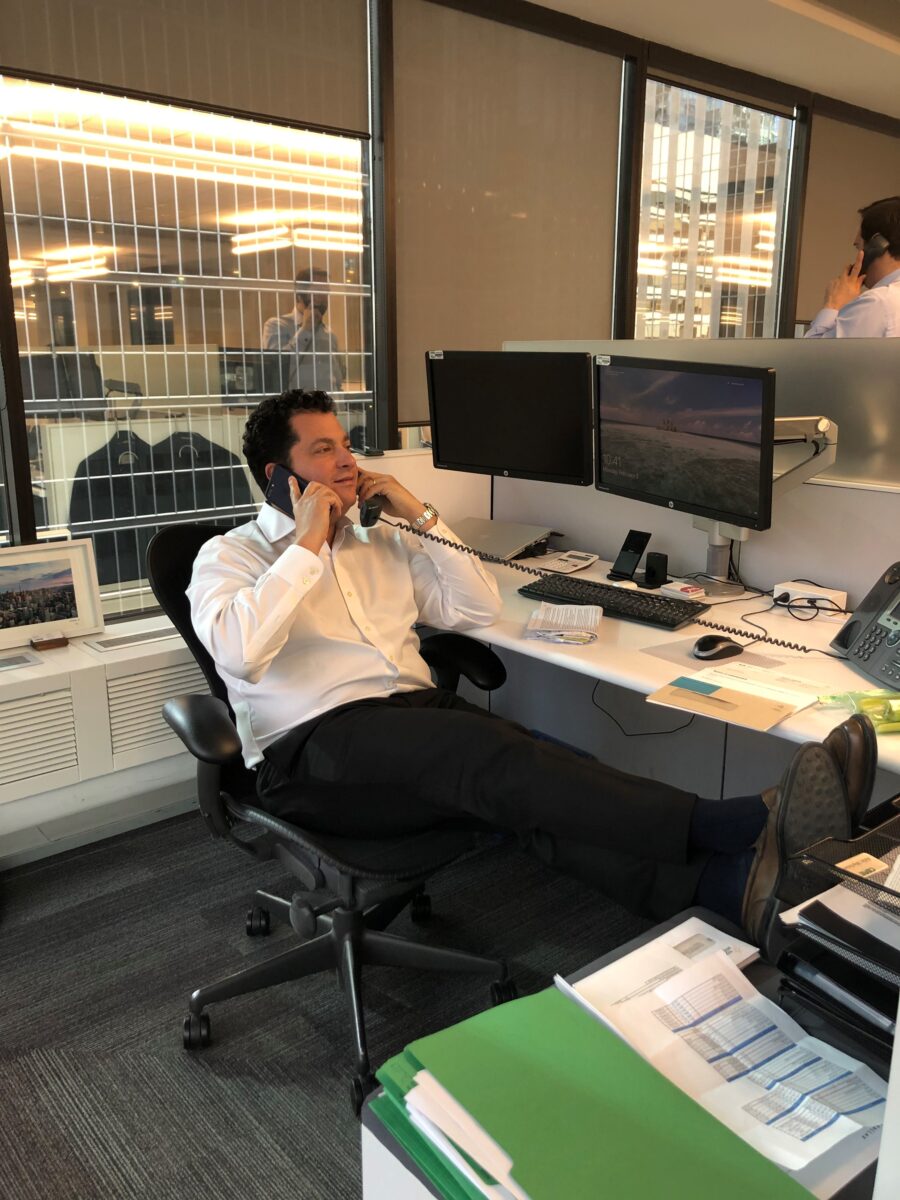
Image: Arlin Markowitz
Image: Arlin Markowitz
Receiving this type of unconventional education, he says, particularly as it pertains to the luxury side of retail, allowed him to amass a knowledge and acumen for his profession that could not be learned anywhere else. It also enabled him to hit the ground running when he started at Cushman & Wakefield in 2007 where he became one of the global commercial real estate giants’ top brokers before eventually assuming the role of Vice President. Following eight successful years with the company, Markowitz moved on to join commercial real estate services and investments firm CBRE, where he currently serves as Executive Vice President, leading the Urban Retail Team which he founded when joining in March of 2015.
Today, he is widely recognized as Toronto’s foremost urban retail specialist and advisor, and has been responsible for introducing a host of international brands to the Canadian market, representing both tenants and landlords to facilitate the placement of prestigious brands including Hermès, Salvatore Ferragamo, Zegna, Equinox, Valentino, MCM, COS, Brooks Brothers and Lululemon in some of the country’s most coveted addresses. In addition, he’s also personally executed over three quarters of a billion dollars worth of investment sales in the city. So, the question begs to be asked: how can one man be responsible for such an impressive portfolio of deals?
“I don’t think that there’s any kind of secret behind my success as a broker,” he admits. “It’s really just about work ethic and sacrifice. I don’t think I’m smarter than the next person doing this. I just think I work harder and longer hours. When my competitors are taking a Thursday afternoon off in the summer to play golf or go to the cottage, I’m still sitting in my office. When they extend their Christmas holidays into two-and-a-half or three weeks, I’m taking six nights and then rushing back to my work. I’m regularly working from seven in the morning to seven in the evening, come home to have dinner with my wife and put my kids to bed, and then I’m in my home office at nine and will stay there, working, until just before midnight. It’s about putting in the hours and being comfortable with a certain degree of sacrifice in order to get the results.”
It’s a work ethic and approach that he says was influenced early in his life by his grandparents, who were survivors of The Holocaust, and by the many other survivors of their generation who had no choice but to work in order to build a life for themselves. Their stories, and the way many succeeded in the aftermath of the war, engrained in him a sense of duty and obligation, one that drives him forward every day.
“I have always been incredibly inspired by my grandparents and all of the other Holocaust survivors,” he says. “Many of them came to Canada as refugees with absolutely nothing and through nothing else but hard work and determination managed to build their lives and businesses here. My grandparents always reminded me to make the most of my time here and to always remember how lucky I am to be Canadian and living in this great country. I do my best to honour them by working as hard as I can and to continue contributing to the amazing city of Toronto.”
A strong Urban Retail Team
Image: Urban Retail Team
Hard work and a dedicated focus. It’s a simple recipe, and one that has served the proficient commercial leasing leader well through the years. However, he points to the team around him as the most critical component lending toward his remarkable achievements. Consisting of seven members, including five brokers and two marketing professionals, along with the support of stellar administration and financial analysts, Markowitz and CBRE’s Urban Retail Team have long carved out a dominant market position in Toronto, delivering maximum value to the clients they work with.
“What I’ve been able to achieve throughout my career to this point could never have been done on my own,” he says. “I have the privilege of working with my phenomenal partners that I have on the team today – Alex Edmison, Jackson Turner and Teddy Taggart. We all approach every day and each deal that we execute for our clients with the same dedication and commitment toward delivering results. Combining our expertise and experience with our desire to dominate the urban commercial leasing market, we’re responsible for somewhere in excess of 75 percent of the retail listings in Toronto and about 90 to 95 percent of the listings in the Bloor-Yorkville neighbourhood.”
What’s to come?
Corner of Cumberland St & Avenue in Yorkville – Photo by Dustin Fuhs
It’s easy when speaking with Markowitz to notice the enthusiasm with which he speaks of his profession and the impact that he and his team have on Toronto’s commercial leasing scene. In fact, it’s almost infectious when listening to him speak of the deals he’s brokered, those he’s currently working on and the opportunities that are soon going to be available for retailers and landlords alike as a post-pandemic world steadily approaches which, to Markowitz, translates simply into a boom-in-waiting for the retail industry.
“It’s been a really wild ride for retail in general over the course of the past 16 months,” he says. “But, throughout the challenges faced by the sector, pharmacy, grocery, banking, cannabis, fast food and small coffee shops have all been fine. In fact, for those types of products, rent hasn’t even really gone down. And there have also been brands like Peloton, which we just helped to place a flagship on Robson Street in Vancouver and to extend their lease on Bloor in Toronto where we placed them a couple years ago, that have managed to evolve and perform even better as a result of the pandemic. The hardest hit segment of the retail leasing market is fashion. Streets like Bloor Street and malls like Yorkdale have faced challenges. But, having said that, we’ve noticed an uptick in the last 30 to 60 days, with a lot of calls coming in from U.S. retailers and my partners in New York and London. They’re all letting me know that as soon as they can book a flight and visit without having to quarantine, they’re coming and want to look at spaces on Bloor Street West.”
And, it seems, Markowitz is just as excited for travel restrictions to lift, expressing anticipation and excitement to return to his regular routine of bi-monthly visits to New York City where he canvasses retailers, promoting the attractiveness of Toronto and the Canadian market. As an active member of the International Council of Shopping Centers, he’s also in attendance each year at the association’s big Las Vegas and Whistler conventions, in addition to making his annual trip to the south of France for MAPIC – the international retail property market event – where he takes the opportunity to meet directly with the world’s top luxury brands and present the value of Bloor Street.
“Those trips, when I have the chance to visit Paris, New York and London, and meet with our great network of CBRE brokers, are immensely valuable,” he says. “It’s what we’ve been missing over the course of the past 16 months, and I can’t wait to get back to our travels and start meeting with brands again. It’s going to be a good next 6 to 18 months for retail. We’re looking forward to getting back to full swing with respect to tours and in-person meetings.”
Increased rental prices?
Image: Urban Retail Team
He goes on to explain that as a result of the mini retail renaissance that he expects to take place in the months ahead, the rental prices that have gone down during the pandemic will rise again “shockingly” fast, citing revenge shopping as a very real phenomenon that will help retailers across the country start to make up for at least some of the shortfall that the industry has collectively experienced of late, driving lease prices up. He says that it’s a trend in consumer behaviour that won’t take long to develop, referencing the recent performance of some retailers in the United States as an example of what’s to come for retailers in Canada.
“The retail markets, including restaurants, movie theatres, sporting events, indoor shopping and outdoor shopping is all going to explode as soon as restrictions lift across the country,” he predicts. “I was speaking to a retailer in New York last week who told me that their sales during the first week that they were able to open in Manhattan beat the sales of the week before Christmas in both 2018 and 2019. I anticipate retail sales to be incredibly strong over the coming months. And, as a result, a definite shift will happen in the market back toward the landlord’s side. If you’re a retail tenant looking to be opportunistic and get a really great deal on Fifth Avenue, Maddison, Bloor or Rodeo, the time has come and gone. Rent will remain down for a brief period of time. But retailers are going to need to pay to play in the hottest urban spots again pretty soon.”
Excitement in store
With respect to some of the developments and deals currently happening in the city, he says that there’s “a lot going on” and that people living in and visiting Toronto can “expect some cool and exciting things to happen around retail in the city”.
“There are rumours that Lululemon is looking for a new flagship location in Toronto,” he shares. “Their current store on Cumberland is very small and their lease is coming up soon. So, I think everyone can expect them to do something new and exciting. Apple is, of course, coming to the corner of Yonge and Bloor and is a project that’s coming along beautifully. It’ll be a huge boost for the Bloor Street scene, generating traffic to the area. Nike is in the market looking for an experiential flagship store of at least 20,000 square-feet in the Bloor-Yorkville neighbourhood, which is another project that should be really exciting. These are just a few examples of the great things that are happening at the moment, and there’s so much more to come.”
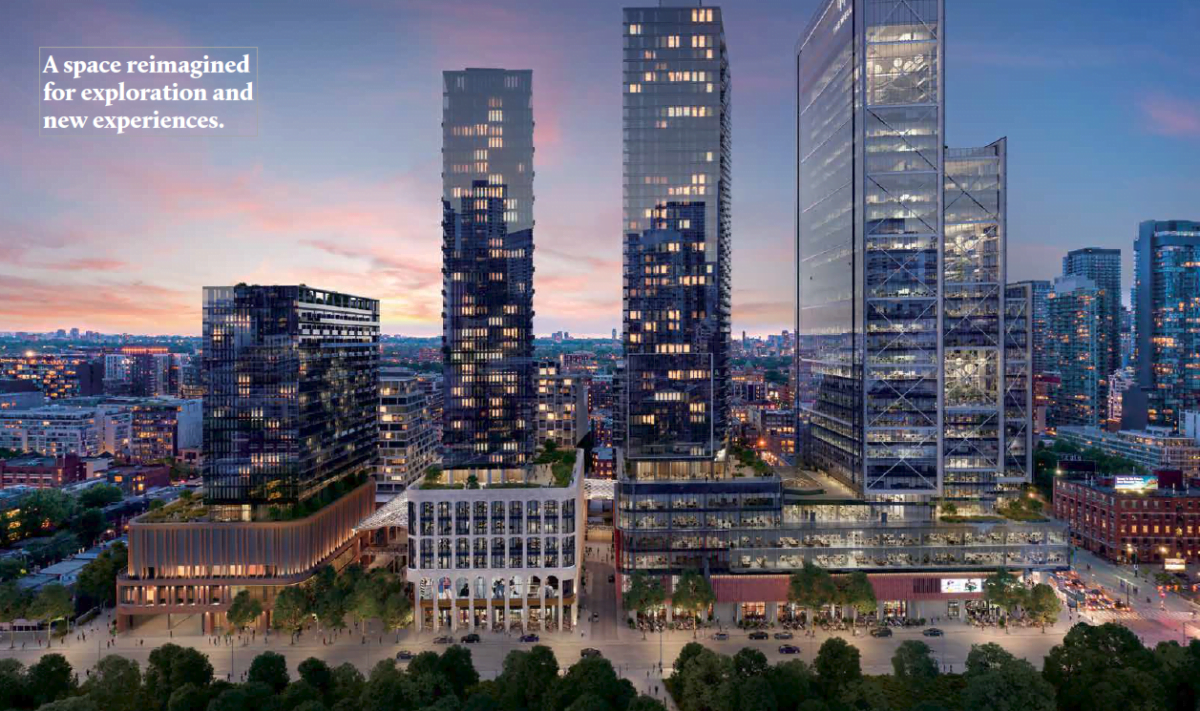
Markowitz speaks glowingly of the city’s leasing prospects and opportunities. But he reserves most of his zeal, ardour and intensity for discussions about the endeavours that he and his team at CBRE are working on. One of which is a project called ‘The Well’ at the corner of Spadina and Front – a mammoth development comprising over three million square feet of retail, office and residential space. Markowitz and his team are handling the retail leasing for the project. And it’s a responsibility that the leading broker says gets him up in the morning.
“We’re working on ‘The Well’ with our clients RioCan and Allied REIT,” he explains. “And I think it’s going to be something really special for the residents of Toronto and visitors to the city. Working on this project is really exciting. It’s the location of the old Globe and Mail lands. And the opportunity to be involved in this, to help deliver something as bold and impressive as this project, is incredibly energizing. I’m already looking forward to the day when I can take my wife and kids there to go shopping, out for dinner or to an event. It’ll be very satisfying and will be a point of pride for me to know that I had something to do with its creation and development. From an architectural and tenant mix perspective, it’s going to be one of the most exciting new places in the city when it comes to retail and experiential dining.”
Gentrification through retail
Markowitz explains that he and his team are also working with El-Ad Group to help give life to another mixed-use project involving millions of square feet of retail, residential and office space at the corner of Dupont and Dufferin as part of a gentrification that the area will be undergoing over the next number of years.
“These projects are really fun to work on because of the objective that everyone is working toward,” he says. “At every level of the project, you’re really trying to help create a curated experience for residents of the area and visitors from outside. It’s really all in an effort to give people a reason to get excited and to drive traffic to these neighbourhoods. To do this, you’ve got to make sure that the right mix is arrived at and that you’re truly delivering value through every deal that you make.”
A legacy that continues
Image: Arlin Markowitz
Image: Arlin Markowitz
It’s clear when speaking with Markowitz that he’s extremely proud of the work that he does for clients and of his accomplishments to date. It’s this pride, combined with his work ethic and commitment to delivering value, that goes a long way toward defining the man whose name is on all of those signs posted across the city. It also starts to explain his prolific performance as a broker and his team’s dominance in Toronto. And, if it’s up to him, that dominance will likely continue well into the future.
“It’s really satisfying to see neighbourhoods transition and change over time. Take Ossington as an example. I’ve been leasing and selling on the street for the past 15 years. Before I became involved in the area it was filled with hookers and mechanics shops. When you walk down Ossington today, you’ll see beautiful organic grocery stores, fashionable sneaker shops and some of the best restaurants in the city. It’s turned into one of the hottest parts of town. I love seeing this evolution and recognizing my signature on it and really enjoy knowing that what I’m working on today will continue to have an impact on a given area well into the future. On that note, my team and I plan to continue focusing on developing Canada’s urban high streets, condo retail, and the best-performing malls in the country and delivering value to the clients and partners that we work with.”
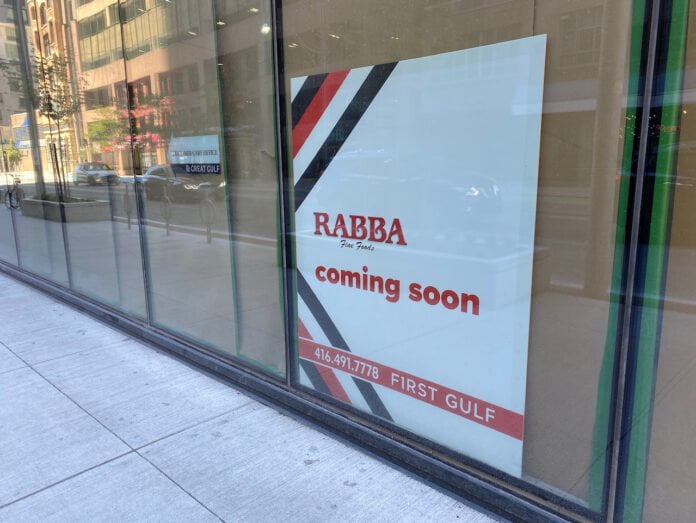
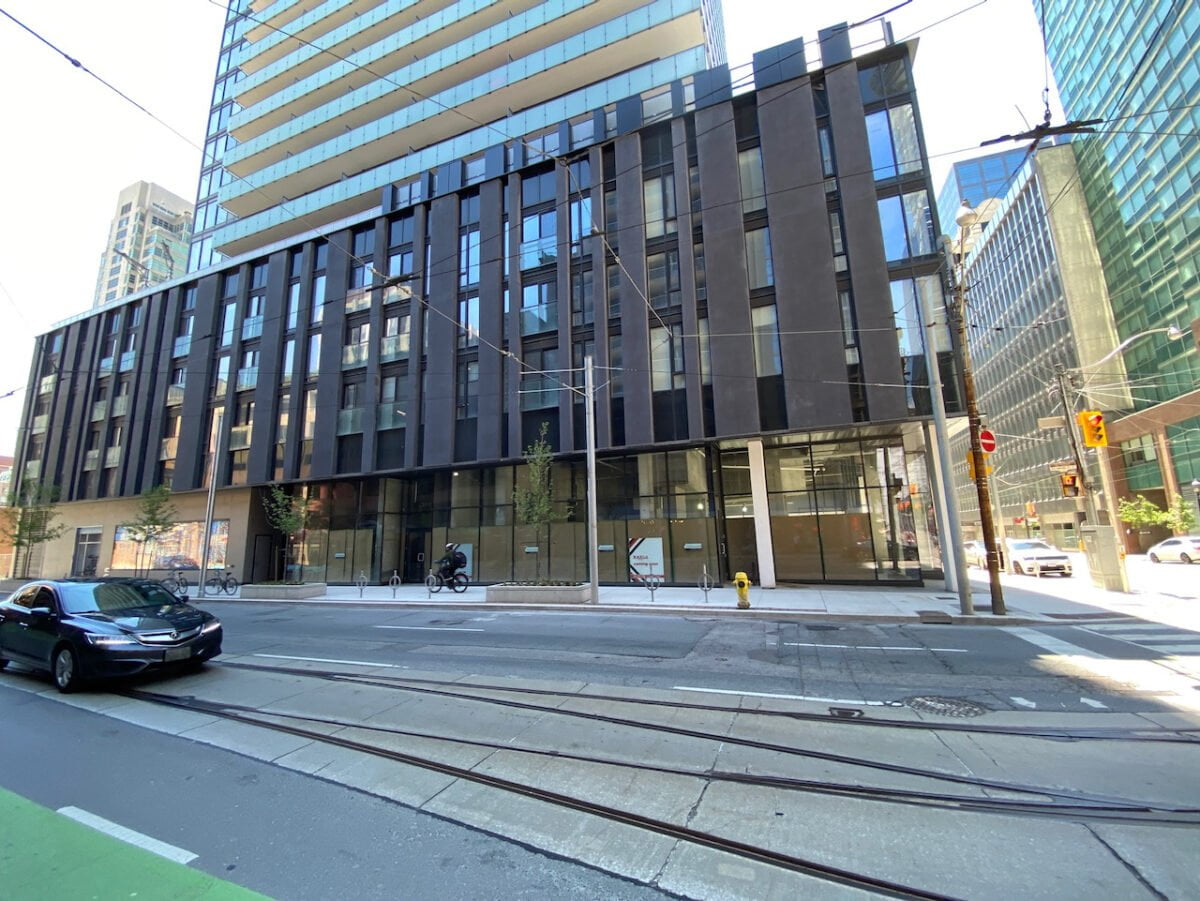
Rabba Fine Foods at Yonge & Rich Condo - Photo by Dustin Fuhs
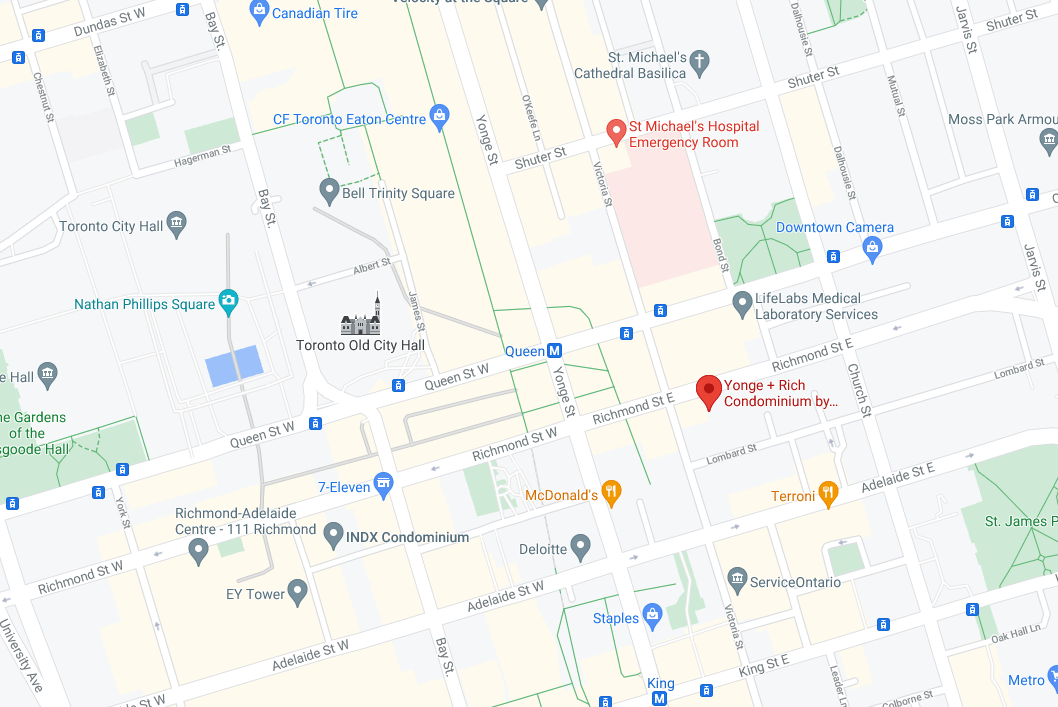
Toronto-based Rabba Fine Foods will be opening a new location in the podium of the Yonge & Rich Condo, a 46-storey development which is nearing completion at the corner of Richmond St and Victoria St in downtown Toronto.
Retail Insider covered the announcement of the 35th Rabba Fine Foods back in December 2020, which will be opening in Regent Park this year. That location is unique as it is a partnership between Paramount Fine Foods and Rabba.
We’ll be following the expansion of this Toronto grocer as they continue to expand throughout the GTA.
Click for Interactive MapRabba Fine Foods at Yonge & Rich Condo – Photo by Dustin Fuhs
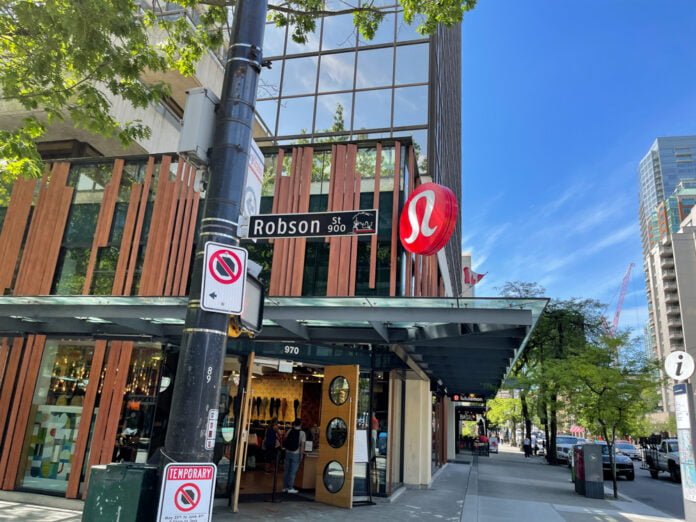
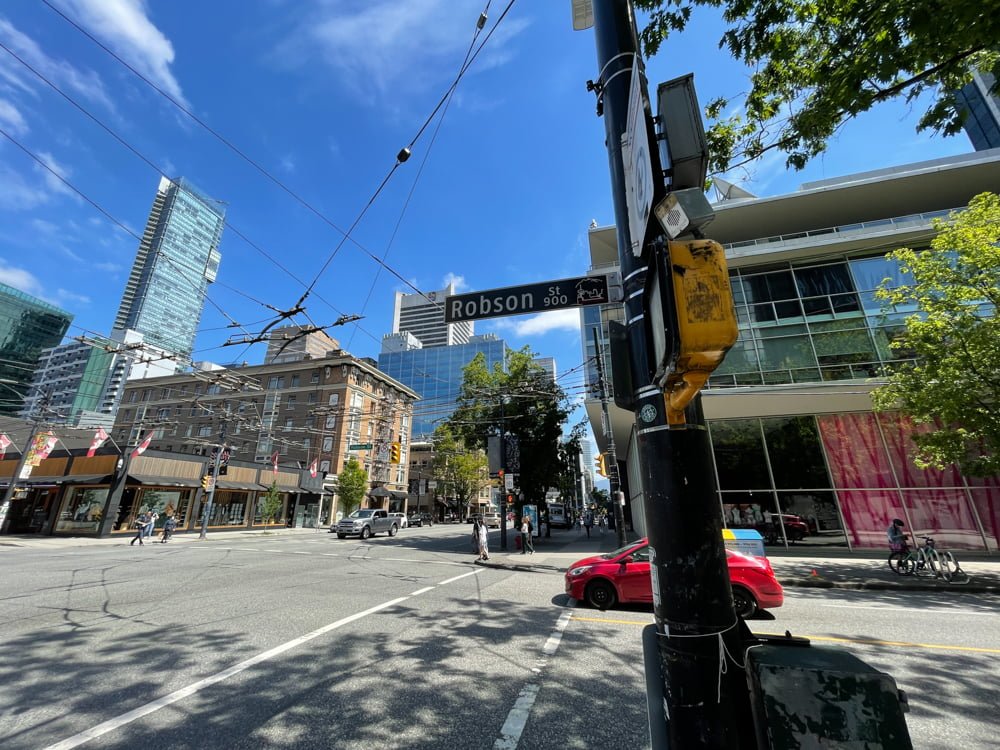
Intersection of Robson and Burrard (June 2021). Photo: Lee Rivett.
Retail Insider continues its Photo Tour series to provide a window into retail hotspots across the country that may be continuing to grow and expand while dealing with the effects of the COVID-19 pandemic.
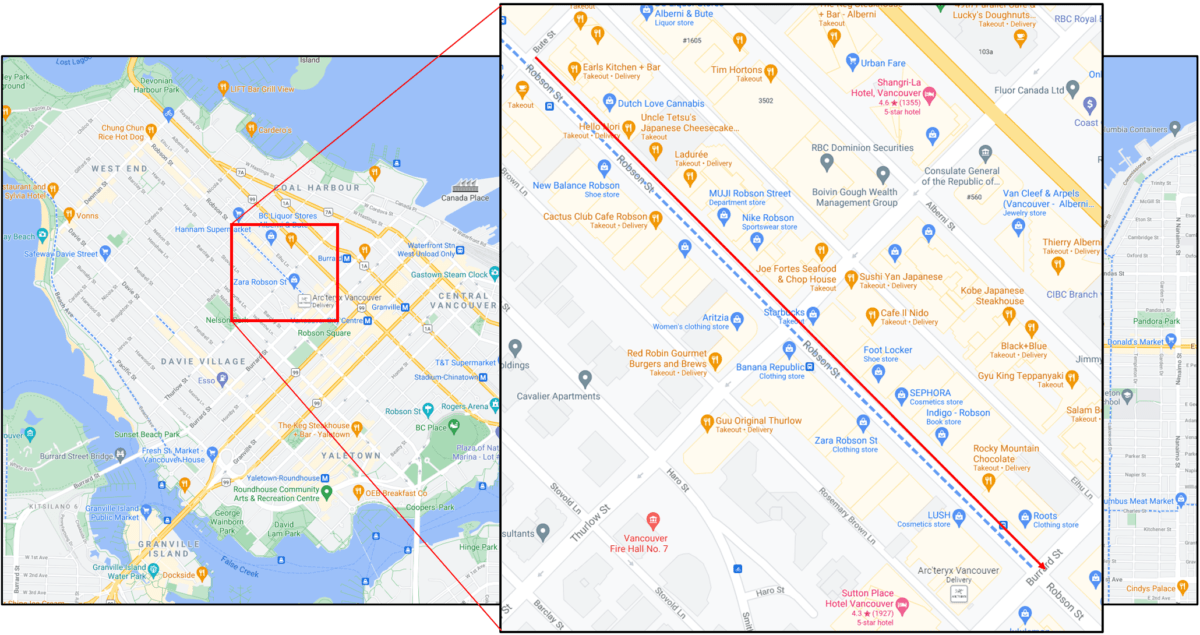
This edition takes us to well-known Robson Street in Vancouver, British Columbia, beginning at Hornby Street and continuing west to Jervis Street. Stay tuned for the Alberni Street ‘Luxury Zone’ Retail Profile which will be published in the upcoming days as well.
Robson Street (Between Bute Street and Burrard Street) in Vancouver. Photo: Google Map and overlay by Retail Insider.
History of Robson Street
Robson Street was one of the first streets in Vancouver and was named in honour of John Robson, Premier of British Columbia from 1889-1892. Its commercial traditions date from 1895 when street car tracks were laid along Robson Street to Jervis Street. The 1940’s saw businesses begin to move west towards the 900 block of Robson, which became the market center, and very quickly they crossed Burrard Street to the buildings in the 1000 block. In the 1950’s and 60’s, Robson Street became known as Robsonstrasse, as the area became populated by European shopkeepers, most notably Germans, who arrived in Vancouver post World War II. Many European delicatessens, markets, bakeries and high fashion boutiques lined the street. Robson was bustling and becoming international in character, with the inexpensive housing attracting many new Canadians. In the late 1960’s and early 1970’s, Robson Street’s unique retail character became threatened by redevelopment. Many of the older buildings were redeveloped, rents started to increase and several small merchants were forced to close their doors. In the 80’s and especially after Expo 86, international recognition of Robson Street continued to increase. The street was still home to smaller independent retailers, including Welch’s Candy, Murchie’s Coffee and Tea and a Busy Bee grocery store, to name a few while a few national and international chains began to appear like London Drugs and Starbucks, the latter of which infamously occupied the two corner properties kitty corner to one another at Robson and Thurlow.
Historical Photos of Robson Street
1 of 3
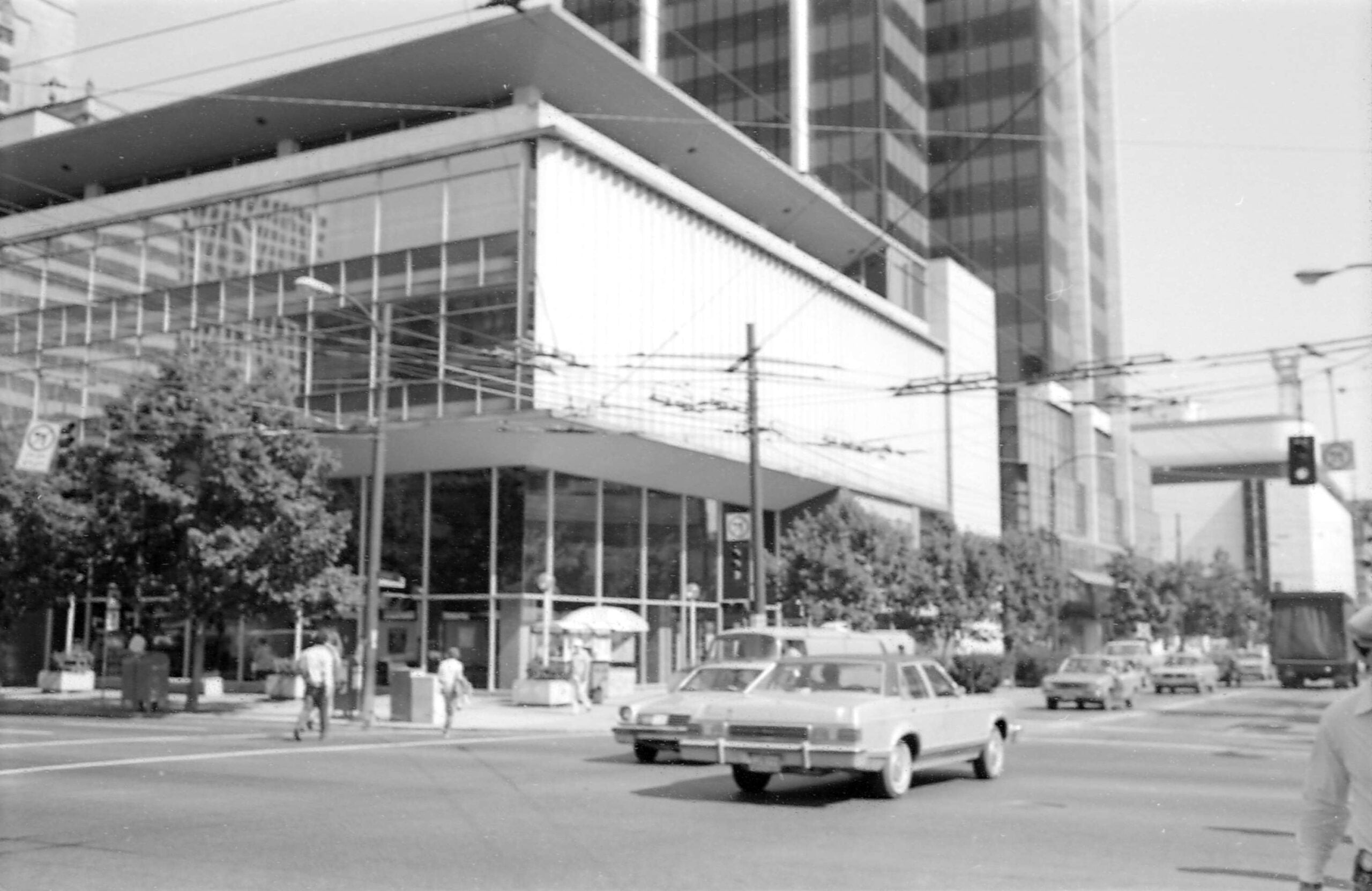
Historical Photo of Robson and Burrard Street in 1981 including the former Vancouver Public Library that is now a Victoria's Secret store. Photo: BC Archives # CVA 779-W06.05.
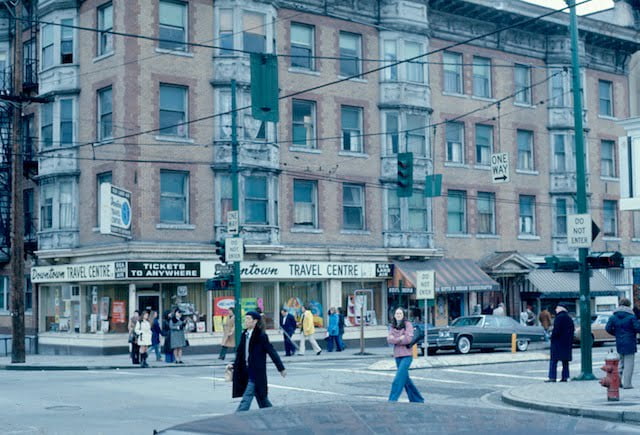
Historical Photo of Thurlow at Robson Street in 1976. Photo: BC Archives # CVA 780-406
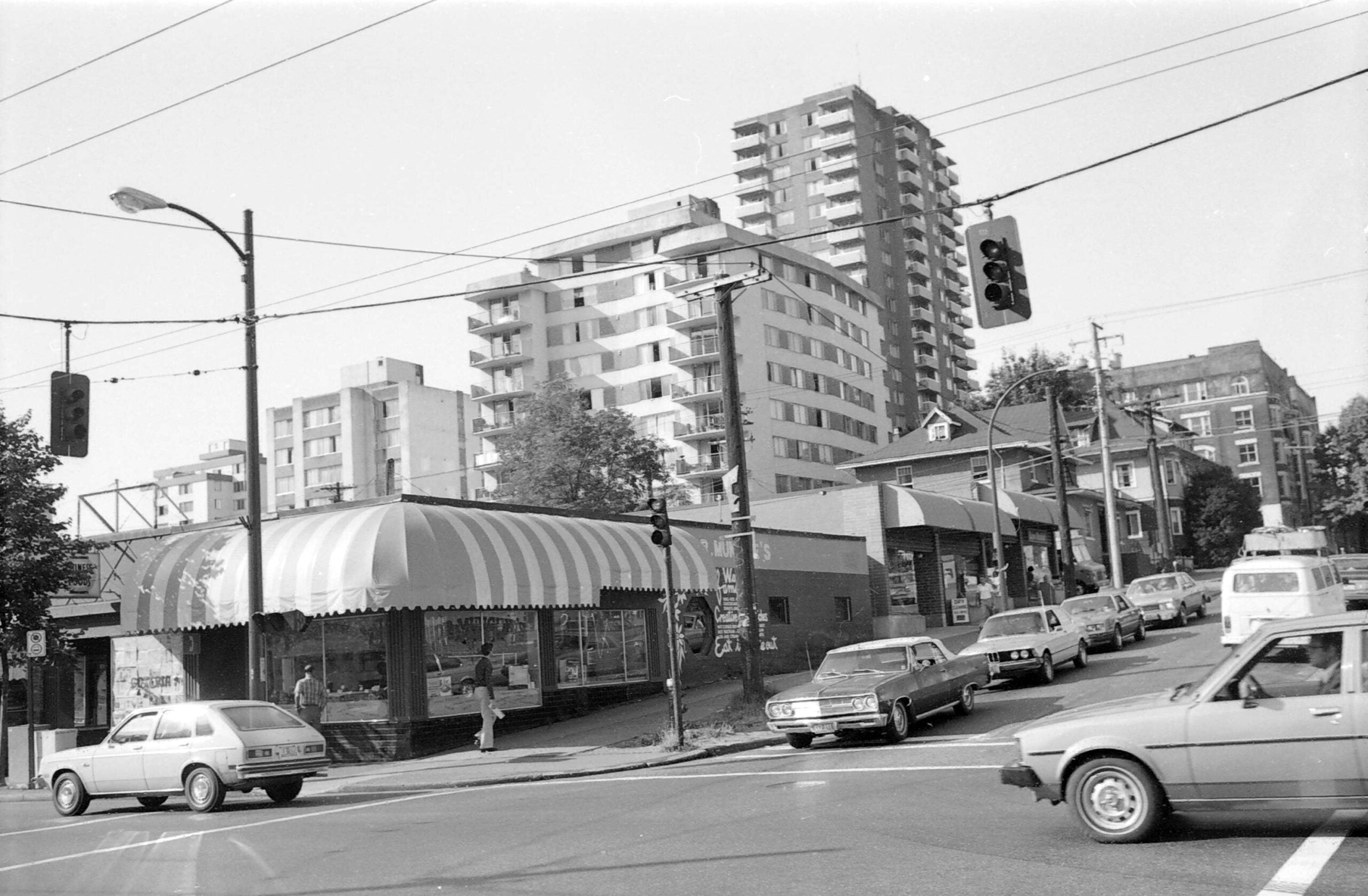
Historical Photo of Thurlow at Robson Street in 1981. Photo: BC Archives # CVA 779-W09.36
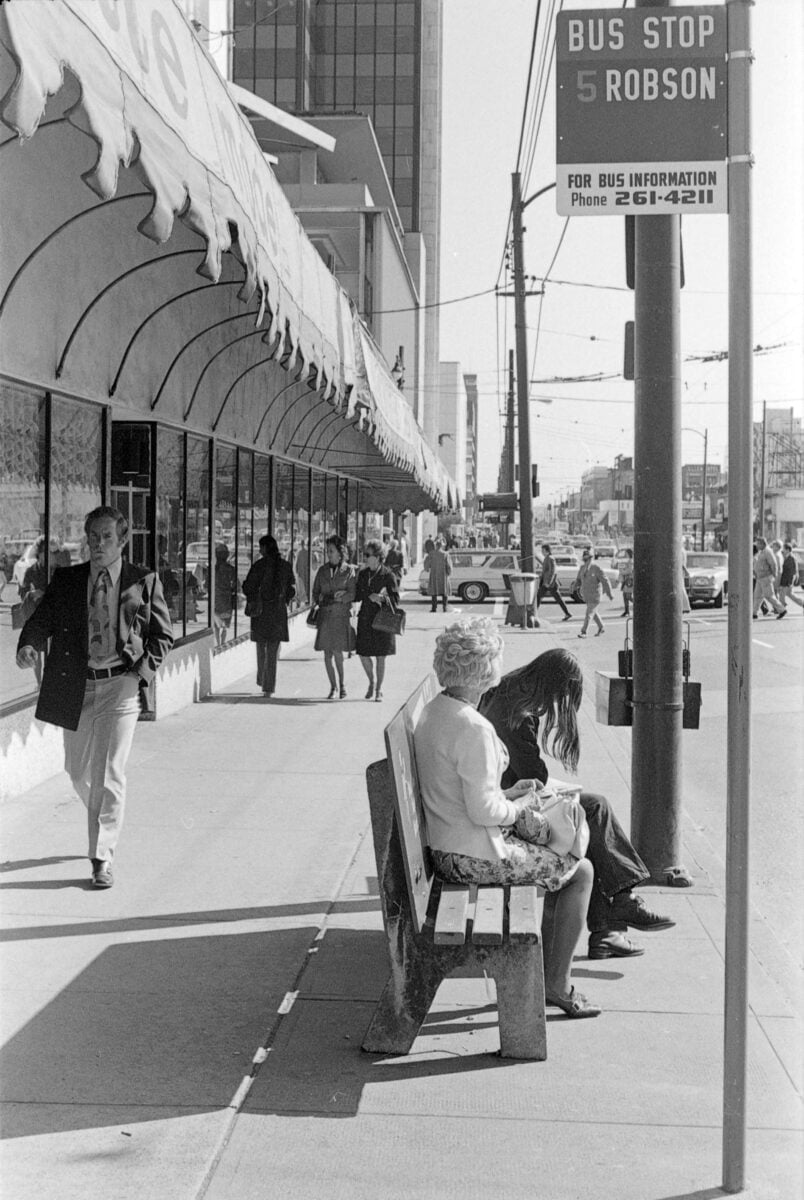
Historical Photo a bus stop at Burrard & Robson in 1974. Photo: BC Archives # CVA 69-19.19
Breaking Up Robson Street
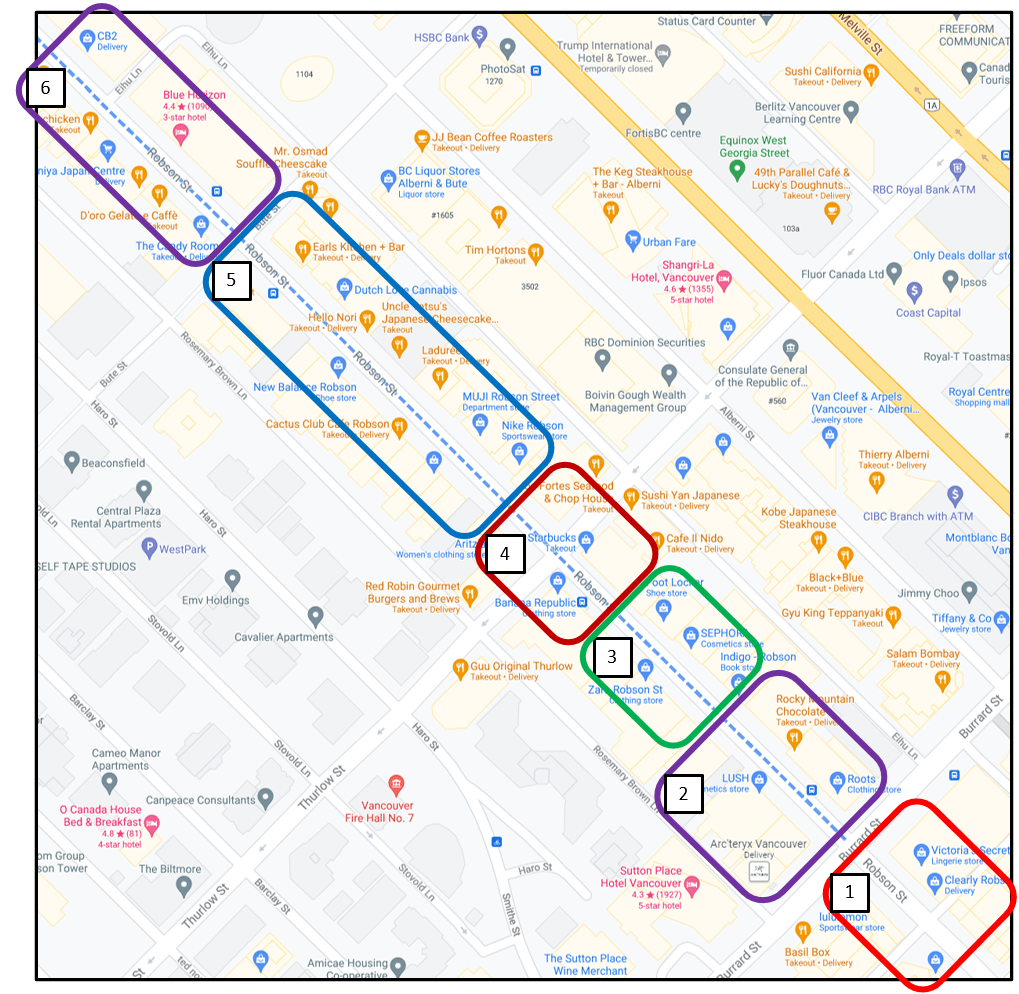
The Photo Tour of Robson Street starts next to the Vancouver Art Gallery at the intersection of Hornby Street. We will continue westward along Robson Street until we reach Jervis Street where retail becomes sparser. For the purpose of this retail tour, we separated the street into six ‘tour zones’ based on the density of retailers in each area.
Retail Profile ‘Tour Zones’ for Robson Street. Photo: Google Map.
The above six encircled ‘tour zones’ along Robson Street include:
Zone 1: 900 Block of Robson Street (Hornby Street to Burrard Street)
Zone 2: Eastern-1000 Block of Robson Street
Zone 3: Mid-1000 Block of Robson Street
Zone 4: Intersection of Robson Street and Thurlow Street
Zone 5: 1100 Block of Robson Street (Bute Street to Thurlow Street)
Zone 6: 1200 Block of Robson Street (Jervis Street to Bute Street)
Retail Tour Zone 1: 900 Block of Robson Street (Hornby Street to Burrard Street)
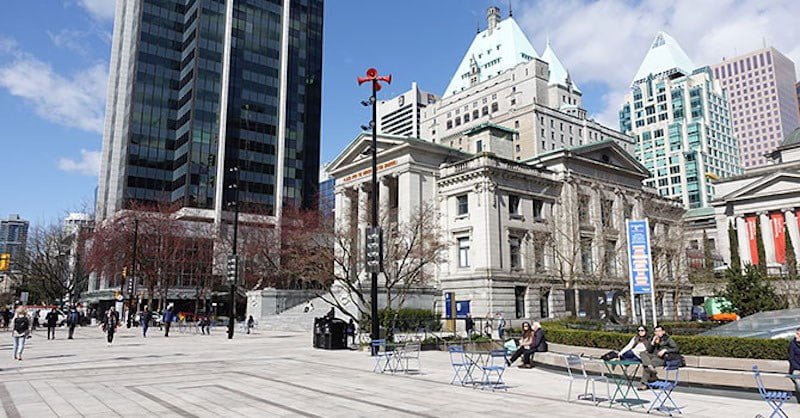
To make it easier for our readers, we selected a prominent downtown landmark to begin the first tour zone. The Vancouver Art Gallery originally opened as a provincial courthouse and was re-purposed for museum use in the early 1980s. This landmark borders Hornby Street and Robson Street which provides a main source of foot traffic for the Robson Street zone.
Vancouver Art Gallery at Robson Street. Photo: City of Vancouver
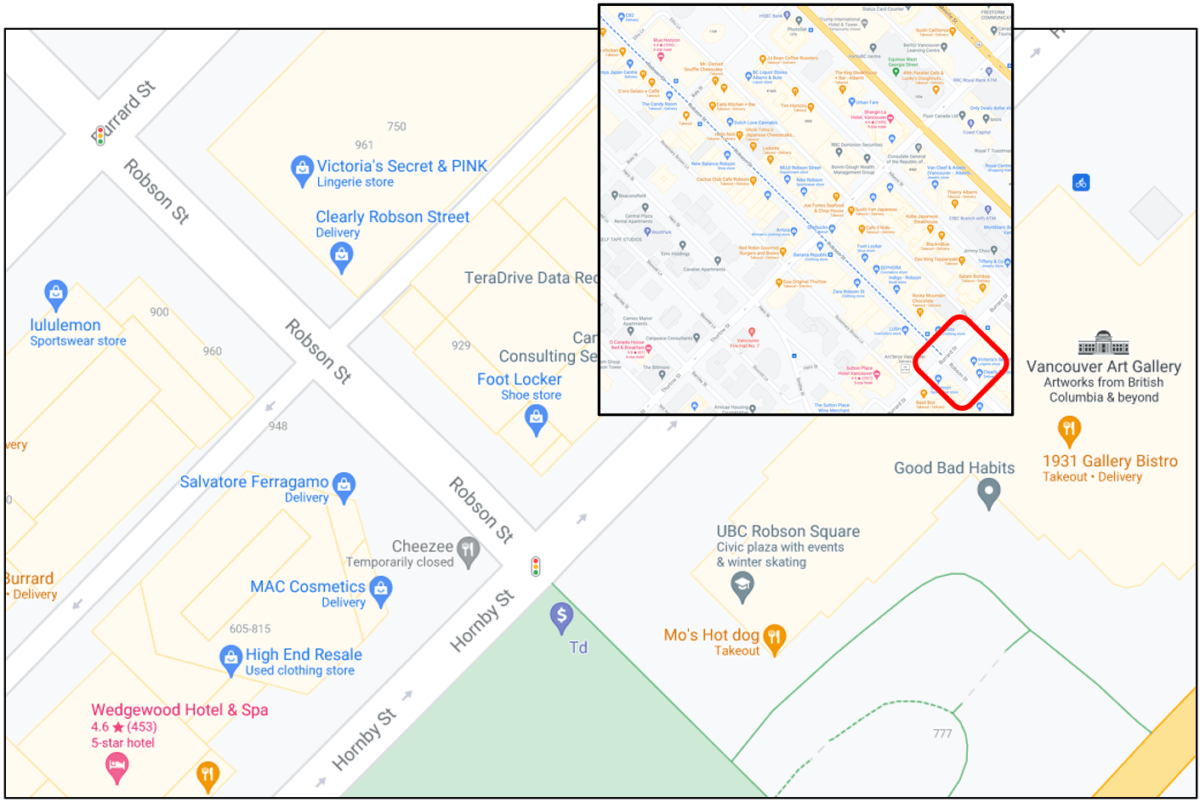
900 Block of Robson Street (Between Hornby Street and Burrard Street) in Vancouver. Photo: Google Map and overlay by Retail Insider.
While Robson Street is pedestrian-only along the Vancouver Art Gallery, vehicular traffic resumes on the 900 block of Robson Street heading westward from Hornby Street toward Burrard Street. The retailers mentioned in Retail Insider for this block include:
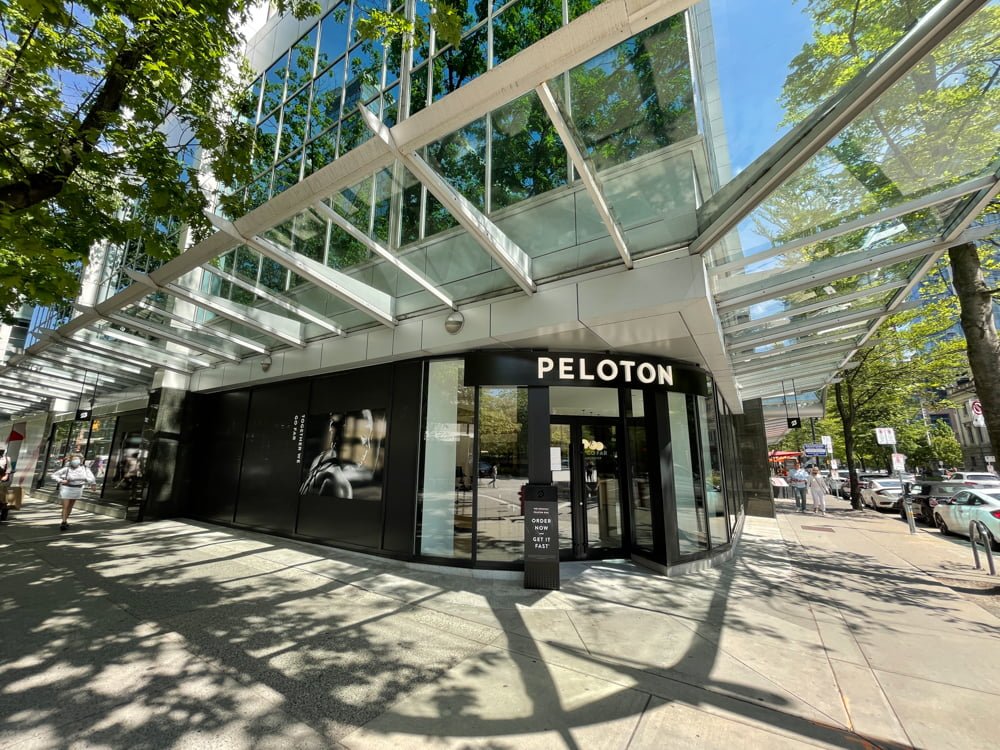
Peloton on Robson Street in Vancouver (June 2021). Photo: Lee Rivett.
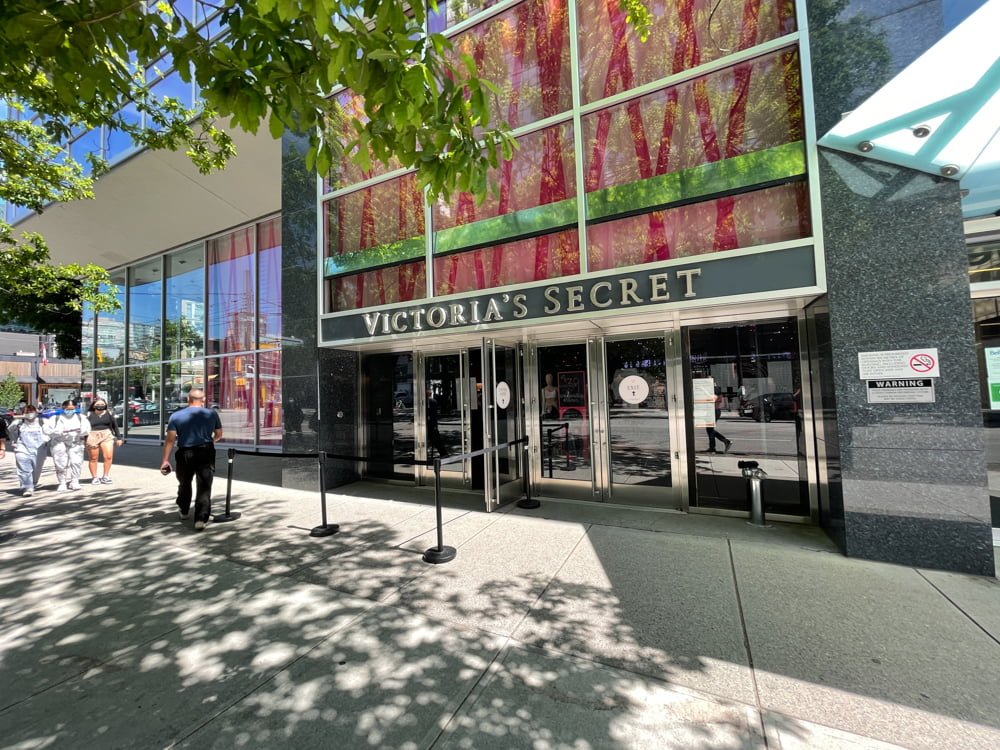
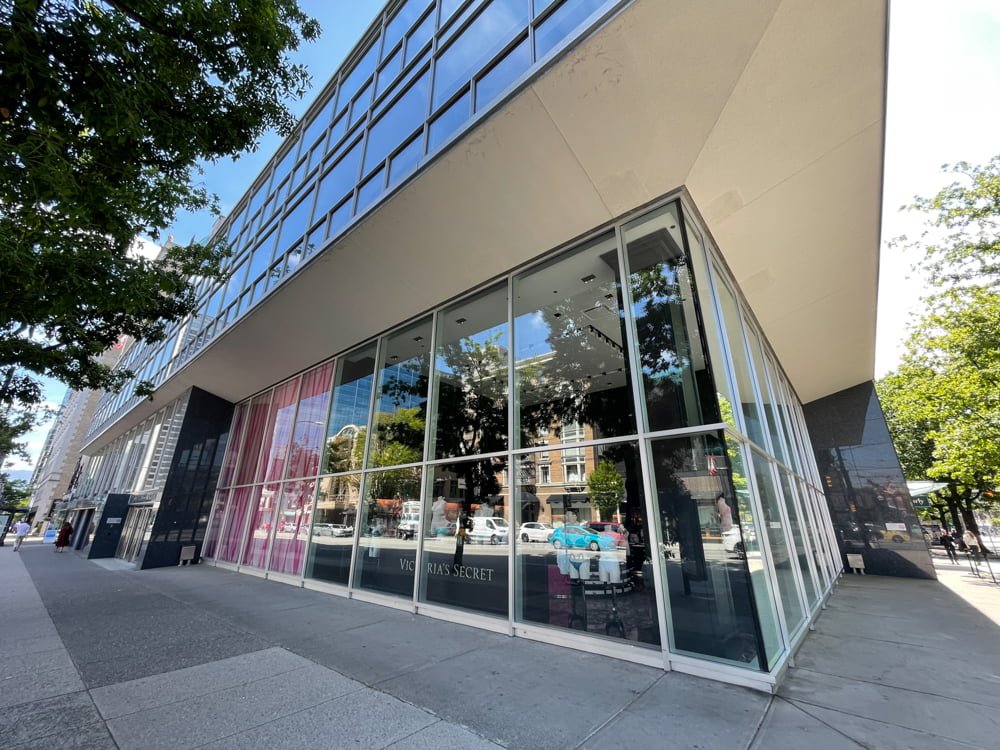
Victoria's Secret on Robson Street in Vancouver (June 2021). Photo: Lee Rivett.
Victoria's Secret on Robson Street in Vancouver (June 2021). Photo: Lee Rivett.
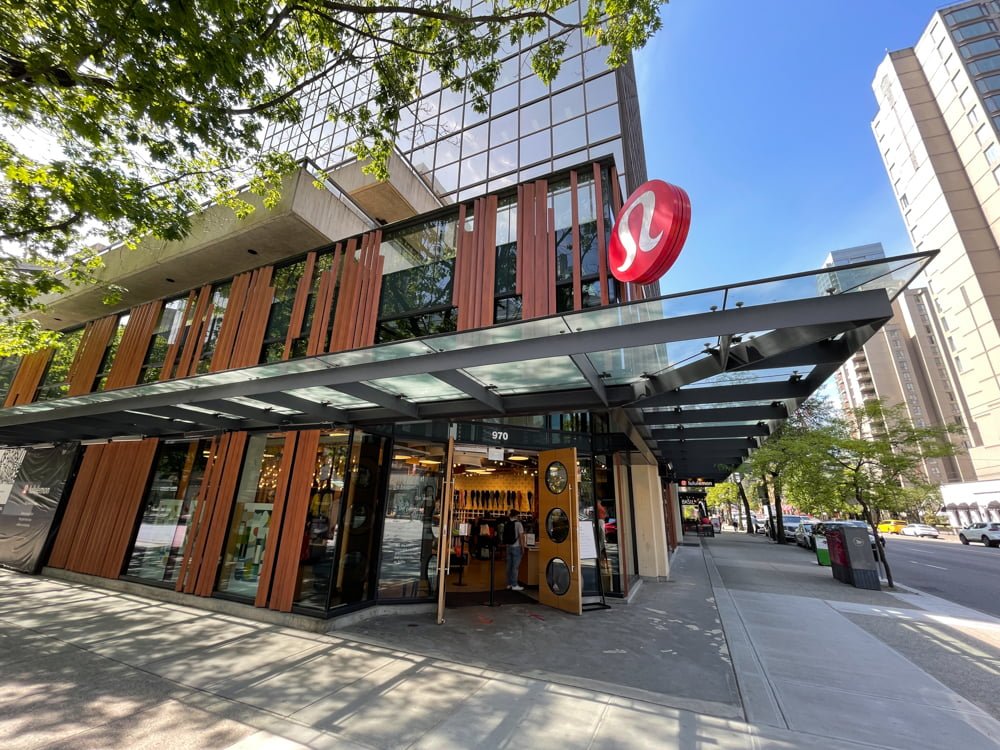
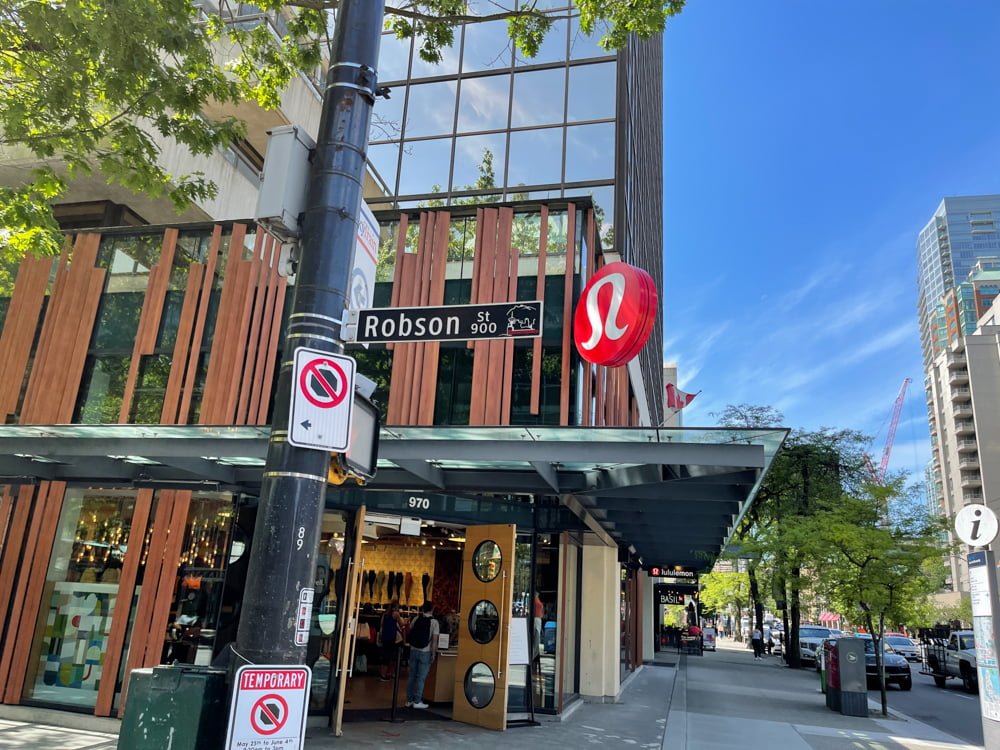
Lululemon on Robson Street in Vancouver (June 2021). Photo: Lee Rivett.
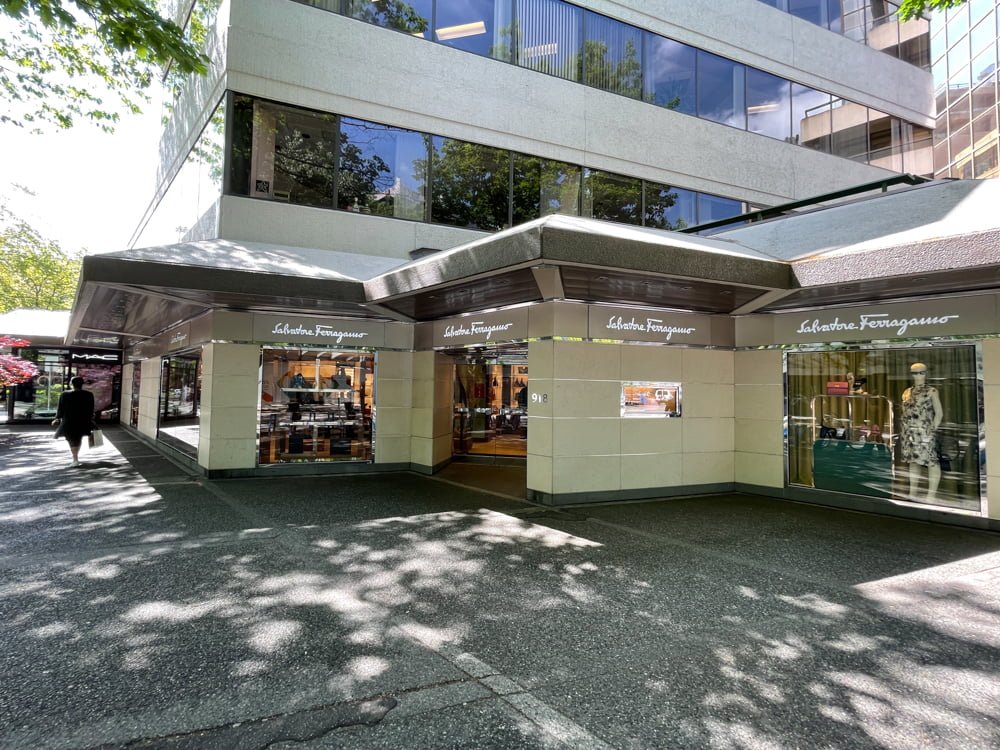
Salvatore Ferragamo on Robson Street in Vancouver (June 2021). Photo: Lee Rivett.
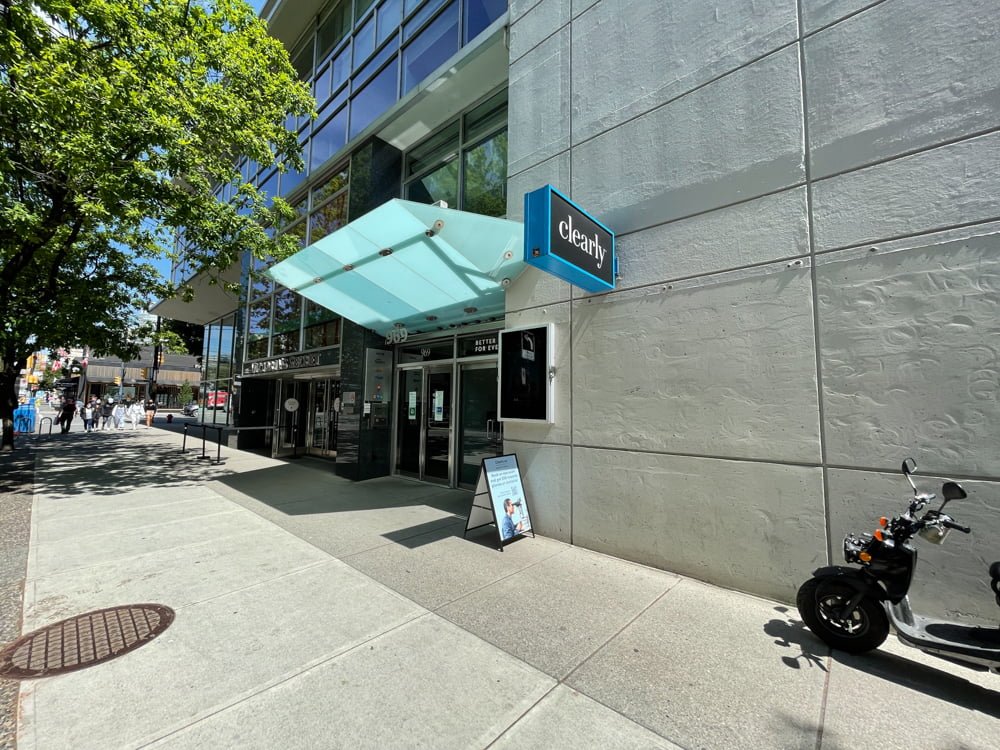
Clearly on Robson Street in Vancouver (June 2021). Photo: Lee Rivett.
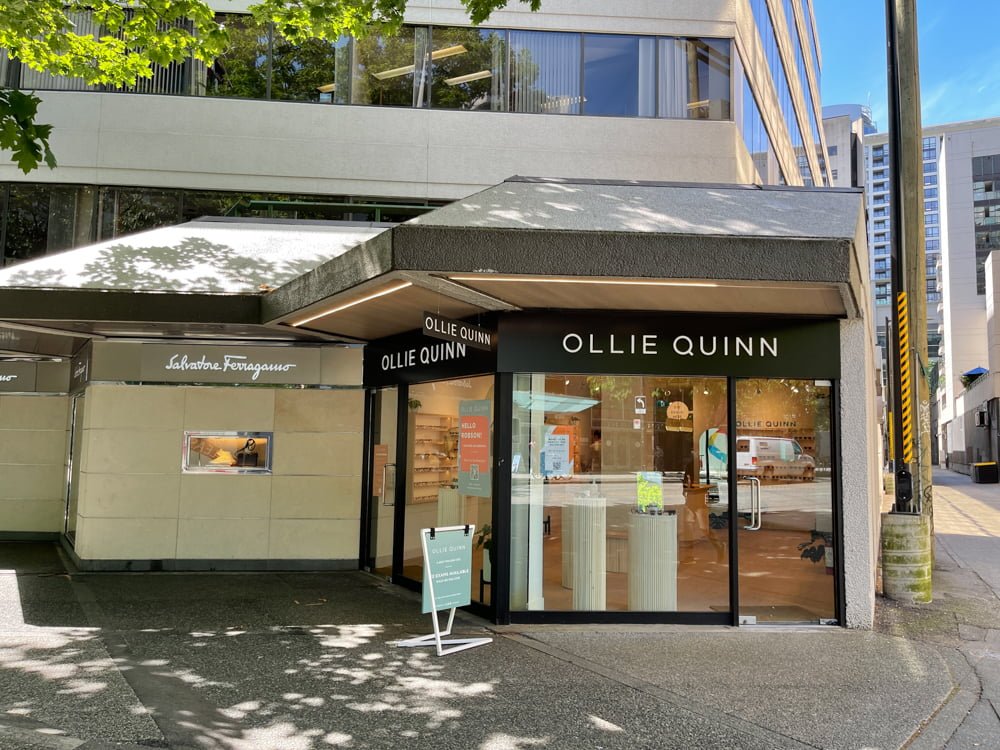
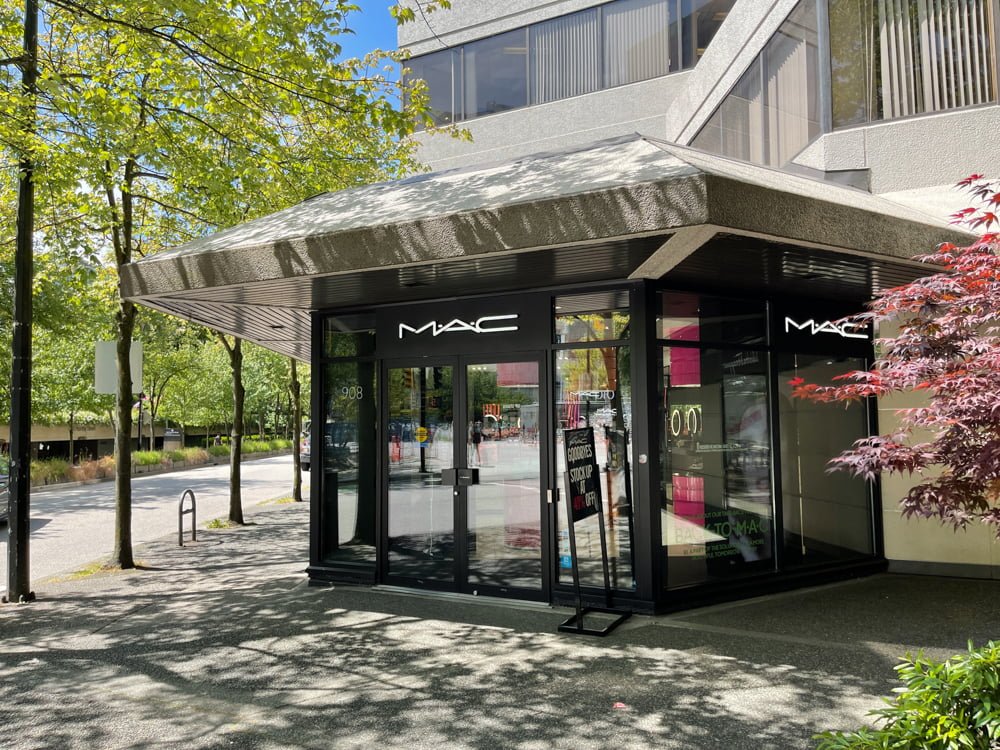
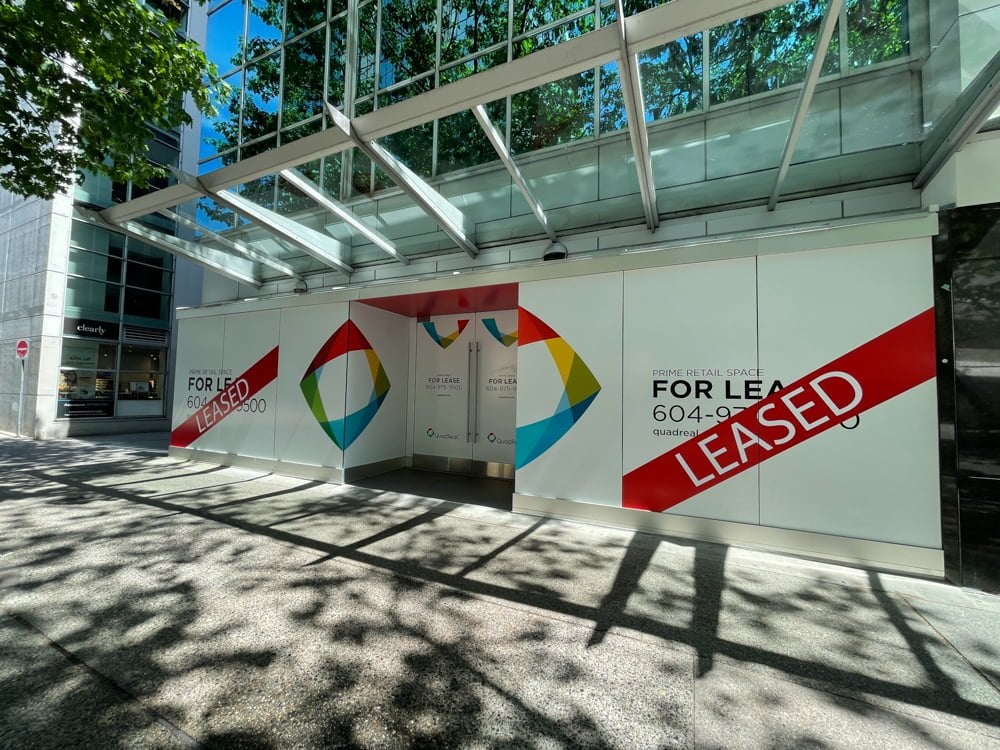
Other retailers on the 900 block of Robson street include Ollie Quinn and MAC Cosmetics, and the block was also home to Tesla Motor’s second Canadian store which recently closed.
1 of 3
Ollie Quinn on Robson Street (June 2021). Photo: Lee Rivett.
MAC Cosmetics on Robson Street (June 2021). Photo: Lee Rivett.
Former Tesla Motors on Robson Street (June 2021). Photo: Lee Rivett.
Retail Tour Zone 2: Eastern-1000 Block of Robson Street
Retailer density increases as the retail tour crosses Burrard Street to the 1000 block of Robson Street. As a result, we broke the 1000 block into three sections to give the block a little extra detail. As we left the previous tour zone on the 900 block of Robson Street, we crossed Burrard Street bringing us to the first of three sections of the 1000 block.
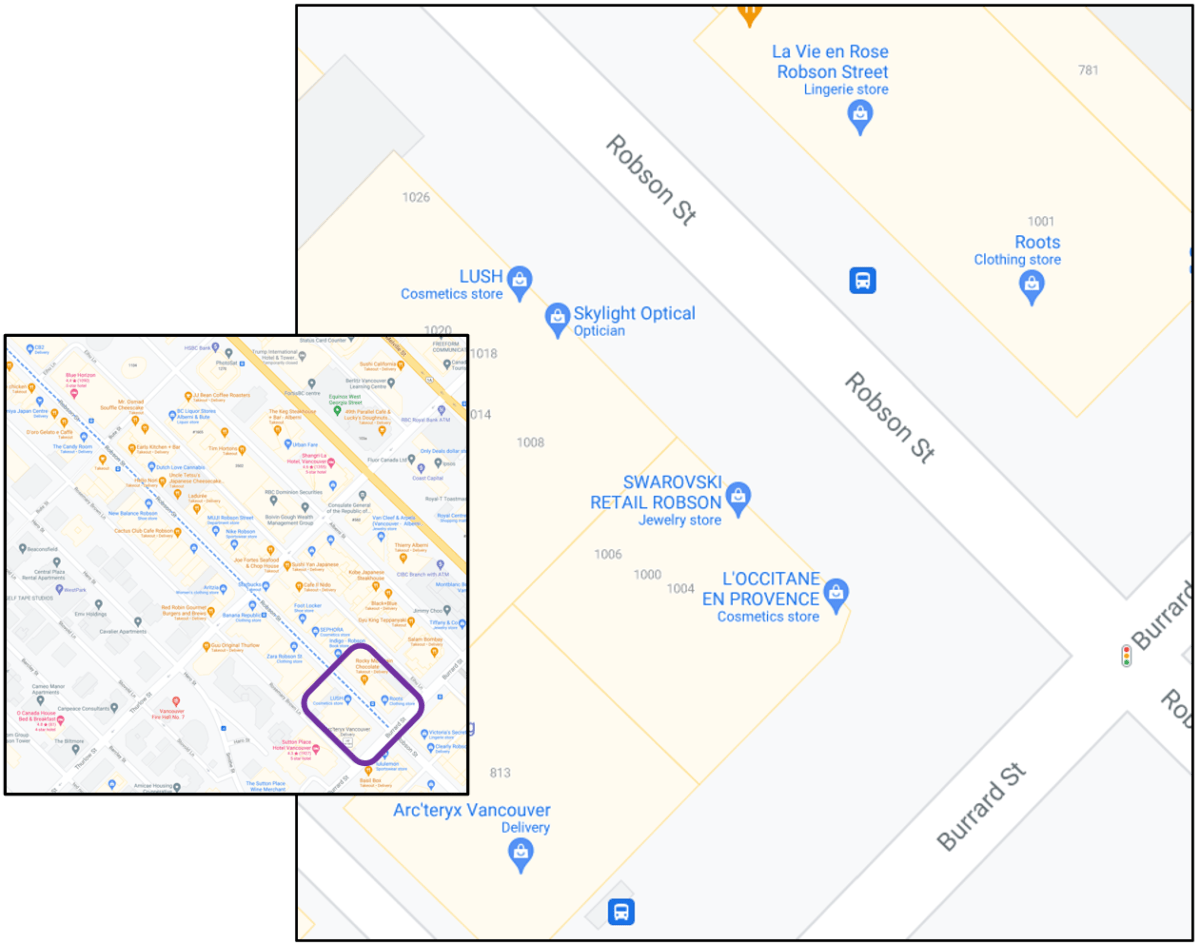
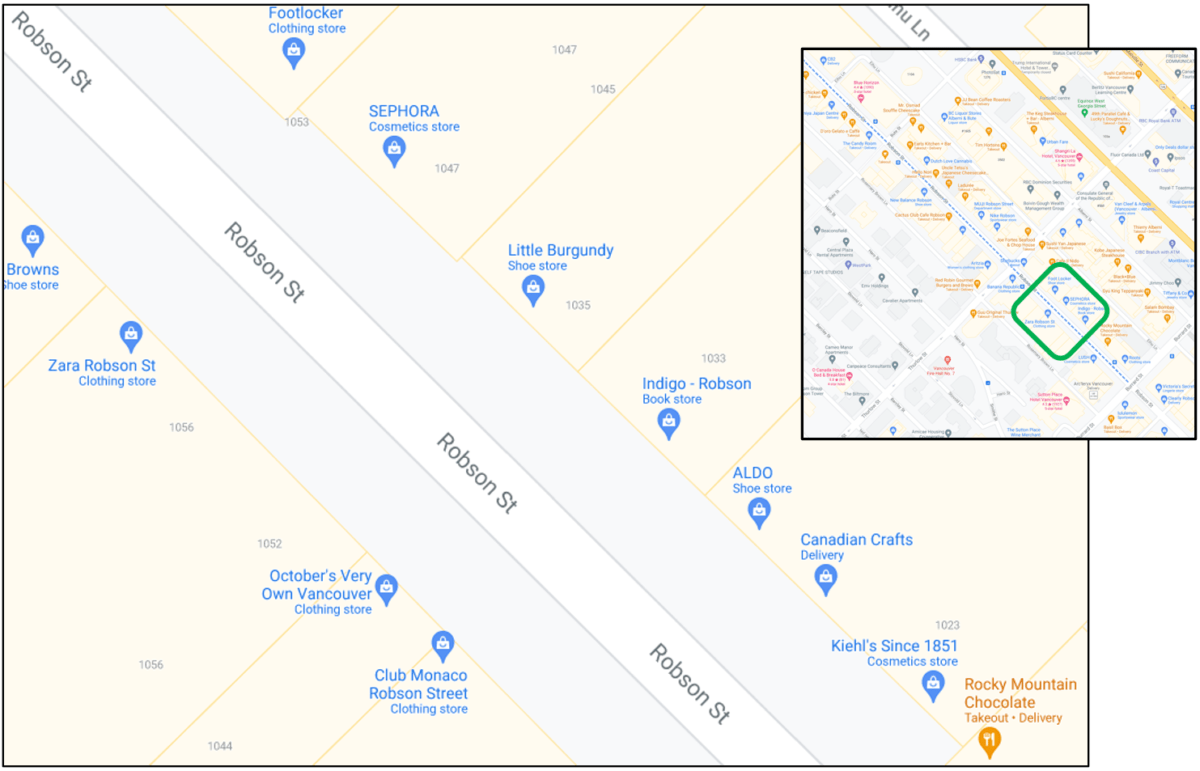
Eastern side of 1000 Block of Robson Street (starting at Burrard Street) in Vancouver. Photo: Google Map and overlay by Retail Insider.
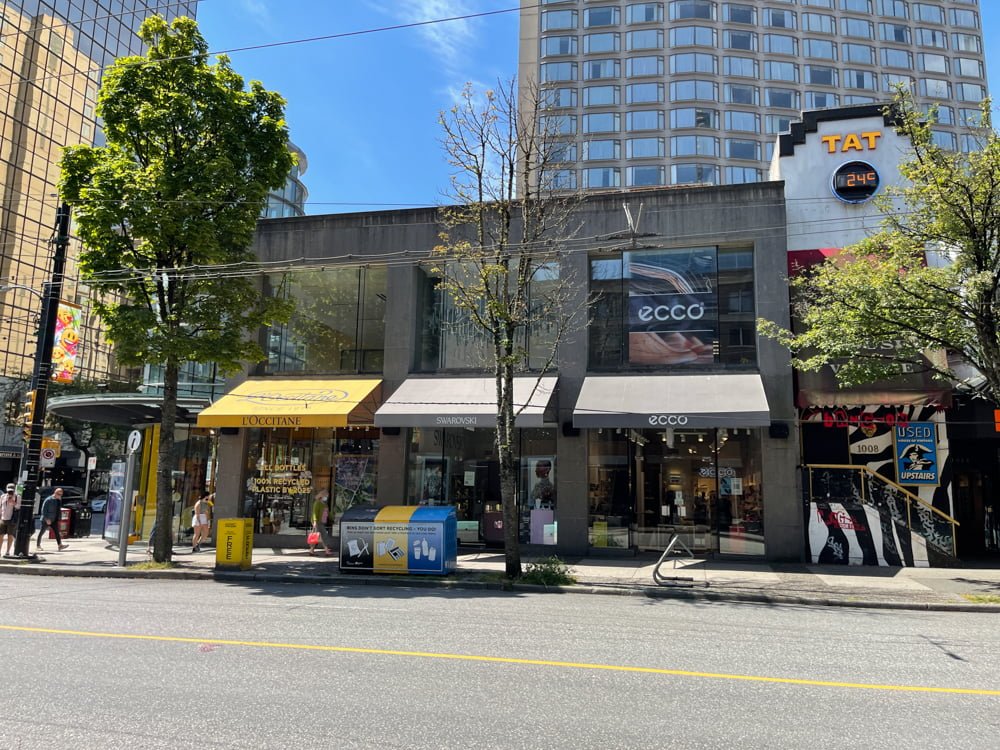
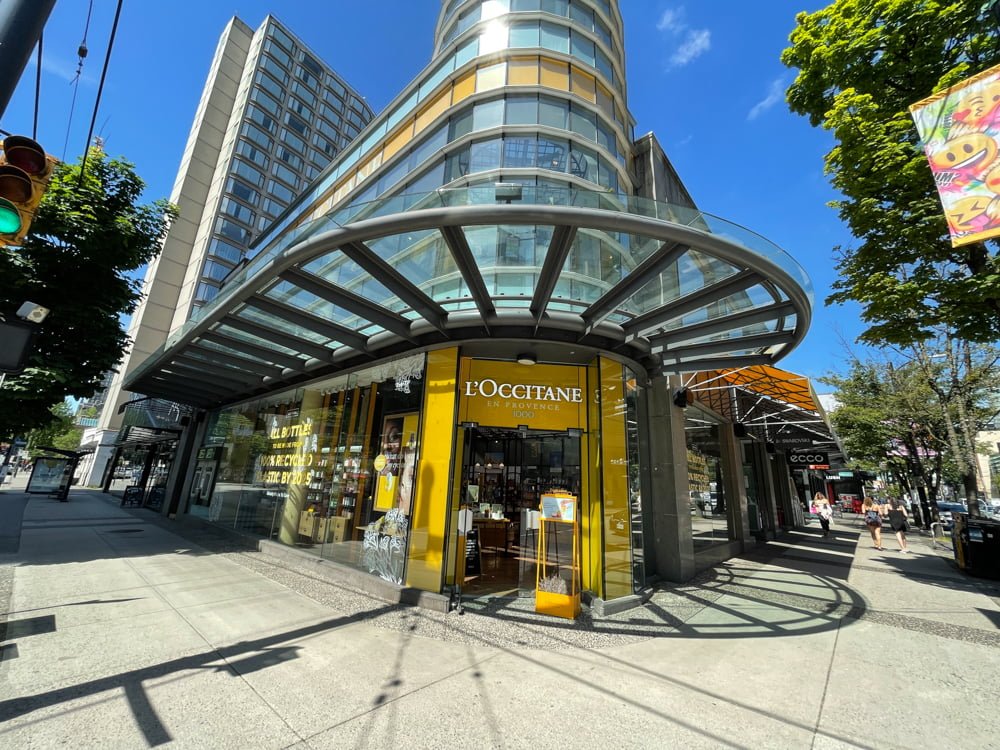
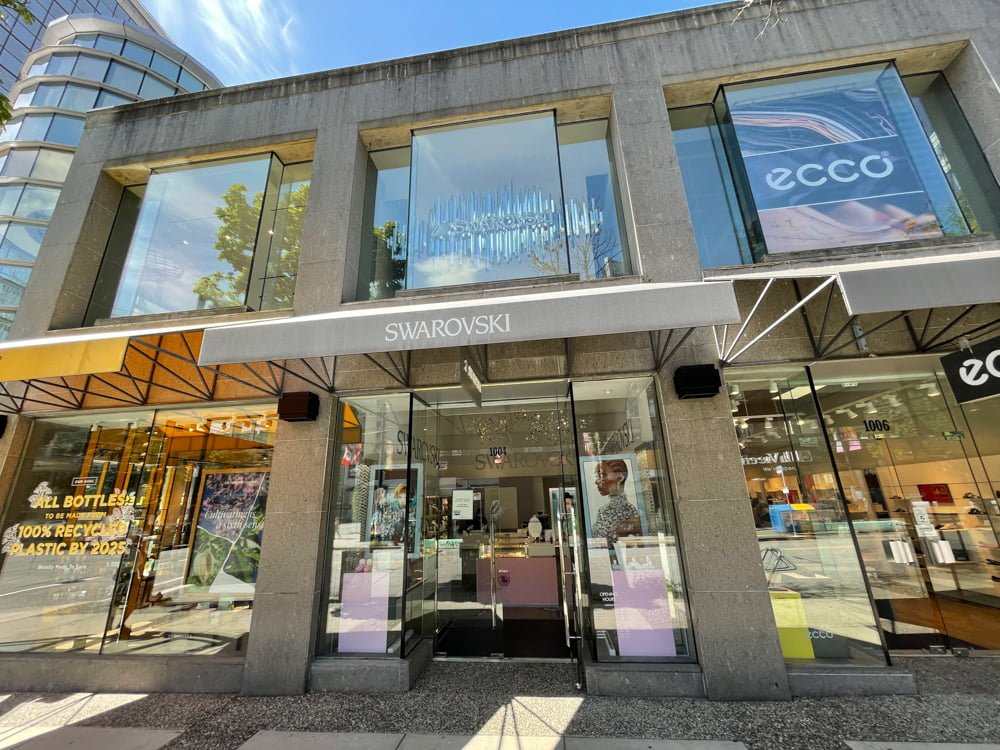
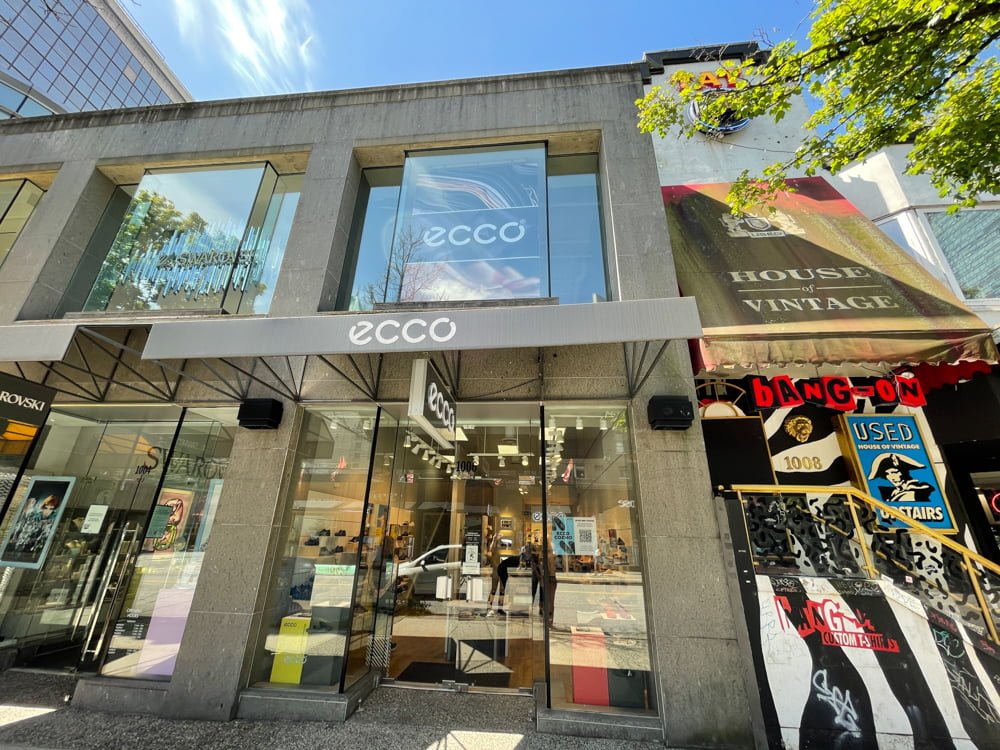
L’Occitane, Swarovski and Ecco Shoes on Robson Street in Vancouver (June 2021). Photo: Lee Rivett.
There are several retailers featured in Retail Insider over the years, including:
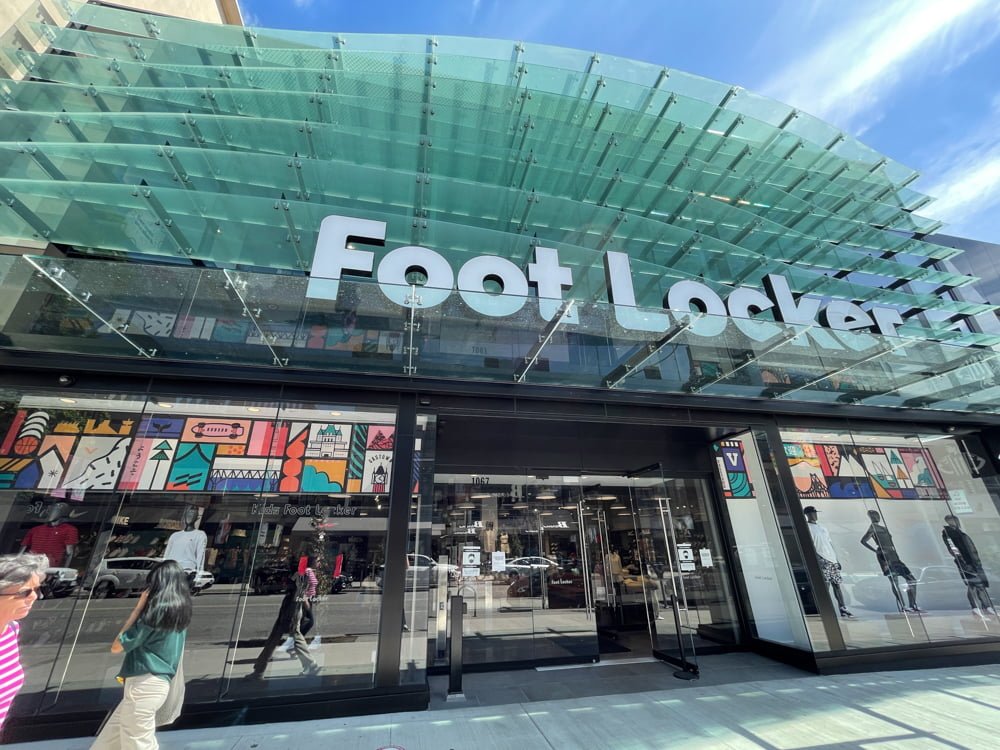
Foot Locker: American sportswear and footwear retailer opened its first Canadian Community Power Store on Robson Street in December 2020. The new 15,000-square-foot store in Vancouver offers a three-storey retail experience, including a second-floor activation space where events may be hosted with key brand partners and influencers for the local community (pending COVID-19 restrictions).
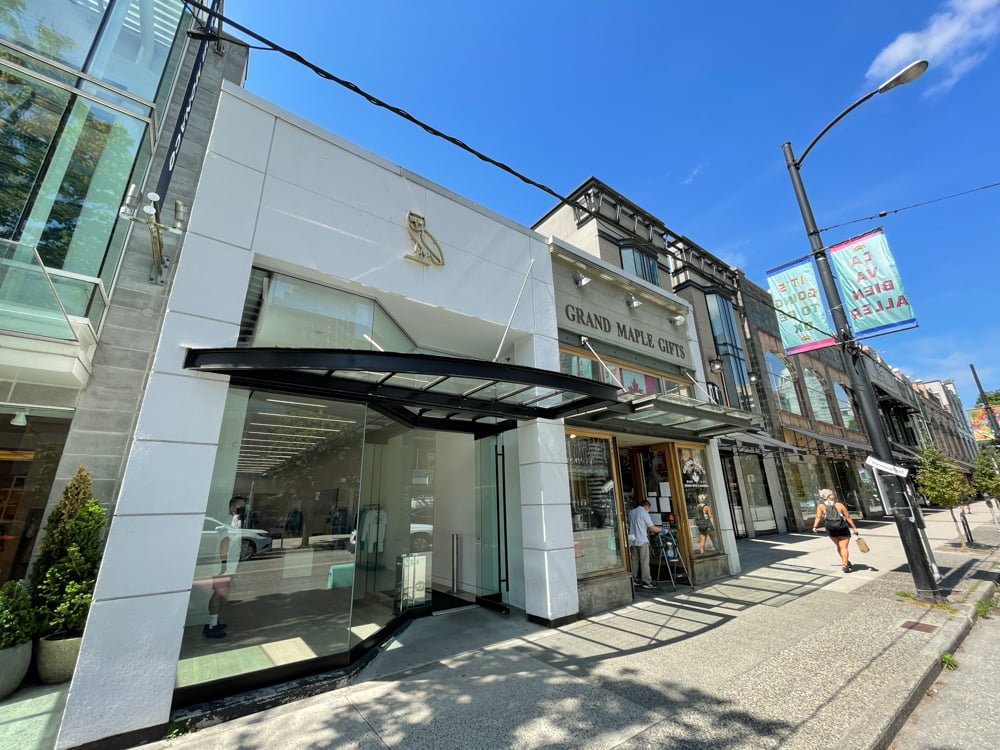
OVO on Robson Street (June 2021). Photo: Lee Rivett.
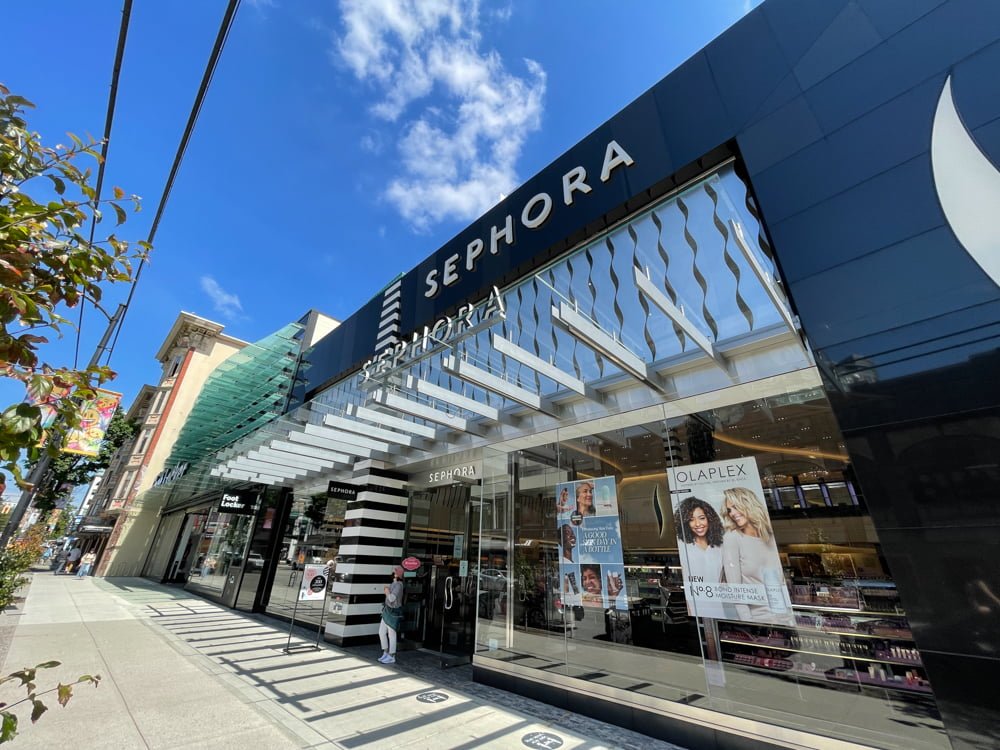
Sephora on Robson Street (June 2021). Photo: Lee Rivett.
Foot Locker on Robson Street (June 2021). Photo: Lee Rivett.
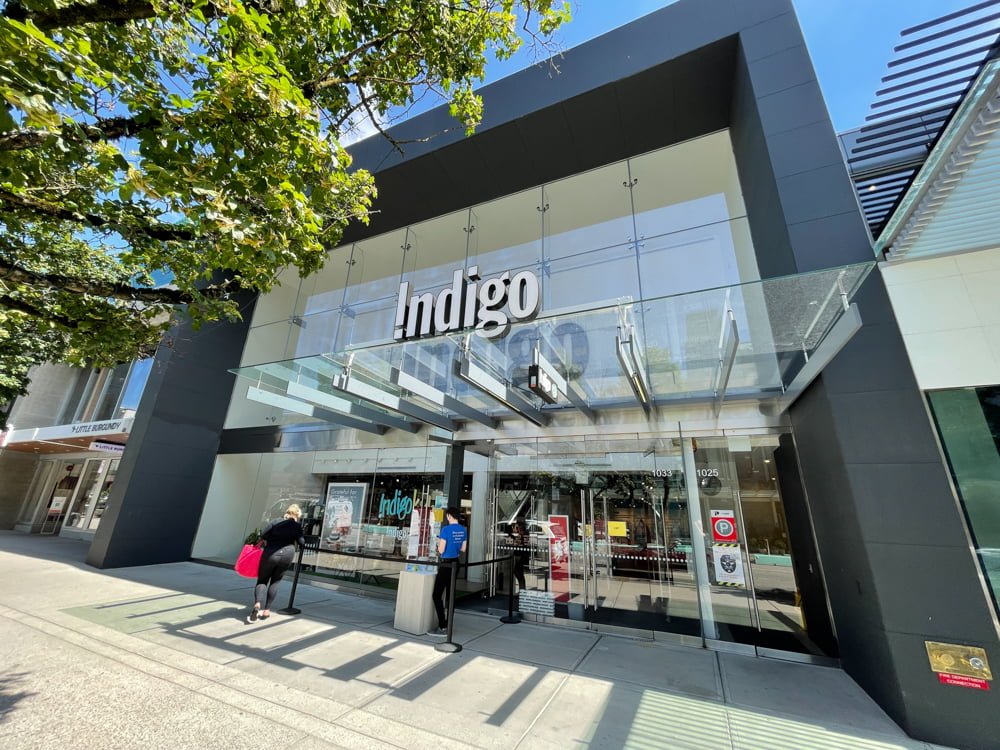
Indigo on Robson Street (June 2021). Photo: Lee Rivett.
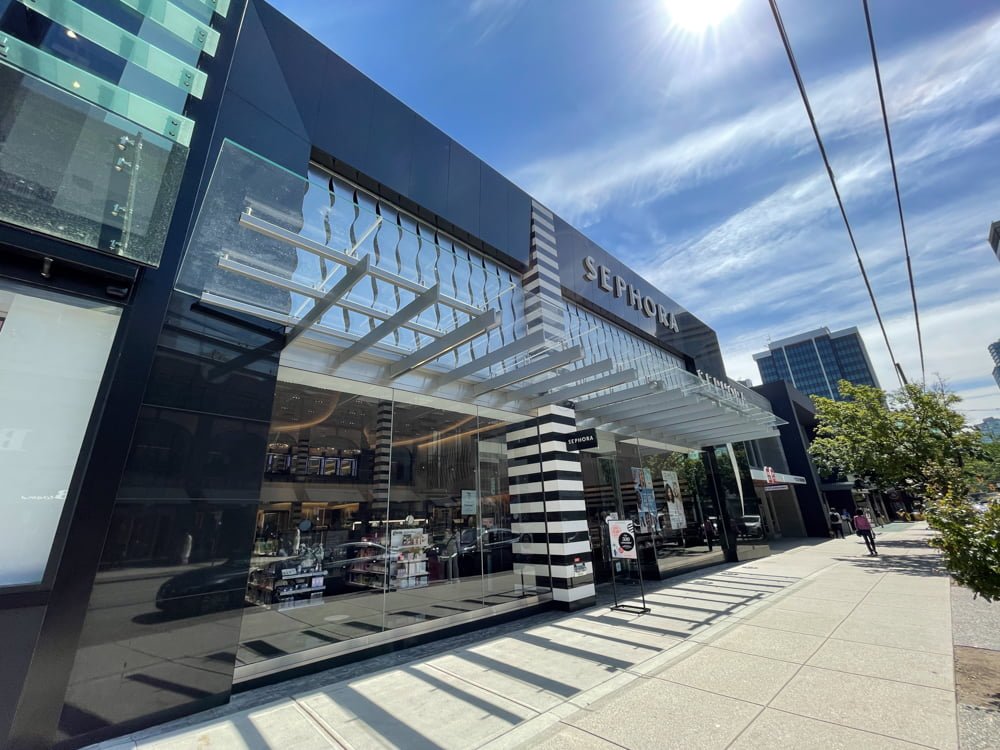
Sephora on Robson Street (June 2021). Photo: Lee Rivett.
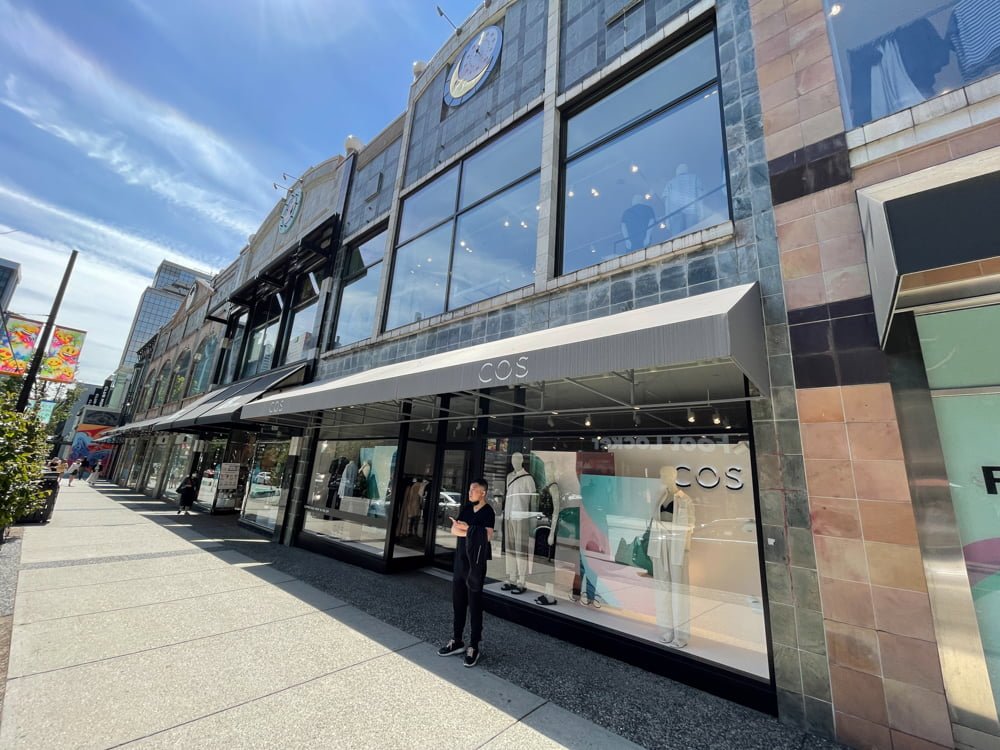
COS on Robson Street (June 2021). Photo: Lee Rivett.
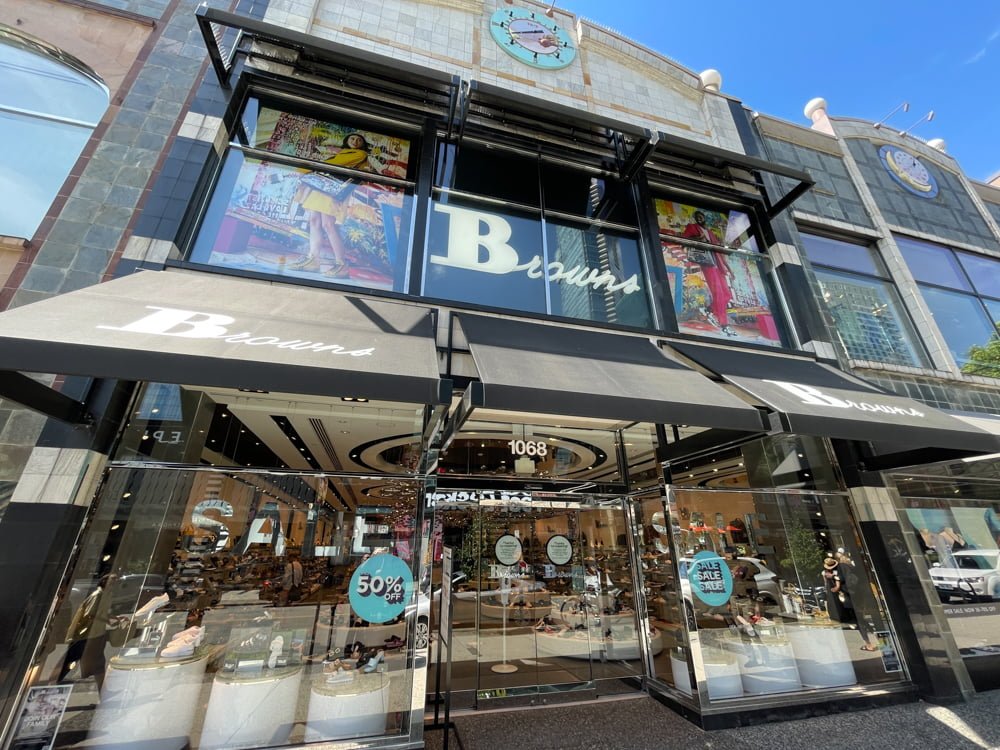
Browns Shoes on Robson Street (June 2021). Photo: Lee Rivett.
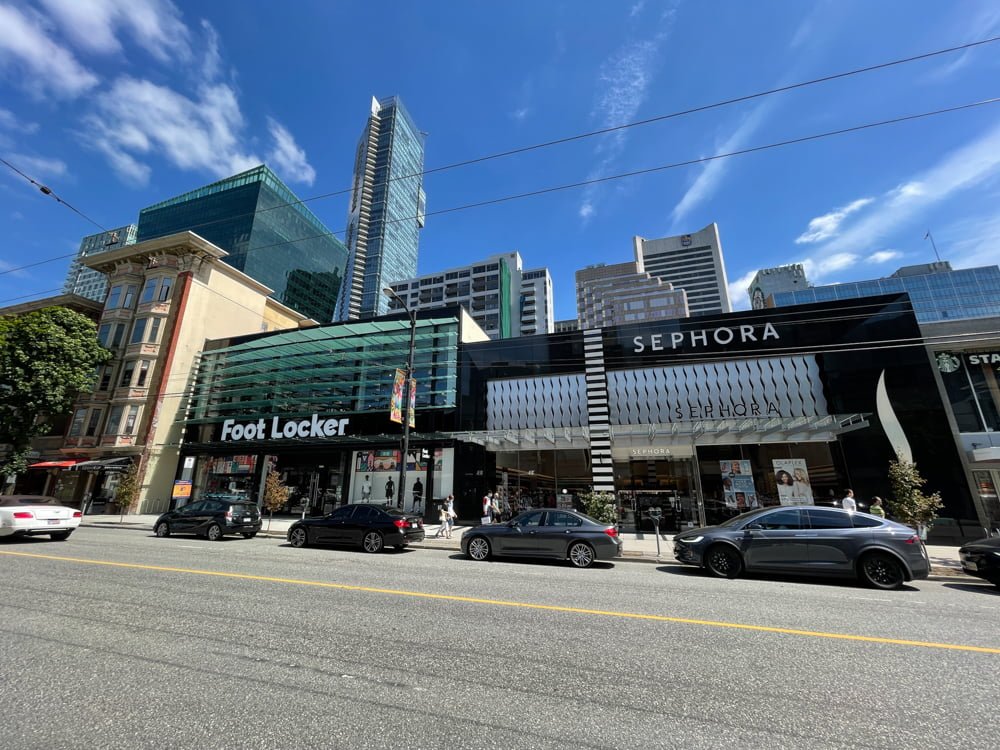
Foot Locker and Sephora on Robson Street (June 2021). Photo: Lee Rivett.
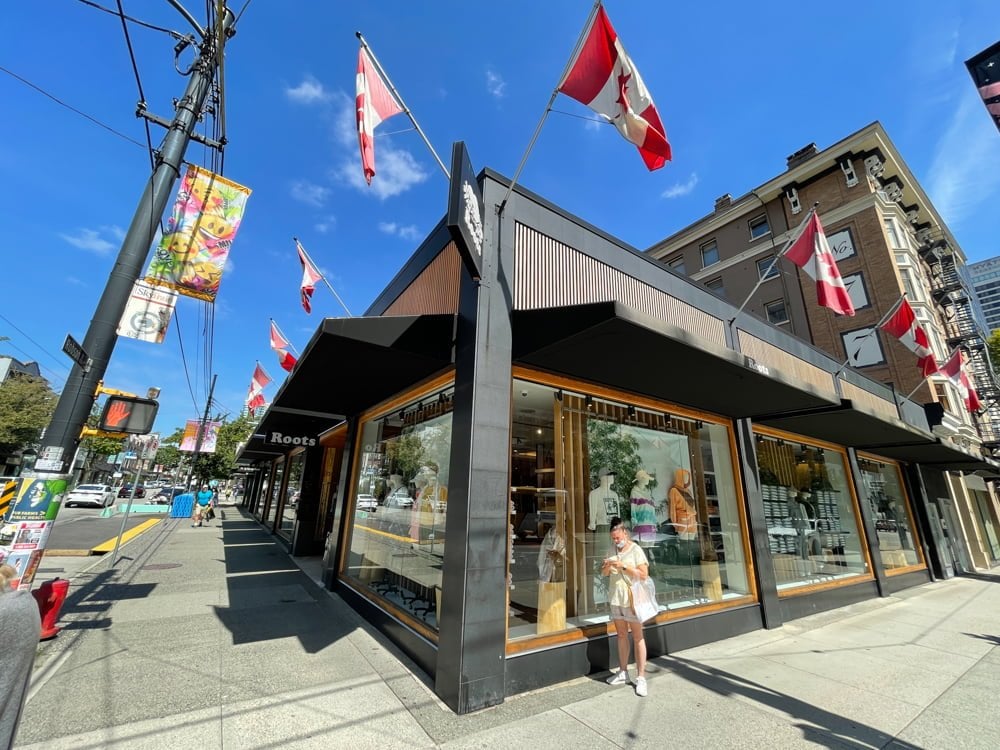
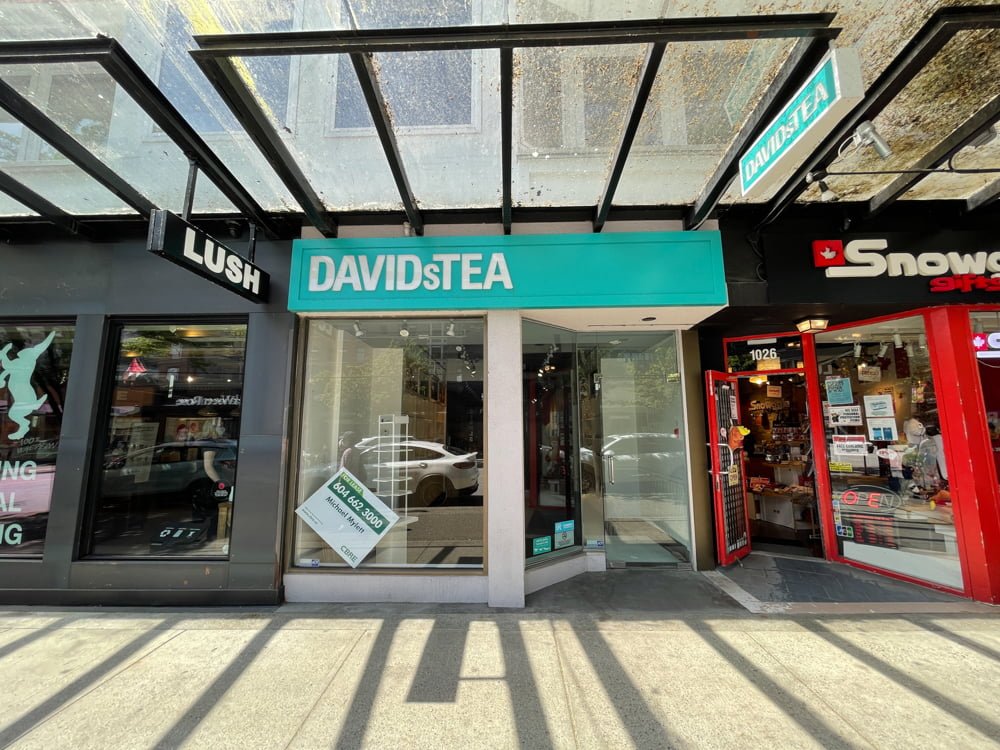
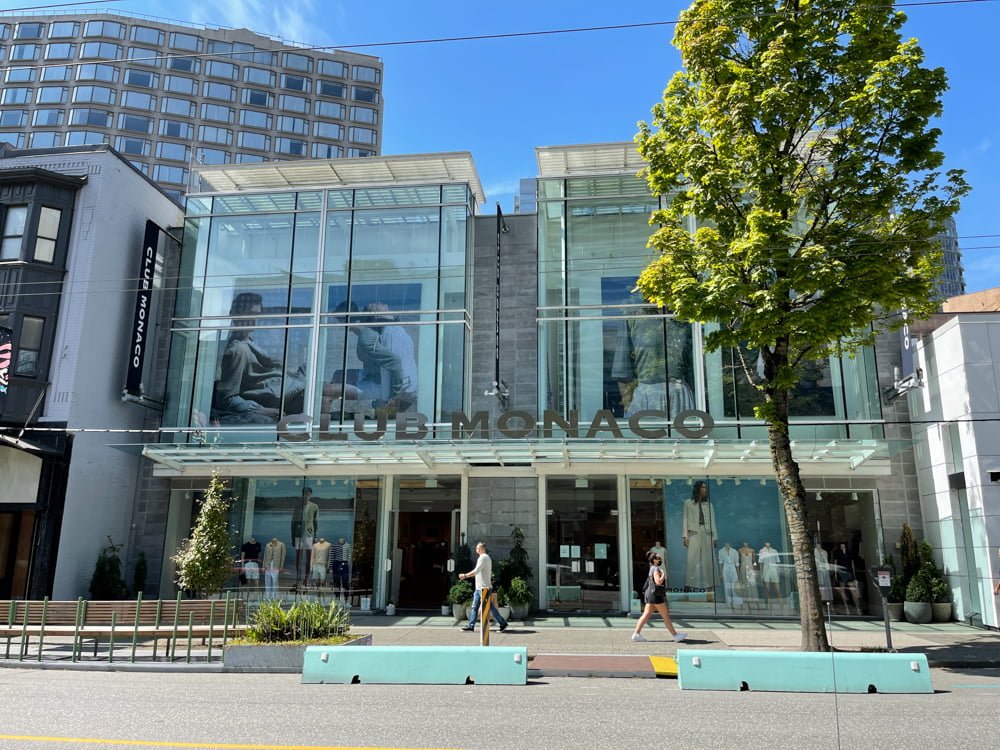
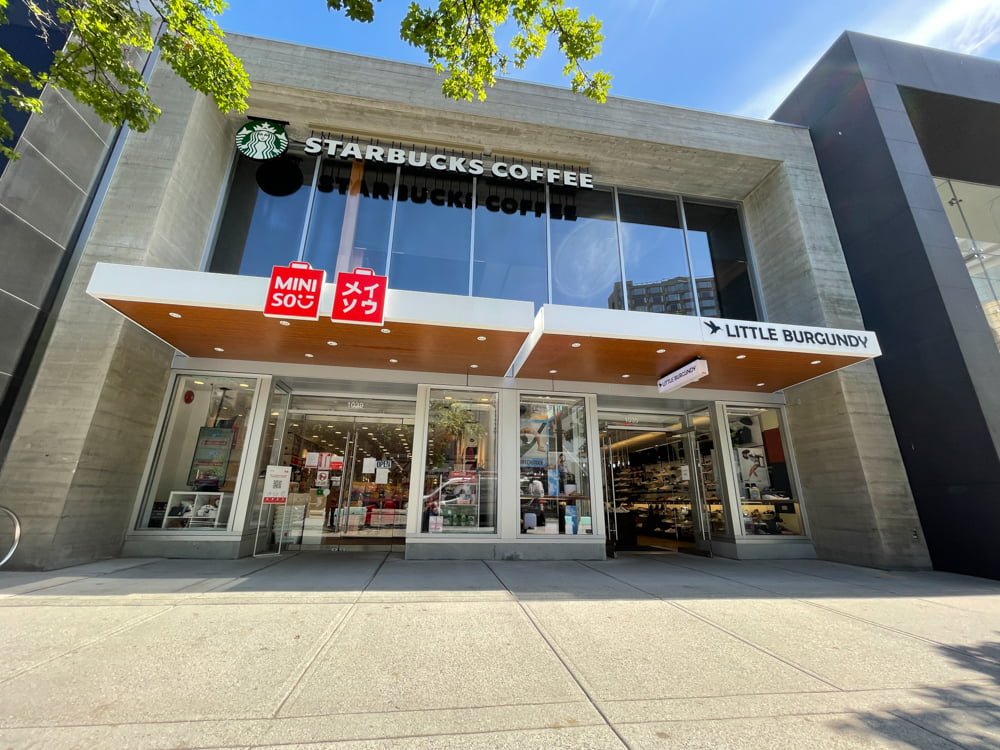
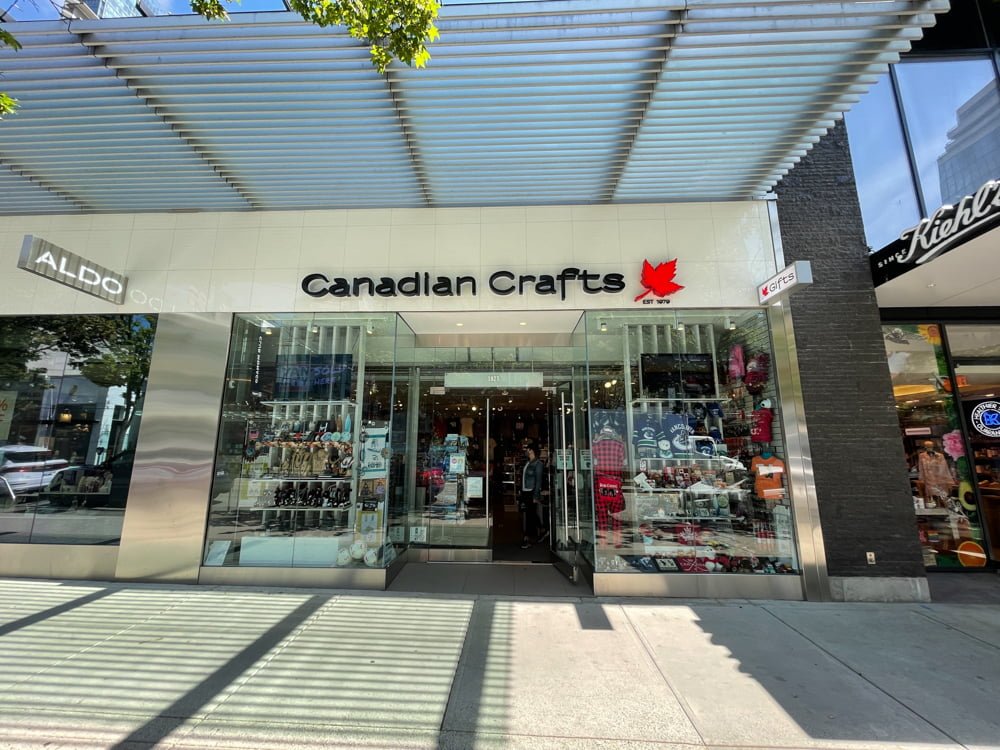
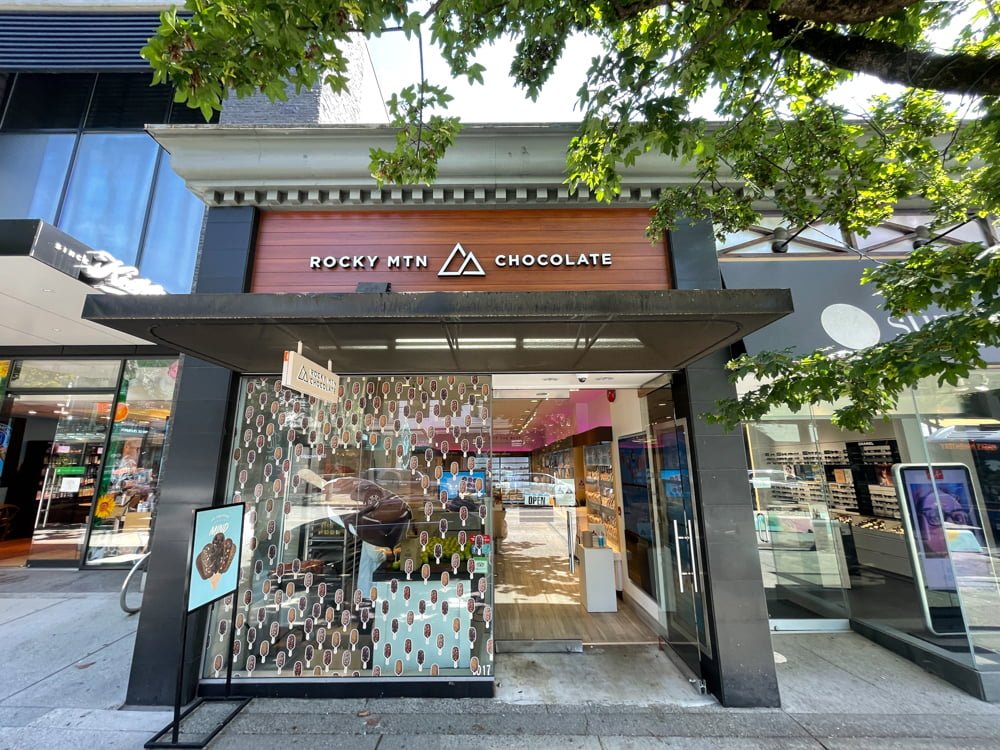
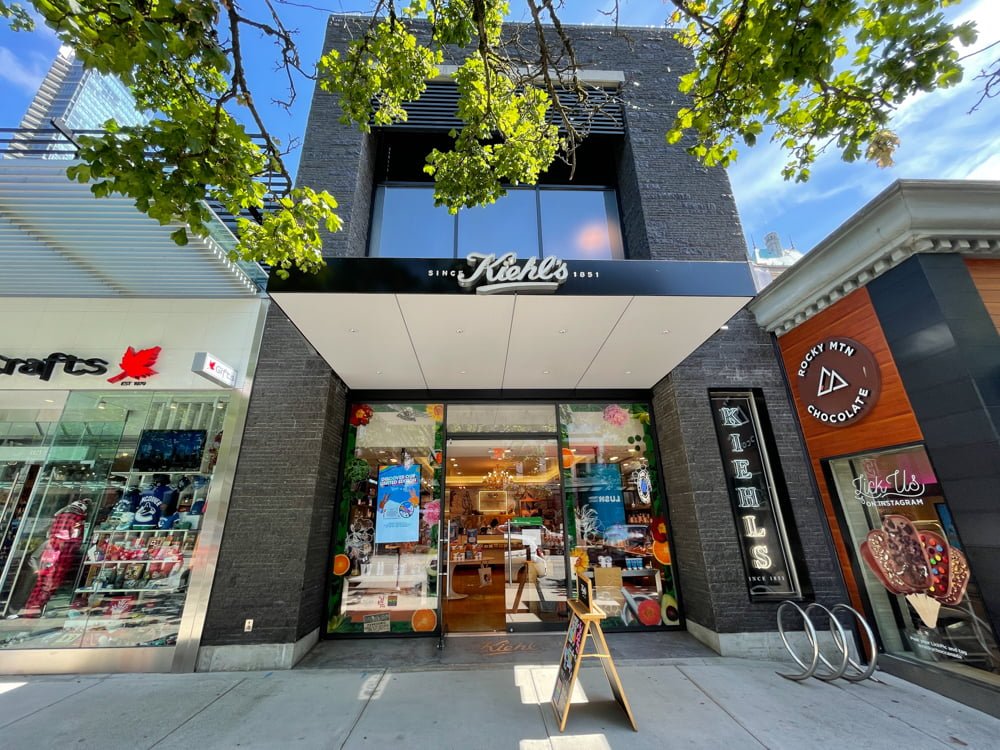
Other select retailers on the middle portion of the 1000 block of Robson Street include Zara, Kiehl’s, Rocky Mountain Chocolate, Club Monaco, Miniso, Little Burgundy, Canadian Crafts and Aldo.
1 of 6
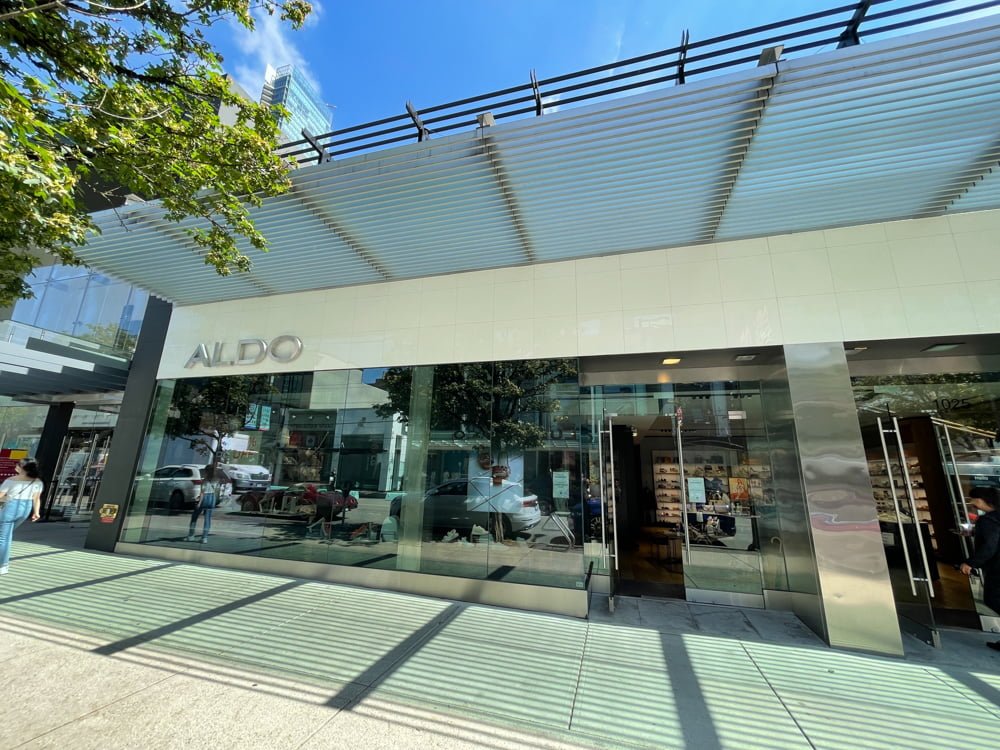
Aldo on Robson Street (June 2021). Photo: Lee Rivett.
Club Monaco on Robson Street (June 2021). Photo: Lee Rivett.
Miniso and Little Burgundy on Robson Street (June 2021). Photo: Lee Rivett.
Canadian Crafts on Robson Street (June 2021). Photo: Lee Rivett.
Rocky Mountain Chocolate on Robson Street (June 2021). Photo: Lee Rivett.
Kiehl's on Robson Street (June 2021). Photo: Lee Rivett.
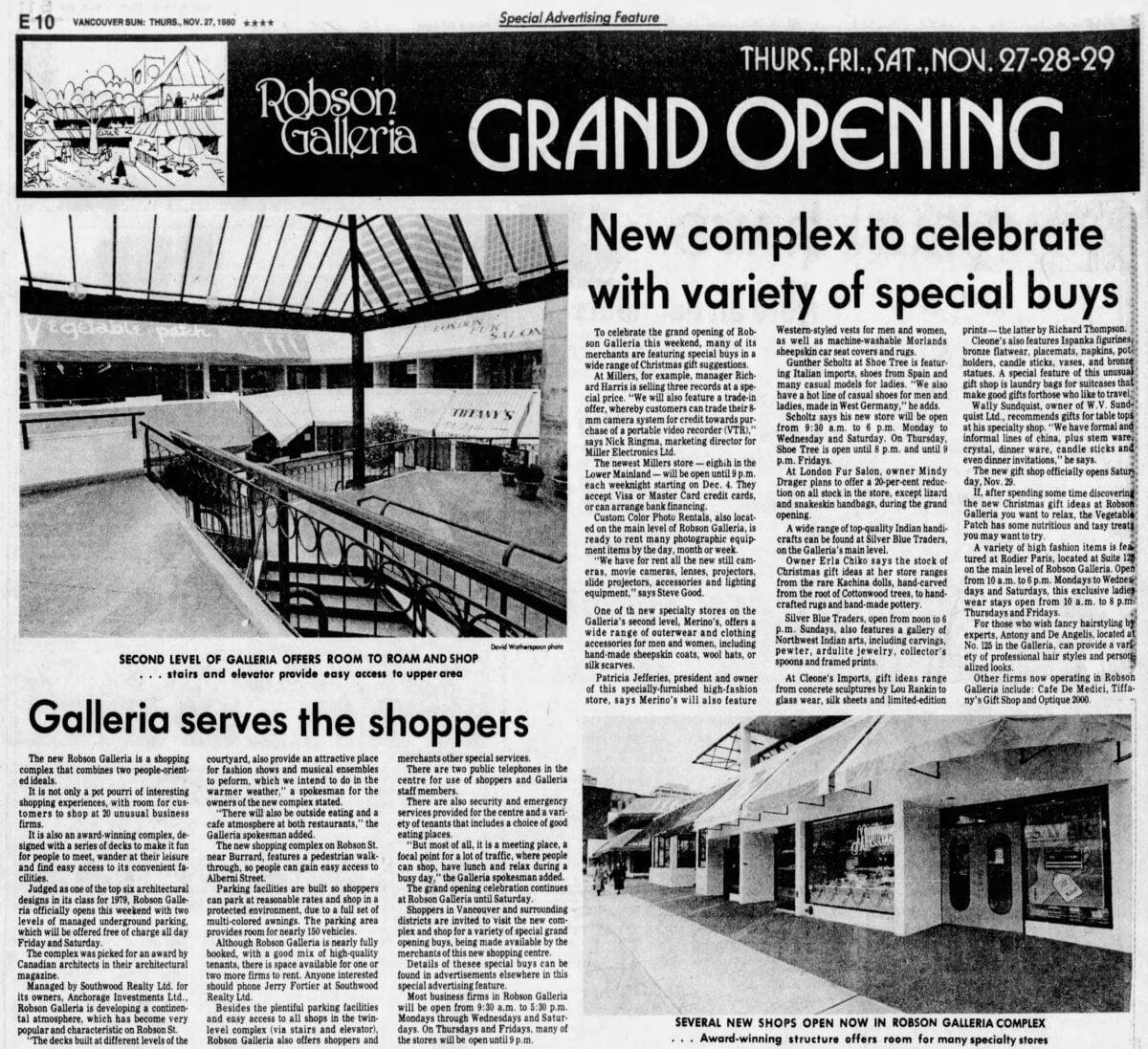
The building housing Indigo and other retailers at 1025 Robson Street was once a shopping centre called ‘Robson Galleria’. Image from the Vancouver Sun from November 27, 1980 via Newspapers.com
Retail Tour Zone 4: Intersection of Robson Street and Thurlow Street
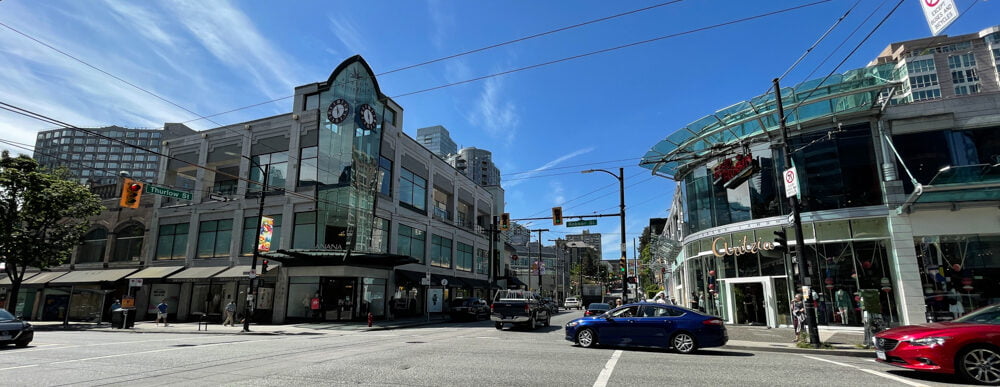
Banana Republic on Robson Street and Thurlow Street intersection in Vancouver (June 2021). Photo: Lee Rivett.
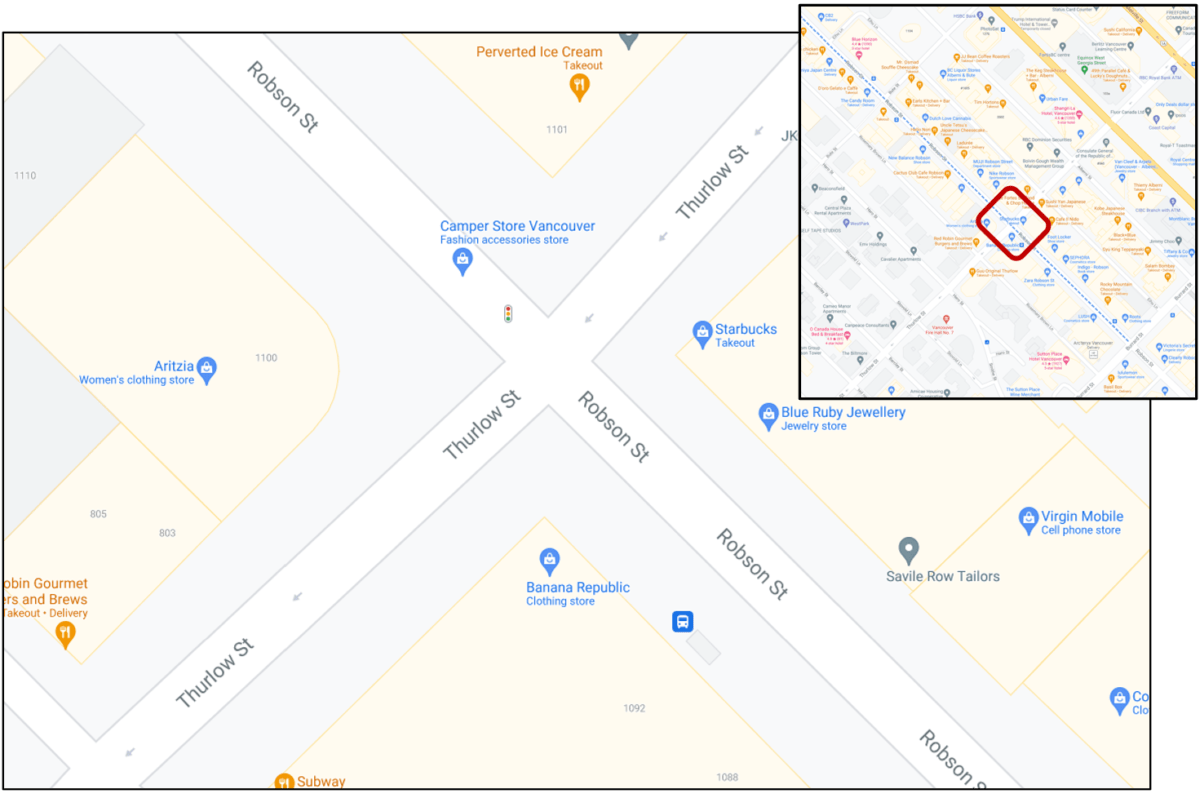
Robson Street and Thurlow Street intersection in Vancouver. Photo: Google Map and overlay by Retail Insider.
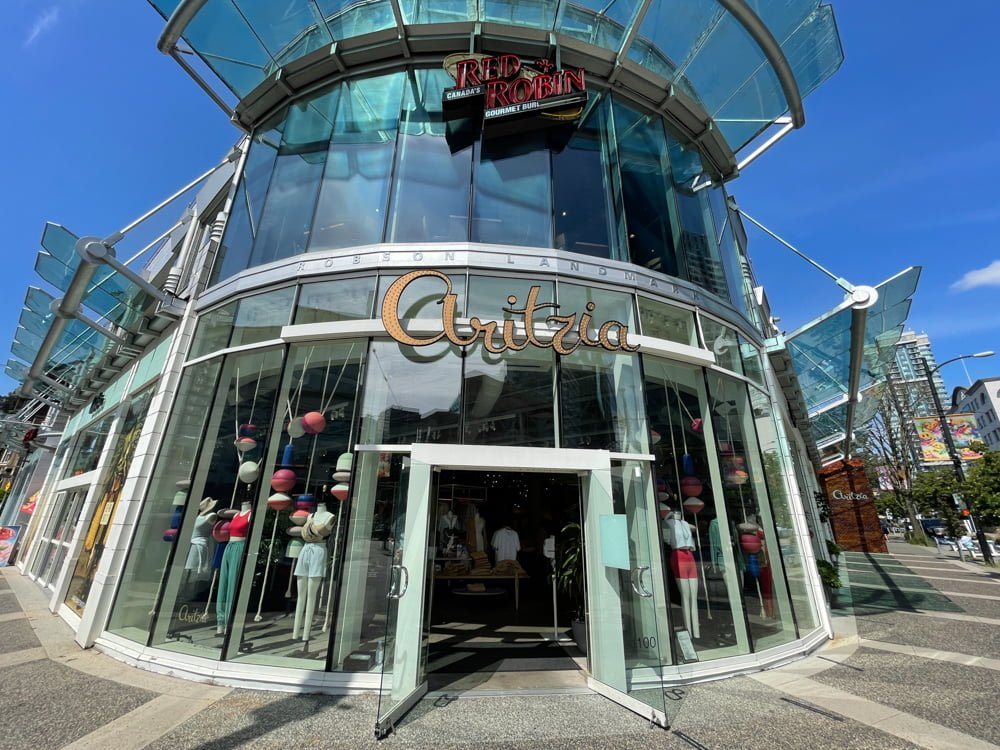
Robson Street at Aritzia (June 2021). Photo: Lee Rivett
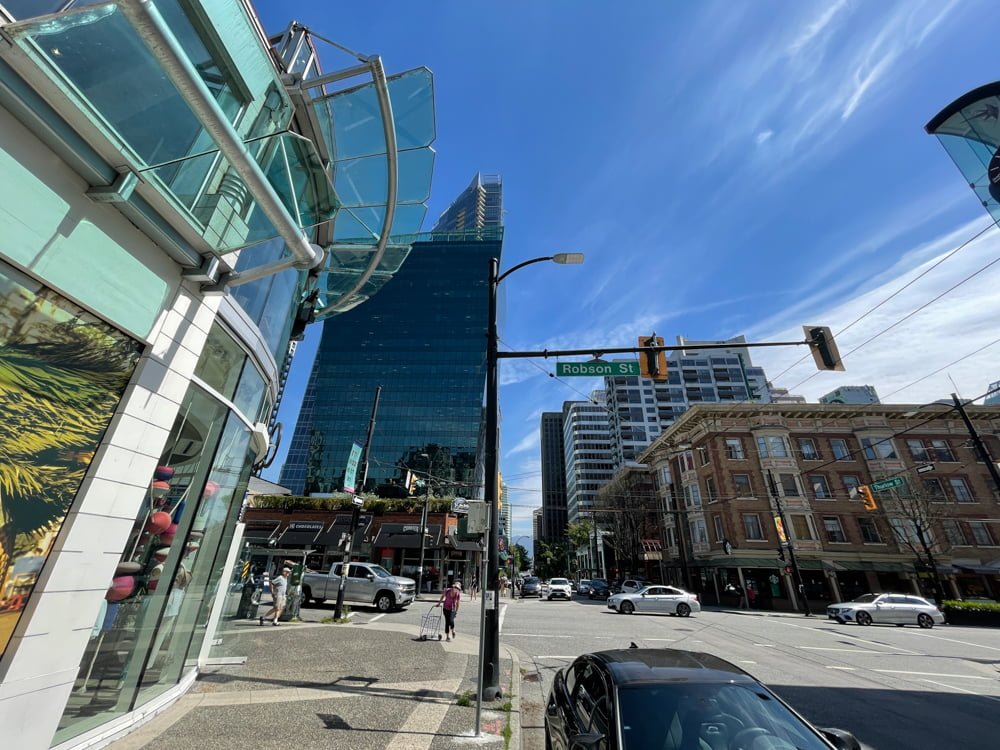
The intersection of Thurlow Street and Robson Street has always been a notable retail hub for the Robson community. Until the monolith Aritzia store opened on the corner, its prominent location was a Starbucks location which was across the street from another Starbucks location that still is open in 2021. The Vancouver-based women’s fashion Aritzia retailer has expanded several times at this location over the years. Artizia’s original 1,597 square foot Robson Street location grew by annexing the adjacent 3,565 square foot 1110 Robson Street retail space. In fall 2014, Aritzia annexed an adjacent 3,028 square foot storefront to open Vancouver’s first free-standing location for its house brand, Wilfred. Aritzia will take a further 4,837 square feet in the corner Deecorp Properties Ltd building, according to Artizia. As a result, Aritzia gained a prominent retail presence at the southwest corner of Robson Street and Thurlow Street.
Sources told Retail Insider that Aritzia for a time had leased the then-under construction 1067 Robson Street building where Foot Locker now operates, and that Aritzia eventually decided to stay at its current corner location.
Aritzia on Robson Street at Thurlow Street in Vancouver (June 2021). Photo: Lee Rivett
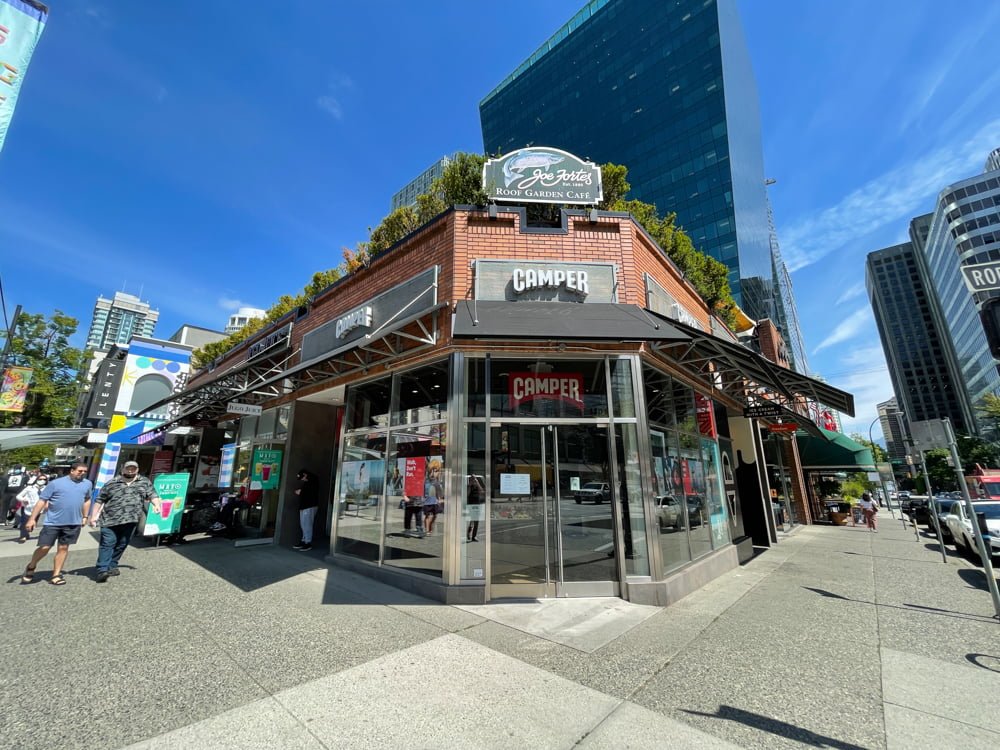
Camper on Robson Street in Vancouver (June 2021). Photo: Lee Rivett.
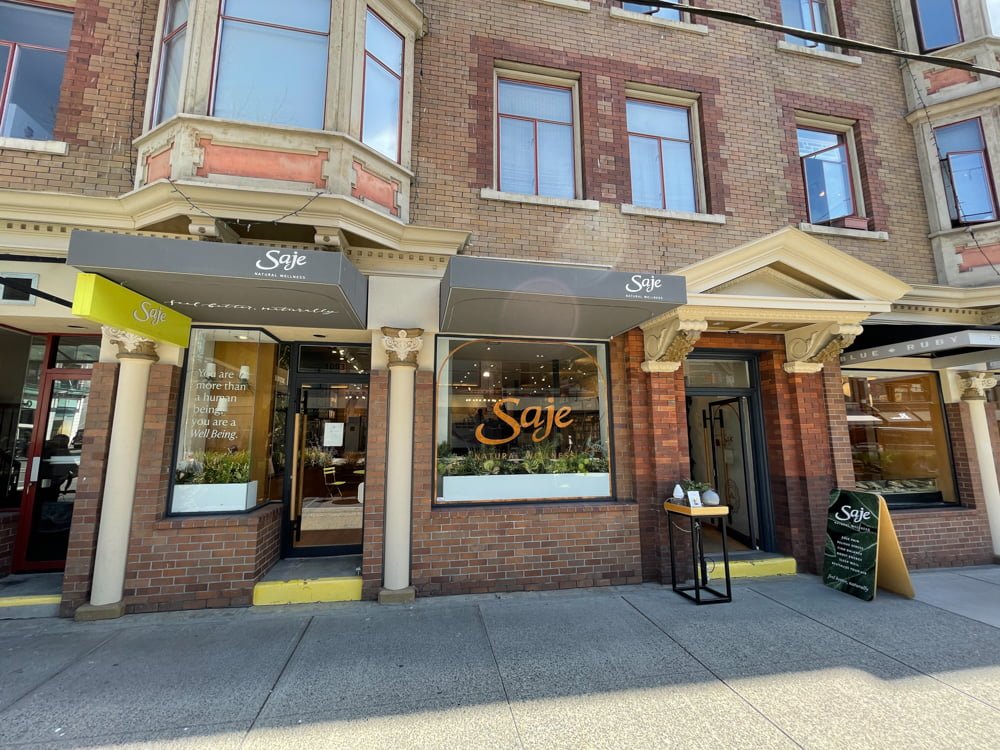
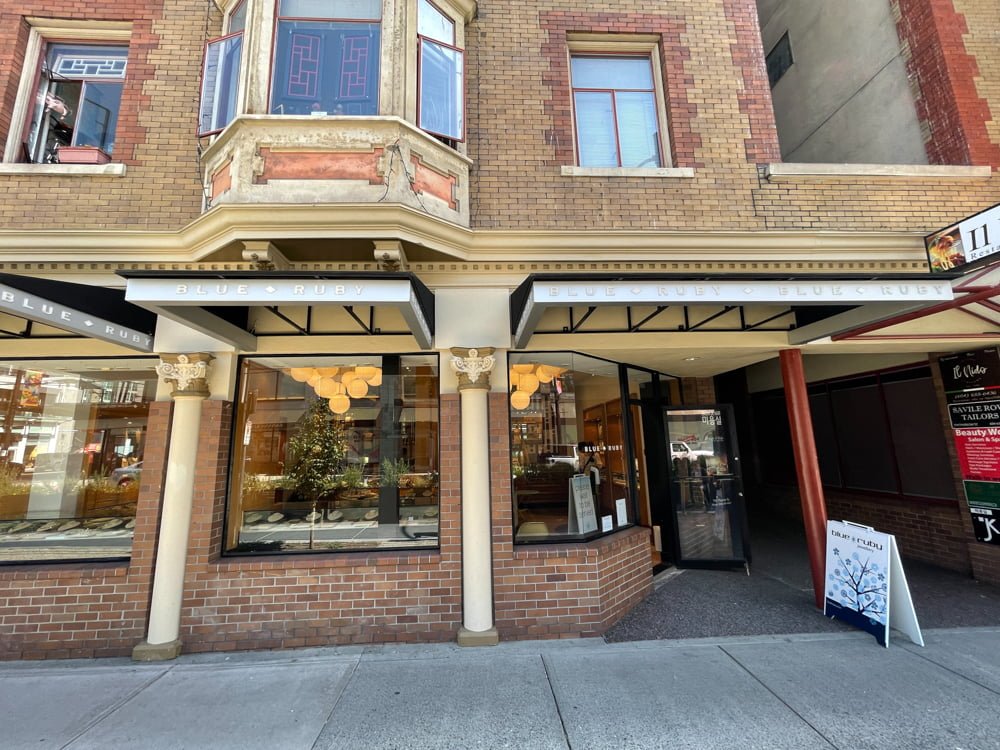
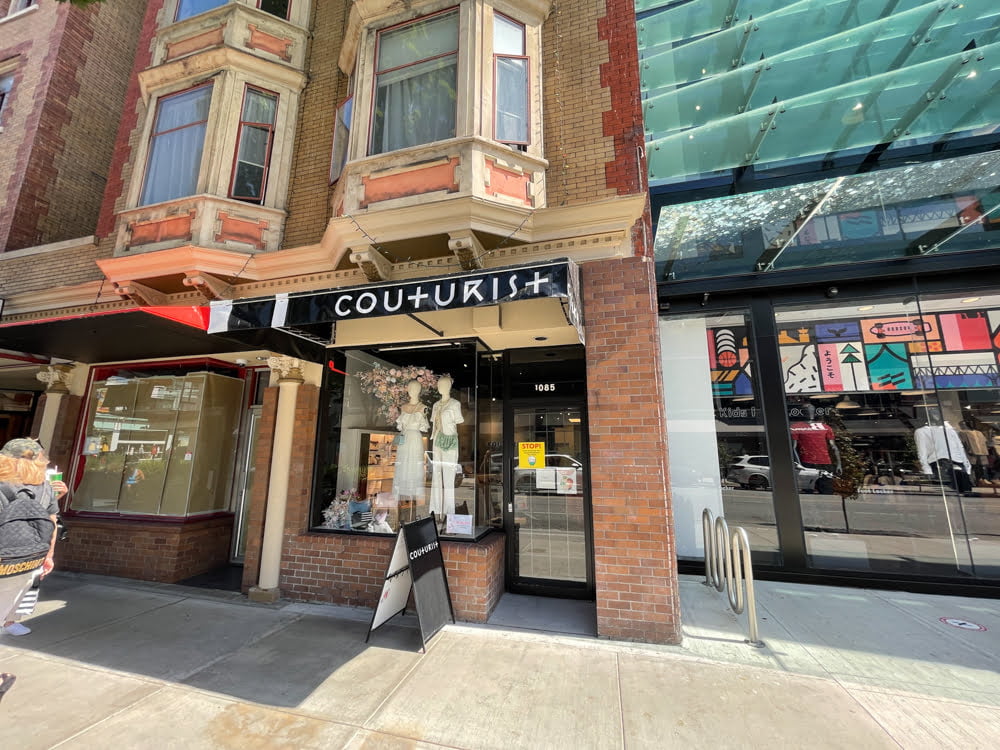
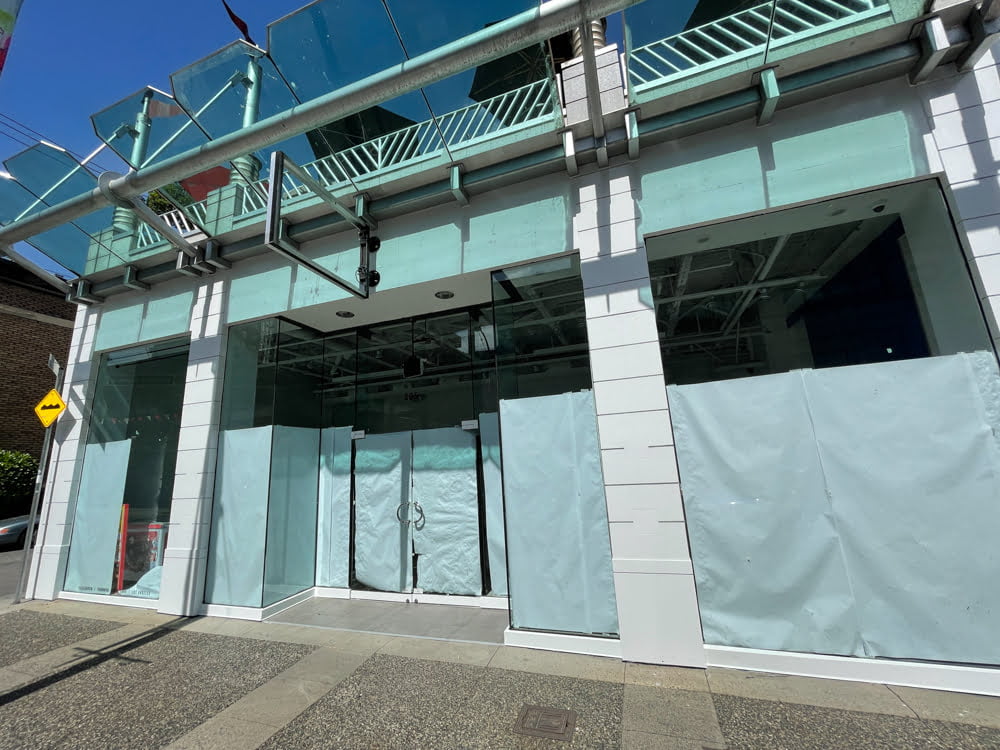
The other anchors at the intersection include Camper shoes and Banana Republic and the northeast corner is home to a brick building which has the remaining Starbucks location, Saje Natural Wellness, Blue Ruby Jewelery and Couturist.
Northwest corner of 1000 block of Robson Street
1 of 3
Saje Natural Wellness on Robson Street (June 2021). Photo: Lee Rivett.
Blue Ruby Jewellery on Robson Street (June 2021). Photo: Lee Rivett.
Couturist on Robson Street (June 2021). Photo: Lee Rivett.
Former RYU location on Thurlow Street (off Robson Street) in Vancouver. Photo: Lee Rivett
Retail Tour Zone 5: 1100 Block of Robson Street (Thurlow Street to Bute Street)
Beyond the intersection of Thurlow Street and Robson Street is the remainder of the 1100 block of Robson Street which is home to athletic, home furnishing and bakery retailers.
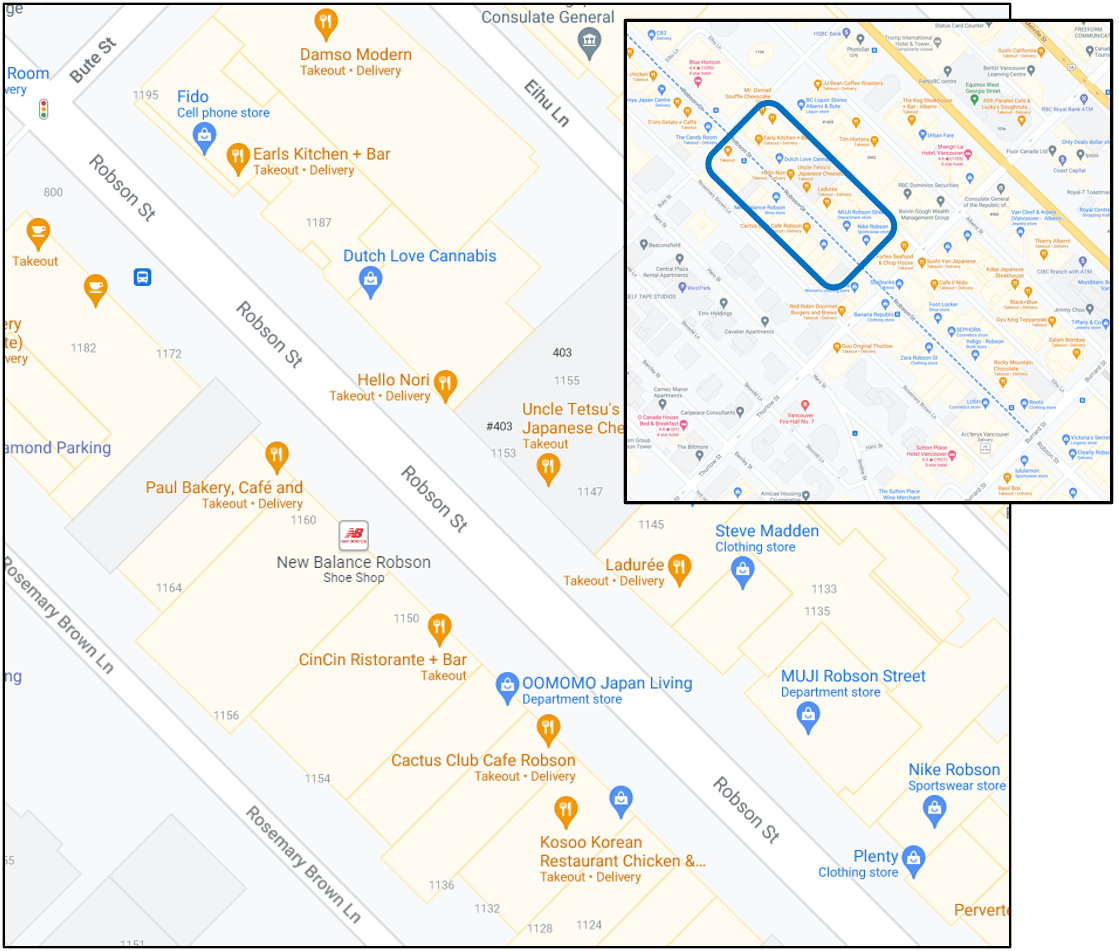
1100 block of Robson Street in Vancouver. Photo: Google Map and overlay by Retail Insider.
This highly retailer-dense section of Robson Street has been featured by Retail insider over the years including:
Retailers featured in Retail Insider on 1100 block of Robson Street in Vancouver
1 of 6
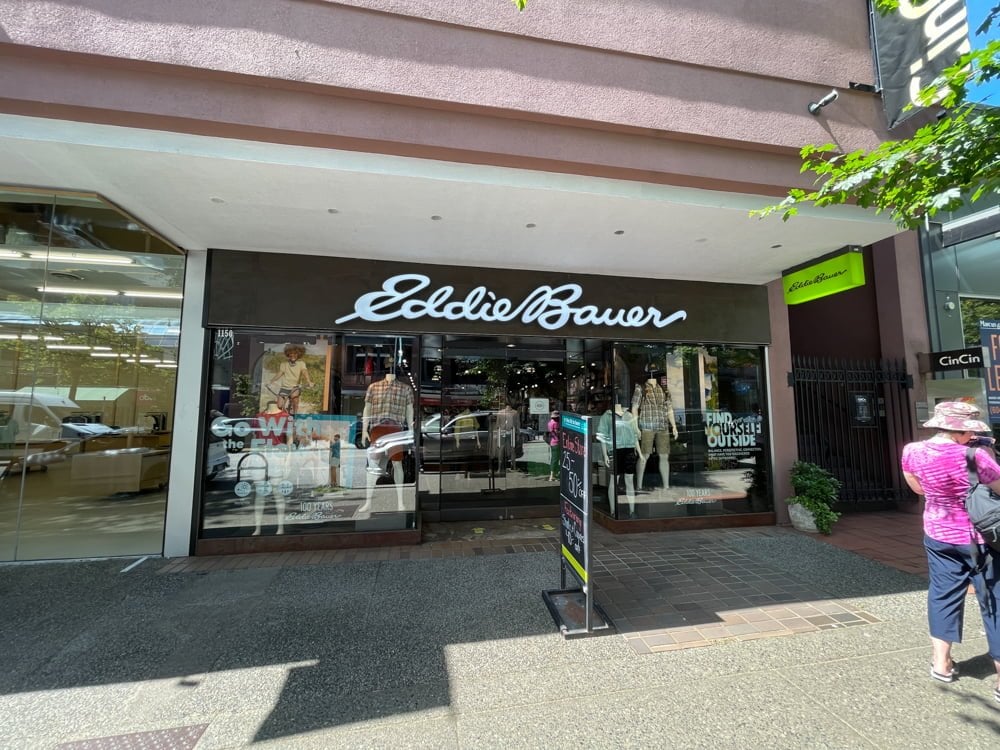
Former Eddie Bauer on Robson Street in Vancouver (June 2021). Photo: Lee Rivett
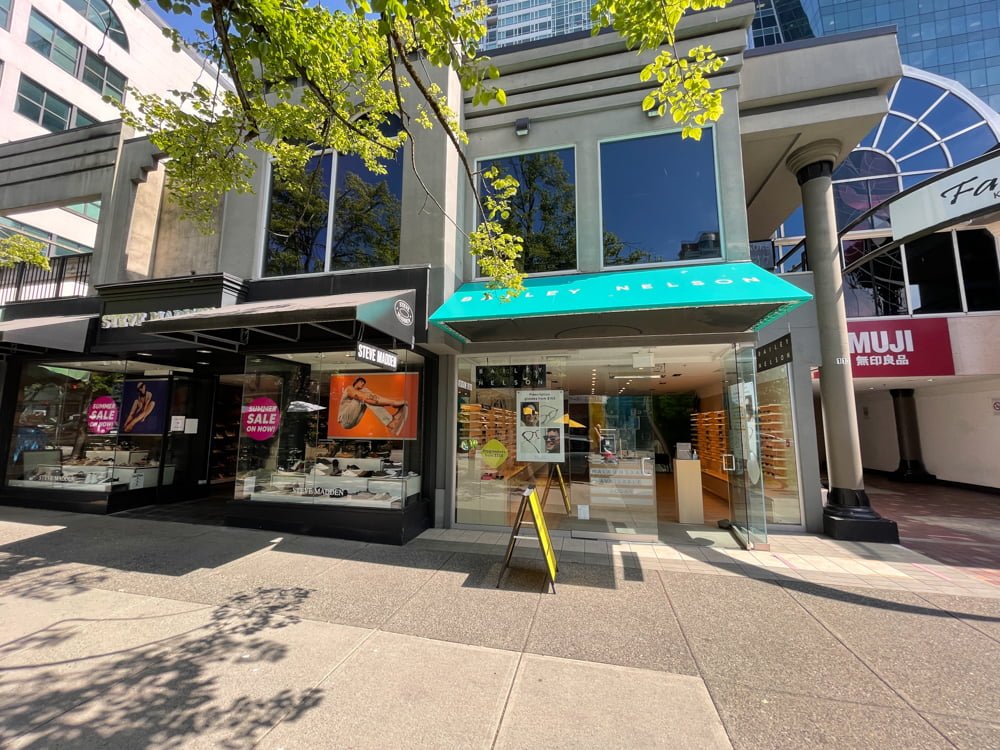
Baily Nelson and Steve Madden on Robson Street (June 2021). Photo: Lee Rivett
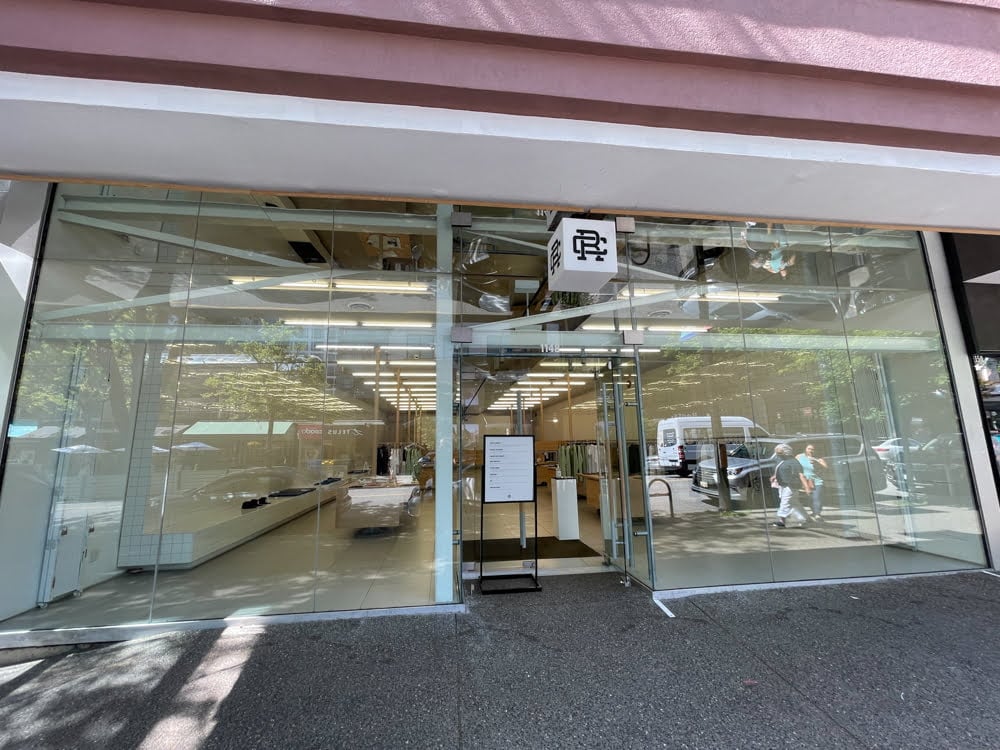
Reigning Champ on Robson Street in Vancouver (June 2021). Photo: Lee Rivett
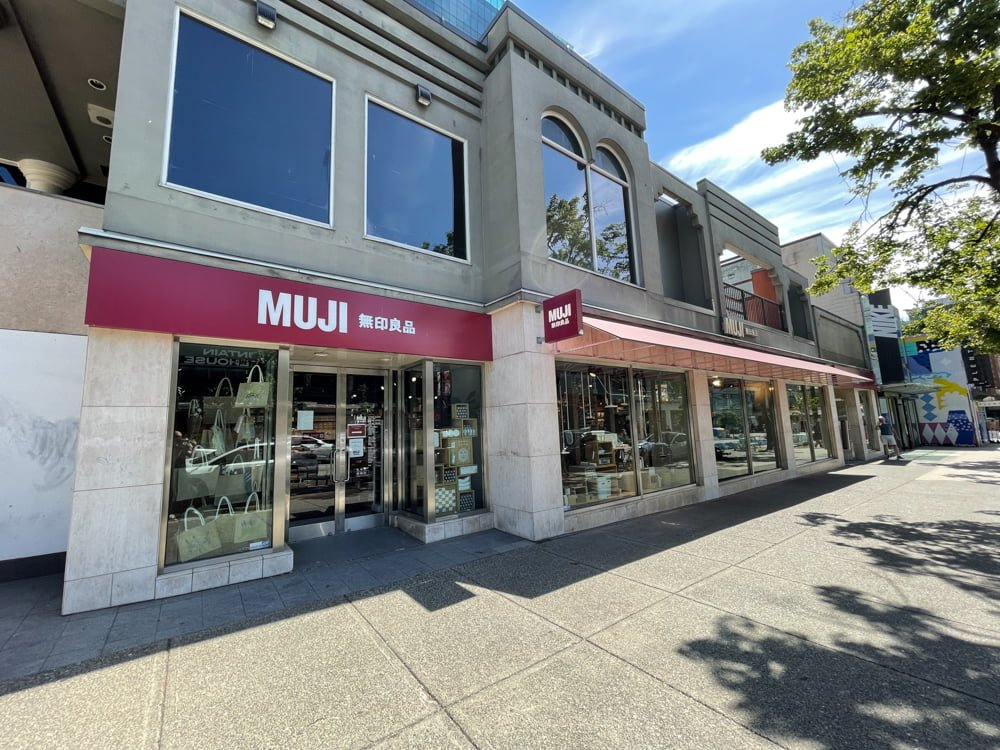
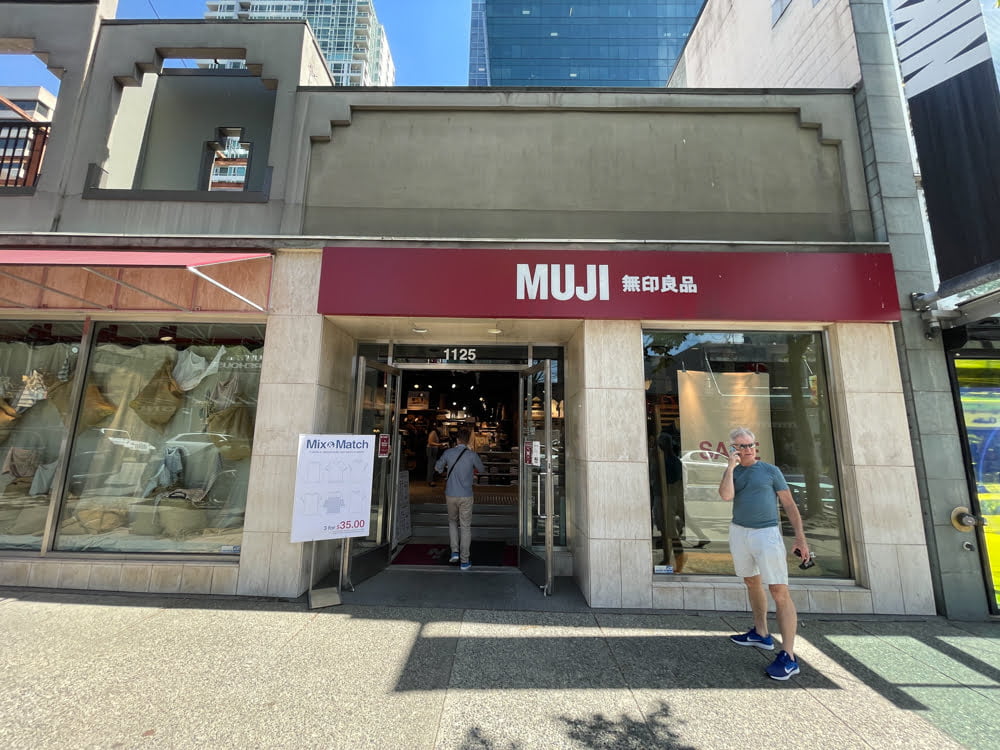
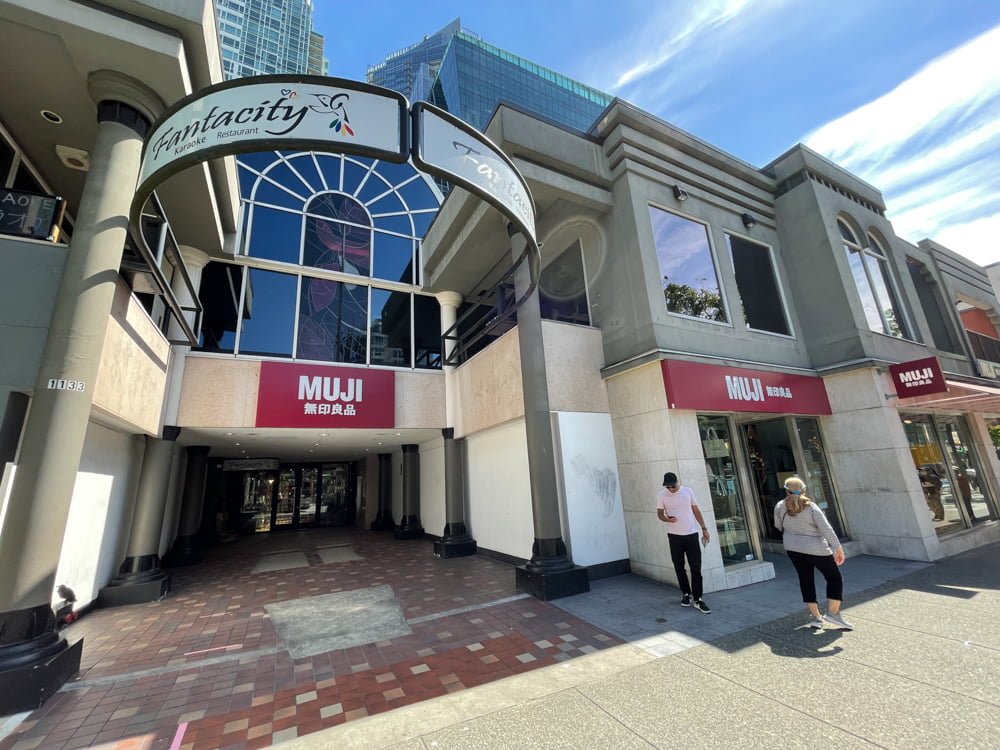
Muji on Robson Street in Vancouver (June 2021). Photo: Lee Rivett
Muji on Robson Street in Vancouver (June 2021). Photo: Lee Rivett
Muji on Robson Street in Vancouver (June 2021). Photo: Lee Rivett
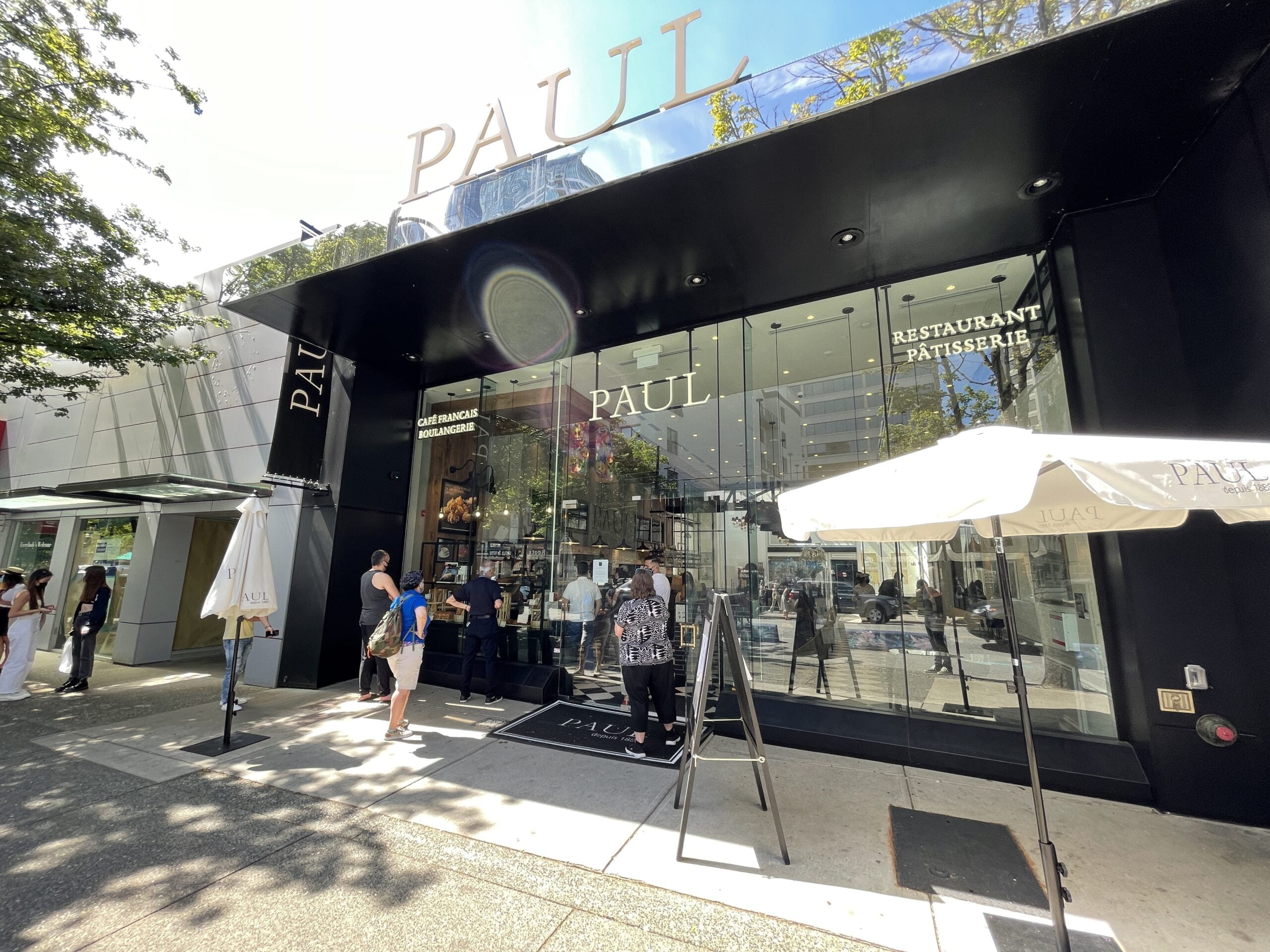
French food concept bakery ‘Paul’ opened its first Canadian location in June 2021 and is owned by the Holder Group. The 1164 Robson Street space was formerly home to Joe Fresh and RW&CO in years past. The space spans 3,120 square feet and the property also features a 1,185-square-foot mezzanine level.
Holder Group Bakeries on Robson Street in Vancouver
1 of 2
PAUL Bakery at 1164 Robson St. - Photo by Lee Rivett
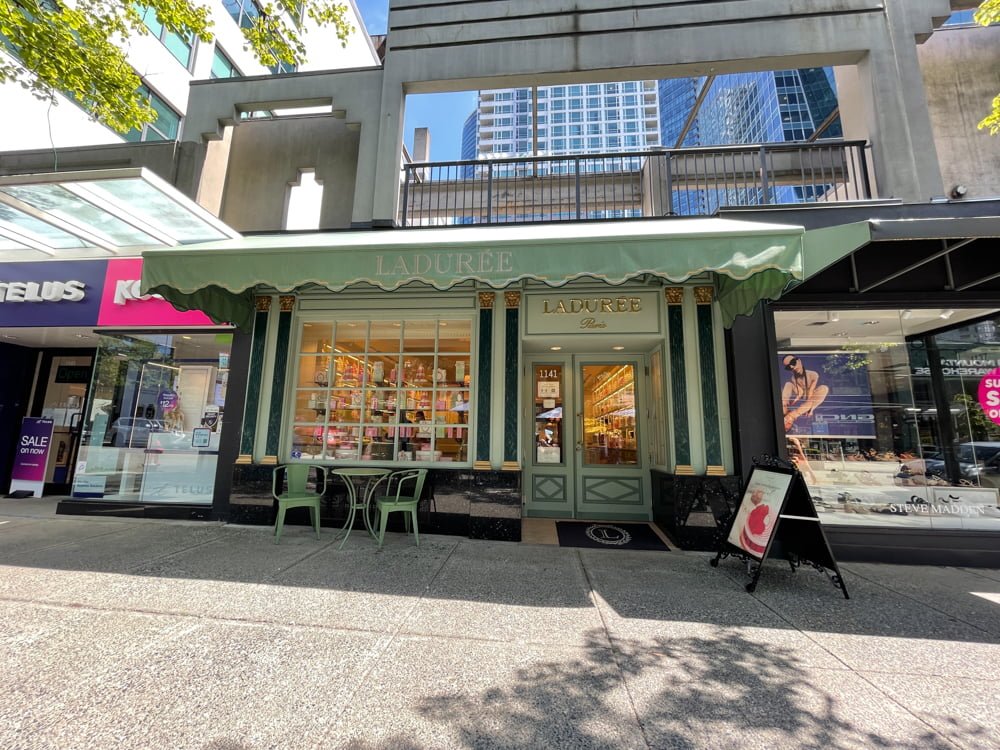
Laduree on Robson Street in Vancouver. Photo: Lee Rivett
1100 block of Robson Street in Vancouver (June 2021). Photo: Lee Rivett.
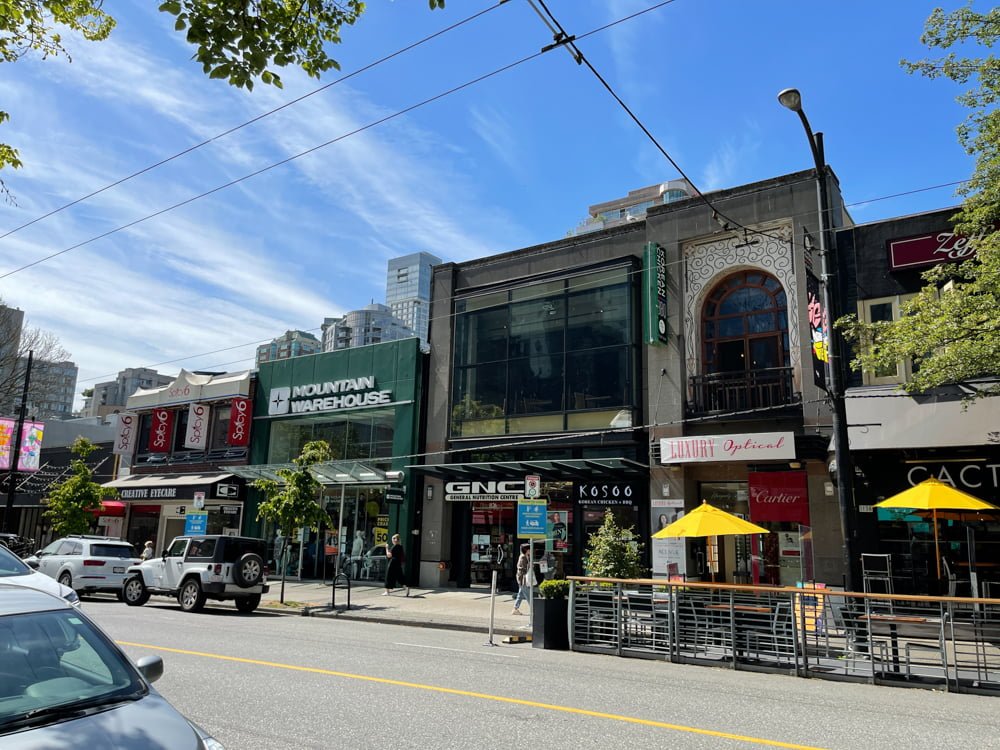
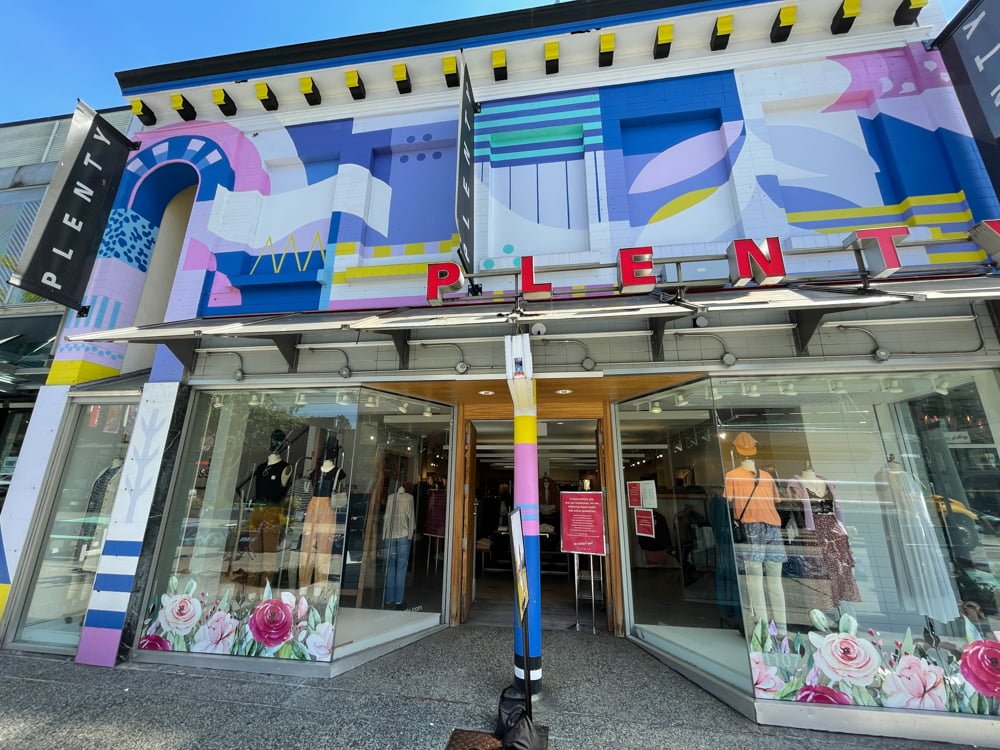
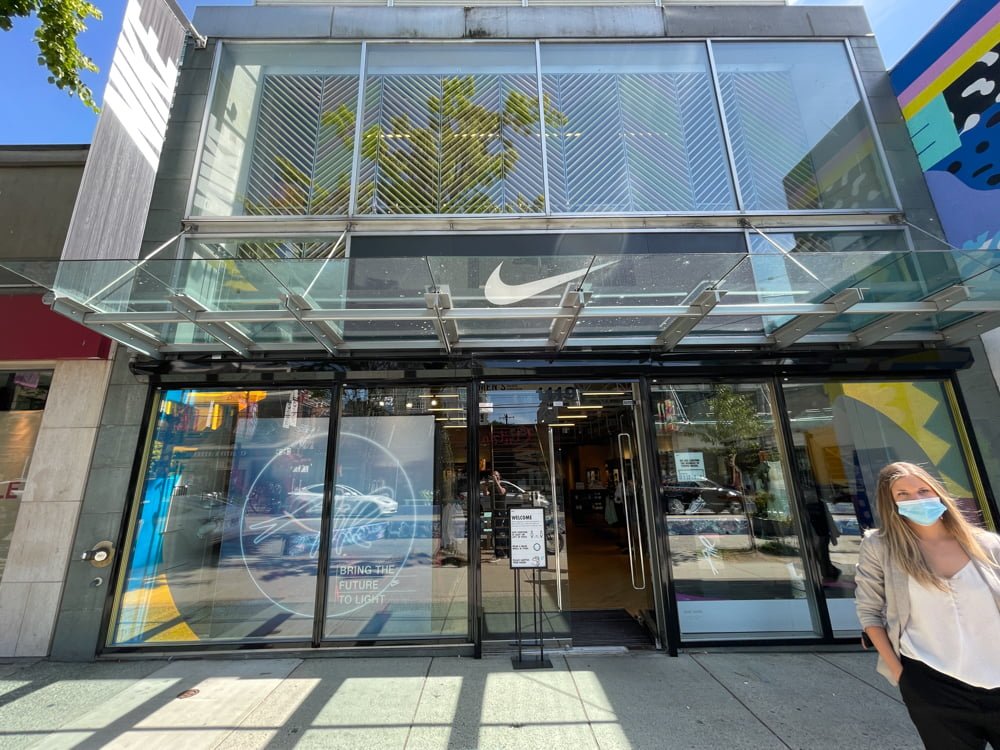
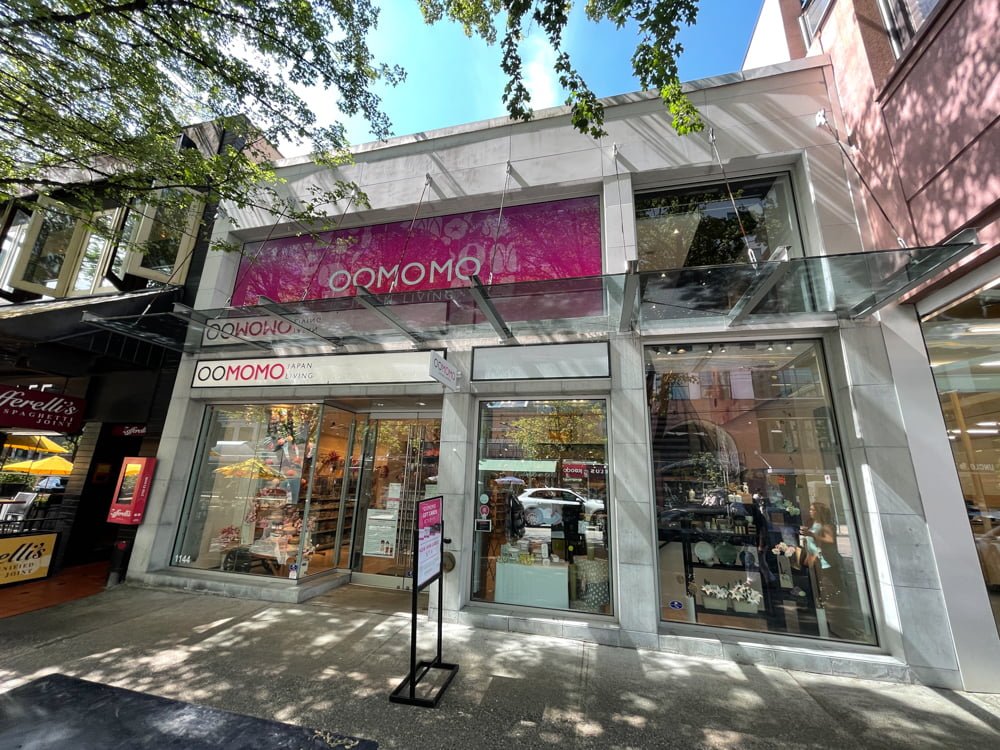
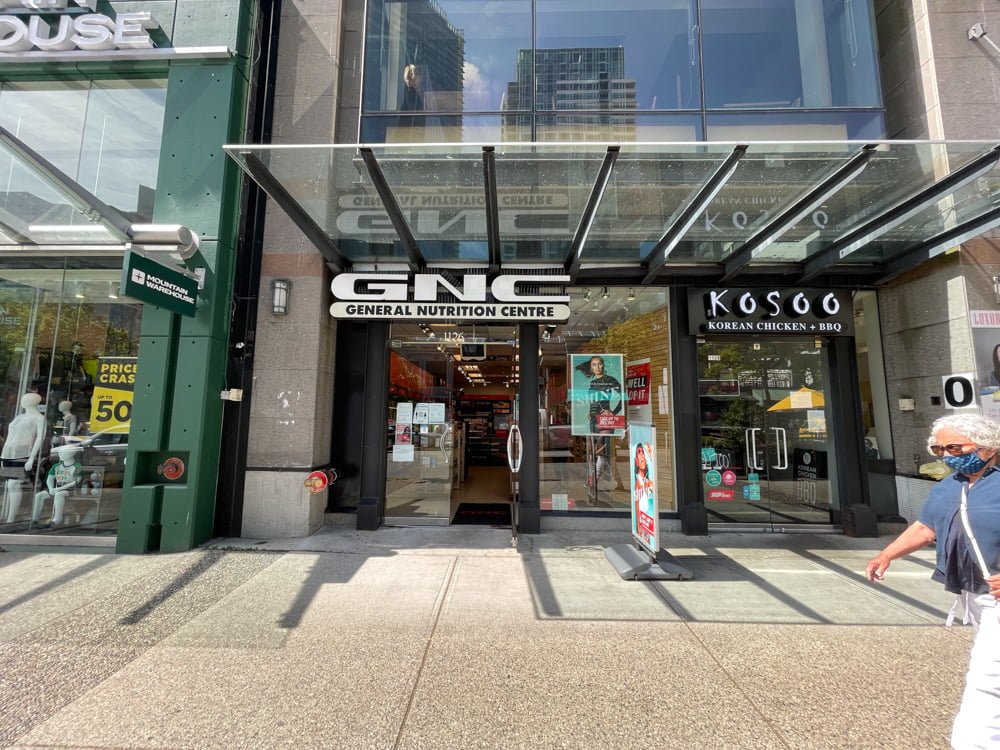
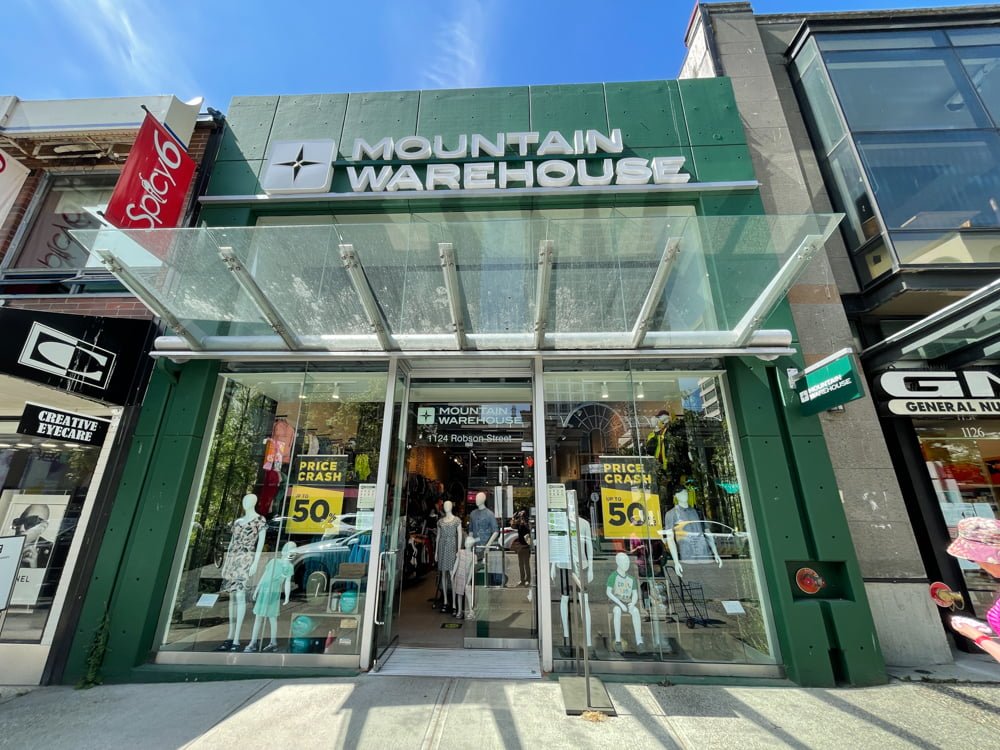
Other select retailers on the middle section of this block of Robson Street included Oomomoo, GNC, Mountain Warehouse, Plenty, Nike and Steve Madden.
Other select retailers on the 1100 block of Robson Street in Vancouver
1 of 6
Plenty on Robson Street in Vancouver (June 2021). Photo: Lee Rivett.
Nike on Robson Street in Vancouver (June 2021). Photo: Lee Rivett.
Camper on Robson Street in Vancouver (June 2021). Photo: Lee Rivett.
Oomomo on Robson Street in Vancouver (June 2021). Photo: Lee Rivett.
GNC on Robson Street in Vancouver (June 2021). Photo: Lee Rivett.
Mountain Warehouse on Robson Street in Vancouver (June 2021). Photo: Lee Rivett.
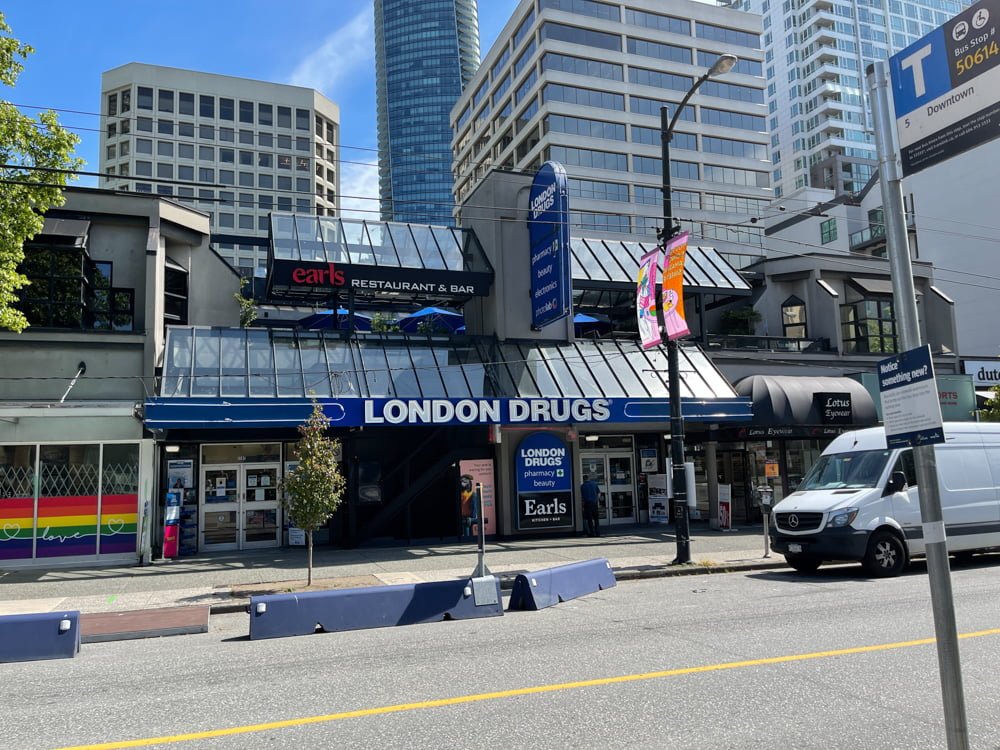
Unfortunately, heading eastward on Robson Street has numerous retail locations vacant with the prominent retail tenant being London Drugs.
London Drugs on Robson Street in Vancouver (June 2021). Photo: Lee Rivett
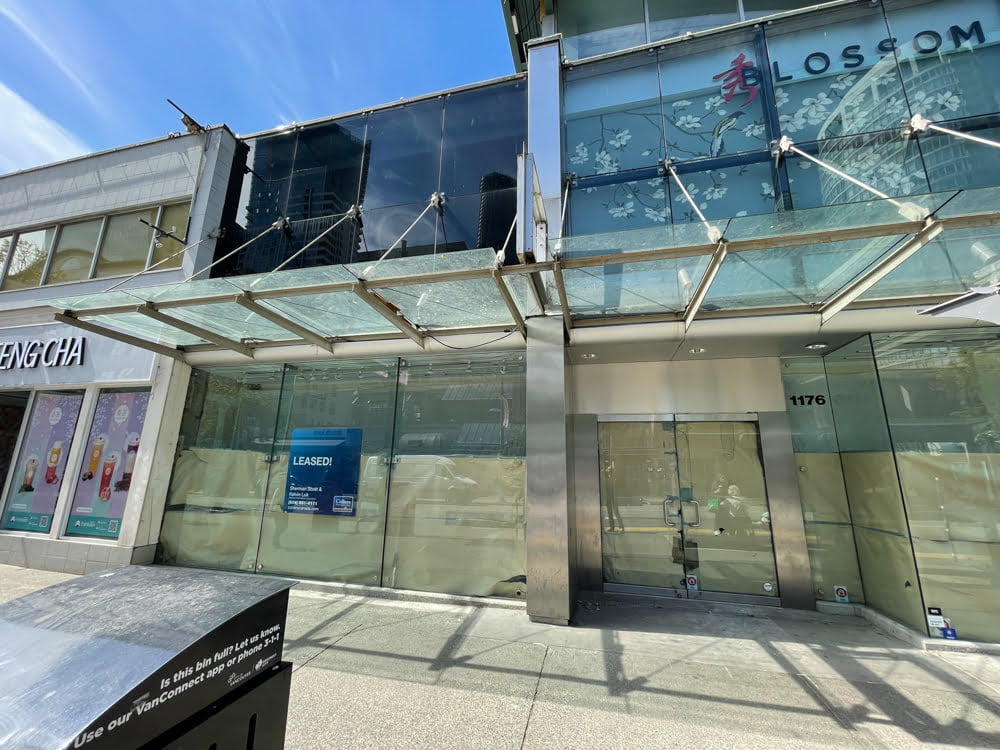
Empty restaurant and retailer space on south-western end of Robson Street at Bute (June 2021). Photo: Lee Rivett.
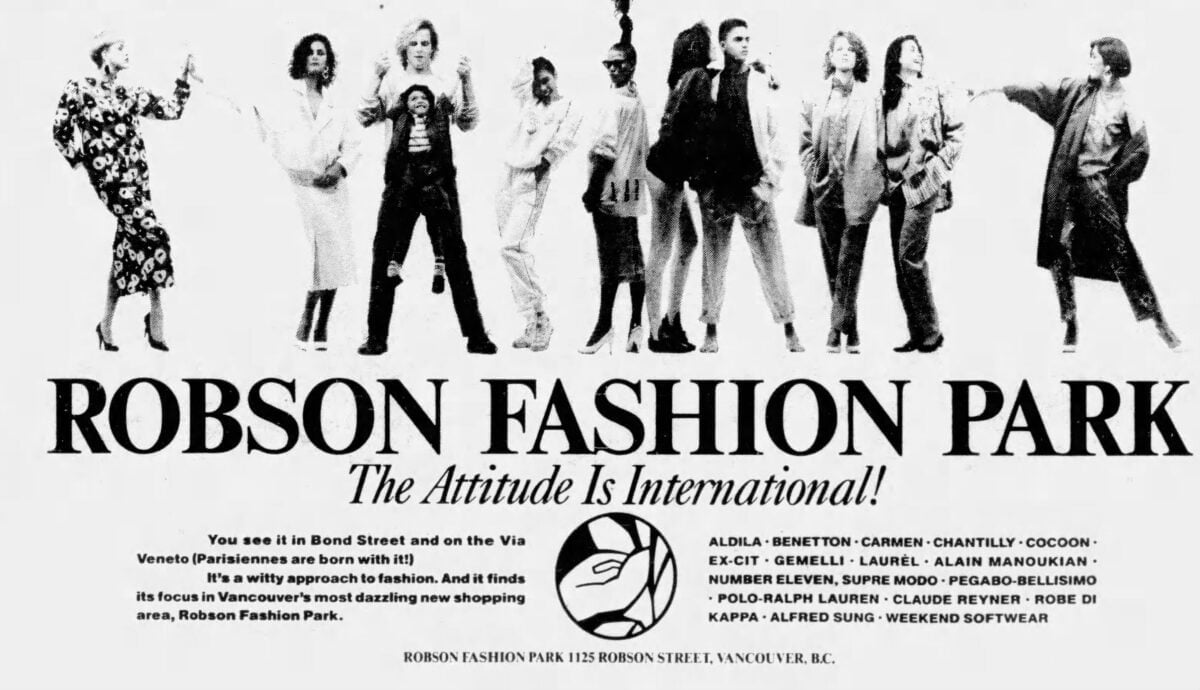
The complex housing Muji and other retailers at 1125 Robson Street was once an upscale enclosed shopping centre called the ‘Robson Fashion Park’. The shopping centre housed a large Polo Ralph Lauren store as well as names such as Laurel, Alfred Sung and Benetton. Image from the Vancouver Province, May 29, 1986 via Newspapers.com
Retail Tour Zone 6: 1200 Block of Robson Street (Bute Street to Jervis Street)
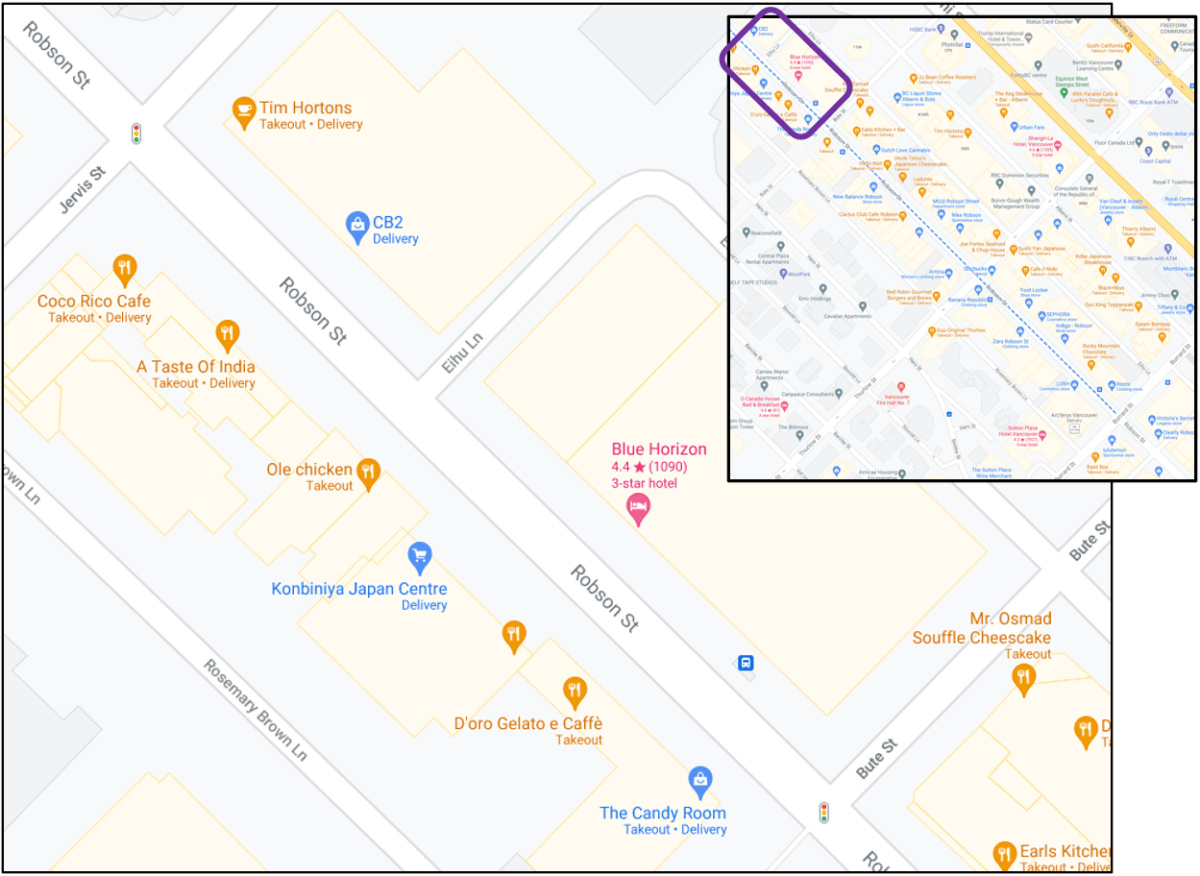
1200 block of Robson Street in Vancouver. Photo: Google Map and overlay by Retail Insider.
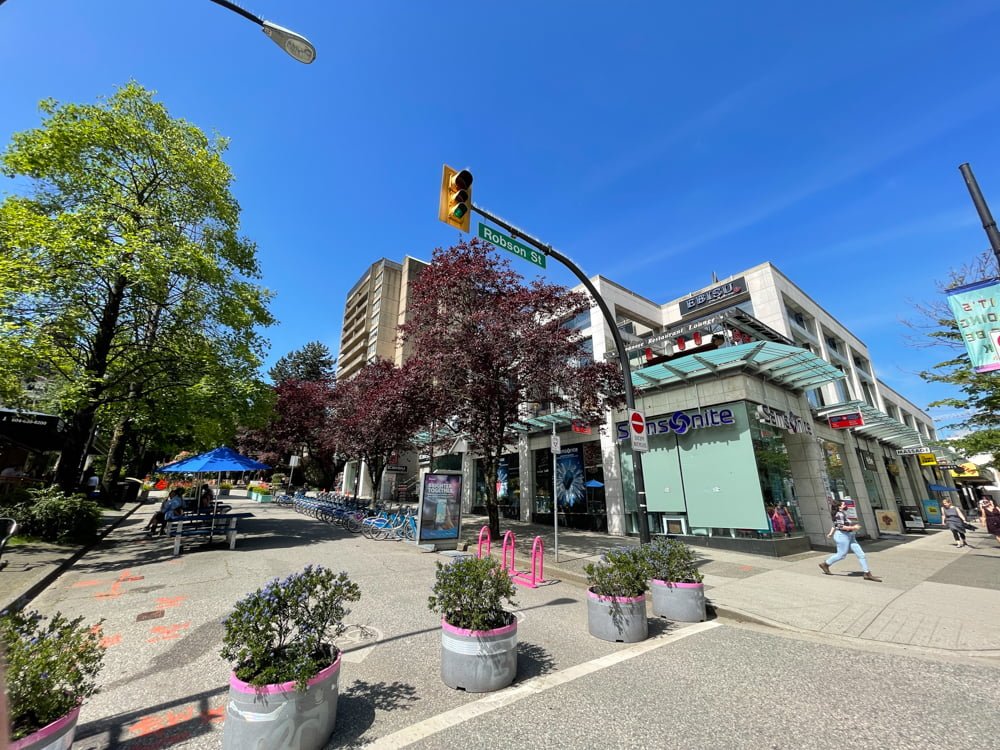
Southern Bute Street at Robson was pedestrian only at the Vancouver Luggage House (with the big Samsonite sign) with seating at Breka Bakery & Cafe.
Bute Street closed to vehicular traffic at Robson Street in Vancouver. Photo: Lee Rivett
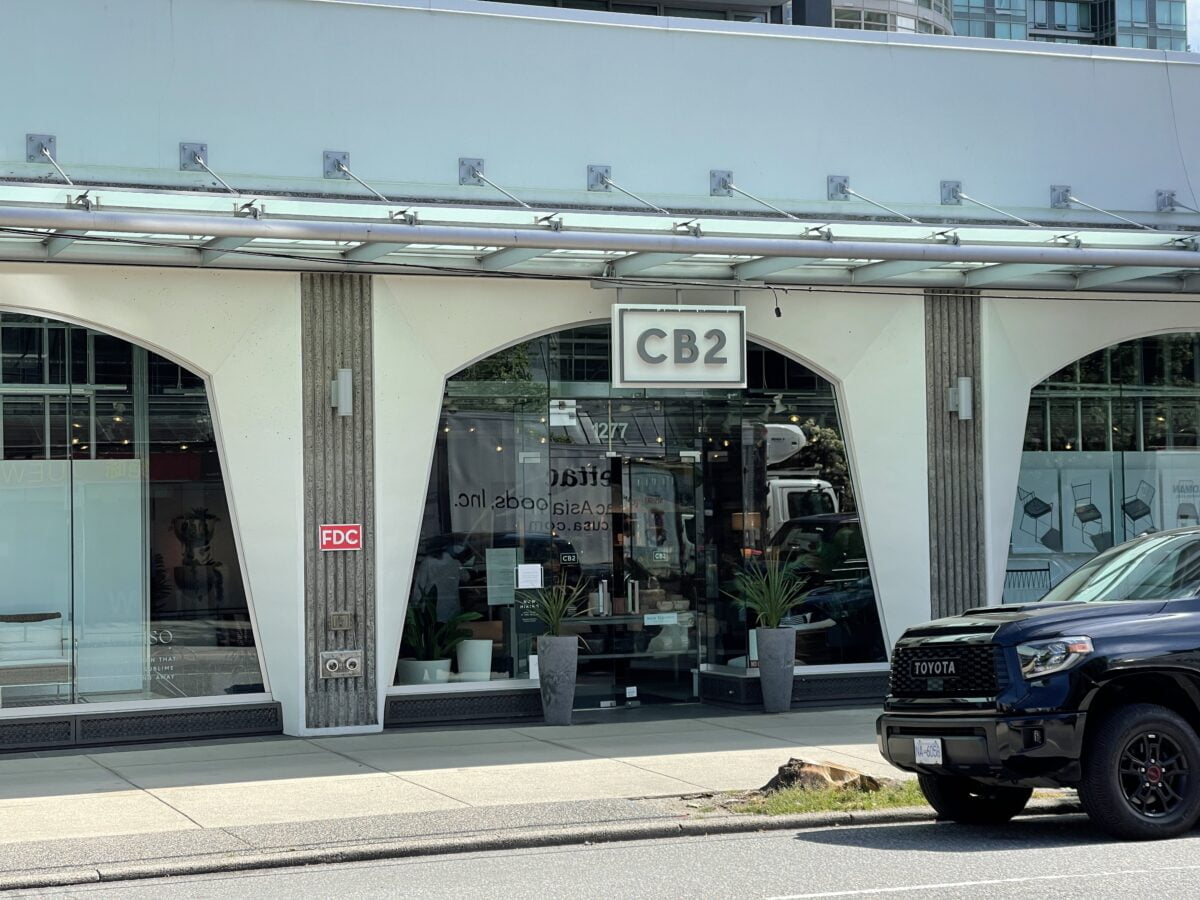
To wrap up the Robson Street tour, the last tour zone along Robson Street is home to several restaurants as well as the home furnishings retailer CB2, which is Crate & Barrel’s sister brand geared towards young adults, has a retail location on the city block preceding our starting point.
CB2 on Robson Street in downtown Vancouver (June 2021). Photo: Lee Rivett.
We hope you enjoyed this update of Robson Street in downtown Vancouver, B.C. and are always excited to see the changes at Canadian shopping centres. Don’t forget to check out our other retail photo tours over the past few months. Thank you for taking this tour with us.
Discover More Related Retail Photo Tours From Retail Insider:
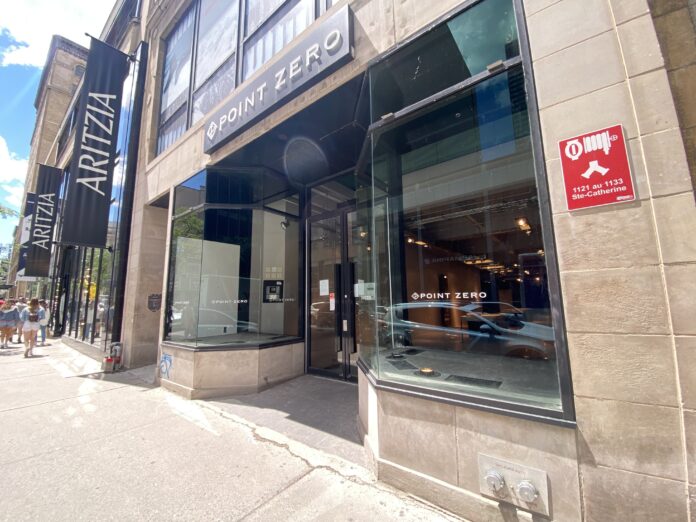
Point Zero at 1119 Sainte-Catherine St. W (Photo: Maxime Frechette)
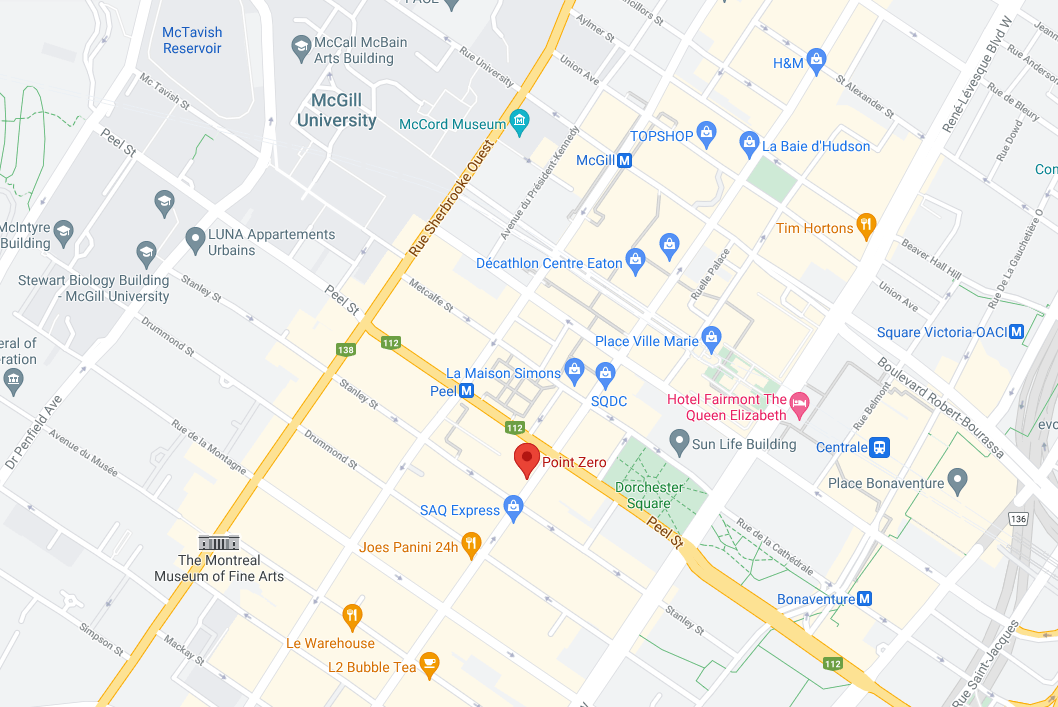
Montreal-based outerwear retailer Point Zero has shuttered its storefront at 1119 Sainte-Catherine St. W. in Montreal. Another storefront remains open nearby at 1395 Sainte-Catherine Street West. Another location also just shut at Quartier DIX30 according to Montreal correspondent Maxime Frechette.
We will be following this story, as the company was featured in Retail Insider back in December of 2020 to discuss their growth plans for a post-pandemic environment. Point Zero is seeing bullish growth and has ample funding under its owner.
This week Craig speaks with INDOCHINO CEO Drew Green about where the company is going, including a new partnership with Nordstrom.
The Weekly podcast by Retail Insider Canada is available on Apple Podcasts, Stitcher, TuneIn, Google Play, or through our dedicated RSS feed for Overcast and other podcast players.
**Podcast Sponsor (MSC): As one of the world’s leading container ship lines, MSC is promoting a sustainable business model that goes far beyond the ‘business as usual’ approach. [Read more on MSC’s Sustainability Program]
Discussed this episode:
Drew Green, Chief Executive Officer, President of INDOCHINO
Drop us a line at Craig@Retail-Insider.com. You can also rate us in Apple Podcasts or recommend us in Overcast to help more people discover the show!
Background Music Credit: Hard Boiled Kevin MacLeod (incompetech.com). Licensed under Creative Commons: By Attribution 3.0 License. http://creativecommons.org/licenses/by/3.0/