“Since the start of the pandemic, several restaurants have closed their doors. Is it really that bad for the consumer?”
A question that often comes up is, did we have too many restaurants before the pandemic? Many wonder if the pandemic has only wiped out the restaurants we had “extra” of. With the labour shortage, the cost of food ingredients exploding, and the list of regulations growing almost every year, making a restaurant profitable has become a difficult task. Certainly, the pandemic has presented a golden opportunity for the industry to reflect on its future.
Before the pandemic, restaurants were in their glory years, literally. Compared to 20 or 30 years ago, going out to eat was routine for many of us. Canadians spent an average of about 35% of their food budget on restaurants, and the sector was on the verge of exceeding $100 billion in sales per year. But in March 2020, everything changed. According to Statistics Canada, there were approximately 65,000 restaurants at the start of 2020. That number is probably around 40,000 to 45,000 today. No one is quite sure, but this approximation seems fair enough.
Even if the sector has recorded less than 30 bankruptcies in total since the start of the pandemic, many have simply abandoned the industry. Despite the difficulties created by the pandemic, the sector is running at about 82% of the capacity it had before the pandemic, according to Statistics Canada. Households are no longer spending 35% of their food budget at restaurants, as they were before the pandemic. Now that percentage is more around 27% or 28%. In April 2020, at the heart of the first wave, this percentage barely reached 9%. But in August of this year, several restaurants had a historic month with record-breaking sales.
However, the sector is still not out of the woods. Managing a restaurant after the pandemic will not be easy. According to a recent report from Restaurants Canada, the nation’s leading foodservice lobby group, nearly half of foodservice operators plan to increase menu prices by 4% or more over the next year. One in five establishments expects to increase prices by at least 6%, and several have already done so. The cost of food is becoming a real problem not only for consumers but for restaurant owners as well.
The labour shortage, which existed before the pandemic, has only worsened since. Over the next year, it is predicted that 42% of restaurants will experience an increase in the number of vacant positions, and more than 53% plan to increase their employees’ salaries in the coming months. It’s great news for restaurant workers, who certainly deserve it, but someone will have to pay for it all.
These macroeconomic factors will make it difficult for the sector to go back to its 65,000-restaurant mark. For households, restaurant visits (now with higher prices) will certainly be less frequent. The 35% portion of the family food budget allocated to meals eaten out before the pandemic is not coming back anytime soon.
Of the more than 15,000 to 20,000 restaurants that disappeared during the pandemic, some were excellent, leaving behind an incredible legacy for their customers. It’s sad to see many of these independent and family restaurateurs forced to abandon ship. But in truth, the pandemic also acted as a purgatory by eliminating several restaurants which lowered the quality of the sector. Food safety issues, food fraud, you name it. Some were already heading for closure and would have gone out of business, whether there was a pandemic or not.
Most large chains that enjoy superior financial and strategic support emerged from the pandemic almost unscathed. By some estimates, while the big chains were closing about 10% of the restaurants in the network, Canada was losing almost 50% of its independent restaurants. Most of the innovations we have seen as consumers have come from independents. Sushi dishes as well as Korean, Mediterranean, and Ethiopian cuisines all came from independents at first. Big chains, on the other hand, offer us restaurants that are all alike and serve pretty much the same food from the same suppliers with only a few subtle differences.
The issue that deserves special attention is not how many restaurants we need to support our economy, but rather what kind of restaurants we need. We may have too many restaurants offering the same dishes. Our culinary identity will slowly be lost without all these chef-restaurant owners who will no longer be there to make us eat creative and tasty dishes inspired by market and local products.
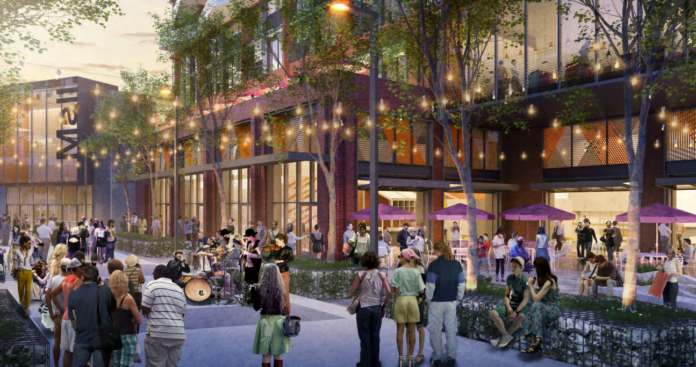
Dufferin Grove Village (Dufferin Mall Redevelopment) Rendering: Urban Strategies Inc / Primaris Management Inc.)
The shopping centre as a hub of commercial and social activity. There was once a day when this statement was not only widely accepted as a truth, but was also an astutely accurate assessment of the role malls played within their communities. With movie theatres providing the entertainment, food courts serving as a platform for connection and human interaction and the assortment of stores offering all of the product anyone needed, the shopping centre was in many ways the nerve centre of the areas they serve. However, with the advent of ecommerce and the digitization of the world around us, the utility and purpose of the shopping centre has changed. And, according to Doug Stephens, prolific industry analyst and Founder of the consultancy firm Retail Prophet, in order to rediscover its place within communities across the country, shopping centres must reimagine and reinvent themselves in a changing retail environment.
“We can all agree that the woes and challenges of the shopping centre industry began well before the pandemic was a consideration,” says Stephens. “The truth of the matter is that the commercial and social utility that shopping centres once offered has become all but irrelevant. In its heyday, the shopping centre was Facebook – it’s where people went to meet up with friends. It was Netflix in the form of the movie theatres. It was Uber Eats because the food court had all kinds of different food options. And the list goes on concerning all of the commercial and social utility that communities received from their local shopping centres. Post-digital, this has become a problem. In the same way that the iPhone has replaced about 40 other devices in our lives, it has essentially replaced much of the social and commercial functionality and value of shopping centres. So, a shopping centre can no longer be a place with a reasonably well-curated selection of retail tenants and a little food and beverage sprinkled in for interest. It really has to become a fundamentally different business and social construct that brings people back to the shopping centre and creates utility for a new generation of consumers.”
A changed retail equation
Stephens points to the breadth of product selection available through online channels and the continued rise in the use of smartphones by Canadians as the two primary forcing functions behind the consumer’s shift in shopping behaviour. In the palms of their hands, today’s digitally-connected consumer has access to thousands of brands, a multitude of wares and an array of purchase and product transfer options, rendering a trip to the mall for many, particularly for younger shoppers, relatively pointless. As a consequence of this shift and the channels of commerce now available, Stephens goes on to suggest that the relevance of the shopping centre as a vehicle for brands has now come under question as well.
“When you get right down to it, retail is an equation based on value,” he explains. “And that equation is made up of consumers on one side and brands on the other. Retail, since the advent of the industrial revolution, has stepped in to be an intermediary between the two. So, the retailer has to provide a level of value to a brand as well as to the consumer. It’s been this way since the beginning of retail as we know it. But that equation is now changing. It’s not just a matter of opening up a store somewhere and conveying a bit of product knowledge on behalf of the brand to the consumer. Today’s consumer demands so much more. They can find whatever information they’re looking for online, research and compare product, ultimately amassing more knowledge than any store associate could ever acquire. And on the brand side, retail is no longer needed simply due to the proven ability of brands to reach consumers directly. As a result, there’s very little practical need for retail, with the exception of certain categories that we all acknowledge are more difficult to buy online. Now, if you take that lack of practicality and multiply it by a hundred, you’ve got today’s shopping centre.”
Rethinking the proposition
Stephens cites Nike as one of the best examples of a brand that’s decided to spurn the traditional wholesale distribution model in favour of moving squarely into direct-to-consumer sales. It did so back in 2017. Following stellar sales, improving margins, increased customer satisfaction, and stock prices that are 217 percent greater than they were when it made its pivot, the brand hasn’t looked back. And, given the fact that shopping centres are essentially a different type of broker, brokering retailers to consumers and providing an additional distribution node for brands, once their utility in this sense is marginalized, so too is the purpose that they serve. As Stephens suggests, this is an erosion in value that’s been occurring for the last couple of decades as malls across the country scramble to discover relevance, unable to find it in novelty food options or the hosting of occasional events. So, what does Stephens believe needs to happen in order to attract footfall back to the shopping centre?
“It’s going to take a fundamental rethink of the entire proposition,” he asserts. “And, ultimately, what many are going to find is that there are four pillars that the shopping centre of the future is going to need to be built on. First, a genuine and authentic sense of place must be developed. This is where most of the legacy shopping centres around us are challenged. They were built decades ago in the suburbs on land that was purchased at cheap prices, don’t offer a unique or distinct sense of place, are void of any genuine heritage and don’t reflect the communities they serve in any way. In fact, you could be shopping in any number of malls across North America and not know which community you’re in. Developers must be thoughtful in ensuring that the shopping centres they’re developing are created as places that are unique unto themselves and the communities they serve, creating an immediate connection with visitors.”
Mixed-use creations
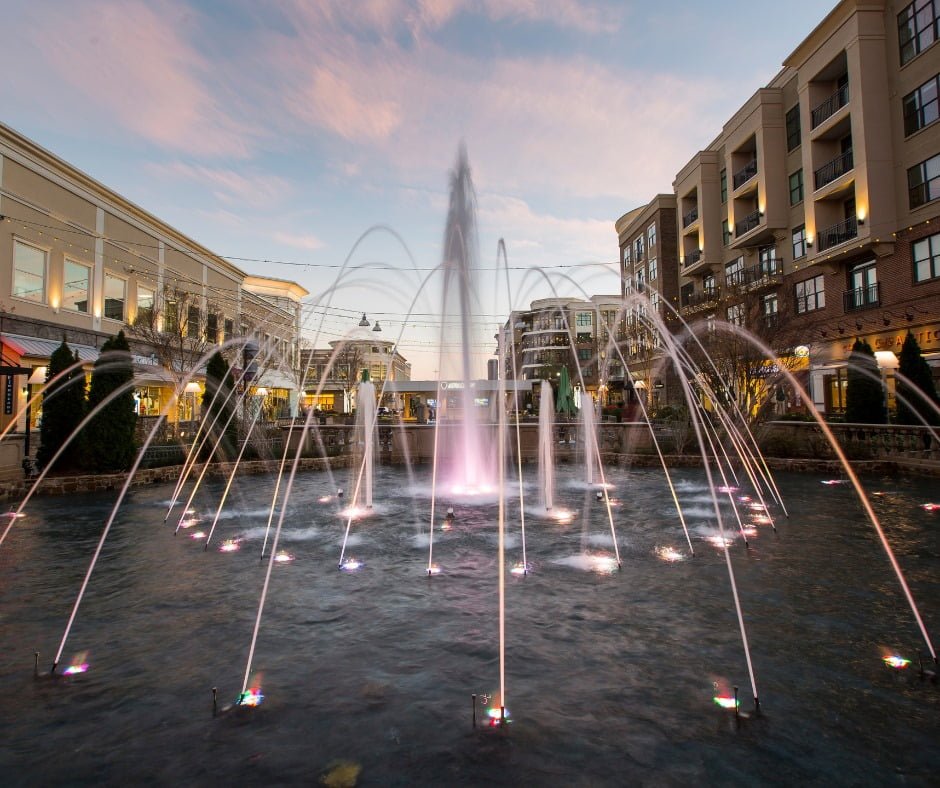
Avalon in Alpharetta (Image: Avalon)
In addition to ensuring the creation of place, injecting reflections of the areas immediately surrounding the venue, Stephens says that developers also need to rely on population in order to create the right kind of engagement, complementing and drawing on the sense of place that’s been cultivated. He points to recent developments like Avalon in Alpharetta, Georgia, as a great example of what’s possible. Avalon is a mixed-use creation which opened in 2014 and boasts nearly 600,000 square feet of retail space, a 12-screen Regal Cinemas theater, more than 600,000 square feet of Class A office space, nearly 400 single-family residences, 250 luxury rental homes, a hotel and conference centre, all on an 86-acre site. At a glance, it seems to offer everything a visitor might need. And, adding further value, Avalon is the host of an estimated 290 events every year. It’s a recipe that Stephens says goes a long way toward ensuring the population required to support a successful shopping centre.
“Malls rely heavily on population,” he says. “The most successful developments around the world today are mixed-use where there’s a foundational human energy of people living, working, playing, shopping, recreating and relaxing, and doing it all in a communal way. Shopping centres have got to understand that they are now in the business of collecting, gathering and manipulating human energy for the betterment of the centre and the community it serves. Mixed-use developments that take all of these things into consideration present a really great way for developers to harness that human energy to great effect.”
Content production
With the pillars of place and population secured, Stephens proposes that shopping centres then need to find ways to communicate with and promote the value of the venue to their visitors in special ways that will keep them coming back while enticing would-be visitors. In essence, just as Avalon in Georgia, and others, are leveraging special events and unique happenings, tomorrow’s shopping centre needs to become something of a production house, providing people with the impetus to frequent the development while creating a catalyst for excitement, engagement and interaction.
“Shopping centres are increasingly realizing that they need to be producing compelling content that draws an audience to the centre every day,” he asserts. “In doing so, they have an opportunity to use that audience to create a media value for the brands that sit under their rooves. They’ve got to create an entertainment and hospitality venue to generate foot traffic. If that audience can be gathered into the space, then everything else starts to fall into shape, including influencing interest from brands that want to be involved. If brands believe that there’s a distinct media value attached to being at a shopping centre because of the content that’s being produced and presented, then there’s a significantly better chance that they’re going to want to buy into the lease.”
Keys to the future?
Taking the notion of content creation one step further, Stephens suggests that the entertainment doesn’t need to be confined to the audience that sits within the walls of the shopping centre. There are also opportunities for malls to stream live content to consumers around the world, broadening and expanding the audience that’s being reached and the exposure to the brands involved. And, according to Stephens, that’s exactly where the fourth pillar is leveraged to support growth in the digital world. Following place, population and production, tomorrow’s shopping mall is poised to become a platform for growth in the digital world.
“The shopping centre of the future will not be a monolithic building that’s open for fourteen hours a day,” he says. “Instead, it will literally be a flexible, manipulatable platform that’s open and accessible 24-hours-a-day 365-days-a-year. Consumers will be empowered to shop in-store, online, order ship-to-home, from just around the corner or from abroad. The shopping centre developer that can execute on creating a unique sense of place, drawing a population of visitors to the venue with strong content production, leveraging the venue as a platform to drive social and commercial engagement, holds the keys to the future.”
Revising the evaluation model
All of this is not to say that there aren’t any successful, even lucrative, shopping centres in Canada still operating within a somewhat traditional model. However, outside of a dozen or so premium locations throughout the country, consisting primarily of luxury and outlet malls, most in Canada are struggling, restricted by an outdated and broken design. It’s a concern that’s been recently noted and recognized by a number of industry analysts and observers. And, although the template to reimagine the shopping centre – the theoretical and practical blueprint to build exciting and engaging mixed-use developments – is available and in rife supply to mimic, Stephens says that there is a challenge in getting all stakeholders to equally buy into the solution.
“The biggest problem for shopping centre developers is around the whole idea of evaluation,” he says. “The question comes down to how we evaluate the financial health of a shopping centre. And, unfortunately, most of the industry remains pretty archaic in this sense. So, it’s fine for an enlightened shopping centre developer to shirk the selling of product and writing of leases as their core business in favour of becoming a production company and a place where human energy can be manipulated. But at the end of the day, when they apply for a loan, they need to provide information concerning their gross leasable square footage and how much of that space is tenanted versus vacant, essentially determining their credit-worthiness. As a result, we need to start accepting the idea as an industry, across the board, all the way from the investors to the developers, that the goals today when building a shopping centre are fundamentally different than they were 20 years ago. The new revenue model will not be based on sales per square foot or writing ten-year leases. It’s going to be about brands buying space as a media channel to reach consumers at opportune times for the purposes of customer acquisition. That means we need a completely different model for how we value that square footage and the ways we judge success within the industry.”
A revitalized shopping centre industry
It seems like a relatively tall order for shopping centre developers and mall landlords to create a venue that reflects the four pillars of place, population, production and platform that Stephens describes. And, ensuring the unique mix of brands, food and beverage, attraction and entertainment that’s required in order to elicit meaningful foot traffic and provide something for everybody is likely to be equally challenging. However, if the right pieces are put in place, helping to build the pillars of support that Stephens recommends, a return of the shopping centre to its status of hubs of commercial and social activity may very well be inevitable. And then the next step, Stephens adds, as we continue headlong into a new digital world, will be the sharing and leveraging of data in order to drive and hone the future of the shopping centre experience in Canada.
“Ultimately shopping centres will need to become adept at understanding the movement of consumers through their space. And in conjunction, they need to become a data engine for brands, speaking to them in media terms, providing them with specific information related to the number of consumers that have been at its threshold, the number of consumers that have crossed over it and how many took action downstream of the experience. Developers and landlords need to have an acute understanding of that dataset and share it with their tenants for optimal success. It’s not going to be an easy lift, and will involve skillful work to create a reason for visitors to share their data and mindfulness with respect to privacy concerns. But my belief is that the development of special memberships with unique privileges may be the enticement consumers will need. As important as data will be going forward, however, simply creating a shopping venue of this nature will go a long way toward providing visitors with the sense of community that people crave. From the beginning of time, we’ve sought out gathering points to commune, gather information and experience things. Shopping centre developers are beginning to realize this and have the opportunity to create some amazing spaces that will fill a fundamental human need while revitalizing and reenergizing the Canadian shopping centre industry.”
Hunch, a certified global Facebook business partner, teams up with leading global brand and performance marketing teams to consistently drive operational efficiencies, revenue uplifts, and faster go-to-market initiatives. Brands and agencies rely on Hunch’s market leading automation platform that combines unique data-driven creative performance workflows with automated media buying processes to help today’s marketers focus on what matters most – Growth.”
Founded in 2017 by Siggi Rakovic and Igor Simovic along with a small group of creative technology pioneers in Los Angeles and Belgrade, Hunch has become a global leader in data driven creative solutions for social commerce marketing and has helped launch over a billion automated creatives for hundreds of brands including Bavaria Automotive, Qatar Airways, Wavemaker, Telenor and G Adventures.
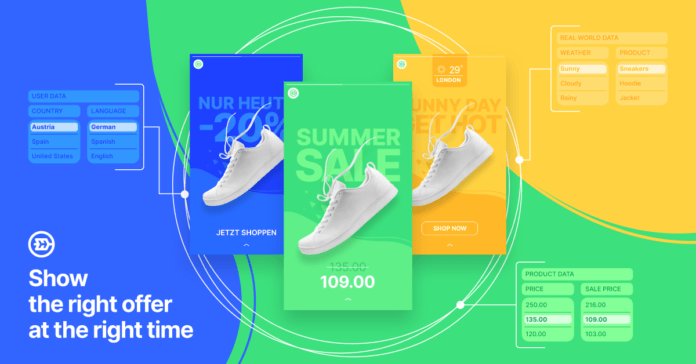
Performance marketers use Hunch to build highly contextual customer journeys on Facebook and Instagram and deliver the right creative at the right time leading to better engagement. Achieving the same result requires hundreds of hours of manual work and additional resources to create, update and test each element of an offer.
Although most social platforms have a native ad studio, there are some limitations. Hunch’s Creative Studio is the answer to both these problems. It is designed to save marketing teams time and resources while creating aesthetically pleasing video and image ads for hundreds of products at once.
Hunch lets marketers turn their data into creative. Once you connect your product or data feeds to Hunch you can use them to build personalized creatives. Using the product data, third-party data, and Hunch Studio, advertisers can launch thousands of personalized ads automatically and combine brand and performance at scale.
Brands and agencies that have used Hunch growth playbooks report a 30% increase in performance using dynamic and automated ads, a 60% decrease in time required to launch and manage campaigns, and 25% more conversions using customized on-brand templates.
G Adventures, Canada’s largest adventure travel company and a world leader in the adventure industry, leveraged the power of Hunch to get back in the game after COVID-19 with Hunch’s automated ad solution for catalogs.
Image: Hunch
Not only did G Adventures reduce the time and effort needed to set up and launch these campaigns but they were also able to get more granular and personalize customer journeys.
With Hunch, e-retailers can target users based on the time of day with automated localized campaigns, trigger weather-based personalized messaging, and use localization techniques to cater to a global audience.
Hunch offers custom packages and pricing plans without locking companies into a long-term commitment. Self-serve plans for brands or agencies that are already running ads but need to start automating ads and creatives. Fully-managed plans are for teams that require tailored services and extended support and Hybrid plans for those in between.
Last week the American Dream shopping centre and entertainment complex in East Rutherford New Jersey unveiled a glossy new luxury retail wing called The Avenue that looks unlike anything in North America to date. American Dream was developed by Triple Five Group which got started in building entertainment-focused shopping Centres with West Edmonton Mall in Edmonton.
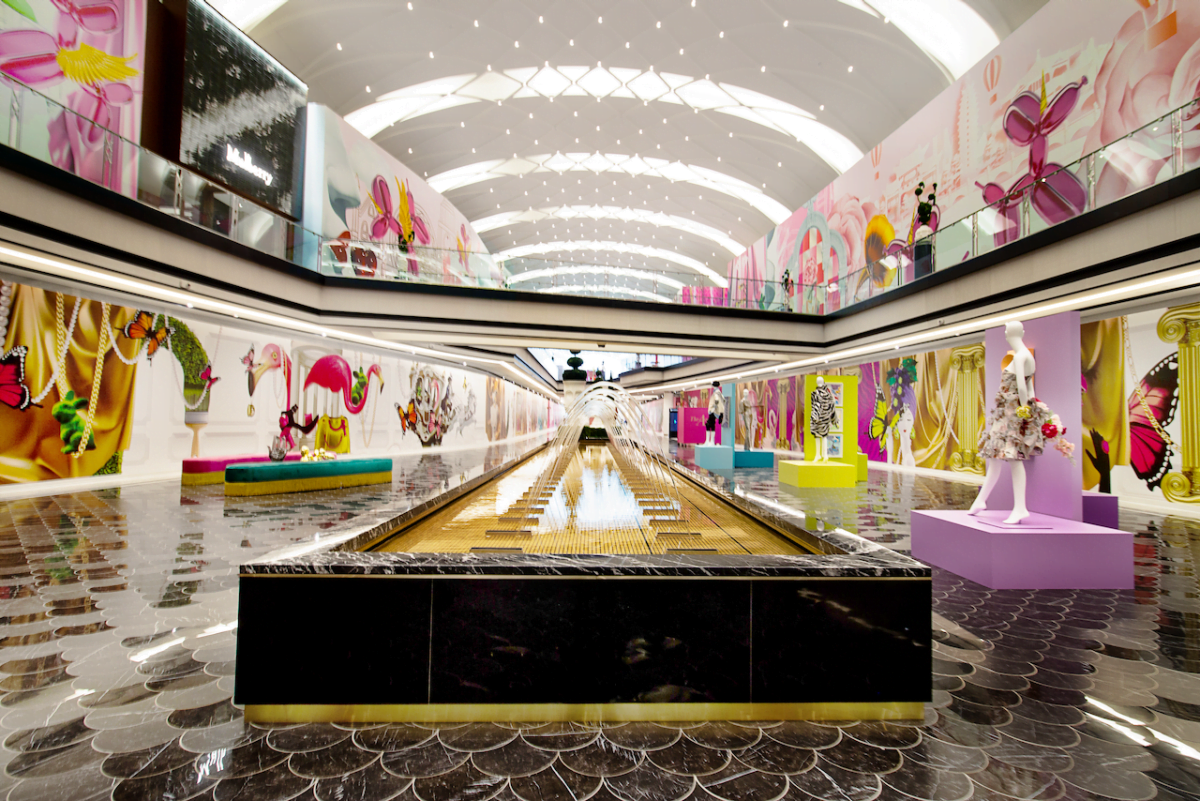
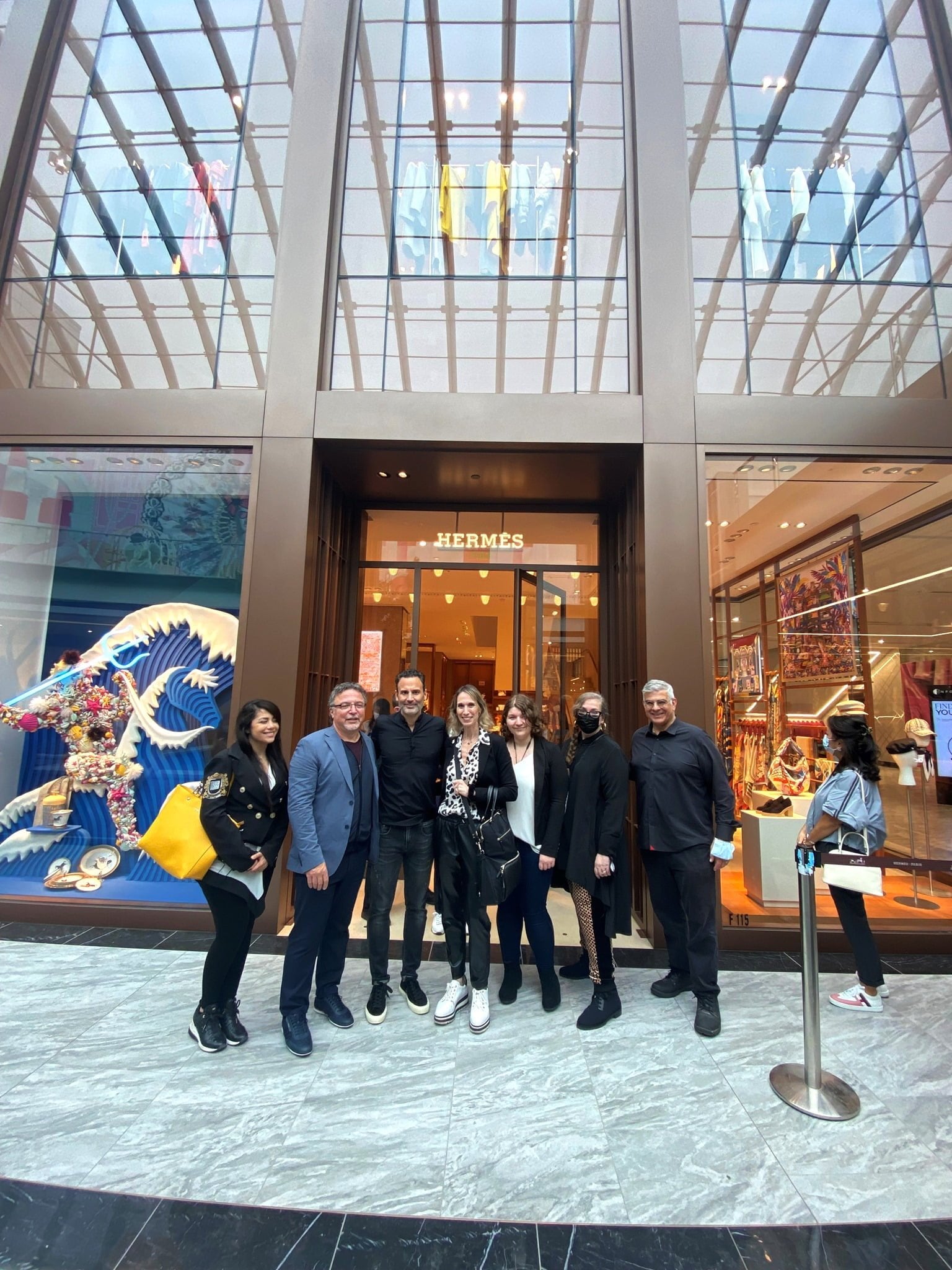
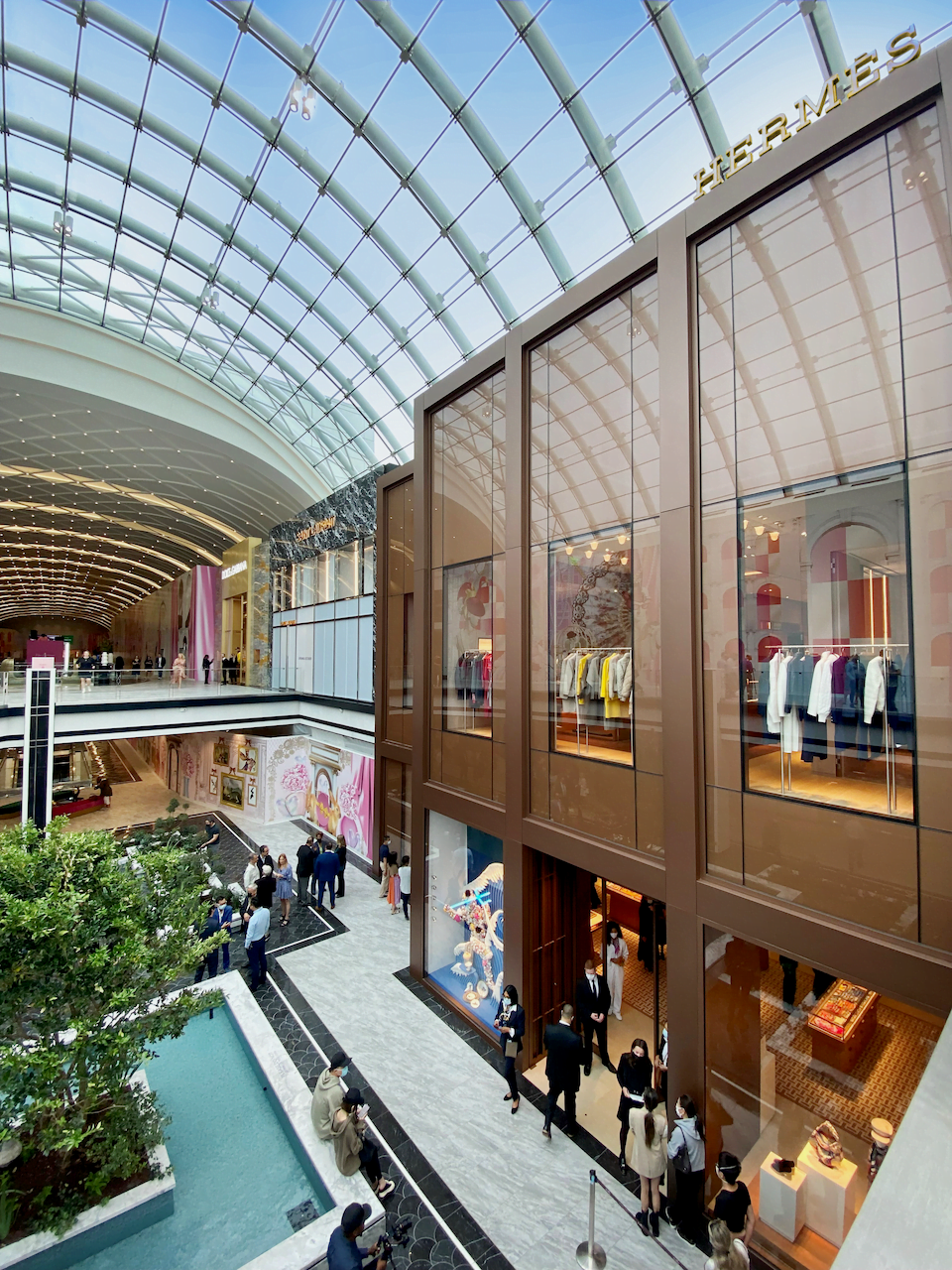
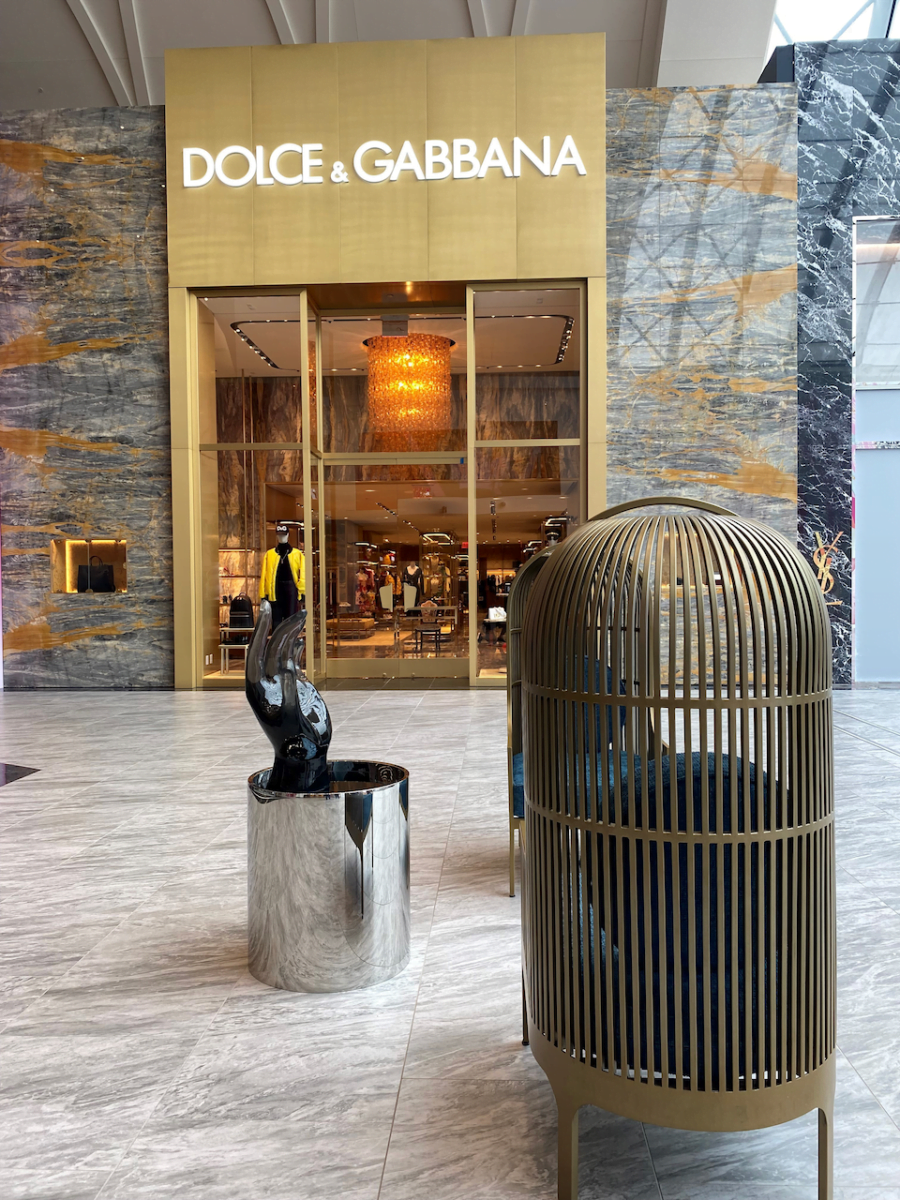
The Avenue luxury wing at American Dream is anchored by a new Saks Fifth Avenue store. The luxury wing is home to 20 retailers and spans about 300,000 square feet. Several stores opened there last week including Hermes, Mulberry and Dolce & Gabbana — the Hermes store spans an impressive 8,000 square feet which is larger than any location in Canada. Soon, other retailers will open including Saint Laurent, Tiffany & Co., Anne Fontaine, Gentle Monster, Alexander Wang, Jonathan Adler, Zadig & Voltaire and a Brut Champaign bar will also be featured at The Avenue.
A 113,000 square foot Saks Fifth Avenue store also opened at American Dream, housing a range of luxury brands including concessions for Louis Vuitton and Gucci. The design of the Saks store is visually different than the three Saks stores in Canada located in Toronto and Calgary. American Dream is home to Saks’ only store in New Jersey — the retailer exited The Shops at Riverside in Hackensack in 2014 and the Mall at Short Hills in 2016.
Don Ghermezian at The Avenue at American Dream (Image: GH+A Design)
In front of the Hermes store at The Avenue at American Dream (Image: GH+A Design)
Montreal-based design firm GH+A designed the space and Toronto-based Adamson Associates Architects were the architects for the Avenue — the two firms have been collaborating on the project since 2012.
In 2019, Triple Five hired Ken Downing to be Chief Creative Officer at American Dream. He introduced New York City-based Jonathan Adler to the project who designed the furniture for The Avenue. Landscaping was designed by Miami-based Plant the Future.
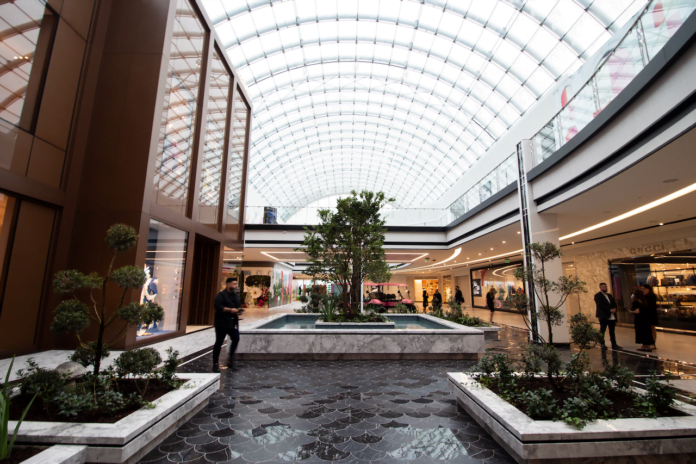
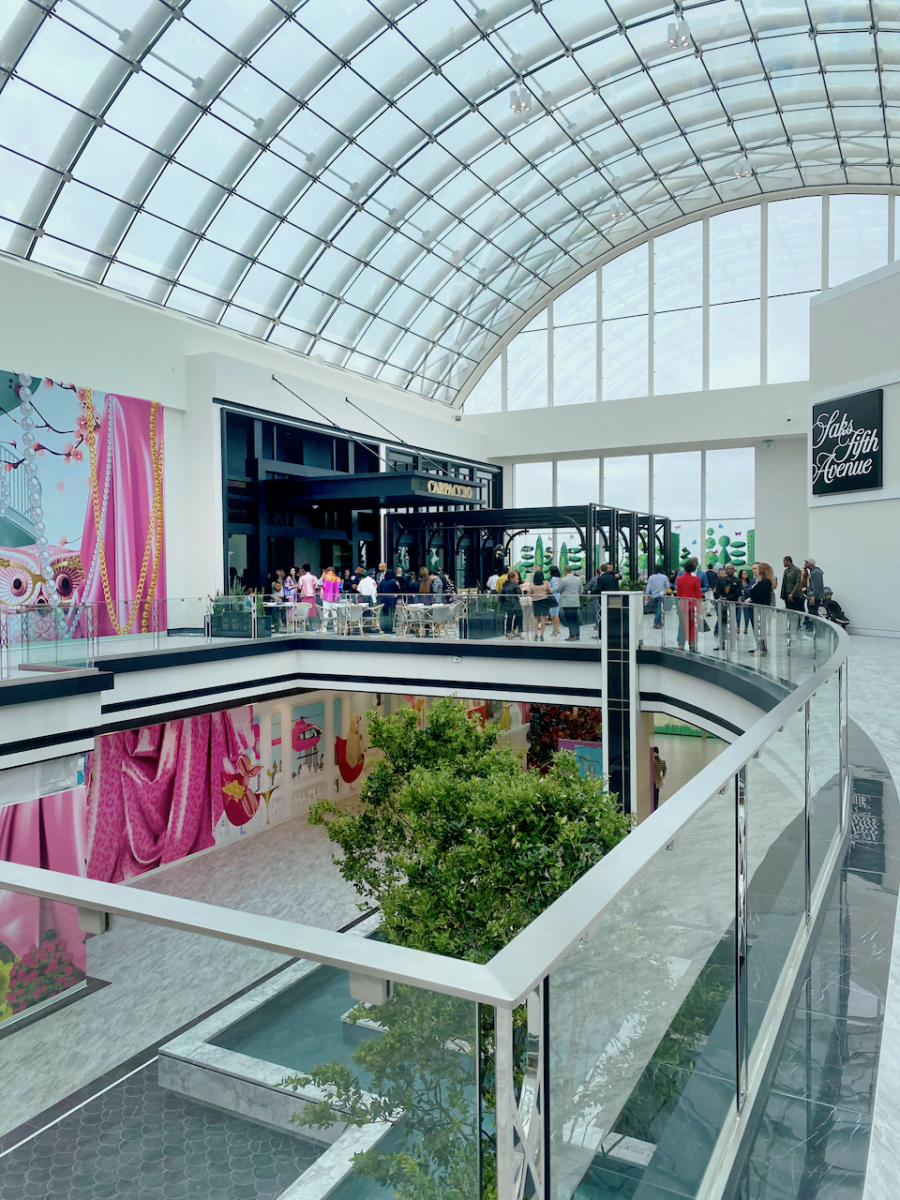
Interestingly, The Avenue luxury wing is so large that it is made up of two buildings. Building ‘E’ was completely remodelled and Building F is the new expansion featuring a glass skylight.
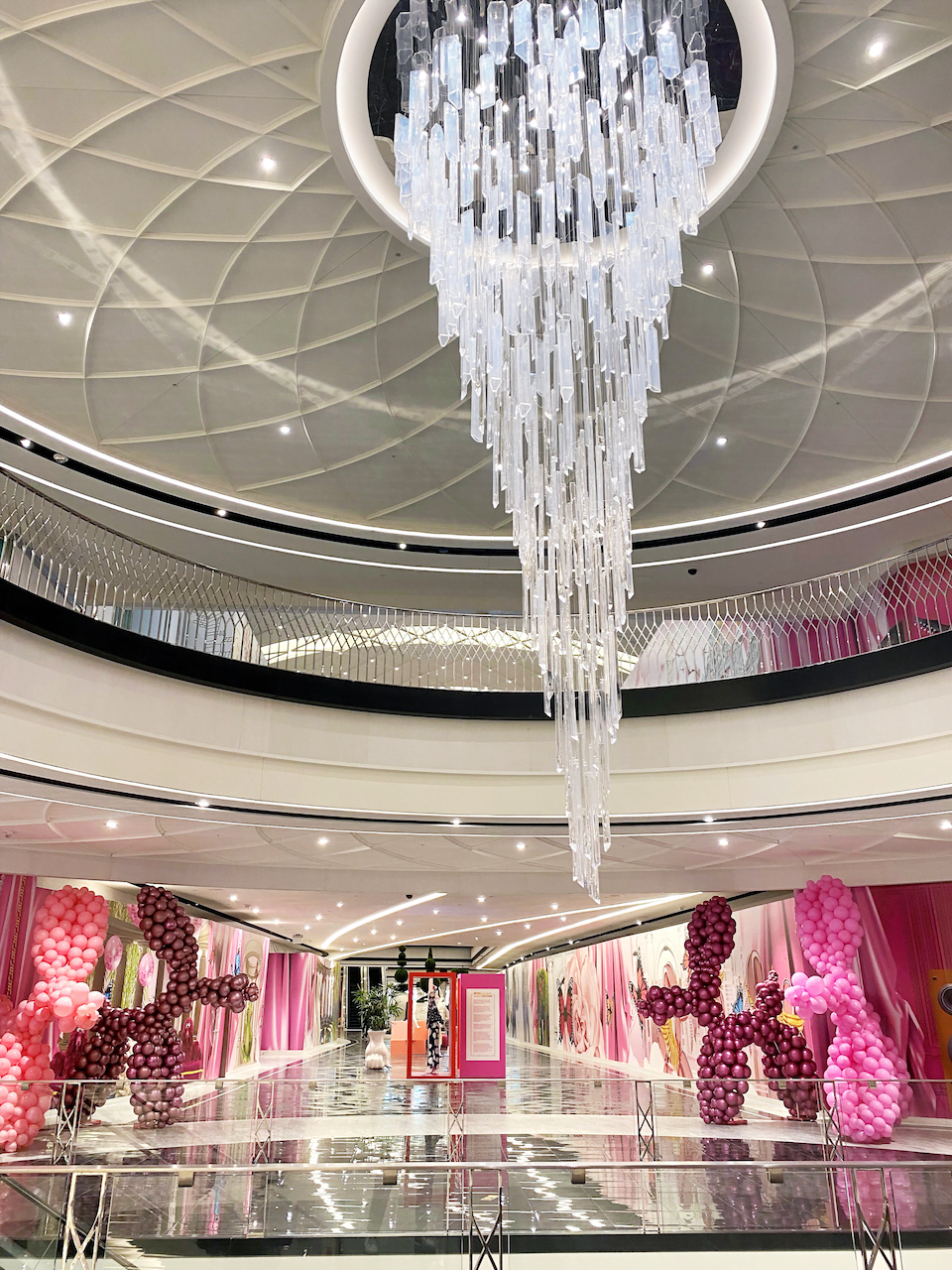
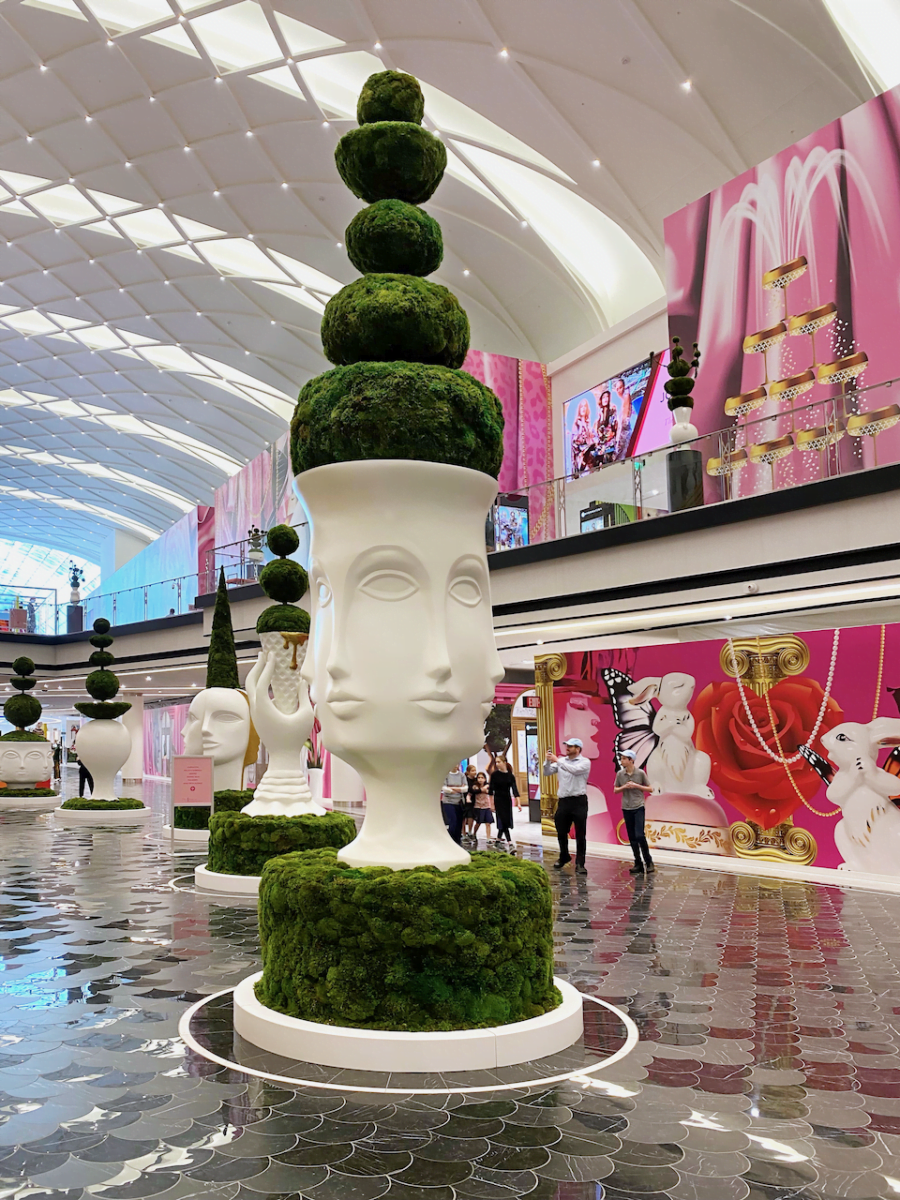
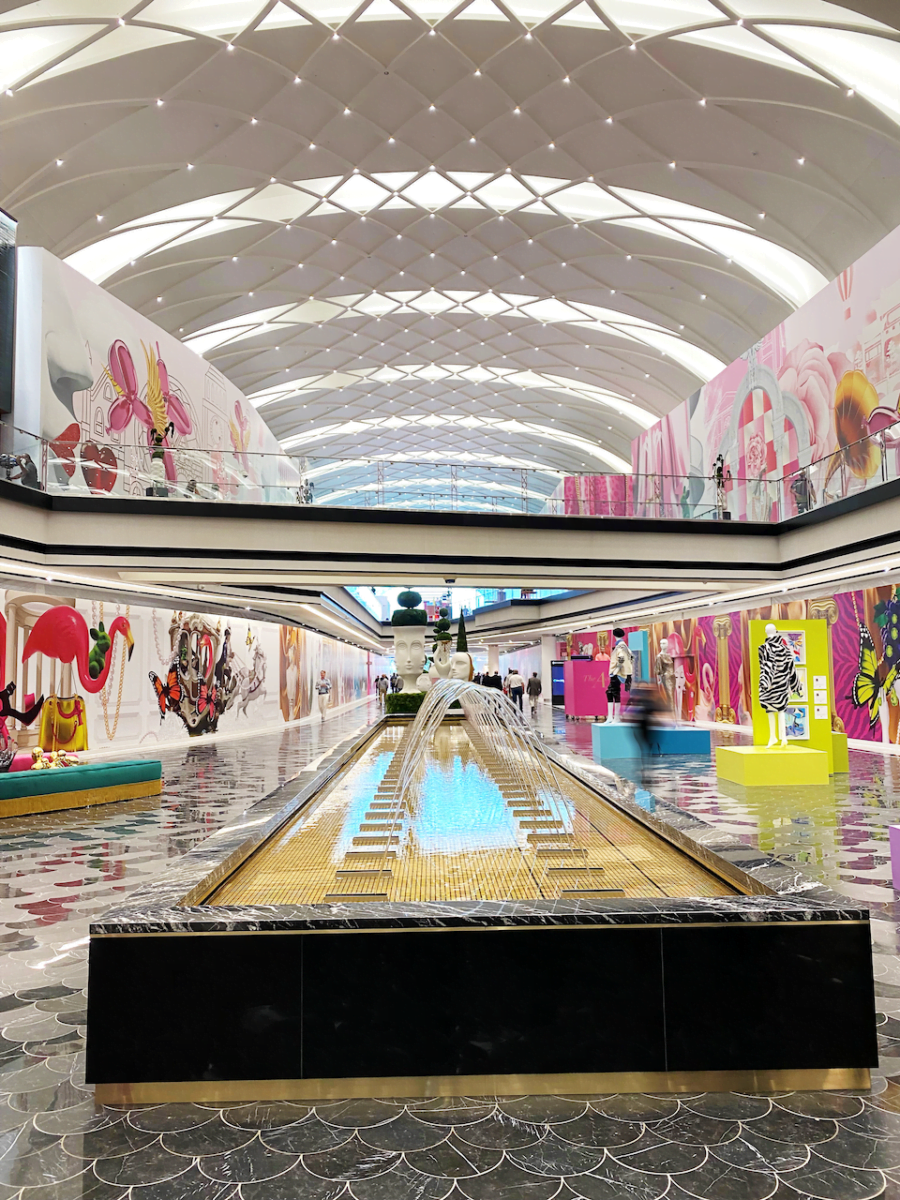
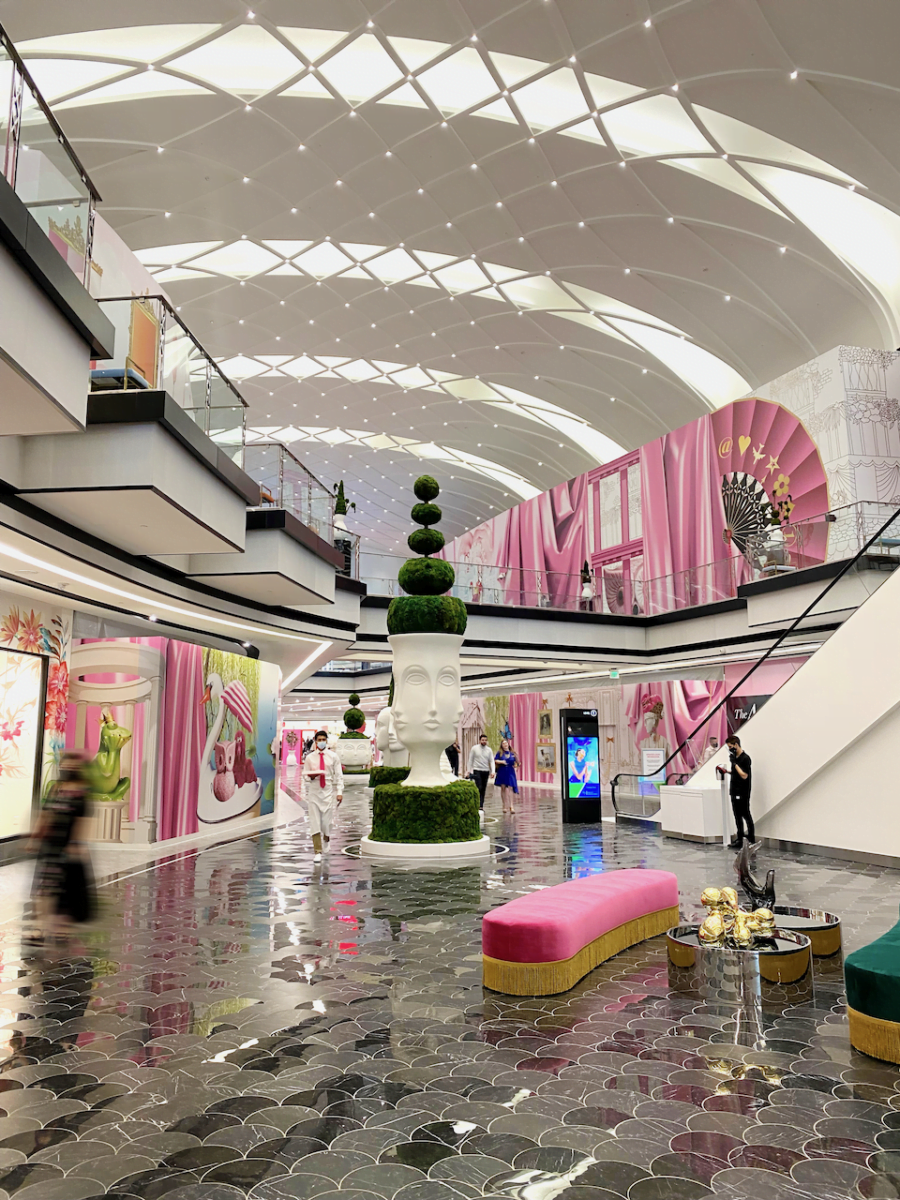
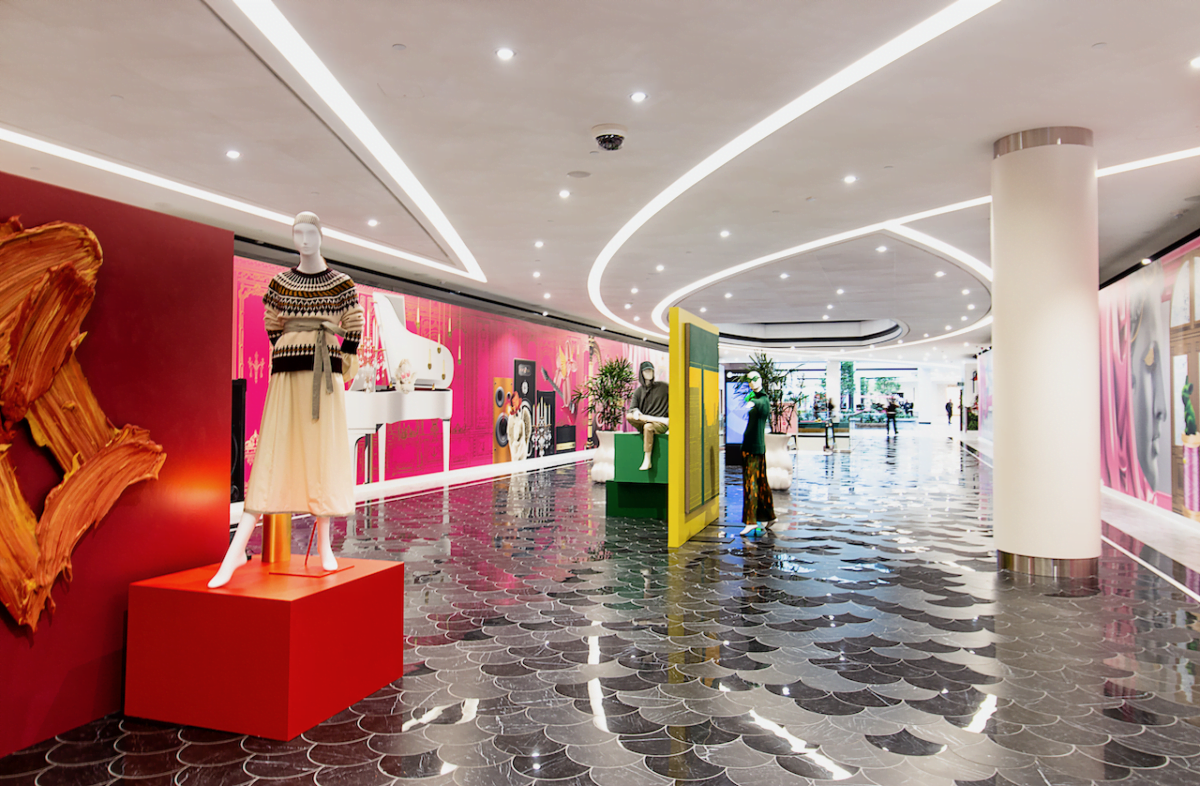
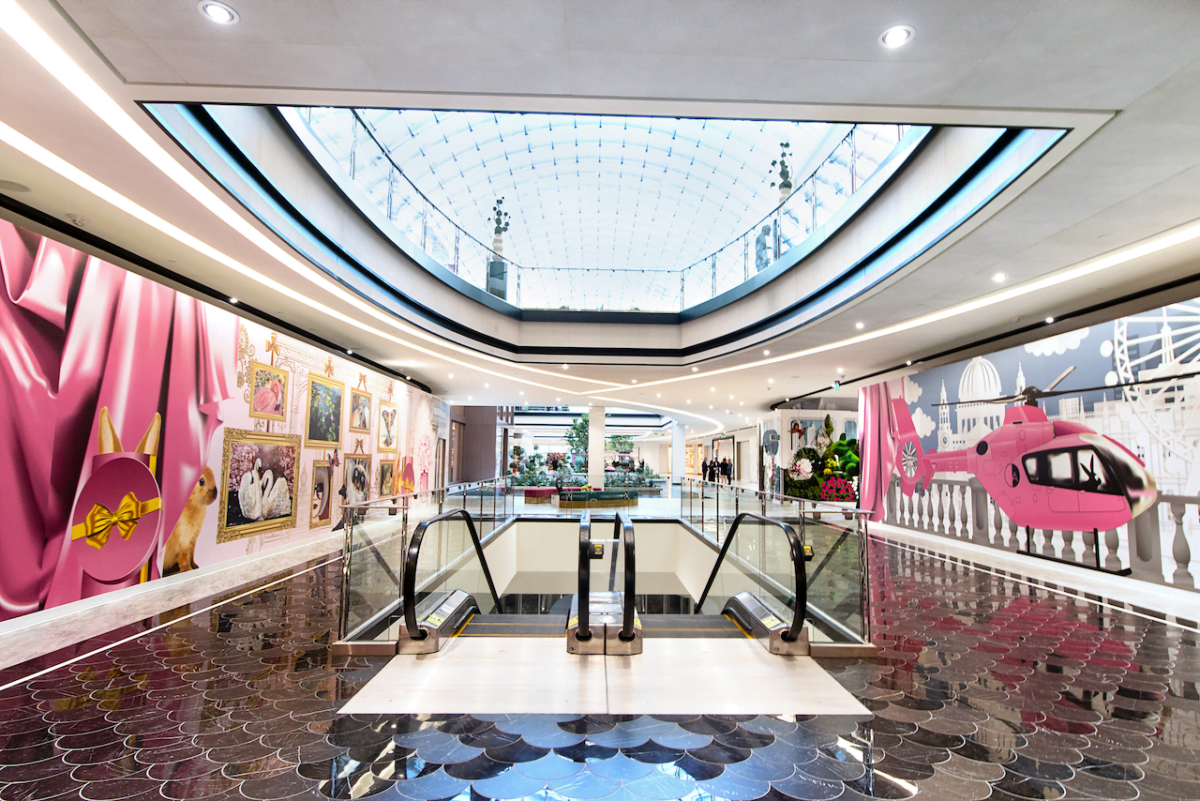
The Avenue features natural light shining from skylights as well as real trees and shrubs. Curving architecture characterizes the space and flooring is made of black and charcoal-coloured marble tile laid in a fishtail pattern. Included is a crystal chandelier under a rotunda and a grand staircase.
The Avenue at American Dream (Image: GH+A Design)
The Avenue at American Dream (Image: GH+A Design)
A 50,000 square foot Barneys New York store had been intended to open at American Dream, but the chain filed for bankruptcy and shut all stores last year.
The $6 billion 3.3 million square foot American Dream has been under construction for years and in 2019, attractions including Nickelodeon Universe and The Rink opened along with several kiosks. The pandemic delayed opening other sections of the megamall until recently. The entertainment component to American Dream now also includes the Big Snow ski slope, the Sea Life Aquarium, mini golf, Legoland and other attractions.
Triple Five, owned by the Ghermezian family, developed the fist phase of West Edmonton Mall in Edmonton in 1981 and the shopping centre has become the largest in North America with more than five million square feet. In 1992 Triple Five unveiled its second megamall project, the Mall of America in Bloomington south of Minneapolis. Both feature a mix of retail, food & beverage and entertainment.
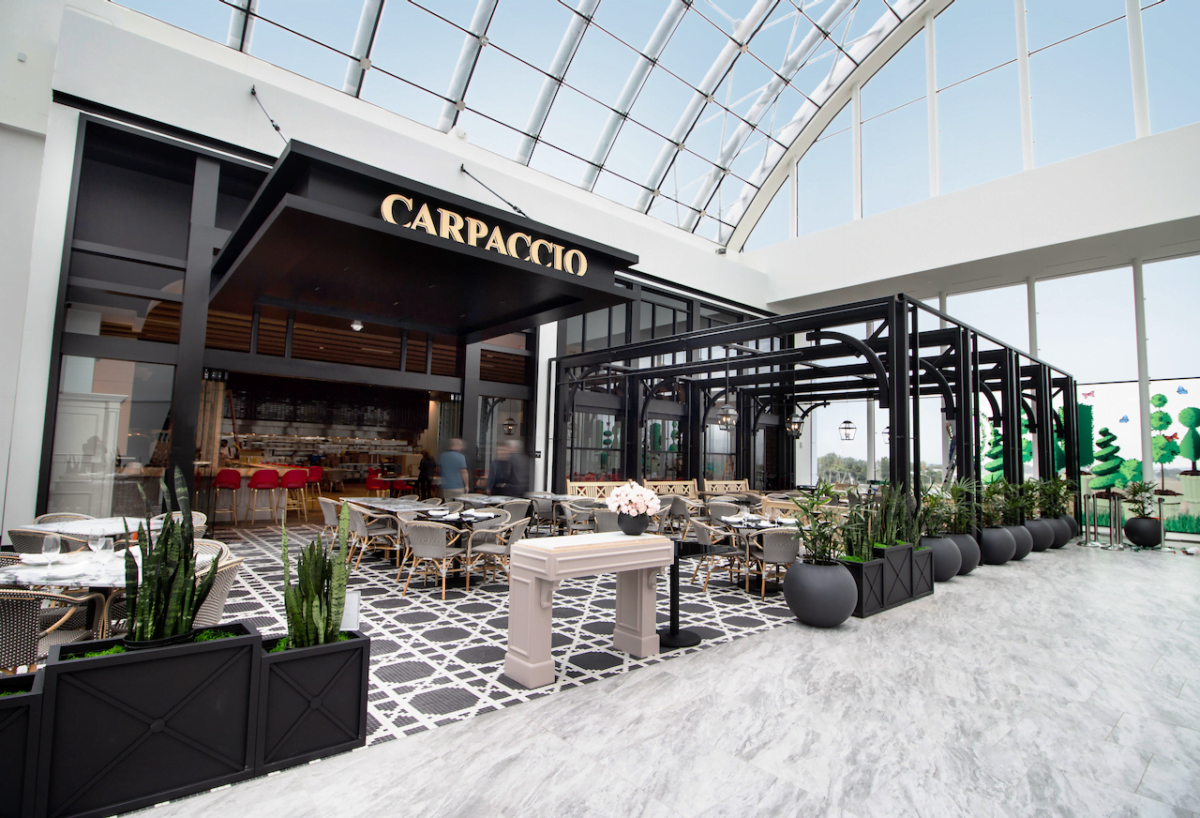
The Avenue at American Dream (Image: GH+A Design)The Avenue at American Dream (Image: GH+A Design)The Avenue at American Dream (Image: GH+A Design)The Avenue at American Dream (Image: GH+A Design)The Avenue at American Dream (Image: GH+A Design)The Avenue (Image: GH+A Design)Carpaccio (Image: GH+A Design)The Avenue at American Dream (Image: GH+A Design)The Avenue at American Dream (Image: GH+A Design)
Young woman is outdoors, holding Christmas presents. She is holding paying card and smart phone
As vaccination rates increase in Canada and globally, shopping trends in 2021 are poised for yet another shift from last year’s surge in eCommerce transactions. The path to purchase is increasingly complex as retail searches grew at a rate 3X higher than the same time last year, according to Google.
Retail Council of Canada is bringing together experts and their latest 2021 learnings to help retailers of all sizes navigate their strategy for holiday 2021 at the Retail Holiday Shopping Forum on October 5, 2021.
Insights on consumer shopping behaviors for the holiday season will be presented by Luc Dumont, Vice-President, CPG at Leger. Leger will share the most important findings of the 4th annual RCC Leger Holiday Shopping survey, that is yet to be released, of over 2,500 Canadians coast-to-coast.
Retailers are also increasingly aware of the value of understanding their local communities and the cultural nuances. John Stevenson of CulturaliQ will share strategic insights covering multicultural consumers and their shopping patterns. John will also speak about the changing face of Canada, cultural holidays and trends, and how to connect the dots from a 360 DEI perspective.
Navigating the holidays wouldn’t be complete without talking about your digital strategy and leveraging the knowledge of Google. Jamie Garatsougias, head of Direct-to-Consumer and eCommerce Retail at Google joins us to share the critical insights to bolster your strategy.
Whether you are finalizing your holiday strategy and want to fine-tune it based on the latest learnings or figuring out where to go, Retail Council of Canada’s Holiday Shopping Forum will help you gain the critical insights you need to stand out and build meaningful connections with your customers and drive sales.
Retail Council of Canada’s Retail Holiday Shopping Forum will be hosted October 5, 2021, fully virtual from 1:00 – 4:00 pm ET. View the agenda or purchase tickets today
Strategic Partnership between GetintheLoop and Retail Insider
Retail Insider and GetintheLoop have partnered to bring Canada’s shop local platform to life inside the Retail-Insider platform. As the pandemic has evolved, brands big and small have turned to digital and mobile solutions to reach more customers and ultimately re-imagine their marketing in an increasingly digital world. As a part of this evolution, Retail Insider has launched an integrated partnership offering additional digital capabilities and reach for shopping centres, national brands, and now local retailers and businesses coast to coast.
Craig Patterson
“We got to know GetintheLoop over the past few years and have been increasingly impressed with the company’s technology and their commitment to helping retailers and local businesses attract and retain local customers during the pandemic,” said Craig Patterson, Editor-in-Chief of Retail Insider. Our partnership allows us to add further value to Canadian businesses big and small while providing another avenue and touchpoint for our 500,000 + visitors each month.”
Under this newly minted partnership, GetintheLoop’s rapidly expanding shop local platform will become integrated into the Retail Insider ecosystem. The partnership creates expanded reach for GetintheLoop business partners while bringing new products and services to the Retail Insider customer base and expanding Retail Insider’s reach coast-to-coast with an evolving focus on local stories and growth.
“In our conversations with brands and shopping centres, we know their strategies are evolving to become digital-first strategies, and we are excited to bolster what we can offer our shopping centre and retail partners,” Patterson added.
GetintheLoop currently works with over 6,000 local and national businesses across the country, including Sunrise Records, Hudson’s Bay, T.Kettle, The Body Shop, and Chapters-Indigo, helping them reach and engage with over 1 million shoppers each week. This partnership with Retail Insider will see GetintheLoop’s audience grow by significantly adding further value to its local and national business network, including partnerships with REITs like Cushman & Wakefield, Kingsett Capital, BentallGreenOak, and Trio Vest coast-to-coast and award winning properties like Hillside Shopping Centre, Halifax Shopping Centre, and Burlington Centre.
Matt Crowell
“Retail Insider is the authority of what’s new, what’s happening, and who’s growing in the Canadian retail landscape. We are super excited to be working with their team to expand our capabilities to help local and national businesses connect with engaged consumer audiences. It’s early days, but I think this partnership is a great example of the innovation that’s happening in media and the retail landscape,” said Matt Crowell, founder of GetintheLoop.
The two parties expect the integration to be live in time for the upcoming busy shopping season and view the partnership as a constant evolution that includes expanded localized content on the Retail Insider platform. Together, GetintheLoop and Retail Insider plan to enter new markets like the USA based on GetintheLoop’s recent announcement of international expansion.
Anyone interested in learning more is encouraged to reach out here to speak with the Retail Insider team.
ABOUT GetintheLoop
GetintheLoop is Canada’s leading Shop Local Community, providing businesses with an easy and effective way to attract and retain local customers. Members join to receive local offers and rewards while discovering and supporting local businesses like restaurants, retail, and things to do, from coast to coast. For more information, visit www.GetintheLoop.ca.
GetintheLoop is expanding into new markets with local owner/operators through our innovative approach to franchising. For more information, visit www.GetintheLoopLocal.com.
Third-party apps and websites can apply GetintheLoop’s software development kit (SDK) and API to integrate local offers right into their app and website, providing users with our network of relevant and local offers with one simple integration.
ABOUT Retail-Insider.com
Retail Insider (retail-insider.com) is Canada’s most-read retail industry news publication. It was founded in 2012 and has grown to report on happenings across the country. Retail Insider also has a notable podcast network, including The Weekly and The Interview Series.
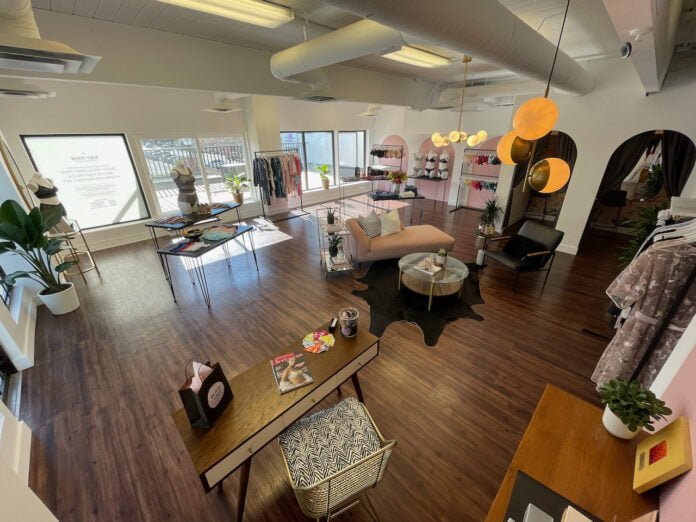
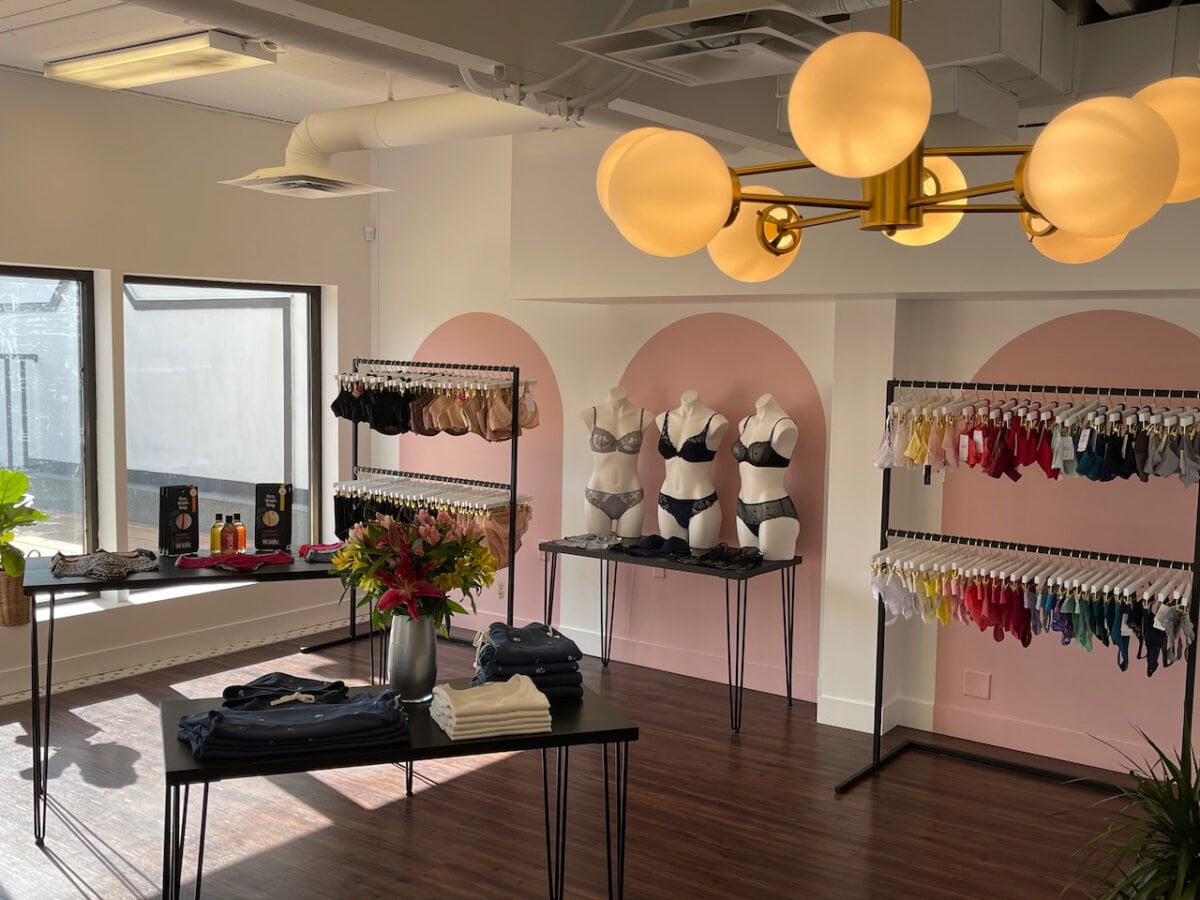
A new lingerie boutique store has opened in Calgary, catering to all women and LGBTQIA2S+ people of all sizes, with a mission of embracing and celebrating inclusion and diversity.
Body By Chai, which is owned and operated by Chai Swinton, has launched in Calgary’s Beltline neighbourhood along the 17th Avenue S.W. high street.
“Body by Chai’s concept is unique because we are an appointment-based, one-on-one lingerie experience where you have complete privacy during your fitting. Each appointment is personalized, and we make it all about the customer, no matter what their size may be — I love how we offer real sizes for real people. Our offering includes Canadian brands, as well as international brands and sizing,” said Swinton. “It’s fabulous because the sizing goes from A to an M Cup and band sizes from 28” to 48”. This may not be a unique size range to the savvy lingerie consumer, but the concept is unique because of the attention and service you receive.”
“This concept has been on my mind for 10 years, and I’ve been working in this industry for almost 12 years. What I felt was missing in the customer experience was consistency, knowledge and care, whether it was at a big box store or a specialty store. I wanted to create a lingerie experience that combined all of these elements into one welcoming environment. Thankfully, I have accumulated the experience and knowledge when it comes to brands, fabrics and fit. I also have the ability to connect with every client very intimately because it’s just me and them. And that’s something you can’t get everywhere. This is the gap in the lingerie market I’m hoping to fill.”
Image: Body by Chai
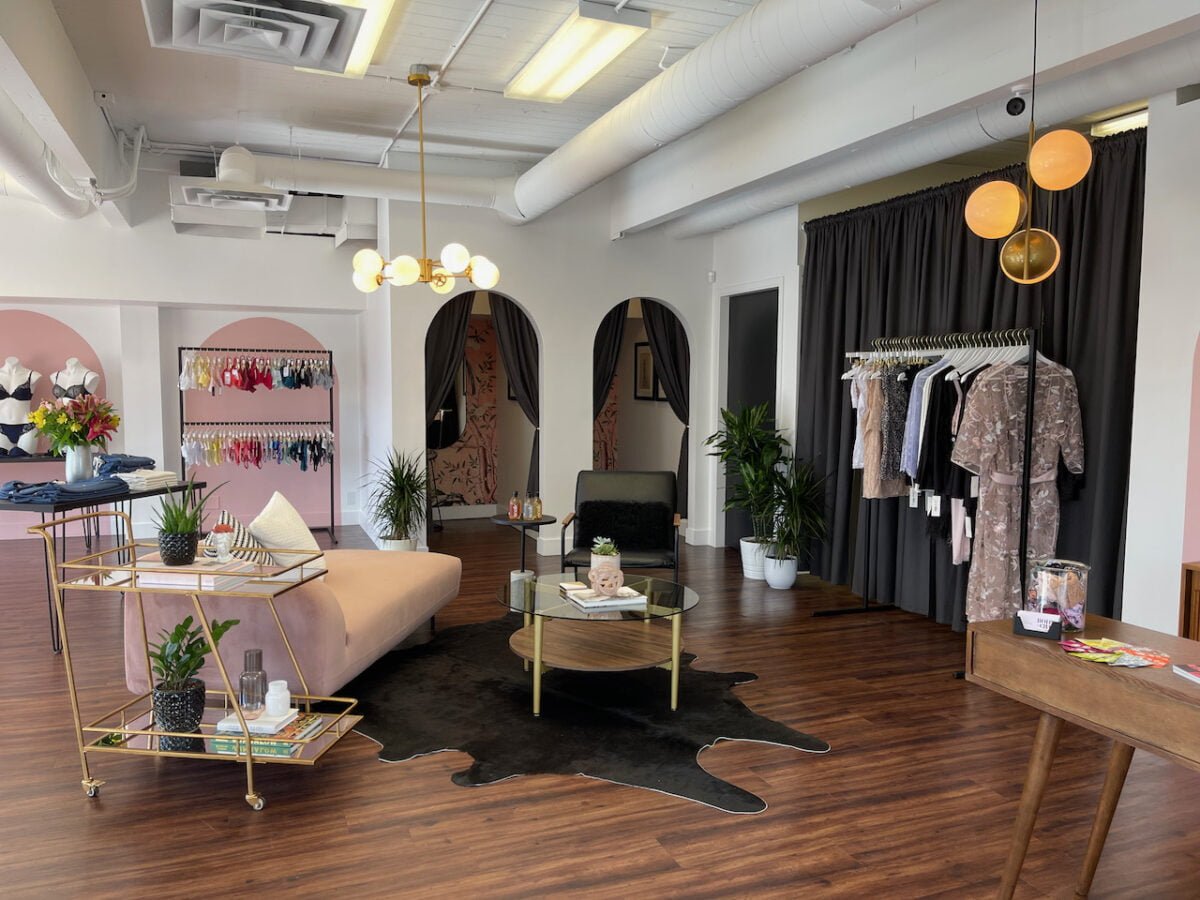
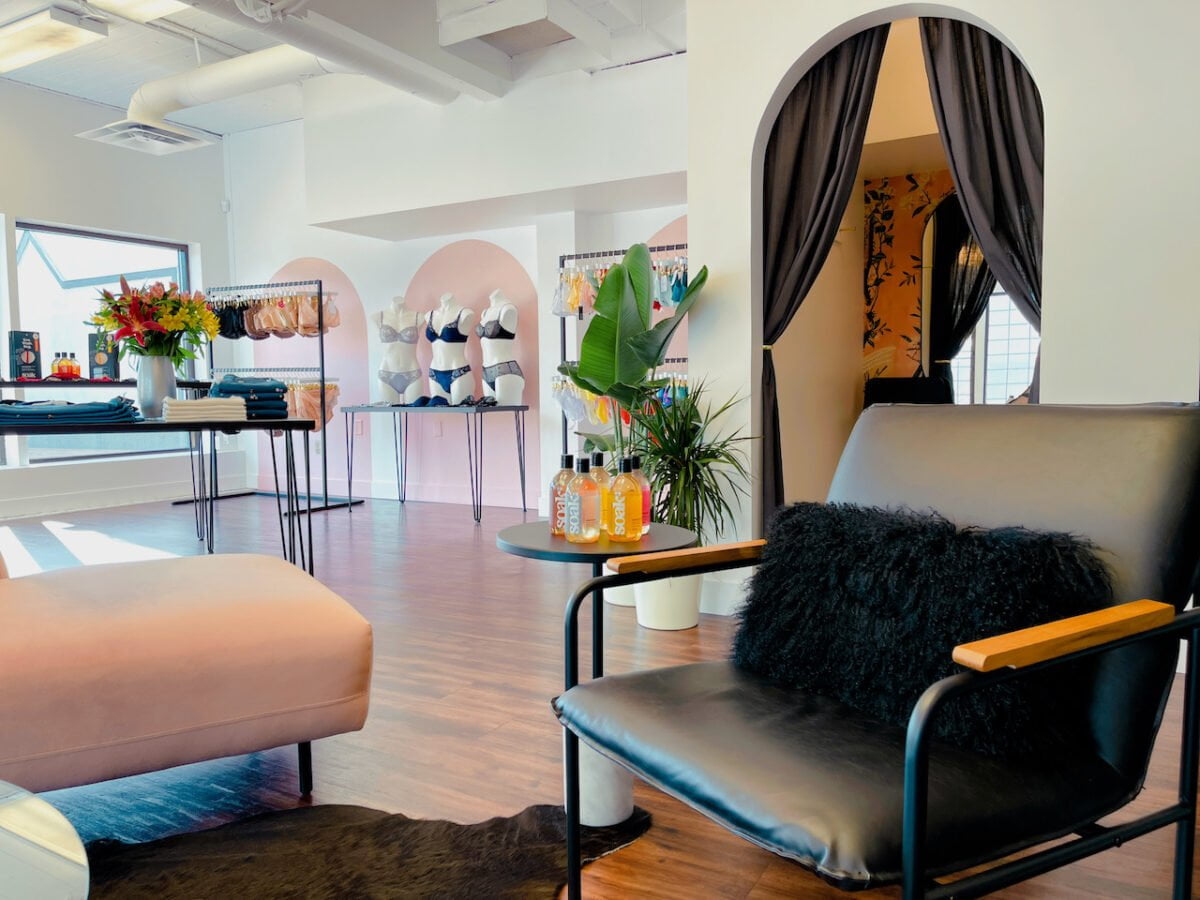
“The shop is also a really comfortable place where a partner or friend (or a few friends) can join you. Typically there isn’t a place for your guest to sit and relax, so I wanted to create an environment that felt like a cozy living room next to your dream lingerie closet. So that’s what I did.”
For the time being, she will have this one store but her next step is e-commerce. That will be an interesting initiative given that the store concept is all about the experience.
“We offer virtual fittings and are able send orders to clients all over Canada. Body by Chai has the ability to nail that fit every time,” said Swinton.
“The other piece is being a safe and inclusive space. We are the only truly inclusive lingerie store in Calgary. Size inclusivity in the lingerie industry has been positively changing in the past few years, but and I am proud say that we are the only WOC-owned lingerie boutique to openly cater to the LGBTQIA2S+ community, in which we were honoured with an international award from the Best of Intima Awards. The inclusivity award that we won was the first of its kind, and it’s an honour to pioneer an award that will hopefully continue from this point on.”
Image: Body by Chai
“Everyone is welcome in our store: All gender identities, all sizes, all races, economic statuses and abilities. I thought it was important to highlight this, given everything that’s been happening in the world finally coming to light about inclusivity. We need to bring this to the forefront and make sure it is known that everyone is welcome.”
Based on an ‘appointment only’ structure, clients have the comfort of knowing that they get a private shopping experience working directly with Swinton. The appointments can be booked online at bodybychai.com, or for last minute availability clients can check the website or Instagram @bodybychai.
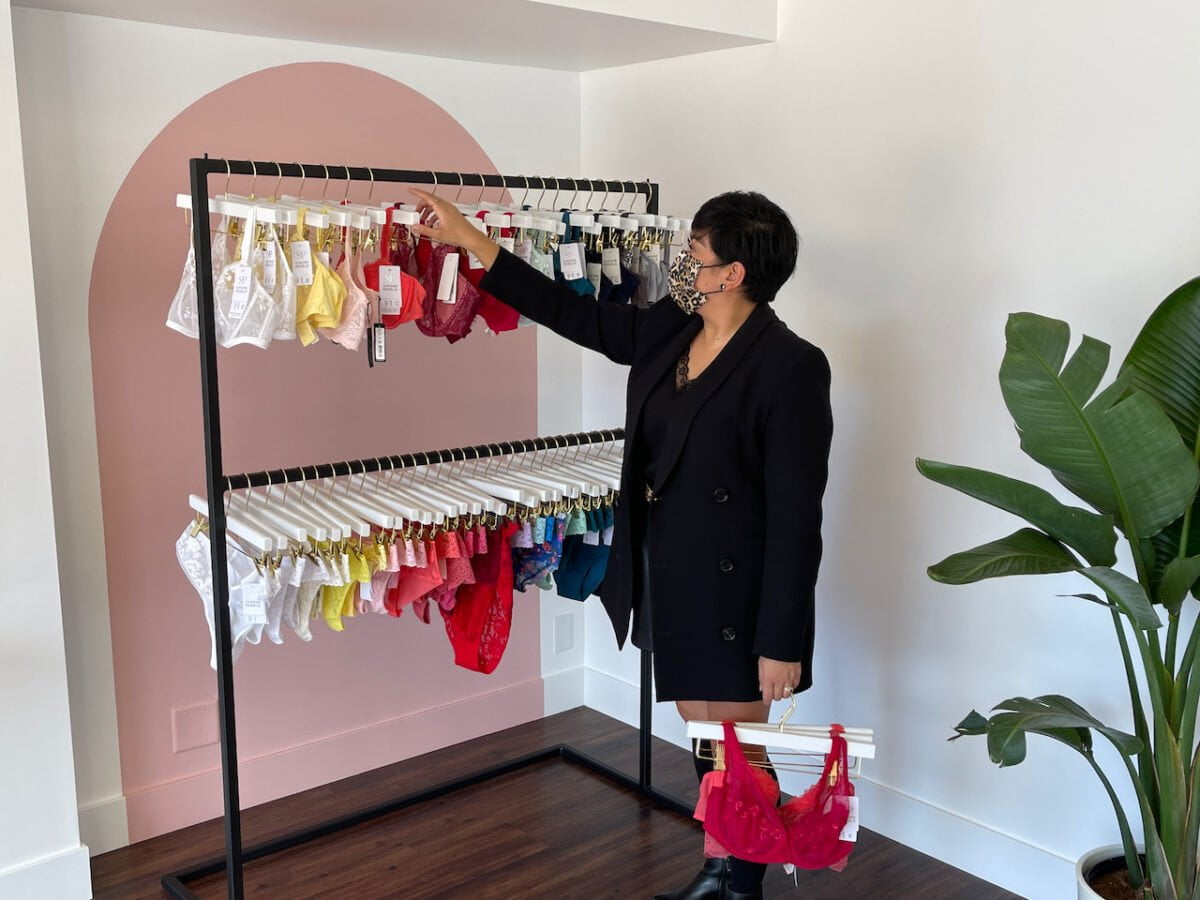
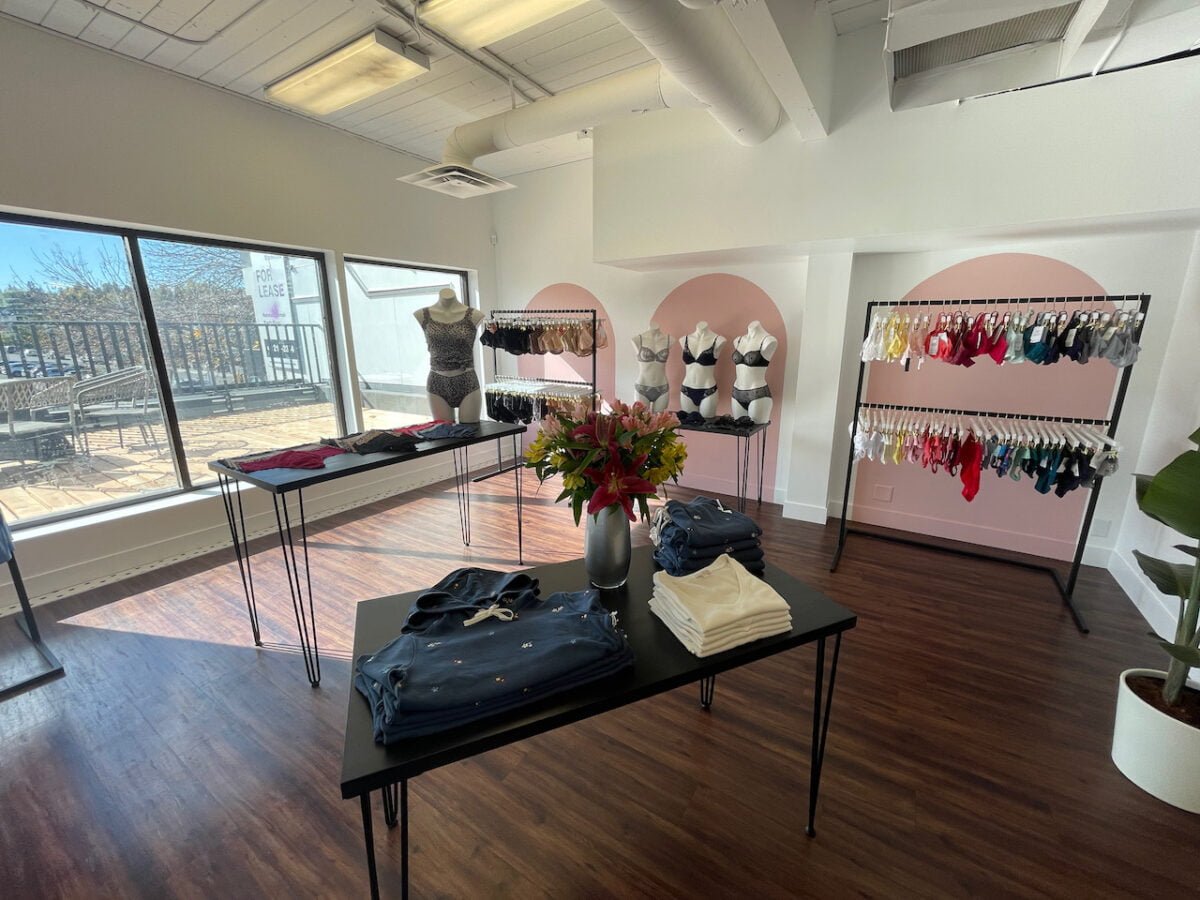
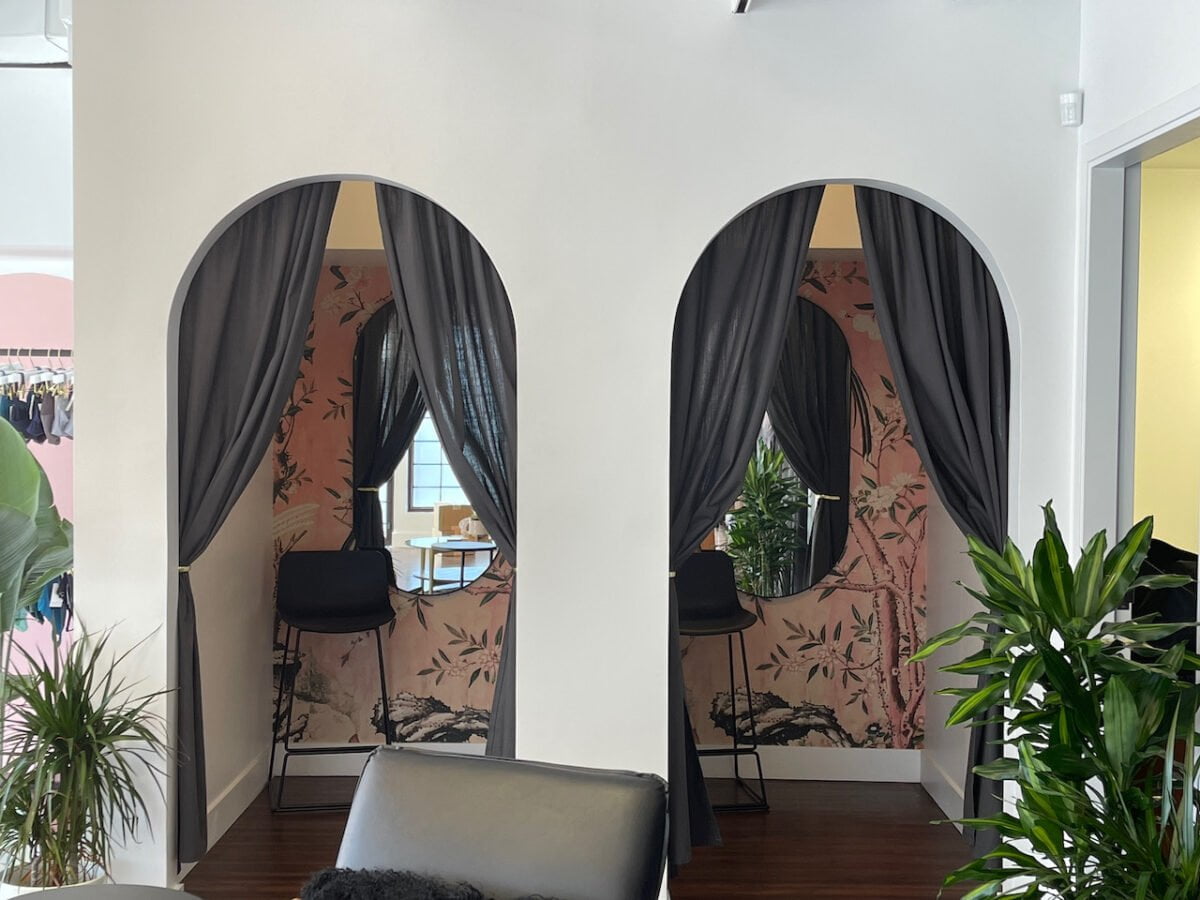
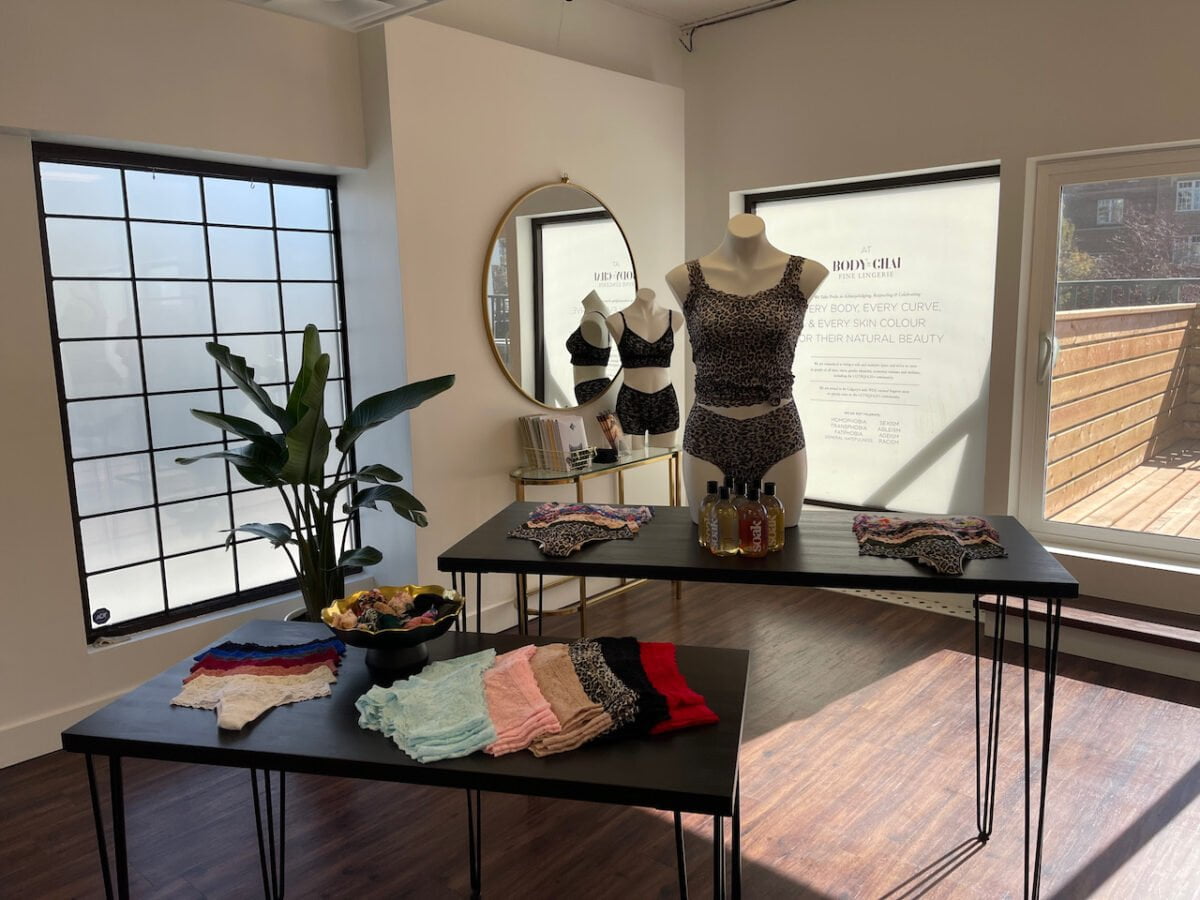
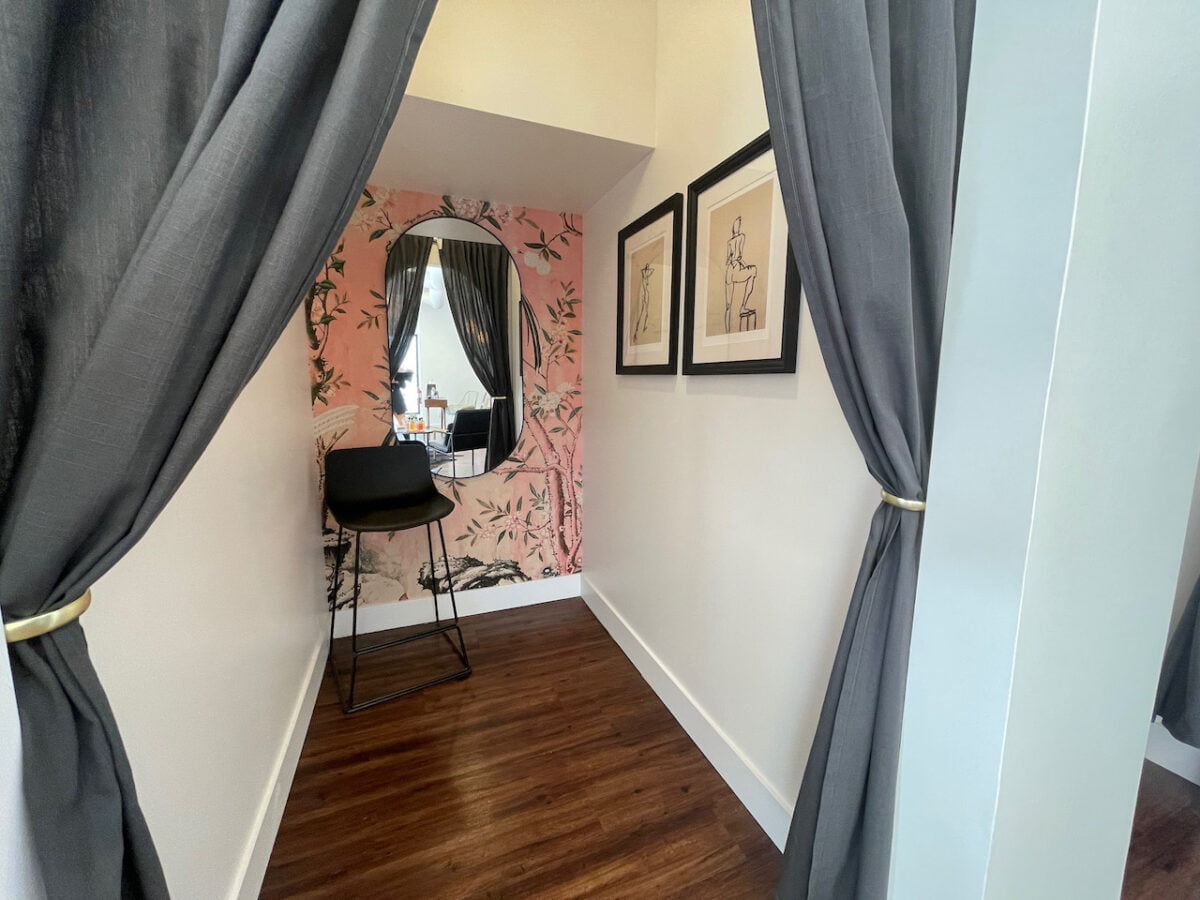
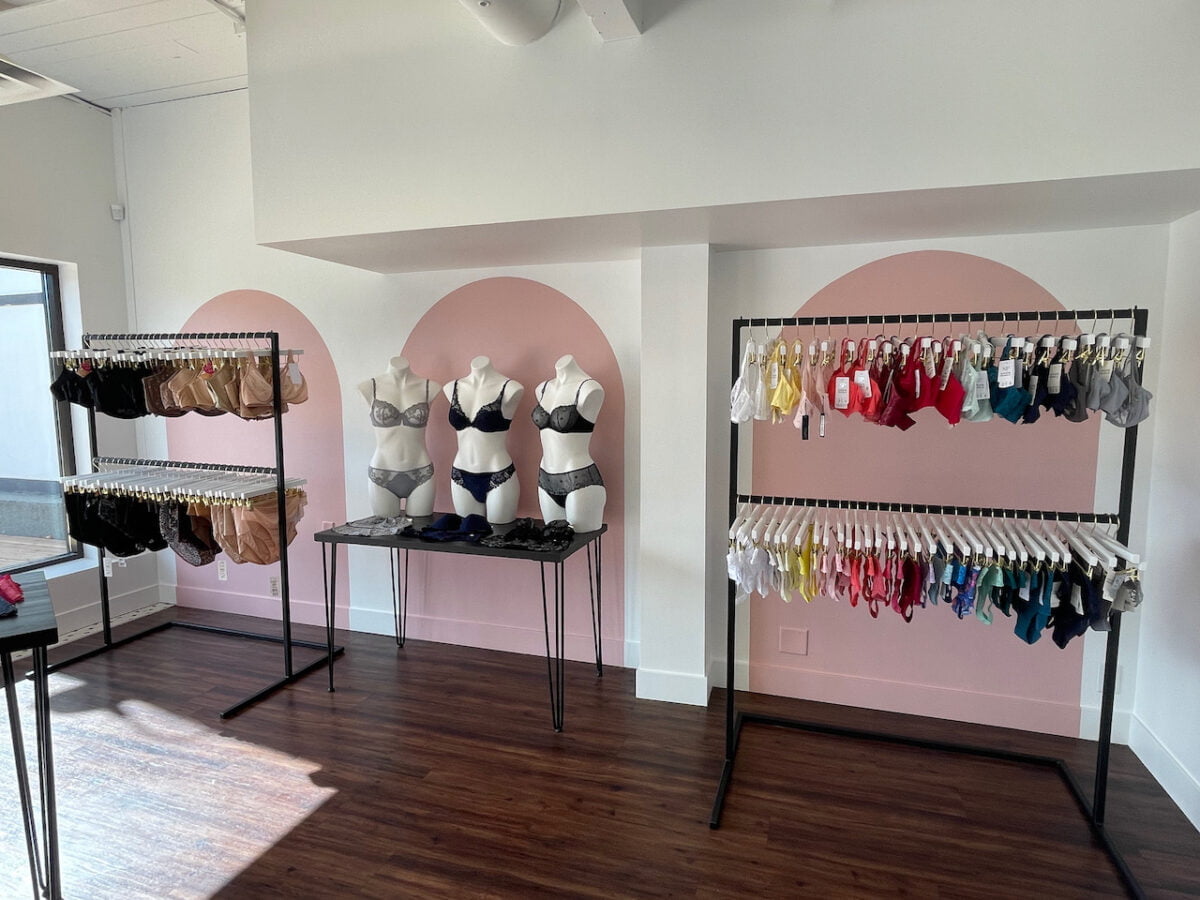
The boutique, designed by local award-winning design company, AV Designs, was inspired by Swinton’s vision of a place that invokes feelings of confidence, comfort, and fun. She said the white interior creates a feeling of calm, hits of pink add a bit of softness, pops of black a little edge, and the wallpaper in the changing rooms is an “unexpected delight.”
The overall space is eclectic and posh while still remaining a welcoming space for anyone walking through the door, she said, adding it provides the ideal backdrop for the thoughtfully curated inventory of hand-picked brands.
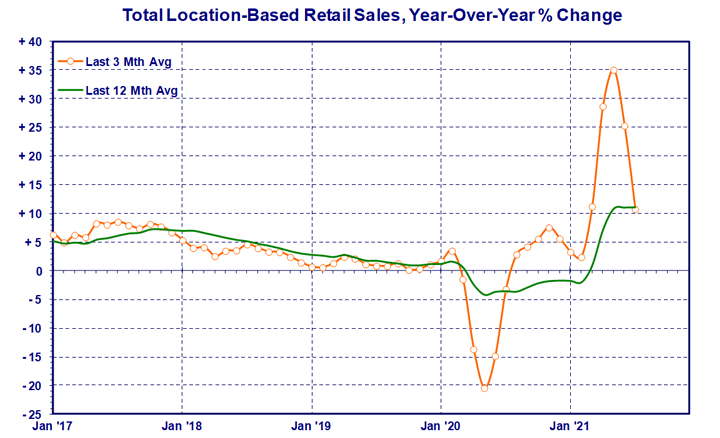
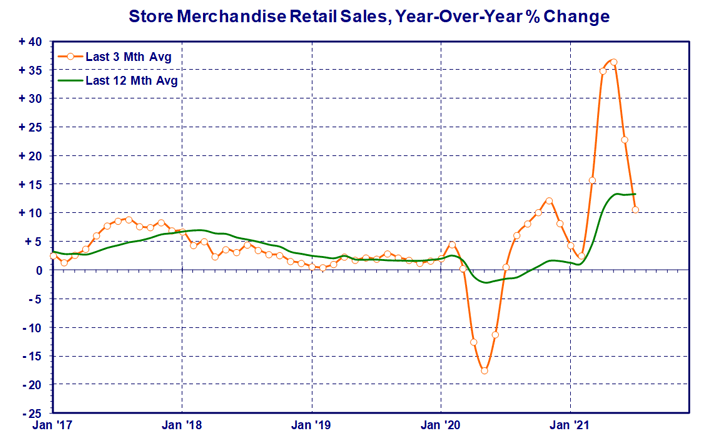
New numbers from StatsCan indicate that the Q2 2021 rebound is over. Actually, it only looked as good as it did because Q2 last year was so bad. The 3 month growth trend (orange line in the chart below) is coming down from recent highs. Overall retail sales still increased 10.8% year-over-year for the 3 months ending July, but half of that was due to the Automotive & Related sector which is now getting softer after its own rebound. After a significant rise earlier in the year, the underlying 12 month trend (green line) has now flattened out and is poised to deteriorate going forward.
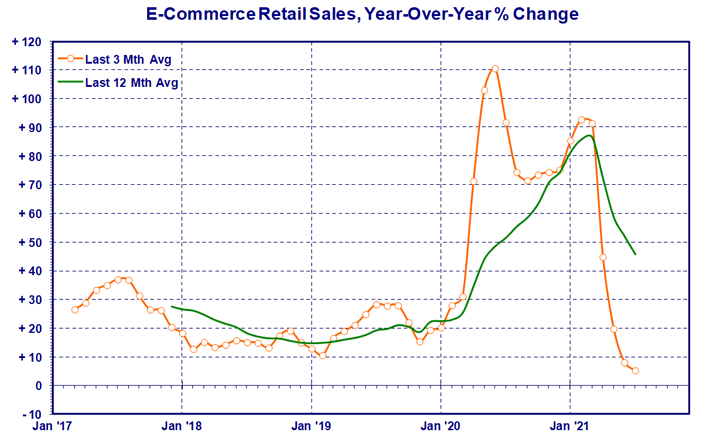
More or less, Canadian retail sales are heading back to pre-pandemic levels but with some ups and downs along the way. As shoppers return to stores, e-commerce retail sales growth has also slowed down to a more normal level. Things are still in flux however, and it may be many months before they settle down.
Food & Drug
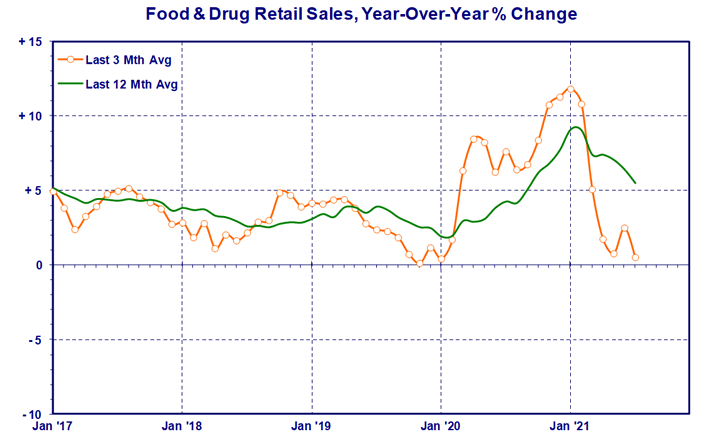
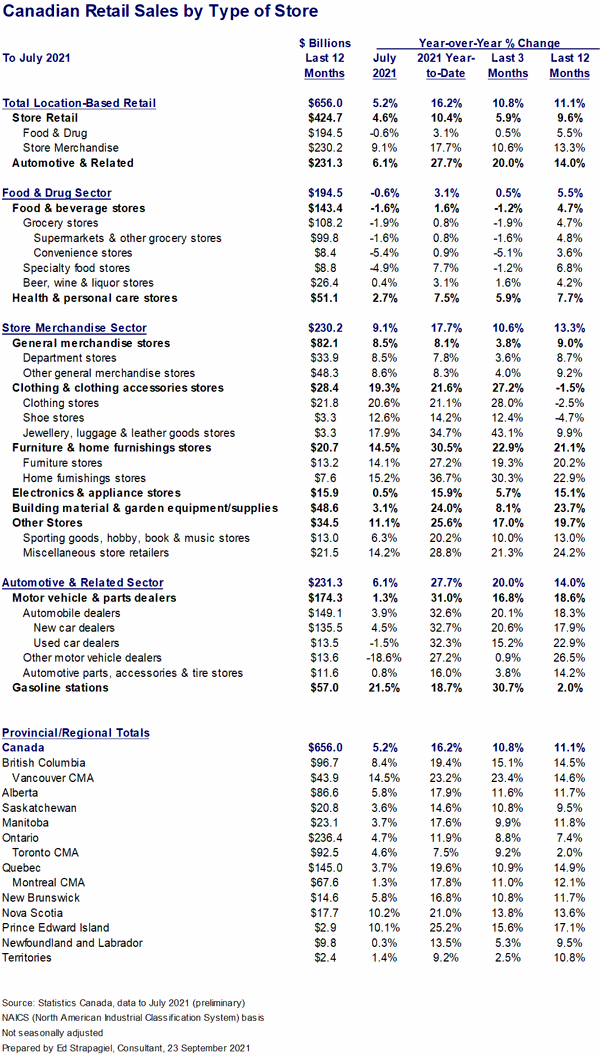
For the 3 months ending July 2021, retail sales in the Food & Drug increased just 0.5% year-over-year, a far cry from the 7.7% gain recorded for the year 2020. In fact, the 3 month growth trend has been softening since the start of the year 2021, and the underlying 12 month trend is also weakening significantly.
Supermarkets & other grocery stores make up over half of the business in this sector, but their retail sales were actually down 1.6% for the 3 months ending July. Convenience stores however suffered more, with sales down 5.1% during the period. Another casualty was specialty food stores – after scoring high growth rates in recent quarters, their retail sales declined 1.2% for the 3 months ending July.
Health & personal care stores did not share in the strong gains that the Food & Drug sector enjoyed last year. On the other hand, they do not appear to be affected by the current softness and instead saw their sales increase 5.9% in the latest 3 month period.
Store Merchandise
The Store Merchandise sector appears to be following the standard script. Huge year-over-year retail sales gains in Q2 2021 were mostly illusory, because of very weak sales a year ago. The 3 month trend is now cooling off, although there was still a good 10.6% increase for the 3 months ending July. The underlying 12 month trend however has now flattened out, and is likely to soften further in the next few months.
All store types in the sector had positive year-over-year retail sales gains for the 3 months ending July. Clothing & clothing accessories stores were up an outstanding 27.2%, furniture & home furnishings retailers gained 22.9%, and miscellaneous store retailers (which include cannabis outlets) were up 21.3%. General merchandise stores were also up but by only 3.8%.
Automotive & Related
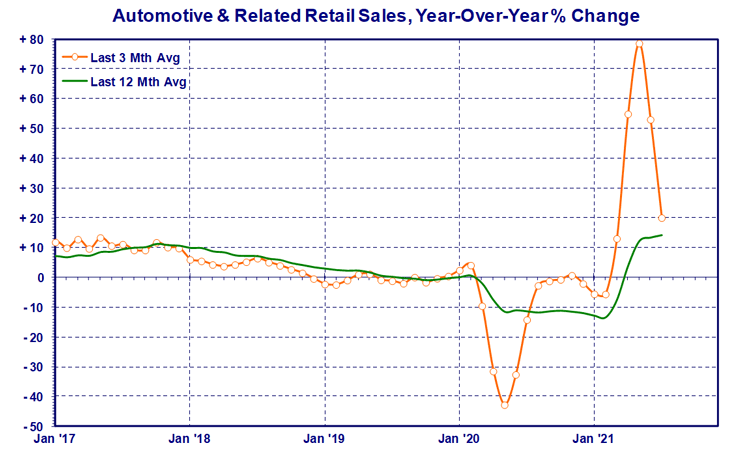
Retail sales in the Automotive & Related sector were up 20.6% year-over-year for the 3 months ending July, although this represents some cooling off versus earlier in the year. Again, comparisons are affected by weak year ago sales.
New car dealers’ retail sales were up 20.6% in the last 3 months, which however is a more modest gain than in previous quarters. Things may cool off even more going forward due to supply side issues.
Gasoline stations also did their part with a strong 30.7% year-over-year retail sales increase for the 3 months ending July. People seem to be getting out more and pump prices have gone up.
By The Numbers
Note that the data and analysis in this report are always based on not seasonally adjusted (or unadjusted) retail sales statistics.
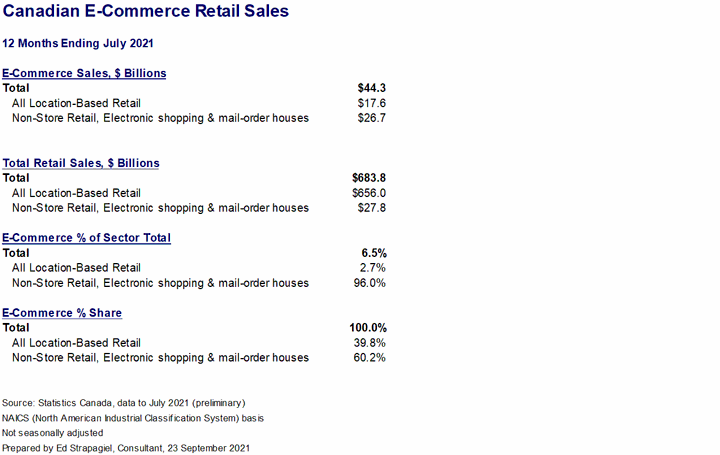
The COVID pandemic touched off a boom in Canadian e-commerce, with retail sales almost doubling in 2020. In recent months however, this has cooled off considerably. For the 3 months ending July, e-commerce sales were up just 5.3%, the lowest such gain since StatsCan started collecting these data in 2016. Does this mean that the bloom is off the e-commerce rose? Probably not. After doubling over the last two years, a bit of a breather is not out of order. Even though more stores are now open for in-person shopping, some of the sales that have gone online are never coming back.
Overall, e-commerce represented about 6.5% of Canadian retail sales over the past 12 months, including both pure plays as well as bricks & clicks stores. Note that Canadian consumers may also buy online from foreign websites which is not captured in these numbers.
Location based retail is the same as that in the preceding “By The Numbers” table. It’s what’s normally reported as Canadian retail sales. Except that it isn’t. Location based retail excludes another section called Non-Store Retailers (NAICS code 454), which includes electronic shopping and mail-order houses, which in turn is where (mostly) pure play e-commerce businesses are. Over the 12 months ending July 2021, electronic shopping and mail-order houses had an estimated $26.7 billion in e-commerce sales.
But that’s not the only source of e-commerce, as (mostly) bricks & mortar location-based retailers also sell online. For the 12 months ending July 2021, this group had an estimated $17.6 billion in e-commerce sales. With electronic shopping and mail-order houses, there’s a grand total of $44.3 billion in e-commerce sales by Canadian operators. Note that this does not include foreign e-commerce purchases made by Canadian consumers, but it does include e-commerce purchases made by foreigners at Canadian operations.
For electronic shopping and mail-order houses, an estimated 96.0% of their sales are currently allocated to e-commerce. For (mostly) bricks & mortar retailers, it can be estimated that 2.7% of their total sales are attributable to e-commerce.
In the final section of the above table, (mostly) pure play operators (namely, under electronic shopping and mail-order houses) generated an estimated 60.2% of all e-commerce sales in Canada, while (mostly) bricks & mortar location-based retailers’ share of e-commerce was 39.8%.
This analysis is updated monthly as new numbers are published by Statistics Canada. If you would like notification from Linkedin of when an update becomes available (and you’ve read this far), please connect with Ed Strapagiel on LinkedIn.