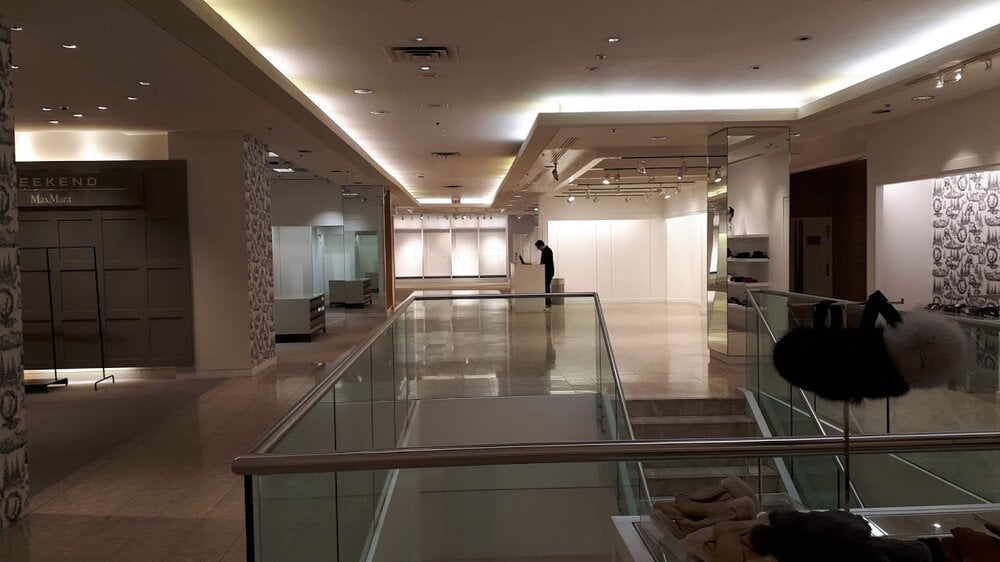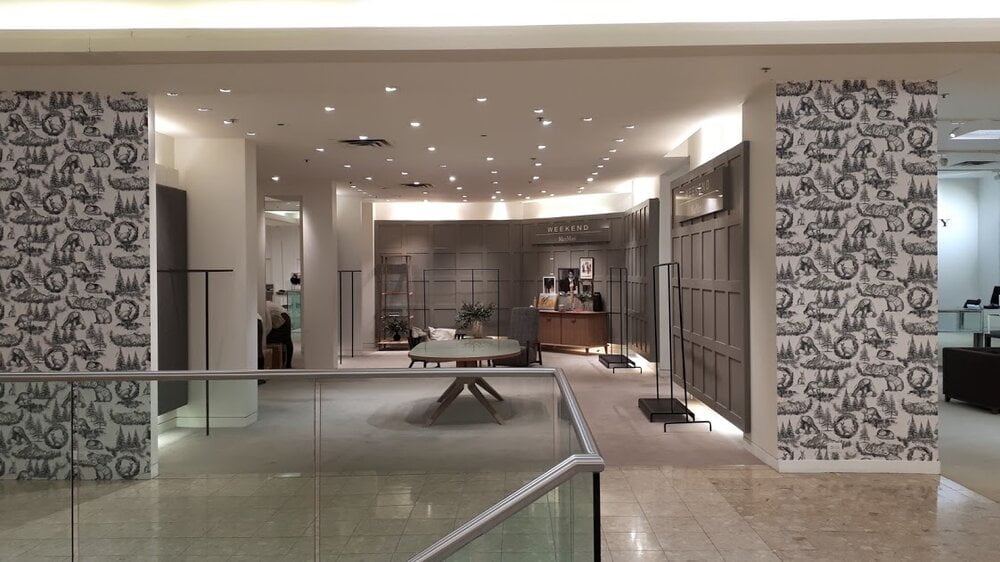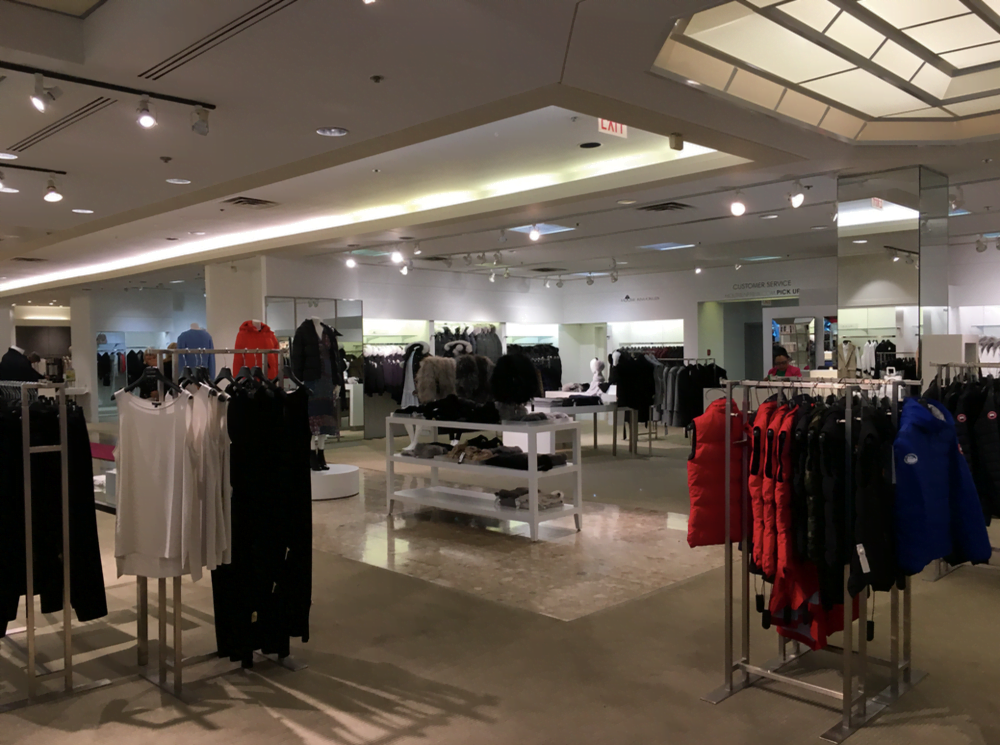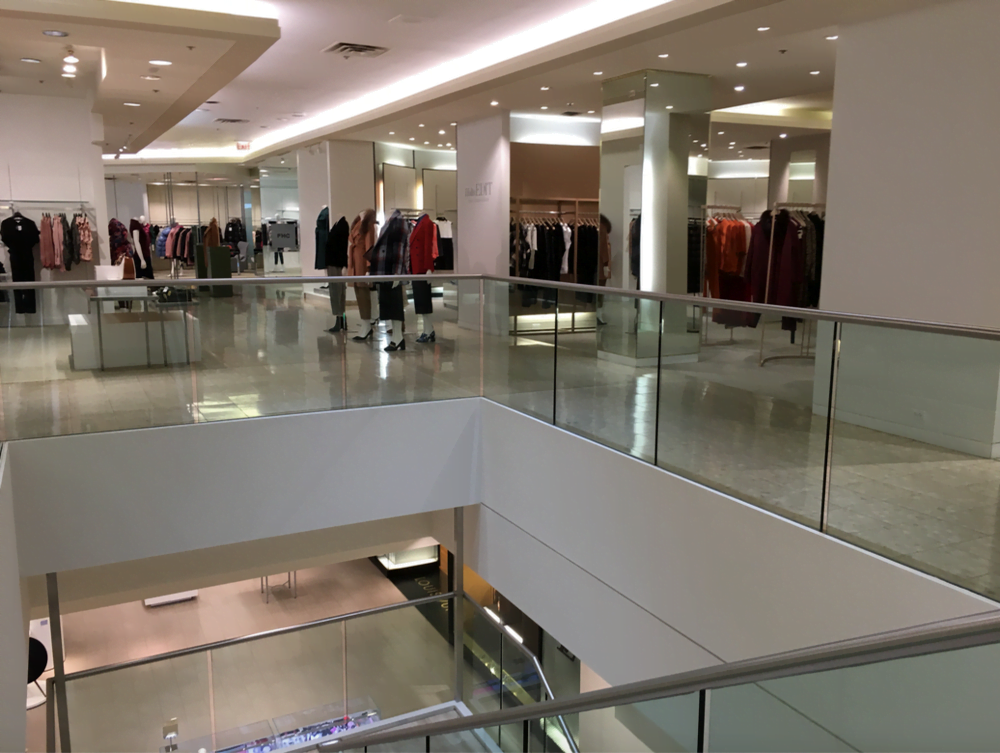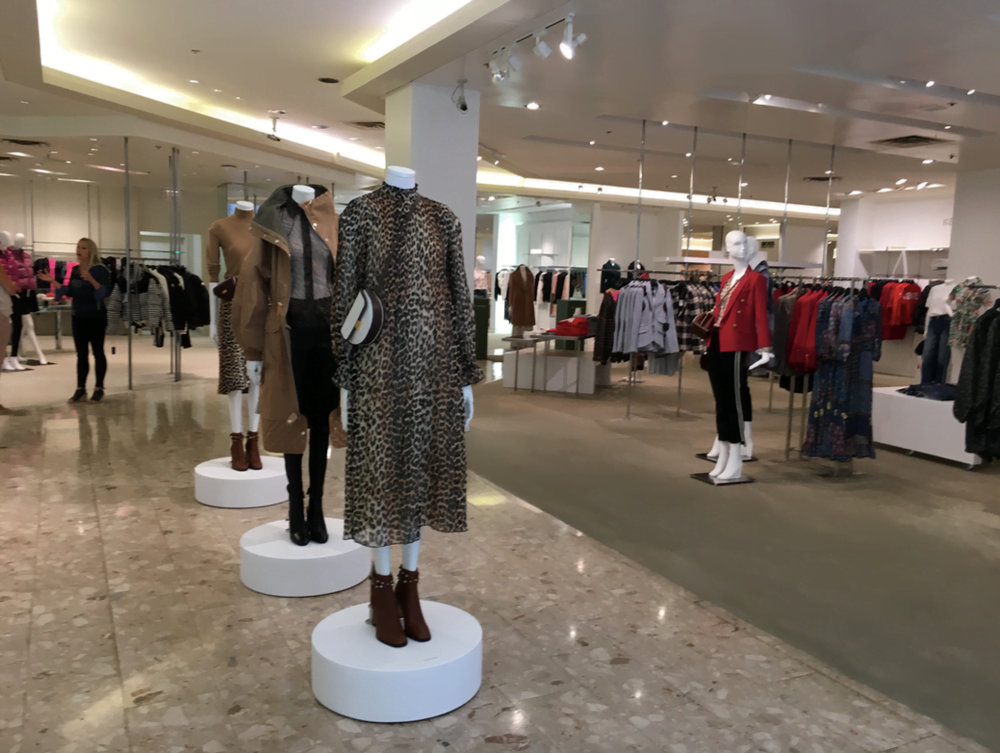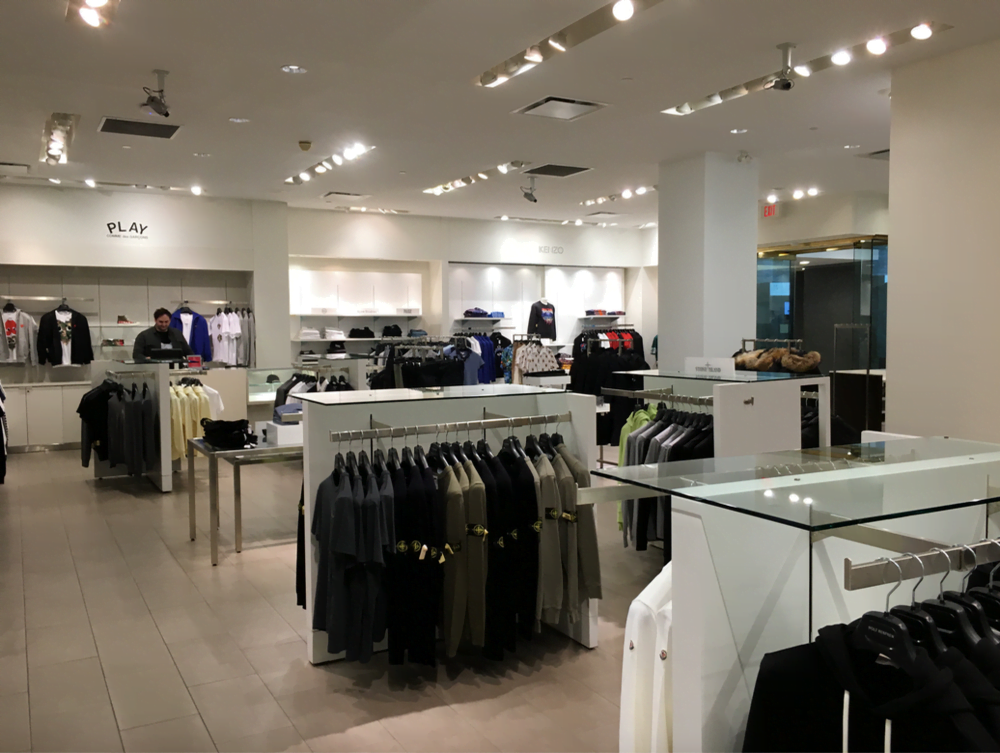
Season 3, Episode 8: Club Monaco Bloor Shutters, Sunterra Market Opening
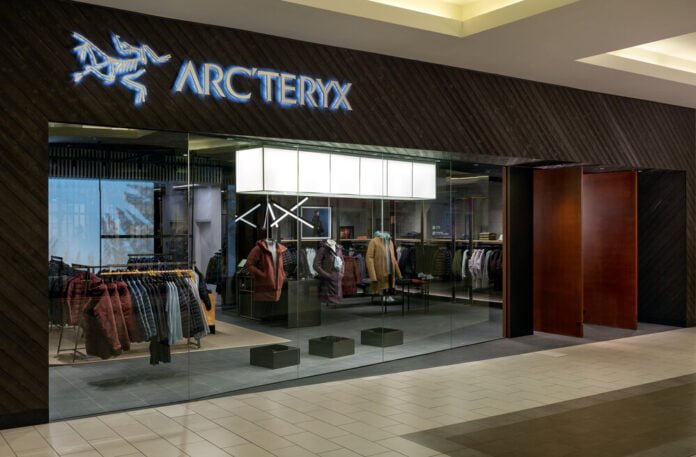
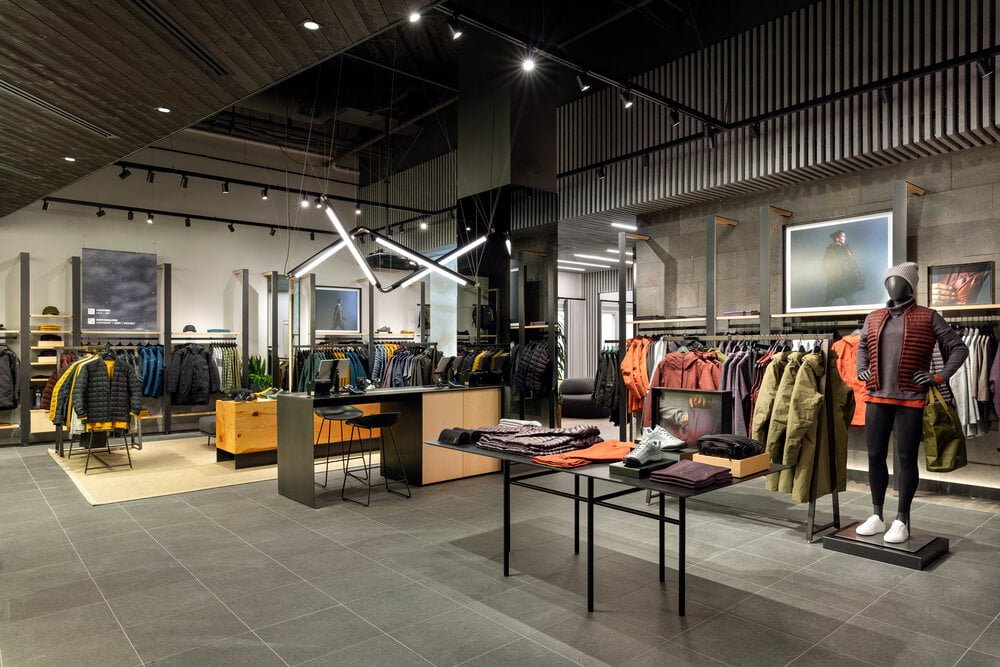
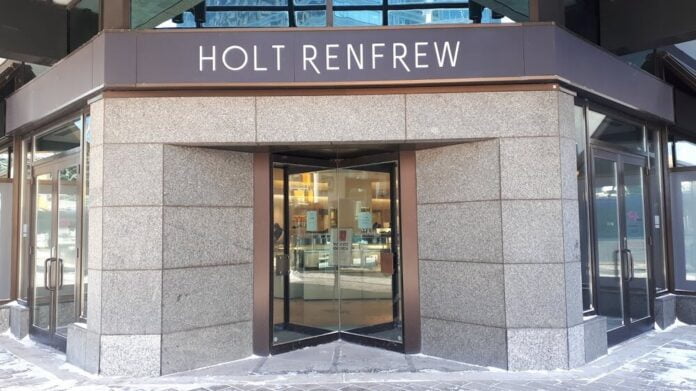
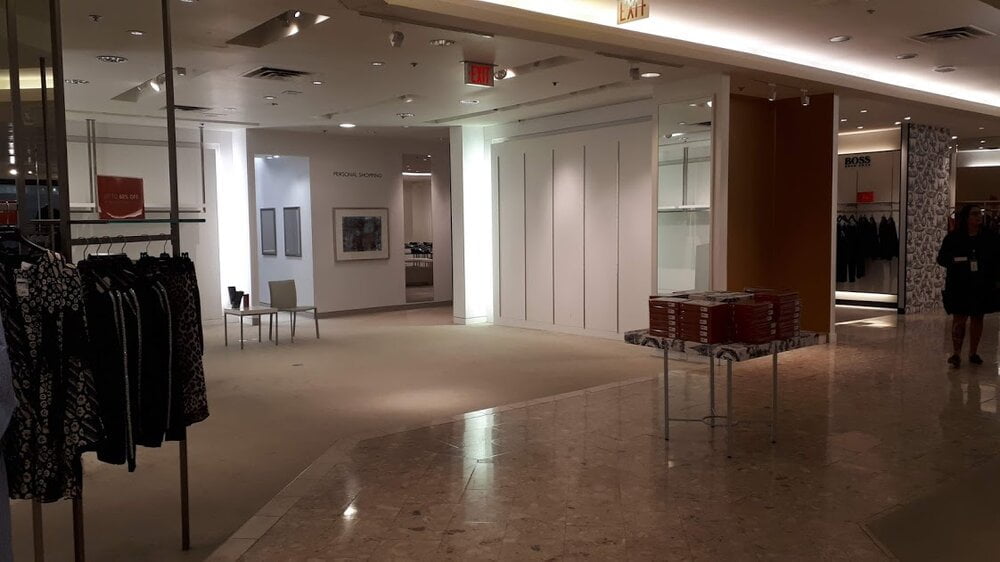
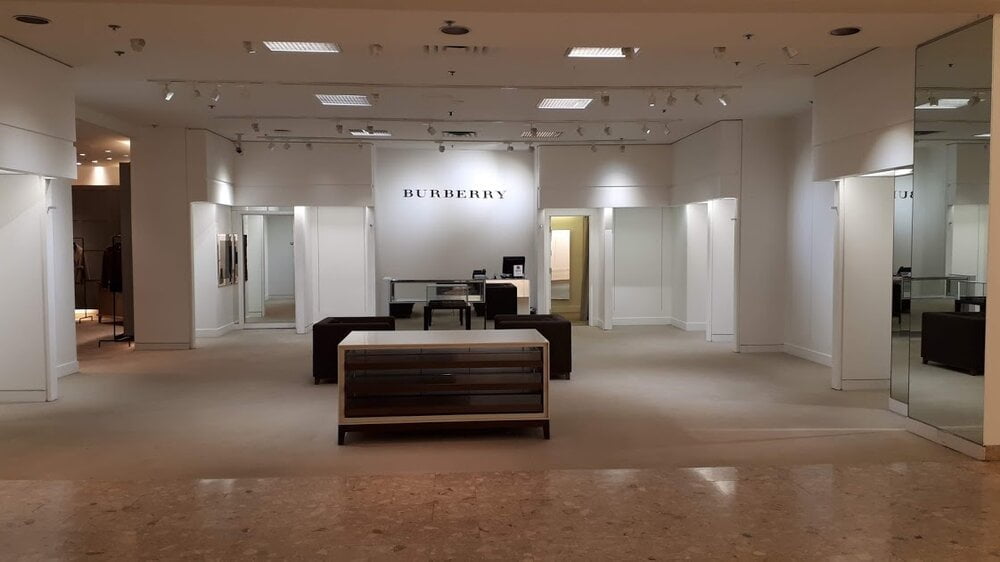
This week, Craig and Lee discuss Club Monaco’s Toronto departure and Canadian food hall announcements. The 25 year run for Club Monaco has ended in the iconic building on Toronto’s Bloor Street and two food hall announcements are discussed for Alberta and British Columbia.
The Weekly podcast by Retail Insider Canada is available on Apple Podcasts, Stitcher, TuneIn, Google Play, or through our dedicated RSS feed for Overcast and other podcast players.
Drop us a line at Craig@Retail-Insider.com. You can also rate us in Apple Podcasts or recommend us in Overcast to help more people discover the show!
Background Music Credit: Hard Boiled Kevin MacLeod (incompetech.com). Licensed under Creative Commons: By Attribution 3.0 License. http://creativecommons.org/licenses/by/3.0/
CrossIron Mills sign next to Highway 2 freeway connecting Calgary and Edmonton. Photo: Pop-up go | Zenergy Communications
Retail Insider continues its Photo Tour series of Canadian malls to provide a glimpse into shopping centres which may be less frequented lately due to the COVID-19 pandemic. This edition takes us to CrossIron Mills next to Calgary, Alberta. The shopping centre is often referred to as being a ‘hybrid outlet’ model as it combines 191 full price retailers under the same roof as 100 outlet and factory stores. The shopping centre has affiliated ‘Mills’ located in the greater Toronto area (known as Vaughan Mills) and the greater Vancouver area (known as Tsawwassen Mills).

CrossIron Mills location (between Airdrie and Calgary city limits) on Google Maps. Photo: Google Maps
Aerial photo of CrossIron Mills just north of Calgary, Alberta. Photo: CrossIron Mills.
As with most Canadian retail spaces, CrossIron Mills is an indoor shopping centre which was developed — and is now owned and operated — by Ivanhoé Cambridge. The retail and designated tourist attraction has resulted in 9.4 million annual visits (as of December 2019), $689 sales per square foot (as of December 2019), and $547 million gross sales volume (as of December 2019). The shopping centre sprawls across 1.2 million square feet and boasts 17 large format anchors which includes:
Bass Pro Shops (148,911 square feet)
Toys “R” Us (51,069 square feet)
Sport Chek (38,990 square feet)
Bed Bath & Beyond (31,950 square feet)
Winners (30,941 square feet)
Saks OFF 5TH (30,009 square feet)
Pro Hockey Life (25,306 square feet)
HomeSense (24,141 square feet)
Skechers (20,901 square feet)
H&M (20,708 square feet)
Indigo Books (20,585 square feet)
Designer Shoe Warehouse (20,565 square feet)
The Children’s Place (20,536 square feet)
Old Navy (20,145 square feet)
Tommy Hilfiger Outlet (20,069 square feet)
Laura Outlet (20,003 square feet)
Urban Planet (20,003 square feet)
History of CrossIron Mills
Vaughan Mills near Toronto, the predecessor and sister shopping centre to CrossIron Mills, was designed and built by Ivanhoé Cambridge and the Mills Corporation in 2004 based on the highly-successful ‘race track’ format for outlet malls in the United States. Mills Corporation was subsequently acquired by Simons Property Group in 2007; however, Ivanhoé Cambridge completed the sale of its interest in Vaughan Mills in October 2006 prior to the acquisition. Ivanhoé Cambridge planned for four Mills shopping centres in Canada, including:
Toronto (Vaughan Mills in Vaughan, Ontario which opened in November 2004)
Calgary (CrossIron Mills)
Vancouver (Tsawwassen Mills in Delta, B.C. which opened in October 2016)
Montreal (Laval Mills in Laval, Quebec which was abandoned in May 2011)
Ivanhoé Cambridge continued riding its success from its now wholly-owned Vaughan Mills and began construction of its second Canadian “Mills” in Calgary. CrossIron Mills opened in phases throughout 2009 and its final phase, the Entertainment Neighbourhood, opened in the summer of 2010.
A $60 million major renovation was announced by Ivanhoé Cambridge in 2014 to relocate the original food court (located off the “Happy Trails Entrance” circled in red below) and opened the new food hall in the Entertainment Neighbourhood in July 2016. The original food court location was then converted into 46,000 square feet of additional retail space.
CrossIron Mills Map with Food Court relocation.
Breaking up CrossIron Mills
Retail Insider has done several retail mall tours and one of the major distinguishing features of a Mills concept centre is the design. With over 1.4 million square feet on a single level, connected by 2.7 km of internal raceway, visual appeal, and architectural variation. The concept was to divide the centre into “Neighbourhoods” that have themes representative of the local area. The architecture of CrossIron Mills is innovative, contemporary, and reflects Alberta’s unique heritage. We will follow the following neighbourhoods in our retail tour:
THE NEIGHBOURHOODS OF CROSSIRON MILLS
Fashion Neighbourhood – The latest fashion trends at their finest.
Ranch Neighbourhood – A salute to Alberta’s rich western history.
Resources Neighbourhood – Celebrating Alberta’s resources: oil, wind, agriculture, natural gas ,and more.
Fossil Neighbourhood – Recognizing the history of the badlands of Alberta.
Entertainment Neighbourhood – A nod to Alberta’s industrial growth.
CrossIron Mills Map (updated by Retail Insider with relocation of Food Court by Exit 5 in 2016).
In addition to each neighbourhood, there are six ‘courts’ spread amongst the six neighbourhoods with artwork symbolizing different characteristics of the Albertan way of life.
Zone 1 – Fashion Neighbourhood
“Gumby Girl” at Entrance 1 leading to the “Fashion Neighbourhood” at CrossIron Mills. Photo: Pop-up go/Zenergy Communications
The Fashion Entrance is on the far northwest side of the centre and is characterized by what is colloquially known as the ‘Gumby Girl’ outside and leads into the Fashion Neighbourhood which has 12-foot-tall store fronts.
Key anchor retail tenants for this neighbourhood include Bass Pro Shops, Sport Chek, Bed Bath & Beyond, Laura, and Saks OFF 5TH The Saks OFF 5th opened in fall 2016 measuring 30,000 square feet.
Bass Pro Shops at CrossIron Mills. Photo: Jessica Finch
Major Anchor Mall Tenants in Fashion Neighourhood
1 of 3
SportChek at CrossIron Mills. Photo: Jessica Finch
Bed Bath & Beyond at CrossIron Mills. Photo: Jessica Finch
Laura at CrossIron Mills. Photo: Jessica Finch
Saks Fifth Avenue OFF 5th at CrossIron Mills. Photo: Jessica Finch
Other select retailers in the neighbourhood include Coach, Oak + Tonic, Tommy Bahama, Brooks Brothers, Michael Kors, Brown’s Outlet, Melanie Lyne, Lacoste Outlet, Kate Spade, Geox, Tip Top, Cleo, Little Burgundy, Fairweather, Naturalizer, La vie en Rose, Lenscrafters, Miniso, The Shoe Company, GNC, Michael Hill, Ben Moss, Lush, Guitarworks, and Mountain Warehouse.
Other select retailers in Fashion Neighourhood
1 of 16
Michael Kors at CrossIron Mills. Photo: Jessica Finch
Coach at CrossIron Mills. Photo: Jessica Finch
Melanie Lyne at CrossIron Mills. Photo: Jessica Finch
Browns Outlet at CrossIron Mills. Photo: Jessica Finch
Tommy Bahamas at CrossIron Mills. Photo: Jessica Finch
Brooks Brothers at CrossIron Mills. Photo: Jessica Finch
Oak + Tonic at CrossIron Mills. Photo: Jessica Finch
la Vie en Rose at CrossIron Mills. Photo: Jessica Finch
Naturalizer at CrossIron Mills. Photo: Jessica Finch
Fairweather at CrossIron Mills. Photo: Jessica Finch
Little Burgundy at CrossIron Mills. Photo: Jessica Finch
Cleo at CrossIron Mills. Photo: Jessica Finch
Tip Top at CrossIron Mills. Photo: Jessica Finch
Kate Spade at CrossIron Mills. Photo: Jessica Finch
Geox at CrossIron Mills. Photo: Jessica Finch
Lacoste at CrossIron Mills. Photo: Jessica Finch
Select retailers in Fashion Neighbourhood
1 of 10
Mountain Warehouse at CrossIron Mills. Photo: Jessica Finch
Guitarworks at CrossIron Mills. Photo: Jessica Finch
Lush at CrossIron Mills. Photo: Jessica Finch
Ben Moss at CrossIron Mills. Photo: Jessica Finch
CarZ at CrossIron Mills. Photo: Jessica Finch
The Shoe Company at CrossIron Mills. Photo: Jessica Finch
Michael Hill at CrossIron Mills. Photo: Jessica Finch
Selis Beauty at CrossIron Mills. Photo: Jessica Finch
Miniso at CrossIron Mills. Photo: Jessica Finch
Bikini Village at CrossIron Mills. Photo: Jessica Finch
Fine Arts Court – The Fine Arts Court transitions from the Fashion to Ranch neighbourhoods and features geometric shapes, bright colours, stark white abstract sculptures, and a coffee shop with spacious seating area. This area is a nod to Alberta’s trendy art scene.
Fine Arts Court. Photo: CrossIron Mills
Zone 2 – Ranch Neighbourhood
Entrance 2 leading to the “Ranch Neighbourhood” at CrossIron Mills. Photo: Ledcor GroupCrossIron Mall Map – Ranch Neighbourhood
Ranch Neighbourhood Entrance at CrossIron Mills. Photo: Jessica Finch
Ranch Neighbourhood. Photo: CrossIron Mills
The Ranch Neighbourhood is a nod to the Old West. It is often referred to as the Ranch Spine as it runs through the middle of the centre. The Ranch Neighbourhood boasts 8 different types of hardwood flooring with theatrical western store fronts and huge sheriffs badges in-set in the floor at either end. Also at opposite ends of the Ranch Neighbourhood are the “Good Guy” and “Bad Guy” gunslingers that stand at 23 feet tall, and customers walk beneath them as they enter the space.
The two retail Anchors in the Ranch neighbourhood are Tommy Hilfiger and H&M.
Tommy Hilfiger at CrossIron Mills. Photo: Jessica FinchH&M at CrossIron Mills. Photo: Jessica Finch
Select retailers in the Ranch neighbourhood include True Religion Outlet, ECCO shoes, Johnston & Murphy Factory Store, Banana Republic Factory Store, Guess Accessories, TUMI, Call It Spring, Logo Gifts, Nike, Levi’s, and Zumiez.
Select retailers in Ranch Neighbourhood
1 of 7
True Religion at CrossIron Mills. Photo: Jessica Finch.
ECCO Shoes at CrossIron Mills. Photo: Jessica Finch.
Johnston & Murphy at CrossIron Mills. Photo: Jessica Finch.
Banana Republic at CrossIron Mills. Photo: Jessica Finch.
Guess Accessories at CrossIron Mills. Photo: Jessica Finch.
Call It Spring at CrossIron Mills. Photo: Jessica Finch.
Logo Gifts at CrossIron Mills. Photo: Jessica Finch.
Washrooms between Purdy’s Chocolates and Aveda at CrossIron Mills. Photo: Jessica Finch
Campfire Court in Ranch Neighbourhood at CrossIron Mills
1 of 2
Campfire Court. Photo: Jessica Finch
Campfire Court – Back to the basics of nature. The Campfire Court is at the west end of the ranch spine and is designed as a night sky with stars, the moon, and embers from the blown glass fire which is surrounded by tall trees and rustic log furniture. The ceiling treatment transitions from this court through the Ranch Neighbourhood, getting lighter and lighter toward the far end where the rodeo court is in full sun.
Additional select retailers in the Ranch neighbourhood include a Lululemon pop-up, TELUS, No Excuses Perfume, Vision Quest, and Saneal Cameras.
Select retailers in Fashion Neighbourhood
1 of 8
Lululemon Pop Up at CrossIron Mills. Photo: Jessica Finch.
Levi's at CrossIron Mills. Photo: Jessica Finch.
Nike at CrossIron Mills. Photo: Jessica Finch.
No Excuses Perfume at CrossIron Mills. Photo: Jessica Finch.
TELUS at CrossIron Mills. Photo: Jessica Finch.
Former Basil St at CrossIron Mills. Photo: Jessica Finch.
Saneal Cameras at CrossIron Mills. Photo: Jessica Finch.
Vision Quest at CrossIron Mills. Photo: Jessica Finch.
Wind Court. Photo: CrossIron Mills
Wind Court – The Wind Court transitions between the Ranch and Resources Neighbourhoods and is inspired by the Chinook winds that are part of southern Alberta’s culture. Here you find the “Chinook Girl” gently blowing wind across ribbons and banners at the ceiling level to create activity. In this court is a central seating area of wave-shaped benches and if you look up you’ll see several banners with facts and lore about the Chinook winds.
Zone 3 – Resources Neighbourhood
Entrance 3 leading to the “Resource Neighbourhood” at CrossIron Mills. Photo: Travel Alberta
The Resource Neighbourhood highlights the importance of agriculture, wind and, of course, oil & gas in Alberta. With an enormous stylized oil derrick as the entrance icon, this neighbourhood contains sculptures representing fields of grain, hay-accented store fronts, giant overhead ceiling fans, and an interactive piece of modern art modelled after a working oil rig.
The key retail anchor tenants in the Resources Neighbourhood include The Children’s Place, Indigo, HomeSense, and Winners.
A Children’s Place at CrossIron Mills. Photo: Jessica Finch
Winners at CrossIron Mills. Photo: Jessica Finch
Indigo at CrossIron Mills. Photo: Jessica Finch
HomeSense at CrossIron Mills. Photo: Jessica Finch
Other retailers include Zumiez, Guess, Disney Outlet, Hot Topic, Milk Run, Below the Belt, Van Heusen Outlet, Discovery Hut, Just Cozy, Ricki’s, Underground, Foundry, Urban Behaviour, Footlocker, Stokes, QE Home, Urban Kids, Lindt, Zwilling J/A/ Henckels, and Clogs for Comfort.
Resources Neighbourhood. Photo: CrossIron Mills
Between the Resources Neighbourhood and the Fossils Neighbourhood is a court/play-area where children can turn the wheels and watch the ‘oil’ bubble through the rig.
Zone 4 – Fossils Neighbourhood
Entrance 4 leading to the “Fossil Neighbourhood” at CrossIron Mills. Photo: Wolsey Structural Engineering Ltd.
CrossIron Mall Map – Fossils Neighbourhood
Fossil Neighbourhood Entrance at CrossIron Mills. Photo: Jessica Finch
The Fossil Neighbourhood was designed as a tribute to the badlands of Alberta. With Drumheller and the Royal Tyrrell Museum mere hours away, they deemed it to be an important aspect of Alberta history to incorporate. Natural Cork linoleum represents the strata of earth as you dig for fossils. This area also features two more unique sculptures, the ‘Layers of Time’ statue representing the fossils left behind from various eras, and the ‘CrossIron Caveman’ holding a coffee and shopping bags frozen in a block of ice.
Fossil Neighbourhood with the ‘CrossIron Caveman’. Photo: CrossIron Mills
The main retail anchor tenants for the Fossils neighbourhood included Urban Planet, Sketchers, Toys “R” Us, and DSW Shoes.
DSW Shoes at CrossIron Mills. Photo: Jessica Finch
Urban Planet at CrossIron Mills. Photo: Jessica Finch
Toys “R” Us at CrossIron Mills. Photo: Jessica Finch
Other select retailers in the Fossils neighbourhood include Scentsitively, Claire’s, EB Games, Aldo, Dynamite, Le Chateau, American Eagle, Portage & Main, Bath & Body Works, GAP Factory, Roots Outlet, Labels, Sunrise Records, Softmoc, Globo, Suzy Shier, Show Warehouse, Ardene Outlet, Bentley, All Pretty Things, Saje, Sparkle, Asics, Polo Talph Lauren, Aritzia, Aerie, Sephora, Garage, and Hugo Boss Outlet.
Select retailers in Fossil Neighbourhood
1 of 14
Scensitively at CrossIron Mills. Photo: Jessica Finch
Claire's at CrossIron Mills. Photo: Jessica Finch
Hugo Boss at CrossIron Mills. Photo: Jessica Finch
Garage at CrossIron Mills. Photo: Jessica Finch
Aldo at CrossIron Mills. Photo: Jessica Finch
Dynamite at CrossIron Mills. Photo: Jessica Finch
Sephora at CrossIron Mills. Photo: Jessica Finch
aerie at CrossIron Mills. Photo: Jessica Finch
Le Chateau (from far) at CrossIron Mills. Photo: Jessica Finch
Le Chateau at CrossIron Mills. Photo: Jessica Finch
Aritzia at CrossIron Mills. Photo: Jessica Finch
American Eagle at CrossIron Mills. Photo: Jessica Finch
Ralph Lauren at CrossIron Mills. Photo: Jessica Finch
Bath & Body Works at CrossIron Mills. Photo: Jessica Finch
Select retailers in Fossils Neighbourhood
1 of 13
Gap at CrossIron Mills. Photo: Jessica Finch
Roots at CrossIron Mills. Photo: Jessica Finch
Asics at CrossIron Mills. Photo: Jessica Finch
Labels at CrossIron Mills. Photo: Jessica Finch
Sparkle at CrossIron Mills. Photo: Jessica Finch
Saje at CrossIron Mills. Photo: Jessica Finch
Sunrise Records at CrossIron Mills. Photo: Jessica Finch
All Things at CrossIron Mills. Photo: Jessica Finch
Bentley at CrossIron Mills. Photo: Jessica Finch
Soft Moc at CrossIron Mills. Photo: Jessica Finch
Globo at CrossIron Mills. Photo: Jessica Finch
Suzy Shier at CrossIron Mills. Photo: Jessica Finch
Adrene at CrossIron Mills. Photo: Jessica Finch
Rodeo Court. Photo: CrossIron Mills
Rodeo Court – Between the four connections where Fossils, Sports, Entertainment, and Ranch Neighbourhoods meet is the Rodeo Court where hard-fought rodeo battles are paid homage. It is bright and airy, depicting many of the rodeo events with 4 metal sculptures of a saddle bronc rider, a roping cowboy, a bull rider, and a steer wrestler. Stylized cowboys look down on the Rodeo Court from their perch on the coral rail above.
Zone 5 – Sports Neighbourhood
Entrance 6 leading to the “Sports Neighbourhood” at CrossIron Mills
Sports Neighbourhood Map at CrossIron Mills
The “Court of Champions” can be found in the Sports Neighbourhood entry court. A suspended ring hangs centre court with stadium seats below, displaying still and broadcast imagery representative of the diversity of Sport. The trophy cases and hanging medals above give interesting facts and recall the pay‐off of the hard-fought competitions of days past. Calgary is known internationally for having hosted the 1988 Winter Olympics.
Sports Neighbourhood. Photo: CrossIron Mills
Winter is also represented throughout the Sports Neighbourhood, with a prominent chairlift feature incorporating embossed graphic wood chair slats featuring names and locations of Alberta’s best. The summer sport seating “oasis” area includes a nod to Spruce Meadows and the equestrian world, while the ceiling beyond showcases a tight race, as stylized rowing skulls battle toward the finish.
Sport Neighbourhood Entrance at CrossIron Mills. Photo: Jessica Finch
The Sports Neighbourhood hosts three main retail anchors including Old Navy, Victoria’s Secret, and Pro Hockey Life.
Victoria’s Secret at CrossIron Mills. Photo: Jessica Finch
Hockey Life at CrossIron Mills
1 of 2
Hockey Life at CrossIron Mills. Photo: Jessica Finch
Old Navy Outlet at CrossIron Mills. Photo: Jessica Finch
Other select retailers in the Sports Neighbourhood include a VANS outlet, The Running Room, Showcase, Puma Outlet, Under Armour, Boathouse, Jack & Jones Outlet, International Clothiers, Jersey City, Torrid, Adidas Outlet, West 49 Outlet, Blue Notes, Sully’s, Bootlegger Outlet, Carter’s Osh Kosh, Journeys, Oksana, RW&CO, Fossil Outlet, Watch Station, La Senza, Exmore, Calvin Klein Outlet, Oakley Vault, Swarovski Outlet, and Sunglass Hut.
Select retailers in Sports Neighbourhood
1 of 12
Swarovski at CrossIron Mills. Photo: Jessica Finch
Calvin Klein at CrossIron Mills. Photo: Jessica Finch
Exmore at CrossIron Mills. Photo: Jessica Finch
Watch Station at CrossIron Mills. Photo: Jessica Finch
La Senza at CrossIron Mills. Photo: Jessica Finch
RW&Co at CrossIron Mills. Photo: Jessica Finch
Fossil at CrossIron Mills. Photo: Jessica Finch
Oksana at CrossIron Mills. Photo: Jessica Finch
Journey at CrossIron Mills. Photo: Jessica Finch
Carter's and OshKosh at CrossIron Mills. Photo: Jessica Finch
Sully's at CrossIron Mills. Photo: Jessica Finch
Bluenotes at CrossIron Mills. Photo: Jessica Finch
Sports Courtyard in Sports Neighbourhood. Photo: Jessica Finch.
Select retailers in Sports Neighbourhood
1 of 11
Adidas at CrossIron Mills. Photo: Jessica Finch
Torrid at CrossIron Mills. Photo: Jessica Finch
International Clothiers at CrossIron Mills. Photo: Jessica Finch
Jersey City at CrossIron Mills. Photo: Jessica Finch
Jack & Jones at CrossIron Mills. Photo: Jessica Finch
Boathouse at CrossIron Mills. Photo: Jessica Finch
Under Armour at CrossIron Mills. Photo: Jessica Finch
Puma at CrossIron Mills. Photo: Jessica Finch
Showcase at CrossIron Mills. Photo: Jessica Finch
Vans at CrossIron Mills. Photo: Jessica Finch
Running Room at CrossIron Mills. Photo: Jessica Finch
Wildlife Court – The Wildlife Court transitions from the Sports Neighbourhood to one of the major anchor tenants, Bass Pro Shops, and acknowledges the beauty and natural diversity of Alberta. Along each side of the water you’ll find a clearing where visitors can rest on rustic style furniture, and almost hear the sleeping bear snore. Animal images etched in bronze tiles dot the surrounding floor, artfully displaying different styles to capture their image. Above, rear illuminated transparent blue images of Alberta wildlife represent some of the great diversity that can be found. Flying gracefully above the trees, carved geese sculptures transition from simple forms to detailed representations as they exit the Court towards Bass Pro Shops.
The Wildlife Court. Photo: CrossIron Mills
Zone 6 – Entertainment Neighbourhood
Entrance 5 leading to the “Entertainment Neighbourhood” at CrossIron Mills. Photo: Pop-up go | Zenergy Communications
Sports Neighbourhood and Food Court Map at CrossIron Mills
Entertainment Neighbourhood Entrance at CrossIron Mills. Photo: Jessica Finch
The Entertainment Neighbourhood adds approximately 200,000 square feet of additional retail space and common area which is modelled after a dynamic 1930’s urban area. The state-of-the-art SilverCity entertainment area features more than 1,300 stadium seats and 7 auditoriums with wall-to-wall curved screens and digital surround sound. In addition, guests can enjoy the amenities in the approximately-13,000-square-foot XSCAPE Entertainment Centre which features a variety of the latest games and activities as well as a licensed lounge. Select auditoriums have RealD 3D technology where guests will be able to enjoy a totally immersive 3D experience like no other.
Nestled in with the restaurants and theatres is the main retail anchor, Shoppers Drug Mart.
Shoppers Drug Mart at CrossIron Mills. Photo: Jessica Finch
The Entertainment Neighbourhood is home to the 45,000-square-foot SilverCity entertainment centre, three fully licensed sit-down restaurants; Boston Pizza, Fionn McCool’s, and Milestones.
Anchor Restaurants in Entertainment Neighbourhood
1 of 3
Boston Pizza in Entertainment Neighbourhood. Photo: Jessica Finch
Milestones in Entertainment Neighbourhood. Photo: Jessica Finch
1 of 2
Centre of Food Hall in Entertainment Neighbourhood at CrossIron Mills. Photo: Jessica Finch
Interior Food Hall Entrance in Entertainment Neighbourhood at CrossIron Mills. Photo: Jessica Finch
Food Hall entrance in “Entertainment Neighbourhood” at CrossIron Mills. Photo: Pop-up go | Zenergy Communications
The new-and-improved food hall now offers 1,400 seats and 24 restaurants and features a new entrance located on the north side of the property. This access features a 40-foot-high (12-metre) glass vestibule, a curved metal roof, and a glass curtain wall with metal columns and masonry accents. Its strategic location and the food hall’s numerous skylights improve brightness as well as enhance the overall shopping experience at the centre.
Food Hall at CrossIron Mills
We had a very interesting photo walk around CrossIron Mills in Calgary and we hope you enjoyed coming along with us. Don’t forget to check out our other retail photo tours over the past few months. Thank you for taking this tour with us.
Discover More Related Retail Photo Tours From Retail Insider:
Iconic Canadian retailer Hudson’s Bay will soon be launching a new online marketplace on thebay.com which will bring more than 500 new sellers to the website by the end of 2021 and introduce new and “significantly-expanded” category offerings.
Those offerings include sports and recreation, tech, pets, health and wellness as well as vintage designer handbags and watches.
Iain Nairn
“As part of our digital-first strategy, the launch of Marketplace catapults Hudson’s Bay to the forefront of e-commerce in Canada,” said Iain Nairn, President and CEO of Hudson’s Bay. “We now have the ability to add millions of products to our offering, quickly adapting to customer demand. The response from the seller community has been extraordinarily positive as more and more brands seek to join this modern and convenient shopping experience.
“The consumer’s changing. I think that’s the critical thing. We’re a customer first business and we’re really in touch with our customer and their changing behaviour. We want to address that behaviour. We’ve always been there as being the curator of premium product for the Canadian consumer. And as the world has moved to digital, I think they look to us to do that job for them.
“So we think becoming more digital first and actually launching the Marketplace allows us to bring to the customer a much wider repertoire of really curated brands.”
The technical side of the Marketplace launch is being supported by Mirakl.
Nairn said the retailer has been “completely inundated with sellers” which demonstrates that The Bay has such a great brand and is such a strong access point to the Canadian consumer.
“We’re positioned in that style and quality space that is a natural fit that sellers can see having access to a new traffic flow,” said Nairn.
Supported by Mirakl’s best-in-class marketplace solution, Hudson’s Bay can react to consumer trends, expand its assortment and onboard quality sellers from around the world in a matter of days, versus weeks or months needed with a traditional e-commerce model, offering critical scalability at a time when online shopping has more than doubled in Canada over the past year.
Nairn said the strategy for the Marketplace was being developed pre-COVID-19. In April, the retailer put its new online platform in place. That allowed the company to consider where it could go next in the digital space.
As it looked at its opportunities and what was happening with consumers, the idea of the Marketplace was the next logical step for the retailer.
Nairn said the company has almost doubled its sales online this year from a penetration point of view, getting close to 40 percent. The home category has been very strong this year. The beauty business has almost tripled online this year.
“Adding this new Marketplace will allow us to both strengthen our existing categories that we’re dominant in but then also add new categories. The customer is looking for a one-stop shop. And I think if Hudson’s Bay can link the strengths of its loyalty program, which we also relaunched during 2020, with a wider choice then we think we can really provide the customer with that style and quality at a really premium level, really well curated, to shop with us all the time,” said Nairn, adding that there’s a confidence and trust level with consumers because of Hudson’s Bay being a venerable business with a great heritage.
“Our digital business is our best kept secret but yet we’re the fifth largest ecomm business in Canada. We have 220 million people visit our site per annum. For instance, this year we expect to do over a billion dollars. We have a great business and we think we can really expand that exponentially with the introduction of Marketplace.
“We hold at the moment about 1,700 brands on our site. We will go live with another 300 brands and those 300 brands will be about 150 sellers. We have 1,700 sellers in our pipeline who have contacted us interested in going on our site. So we think this is just the beginning. We really think this is a transformational point to get to the front of the queue in terms of the leaders in Canada as being Canada’s largest premium marketplace.
“For small businesses, which have really unique products, this is a great place for them to have access to our emailable database of 5.7 million loyalty customers. It’s really great for Canadian brands.”
In August 2020, the company announced it was making it easier than ever for Canadians to earn rewards on the products they love with an updated and improved Hudson’s Bay Rewards Program. The refreshed program modernized its reward offerings to ensure a frictionless, omni-channel experience, from beginning to end.
Rewards services were integrated directly into e-commerce with the company’s new fully-digital platform.
Adrien Nussenbaum, co-founder and U.S. CEO, Mirakl, said Hudson’s Bay is creating an expanded, seamless shopping experience that customers will love with the new Marketplace.
“Mirakl is proud to support Hudson’s Bay in this new and innovative growth plan that will benefit millions of Canadian shoppers,” he said.
Spanish Women’s Fashion Retailer Punt Roma Opens 1st Canadian Store in Montreal
Exterior of new Punt Roma store in Rockland Centre in Montreal. Photo: Rockland Centre
Spanish fashion brand Punt Roma recently opened its first Canadian store at the Rockland Centre in Montreal. It’s the latest international retailer to open a brick-and-mortar store in Canada, signalling confidence in the market despite the pandemic.
The Punt Roma store at Rockland Centre spans 1,376 square feet in a space between a Foot Locker store and Yves Rocher stores. Barcelona-based Punt Roma features women’s fashions in sizes 8 to 24 at a mid price-point, with dresses priced in the $90-$120 range and shirts in the $50-$60 range, for example.
1 of 6
Interior of new Punt Roma store in Rockland Centre in Montreal. Photo: Rockland Centre
Prior to the pandemic, the Montreal-based franchisee for Punt Roma said that he had planned to open five stores in Quebec and Ontario over a five-year period, and plans were halted once the reality of a changing world due to COVID-19 took hold. The franchisee is considering a downtown Montreal location amid a more gradual expansion. Rockland was chosen for the first store given the strong consumer base nearby.
Punt Roma has not yet entered the United States in terms of having stores. The brand has franchised locations in serval countries in Europe as well as the Middle East, Africa, Russia, the Philippines, as well as in Mexico and Panama. Punt Roma’s stores in Spain, Portugal, and Andorra are corporately owned.
ba&sh Opens 3rd Canadian Store at Yorkdale
Exterior of new ba&sh store in Yorkdale Shopping Centre. Photo: Aurora Realty Consultants Instagram
French women’s fashion brand ba&sh has opened its third standalone Canadian store at Toronto’s Yorkdale Shopping Centre. It follows stores that opened last year in Toronto’s Yorkville neighbourhood and in Montreal’s affluent Westmount shopping district.
Exterior of new ba&sh store in Yorkdale Shopping Centre. Photo: Aurora Realty Consultants’ Instagram
Interior of new ba&sh store in Yorkdale Shopping Centre. Photo: Aurora Instagram
The Yorkdale ba&sh opening follows the spring 2020 opening of a 1,300-square-foot store at the base of the Hazelton Hotel at 118 Yorkville Avenue in Toronto, and the fall opening of a ba&sh store at 4932 Sherbrooke Street West in Westmount which spans an impressive 3,300 square feet including a 1,000 square foot second level. The store also features a cafe space.
The ba&sh brand was founded in Paris by two best friends, Barbara Boccara and Sharon Krief, in 2003. The name ‘ba&sh’ is an abbreviation of their first names. The brand, described as being a hybrid of “rock and roll and bohemia” focuses on feminine clothing that is also comfortable. Collections include ready-to-wear, bags, accessories, and footwear. The price-point is in the ‘contemporary’ range with dresses generally in the $400-$1,000 range, blouses costing in excess of $300, bags priced over $500, and shoes priced into the hundreds of dollars, depending on style.
House of Vans Goes Virtual for the First Time Ever
House of Vans
Vans has announced the launch of the first-ever digital House of Vans, live on houseofvans.ca from March 22 – 25, 2021. The event brings together Vans’ brand pillars — skate, art, street culture, and music — for a celebration of creativity and individuality.
This year the concept has been adapted into an online experience featuring an interactive skatepark, community market, artist workshops, and a streamed musical performance.
“House of Vans is all about uplifting our creative community by providing them with a unique experience that champions self-expression. Since we can’t celebrate together in person this year, we’ve created an engaging digital platform to unite Vans fans – a place to learn, feel inspired and have fun,” says Alex Auchu, Marketing Director at Vans Canada.
To bring the event online, Vans teamed up with Ryan Thomas Monahan to handcraft a miniature, seven-story House of Vans. Over two months, Monahan built the miniature with specific attention to upcycling. In the skatepark, for example, the small ramps are made from recycled skateboards and the sides of the ramps are reclaimed broken decks. The structure was then photographed and digitized, allowing users to swipe and scroll through to explore different floors, each hosting a different program.
Available on desktop and mobile, admission-free and video tutorials will be viewable with French and English captioning.
Black Suede Studio Teams Up with Caroline Stanbury on First Shoe Collaboration
Black Suede Studio
Canadian brand Black Suede Studio has collaborated with TV personality and fashion icon, Caroline Stanbury, to launch a capsule collection of shearling sandals, lug sole ankle boots, and evening sandals.
The collaboration was released last month as Black Suede Studio kicked-off its Fall/Winter 2021 virtual showroom preview with luxury and premium retailers, with a retail launch scheduled this summer.
The capsule collection encompasses six shoe styles aligned with Black Suede Studio’s aesthetic and Caroline’s personal taste and lifestyle. Retail prices will average at $295USD (shoes) and $495USD (boots).
“Black Suede Studio’s shoes are modern, sophisticated, sexy and cool with a modern edge and I have no doubt that my new generation of followers will also embrace the capsule collection we designed together,” said Caroline.
While Caroline has years of experience as an entrepreneur and top stylist with some of the most sought-after designers & brands, this collaboration is her first official co-branded collection. Naturally, she felt footwear was the perfect first step into building her lifestyle brand portfolio as “most women are obsessed with shoes as I am,” she says. “I also wanted to collaborate with an accessible luxury women’s footwear brand for which reflects my personal style; mixing contemporary with luxury ready-to-wear looks, from day into evening, and that I can wear in the comfort of my home as well as on a night out”.
Available among some of the best luxury and premium retailers in North America, and with a strong customer following, Black Suede Studio is also looking forward to collaborating with an international celebrity that particularly resonates well in the U.K., Europe, and Asia.
Paris Jewellers Supports Indigenous Women with Limited-Edition Necklace
Edmonton-based Paris Jewellers, a Canadian-Vietnamese, women-owned-and-operated company, is releasing a limited-edition Arrowhead necklace, co-designed by Shayla Stonechild, to amplify the stories of Indigenous women.
The necklace is available for pre-order and features a double chain, three diamonds, and an arrowhead pendant made in sterling silver plated with 10k yellow gold. The necklace will retail for $149 plus applicable taxes. Anyone pre-ordering will receive a free gift, the Paris Jewellers Sparkle & Shine Stick valued at $15.
The arrowhead pendant holds significance to Shayla as her grandfather, Ray Oulette found an arrowhead in the backyard of her childhood home. The arrowhead signifies ties to her lineage, a form of protection and moving onward. Three delicate diamonds on the arrowhead symbolize our past, present and future. The lower four beads on the double chain represent the 4 directions, the 4 seasons, the 4 cycles within life and the 4 aspects to our wellbeing: physical, mental, emotional and spiritual; which are the foundations within the medicine wheel. The Medicine Wheel, which has been incorporated into the Matriarch Movement logo, represents the interconnectivity of everyone and everything.
For each necklace sold, 100% of the net proceeds will be donated to the Matriarch Movement. Their mission is to rewrite the mainstream narrative around Indigenous women. This donation will be used to provide accessible wellness workshops and resources focused on Indigenous peoples’ healing.
Cadillac Live Hosts Virtual Canadian International Auto Show
Cadillac Live 2021
While the Canadian International Auto Show has traditionally been the way for Torontonians to see the latest in automotive, new car buyers during the pandemic are now looking for other ways shop amid the COVID-19 pandemic. This year, Cadillac Live is offering potential buyers the Cadillac Live auto show experience from the comfort of their own home.
Cadillac Live allows consumers to take a one-on-one video tour of any Cadillac vehicle and have questions answered by a live agent. Since launching in March 2019 at a 10,000-square-foot Toronto film studio, Cadillac Live has shown a consumer need for the customized at-home shopping experience. Shoppers can make one-way video calls with a live agent at cadillac.live using any mobile or desktop device. The showroom features models like the all new 2021 Escalade, as well as next generation CT4 and CT5 sedans.
After the Cadillac Live experience, one is connected with a local dealer who will drop-off a Cadillac vehicle at one’s home for a 48-hour test drive. A Cadillac Live agent will re-connect afterwards on the experience and participants also receive a gift.
As the acceleration of digital progresses during COVID-19, we can expect to see more virtual experiences. The brick-and-mortar model is still likely to continue to be important given the high-involvement nature of a vehicle purchase.
02.Market Helps to Streamline Online Shopping Amid Rise in E-Commerce
With the rise in online shopping since the start of the pandemic, many consumers are looking for a resource to streamline their online shopping efforts. 02.Market helps shoppers simplify their purchasing decisions by creating a platform that offers price comparisons to help people save money on any purchase.
With more than 1 billion products to choose from, 02.Market allows consumers to compare prices among popular online retail sites like eBay, Amazon, Walmart, and many more.
“We believe 02.Market is the future of online price comparison sites,” says Eli Ofel, founder, 02.Market. “We have taken much of the guesswork out of what can be a tedious process. During a time when people are getting laid off, hours are getting cut, but essentials still need to be purchased, sites like ours help consumers alleviate the stress of shopping and help them shop without breaking the bank.”
Although the site is new to the online price comparison space, it has some of the familiarity of the well-known retail sites. Users have the ability to create wish lists and recent searches so they can easily access previous items. Users can also see what others in their community are searching in hopes to spark some shopping inspiration.
As the site that offers the most products for review, 02.Market is the only site that includes eBay and Amazon on the same platform. The site’s technology and design are unmatched by any competitor.
The site offers both a free account, that allows users to make up to 200 searches, as well as a paid account for $7 per month that allows users to have an unlimited amount of searches in addition to power features that free account holders can not access, like carousel scrolling.
To learn more about 02.Market visit the site online here.
Exterior of the new Clarendon Trading Co. store at the Scarborough Town Centre. Photo: Scarborough Town Centre
The Clarendon Trading Company recently reached a huge milestone by opening its second store location at the Scarborough Town Centre which could signal the beginning of second-hand clothing stores entering top-tier shopping centres. The location originally opened in November but has been closed for the past few months as Ontario grappled with yet another lockdown. The Scarborough Town Centre is once again open to the public and with it, The Clarendon Trading Company is open for business.
“Our specialty is vintage clothing. We focus on a lot of highly sought-after brands that our demographic is really interested in,” said Colette Liburd, co-owner and co-founder of the retailer.
Colette Liburd
“We also have some older vintage items.”
The brand was founded about five years ago with her co-founder.
“We were both just really into thrifting and vintage clothing and we kind of just did it more so for leisure purposes and then after a while we realized that a lot of other people were really interested in vintage clothing as well. So we started strictly an ecommerce business and began selling online,” said Liburd.
The first store opened in Markham in an industrial, commercial part of the city.
Liburd said the retailer is located in a “pretty good” part of the Scarborough Town Centre beside Walmart and Foot Locker in a high traffic area.
“It’s a beneficial area for us,” she said of the location which is just under 1,000 square feet.
“We source from a variety of different sources. We do a lot of estate sales and stuff like that where we purchase our clothing and we treat it and make sure that everything is laundered and in good condition and ready to go for resale,” said Liburd. “We literally source every single day from 6 a.m. to about noon. Just getting new inventory and stock. But all of our inventory is purchased. We don’t like to take any donations.
Examples of what can be found at Clarendon Trading Co. Photos: Clarendon Trading Co.
1 of 5
“We also do a lot of purchasing from other resellers. We do purchasing from other individuals looking to get rid of some of their clothing. We have to be a lot more creative in how we go about getting our inventory. That usually just requires a lot more manual labour and a lot more searching and hunting for our stock and inventory which is one of the reasons why we do it literally every day.”
Liburd said it’s a fairly new venture for a second-hand clothing store to go into a mall.
“For a very long period of time, vintage and sustainable fashion and anything that’s used has generally had a bit of a negative stigma. In a lot of areas unfortunately sometimes you’ll see it in just like strip malls, thrift stores and stuff like that and not something that’s in a mall and generally celebrated if I could say that,” she said.
“So it’s really nice to be kind of at the forefront of that and be in an establishment like Scarborough Town Centre which is a high traffic mall and one of the largest malls in Canada. So it is really nice to see that at least the public perception in terms of vintage and in terms of thrifted clothing and sustainable fashion is changing. And there are a lot of people and a lot of customers that are into malls and different areas seeking something that’s not just the normal fast fashion and easily accessible and easily replicated.
“A lot of our customers are looking for a truly unique piece, a unique piece of clothing, that is made to last, that is made with quality hence the reason it was made 25 years ago and it’s still lasting and in good quality to this day. It is a new thing and we’re really, really excited about it. We’re just hoping it continues and people start to become more and more receptive and open-minded to sustainable fashion and vintage.”
Liburd said the trend is growing, especially now, for consumers being interested in sustainable fashion and vintage clothing.
“In the past, at least for myself personally, one of the reasons I got into vintage clothing and thrifting is because it was a lot more affordable than buying something brand new. I think even that perspective speaks to a lot of people nowadays. Especially living somewhere like Toronto for example the cost of living is really high. So a lot of people are spending a large portion of the money that they do make on their basic needs of housing and food and stuff like that.
“Sometimes clothing even though in some ways it is a necessity it becomes a luxury because so much of your money is being dedicated to other aspects of your life. I think now in the current climate a lot of people are looking for ways to stretch their dollar a little bit more and get a little bit more for their money and still feel good, still feel comfortable and fashionable in what they are wearing. That’s one of the reasons it does speak to a lot of people nowadays. Young, old, middle-aged. We have a wide variety of people that are interested in becoming more and more interested in whether it be vintage or sustainable fashion and thrifted clothing.”
Liburd said the company does see additional locations opening in the future.
“For us we’re really trying to change how people view vintage and change how they view particularly thrifted or sustainable fashion. That it isn’t something you do out of desperation, but it can be something that you actually enjoy and you actually seek out which is why we feel like we do exist and have a great place in somewhere like a mall,” she added.
In-store contactless payment using credit card and POS terminal.
The COVID-19 pandemic of the past year has dramatically shifted consumer behaviour with more Canadians shopping online and, for those venturing out, contactless payment methods have become a more popular choice for people.
A survey by Moneris discovered that contactless transaction volumes in Canada grew by 32 percent across credit and debit cards year over year by the third quarter of 2020.
By the end of the year, contactless payments, which saw limits increase to $250 for tap payments, represented about 60 percent of overall transactions. The increase was due to people being aware of health and safety protocols and not wanting to touch screens. Also tap payments can be done in a quicker time at checkout, leading to less lineups.
Peter Goldsztajn, Director of Corporate Data Analytics for Moneris, said significant shifts in consumer behaviour have taken place in the past year around where and how consumers are spending.
“There’s clear evidence of a substitution effect essentially. People are not travelling so they’re spending or they’re not able to go and entertain themselves at bars and entertainment venues so they’re spending more time on home and leisure. That’s been a pattern that’s been evolving the whole year and actually continues as we move into 2021,” he said.
With several businesses closed to in-person shopping, Canadians shopped online more frequently. When Canadians did shop in-store, they were more likely to use contactless payment and made fewer shopping trips, spending more per visit than they did prior to the pandemic. The average transaction size grew 11.7 percent in April following lockdown measures and a limit increase to $250 for tap payments.
“There was a bit of a stockpiling effect at the beginning of the year, particularly March and April when lockdowns first started. People are travelling less to their venues or their merchants. Less frequent transactions but at higher amounts,” said Goldsztajn. I think the reason behind that is people just don’t want to be exposed as much. Perhaps there’s also limitations on where people could shop. There was a lot of hoarding going on in the beginning. I like to call it a stockpiling effect.
“We saw that trend actually go throughout the year.”
The trend in e-commerce continues, added Goldsztajn, with about a 30 per cent increase in sales in the fourth quarter of 2020.
“E-comm generally speaking is being influenced by the fact you don’t have a lot of options in a lot of cases. But there’s a sentiment evolving that we can see. People are shopping more local.”
He said the shop local trend will likely continue to grow.
Here are some of the key recent survey results from Moneris on shopping trends in Canada in the past year as consumers and merchants navigated the choppy economic waters caused by the COVID-19 pandemic:
In April 2020, spending dropped by 32 percent (the lowest transaction volume of the year) but recovered quickly, achieving a negative growth of -0.9 percent by September. Canadians predominantly spent their money at grocery stores on toilet paper and pantry items, as they were making more meals at home due to restaurant closures;
From June to September 2020, the travel and hospitality industries were tremendously impacted by the pandemic, with a nearly 62 percent decrease in spending volumes. From June to September, the loosening of domestic restrictions caused a shift in spending behaviour; money Canadians had allocated to international travel was instead spent on home improvements and outdoor recreation. Golf course volumes increased by 20 percent compared to last year; Bicycle shop volumes increased by 21 percent; Swimming pool sales saw a volume increase of 51 percent; The volumes of home supply and warehouse stores increased by 31 percent; and hardware store volumes increased by 13 percent;
While the summer months saw an increase in spending on outdoor recreation, the cooler temperatures that arrived in October prompted Canadians to spend on indoor home improvements. With more time spent inside and limits on travel, Canadians continued to spend their travel money on their homes. The household category dominated in the fall with a nearly 20 percent increase in volumes compared to fall of 2019; Fireplace stores saw a 22 percent increase in volume in October; Household appliance volumes increased by 27 percent; Furniture and home furnishing volumes increased by 20 percent;
Black Friday was the busiest shopping day of the year, as Canadians purchased gifts for friends and family leading up to the holidays. Moneris processed a high of nearly 550 transactions per second during its peak time of the day, approximately 100 transactions per second less than pre-pandemic levels; and
The New Year brought a negative 17 percent volume growth, caused by a combination of limited post-holiday spending and increased pandemic restrictions. As spending started to pick up, trends from January 2021 indicate that Canadians were preparing for a summer in lockdown. Boat rental and lease volumes increased by 227 percent compared to January 2020; Bicycle shop sales increased by 87 percent; Swimming pool volumes increased by 80 percent; Recreational and utility trailer sales increased by 68 percent.
The retail industry is ever-evolving, mirroring in many ways the evolution and progress of humankind as a whole. It’s always expanding, welcoming new concepts and competitors and consistently innovating to develop more advanced and effective ways to operate, communicate, and succeed. Much of the most recent innovation, within both the retail environment and society in general, has centred around the use of technologies, spawning new systems and tools amid the arrival of the digital age. For retailers the world over, the new digital landscape is perhaps best reflected by the recent explosion in e-commerce and rise in the use of digital devices — a combination that’s resulted in immense opportunities for retailers to leverage and capitalize on the creation of multiple streams of digital commerce. However, with these opportunities also come challenges related to the development and management of experiences across all of the channels. Any friction within these experiences, any points of pain felt by the customer during their shopping journey, could lead to decreased loyalty and sales, interrupting, even preventing, growth for the business. For this reason, retailers everywhere are becoming more attuned to the notion of headless commerce, piquing curiosity throughout the industry as to the potential benefits and payoffs of headless systems.
Going Headless
What’s unique about headless systems is the fact that they operate with the frontend decoupled from the backend, meaning that the touchpoints presenting information to the consumer, such as a retailer’s digital storefront, mobile app or in-store kiosk, function independent of the backend powering and supporting them. Leveraging application programming interfaces (APIs) to link and define interactions between the multiple pieces of software and hardware used to construct the system, the user is enabled with greater agility in their utilization of their systems. In short, the benefits that can be realized through the headless approach are multifaceted and allow businesses to remove much of the complexity that’s often involved in running and supporting a successful digital e-commerce environment for their customers. It serves to increase a retailer’s speed within the ever-broadening digital ecosystem. But, most importantly, says Adam Sturrock, VP Product Marketing at Amplience, a headless architecture and approach provides merchants with the freedom to innovate and enhance the customer experience across all digital channels.
“The experience that is created and offered to customers within today’s digital environment is the most important consideration of any retailer running part of their business online,” he asserts. “Through these experiences, they’re trying to connect and engage with their customers in a way that’s seamless and effective. And increasingly, they’re realizing that these experiences have got to be differentiated within a unique customer journey that is taking place across multiple channels. Customers are interacting with retailers and brands offline, online and on their mobile devices. And retailers have got to orchestrate those experiences and support them by weaving together numerous components and pieces of data from various systems. A headless approach allows content creators, campaign managers and marketing teams the ability to leverage all of the data to develop curated experiences for each channel from a single system, providing them with full control over the design of their digital customer journeys.”
Transformative Approach
For many businesses currently running traditional monolithic platforms to support the experiences they offer, the concept of headless might be a bit of a foreign one, seeming perhaps counterintuitive to the proper management of systems, information, and content. However, for those seeking to harness more of the data that they have access to in order to provide their customers with a greater level of customization and personalization, the migration to a headless approach and execution of new strategies is quickly making a lot of business sense, representing a means by which to stay ahead of today’s digital curve. It all adds up to big changes that are required to the current retail technology infrastructure, a daunting task at best. But, helping businesses navigate through the change to realize the power and potential of a headless approach are company’s like Amplience.
Founded in 2008, the developer of an API-first, headless content management platform began its own journey with the simple mission to “empower retailers to deliver the inspiring experiences that convert customers”. The company has remained true to its intent over the course of nearly a decade-and-a-half, evolving to create a solution that helps its clients dramatically simplify how their commerce teams plan, create, manage, and deliver content across channels. And, according to Sturrock, the company’s approach is also helping to create a digital environment for retailers in which there is no gap between insight and action.
“A lot of the solutions currently available to retailers are quite reactive in the ways they enable teams to respond to things,” he points out. “There will be an external pressure or an internal problem to solve and the systems simply allow them to react to those challenges. Whereas, with Amplience’s solutions, retailers are empowered to be a lot more proactive in their decision-making, scheduling and strategies. Retailers and brands are very campaign and calendar driven by nature. And with the right insights and information, they’re enabled to properly plan, build out a strategy and effectively execute on it. And because our system is built with the competence to allow retailers a clear view into the output of the experiences they offer, they’re provided with insights that they can tie back into their strategies. It’s all about embracing and leveraging agile best practices to help transform your digital offering and create an exceptional experience for customers.”
Harry’s Digitization
One retailer that’s truly embraced the new digital age is Harry Rosen. Through the digitization of its business, the iconic Canadian menswear retailer has elevated the experience it offers is clientele, moving the company forward in a big way. It achieved this by leveraging a MACH-based technology solution (Microservices, API-first, Cloud-native, Headless) for its management of digital channels of commerce, utilizing services from a consortium of vendors whose collective technologies comprise the whole of the company’s tech architecture. Essentially, from a technology standpoint, a MACH-based approach breaks down the traditional monolithic platform into individual components whose functions are fulfilled by a collective of software and solutions. Amplience was selected to provide the technology that supports the retailer’s content management and digital asset management systems, powering the Harry Rosen online experience. Amplience’s involvement in the transformational project resulted in significant website and mobile performance, increasing its speed, functionality and effectiveness.
Reputation and Relationships
In addition to the work that it’s done in collaboration with Harry Rosen, the company provides its expertise to more than 350 of the world’s leading brands, an extensive client list which includes Coach, Crate&Barrel, GAP, Golf Town, Indochino, Mulberry, and a host of others. In a very short time, Amplience has grown to become one of the most trusted and valued technology partners for retailers everywhere, elevating its reputation within its field and increasing awareness of its digital prowess. It’s a trajectory that obviously bodes well for the company. And, as Sturrock explains, it’s a reputation and trajectory that continue to make positive gains as a result of the relationships that Amplience builds with its clients.
“Because we’re a software vendor, we have direct relationships with all of our clients,” he says. “But it’s the nature of these relationships that we’ve developed that’s most important, positioning ourselves as a partner rather than a supplier. We provide them with the infrastructure and content repositories. And our customer success and solutions teams assist, helping clients through the pre and post implementation process and with the scaling of campaigns. We also help clients understand where the friction and pain-points are within their workflows and the experiences they’re providing and offer advice and solutions to mitigate and solve those challenges. In addition, we also work with a network of partner system integrators that we can recommend to support retailers’ efforts in building out their infrastructure. Our objective is always to help ensure the success of the retail clients we work with. In doing so, we ensure our own successes.”
Acceleration and Change
In this age of increasing digitalization, the experiences that retailers deliver through their digital channels is becoming paramount, and the importance of the content that helps support those experiences is growing in significance. The combination is more often than not serving to meaningfully impact notoriously low online conversion rates and providing brands with the greatest means of differentiation and advantage available to them. And, as technology developers and partners like Amplience consistently innovate to deliver the right solutions to help retailers achieve their digital goals and grow their businesses, the future of headless looks bright. With respect to Amplience’s plans, Sturrock says that the company remains fixed on continuously improving its offering to the industry and expanding its client-base further during this time of acceleration and change.
“We are looking to grow rapidly over the next few years. We just experienced a fantastic quarter and I’d imagine our growth is going to continue to quicken as we build out our products and invest in further product development. But our primary focus is on maintaining the high level of service and expertise that we provide our clients through our software solutions and collaborative approach. As the world continues to become an increasingly digital one, and the number of digital touchpoints and channels of commerce expand, the concept of a headless approach to content and digital asset management systems is going to become the accepted norm when it comes to creating and executing on the experiences that customers are beginning to expect from their favourite brands. And we want to ensure that we’re partnering with as many retailers as possible to help elevate their digital strategies and the experiences that they offer.”
For more information about the ways Amplience’s headless approach to content and digital asset management systems can help enhance your digital customer experiences across all channels, visit amplience.com.