Spacelist (https://spacelist.co), a leading commercial real estate listing platform in the US and Canada, has announced a new version of its embeddable listing solution, Spacelist Engine, that is available for online publishers to add to their websites.
Spacelist Engine is able to be integrated into any website, providing a targeted marketing channel for real estate professionals as well as direct access for businesses to search for available commercial real estate for lease and for sale.
“We’re excited to offer free and easy access to available properties by integrating with online publishers,” said Steven Jaffe, CEO of Spacelist. “With listings that can be searched directly on sites such as Retail Insider, we’re able to offer substantially more exposure for listings posted on Spacelist, making it easier for businesses and real estate professionals to discover available spaces.”
Real estate professionals will benefit by being able to add listings for free, which has been made even easier with the growing number of Spacelist’s syndication partners. Increased exposure to these online publishers’ targeted and highly engaged audiences will offer additional qualified lead generation and marketing opportunities.
Retail Insider, Canada’s most-read retail industry news publication with a strong focus on commercial real estate, is one of the first websites to embed Spacelist Engine as a tool for its readers to directly access available real estate without leaving the site. Retail Insider’s extensive landlord and broker readership are invited to upload listings for free to Spacelist, which will automatically be shown on Retail Insider’s portal at https://retail-insider.com/find-space
Craig Patterson, President and CEO of Retail Insider Media Ltd., and Editor-in-Chief of Retail Insider, said, “The new Spacelist platform is dynamic and easy to use, and will be a valuable resource for those seeking to identify available commercial spaces throughout Canada and the US. I encourage brokers and landlords to visit our new Spacelist partner site and to upload new listings. Retail Insider, in partnership with Spacelist, will be promoting this useful tool to the industry which will also represent an expansion of the Retail Insider website, and are thrilled with this new partnership opportunity.”
Spacelist is expanding to other online publishers within a wide range of verticals throughout 2020, as well as continuing to develop its relationship with platforms powering economic development organizations across North America. With the goal of simplifying site selection for small businesses, Spacelist will also soon be launching SimpleLease, which is a platform that will streamline the entire leasing process for smaller commercial spaces.
ABOUT SPACELIST Founded in 2012, Spacelist’s mission is to make commercial real estate more accessible and efficient. Spacelist offers a robust inventory of up to date commercial real estate listings in Canada and the US, making it easier than ever to find great space for your business.
For more information, or to find commercial space, visit: https://www.spacelist.co or email info@spacelist.co
ABOUT RETAIL INSIDER The leader in showcasing Canadian retail news, opinions, and analysis. Founded in April 2012, Retail Insider is a Canadian go-to source for information on what’s happening in the Canadian retail industry. Retail Insider features a team of writers, editors, and retail analysts from across the country.
For more information on Retail Insider, visit: https://www.retail-insider.com or email Craig Patterson at: craig@retail-insider.com
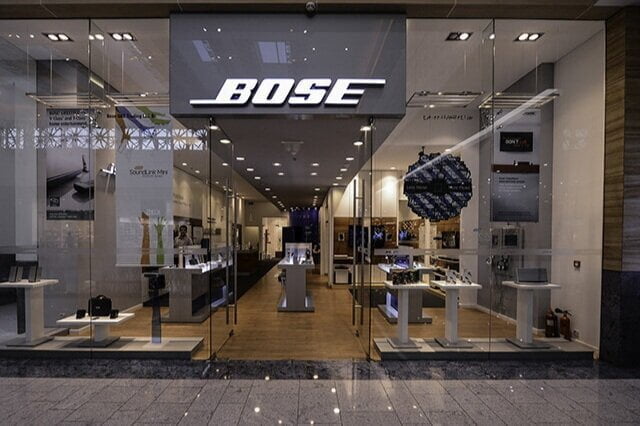
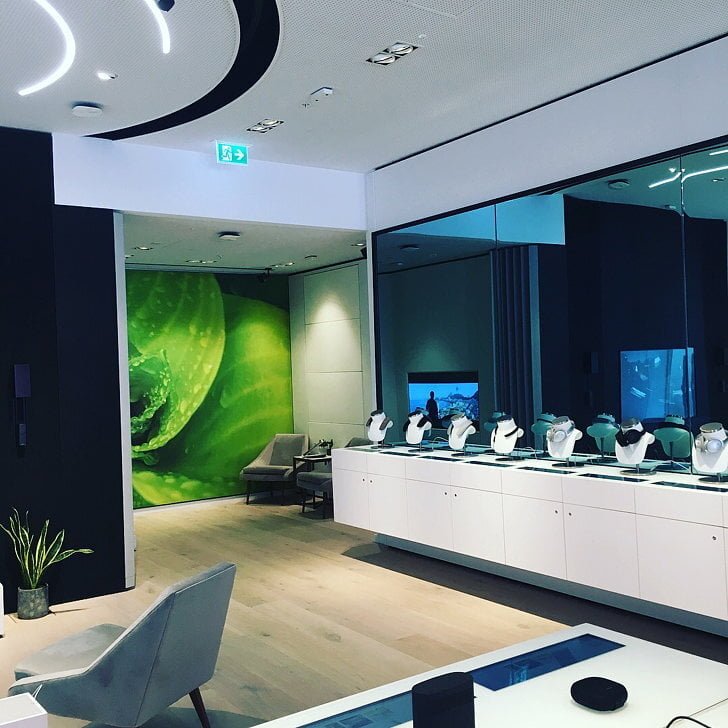
US-based audio equipment brand Bose, known for its high quality products, will shutter all of its remaining Canadian stores as part of a global retreat that will see a total of 119 locations shutter worldwide.
It’s part of a larger plan to close Bose’s entire store footprint in North America, Europe, Japan, and Australia. The company said that consumers are increasingly purchasing through e-commerce and that hundreds of employees will be laid off as part of the store closings. The privately held company won’t reveal how many jobs will be lost as Bose pulls out of physical retail. About 130 stores in China, the UAE, and other parts of Asia, including India, will remain open.
“Originally, our retail stores gave people a way to experience, test, and talk to us about multi-component, CD and DVD-based home entertainment systems,” said Colette Burke, Bose’s vice president of global sales. “At the time, it was a radical idea, but we focused on what our customers needed, and where they needed it — and we’re doing the same thing now.”
PHOTO: BOSE
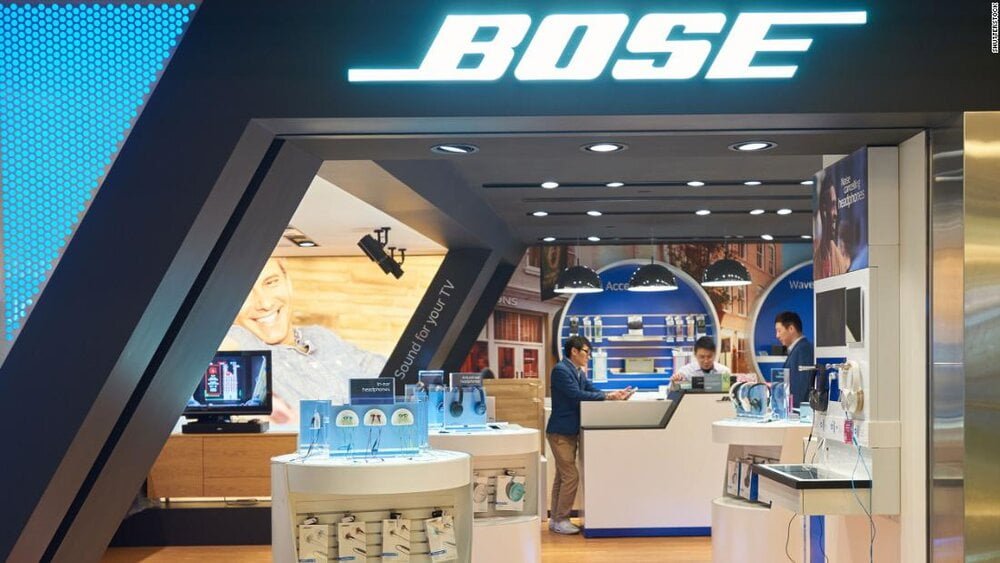
The Bose stores act as showrooms for the brand’s expanded assortment of products — the company has grown beyond its signature noise canceling headphones to include smart speakers and even sunglasses that double as earbuds.
Bose opened its first retail store in 1993 in the United States and opened its first Canadian stores several years later. The company’s website shows several Canadian locations that are still open, though several recently closed amid questions about the future of the company.
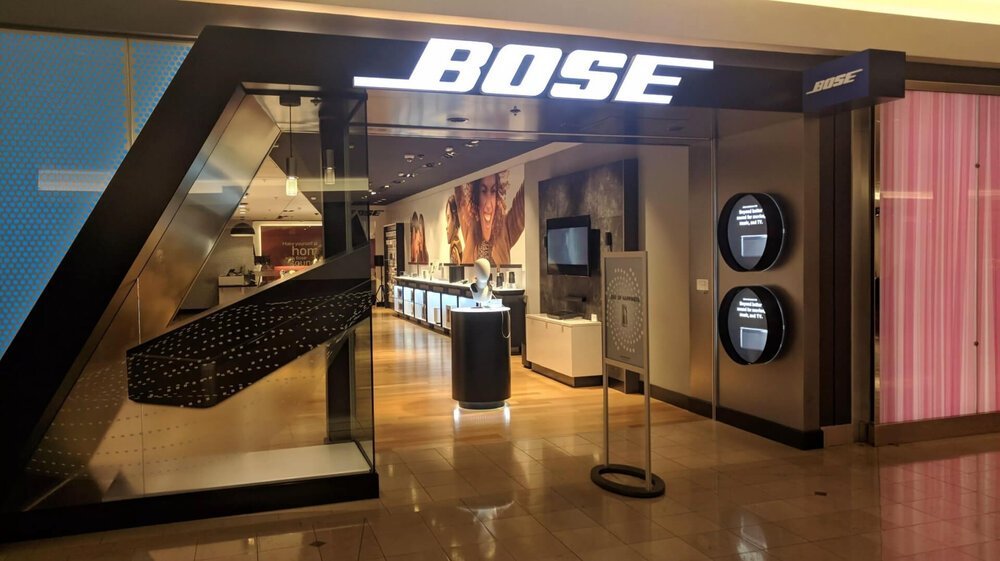
According to the Bose website, the brand operates standalone Bose stores in the Toronto, Ottawa, and Montreal markets. Two locations in the Toronto area include a unit at the Yorkdale Shopping Centre as well as at Toronto Premium Outlets. In Ottawa, Bose operates a showroom at CF Rideau Centre. In Montreal, a Bose ‘personal audio store’ operates at the overhauled Montreal Eaton Centre at 705 Ste-Catherine Street West in the city’s downtown core. The Montreal store was newly built as part of the ongoing Montreal Eaton Centre transformation.
PHOTO: TECHSPOT
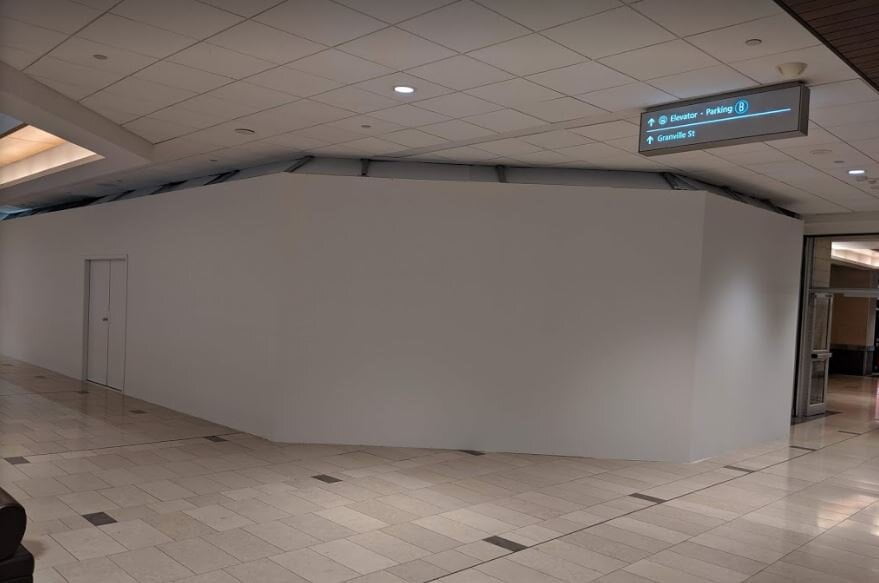
Other Bose locations in Canada have shuttered, including a unit at CF Pacific Centre in Vancouver last fall that was once said to be the top performing Bose retail location in the country. Italian women’s luxury brand Max Mara will relocate into the 2,000 square foot former Bose space at the end of this month.
Other shuttered Bose locations include former units at Upper Canada Mall in Newmarket, Ontario as well as at West Edmonton Mall in Edmonton, Southcentre mall in Calgary, and at the CF Carrefour Laval near Montreal.
The Yorkdale Bose retail space spans 1,340 square feet according to a lease plan, and is located in a prime location between MAC Cosmetics and Kiehl’s across from the mall’s Coach store. Several luxury brands operate standalone locations nearby.
BOSE LOCATION AT CF PACIFIC CENTRE. PHOTO: LEE RIVETTPHOTO: DEXINGER
Bose will continue to sell products online in Canada as well as in multi-brand retailers such as Best Buy. Online retailers such as Amazon.ca also carry an expansive product assortment.
While the company indicates that it will serve clients via its online and multi-brand partner channels, the move to close Bose stores in Canada and elsewhere marks a deviation from the direct-to-consumer trend. That trend has seen brands opening stores to engage directly with consumers while creating curated retail environments that speak to an entire brand experience.
Many successful brands going direct-to-consumer are in many cases opening stores and not closing them, bringing into question the overall financial health of Bose as a company. Its strategy to shut stores may also result in a decrease in online sales — in a report by International Council of Shopping Centres last year, it was found that operating physical stores lends to increased web traffic in something referred to as a ‘halo effect’.
The recently released 2019 Canadian Shopping Centre Study, developed by Retail Council of Canada (RCC) and sponsored by Engagement Agents, demonstrates this, explaining how landlords are not only investing in superb shopping spaces, but increasingly adding more non-retail amenities such as destination entertainment attractions, food markets and restaurants, fitness centres, parks, offices, and residential towers that are transforming their shopping centres into all-encompassing community hubs.
“Not only are Canada’s top malls continuing to make substantial capital investments to meet consumers’ hunger for retail innovation, enterprising landlords are also looking at unprecedented ways to add value and expand productivity, through impressive mall renovations with easily accessible and integrated “live, work, play and shop” developments,” said Diane J. Brisebois, President and CEO of RCC.
Year Over Year Gains
For the fourth year in a row, Toronto’s Yorkdale Shopping Centre ranked as the most productive shopping centre in Canada with annual sales of $1,964 per square foot, up 3.1 per cent from a year ago. As of June 30, 2019, 11 shopping centres in Canada experienced annual average sales per square foot surpassing $1,000. Given growth projections for 2020, as many as 14 Canadian shopping centres could see their annual sales per square foot exceed $1,000, states the Study.
Canadian shopping centre productivity numbers that appear within the Study were provided by landlords for non-anchor reporting commercial retail units for the 12 months ending June 30, 2019.
The gains experienced are in part a result of the retailer lineups that malls offer consumers. However, they are also due to landlords’ willingness to listen to their patrons, the Study states. With 87 per cent of Canadian adults saying they would consider residing in “live, work, shop, play” environments, shopping centre owners are ensuring easier access, more simplicity, greater convenience and fabulous shopping experiences.
According to the Study, “Many of the top centres are planning major additions including residential and office space in the next 5, 10, and 20 years. Canadian shopping centre landlords are adding entertainment centres to existing properties to further drive traffic, recognizing the success of centres such as West Edmonton Mall.”
As a result, in addition to housing best-in-class retailers, Canada’s leading malls are ensuring the inclusion of movie theatres and other entertainment attractions in their properties as well, increasing foot traffic while creating a complete community and a place for people to “live, work, play and shop”.
To download the 2019 Canadian Shopping Centre Study in full, which is sponsored by Engagement Agents and available in both English and French, visit: www.retailcouncil.org/cdnretailer
The highly anticipated Hargrave St. Market at True North Square in downtown Winnipeg opened last month to much fanfare. It is already seeing crowds and adding much needed foot traffic to the city’s downtown core.
The 30,000-square-foot food hall is located on the second floor of the 242 Hargrave mixed-use office tower. It is part of the mixed-use development that will feature more than 1.5 million square feet of office, hotel, residential, retail, parking, and public plaza space in five towers at the newly constructed True North Square project.
LAKE OF THE WOODS BREWERY. PHOTO: SUPPLIEDLAKE OF THE WOODS BREWERY. PHOTO: SUPPLIEDSABURO COUNTER. PHOTO: SUPPLIEDGUSTO NORTH. PHOTO: SUPPLIEDGUSTO NORTH. PHOTO: SUPPLIEDGUSTO NORTH. PHOTO: SUPPLIEDGUSTO NORTH. PHOTO: SUPPLIEDGUSTO NORTH. PHOTO: SUPPLIED
Hargrave St. Market focuses on chef-driven concepts and is home to some of the city’s best local operators including Bobby Mottola’s first-to-market Yard Burger, The Good Fight Taco, Rose Bar, and his second Pizzeria Gusto location (Gusto North). Also part of the tenant line-up are Saburo Kitchen (new concept for Yujiro Japanese and Gaijin Izayaka), Fools and Horses (third location), Miss Browns (second location) and Lake of the Woods Brewery (from Kenora, Ontario) which will also be brewing beer on site in addition to operating a retail store and taproom located on the first floor of the tower.
As well, a new 5,000-square-foot grocery store will open within the market in late February, serving an expanding residential base as well as thousands of office workers in downtown Winnipeg. The Italian urban grocery concept is curated and operated by Mottola.
RENDERING: TRUE NORTH SQUARE
The design of Hargrave St. Market was led by Montreal-based retail design specialists GH+A and executed by Winnipeg-based architecture firm Architecture49.
CLICKTHROUGH MAP OF LOCAL AREA
Downtown Winnipeg is seeing big changes. Besides the new True North Square project, the Portage Place shopping complex will be redeveloped under new ownership to include new residential buildings. The downtown Winnipeg Hudson’s Bay department store is also expected to see changes – the 675,000-square-foot building was HBC’s flagship for Canada until 1978 when the company moved its headquarters to Toronto, and the Bay store now only occupies two floors of the massive building. Given its recent assessment of $0, however, development may take time.
Large-format multi-category retailer Canadian Tire has announced that it will add nearly 300 electric vehicle (EV) chargers to its store network by 2021. The chargers will be located in 90 of the company’s stores across the country, and is part of a larger eco initiative by the retailer to address consumers increasingly buying electric vehicles.
A total of 240 fast chargers and 55 Level 2 chargers will be installed at the Canadian Tire locations. The new fast chargers are capable of filling a depleted car battery in half-an-hour, while the Level 2 chargers require between two and 10 hours to charge. The chargers are part of a partnership with Tesla, VW Canada’s Electrify Canada, Natural Resources Canada, and FLO.
PHOTO: ELECTRIFY CANADA
When completed by 2021, Canadian Tire will be one of the largest retail networks of EV fast charging stations in the country. It builds on the already established and successful network of 21 Electrify Canada charging stations in existence. Originally, the company announced a more limited expansion of that network, in partnership with Electrify Canada, in October.
“Automotive is a heritage category for Canadian Tire and we have always evolved to meet the needs of drivers. With our premium real estate assets, we are able to provide convenient locations across the nation to service the growing number of EV vehicles in Canada,” said Andrew Davies, Senior Vice President, Automotive, Canadian Tire Retail.
The popularity of electric vehicles is on the rise — according to Electric Mobility Canada, record numbers of Canadian drivers continued to adopt electric vehicles. In the third quarter of 2019, sales of electric vehicles increased 25% year-over-year. To meet the demand, Canadian Tire’s expanded product assortment includes tires, wipers, and brakes products for 90% of electric and hybrid vehicles registered in Canada.
PHOTO: CANADIAN TIRE CORPORATION
PHOTO: CANADIAN TIRE
As part of the Canadian Tire EV announcement, Natural Resources Canada announced that it had provided $2.7 million to Canadian Tire for 54 fast-chargers under its Electric Vehicle and Alternative Fuel Infrastructure Deployment Initiative. In 2016, the same government body also provided $1.3 million to AddÉnergie for 28 fast-chargers at Canadian Tire locations.
The announcement follows a series of other significant expansions to Canadian EV charging networks. In December, Petro-Canada completed its “Electric Highway” network of EV fast chargers, which are servicing the country at over 40 stations between British Columbia and Nova Scotia.
Also in December, Tesla announced a series of new proprietary charging stations along the Trans-Canada Highway. To date, nine of these chargers are hosted at Canadian Tire locations, with that number set to eventually increase.
Other retailers and landlords have been adding EV charging stations in Canada as well. That includes Quebec City-based La Maison Simons, which introduced solar-powered EV charging stations to its Londonderry Mall store in Edmonton when it opened in 2017. Landlord Cadillac Fairview has also added EV stations to some of its properties.
This week Craig & Lee talk about Holt Renfrew exiting downtown Edmonton, including two interviews with local Edmontonians on what this means for the city.
The Weekly podcast by Retail Insider Canada is available on Apple Podcasts, Stitcher, TuneIn, Google Play, or through our dedicated RSS feed for Overcast and other podcast players.
Oberfeld Snowcap is a full-service real estate and retail advisory firm that focuses on retail tenant representation, strategic planning, property and project leasing, as well as real estate investment sales.
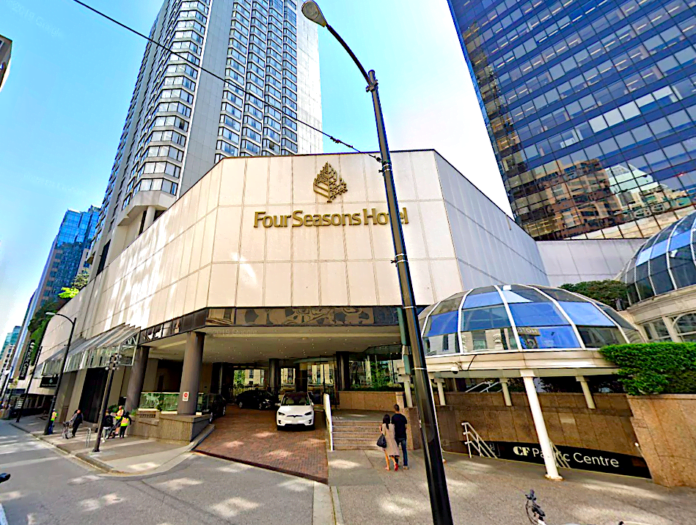
As the Four Seasons Hotel in Vancouver prepares to close at CF Pacific Centre this month, landlord Cadillac Fairview has announced that it will be investing into the centre as part of a plan to launch a new hotel brand on the property. As part of the investment, the existing Four Seasons Hotel tower will be revamped along with part of the shopping centre itself which will see modifications to facilitate the new tenant.
The Four Seasons Hotel has operated a 28 storey hotel on the CF Pacific Centre site since 1976 — CF Pacific Centre itself opened in 1971 with an adjacent TD Tower opening in 1972. When CF Pacific Centre opened, anchors included Eaton’s and Holt Renfrew — Holt Renfrew relocated to its current space in 2007 prior to a recent expansion, and Nordstrom now occupies part of the former Eaton’s store which was most recently Sears after the demise of Eaton’s about 20 years ago.
Construction is expected to commence in the spring on the new hotel project.
While a new hotel brand has not yet been named, Cadillac Fairview issued a press release stating that it was “pleased to announce its intention to introduce a world-leading, luxury lifestyle hotel brand to downtown Vancouver’s CF Pacific Centre.”
“With today’s announcement we are once again contributing to the fabric of the City by introducing an exciting and vibrant hospitality concept to our landmark property that will solidify it as the destination of choice in downtown Vancouver,” said Tom Knoepfel, Senior Vice President, Western Portfolio, Cadillac Fairview.
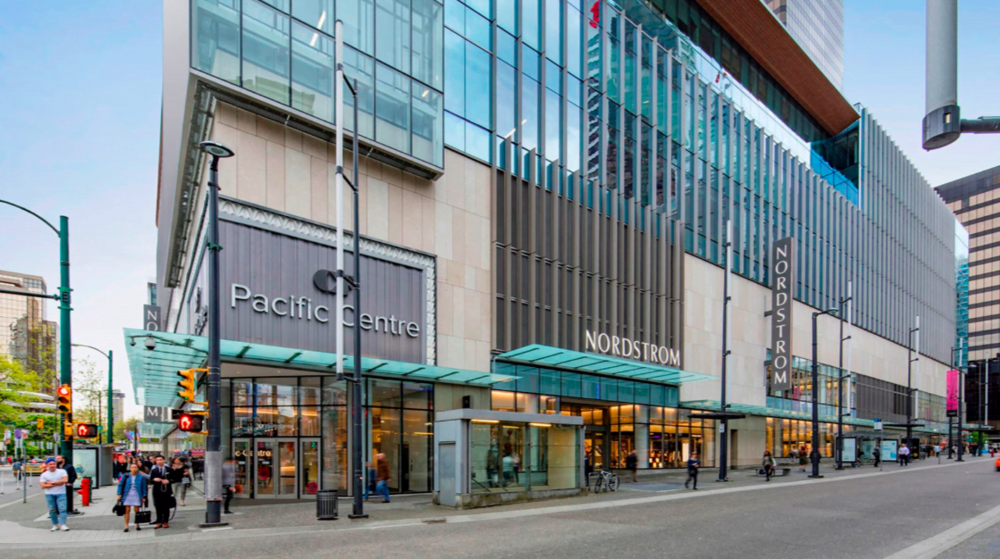
CF PACIFIC CENTRE’S NORDSTROM ANCHOR STORE. PHOTO TAKEN FROM THE CORNER OF ROBSON AND GRANVILLE STREETS. IMAGE VIA CADILLAC FAIRVIEW
“CF Pacific Centre will be home to a leading global hotel and entertainment brand that will be unique not only in Vancouver, but the rest of Canada. We look forward to providing more details about this exciting project in the near future,” he went on to say.
In an interview, Mr. Knoepfel explained that the new hotel property is likely to feature an entrance directly into CF Pacific Centre, as was the case with the Four Seasons Hotel. The new hotel will also feature a driveway and exterior access to Howe Street where the Four Seasons Hotel lobby is currently located.
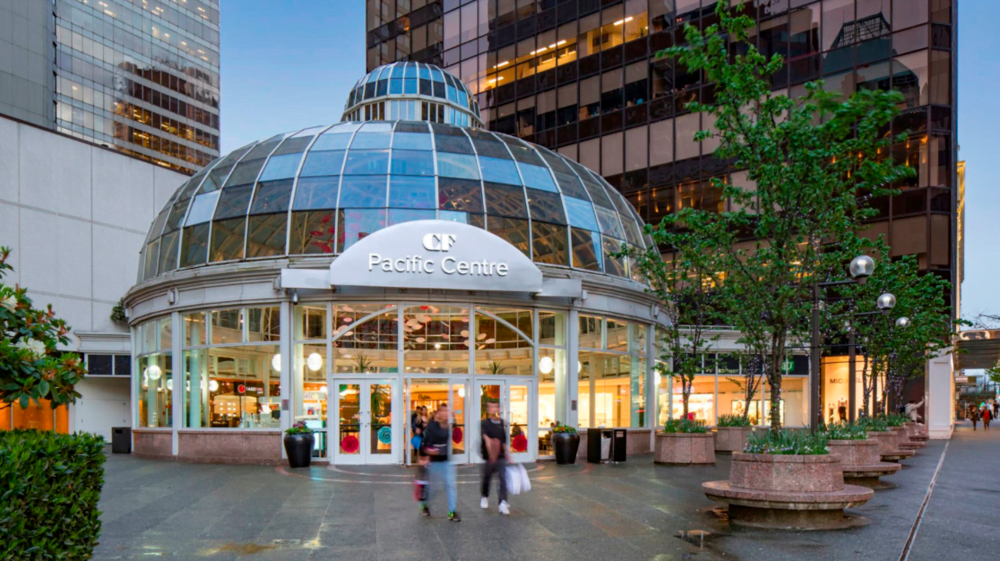
THE “IGLOO” AT CF PACIFIC CENTRE LOCATED NEXT TO THE FOUR SEASONS HOTEL. THE GLASS DOMED STRUCTURE WILL BE DEMOLISHED THIS YEAR AND REDEVELOPED INTO NEW RETAIL SPACE. IMAGE: CADILLAC FAIRVIEW
He said that it was important for Cadillac Fairview to ensure that downtown Vancouver maintains hotel rooms, at a time when the city has lost many to redevelopment which includes residential condominium buildings. Vancouver’s relatively strict Airbnb laws also means the city struggles in terms of providing accommodations at busier times of the year.
The Four Seasons Hotel has 372 rooms including 66 suites in the tower, creating a built-in shopping base for CF Pacific Centre. The mall is Canada’s second most productive in terms of annual sales per square foot according to the most recent Retail Council of Canada Shopping Centre Study. According to Cadillac Fairview’s leasing site, the centre’s updated sales per square foot are now a whopping $1,916, slightly less than Toronto’s Yorkdale Shopping Centre which is the most productive in Canada.
Mr. Knoepfel said that CF Pacific Centre’s exceptional productivity, including gains of more than 10% over last year, are a result of a strong tenant mix which continues to see turnover amid considerable demand. The shopping centre features just over 200,000 square feet of CRU space and more than 700,000 square feet of retail overall, which includes a 230,000-square-foot Nordstrom anchor store which opened in 2015, as well as Holt Renfrew which expanded to more than 190,000 square feet about three years ago.
CF Pacific Centre houses 98 retailers according to Cadillac Fairview’s leasing website. The shopping centre saw more than 23 million visitors last year with almost 75% of visitors being female. The average age of shoppers is 34.
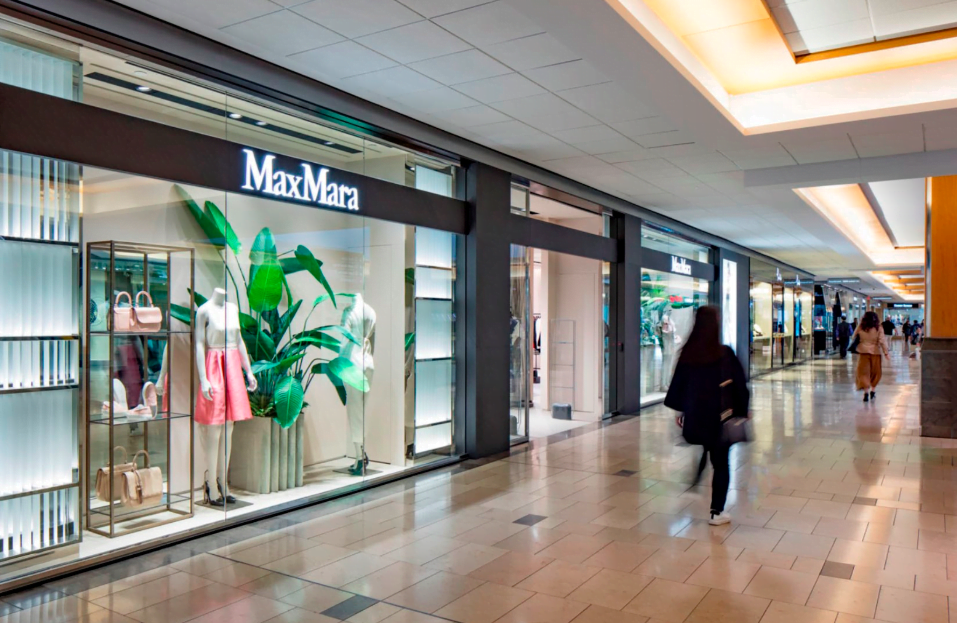
THE SOON-TO-RELOCATE MAX MARA STORE AT CF PACIFIC CENTRE IN VANCOUVER. MAX MARA AND OTHER TENANTS ARE MOVING FOR THE REDEVELOPMENT OF THE ADJACENT FOUR SEASONS HOTEL. IMAGE: CADILLAC FAIRVIEW.
The centre is located along a busy ‘Skytrain’ rapid transit line and is at the heart of downtown Vancouver. A 637,000-square-foot Hudson’s Bay store is connected to CF Pacific Centre via an underground passage and the centre is otherwise proximate to hotels, important shopping streets, museums and cultural/sports facilities in the downtown core.
Several new retailers have opened at CF Pacific Centre over the past year. Swarovski opened in March of 2019, and upscale German women’s brand Marc Cain opened in April. SoftMoc opened in the centre in November. Recent retail relocations included Aussie women’s fashion brand Ever New as well as footwear brand GEOX and Rogers. The mall’s H&M store recently added a lower level space for menswear, bringing the store to almost 40,000 square feet over three floors.
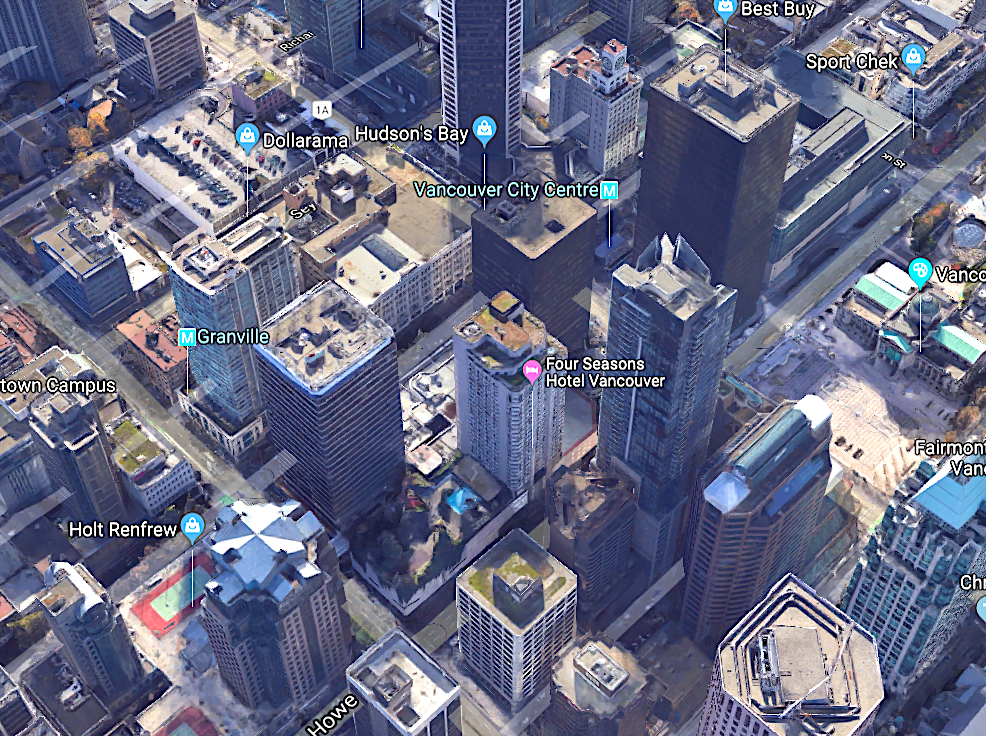
CLICKTHROUGH MAP OF SURROUNDING AREA
A Dyson ‘demo store’ will open at CF Pacific Centre this month, and Max Mara will relocate across from its current storefront at the end of the month as well. A Sephora store in the mall will expand and re-open in April of this year, and the Body Shop is also relocating. Lingerie retailer La Vie En Rose will also open, and a major Canadian brand will soon be announced for the centre as well. Rumours have circulated that an Apple flagship store will open in a newly built space at the corner of West Georgia Street and Howe Street where CF Pacific Centre’s glass ‘igloo’ is located. As part of the changes to the centre, one source said that the Georgia Street entrance to CF Pacific Centre could be reconfigured with another entryway facing onto Howe Street.
IMAGE: GOOGLE MAPS
Four Seasons announced in the spring of 2018 that it was closing its Vancouver hotel property. The closure announcement followed a contentious situation between Four Seasons Hotels and Cadillac Fairview. In a lawsuit, Cadillac Fairview claimed that Four Seasons was running a “tired, dated” operation that had fallen below the standards of a first-class luxury hotel. The hotel property’s 1970’s architecture had become outdated and furniture and fixtures, in some cases, had become worn with time.
Ceiling heights in hotel rooms are also lower than in many newer luxury hotels, which some said could pose a problem to securing a new best-in-class hotel provider. Since the announcement that the Four Seasons Hotel would be closing, rumours persisted about future uses for the CF Pacific Centre building, as well as where Four Seasons may look to open a new Vancouver hotel property.
Some had said that the Four Seasons building could be repurposed with a combination of office space and residential space. As part of that speculation, rumour had it that the retail component of CF Pacific Centre would be expanded upward where the hotel’s ballrooms and restaurant are located. That could have included an upper level retail expansion for menswear retailer Harry Rosen, which is said to see strong sales in its CF Pacific Centre flagship store which spans more than 20,000 square feet on one level.
PROPOSED REDEVELOPMENT OF W. GEORGIA STREET AND HOWE STREET, SPECULATED TO BE AN APPLE STORE. PHOTO: PERKINS + WILL ARCHITECTS
However, Mr. Knoepfel said in an interview that nothing of the such had been confirmed, and that it will be up to the new hotel provider to determine how the space above the mall will best be used — a new hotel of a high caliber would be expected to include meeting spaces and food and beverage options, not to mention various guest amenities.
The Four Seasons Hotel chain has said that it wants to open a new property in the Vancouver market, though finding a space poses a challenge. Real estate developers and hotel operators have said that it is challenging to make a profit from building a hotel property on its own, which is why many new luxury hotels include residential components on the same property to offset the cost of construction.
Some had speculated that the Four Seasons Hotel could replace the Trump Tower property on West Georgia Street in Vancouver — the Trump hotel and residential tower above it opened in February of 2017 and it is said to be struggling due to its name and association with controversial US President Donald Trump and his family. Those rumours of a Four Seasons takeover were subsequently quashed. Four Seasons Hotels is said to be looking at a new development on Thurlow Street in Vancouver that would include a hotel as well as potential Four Seasons Private Residences above, though other hotel operators such as Mandarin Oriental could also end up securing the spot for a similar high-density project.
While the new hotel operator for the current Four Seasons property in Vancouver has not been named, the Riu Hotels and and W Hotel chains are said to be looking to open locations in downtown Vancouver, as is Ritz Carlton and others. The Vancouver market also lacks some premium hotel brands including The Peninsula, Raffles, St. Regis and others.
We’ll follow up this story when we learn more about plans to replace the Four Seasons Hotel at CF Pacific Centre in Vancouver.
Large-format luxury multi-brand retailer Holt Renfrew will unveil its newest restaurant concept next week at its 50 Bloor Street West flagship in Toronto. While it had initially been announced that the restaurant would be branded as a Colette Grand Café as has been the case with three other Holt Renfrew stores, signage recently went up for the rebranded ‘Holts Café’ which will open to the public on January 22.
Despite the last-minute change in name, the new Holts Café on Bloor will be operated by Chase Hospitality Group, which also owns Colette Grand Café as well as other notable restaurant concepts including The Chase, Kasa Moto, Planta, and other concepts. Chase operates Colette Grand Café locations at Holts stores in Vancouver and Montreal as well as at the Yorkdale location in Toronto. Colette Grand Café launched in 2014 at Toronto’s Thompson Hotel.
UK-based architect Alex Cochrane designed the new space, with renderings indicating a luxurious environment overlooking busy Bloor Street towards the recently opened Eataly at Manulife Place. Executive Chef Benjamin Lillico will bring a “contemporary Canadian menu” to the new Holts Café Bloor Street.
Views will be particularly prominent, given that the Holts Café will feature 20-foot-high glass windows overlooking the street. The dramatic windows will be part of the new facade of the Holt Renfrew Bloor Street flagship which will be unveiled later this spring.
The new Holts Café will occupy the same space as the previous restaurant on the mezzanine level of the Holt Renfrew bloor Street flagship — the restaurant is located on the same floor as the updated 8,000-square-foot women’s footwear hall which re-opened in the store in the fall of 2018. The new restaurant will seat up to 145 guests in the dining room, bar, lounge area and private dining room.
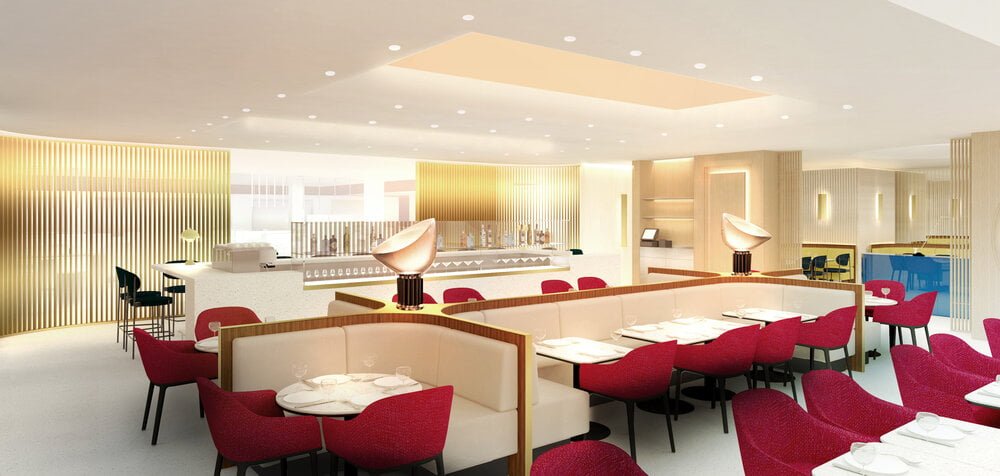
The restaurant design will include terrazzo floors, vibrant furniture colours, and rich-brass accents throughout the space, according to Holt Renfrew. An open brass screen will make parts of the restaurant visible from the women’s footwear department, which will open up the space and possibly add some natural light to the mezzanine level.
The ‘contemporary Canadian cuisine’ will be “driven by European influence”, according to Holt Renfrew. Chef Lillico will focus on sustainability as well as quality-driven ingredients that will be sourced locally and seasonally. The menu will “pay homage to ‘Holts Café’ classics and staples with a warm, inviting, fresh and simplistic approach”. Service times will include brunch, lunch, afternoon tea, and an expanded evening dinner service. More details on the menu will be released soon, as well as programming and special events.
A Colette Grand Café had initially been announced for the Holt Renfrew Bloor Street flagship, though signage in the store changed during the first week of January. In December of 2017, we reported that Holt Renfrew had partnered with Chase Hospitality Group to rebrand five of Holts’ in-store restaurants to become Colette Grand Cafés. Of the five restaurants in Canadian Holt Renfrew stores, three ended up rebranding as Colette Grand Cafés in Vancouver, Yorkdale, and Montreal. In Vancouver, the Colette Grand Café restaurant is located on the main floor luxury hall alongside brands including Louis Vuitton, Tiffany & Co. and David Yurman. At Toronto’s Yorkdale Shopping Centre, Colette Grand Café occupies a back space in the Holt Renfrew store across from a recently unveiled ‘world of’ Burberry concession. The Montreal restaurant is located on the lower level of the 1300 Sherbrooke Street West Holt Renfrew store with its own street-facing entrance onto Rue de la Montagne.
Colette Grand Cafe in Vancouver. Photo: Open Table
Edmonton’s in-store restaurant had been announced to be rebranded as a Colette Grand Café, though the transition never ended up happening. When Holt Renfrew closed its Edmonton store on January 11th, signs still called it ‘Holts Café’. The Montreal Holt Renfrew store will be closing this spring once the newly expanded Holt Renfrew Ogilvy is completed at 1307 Ste-Catherine Street West — the 250,000-square-foot Holt Renfrew Ogilvy will become the largest luxury store in Canada, by far. Holt Renfrew has not updated us on its plans for a restaurant in the new Montreal Holt Renfrew Ogilvy store, though a restaurant will be opening on the store’s fifth floor along with personal shopping suites and other additions.
Two of Holt Renfrew’s other stores were supposed to see restaurants open in them. In Calgary, Holt Renfrew had announced in the fall of 2014 that it would open a restaurant on a newly opened fourth level of the store along with personal shopping suites ad a VIP ‘Apartment’. Oil prices tanked by early 2015 and sales at Holt’s Calgary store were said to have gone down. The fourth level of the store has yet to open to the public more than five years later.
Colette Grand Cafe in Yorkdale. Photo: Auburn Lane
In Mississauga, as well, Holt Renfrew opened a beautiful 140,000-square-foot store at the Square One shopping centre in the summer of 2016. The new store was supposed to include a large second-level restaurant that could be accessed by a dramatic marble stairway from the expansive main floor of the store. The restaurant has yet to open, and nothing has been recently announced for the space.
Holt Renfrew’s 50 Bloor Street West store is currently being renovated with some components set to be unveiled this spring. That includes a new facade for the store — its first new facade in more than 40 years since the store opened at that location, which will make the store almost unrecognizable. The main floor luxury hall at Holts Bloor is almost completed, with two last beauty vendors expected to open soon. Last year, Holts unveiled the renovated women’s shoe hall in the Bloor Street flagship which includes dedicated boutique spaces for Christian Louboutin, Gucci, Dior, and Roger Vivier. The store’s beauty hall relocated to the concourse level of the store last year, which saw Chanel open its first standalone beauty boutique in Canada adjacent to it. More renovations will continue at Holts’ Bloor Street store including on the women’s designer floor and elsewhere. Holt Renfrew operates a standalone men’s store nearby at 100 Bloor Street West and while it had been announced last year that men’s was relocating back into the 50 Bloor Street flagship, sources say that the 16,500-square-foot, two-level 100 Bloor men’s store will remain where it is for the time being.
We’ll update this story once the main floor luxury hall at Holt Renfrew’s Bloor Street flagship is completed within the coming weeks.
102-108 YORKVILLE AVENUE. RENDERING: FIRST CAPITAL REALTY
Luxury Japanese restaurant concept Hana has officially opened on Yorkville Avenue in Toronto, adding another destination for the rapidly changing area which is becoming home to a roster of the world’s leading luxury retail brands.
The 3,400-square-foot Hana is located in a beautiful high-quality space on the lower level of the 102-108 Yorkville Avenue commercial complex, which houses three luxury retail brands that have opened in recent months including Brunello Cucinelli, Versace, and Stone Island. In the fall, spa concept Majesty’s Pleasure opened on the third level of the building, and Hana is the final tenant to open there.
Hana will serve an affluent demographic that is descending on the area — shoppers are being attracted by big name brands on the street including Chanel which opened in late 2017 as well as Christian Louboutin, Off-White, Richard Mille, and others. Hana’s pricing skews towards the upper-end with high-quality dishes aiming to attract celebrities, sports celebrities, and those willing to spend hundreds of dollars on an elevated meal experience.
HANA ENTRANCE. PHOTO: HANA
HANA ENTRANCE. PHOTO: HANA
The Hana restaurant is Aburi Restaurants Canada’s newest (and most upscale) venture, introducing a modern Kyoto-style Kaiseki dining experience to the Toronto food landscape. The concept aims to showcase the beauty and seasonality of both Japanese and local ingredients while incorporating ancient techniques and modern gastronomy, according to Seigo Nakamura, CEO and founder of Aburi Restaurants Canada.
Guests at Hana have the choice between two fifteen-course menus. That includes the Hana Kyo-Kaiseki which is priced at $330, and the Aburi Kyo-Kaiseki at $195. The 15-course menus were artfully developed by Executive Head Chef Ryusuke Nakagawa and are said to celebrate both local and global ingredients. Both menus are available to be enjoyed at Hana’s Chef’s Counter or in one of five Kakurega private dining rooms.
Each experience lasts between two and 2.5 hours. The Chef’s Counter offers two nightly seatings and according to Mr. Nakamura, it delivers an immersive, engaging experience, as guests are seated within optimal view and distance of the kitchen. Alternatively, those who prefer a more intimate setting may also book their experience in a Kakurega private dining room. Each room accommodates between two and eight guests for reservations between 5:30-8:30 pm.
In addition to its high-quality and delicious culinary program, Hana practices Omotenashi — an anticipatory-style of hospitality that delivers an unforgettable experience. Retail Insider had the opportunity to experience Hana at a media preview as well as opening night, and the service and food were exceptional.
PRIVATE DINING ROOM. PHOTO: HANA
The space itself is dramatic and impressive, featuring high-quality stone, marble, and metal as well as beautiful wallpapers and other decor. The Aburi Restaurants team worked with Vancouver-based design agency Ste. Marie Design to create Hana’s interior. Throughout the space, traditional ikebana (Japanese floral arrangements) are displayed as pieces of art that poetically allude to the literal translation of Hana, meaning flower, beauty and elegance. They are flown in from Japan every few days.
Mr. Nakamura said that he decided to locate Hana in the heart of Yorkville’s luxury retail area as the target consumers are similar. He explained that Hana’s market “has a taste for elevated, refined craftsmanship, and would be able to appreciate Chef Nakagawa’s approach to food as an art form.”
Yorkville Avenue was also chosen because the neighbourhood is seeing a remarkable transformation. Much of the transformation is being led by landlord First Capital Realty, which has invested hundreds of millions of dollars over the past several years to buy up buildings in Yorkville. That includes renovating and rebranding the Hazelton Lanes shopping centre as ‘Yorkville Village’, with the name also being used for First Capital Realty’s other commercial buildings that line the rapidly changing Yorkville Avenue. The landlord owns 102-108 Yorkville Avenue as well as the adjacent building housing Chanel as well as other retail buildings in the immediate area. Last year, Diesel and Anthropologie closed stores on Yorkville Avenue and luxury brands are expected to replace them. First Capital Realty will also be announcing updated plans for a new luxury mixed-use building at 101 Yorkville Avenue, and the landlord also owns the commercial podium at 1 Bloor Street East, among other properties in the vicinity.
CHEF’S TABLE. PHOTO: HANA
Graham Smith of acted on behalf of Hana in the lease deal with landlord First Capital Realty.
Eric Sherman, Director of Real Estate for First Capital Realty’s Yorkville properties, negotiated the lease deal on behalf of the landlord. “We are very excited for the much anticipated launch of Hana at 102-108 Yorkville. The Aburi Group has a proven track record of being one of the top restaurant operators in the country by creating best in class concepts that are tailored to the neighbourhood within which they operate.” Mr. Sherman went on to say, “These are the types of operators we strive to work with as we continue the curation of our portfolio in Yorkville and within our growing urban portfolio generally.
JAPANESE KNIVES. PHOTO: HANA
“Hana also exemplifies our commitment to finding unique and mutually, economically viable ways to integrate food and beverage and personal service into our luxury developments – in this case being located in the lower level of 102-108 Yorkville. Sophisticated brands and consumers alike recognize that a true luxury experience incorporates hospitality, service, and discovery. Understanding and executing on this trend is how Yorkville Ave has and will continue to differentiate itself from the conventional high street and why we are seeing more brands and concepts gravitate towards our carefully thought out projects.”
Aburi Restaurants Canada is known for its expertise in Aburi Sushi, introducing it to Canada in 2008. Aburi translates to “flame-seared” and references the technique that uses a flame and Japanese charcoal over the seafood to create new textures and enhance the sushi’s natural flavour. The company operates three restaurants in Vancouver — Miku Vancouver, Minami and Gyoza Bar. Hana is the group’s third Toronto location and joins Miku Toronto as well as TORA at the Yorkdale Shopping Centre, which we profiled in Retail Insider last year. Aburi will test out the premium Hana concept before rolling it out into other markets, and the company also plans to open more concept restaurants within Canada as well as in the United States, with details to follow.
Retail Insider has launched a new commercial real estate listings page in a partnership with leading commercial real estate listing platform Spacelist. The page is now live on the Retail Insider website and can be viewed here: www.retail-insider.com/find-space.
Visitors to the page can search for available space across Canada, both for lease and for sale. That includes retail space as well as office, industrial, land, medical, multi-family, and other categories.
Brokers and landlords are encouraged to upload listings to Spacelist, which can be done for free, gaining exposure to thousands of potential leads from Spacelist and its network of partner sites. The goal is for Spacelist to become the go-to source for anyone seeking commercial real estate in North America.
“We’re excited to offer free and easy access to available properties by integrating with online publishers,” said Steven Jaffe, CEO of Spacelist. “With listings that can be searched directly on sites such as Retail Insider, we’re able to offer substantially more exposure for listings posted on Spacelist, making it easier for businesses and real estate professionals to discover available spaces.”
Retail Insider, Canada’s most-read retail industry news publication with a strong focus on commercial real estate, is one of the first websites to embed Spacelist Engine as a tool for its readers to directly access available real estate without leaving the site. Retail Insider’s extensive landlord and broker readership are invited to upload listings for free to Spacelist, which will automatically be shown on Retail Insider’s portal.
Spacelist is expanding to other online publishers within a wide range of verticals throughout 2020, as well as continuing to develop its relationship with platforms powering economic development organizations across North America. With the goal of simplifying site selection for small businesses, Spacelist will also soon be launching SimpleLease, which is a platform that will streamline the entire leasing process for smaller commercial spaces.