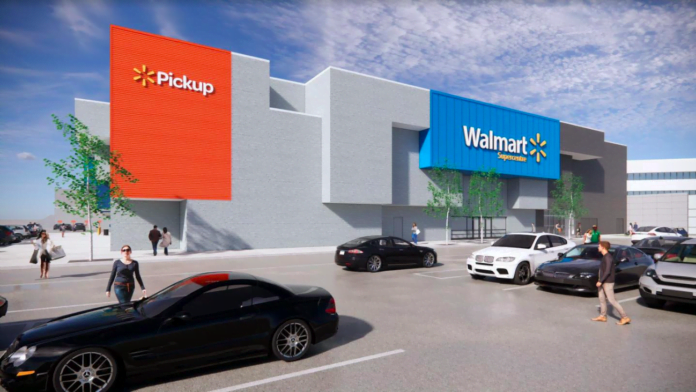
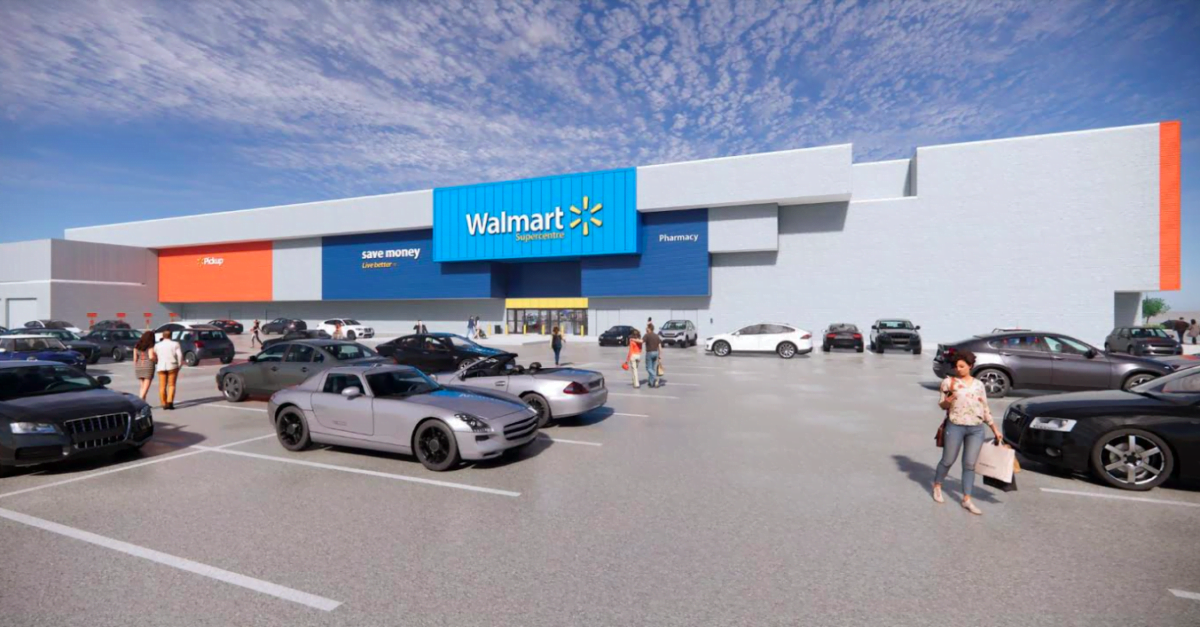
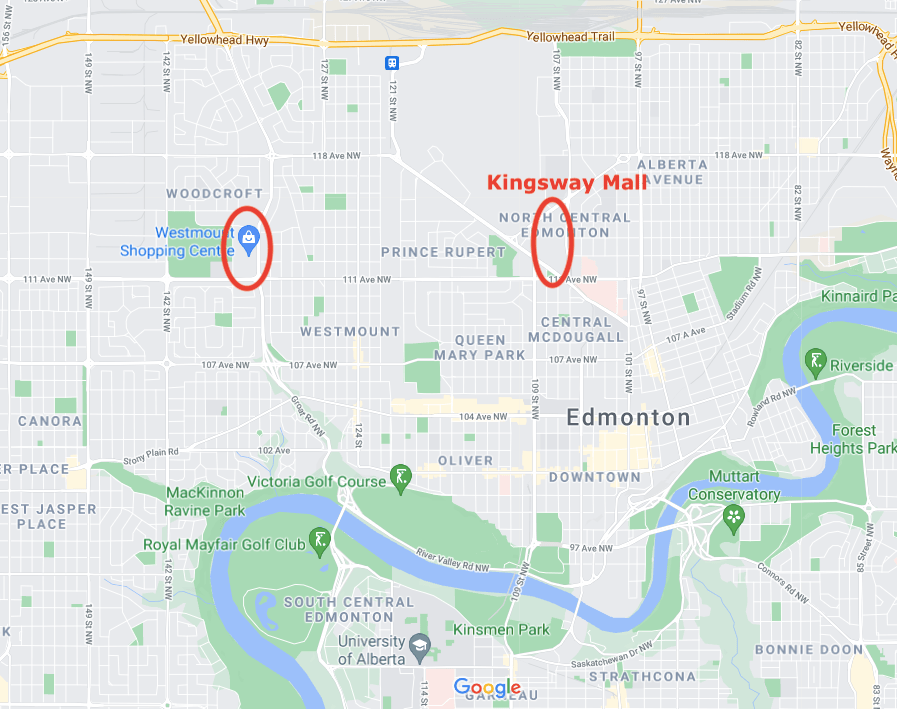
Walmart announced Thursday that it will open a 149,000 square foot Walmart Supercentre at the Kingsway Mall north of downtown Edmonton in the fall of 2022. The Walmart store will house general merchandise as well as provide an extensive grocery offering. It will replace a Walmart store currently located at the struggling Westmount Shopping Centre located about three kilometres to the west.
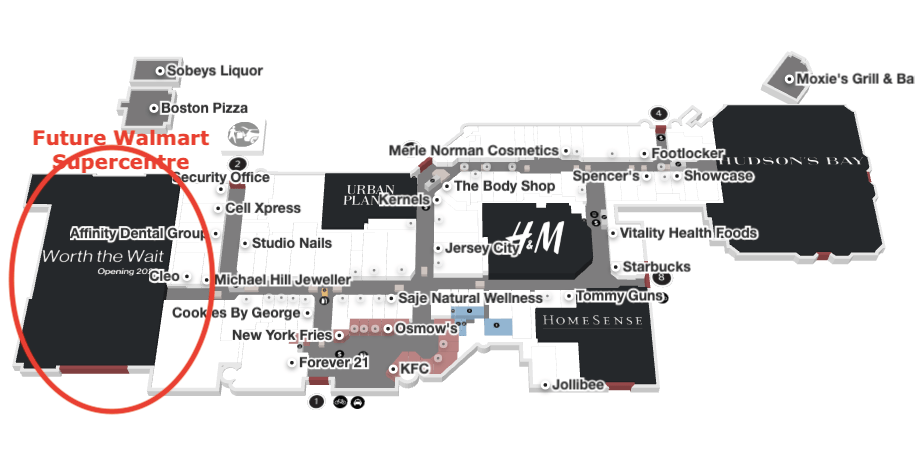
The Kingsway Mall Walmart store will be located in part of the mall’s former Sears space that has been vacant since early 2018 when Sears Canada shuttered all of its locations. The new Walmart will feature an ‘updated’ look and feel and will be considerably larger than the 91,500 square foot Walmart store at Westmount Centre. Twice as many employees will work at the new Walmart store — the retailer will be hiring 90 more associates with a total staff count for the Kingsway location expected to be at about 180. Several new licensees will be added to the Kingsway Walmart including a UPS Store. About 200 construction jobs will be created during the construction phase of the project.
Rendering of the new Walmart Supercentre at Kingsway Mall. Image suppliedKingsway Mall is about 3km west of Westmount Centre (marked on the map above). Click image for interactive Google Map. Future location of the Walmart Supercentre at Kingsway Mall. Click image for interactive mall map.
“We are thrilled to be opening up a new Walmart store at Kingsway Mall as we aim to make the shopping experience simpler, faster and more convenient for our customers. Our customers will benefit from having an expanded assortment of products, including fresh groceries, at the new Supercentre,” said Derreck Cuschieri, Regional Vice President of Operations at Walmart Canada. “We’re excited about Kingsway Mall’s close proximity to the downtown core where customers can choose to shop in-store or online with in-store pickup or home delivery.”
“We’re experiencing significant momentum and consider the addition of Walmart a strong example of connecting our shoppers to a more convenient and seamless shopping experience within our community,” said Bradley Jones, Head of Retail at Oxford Properties which manages Kingsway Mall. “The retail momentum at Kingsway highlights the fact that it is a best-in-class shopping centre with a strong industry presence that continues to serve the community’s needs at large.”
Walmart Westmount Centre (Yelp)
The Kingsway redevelopment of the former Sears box features a total of more than 200,000 square feet of retail space that will include future developed retail space in 2022. Several other retail openings at Kingsway Mall include Pür & Simple, Woodrack Café, Jollibee, Dollarama, and Osmows. Over twenty new stores have opened at Kingsway since the start of 2020, with more openings planned in 2021 according to Oxford Properties.
The resulting closure of Walmart at the Westmount Centre on Groat Road in Edmonton is bad news for the First Capital REIT-owned mall. The Walmart store, which opened in 2013 and replaced a Zellers location, anchors the north end of the mall in a space that was once occupied by a more upscale department store retailer Woodward’s. When it was built in 1955, Westmount Centre was a state-of-the-art mall and a draw for the region until larger and more popular malls were constructed in the city — the largest being West Edmonton Mall which opened in 1981.
Westmount Centre had been declining for years and is currently anchored by a Home Depot store, Safeway, Shoppers Drug Mart, Mark’s, and Dollarama. Many expect First Capital REIT to eventually redevelop and intensify the shopping centre property with multi-family residential given its location near several upscale neighbourhoods such as Glenora.
Australia’s leading bridal giant Grace Loves Lace is ramping up its global expansion with the launch of its first store in Canada in Toronto’s Distillery District.
Founder and Creative Director, Megan Ziems, said when the company started discussing launching to a new country, it knew Canada was ‘the one’.
Megan Ziems
“Canadians and Aussies have such a similar style. We are no fuss, laid-back and adventurous, who value good quality product and design. We receive around 100 enquiries a month from our Canadian brides-to-be wanting to see, touch and try on their dream Grace gown – so the launch in Toronto was a no brainer for us. With the Canada and US border closed since early 2020, our Canadian brides-to-be haven’t had a chance to experience the full Grace experience. So, we decided to bring it to them,” she said.
“We felt drawn to Toronto because of the city’s connection to arts, culture and creativity. Renowned for its new ideas, new experiences and new designs, we knew Toronto was the perfect location for the first Grace Canadian showroom. When it came to finding an official home in Toronto, we couldn’t look past the Distillery District. The one-of-a-kind boutiques, galleries and restaurants are filled with creativity and inspiration, just like the Grace showroom experience. Women can enjoy their complimentary appointment with us, followed by a special treat or lunch at one of the restaurants nearby. It’s about making their bridal shopping trip a destination experience and a day to remember.”
Image: Grace Loves Lace
“We’ve always been passionate about scouting locations that deliver an unparalleled city experience to our customers and their family and friends, and the Toronto showroom will deliver that in spades.”
The Toronto location will be at 39 Parliament Street with an opening date expected in the latter part of August. The company has 16 showrooms in Australia, the UK and the US.
“The Distillery Historic District is very excited to welcome the Canadian debut of Grace Loves Lace,” said Elena Price, General Manager of The Distillery District. “This is a perfect marriage between a luxurious and sophisticated bridal boutique offering handcrafted gowns and The Distillery District — one of the most popular wedding venues in the Greater Toronto Area. We are a beloved host to weddings and bridal photography, and soon brides will also be able to shop here for their special wedding gowns in Grace’s signature showrooms.”
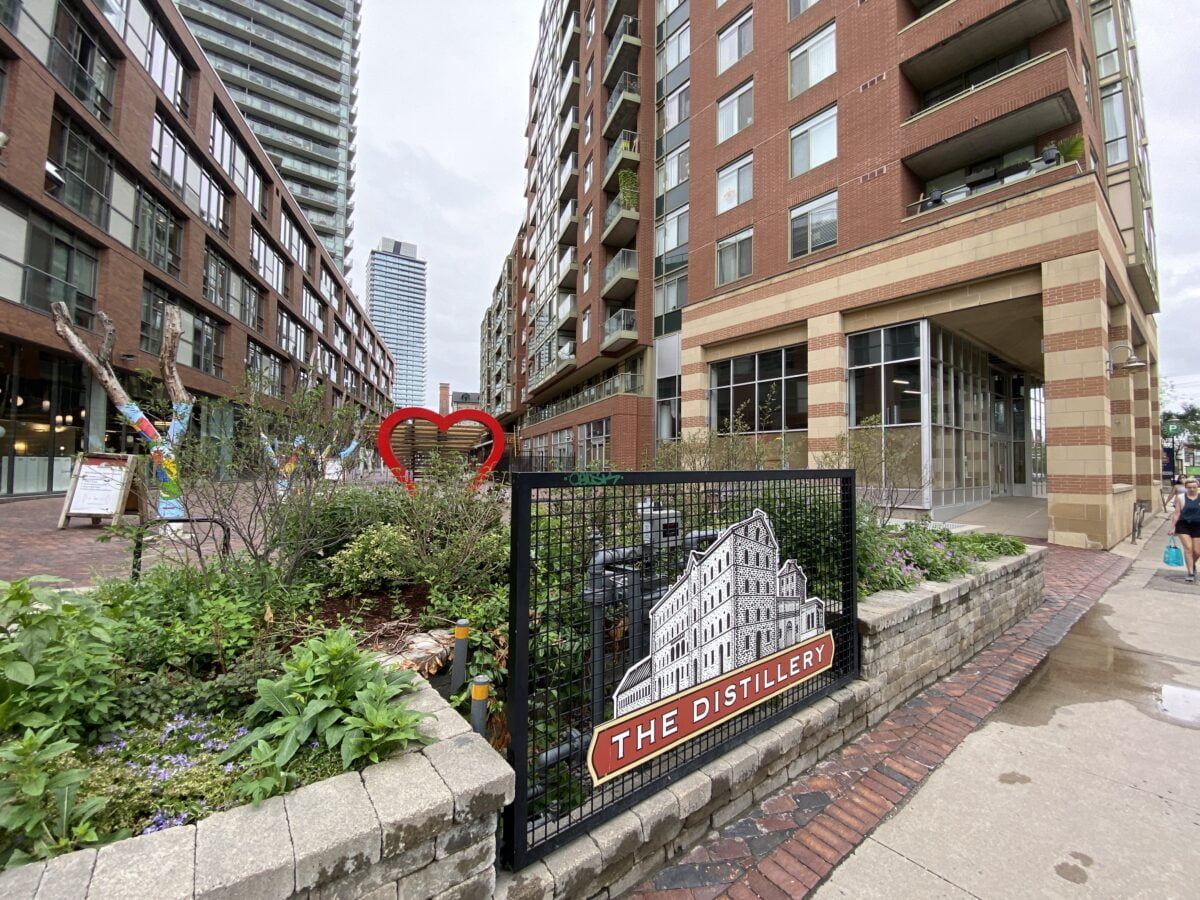
The Distillery District – Photo by Dustin Fuhs
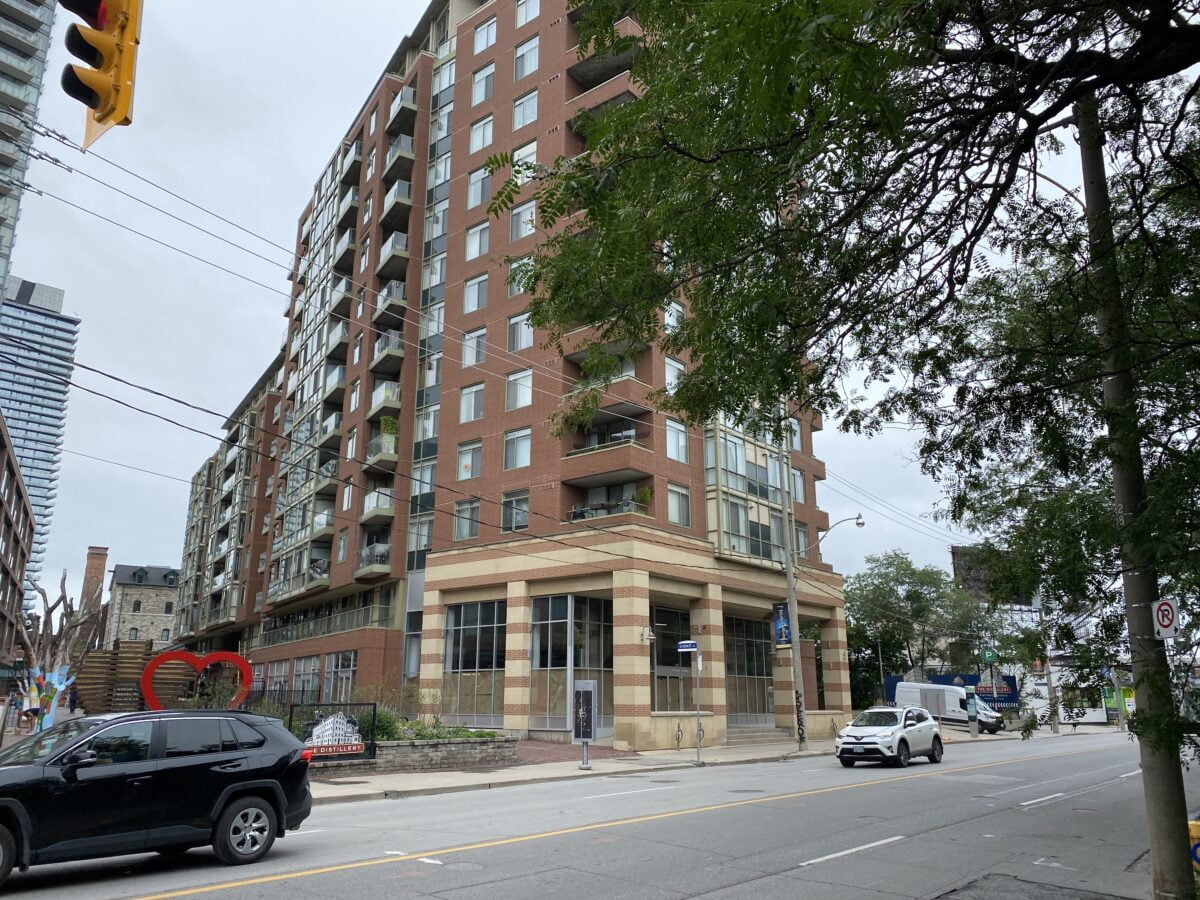
39 Parliament Street at The Distillery District – Photo by Dustin Fuhs
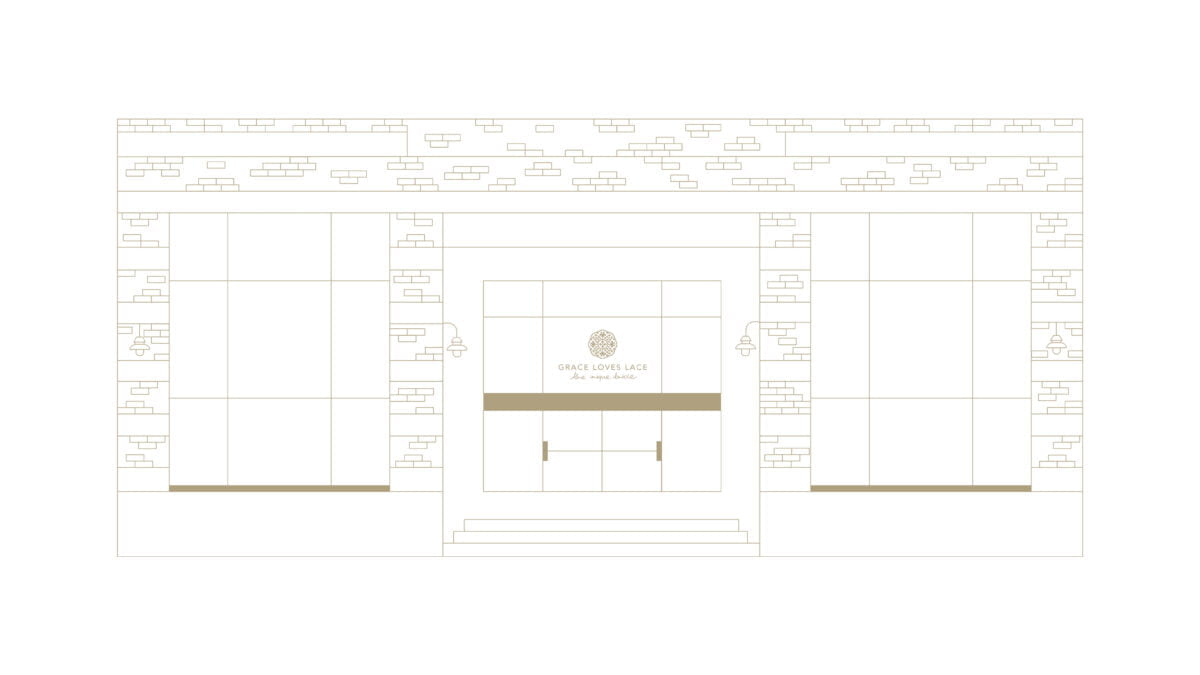
Grace Loves Lace Rendering
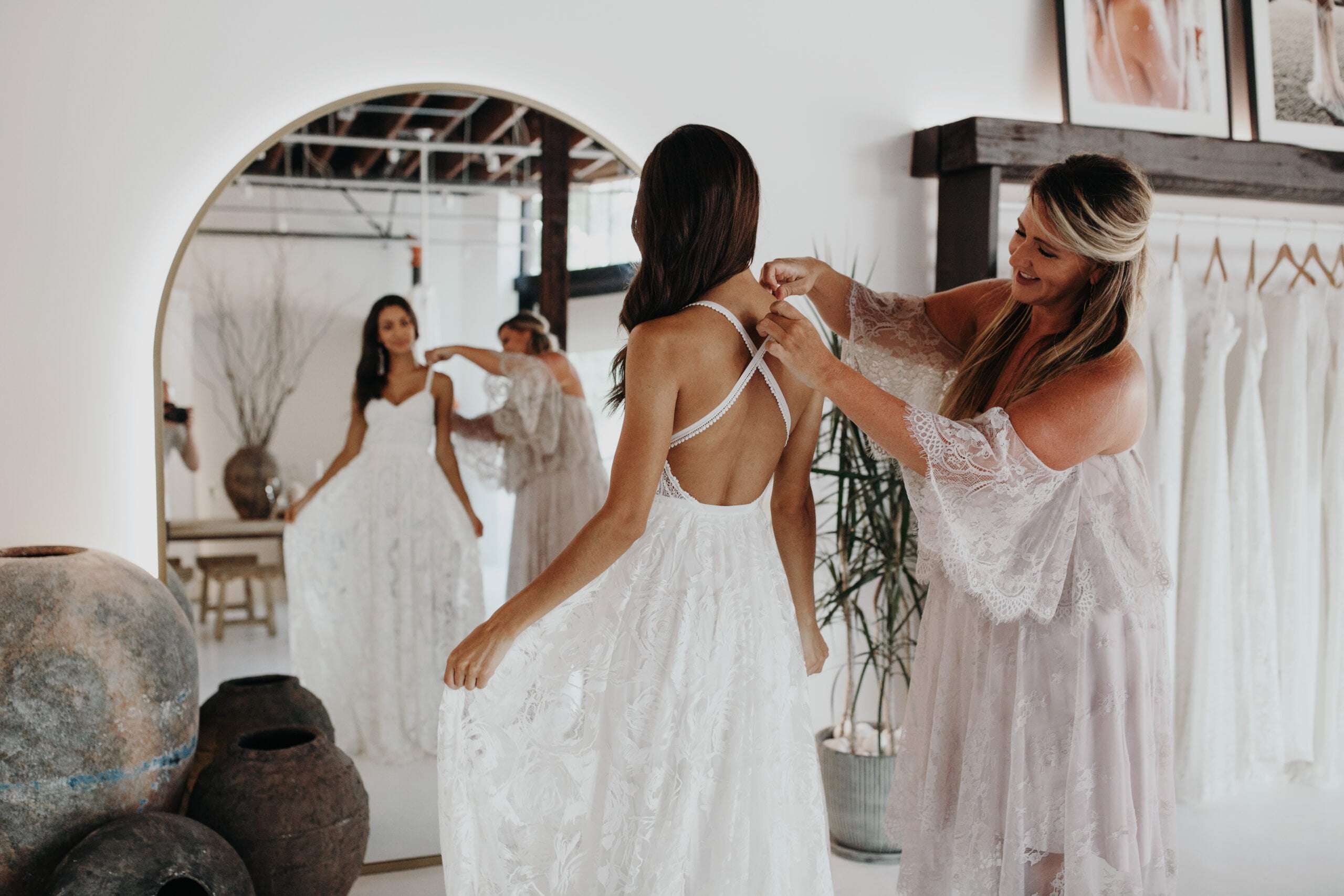
Ziems said the Toronto showroom will be housed in a glass atrium – the first of its kind for the brand – and much like the District itself, the company’s newest showroom is a space where something old meets something new.
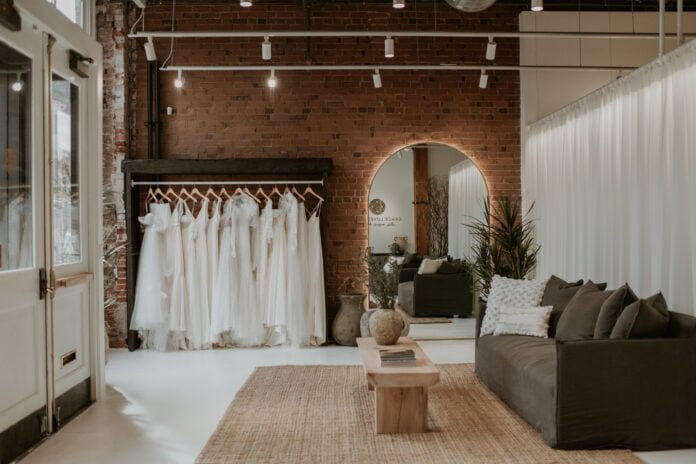
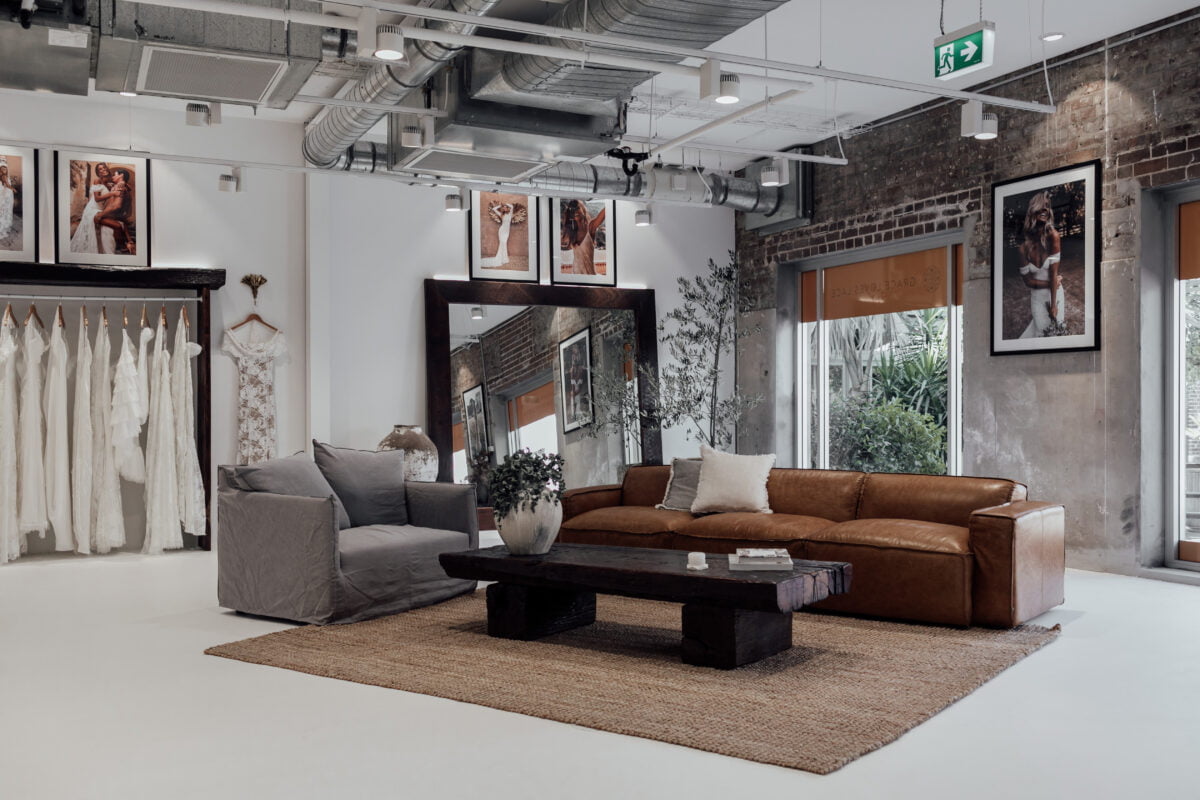
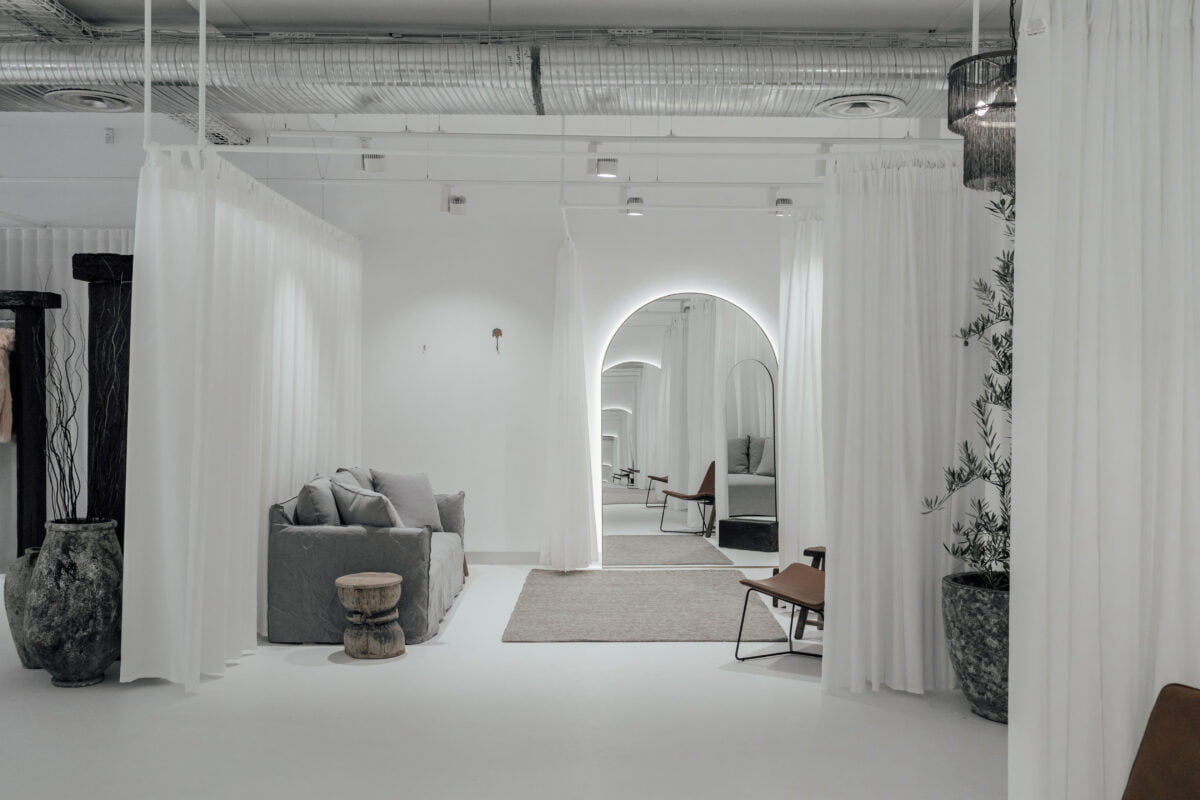
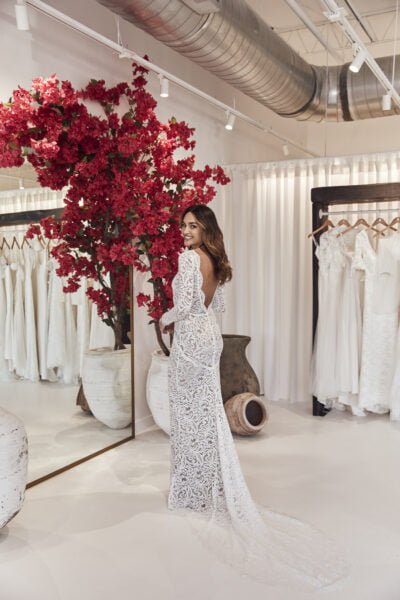
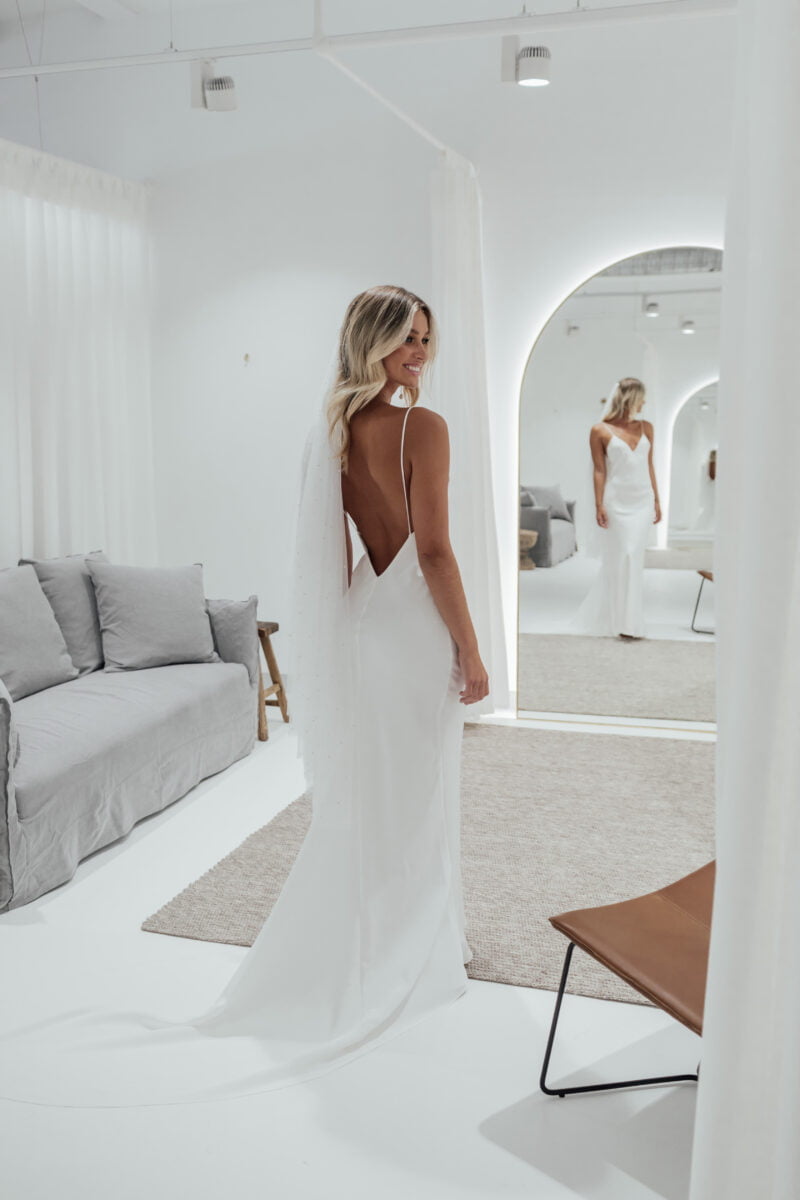
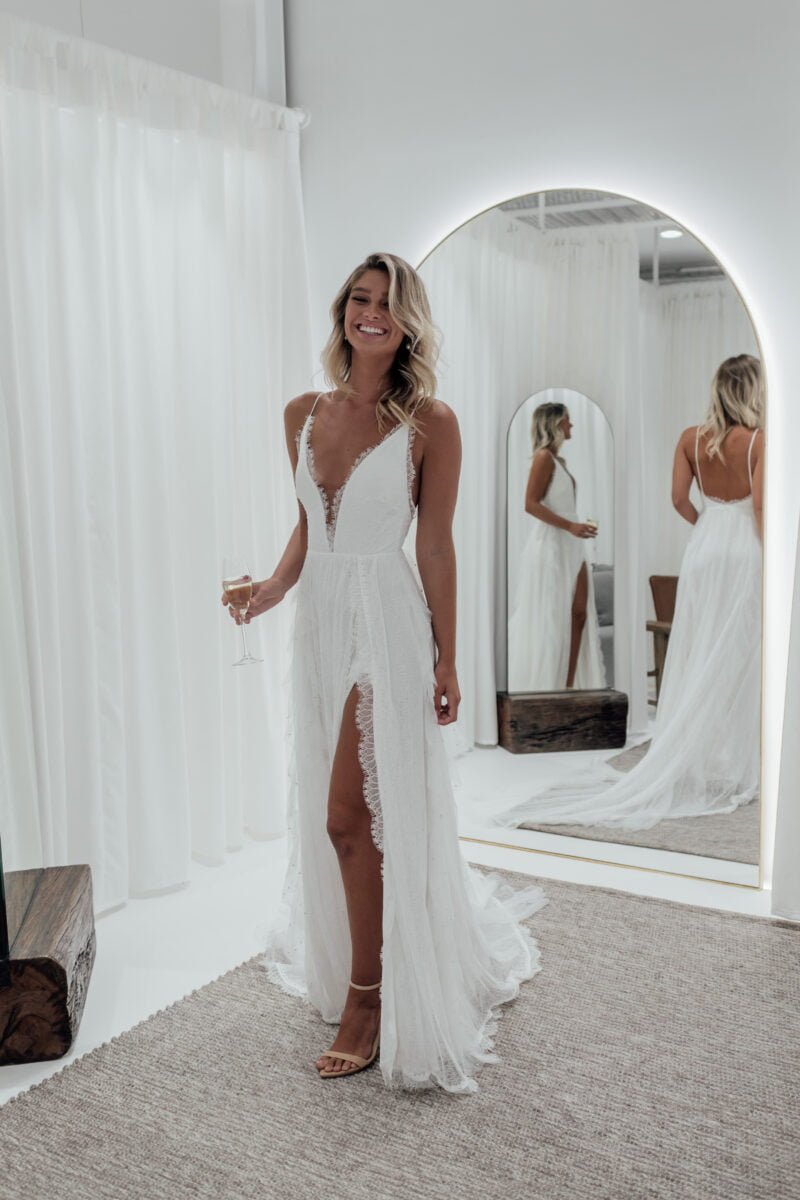
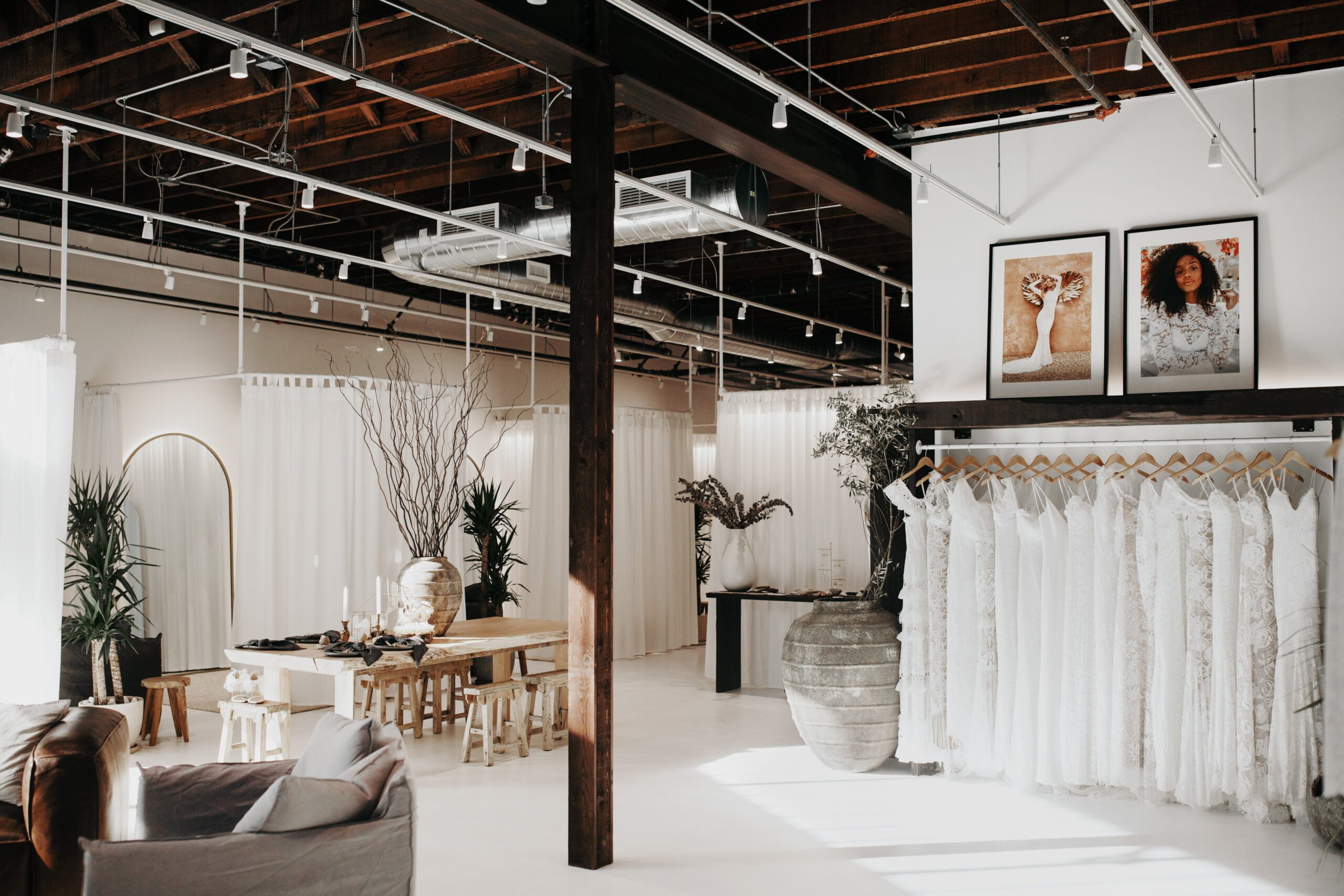
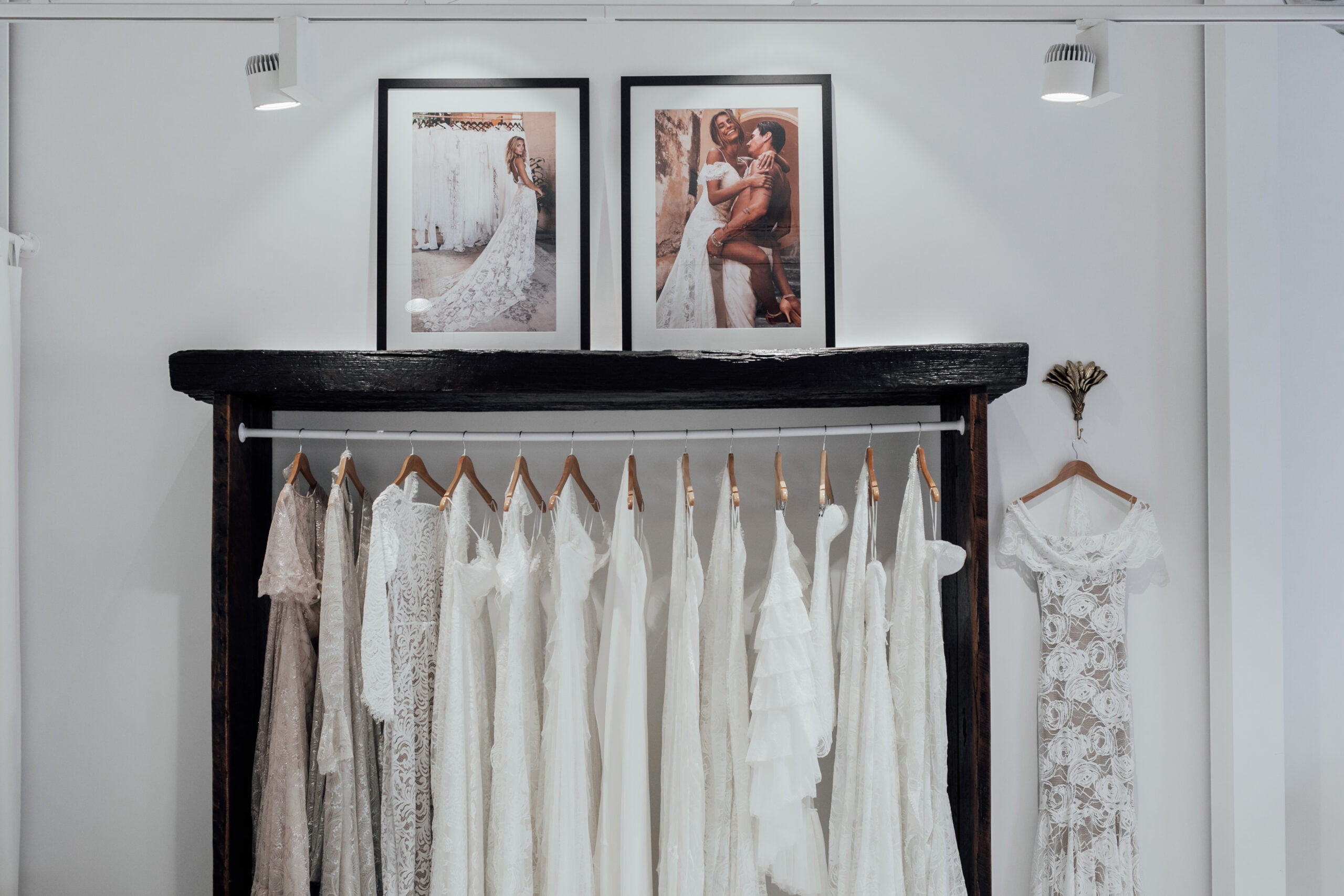
“Staying true to the District’s blend of industrial architecture and stunning 21st Century design, our Toronto showroom is warm and inviting, complete with a dramatic high ceiling, stunning bougainvillea, and beautiful natural light. It’s very important to us that our Canadian guests feel as though they’re arriving ‘home’ and being greeted by an old friend, rather than walking into a traditional bridal boutique,” she said.
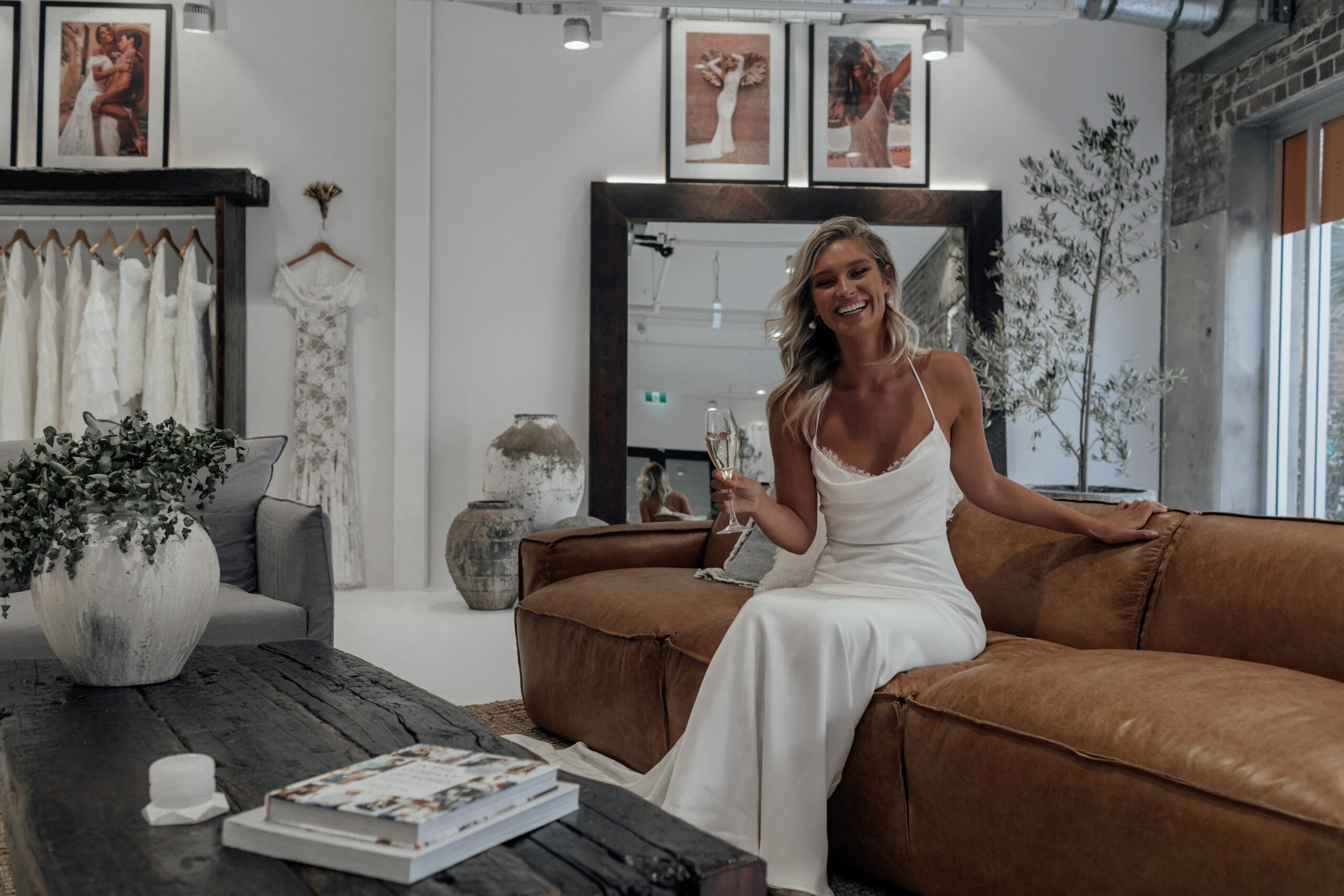
“One of our largest showrooms globally, every bride is allocated a private space that is filled with warm tones, textured rugs and gold accents. The showroom – which is 3,178 square feet – has a modern, coastal bohemian aesthetic that will really resonate with Canadian brides. Designed to feel like an extension of my home, guests are made to feel comfortable, at ease and relaxed during their appointment.
“We created the appointment experience by asking ourselves what we would really want from an appointment if we were the bride. We’d want to take photos, try on multiple gowns, sip bubblies and not pay for an appointment. So that’s what we offer, and it sets us apart from our competitors. For us, it’s always been about making every bride’s experience a destination experience and a day to remember.”
Image: Grace Loves Lace
“The complimentary, 1:1 appointment allows our brides to settle into the space and feel comfortable trying on an array of gowns, in a no pressure sales environment. Our friendly and down to earth stylists understand how stressful the wedding dress shopping experience can be, which is why they have been exceptionally trained to help with all styling needs. At the end of the day, it’s about ensuring our brides are offered a best-in-class service experience from start to finish and that they walk away feeling inspired, confident and empowered.”
Ziems said the company is on track to deliver another eight showrooms by September 2022, but did not say where they would be located. The Toronto store will be the eighth Grace space to open worldwide since January 2020.
She started Grace 10 years ago when she was searching for her own wedding gown. At the time, the market was dominated with dresses that were traditional, restrictive, structured and overpriced.
“I needed a gown that had personality, told my story and was designed with passion, movement and luxury in mind. So, I set out to revolutionize how gowns were designed and sold, liberating women from the traditional bridal shopping experience through an innovative e-commerce model,” explained Ziems.
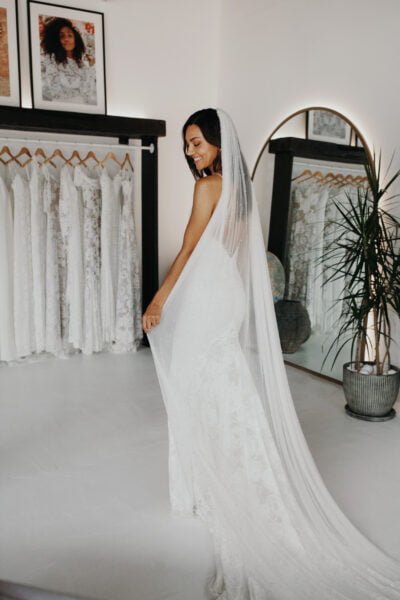
Image: Grace Loves Lace
Image: Grace Loves Lace
Image: Grace Loves Lace
“Fast forward to today, we’ve expanded our network of showrooms globally, but our design principles remain the same. Our gowns are still ethically made in Australia in our own studio in Burleigh Heads, and we employ a versatile and innovative approach to fabrics and patterns, including the use of luxurious stretch fabrics for an easy and effortless fit. We also exclusively sell through our own channels so we can provide the tailored bridal experience our customers have come to expect and deserve.”
She said Grace is the largest direct-to-consumer independent bridal brand globally and it has disrupted a stale industry to fill a gap in the market for high quality, made to order wedding gowns at an accessible price point.
All of its gowns are designed and ethically made in Australia and its signature aesthetic has always been luxury you can dance in, she added.
“Our gowns cater to the relaxed, laid-back bride as they are handmade with lightweight fabrics with no restrictive elements like zips, boning or heavy materials. What really sets us apart from our competitors is our unique showroom experience. In many ways, it’s all about creating a truly Australian vibe – laid-back living at its finest,” explained Ziems.
Image: Grace Loves Lace
Image: Grace Loves Lace
Image: Grace Loves Lace
“We don’t charge for appointments, we encourage brides to take as many photos as they want in our gowns and we focus on experience, not the hard sell. Our appointments are personalized, comfortable and stress-free – allowing brides to really enjoy the moment with loved ones. We truly feel that our unique showroom experience has amplified our success and allowed us to expand our global footprint.
“The passion and soul we infuse in everything we do is very much inspired by our customer. With all design, development and production managed in-house, we are nimble and able to respond to our customers at a rapid pace which many of our competitors who manufacture offshore are unable to do. We listen, observe and adapt based on feedback online and in all of our showrooms which has – and always will be – a crucial part of our design process. We have always designed for The Woman – not the ‘bride’. Our customer really values authenticity and innovation. We create gowns that make you feel something, they don’t just look nice.”
The company says it continues to experience rapid business growth and increased customer demand, delivering a 35 per cent increase in sales in the last financial year ending June 30.
“During COVID, we received hundreds of enquiries from desperate brides-to-be whose wedding dresses were being held in offshore factories throughout Asia. Being Australian-made, we were fortunate that we were able to continue production and deliver to brides unaffected during the global pandemic. We also saw such a huge trend of elopements and micro weddings across the globe in 2020 which our relaxed and comfortable lace and silk gowns are perfect for,” said Ziems.
Image: Grace Loves Lace
Image: Grace Loves Lace
Image: Grace Loves Lace
“Being a digital-first business, we were also able to lean on our already established virtual appointment experience – an offering that’s been around since the brand’s inception almost 10 years ago – to further amplify the customer experience during COVID. Our passionate and skillful team of stylists offer a personalized consultation to support brides-to-be in selecting and styling their wedding outfits, all from the comfort of their own homes. Luckily for us, the gown was still seen as an essential item for COVID weddings and as such, we saw a 100 per cent sales increase via our online channel year over year.”
Amid the unrivalled adversity that befell just about every community in every corner of the globe over the course of the past 16 months, it’s been difficult at times to uncover real stories of growth and success within the retail industry. As resilient and persistent as brands have been, the outcome for many as a result of the pandemic’s brutal impact has been marked primarily by misfortune and shortfall. This is particularly true when referencing the apparel sector which has been most severely and negatively effected. However, one brand that’s managed to ascend from the gloom and desolation of COVID-19, further expanding its presence in the market, is Vancouver-based fashion and lifestyle retailer OAK + FORT.
Creativity and agility
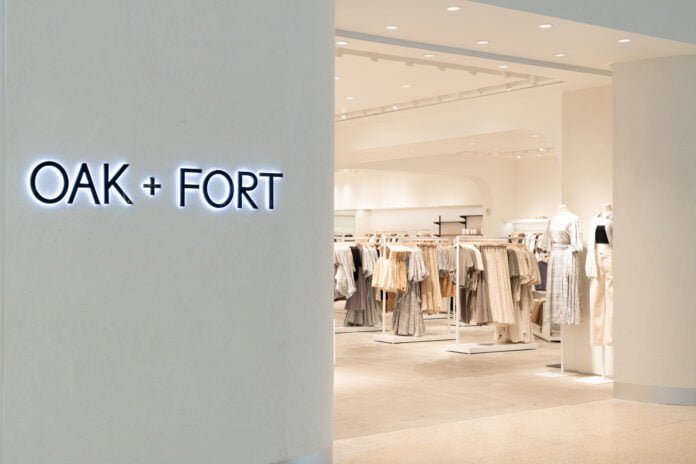
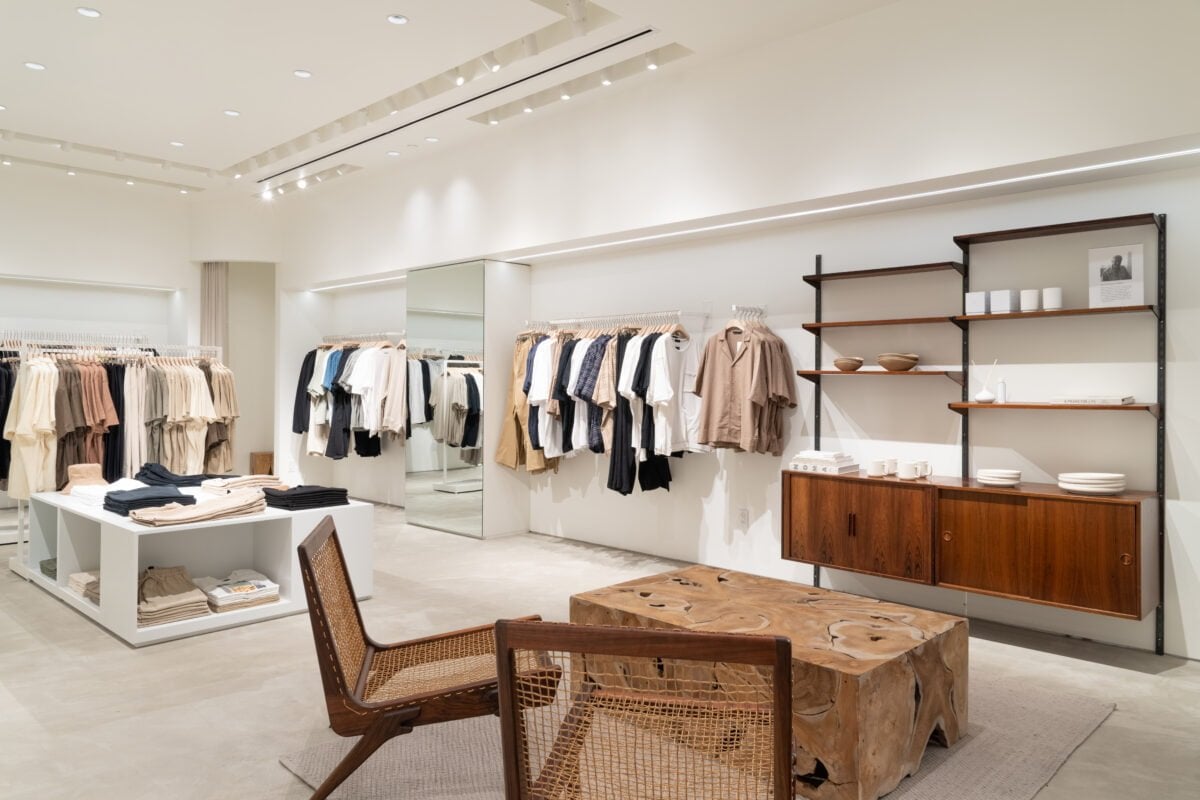
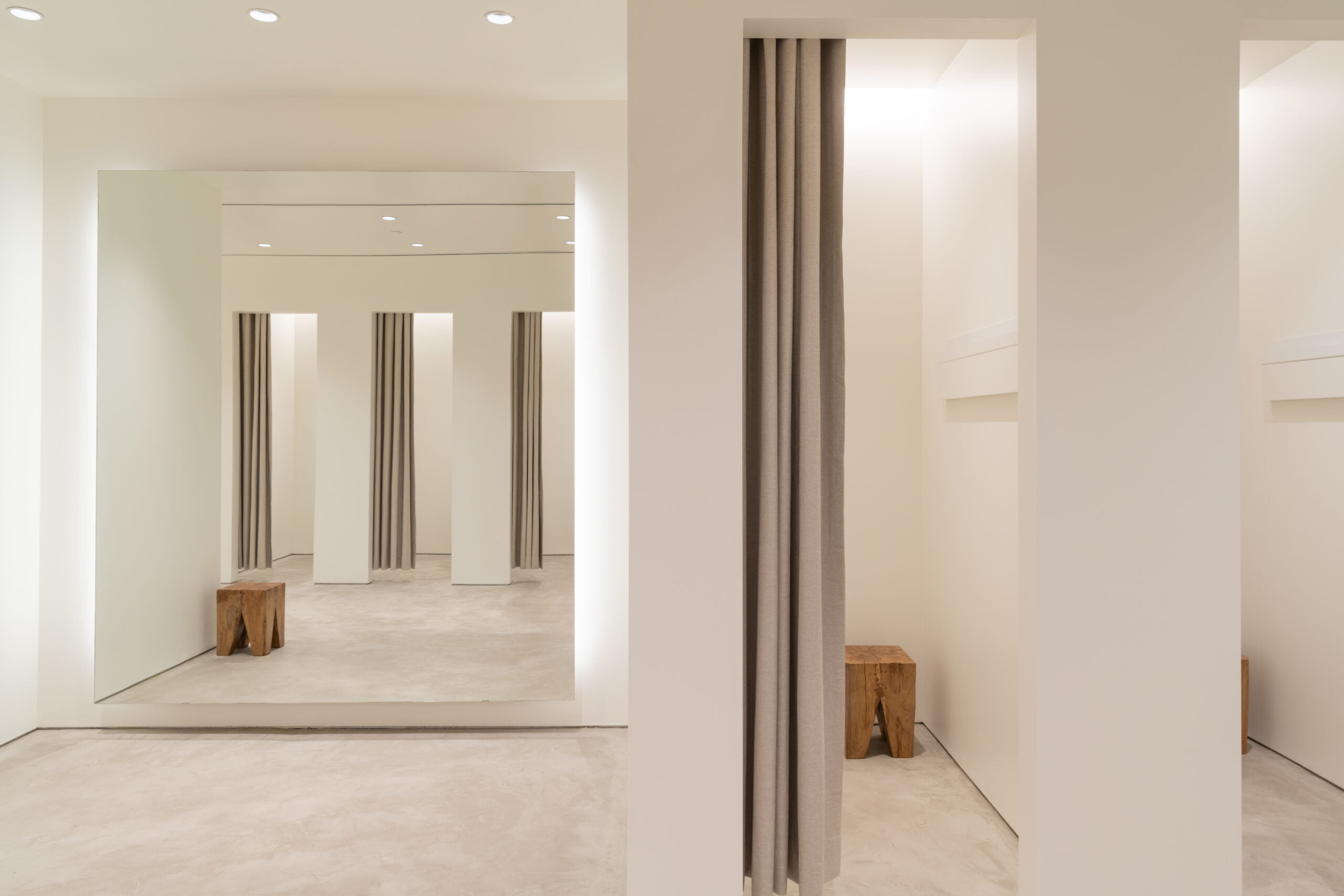
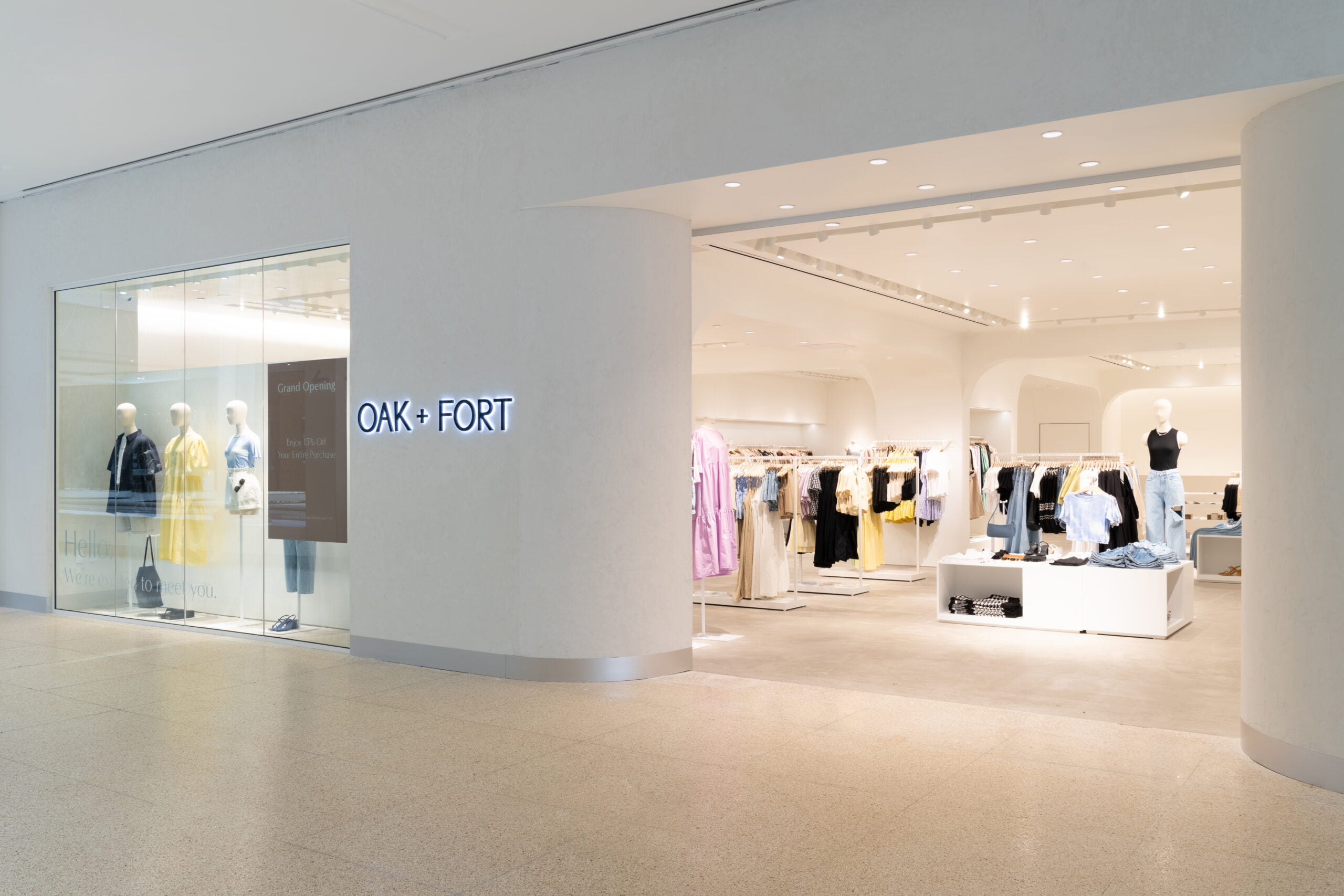
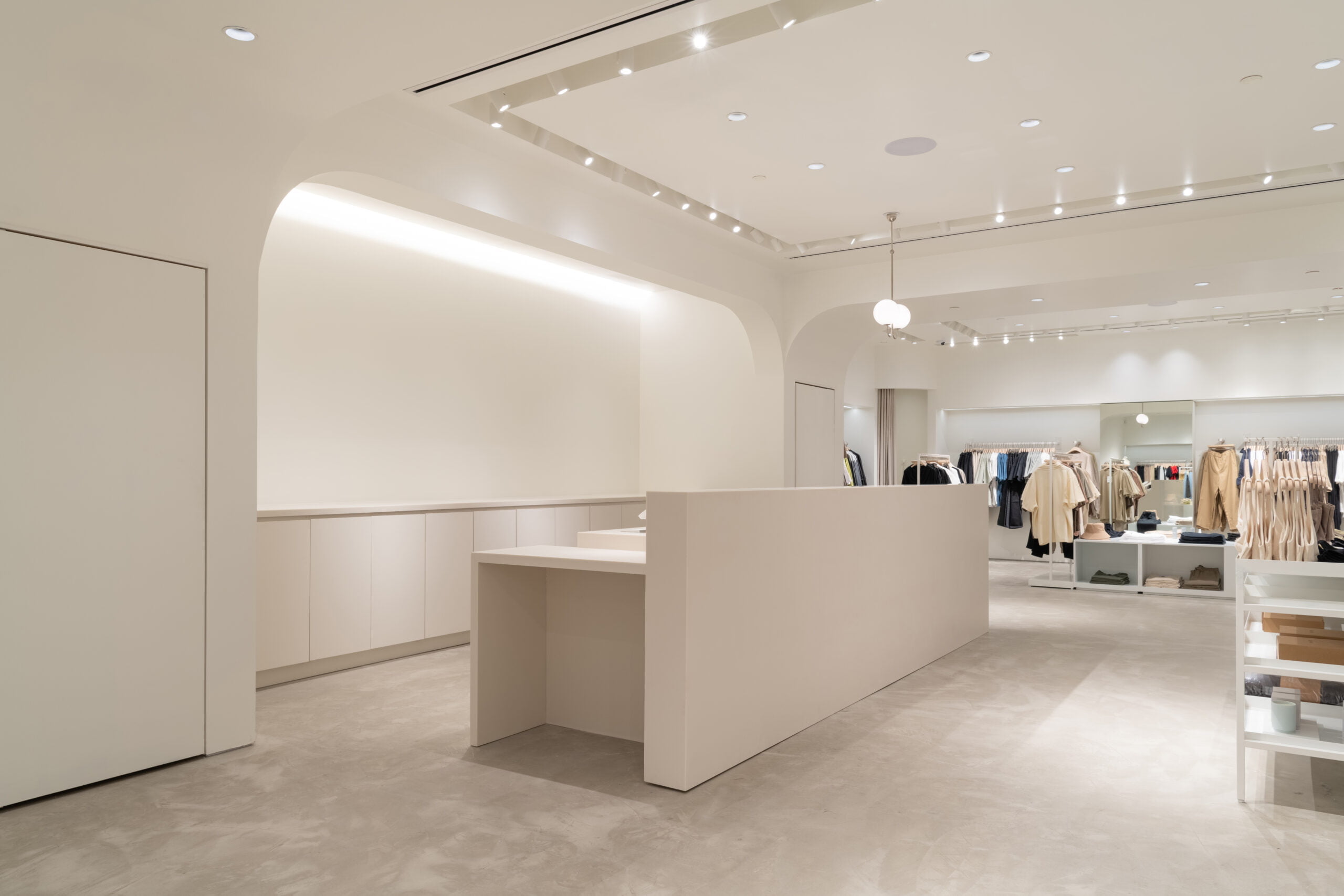
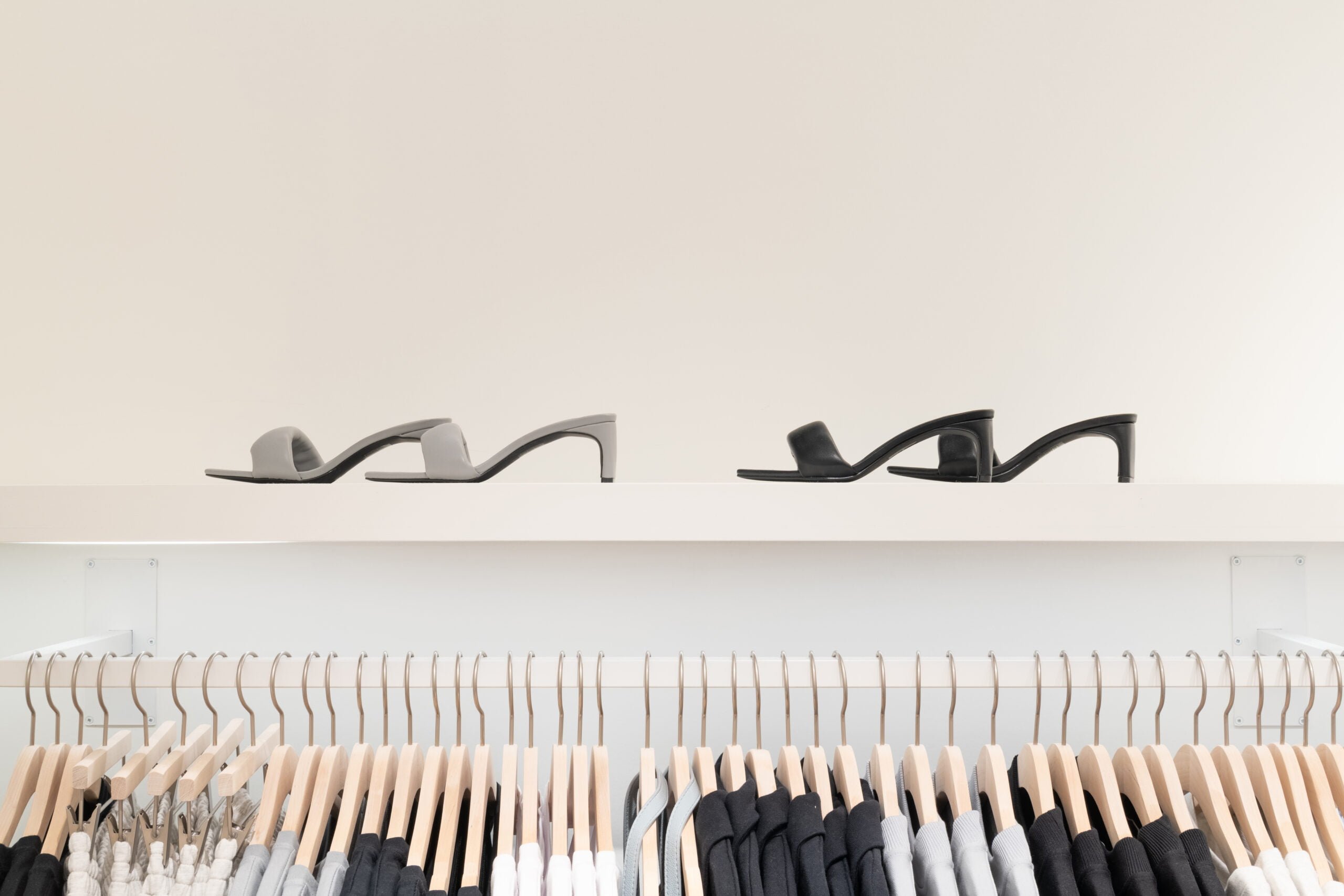
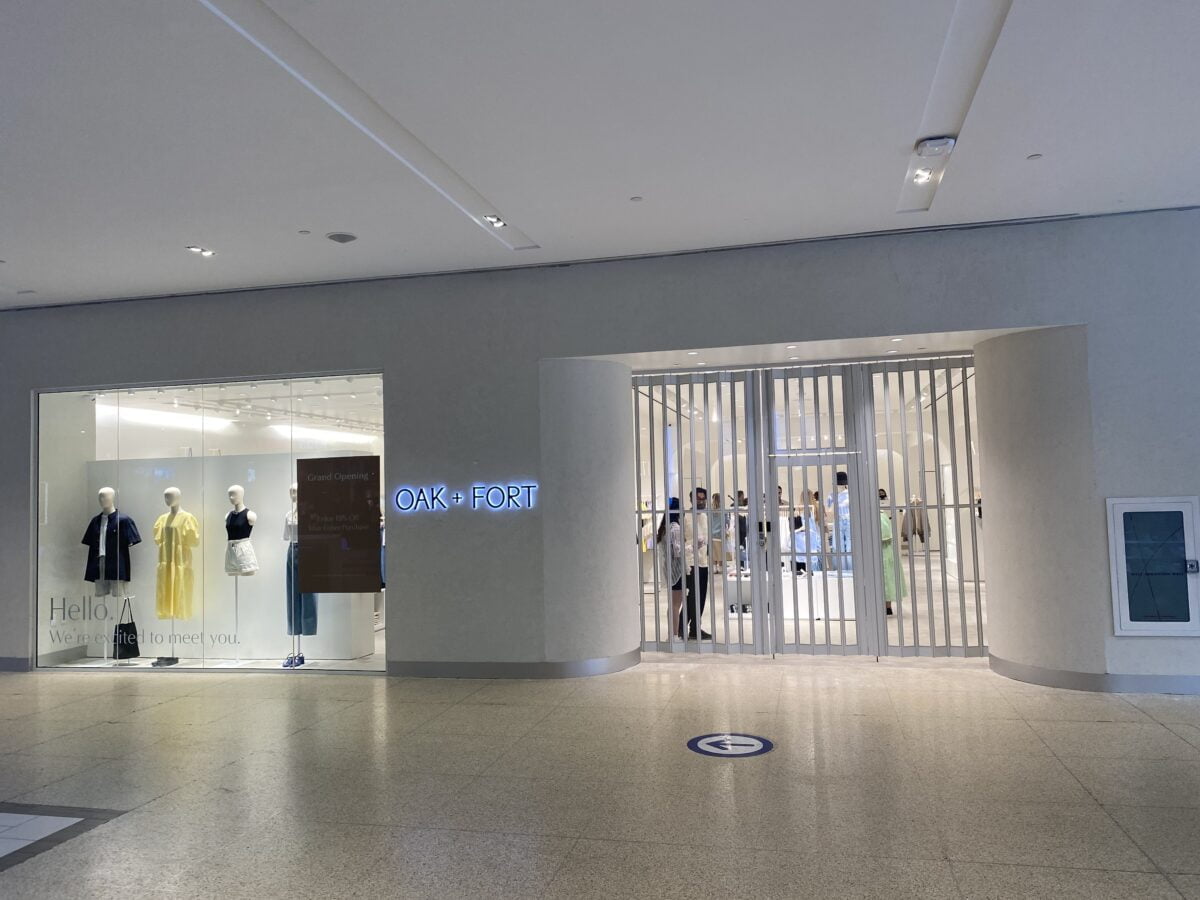
Image: OAK + FORT at West Edmonton Mall
The creator and purveyor of attainable luxuries consisting of modern essentials in full collections of womenswear, menswear, accessories, jewelry and homeware, fuses uncomplicated and sophisticated contemporary designs with versatility and functionality to create pieces that enhance the personal style of its customers. Celebrating a full decade of business just last year, the brand has enjoyed meteoric progress up to this point, growing from its original location in Vancouver’s Gastown to a network of more than 20 stores located across Canada and the United States. And, in spite of the pandemic and its impacts that have ravished much of the industry, OAK + FORT continues to grow with the grand opening of a new location in Alberta’s West Edmonton Mall. It’s a store launch and further growth for the brand that’s being met with excitement. And, as the company’s Marketing and Communications Manager, Michelle Wong, points out, it’s growth that’s been supported by creativity and agility during a challenging time.
“With such a significant store presence, the initial impacts of the pandemic were intense,” she says. “Lockdowns across multiple regions forced us to close store locations temporarily. However, we pivoted very quickly as a company, developing and enhancing our ecommerce capabilities and offering. It enabled us to change the course of our business and support the clear shift in consumer purchasing behaviour toward online channels. In addition, we also implemented omnichannel options. So, although we weren’t able to welcome customers into our stores, we were still open and accessible, offering the availability of buy-online-pickup in-store and curbside pickup. It really showed the versatility and nimbleness of the company and provided us with a means to continue engaging with our customers and accommodate some of the changes that the pandemic influenced.”
Leadership and dedication
1 of 4
Image: OAK + FORT at West Edmonton Mall
Image: OAK + FORT at West Edmonton Mall
Image: OAK + FORT at West Edmonton Mall
Image: OAK + FORT at West Edmonton Mall
Wong explains that beyond the savvy pivots that the brand made in order to navigate through the murk of the pandemic, it’s the company’s dedication and commitment to its customers and to the brand’s values that has contributed most significantly toward OAK + FORT’s growth and continued success. In addition, she lauds the leadership of the company’s Founder and CEO Min Kang, who is also the brand’s creative director and from whom, Wong says, OAK + FORT’s vision and creativity flows, inspiring everyone within the organization to keep design at the core of everything that they do. It’s a combination of values that have stood the company apart from many of its competitors, and one that’s culminated recently in further expansion, positioning it well to capitalize on an anticipated rebound in consumer confidence and spending as communities everywhere begin to reopen.
“We really believe in the future of brick-and-mortar retail,” Wong asserts. “We’re excited to welcome customers back to our stores and confident that retail will bounce back as we start to enter a post-pandemic world. The physical store will continue to drive the core of the retail experience. But it isn’t just a point of sale anymore. It’s about one-on-one engagement with the customer and providing them with exceptional service and interactions. The opening of our West Edmonton Mall store is exciting because it provides us with yet another location to create and share the OAK + FORT brand experience and engage with even more of our loyal customers.”
Expansion for the future
The West Edmonton Mall storefront during a media preview on Thursday night.
OAK + FORT’s West Edmonton Mall location becomes the brand’s largest store at about 5,000 square feet, more than double the size of most of its other locations. And, although Wong recognizes this milestone, she says that the grand opening in Canada’s largest shopping centre is of even greater significance given the history of the brand, whose second ever location was on Edmonton’s Whyte Avenue, which has since closed. As a result, the West Edmonton Mall opening returns the brand to the forefront of shopping in the city, joining its two other Alberta stores located at Southgate Centre and Chinook Centre. In addition, Kang, the company’s CEO, spent a significant amount of time living in the city, which she cites as a special time with respect to her own personal growth and development. Because of this, Wong explains, the launch of the West Edmonton Mall store is serving as a homecoming of sorts. But, more importantly, she says, it’s providing a starting point for the future of OAK + FORT.
“We’re definitely in expansion mode as a brand. Being able to transition through the pandemic as well as we did has positively positioned us to open more stores and grow our network. We’ll be opening a location in Bellevue Square in the Seattle region and opening a store on Broadway in New York’s Soho District. We’re also planning to open additional pop-up locations in Canada and the United States in addition to those that we just opened at McArthurGlen Outlet in Richmond, Guilford Town Centre in Surrey and Vaughan Mills in the Toronto region. It’s a really exciting time to be a part of the OAK + FORT brand. In addition to expanding our physical presence, we’ve also been introducing a new environmentally conscious product line, OAK Refined, which embodies a substantial step in reaching our goals of reducing the impact of our products. We’re all looking forward to the next 6 to 12 months with a great deal of optimism and a focus on continuing to develop and enhance our omnichannel efforts, delivering amazing service to our customers and combining our physical retail offering with our booming ecommerce business to ensure a holistic and consistent OAK + FORT experience.”
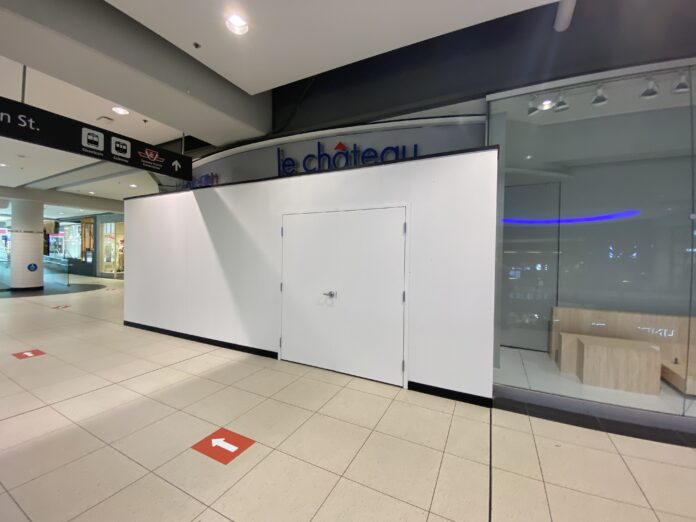
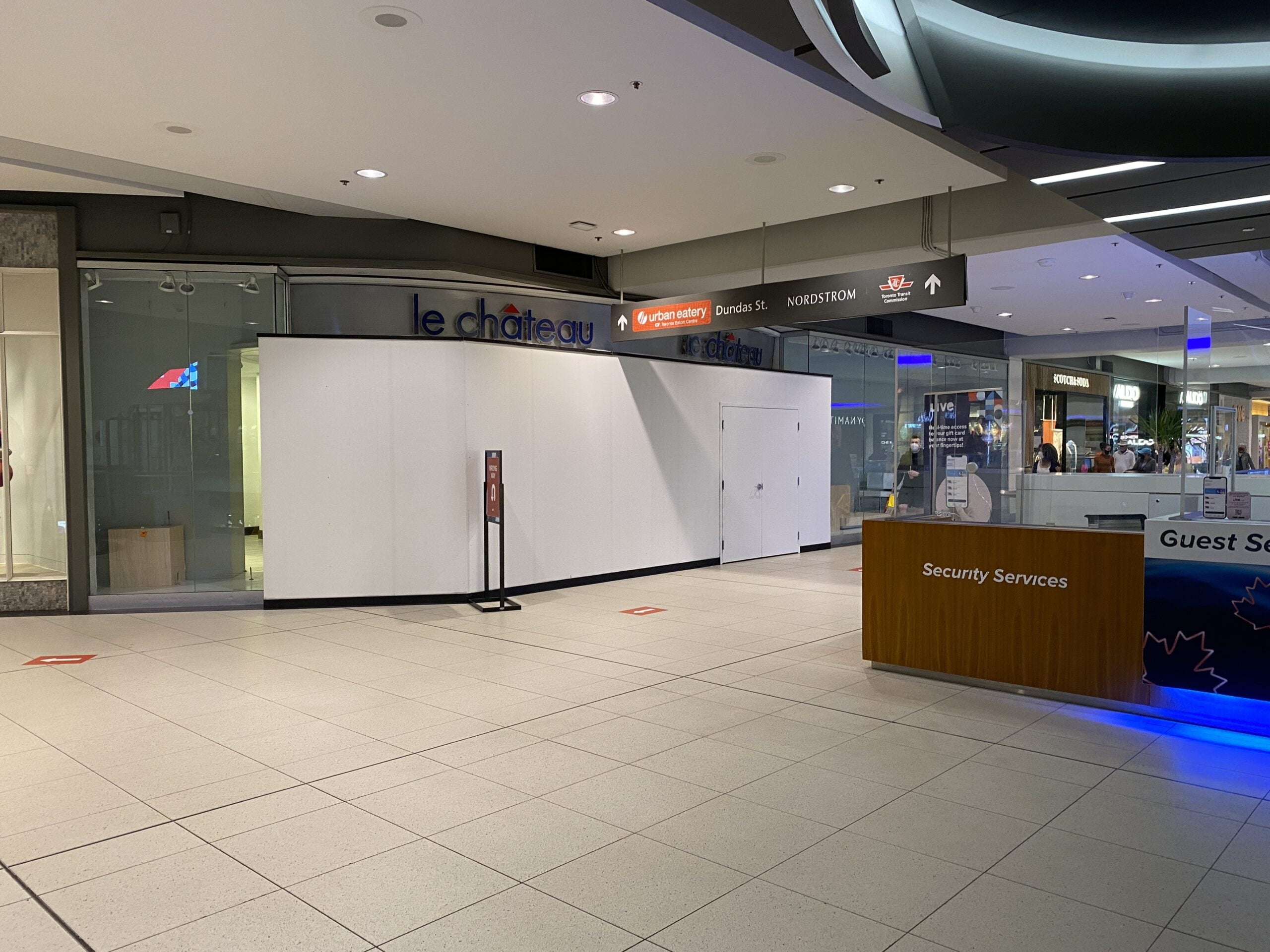
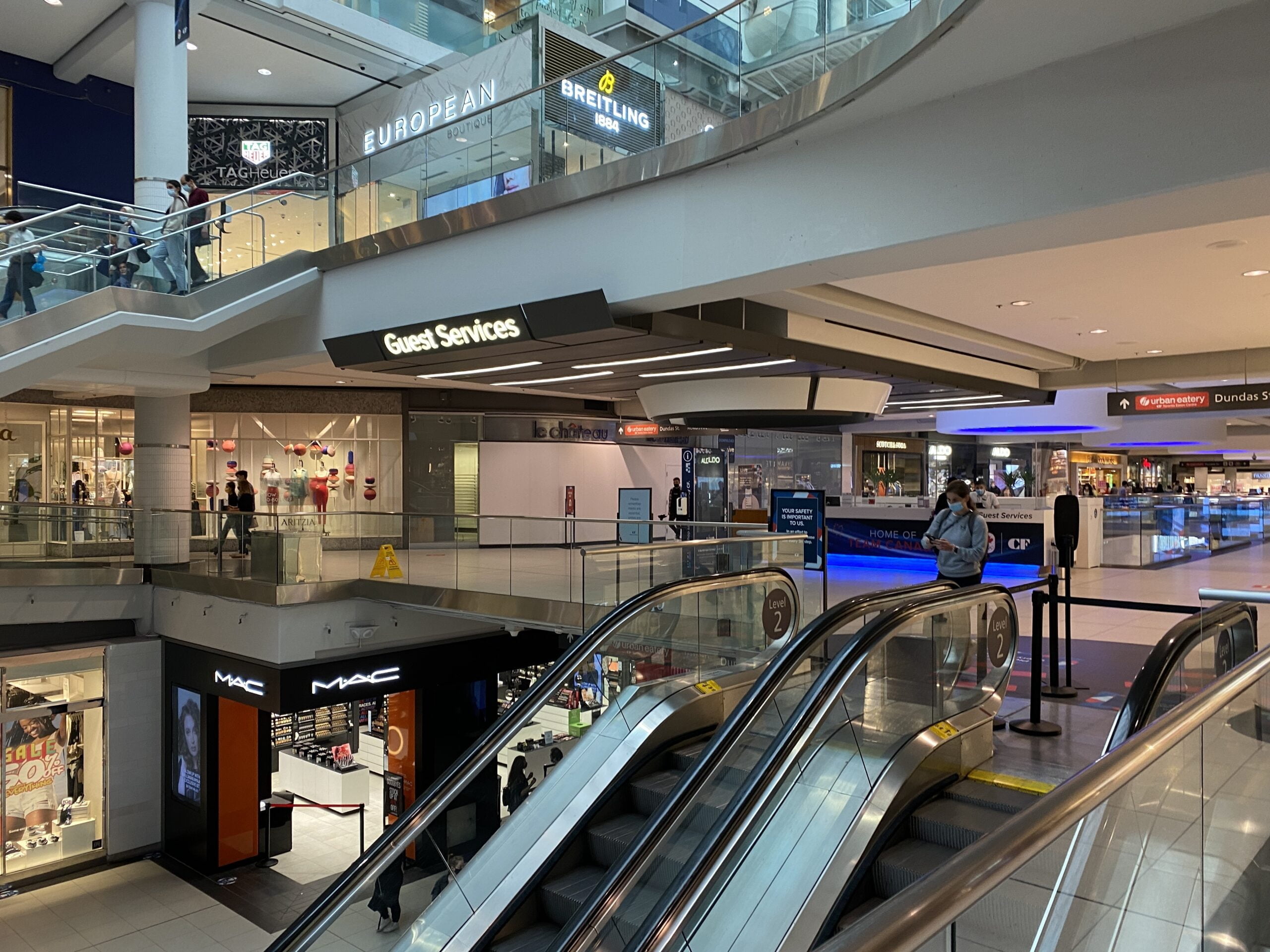
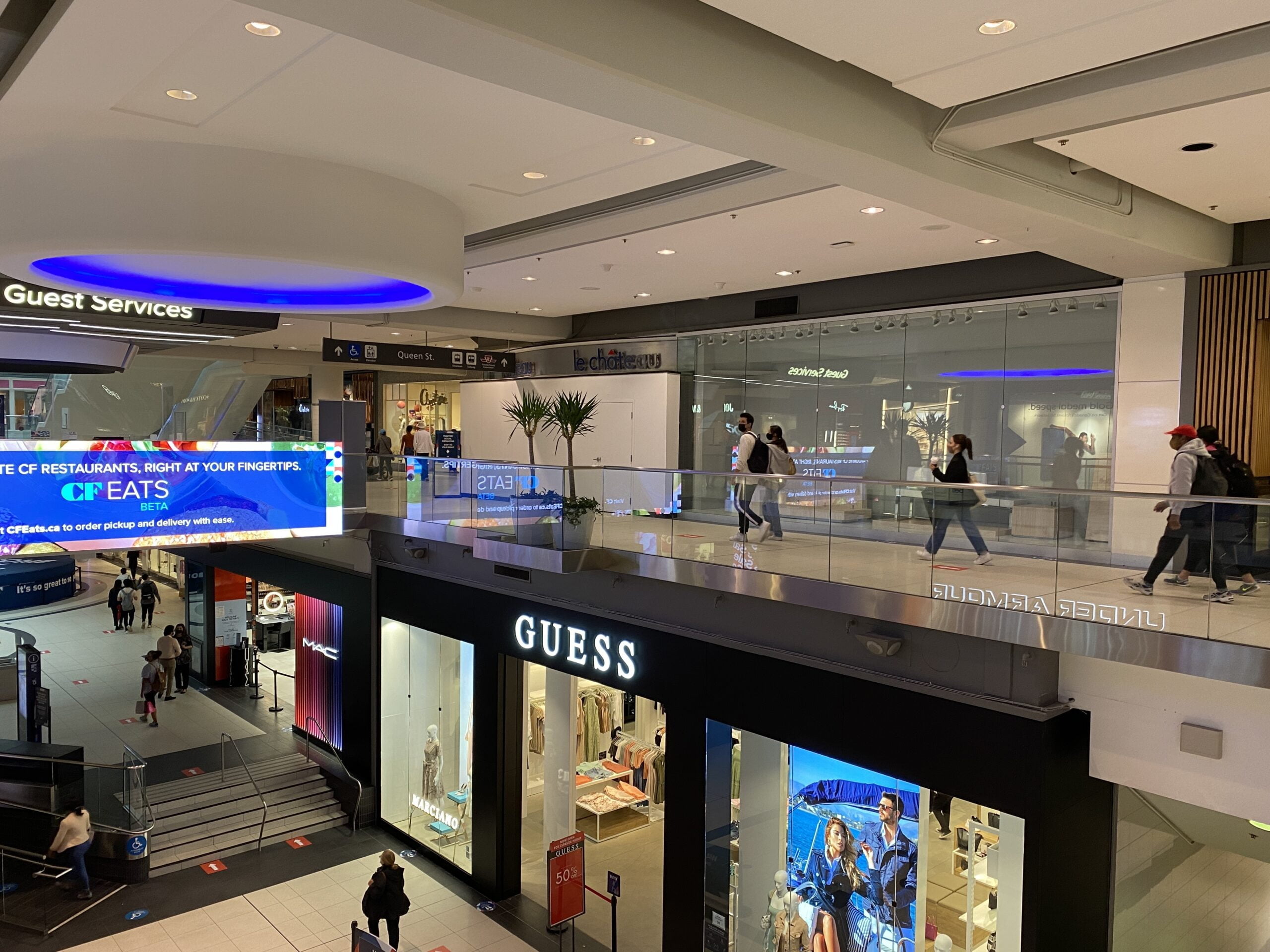
Future Boathouse Location at CF Toronto Eaton Centre - Photo by Dustin Fuhs
The Ontario-based fashion retailer will be moving into Toronto’s downtown core again and taking a high-traffic location in the CF Toronto Eaton Centre.
Boathouse closed its long-time location at the corner of Yonge & Edward Streets pre-pandemic. Being steps from Yonge Dundas Square gave the brand curb-appeal, but the decision to close the store didn’t mean that they were exiting the market entirely. That location in The Atrium has since opened as a West 49.
With the help of a Linkedin post from Janet Weatherhead, Director of Sales and Operations for Boathouse/Blackwell Supply Company, the brand can share that they are indeed moving into the 2nd level location that was recently vacated Le Chateau. The store is scheduled to open in September 2021.
We will be bringing more announcements from the Toronto Eaton Centre, as the property will be announcing a number of new tenants as shopping centres begin to re-open and move into full capacity in Ontario.
1 of 3
Future Boathouse Location at CF Toronto Eaton Centre - Photo by Dustin Fuhs
Future Boathouse Location at CF Toronto Eaton Centre - Photo by Dustin Fuhs
Future Boathouse Location at CF Toronto Eaton Centre - Photo by Dustin Fuhs
Craig speaks with Dr. Alan Ulsifer, CEO of FYidoctors, discussing the optical company’s expansion into medical aesthetics. Dr. Ulsifer reveals that his company is expanding further in Canada as well as into the United States and eventually globally.
The Weekly podcast by Retail Insider Canada is available on Apple Podcasts, Stitcher, TuneIn, Google Play, or through our dedicated RSS feed for Overcast and other podcast players.
**Podcast Sponsor (MSC): As one of the world’s leading container ship lines, MSC is promoting a sustainable business model that goes far beyond the ‘business as usual’ approach. [Read more on MSC’s Sustainability Program]
Drop us a line at Craig@Retail-Insider.com. You can also rate us in Apple Podcasts or recommend us in Overcast to help more people discover the show!
Background Music Credit: Hard Boiled Kevin MacLeod (incompetech.com). Licensed under Creative Commons: By Attribution 3.0 License. http://creativecommons.org/licenses/by/3.0/
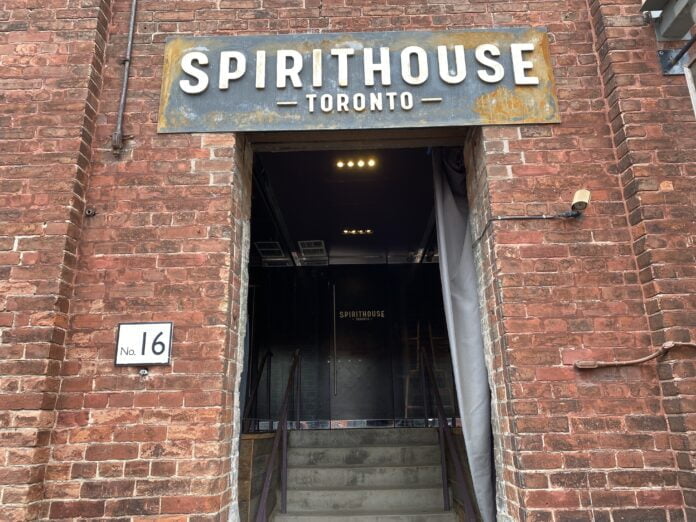
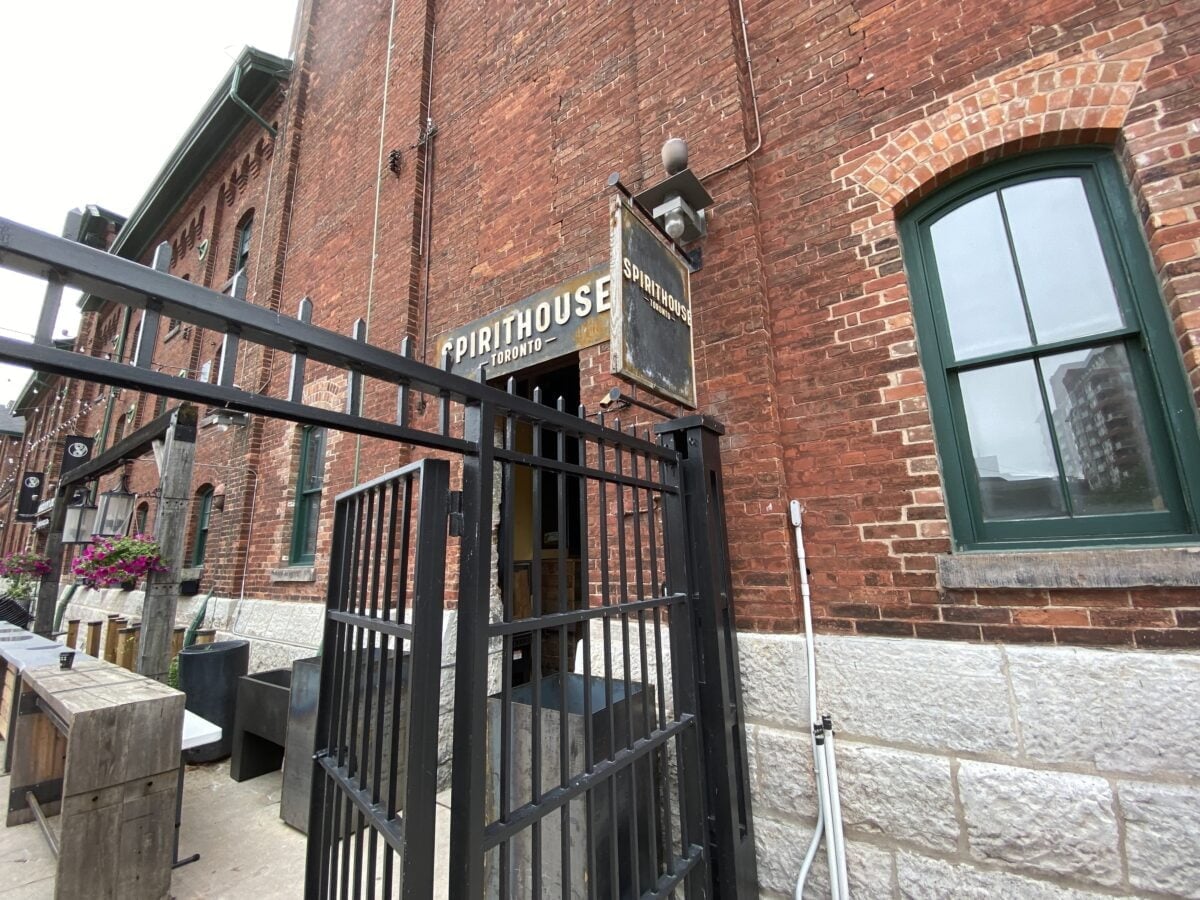
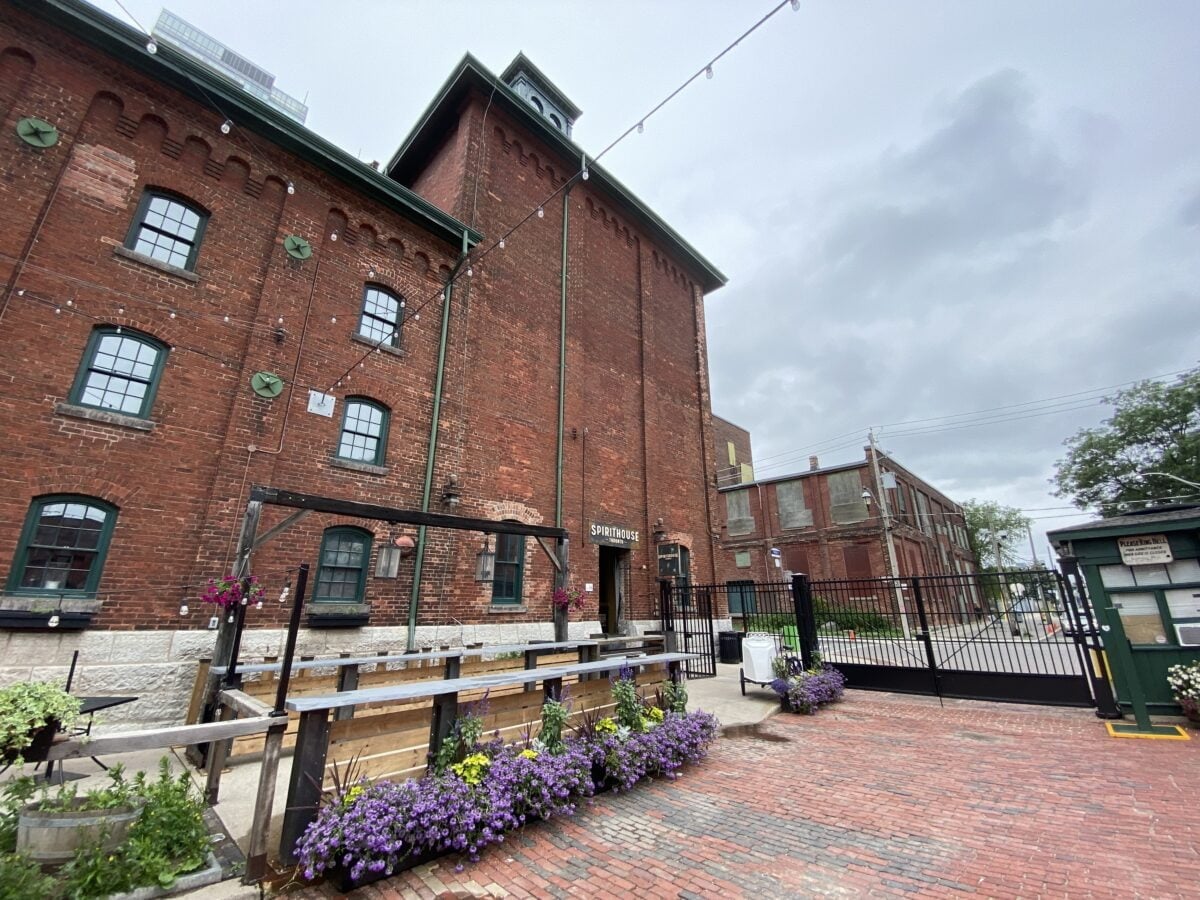
SpiritHouse Toronto in the Distillery District - Image by Dustin Fuhs
“Purveyors of fine spirits. Makers of spectacular cocktails. Merchants of all that is drinking.”
SpiritHouse Toronto will be opening up a new entertainment venue inside The Distillery District, which will see the brand come back to life after selling their location at 487 Adelaide St. W (King West) back in 2018. Owned by industry veteran Len Fragomeni, the bar will be joining their sibling-company Toronto Institute of Bartending, and Founder’s Original, a premium ready-to-drink cocktail company which sells it canned and bottled bar-quality cocktails across the country. Both are conveniently located directly above in the same building after relocating to the Distillery in 2018.
Len Fragomeni
SpiritHouse Toronto will have its Patio Popup live Aug 5th, while the inside space is polished up for a full fall opening. Cocktail offerings will include SpiritHouse’s signature assortment of smoked Old Fashioneds along other menu classics such as their English Therapy, Netflix N’ Chill, Whisky with Benefits and Mayan Remedy. They will also be resurrecting their self-guided whisky flights such as The Kentucky Bourbon Trail as well as the extremely popular Discover Scotland, which allows customers to learn and sample whiskies from the six major scotch regions. Food will not fall short, but limited to tapas style offerings that pair well with spirits and cocktails.
“This time around we’re going to add another layer to the experience”, says Len Fragomeni. Everything you taste from and with, will be available in their retail storefront for customers to experience at home or gifting. “Everything from our specialty glassware to our custom-made barrel-stave flight boards will be available for purchase. We want our customers to be able to bring our experience home and share our passion for all that is drinking refined with their friends, family and colleagues. We have so many more exciting experiences to share, and our entire team is excited for this next chapter in Toronto’s spirits and cocktail scene. It’s going to be a fun second go around. ”
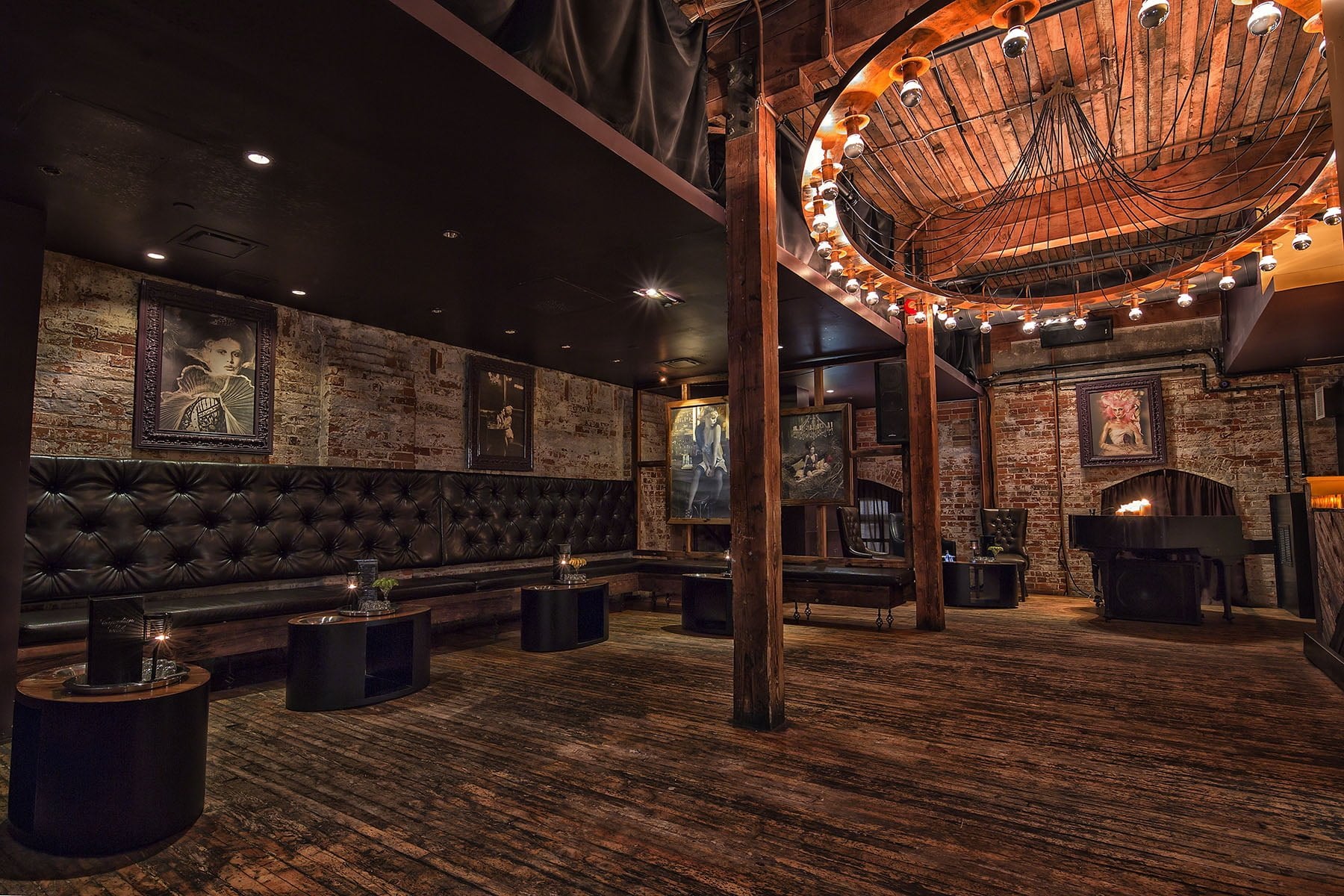
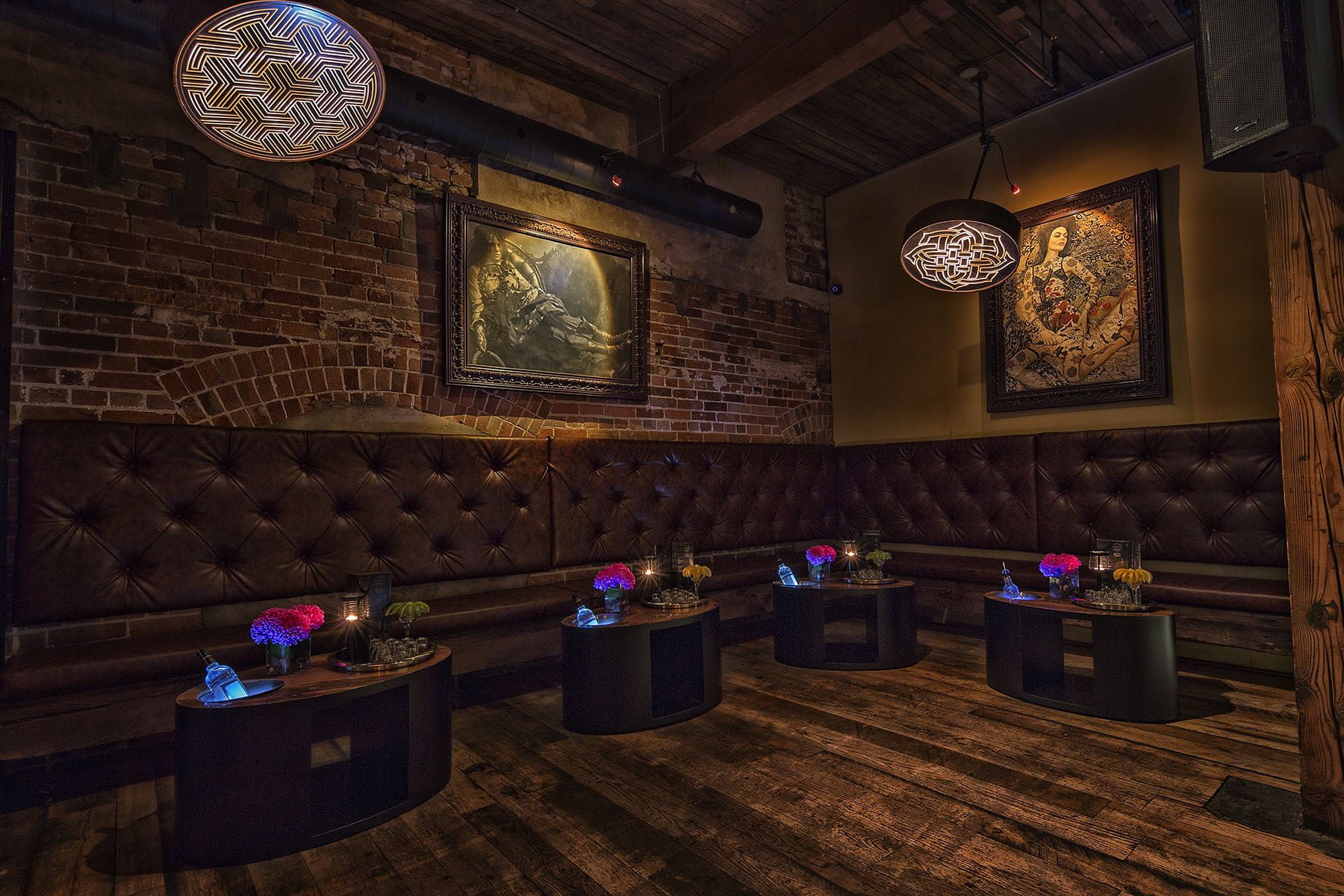
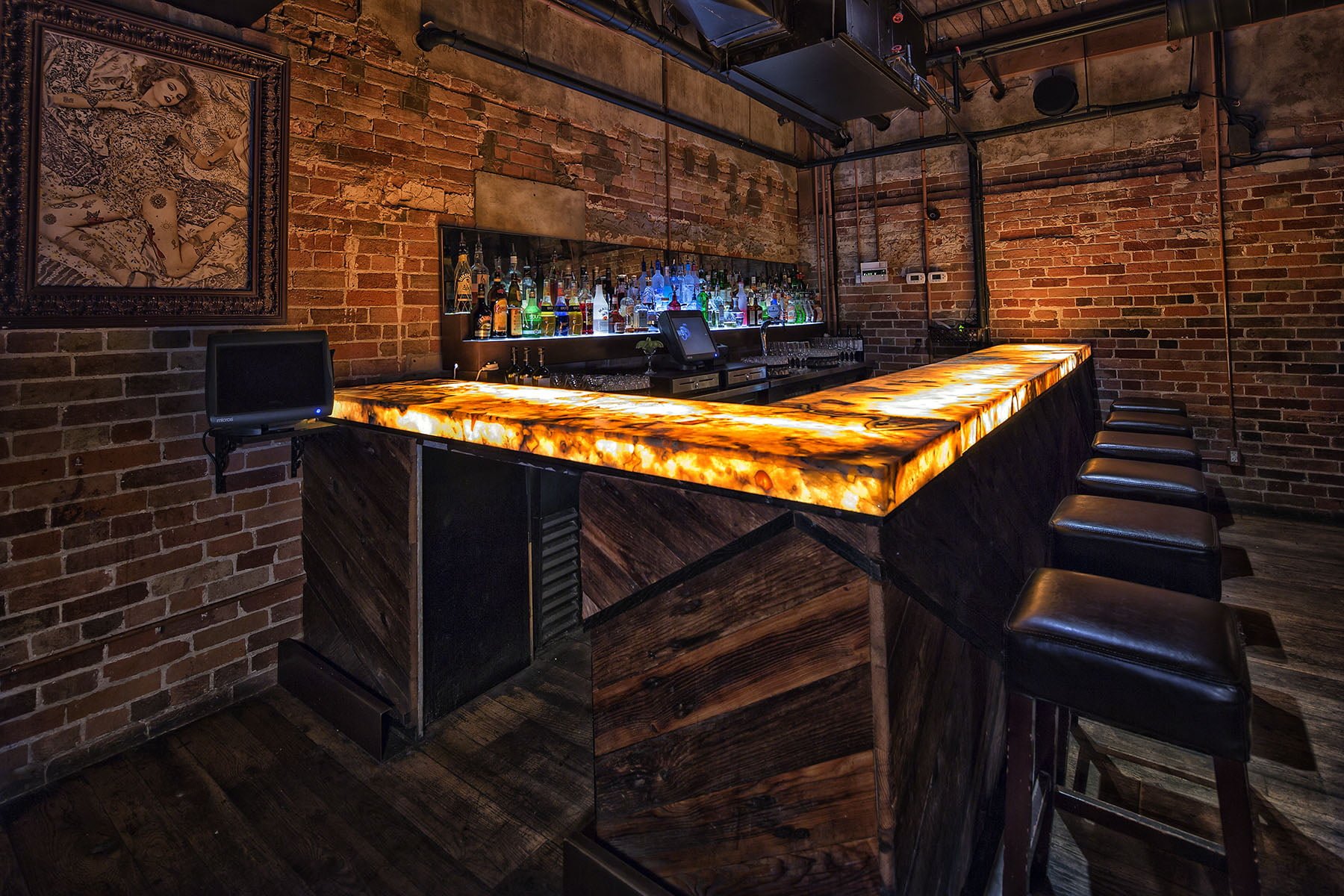
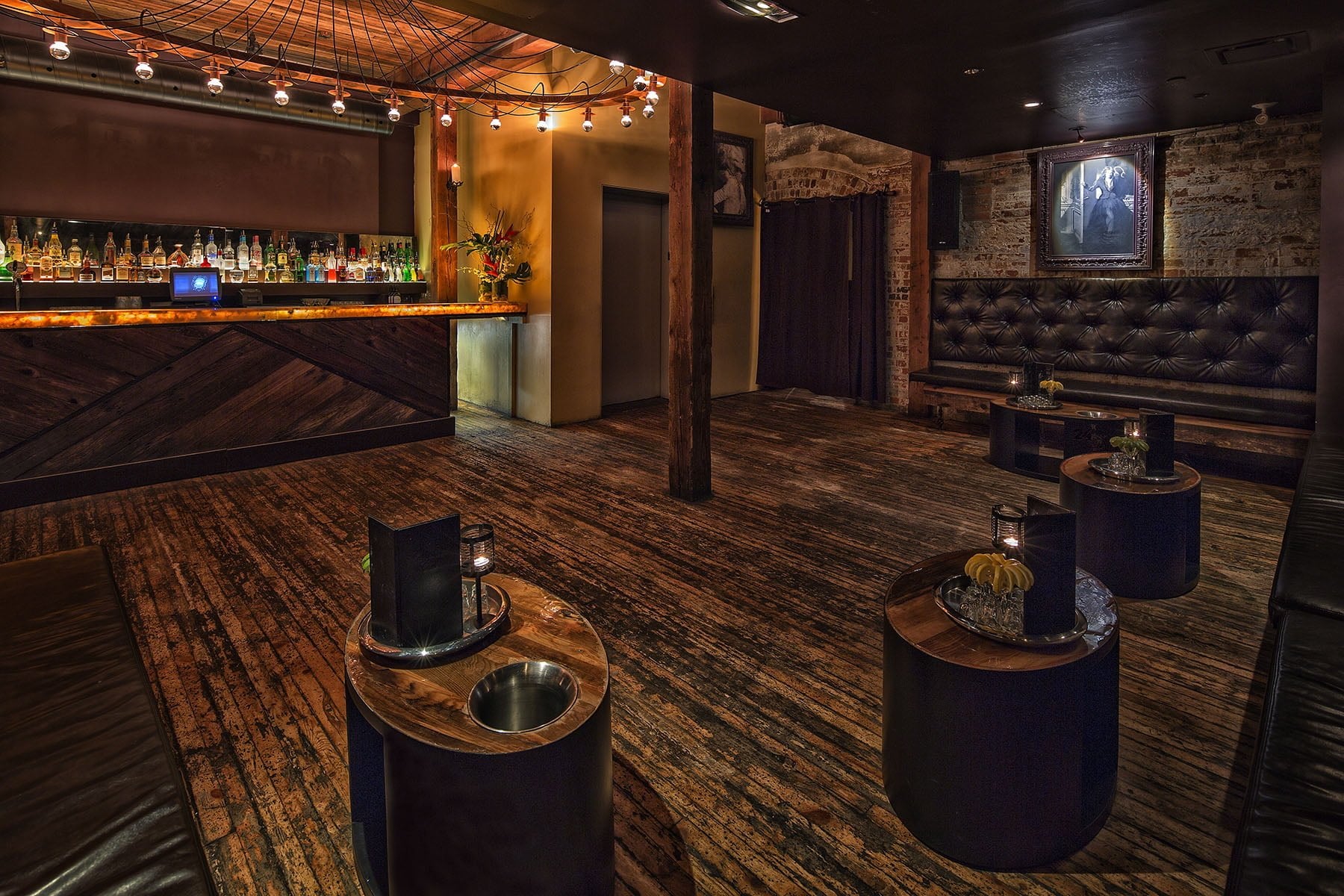
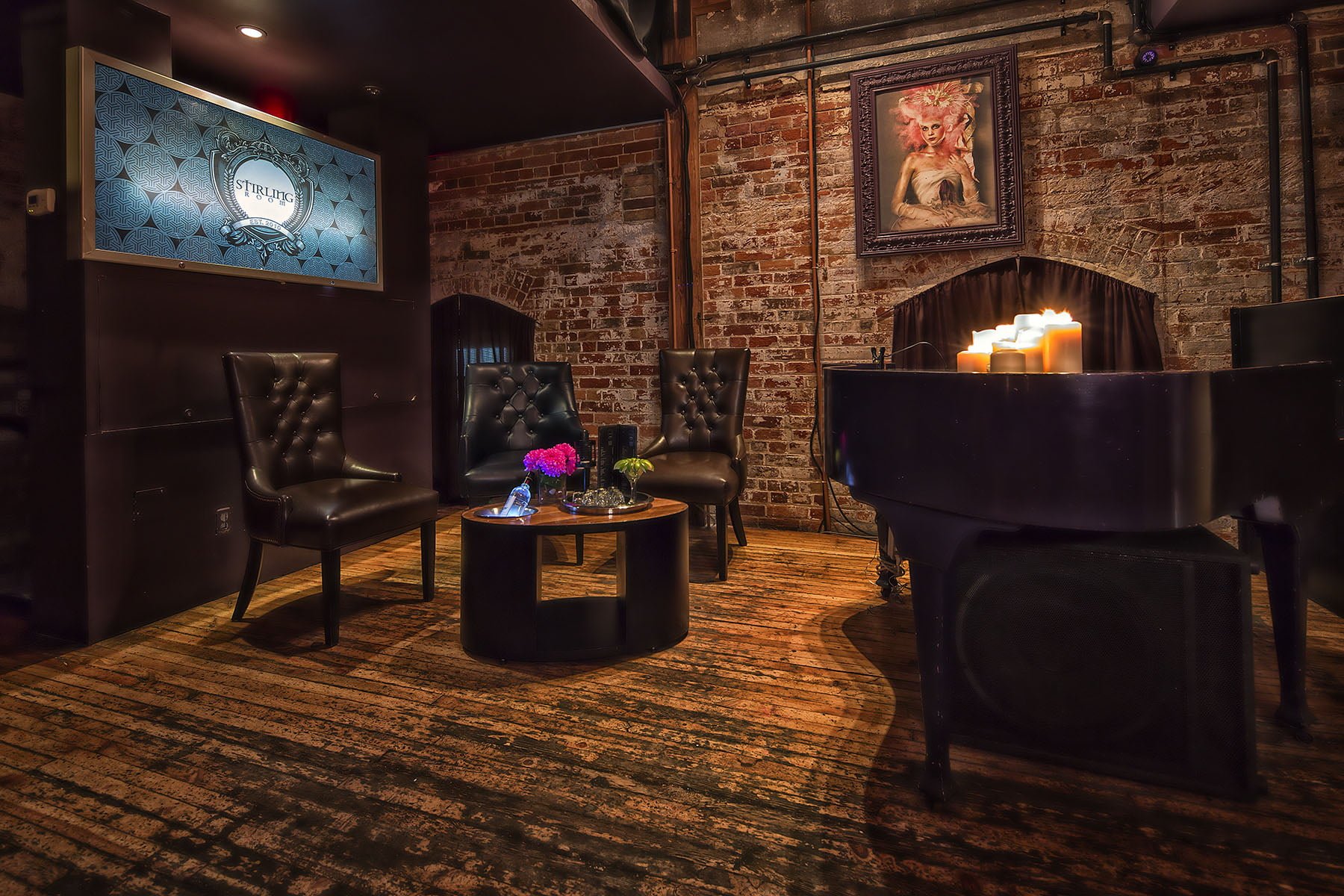
The brand will be taking over the former Stirling Room, which opened in 2010 and had incorporated the unique architecture of the Distillery into a club that was highly attractive for private events. We’ll be including photos of the Stirling Room below, as it will give context into the space that will be transforming into SpiritHouse Toronto.
1 of 5
Interior of the Stirling Room at the Distillery District (Image: Stirling Room)
Interior of the Stirling Room at the Distillery District (Image: Stirling Room)
Interior of the Stirling Room at the Distillery District (Image: Stirling Room)
Interior of the Stirling Room at the Distillery District (Image: Stirling Room)
Interior of the Stirling Room at the Distillery District (Image: Stirling Room)
This new entertainment venue will be joining a growing community of new tenants in The Historic Distillery District. We will be bringing more announcements from the area, as the property isn’t done filling out their roster.
SpiritHouse Toronto in the Distillery District – Image by Dustin FuhsSpiritHouse Toronto in the Distillery District – Image by Dustin Fuhs
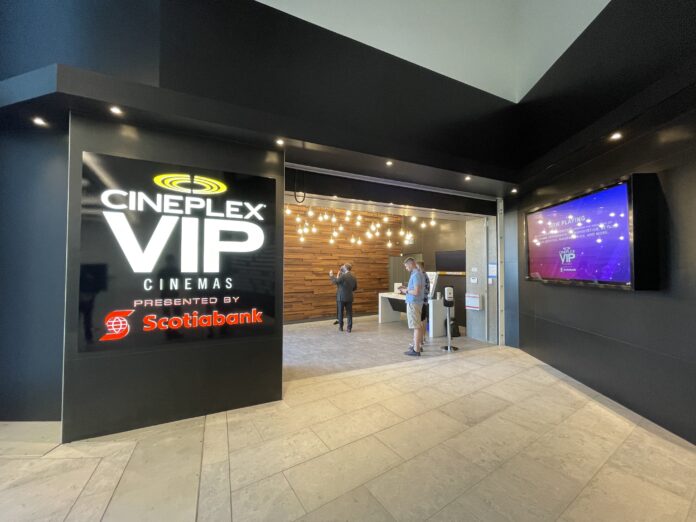
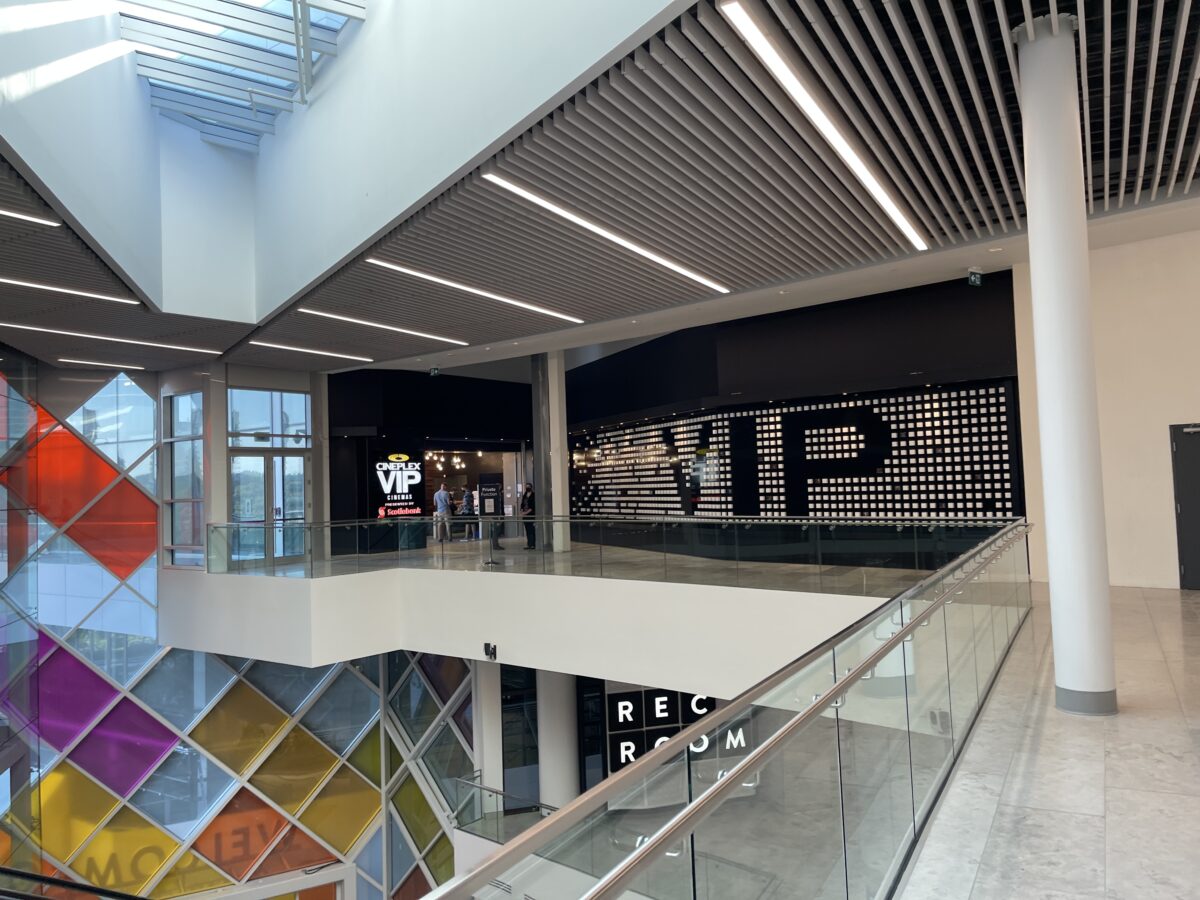
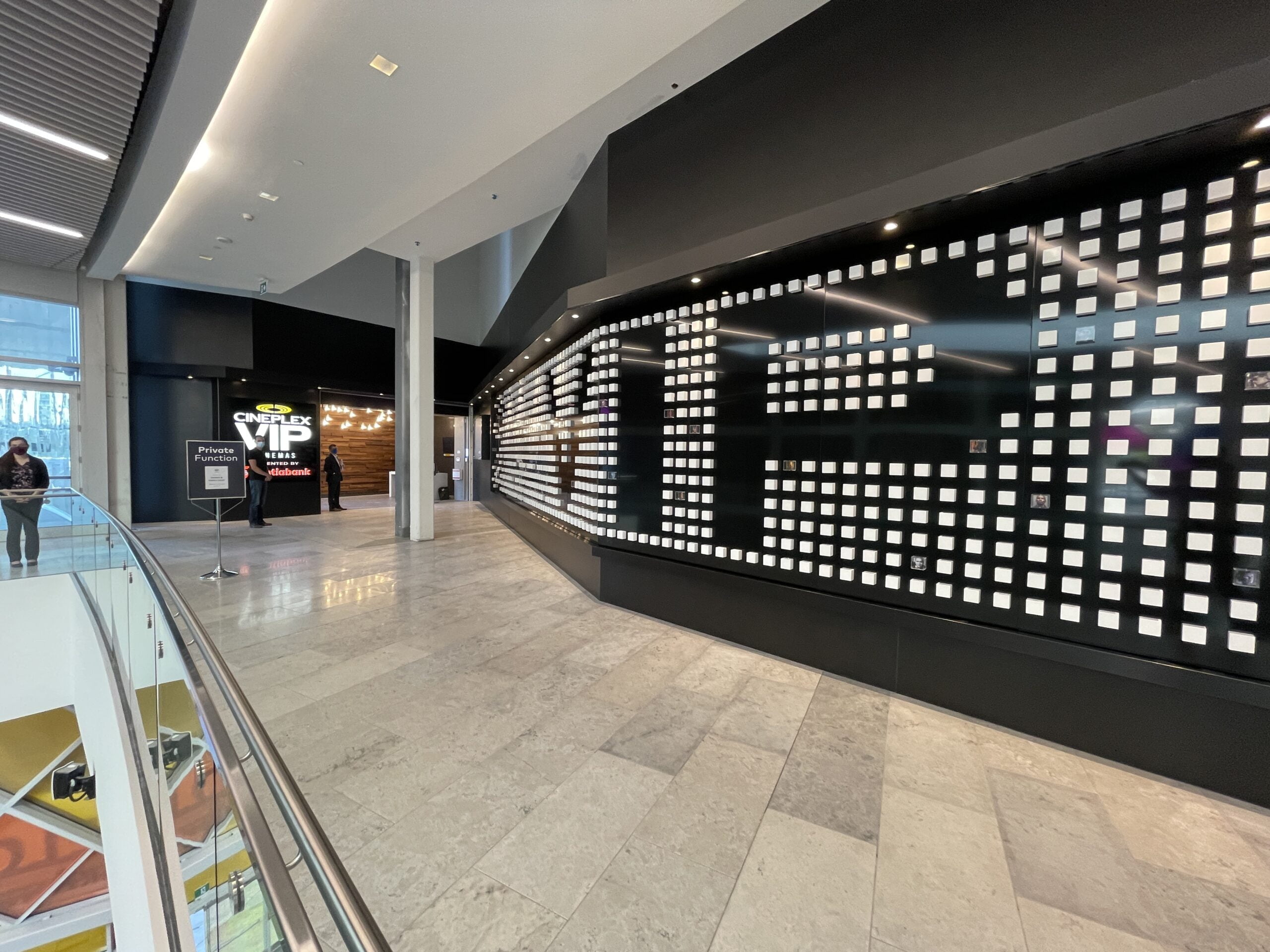
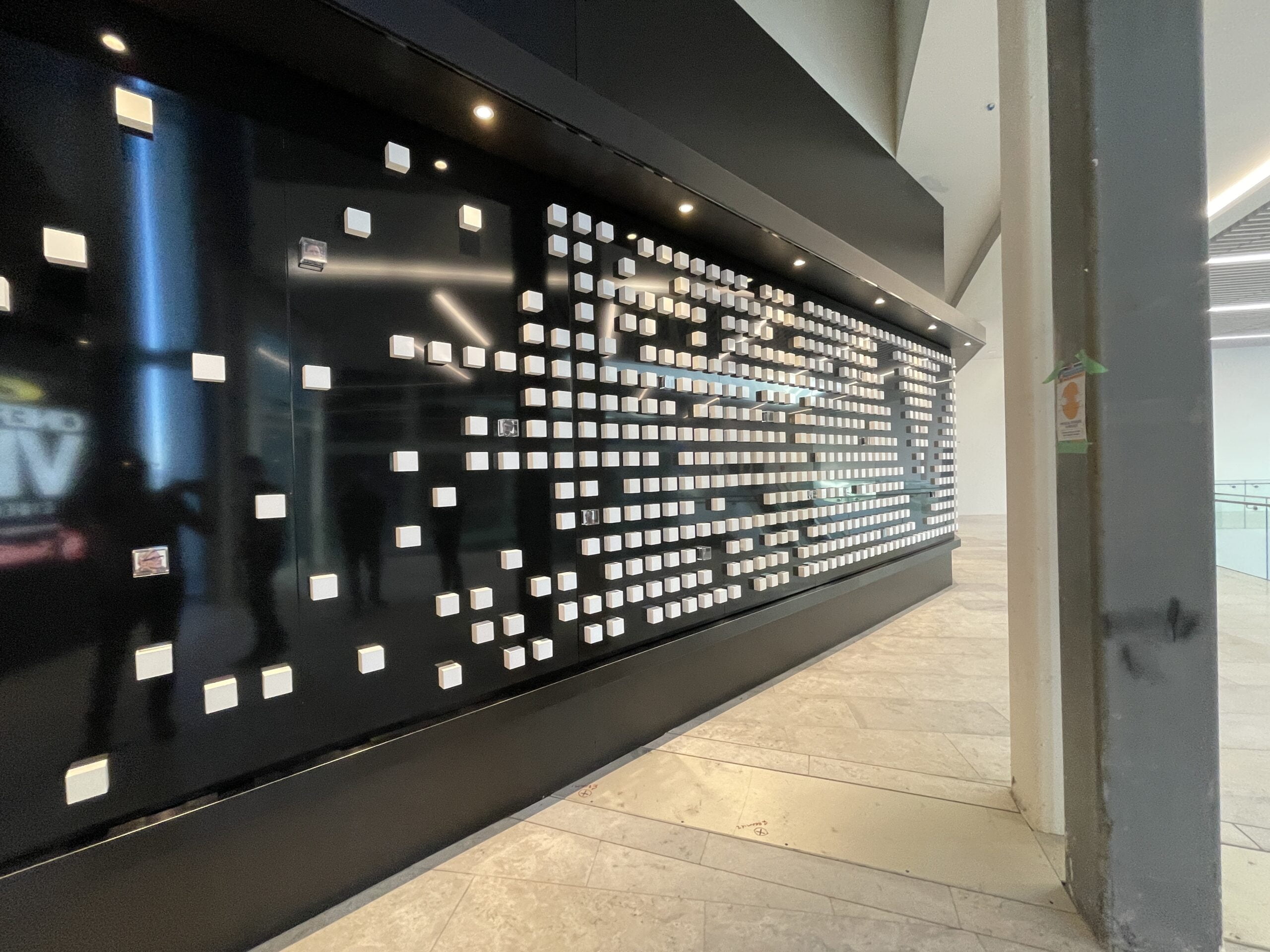
Cineplex VIP entrance at The Amazing Brentwood. Photo: Lee Rivett.
Cineplex VIP entrance at The Amazing Brentwood. Photo: Lee Rivett.
Cineplex VIP entrance at The Amazing Brentwood. Photo: Lee Rivett.
Similar to The Rec Room, the Cineplex VIP cinemas caters to the adult-only demographic by exclusively hosting five (19+) auditoriums and no other theatre formats (for example, family-friendly IMAX, UltraAVX™, D-BOX Motion Seats, etc.).
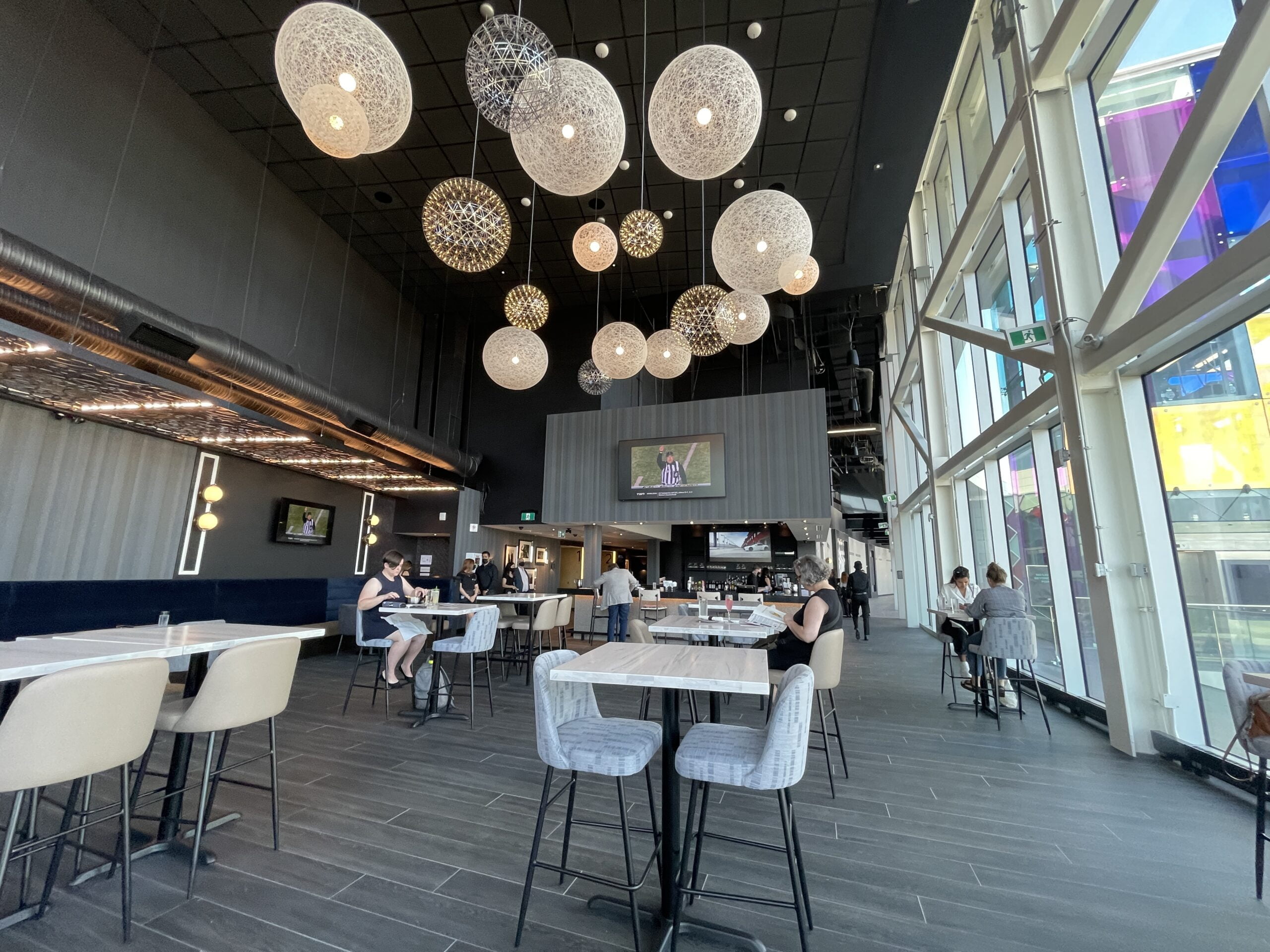
Cineplex VIP Lounge at The Amazing Brentwood. Photo: Lee Rivett.
Cineplex VIP Lounge at The Amazing Brentwood. Photo: Lee Rivett.
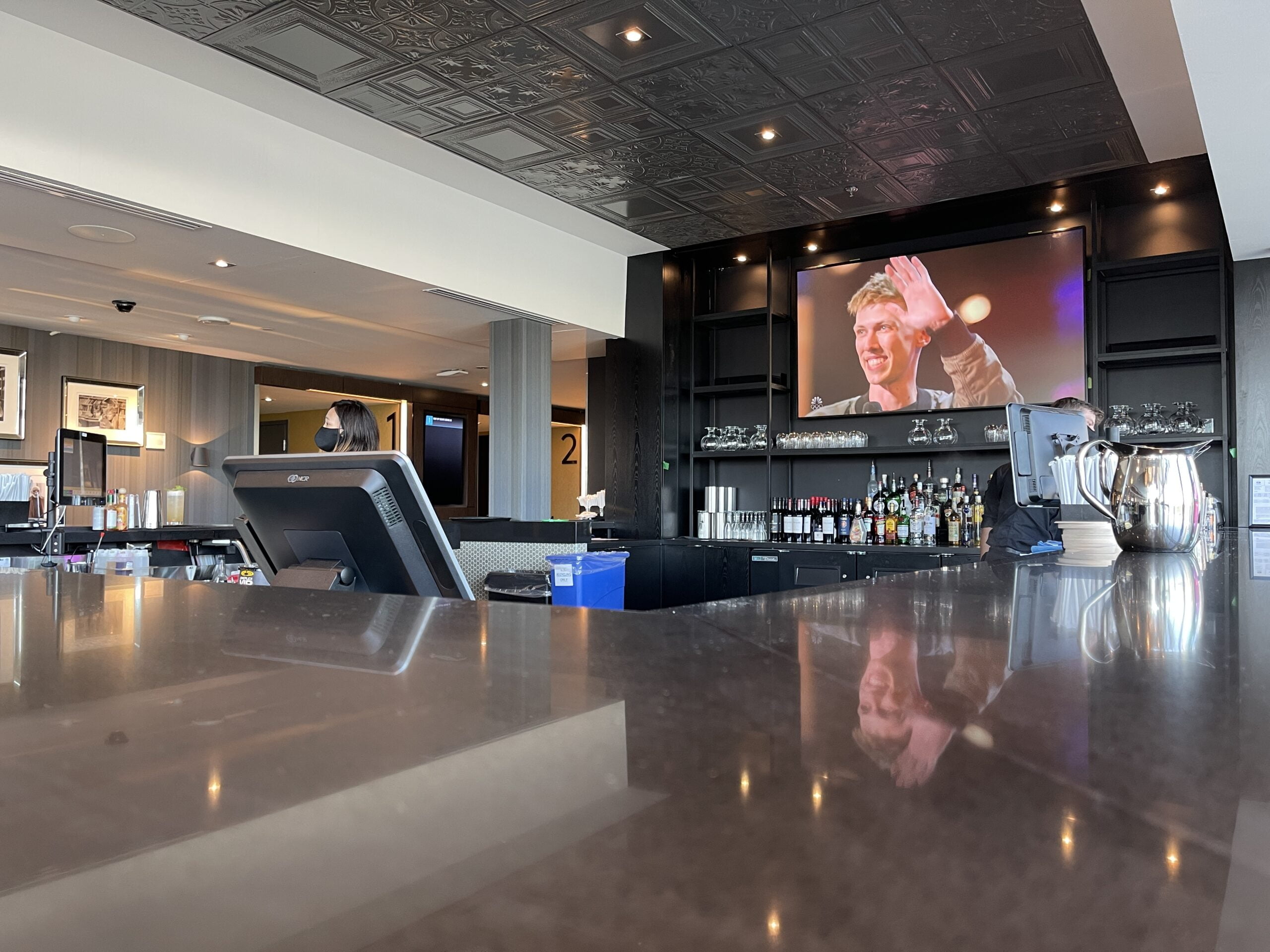
Cineplex VIP Lounge Bar at The Amazing Brentwood. Photo: Lee Rivett.
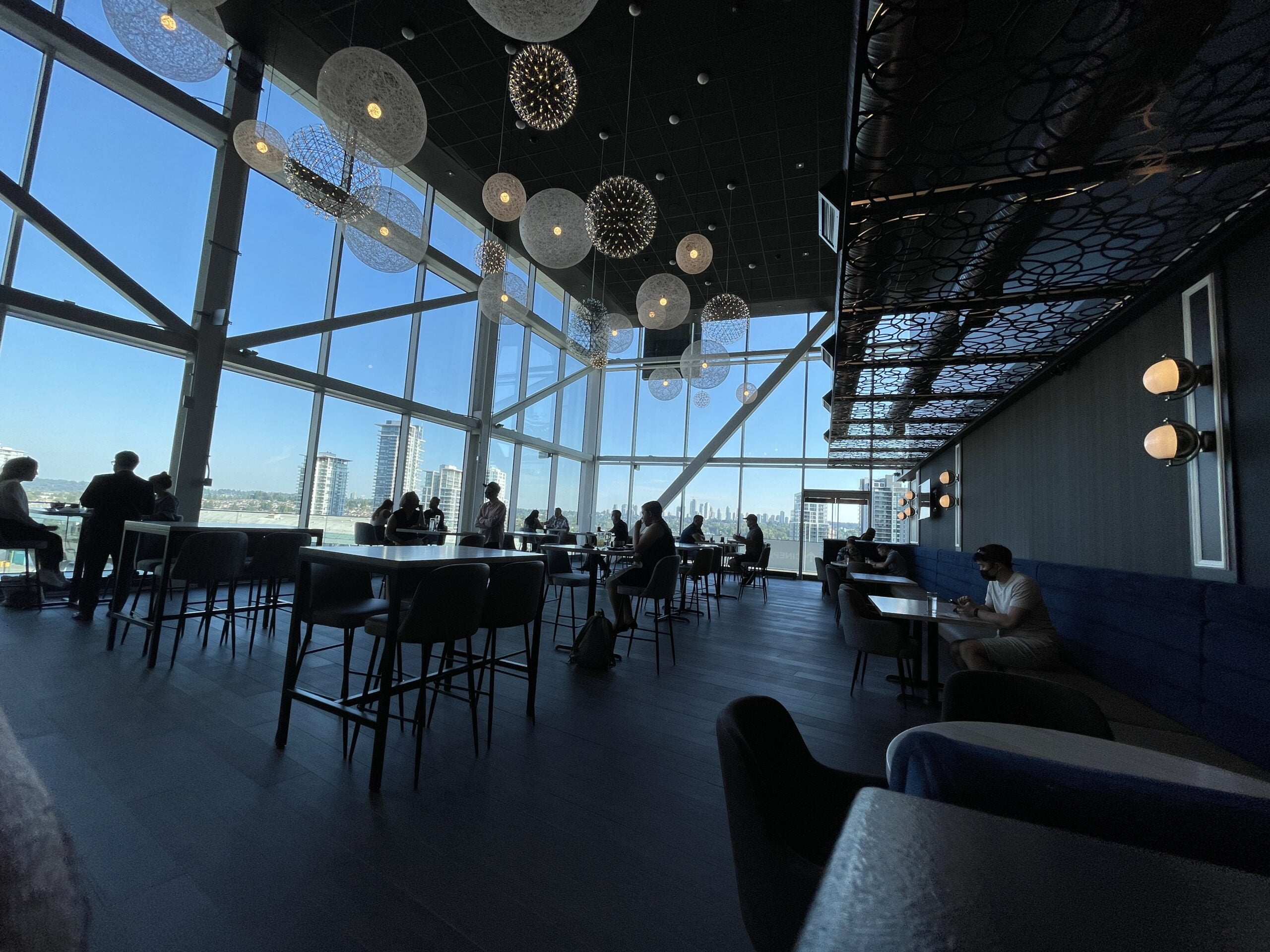
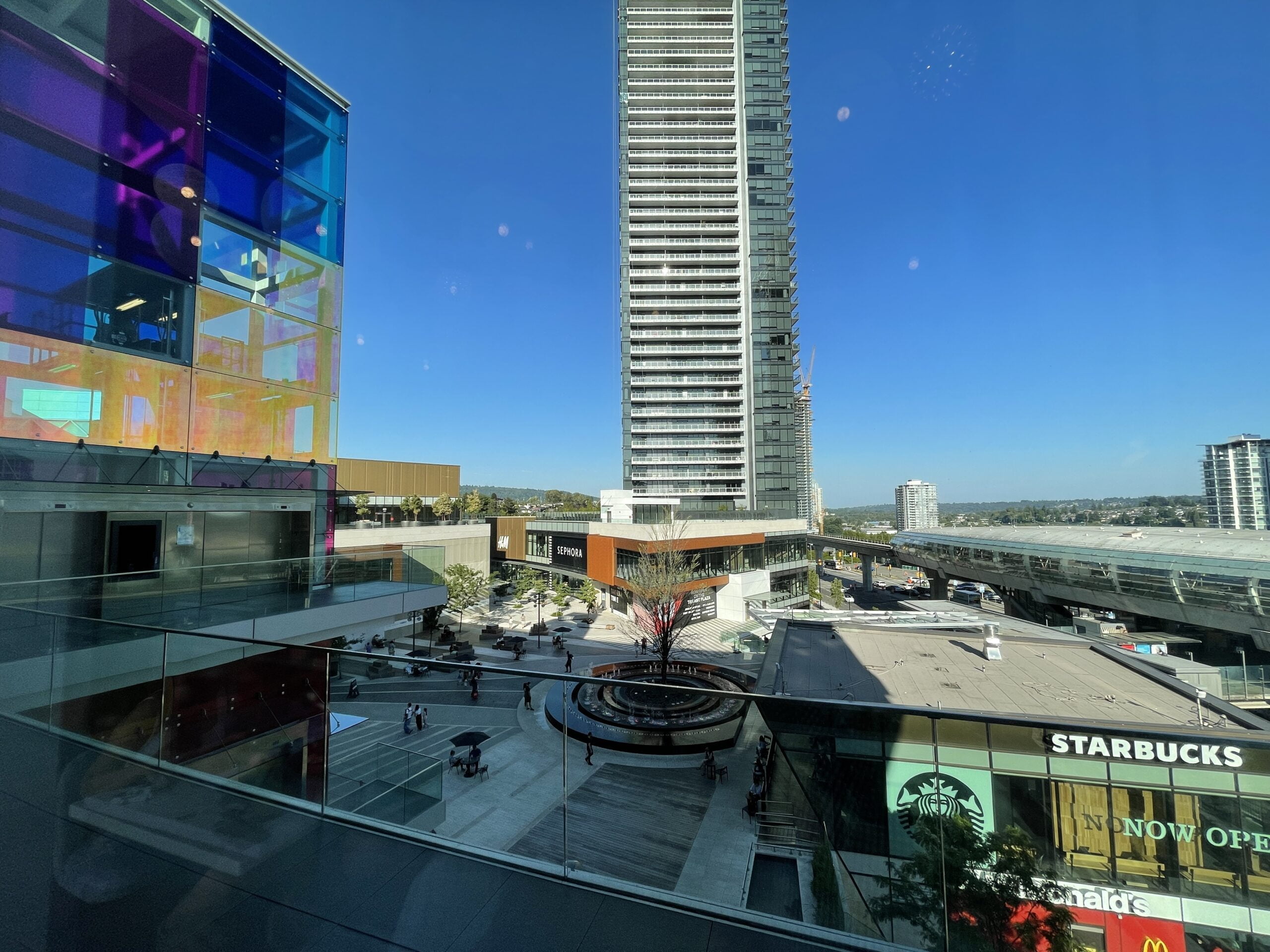
View from Cineplex VIP Lounge Bar at The Amazing Brentwood. Photo: Lee Rivett.
Brentwood will be Cineplex’s fifth VIP Cinema in the BC Lower Mainland. Other VIP locations are in Abbotsford, Coquitlam, Marine Gateway in Vancouver and Park Royal which opened late 2018. Canada’s top malls are increasingly adding non-retail attractions to attract consumers.
Cinema Corridors and Washrooms
1 of 6
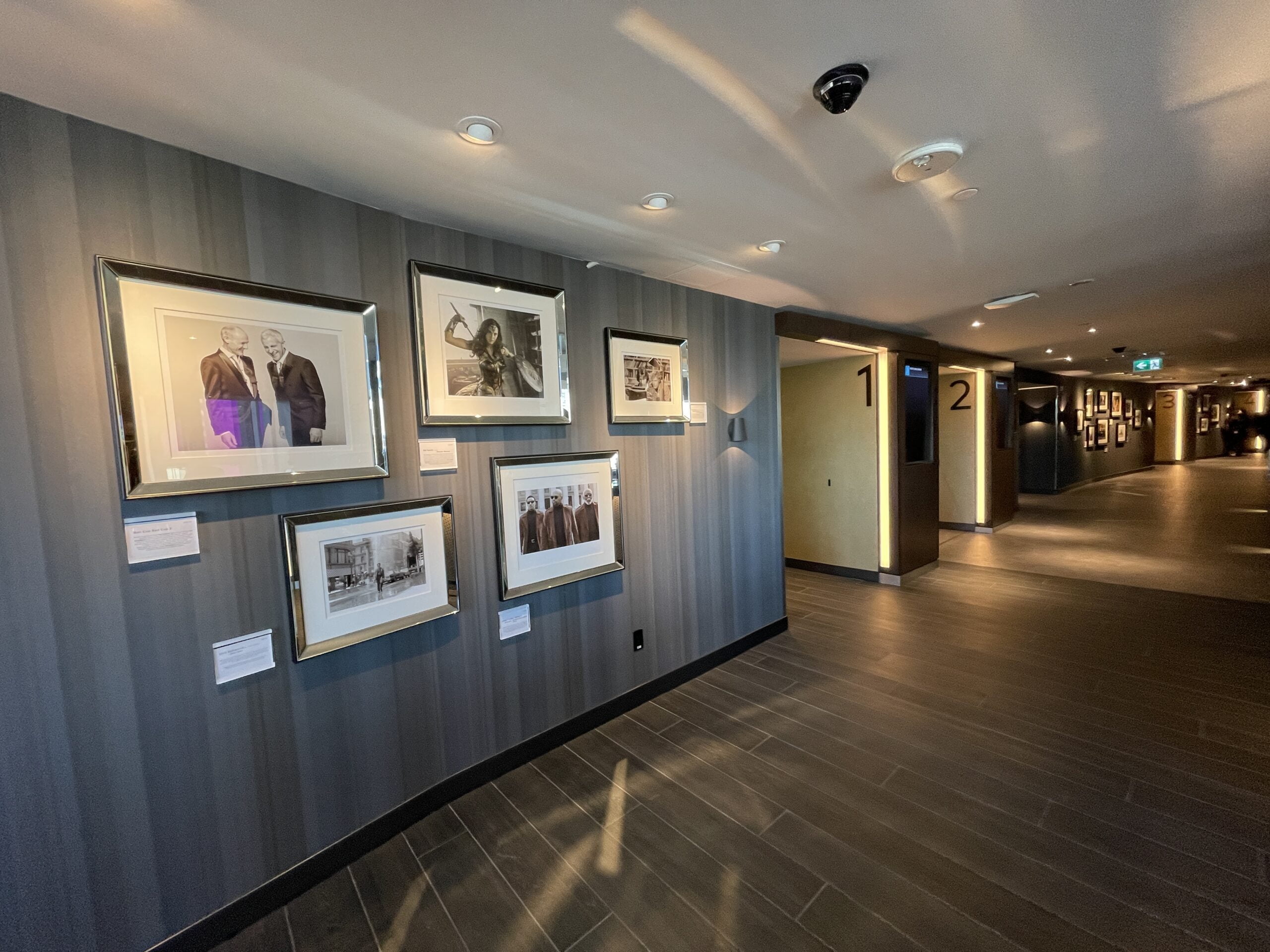
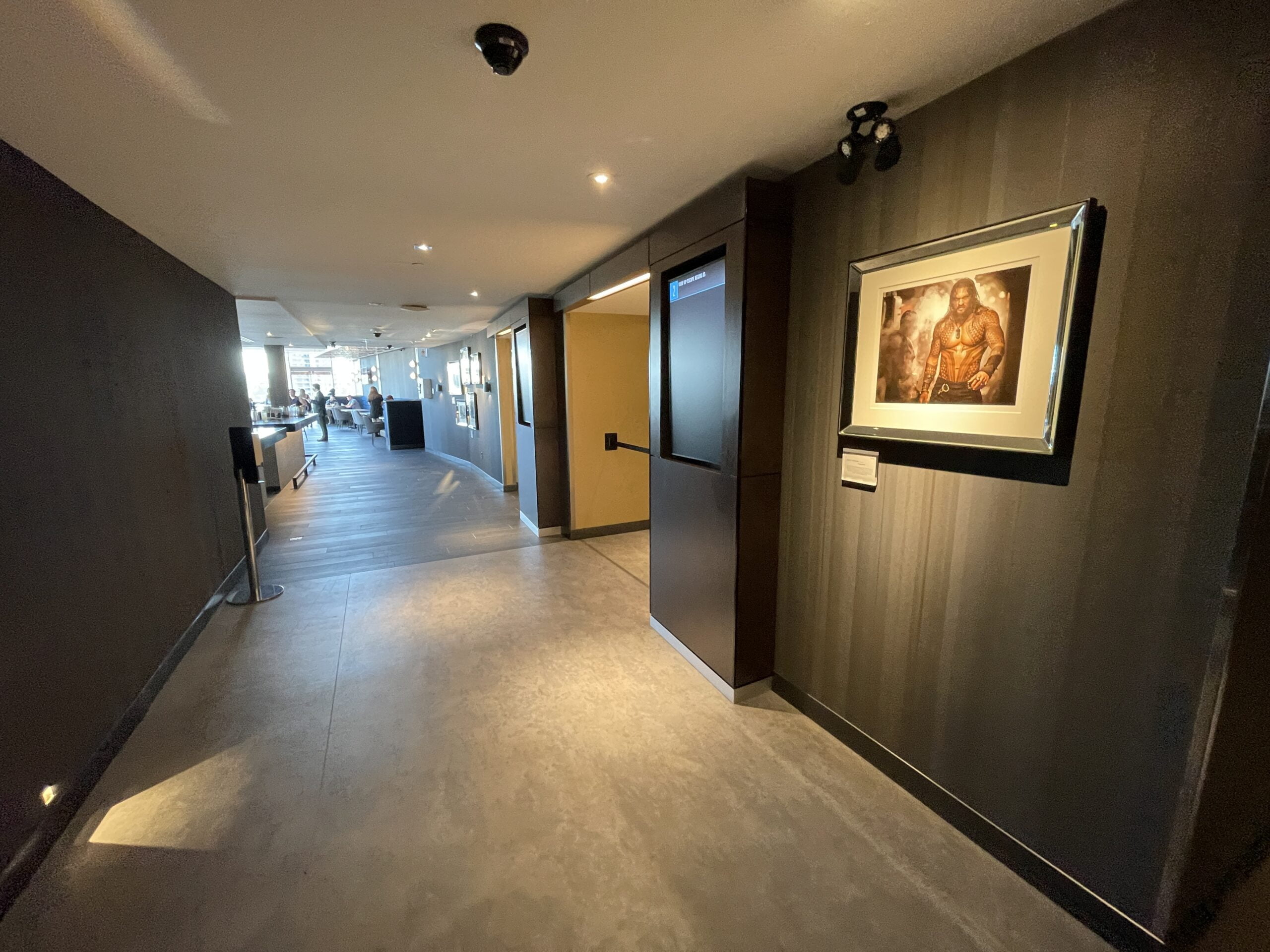
Hallway for Individual Screening Rooms at the Cineplex VIP at The Amazing Brentwood. Photo: Lee Rivett.
Hallway for Individual Screening Rooms at the Cineplex VIP at The Amazing Brentwood. Photo: Lee Rivett.
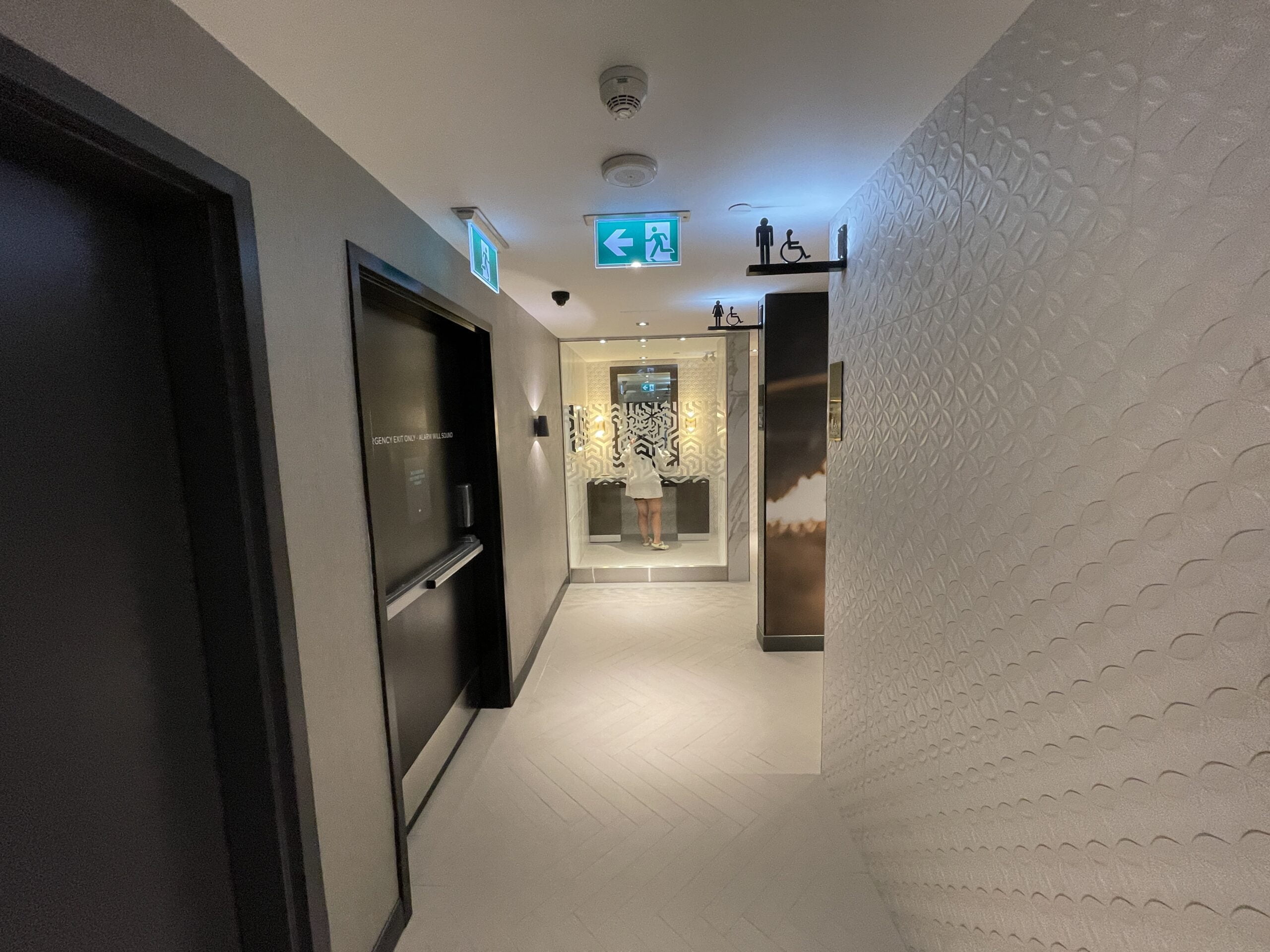
Washroom Entrance at Cineplex VIP at The Amazing Brentwood. Photo: Lee Rivett.
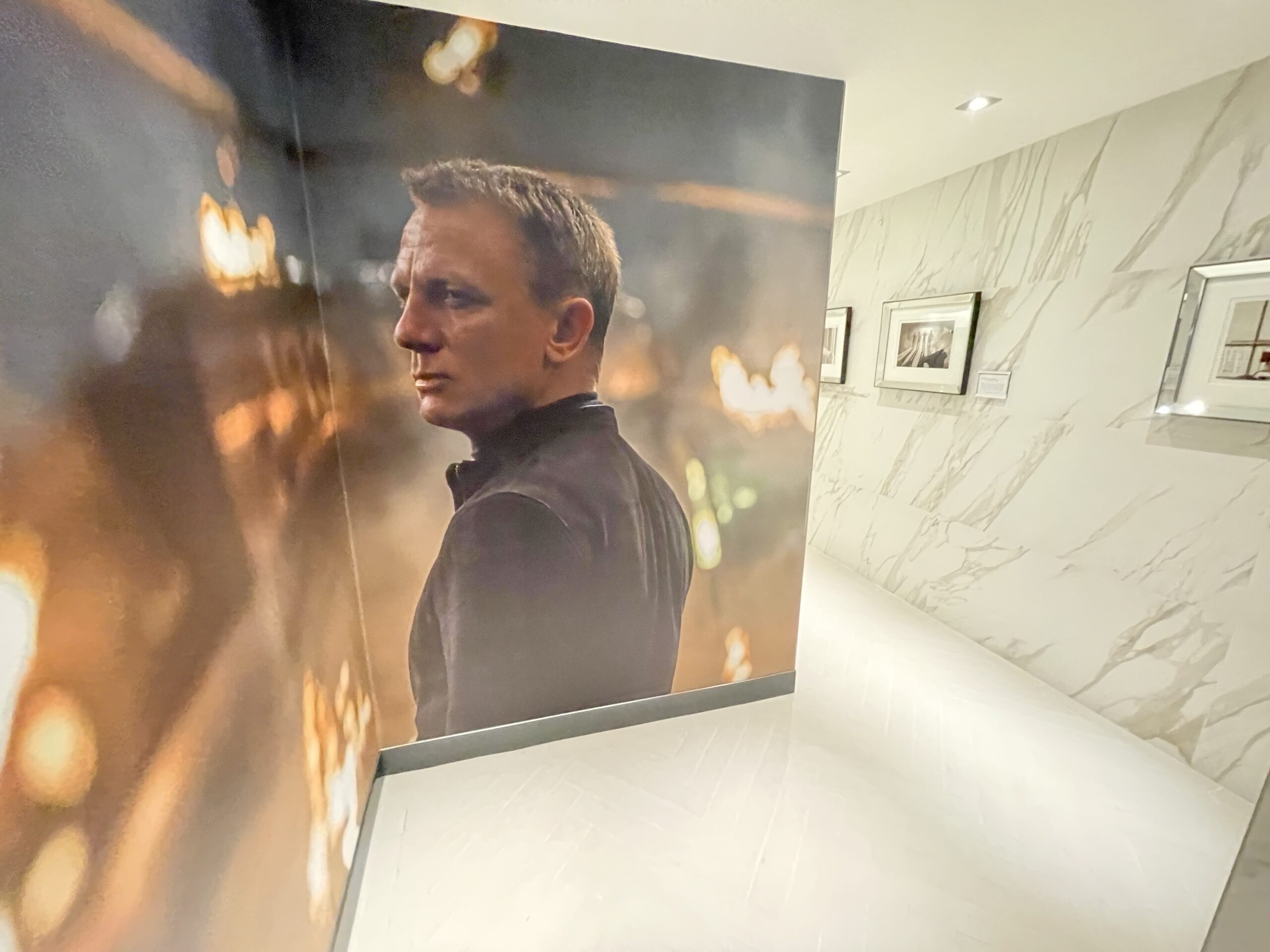
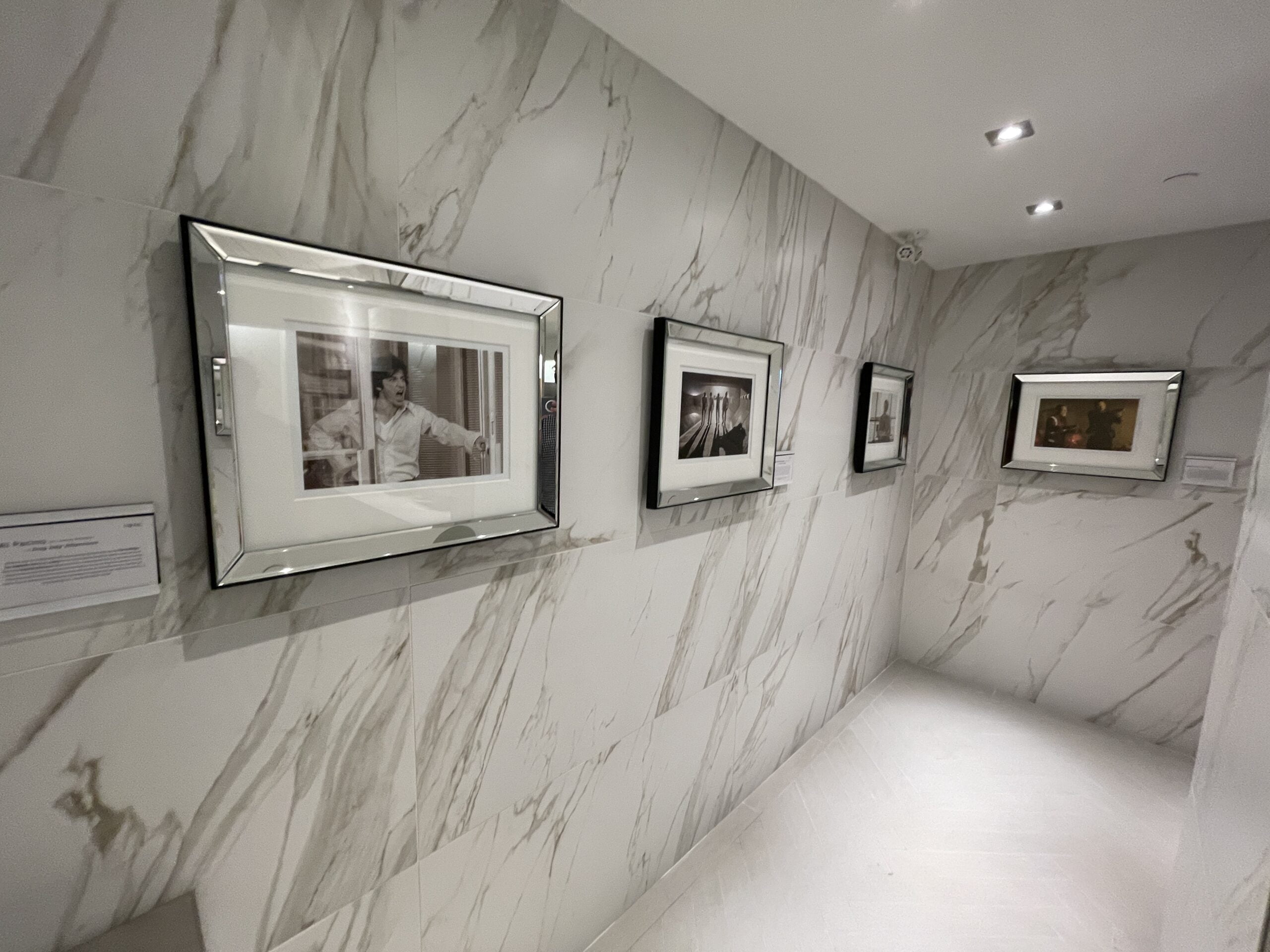
Movie Themed Wall Dividers at Washroom Entrance at Cineplex VIP at The Amazing Brentwood. Photo: Lee Rivett.
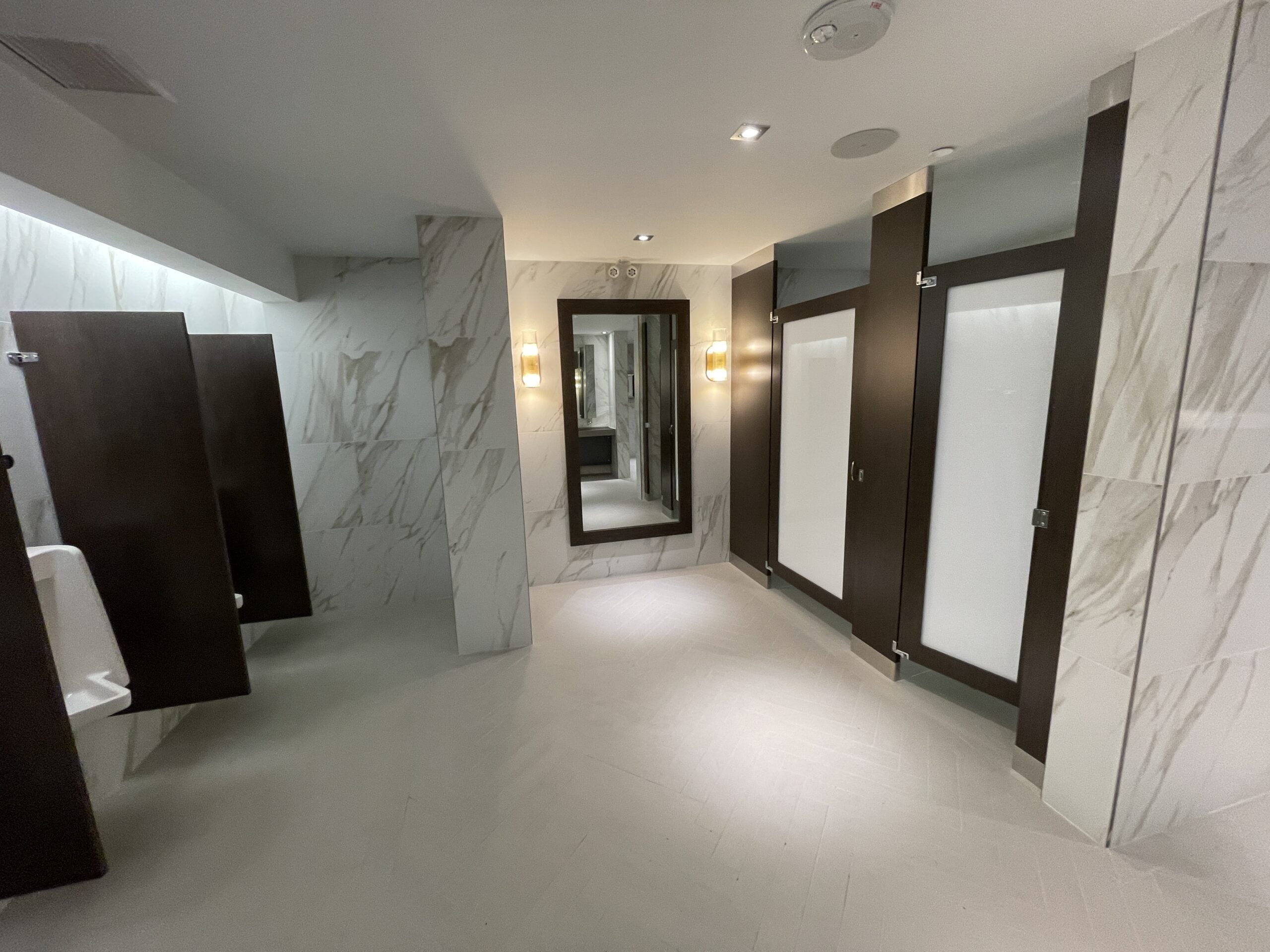
Washrooms at Cineplex VIP at The Amazing Brentwood. Photo: Lee Rivett.
Washrooms at Cineplex VIP at The Amazing Brentwood. Photo: Lee Rivett.
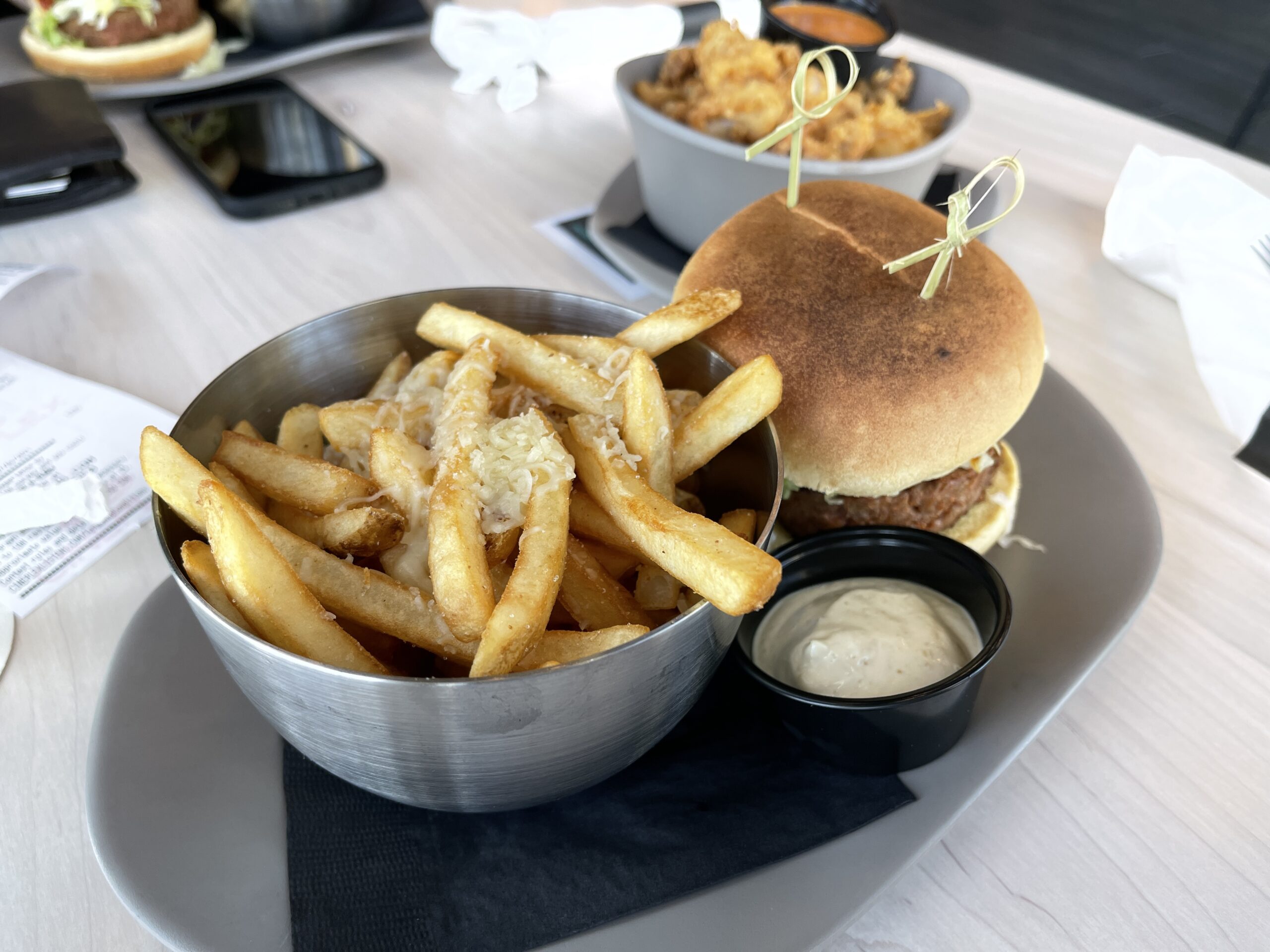
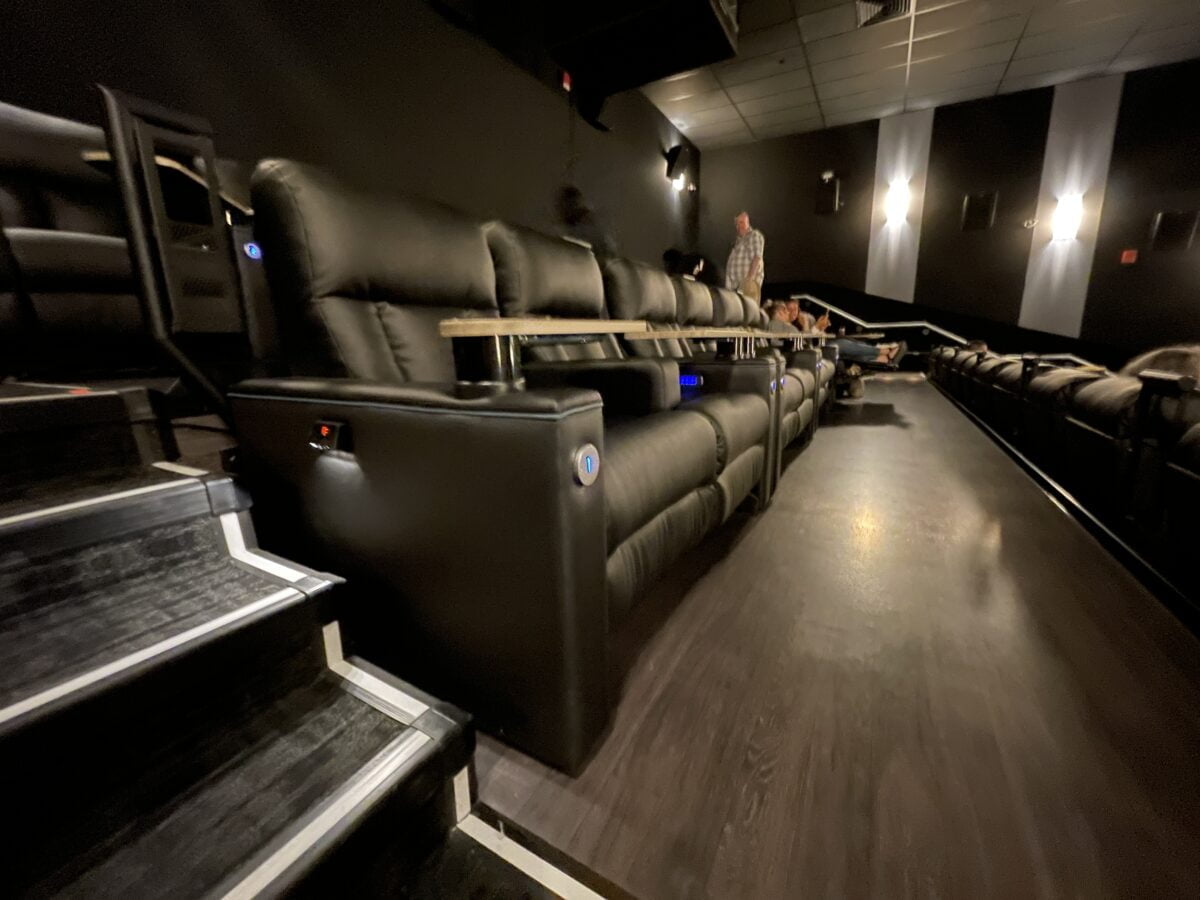
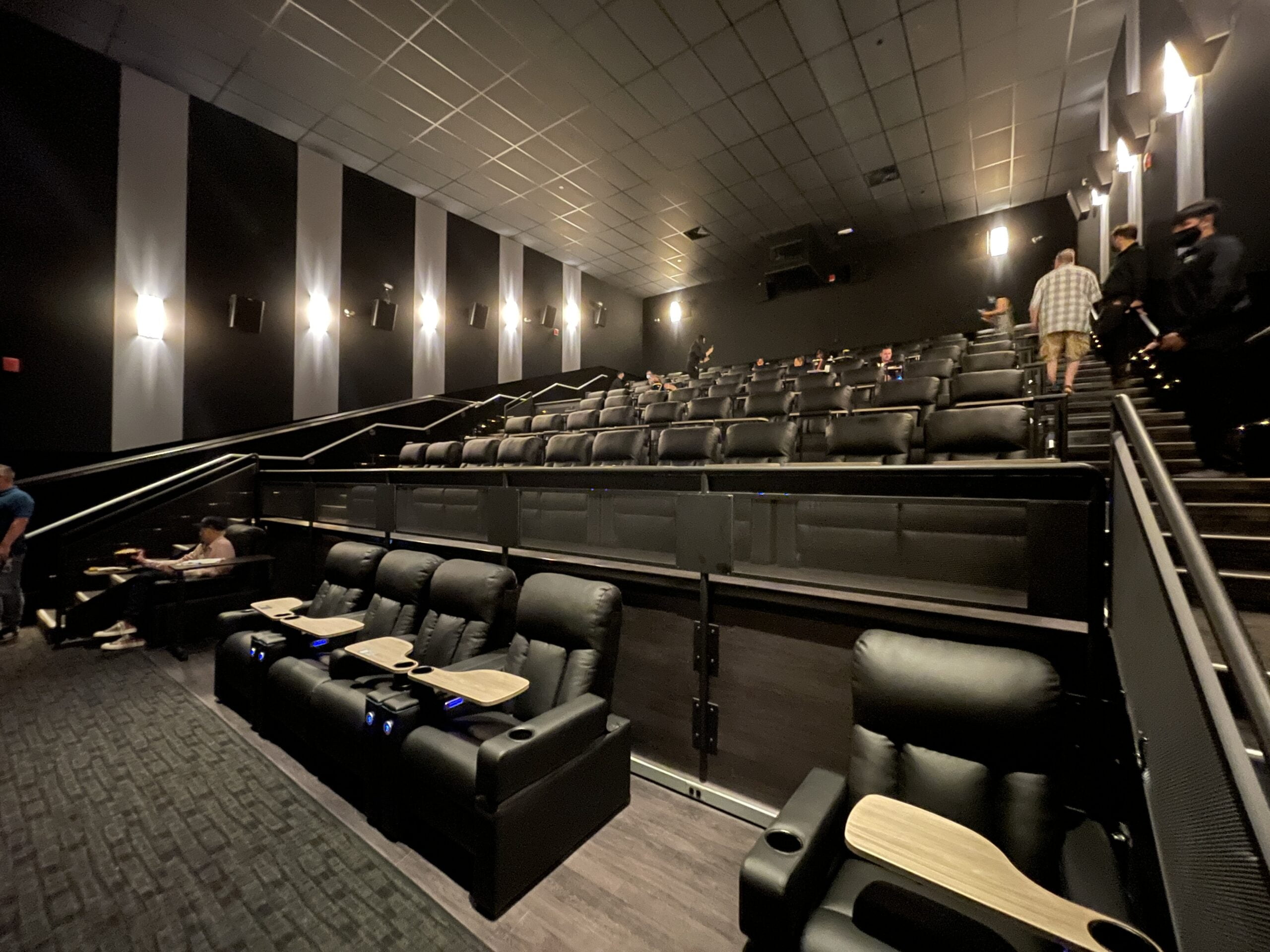
Cineplex’s VIP Cinemas feature luxurious reclining seats, and are for adults only because they’re licensed to sell alcohol. Guests can order from a wide selection of wines, spirits and premium craft beers, as well as food such as popcorn, fresh salads, burgers, artisanal cheese plates, charcuterie boards and flatbreads. Items are available in the lounge, or can be delivered right to one’s theatre seat.
For the time being, as a health safety measure, the Brentwood theatre is operating at a reduced 50-person capacity or 50% of regular capacity per auditorium, whichever is greater. This adds to the practices of reserved seating for pre-planned physical distancing and enhanced cleaning between screenings.
Theatre seats at Cineplex VIP at The Amazing Brentwood. Photo: Lee Rivett.
Theatre Screen at Cineplex VIP at The Amazing Brentwood
1 of 4
Theatre at Cineplex VIP at The Amazing Brentwood. Photo: Lee Rivett.
Screen at Cineplex VIP at The Amazing Brentwood. Photo: Lee Rivett.
Screen from back row at Cineplex VIP at The Amazing Brentwood. Photo: Lee Rivett.
Screen from back row at Cineplex VIP at The Amazing Brentwood. Photo: Lee Rivett.
The grand opening is a highly visible and major milestone for Shape Properties in showing progression in its master plan for The Amazing Brentwood after purchasing the shopping centre in 2010. Retail Insider recently featured the Phase 1 transformation of retail and restaurant amenities in a photo tour. The addition of The Rec Room is key in furthering the goal of Shape Property “to become the ultimate gathering place”.
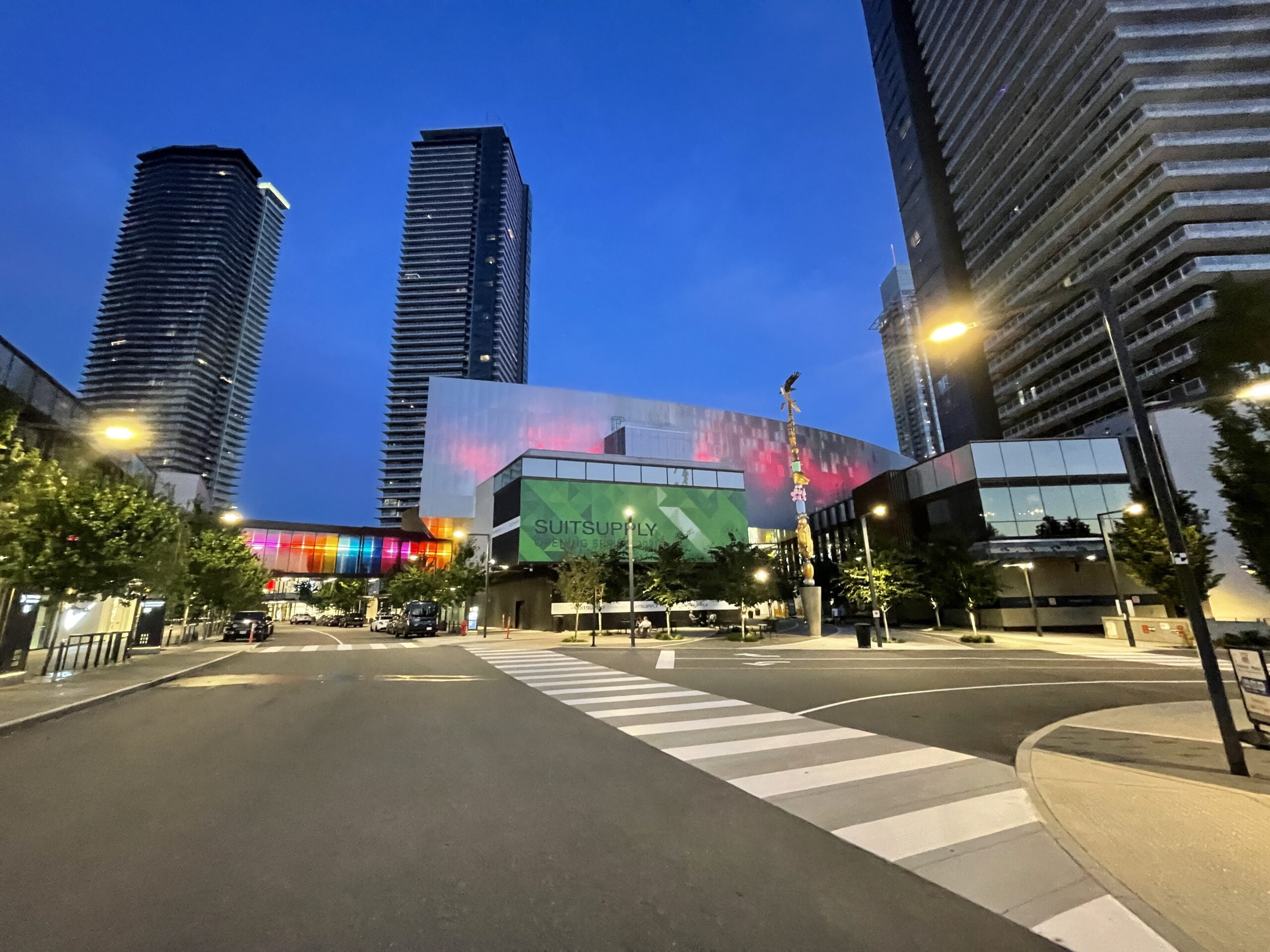
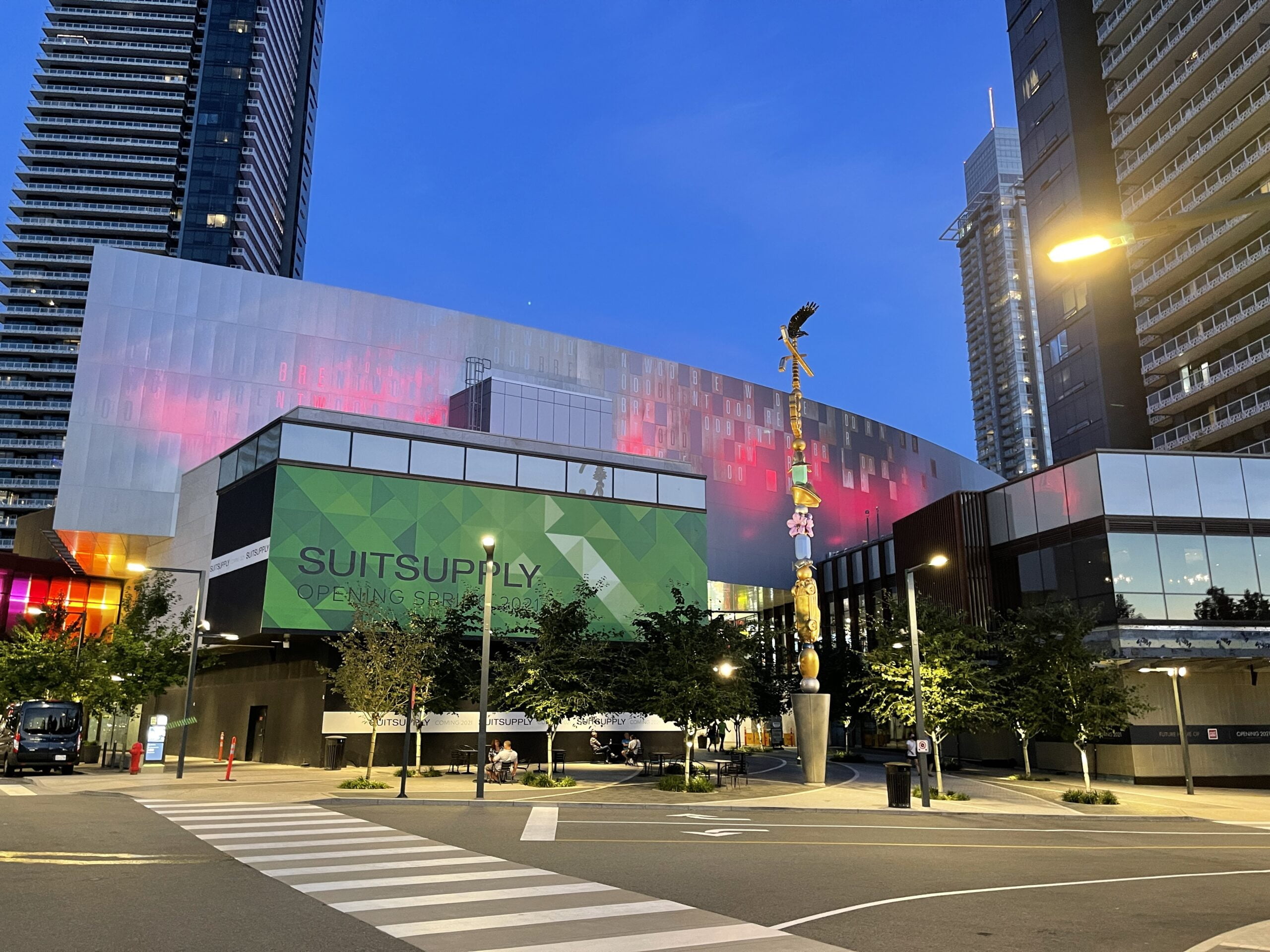
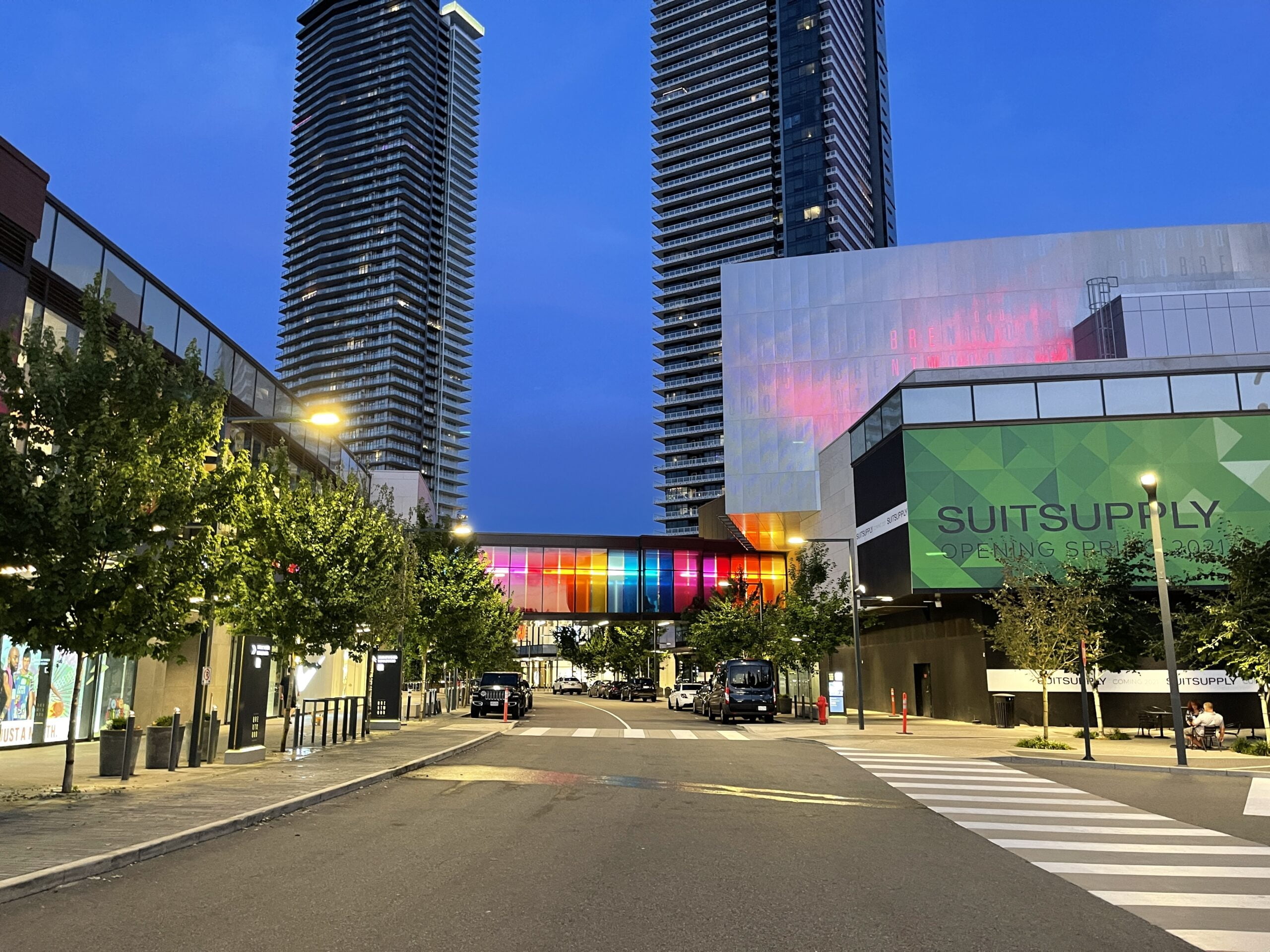
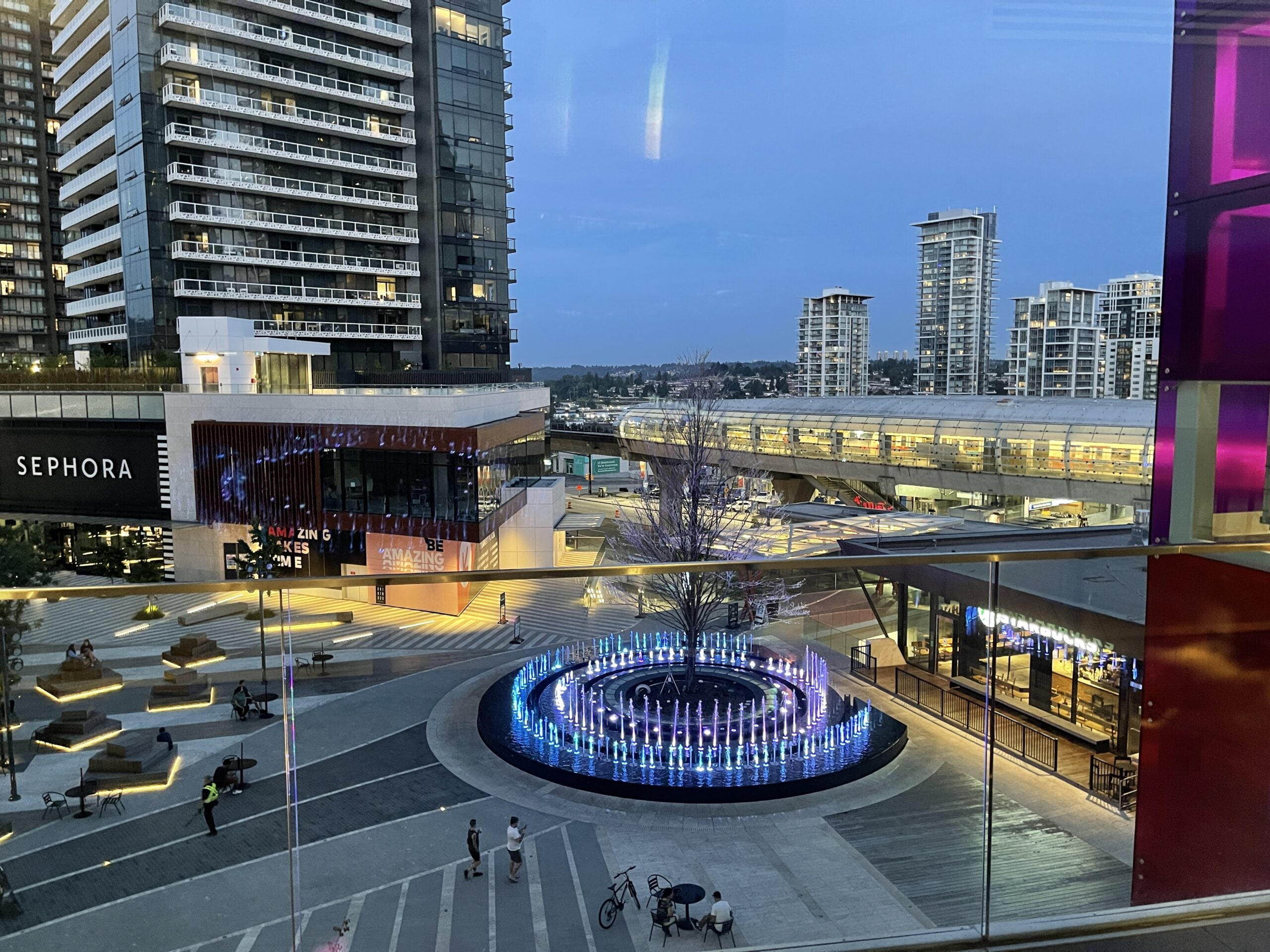
The Amazing Brentwood at night (July 2021)
1 of 4
The Amazing Brentwood at night (July 2021). Photo: Lee Rivett.
The Amazing Brentwood at night (July 2021). Photo: Lee Rivett.
The Amazing Brentwood at night (July 2021). Photo: Lee Rivett.
The Amazing Brentwood at night (July 2021). Photo: Lee Rivett.
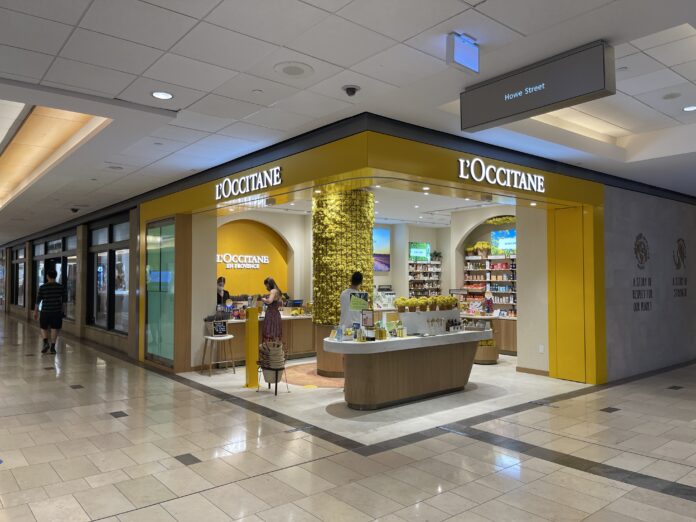
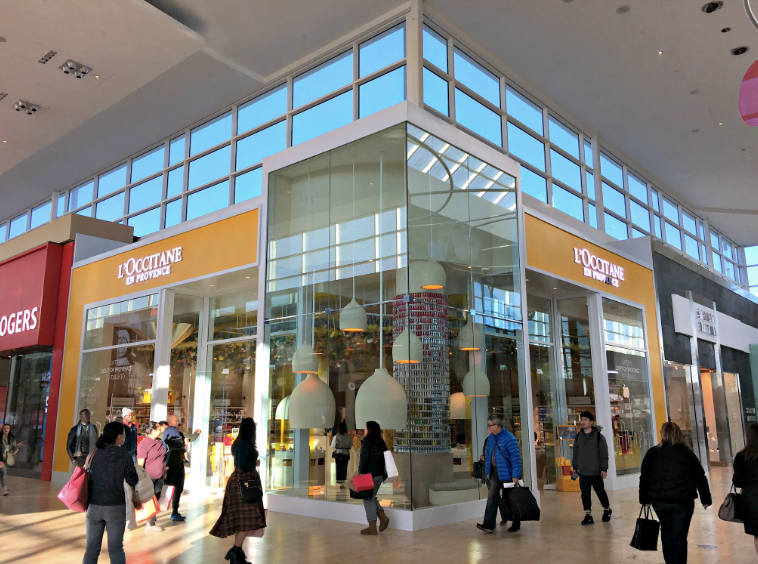
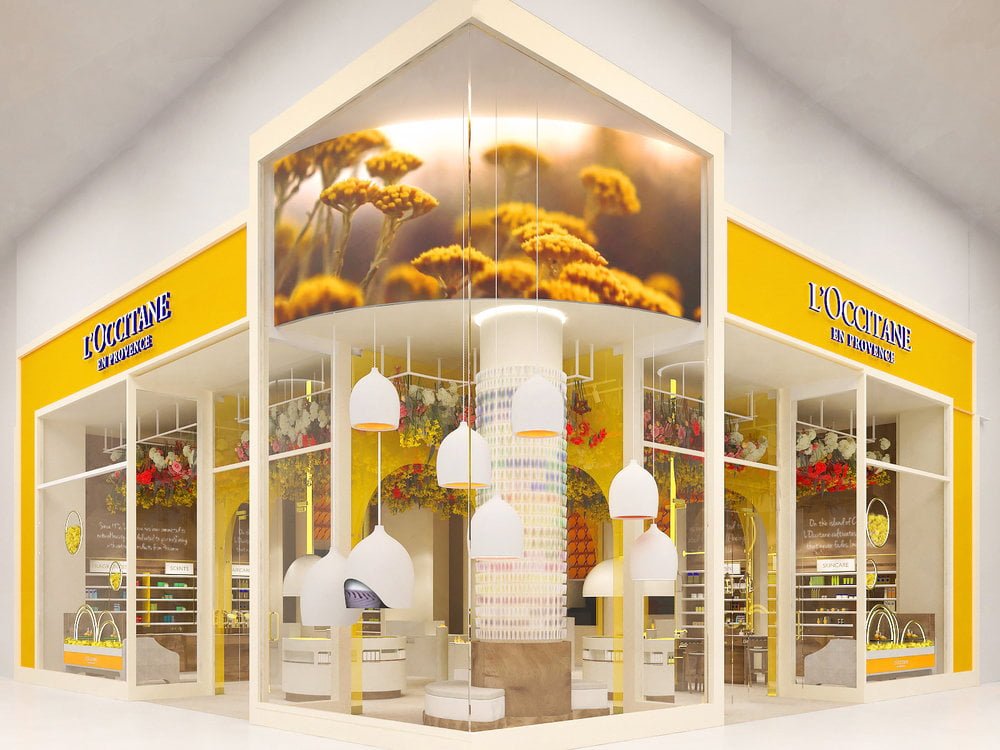
L’Occitane en Provence at CF Pacific Centre in Vancouver (July 2021). Photo: Lee Rivett.
Upscale French beauty company L’Occitane en Provence, known for its skincare, body care, and fragrances, opened a 1,000 square foot boutique at CF Pacific Centre in downtown Vancouver.
Under Construction L’Occitane space in October 2020 during “CF Pacific Centre Tour in Vancouver”. Video: Lee Rivett.
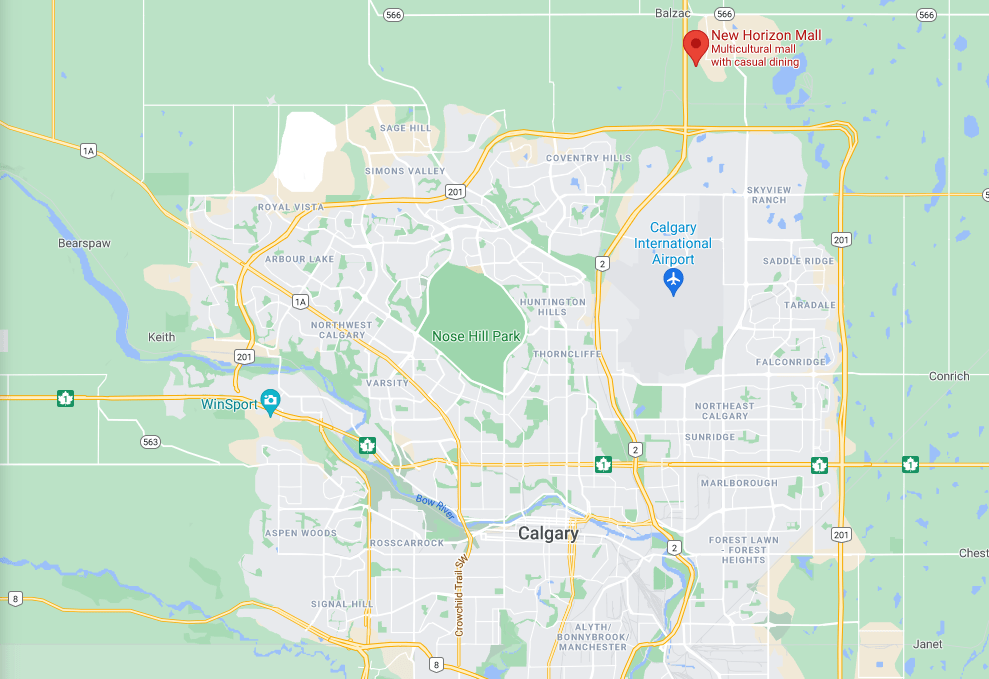
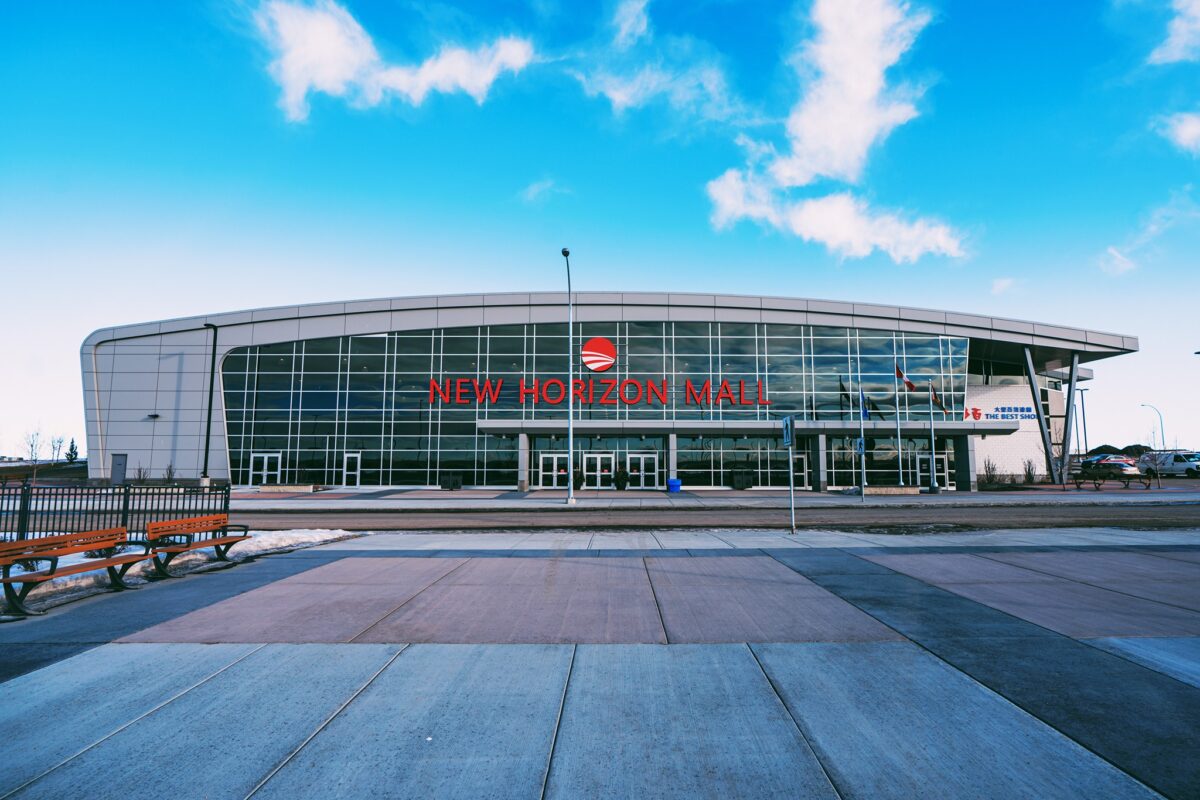
A massive family entertainment centre has become a key anchor for the New Horizon Mall, just outside of Calgary city limits in Balzac, and could be a ‘game changer’ for the shopping centre.
Sky Castle is now the largest anchor tenant at approximately 34,000 square feet, followed by the Best Shop and Prairie Horizon Fresh Market. These three tenants collectively occupy approximately 74,000 square feet at New Horizon Mall, which is about 320,000 square feet.
The mall is about 53 per cent occupied/leased on a square footage basis with more than 100 stores open on a regular basis.
Toronto based, Torgan Group, with its partner, MPI Property Group (collectively “NHM Inc.”) developed New Horizon Mall. NHM Inc. retained approximately 30 per cent ownership of the Mall, about 114,000 square feet of space, and owns the larger units and has leased approximately 86 per cent of units owned.
CLICK FOR INTERACTIVE GOOGLE MAP
As Alberta’s first condo mall, stores at New Horizon Mall were sold and owners either operate their own store or lease to another store operator – 98 per cent of the total retail space has been sold. New Horizon Mall had a slow start before COVID-19 hit and continues to be a work in progress. Construction of New Horizon Mall was completed by Ledcor Construction in 2018.
A condominium board was set up to run New Horizon Mall and to represent all unit owners. An onsite management team is employed by this board to manage day to day operations and headed by General Manager Bob Parsons.
“We wanted a strong anchor tenant that would attract shoppers and families and found the perfect partner in Sky Castle,” said Ellisa Asaria, director, leasing, New Horizon Mall Inc. “I’m already getting more interest from entrepreneurs thinking of opening shops that appeal to kids and parents. Without question this is a game changer for our marketplace.
Ellisa Asaria
“Sky Castle is an exciting addition to New Horizon Mall. It is a major children’s attraction which will result in families coming to experience all the mall has to offer. While we had interest from different operators for our larger units, we felt that the addition of Sky Castle would bring forward our vision of New Horizon Mall.
“New Horizon Mall is quickly achieving our vision of a destination offering unique products, local businesses and great experiences. With the opening of Sky Castle, New Horizon Mall has taken another important step to become Calgary’s most unique shopping experience. Whether it is auto shows, craft fairs, scavenger hunts, cultural celebrations or other events, the mall has something for everyone. As the province and the country reopen, we hope to support the entrepreneurial spirit at New Horizon Mall and across the City.”
1 of 3
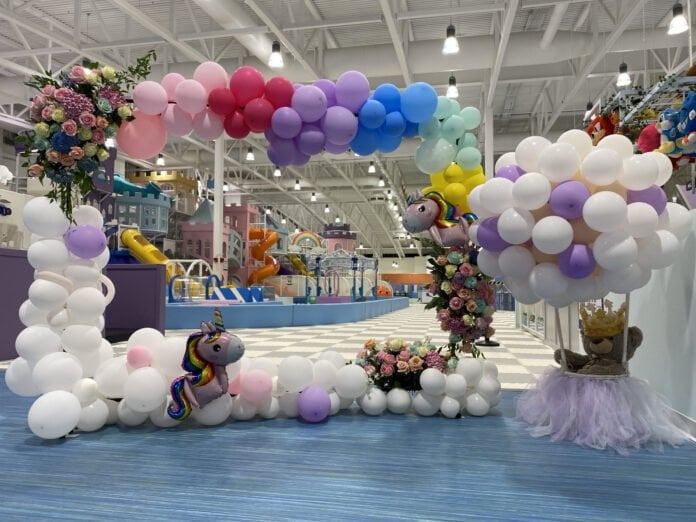
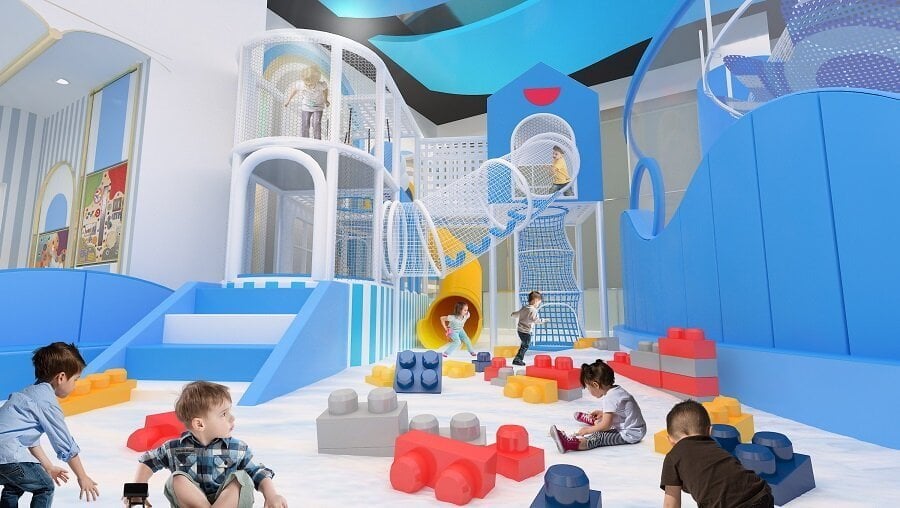
Rendering of Sky Castle play place at New Horizon Mall. Photos: Sky Castle
Sky Castle
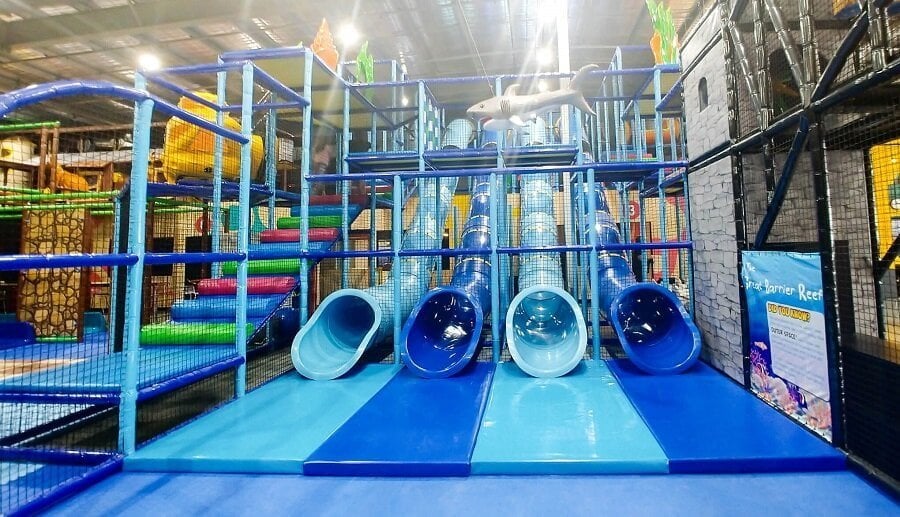
Rendering of Sky Castle play place at New Horizon Mall. Photos: Sky Castle
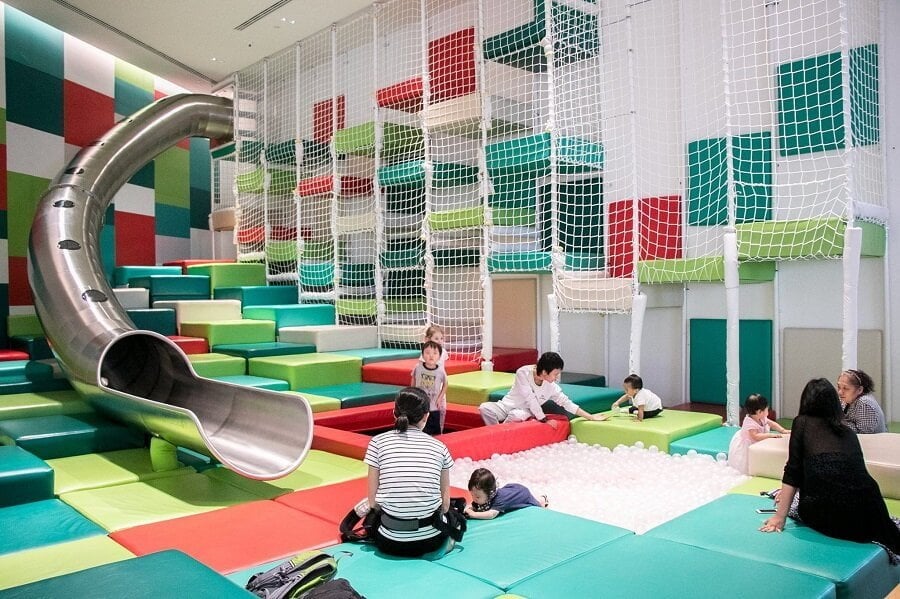
Rendering of Sky Castle play place at New Horizon Mall. Photos: Sky Castle
Sky Castle finalized its lease in early 2020 but the global pandemic significantly delayed construction and opening.
“Overall, we have noticed that business owners have more confidence in the retail market and there has been a pronounced uptick in leasing activity. People have a sense that there is light at the end of the tunnel and things are now starting to return to normal. We are optimistic about the future provided that we don’t have further pandemic restrictions,” added Asaria.
Han Liu, one of the partners in Sky Castle, said the concept is an indoor playground geared for children 10 years old and under. It has many slides, a snow castle, a donut slide, a Ninja area and a car track with theme rooms for birthday parties and private events.
“New Horizon Mall has always been my first choice. When I was looking for locations, I went to a couple of dozen locations out there. New Horizon Mall, the environment, the building itself, is just perfect for the indoor playground and also I like the idea of there are so many local businesses and entrepreneurs downstairs. I’m a community guy and I think this is definitely a community theme that would be very helpful for the longevity of the business,” said Liu. The play area is located on the second floor of the mall near the food court.
Parsons said COVID has been really tough for all retailers but with the province reopening and Sky Castle now open, the mall is optimistic about the summer.
Image: New Horizon Mall
“We are already noticing that shoppers are making a real effort to support local merchants and we think this is a turning point,” said Parsons.
“Since Sky Castle has opened there’s been considerable interest. I think the timing is right relative to the pandemic and Alberta’s positions and Alberta Health Services position relative to COVID and the different stages we’ve gone through for reopening. I think we’re well positioned for that. On a go forward basis lots of people have reevaluated what they’re doing as a family to make money and we’re positioned for small business incubator, small footprint opportunities in terms of retail. There really aren’t that many shopping centre or strip centre opportunities that have 150-square-foot retail units for rent out there.
“So a unit owner looking to rent their space they may have a 150-square-foot single unit. They might have a double unit of roughly 300 feet and there’s not that space available in the marketplace – readily available. I think the opportunities are there now that we’ve got a third anchor driving traffic through the mall with the other retailers we have. Things have turned the corner in terms of interest and popularity.”