Upscale Vancouver-based multi-brand menswear retailer Boys’Co has informed Retail Insider that it will be shutting its operations this year. The retailer got its start in 1984 with a store location at Vancouver’s Oakridge Centre and was an extension of the Murray Goldman menswear brand that began in 1946.
Owner David Goldman says that he has negotiated Boys’Co’s departure with its landlords for the three Vancouver-area stores at Metropolis at Metrotown, Guildford Town Centre and Coquitlam Centre which will all close towards the end of the year. The company also has an e-commerce website with an assortment of brands. Goldman said that the company has spoken to each member of his team one-on-one to discuss the news and that 35-year veteran and General Manager Michael Roley was instrumental in helping coordinate the strategy to wind down the business. Suppliers have also been contacted to let them know that there would be no fall 2021 orders according to Goldman.
David Goldman conceptualized the Boys’Co brand and opened its first store on October 18, 1984 at Vancouver’s then recently renovated Oakridge Centre. The Boys’Co store was located next to Aritzia’s first standalone store which opened the same day. Boys’Co was an offshoot of luxury multi-brand menswear retailer Murray Goldman which David’s father opened in 1946 with a store on West Hastings Street. The family holdings company, which also includes real estate and other investments, is named Murray Goldman Ltd. to this day.
MURRAY GOLDMAN MENSWEAR WAS FOUNDED IN 1946. PHOTO: WWW.THEDIGITALPANDA.COM
In a statement, David Goldman said, “75 years – we had a hell of a run – as one of British Columbia’s longest continuously running retail operations – and we’ve always been thrilled to be steeped in a major part of BC retail history.”
Over the years, the company operated stores under various banners. The Murray Goldman Men’s Stores operated from 1946 to the 1990s and carried some top-of-the-line brands such as Lanvin, Givenchy, Brioni and various other French and Italian brands. Between 1970 and 1986 a denim concept called Bus Stop Jean Shops operated several storefronts. A discount concept called The Clothing Market operated in the 1970s and 1980s and a unisex concept called Magnet Stores operated in the 1980s. A preppy concept store called The Ivy Room operated from 1962 to 1970 and was revived at Metropolis at Metrotown in the 2010s for a time. A concept called Goldman and Son operated in the 1990s and early 2000s in Vancouver.
Under the Boys’Co banner specifically was Boys’Co Sport which operated at Vancouver’s Oakridge Centre in the 1990s and The Boys’Co General Store and Café which operated in Vancouver’s Yaletown area in the 1990s. The Boys’Co chain also once had stores on Robson Street in downtown Vancouver as well as at CF Richmond Centre in years past.
“We seemingly did it all – provided employment for many long-term and loyal folks, with whom we built lifelong relationships. And we made friends of both customers, and cherished fashion suppliers alike,” said Goldman in a statement. “We succeeded, in mostly good years and a few not-so-good, but always had fun doing so – while operating a three generation, locally owned, family business.”
Boys’Co at Guildford from Lower Level – Photo by Lee Rivett
Goldman expressed gratitude to the company’s employees for their service over the years in the family business. “To say thank you to the many people who helped us succeed will never be enough. We are so grateful for the hundreds of employees who graced our sales floors over the years, who managed our shops, greeted our customers, and who ‘made the sale’.” He went on to say, “We’ve been blessed working with many extraordinary men and women in all capacities, who stayed with us for 10, 20 and over 30 years. To this day! Grateful cannot begin to describe our appreciation!”
He also expressed gratitude to suppliers that have partnered with the retailer over the years. “To the number of folks whose offices, showrooms, and trade show booths we got to visit, engage with and who provided us with professional advice and the many fashion brands to pursue our trade and continually fill our shops, you will never be forgotten. You became our respectful (and respected) suppliers, you became our friends and our confidantes – and we couldn’t have done it without you. You are what made our career fun and fulfilling – and you reminded us daily of why our industry is a noble profession! We are overwhelmed with gratitude!”
Goldman said that he will miss the buying trips and socializing that became part of running a multi-brand menswear business. “Visiting the many cities in Canada, the US and Europe will always be one of the highlights of my career as we got to know the many people on our numerous visits in Toronto, Montreal, Los Angeles, Las Vegas, New York, London, Paris, Cologne, Berlin, Milan, and Florence, but the biggest highlight by far will be the years I got to spend with both my son Sam and my dad Murray as the three generations of us ran the show for those few years we were blessed to work together!”
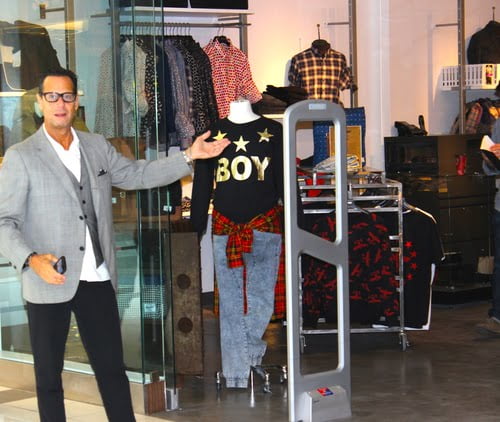
DAVID GOLDMAN AT THE OPENING OF HIS NEW GUILDFORD TOWN CENTRE STORE. PHOTO: JUICEGROUP.CA
Image: Boys'Co Robson Street
1 of 5
Image: Former Boys'Co Robson Street
Image: Former Boys'Co Robson Street
Image: Former Boys'Co Robson Street
Image: Former Boys'Co Robson Street
Image: Former Boys'Co Robson Street
“We always believed in a time-honoured approach to people and relationships, adding in a dash of humour, irreverence, creativity – and respect! And while we always felt we made a fashion statement, our statement for today is – Thank You!”
At 71, David Goldman is still youthful in appearance and dress. His personality translated to Boys’Co marketing with cheeky ad phrases such as “it’s a Guy Thing”. In an interview in 2018, Goldman explained to Retail Insider how Boys’Co was showcasing well-established medium to upper end designers catering to young and ‘fashion-inspired’ men.
Boys’Co became known for carrying a range of designer brands for men, as well as its own private label line which included t-shirts with the Boys’Co logo. In the 1990s these shirts were popular with young men living in the Lower Mainland and even beyond. Designer brands featured on Boys’Co’s website today include Hugo Boss, Moschino, Stone Island, Versace Jeans Couture, Y-3 Yohji Yamamoto, Boy London, C.P. Company, Kappa, Lacoste and others.
We reported in April of 2014 that Boys’Co had renovated its then flagship store at 1044 Robson Street, which relocated to the Coquitlam Centre in the summer of 2018. Drake-owned brand OVO subsequently leased the Boys’Co’s Robson Street space. In October of 2014 Retail Insider attended the 30-year anniversary celebration of the Boys’Co brand that was held at the then Robson Street location. That year, Georgia Straight’s ‘Best of Vancouver 2014 Awards” named Boys’Co as “Vancouver’s Best Men’s Independent Store”.
David Goldman started his fashion career as a teenager in the 1960s. While in high school, he worked part-time at his father’s store, Murray Goldman Men’s Wear. After college, David moved to London UK, where he worked full time at a young men’s boutique on fashionable King’s Road. He then returned to Vancouver in 1971 to work alongside his father. David’s initial responsibilities included operating and buying for the company’s Bus Stop Stores. David’s son Sam Goldman became manager of operations of Boys’Co several years ago as the third generation to operate the business.
Boys'Co T-shirts
1 of 5
Boys'Co T-shirt
Boys'Co T-shirt
Boys'Co T-shirt
Boys'Co T-shirt
Boys'Co T-shirt
Boys’Co branded t-shirt from 1992. Photo: Christa Patterson
THE RETAILER’S CHEEKY SLOGAN: “IT’S A GUY THING”.
Even prior to the pandemic, the multi-brand menswear business in Canada was challenging amid increasing competition. In the Vancouver area, competition at the upper end has been particularly fierce with the entry of Nordstrom to the market and the expansion of Holt Renfrew, while the growth in e-commerce has also resulted in more shopping happening online. Brands opening their own stores has also been a challenge for multi-brand retailers in Canada as some brands increasingly adopt direct-to-consumer models.
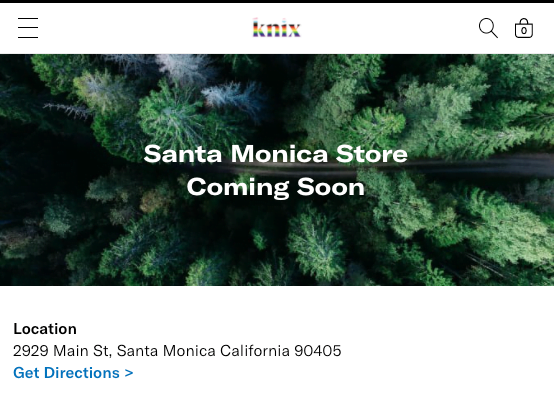
Knix, a direct-to-consumer intimate apparel brand, recently completed a $50-million minority Growth Equity funding run, which will help accelerate the retailer’s expansion plans.
The funding round was led by private equity firm TZP Group, with participation from existing Knix investors including Acton Capital and alongside new investor, supermodel and entrepreneur Ashley Graham.
Joanna Griffiths, Founder and CEO, who closed the round just three days before giving birth to twins, remains the largest shareholder of the company while TZP Group will take a minority stake in the business.
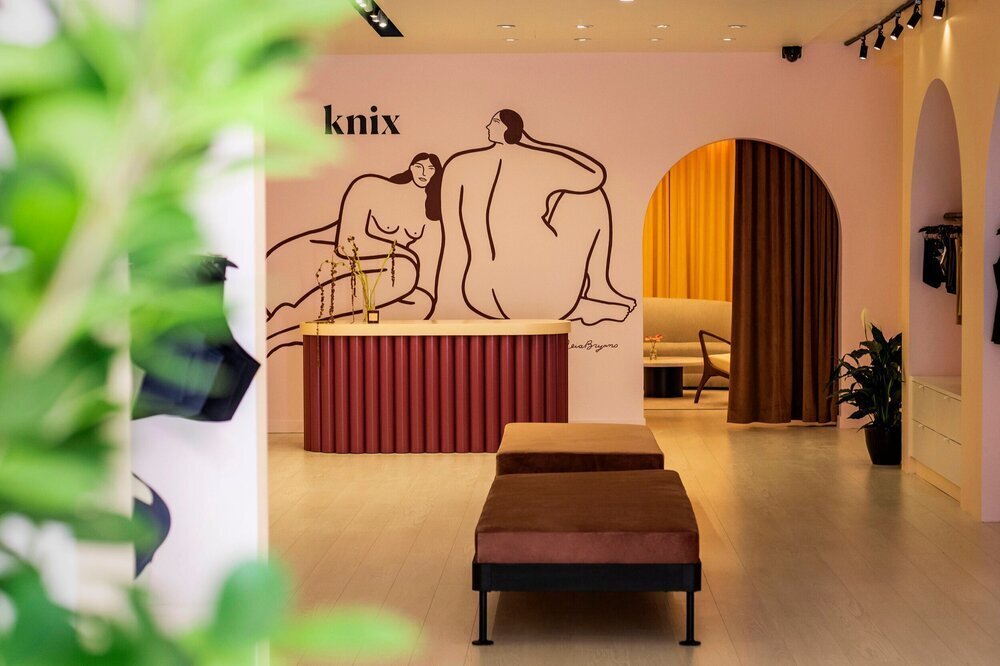
PHOTO: KNIX
She said the round of financing will support Knix’s continued product innovation, brand building, and virtual fit program as well as expanding its retail store fleet in North America.
“We’re in heavy growth mode at the moment,” said Griffiths. “We’ve been experiencing tremendous growth over the past few years and are just getting started.
“We’ve been very capital efficient as a brand and especially when you look at us versus some of our US counterparts in the direct to consumer space. We’ve always been very, very intentional about our growth and what this round means for us is really leaning into the great momentum that we’ve been experiencing. It means that we are able to really serve our customers better which is what it’s all about. Create more products for them. Do larger brand campaigns and more storytelling and then scale up our ability to serve customers both (virtually) as well as through our retail store footprint.
“It’s really about doing more and more and more and leaning into the growth and the momentum that we’ve been experiencing so we can better serve our community.”
Griffiths said the company sees itself getting to about 20 retail stores over the next 18 to 24 months – half in Canada and half in the US.
“We’re really following where our customers are so you can sort of expect to see us growing as stores across the major Canadian cities over the next 24 months with our next Canadian store slated for Ottawa. That will open in the fall,” she said.
Toronto-based Knix was launched in 2013. The intimate apparel brand’s mission is to reinvent what the intimate category means both from a product standpoint, being hyper-focused on innovation and design of what suits consumers today in every stage of life and activity, and redefining the role a brand can play in the community by covering taboos and community storytelling to empower customers to be “unapoletically free.”
“Tactically speaking we’re a direct to consumer brand and a vertically integrated brand. Most of our sales come from online exclusively through our own website and in 2019 we began to open Knix retail stores. We have two stores at the moment. One is in Toronto and one is in Vancouver and in the process of opening more stores,” said Griffiths.
“We also have a little sister brand called KT. That is specifically a brand that is designed for teens and Gen Z that is centered around our first product that we ever launched at Knix which is leak proof underwear.”
Griffiths said the funding round marks Knix’s first significant financing round. With over one million customers and with an average five-year annual growth rate of 150 per cent, Knix is now surpassing $100 million in revenue over the last 12 months.
Knix was founded as a wholesale brand and switched to direct-to-consumer in 2016.
“Making the decision to pull out of over 700 retail doors and shift our focus to become a DTC brand was a turning point for Knix that led to just shy of 4,000 per cent three-year growth,” said Griffiths.
“We made that choice by listening to our customers and understanding how they wanted to shop and interact with us as a brand. That same focus of listening has driven every major decision we have made as a company and ultimately the success we experienced in 2020. We’ve always focused on innovative products that make our customers feel comfortable in their skin and they want more – more products, more retail stores and more breakthrough brand campaigns that challenge the status quo. To better serve our community we decided it was the right time to take on outside capital and accelerate our growth.”
Knix sells about two million pairs of leak proof underwear each year. The brand has leveraged its patented technology to expand its leak proof offering into swimwear, sleepwear, nursing bras and other products.
“We believe Knix is an authentic and innovative brand that is disrupting the women’s intimate apparel landscape. As pioneers in inclusivity and body positivity, with an expanding portfolio of high-quality products, the brand has amassed a large and growing community of engaged and loyal consumers. As a digitally-first brand, Knix is well positioned to seize the opportunity for continued growth, and we are thrilled to be partnering with Joanna and the team,” said Erin Edwards, Partner at TZP Group.
TZP Group is a multi-strategy private equity firm managing approximately $2 billion across its family of funds including TZP Capital Partners, TZP Small Cap Partners, TZP Strategies, and TZP Strategies Acquisition Corp.
In its recent budget, the Newfoundland and Labrador government announced that it will introduce a new tax of 20 cents per litre on sugary drinks, starting April 1 2022. This would likely be a first in Canada. So far we know very little about how the tax would work, which products would be affected, and how revenues from the tax would be used by the government. However, when a government commits to taxing a food product, any product for that matter, it always needs to proceed with extreme caution.
Many countries have already taxed sugary beverages with some degree of success. Mexico has become a well-documented soda tax case in recent years since it has one of the greatest per capita consumption of soft drinks globally and high rates of obesity and diabetes. A recent report from Sánchez-Romero looked at the market three years after the tax was implemented. They noticed that the probability of becoming a medium or high consumer of soft drinks in Mexico had decreased because of the tax. Additionally during that same period, the probability of becoming a low consumer or non-consumer had also increased. Encouraging results.
The study which did receive a lot of media attention enticed many public health experts to support the concept of a sugar tax simply based on a belief that it will discourage consumption. The reality is a little more complicated than that.
We have seen cases where demand for soft drinks has gone up, even with a sugar tax. A recent study by Kurz and König on how both France and Hungary is coping with their soda tax was quite telling. For France, they found a minor decrease in sugar-sweetened beverages sales after a tax implementation while overall soft drink sales increased. For Hungary, there was only a short-term decrease in sugar-sweetened beverages sales which disappeared after 2 years, leading to an overall increase in sugar-sweetened beverages sales.
Many studies looking at the impact of a sin tax on sugar-sweetened beverages will often look at soft drinks in isolation. Studies have suggested that, once a sin tax is implemented in a country, consumers are tempted to buy other non-taxed food products to get their sugar fix. Sale diversions at retail are rarely considered. According to the Lancet, since the sugar tax was implemented in Mexico the obesity rate in the country has gone up not down. And Mexico is still the country with the highest carbonated soft drink consumption per capita in the world, more than seven years after the sugar tax was implemented in 2014.
What some studies have also noted is that price elasticity for soft drinks barely matters. Prices will fluctuate all year round due to weather, promotions, and category management practices. A tax will not necessarily make these products more expensive to buy at retail. In fact, given how margins are so high for this category, in countries where a soda tax was implemented price is a non-decision-making factor for most consumers. The sugar tax is simply just absorbed by the supply chain.
We should dread the moralistic state which for years has opted to use a sin tax to punish consumption. We have seen it with alcohol, cannabis, and cigarettes. We have come to accept that these products should be taxed for one reason or another. But these products are not food. Hard to see how this can end well for both consumers and taxpayers. If sugar can be taxed, a revenue-hungry government could eventually opt to tax sodium or even fat. Some of the most natural food products have high sugar, sodium, and fat content. Some dairy products, meats, even natural juices, for example, could be part of some government’s hit-list someday.
Another dark side of sin taxes is how funds are spent in government. Funds generated from sin taxes are often ill-directed and will support the government’s problem of the day. Funds often end up in some bureaucratic black box and are often used for other means than what was originally planned. Many countries have promised to use revenues coming from sin taxes to spend on preventive medicine programs, awareness campaigns, or even in health care generally. It either rarely happens or the accountability is just not there.
Most public health experts will desperately want to believe in the effectiveness of a sin tax on food, but the evidence is still quite weak at best. Most studies which suggest a decrease in consumption of taxed products have flawed samples, and a scope of analysis which would exclude the influence of untaxed sugared alternatives.
In the end, education may be the most powerful tool we have. Soft drink consumption per capita in Canada has in fact decreased in recent years, without a sugar tax. An increasing number of Canadians have moved away from sugar-sweetened drinks due to effective awareness campaigning. Empowering consumers with more information can only lead to altered behaviours and choices.
If Newfoundland and Labrador wants a sugar tax, it’s certainly not to get its people to lead healthier lifestyles. Based on what has happened elsewhere, the government should be honest and simply state that this is very much about paying its bills.
Adeptmind Announces $6.2M in Series A Funding Innovative Retail Solution Provider Will Use Funding To Accelerate Technology To Help Retailers And Shopping Centres Drive Digital Discovery
Innovative Retail Solution Provider Will Use Funding To Accelerate Technology To Help Retailers And Shopping Centres Drive Digital Discovery
June 3, 2021, TORONTO — Today Adeptmind, a leading AI retail technology company creating advanced digital discovery solutions for retailers and shopping centres, announced a $6.2M USD Series A investment.
This raise is led by Boston-based VC firm Innospark Ventures. It includes support from property technology firms A/O PropTech and Pi Labs, as well as an investment by leading beauty retailer, Ulta Beauty. The funding will accelerate the research and development of new tools that will amplify personalization and shopper intent, enhance marketing, and drive innovation for the underserved physical shopping experience.
Since launching in 2017, Adeptmind’s technology has been adopted by more than 400 retailers and property owners to offer customers more convenient ways to browse, discover and shop at their favorite shopping destinations, both in-store and online. This includes industry leaders: Bayer Properties, Cadillac Fairview, Centennial REIT, Decathlon, Hammerson, U.S. Polo Association and Ulta Beauty Inc.
“While Covid-19 has greatly accelerated the adoption of online shopping, it has also highlighted the benefits that come with shopping in-store. In the post-pandemic world, shoppers will demand a new form of retail that merges the physical shopping experience with the convenience of e-commerce,” said G Wu, CEO and co-founder of Adeptmind. “Our mission is to use AI to bridge the gap between digital discovery and physical commerce by unlocking advanced customer-intent data that brings the context of physical shopping to the online world.”
Adeptmind’s technology helps retailers and shopping centres:
Bring Real Life to Online. Ecommerce sales are expected to make up 15.5 per cent of the $5.856 trillion in total retail sales this year. While e-commerce is growing, nearly one in three online orders are returned. This is because the benefits of touching and feeling products are lost when shopping online. Using AI, Adeptmind brings key purchase decision points online. For example, when searching for a lawnmower ‘that is easy to push’ or sunscreen ‘that protects but feels light.’ Adeptmind’s advanced digital search tools mine customer-intent data to provide additional context to search terms that help online shoppers not only find a lawnmower, but a lawnmower that is ‘easy to push.’ The multitude of online sources, includes online customer reviews, social media and influencer content, among others.
Digitize Physical Shopping. Adeptmind allows shoppers to search one website or app to discover what items are available near you — one mall, city centre, shopping avenue at a time — and purchase items for shipment, same-day delivery, or curbside pick up. This blends the convenience of e-commerce with the uniqueness of physical shopping and transforms the shopping centre or district into a digital marketplace that engages online shoppers and provides the convenient delivery options traditionally enabled by e-commerce.
“In our AI-driven world, the power of digital search is built on context and access to data,” says Howard Bornstein, Principal at Innospark Ventures. “Adeptmind is able to provide deep, rich, customer insights that are helping to shape the way people shop. We’re excited for the opportunity to invest in their continued growth and innovation. Any retailer who cares about the customer search experience and conversion rates on their website will want to learn how Adeptmind can uniquely unlock value for them.”
“The value, conversion and loyalty that follows personalized guest experiences are incredible and only further enhanced when AI can support the experience,” said Michelle Pacynski, VP Digital Innovation, Ulta Beauty. “Adeptmind is an important strategic partner on our digital journey. We’re already seeing positive impact across our omnichannel ecosystem and look forward to working together to further bolster our data acquisition capabilities to enhance guest experiences.”
“E-commerce has changed the way people shop,” said Othmane Zrikem, CDO of A/O PropTech. “Some in the commercial real estate sector have taken this fact fatalistically, but Adeptmind is flipping it on its head. By leveraging data science to blend the ease of online shopping with the familiarity of the bricks and mortar retail experience, their platform empowers the traditional retailers and mall operators. It’s a win-win for retailer and consumer, and we’re excited to be able to support their journey.”
“Technology has the ability to help landlords and retail asset owners increase, measure, and share in the revenue that can be generated online through the presence of a physical store. However, the ability to capture that uplift is a big challenge and it is companies such as Adeptmind that offer a fully rounded solution to help landlords overcome this challenge. The pandemic has accelerated the growth of online retail but that’s not to say that physical retail is dead – far from it – what we’re witnessing is the digital metamorphosis of the industry which we believe will rise with a renewed purpose and with technology as a key part of its evolution.” Hugo Silva, Investment Manager, Pi Labs.
Adeptmind was founded in 2017 by two former employees of the Microsoft-exited tech startup Maluuba. As a leading AI based, e-commerce product discovery company, Adeptmind uses state-of-the-art active and deep learning techniques to enhance the customer purchasing journey. Located in Toronto, Adeptmind supports more than 400 retailers, shopping centres, and small and medium size businesses with innovative technology around the world. To learn more, visit the Adeptmind website at www.adeptmind.ai and follow Adeptmind on LinkedIn.
Some sectors of the Canadian retail industry have been particularly hard hit this past year or so as a result of the huge decline in Chinese tourists, and shoppers, due to the COVID-19 pandemic.
And Edmonton entrepreneur Jingjing Zheng is working on a new digital platform through WeChat to connect those Chinese shoppers to Canadian retailers.
In 2019, there were about one million people from China, Macao, Hong Kong, and Taiwan who visited Canada. But in 2020, that number dropped to 150,000, she explained.
That plunge has a significant impact on the retail sector in Canada.
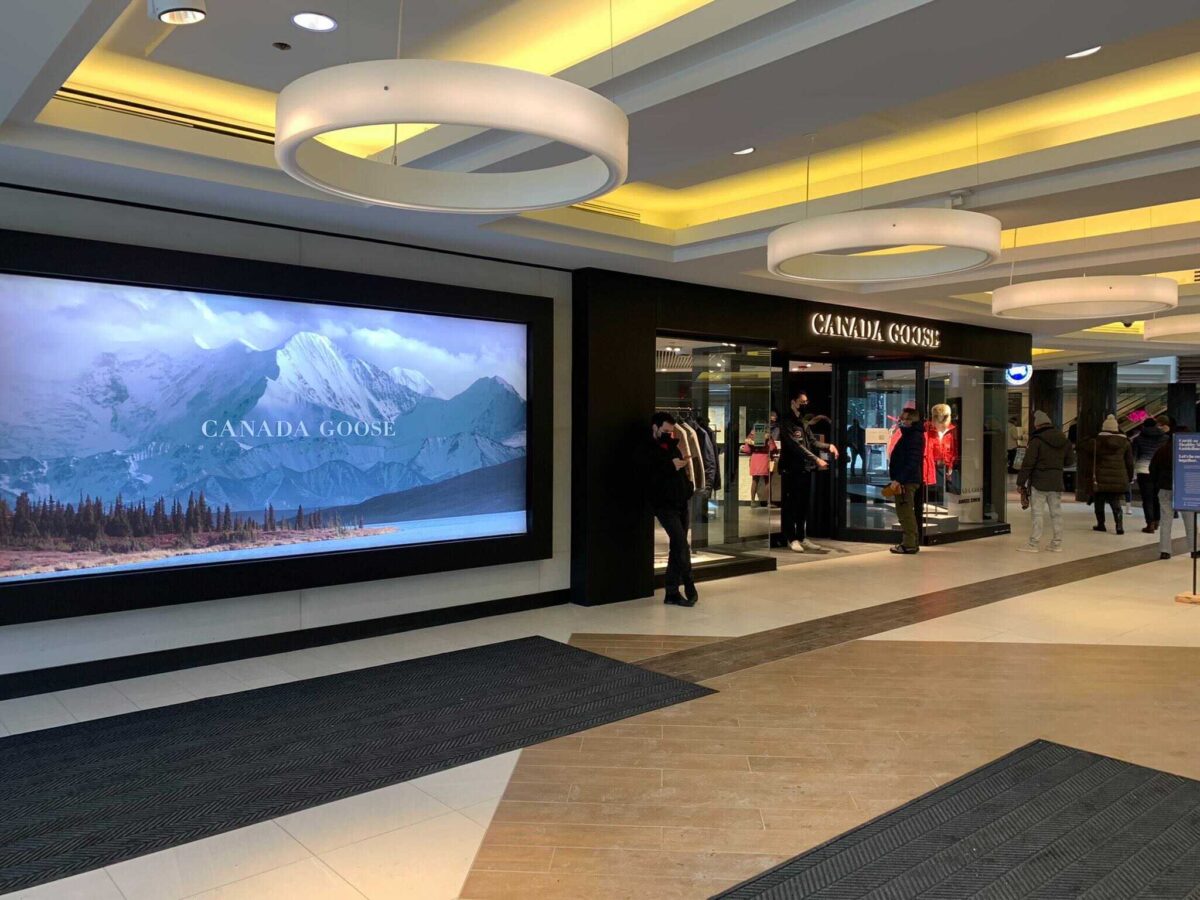
Banff Canada Goose Store at Cascade Plaza Mall (Image: Adam Metropolis)
“If we look at the spending of the group, in 2019, tourists from China, their spending was $1.9 billion in Canada. In BC, the spending in 2019 was $850 million. Obviously a lot of people were coming to BC and Ontario as well. We don’t have the data or the spending for 2020, but obviously if you look at the drop in the number of people, the spending is probably a significant drop as well,” said Zheng.
“If you look at spending, trends with tourists from those locations, they’re quite known for their spending power. They will eat, they will go to hotels but the amount of luxury goods that they buy, and the gifts that they buy and bring back, is a huge chunk within that $1.9 billion – about $570 million was spent on clothing or gifts in 2019.
Jingjing Zheng
“We don’t know exactly but I think a lot of the people who actually came here in 2020 were probably on business trips or out of necessity. So the spending I think got harder hit during COVID and also some of the stores were closed. And Chinese consumers tend to be more conscious in terms of their safety and health and they’re used to strict regulations in China and coming here if they don’t feel like it’s safe enough to shop and to go around to visit different places, they’re more conservative in that as well.”
Zheng runs an agency called Hexie Digital that focuses on Chinese language marketing in North America. She provides the following services to clients worldwide: Marketing translation, localization, Chinese copywriting and editing; Brand strategy for the China market; China entry strategy and market research; Chinese digital marketing and social media strategies; Interpretation between English and Chinese; and bilingual conference facilitation (in Alberta).
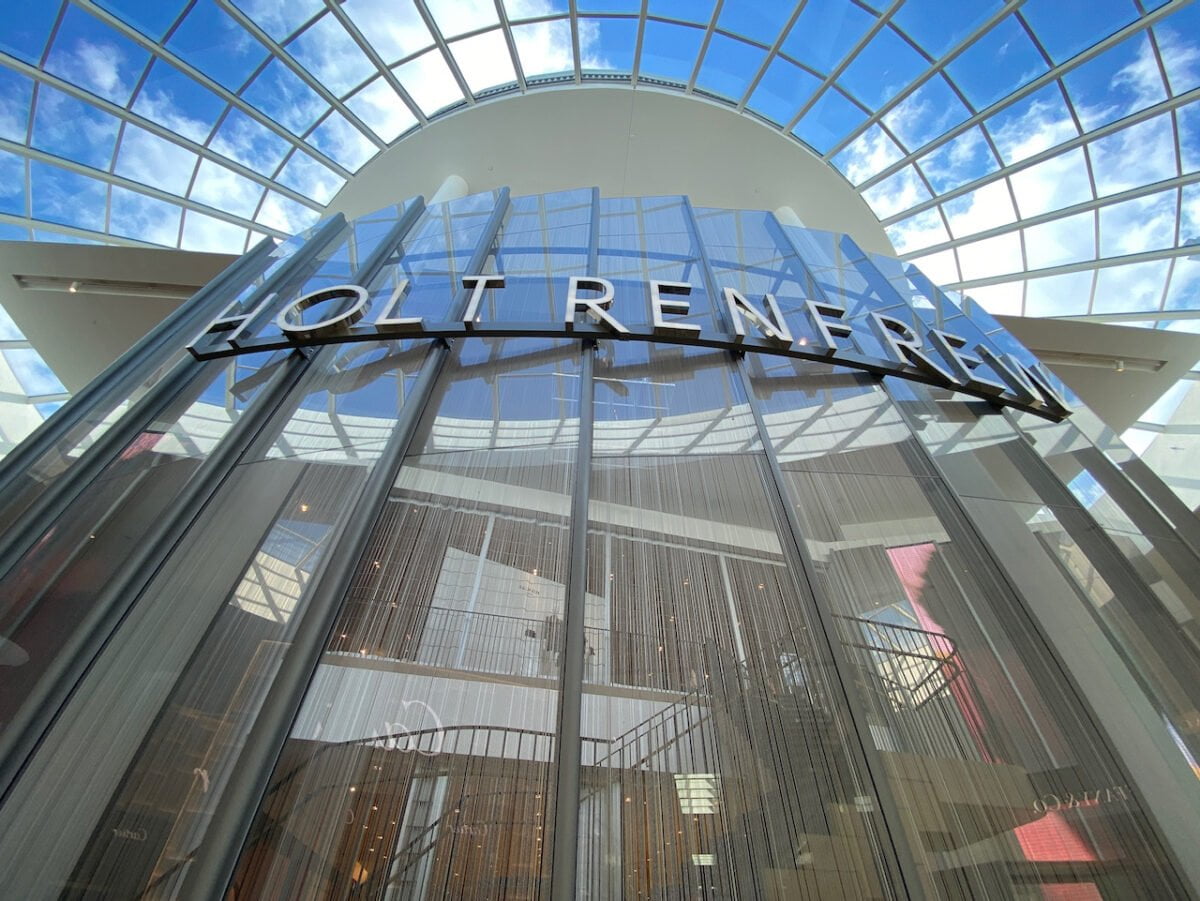
Holt Renfrew at Toronto’s Yorkdale Shopping Centre – Photo by Dustin Fuhs
Zheng said it will not be an easy recovery following the pandemic.
“It will eventually but there needs to be some effort to be made from a policy perspective from both sides of the government. From the Chinese side, if they are encouraging people to travel abroad more of course with the pandemic being in control. People need to be encouraged to travel abroad,” she said.
“And from a Canadian policy perspective, what are we going to do to make sure that it’s safe and what are we going to do to make sure that we attract tourists to these different locations? A special draw to have Chinese tourists come to Canada? If we’re looking at 2018 and 2019, China was the largest source of tourists to Canada. How we attract Chinese tourists is quite crucial I think for a speedy recovery. Over time things will pick up and things will go back to normal but if we want a quicker recovery we need to do something special to make that happen from a policy perspective.”
Zheng said the company is building a digital platform on WeChat to connect Canadian brands, and eventually brands across North America, with Chinese consumers.
“Trying to attract consumers to experience the brands they may not be familiar with. A way to introduce things that normally wouldn’t be easy to access for them if they’re not familiar with the brands and they’re not familiar with some of the retailers here in Canada. It makes them like almost top of mind when they’re coming to visit. They know about Canada, they know about the Rockies, they know about Vancouver, but they may not know a specific mall in Vancouver or the West Edmonton Mall,” she said.
Louis Vuitton Yorkdale – Toronto. Image by Michael Muraz
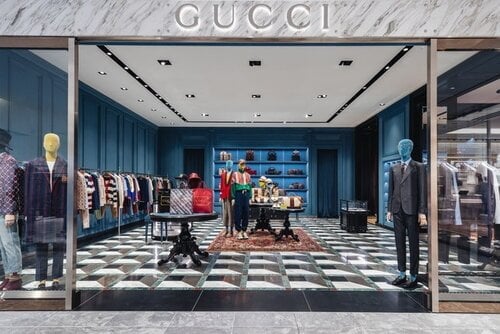
Gucci concession at Holt Renfrew Yorkdale. Image via Gucci/Amachris
Yorkdale luxury wing, image via Oxford Properties
“So putting that retail, or the specific retail, in the mind of the tourists when they’re coming here and planning their trip. They will have a plan to stop by those places. Put those locations in their trip plans.”
Zheng said there is also a huge population in Canada that are recent Chinese immigrants and also international students.
“These groups have similar characteristics as some of the Chinese tourists. Their spending habits are quite similar and a lot of them have very high spending power. Those people are also an important target for retailers in Canada.”
Zheng said the platform on WeChat will likely be launched some time in the fall.
She also said that retailers need to utilize WeChat, the Chinese multi-purpose messaging, social media and mobile payment app, to connect with Chinese consumers, adding that there are 1.2 billion users active every month on the social media platform.
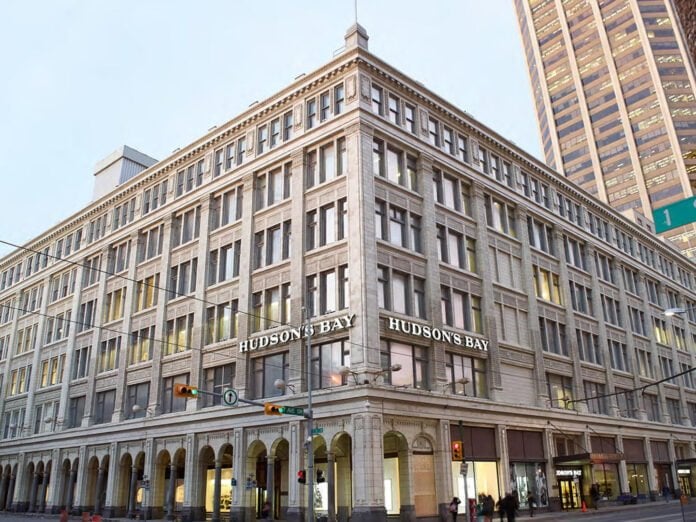
The iconic downtown Calgary Hudson’s Bay store is reducing its retail footprint by consolidating its operations over three levels at its flagship location in the heart of the city.
“As we operate with a digital-first mindset, Hudson’s Bay is redefining the role of the store. In Calgary, we are rightsizing the shopping space to improve productivity and profitability, while at the same time enhancing the overall experience for customers,” said the company in a statement.
“Without any reduction to products, services or staff, the store will utilize three floors as retail space. Beginning this fall we will also fulfill orders through microdistribution from the store, increasing speed of delivery to thebay.com customers in the West.”
The fourth and fifth levels would be used for other uses such as microdistribution, according to the company.
Level 6 is an event space called Hudson that is operated by Toronto-based Oliver & Bonacini and Level 7 is a gym. The building is owned by the Hudson’s Bay Company and RioCan in a joint venture.
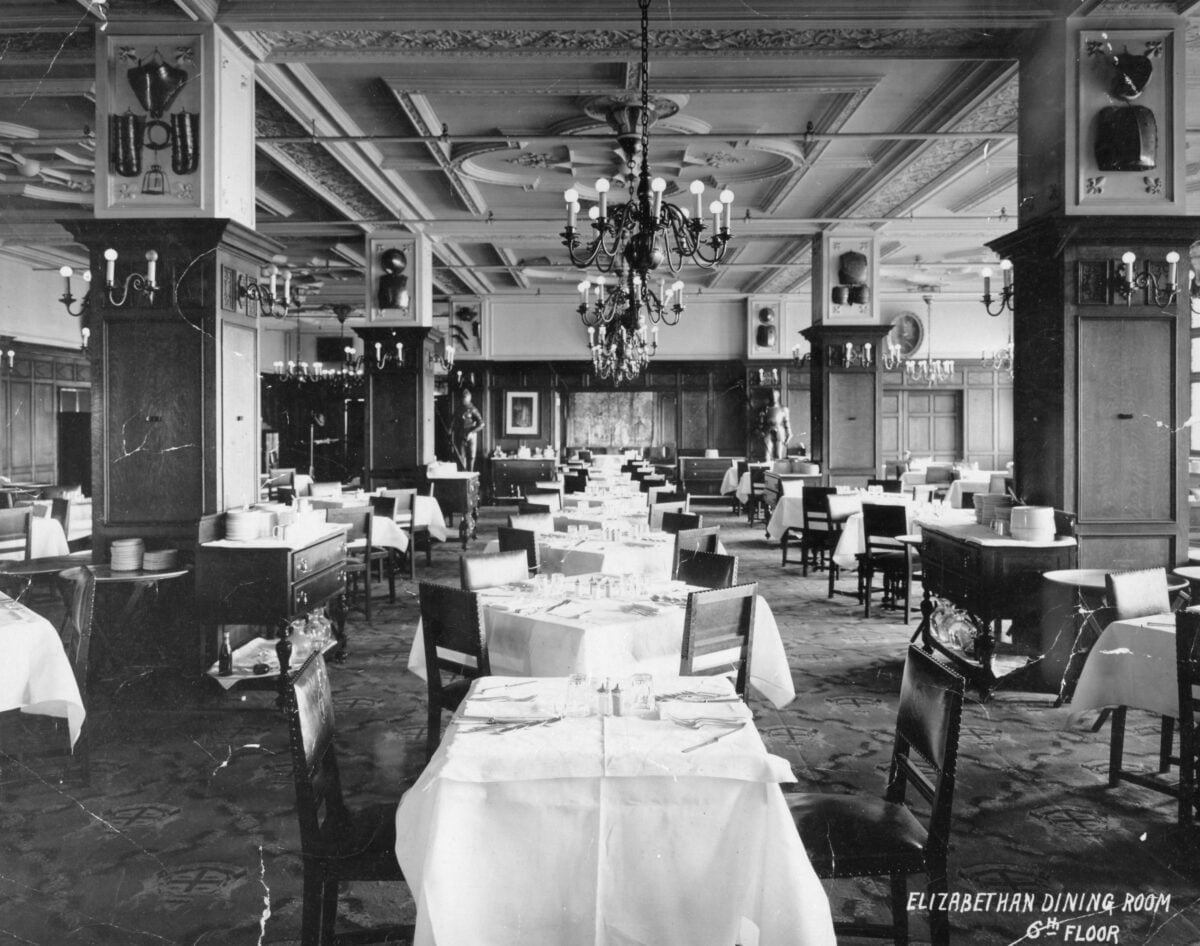
6th Floor Elizabethan Dining Room, no date, Gelenbow Archives NA-2037-25
Michael Kehoe, broker/owner of Fairfield Commercial Real Estate in Calgary, said the Bay was Calgary’s first department store built in 1913.
“It’s undergone several space reconfigurations in the recent past where the retail footprint has been reduced,” said Kehoe. “They put an event centre in. There’s been a health club in one of the upper levels for many years. They expanded the restaurant on the main and lower levels.
“This is just a continuance of the process whereby the retail footprint’s being reduced as they strive to make the building into a mixed-use building. In the future, it could have residential or entertainment components as well as retail. Maybe even office space in the future. But who knows?
Michael Kehoe
“The thing to put into perspective is that Hudson’s Bay created that new real estate arm last fall to convert a lot of the real estate into mixed-use properties and increase the value as the nature of department stores has changed significantly over the years and more so even in the recent past with online shopping and the pandemic year.”
Kehoe said the role of the downtown department store was always the flagship mentality. That’s where the best of the best would be. The highest sales performance in cosmetics and fragrances. That’s where you went to get fashion. But as the enclosed malls evolved, suburban shopping centres, with their department store anchors, altered the nature of the downtown flagship.
“But engrained in people’s memories is the concept of the downtown department store as being the flagship location where you would go to shop, experiential shopping,” said Kehoe.
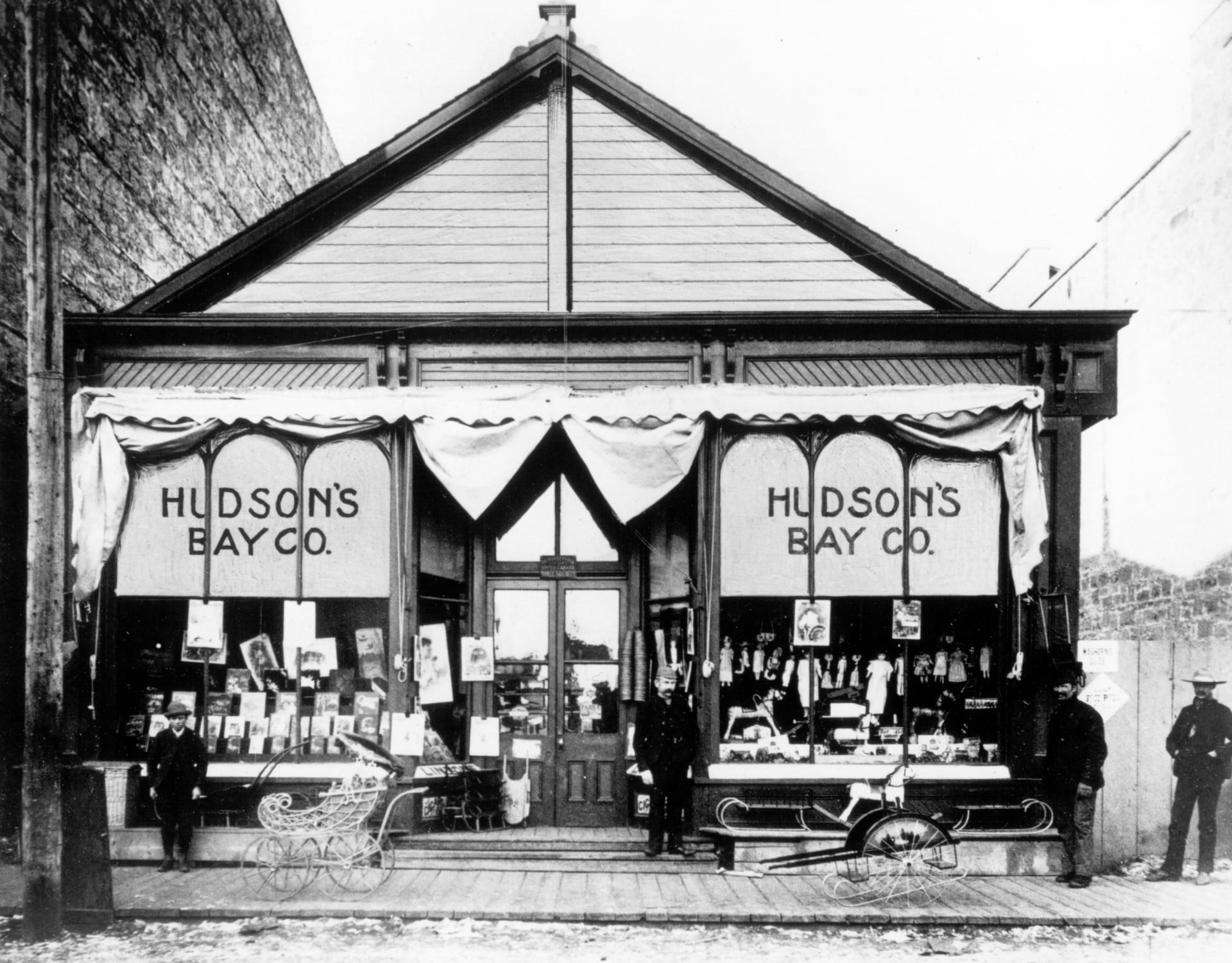
“The Hudson’s Bay Company in downtown Calgary was one of the essential building blocks of Stephen Avenue, Calgary’s original historic main street. It’s been the anchor down there since it opened in 1913. It was expanded again in the late 20s. It’s an architectural landmark. It’s the anchor of the downtown enclosed shopping centre known as the CORE and Stephen Avenue Place. Anchored at one end by Holt Renfrew and the Bay at the east end. It’s a significant landmark in the retail landscape of Calgary.”
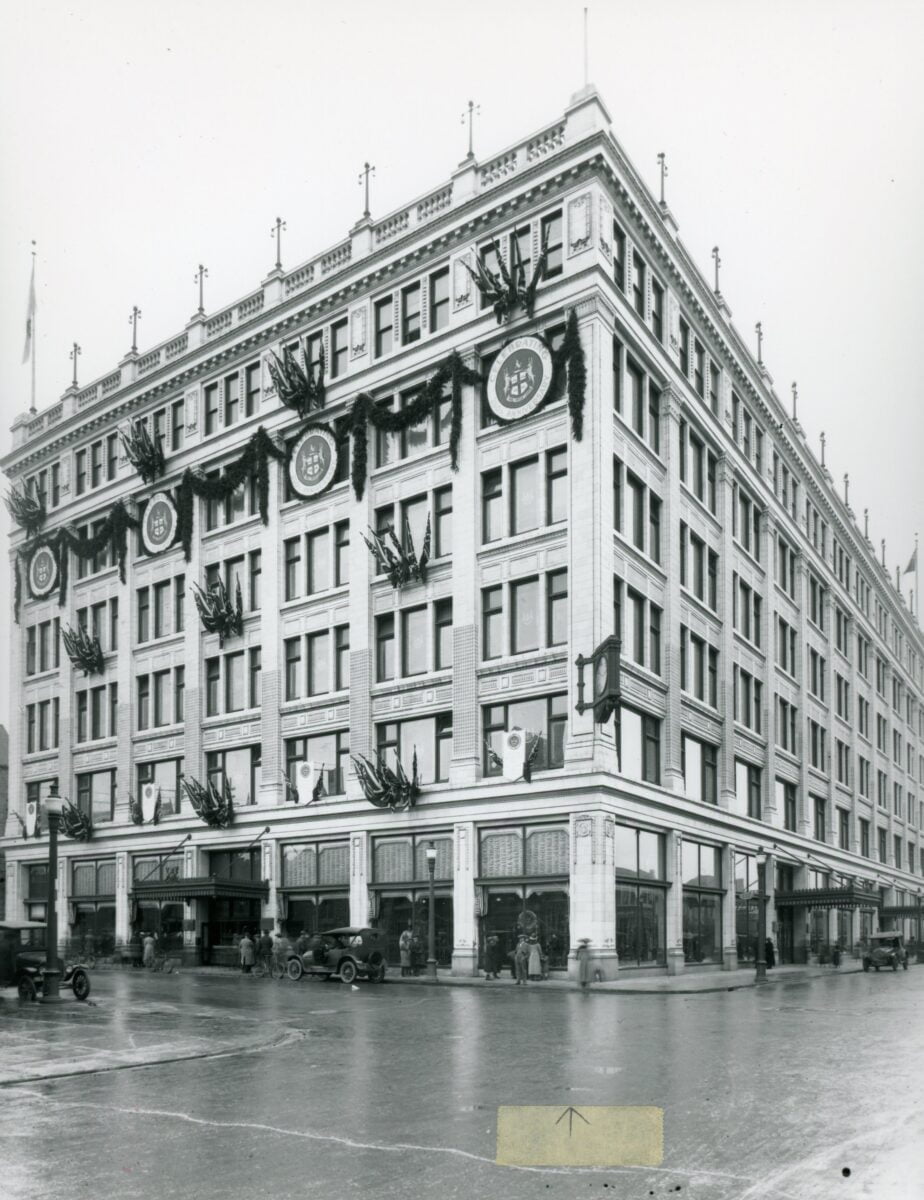
Northeast corner of the original 1913 building, image via Glenbow Archives ND-8-278
Streetworks Development is the real estate development division within the iconic Hudson’s Bay Company. The company said it creates and reinvigorates urban districts, drives the growth of neighbourhoods and helps build communities of the future.
“Our team anticipates demand and innovates new solutions for office, retail, residential, health and entertainment. We do this across 20 million square feet of mixed-use projects currently under development,” it said.
According to the City of Calgary’s Inventory of Historic Resources, the downtown Calgary Bay was significantly expanded in 1929 and 1956-57, describing it as a commercial-style building, clad in ornamented, cream-coloured terra cotta.
“The store is noted for its elegant arcade which wraps around the east and south facades. With its landmark presence, it is a prominent contributor to the concentration of late-19th- and early-20th-century commercial structures that compose the Stephen Avenue National Historic District,” it says.
“The store’s design was the first of its kind in Calgary – constructed on a monumental scale, incorporating steel and reinforced concrete construction technology that was sheathed in terra-cotta cladding, and banks of elevators allowing it to rise six stories. Reminiscent of the arcades lining the famous Rue de Rivoli in Paris, it is the only known example of its type in North America.
HBC Calgary store, 1884. Hudson’s Bay Company Archives.
“The prototype for the company’s expansion programme of new stores, it was repeated in Vancouver (1913-16), Victoria (1913-21), and Winnipeg (1926). With the decline of its traditional role as fur trader, the Hudson’s Bay Company greatly expanded its retail operations in Western Canada by introducing this new class of modern department store based on the Calgary example.”
Image: Ron Odagaki
Ron Odagaki, Senior Sales Associate, Retail, with JLL in Calgary, said the Bay is first of all an iconic building at a very prominent address.
“It’s a landmark in downtown Calgary. It’s very, very prominent but I think overall in terms of the department store industry has the Bay been able to pivot similar to other retailers? As we look forward that will be interesting to see if they are able to pivot as other retailers have,” he said.
Because of its centre ice location and the unique nature of the building itself, it would be interesting to see what could be done with that property in the future and with a reduced retail footprint, there are other possibilities for use, he said.
A lot has changed within the retail industry over the course of the past couple of decades. Fuelled primarily by the ongoing digitization of the world around us, the shopping environment has virtually transformed, yielding multiple channels on which consumers can shop and a subsequent shift in their collective behaviour. This ever-evolving retail landscape has presented merchants with the challenge of continuously meeting increasing consumer omnichannel desires while enhancing the experience they offer across all channels. In concert with the digital revolution have been advancements in point-of-sale innovations and retailers’ ability to leverage them in conjunction with promotion management software to create unique and complex promotions. And, most importantly, explains Dan Surtees, Vice President of Strategy & Business Development at XCCommerce, its allowing marketing teams throughout the industry to move from an approach that’s tactical in nature to the development of initiatives that are driven by strategy.
Evolution and innovation
“It’s incredible to think of the immense change that’s happened within the industry over the past 25 years,” he says. “When you think back to the early 1990s, although ecommerce hadn’t taken off, a digitization of retail was already starting to take shape. POS systems were evolving and becoming much more innovative. But, as POS solutions providers started to build out their product, the promotions engine, unfortunately, was developed mostly as an afterthought. As a result, retailers were left with simple promotions with basic functionality, supporting things like a dollar off, percentage off or buy-one-get-one. The problem was the fact that these POS solutions providers didn’t focus on promotions as the core area of their business. The consequence was promotions engines that may or may not provide its user with consistent results. And because many of these systems were built for specific technologies, they were very much tied to them, limiting functionality and a retailer’s ability to shift from rudimentary tactics.”
He goes on to explain that in the years that followed, which bore witness to the rise of ecommerce, a subtle wave of promotions innovation occurred, resulting in moderately better functionality and more automation. However, as ecommerce and physical retail became the two predominant channels of choice, the need for solutions that addressed those singular needs took precedence in the development of the technologies and software, further preventing the introduction of a more robust and flexible promotions engine. Surtees also points out the fact that, in addition to the continued limitations inherent in the systems being deployed by retailers at the time, the dual channel offering was also presenting challenges that were complicating their efforts.
“Although the rise of ecommerce signalled the start of really exciting times for retailers and their teams, their approach in building systems and infrastructure was still very tactical,” he recalls. “Many merchants within the industry developed strategic plans for ecommerce solutions but didn’t consider potential synergies with their existing POS solution. The development and potential benefits of a dynamic promotions engine remained an afterthought. The popular thinking at the time was that, because promotions modules were included within these solutions, their organization’s promotions needs would be met. However, many of the same limitations still existed, defining constraints for the business and their interactions with customers. The other challenge was in the fact that many retailers all of a sudden had a promotions solution running through their POS system and another running through their ecommerce system, meaning that any and all promotions would need to be entered twice, inevitably resulting in inconsistent results. And, not only were retailers still technology-dependent when it came to promotions, but they became channel-dependent as well.”
Strategic approach
Although greater flexibility had started to be built into the systems, it hadn’t necessarily translated into increased capabilities or efficiencies for retailers from a marketing and promotions perspective. Surtees points out that marketers or operations team members would approach their IT organizations to introduce new promotions initiatives. Invariably, however, they would be told that the promotion type could likely be implemented, but that it would require a significant amount of time and money to do so through their solutions providers. He describes the situation that lingered as a continuation of the malaise around the development of agile promotions solutions, perpetuating their tactical approach inside the limitations of their solutions’ functionality. However, with the evolution of the retail omnichannel environment, along with shifting consumer shopping behaviour, has come a critical need for retailers and their teams to begin thinking strategically about promotions and the ways they’re engaging with their customers.
“Understanding customers and their needs and wants is obviously critical in supporting the efforts of any retailer in driving their business,” he asserts. “But the urgency has been heightened with the arrival and development of the omnichannel world and, most recently, by the pandemic and the swift change in consumer behaviour that occurred as a result. This means that the promotions and offers that they create need to be extremely strategic in order to effectively engage with customers and generate loyalty. Subsequently, they’re now realizing that they need to be thinking of newer, better ways to give their customers what they want and to ensure that their solutions can adapt in future with any further changes in shopping behaviour. The way retailers can achieve this is by ensuring that their promotions management systems integrate seamlessly with their customer relationship management and loyalty systems. And, to execute on this strategic vision, they need an expert partner that can help with the creation and implementation.”
Agility and adaptability
One of the expert partners that Surtees speaks of is XCCommerce – the omnichannel promotions solution provider that’s been servicing the retail industry with automated promotion and coupon management solutions for more than 20 years. Headquartered in Montreal, QC, with offices in Toronto and the United Kingdom, the company works with more than 55 brands, including Indigo, Ann Taylor, Metro and Shoppers Drug Mart, among many others, servicing more than 13,500 storefronts on 30 different channels. Offering a promotion solution that provides its clients with full control over the management of their promotion and coupon offers, the company is helping retailers drive loyalty among their customers and increase sales. Compatible with any operating system, database and sales application, and decoupled from all other technologies, Surtees says that the XCCommerce promotions execution module is a fit for just about any business, allowing the freedom and flexibility to grow and gain a competitive edge.
“As the retail industry becomes more and more competitive, the requirement for a strategic focus continues to intensify,” he says. “And, when combining a well-developed strategy with the capabilities of a dynamic promotions engine and applying them to the opportunities that ecommerce presents, global expansion for any brand becomes so much easier to achieve. Retailers can now enter any market. And the flexibility and adaptability of our systems are allowing them to pursue this, enabling some of our clients to operate promotions in dozens of countries with dozens of currencies, entering their promotions once and delivering consistent results across all channels. When you’re talking about multilingual and multi-currency operations, you need your systems to be working with you effectively.”
Influential solution
Given the incredible evolution that’s occurred within the retail landscape, one that’s been precipitated by a digital transformation of the world around us, it’s clear that the development and implementation of the right technology systems is crucial in supporting retailers’ efforts to succeed going forward. And, according to Surtees, including the right promotions management solution as part of the overall system will not only allow merchants to meet consumer needs, it will go a long way toward providing the ability to get out in front of shopping behaviour and trends, opening up an entirely new realm of marketing and promotions possibilities.
“The most adverse effect of a tactical approach to promotions is the fact that your thinking is by proxy very reactionary. You identify a new promotion type or consumer shopping trend and then look into the things you need to do to develop and implement the things you need to make this happen from a technology perspective, which is often very time consuming and costly to the business. By enabling your systems with the most agile and effective supporting solutions, an organization can eliminate their tactical, reactionary, limited way in which they approach business and instead begin to influence behaviour and trends and broaden their reach, taking any retailer to the next level.”
To learn more about the ways XCCommerce can help your business deliver an exceptional omnichannel retail experience, visit https://xccommerce.com