Advertisement
Advertisement
Home Blog Page 988

MEC Opens 1st Flagship Store on Toronto’s Queen Street West [Photos]

PHOTO: MEC

Vancouver-based retail cooperative MEC, known to some as ‘Mountain Equipment Co-op’, has opened an impressive flagship store on Queen Street West in downtown Toronto. The store includes some unique experiential features ranging from a climbing wall to virtual reality technology, at a time when competitors entering the market are also innovating with their own experiential retail concepts. 

The newly-opened MEC flagship at 300 Queen Street West, at the corner of Soho Street, is the first flagship location for the chain — a relocated Vancouver flagship will open in October. The two-level Toronto store is impressive and dominates the street with an expansive facade and large branded signage, and it replaces a slightly smaller location on King Street West on a site that is slated for redevelopment.  

“We’re honoured to join the vibrant and historic shopping community on Queen Street West,” said MEC Director of Store Development, George Bevan. “The new Toronto flagship will act as a hub for local residents, urban commuters and active people across the GTA, making it the place to start any adventure. By relocating to this highly accessible location, we are better able to serve our members, adding lasting value, vibrant in-store experiences and vitality through our services and programming.”

The new store has been open for several days and when we toured the space on April 9th, it was immediately apparent that foot traffic is strong in the already busy store. Thousands walk along the popular Queen Street West strip daily, in an area boasting a diverse mix of retailers that range from independents to big brands such as Aritzia and Zara. 

MEC’s Queen Street flagship includes 35,750 square feet of retail space in a building measuring about 54,000 square feet. It’s being positioned as a ‘community hub’ by offering clinics, events, member services and spaces for local outdoor groups and organizations to reserve and use. MEC’s brand awareness in the GTA is tremendous, with nearly 500,000 co-op members in the area. 

The store’s design includes a floating canopy to mark the store’s entrance, with interior wood elements to display merchandise. The store is carbon neutral, as with all MEC buildings, and uses renewable energy. The store was designed by Ædifica, and the base building architect was Sweeney & Co.

More than just a retailer selling product, the new MEC flagship is all about experiences. Included is a ‘basecamp’ open-concept community space that can be used to host ‘how-to clinics, community events and to connect members with places to camp, hike and get active in the outdoors. 

In an effort to maintain and grow brand loyalty, MEC designed the store to be a ‘community hub’ that includes events and clinics both within the store, as well as nearby. “Learn-to-Camp” sessions will be hosted with national partner Parks Canada, and there will be workshops that develop members’ running, cycling or climbing skills. At the same time, MEC is launching new events programming that is tailored to the neighbouring community. Some of the planned events, for example, include an in-store visit from local artist Maria Qamar (known as @hatecopy), film screenings with Red Bull, and a Mother’s Day hike with community partner Parkbus.

A dedicated ‘community room’ in the store serves as a meeting space that comfortably seats 12 people, and is available for use by local outdoor groups and environmental organizations.

A 1,000 square foot indoor climbing wall on the store’s second-level features ample sunlight from the store’s expansive south-facing windows. Interestingly, MEC’s Toronto operations sell more climbing shoes than any in the chain. 

A full-service bike repair and ski shop on the main floor is open-concept, featuring a space for MEC specialist staff to help shoppers with their needs. 

Upstairs, as well, tablets can be used to view a wide range of tent styles in a virtual reality experience. The technology, developed by Finger Food Studios, saves a considerable amount of space that would otherwise be required to showcase MEC’s expansive tent selection. 

On offer in the new stores is MEC’s private label spring collection, which was developed by its new Senior Director of Product Design and Production, Wendy Youds. The collection “focuses on timeless designs made from technical materials that are durable, easy-care and sustainable,” according to MEC. Included is a wide selection of technical outdoor gear from various brands for camping, climbing, paddle sports and snow sports, not to mention an extensive array of men’s and women’s apparel for cycling, travel, hiking, running, fitness and yoga, as well as footwear, outerwear, kids’ and casual clothing. In total, MEC carries over 1,300 “environmentally preferred products”.

Interestingly, MEC offers a low-cost equipment rental program that offers camping gear, skis, boats and other options to enable customers to get active outdoors. 

MEC’s new Queen Street store boasts accessibility from a variety of modes. The area is walkable and the store can also be accessed by bike (there are 32 bike parking stalls in front of the store). The TTC Osgoode subway station is a short walk to the east, and the 301 Queen and 510 Spadina Streetcars are also both close by. Those using private vehicles may park in one of 116 spaces in a dedicated parking area, which includes five disabled parking spaces. 

Inclusivity is key to the store as well, with the store featuring fully accessible, universal change-room facilities on each floor, and a fully accessible universal washroom facility on the second floor. MEC’s advertising is more ethnically diverse, after complaints from some in recent press. The store’s main entrance also features MEC’s first written land acknowledgement to recognize the Indigenous land the building is located on, accompanied by an installation that highlights a local Indigenous community partner, Outdoor Reconcili-Action.

To expand the experiential nature of MEC, the retailer recently launched its International Travel Tours initiative that was reported in Retail Insider in January. It’s a brilliant move by MEC — such excursions will be memorable to participants, and will further solidify MEC’s brand identity and credibility.

In October, MEC will open its second flagship location in Vancouver’s Olympic Village area, which the store is building from timber construction and as with other units, will be carbon-neutral. While MEC is leasing its new Queen Street space, it will own the Vancouver store outright, which will also include corporate offices. 

MEC was established in 1971 and is Canada’s largest consumer co-operative, with over 5-million members across the country. A lifetime membership is available for only $5, a price that hasn’t changed in years. MEC has 23 stores nationwide in markets across Canada, and has invested more than $40-milllion into non-profit organizations that support outdoor recreation and conservation.

The innovative Queen Street MEC store comes at a critical time in the retail industry. Canada is seeing unprecedented competition with new entrants opening stores in the market, while existing chains continue to expand their operations. Perhaps most of a threat is French behemoth Decathlon, which opened its first Canadian storefront outside of Montreal last year with plans to expand across the country with a network of stores, in partnership with brokerage Oberfeld Snowcap. As with MEC stores, Decathlon offers the opportunity to try out products in its stores, ranging from climbing walls to hiking trails to virtual reality tent displays, similar to in the new Toronto MEC flagship. 

Other sporting goods chains such as homegrown SAIL Plein Air, Sportium, and Sport Chek/Atmosphere/Sports Experts continue to expand stores across Canada, which also feature various experiential elements to keep consumers engaged. What’s resulting is a hyper-competitive market in the sporting goods industry where price and retail experience are draws for consumers, with further competition coming from larger-format retailers such as Canadian Tire, Walmart and the likes of Cabella’s and Bass Pro Shops, both of which cater to outdoor enthusiasts. 

Ontario Based Start-Up Launches Technology for Cost-Effective Product Photography and Videography

PHOTO: STYLEPHOTOS.CA

Ontario-based company StylePhotos Canada has launched innovative technologies that could revolutionize e-commerce photography and videography. It could be a game changer for retailers seeking attractive efficient, affordable, and effective product images and videos  for e-commerce sites and related marketing, utilizing the equipment that could be easily rented and used at StylePhotos’ studio in Concord.

It is not a secret that the e-commerce industry is booming worldwide, and Canada is no exception. Canadians are buying more online, preferring Canadian-based retailers over American counterparts to save on duties and exchange rates. This provides an opportunity for small-to-medium sized businesses to open new stores and e-commerce platforms to satisfy the expanding market.

On the other hand, this also provides an opportunity for entrepreneurs to look for solutions that would help these small-to-medium sized businesses to compete with the larger players. One of these entrepreneurs is Husan Aripov, partner in a new venture called StylePhotos Canada, whose business acumen allowed him to source and find the right solution that is currently revolutionizing the photo and video services in Ontario, making it less expensive and accessible to all businesses.

StylePhotos was born as a result of the owners not being able to find an affordable solution for their e-commerce store – with prices starting at $20 for a simple photo. With a multitude of “upgrades” such as background removal, material handling (such as ironing or steaming), extra fees for a “rushed” order, as well as colour and light adjustments, the price ramps up quickly — easily exceeding $60 per photo. Needless to say, for a vast majority of retailers these price-points are simply unattainable, and there had to be a more efficient and more cost-effective solution.

StylePhotos Canada is changing the whole process of taking product photography and videography by bringing the latest technological innovation that is booming all over the world to the Canadian market. The technology, machines and software that was developed by StyleShoots allows for an efficient, affordable, and effective process to take place. With companies like Nike, and Macy’s utilizing this equipment, the equality and efficiency that these systems provide is unmatched. StylePhotos is the first company in Canada to carry all three systems, and you can either rent their equipment or ask them to take photos and videos for you.

Currently, StylePhotos carries three unique systems dedicated for a specific type of photo and video material that is required. One of the machines is specifically designed for flat-lay photography, making it a great solution for fashion (clothing), construction (hardwood, tiles, etc.), and other industries. The software allows for colour, light, and background management to take place seamlessly, producing hundreds of high quality, consistent product photos in a day – something that was simply impossible at a conventional studio before.

The second machine is dedicated towards live-modelling stills and videos, as well as ghost mannequin shots, and is a true powerhouse in terms of the capabilities that it offers. It provides extreme flexibility and efficiency when shooting modelling videos and photos, since the process is automated with the camera being directly operated by an iPad. Changeable backgrounds, props, and video templates allow StylePhotos’ clients to take consistent high quality videos and photos in a matter of minutes – providing the necessary efficiency to bring the products onto your store quicker, so that you can start making money right away.

Last but not least, there is the “Eclipse” – the latest system that was introduced in late 2018 that is dedicated towards small-accessories photography and videography. This is a true game-changer, given its capability to shoot 360 degree videos in a matter of minutes – something that consumers are looking for, and businesses do not provide. StylePhotos’ services allow small and big players alike to have high quality of content, which boosts volume of sales, and decreases the number of returns.

Companies like StylePhotos are helping the retail industry and small businesses compete in the market and grow. Bringing a disruptive technology into a new market is always a risk; however it also creates an opportunity for other businesses to grow and flourish. For more information about StylePhotos Canada please visit www.stylephotos.ca

BRIEF: Matt & Nat Expands into Western Canada, Reitmans Decreasing Retail Footprint

exc-5cabc409085229948d52f553

Matt & Nat Opens 1st Store in Western Canada: Montreal-based eco-friendly accessory fashion brand Matt & Nat is continuing with its aggressive expansion that will see storefronts open throughout Canada and the United States. Last week the brand opened at Calgary’s CF Chinook Centre, featuring Matt & Nat’s simple, yet attractive store design. 

The highly respected Matt & Nat brand (short for “mat(t)erial” and “nature”), which was founded in Montreal in 1995, is known for not using leather or any other animal-based materials in its bag and accessory designs. Since 2007, it has been committed to using linings only made out of 100% recycled plastic bottles, and it recently introduced recycled bicycle tires to its collections. The brand launched with a collection of accessories and it has since expanded to also carry a range of footwear designs. Matt & Nat wholesales to retailers in Canada as well as globally, and it also has a robust ecommerce business at mattandnat.com/shop.

The CF Chinook Centre boutique spans about 1460 square feet and is located on the second level of the mall. CF Chinook Centre has been adding upscale retail over the past several years. Nordstrom opened its first store in Canada at the mall in September of 2014, which was followed by Saks Fifth Avenue which opened in February of 2018. Louis Vuitton also opened a store several months ago with brands such as Aesop on the way as well. 

Matt & Nat opened its first retail store at CF Carrefour Laval in suburban Montreal in March of 2016, and now has nine stores in the Montreal and Toronto areas as well as in Ottawa and, now, Calgary. A pop-up in new York City’s Soho area is the first of several locations for the brand south of the border, according to Manny Kohli, President and owner of Matt & Nat. 

Matt & Nat is working with brokerage Oberfeld Snowcap for its store expansion, under the direction of Jay Freedman and Jessica Millet

Reitmans to Decrease Retail Footprint and Reduce Order Delivery Time: Long-standing Canadian womenswear retailer, Reitmans, has shuttered close to 40% of its retail stores, according to a French language report in La Presse. Reitmans has also closed 3 of their clothing banners: Cassis, Smart Set, and Hyba.

The closures occurred over a 10-year period in an effort to adapt to the changing retail market in Canada.  Reitmans’ current store count sits at 600 with: 263 Reitmans stores, 115 Penningtons locations, 81 Addition Elle boutiques, 83 RW & CO shops, and 58 Thyme Maternity outlets.  Another 25 – 40 closures are estimated for the coming year.  

Discussing the closure of Hyba stores, Reitmans’ Chairman and CEO Jeremy Reitman likened the endeavour to fitting a square peg in a round hole. The company ultimately decided that the amount of work required to make the Hyba locations work for the brand outweighed its projections and the stores were closed. The Hyba brand still lives on as an offering within Reitmans stores.

Reitmans is looking into adjusting its order fulfillment model, planning to make changes at store-level that will see them become smaller scale warehouses.  This change is said to reduce delivery time by two days; Reitmans has tested the concept with RW & CO and intends to extend it to the rest of its brands. Despite the closures, Jeremy Reitman is pleased with the company’s year-end results as well as the growth they’re seeing with its e-commerce division.

Upscale Grocer Urban Fare Prepares to Open 1st Calgary Storefront: BC-based grocery chain, Urban Fare, is coming to Calgary’s Mount Royal Village shopping centre.  The nearly 27,000 square foot store is slated to open on April 26th, marking Urban Fare’s first location outside of British Columbia (at least in recent memory, that is, see below). 

Premium offerings at the Mount Royal location will include: a full-service Starbucks, wine and charcuterie bar, sushi featuring Ocean Wise-certified fish, poke bowls, and pizza stations. Shoppers can expect to find freshly-baked artisan breads, hot buffet and salad bar, as well as a plethora of cheeses that go perfectly with their wines and tap craft beers.  

Urban Fare’s new location is part of an expansion of the Mount Royal Village.  The neighbourhood was acquired by First Capital Realty in 2011 and the real estate company has been working on moulding this property in the image of Toronto’s Liberty Village and Yorkville Village, which it also owns.  The addition of this unique grocery concept will further support First Capital’s efforts to transform Mount Royal Village into Calgary’s hub for shopping and entertainment. 

Interestingly, Retail Insider first reported on Urban Fare’s Calgary store in January of 2014, which means that more than five years have passed since the first announcement. As well, Urban Fare opened a store in Edmonton’s Crestwood area in 2001 and it closed in 2004 due to poor sales. Parent company Overwaitea may again look to make Urban Fare a chain in cities outside of Vancouver. 

Organic Electrolyte Beverage ROAR Expands into Canada: ROAR Organic Canada is serving up a chilled bottle of organic hydration for your enjoyment! The brand offers a cutting-edge, delicious line of organic, and low calorie electrolyte drinks. Not only are the beverages packed with natural electrolytes and b-vitamins, they contain 25 calories per bottle and less than 5 grams of organic cane sugar. ROAR uses a Proprietary Electrolyte Blend created with organic coconut water and sea salt; their USDA and Canadian Organic Certified hydration is designed to help you reset, refresh, and rejuvenate.

New to the Canadian market, ROAR was initially created in Long Island, and has rapidly expanded throughout the US, Australia, and now Canada. Proud of the quality of their beverages, ROAR provides conscious, clean hydration to consumers. They’ve made a point to never compromise on taste, with flavours like Strawberry Coconut and Cucumber Watermelon. With six unique flavour pairings to choose from, it’s easy to see why people love to #drinkROAR!

Because ROAR isn’t packed with sugar and preservatives, it’s a guilt-free alternative to water. Some people like to drink ROAR to rehydrate during or after physical activity, while others have incorporated it into their daily lifestyle. From pre-marathon to post spin class, lunch break sips to Sunday morning hangover cure, the brand is looking to see you ROAR. Show them how using the hashtag #drinkROAR.

This summer, ROAR Organic is partnering with like-minded brands and serving up bottles of clean hydration at lifestyle, and health and wellness events across Canada. Follow along with the brand’s Instagram @roaroganiccanada to see where they’ll be popping up next! ROAR is stocked in over 1500 stores nationally including Loblaws, Metro, Whole Foods, Bulk Barn, Save On, and can be found at many other specialty stores across Canada. (Contributed by Mike Chalut for ROAR)

A&W Celebrates 100-Years of Burgers and Root Beer: Canada’s favourite root beer and Burger Family will celebrate 100 years of business on June 20th, 2019.  Roy Allen opened the company’s very first root beer stand in Lodi, California. When employee Frank Wright became Allen’s business partner, the well-known A&W moniker was born.  

Richard Bolte and Orval Helwege brought the drive-in concept to Winnipeg, Manitoba in 1956 where it remained in its original location beside Park Gasoteria until March 2015 when they moved to a new restaurant on Portage Avenue.  A&W was known as a drive-in restaurant through much of the 1960s but by the early 1990s they were replaced by indoor restaurants and food court locations.

A&W continues to be best known for their signature root beer (and its secret recipe), as well as their Burger Family featuring the: Baby, Mama, Papa, Teen, Grandpa, Uncle, and Buddy burgers.  You can’t remain in business for 100 years if you aren’t evolving; 2018 saw the introduction of A&W’s first vegan offering: The Beyond Meat burger.  The launch was so successful that the company experienced a stock shortage lasting three months.  Congratulations to A&W on their 100-year anniversary!

Canadian Canned Air Company Boasts $300,000 Annual Sales: When one thinks of Canada’s greatest exports things like maple syrup, poutine, and Wayne Gretzky come to mind.  But perhaps Canadians have overlooked one of this country’s greatest resources – something you wouldn’t think international customers would want to get their hands on. Two words: fresh air.

Moses Lam and Troy Paquette have managed to tap an untappable resource and are seeing success selling their canned air product, Vitality Air, through e-commerce and retail outlets in South Korea. The duo is working on an expansion into China and India alongside European distributors.  Vitality Air states their annual sales have been approximately $300,000; the company expects that number to jump into the seven-figure range.  The company’s target market is places like Korea, Vietnam, and Dubai – places where air pollution is a major issue.

Shoppers can purchase an 8L cannister of air, complete with mask for $32.00 on the Vitality Air website and it comes in two versions: Banff and Lake Louise, and is often a popular souvenir for people who have visited the tourist spots.  Lam and Paquette realized there was a market for their product when they sold a Ziploc bag of air for $168 USD on eBay.  Paquette compares their product to the idea of bottled water, which also seemed ridiculous when it was introduced.

Vitality Air made an appearance on CBC’s “Dragon’s Den” in the hopes of securing an investment from all or some of the Dragons; they were not keen to invest in the company.  Customers can also explore their range of concentrated, flavoured oxygen products.  Vitality’s Asian markets will soon be able to enjoy mango-flavoured oxygen.

Canadians Feel Pressured to Donate at Store Checkouts: Expert

PHOTO: PAN OSTON

Most of us have been asked at least once if we wanted to donate to charity at the checkout counter, especially at the grocery store. A dollar here, two dollars there – it adds up. Some will ask to round up the bill to the nearest dollar. The practice, which started years ago, appears to be growing and becoming more popular. In fact, in Canada, it is estimated that over $35 million is raised by simply asking Canadians to donate at the cash register. It’s easy and convenient, but many people wonder whether such a practice is really an effective way to support charities.

For one thing, customers usually don’t get to choose the charity, and won’t get a tax deduction. Most grocers, if not all, won’t match the donation, either. So essentially, customers do most of the financial heavy lifting without the credit. Many store experience surveys suggest that more than half of all customers disapprove of the practice or feel pressured when asked to donate as they pay for their groceries. Many see it as guilt giving. A dollar or two extra won’t make a difference if your card is out, or your wallet is open. Many customers also dislike the practice, given how little transparency is offered as to what happens to the money they are asked to donate. What is also being disputed is how grocers take the credit for giving to charity when funds come from their customer base. Expectations are shifting, and grocers may need to think of different ways to support these charity campaigns.

A U.S. study shows that customers are most likely to go back to the same food store, even if they have felt pressured or disliked being asked to donate. Checkout charity is far from being a deal breaker for most of us. But, in this era of disappointing corporate trickery and scandals in the food industry, a growing number of people are expecting more transparency as to what happens to money donated at the cash register. This may be one reason that self-checkouts are more popular now than ever. Nobody will ask you to donate, but if the machine does prompt you with the question, it’s much easier to say no to an automated cashier than to a human being. The same rule applies to online purchases.

Moving forward, it will be critical for grocers to create a real reciprocal benefit so that all the parties involved will win. Seeing grocers wanting to make a difference in society is desirable. But this is about forging a partnership with customers in order to help those in need. Because it is about a partnership, it is for the greater good. 

For most campaigns, the onus is really on cashiers to ask for a donation. For most customers, the ask comes as a surprise, as most of us get just a few seconds to think about the cause, the donation, or the whole decision, really. Grocers could spread messages about the campaign throughout the store so customers can see how much of an impact their efforts have on the community. This could be stories, anecdotes, or other information which can make customers realize the impact of the campaign. Store posters and frequent PA announcements could help. And why not provide an incentive for customers who do donate, like a ticket to participate in a draw? Some grocers do give customers an opportunity to add their names to a wall of appreciation for their donation, but it may at times be overdone. It also slows down the store exiting process for everyone.    

Grocers mean well when asking for donations and the practice will continue for some time. These programs can be complicated for grocers to implement, creating as much customer annoyance as they do goodwill. But it is one quick way of showing the public how much grocers care about their community. But making sure the public knows the story – where funds are going and how much of a difference it makes – can go a long way. Given that the practice does raise a significant amount of funds for worthwhile causes, the approach needs to be refined in order to survive the skepticism and cynicism we see too often these days.

Toronto’s Beach Village BIA Launches Campaign to Bolster Community’s Retail Outlook Amid Challenges

By Retail Insider

One of Toronto’s most historic communities is taking bold steps to breathe additional life into its retail presence. The Beach Village Business Improvement Area (BIA), along with its PR firm Zenergy Communications, is officially launching its ‘Back to The Beach Village’ campaign this spring and summer with the goal of helping the city’s population rediscover their love for the longstanding neighbourhood and its eclectic mix of retailers, many of which are now geared towards living a health- and wellness-focused lifestyle. The campaign, which will be highlighted regularly in The Beach Village and across the GTA in the coming months, will draw comparisons between the area’s fun-loving beginnings over two centuries ago to its contemporary feel.

“The area was once the city’s most sought-after destination, and we believe that all the elements that initially made it so popular still persist today,” said the BIA’s Executive Director, Anna Sebert, in a recent press release highlighting the new program. “We’ve got so many amazing businesses doing great things and we’re eager to show that there’s never been a better time to rediscover The Beach Village,” Sebert continued.

MAP: BEACH VILLAGE BIA

The ‘Back to The Beach Village’ roll-out will aim to provide a serious boost for the district’s retail businesses by highlighting the various reasons Torontonians should head to the area. By conveying all of the benefits of spending time in The Beach Village – including unique events, modern streetscape implementations and plenty of green space – the BIA hopes to exponentially boost foot-traffic in the region, which remains popular but has lost ground to other hotspot Toronto neighbourhood’s as of late. However, The Beach Village’s BIA says that the area’s lifestyle-driven retailers are one draw that creates a unique experience that patrons won’t find in the rest of the city.

“From our four yoga studios to boutique clothing stores and cozy cafes, we are so fortunate to have the selection we do in The Beach Village,” said Sebert of BIA’s retail draws. “We also have an amazing collection of well-loved mom and pop retailers that have been serving the area for decades.”

The idea that an integrated marketing campaign will help bolster retail prospects in the region isn’t a new one and it has worked for other BIAs in Toronto in the past. The Leslieville BIA turned heads with its ‘Take a Detour to Leslieville’ campaign in 2014, which took top honours at the Toronto Association of Business Improvement Areas’ (TABIA) Awards that year and was considered a substantial success. In fact, marketing campaigns driven by the city’s BIAs have become increasingly popular as of late as Toronto’s various wards vie for increased foot-traffic and the boost in retail sales that go along with it.

The “Back to The Beach Village” campaign will feature components of digital and physical marketing, media relations, public relations and social media marketing tailored to the locale’s various events and happenings going forward. Creative work will include both retro elements highlighting The Beach Village’s quaint past, coupled with more contemporary imagery depicting the area’s modern feel. The hashtag #BackToTheBeachVillage will be used throughout the campaign, as well. If successful, many BIAs in the city looking for a boost could look towards The Beach Village and Zenergy model as a proven way to curtail retail sluggishness going forward. 

Photos by: Jacqueline Shaver

Westleaf Cannabis Announces Aggressive Canadian Retail Expansion with Experiential Music Partnership

exc-5ca2689ae79c7020b91c62ed

Calgary-based Westleaf Inc. is taking the unique relationship between cannabis and music to grow its Prairie Records retail brand across the country.

The company’s first store opened February in Warman, Saskatchewan, about 20 minutes from Saskatoon, and it has announced it will be opening two new locations in Saskatoon on April 20.

Adam Coates who has been spearheading the retail rollout as the company’s Chief Commercial Officer, said the online ecommerce has also been launched recently.

The two Saskatoon stores, both in premium locations, are planned to open in time to celebrate April 20, the day associated with the push to legalize cannabis in Canada.

“After the two stores in Saskatoon, we have an opportunity to open another store in Swift Current, Saskatchewan, which will happen this summer likely and then we’re building out storefronts all over Alberta and B.C. With where the AGLC (Alberta Gaming, Liquor and Cannabis Commission) is at right now with not releasing any more licences, we’re busy building out the stores to meet regulation and security requirements and as soon as the AGLC will start issuing more licences we will be in a position to open more stores and enter Alberta,” said Coates.

“Same thing with B.C. We’re going through the different regulators – the B.C. government and the municipal level as well – to hopefully start building and opening stores in B.C. this year . . . We’re planning to open, in 2019, 25 stores and then plan to open as many as 50 stores by the end of 2020. Right now we’re focused on Saskatchewan, Alberta and B.C. and if there’s an opportunity in Ontario, once they start opening up more licence opportunities in Ontario, we plan to have a number of stores in Ontario as well under the Prairie Records brand.”

Westleaf says Prairie Records is focused exclusively on densely populated neighbourhoods, high traffic areas, and tourist destinations and retail stores will be situated in some of the most premium retail locations across the country.

The foundation of the retail concept is ingrained with a desire to create a unique cannabis purchasing experience through tactile in-store features and product offerings that celebrate the relationship between music and cannabis.

“Prairie Records is really the reinvention of the cannabis purchasing experience and what we’ve really done is married cannabis and music together. They’ve been best friends for a long time and we’ve used that as our theme throughout everything that we do from store design as well as the overall consumer purchasing experience,” said Coates.

“So what you’ll find when you walk into a Prairie Records is that it looks like a modern day record shop. However, the bit of the difference is that it’s a cannabis shop. So in a record shop you’d see records. We have records in shelves and racks of records that you would see in any record shop but instead of finding your next favourite band or artist what you’ll find is your next favourite brand or strain of cannabis.

“With this record cover concept, it allows us to create a more tactile and engaging consumer experience because right now based on regulations all product needs to be actually under lock and key. And the actual packaging is very restrictive in terms of lots of warning labels and only space for a very small brand element. So what we’ve done with the record covers is taken a lot of the information that you would want to see on the packaging traditionally and put that right on the record cover. We allow consumers to pick up records and explore and really kind of instill this sense of discovery.”

He said another unique store feature is how it organizes products on its record shelves by music type.

“We’ve categorized our store in three categories. One’s called Dreams, a classic Fleetwood Mac song. Walking on Sunshine and Just Dance by Lady Gaga. If you know nothing about cannabis but come into our store I think you should at least get a sense of the type of experience you can expect or the type of products that are in that category,” said Coates.

“And taking it one step further. In a record shop you can listen to music. Well our record shop is no different. However, instead you will listen to music but you’ll listen to the strain of a feature product. So on our top hits wall we have sensory jars that actually has the product inside so you look at it, smell it and the record cover where you can learn a little bit more about the actual product itself and the headphones you can put on where you can listen to a curated playlist that will give you a sense of the mood or the type of experience that you could expect. Really bringing in a lot of sensory in a really immersive experience is really what we’re about as well as providing a really wide range of a great selection of cannabis products.”

The vertically-integrated company also is building a purpose-built indoor cultivation facility in Battleford, Saskatchewan which will be operational by the end of September this year. It also has an extraction processing and manufacturing facility in Calgary which will be completed later this spring.

“Saskatoon and all of Saskatchewan, is proving to be one of the strongest cannabis retail markets in Canada as the sector continues to evolve and mature,” said Scott Hurd, President and CEO of Westleaf. “We have the opportunity to deal directly with licensed producers in stocking our shelves, we are able to sell online across the province through our e-commerce platform, and the ratio of stores to market size make Saskatoon an ideal location to operate cannabis retail.”

Recently, Westleaf announced it had entered into an exclusive partnership with cannabis leader Xabis to provide expertise to Westleaf’s Calgary cannabis extraction and production facility. The facility formerly known as Delta West, will be rebranded The Plant by Westleaf Labs. The extraction and production facility under construction in southeast Calgary is expected to produce cannabis derivative products and, after legalization of such products which is expected later this year, consumables, topicals and other cannabis infused products, subject to and in compliance with provincial and federal regulations.

Xabis is a Colorado-based cannabis processing company which provides turnkey operations for companies in the mid-stream of the cannabis industry.

“This partnership is another part of the execution on Westleaf’s strategy of becoming a significant vertically integrated player in the Canadian cannabis industry,” said Hurd.  “We believe a diversified offering of derivative cannabis products will account for a major shift in consumer demand once legal. We are positioning to formulate unique, high quality derivative products and bring in the best minds in the industry to help leverage our expertise in building and running these types of facilities.”

Westleaf also recently announced that the Town of Banff has approved its development permit for a flagship retail location in the heart of Canada’s most visited national park. The location on Caribou Street just off famed Banff Avenue, will be developed as a flagship in the Prairie Records brand of cannabis stores.

“Premium retail locations are the cornerstone of our vertically integrated strategy and which we believe uniquely differentiates Westleaf by providing access to wholly owned distribution channels,” said Scott. “We have built our Prairie Records retail brand to be a superior retail experience and have focused on locations with high foot traffic in urban centres and resort destinations. There are very few locations in Canada that tick off as many boxes as the Banff location does. If you have ever been to the intersection of Banff Avenue and Caribou Street on a summer weekend, you will know exactly what we are talking about.”

The store will be in the basement of the historic King Edward Hotel which was built in 1904 and is the second oldest hotel in Banff.

Inside ‘stackt’, Canada’s Largest Shipping Container Marketplace [Photos]

LOOKING EASTWARD FROM THE MAIN GATE TOWARDS THE CN TOWER PHOTO: STACKT MARKET

An experiential shipping container marketplace opens to the public on Wednesday, April 10 on the edge of downtown Toronto, featuring a collection of retailers and activations on a valuable 2.4-acre site. Called ‘stackt’ (spelled with a small ’s’), the activation will be open until the end of September, 2020, and possibly beyond that time if the founder can extend the lease on the property. 

The site, located at the northwest corner of Bathurst Street and Front Street, has remained vacant for years, and was formerly a large parking lot owned by the City of Toronto. The surrounding area is densifying rapidly as condominium developments rise in one of the hottest areas in the city. 

A total of 120 shipping containers, all painted in a dark grey colour, feature more than 30 retail operators that range from independents to some bigger, well-known brands. Each of the shipping container units are less than 300 square feet, and some are combined to provide brands larger spaces. 

PHOTO: STACKT MARKET
Image:STACKT MARKET

The containers ‘thread in and out’ to create a network of detached buildings with single and double-height interiors. The containers were retrofitted to provide heating and cooling (necessary with Toronto’s unpredictable weather) as well as necessary power and water to support the tenants. Ramps provide accessibility for strollers and those with mobility issues. 

The overall layout creates an enhanced pedestrian experience, with a series of courtyards that are “ideal for cultural programming’. The zig-zag design encourages meandering throughout the space with a visual diversity from the typical network of grid streets in the area. A basketball court, skate park and viewing platform to watch trains pass by are among the other attractions. 

Storefronts were designed “to reduce visual clutter” as well as to “level the playing field” between the independent tenants and some of the bigger brand names. Some spaces are for pop-ups while other brands will remain throughout stackt’s run in the area. 

PHOTO: INKBOX TATTOOS AT STACKT MARKET
ART INSTALLATION BY NICHOLAS ALFALFA @a_l_f_a_l_f_a AT STACKT MARKET

Some of the brands at stackt might not be familiar to some. Toronto-based Dresden Vision, which features value-priced glasses in a variety of colours made from recycled and recyclable materials, joins other local brands such as women’s fashion brand Ellie Mae, and unique and colourful footwear brand House of Hayla which is known for its monochromatic designs. Carmel Floral, COFO Design (furniture), JL Design gallery, Poco Mono (eco-friendly children’s clothing), makeup brand Richface, and various other unique tenants will be a draw for visitors. Inkbox Tattoos, which features both temporary and permanent tattoo options, is another local tenant with goals to expand globally. 

Some bigger brands have also popped up at stackt. Toronto-based mattress-in-a-box brand Endy will have its official showroom in a space facing onto Bathurst Street, encouraging visitors to try out the brand’s wares in a well-designed space that plays on its Canadian branding. Called the ‘Endy Lodge’, the space features a ‘Relaxing Lounge’ with a ceiling-suspended fireplace, Canadian-inspired finishes and upholstered seating with live-edge wood panels creating the illusion of being in an immersive forest. Two ‘napping nooks’ feature LED-lit ceilings inspired by a starry night in the woods, with mired walls for photo-ops. Canadian furniture retailer Urban Barn outfitted part of the space. 

Canadian water brand Flow Alkaline Spring Water also has its own experiential showroom that features a colourful wall of product overlooking a park area, Flow will feature both indoor and outdoor activations. 

The outdoor park areas at stackt will have green grass year round, given that they are actually covered in astroturf. The effect works — the greenness of the ‘grass’ contrasts with the darker surroundings, creating a unique experience that will transform throughout the year.

The stackt marketplace is being referred to as a ‘cultural space’ according to design firm LGA, which helped conceptualize stackt as what it describes as “providing Torontonians and their visitors with a lively cultural destination and community hub with anchor and pop-up shops, food and beverage vendors and an onsite brewery, woven with courtyards, pedestrian paths, and open spaces for community programming and events.” The 6,500 square foot Belgian Moon Brewery is one of several gathering places at stackt, offering immersive experiences including tours and beer tastings. 

The property is owned by the City of Toronto and could, in the future, become a public park. Founder Matt Rubinoff says that he would like to extend the lease beyond September 2020 and if successful, may replicate the concept elsewhere. 

It’s not the first shipping container marketplace in the city — The Market 707, which opened in 2010, was the first and features colourful array of brands at 707 Dundas Street West near Bathurst Street. The new stackt market is considerably larger. 

LGA explained how the shipping containers at stackt “pay homage to the industrial nature of the site, while creating a retail setting with a unique personality.” The physical structure “can be picked up and deployed elsewhere – even in a different configuration – at a future date.”

The new stackt is a decidedly physical experience that offers visitors something they can’t get online. According to Janna Levitt, Partner at LGA Architectural Partners, “As our world becomes more digital, retailers are looking for unique physical spaces and experiential opportunities for their customers. Shipping containers suggest an unusual and immersive retail experience while also offering a practical and sustainable building solution. Their inherent modularity means that the project can be disassembled and deployed elsewhere to create future stackt developments, while leaving the site unscathed.

In order to make it possible, stackt’s owner and LGA worked with Graig Uens, Senior Planner at the City of Toronto to work within local by-laws while minimizing barriers so that the project could proceed. It could set a precedent for future temporary developments in the city, which is good news as developers find it challenging to secure building permits amid considerable backlogs during the city’s latest building boom.

The stackt market provides much needed park space (though still private) to the area which is exploding in population as condo towers rise in the area. Other public amenities in the area include Underpass Park and ‘The Bentway’, both located under the Gardiner expressway to the south of stackt market. 

Some are comparing stackt market to London’s Boxpark, (London UK) which launched in 2011 with some big international brands as well as plenty of independent brands. Boxpark has expanded to several locations in the London area, and stackt could utilize a similar model within Toronto and possibly even other Canadian markets, provided the right plots of land become available. At the same time in many Canadian cities, urban land is scarce as developers look to capitalize on land assets. 

How Retailers in Canada Can Become More Accessible

exc-5ca3be86ee6eb010f8f0c666

When we think of accessibility in 2019, we would like to think that the world has become a more accommodating space for everyone–one where design plays an important role. While this may be true in some cases with evolving technology, we are still falling short from creating truly accessible environments in places like brick and mortar stores. As more people are becoming empowered to come forward about their restrictions with accessibility, we are becoming increasingly aware that this affects more than just wheelchair users, but the mobility requirements of many.

Especially when we think of electronic retailers like Apple, Best Buy and Microsoft; there seems to be a one-size-fits-all model that prioritizes aesthetic over functionality.  While the stores often boast a sharp, clean look, the service benches tend to stand at a singular height and with the product mounted far away enough from the edge that a person in a wheelchair would find it impossible to reach without assistance.

That’s why Tania Bortolotto, president of Toronto architecture firm BORTOLOTTO, re-invented the typical service bench for people from all walks of life. The Shape Shift Bench takes the practicality of a typical service bench that can be found at electronic retailers and transforms it to serve patrons of all abilities. The lowest standing point on bench is 2’5”, ideal for wheelchair users or those experiencing height challenges, and also features a large, flat surface elevated from the ground to be used as multi-purpose seating on both sides. Whether bound to a wheelchair, using a walking-aid or suffering from other disabilities, the Shape Shift Bench provides easy and unobstructed access to services. 

I believe that aesthetic and practicality should go hand-in-hand, which is manifested in the Shape Shift bench– it is designed as a continuous solid surface that bends and shifts to create a station that accommodates various height and mobility requirements, whether that be sitting, standing or accessibility by wheelchair users. The bench terminates by folding into a vertical wall which carries the media screen and allows for a seamless connection to power from above. The Shape Shift Bench acts as a self-service counter, providing users with access to laptops, a digital display, and a printer through hidden wiring, built into the piece.

It’s no secret that barriers to accessibility have a serious impact on the mental health of the disabled. Feeling like you can’t adequately maneuver basic day-to-day activities or access the same services as able-bodied individuals can be embarrassing, especially when having to ask for special assistance. It is for these reasons that it is paramount that retailers consider making their work or service benches more accessible. Ease of access is a simple consideration that would be life-changing if adopted by everyone; it upholds the dignity and pride of the disabled and positivity impacts the mental health of all through the promotion of inclusivity.

The Shape Shift Bench is a nod at equality—that technology or a retail station within reach shouldn’t be a privilege, but an equal right for everyone. It is also proof positive that good accessibility design can also be attractive and contribute positively to the built environment.

As an architect and designer, I would love to see others follow suit in the coming years to design more accessible retail environments. Retail giants should keep all clients top of mind, including the disabled. We all have a role to play in alleviating the debilitating impacts of depression and social anxiety, especially when it comes to the disabled. Something as simple as the Shape Shift Bench could leave a lasting impression of comfort and inclusion for an overall more pleasant retail experience for all.

Leading Retail Construction Build Specialists Amachris Corporation Marks 15 Years Amid Great Success

AMACHRIS OFFICE PHOTO: AMACHRIS

Amachris Corporation is marking a milestone this week as it celebrates 15 years in business. Headquartered in Bolton, Ontario, award-winning Amachris works with several of the world’s leading brands to build out their stores across Canada. The organization specializes exclusively in custom retail construction projects. 

Franco Pignotti, who founded Amachris on April 6, 2004, explained how his company has seen exceptional growth since its inception, and how he is excited to continue to grow the business by creating and maintaining strong relationships with the brands that Amachris works with. “The company truly values its customers”, he said, “and this includes providing all clients with exceptional project management, general construction and cost-engineering services. We tailor our offerings to meet each client’s unique needs and requirements.” This approach has resulted in some wonderful partnerships allowing Amachris to become the exclusive construction partner for numerous prominent brands across Canada.

One of many important clients for Amachris is the popular beauty retailer Sephora. Amachris is Sephora’s exclusive construction partner in Canada, and is responsible for new store rollouts, expansions and renovations. Sephora is just one of several retailers retaining Amachris for these types of exciting projects.

SEPHORA CHINOOK CENTRE (PHOTO: AMACHRIS)
URBAN BARN MISSISSAUGA PHOTO: AMACHRIS

Amachris has also been the exclusive construction partner for Canadian retailer Urban Barn. Mr. Pignotti explained that the partnership began 14 years ago when Amachris was still a new company. Amachris helped guide the retailer’s expansion across Canada with multiple buildouts during that time. Amachris has also been the exclusive construction partner for new beauty concept Waxon for the past five years, and has built three gorgeous new stores for the brand in 2018 alone.

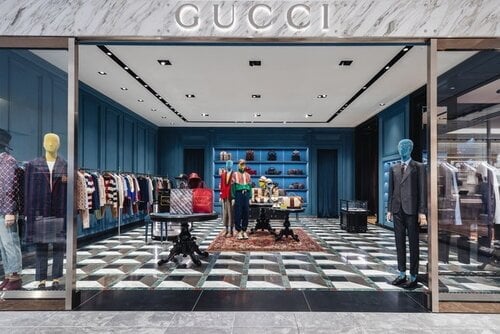
Last fall, Amachris completed the buildout of the 6,500 square foot Gucci store at Toronto Premium Outlets, which opened to 2 hour lineups this past November. Mr. Pignotti explained how Amachris worked with Gucci’s corporate office in New York City and with premium suppliers based in Italy to create the stunning space.

Amachris is currently building Abercrombie & Fitch’s newly designed Canadian flagship store at the Toronto Eaton Centre. This new design concept will be the third to exist worldwide. Amachris works with Jump Plus, one of Apple’s premium resellers, which is expanding its store operations throughout Canada. In the past, Amachris has also partnered with big names such as Louis Vuitton, Wolford, and Links of London to build beautiful retail environments. As mentioned above, Amachris solely focuses on building custom retail environments for retailers only, differentiating the company from most larger construction organizations.

GUCCI AT TORONTO PREMIUM OUTLETS PHOTO: AMACHRIS

Services provided by Amachris are extensive, ranging from general construction services to project management, architectural execution and engineering, while also acting as landlord liaison. Amachris’ Project Managers often interact with leading retail architects and brand designers when coordinating and installing layout and material specifications.

Mr. Pignotti has an extensive and successful background in the retail construction industry, having graduated from Ryerson University’s Architectural Science program in 1985. He joined Ontario Store Fixtures after graduation as a junior designer and worked his way up the corporate ladder to Vice President of Business Development prior to moving to IDX Corporation. After about three years with IDX, he fulfilled a dream by beginning his own company, Amachris. The name Amachris was derived from the amalgamation of the names of Mr. Pignotti’s three children — Amanda, Alessia and Christian.

AMACHRIS OFFICE PHOTO: AMACHRIS

Today, Amachris has 10 full-time staff as well as part-time and seasonal staff in its Bolton office, just north of Vaughan. Over the past 15 years, the company has completed several hundred beautiful projects — a remarkable feat in a relatively short period of time. Locally, Amachris has completed numerous retail spaces at Vaughan Mills, Yorkdale, Toronto Eaton Centre, Fairview Mall, Scarborough Town Centre, Sherway Gardens and Dixie Outlet Mall, to name a few.

LINKS OF LONDON SQUARE ONE PHOTO: AMACHRIS

“Excellent customer service is key,” mentioned Mr. Pignotti, “and cost-effective project execution is made possible through strategic cost-engineering.” Having the ability to suggest the use of alternate materials and installation methods while maintaining the integrity of a store’s design is a value-added service that Amachris provides to all clients. Amachris also works very hard to complete projects on time regardless of the complex circumstances given. Unlike residential and commercial projects which can take up to a year or longer, retail construction requires very tight turnaround times. A store must be ready for merchandising within 8 to 20 weeks based on each project’s scope.

While many construction companies build a variety of commercial properties, Amachris’ sole focus is on retail construction. As a result, the company has been able to gain a share of the retail construction market in Canada.

Amachris’ growth over the past 15 years has been exceptional. This has been made possible by high-quality operations, targeted business development strategies, digital and social media presence, community engagement, excellent subcontractors and top-notch project management services.

WAXON WAXBAR COMMERCE COURT PHOTO: AMACHRIS
JUMP PLUS VAUGHAN MILLS PHOTO: AMACHRIS

Mr. Pignotti explained how Amachris is very proud of its charitable efforts, community engagement, excellent company culture and talented employees. Amachris regularly donates to St. Clare of Assisi, a church located in Vaughan, sponsors local sports teams (Woodbridge Soccer and Vaughan Panthers), donates to the CAMH Foundation, local animal shelters and a handful of smaller charities within the Vaughan-Caledon community. Amachris’ philanthropic nature is a great source of positive morale for employees, he noted.

Amachris’ excellent work and leadership in the retail construction industry hasn’t gone unnoticed. In 2016, Amachris received the coveted Contractor of the Year award for its involvement in Sephora’s ‘Toronto Takeover’ initiative. This involved a seven-store buildout, which resulted in Sephora opening seven beautiful flagship stores in the Greater Toronto Area, in only seven months’ time.

Congratulations, Amachris Corporation, on 15 years of incredible success by building some of the country’s finest retail spaces!

For more information on Amachris visit amachris.com.

Instagram: @amachriscorporation

LinkedIn: @amachriscorporation

*Amachris is a sponsor of Retail Insider. To work with us, contact: craig@retail-insider.com

BRIEF: Bankrupt Quebec Retailer to be Saved, Michaels Crafts Launches ‘Community Classrooms’

exc-5ca663c31905f4d0b4cffb04

Bailey Nelson Continues Rapid Canadian Expansion: Aussie eyewear retailer Bailey Nelson, known for its interesting designs and reasonable prices, opened its second Toronto location last week at CF Toronto Eaton Centre. The 1,400 square foot retail space reflects an updated store design for Bailey Nelson. 

Bailey Nelson’s first Toronto location opened in November of 2017 on trendy Queen Street West. The company’s cross-Canada expansion has been rapid. Soon, it will have five storefronts in Vancouver. In Alberta, Bailey Nelson has two stores in Calgary and two in Edmonton, including a recent opening at West Edmonton Mall. 

Bailey Nelson was founded in 2012 in Bondi Beach, outside of Sydney, and now has stores in Australia, the UK, Canada and New Zealand. 

Vancouver-based Peregrine, which is one of Canada’s largest retail display and millwork manufacturers, was involved in building the ‘new look’ CF Toronto Eaton Centre unit as well as several other locations (with more to come). Peregrine design-engineered and manufactured store fixtures including cabinetry, community tables, POS stations as well as custom-made framed mirrors and a modular custom peg wall panel. Cabinets with sliding doors are unique in that the doors are hung only on the upper track, so that hardware systems cannot be seen from the outside. It’s part of the store’s clean and simplified aesthetic. 

The store’s peg wall integrates a modular fixture to the store’s interior, allowing for flexible product display. Peregrine also manufactured the display shelves with built-in LED illumination, display tables and the POS desks in the attractive new retail space.

Bailey Nelson plans to operate about 50 stores in Canada over the next three years or so, with store designs similar to the new CF Toronto Eaton Centre location. 

Dans un Jardin to be Saved by Groupe Marie Claire: Back in November 2018, popular Quebec-based body product retailer, Dans un Jardin, announced its declaration of bankruptcy due to “insurmountable financial difficulties”.  Dans un Jardin began the liquidation and insolvency process under the Bankruptcy and Insolvency Act with Richter Consulting Group Inc.  Now in 2019, it looks like Dans un Jardin may bloom again thanks to the intervention of another Quebec retail group, Groupe Marie Claire.

President of Groupe Marie Claire, Sylvain Lafrance, said that the announcement of Dans un Jardin’s closure has incited ‘sympathy’ among its customers.  Shareholders may be swayed to resume operations following an increase in sales from the announcement. The revival of the brand will see 15 stores as well as an e-commerce platform.  The company will oversee the redesign of their concept but will not stray far from the natural ingredients and fragrances that made it a Quebec institution.

Dans un Jardin had 55 stores and 600 points of sale across Quebec and the rest of Canada at the time of closing. The company also maintained a manufacturing facility in Boucherville, Montérégie.  Dans un Jardin’s head office will be relocated to Groupe Marie Claire’s grounds in the Anjou area of Montreal.

Lululemon Launches Post-Workout Beauty Range: Vancouver-based athleisure giant, Lululemon, has announced the launch of their “Selfcare” skincare range. The collection features four products that will help you transition from workout to workday: aluminum free deodorant, dry shampoo, basic balm, and a facial moisturizer.  Lululemon “Selfcare” is set to launch in late spring, according to their website.

Lululemon states that the line was built around insights gathered from the athletes in their communities.  They worked with industry-leading product developers to build proprietary formulas that focus on: function, feel, and format. Each product features effective ingredients, pleasant scents and textures, and practical packaging.  The products will be cruelty-free and made without gluten, parabens, and sulfates. Based on an examination of the ingredient lists for each product, the formulations are not vegan-friendly.  “Selfcare” is not the first line of beauty products designed for active lifestyles; Clinique launched CliniqueFIT in 2017 which is more focused on cosmetics rather than body and hair products like “Selfcare”.

A collection of skin and hygiene products designed for post-workout use is a logical brand extension of Lululemon; it is surprising they are only moving into the beauty world now.  This new facet of the business may have been accelerated by the naming of Calvin MacDonald, formerly President and CEO of beauty juggernaut Sephora, as the new CEO of Lululemon.

Though the launch may seem late for Lululemon, the timing is culturally appropriate given the rise of the self-care movement, encouraging people to take time for themselves to make sure they are mentally and physically taken care of.  Similar to how people feel about their fitness routines, beauty-enthusiasts often feel the same way about their skincare routines.  Lululemon is intelligently linking the two avid consumers groups together.

Michaels Crafts Launches Unique ‘Community Classroom’ Concepts: Michaels has found a creative way to repurpose their existing in-store classrooms at their 1200+ locations in Canada and the United States.  “Community Classroom” was piloted in six test markets in late 2018 and Michaels is ready to expand the concept company-wide, including Canadian stores. Instructors can establish their own schedules, curriculum, and class prices all while hosting the course at their local Michaels store.

“As an experiential business, this is yet another example of the innovative approach that supports the importance of locally driven curriculum and encourages creatives to consider Michaels classrooms as their own,” Steve Carlotti, The Michaels Companies’ executive vice president of marketing, said in a statement.

To help in the roll-out of the “Community Classroom” concept, Michaels has partnered with software company, AnyRoad, to bring the experience to their customers.  AnyRoad’s Experience Relationship Management Program will provide Michaels real-time analytics to help them maintain the makerspace program.

The intention behind the program is to foster a sense of community amongst the Makers at Michaels.  Carlotti believes the program will allow the retailer to offer on-trend courses that will attract the attention of each local market and bring them to stores.  Creating a greater sense of community seems to be a trend amongst retailers.  Retail Insider reported on the opening of Staples’ first “Working, Learning & Growing” store in January of this year.  Staples designed this new store to become a coworking space as well as a learning hub that focuses on personal and professional growth.

As both retailers provide customers with tools and solutions to refine their skills and expand their offerings, it is logical that both would take a community-based approach to evolving their businesses.  Retail Insider will continue to observe the shift to community-powered retail experiences.

CF Toronto Eaton Centre Canadian Tire Store to be Renovated: The 85,580 square foot Canadian Tire store at CF Toronto Eaton Centre will see a renovation to be completed by the spring of 2020, according to a post in the Urban Toronto Forum. The store is directly below Ryerson University’s Ted Rogers School of Management.

The interior will be renovated to the ‘new look’ standard which appears to be more upscale than a traditional Canadian Tire store. The store’e exterior is also expected to see minor changes. The store is under new ownership — some Canadian Tire stores are corporately owned, while others are franchises. 

The CF Toronto Eaton Centre Canadian Tire renovation is being modelled on the prototype South Edmonton Common store, which opened in the summer of 2015. Units across the country have seen similar renovations, including the flagship store on Yonge Street just north of Church Street (across from the Masonic Hall), as well as a large store in the Leslie Street/Lake Shore Boulevard area east of Toronto’s downtown. An updated store will open in Liberty Village next spring. 

The South Edmonton Common Canadian Tire was the largest in Canada at nearly 140,000 square feet over two floors when it opened. On March 21 of this year, its title of ‘largest’ was overthrown with the opening of a 173,000 square foot unit in the city of Grande Prairie, Alberta.