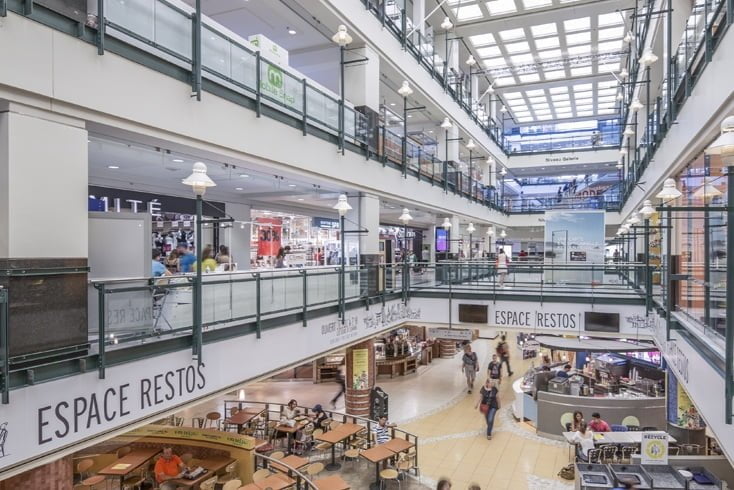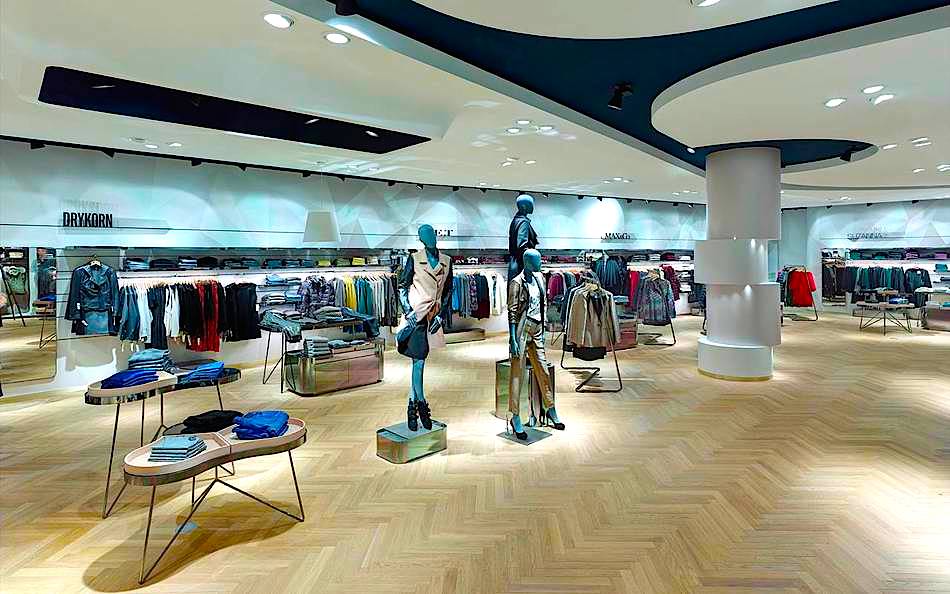
Breuninger, Düsseldorf, Germany. Photo: Liganova
“Reports of my death have been greatly exaggerated.”
– Mark Twain*
Media reports highlight the dramatic shift of spending from traditional stores to e-commerce. Industry analysts and pundits predict the demise of brands with substantial investments in retail real estate. We live in an increasingly virtual world, they say, and those with deep roots in the physical realm are starting to look more and more like dinosaurs.
The transformation of shopping fueled by all things digital is profound with no signs of deceleration. The crazy little thing called the internet is changing virtually (pun intended) everything. But anyone who thinks that brick and mortar stores are going away has it wrong. Here’s why.
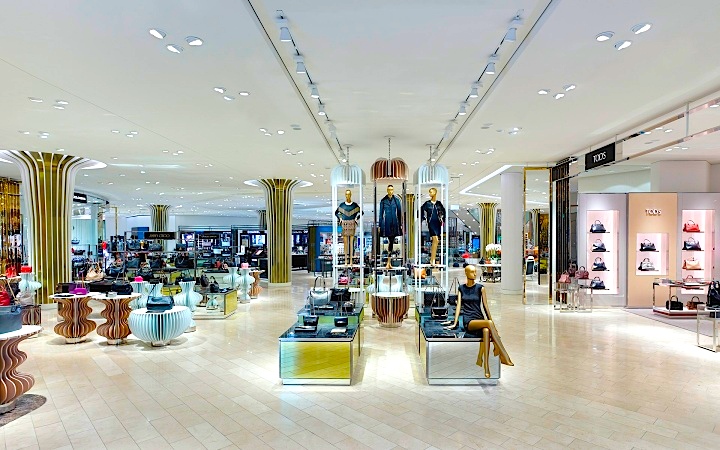
Photo: Breuninger
Brick and mortar retail can enhance the value proposition. Physical retail offers many important advantages–the ability to see and try on products, instant gratification, face-to-face customer service, social interaction and so on–that digital selling cannot readily replicate.
Purchase events matter. There is a reason that e-commerce penetration in many product categories remains low. Where the risk of buying online is perceived as high (apparel, many big ticket items), direct-to-consumer shares remain in the single digits. Brands like Zappo’s have innovated in customer service to overcome some of e-commerce’s limitations, but long-term growth potential is modest. In fact, e-commerce darlings like Bonobos, Nasty Gal and Warby Parker have begun to broaden their reach–and address flattening growth–by opening physical stores. Plenty of products–particularly perishables and low-priced items–also have underlying economic reasons why direct selling volume will remain constrained.
Consumer segments matter. Great customer intimate brands embrace the notion of treating different customers differently. When you do this, you understand the different needs, wants and behaviours of varied customer types. Depending on the product and the particular consumer, the purchase journey may begin and end at a physical store. For others, they will never set foot in a brick & mortar location. Others will research online and buy in store. You get the idea. Your mission is to understand the role your physical locations play in being intensely relevant and remarkable for the customers you need to attract, retain and grow. Then build out and customize the experience accordingly.

The blended channel is the only channel. Stop thinking channels and start thinking about a consistent, integrated customer experience for your brand. Other than products and experiences that can be delivered completely digitally, the majority of retail purchases are influenced by both the digital and physical realms. More and more data is emerging to confirm this. Your mileage will vary, but silo-ed thinking, organizations, incentives and metrics confuse, rather than illuminate.
Frictionless commerce is essential. Let’s be blunt: there’s more heat than light in the discussion of omni-channel capabilities. Strategically, the key is to hone in on how to be differentiated, relevant and remarkable for the customers you wish to serve. And then you must root out the sources of friction in your customer experience. With more consumers going back and forth between digital and physical channels in their decision journey, if you don’t make it easy to do business with you chances are there is a competitor who is ready to pounce.
Mobile adds value to physical retail. When e-commerce was either sitting at your home or office surfing the web, the distinction between digital and brick & mortar really meant something. Now with consumers untethered and having increasingly powerful devices with them 24/7, mobile becomes the great integrator–and makes the distinction between e-commerce and brick & mortar less relevant all the time.
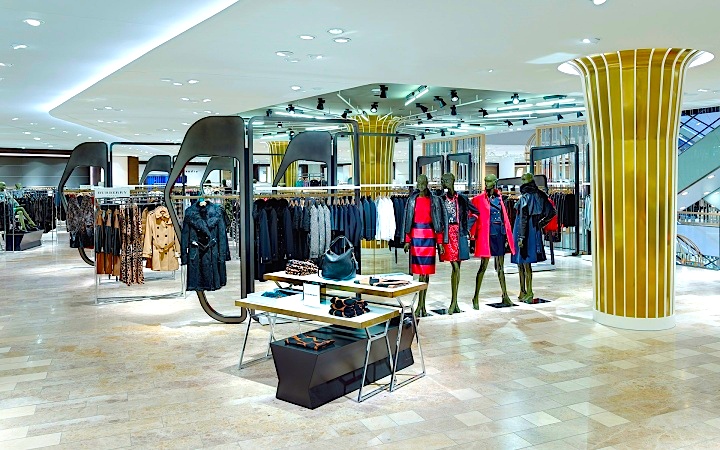
Photo: Breuninger
Seismic changes ARE impacting retail. With the exception of companies in the early stages of maturity, most retailers need fewer stores and many of the stores they have will need to be smaller. But assuming that physical retail is going away any time soon is just plain wrong. The tendency to isolate e-commerce and brick & mortar performance is equally misguided.
Amazon and a handful of best-in-class e-commerce companies will continue to thrive. And new pure play digital models will undoubtedly emerge to captivate consumers and gobble up share.
But there is plenty of business to be done in physical stores. Less, but still plenty. And most of the growth in what is counted as e-commerce is not a shift to online-only brands, but rather to brands that have cohesive omni-channel strategies. Think Nordstrom and Macy’s so far. For them, stores are assets, not liabilities. But the way brick and mortar retail drives consumer engagement and loyalty is morphing quickly.
These emerging winners follow a simple but compelling formula:
- More focused.
- More differentiated.
- More relevant.
- More remarkable.
- More personalized.
- More integrated.
- See you in the blur.
* This isn’t, apparently, the actual quotation, but one that has become part of his folklore.

Steven Dennis is a senior omni-channel retail executive and strategic growth advisor at SageBerry Consulting , LLC. . He is also a Former Chief Strategy Officer at Neiman Marcus. [More about Steven P. Dennis]
Published with permission. This post originally appeared at Steven P. Dennis’ Blog on May 15, 2014. Copyright 2014. Follow Steven P. Dennis’ Blog on Twitter.
NEXT ARTICLE: Analysis: Sears Canada’s Best Remaining Store Locations (And Who Could Take Them)
PREVIOUS ARTICLE: Macy’s Won’t Buy Struggling Sears Canada