Short term retail space, sometimes called ‘pop-ups’, have never been more popular in Canada, according to experts. It’s a phenomenon that is drawing consumers to physical stores, in an age where online shopping is becoming increasingly popular. Three experts provide their opinions on why pop-up retail is beneficial, and likely here to stay.
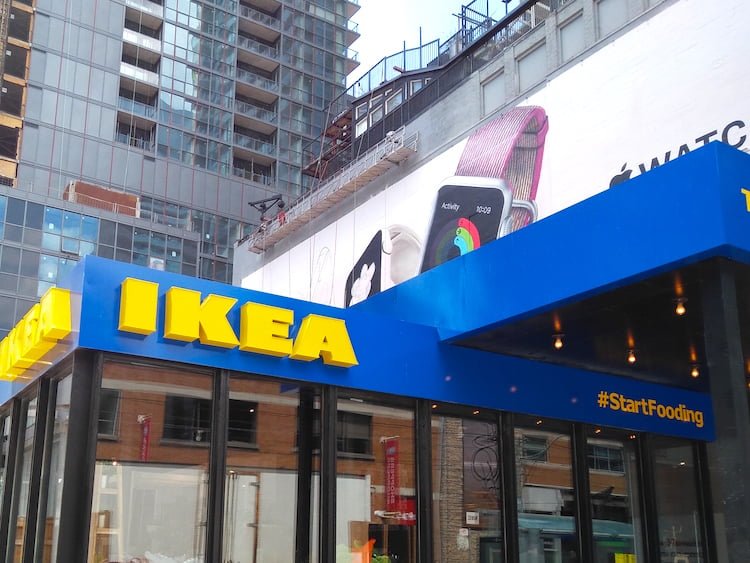
In Canada, pop-up retail spaces are showing up on urban street-fronts, in shopping malls, and even inside of department stores. Ikea recently opened a temporary location in downtown Toronto, with customers lining up to check out homewares contained within. Vancouver-based Kit and Ace has been using temporary store locations as part of its store real estate strategy, prior to opening permanent showrooms. Montreal-based yoga retailer Lolë has also been using pop-up spaces to build brand awareness, working with brokerage Think Retail to open temporary locations nation-wide. An Ottawa pop-up will open in August at CF Rideau Centre, following the retailer opening 12 Canadian pop-up locations in the spring of 2016.
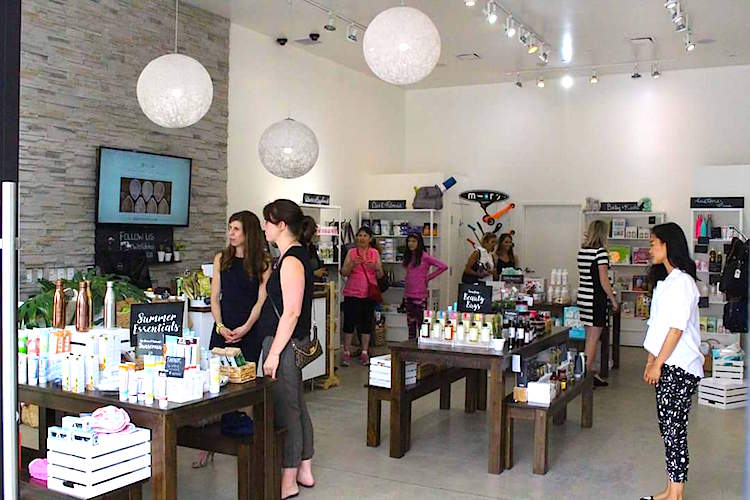
In Toronto, online health-focused retailer Well.ca recently opened its first-ever brick-and-mortar location at CF Shops at Don Mills. The 915 square foot store features some of the company’s most popular products and according to staff, it’s been well-received with some online shoppers choosing to pick up orders in the store. Downtown on Bloor Street West, on the sidewalk in front of Club Monaco, four outdoor vendors are selling edibles, gifts and flowers, creating buzz on the city’s prestigious ‘Mink Mile’.
Department stores are also featuring pop-up shops. Holt Renfrew is currently hosting Italian home furnishings retailer Kartell, which will occupy space on the store’s Bloor Street concourse level for the rest of the summer. Nordstrom‘s Vancouver flagship recently saw an Aesop pop-up that featured stunning wood accents surrounding the display. Nordstrom also features ‘permanent’ rotating pop-ups in its Vancouver store (as it will at the CF Toronto Eaton Centre flagship when it opens this September) called ‘Pop-in@Nordstrom’, run by former Opening Ceremony buyer Olivia Kim.
Outlet malls are even getting in on the action — a Jimmy Choo outlet recently opened at Toronto Premium Outlets, though only until August 30.
Pop-up retail is seeing over $10 billion in North American sales, according to Farla Efros, president of retail consultancy HRC Advisory. Although pop-ups aren’t new, she noted that the “treasure-hunt” phenomenon (Costco is an example) and the fact that a product might be “here today and gone tomorrow” is a draw that can create a sense of urgency for consumers, and success for the pop-up retailer.
Ms Efros explained that some of the world’s largest retailers are getting in on the pop-up trend in order to drive traffic, to create excitement, to test unique services, and to determine the viability of brick-and-mortar in hopes of driving sales and loyalty in an otherwise tough retail market. She went on to explain how brands can use pop-ups to market their brand and products in an innovative way, without spending large sums of cash to secure inventory, retail space, staff and other longer-term fixed costs. Pop-ups also address ‘Generation Z’s demand for newness, innovation and quality, in a tactile physical environment that cannot be replicated online.
Ms. Efros noted that the trend has become so large, a number of businesses have emerged that offer established brands and startups the opportunity to secure temporary retail space to set up shop. One of these companies is Toronto-based pop-up go, which was recently profiled on Retail Insider because of its unique service for retailers seeking short-term spaces.
pop-up go‘s creator Linda Farha, also founder of Zenergy Communications, recognized the pop-up trend and set out to launch an online platform that connects retailers with available short-term retail spaces. The company also makes use of Ms. Farha’s marketing agency background by providing Make It Pop, also a marketing service for pop-ups. She explained how many successful pop-ups include ‘Massclusivity’ (offering many people an ‘exclusive’ product), and an element of surprise (“planned spontaneity”), with many pop-ups also broadening their product offering in order to attract different demographics. “Millennials are increasingly seeking out urban, boutique-styled experiences,” she noted. “Pop-up retailers can provide this through limited time concepts at unique or atypical retail locations. Finding these locations can be a challenge however, and pop-up go was created to help connect the right people with the right spaces across North America.” The website helps enable pop-ups across industries and Ms. Farha also discussed a study conducted by Eventbrite in 2014, where pop-up dining experiences in the United States grew a whopping 82% between 2012 and 2014 — with 75% of dining pop-up guests believing that it’s worth paying more, as well as pre-paying for a unique dining experience.
Avison Young Sales Representative Hilary Kellar-Parsons provided her unique insight into pop-up retail, explaining its benefits for some retailers. She explained how pop-ups can allow retailers to test the market without being bound by long-term leases, while also saving money on leasehold improvements often required for more permanent locations. She noted that even with limited investment, some of these pop-ups have been very well executed. She described how some retailers want to enter new markets but aren’t immediately able to secure their preferred location/space (particularly in malls) and how pop-ups provide an opportunity for retailers to establish a presence in the market prior to opening their permanent store in their ideal location.
Established brands and companies may also use pop-ups as part of ‘guerrilla marketing’, Ms. Kellar-Parsons explained. These companies often have high budgets and can invest heavily/pay a premium on a short-term marketing campaign with a pop-up location. The pop-up can include brands selling merchandise or creating more of an event space or a space for a consumer experience — a Coca-Cola pop-up, for example, would be more about the brand and less about selling the actual product like a traditional retailer.
She finally went on to explain how some landlords are also motivated to facilitate pop-up retail, and it’s not just for the cash-flow. Dead space isn’t desirable, so pop-ups allow landlords to create activated and tenanted spaces if even just for the short-term. There’s an added benefit to this as well — while the short-term tenant occupies the retail space and generates revenue for the landlord, the same space can be kept on the market longer in order to secure the “right” long-term tenant, giving the landlord some breathing room while animating retail space that might otherwise be vacant or feature ‘for lease’ signage.