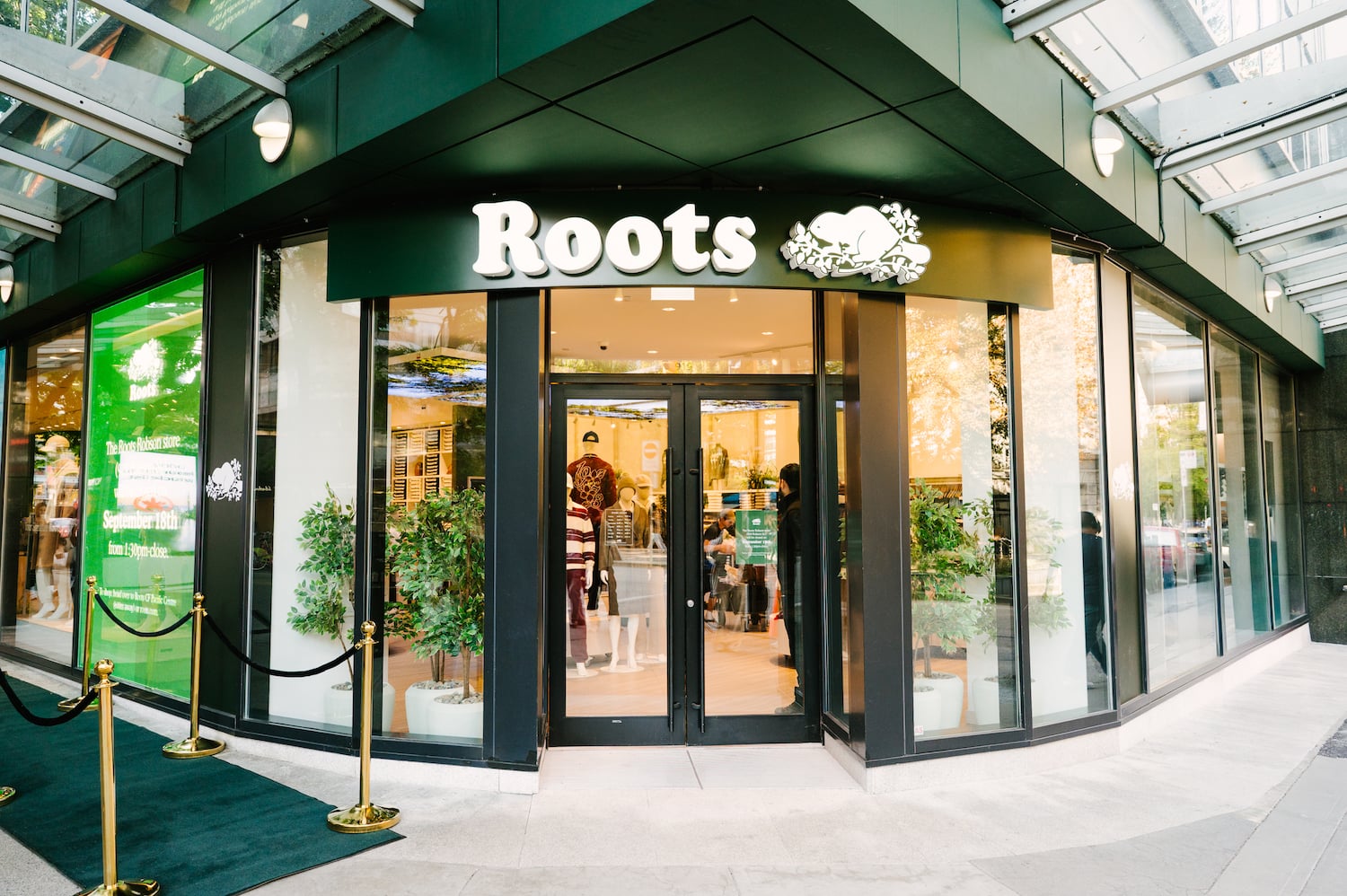
The proposed acquisition of Roots offers a teachable moment for mid-market retail. Marquee Brands, the U.S. firm that owns brands including Ben Sherman and Isotoner, has partnered with JM&A Design and Development Inc., led by Joe Mimran and Frank Rocchetti, in an agreement to take Roots private and pursue further growth in Canada and internationally.
Roots falls into a category of mid-market Canadian retailers that includes brands such as Staples, EQ3 and Sporting Life. These are businesses that generally do not compete primarily on price or prestige. They succeed by delivering a distinct value at a price customers consider reasonable.
Many mid-market brands have had a challenging few years. The economic environment has certainly played a role, but some of the pressure has come from decisions retailers make themselves. When margins shrink, the temptation is to support the bottom line in ways that gradually weaken the qualities core customers valued in the first place.
Successful mid-market retailers tend to have something in common: they impart a clear value at a price customers feel is reasonable. EQ3 imparts manufactured quality. Staples imparts professional reliability, the reasonable expectation that the thing you need will be there and will work.
Over the past couple of years, Roots has moved away from behaving like a retailer simply squeezed between luxury apparel and value apparel. It has increasingly defined and defended its consumer value proposition around culturally relevant, quality basics.
When Michael Budman and Don Green built Roots, their interpretation of Canadian identity also had an international dimension. In 1981, eight years after Roots was founded, they became publishing partners and executive publishers of Paris Passion, a Parisian lifestyle and culture magazine founded and edited by journalist Robert Sarner. The publication covered fashion, photography, art and contemporary Parisian life, with creative talent including Helmut Newton and Patricia Marx appearing in its pages.
Recent actions at Roots can be viewed as a contemporary expression of that outlook. The company is drawing on its history while updating its interpretation of Canadian identity for a new generation of customers.
In July, Roots opened a store at Vancouver International Airport in partnership with Hudson, part of Avolta, located past security in the U.S. Departures area. The assortment is built for travellers, with Canadian-made merchandise, destination graphics, accessories and other products. Roots already has travel-retail exposure at Taiwan Taoyuan International Airport, while stores in destinations such as Banff and Mont-Tremblant serve a similar purpose. These locations put Roots in front of customers at moments when Canada and Canadian identity are already particularly relevant to them.
The Vancouver store and the broader Canadiana refresh sit on a foundation of cultural relevance that Roots has been building for decades. The company has operated a leather factory in Toronto since 1973, run by three generations of the Kowalewski family since it opened. The Award Jacket, Roots’ take on the varsity letterman jacket, dates to 1979 and has become a platform for cultural partnerships. Jackets have been produced for professional sports teams, SNL, OVO, Marvel and others, while the company’s connection to the Jamaican Olympic bobsled team is another part of its long history in popular culture. Its longstanding presence around TIFF further connected Roots with Canadian entertainment and celebrity culture.
A current expression of that strategy is Pit Stops, the Summer ’26 collection built around six Canadian roadside institutions: COWS, La Banquise, St-Viateur, The Big Apple, Webers and Duffin’s Donuts. The collection brings the values behind the Award Jacket to a more accessible product and uses Roots’ history of collaboration in a way that would be difficult for another brand to reproduce with the same credibility.
The Award Jacket itself is not an accessible product for every customer. It sits well above the core assortment, with some versions approaching luxury price territory. But it does something specific: it exemplifies the value proposition. The jacket does the storytelling, enabling the fleece to do the volume. Credibility flows downhill. Few mid-market retailers have an equivalent hero product with decades of history behind it.
There is evidence that the broader strategy has been working. In fiscal 2025, Roots sales increased 5.6 per cent, direct-to-consumer comparable sales rose 9.5 per cent and the company returned to annual profitability, reporting net income of $4.7 million after a $33.4-million net loss the previous year. During the second quarter, direct-to-consumer comparable sales increased 17.8 per cent. The collaboration engine was running again.
The difference between the company’s IPO price and the price of the current transaction also raises an interesting question about how the public markets valued Roots relative to the capabilities and opportunities within the brand. Roots went public at $12 per share in 2017, compared with $4.10 per share under the current take-private agreement. The acquisition price does, however, represent a significant premium to where Roots shares traded before the company announced its strategic review.
Marquee’s business model helps explain why those underlying assets matter. The company owns intellectual property and works with partners to extend brands into new markets, channels and product categories. A brand with no differentiated proposition gives a licensor nothing to export. Roots gives Marquee a Canadian identity proposition already proven to travel, from Taiwan to a Vancouver airport to a T-shirt about a bagel shop.
There are three lessons other mid-market retailers can take from what Roots has done:
- Identify and reinforce the value proposition. A clear understanding of what makes Roots unique has allowed the company to communicate that value more clearly to customers.
- Find adjacent markets where the customer is already primed. Rather than approaching every new market through a conventional expansion or e-commerce-first strategy, Roots has sought places where customers may already be looking for what the brand offers. Travel retail is a particularly clear example.
- Own the infrastructure that supports the brand. Roots kept its Toronto leather operation and a hero product with a history stretching back to 1979. Those assets give its collaborations credibility and allow Roots to amplify its value proposition by working with others.
Being in the middle of the market is not inherently the problem. The problem comes when customers can no longer identify why they should pay the middle price. Roots offers a useful lesson in what can happen when a retailer identifies that reason, protects the assets behind it and makes the value increasingly visible.