Toys”R”Us Canada Pilots New Store Concepts

Date:

Share post:

Toys”R”Us Canada Ltd. is revamping its stores to create a better shopping experience for customers, as part of the retailer’s broader effort to reinvent itself under its new ownership.

It’s been an undeniably tumultuous few years for Toys”R”Us Canada, after filing for bankruptcy protection in September 2017 and seeing several of its international counterparts—including the U.S. chain Toys“R”Us Inc.—liquidate all of their stores in recent months.

However, after being acquired by Fairfax Financial Holdings in June, Toys”R”Us Canada has emerged stronger than ever, according to Melanie Teed-Murch, president of Toys”R”Us Canada.

“It’s been a bit of a rebirth,” she says. “It’s a great news story, from what was a really sad story. It’s unfortunate for our counterparts having gone bankrupt in the U.S. and a number of other countries. So, we’re really thrilled to be independent, thrilled to be 100% Canadian-owned.”

Even though Toys”R”Us Canada has been around for 34 years and operates 82 stores across Canada, Teed-Murch says the retailer now resembles a start-up as it adopts innovative new approaches to many aspects of its operations.
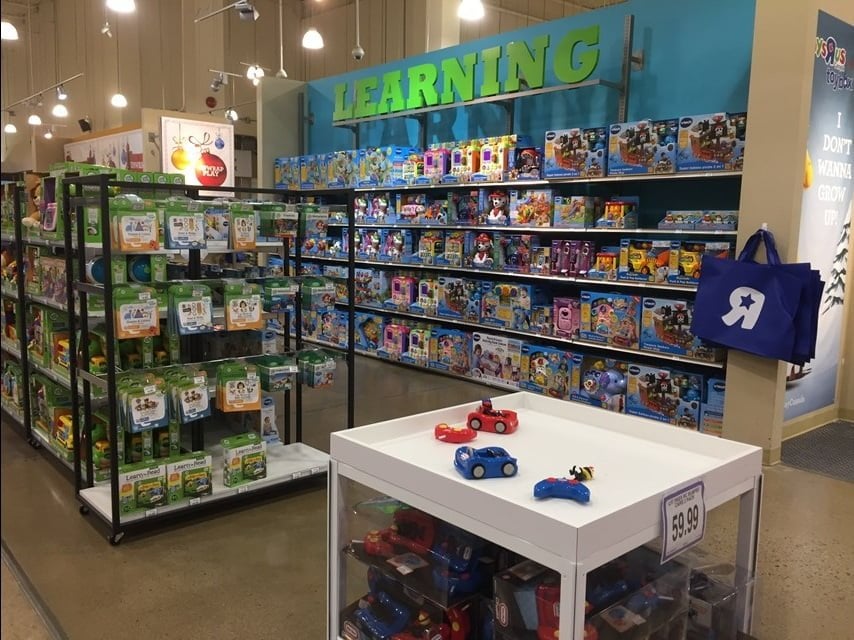
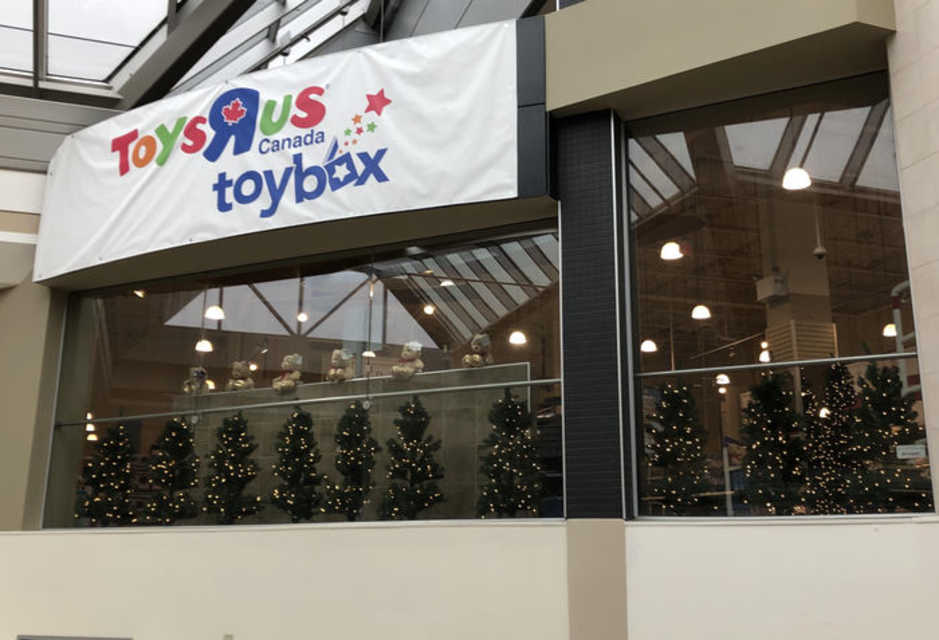
Photo: Toys r Us
STONE ROAD MALL. PHOTO: TOYS ‘R’ US.

As one example, the company recently opened a new concept store at Guelph’s Stone Road Mall, called the Toys”R”Us Canada Toybox. At 10,000 square feet in size, the store in considerably smaller than the retailer’s average store, which is typically between 30,000 to 40,000 square feet.

“It’s designed to be a curated, thoughtful assortment around convenience for the Guelph community,” Teed-Murch says. Although the new store doesn’t carry the same volume of merchandise that a larger store would have, she says the staff members are all equipped with an iPad that they can use to help customers order any item offered by Toys”R”Us Canada, and have it shipped directly to the customer’s home.

“It’s a really simplified shopping experience,” says Teed-Murch. “It gives you the small feel of a local store, which Guelphites here are commenting that they love.”

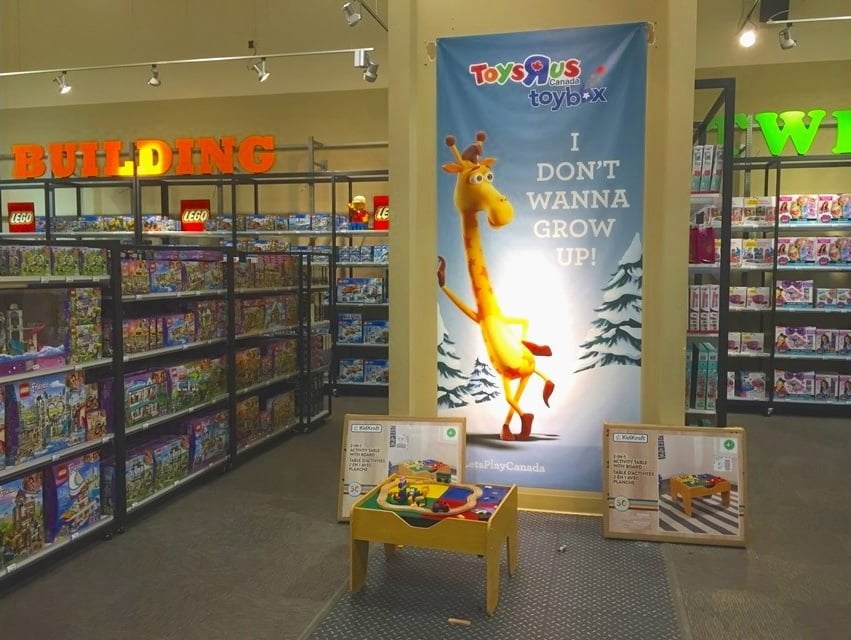
The Toybox store also features a much more interactive experience for kids, with 18 demonstration tables set up throughout the store, where parents can let their kids try out toys before deciding what to buy.
Toys R Us Store

Youtube video

“You’ll find tons of interactive experiences for kids,” Teed-Murch says. “Parents can see their kids’ reaction with the trained staff around to answer questions before the pressure of buying.”

Toys”R”Us Canada is also piloting similar concepts in Barrie, Ontario and Langley, B.C. Although those locations are larger in size, at 20,000 square feet and 45,000 square feet, respectively, they also feature demonstration tables for an interactive experience. The stores are also organized differently from the traditional Toys”R”Us stores, in an effort to create an easier shopping experience. For example, instead of organizing merchandise by brand, items are grouped together based on their targeted age group.

“It’s intuitive to shop,” says Teed-Murch. “It’s [organized] by age and stage, not by brand.”

The stores also contain more signage to help shoppers find the section they’re looking for, benches to allow parents to sit down while their kids try out toys, and an improved in-store pickup process for online orders. “We’re trying to think of all the things that help our customer through their journey,” Teed-Murch says. She notes that the company has been relying on focus groups and customer feedback to drive the changes and upgrades.
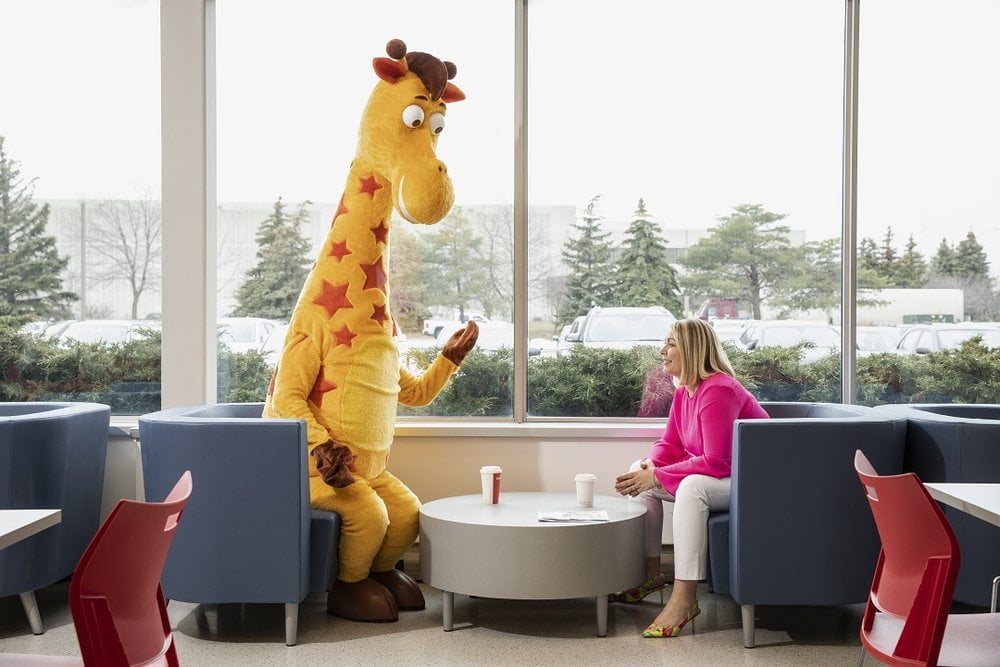
MELANIE TEED-MURCH, PRESIDENT OF TOYS”R”US CANADA, IN CONVERSATION WITH GEOFFREY THE GIRAFFE. BELOW: GEOFFREY THE GIRAFFE AND A STORE EMPLOYEE. PHOTOS SUPPLIED.

In addition to the major changes that have rolled out at the stores in Guelph, Barrie and Langley, Toys”R”Us Canada has made smaller investments to approximately half of its other stores across the country. Having seen positive results from those improvements already, Teed-Murch says the retailer will continue making innovative upgrades to its store network.

With encouraging feedback on the Guelph store so far, she says the company will be considering bringing the Toybox concept to other cities, as well.

“We will be looking for small communities across Canada that can support this type of location,” she says. “Gone are the days when we just put 40,000-square-foot stores in every location. We need to be adaptive.”

Next year, Toys”R”Us Canada plans to experiment with other new features for shoppers, including introducing deferred payment options for baby registry items and creating facilities to be used for birthday parties and other community events.

“We’re going to continue to push the envelope,” Teed-Murch says. As many retailers shift towards e-commerce business models in which there is very little interaction between the customer and the retailer, she sees an opportunity for Toys”R”Us Canada to stand out as a destination for shoppers.

“I think there’s a convenience play for online or other mass retailers in our business,” she says, “but really, we want to stand for the experience. We want to bring moments of joy to Canadian [families].”

LEAVE A REPLY

Please enter your comment!
Please enter your name here

RELATED ARTICLES

Subscribe to the Newsletter

Subscribe

* indicates required

RECENT articles

Maxi Plans 13,000-Square-Foot Store at Montreal’s Former Forum

Maxi will open a 13,000-square-foot grocery store at Montreal’s former Forum in 2027, extending Loblaw’s compact urban discount strategy.

B.C.-Built Lemonade Lab Brings Tap Payments to Kid-Run Businesses

B.C.-built Lemonade Lab gives young entrepreneurs access to tap payments, digital storefronts and business lessons under parental supervision.

How B.C.’s House of Q Built a North American BBQ Brand Through Specialty Retail

From competition pits to hundreds of retail shelves, B.C.-based House of Q is building a North American BBQ brand through specialty retail and award-winning products.

Toronto-Based Rawcology launches GUT TO GO probiotic snack bites, expands retail distribution across Canada

The launch marks the company's latest product expansion as it responds to growing consumer interest in convenient foods with added nutritional benefits.

June spending holds steady as Canadians balance essentials and experiences: RBC

“The breadth of spending increases across categories points to households maintaining a cautiously optimistic view heading into the summer even as they remain selective about bigger-ticket discretionary purchases.”

Retailers risk losing sales as more shoppers expect tap-to-pay, Oobit survey finds

44% say a no-tap business feels outdated, a perception problem that compounds the lost sales.

Why consumer behaviour is becoming harder to predict in the AI shopping era

"The whole game is moving from understanding audiences to understanding intent. The brands that make that jump win.”

Why smart retail brands are investing more in in-store experiences despite e-commerce growth

80% of consumers say in-person events are the most trusted way to discover new products — and 85% are more likely to make a purchase after engaging with a brand in person. 

Daily Synopsis: July 14, 2026

Fake fashion stores mislead Canadian consumers online, how malls have sifted with society, Steve's Music auctioning remaining gear, Healthy Planet opening store, Frenchy's thrift store gets own musical, and other news.

Retail Insider “Luxury Report”: Control, Concentration and the Rise of Canada’s Premier Retail Nodes

Canada's luxury retail market is becoming increasingly concentrated around a select group of premier destinations as brands prioritize flagship stores, direct customer relationships and experience-led retail. Retail Insider's latest report examines the forces reshaping luxury investment, real estate and competition.

Bakebe Finds Early Success at CF Markville as Experiential Retail Continues to Grow

Bakebe has opened its first Canadian location at CF Markville, bringing its app-guided baking concept to Canada as experiential retail continues to grow.

Canadian Retailers Face New Discovery Challenge as Shoppers Turn to AI

Canadian retailers face a new challenge as shoppers turn to AI for product discovery, with Retail Rewired’s Chris Parsons urging stronger content, reviews and product data.

Canadian Retail Employment Rebounds but Remains Down Nearly 72,000 Jobs

Canadian wholesale and retail employment rose in June but remains down nearly 72,000 jobs, with Suzanne Sears warning of staffing and service pressures.

Aritzia, Group Dynamite outperform retail sector by targeting affluent shoppers: analyst

Winder said both companies have posted results that far exceed typical retail growth, with strong double-digit sales increases and improved profit margins at a time when many retailers are contending with cautious consumer spending.

Canadians entering pay periods with much of income already committed: MNP survey

61 per cent of Canadians say at least half of their income is already allocated before they receive it.

Restaurant industry leads Canada in youth job growth through first half of 2026

While most other industries have been cutting youth jobs, the restaurant industry employed an average of 52,770 more youth during the first half of 2026 than during the same period in 2025.

Jersey Mike’s opening first Manitoba restaurant as Redberry expands Canadian footprint

The opening also launches a five-day fundraising campaign in support of Make-A-Wish Canada, part of a broader commitment announced in May to raise $1 million for the charity by 2030.

Rising costs and supply chain volatility put consumer goods brands under growing pressure: DOSS

36% made major business decisions using outdated or incorrect data.

Daily Synopsis: Jul 13, 2026

Aritzia seeing success, 4th generation takes over Prince Albert clothing store, Peter Nygard pleads guilty on sexual assault charges, and other news.

Retail Insider “Consumer Behavior & Retail Economy Report”: Canada’s Market Grows Increasingly Divided

Retail Insider's latest Consumer Behavior and Retail Economy Report examines how affordability pressures, selective spending, retail real estate polarization, and widening differences between value and premium segments are reshaping Canada's retail landscape and influencing strategic decisions across the industry.