

Toys “R” Us Canada has formally sought creditor protection under the Companies’ Creditors Arrangement Act, marking a significant escalation in the retailer’s ongoing retrenchment across the country. The company confirmed on February 3 that it has commenced proceedings under the CCAA following an initial order granted by the Ontario Superior Court of Justice’s Commercial List. The filing provides an immediate stay of proceedings while the company evaluates strategic alternatives and begins a court-supervised restructuring process.
In its announcement, Toys “R” Us Canada said it reached the decision after reviewing all reasonably available options and determining that creditor protection was necessary to stabilize operations and address mounting challenges. The company emphasized that all currently operating stores will remain open during the initial phase of the process as it works through its restructuring plans.
The CCAA filing comes after months of accelerating store closures, provincial exits, legal disputes with landlords, and visible operational strain, all of which have raised questions about the long-term viability of the chain’s national footprint.
A Rapidly Contracting Retail Footprint
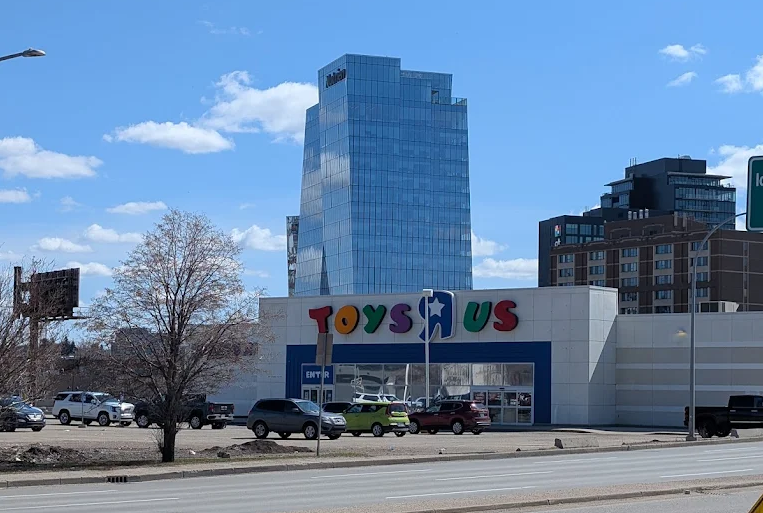
Toys “R” Us Canada entered 2024 with more than 100 locations nationwide. By early 2026, that number had fallen sharply, with industry reporting indicating the chain is now operating roughly 22 stores across the country. The pace of closures intensified through late 2025 and early 2026, including complete exits from British Columbia and Saskatchewan and a growing concentration of remaining locations in Ontario.
The company’s press release acknowledged that a reduction in its retail footprint will be a core component of the restructuring process. While no specific store list has been disclosed, Toys “R” Us Canada said it intends to right-size its physical presence to better align with current market conditions.
For many landlords and suppliers, the filing was not unexpected. Court records and media reports over the past year have pointed to rising unpaid rent obligations, stalled lease negotiations, and properties being marketed for sale in multiple provinces. The CCAA process now provides a structured framework to address those liabilities while the company assesses whether a sustainable operating model remains achievable.

Court Protection and Immediate Next Steps
Under the initial court order, Toys “R” Us Canada has been granted a stay of proceedings for an initial period of 10 days, subject to extensions as approved by the court. This stay temporarily halts creditor enforcement actions and litigation, allowing the company to continue operating while it develops a restructuring plan.
In court filings, Toys “R” Us Canada said the creditor protection filing was necessary after the company struggled to absorb sustained inflation, rising labour costs, supply chain disruptions, and a continued shift toward e-commerce that reshaped consumer purchasing behaviour.
The company told the court that it implemented a series of measures throughout 2023 and 2024 in an effort to stabilize the business. Those efforts included layoffs, the closure of unprofitable stores, negotiations with suppliers, and the exploration of alternative revenue streams. Despite those actions, the filings state that the measures were insufficient to offset mounting financial pressures.
In an affidavit filed with the court, Toys “R” Us Canada warned that without creditor protection, the business faced the risk of an “abrupt cessation,” a scenario it said would materially reduce recoveries for all creditor groups.
The affidavit also outlines the scale of the company’s recent financial deterioration. In the 10-month period ending November 2025, Toys “R” Us Canada recorded a net loss of approximately $170 million, according to court filings.
According to the court documents, Toys “R” Us Canada now owes at least $120 million to its vendors, in addition to what it described as “substantial” amounts owed to landlords.
As part of the process, the company has appointed Neil Taylor as Chief Restructuring Officer. Taylor will oversee the restructuring efforts and work alongside management as Toys “R” Us Canada navigates the CCAA proceedings, maintains store operations, and communicates with stakeholders.
Alvarez & Marsal Canada Inc. has been appointed as monitor, a standard role in CCAA filings. The monitor will oversee the restructuring process, report to the court, and provide transparency to creditors. Court filings and ongoing updates related to the case will be made publicly available through the monitor’s website.
Structural Pressures Behind the Filing
Industry observers say the CCAA filing reflects long-standing structural pressures rather than a sudden disruption. Alex Hennick, President and CEO of A.D. Hennick & Associates Inc., said the warning signs had been evident well before the formal court filing.

“You had a lot of underperforming locations, but very large locations,” Hennick said in an interview with Retail Insider. “Over time, when your sales are down, minimum wage goes up, rent goes up, it becomes very difficult to survive.”
Hennick pointed to the compounding effect of rising operating costs across a large national footprint. In his view, even strong individual stores struggle to offset weaker locations when overhead, logistics, and labour costs continue to climb.
“At the end of the day, it doesn’t matter what your sales are, it matters what your expenses are against your sales,” he said. “If you have a lot of locations that are not performing, it takes away from what the stronger stores are doing.”
Broader Challenges at the Ownership Level
Ancaster, Ont.-based Putman Investments acquired Toys “R” Us Canada from Fairfax Financial Holdings in 2021, positioning the toy retailer as part of a broader portfolio of specialty retail brands. The company is also behind HMV, Sunrise Records, FYE, Ricki’s, Cleo, and Northern Reflections, giving it a significant footprint across music, apparel, and specialty retail categories.
In recent years, that portfolio has shown signs of strain. Over the 2025 holiday period, Putman Investments closed the last of its T. Kettle locations and previously shuttered a short-lived home goods venture, Rooms + Spaces. FYE stores closed in Ottawa and Toronto. In addition, Everest Toys, a sister company founded by the father of Putman Investments leader Doug Putman, was placed into receivership last year, underscoring the broader pressures facing parts of the group’s retail and wholesale operations.
Sunrise Records, Ricki’s, Cleo, and Northern Reflections have all paused e-commerce operations, with notices posted on their websites indicating that online shopping is temporarily unavailable. A Retail Insider reader provided an email showing that an online order placed with Cleo was later cancelled. Industry sources suggest the suspension of e-commerce may be linked to the loss of shared warehouse and fulfillment infrastructure. HMV Canada’s website provides notice of the CCAA filing.
Hennick said the inability to sell online is often a sign of deeper logistical disruption. “If you can’t shop online, that usually means the warehouse is gone,” he said. “That means they don’t have the ability to ship anymore. All of that inventory was coming out of the same warehouse.”
While Putman Investments has not publicly commented on the broader implications for its retail portfolio, the operational overlap between its brands has raised questions about how challenges at one business can ripple across others. Retail Insider reached out to Doug Putman directly for this story, and he politely declined providing comment on the situation at this time.
The Changing Economics of Toy Retail
Beyond company-specific issues, Toys “R” Us Canada is operating in a toy retail environment that has become increasingly difficult over the past decade. Consumer behaviour has shifted sharply toward price comparison, online ordering, and fast delivery, eroding the advantages once held by large specialty retailers.
“There is demand at the right price,” Hennick said. “But people are spending less, and it’s a very seasonal category. Christmas is critical, and Q1 is always tough.”
He added that licensing dynamics also complicate inventory planning. Toy brands tied to entertainment franchises can surge in popularity and then fade quickly, leaving retailers exposed to excess inventory that ties up cash and warehouse space.
“You’re constantly chasing what’s hot,” he said. “If you miss it, or if demand changes, you’re sitting on inventory that may not have the value it once did.”
These pressures have been compounded by competition from mass merchants and online platforms that can operate with thinner margins and far less real estate.
Real Estate and Asset Sales in Focus
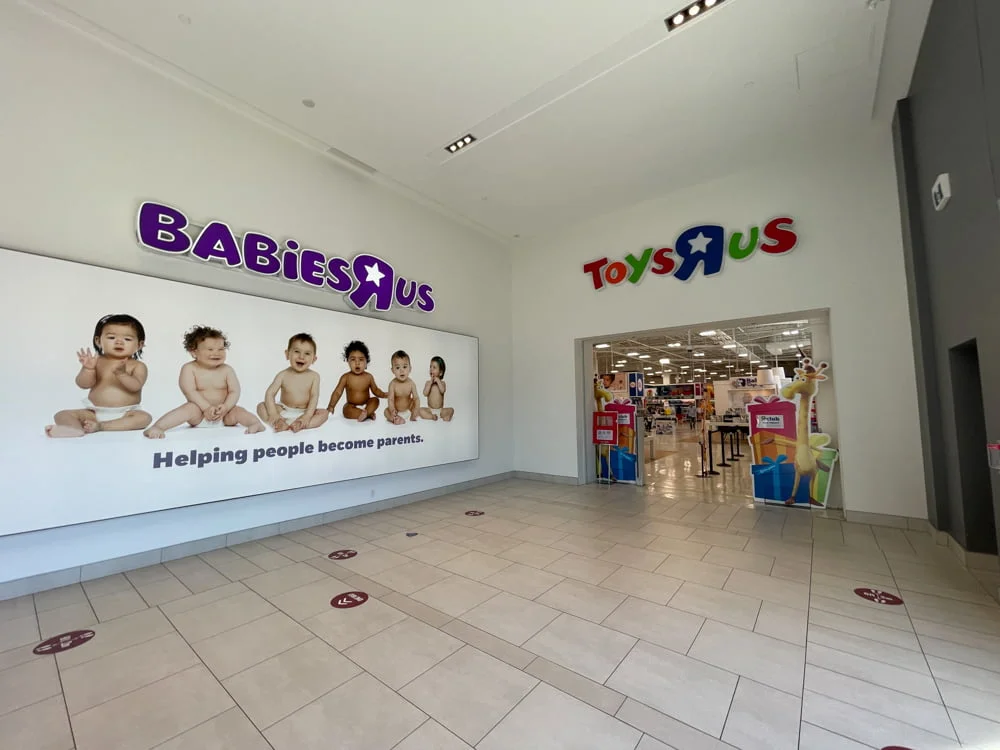
Real estate strategy is expected to play a central role in the restructuring process. In recent months, multiple Toys “R” Us Canada properties have been listed for sale, including freestanding locations in Ontario, Alberta, and Quebec. Some assets have already been sold, while others remain on the market.
Hennick said selling real estate is often one of the few levers available to highly leveraged retailers. “You start selling off assets to pay for other obligations,” he said. “It’s very similar to what we’ve seen in other retail restructurings such as Hudson’s Bay.”
Landlords, meanwhile, have expressed growing frustration over unpaid rent and limited communication leading up to the CCAA filing. Several have already initiated legal action, much of which is now paused under the court-ordered stay of proceedings.
Liabilities, Assets, and Consumer Protections
Financial disclosures published by the court-appointed CCAA monitor show that Toys “R” Us Canada reported total liabilities of $496.78 million, compared with estimated assets of $126.85 million.
Those liabilities include approximately $36 million in unredeemed gift cards. The company said it anticipates continuing to honour outstanding gift cards for 14 days following the CCAA filing, but has stopped issuing new gift cards. It also stated that it intends to honour its existing return policy for merchandise purchased prior to the commencement of the CCAA proceedings.
What Comes Next for Toys “R” Us Canada
The CCAA process gives Toys “R” Us Canada time, but not certainty. Over the coming weeks, the company will be required to outline a restructuring plan that demonstrates a viable path forward, whether through further downsizing, lease renegotiations, asset sales, new investment, or a potential sale of the business.
“There are options,” Hennick said. “Sometimes companies are acquired out of a restructuring. It does happen.”
However, he cautioned that maintaining the existing store network under the current model appears increasingly unlikely. “Long term, it’s hard to see how all of these locations stay open without major changes,” he said.
For now, Toys “R” Us Canada continues to operate, serve customers, and employ thousands of Canadians. Whether the brand can emerge from CCAA protection as a smaller, more sustainable retailer remains one of the most closely watched questions in Canadian retail in 2026.













Sure, Alex Hennick. Minimum wage increasing 40 cents caused the same financial pressure as rent, tariffs, and the bad decisions made by Putman Investments. A+ analysis.
Rooms + Spaces was a promising concept, but in hindsight it may have been preferrable to subdivide some of these larger Toys ‘R Us stores to increase productivity through co-location instead of separately leasing even more square footage. Even still, retailers need to do more to provide memorable, unique experiences if they want to truly compete.