

I was in New York over the holidays and visited the Amazon 4-Star store in SoHo. Overall, the store was functional but not incredibly exciting from my perspective. The visit also led me to contemplate the limitations of such a concept and to challenge the very meaning of it in society. A little deep for December. Either way, I think the store meets it’s perceived objective: to add value for Amazon customers. The store was packed for at least three reasons in my opinion. Firstly, because it was late December and virtually all popular New York stores were packed. Secondly, because it is relatively new (September 2018 opening) so folks are curious and the Amazon brand is very hip. Thirdly, the store adds value to customers as an extension to Amazon’s tried and true website.
For those of you who are unfamiliar with the concept, let me explain it a little. Amazon has taken select products from it’s US website that have four star and above (five star maximum) aggregate ratings along with new and trending items and top sellers and merchandised them all in one 4,000 square foot physical location.
The store is cashless (a new trend within select retail) and is NOT set up the same as Amazon Go locations that eliminate payment lines. Customers can pay with credit card, debit or the Amazon app.
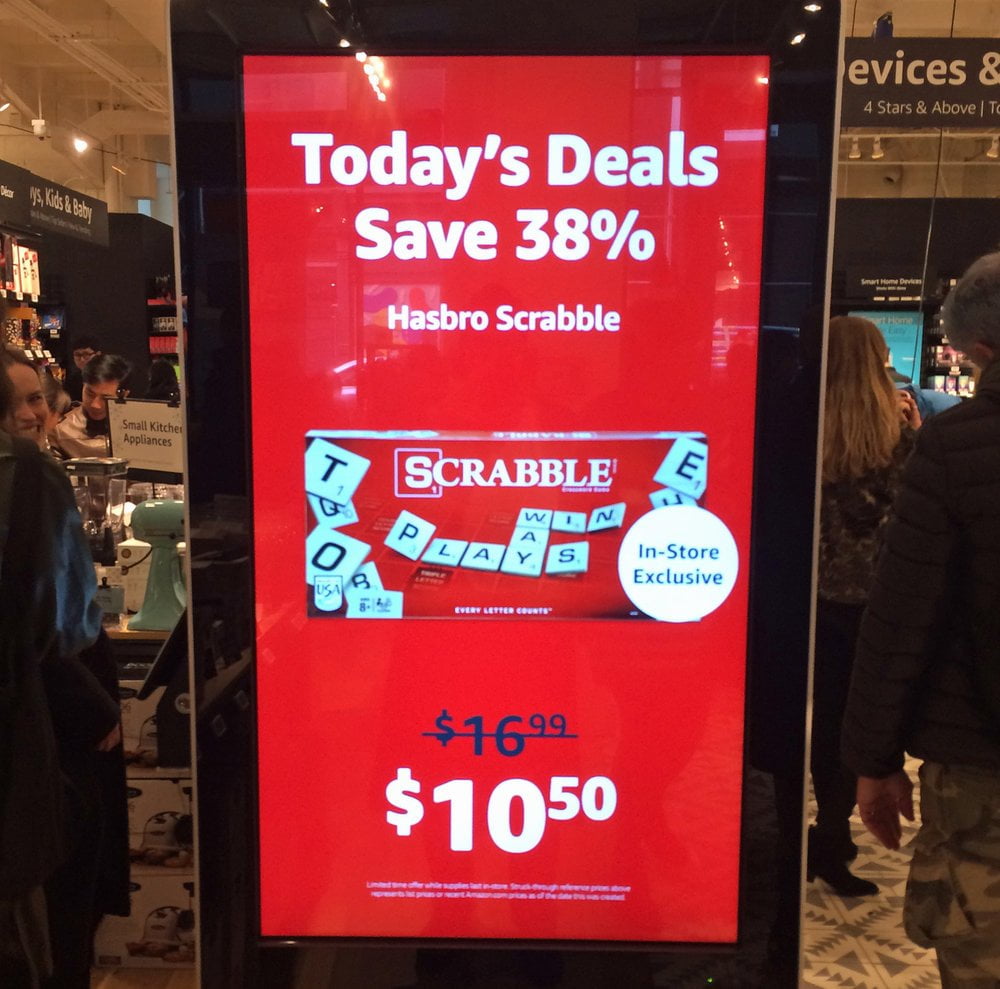
Each item is electronically signed and shows individual aggregate customer rating details along with the Amazon Prime member price and the non-member price. Electronic signage shows daily featured items.
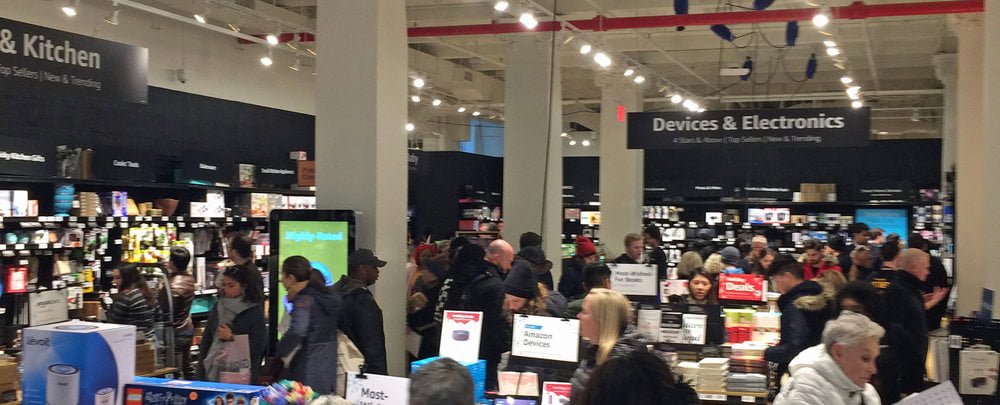
Overall, I liked the store for it’s simplicity and use of analytics to offer assortments based on what the masses prefer. I wouldn’t say that the store was exciting or offered a unique experience to customers. In fact, I found it a little boring. Having said that, I am not Amazon’s target market for this store. I don’t buy much online, except to learn from a retail perspective. I am also a bit of a minimalist (ironic, I know) and a non conformist (look at my hair).
I also liked how the store uses physical cross merchandising, highlighting products that are traditionally bought together as in the case with the smart home section that showcases all products that work with Alexa in one section. It’s much easier to tell a category story in store than online.
I also like how Amazon highlights specific New York favorites which hints at localization. I think there is an opportunity to do more of this to better address regional variances in customer preference where they arise.
The store succeeds as it reinforces Amazon’s (and society’s) use of collective ratings and reviews to assist one in making a purchase decision. That is, many of us feel more comfortable buying something that other customers have told us is great. Great may refer to quality, functionality or performance among other things. It is important to note that rating systems and specifically Amazon’s rating system has come under scrutiny of late for it’s potential inaccuracy and lack of authenticity. See the link to the article from the Wall Street Journal that talks to this. The store succeeds by adding a physical dimension to eliminate one of the remaining barriers to online shopping: not being able to touch and feel the product. Amazon’s rating system has been used as a proxy for this part of the traditional customer purchase decision making process. When customers shop online they can not touch and feel the product so they rely on others to do so for them and verify their experience with ratings and reviews. These ratings are of course aggregated and averaged.
One can contrast the role of Amazon’s 4-Star store with the trend in retail toward customized, unique and individually marketed products. If customers demand that more products are designed uniquely for them or by them, how does Amazon’s 4-Star’s aggregation and averaging of a given countries’ consumer needs fit in? If I buy a product from this store, I can feel comfortable that millions of other Americans have bought the same item and that it met their needs exceptionally well on average. There is strength in numbers. However, if I wish to express myself and stand out from the crowd with a new shirt or if my tastes vary from the average than perhaps products from this store miss the mark to some degree. Does this mean that Amazon or at least Amazon 4-Star stores are relegated to utilitarian, functional products? More discussion is needed here in my opinion.
Being in an Amazon store, I was not surprised to see customer feedback gathered at the exit with a simple four option kiosk. Simple and effective. More retailers should use this system at least as a starting point. Funny how it included only four options as opposed to five options (stars).
If you would like to see additional pictures and details, CNBC’s analysis is a worthy read.








Here is how I see the 4-star concept fitting into their larger retail picture.
https://multichannelmerchant.com/blog/amazon-four-star-and-what-it-could-signal-for-amazon-future-retail-business/