Advertisement
Advertisement

Crackdown on ‘Fraudulent’ Olive Oil at Canadian Retailers Says Expert

Date:

Share post:

Olive production in Italy was hard hit last year due to an early frost. The country’s olive production dropped by 57%. Both Greece and Portugal suffered a similar fate, along with pest issues, and saw their production drop by 35% and 15%, respectively. Pressures generated by shorter supplies with any food product have historically generated more cases of economically-motivated adulteration. This is often the case for spices, tea, vinegar, wine, and of course, olive oil. For fear of losing market share from forced higher retail prices, companies will sometimes commit food fraud in order to cut costs. However, in the case of olive oil, the Canadian Food Inspection Agency appears to have things under control.
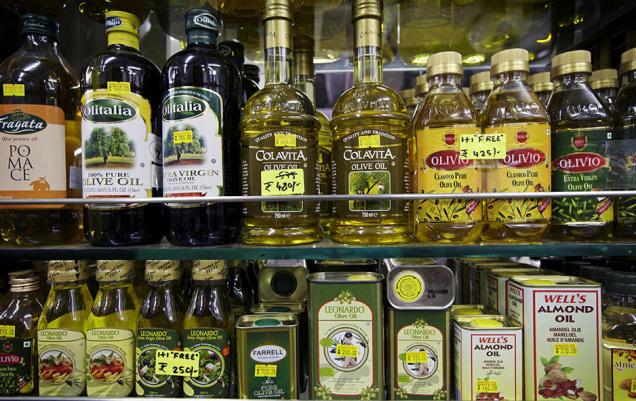
PHOTO: DIET OF LIFE

Since June, 2018, many Canadians have noticed that retail prices for olive oil have gone up by over 40% in some cases. When olive oil gets more expensive to produce, processing companies may be tempted to adulterate their products by using palm oil, soya oil or even sunflower oil. The first cases of adulterated olive oil go back to the Roman Empire, so this isn’t a new issue. Even some well-known brands have been involved in cases of adulteration. It is quite easy to switch ingredients, as most consumers would probably not notice the difference in taste. Food fraud affects many food categories, but stakes are a little higher with olive oil, due to potential allergens in substitute ingredients.

In recent years, the CFIA has actually tested some products if it suspects them to be fraudulent. In 2013, 39% of random tests found adulterated olive oil. A total of 28 samples were collected across the country. That ratio went down to 10% in 2018, with the random testing of 20 samples. Obviously, these results do not mean cases of food fraud are actually down in Canada – far from it – but reports are encouraging, nonetheless. This may suggest that the industry is now fully aware that our federal regulator is checking and will find fraudulent products. Anything more than 0% is too high, but the situation appears to be improving. A study out of California a few years ago estimated that almost 69% of all olive oil imported to North America was fraudulent. Most fraudulent products in the study had been produced using chemicals, making them ineligible to be considered extra virgin. The recent numbers determined by the CFIA are nowhere near that high.

Food fraud remains one of the most significant challenges in the food industry. According to some estimates, the intentional adulteration, substitution or misrepresentation of food for financial gain costs the global food industry well over $70 billion. The practice lowers standards for all in the industry and makes conditions for compliant food companies more difficult. Worse, given that mislabelling is the ultimate outcome of food fraud, many consumers with health conditions are exposed to unwarranted risks from hidden ingredients.


PHOTO: WONDER HOW TO

With new technologies, a change in consumer expectations about food fraud, and regulators playing a more active role, fraudulent behavior is slowly becoming marginalized. Such an accomplishment should be celebrated, but much more needs to be done. Public awareness and education, as well as allowing consumers to report suspicious products should be encouraged. The most common cases of food fraud in Canada remain misrepresentation with organic and local products. A simple laboratory test only to identify foreign ingredients is not nearly enough. 

It has been argued recently that blockchain technologies can help the food industry address food fraud. The concept has merit, but its case for market currency remains to be proven. Many grocers have embraced the approach while facing some resistance higher up the food supply chain. For blockchain technologies to work, all involved within the supply chain must comply.

In the mean time, for olive oil enthusiasts, vigilance is a virtue. Typically, 500 millilitres of good quality olive oil should cost 15 to 16 dollars to produce. Price points at retail for good olive oil should be higher than this. So, if you are looking at a bottle retailed at 10 dollars or less, just walk away. 

LEAVE A REPLY

Please enter your comment!
Please enter your name here

More From Retail Insider

RECENT RETAIL INSIDER VIDEOS

Advertisment

Subscribe to the Newsletter

Subscribe

* indicates required

RECENT articles

FreshCo Expands East with First Atlantic Canada Locations

FreshCo enters Atlantic Canada with new Halifax-area stores, marking Empire’s first discount grocery expansion into the East Coast.

Righteous Gelato enters $900M frozen novelty category with national Sorbetto Bar launch across premium Canadian grocers

Having strong national distribution with partners like Loblaws, Sobeys, Metro, and Whole Foods allows it to scale quickly and ensure consumers can actually find the product when they’re excited to try it.

Pet Valu celebrating 50 years in business

The brand recently opened its 870th store in Canada. 

RUDSAK Expands into Europe and Asia Markets

RUDSAK expands into Europe and Asia through premium wholesale partnerships as the Montreal brand advances its global growth strategy.

Cake Beauty expands retail footprint in Canada with Walmart and Shoppers Drug Mart rollout

Cake started in 2003 out of the kitchen of the founder Heather Reier, who wanted to create some products that were “delicious, indulgent, but also clean.”

Angels Wear Preloved Launches Canada’s Largest Resale Event

Angels Wear Preloved launches Canada’s largest luxury resale event in Toronto, bringing 40+ consignment vendors together for one day.

Daily Synopsis: Apr 9, 2026

Roots reports financials, Ikea expanding, Empire acquires Quebec grocer, T&T Supermarket head discusses expansion, Costco opening in Thunder Bay, Indigenous-owned 'department store' shutting down, an dother news.

IKEA to Open London Store in Former Hudson’s Bay Space

IKEA will open a 43,000 sq. ft. store in London, Ontario, taking over former Hudson’s Bay space at White Oaks Mall.

Empire Acquires Mayrand, Enters Quebec Discount Grocery Market

Empire acquires Mayrand, gaining entry into Quebec’s discount and warehouse grocery market through a court-supervised sale process.

Reitmans unveils “bold new era” for Canadian fashion

In late April, Reitmans said it will unveil a new retail concept at Carrefour Laval, located approximately 20 kilometres from Montreal's downtown core.

Roots reports strong Q4 and Fiscal 2025 results

Sales in Fiscal 2025 were $277.7 million, a 5.6% increase compared to $262.9 million in F2024

Happy Belly Accelerates Expansion as U.S. Entry Nears

Happy Belly ramps up Canadian expansion and prepares for U.S. entry as profitability improves and new restaurant concepts gain traction.

MINISO Hello Kitty Pop-Up to Debut at Scarborough Town Centre

MINISO is launching Canada’s first Hello Kitty pop-up at Scarborough Town Centre, highlighting its IP-driven retail strategy.

Must Société opens flagship Jardin de Ville store in Laval (Photos)

Must Société is a leader in mid- to high-end indoor and outdoor furniture, with 16 stores across Québec and Ontario.

Gen Z Canadians reviving mall culture with focus on social shopping: Lightspeed Commerce

83% of Gen Z Canadians say stores with social or community features make them feel more connected, and more than half (52%) have chosen a retailer specifically for its third-space experience.

Vessi focuses on measured retail expansion as demand grows for in-person shopping

The business now operates four stores following a U.S. launch earlier this year, with plans to continue expanding in Canada while refining its in-store experience.

Daily Synopsis: Apr 8, 2026

Canadian Tire’s new Hudson’s Bay summer line, shoplifting increases, class action targets bogus maple syrup producer, Peavey Mart store relaunch, Horses Atelier shutting after 14 years, and other news.

This Is J Advances Sustainable Growth in Canadian Apparel

This Is J highlights sustainable Canadian apparel growth through local production, community input, and its zero waste sample sale initiative.

Maison Territo Named Official Address for Montréal Design Week 2026

Maison Territo — home to Fendi Casa, Dolce & Gabbana Casa, Versace Home, and Bentley Home — is an official address for Montréal Design Week 2026. Visit the Royalmount showroom April 28–May 7.

Canadian Tire Launches Hudson’s Bay Stripes Summer Line

Canadian Tire unveils a new Hudson’s Bay Stripes summer collection launching May 1, expanding its strategy following the brand’s 2025 acquisition.