A successful career in the world of finance laid the foundation for Robin Kovitz to become a successful entrepreneur as well in the retail sector as President and CEO of Baskits Inc.
But the lessons she learned growing up in Calgary with a family business – Centennial Foods which was the largest privately-held meat manufacturing and distribution company in Canada with three plants in the city – are ones deeply rooted that continue to this day being a part of her leadership style of a national company.
Baskits, the online retailer of gift baskets, has been in business since 1985 but in 2014 it was acquired by entrepreneur Kovitz who has spearheaded explosive growth for the company in recent years. The company does have one retail location in central Toronto.
“I loved going to the office with my dad and grandfather evenings and weekends,” said Kovitz.
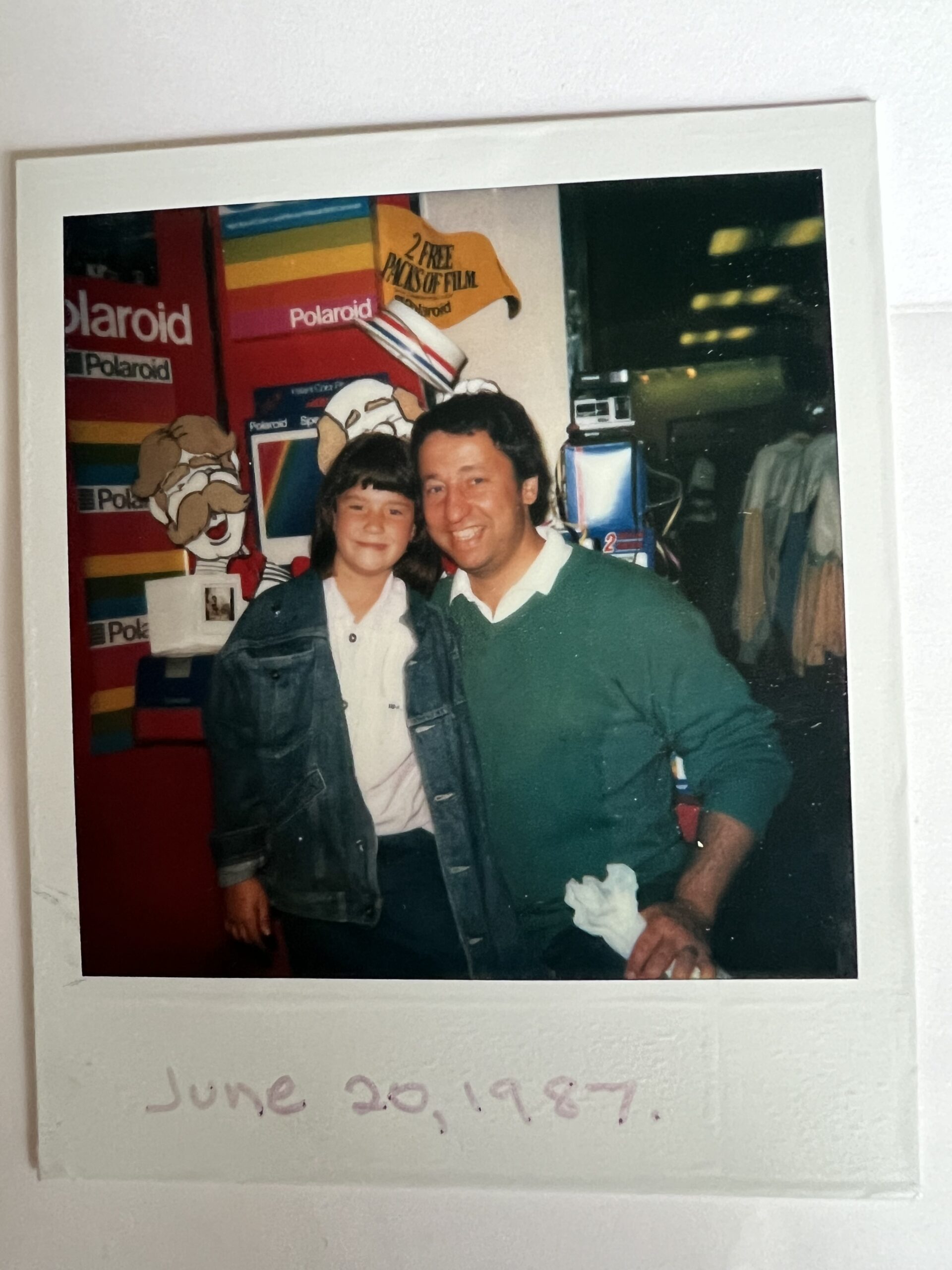
One of the biggest lessons she learned is how dealing with people is a key for any business.
“When you’re working for a larger company you can lose sight of this but it’s the people that go in everyday, that handle sales, marketing, product development, operations, packing, right down in our business to the delivery,” she said.
“So I think one of the most important lessons I’ve taken away from my family business and my time on Bay Street and Harvard is the power and magic of harnessing a team – a high performing team in a meritocracy. Being able to attract all-stars and then being able to facilitate their success and in some ways get out of their way as the CEO.”
She remembers walking around the family business with her father and noticing how people in the plant deferred to him with such respect. They appreciated him so much.
“I remember him just stopping and caring and talking to every single person and realizing that each one of those people was contributing to the success and the continuation of the business,” explained Kovitz. “And just him showing them each that much respect back.
“I remember when I went to Bay Street and was working for bigger companies I saw how that reciprocity can be lost in bigger companies. The big boss really doesn’t have that respect and appreciation – I’m generalizing – for the mainline worker who is making it all happen. And there’s this sort of disconnection that happens.
“When I was little I saw the importance through my dad and my grandfather of the role of the business and the responsibilities that a business has in society to help people and when I moved to Bay Street I saw some of that being blurred with more of a focus on providing a return for shareholders as opposed to doing good for our country and our world. At the end of the day, I’ll be happy if I did some good with Baskits. We’re trying to get all our employees above the living wage which is difficult in this inflationary environment where everyone wants free shipping and a discount. But we’re trying.”

Kovitz said another thing she learned from her father was the value of a different perspective to business. As an architect originally, her father was very creative and the way he would problem solve and look at situations was often from an artistic point of view.
“I think if you can bring that to business situations it’s extremely powerful. For example, when I’m hiring I don’t care for the ‘perfect’ CV. I often just look for experiences. Can this person problem solve? What did they learn in their history that might help them in this new role?”
She had a few different jobs with the family business as a youth but she also then went to work for the Gap where she enjoyed the life of retail.

After she graduated from high school, she went to Queen’s University for a Bachelor of Commerce. Kovitz then spent a few years in investment banking, advising people on buying and selling companies.
“I was lucky to accomplish my dream of going to the Harvard Business School for my MBA after not getting in in undergrad,” she said.
She decided private equity was the career for her and she came back to Canada and worked for a couple of equity firms.
“Then I turned 30 and decided to start a family like many women . . . I really wanted to work from home for a period of time so I could be with the baby and that just wasn’t a thing. It was way before COVID. So I decided to go off on my own and try and find a small business to buy which is quite a thing now. It’s called entrepreneurship through acquisition. But at the time I did it in 2011 it wasn’t en vogue. The concept there is it’s safer to buy a business than to start a business because the majority of businesses fail in their first year,” she said.
“So if you can buy a stable business and step into a salary and improve the business in some way it’s a better alternative for certain people as a pathway to entrepreneurship.”

In 2011, she became President and Co-Founder of Jet Star Capital Ltd. and then in 2014 she bought Baskits Inc., which is one of Canada’s fastest growing companies. Baskits designs, manufactures and delivers unique and luxurious gifts across Canada and the US.
Kovitz has two children Jill, aged 13, and Jake, 10. As a business owner, it can be difficult to juggle being a mother and running a big company.
“We have an amazing person who helps us in the home and so part of my strategy historically a lot of those duties have fallen to sort of the women in the relationship. So I don’t do laundry and I don’t cook and I don’t shop. And so we’re grateful to have a third sort of member of our family who is able to take care of those duties. For a long time my husband had a big career as well. He was a partner at a law firm and about six years we looked at each other and said this was crazy, we had two sets of nannies picking up our kids. So we made the decision that something had to give. And he fortunately joined Baskits where he works more part time. And he is what we consider parent number one. If you get a call from the school, somebody’s got to pick up the kid. It’s my husband not me,” said Kovitz.
“I read a lot about balance and having it all. The older I get the more I think that’s not possible but maybe as a family unit that harmony is possible but not as an individual working professional.”

Kovitz describes her leadership style as still evolving. She admits she wasn’t a great leader when she first started. She had very high expectations of people.
“And I’ve learned that we’re all humans. Myself included. And we deserve grace. And working 24 hours a day is not healthy and ultimately you’re going to burn out,” she said.
“I think my leadership style is trying to treat other people as I think they would want to be treated. Not as I think they want to be treated but as I think they would want to be treated. So really my leadership style is acknowledging that we’re humans, that we’re not meant to work 24/7, that we each have our unique gifts and gaps and finding a way to harness the gifts and make sure we don’t overwork our team and as I put together a team it becomes like a patchwork of quilts of strength on strength on strength and the team has synergy and is stronger than the individual parts.”
As a sought-after speaker and commentator on “Entrepreneurship through Acquisition”, digital retail and the topic of “Mompreneurship” Kovitz frequently serves as a guest lecturer at both the Yale School of Management and the Harvard Business School. She and/or Baskits have been featured in a number of leading publications, including: Forbes, House & Home, Elle Canada, Canadian Business, Huffington Post, Style at Home and on Global News, Your Morning Show.
In 2017, and again in 2021, she was recognized as a Canada’s Most Powerful Women: Top 100 award winner. In 2021, she received the Women of Inspiration Award from the Universal Women’s Network. Kovitz was a finalist for the EY Entrepreneur of the Year 2021.
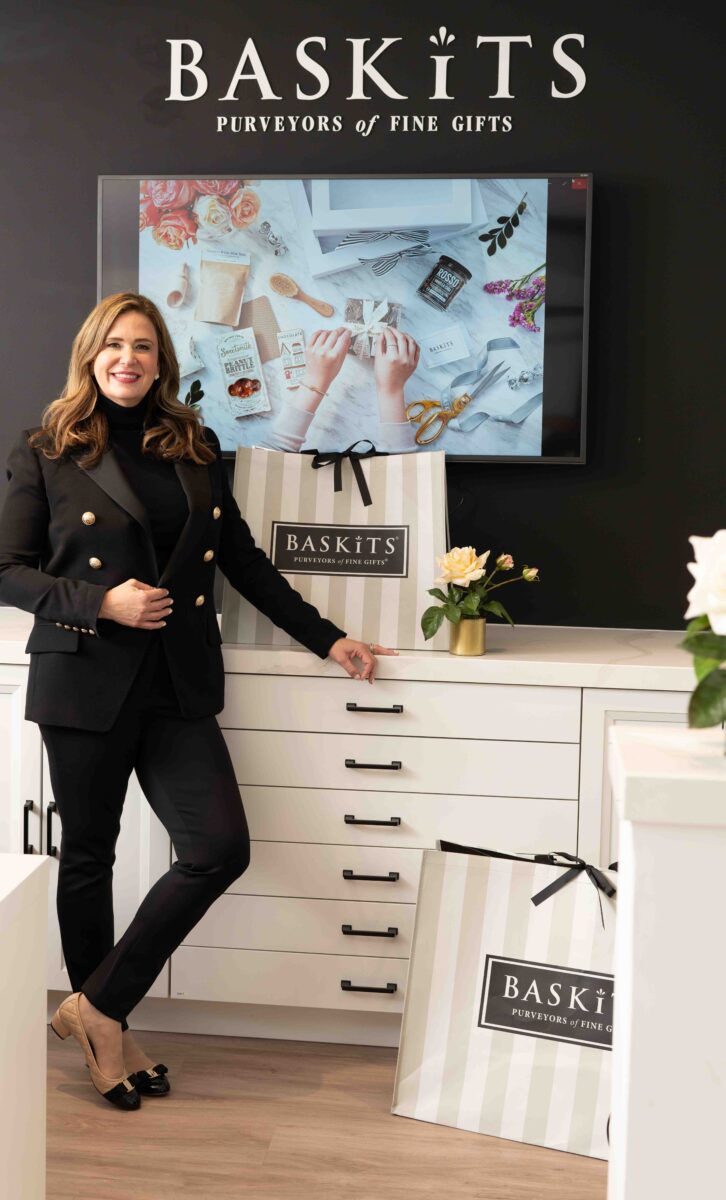
What’s the appeal for her in being in this kind of a business?
“I really wanted my compensation to be a direct reflection of my performance and I think on Bay Street I started to be a little bit subjective. You work for someone, they like you or they don’t, it’s less of a meritocracy with a direct correlation to performance. In entrepreneurship I really like that you eat what you kill. Terrible expression. There are examples of entrepreneurship where you can work really hard and still not make money. There’s all kinds of other factors,” said Kovitz.
“But I really love the fact that compensation is a direct line to what I do. So I want to work harder and hope that I can grow sales more. If I don’t work this hard, that’s on me but not someone’s opinion of me.
“The other one is having flexibility and freedom over my schedule. I still work far too much. But I don’t have that being on beck and call. That’s one thing as a leader. I remember hating that when I worked for other people so I try not to do that to my team. I’m so careful not to email evenings and weekends. Not to demand things with unreasonable turnaround times. I try really hard because those were the things I really hated.”
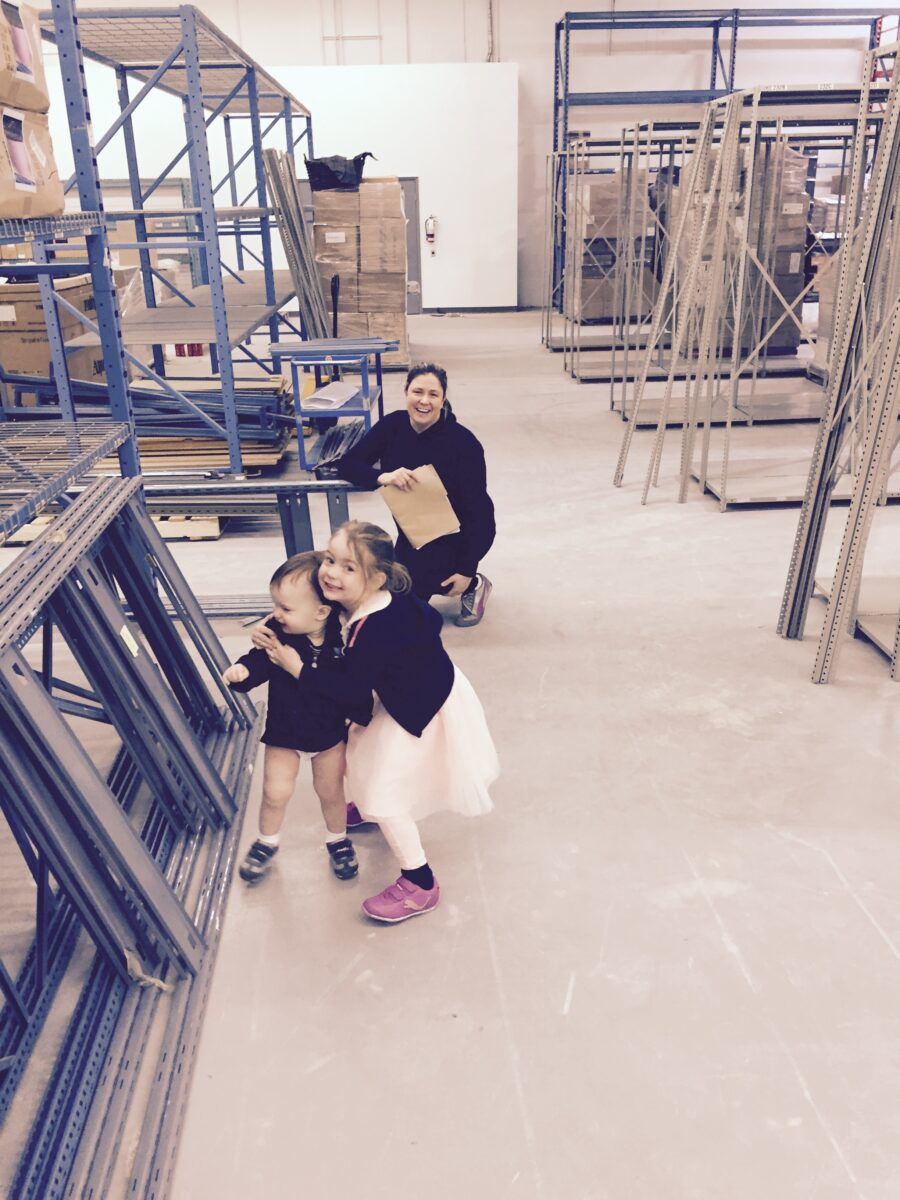
Kovitz said she’s now getting to a point in her life where she can pick up some of the hobbies she gave up years ago. She used to play a lot of soccer and is thinking of doing that again or joining a gym.
“But really actually my passion and my hobby is the business and the design side of the business which I never expected was going to be a part of my area of control. So I kind of fell into design. Evenings and weekends I’m designing products and I’m really passionate about that, making sure we have the best products in our baskets,” she said.
“I think as a leader one of the best things you can do is build something that is bigger than yourself. So I get so excited when something happens in the company that I knew nothing about and it didn’t even touch me and that’s to me a symbol that it’s working.”