Lululemon adjusts outlook as growth slows in key markets

Date:

Share post:

Vancouver-based athletic apparel retailer Lululemon Athletica has encountered unexpected headwinds in its latest fiscal quarter, prompting a revision of its annual outlook. The company reported its first revenue miss in over two years.

Calvin McDonald

The performance in the Americas saw comparable sales declining by 3%, which is in stark contrast to the company’s international markets where sales increased by 29%. Lululemon’s CEO, Calvin McDonald, acknowledged the issues in the U.S. market, stating, “Our teams continue to optimize our product assortment and remain focused on driving forward our opportunities in the market.”

Lululemon’s highly anticipated Breezethrough leggings, introduced in early July, faced a wave of customer complaints regarding fit issues, forcing the company to pull the product from shelves. In an earnings call, the company said that the pause on sales had a negligible impact on revenue and gross margin guidance for the year.
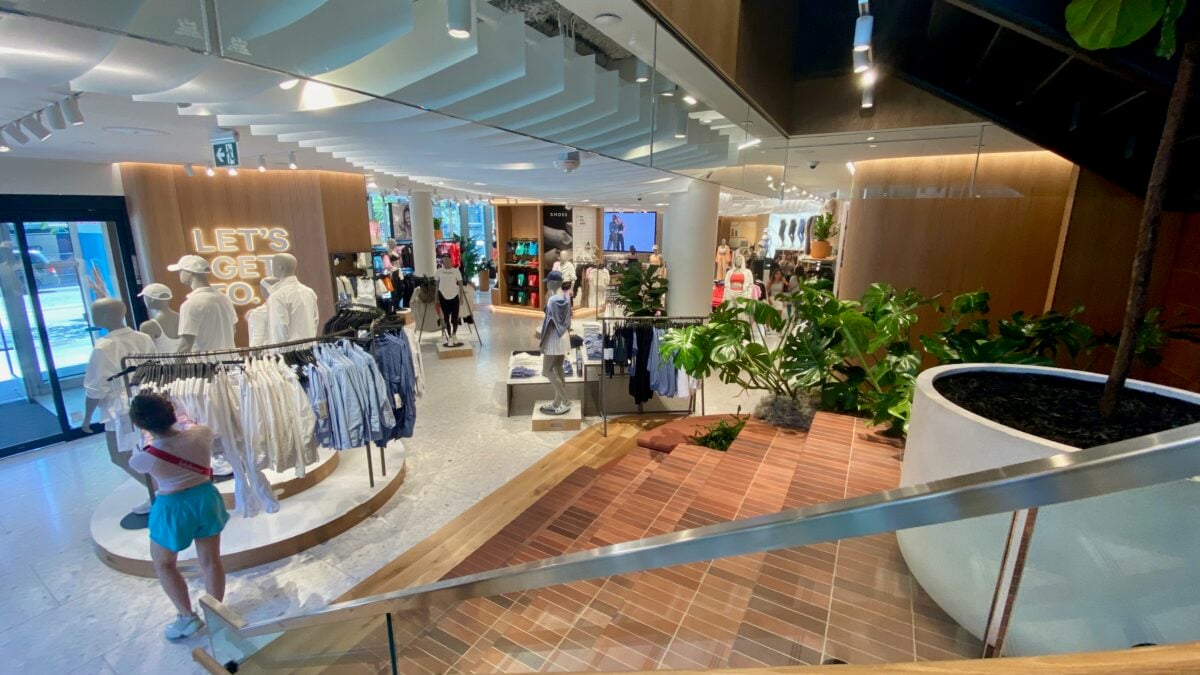
Looking down the grand staircase at the front entrance to the new Lululemon store at Yonge and Bloor in Toronto. Photo: Craig Patterson

In response to financials, Lululemon has adjusted its full-year guidance. The company now projects net revenue to fall between $10.38 billion and $10.48 billion, a reduction from its previous forecast of $10.7 billion to $10.8 billion. Similarly, earnings per share expectations have been tempered, with the new range set at $13.95 to $14.15, down from the earlier projection of $14.27 to $14.47.

There was also good news in the report. Lululemon reported earnings per share of $3.15, surpassing analysts’ expectations of $2.93. However, revenue of $2.37 billion fell short of the anticipated $2.41 billion, according to a survey conducted by LSEG (formerly known as Refinitiv).

Looking ahead to the third quarter, Lululemon says it expects sales growth to remain subdued at 6% to 7%, falling short of analysts’ projections of 9.2% growth. However, the company’s profit guidance for the upcoming quarter aligns closely with Wall Street expectations, suggesting that Lululemon is placing a renewed focus on operational efficiency and cost management.

Lululemon says it remains optimistic about its long-term prospects. The company continues to view international expansion, particularly in China, as a key driver of future growth. Additionally, Lululemon’s ability to maintain strong gross margins, which improved to 59.6% in the second quarter, demonstrates the brand’s enduring appeal and pricing power.

Lisa Hutcheson

Lisa Hutcheson, Managing Partner of Toronto-based consultancy J.C. Williams Group, said, “Lululemon has historically demonstrated strong performance, particularly during the pandemic when the demand for comfortable, work-from-home-friendly apparel surged and the overall apparel sector suffered – and is still struggling.” 

“Moreover, despite Lululemon’s previous immunity to these industry-wide challenges, the landscape is shifting. The market is now more competitive with new entrants like Alo Yoga and Athleta intensifying the competition,” she went on to say. 

“As consumer preferences evolve, Lululemon may face challenges in maintaining its current growth momentum if it does not adapt swiftly to these changes.”

George Minakakis, Founder and CEO of Inception Retail Group, said, “Lululemon is facing the same challenges many other retailers face: uncertainty on consumers’ confidence as many retailers are. However, I am surprised that they have had a negative product rollout because that happened about a decade ago, and there was a great deal of consumer backlash.” 

George Minakakis

“So, I wonder if they have lapsed somewhere in their quality control and design,” Minakakis said.  

“Their focus on China is admirable, given the growth they are experiencing, but China is rebounding from an economic slowdown. I would hate to say this, but Lululemon needs to keep its eye on the Chinese market. Local competitors can scale and sell similar lines for a lot less. Starbucks is a good example of that.” 

Minakakis also noted the impact of interest rates on retail operations. 

“International brands like Lululemon must be cognizant of economic uncertainties. Interest rates may be coming down, but the positive effects could take months to filter through,” he said. 

Bruce Winder

Bruce Winder, retail analyst and author, said, “A disappointing quarter for the Canadian company as a slowing Americas market towed down strong international performance. Many will wonder if Lululemon has fallen to earth and lost its super power over other apparel companies. Maybe. Maybe not. Time will tell.” 

“The company needs to rejuvenate its new product development pipeline in a much more competitive environment. The recent loss of Sun Choe can’t be easy,” Winder went on to say. 

“The company also risks pricing itself out of a stingy consumer market where dupe alternatives have gained acceptance. Anecdotally, I have heard about quality and customer service issues from our daughter who used to swear by the brand and has now switched to another.” 

“Great brand! Great margins! Needs to get its mojo back asap.”

1 COMMENT

  1. During this year when positive news about Canadian apparel retailing has been hard to find it was a surprise that the
    article did not note that Lululemons Canadian sales increased 8.3% during its second quarter

LEAVE A REPLY

Please enter your comment!
Please enter your name here

RELATED ARTICLES

Subscribe to the Newsletter

Subscribe

* indicates required

RECENT articles

Tim Hortons Targets Stronger Canadian Growth With New Stores, Beverages and Loyalty

Tim Hortons is opening 80 Canadian restaurants while expanding cold beverages and loyalty initiatives after same-store sales growth slowed to 0.1%.

Canada’s Freight Market Is Shifting Unevenly. Here’s What Retailers Should Watch

TFI International’s latest results and analysis from supply chain strategist Gary Newbury suggest Canadian retailers should prepare for uneven freight conditions, changing transportation capacity and evolving logistics costs.

Jamieson Wellness enters into definitive agreement to be acquired by Kirin in C$2.5 billion transaction

The transaction values Jamieson at approximately C$2 billion on a fully diluted equity value basis and approximately C$2.5 billion on an enterprise value basis.

Slate Grocery REIT reports second-quarter results, citing leasing gains and rent growth potential

Completed more than 569,000 square feet of leasing activity during the period as it continued to see rental growth across its U.S. grocery-anchored real estate portfolio.

Premium Brands reports record second-quarter revenue and earnings, revises 2026 outlook

The specialty food producer and distributor said second-quarter revenue reached a record $2.4 billion, up 26.3 per cent, or $495 million, from the same period a year earlier.

SmartCentres reports steady leasing gains in second quarter as occupancy rises, FFO unchanged

The Toronto-based REIT said occupancy reached 98.1 per cent as of June 30, up from the previous quarter.

Daily Synopsis: August 7, 2026

Retail Insider published 12 articles today on Canadian retail including Birks’ market move, Mattel’s strategy shift, Realm Fitness’ community, and McDonald’s new beverage platform.

Leon’s Furniture reports higher net income in second quarter despite lower sales

Revenue declined by $12.9 million from a year earlier, with furniture delivered sales down 4.2 per cent against what the company described as a strong prior-year comparison.

Retail Insider “Marketing & Media Report”: Live Events Shift Attention to Dynamic OOH

Major cultural events are redirecting Canadian retail marketing toward physical spaces. The Q2 2026 report examines how motion-based DOOH, local sports activations, loyalty platforms and measurable sustainability practices are shaping competition for consumer attention across Canada.

Birks to Leave NYSE American as Canadian Jeweller Reshapes Finances

Birks Group will leave the NYSE American for the OTCQB as the Canadian jeweller reports stronger sales, refinances debt and continues retail investment.

What Mattel’s Strategy Says About the Future of Canada’s Toy Market

Canada's toy market is evolving, and Mattel's latest strategy shows how Hot Wheels, building sets, collectibles and Barbie are shaping the industry's next chapter.

Realm Fitness Builds 2,500-Member Community Inside Calgary Industrial Property

Realm Fitness has grown to 2,500 members in Calgary, combining fitness, retail, recovery and community inside a 44,000-square-foot industrial space.

Baffin joins the Royer Group of Companies 

Baffin will operate as Baffin Footwear Inc., preserving the Baffin brand, its leadership team, employees, customer relationships and day-to-day operations while benefiting from Royer's long-term investment and manufacturing expertise.

First T&T Supermarket in Manitoba coming to CF Polo Park in Winnipeg

The “cult-favourite” Canadian supermarket is bringing its signature Asian groceries, prepared foods, bakery favourites, and beauty products to Manitoba for the first time.

Corby to sell Lamb’s rum brand and assets for $39.2 million as it shifts focus to growth categories

Corby said the transaction is intended to concentrate its resources on priority growth platforms, including ready-to-drink beverages and premium spirits, while freeing capital for higher-return opportunities.

Yoto Expands Into 90 Indigo Stores Following Strong Canadian Growth

Yoto has expanded into 90 Indigo stores across Canada, marking its largest retail rollout after strong Canadian growth and years of building its direct-to-consumer business.

Restaurant Brands International reports Q2 results as system-wide sales reach US $12.7 billion

Restaurant Brands International Inc. is one of the world's largest quick service restaurant companies with nearly $49 billion in annual system-wide sales and over 33,000 restaurants in more than 120 countries and territories.

McDonald’s Canada Beverage Platform Shows Early Success

McDonald’s says its new permanent beverage platform is outperforming expectations in Canada as the company targets afternoon traffic with Crafted Sodas, Refreshers and Cloud Iced Coffees while expanding its global growth strategy.

Shopify Q2 results indicate a “monster quarter”

GMV was $115.6 billion, the fifth straight quarter of more than 30% growth. Revenue increased 34% year over year to $3.58 billion.