Save the Duck, a renowned Italian outerwear brand known for its cruelty-free and sustainable approach to fashion, has launched a pop-up shop at Over the Rainbow in Toronto’s Manulife Centre. Open until December 6, the pop-up introduces Canadians to Save the Duck’s signature animal-free and eco-friendly offerings, while plans for a spring collection launch are already underway.
Founded in 2012 by Nicolas Bargi, Save the Duck stands apart in the fashion industry with its high-performance outerwear crafted without animal-derived materials. The brand’s proprietary Plumtech® insulation mimics traditional down, providing warmth, breathability, and lightweight comfort—without the need for feathers.

“We want people to know you can stay warm, look good, and protect animals and the planet all at the same time,” said Loris Spadaccini, Director and General Manager for Save the Duck North America. “We’ve saved over 44 million birds and repurposed 22 million plastic bottles so far, and we’re just getting started.”
Commitment Beyond Fashion
Save the Duck’s commitment extends beyond crafting stylish outerwear. As a B Corporation certified since 2019, the brand donates 1% of its sales to environmental and humanitarian initiatives worldwide. Recently, Save the Duck helped construct freshwater wells in Sumba, Indonesia, giving local villagers easier access to clean water.
Spadaccini highlighted this broader vision in an interview: “We do a lot of good things as a brand, aside of making kick-ass products. You cannot save the planet by catering to just a few rich people. Our goal is to be accessible to many.”
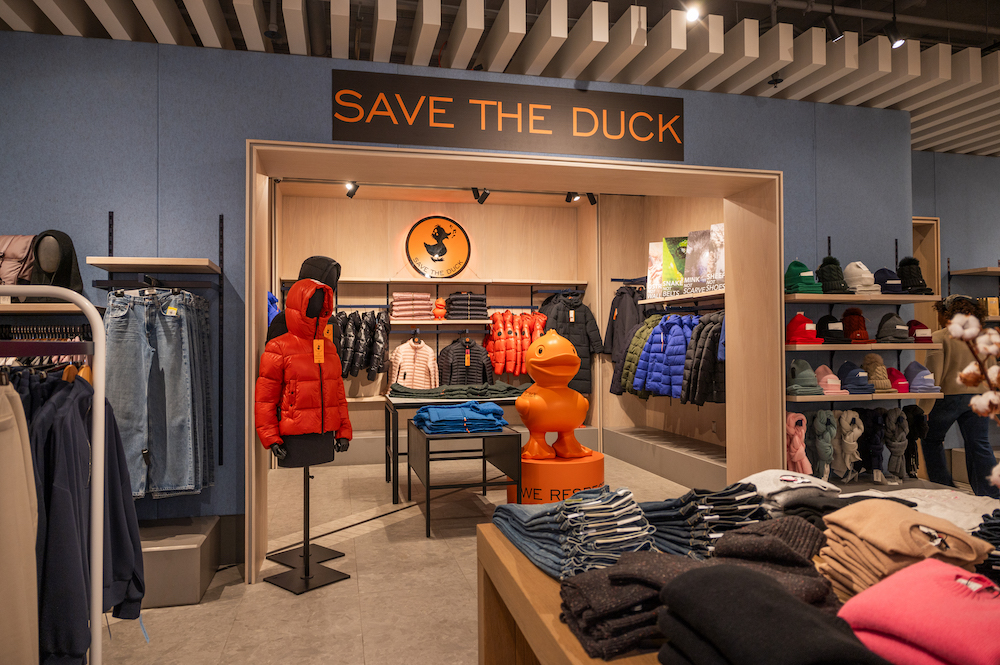
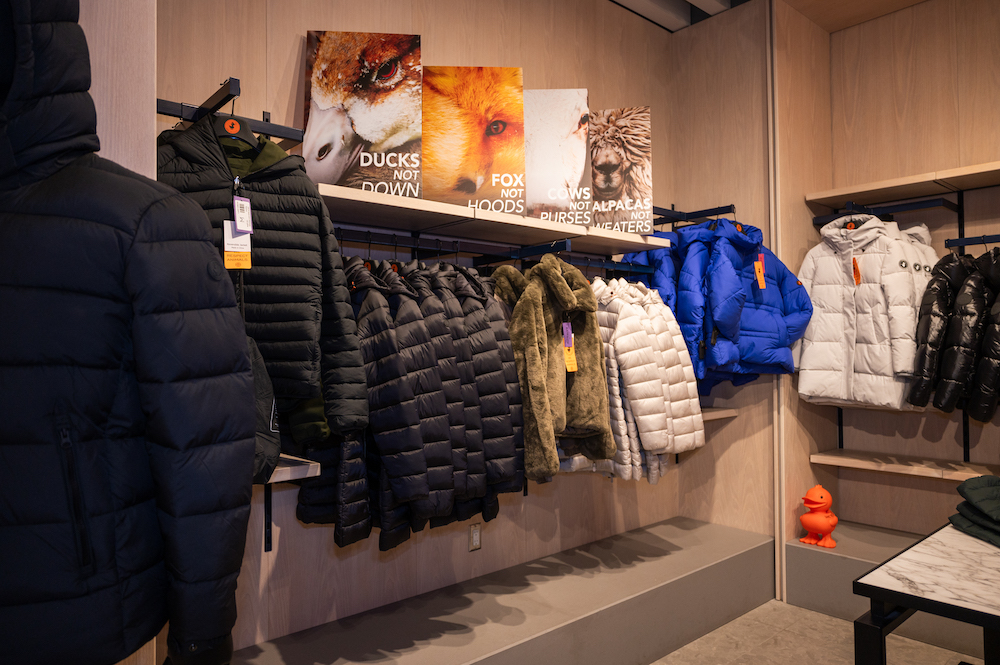
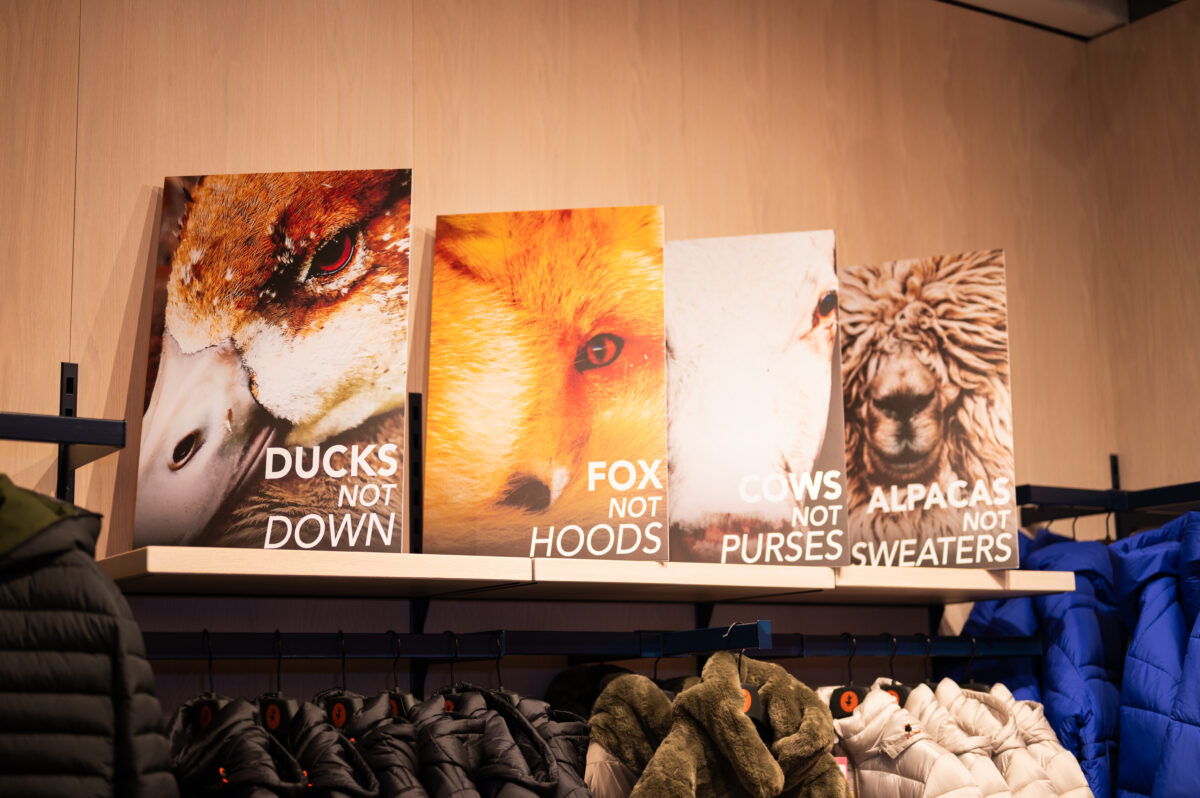
The pop-up at Over the Rainbow features an engaging display, with images of animals and phrases like “Cows not purses” and “Alpacas not sweaters.” According to Spadaccini, “We wanted to communicate our message in a way that makes people stop, think, and smile.”
The Toronto Partnership and Customer Appeal
Over the Rainbow, a staple on Toronto’s retail scene since 1975, was a natural partner for Save the Duck. Founder Joel Carman highlighted the brand’s blend of Italian craftsmanship, style, and commitment to the environment.
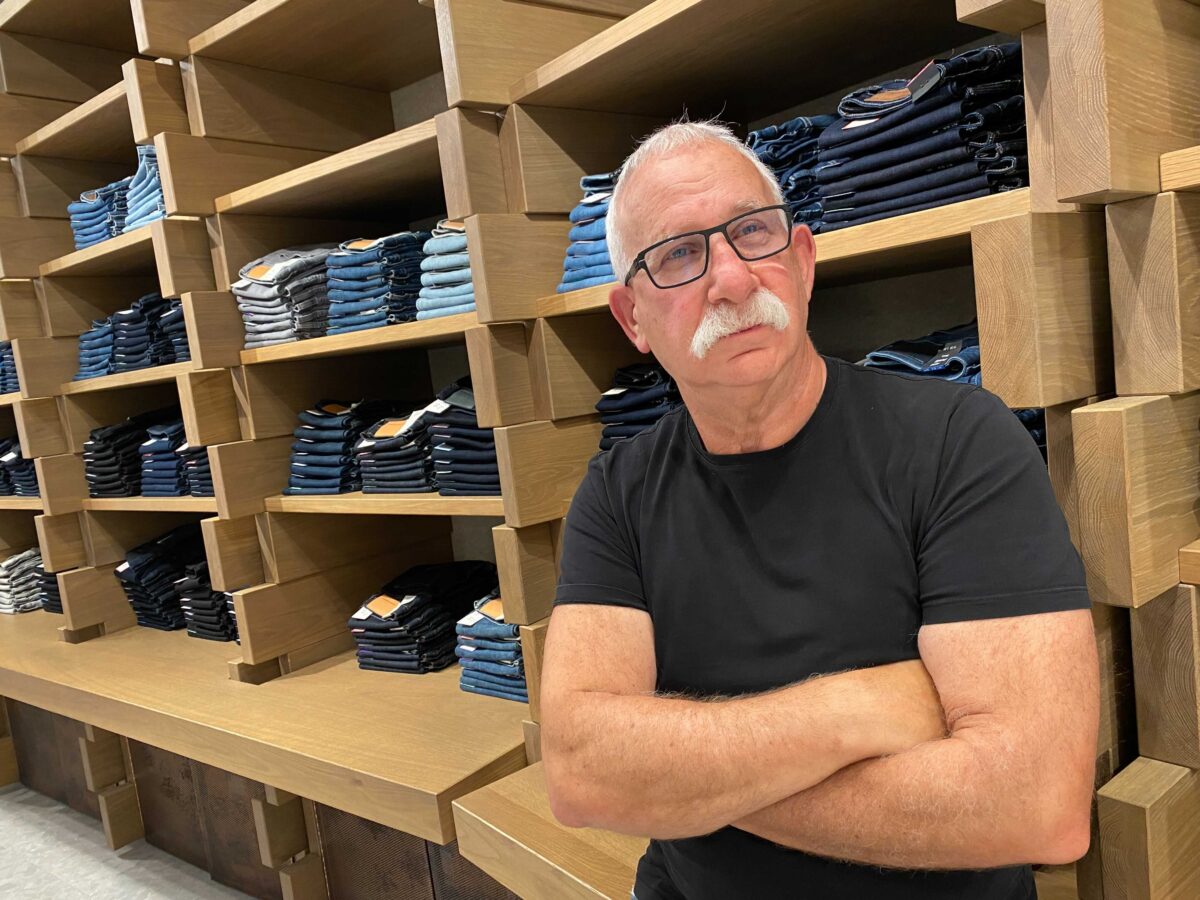
“Sustainability is important, but the product must be beautiful and functional too,” Carman said. “Save the Duck delivers both. The price point, style, and eco-friendly aspect all come together—it’s what today’s consumers are looking for.”
Carman has seen a strong response to the pop-up on the day of it opening. “People love it. They see something that looks great, fits well, and also aligns with their values. That’s a win-win.”
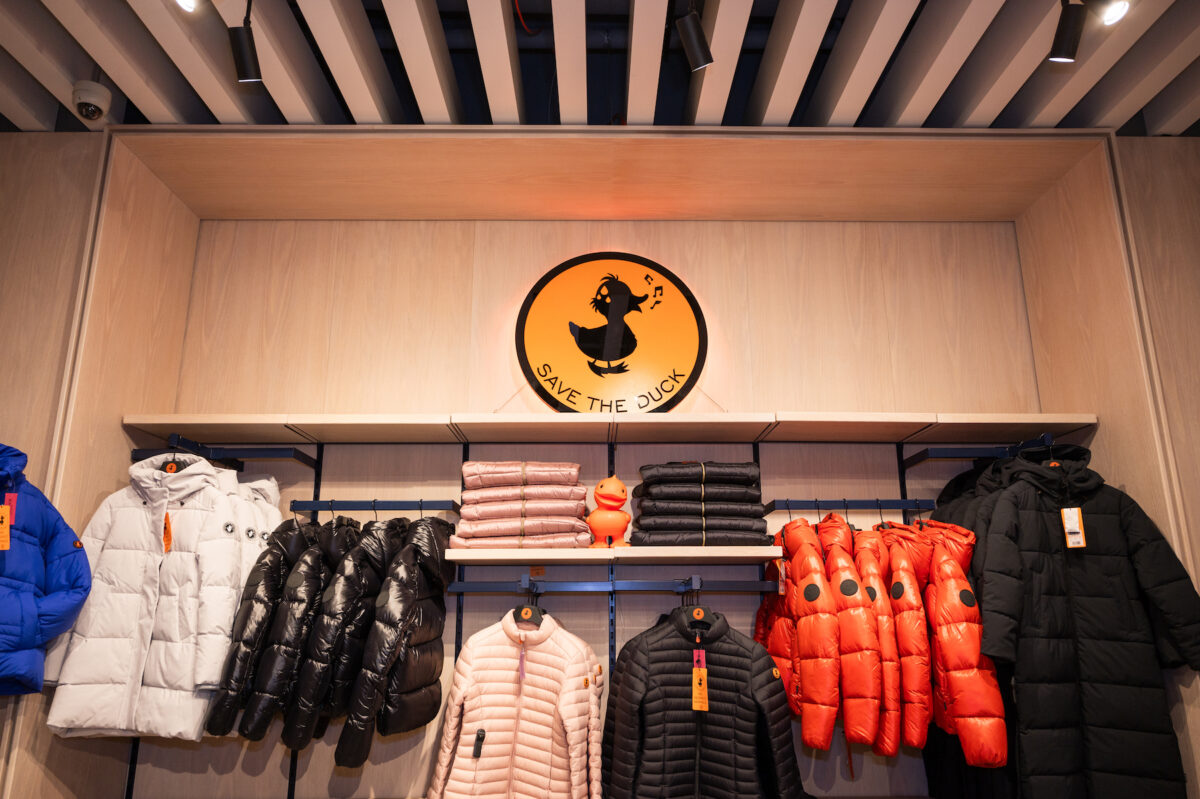
The pop-up offers a range of jackets, vests, and accessories for men, women, and children—all made using recycled and sustainable materials. “When people come in and touch the jackets, they’re often surprised at how warm and lightweight they are,” Carman said. “I’ve had customers say, ‘I can’t believe this isn’t down.’”
Expanding Presence and Accessibility in Canada
Save the Duck’s foray into the Canadian market is a key step in its global expansion strategy. Spadaccini noted that the brand aims to make sustainable fashion accessible to a broad audience. “Our goal has always been to offer products that everyone can afford, not just a select few,” he said. The brand’s pricing strategy reflects this vision, with outerwear at various price points to ensure widespread appeal.
The success of the pop-up could lead to a more permanent retail presence in Canada. “We’re testing the waters here, and so far, the reception has been incredible,” Spadaccini said. “Toronto is a city that values sustainability, and we’re thrilled to be part of that conversation.”
Responding to Demand for Ethical Fashion
The pop-up’s launch comes as consumer interest in ethical and sustainable fashion continues to rise. “People are increasingly aware of the impact their choices have on the environment,” Carman observed. “But they still want great design and performance. Save the Duck strikes that perfect balance.”
Spadaccini emphasized that sustainability is not a trend but a necessity. “Climate change is real. We all see it. And as my boss says, ‘There’s no Planet B.’ We have to act now for future generations,” he said.