

Woodbine Mall filed for CCAA last week, marking a pivotal turning point for the Etobicoke shopping centre and underscoring broader structural challenges facing secondary malls across Canada. The property, which has operated under receivership since 2023, formally entered creditor protection on April 17, 2026 under the Companies’ Creditors Arrangement Act.
The move reflects mounting financial pressure tied to declining retail performance, anchor tenant disruption, and a shifting valuation framework that increasingly prioritizes land redevelopment over traditional shopping centre operations.
The restructuring has been initiated by Romspen Investment Corporation, the mall’s primary secured lender, which is owed close to $500 million. Through a proposed credit bid using a reverse vesting structure, the lender is seeking to take control of the asset and reposition it for the future. A court hearing scheduled for April 27, 2026 is expected to determine the next phase of ownership.
From Receivership to a Strategic Reset
The Woodbine Mall CCAA filing represents a shift from stabilization to strategy. Since May 2023, the property has been under receivership, with Ernst & Young overseeing operations and attempting to facilitate a sale. At the time of the initial filing, debt was estimated at approximately $333.3 million, alongside significant property tax arrears and declining operating performance.
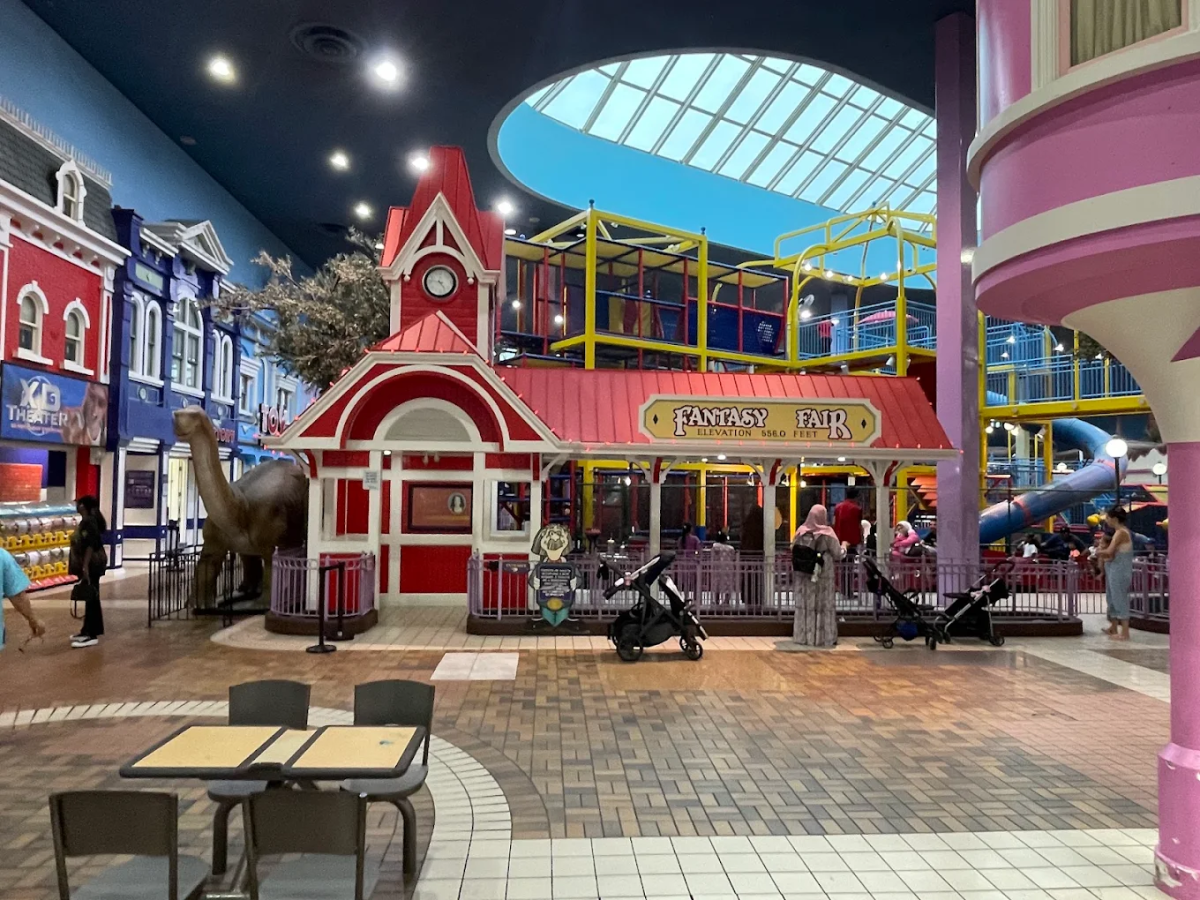
Despite efforts to market the property, a traditional sale failed to materialize. The mall’s hybrid retail and entertainment format, anchored by Fantasy Fair, was increasingly viewed as niche, while rising vacancies and weakening tenant demand limited income stability.
The current approach reflects a change in strategy. Rather than waiting for an external buyer, the lender is effectively stepping in to assume ownership, restructure liabilities, and unlock long-term value tied to the land.
Hudson’s Bay Lease Constrained Sale and Redevelopment
A central factor in the mall’s prolonged insolvency process was the lease held by Hudson’s Bay, which functioned as both a financial and structural constraint on the asset.
The lease, which extended decades into the future, included provisions that significantly limited the landlord’s ability to redevelop or materially alter the property. These types of legacy department store agreements often contain restrictive covenants tied to site control, demolition rights, and co-tenancy protections. In the case of Woodbine Mall, the Hudson’s Bay lease effectively acted as a barrier to repositioning the site.
From a transaction standpoint, the lease introduced a level of uncertainty that deterred potential buyers. Any purchaser would have been required to navigate not only the long-term occupancy rights but also the operational and redevelopment restrictions embedded within the agreement. This reduced flexibility in pursuing mixed-use redevelopment, which is increasingly the primary value driver for large suburban sites.
That constraint was removed in July 2025, when Hudson’s Bay disclaimed its lease as part of its own restructuring proceedings. The removal of that “poison pill” fundamentally changed the asset’s profile, allowing stakeholders to consider redevelopment scenarios that were previously unworkable.
Retail Performance Undermined by Anchor Loss

The challenges at Woodbine Mall also reflect the broader collapse of the traditional anchor tenant model. Historically, the centre was anchored by Hudson’s Bay, Sears, and Zellers, all of which played a critical role in driving traffic and supporting smaller retailers.
Retail industry expert Antony Karabus has pointed to the systemic impact of anchor loss across Canadian malls. “When a major department store closes, it affects the entire ecosystem,” he said in a recent discussion. “Traffic declines, smaller tenants lose sales, and co-tenancy clauses can further erode rental income.”
At Woodbine, the loss of anchor stability contributed to a downward cycle. As vacancies increased and tenant quality shifted, the mall’s net operating income weakened, making it increasingly difficult to service debt and maintain the property.
Land Value Now Drives the Investment Thesis
While Woodbine Mall continues to operate with remaining tenants and attractions such as Fantasy Fair, its valuation is now primarily tied to its underlying land rather than retail productivity.
Karabus noted that many secondary malls are reaching a similar inflection point. “A number of these suburban malls have run their course as pure retail assets,” he said. “Their future will likely be as mixed-use developments that combine residential, retail, and entertainment.”
However, he cautioned that redevelopment is not immediate. “Residential projects can take years to approve and build, and current market conditions are slowing that transition,” he said, pointing to softer condo demand and tighter financing environments.
A Divided Retail Landscape
The Woodbine Mall CCAA process reflects a broader bifurcation in Canadian retail real estate. Top-tier shopping centres continue to report strong performance and attract leading tenants, while secondary properties face declining relevance.
Retailers are increasingly concentrating their footprints in high-performing locations, leaving mid-tier malls with elevated vacancy and limited leasing momentum. This shift has accelerated the financial pressure on properties like Woodbine, where the traditional retail model is no longer sustainable on its own.
Karabus described the dynamic as a structural reset. “There was an assumption that redevelopment would quickly solve these challenges,” he said. “In reality, there is a mismatch between how long redevelopment takes and how quickly retail performance can deteriorate.”
What Comes Next for Woodbine Mall
In the near term, operations at Woodbine Mall are expected to continue under court supervision as the restructuring process unfolds. Maintaining business continuity is essential to preserving asset value during the transition.
Over the longer term, the site’s future is likely to align with broader planning initiatives in the area. Located on more than 50 acres and positioned near major transit and the Woodbine Racetrack district, the property is a strong candidate for large-scale mixed-use redevelopment.
City planning efforts envision a more dense, transit-oriented community that integrates residential, retail, and public space. If realized, this would represent a complete transformation from the mall’s original 1985 format into a new urban node.










If you look at the terrible upgrades and upkeep of this shopping centre, you can see why there’s no shoppers and tenants. They have Fantasy Fair, but what is keeping the visitors here to stay longer? *crickets chirping* EXACTLY! Nothing! There’s colleges, universities and high schools in the vacinity. Entertainment, sports and fitness and food and restaurant hubs would be anchor tentants and…. MAKE a sensible common area.. tile, ceiling and other cosmetic appearances that look fabulous and inviting! I laughed at the fake trees, murals of ummm wtheck on the ceilings and things… Of course major tenants will run not walk away and they will get anyone to come to lease or rent here. This place needs new common areas, inviting and upgraded exterior signage and cladding. Malls ARE successful here in Canada… enough of blaming online sales, etc for the decline. Look at Square One, Vaughan Mills, Scarborough Town Centre, and go higher… Yorkdale and Eaton Centre… They all have upgraded interiors and things what people want, need, and it looks fabulous inside. Enough copy and paste design, be innovative and you will have shoppers! Exterior and interior upgrades and design… add fountains and trees and holiday decorations and animatronics… easy! There’s so much you can do as a landlord, but they see numbers and can’t see outside the box as they are just the sheep who look at what others do… BE A LEADER, NOT A FOLLOWER! Simple
Woodbine mall, lost it’s touch years ago…the mall needs a massive renovations…or break it down…their choice…same goes for Westwood square mall in Malton Mississauga
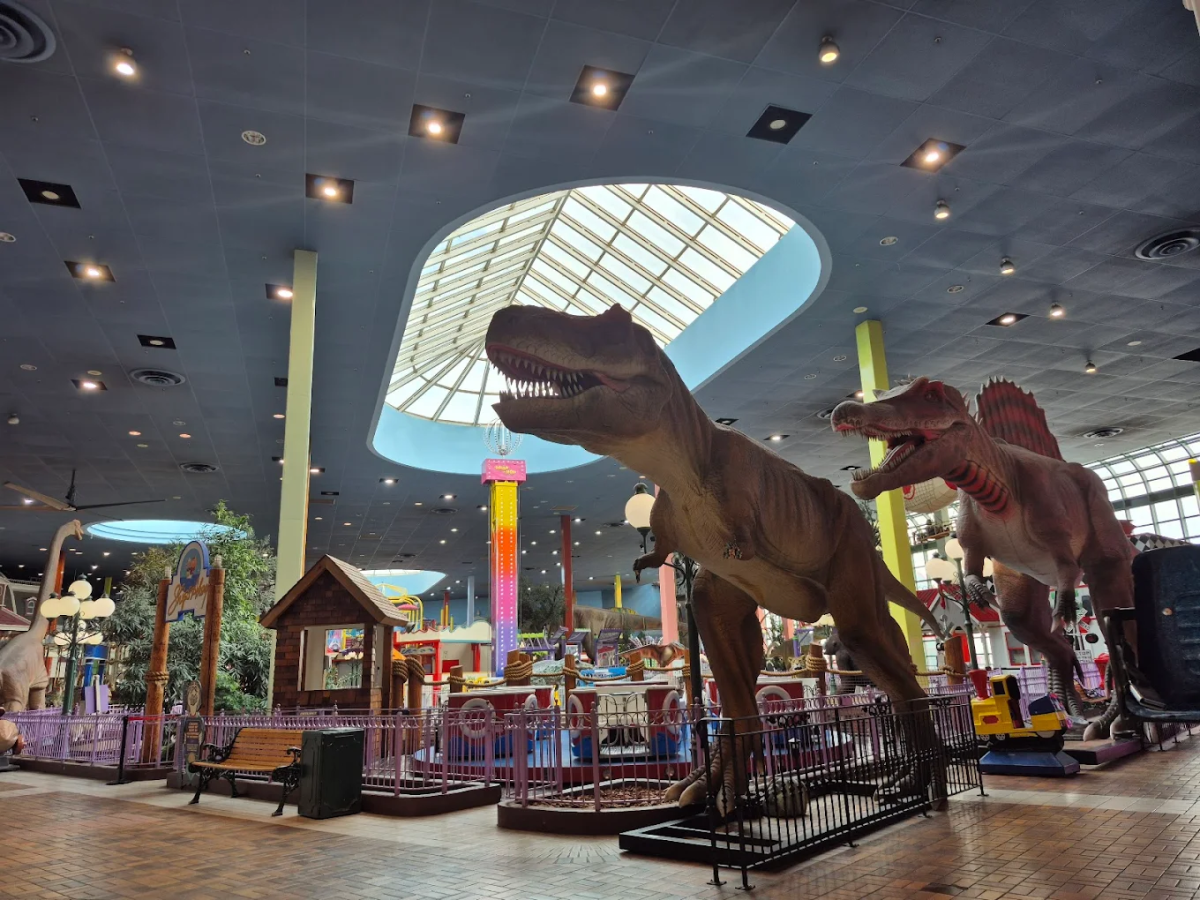
In reply to Carlo: The current aesthetic of Woodbine followed its downfall, it’s not what launched it. As to going upscale, there’s only so much capacity in the market for that, and it’s not in a blue collar neighbourhood, despite being opposite the racetrack. Also, no one can call Woodbine a “follower,” with its animatronic dinosaurs.
In reply to Aaron: Westwood is not my cup of tea, but it has pivoted to narrowly target their local audience.