

Hudson’s Bay Company ULC (Hudson’s Bay), the Canadian retail giant with over 80 stores across the country, filed for protection under the Companies’ Creditors Arrangement Act (CCAA) in the Ontario Superior Court of Justice on Friday. The legal move marks a critical step in the company’s ongoing battle to stabilize its operations amid a backdrop of financial struggles and significant challenges in Canada’s retail landscape. With the appointment of Alvarez & Marsal Canada Inc. as the court-appointed monitor, the company will now begin a restructuring process in hopes of charting a sustainable path forward.
The court’s Initial Order grants Hudson’s Bay relief from creditor actions for an initial period of 10 days, with the potential for extension as the restructuring process unfolds. In addition to the court’s protection, Hudson’s Bay has secured interim financing from Restore Capital, LLC, an affiliate of Hilco Global, with a CAD$16 million advance already approved. However, the company is expected to seek further financing to support its operations throughout the CCAA process.
[More Details: See our article from earlier today: Hudson’s Bay Facing Imminent Bankruptcy: Report]
The Road to CCAA: What Led to the Filing?
For Hudson’s Bay, this bankruptcy filing is not an isolated event but part of a larger, years-long struggle. Despite efforts to turn around the company, it has faced numerous financial difficulties over the past several years. Hudson’s Bay said in documents that it has long been burdened by high operational costs, declining consumer foot traffic, and increasing competition from both online and discount retailers.
Several macroeconomic and industry-wide factors were blamed for the retailer’s situation. The escalating trade tensions between Canada and the United States, the ongoing uncertainty caused by tariffs, and rising costs of living all were said to have contributed to the company’s financial woes. Moreover, shifts in Canadian consumer habits, accelerated by the COVID-19 pandemic, have forced many brick-and-mortar retailers like Hudson’s Bay to adapt to a new retail reality, one that heavily relies on e-commerce.
The company’s recent efforts to refinance its credit facilities earlier in 2024 were ultimately thwarted by the external economic pressures and the risks associated with the ongoing trade war, which compounded the uncertainty in the market.

The Economic Pressures on Retail: A Perfect Storm for Hudson’s Bay
Hudson’s Bay’s bankruptcy filing blamed a culmination of several intertwined factors, including global trade issues, shifting consumer preferences, and Canada’s broader retail challenges. These include:
- Trade and Financing Uncertainty: The ongoing trade war between Canada and the U.S., compounded by retaliatory tariffs, created substantial economic uncertainty. This situation made it challenging for Hudson’s Bay to refinance and secure the necessary capital to continue its operations, it said.
- Post-Pandemic Shifts in Consumer Behaviour: The COVID-19 pandemic altered the way Canadians work and shop. A permanent reduction in downtown office workers, coupled with work-from-home policies, led to decreased foot traffic in major urban stores. The prolonged closure of physical retail stores also accelerated the shift toward e-commerce, a shift that has proven difficult for many traditional department stores to fully embrace.
- Economic Strain on Canadian Consumers: The rising cost of living, soaring mortgage rates, and a weakening Canadian dollar have all placed pressure on Canadian households. This economic environment has led to restrained discretionary spending, which has impacted retailers like Hudson’s Bay that rely on customer spending for profitability, it said.
A Focus on Canadian Operations
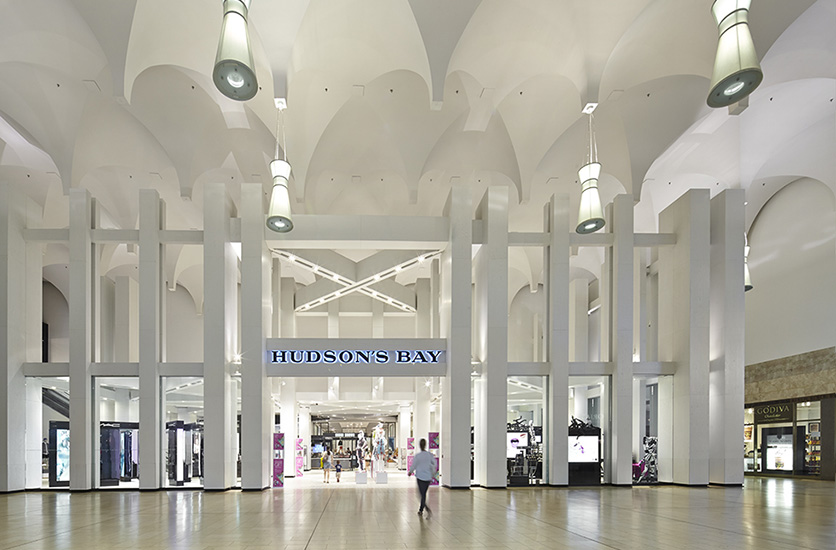
Despite these significant challenges, Hudson’s Bay says it is committed to re-establishing its place in Canada’s retail ecosystem. The company says plans to focus on its core strengths, including its flagship Hudson’s Bay stores.
The Canadian operations of Saks Fifth Avenue and Saks OFF 5TH operate under a licensing agreement — the future of these stores have become uncertain. In Canada, and licensed Saks Fifth Avenue stores include a downtown Toronto flagship and stores at CF Sherway Gardens in Toronto and at CF Chinook Centre in Calgary. Their condition, compared to when they opened between 2016 and 2018, is shocking. Hudson’s Bay also operates 13 licensed Saks OFF 5TH off-price stores in Canada, most of which are underperforming.
As the company navigates this turbulent period, Hudson’s Bay says it remains committed to maintaining its relationships with employees, customers, and partners. Liz Rodbell, the company’s President and CEO, emphasized in a statement that the decision to seek creditor protection under CCAA was made with the best interests of all stakeholders in mind. “While very difficult, this is a necessary step to strengthen our foundation and ensure that we remain a significant part of Canada’s retail landscape,” she said.
Hudson’s Bay’s Financial Struggles: A Closer Look
The retailer’s financial struggles have been a long time coming. Hudson’s Bay was once one of the most prominent and established names in Canadian retail, with a rich history that dates back more than 300 years. However, in recent years, the company has been beset by a series of financial setbacks.
Since being acquired by private-equity investor Richard Baker in 2008, Hudson’s Bay has grappled with high debt levels and rising operational costs. Despite efforts to diversify its business, including a push into e-commerce and international markets, the company has failed to fully capitalize on these ventures. Moreover, Hudson’s Bay’s real estate holdings have been a major factor in its financial strategy, with Baker leveraging the company’s prime retail locations to raise capital. However, this strategy has proven less effective in the face of shifting consumer behaviour and a decline in demand for traditional department stores.
In addition to these financial pressures, the company has faced operational issues, such as the malfunctioning HVAC systems in stores across Canada. In the summer of 2024, multiple Hudson’s Bay locations were temporarily closed due to unsafe conditions caused by HVAC system failures during a heatwave. These incidents highlighted the company’s mounting maintenance issues and deepened concerns over its ability to maintain operations at scale. Sources said problems were mostly related to vendors not being paid.
A New Vision for Hudson’s Bay?
As Hudson’s Bay navigates this restructuring process, the key question is whether the company can reclaim its place in Canada’s retail landscape. Retail experts have pointed out that Hudson’s Bay must adapt to the evolving retail environment, where online shopping, personalization, and omni-channel experiences are becoming more important than ever.

David Ian Gray, a prominent retail expert, noted that Hudson’s Bay’s troubles reflect a broader shift in the retail industry, where traditional department stores are increasingly becoming irrelevant. “The problem is they’ve been doing it so much damage by neglect, particularly over the last year or two, with not even doing basic maintenance. How do you rebuild that?” Gray said, adding that while there is hope for the brand’s revival, the long-term future of Hudson’s Bay remains uncertain.
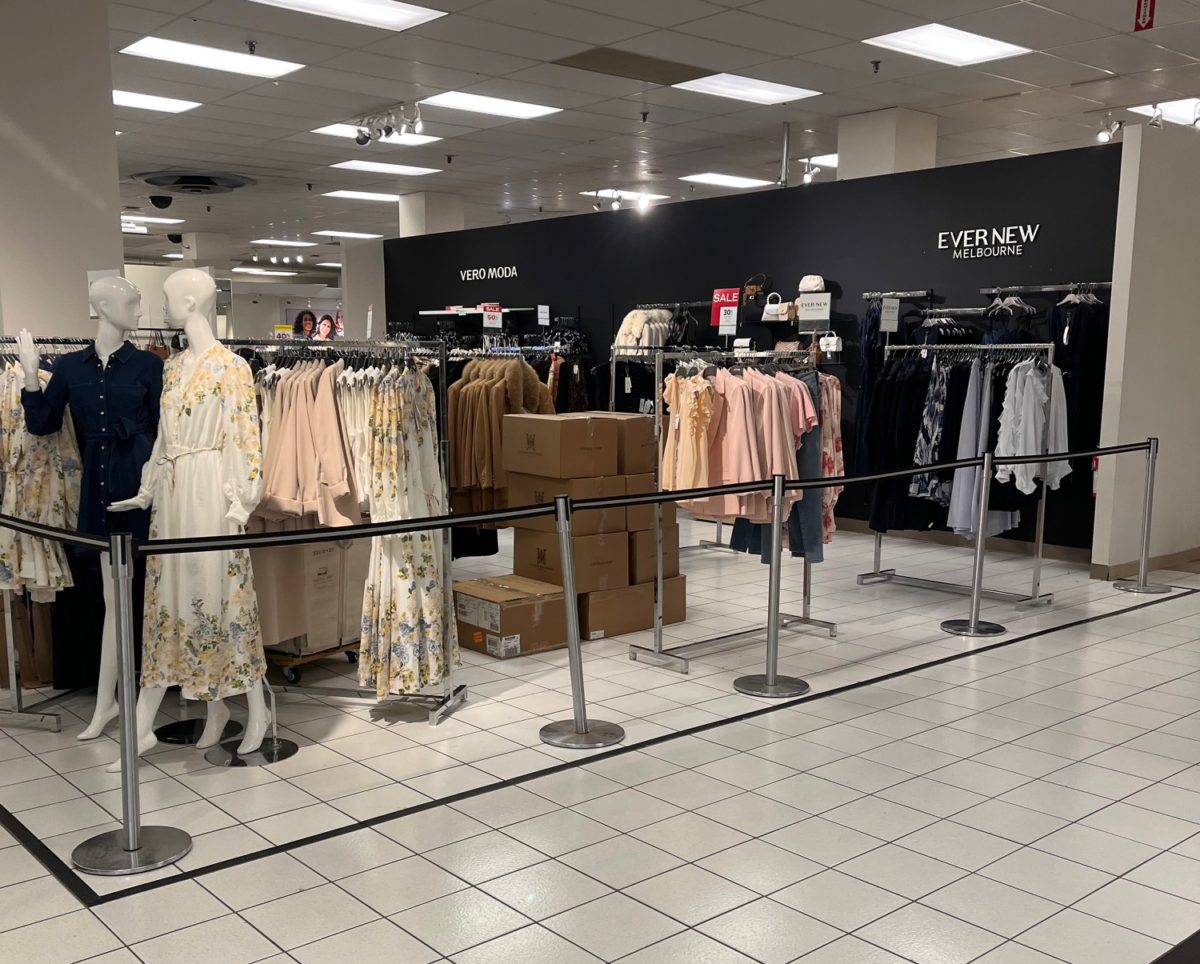
A major challenge for Hudson’s Bay will be rebuilding its relationships with key vendors. According to sources, the company has already alienated many brands due to outstanding debts for merchandise orders. The withdrawal of brands like Australian fashion label Ever New Melbourne, which recently removed all of its merchandise from Hudson’s Bay stores, underscores the retailer’s financial instability. If Hudson’s Bay fails to regain the trust of its suppliers, its inventory levels and store offerings could be severely impacted, making a recovery even more difficult.
Rebuilding Hudson’s Bay: Key Areas for Revitalization
For Hudson’s Bay to survive and thrive in the years to come, it must focus on several key areas, according to Gray:
- Revitalizing the Brand: The Hudson’s Bay brand has long been synonymous with Canadian retail, but its relevance has waned in recent years. To remain competitive, the company must reinvent itself to meet the changing needs and expectations of modern Canadian shoppers. This includes offering a more curated product mix, enhancing its customer experience, and making the brand more digitally savvy.
- Strengthening Vendor Relationships: The recent departure of key vendors signals a breakdown in trust between Hudson’s Bay and its suppliers. To ensure the success of its restructuring efforts, Hudson’s Bay will need to rebuild these relationships and offer more attractive terms to regain access to high-quality merchandise.
- Omni-Channel Retailing: As the retail industry continues to evolve, an effective omni-channel strategy is essential. Hudson’s Bay must ensure that its online and offline experiences are seamless, enabling customers to shop whenever and however they prefer.
- Cost Management and Operational Efficiency: With its financial difficulties, Hudson’s Bay must streamline its operations, cut unnecessary costs, and focus on improving the efficiency of its supply chain and store operations.
- Reinventing Its Real Estate Strategy: The company’s extensive real estate holdings have long been a double-edged sword. While its prime locations have historically been a source of value, they now represent a significant financial burden. Hudson’s Bay may need to reconsider its approach to real estate, potentially selling off or repurposing some of its properties to reduce debt.
Larry Leung’s Perspective on Hudson’s Bay’s Path Forward
Larry Leung, a customer service expert, shared his thoughts on how Hudson’s Bay can regain traction amidst its current challenges. He emphasized the importance of going “back to basics” to address the company’s core issues.

“Hudson’s Bay should get back to basics and improve sales by focusing on a consistent omni-channel experience, engaging customers with a relevant pared-down product mix, rejuvenating its loyalty program with partners, and engaging employees,” said Leung. “This is crucial to re-establishing the brand’s credibility and customer loyalty.”
Leung also noted that the key to reviving Hudson’s Bay’s fortunes lies in improving the in-store experience and aligning the company’s physical presence with the needs of modern Canadian shoppers. His suggestion to streamline the product offering, paired with a reinvigorated loyalty program, underscores a crucial strategy for the retailer to regain its relevance in a competitive market.
Gary Newbury’s Analysis: A Retail Legacy in Decline
Gary Newbury, a retail supply chain specialist, offered a sobering view of Hudson’s Bay’s financial troubles, attributing much of the retailer’s decline to strategic missteps over the years. He pointed to the company’s acquisition of Neiman Marcus in a significant $2.65 billion deal, questioning whether the leadership truly believed in the future of Hudson’s Bay Stores.

“Over the last year or so, HBC acquired Neiman Marcus for a significant outlay of $2.65 billion. One may argue if the leadership thought HBC Stores had a future, they would have invested the money in HBC Stores,” Newbury said. This move, he argues, reflected a larger shift in priorities at Hudson’s Bay, one that further distanced the company from its roots as a quintessential Canadian brand.
Newbury highlighted the amalgamation of Saks Fifth Avenue and Neiman Marcus under a separate leadership team as a pivotal moment. Hudson’s Bay Stores, on the other hand, was left “very much on the outside.” The decision to separate these operations, according to Newbury, was a clear signal of trouble for the Canadian retailer, which has been a fixture in Canada since 1670. “This definitely spelt trouble for this Canadian brand, a brand that has been present in Canada since 1670 and has deep roots in the hearts and minds of Canadians,” he said. For decades, Hudson’s Bay embodied the hardworking, enduring spirit of Canada, and the shift away from this legacy was a turning point that many saw as the beginning of its downfall.
A History of Missteps
The retailer’s troubles were compounded by a series of missteps and poor strategic decisions, Newbury explained. One of the most notable was Hudson’s Bay’s attempt to “buck the trend” by disaggregating its website, The Bay, from its store business, only to abandon the strategy within a year. “They claimed to be ‘bucking the trend’ by having a disaggregated website (TheBay.com) from the store business and said this was genius, only to abandon this a year later,” Newbury remarked. This failure to stick with a cohesive strategy added to the retailer’s struggles and confusion around its digital and physical retail presence.
Another debacle, according to Newbury, was the attempt to revive the Zellers brand. Initially launched in the Burlington Mall as a well-thought-out concept, the Zellers revival ultimately failed due to poor execution. By the time it expanded into Durham Region, it had been reduced to a “home furnishings and apparel landscape of overpriced, fairly perfunctory, and poorly visually merchandised assortments.” This, Newbury suggests, epitomized Hudson’s Bay’s broader retail strategy failures in recent years.
Operational Failures and Lack of Technological Investment
As Hudson’s Bay faced mounting pressures, operational issues also started to surface, further complicating its financial woes. The pandemic only heightened these struggles, with disputes arising between Hudson’s Bay and its landlords over the maintenance of store environments during lockdowns. The company’s failure to maintain its HVAC systems—leading to store closures due to unsafe conditions—was another sign of the operational neglect that plagued the retailer during this period. “There were troubles/disputes during the pandemic with some failed attempts to insist that landlords had not maintained a first-class operating environment during the restriction, and then the failure of HVAC systems reported on the West Coast,” Newbury said.
In addition to these operational challenges, Hudson’s Bay’s lack of investment in modern technology proved to be another critical factor in its demise. Instead of upgrading to newer systems, the retailer chose to patch up its old legacy infrastructure, which hindered its ability to compete effectively in the digital era. “Failure to invest in current technology, choosing to patch up old legacy systems spelled doom for effectiveness,” Newbury stated. This decision left the company behind its competitors in terms of efficiency and innovation.
The Leadership Struggle and the Fall of a Retail Giant
Newbury also pointed to Hudson’s Bay’s ongoing leadership struggles as a contributing factor to its decline. The company cycled through multiple Presidents in a manner reminiscent of Sears Canada’s final years, with each new leader coming and going without making a significant impact. “Presidents were wheeled in and wheeled out, much the way Sears Canada saw in its last 5-10 years,” Newbury remarked.
The constant turnover in leadership sent a clear message to both consumers and suppliers that Hudson’s Bay lacked a clear vision and stable direction. Even as the company tried to shift its strategy, including an ambitious plan to position itself as a premier retail destination, the results were underwhelming. Newbury pointed out that, early in the pandemic, retail futurist Doug Stephens suggested Hudson’s Bay reduce its store count to just 30 locations. A year later, Hudson’s Bay claimed it had developed a new strategy focused on becoming a luxury retail leader. But as Newbury observed, “perhaps this formed an inspired template for the top leadership team—how to bust a brand in five easy steps?”
Looking Ahead: Can Hudson’s Bay Bounce Back?
The road ahead for Hudson’s Bay is fraught with challenges. The company must navigate a complex restructuring process, repair its relationships with suppliers and vendors, and find ways to reinvent itself in an increasingly digital world. The retailer could also close dozens of stores. However, there is a glimmer of hope that with the right leadership, a renewed focus on customer experience, and a revitalized business model, Hudson’s Bay can once again find its place with Canadian shoppers.
As the company moves forward with its restructuring efforts, all eyes will be on the next court hearing, scheduled for March 17, 2025. The outcome of this hearing will determine the future direction of Hudson’s Bay and whether it can remain a viable player in Canada’s competitive retail landscape.











I’m trying to understand how the ownership of a business that was acquired essentially for free, can fail in this manner. Richard Baker’s company NRDC paid $1.1 billion in 2008 for HBC (including the then-Zellers chain). They subsequently sold the Zellers leases to Target Corporation in 2011 for $1.8 billion. So there was no net debt from the acquisition, plus $700M that could have been used to improve ongoing operations at the remaining chain (Hudson’s Bay). So how can an asset that was acquired essentially for no net cost, be run into the ground so badly?
Greed pur and simple, look no further to what happened to Sears here in Canada cause of what happened in the States with Sears and Kmart, strip for parts, make money, and once the parts are gone the vehicle is crushed into a cube
The writing has been on the wall forever, so this hardly comes as a shock. It’s a shame, as Hudson’s Bay at one point could have pivoted to give Canadians an outstanding department store experience akin to Europe or Asia, but instead chose to follow a tired American model. Their decision to file for creditor protection also seemingly should have happened earlier, as any residual pandemic goodwill with landlords and suppliers has likely expired.
Could it survive? Possibly, with half as many stores and stores that are half the size. A jettison of 75% of their total square footage could make what’s left more productive and allow Hudson’s Bay to (finally!) inject some creativity into their stores. Coffee bars and food halls would be a dream, but at this point a functioning escalator would be a welcome change.
I hope Canada’s oldest company survives and maintains its title. Consumers need retail variety and commercial areas need solid anchors. Above all, Hudson’s Bay employees deserve a stable, reliable employer that they can count on. I’d hate to see this generation of adventurers be Hudson’s Bay’s last.
What about blaming private equity with its tendency to buy struggling companies then strip them of all remaining assets so their investors can take all the profit? Simon’s sells many of the same products as the Bay and doesn’t seem to be struggling.
Interesting that it is the first time they mention Saks is being operated as a licensing agreement, which certainly means we’ll see the closure of all Canadian Saks and Off5th locations. I do hope they can recover as a smaller chain but the amount of debt even after reorganization might be too much to handle. Their stores also need significant investment to refresh them, they’ve been deferring basic maintenance for way too long making it a dreadful shopping experience.
There have been questions about how long Saks would remain in Canada after Nordstrom departed. Saks’ establishment here seemed to be more of a defensive move against a competitive threat which is now gone for good.
As an aside, the conventional wisdom was that Target Corporation and Nordstrom Inc. were brilliant retailers which would make a mint if they ever moved into Canada. Instead, both companies got their tails handed to them and never made a dime in this country.
It really is the first time we are hearing that Saks is a licensing agreement with Hudson’s Bay. Have a feeling Richard Baker new Saks was failing in Canada so he lumped in Saks with Hudson’s Bay. Wonder how much of the vendor debt you see on the HB balance sheet is merchandise that went to Saks stores? They own Chanel 15 million dollars. Seems like a awful lot just to stock Hudson’s Bay stores when most HB stores don’t carry that brand.