The dismantling of Hudson’s Bay’s once-sprawling Canadian retail empire continued this week as the Ontario Superior Court of Justice approved a motion brought forward by RioCan Real Estate Investment Trust to place its joint venture with the Hudson’s Bay Company into court-supervised receivership.
The ruling, handed down Tuesday by Justice Osborne of the Commercial List, marks another milestone in the long-running saga surrounding the collapse of one of Canada’s most historic retailers.
The joint venture, first established in 2015, involves 12 high-profile retail properties spanning some of the most valuable urban and suburban locations in Canada. The portfolio includes former Hudson’s Bay flagship stores in downtown Montreal, Vancouver, Calgary, and Ottawa, alongside major suburban shopping centres such as Yorkdale Shopping Centre and Scarborough Town Centre in Toronto.
RioCan holds a 22 percent interest in ten of the joint venture properties and a 61 percent controlling interest in two others: Oakville Place and Georgian Mall. Hudson’s Bay, through its wholly owned subsidiary, owns approximately 78 percent of the broader venture.
FTI Consulting Appointed as Receiver
With court approval now secured, FTI Consulting Canada Inc. has been appointed as receiver to take operational control of the joint venture portfolio. The receiver will be responsible for stabilizing the properties, addressing the outstanding debt obligations, and exploring possible strategies to maximize asset value for creditors and stakeholders.
“This appointment was necessary to bring structure to a highly complicated situation involving numerous properties, mortgages, and market conditions,” said retail expert Carl Boutet in an interview. “They needed someone independent who could begin the process of determining what happens to each asset on a case-by-case basis.”

Financial Pressures Led to Receivership
Hudson’s Bay, which filed for creditor protection under the Companies’ Creditors Arrangement Act (CCAA) in March 2025, had ceased making rent payments on the joint venture properties as part of its restructuring. That decision severely impacted the financial standing of the joint venture.
RioCan previously disclosed a $209 million loss on its investment in the partnership, and with no bids emerging for the JV assets during a court-approved Sales and Investment Solicitation Process (SISP), receivership became the most viable option to protect creditor interests.
“In reality, these properties are extremely complicated to value,” Boutet explained. “In many cases, the debt secured against these buildings may actually exceed their current market value—especially given the condition of some of these older flagship properties.”
Substantial Mortgages on Each Property
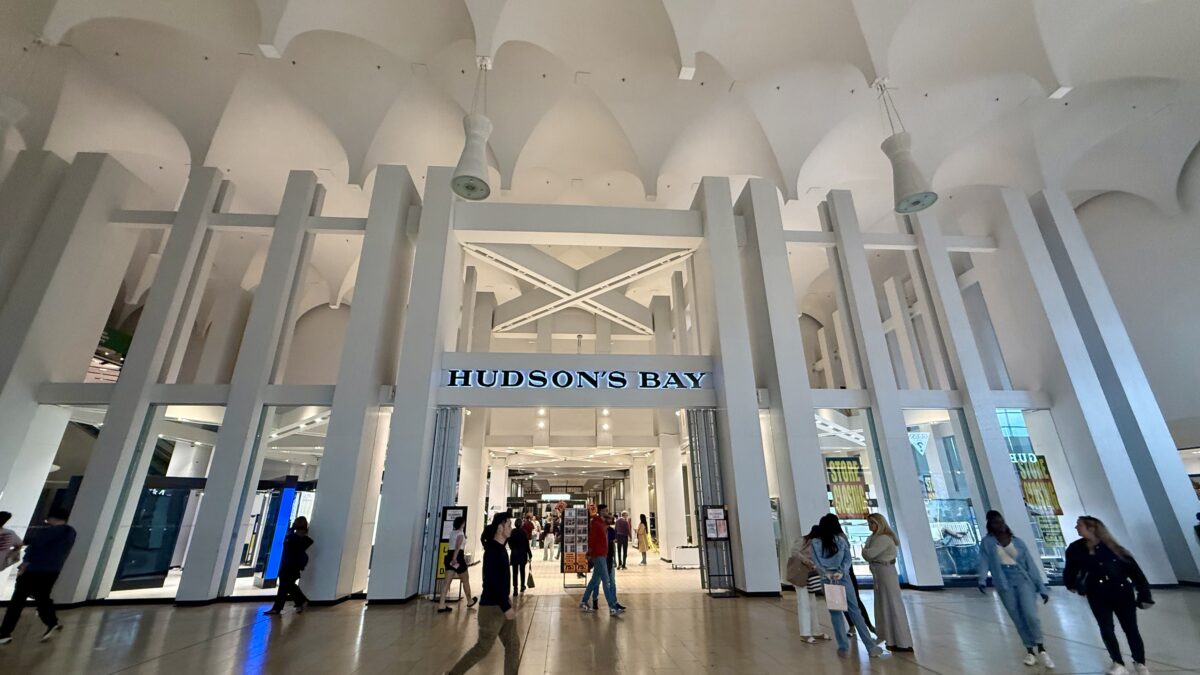
The mortgage debt attached to the joint venture assets illustrates the challenge. According to documents reviewed in court, the downtown Montreal property carries $161 million in mortgage debt, Vancouver’s flagship is encumbered by $202 million, downtown Calgary sits at $105 million, and Ottawa’s property includes first and second mortgages totalling $73 million. Even suburban properties like Yorkdale carry significant debt loads, with $75 million secured against that location.
“These are eye-watering numbers,” Boutet noted. “The sheer scale of the debt on these properties really limits what can be done with them immediately.”
Prospects for the Properties Vary Widely
The receivership opens a range of future possibilities for the 12 properties involved. Some may be redeveloped, others may be leased to new tenants, and several could be sold outright depending on market conditions, municipal approvals, and the willingness of developers to invest.
“There really are two distinct categories of assets here,” said Boutet. “The suburban shopping centre anchor locations like Yorkdale and Laval may have more straightforward paths toward redevelopment or repositioning, likely for mixed-use residential or retail projects. But the historic downtown flagships are a completely different story.”
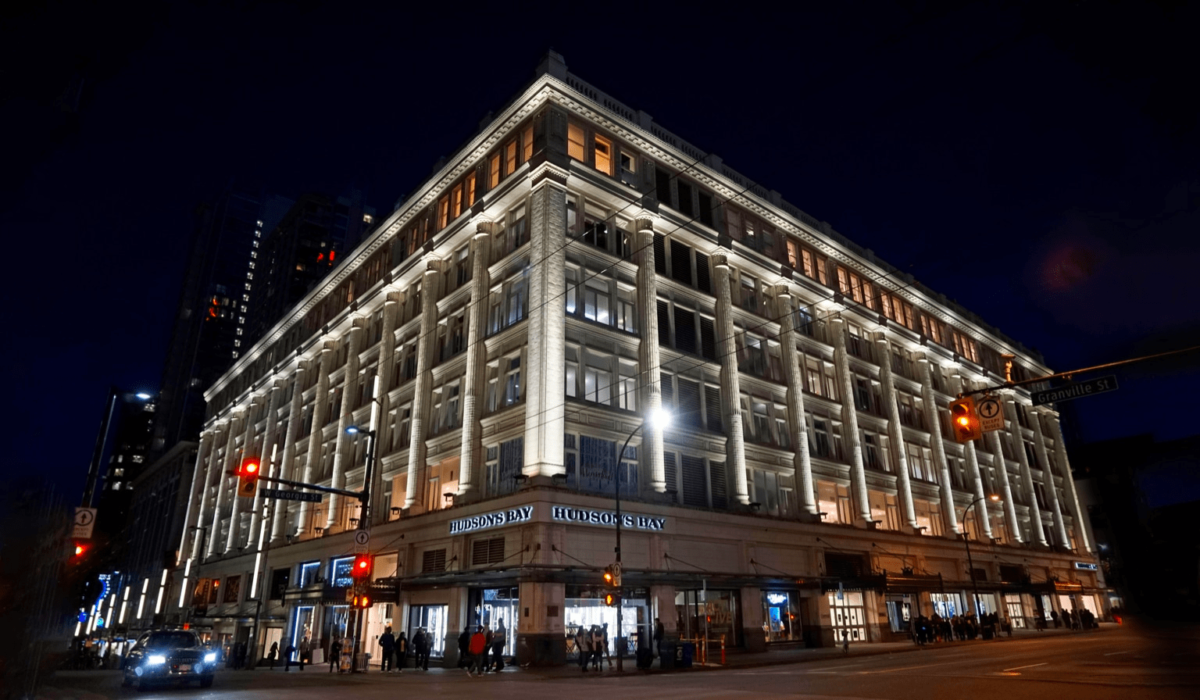
Boutet points to substantial challenges facing many of the downtown locations. The buildings, often dating back more than a century, face significant costs related to seismic upgrades, historic preservation requirements, and substantial structural refurbishments.
“These aren’t buildings you can simply hand over to the next retailer,” he said. “The level of work needed to bring them up to modern standards is staggering—and very expensive.”
Historic Flagship Buildings Present Complex Challenges
Boutet described the flagship Hudson’s Bay building on Sainte-Catherine Street in Montreal as emblematic of the challenge.
“This building essentially created St. Catherine Street back in the Morgan’s days of the 1890s. Structurally, it’s sound, and it could even accommodate additional floors if someone wanted to develop upward. But the costs involved in restoring and modernizing these spaces are enormous,” he said.
The Montreal store has attracted conceptual redevelopment proposals, some of which involve adding rooftop gardens, museums, residential units, and public spaces. However, none have advanced past the early planning stages or obtained municipal approvals.
“These are buildings where the land alone may actually be worth more than the structures sitting on them,” Boutet explained. “The structures, while iconic, have become financial liabilities.”
Social Pressures May Accelerate Redevelopment Needs
The risk of these buildings sitting vacant for extended periods also raises concerns beyond the financial. Homeless encampments have already appeared near some of the vacant locations. Boutet referenced the situation near the Montreal property, which he described as increasingly precarious.
“Without some type of interim activation—like pop-ups or public programming—these empty downtown stores could become social flashpoints. We saw this with the old Woodward’s building in Vancouver before its redevelopment, where homelessness became a major issue,” he said.
Boutet anticipates that municipalities will put pressure on future owners or developers to keep ground floors activated while longer-term redevelopment plans unfold.

Potential Public-Private Redevelopment Partnerships
Because of the complexity and cost, Boutet expects that redeveloping the downtown flagships will require intricate public-private partnerships involving multiple levels of government, private developers, heritage groups, and philanthropic organizations.
“It’s going to take federal, provincial, and municipal cooperation alongside private capital to make any of these major redevelopments viable,” he said. “These buildings sit on incredibly valuable real estate. But unlocking that value requires careful and costly planning.”
Boutet even cited examples where local museums, such as Montreal’s McCord Museum, could play a role in future redevelopment scenarios by anchoring portions of the repurposed sites.
Historic Downtown Assets Remain Attractive Long-Term
Despite the enormous obstacles, Boutet believes the underlying real estate remains highly desirable.
“The downtown cores of Canadian cities aren’t going to shrink. Urbanization trends still favour density and centrality. Whoever can solve the puzzle of repurposing these buildings will be rewarded with irreplaceable real estate holdings,” he said.
In some cases, solutions may involve new forms of student housing, urban logistics hubs, or carefully designed mixed-use towers incorporating retail, office, and residential components.
“These are once-in-a-generation redevelopment opportunities. But they’re not quick fixes. This will be years in the making,” Boutet emphasized.
Ruby Liu’s Bid Does Not Include Downtown Locations
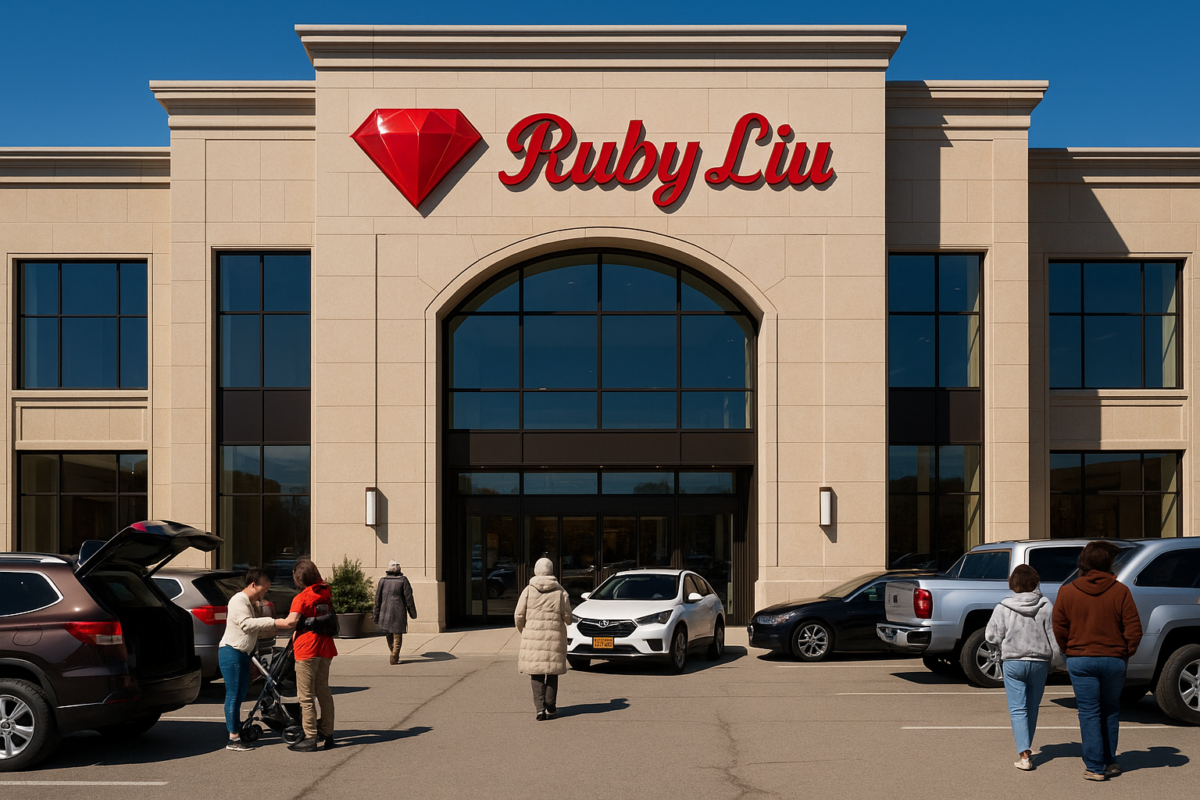
The RioCan receivership proceeding is legally and financially separate from the parallel process involving Weihong (Ruby) Liu’s ongoing bid to acquire 28 former Hudson’s Bay store leases for her planned department store revival. Her bid notably excludes the downtown flagship stores now controlled by the RioCan joint venture and the receiver.
“At this stage, Ruby Liu appears to be focusing on more operationally manageable locations as she launches her new concept,” Boutet said. “The complexity and cost of taking on the historic downtown properties may simply be too much for any one operator—especially a newcomer.”
Receivership Represents Final Chapter in Bay’s Real Estate Exit
The approval of RioCan’s receivership motion represents one of the final major steps in Hudson’s Bay’s unraveling as a traditional department store chain. The company completed liquidation sales and closed its remaining stores on June 1, 2025, ending more than 350 years of continuous retail operations.
For Hudson’s Bay, the receivership effectively severs the company’s remaining ties to its most valuable real estate holdings. What happens next will likely unfold over several years as the receiver markets the properties and stakeholders work to craft redevelopment solutions.
“It’s the end of the line for Hudson’s Bay as Canadians knew it for generations,” said Boutet. “But at the same time, it’s the beginning of a very complicated and fascinating new chapter in Canadian retail and urban real estate.”