Canadian fashion retailer Oak + Fort has entered court-supervised restructuring proceedings as mounting financial challenges, aggressive expansion, and U.S. tariffs placed unsustainable strain on the Vancouver-based business.
The company, officially operating as Oak and Fort Corp., was granted creditor protection on Friday under the federal Companies’ Creditors Arrangement Act (CCAA). Parallel proceedings under Chapter 15 of the U.S. Bankruptcy Code are also being pursued. The move allows the business temporary relief as it develops a plan to stabilize operations, manage debts, and seek financing.
Oak + Fort emphasized that its stores and e-commerce business will remain open during the restructuring process.
In filings with the Supreme Court of British Columbia, the company disclosed that it owes more than $25 million to creditors. These debts include $3.19 million in secured obligations owed to the Business Development Bank of Canada, Royal Bank of Canada, and Shopify Inc., along with more than $7 million owed to landlords across both Canada and the United States.
Expansion Strategy Strains Finances
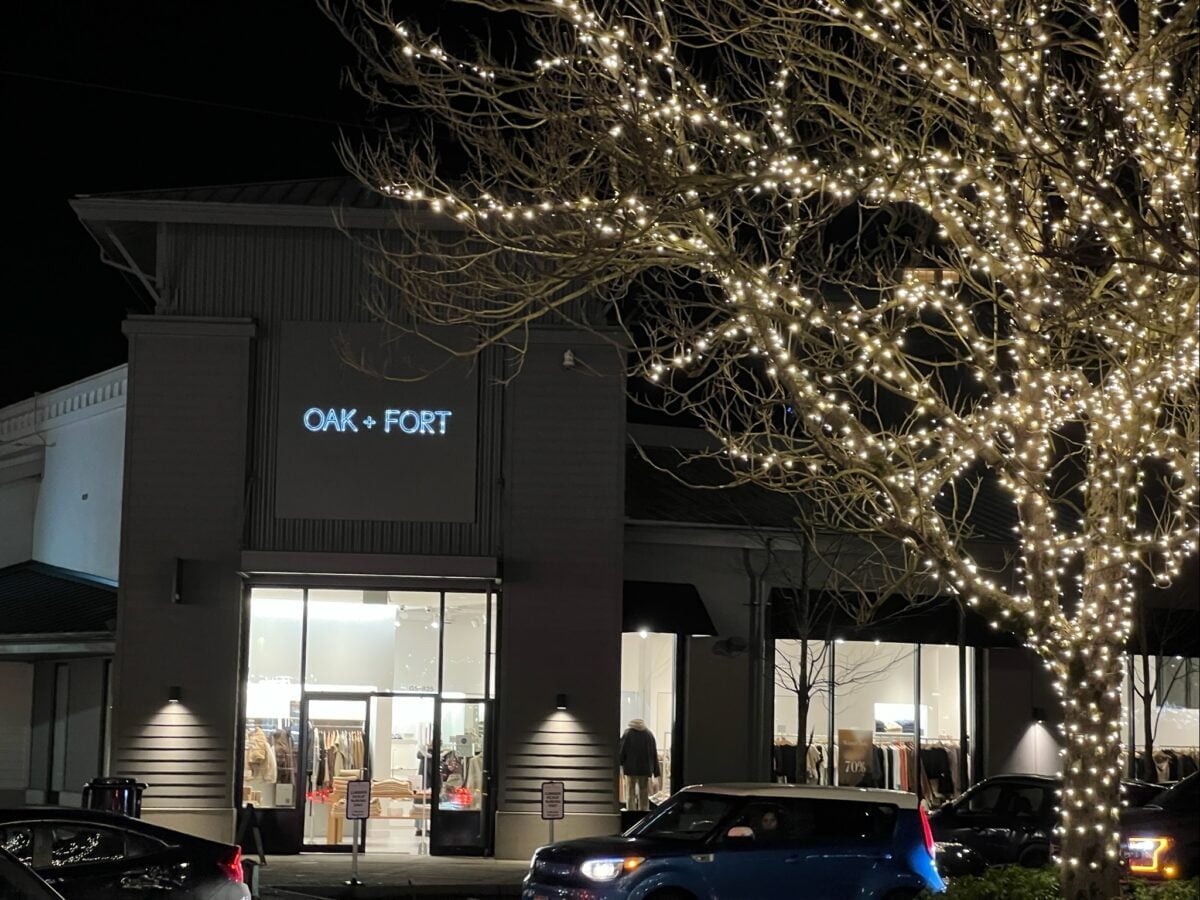
Founded in 2010 in Vancouver’s historic Gastown district, Oak + Fort initially grew at a cautious pace. But following the pandemic’s retail disruptions, the company moved aggressively to capitalize on vacant storefronts, opening 26 new stores across Canada and the United States over the past four years.
The expansion pushed Oak + Fort’s total footprint to 42 stores, but revenues failed to meet expectations. In an affidavit filed with the court, CEO Min Gyoung Kang outlined how the swift expansion ultimately left the company under-invested in its e-commerce platforms while fixed costs from physical retail mounted.
While store openings did generate additional revenue, the gains were not sufficient to offset rising costs and lower-than-forecasted sales growth. According to financial statements, Oak + Fort recorded a net loss of $1.1 million for the fiscal year ended March 26, 2023. Losses deepened the following year to $10.6 million for the period ending March 24, 2024. The company generated $93.8 million in revenue during its most recent fiscal year, while posting another net loss of $5.1 million.
U.S. Tariffs Compound Retail Challenges
In addition to the financial strain from expansion, Oak + Fort has been hit hard by U.S. tariffs on Chinese imports. Approximately 68 per cent of the company’s apparel is sourced from China, making it particularly vulnerable to ongoing trade tensions.
“The recent change in the U.S. trade landscape with tariffs have directly caused an increase in supply chain and import costs,” said Kang in her affidavit. These rising costs placed further pressure on margins for Oak + Fort’s U.S. stores.
The uncertainty surrounding U.S. trade policy has also impacted Oak + Fort’s access to financing. Kang’s affidavit stated that financial institutions have become more risk-averse, introducing stricter loan conditions and, in some cases, declining financing altogether. With limited options to refinance or access new capital, the company’s financial position deteriorated further.
Missed Rent Payments Trigger Court Action
The situation became increasingly urgent in late May, when Oak + Fort missed scheduled rent payments. Some landlords in the U.S. threatened lockouts and inventory seizures, prompting the company to seek immediate creditor protection. Without legal protection, the company faced the risk of losing access to inventory and key store locations.
Kang acknowledged that Oak + Fort has been negotiating with vendors and landlords to defer payments and reduce obligations but has not secured sufficient relief to avoid court filings.
The company employs 601 staff, with 434 located in Canada. Despite the financial difficulties, Oak + Fort plans to maintain store operations and online sales during the restructuring period.
Advisors and Monitor Appointed to Oversee Restructuring
Oak + Fort has retained Reflect Advisors LLC to oversee the restructuring. Reflect Advisors is known for its involvement in recent high-profile Canadian retail restructurings, including the Hudson’s Bay Company proceedings this year. KSV Restructuring Inc. has been appointed as the court monitor under the CCAA proceedings.
In her affidavit, Kang expressed optimism that Oak + Fort can emerge from its financial crisis through a targeted restructuring plan focused on a smaller, more profitable store network and improved e-commerce operations.
“The financial difficulties currently facing the business have arisen only in the past year and, in Senior Management’s view, can be overcome with additional time to realign operations to focus on select profitable retail locations and e-commerce, and secure long-term funding to support the realigned business,” she stated.
From Humble Beginnings to North American Footprint
Oak + Fort was founded in 2010 by Arjuna Thiagarajah and Min Kang. The company opened its first boutique in Vancouver’s Gastown neighbourhood, gradually building a loyal following with its minimalist, modern aesthetic. Initially launched as an e-commerce venture, the brand expanded cautiously at first, adding brick-and-mortar locations in Canada before pushing into the United States.
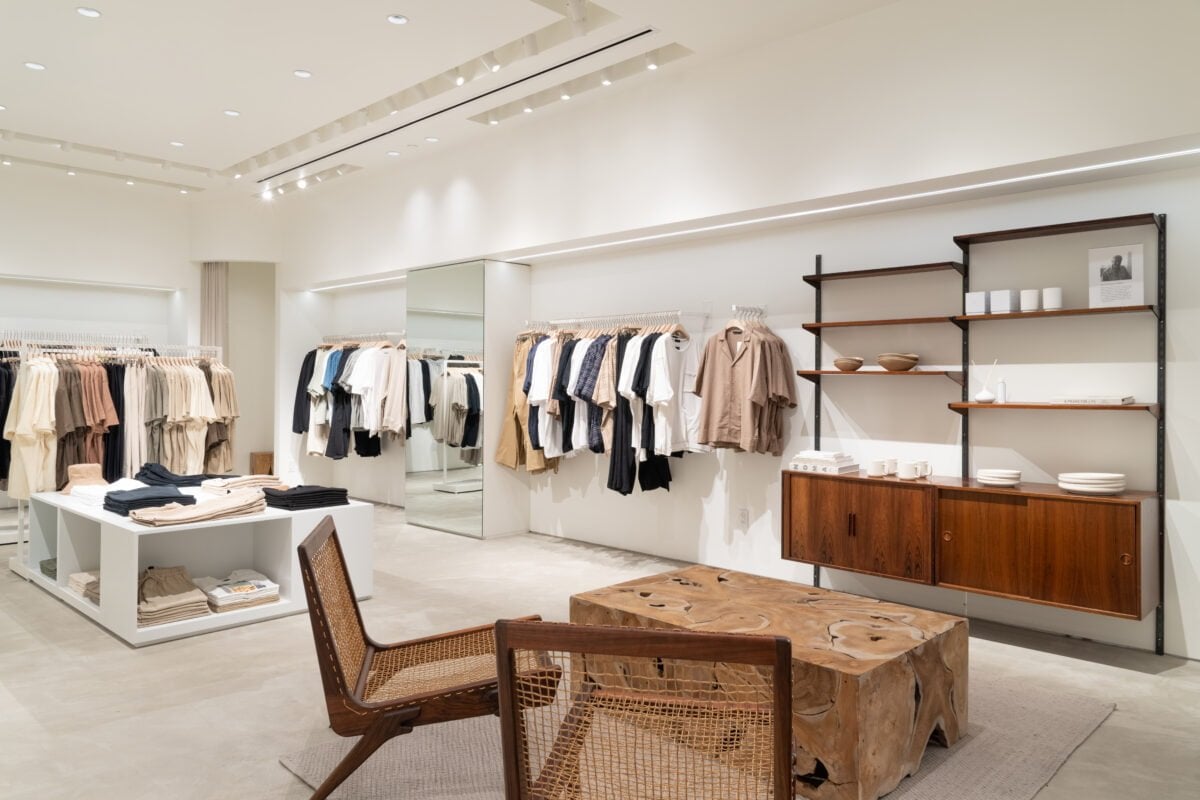
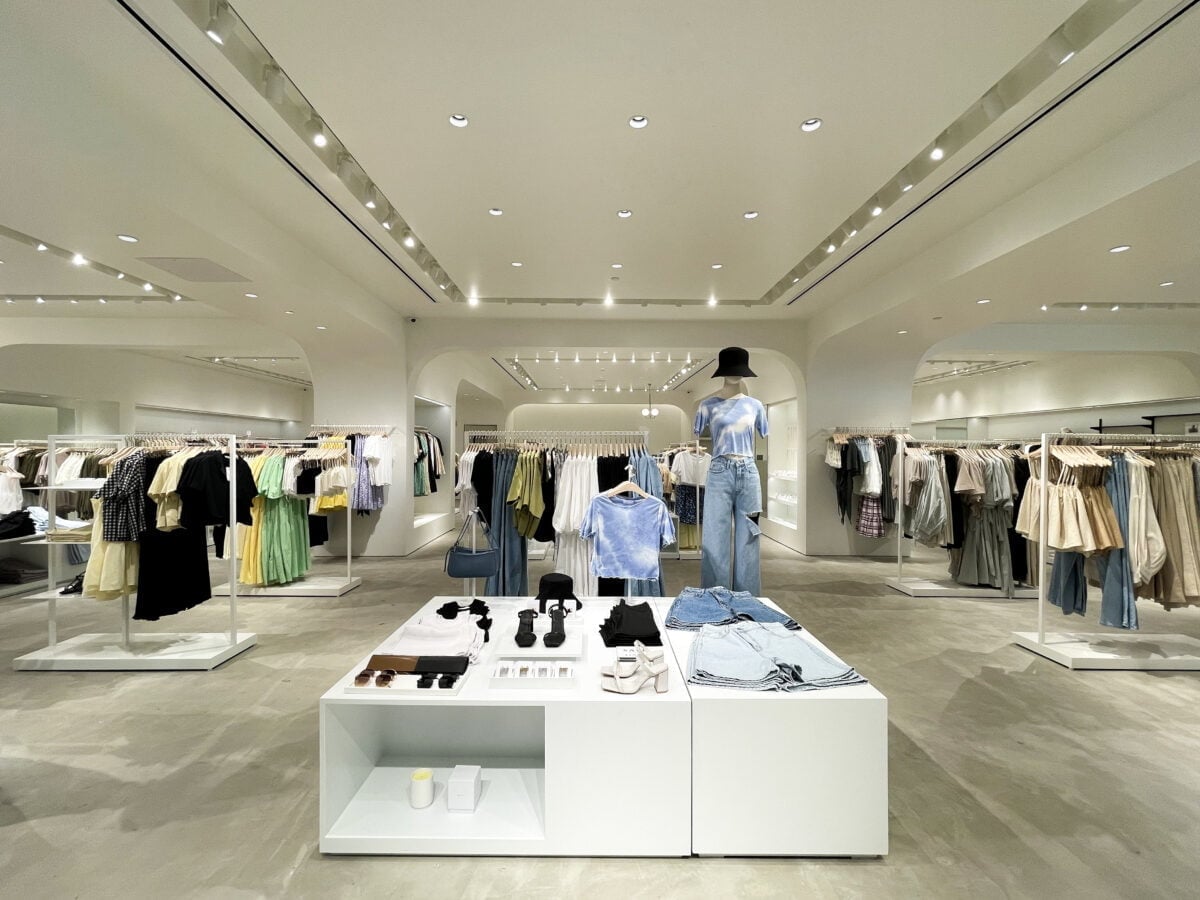
The brand today offers a full range of womenswear, menswear, accessories, jewelry, home goods, and beauty products, all designed to reflect a minimalist, contemporary lifestyle. Its core philosophy emphasizes simplicity, versatility, and affordability while maintaining an elevated design sensibility.
Oak + Fort’s collections are characterized by neutral tones, clean lines, and understated design. Its seasonal collections often experiment with textures, silhouettes, and materials to maintain variety while staying true to its aesthetic roots.
The company sources products globally, partnering with manufacturers in China, South Korea, Vietnam, and India. Its heavy reliance on Chinese production has made it vulnerable to shifting trade policies, particularly in the U.S. market.
Sustainability and Community Engagement
In recent years, Oak + Fort has attempted to strengthen its sustainability credentials. The company is a member of the Sustainable Apparel Coalition and has introduced its OAK Refined sub-label, which emphasizes the use of recycled and organic materials. The sub-label is produced in collaboration with Hallotex, furthering the company’s efforts to appeal to environmentally conscious consumers.
The retailer has also engaged in several community and social initiatives, including confidence-building workshops for young women and contributions to local recovery funds. In 2022, Oak + Fort expanded its flagship Gastown store to 5,000 square feet, incorporating local Vancouver artwork and opening a small Gastown Museum exhibit celebrating the brand’s local roots.
Retailer Faces Industry-Wide Headwinds
Oak + Fort’s financial challenges reflect broader pressures facing many fashion retailers operating in both Canada and the United States. Inflation, elevated borrowing costs, weakened consumer confidence, and shifting shopping patterns have forced many mid-sized retailers to revisit their business models.
Like several peers, Oak + Fort faces the complex task of balancing its physical retail presence with investments in digital platforms while navigating unpredictable trade policies that have reshaped supply chain economics.
Retailers sourcing heavily from China remain exposed to ongoing trade disputes and rising costs, while the broader apparel sector continues to experience intense competition from both domestic and international players.
The Path Forward
For now, Oak + Fort remains open for business while its restructuring plays out under court supervision. The company’s leadership believes that a scaled-down store network, combined with a renewed focus on e-commerce and stronger financial backing, can allow the brand to stabilize and eventually return to growth.
The coming months will prove critical as Oak + Fort negotiates with creditors, seeks new financing, and adjusts its operations to match current market realities. The outcome will also serve as a closely watched test case for other mid-sized Canadian retailers facing similar pressures amid a turbulent retail landscape.