In the ever-evolving world of retail, one agency, Gradient, is proving that immersive, experience-led design isn’t just a branding exercise—it’s a revenue engine.
Pauline Oudin, CEO of New York-based creative agency Gradient, recently discussed a bold pilot project with heritage skincare brand Kiehl’s, aimed at testing the power of experiential retail. And the data? “This activation gave us hard proof that immersive design pays off,” said Oudin.

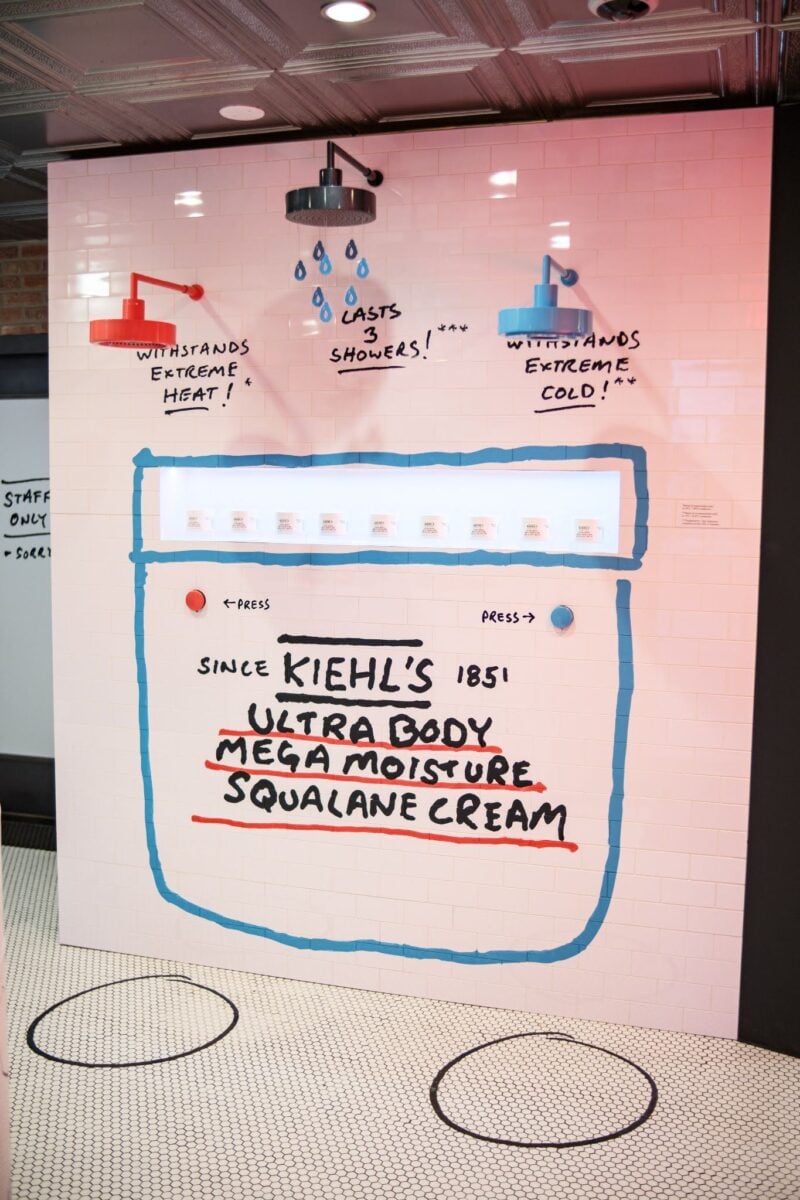
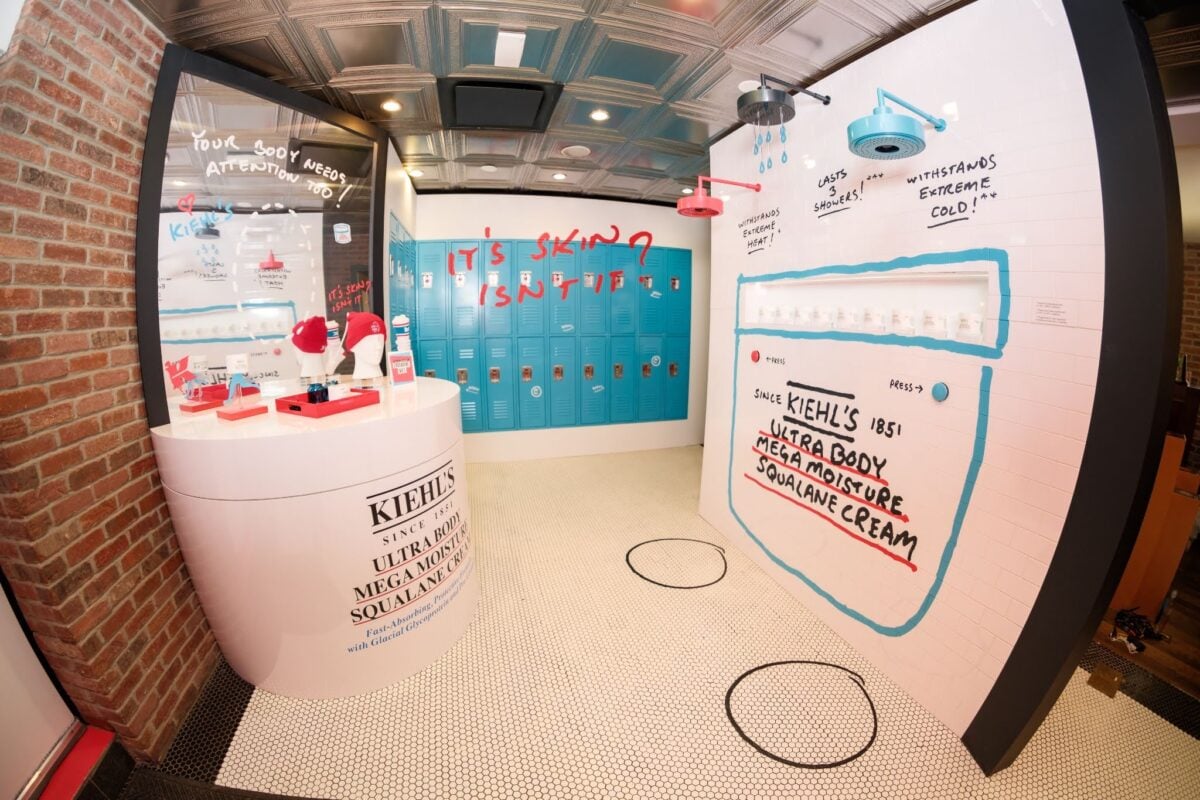
Gradient partnered with Kiehl’s to reimagine one of the brand’s retail locations in New York’s Hell’s Kitchen. The goal: turn half of the store into a fully immersive brand experience while keeping the other half in its traditional retail format. “This particular store was performing like all the others,” Oudin explained. “But it had an underutilized, even unused section. They asked for help to transform that space into an experience—something more lasting than a typical pop-up—and to promote their winter product line.”
A Two-Sided Store Becomes a Live A/B Test
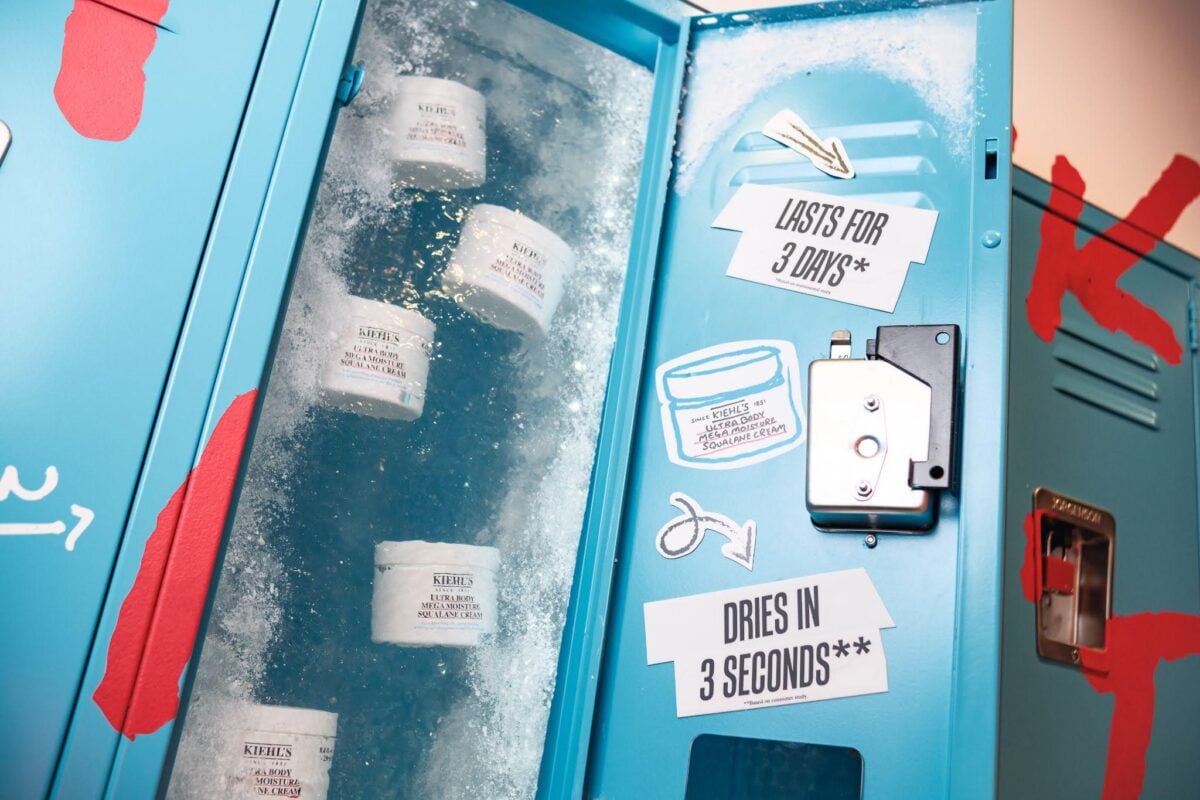
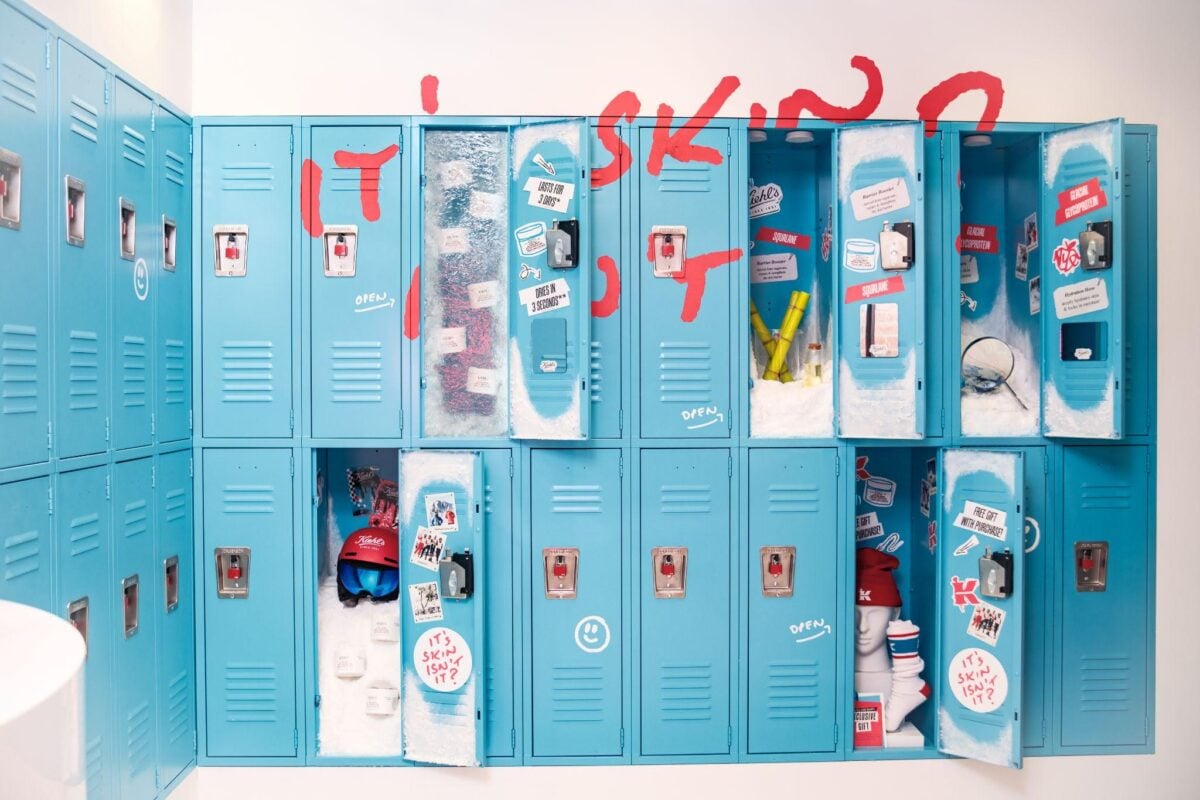
Gradient’s design effectively created two stores in one. On one side: classic Kiehl’s retail—shelves, products, testing counters, and knowledgeable staff. On the other side: a fully experiential concept, complete with transformed locker room aesthetics, surprise-filled interactive lockers, and shower installations covered in educational brand messaging.
“It became a very Instagrammable space—just like you’d see with pop-ups—but this stayed in place for three months, from late December to the third week of March,” said Oudin.
The Results Speak Volumes
Gradient, which prides itself on data-driven creativity, leveraged tracking tools to gather insights into shopper behaviour across both sides of the store. Using technology from LiveGauge, which tracks unique mobile device signals without extracting personal data, the team was able to measure dwell time and store engagement.
Among the standout metrics:
- Shoppers who entered through the immersive side were 2.6x more likely to check out
- Average dwell time clocked in at 13.4 minutes—55% higher than the beauty retail norm
- Store transactions outperformed Kiehl’s national average by +8 points
- Customers not only stayed longer—they bought more
“Our research confirms what retail’s sharpest minds have long felt,” said Oudin. “Engagement isn’t just nice to have, it’s a revenue driver. Today’s shopper wants more than transactions, they want to feel something. When they spend more time in a space, they absorb more. And when that experience resonates, conversion follows naturally.”
From Square Footage to Time Spent
Oudin pointed to an example from Coach stores in Asia, where retail success was no longer measured in sales per square foot, but in dwell time per customer—a metric that’s becoming increasingly relevant in the post-eCommerce era.
“If you think about it, consumers can buy almost everything online now—except maybe ultra-luxury,” she said. “So what is retail for? It’s for creating strong, memorable, emotional connections between the consumer and the brand.”
That kind of connection, she argued, demands longer, deeper interactions. “Retailers need to at least test this kind of experiential approach. Create spaces where people can truly fall in love with the brand.”
A Strategic Shift Toward Measurable Experience
Gradient itself has undergone a transformation. Once a traditional event production company, it now operates as a strategic experiential agency with a laser focus on metrics and brand impact. “When I joined seven years ago, my mission was to go from being a cost for brands to a strategic solution,” said Oudin, who previously led the U.S. office of French agency Sopexa and had hired Gradient as a client before taking the reins as CEO.
Her vision? Build experiences that generate not just buzz but data. “We’ve built internal tools that provide clients with specific metrics: how many people attended, how long they stayed, how many walked by… We’ve always wanted to integrate that into retail.”
The Kiehl’s project, she said, was a rare chance to do just that. “We’d already been working with Kiehl’s for over a year on experiences, so when they brought us the concept store idea, we jumped at the chance.”
While Oudin typically stays out of day-to-day project work, she was hands-on with this initiative. “Normally, as CEO, I’m not deeply involved unless we’re talking strategy or analytics. When data is central—that’s when I step in.”
The Takeaway for Retailers? Experience = Revenue
This activation, Oudin emphasized, isn’t just a case study in creative storytelling—it’s a proof point. “Every Sydney Sweeney post is worth a lot of money,” she noted, referencing Gradient’s recent work with the actress at a beauty brand event. “So if instead of two posts you managed to get her to post four or five times, you’ve bought yourself a lot of media value.”
The same principle holds true in-store. “If you can get people to stay, to explore, to post and to buy—then you’ve created a retail space that’s more than a store. It’s a platform for advocacy.”
Related Retail Insider stories:
- Loshen & Crem Opens Integrative Skincare Boutique in Edmonton
- Canadian skincare brand Three Ships sees soaring demand amid tariffs, embraces ‘Made in Canada’ movement