Peavey Mart, once one of Canada’s most recognizable farm and ranch retailers, is preparing to relaunch in Western Canada this fall after shuttering all 90 of its locations earlier in 2025. Backed by a new group of investors under the name 2707162 Alberta Ltd., the revived retailer will open four Alberta stores in Spruce Grove, Westlock, Camrose, and Lacombe in late 2025, with plans to expand into other prairie markets as capital and operational momentum grow.
The relaunch marks a dramatic turnaround for a brand with deep prairie roots that abruptly disappeared earlier this year. Once celebrated for serving farmers, ranchers, acreage owners, and homesteaders, Peavey Mart’s nationwide closure left a gap in rural communities that had relied on it for decades.
“We know that the closure of Peavey Mart stores left a gap for many customers,” said Doug Anderson, who is part of the leadership team behind the relaunch. “Our investors and ownership group recognizes the importance of Peavey Mart in the Canadian retail landscape, and we’re grateful for the opportunity to relaunch the brand in these communities.”
A Leaner, More Focused Strategy
Unlike its previous iteration, which pursued a national presence with 90 locations, the new Peavey Mart will focus on a smaller, regional footprint. The ownership group has outlined plans to open between seven and twelve stores in Alberta and Saskatchewan, rebuilding the business with more financial discipline and an emphasis on profitability.
Kurt Schultz, Lead Merchant and a member of the new operations team, noted that the relaunch will centre on Peavey Mart’s traditional core customers. “We’re bringing back the Peavey Mart that people know and love,” he said. “A Peavey Mart focused on the needs of the farmer, rancher, acreage owner, homeowner and homesteader, with a strong emphasis on providing value for dollars spent in our stores.”
That model will be supported by a new 40,000-square-foot distribution facility in Red Deer County, designed to handle supply chain needs and ensure consistency in operations. Recruitment has already begun for warehouse staff and store-level employees, with information posted on the company’s careers website.
When doors reopen, customers will find many of the brands they once associated with Peavey Mart returning to shelves. Labels such as Harvest Goodness, Rolling Acres, Scotts, Dickies, Pit Boss, and Shell are expected to feature prominently. At the same time, the new ownership group has pledged to emphasize high-quality, unique, and locally sourced items that reflect the entrepreneurial character of Western Canada.
Lessons from Collapse and Path to Recovery
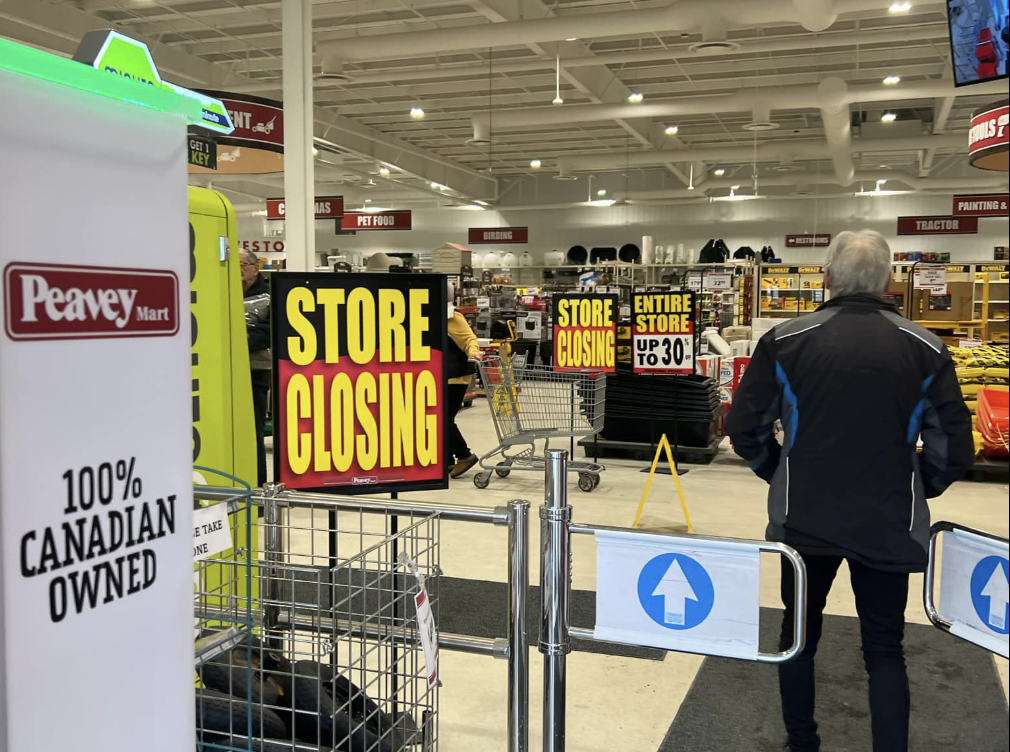
Peavey Mart’s sudden downfall in early 2025 sent shockwaves through the Canadian retail industry. Parent company Peavey Industries LP sought creditor protection under the Companies’ Creditors Arrangement Act (CCAA) after struggling with soaring inflation, supply chain challenges, and weakening consumer confidence. At its peak, the chain had nearly 100 outlets across Canada, including 90 Peavey Mart stores and six MainStreet Hardware locations.
Store closing sales began in February 2025, leaving thousands of employees and loyal customers in limbo. For rural communities in particular, the disappearance of the retailer created immediate challenges, as alternatives for agricultural and homesteading supplies were limited.
By April 2025, investors moved to secure the rights to the Peavey Mart name and intellectual property with the intention of preserving the brand in a more sustainable format. The approach, targeting a smaller set of profitable prairie markets rather than a national footprint, reflects an effort to avoid repeating past missteps.
Building an Agile Business Model
A recurring theme in the relaunch is agility. The ownership group has emphasized the importance of creating a culture that allows for quick pivots and close collaboration between store teams, distribution staff, and office leadership.
“Creating an agile business model is critical to our success,” Schultz explained. “This will ensure we can pivot quickly to meet customer expectations and build a profitable operation that lasts.”
Anderson echoed the sentiment, noting that the company’s mandate is to ensure a collaborative approach that adapts to customer needs while maintaining financial discipline. By scaling growth carefully and avoiding heavy debt loads, the ownership group hopes to create a leaner and more resilient version of Peavey Mart.
While the first four stores will open in Alberta, expansion into Saskatchewan is already under consideration. As a second group of investors joins the ownership structure, more locations in historically strong markets are expected to follow.
The relaunch strategy suggests a slow and deliberate growth trajectory, with each new store evaluated for long-term sustainability. Unlike the aggressive expansion of the past, the new Peavey Mart will prioritize community demand and operational stability over sheer scale.
A Legacy of Prairie Retailing
Peavey Mart’s legacy stretches back to 1967, when it began serving prairie customers with hardware, tools, and agricultural supplies. Its identity has long been tied to grit, resilience, and the rural way of life in Western Canada. That cultural connection, combined with decades of customer loyalty, makes the relaunch an emotionally charged one for both communities and employees.
The company’s emphasis on returning to its roots reflects an awareness that Peavey Mart’s value proposition lies in serving everyday needs of rural Canadians rather than competing directly with larger national chains.