

When the Ontario Superior Court closed the door on Ruby (Weihong) Liu’s attempt to take over 25 former Hudson’s Bay leases on October 24, it did more than halt a headline-grabbing bid. It revealed the gap between a compelling vision for anchor-box renewal and the disciplined proof landlords and lenders expect in 2025. The former Hudson’s Bay estate, already under creditor protection and weighed down by about $1.1 billion in secured obligations, became the stage where those expectations played out in public filings and a rapid series of hearings.
The outcome is now clear. Three British Columbia leases at properties Liu already owns were approved earlier in the process. The remaining 25 were rejected after landlords argued the plan lacked tested operations, sufficient capital clarity, and a viable near-term execution path. For Canadian retail, the case offers a look at how anchor real estate will be placed, priced, and policed in the next cycle.
Inside the room: a candid meeting and an early warning
In late May, retail strategist Carl Boutet met with Ruby Liu and two members of her team at a café near Toronto’s Financial District to hear the concept firsthand. The meeting was arranged following a request from Central Walk representatives to discuss Liu’s retail vision, and this author also attended, bringing Boutet along for his expertise in evaluating large-format retail concepts.
“It was all experimental,” Boutet recalled. “I think that was the least of the challenges. It didn’t convey the credibility that helps a project come across as really professional. It signalled a lack of polish, which is not unheard of when entrepreneurs build the plane as they fly it.”

He noted that the plan itself wasn’t inherently flawed. In fact, many of the ideas, including public gathering areas, children’s play zones, cafés, and small cultural spaces, aligned with how forward-looking retail environments are evolving globally. “What she wanted to do made sense conceptually,” he said. “It was just missing the support structure and the operational roadmap to make landlords feel comfortable.”
Boutet emphasized that Liu’s presentation materials lacked the detailed financial modeling and brand-level tenant mix data typically needed to convince major landlords. “You need to show them that every square foot is accounted for, not just in vision but in numbers,” he explained. “That means demonstrating how each element, from food to fashion to play, contributes to the economics of the box. That wasn’t fully there yet.”
He was also struck by Liu’s determination. “She was passionate and completely committed to the idea,” Boutet said. “You could see that she believed in the concept as something that would bring people together, something that went beyond just shopping. The problem wasn’t belief, it was execution.”
In hindsight, Boutet sees that meeting as a telling moment in the saga. “It was the first signal that there was a disconnect between a strong vision and the institutional structure needed to deliver it,” he reflected. “Landlords wanted confidence in operational depth and financing certainty, but what they got was creativity and aspiration. That’s a hard sell in a court-supervised process.”
Ultimately, the meeting left him with mixed feelings that included admiration for the ambition, but concern about the feasibility. “Ruby had a community-driven idea that could have been transformative if it were backed by the right partners,” he said. “It wasn’t the wrong vision. It was just the wrong timing, and maybe the wrong execution model for how Canada’s largest landlords work.”

What the court looked for, and why landlords dug in
To understand how we got here, it helps to recall the environment. Hudson’s Bay filed for CCAA protection in March. The Monitor’s first report put outstanding secured obligations at roughly $1.1 billion, a figure that shaped every subsequent argument about lease value, cure costs, and timing. As the lease transfer motions advanced, landlords and receivers were assessing major capital needs such as roof repairs, escalator replacements, and HVAC upgrades that would have to be addressed before any new tenant could begin operations.
Boutet’s view is that lease-rate dynamics were just as decisive as operational concerns. “The landlords’ main tool was the leases,” he said. “Letting large boxes go at very low legacy rates with very long terms was the biggest concern. It is easier to keep a tenant out than to push one out once they are in.” Add in later-stage discovery on financing and access to capital, and opposition hardened.
The court ultimately approved three British Columbia leases at properties Liu already owns, while blocking the rest. That split spoke volumes. Where a landlord could influence the entire site plan over time, a novel department store concept might get room to prove itself. In other landlords’ premier malls, with complicated co-tenancies and brand adjacency to protect, the threshold was higher.
The vision that almost fit the moment
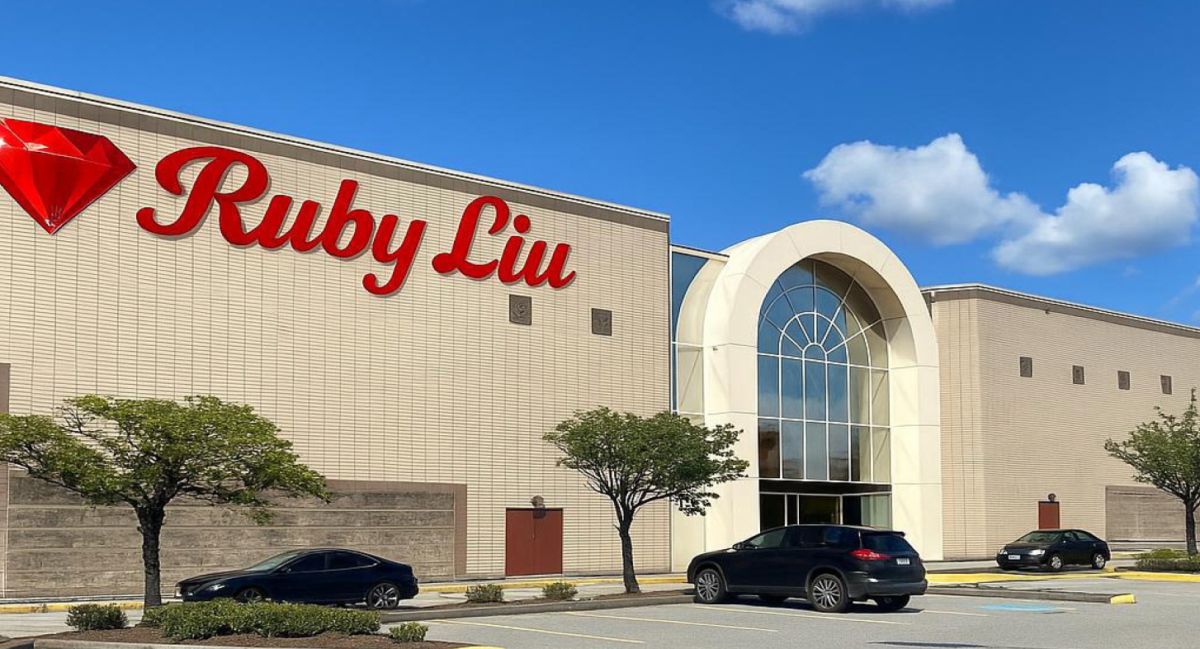
It is worth saying out loud that several elements of Liu’s concept match where consumers are going. Canada’s most successful malls are already leaning into hospitality, fresh food, family experiences, health, and services. In the May meeting, the plan sounded less like an old-model department store and more like a curated “mini-mall” within a box, intentionally carved into zones and programmed to keep families on site. “That was pretty much everything you would want in 2025 to launch a larger-scale initiative,” Boutet said.
Supply chains for private label take months to stand up, and large-scale staffing adds another layer of complexity. While Liu’s team organized two job fairs in Toronto to begin recruiting prospective employees, the process of onboarding and training retail staff across dozens of locations would still have required significant coordination. Many people had pinned real hopes of employment to those plans, a reminder that behind every retail restructuring are workers waiting for a second chance. When those human realities intersect with the financial discipline of landlords and lenders, vision alone is not enough.
What Could Have Changed the Outcome?
Boutet reflected on that question directly. What, in practical terms, might have altered the result for the 25 leases that were ultimately denied?
“She could have been a silent partner,” he said, even if that is not her style. “Back a more seasoned team. If she came in with a proven operator such as Bonnie Brooks and stayed behind the scenes, it might have eased concerns.” He also pointed to the signalling power of heavyweight partners. “If she had shown up with a Brookfield, a Central Group, or another global partner to handle supply chain, store fitting, and concept development, she might have made landlords more comfortable.”
He acknowledged there were moments when credible partners appeared on the periphery, from experienced Canadian department store executives to specialty operators. But the centre of gravity remained with Liu. Vision, for her, is not an asset you farm out. In this case, that preference carried a cost.
Boutet raised another missed opportunity. “Move gradually,” he said. “There was a window to demonstrate capability by quickly opening at one property she already controlled and letting that success do the talking while the court process unfolded. That would have been a powerful proof point.”

The RioCan-HBC Aftershock and Why Yorkdale Matters
The court’s rejection of Ruby Liu’s broader lease acquisition coincided with another significant story reshaping Canadian retail real estate: the unwinding of the RioCan-Hudson’s Bay joint venture, and the resulting battles over anchor spaces in some of Canada’s most valuable malls.
In 2015, RioCan partnered with Hudson’s Bay Company to form a joint venture that included major retail properties such as Yorkdale Shopping Centre, Square One, and Scarborough Town Centre. The partnership was designed to unlock real estate value by separating property ownership from store operations. When Hudson’s Bay entered creditor protection in 2025, that arrangement quickly became one of the most complex pieces of the restructuring puzzle. RioCan, which had a financial interest in a dozen former Bay properties, disclosed a $209 million write-down on the venture earlier this year, later seeking a court-appointed receiver to manage the assets and recover value for creditors.
At the heart of the dispute lies Yorkdale Shopping Centre, arguably Canada’s most prestigious retail property. The former Hudson’s Bay store there represents both a financial liability and a strategic battleground. RioCan is pressing Oxford Properties, Yorkdale’s landlord, to buy out its interest for $75 million, otherwise threatening to lease the large anchor space to discount fashion retailer Les Ailes de la Mode for just $1 million a year, a stark contrast to the luxury positioning that Yorkdale has cultivated over the past decade. Industry insiders say that Les Ails could convert the space to Zellers, a banner it owns.
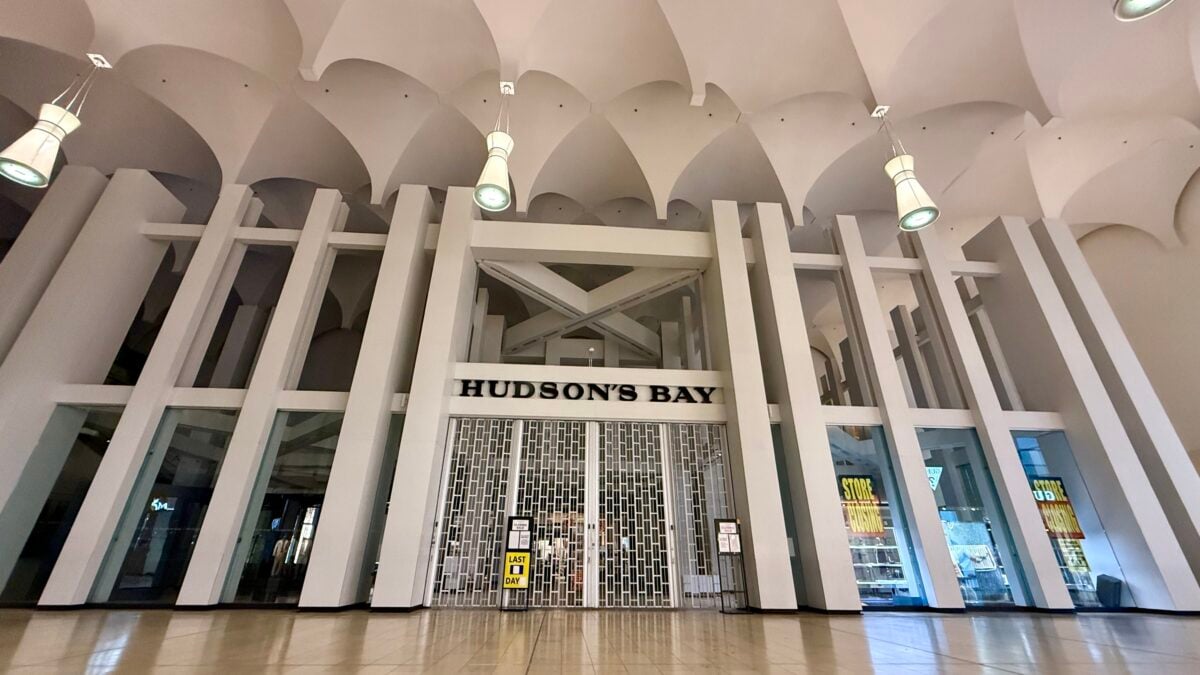
That move has intensified tensions. Oxford, which manages a carefully curated luxury mix that includes Cartier, Dior, Louis Vuitton, Tiffany & Co., and Holt Renfrew, is unwilling to compromise the mall’s brand identity. Boutet called the situation “a fascinating test case in how far landlords will go to protect positioning versus monetize space.” He added that it also highlights “the unintended consequences of joint ventures, where one partner’s financial goals may diverge sharply from another’s brand strategy.”
Oxford’s internal assessments reportedly show that the former Bay site requires over $9 million in immediate repairs, including roofing, escalators, and HVAC modernization. A full retrofit could reach nearly $17 million over three years. These figures reinforce why landlords are reluctant to move quickly. Even a misstep in tenant selection could undermine years of investment and tenant alignment across adjoining luxury corridors.
“Yorkdale is the crown jewel,” said Boutet. “If you put the wrong use in that box, you affect the entire ecosystem. The adjacency risk is enormous. One wrong anchor can pull down the perceived value of 30 neighbouring stores.”
Boutet said the standoff at Yorkdale also forces a bigger question about the evolution of retail real estate in Canada. “We’ve witnessed the end of the department store in Canada. Does that also extend to the end of mall anchor stores?” he asked. “It’s hard to imagine landlords willing to give low rents and large boxes to a single tenant in an increasingly volatile retail industry.”
What the bid got right, and why intent still matters
It would be easy to paint the saga in black and white, but Boutet urges nuance. “I hope we do not make her the villain,” he said. “As much as people were critical about the ability to back the vision, we still need to recognize the boldness. She was one of the only parties to actually pay to buy back certain leases, and she came forward with a plan when others were defaulting back.”
That matters. Emerging operators rarely get everything right the first time. Many are told to show, not tell. Liu showed up, wrote cheques, and argued for a new approach to anchor boxes. The court still said no to most of it. Both things can be true.
Carl Boutet’s Lessons for Future Retailers and Anchor Operators
Drawing from his experience advising retailers and observing the Hudson’s Bay proceedings, Boutet outlined several lessons that others can take from the Ruby Liu case. These principles, he said, apply to any retailer or investor hoping to fill the large anchor boxes now sitting vacant across Canada.
Build a coalition, not a logo. Ambitious concepts need institutional scaffolding. The fastest way to calm landlord risk is to arrive with an A-to-Z team that includes a seasoned operator, a store construction partner with Canadian credentials, a supply chain partner with committed capacity, and a financing partner with conditions already met. When the focus keyphrase is Ruby Liu Hudson’s Bay leases, the subtext landlords listen for is who, precisely, will execute on day thirty, day ninety, and day two hundred.
Front-load proof. In a receivership context, ideas lose to evidence. Get one flagship open in a site you control and publish the data. Traffic, dwell time, conversion, staffing, ticket. Invite the receiver, the monitor, and the landlord to see it. Make the case in store rather than on paper.
Price the box like an engineer, not a dreamer. Replace the roof on paper. Replace the escalators on paper. Budget the hazmat. Budget the HVAC. If you are asking a landlord to tolerate temporary pain in a prime mall, you have to show that every dollar of remediation is recognized, funded, and timed. Negotiations move faster when the landlord believes you understand the building better than anyone else.
Stage the ambition. Anchor portfolios are marathons. Winning three stores you can control, opening them on time, and exceeding plan will put you in a better position to discuss the fourth and fifth than a first-bid sweep of twenty-plus sites. This was the heart of Boutet’s advice. “There was a chance to show capability quickly and use that momentum,” he said. “It did not happen.”
How Canadian landlords are redefining “fit”
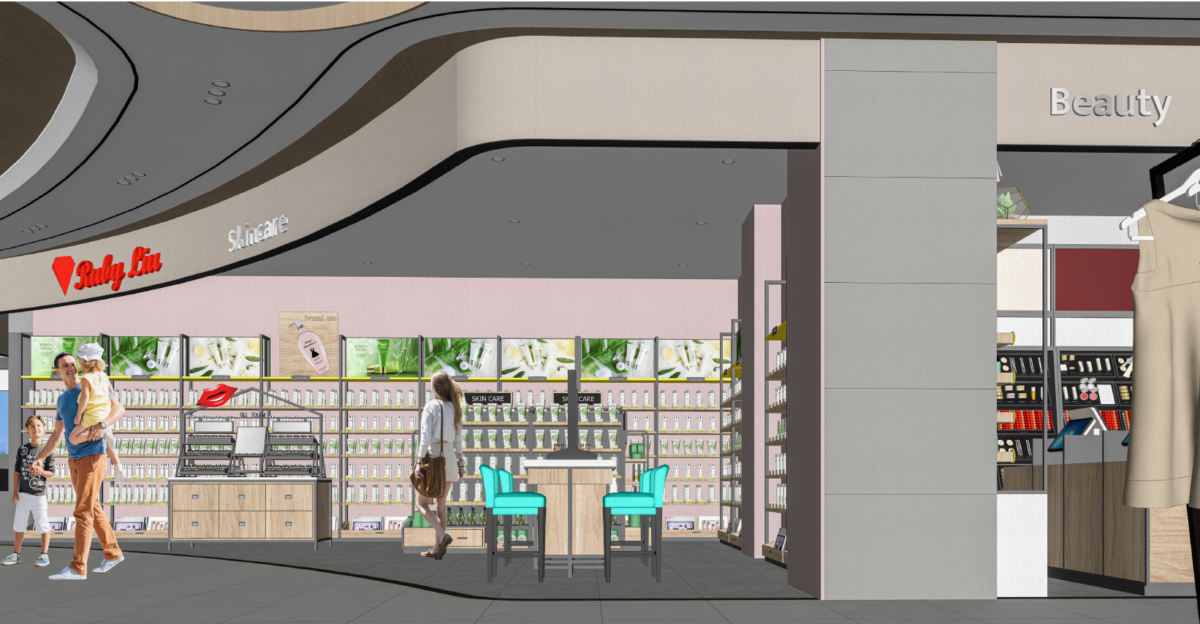
The case also clarifies how large Canadian landlords are thinking about fit in 2025. In super-regional assets with luxury clusters, the gate is narrow. Any operator seeking to replace a historical department store must demonstrate brand adjacency discipline, traffic quality, and design coherence. At strong regional centres, the gate widens, but the financial bar remains high because carrying costs for dark boxes are real. Across the country, receivers and pension-fund owners are signalling that patience is cheaper than a mis-set anchor.
That is why Yorkdale, Square One, and Scarborough Town Centre attract so much attention. These assets sit at the intersection of brand mix, redevelopment options, and co-tenancy obligations that ripple through dozens of leases at once. It is also why the RioCan JV’s move into receivership drew scrutiny. The proceeding created a formal framework to stabilize the portfolio and maximize value, but it also reminded everyone that the clock landlords hear is not the same one would-be operators hear.
What comes next for Liu and the boxes she can still shape
The appeal path appears limited, and industry attention has moved to execution at the three British Columbia locations that cleared. If Liu can deliver a profitable, differentiated retail-hospitality hybrid in those boxes, momentum could build. That would be the most convincing response to critics of the broader plan and the most credible way to revisit other opportunities later.
Boutet remains cautiously hopeful. “I am still holding out some hope that eventually a day will come where she wants to land the vision,” he told me. “If she has empty boxes in her own malls to backfill, maybe she will do that. The question is the ability to execute the vision and get to profit.”
In other words, the most important chapter for the focus keyphrase Ruby Liu Hudson’s Bay leases will likely be written far from the Commercial List. It will be written at a construction hoarding in Victoria, Nanaimo, or Tsawwassen. If those doors open on time, if families stay to eat and play, and if the P&L works, then partners who passed this time will pay attention next time.












Great insight!
I’ve always said you can never trust the judgement of someone that buys a cybertruck.
What this continues to say to me is the shareholders are continuing to hang on tightly to outdated retail. They’re so concerned about the millions of shares they own translating into taking home billions of dollars they can’t fathom something new that works while theirs failed on a spectacular scale to the tune of $1b and counting!!!
That is the bottom line. The shareholders are clinging to their wealth. It wouldn’t matter who steps in, they’ll fight it tooth and nail.