Retail took a front seat in this year’s Kantar BrandZ Canadian ranking, helping lift total brand value across the Top 40 by 10 percent to US$211.8 billion. The result marks a post-pandemic high and outpaces Canada’s GDP growth in the first half of 2025, underscoring the resilience of brands that meet shoppers where they are on price, convenience and experience. Kantar’s consumer research adds further context, noting that 56 percent of Canadians plan to buy more local products and services, a measurable tailwind for banners headquartered in Canada.
Speaking with Retail Insider, Scott Megginson, President of Kantar Canada, framed the performance against decades of BrandZ learning. “Powerful brands always outperform the stock markets. Strong brands do not fall as far in a downturn, and they bounce back faster,” he said. “We saw it in SARS, the financial crisis and COVID, and we are seeing it again in 2025.” His point lands squarely in Canadian retail, where value grocers and discount chains have outpaced the market in a year when shoppers have been stretching dollars across the basket.

Value retailers set the tone
Kantar highlights retail’s contribution at 11 percent of total Top 40 value, or US$24.1 billion, and notes that none of the 11 retail brands in the ranking lost value even as national retail sales slipped about 1 percent in 2025. Anxiety around the cost of living remains elevated, with 29 percent of Canadians reporting high or severe economic stress, which has sharpened demand for banners that combine price credibility with a consistent in-store and digital experience.
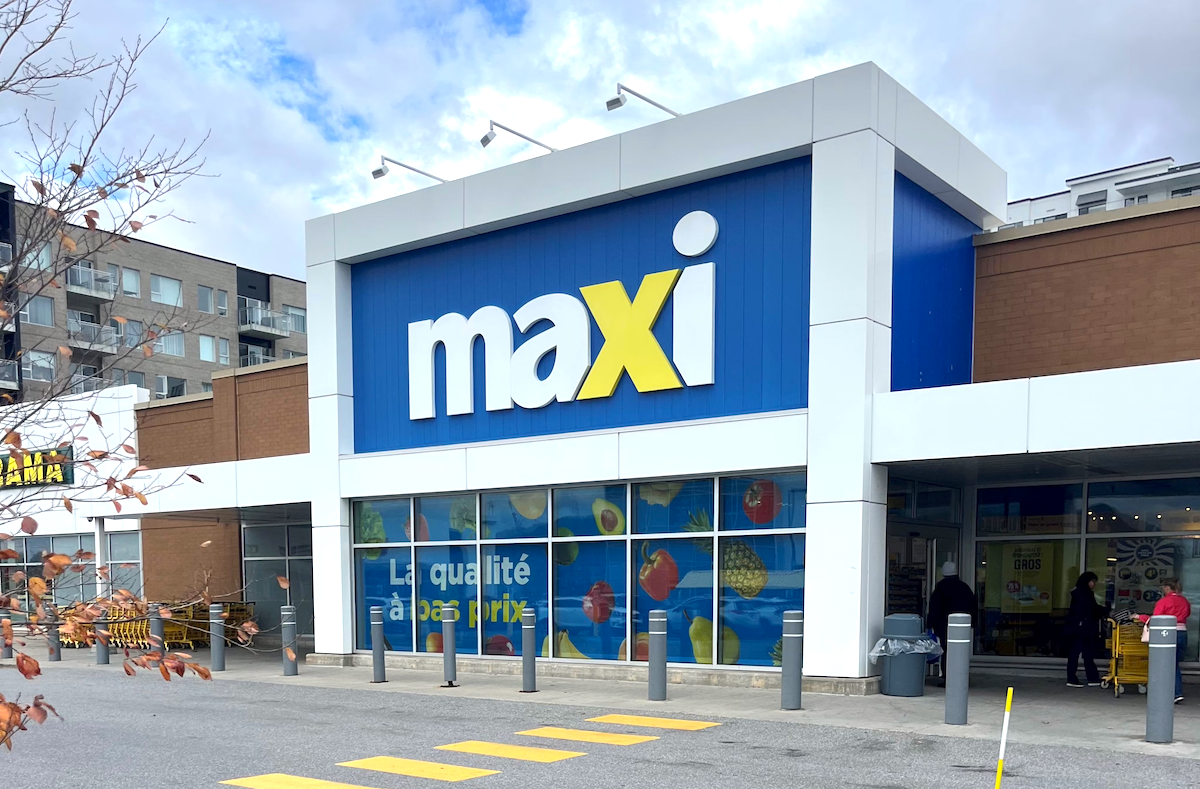
The year’s retail standouts illustrate the point. Dollarama advanced 42 percent in brand value to US$7.4 billion, placing ninth overall. Maxi rose 46 percent, buoyed in part by its expansion outside Quebec into New Brunswick. No Frills climbed 35 percent, supported by a growing footprint and an expanded fresh range to meet weekly-shop needs.
“Maxi grew its brand value by 46 percent. Dollarama has been on a tear since we began the Canadian ranking in 2019, consistently meeting consumer needs and being top-of-mind,” Megginson said. “No Frills posted 35 percent growth. The value retailers are really differentiating in Canada by delivering what shoppers need at the right price.”
Kantar’s data quantifies the dynamic. Brands perceived as offering low prices grew by an average of 22 percent, while those seen as expensive declined by 7 percent. That pricing perception was most visible in grocery, where price-led formats gained traction without abandoning experience. The report singles out No Frills for its continued focus on a clear, high-value proposition that resonates across regions.
The “elbows up” effect that favours homegrown banners
Kantar’s consumer tracking this year found a pronounced buy-local tilt amid global policy shifts and tariff debates. Megginson said Canada ranked among the top markets for retaliatory sentiment, with two-thirds of consumers signaling an intention to support Canadian brands. “We coded the Canadian and U.S. brands in our dataset and compared them,” he explained. “Canadian brands grew in their brand equity, which we call demand power, while American brands overall were on a negative trajectory.” That shift helped underpin the strong performance of many domestic retailers.
There were exceptions. Megginson noted Costco as a non-Canadian banner with standout equity, boosted by a membership model, breadth of offer and a rising cohort of younger members. “It is meaningful, it meets needs, it is salient, and it differentiates in important ways,” he said, acknowledging the warehouse club’s role in shaping value expectations across grocery, general merchandise and discretionary categories.
Apparel holds its ground as Aritzia surges
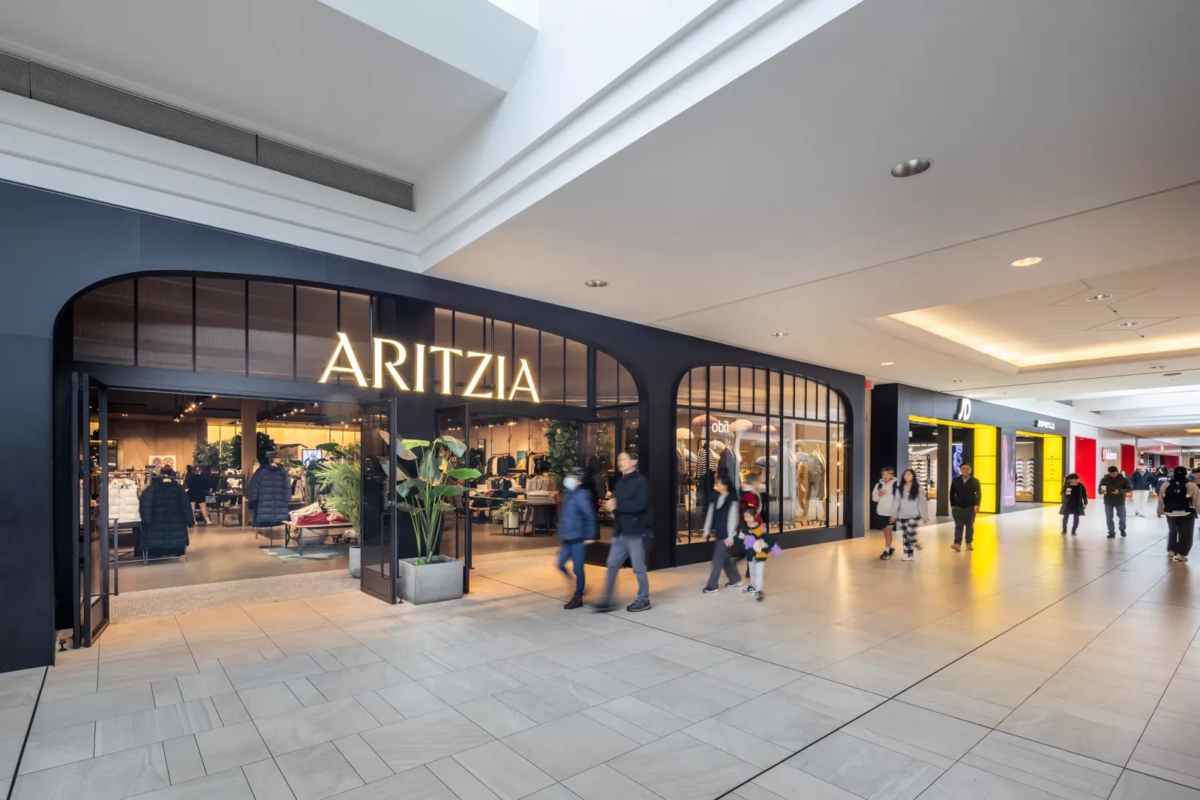
While grocery and discount dominated the retail story, apparel delivered a clear signal that distinctiveness still commands a premium. Aritzia was named the fastest riser in the entire ranking, up 55 percent in brand value to US$2.1 billion, driven by U.S. expansion, ecommerce and a strategy centered on everyday luxury that broadened its appeal beyond boutique roots.
“Not all growth is about low price,” Megginson said. “There are brands like Aritzia that deliver distinct value, and consumers will pay a premium for that when the brand is meaningful and different.”
Lululemon remains Canada’s third most valuable brand at US$15.8 billion, reflecting how far the company’s global expansion and category leadership have carried the brand, even through a tougher trading year.
Together, Aritzia and Lululemon illustrate BrandZ’s framework of Meaningful Difference, which links relevance and distinctiveness to long-term value creation. Kantar reports that brands increasing their Meaningful Difference grew at double the rate of those that declined, a finding with obvious implications for fashion retailers navigating a cautious consumer.
Canadian-developed off-price banners continued to perform well too. Winners held the No. 23 position and grew 19 percent, while HomeSense moved up four places to No. 22 with 29 percent growth. Megginson attributed the momentum to the “treasure-hunt” experience, which keeps shoppers engaged and reinforces distinct brand cues that make the trip enjoyable and repeatable.
Inside grocery’s strategy shift
The playbook that worked in 2025 combined sharper value with clearer brand promises. Megginson pointed to decisions across the market that favoured strong, well-positioned banners over experiments that risked confusing shoppers. He referenced a recently shelved pilot for Loblaw’s No Name retail concept that did not meet the full spectrum of needs, contrasting it with the steady growth of established value formats. “There is untapped territory for many Canadian retailers to build on their brand equity,” he said. “The brands that focus on both value and differentiation will lead the way.”
That observation cuts to the core of Kantar’s view of brand as an enterprise asset. “If value retailers really spent a little more time looking at their brand, they could create so much more value, be even stronger, and build more loyalty,” Megginson said. He emphasized that brand and customer experience must operate as a single system. “One plus one equals three when brand and customer experience come together.”
Pharmacy’s return and the sustainability spotlight
Beyond grocery and apparel, Jean Coutu re-entered the Top 40 at No. 40 with US$614 million in brand value. Kantar credits the pharmacy chain’s focus on convenience, personalized loyalty and a broadened product strategy aimed at category needs that go beyond prescriptions. The re-entry signals the ongoing importance of pharmacy in Canadian retail, where health, wellness and convenience intersect.
Kantar also named Bonterra the Most Sustainable Canadian Brand of 2025, citing sustainability embedded across product development, manufacturing, materials, packaging and partnerships with organizations such as Veritree and 4ocean.
While not a Top 40 entrant by value, Bonterra appears in Kantar’s “brands to watch,” alongside London Drugs and Polar Ice Vodka, as an example of how sustainability and local relevance can position brands for future gains.
Telecom’s recalibration, with lessons for retail
Telecom Providers represent the second-largest category by value at 16 percent or US$33.9 billion. Several incumbents faced headwinds, yet Vidéotron grew 11 percent, aided by infrastructure investment, integrated telecom and content offers, and a customer-centric approach. Kantar credits Freedom Mobile as a disruptive force that contributed to lower prices nationwide.
The telecom story mirrors retail’s: investment in infrastructure and customer experience, plus clear value delivery, tends to correlate with stronger brand equity and pricing power over time.
Financial services still anchor the ranking, but retail drives the narrative
Financial Services brands continue to dominate the Top 40’s total value at US$121.7 billion or 57 percent of the index. RBC remains No. 1 at US$46.7 billion after a 31 percent gain, with TD second at US$24.1 billion and CIBC up 33 percent to join the Top 10. The sector’s momentum reflects both financial performance and sustained investment in client experience and brand marketing.
“It is the only valuation study that does consumer surveys as well as a financial analysis,” Megginson said, underlining BrandZ’s method for connecting consumer preference to enterprise value. For retailers, the takeaway is that consistent brand investment pays off when the macro picture turns, because equity acts as a buffer and an accelerator.
Brand equity as a durable asset in Canadian retail
Megginson noted that brand value can persist beyond store closures when equity remains in the public imagination. He referenced the enduring resonance of the Hudson’s Bay name and the recent monetization of intellectual property, which underscores what credible brand assets can command. “There is latent equity that will probably hold for years to come,” he said. For retail operators, the lesson is practical. Whether the strategy is value or premium, equity built through clear assets, reliable experience and purposeful positioning gives retailers more degrees of freedom when conditions change.
Kantar’s ranking also reminds Canadian companies that there is headroom abroad. The Top 30 Canadian brands generate, on average, 31 percent of revenue from overseas markets, well below peers in France at 85 percent and Germany at 75 percent. Even so, Aritzia and Intact Insurance are pushing outward, showing that distinctive Canadian offers can scale beyond the home market.
Retailers considering cross-border growth face a familiar checklist: clarify the value story, translate the experience, reinforce distinctive codes, and keep the brand central to every capital decision.
The retail takeaway for 2025
Canadian retail’s message this year is crisp. Value banners are winning share with disciplined pricing and consistent experiences. Apparel brands with strong differentiation are still commanding premiums. Pharmacy is reasserting its role with loyalty and convenience. And across categories, Canadian banners enjoy a home-field edge supported by an “elbows up” preference to buy local. Within that landscape, the Kantar BrandZ Canadian brands story is not only one of financial value. It is about equity built patiently through clear promises and delivered daily at shelf, online and at checkout.
“Brands are a company’s most valuable asset,” Megginson said. “There is more value to create when retailers focus on brand and customer experience together.” The data backs him up. In 2025, as wallets tightened, retail brands that combined value with distinctiveness grew fastest. For Canadian retailers, the path into 2026 is to keep that balance, deepen brand cues that shoppers love, and build the kind of equity that holds up in any cycle.