The Toronto Waterfront BIA is closing out 2025 with a busy slate of openings, activations and evolving streetscapes that are pushing the district closer to its goal of becoming a true year-round destination. From floating saunas and virtual golf to new parks, community facilities and hospitality concepts, the waterfront is seeing a wave of experiential uses that build on its residential growth and strengthen its retail mix.
“We are trying our best to keep the area vibrant all year round,” said Dorsa Alizadeh–Shabani, Manager of Operations at the Toronto Waterfront BIA. “People still see us as a summer destination, and it is nice to finally have more reasons for them to come down even when it is cold.”

For the Toronto Waterfront BIA, the narrative this fall and winter is about momentum, diversification and the long game of neighbourhood building in a district that is still filling in.
New East Bayfront Connections and Community Hub
On the east side of the district, the completion of the Aqualuna condominium has helped unlock another key piece of the public realm. The Water’s Edge Promenade has been extended further east, creating a continuous path from Sugar Beach all the way to the Parliament Slip, a distance of roughly 500 meters.
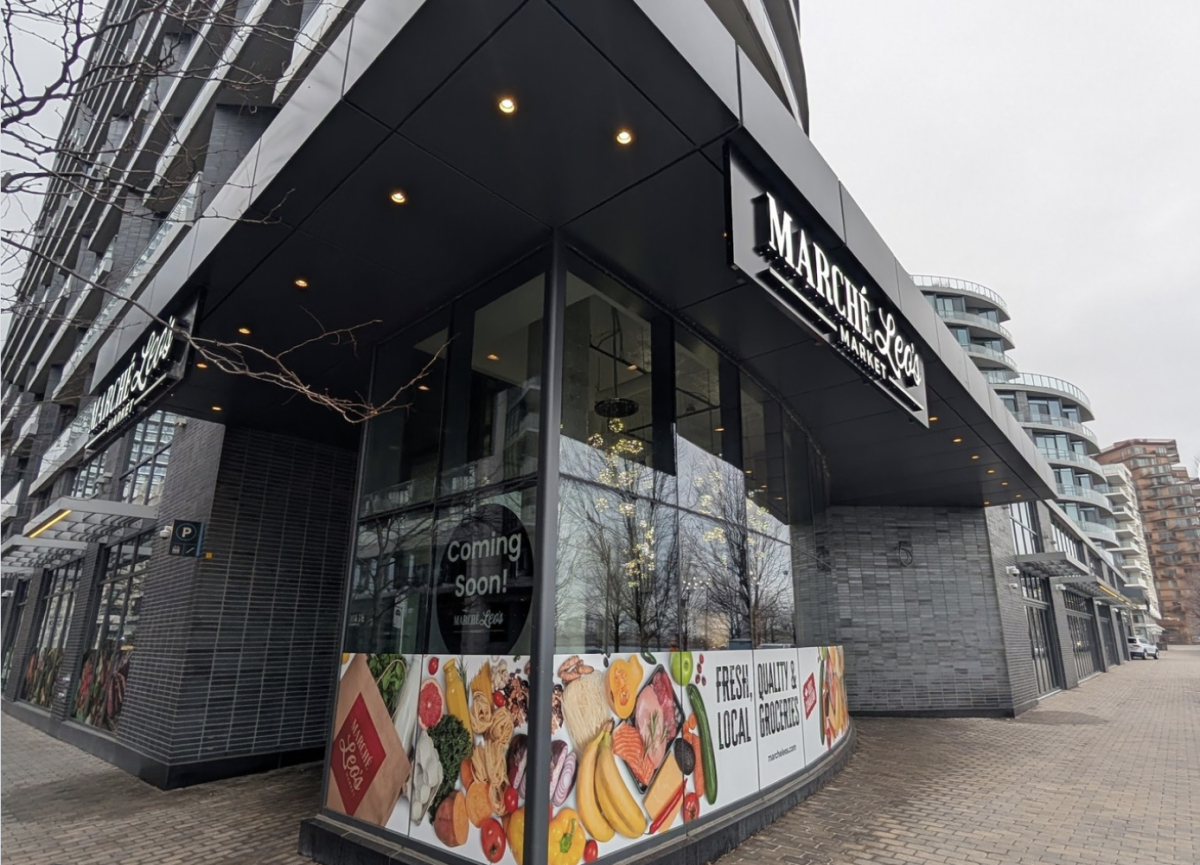
“Now you can walk out at Sugar Beach and go all the way east past the new Marché Leo’s, past that beautiful Aqualuna building and all the way around the Parliament Slip,” noted Executive Director Tim Kocur. “It is slowly filling in, and it hints at how much more connected the waterfront will be once the new bridge to the Port Lands is in place.”

The extended promenade also ties directly into the new East Bayfront Community Centre. The BIA recently used the facility as the anchor for a Halloween-themed movie night that attracted a strong crowd and demonstrated the potential for more community-oriented programming in the growing residential pocket.
“We had about three hundred people for a community event, which is a good sign,” said Kocur. “People are clearly willing to come to the neighborhood for activities, not just to walk along the water.”
Parks, Pickleball and Dogs at 50 Queens Quay East
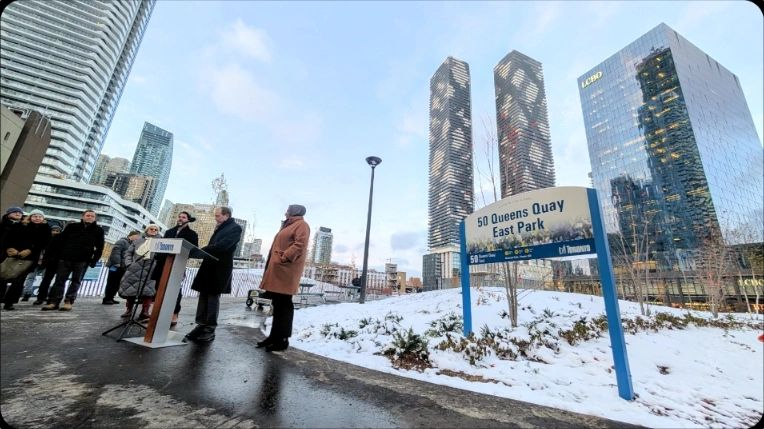
Just steps away, the new temporary park at 50 Queens Quay East is already proving that green space can be a powerful draw in colder months. The site is technically “temporary,” but in waterfront terms that can mean anything from a couple of years to a full five-year run.
“The park has two pickleball courts and a huge dog run, and even though it opened later than planned in the fall we have already seen it perform well,” said Alizadeh–Shabani. “Every time we walk by there are people playing pickleball and the dog run is always filled with dogs.”
Picnic tables with custom artwork add to the sense of place, and the BIA sees the space as an important bridge between residential towers, the water’s edge and the commercial units at grade. While many people still associate waterfront parks with patio season, the early response suggests a deeper shift in how the district is being used.
“For the time of year we are in, which is pretty cold, that park is doing really well,” she added. “It gives residents and visitors a reason to linger rather than just pass through.”
Grocery, Fashion and A New Kind of Daily Retail
One of the most closely watched openings in recent months has been Marche Leo’s, a next-generation grocery concept that has brought new life to the east side. The store has generated strong buzz not just for its prepared foods and local sourcing but for an unexpected fashion play.
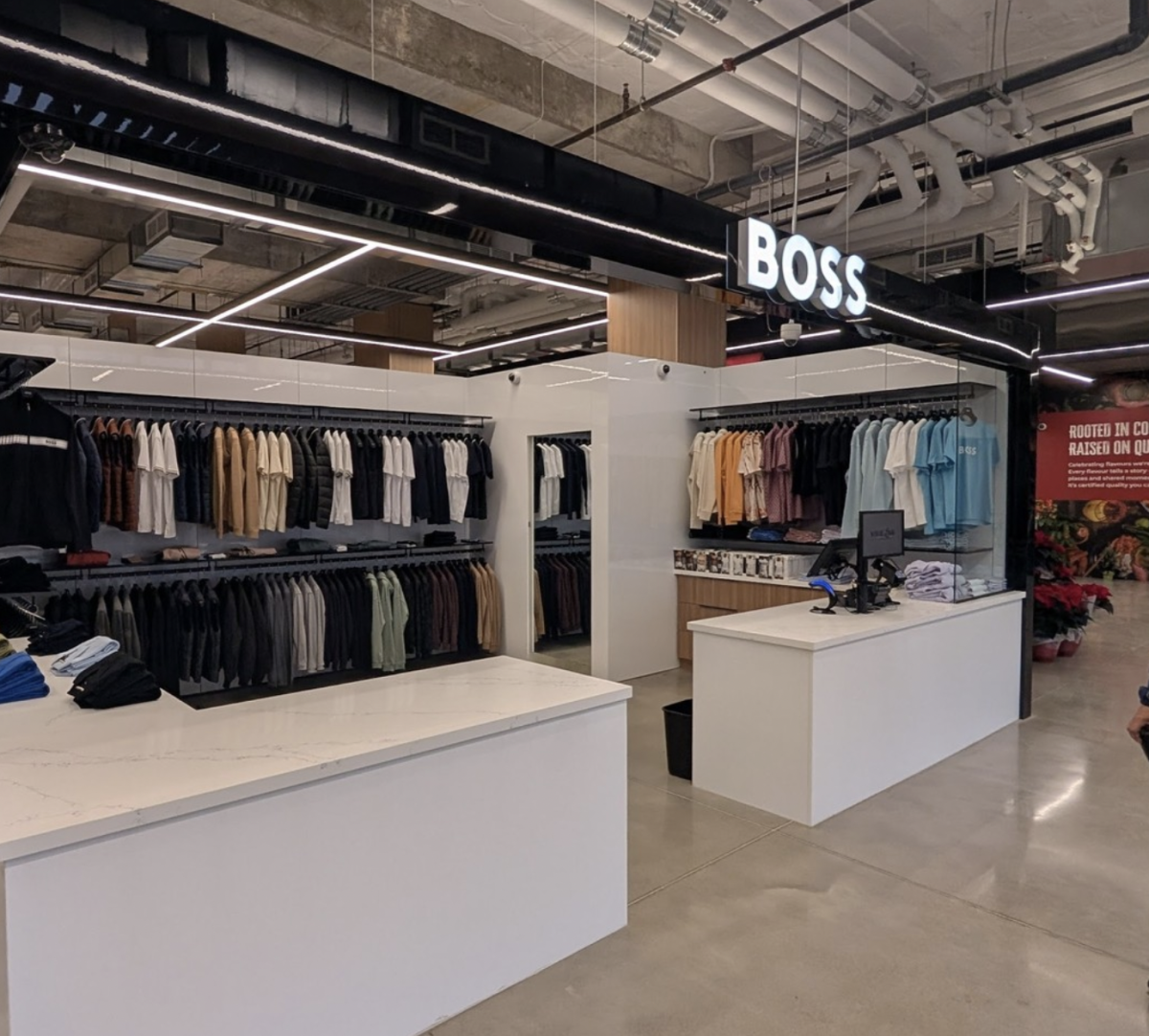
“They have a Hugo Boss retail clothing section inside the store, which is really interesting,” said Alizadeh–Shabani. “We lack clothing stores in the neighborhood, so it is nice to see that here, even if it is in an unusual format.”
Further east, another experiential anchor is getting ready to welcome guests. World Swing, a virtual golf bar at the base of the T3 Bayside building, is in the final stages of fit-out and is expected to open soon.
“It is super exciting to have another destination business in our neighborhood,” said Alizadeh–Shabani. “A place like this generates more foot traffic during the cold months, and it complements everything else that is happening in East Bayfront.”
T3 Bayside itself is one of the district’s notable new office buildings, with a contemporary tall-timber design that reflects a broader shift toward sustainable construction along the waterfront. While another timber building in the area is dedicated to institutional use for George Brown College, T3 Bayside is largely commercial and signals confidence in the waterfront as an office address.
For the Toronto Waterfront BIA, attracting tenants such as World Swing to these podium spaces is central to building an all-day, all-season economy that serves workers, residents and visitors.
Winter Programming Aims to Shift Perceptions
The waterfront’s winter season has traditionally been a challenge, with many Torontonians assuming the area is best enjoyed in summer. The BIA is using programming to counter that perception.
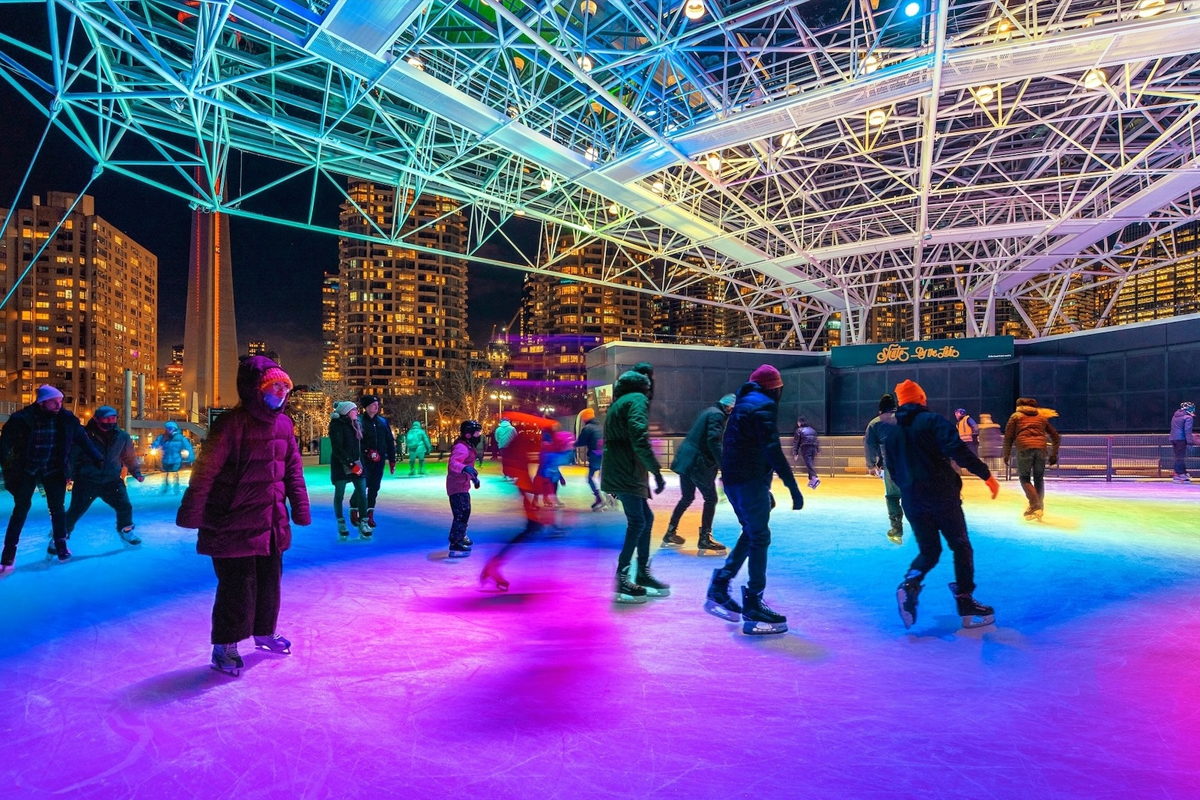
On the west side, Harbourfront Centre’s Winterfest continues to be a major draw, complete with a skating rink and free skate rentals on Saturdays. The BIA also supports another skating rink at Sherbourne Common South, which encourages cold-weather visits on the east side.
New Year’s Eve fireworks are returning to the waterfront as well, with the city expanding programming to run after the fireworks rather than ending precisely at midnight. “They are adding more programming after the fireworks so not everything bottlenecks at Union Station at the same time,” said Alizadeh–Shabani. “They are slowly improving the timing and the overall experience so it is enjoyable for everyone.”
Within the hospitality sector, waterfront operators are leaning into winter as an opportunity rather than an off-season. One major restaurant and bar with a retractable-roof patio has transformed its south-facing garden into a Winter Garden, complete with festive decor designed to entice repeat visits from summer regulars.
“They are very good at getting people to come back,” said Alizadeh–Shabani. “Now that it is winter they have a new interior, new decorations and a whole different mood, which gives people another reason to make a night of it on the waterfront.”
Experiential Retail: Climbing Gyms, Culture and More
The Toronto Waterfront BIA has spent the past several years advocating for more experiential businesses along Queens Quay, arguing that unique activities will help the district stand out in a crowded citywide landscape of entertainment districts. That push is now bearing fruit.
“We are seeing more experiential businesses, which is what our ideal retail mix looks like,” said Alizadeh–Shabani. “Experiences entice people to come down, even when it is cold.”
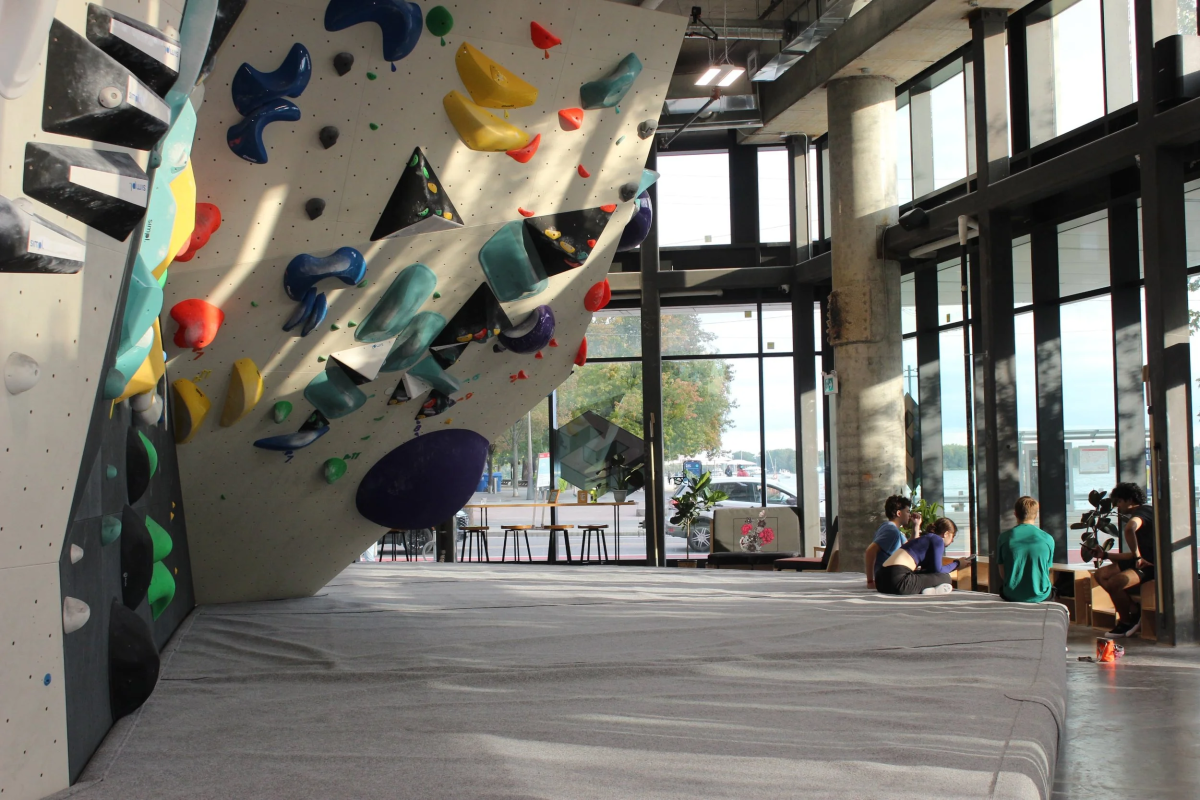
Ethos, the new climbing gym in the neighborhood, is one example. The facility adds another indoor anchor that brings regular foot traffic during evenings and weekends. The Museum of Toronto has also opened an exhibit at Harbourfront Centre focused on children’s television from the twentieth century, adding a family-friendly cultural layer to the district’s offer.
“These are all open through the winter,” noted Kocur. “A year ago, one of our biggest challenges was changing people’s perception about coming here when it is cold. As these things draw more people, we hope that perception will change.”
Retail Churn and Broker-Led Recruitment
Despite the positive momentum, the waterfront is not immune to the churn affecting urban retail across Canada. As some of the first new buildings reach the five-year mark, a handful of tenants have chosen not to renew.
“There have unfortunately been some closures,” acknowledged Kocur. “We have seen a cannabis shop close and a Popeyes location close, and we know those brands are closing stores elsewhere as well. It is important to be honest that this is still a neighborhood in progress.” (Editor’s note: Popeyes has closed several Toronto locations recently, not just in the waterfront).
At the same time, he noted that the Toronto Waterfront BIA’s retail review this past spring showed that replacement tenants and net-new arrivals continue to outpace closures. The BIA has responded by building a more proactive recruitment model, keeping detailed data on available spaces and maintaining regular contact with brokers and property managers.
“We are trying to promote the waterfront as an exciting space for new businesses,” said Alizadeh–Shabani. “We have had businesses reach out and tell us what they are looking for, and then we compare that with our database and connect them with the right broker or property manager.”
For prospective retailers, having a BIA act as a concierge is a differentiator. “I do not think other neighbourhoods are doing that,” said Kocur. “It shows that we are serious about curating a mix that works for residents and visitors, and for the businesses themselves.”
Löyly Floating Sauna Bring Nordic Wellness to Lake Ontario
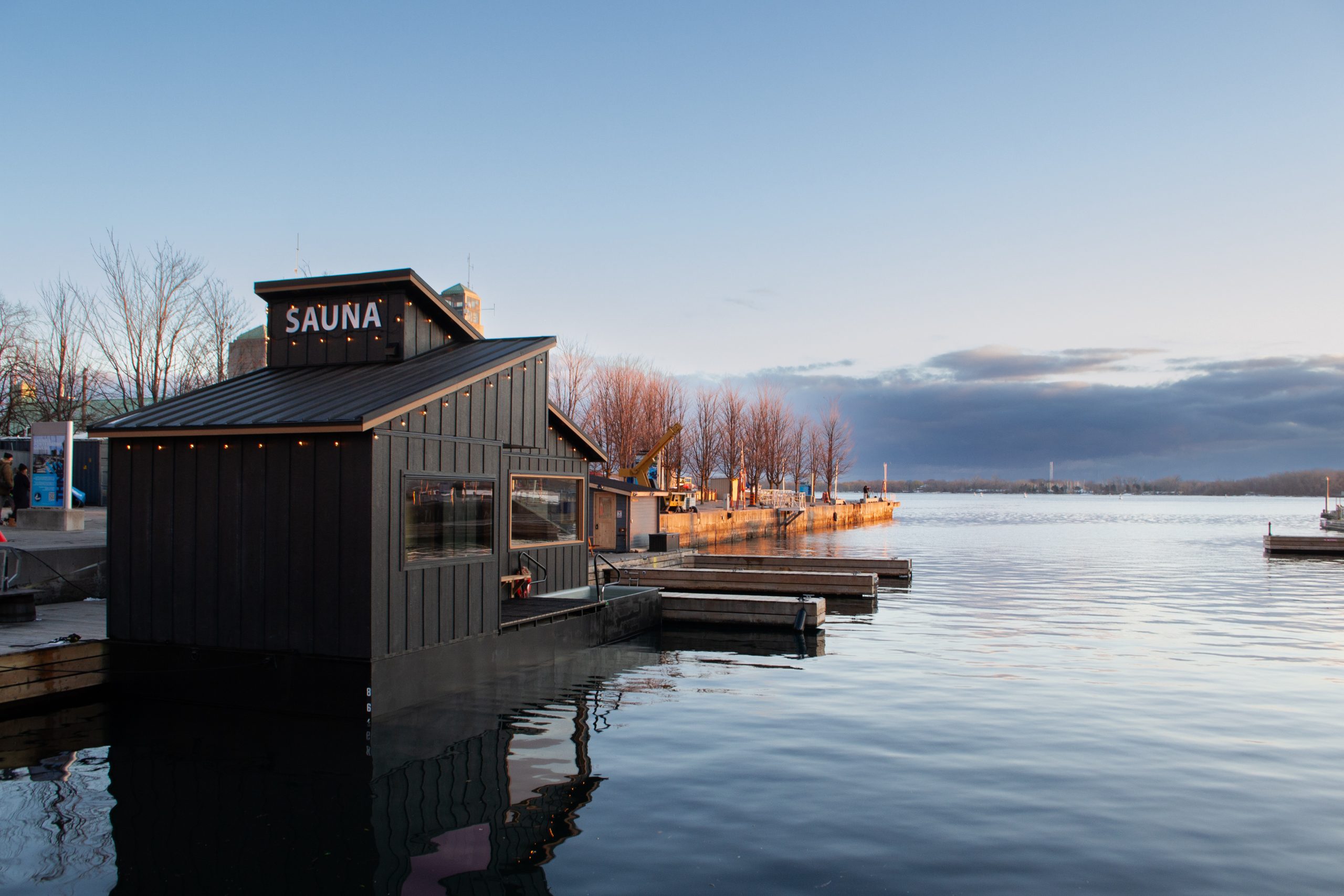
The most eye-catching addition this winter sits directly on the water. Löyly Floating Sauna, a Canadian wellness company inspired by Finnish sauna traditions, is preparing to open at 275 Queens Quay West at Reese Street. The concept combines a moored floating sauna structure with an outdoor plunge pool that offers the same bracing chill as Lake Ontario, without actually sending guests into the lake itself.
“Their business model is not about a one-time bucket list experience,” said Alizadeh–Shabani. “They want people to fit it into their weekly routine so it becomes part of their lifestyle.”
Founded on Okanagan Lake, Löyly has built its reputation on minimalistic design, deep steady heat and the mental and physical benefits of hot-cold contrast. The Toronto location, the brand’s first on the Great Lakes, will offer seventy-five-minute public sessions priced at $45, along with private bookings starting at $465 for up to twelve guests. The sauna remains moored rather than cruising, which keeps the experience stable and accessible in all weather.
The structure is already turning heads along the waterfront. “People see it and they want to be part of it,” said Alizadeh–Shabani. “We have heard stories about joggers and people out for walks stopping to ask what it is and when it will open.”
Kocur believes it is exactly the type of operator the Toronto Waterfront BIA has been hoping to attract. “We would love to see more experiences that engage directly with the water,” he said. “Löyly really does that. You are sitting in a warm sauna, looking out at the lake and the islands, and then doing a cold plunge right on the slip. It is a powerful way to remind people that this is a waterfront, not just another part of downtown.”
A Long-Term Vision for Toronto Waterfront Retail
Formally established in 2004 and expanded in 2016, the Toronto Waterfront BIA covers the commercial corridor along Queens Quay from roughly Stadium Road in the west to Cherry Street in the east, including the Toronto Islands. The association is funded through a levy on commercial and industrial properties and governed by a board of local business and property owners.
Its mandate is broad, stretching from destination marketing and event programming to advocacy on public-realm design, wayfinding, transit connections and waterfront infrastructure. In recent years, the BIA has published a series of retail and visitor-experience studies, including a detailed retail review and broker package that outlines ideal tenant mixes and highlights under-performing spaces.
“We position ourselves as a unifying voice for businesses along the waterfront,” said Kocur. “That means supporting the existing merchants, but also helping shape future development so that we end up with a continuous, engaging retail experience from west to east.”
With multi-phase projects such as the Port Lands redevelopment and Queens Quay East transit extension still ahead, the Toronto Waterfront BIA is playing a long game. The new promenade segments, pop-up parks and experiential tenants arriving this month are early glimpses of what a more connected, animated waterfront can look like.