As Canadians reset after the holidays, many are aiming to build a healthier relationship with alcohol. New consumer survey and transaction insights from tech company Square show that while cutting back remains a popular New Year’s resolution, fully giving up alcohol is far less common.
According to a national online survey, 1 in 4 Canadians (28%) plan to reduce their alcohol consumption in 2026. And Square data suggests moderation, not abstinence, is the prevailing trend.
At bars and breweries that use Square’s tools and services in Canada, this was evidenced by the fact that while sales of non-alcoholic drinks rose by 4.3% in the first three weeks of January (compared with December), alcoholic beverage sales also climbed 8.6%, suggesting that curiosity about sobriety may be cooling, said the company.
“Whether those aiming to cut back are successful or not with their resolution, the intention is there for two main reasons: 80% of Canadians said they are making the change to maintain their health while almost half said they are doing so in order to save money,” it said.
Protein Fuels Canadians’ Coffee Shop Orders
Health is a motivation when it comes to café orders as well. While only 16% of respondents plan to cut back on coffee, many are upgrading what they consume, particularly when it comes to their protein intake, said the survey.
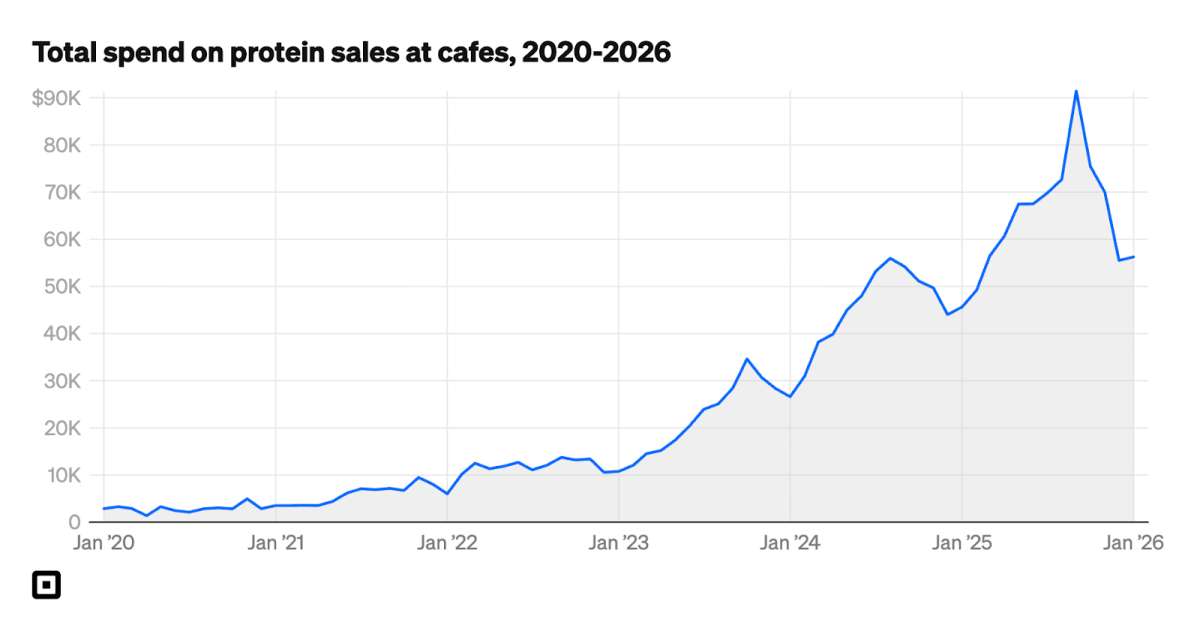
According to Square data in Canada, sales of protein-related items at coffee shops rose 35% in the first three weeks of January compared with the same period last year, continuing a multi-year streak of year-over-year growth. This points to a growing appetite for functional, “better-for-you” choices, and gives café operators an opportunity to boost transaction amounts with simple menu switches and add-ons.

“Canadians are clearly in reset mode, but coffee remains a daily essential,” said Karisa Marra, Head of Sales at Square Canada. “As affordability continues to be top of mind, neighbourhood cafés have an opportunity to add value through functional and wellness-driven offerings to meet a growing shift in customer preferences.”
Pay-to-Work Cafés Face Consumer Resistance
As cafés increasingly double as workspaces, operators face a familiar dilemma: customers nursing a single coffee while occupying tables for hours. This has led some operators to start experimenting with the idea of charging for tables by the hour, said Square.
“But customers aren’t quite on board yet. The survey finds only 12% of Canadians would be willing to pay a café or bakery an hourly fee to work or study there. Among those who would pay, nearly half (47%) would pay $2–$5 per hour, and 66% would pay up to $5 per hour,” it said.
Vancouver Leads Café Wages Nationwide
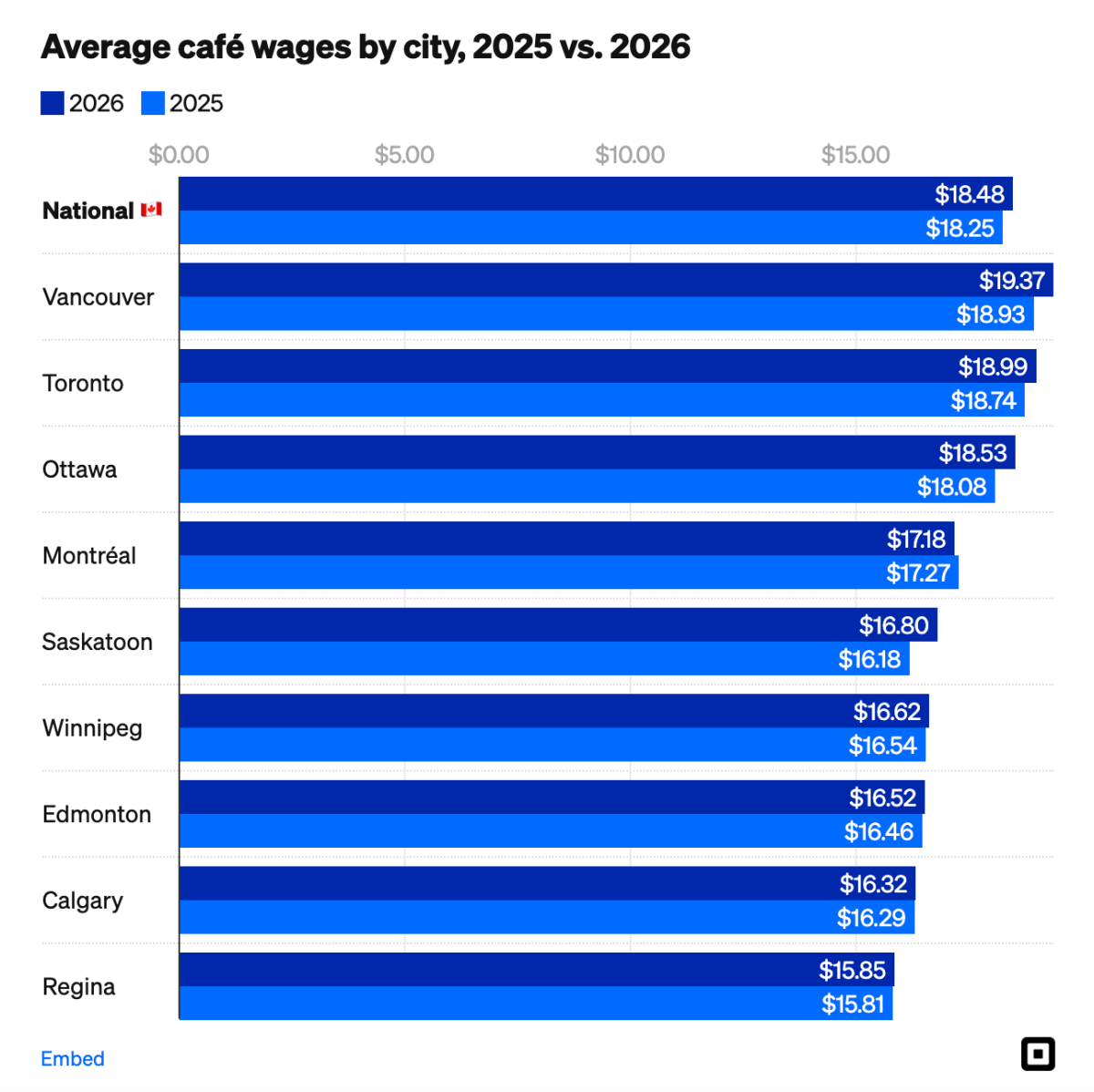
While operators explore new revenue streams, labour costs remain relatively stable. The average café employee in Canada earns $18.48 per hour, up just $0.23 (1.26%) from last year. Vancouver leads the country with average café wages of $19.37 per hour, followed by Toronto at $18.99. Regina reports the lowest average hourly wage at $15.85, according to the report, adding that regionally, Saskatoon café workers saw the largest year-over-year increase, with wages rising 4%, while Montréal was the only city to see a decline, with wages falling 1% in 2026.
What this means for café owners
“From protein-boosted offerings and evolving pricing strategies to regional wage pressures, café operators are navigating a more complex and competitive landscape in 2026. Cafés are well positioned to meet changing consumer expectations by offering healthier menu options, exploring new income streams, and keeping operations efficient,” said the report.
More from Retail Insider: