An Alberta judge has ruled that Alberta-based food and grocery company Sunterra engaged in cheque kiting on what the court described as an “astonishing scale,” finding the company liable to U.S. agricultural lender Compeer Financial for approximately $35 million. In a decision issued on January 27 by the Court of King’s Bench in Calgary, Justice Michael Lema also held Sunterra’s president personally responsible for the debt, marking a significant escalation in the legal and financial pressures facing the vertically integrated agri-food group.
The ruling arrives as Sunterra continues to restructure under court supervision following months of financial strain, lender disputes, and operational disruption. While the decision focuses on conduct between Canadian and U.S. affiliates and lenders, it carries implications for the broader Sunterra group, including its premium Sunterra Market grocery stores across Alberta.
In his written decision, Justice Lema likened the financial practices at issue to a game of musical chairs where there are not enough seats when the music stops. He concluded that Sunterra’s Canadian entities fraudulently misrepresented the availability of funds behind cheques sent to the United States, inducing Compeer to continue honouring payments that were not backed by actual cash balances.
“I find that cheque kiting occurred here, that the Canadian Sunterra entities involved fraudulently misrepresented that south-going cheques were anchored by sufficient funds to be honoured,” Lema wrote.
The Mechanics of the Cheque Kiting Scheme
At the centre of the case was a system of cross-border cheque exchanges between Sunterra’s Canadian and U.S. companies. According to the ruling, cheques were sent back and forth at high volumes and in large amounts for reasons unrelated to actual business transactions. The purpose, the court found, was to cover account shortfalls by depositing incoming cheques that themselves were not supported by real cash.
Justice Lema described the practice in stark terms, concluding that Sunterra engaged in cheque kiting “on an astonishing scale,” with intercompany transfers in 2024 totalling nearly $6.3 billion.
When Compeer froze the relevant accounts in February 2025 and stopped clearing cheques, the system collapsed. Lenders on both sides of the border ceased processing the reciprocal cheques, revealing the true financial position.
After applying all available credits, the court found that Compeer suffered a net loss of approximately $35 million US. By contrast, National Bank of Canada, Sunterra’s Canadian lender, emerged without direct losses related to the alleged cheque kiting.
How the Money Moved — And Stayed Hidden
Behind the scenes, the scheme relied on a rapid-fire exchange of cheques between Sunterra’s Canadian and U.S. companies, timed to exploit the delay between when a cheque is deposited and when the money actually clears. Between January 1 and February 10, 2025 alone, the U.S. Sunterra entities wrote 474 cheques totalling about US$431.3 million to Sunterra’s Canadian accounts, while depositing 472 cheques in the opposite direction worth roughly US$432.4 million. In just over a month, about US$863.7 million cycled through the two banking platforms, far more than the group’s entire 2024 annual revenue of roughly C$144 million.
Court filings say most of those cheques fell in a narrow band between roughly US$800,000 and US$990,000, with none reaching US$1 million. That pattern mattered: cross‑border cheques at or above the US$1‑million mark would typically draw extra scrutiny or delays in the clearing system, so keeping each instrument just under that threshold allowed large amounts to move quickly while reducing the chance anyone would scrutinize individual items.
Because both Compeer and National Bank made the funds from deposited cheques available before they fully cleared, the Sunterra entities could immediately write new cheques against what was, in substance, only a temporary IOU. The Canadian companies would issue cheques to the U.S. side without having real cash to back them, the U.S. entities would gain conditional credit when those cheques were deposited at Compeer, and then promptly send fresh cheques back to Canada so that National Bank accounts appeared funded when earlier cheques came up for settlement. The court materials describe this as a self‑perpetuating loop that required ever more cheques to keep all accounts looking solvent on paper.
When Compeer finally intervened in mid‑February 2025, first flagging the volume and pattern of cheques, then cutting off automatic cheque‑writing and refusing to process new deposits, the loop broke. National Bank subsequently dishonoured dozens of previously credited cheques totalling just under US$60 million, instantly wiping out what had appeared to be a positive cash position at Compeer and leaving the U.S. Sunterra entities with a multi‑tens‑of‑millions overdraft on facilities that were only supposed to allow US$11.5 million in borrowing. After further adjustments and recoveries, Compeer’s net exposure from the scheme landed in the mid‑thirty‑million‑dollar range in U.S. dollars — the loss figure Justice Lema ultimately tied to the fraud finding and personal liability for Sunterra’s president.
Sunterra’s Defence Rejected
Sunterra argued that both lenders understood and accepted the cheque-based system, maintaining that it was designed to ensure that no overdrafts occurred on either side of the border. The court rejected that characterization.
Justice Lema found that Sunterra Canada knowingly made false representations with the intention that Compeer rely on them. The lender did rely on those representations, he concluded, and suffered substantial losses as a result.
“I find that Sunterra Canada made false representations knowingly, intending that they be relied on, which Compeer did rely on, suffering the noted losses,” the decision states.
The ruling reinforces the seriousness with which Canadian courts treat misrepresentation and fraud in complex financing arrangements, particularly when they intersect with insolvency proceedings.
President Held Personally Responsible
In one of the most consequential aspects of the decision, Justice Lema found that Ray Price, Sunterra’s president and a director of the company, personally directed and oversaw the cheque kiting practice. On that basis, the court held him personally liable for the debt owed to Compeer.
The judge declined to impose personal liability on two other Sunterra employees, concluding that they were acting under instructions rather than directing the scheme themselves.
Sunterra has been operating under the Companies’ Creditors Arrangement Act since 2025, using the insolvency framework to restructure its operations while shielding itself from creditor enforcement. However, the fraud finding significantly constrains the company’s ability to rely on those protections in relation to Compeer’s claim.
Because the debt was found to have arisen fraudulently, the court determined that Sunterra cannot use bankruptcy or restructuring laws to force Compeer to accept pennies on the dollar without the lender’s consent. This distinction places Compeer in a materially different position from other creditors participating in the Canadian restructuring process.

Sunterra’s Retail and Agri-Food Roots
Founded in 1970 by the Price family, Sunterra traces its origins to Pig Improvement Canada, a hog-production business built on higher-standard farming practices. The company launched Sunterra Meats and Sunterra Market in 1990, the latter debuting in downtown Calgary’s Bankers Hall with a European-style market concept that emphasized fresh food, in-house production, and premium positioning.
Today, Sunterra remains a privately held, family-run business with multiple generations of the Price family involved in leadership. Its vertically integrated model encompasses hog farming, meat processing, value-added brands, and retail grocery stores operating under the Sunterra Market banner.
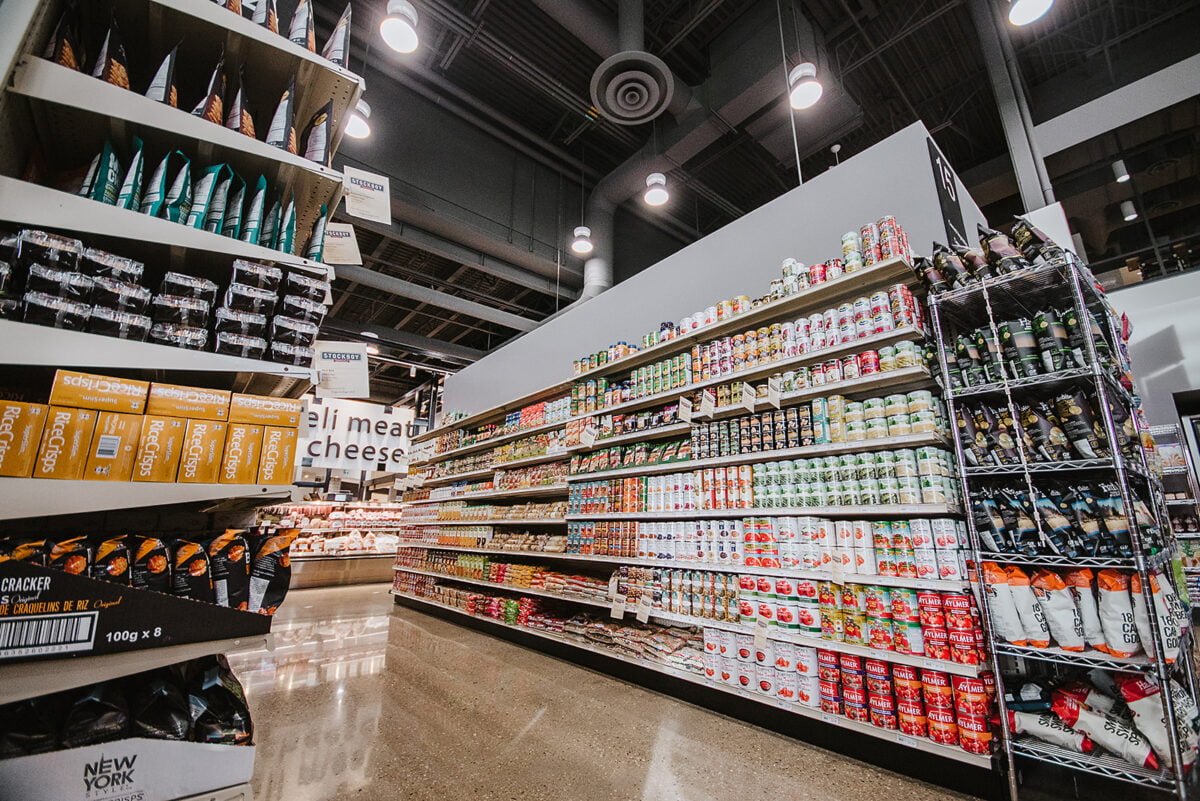
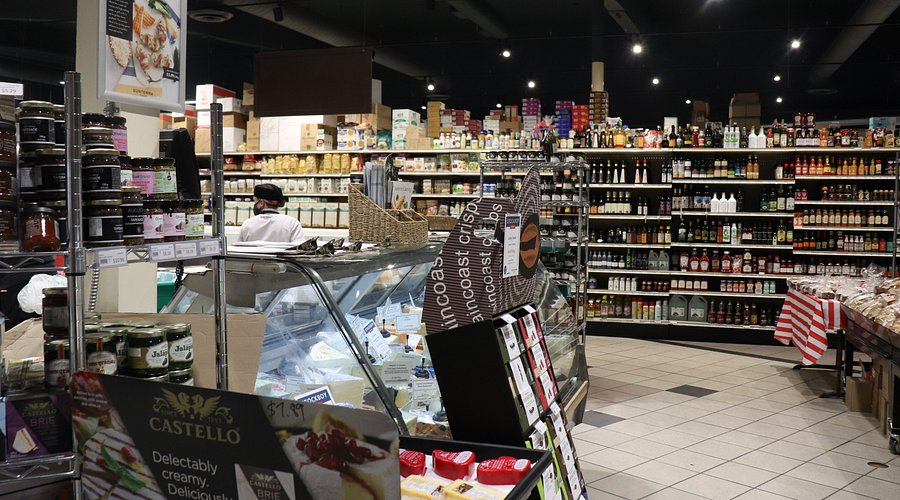
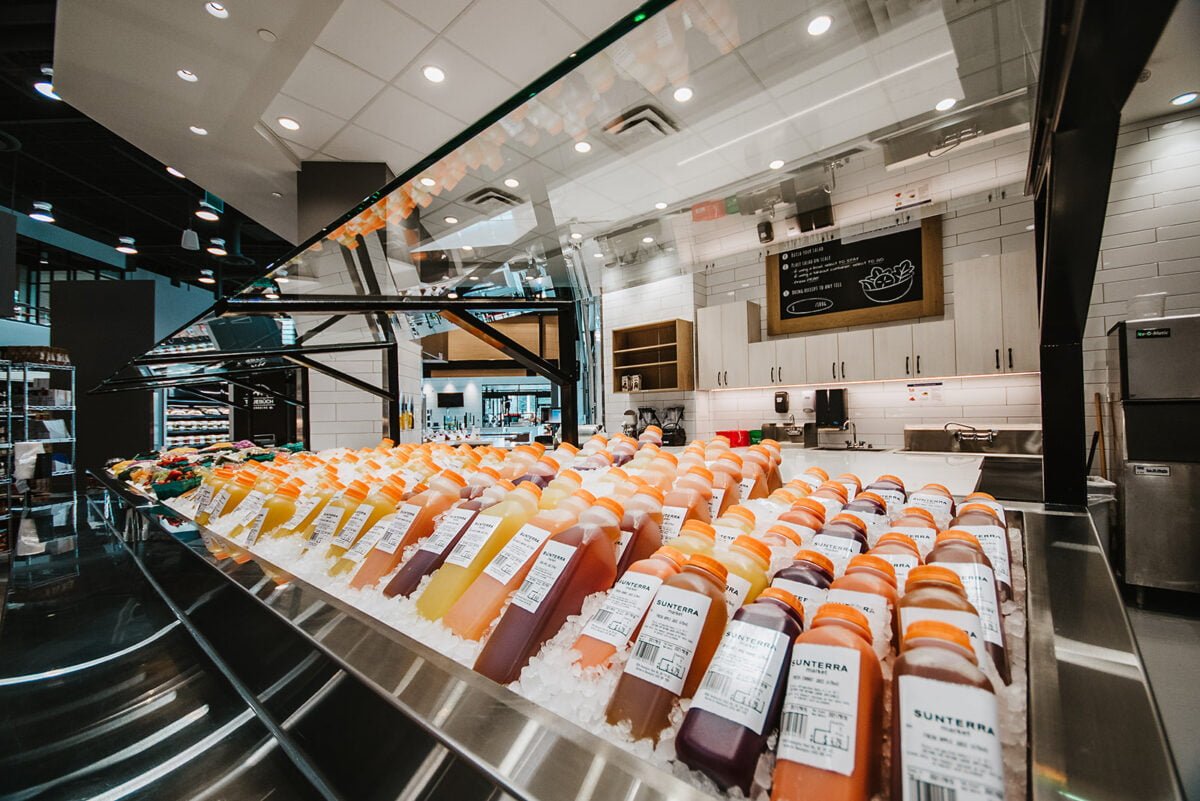
Sunterra Market locations operate in Calgary, Edmonton, and Red Deer, offering fresh produce, in-house butchery, bakery, deli, prepared meals, and café-style seating. Several locations include expanded hospitality elements such as cooking-class spaces, event rooms, and full-service bars, reinforcing the brand’s differentiation within Alberta’s grocery landscape.
A Premium Player in Alberta Grocery
Within the Alberta market, Sunterra occupies a premium niche rather than competing on price with mass grocers. Its European market ambiance, vertically integrated supply chain, and emphasis on fresh and prepared foods have helped distinguish the brand among consumers seeking quality and experience.
Corporate materials highlight local sourcing, Canadian suppliers, and community engagement, including workforce partnerships such as training programs with the Calgary Immigrant Women’s Association. This positioning has historically supported customer loyalty, particularly in urban neighbourhoods where Sunterra’s markets are embedded into daily routines.
However, premium positioning also exposes retailers to heightened vulnerability during periods of economic stress, as inflation, higher interest rates, and shifting consumer behaviour pressure discretionary food spending.
Financial Stress and Court Protection
Sunterra’s legal troubles with Compeer unfold against a backdrop of broader financial distress across the group. In late March 2025, several Sunterra entities filed a notice of intention to make a proposal under the Bankruptcy and Insolvency Act. That process was later converted into a full Companies’ Creditors Arrangement Act restructuring after the Alberta Court of King’s Bench granted an initial order in April 2025.
Court documents filed in the restructuring proceedings disclosed significant liabilities, including roughly $17.5 million owed to National Bank of Canada, approximately $17.8 million to Farm Credit Canada, and millions more to trade creditors. Retail-focused reporting at the time indicated that Sunterra Quality Food Markets alone carried close to $18.9 million in liabilities and more than 200 creditors.
The restructuring covers Sunterra’s vertically integrated operations, from hog farms and greenhouses to the Trochu meat-processing facility and the retail grocery chain.
Operational Disruptions Compound Pressures
Operational challenges have compounded Sunterra’s financial strain. A fire at the Trochu pork-processing plant in 2024 forced a shutdown of a core asset within the company’s meat business, disrupting production and cash flow. Court materials also reference inflationary cost pressures, rising interest rates, and changing consumer habits as broader headwinds affecting the business.
These pressures have played out alongside escalating disputes with lenders. National Bank of Canada sought the appointment of an interim receiver in March 2025, alleging concerns related to cheque circulation practices. The court dismissed that application, allowing Sunterra to continue restructuring under its chosen path.
Sunterra Farms later filed a statement of claim against National Bank, alleging breaches of a 2022 loan agreement and seeking damages for lost sales, reputational harm, and increased operating costs. Those claims remain separate from the Compeer litigation.

Parallel U.S. Litigation and Claims
Compeer’s claims extend beyond the Canadian courtroom. In the United States, the lender has asserted claims exceeding $36 million relating to Sunterra’s American subsidiaries, with litigation in South Dakota involving allegations of serious overextensions of credit and requests for receivership.
These U.S. proceedings run in parallel to the Canadian CCAA process, adding complexity to Sunterra’s efforts to stabilize its business and resolve creditor claims across jurisdictions.
While Sunterra Market stores have continued operating throughout the restructuring, their long-term footprint remains uncertain. Court filings identify the retail grocery chain as one of the group’s core operating segments whose value the restructuring seeks to preserve, alongside the Trochu facility and U.S. joint venture interests.
Industry observers have noted that outcomes could range from refinancing or new investment to asset sales or store closures, depending on creditor negotiations and court approvals. The cheque-kiting ruling introduces additional risk, particularly if it limits Sunterra’s flexibility in resolving claims with key lenders.