

Los Angeles-born iconic breakfast concept Eggslut is preparing to enter the Canadian market with its first restaurants in Toronto, followed by a Vancouver opening later in 2026. The chef-driven fast-casual brand, known internationally for its indulgent egg sandwiches and cult following, will launch two Toronto locations in high-traffic downtown areas before expanding west.
The expansion is being spearheaded by Westrich Hospitality Inc., a subsidiary of the national development firm Westrich Pacific Corp., which holds the exclusive Canadian development rights for the brand. Adam Flook, Development Lead at Westrich Hospitality, stated that the company intends to strategically launch a curated portfolio of locations in prime urban markets across Canada.
“We’re opening the first two in Toronto. Those will be the first two in Canada,” said Flook. “Then we have another location in Vancouver that’s opening up in the summer.”
Carmen Siegel of Cushman & Wakefield negotiated the Toronto deals along with Max McPeak, who is the master broker for Westrich Hospitality and Eggslut in Canada.

First Canadian Locations Planned for Downtown Toronto
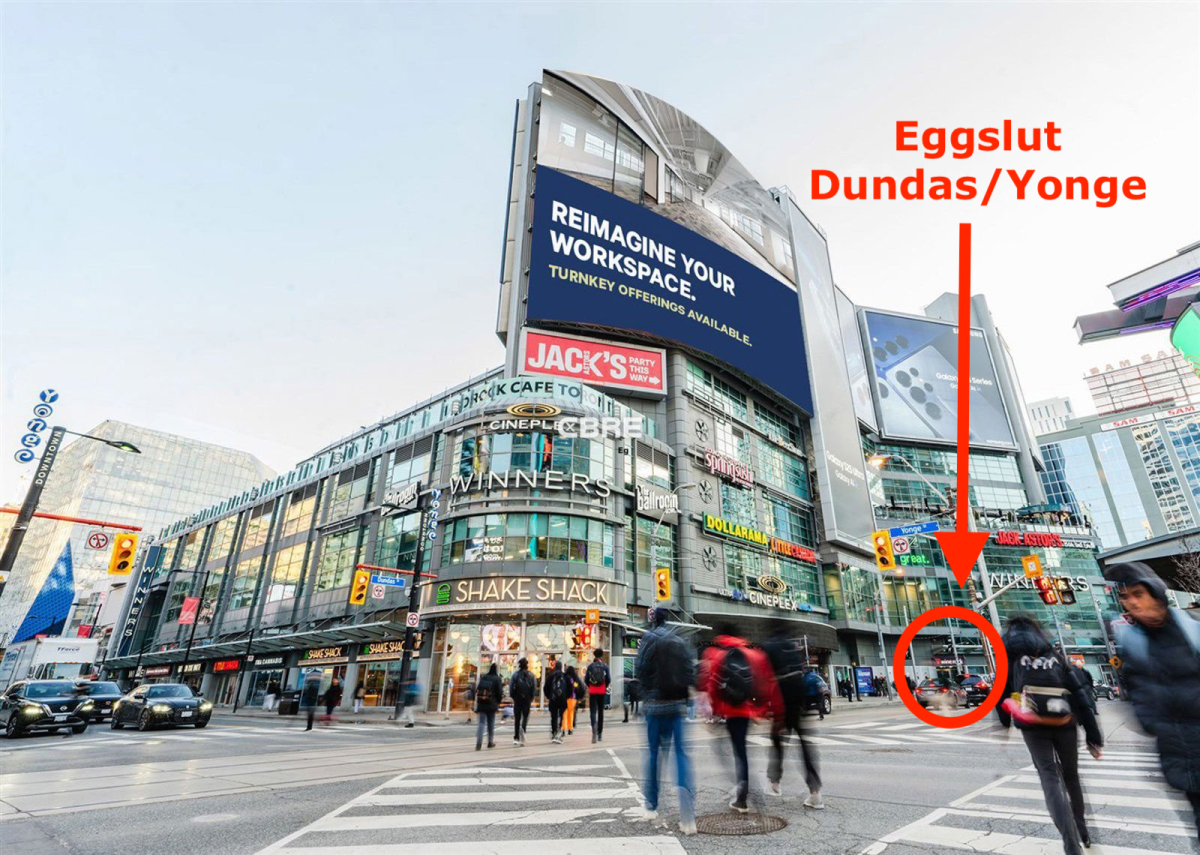
The first restaurant is scheduled to open in spring 2026 at 545 King Street West, in a high-traffic entertainment district that blends office workers, residents, and nightlife activity. The second Toronto location is expected to follow in early summer 2026 at 10 Dundas Street East, within The Tenor development at the city’s busiest pedestrian intersection.
The Dundas site occupies a former Wine Rack space on the ground floor facing Dundas Street, adjacent to major quick-service brands and steps from Yonge-Dundas Square.
Flook said the Toronto locations are intentionally positioned in dense, highly visible corridors.
“Our strategy is to open in premium high-traffic areas and ultra-premium locations,” he explained. “That’s why we’re in King West and at The Tenor. All the locations we’re looking for are very high-traffic, premium, high-visibility sites.”
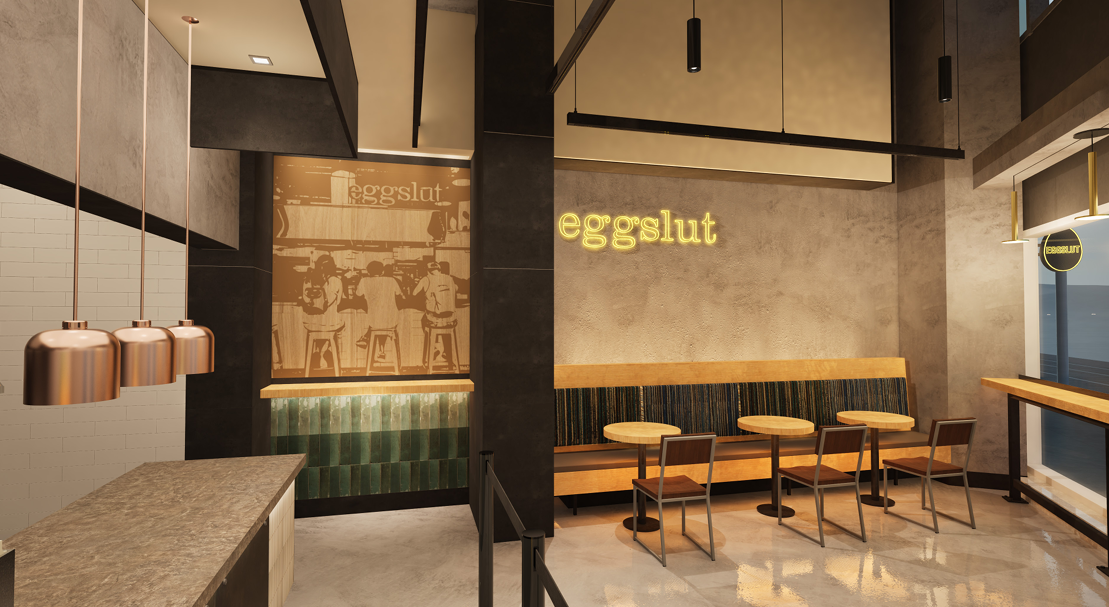
The King Street restaurant will span about 1,500 square feet, while the Dundas location is approximately 1,300 square feet. Flook noted that the ideal footprint for the concept is between 1,500 and 2,000 square feet, with an emphasis on compact, efficient layouts suited to urban settings.
“It’s more grab-and-go, like a premium quick-service concept,” he said. “About 1,500 square feet is the sweet spot.”

Vancouver to Follow as Third Canadian Market
A third Canadian location is expected to open in Vancouver in summer 2026, though the exact address has not yet been disclosed as the lease is still being finalized.
Beyond the initial three locations, Westrich Pacific is planning a broader but selective rollout across the country.
“Our strategy is we want to open up around 30 locations across the country, just in premium high-traffic areas,” said Flook. “It’s not a brand where you just roll out 500 restaurants. You’ll have a few locations in each major centre, maybe five or six in the Toronto area, and about 30 across Canada.”
From Los Angeles Food Truck to Global Brand
Eggslut was founded in 2011 by chef Alvin Cailan, who launched the concept as a gourmet egg sandwich food truck in Los Angeles. The truck quickly gained a cult following and later moved into a permanent stall at Grand Central Market, where it became a major draw for tourists and locals alike.
Media attention helped propel the brand into the global spotlight. At one point, MSNBC described Eggslut as the most Instagrammed restaurant in the world, while Bon Appétit named it among the top 50 restaurants in the United States.
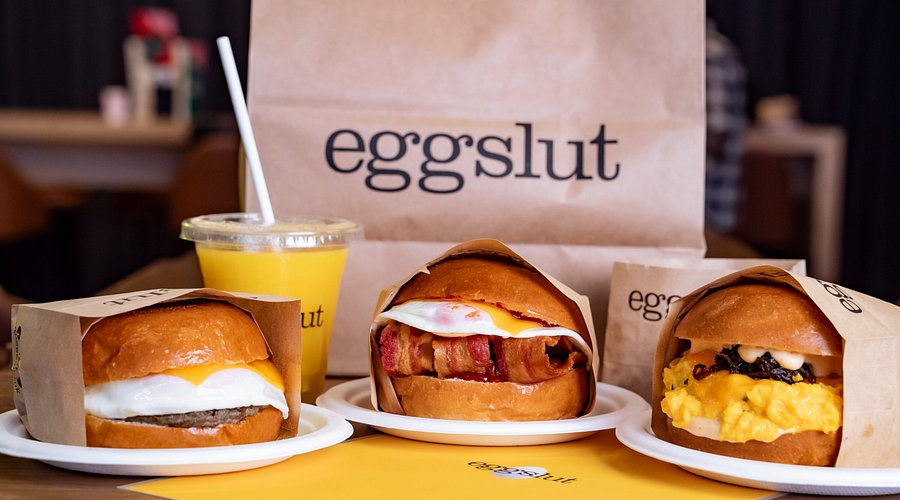
The concept focuses on egg-centric comfort food, including brioche-bun sandwiches and the signature “Slut,” a coddled egg served over potato purée in a jar.
After establishing locations in Southern California and Las Vegas, the company expanded internationally into markets including London, Tokyo, Kuwait, and Singapore.
Today, the brand maintains a mix of company-operated and licensed locations across North America, Europe, and parts of Asia and the Middle East, though the exact count fluctuates as markets evolve.
Premium Ingredients and Chef-Driven Approach
Flook said one of the defining characteristics of the brand is its focus on high-quality ingredients and chef-driven recipes, even within a quick-service format.
“Everything is organic. We use organic brown shell eggs and free-run chickens,” he said. “The quality of the eggs we use is extremely expensive, almost one-and-a-half times what a normal egg would cost. But that’s part of the concept.”
He noted that the brand takes an unusually strict approach to ingredient sourcing.
“I was surprised at how stringent they were at signing off the suppliers,” Flook said. “From the meats to the bread, everything is carefully thought out. The bacon has to have a certain fat content and smokiness, the brioche buns are a special recipe. There’s no cost spared.”
He added that the corporate culinary team conducts extensive tastings and product testing.
“The chef came up from California and tasted around 30 different types of butter,” he said. “Everything is of the highest quality. There’s no substitutes.”

Menu and Pricing Strategy for Canada
The Canadian menu is expected to closely mirror the U.S. offering, with a focus on signature sandwiches and sides.
“It’s exactly the same as the U.S. menu,” said Flook.
He said pricing is being positioned within the premium quick-service segment while remaining accessible to urban consumers.
“Our most expensive sandwich will be the bacon, egg and cheese at around $15,” he said. “Other sandwiches will be around $13 or $14. It’s in line with other premium quick-service brands.”
The brand is also positioning itself as an alternative to traditional breakfast chains and sit-down brunch spots.
“If people want a good breakfast, they often have to go to a hotel or sit down somewhere and spend $100 and an hour and a half,” Flook said. “This gives them something that tastes great without spending that kind of time or money.”
Targeting Urban, Younger Consumers
Flook described the core customer demographic as younger urban consumers seeking quality and convenience.
“The demographic is really 20 to 40, people who just love eggs and value quality ingredients,” he said.
He compared the positioning to other premium quick-service imports that have gained traction in Canada.
“Shake Shack is a similar concept, a cool premium burger place,” he said. “We’re the breakfast version of that. We’re going after that younger clientele and offering something different for breakfast.”
He added that brand awareness already exists among Canadian travellers.
“So many people I’ve talked to have been to an Eggslut in California or Vegas,” Flook said. “The one in Vegas is like an attraction. It has hour-long lineups all the time.”
Real Estate Strategy Focused on High-Traffic Sites
The company is prioritizing street-front locations with strong pedestrian traffic and dense surrounding populations.
“We like street-front exposure,” said Flook. “Very busy corners, lots of tourism, lots of office and residential density. Places where people are dropping in, ordering takeout or delivery.” He noted that transit-connected locations are also attractive.
A Selective National Rollout
While the initial openings will focus on Toronto and Vancouver, the longer-term strategy calls for a curated national presence rather than rapid saturation.
“You’ll have a few locations in each major centre,” Flook said. “It’s about being in the right locations, not just opening as many stores as possible.”
That approach mirrors the brand’s international strategy, which has tended to concentrate on high-traffic urban markets and tourist-heavy districts rather than broad suburban rollouts.
A Name That Gets Attention
The brand’s provocative name has long been a point of conversation, but Flook said its origin is more playful than controversial.
“The name comes from Anthony Bourdain,” he said. “He used the term ‘egg slut’ to describe someone who has an uncontrollable desire for eggs. So it’s really just someone who loves eggs.”
He added that the company does not lean into any suggestive messaging around the name.
“We don’t market the sexual component of it at all. It’s just someone who has a real love for eggs.”
Canadian Launch Reflects Continued Global Expansion
Eggslut’s Canadian debut comes as the brand continues to evolve its international footprint, focusing on markets where it can secure strong real estate and operational partners.
For Canadian consumers, the arrival of the concept represents another example of a globally recognized, chef-driven fast-casual brand targeting high-traffic urban corridors.
Flook said the company expects strong interest once the first locations open.
“Almost everyone we talk to knows the brand,” he said. “There’s a lot of excitement for it. People are looking for something new and something that tastes really good.”








That quote gave me pause: “It’s exactly the same as the U.S. menu.” Maybe it should be. Maybe it shouldn’t. Canada is a different beast — hopefully they’ve done their research.
What’s with the name ?