

Designer Brands Inc., parent company of DSW and The Shoe Co., has formally combined its U.S. and Canadian retail businesses into a single operating division. The move, confirmed during the company’s fourth quarter 2025 earnings call on Thursday, reflects a broader effort to streamline operations and improve efficiency amid ongoing economic uncertainty.
The integration, described by leadership as a “streamlined reporting structure,” brings together previously separate regional operations into one unified retail segment. This segment now represents approximately 88% of the company’s total sales, underscoring the importance of the Designer Brands U.S. Canada integration to its overall strategy.
consolidation eliminates the longstanding separation between U.S. and Canadian retail operations, which had historically functioned as distinct entities. According to CEO Doug Howe, the new structure is designed to enable better collaboration across the organization.
Centralized leadership is expected to allow for more seamless sharing of inventory, marketing strategies, and operational practices across both markets. At the same time, the company has taken steps to reduce organizational complexity, following layoffs in February 2026 intended to right-size shared services and improve accountability.
“We took actions to simplify our organizational structure, reduce complexity, and improve speed and accountability,” a company spokesperson said in a statement earlier this year.
A key change accompanying the integration is financial reporting. Beginning with fourth quarter 2025 results, Designer Brands no longer reports U.S. and Canadian retail performance separately. Instead, both are now combined into a single “Retail Segment,” reflecting the company’s unified operating model.
Portfolio of Banners Across Canada and the U.S.
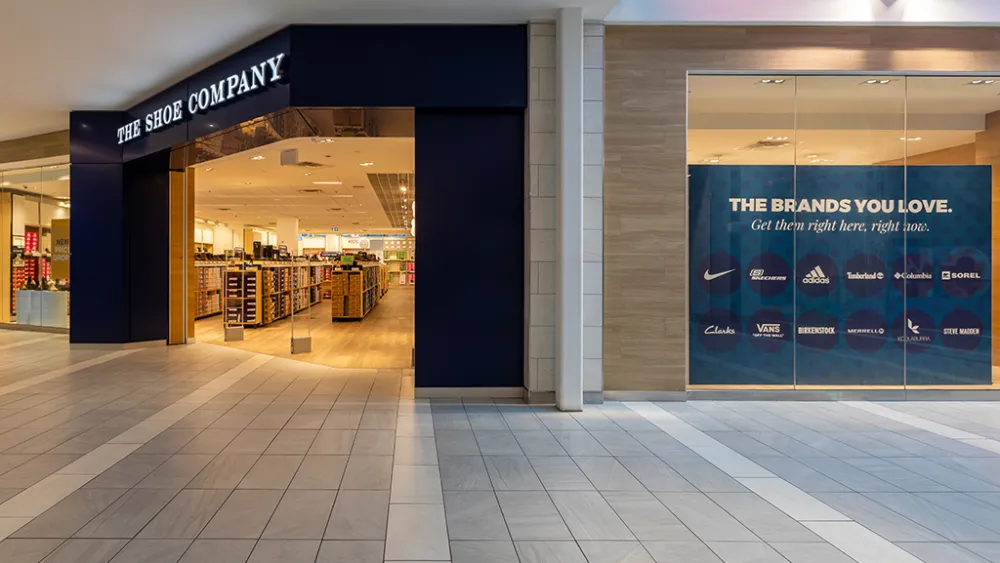
The integration affects several key retail banners operating across North America. These include DSW Designer Shoe Warehouse, the company’s flagship banner, as well as The Shoe Co. and Shoe Warehouse in Canada, and Rubino, a Quebec-based retailer acquired in 2024.
As of fiscal 2025, the combined retail segment includes 665 stores, consisting of 519 DSW locations, 118 The Shoe Co. stores, and 28 Rubino locations. The segment generated USD $2.66 billion in net sales, with comparable sales declining by 3.9% for the full year.
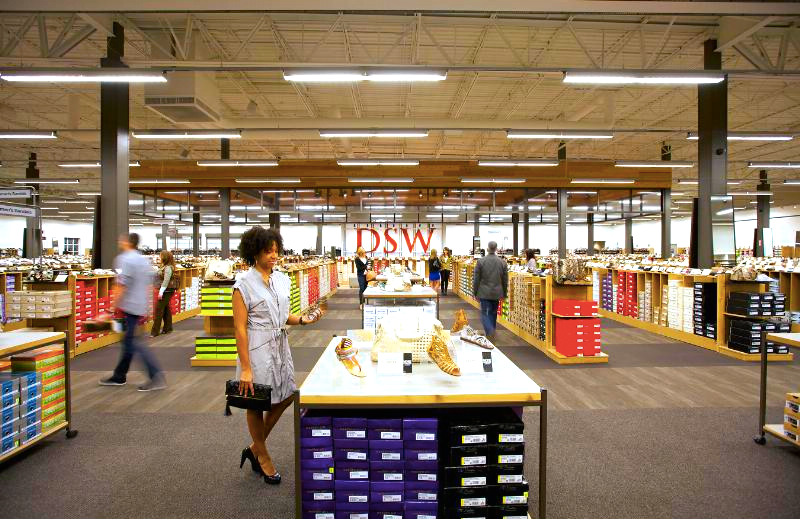
In Canada, each banner continues to maintain a distinct positioning despite the integrated management structure. DSW stores typically operate as large-format locations averaging about 20,000 square feet, often situated in power centres. The Shoe Co. serves a family-oriented customer base with smaller, neighbourhood-focused stores, while Shoe Warehouse locations emphasize value and clearance offerings. Rubino strengthens the company’s presence in Quebec and the French-Canadian market.
Financial Performance Reflects Cost Discipline
The Designer Brands U.S. Canada integration comes as the company focuses on disciplined cost management in response to a challenging macroeconomic environment. While full-year 2025 net sales declined 3.9% to USD $2.9 billion, the company exceeded its adjusted operating income guidance, reporting $65 million compared to a projected range of $50 million to $55 million.
Inventory management has also improved, with total inventory reduced by $36 million year over year to $563.5 million at the end of 2025. This reflects a broader emphasis on efficiency and margin improvement.
For fiscal 2026, Designer Brands expects relatively flat sales, with projections ranging from a 1% decline to a 1% increase. However, the company anticipates a notable increase in earnings per share, forecasting between $0.28 and $0.38, compared to $0.16 in 2025.
Strategic Response to Market Pressures
The timing of the Designer Brands U.S. Canada integration reflects broader pressures facing retailers. High interest rates, persistent inflation, and evolving tariff dynamics continue to impact both consumer spending and operational costs.
“We are currently operating in a volatile macro environment that includes evolving tariffs dynamics and conflict in the Middle East, the latter of which may introduce increased inflationary pressure moving forward,” Howe said during the earnings call. “We will continue to monitor these situations closely and remain nimble and adaptable as the year progresses.”
By unifying its North American operations, Designer Brands is positioning itself to respond more quickly to these external pressures. A single operating structure allows for faster decision-making and a more coordinated approach to pricing, promotions, and inventory management in what remains a highly promotional retail environment.
A Long-Term Evolution of the Canadian Business
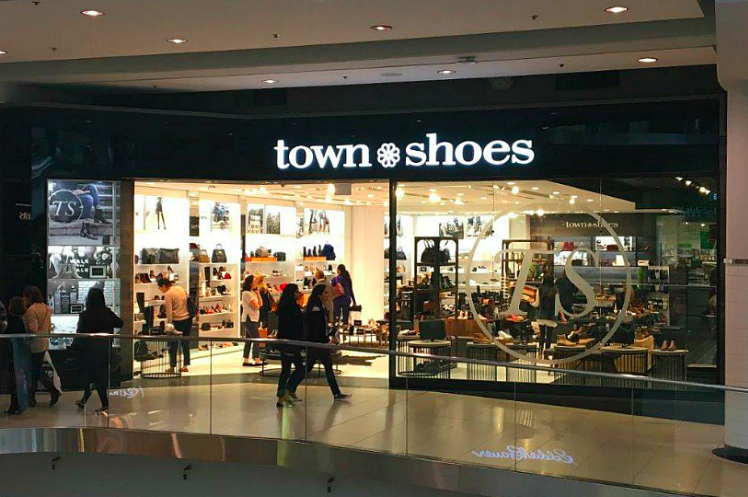
The integration marks the culmination of a multi-year expansion strategy in Canada that began more than a decade ago. Designer Brands entered the Canadian market through a staged acquisition of Town Shoes Limited, initially purchasing a 44% stake in 2014 before acquiring full ownership in 2018.
Following the acquisition, the company made a significant strategic shift by closing the Town Shoes banner in 2019, citing challenges in the mall-based specialty footwear segment. Resources were redirected toward expanding DSW and strengthening The Shoe Co. as core growth banners.
The addition of Rubino in 2024 further enhanced the company’s Canadian footprint, particularly in Quebec. The current integration of U.S. and Canadian operations represents the final step in transitioning from a regionally segmented business to a fully unified North American platform.






This is a very prudent decision by Designer Brands. After all, running Canadian and U.S. store networks as a combined unit worked brilliantly for Nordstrom. Oh, wait…