A well known Greater Toronto Area shopping centre has entered receivership. On March 2, the Ontario Superior Court of Justice issued an order placing Dixie Outlet Mall and its related assets under a court appointed receiver. Alvarez & Marsal Canada Inc. has been appointed to oversee the property and evaluate options for its future.
Despite the legal proceedings, the mall remains open and operating normally. More than 100 tenants continue to trade, and shoppers should see little immediate change.
The Dixie Outlet Mall receivership highlights the financial pressures facing older retail properties and the growing push to redevelop large suburban sites into mixed use communities.
Receiver Appointed to Oversee the Property
Court documents confirm that Alvarez & Marsal Canada Inc. has been appointed as receiver for the property. The firm now has authority to manage the mall’s assets and financial structure while determining the best path forward for creditors and stakeholders.
The property is primarily owned by Slate Asset Management through the entity SCREO I Dixie Outlet Mall Inc., which has been advancing long term redevelopment plans for the site.
While the receiver now controls the asset, the goal is to stabilize operations and maintain value while strategic options are explored.
Day to day property management will continue to be handled by Cushman & Wakefield, which already manages the centre and remains the primary contact for tenants.
Business Continues as Usual for Tenants
For retailers and shoppers, the most immediate message is that operations continue as normal.
Tenants were notified on March 5 that their lease agreements remain in effect and that the shopping centre will continue operating during the receivership process.
The mall is home to more than 100 retailers, including recognizable brands such as Nike, Guess, Winners, and No Frills.
Maintaining tenant stability is critical during receivership proceedings. Keeping stores open protects the value of the property and helps maintain customer traffic.
In many retail receiverships, the first priority is simple. Keep the lights on, keep tenants operating, and preserve the asset while longer term decisions are made.
Financial Pressure Behind the Receivership
The receivership appears to reflect financial strain rather than a sudden operational collapse.
Retail real estate owners often carry significant debt while waiting for redevelopment approvals. These planning processes can take years, particularly for projects involving housing, parks, and infrastructure.
During that time, the property must generate enough income to cover financing costs.
In the current economic environment, that challenge has become more difficult. Higher interest rates and tighter credit markets in 2025 and 2026 have increased borrowing costs for many real estate owners.
When loans mature or financing becomes too expensive, receivership can provide a structured process that pauses creditor actions while a new strategy is developed.
In this case, the Dixie Outlet Mall receivership appears to function as a financial reset that allows the property to move toward its next phase.
Redevelopment Vision Known as “Plan Dixie”
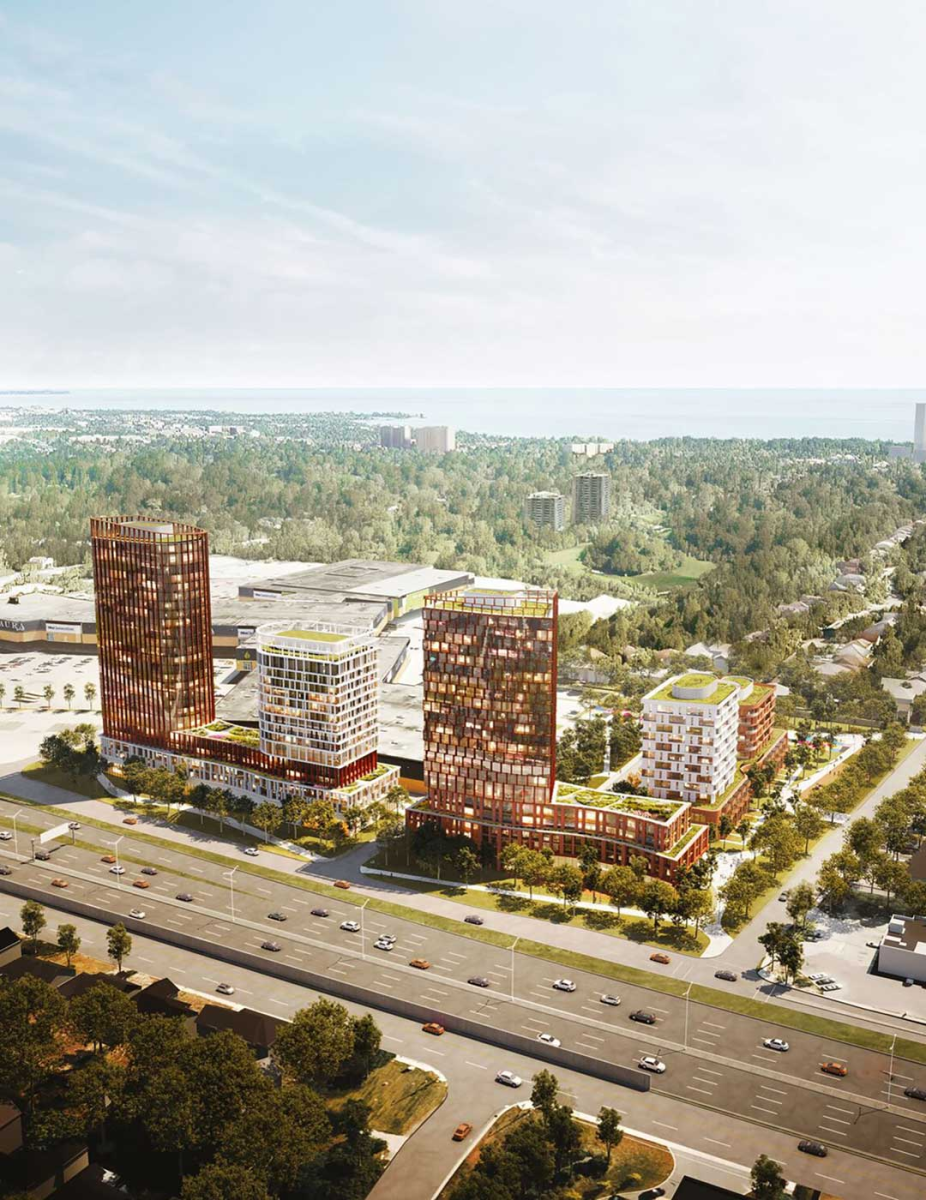
The long term future of the property is closely tied to a redevelopment concept known as Plan Dixie.
The proposal aims to transform the largely paved site into a mixed use residential community anchored by retail space.
Plans discussed between 2024 and 2025 envision retaining about 365,000 square feet of the existing mall while adding several residential towers.
Those towers could range from eight to nineteen storeys and introduce approximately 1,000 to 1,200 residential units.
The redevelopment proposal also includes more than 3.5 acres of parkland and pedestrian trails that would connect the property to surrounding neighbourhoods.
Planning policies related to the project have been incorporated into Mississauga’s Official Plan 2051 framework. Because much of the planning groundwork has already been completed, the site could attract developers prepared to move forward with construction.
A Retail Site with a Long History
The property’s history dates back nearly seventy years.
When the centre opened in 1956, it was known as Dixie Plaza. At the time it was one of the first suburban shopping centres in what was then Toronto Township, the municipality that later became Mississauga.
Its location near the Queen Elizabeth Way helped establish it as an early example of highway oriented retail. This model became common across North America during the rapid suburban growth of the postwar era.
In the late 1980s the centre underwent a major repositioning. The property was renovated and rebranded as Dixie Outlet Mall, shifting toward a value focused retail strategy.
The outlet model allowed the centre to coexist with nearby CF Sherway Gardens, which developed as a more upscale regional shopping destination.
For decades Dixie Outlet Mall has served a specific role in the regional retail market. It became known as a destination for discounted brand name goods and a shopping hub for budget conscious families.
Unique Features and Local Identity
The mall also developed several distinctive features that helped shape its identity.
One of the most notable is the Fantastic Flea Market located in the basement level. Established in 1976, it remains one of the oldest flea markets in the Greater Toronto Area.
The market houses dozens of independent vendors and offers antiques, collectibles, and specialty goods that differ from traditional mall retail.
The site also once hosted a Knob Hill Farms grocery terminal, a well remembered retailer known for its large warehouse format and black and yellow shopping baskets.
These elements helped shape the mall’s reputation as a practical and sometimes unconventional shopping destination.
Sustainability Efforts Over the Years
Although the centre is often associated with traditional retail formats, it has also implemented environmental initiatives.
The property became fully powered by Bullfrog Power, relying on renewable wind and hydro electricity.
In 2010 the mall received a Gold Award from the Recycling Council of Ontario for its waste diversion and recycling programs.
These initiatives reflected an effort to modernize the centre’s operations while maintaining its long standing role in the local retail landscape.
Future redevelopment plans aim to go further by introducing green space and pedestrian connections to a site currently dominated by asphalt and parking.
What Happens Next
Over the coming months, the receiver will evaluate several potential scenarios for the property.
These options may include restructuring the mall’s existing debt, attracting new investment partners, or preparing the asset for sale.
Receivership often acts as a transition point that allows large redevelopment sites to move forward under new ownership or financing structures.
Because planning policies for the redevelopment have already progressed, the site may appeal to developers interested in residential growth in Mississauga.
If redevelopment moves forward, portions of the existing mall may eventually be demolished while the remaining retail space becomes the commercial base of a new neighbourhood.
A Retail Property Entering Its Next Phase
For now, shoppers will continue to experience Dixie Outlet Mall much as they always have.
Stores remain open, retailers continue to operate, and the centre remains a familiar value oriented shopping destination for residents across Mississauga and the western Greater Toronto Area.
Behind the scenes, however, the Dixie Outlet Mall receivership signals that the property is entering a new phase.
The process will determine whether the mall continues largely as it is today or evolves into the mixed use residential community envisioned under Plan Dixie.
Either way, the site that began as Dixie Plaza in 1956 is once again preparing for a significant transformation in the region’s retail and urban landscape.