Global retail eCommerce sales are projected to surpass $4.3 trillion in 2025. As the industry continues its rapid expansion, merchants face increasing pressure to deliver faster, more efficiently, and with greater transparency—all while keeping costs in check.
However, many are struggling to keep pace with these mounting last-mile delivery expectations. An overwhelming 85% of merchants recently surveyed say that demand for faster delivery has impacted their ability to maintain control over last mile logistics, with 42% citing major disruptions.

The Taking Back Control:
How Merchants Can Win the Last-Mile Battle report, commissioned by UPS Capital, delves into this evolving landscape. Drawing insights from 500 eCommerce merchants and 1,000 U.S. consumers, the report examines how last-mile delivery has shifted over the past few years and what merchants need to do to regain control.
Rising Consumer Expectations for Speed and Control
Speed has become the leading factor influencing where consumers shop. Nearly a third (31%) of consumers surveyed rank fast delivery as their top priority—outpacing both cost and product selection. This demand is even more pronounced among younger consumers: 51% of Gen Z respondents prioritize quick shipping, compared to only 15% of Baby Boomers.
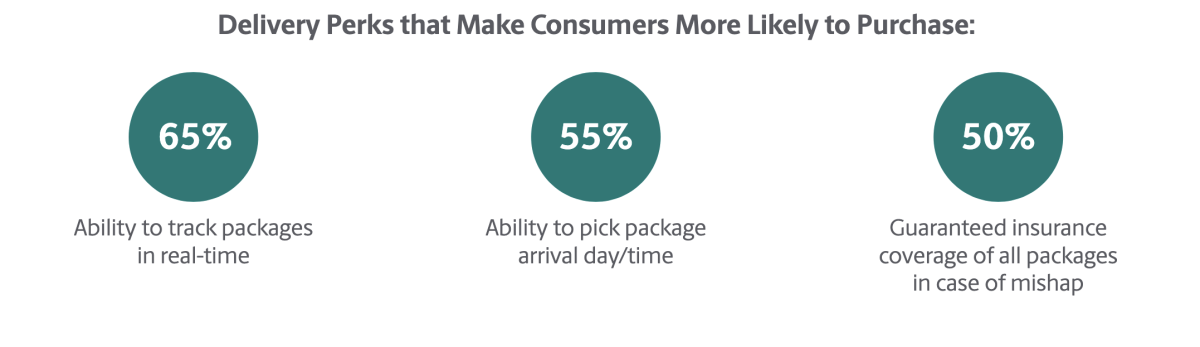
Personalization is also key. Nearly half (44%) of shoppers surveyed want the ability to customize their shipping preferences, and 84% say they’re more likely to buy from merchants that offer personalized delivery options.

The Brand Risk of Shipping Issues
An overwhelming 98% of surveyed merchants agree that delivery experience impacts brand reputation, with 58% ranking it among the most critical factors. This makes managing consumer’s last-mile frustrations essential as delivery issues can heavily influence purchasing decisions.
Consumers’ Biggest Frustrations in Last-Mile Delivery:
- 38% – Late or missed deliveries
- 37% – Package left in unsafe locations
- 34% – Lack of real-time tracking or updates
Nearly two-thirds (61%) of consumers surveyed check reviews before buying, with younger generations even more cautious: 74% of Gen Z and 73% of Millennial respondents routinely research retailer reliability before hitting “buy.”
If a brand fails to resolve a shipping issue, a quarter (25%) of surveyed consumers hesitate to shop with them again, and nearly 44% of Gen Z respondents demand issue resolution before considering a repeat purchase.
Consumers Not Sold on Social Commerce
The rise of social commerce—shopping directly through platforms like Instagram, TikTok, and Facebook—is transforming eCommerce. However, trust remains a significant barrier to widespread adoption.
Only 19% of surveyed shoppers trust social media storefronts for deliveries, and 39% have never attempted a social commerce purchase at all.
While younger consumers are more open to the trend, confidence issues persist across generations. Millennial (30%) and Gen Z (25%) respondents express the highest confidence in social storefronts, but 70% of surveyed Boomers have avoided social commerce entirely.
Take Back Control of the Last Mile
Delivery mishaps—whether from theft, damage, or delays—now affect more than just a merchant’s bottom line. They directly influence brand trust, customer satisfaction, and long-term loyalty. To stay competitive, merchants must prioritize innovation, transparency, and last-mile reliability to not just survive but thrive in the evolving eCommerce landscape.
Solutions like UPS Capital’s InsureShield® Shipping Insurance help merchants mitigate last-mile risks, ensuring they can deliver with confidence from cart to customer doorstep.

For more data and insights on how to take back control of the last mile, get the full report.
*We are licensed as an insurance broker in Ontario only and are not yet offering any services or products in other provinces, including Québec. You can find the complete insurance disclosure here: Product Disclosure.
If you would like us to let you know when we are licensed in your province, then send us an email via insureshieldca@ups.com, and we will get back to you.
Insurance coverage is underwritten by a Canadian licensed insurance company and issued through UPS Capital Canada Insurance Brokers, Limited (“UPS Capital Insurance Brokers”) – an indirect wholly-owned subsidiary of UPS Capital Corporation (“UPS Capital”). The insurance company and UPS Capital Insurance Brokers reserve the right to change or cancel the program at any time. Insurance coverage is governed by the terms and conditions, including the limitations and exclusions, set forth in the applicable insurance policy (the “Policy”). This information does not in any way alter or amend the terms or conditions, including the limitations or exclusions, of the Policy, and is intended only as a brief summary. Insurance coverage is not available in all jurisdictions. UPS Capital Insurance Brokers only issues policies of a single insurer in Canada, and receives commission on sales of insurance. An affiliate of UPS Capital Insurance Brokers reinsures a material portion of the risk insured by this insurance policy and the UPS Capital group therefore has a financial interest in the insurance program. You are not required to purchase insurance from UPS Capital Insurance Brokers and have the right to seek insurance elsewhere. In particular, your ability to ship using United Parcel Service Canada Ltd. or its affiliates is not conditional on your purchase of insurance from UPS Capital Insurance Brokers.