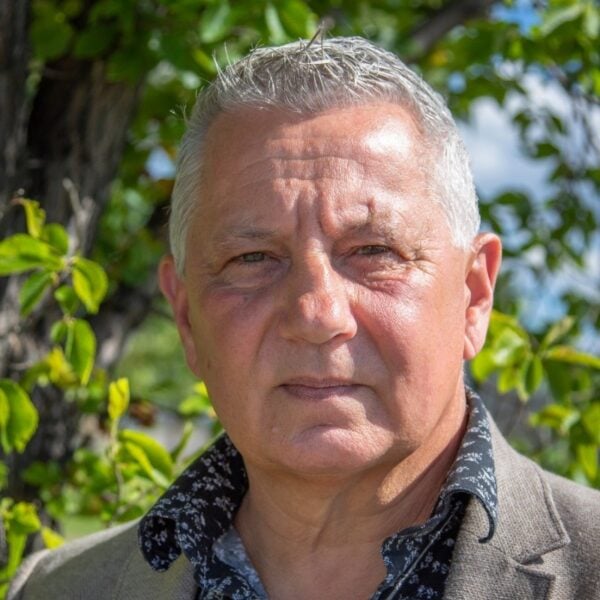
Sleep Country Canada CEO Stewart Schaefer says the company is navigating a quieter retail environment while pursuing growth through domestic expansion, direct-to-consumer brands, and international acquisitions.
Schaefer described the last three months as “very quiet” for the company, noting that consumer activity has softened following a record 2025, which he described as the company’s best year in both revenue and profitability. “Except since Black Friday, and the noise and rhetoric around Trump and tariffs and all that different things, the consumer seems to have pulled back quite a bit,” he said.
Despite a slowdown in early 2026, Schaefer said he remains optimistic. “The consumer is still employed, even though unemployment’s ticking up a little bit. Their savings are growing. I’m not seeing such negativity out there, so I am okay,” he said. He added that he expects a rebound in the second half of 2026 and into 2027, as market disruptions either resolve or consumers become desensitized to them.
Schaefer cited multiple sources of uncertainty affecting retail, including tariffs, trade disputes, and emerging technology. “Every day you wake up, is there a different tariff? Is there a different—this is what’s going on with AI and how’s that having an impact in terms of business and unemployment? There’s just so much noise out there,” he said. He also highlighted weather conditions in Toronto, including heavy snowfall this winter, which he said had an impact on operations and consumer traffic. The housing market in Toronto is also soft these days.
While acknowledging these headwinds, Schaefer emphasized that Sleep Country continues to expand. “We are still growing and opening more stores. We’re still doing acquisitions,” he said, describing the current slowdown as a temporary blip. He noted that, over the past year, consumer behaviour has fluctuated but consistently recovered, citing strong Boxing Day sales following a quieter October.
Schaefer also provided insight on the company’s direct-to-consumer (D2C) strategy. He identified Silk and Snow, Endy, Hush, and Casper as key brands for growth outside Sleep Country’s core retail stores. “Silk and Snow has been the darling of the bunch, performing beautifully. In some of our Sleep Country stores, we’ve been opening Silk and Snow stores inside, or we’ve been opening Silk and Snow standalone stores. We continue to experiment, test, learn,” he said.
The D2C strategy extends beyond Canada. “The Endy mattress with the Canadian maple leaf on the product seems to be resonating very well with our Florida friends,” Schaefer said.
International expansion has also become a focus. Last summer, Sleep Country completed its first overseas acquisition, buying a stake in U.K.-based Simba. Schaefer recently visited the U.K. team and highlighted optimism around a new trade deal between the European Union and India. “Some of the U.S. noise in terms of trade relations has forced the Europeans to get their act together with their own trade deals. A 20-year-old deal that they’ve been working on between the countries, as well as with India, just got signed,” he said.
“We’re looking for even further opportunities in Europe. United States is a crowded retail market and the UK marries up really nicely with us.”
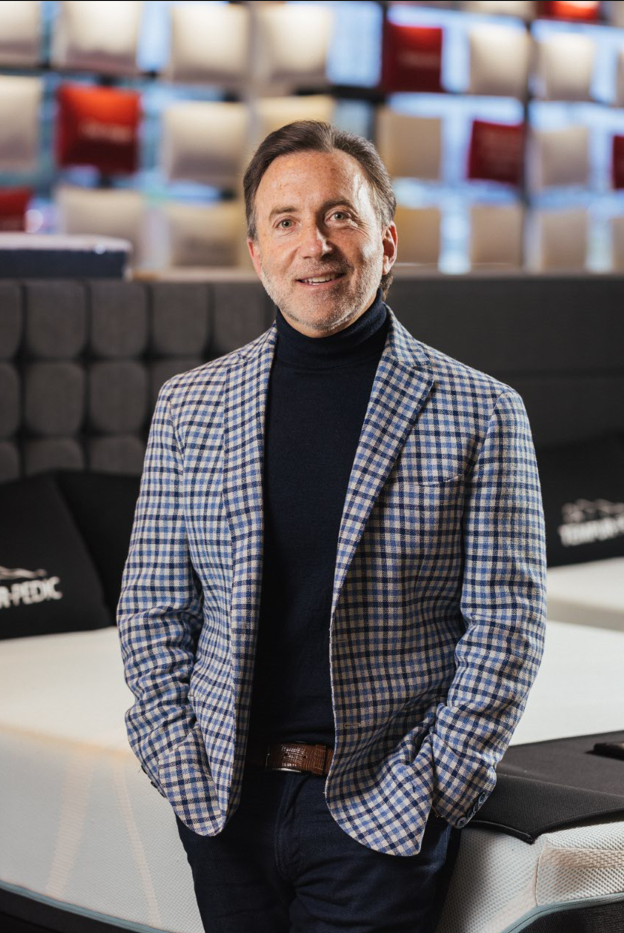
Schaefer also discussed Sleep Country’s acquisition of Canadian and UK. rights to the Bed Bath & Beyond brand. He said the company has temporarily closed stores and taken down the website as it plans a relaunch under new leadership. Carol Deacon is overseeing the transformation. “We just finished with the marketing agencies on the new personality of Bed Bath & Beyond, the new look and feel. We’re excited about that. That should hopefully launch by the end of the year,” he said.
Schaefer attributed the company’s resilience to the broader capacity of businesses and consumers to adapt to uncertainty. Drawing parallels to the COVID-19 pandemic, he said, “If you managed through COVID, this is nothing. In COVID, everyone—the whole world shut down. The store shut down. People were furloughed. There was a supply chain disruption. You couldn’t walk. This is nothing.” He argued that consumers are returning to normal spending patterns as employment remains stable and housing secure.
Looking ahead, Schaefer said he expects the Canadian retail market to remain influenced by global developments but believes Sleep Country’s diversified strategy positions it well for growth. “We are still growing and opening more stores. We’re still doing acquisitions. I do think this is a blip…The consumer always seems to come back,” he said.
Schaefer’s comments underscore the interplay between operational strategy, macroeconomic factors, and consumer behaviour. By blending domestic expansion with targeted D2C initiatives and international acquisitions, Sleep Country is positioning itself to weather short-term market volatility while pursuing longer-term growth opportunities.
“I’m bullish for the second half of 2026. And I’m even more bullish into 2027,” he said, reflecting a measured confidence grounded in the company’s ongoing operational and strategic initiatives.
More from Retail Insider: