

Toronto-based fast-casual chain Basil Box will shut down all of its remaining locations across Canada, with operations scheduled to cease by May 14, 2026, according to a company announcement issued on May 4.
The closure marks the end of a brand that, at its peak, was viewed as one of Canada’s more promising homegrown fast-casual concepts, built around Southeast Asian-inspired cuisine and a highly differentiated 100% gluten-free offering.
While the company cited “deeply personal reasons” for the decision in a public statement, it did not provide further details. The absence of a sale process or restructuring effort suggests a deliberate wind-down of the business rather than a traditional insolvency scenario.
A Toronto-Born Concept with National Ambitions
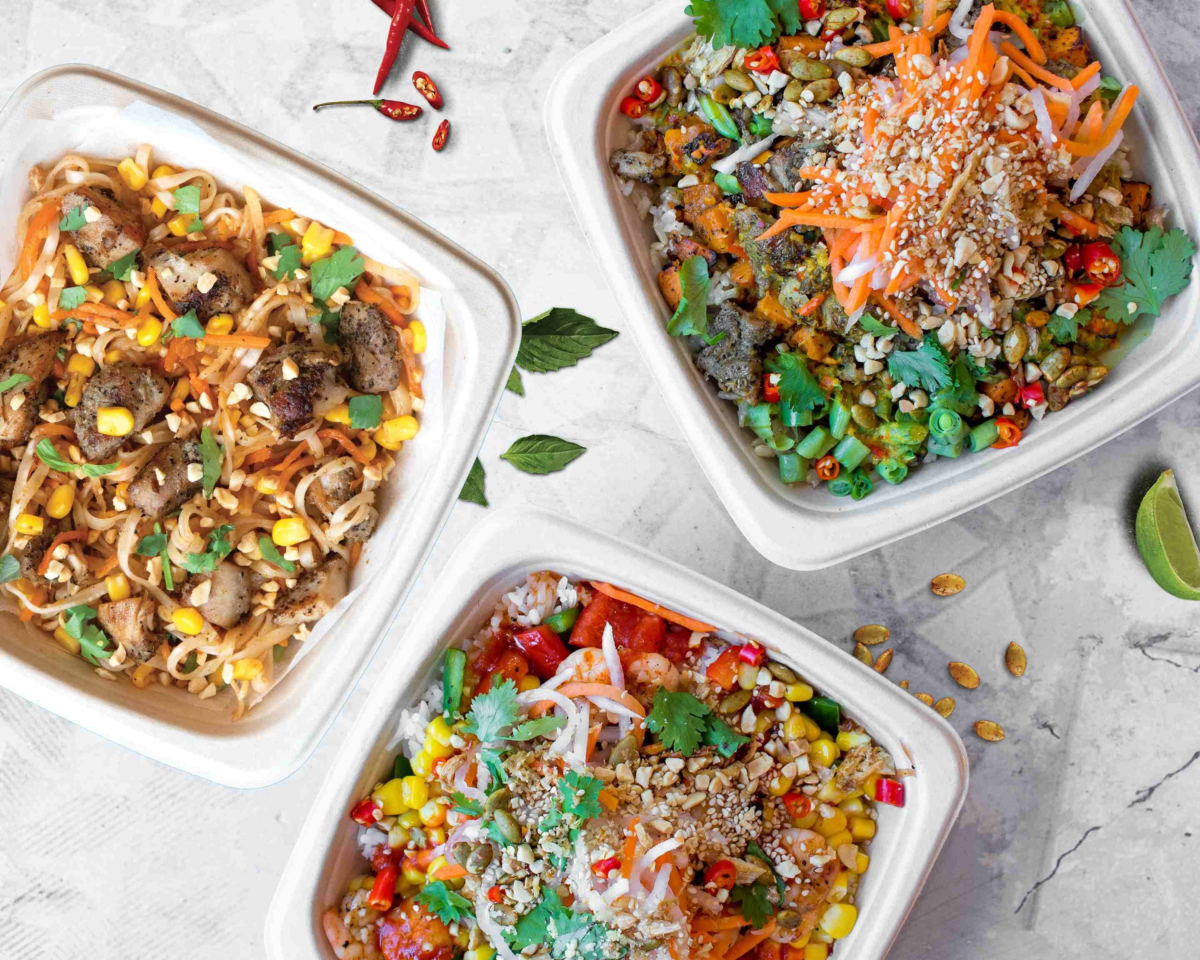
Founded in 2015 by Peter Chiu, Basil Box launched with a clear value proposition: customizable, health-focused Southeast Asian meals served in a fast-casual format. The concept drew inspiration from street markets in Thailand and Vietnam, while adapting to North American consumer preferences for convenience and dietary transparency.
The brand quickly gained traction in the Greater Toronto Area, opening its first location at Square One in Mississauga before establishing a high-profile presence at Queen and Spadina in downtown Toronto. From there, Basil Box expanded into Western Canada, entering markets such as Calgary and Edmonton as part of a broader national growth strategy.
At its peak around 2019, the company operated approximately 17 locations across multiple provinces and was often cited alongside emerging Canadian fast-casual players targeting the “healthy” dining segment.
Early Signs of Contraction
Despite early momentum, the brand began to show signs of strain in the years following the pandemic.
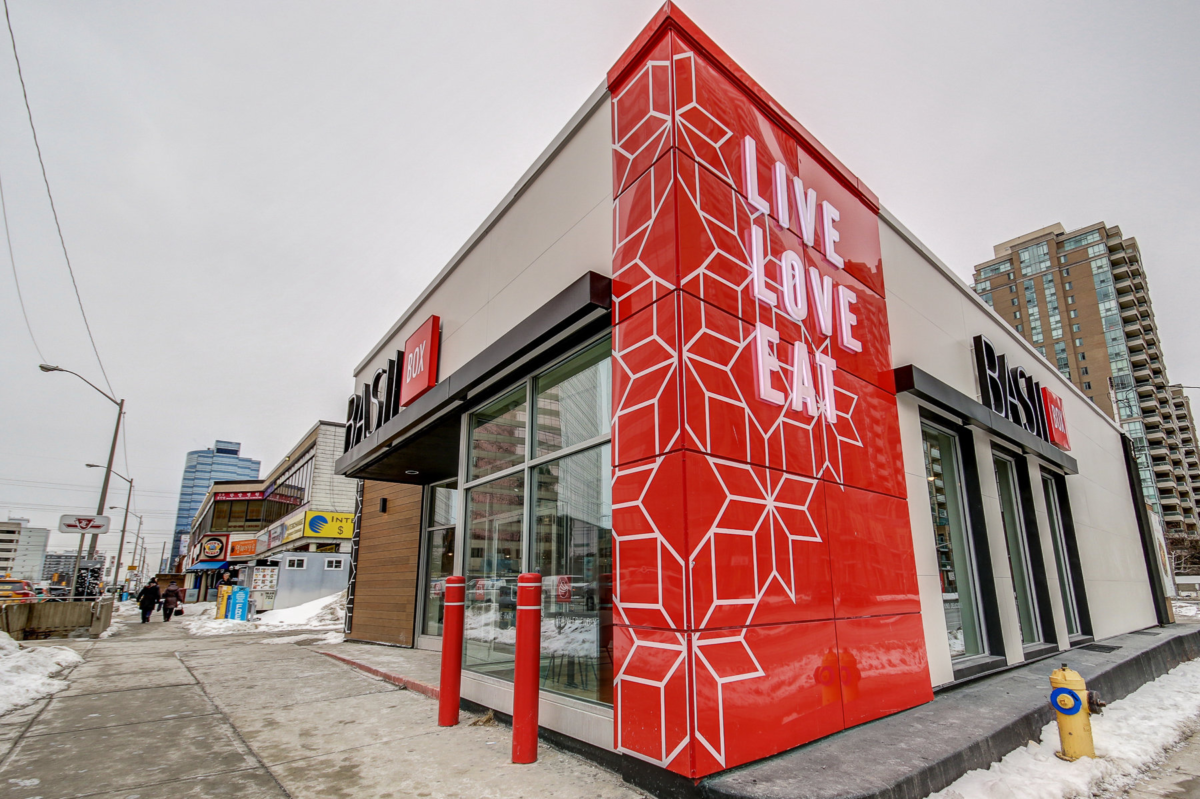
The closure of its Queen and Spadina location in 2024 marked a notable shift. Once considered a flagship, the store had anchored the brand’s downtown presence and visibility. Its exit signalled a broader retrenchment, particularly as office foot traffic remained below pre-2020 levels.
Basil Box also scaled back its Western Canadian operations between 2021 and 2023, retreating from Alberta and British Columbia after initially positioning those markets as key growth opportunities.
By 2026, the company’s footprint had narrowed primarily to a handful of locations in Toronto, including sites at Toronto Metropolitan University, Royal Bank Plaza, Toronto General Hospital, and Yonge and Finch.
A Sudden and Unusual Closure
The decision to close all remaining locations comes abruptly, particularly given the absence of a formal restructuring process or sale.
In the Canadian restaurant industry, distressed chains often pursue creditor protection or seek buyers to preserve brand equity. Basil Box’s approach appears different. The reference to “deeply personal reasons,” combined with a full shutdown of both corporate and franchised locations, points to a founder-led decision to exit the business entirely.
That distinction is notable. It suggests that the closure may not be driven solely by immediate liquidity constraints, but also by leadership considerations and long-term viability assessments.
The Economics Behind the Exit
Although the company did not cite financial pressures directly, the broader operating environment for fast-casual restaurants in Canada has become increasingly challenging.
Basil Box occupied a price point typically ranging from $14 to $19 per meal, placing it squarely in the middle of the market. That segment has faced mounting pressure as consumers adjust spending habits in response to inflation and economic uncertainty.
A growing divide has emerged across the restaurant landscape. Value-oriented quick service chains continue to capture budget-conscious consumers, while premium dining remains supported by higher-income households. Mid-priced fast-casual concepts are increasingly caught between those two poles.
At the same time, operating costs have risen significantly. Food input costs have increased over the past several years, particularly for concepts reliant on imported ingredients such as jasmine rice, coconut-based products, and Southeast Asian spices. Labour costs have also escalated, driven by wage increases and ongoing staffing challenges.
Real estate adds another layer of pressure. Basil Box’s strategy relied heavily on high-traffic urban locations in office towers, hospitals, and dense commuter corridors. While those sites once delivered strong volumes, they also carried elevated occupancy costs. In many cases, operators are now paying peak-era rents in environments where foot traffic has not fully recovered.
The result is a difficult equation. For many fast-casual operators, maintaining profitability in that segment has become increasingly complex.
A Differentiated Model That Built Loyalty
One of Basil Box’s defining features was its commitment to a fully gluten-free menu. Unlike competitors that offered limited gluten-friendly options, the brand designed its entire supply chain to accommodate customers with dietary restrictions, including those with celiac disease.
That positioning created a loyal customer base and helped differentiate the brand in a crowded market. It also introduced additional complexity and cost, as certified gluten-free sourcing and strict operational controls limited flexibility in managing food costs.
The company also operated without deep fryers, reinforcing its health-focused identity while simplifying kitchen operations. Combined with a build-your-own assembly line model, this allowed for high throughput during peak periods and relatively efficient labour deployment.
These elements contributed to the brand’s early success, particularly in high-density urban locations where speed and customization were key.
A Broader Signal for the Sector
The closure of Basil Box adds to a growing list of challenges facing Canada’s fast-casual dining segment.
What was once considered a high-growth category has entered a more complex phase. Consumer expectations remain elevated, but price sensitivity has increased. At the same time, cost structures have shifted in ways that are difficult to offset without compromising value or experience.
In that context, Basil Box’s trajectory reflects a broader recalibration across the industry.
The brand built its model around high-traffic urban nodes and a premium positioning tied to health and quality. Those same factors supported growth during its early years. More recently, they appear to have become structural constraints.
In effect, the company was paying for access to peak foot traffic conditions that no longer exist at the same scale.
End of a Chapter
Basil Box’s final day of operations is scheduled for May 14, bringing an end to a business that helped shape Canada’s modern fast-casual landscape over the past decade.
For customers, particularly those seeking gluten-free dining options, the closure leaves a noticeable gap. For the industry, it serves as another indicator of how quickly operating conditions can shift.
As the Canadian restaurant sector continues to evolve, the middle of the market remains under pressure, and brands that once defined it are increasingly being forced to reassess their path forward.












The first I ever heard of it was that it was shutting down.