

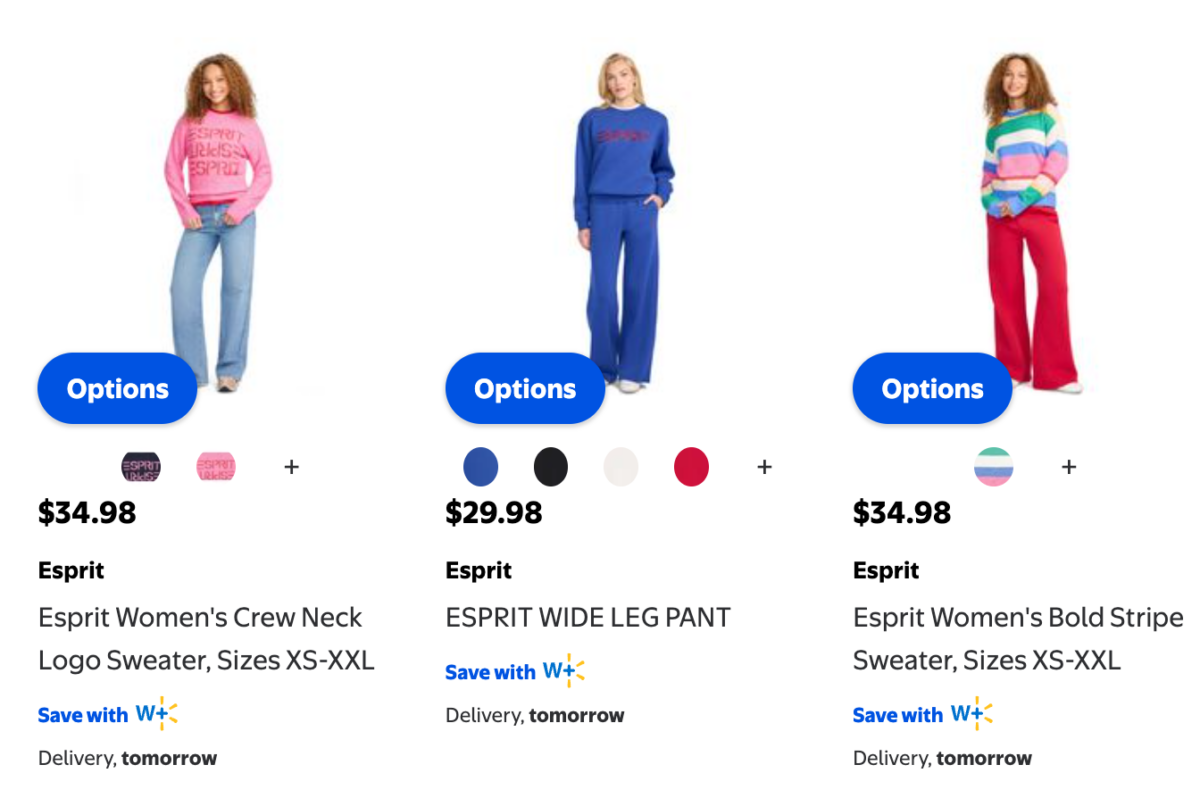
Esprit has returned to Canada through an exclusive collection at Walmart, bringing the once-prominent mall brand back to Canadian shoppers more than a decade after its North American store network disappeared.
The initial collection is available at select Walmart Canada stores, on Walmart.ca and through the Walmart app. It includes knitwear, denim, layering pieces and everyday basics in sizes XS to XXL.
Walmart is positioning the launch around renewed interest in 1990s fashion, giving the collection the potential to reach Canadians who remember shopping at Esprit stores and younger consumers encountering the brand for the first time.
The collection was developed in collaboration with Centric Brands, a global licensing and brand-management company that is taking on a growing role in Walmart Canada’s apparel business.
Centric also worked with Walmart and KnitWell Group to introduce Lane Bryant to Canada earlier this year. Centric has told Retail Insider that additional brands are expected to follow, although the company has not yet identified them.
The developing relationship suggests that Esprit is part of a broader effort to bring recognizable apparel names into Walmart’s Canadian network.
That strategy is unfolding as Walmart works to capture a larger share of the country’s fashion and beauty market, supported by more than 400 stores, a national ecommerce platform and a customer base already visiting regularly for groceries and household essentials.
The opportunity has become more visible since Hudson’s Bay closed its remaining stores on June 1, 2025, removing one of Canada’s largest multi-brand sellers of apparel, accessories, cosmetics and home products.
Esprit Collection Arrives at Walmart Canada
The Esprit assortment includes casual pieces drawing on the brand’s history in colourful, accessible fashion. Walmart describes the collection as combining nostalgic influences with updated silhouettes for today’s shoppers.
The retailer has not disclosed how many stores are carrying Esprit, how long the exclusive arrangement will run or whether the collection could eventually expand into additional product categories.
The launch gives Esprit a considerably broader Canadian platform than its previous comeback attempts. Through Walmart, the brand can reach shoppers across the country without establishing its own stores, distribution infrastructure or Canadian retail organization.
Walmart gains an exclusive name with decades of recognition. Esprit built its identity around casual apparel, distinctive advertising, colourful stores and a highly recognizable stencil-style logo.
Although the brand began in California, it eventually developed into a global fashion business with a particularly strong presence in Europe and Asia.
For many Canadians, however, Esprit remains closely associated with the country’s shopping centres during the 1980s, 1990s and 2000s.
A Familiar Brand in Canadian Malls
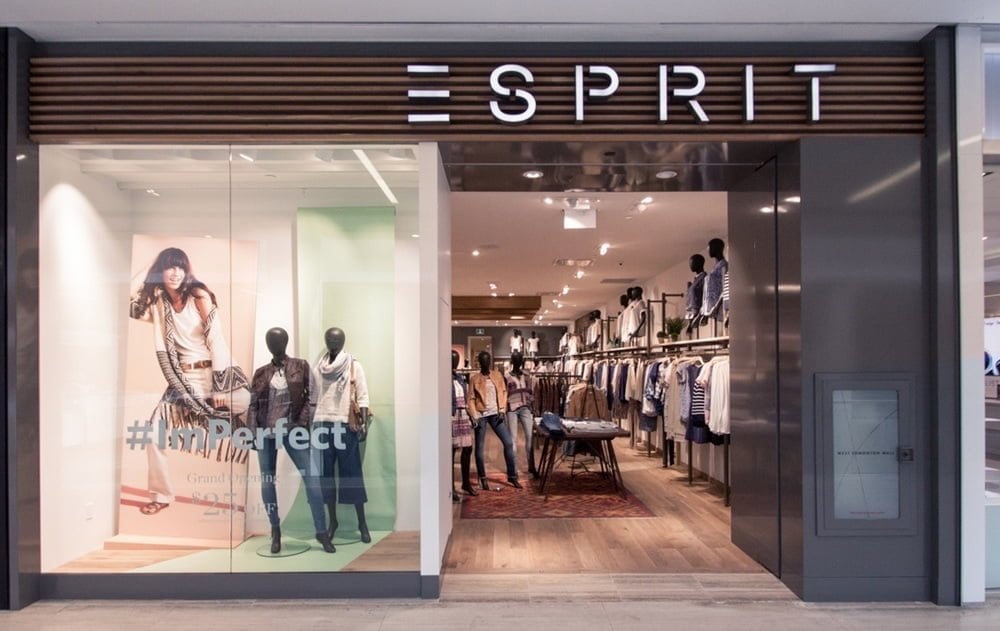
Esprit was once a regular tenant in major Canadian malls, operating stores in large metropolitan markets and regional shopping centres.
Former locations included CF Toronto Eaton Centre, Yorkdale Shopping Centre, CF Sherway Gardens, Bayshore Shopping Centre in Ottawa and Metropolis at Metrotown in Burnaby, along with stores in other communities.
Its Canadian locations carried women’s and men’s apparel, denim, accessories and casual wardrobe staples. The company also operated the younger-oriented edc by Esprit label at various points in its history.
Esprit held a sizeable position in the mid-market fashion sector, alongside other international and Canadian apparel chains that relied heavily on enclosed malls.
Its visual identity helped distinguish the company. Esprit’s stores and advertising drew from modern art, graphic design and architecture, creating a presentation that was unusually distinctive for a broadly accessible clothing brand.
By the late 2000s, Esprit faced growing competition from fast-fashion chains and a wider selection of international retailers. Its North American business struggled to remain profitable while the company directed greater attention to its larger operations overseas.
North American Stores Closed in 2012
Esprit announced in 2012 that it would close all 93 of its company-operated stores across Canada and the United States.
The withdrawal followed mounting losses in the region and an unsuccessful effort to find a sustainable path for the business. Esprit explored the possibility of continuing through a licensing partner but ultimately closed its company-operated North American stores.
For Canadian shoppers, the decision caused the brand to disappear from malls relatively quickly. Esprit merchandise remained available sporadically through wholesale accounts and independent retailers, but the national chain Canadians remembered was gone.
The departure came during a period of substantial change in the middle of Canada’s apparel market. In the years that followed, several familiar fashion chains contracted, entered insolvency or left the country as competition intensified and shopping habits shifted.
A Brief Canadian Comeback in 2016
Esprit attempted to rebuild a Canadian presence four years after its North American withdrawal.
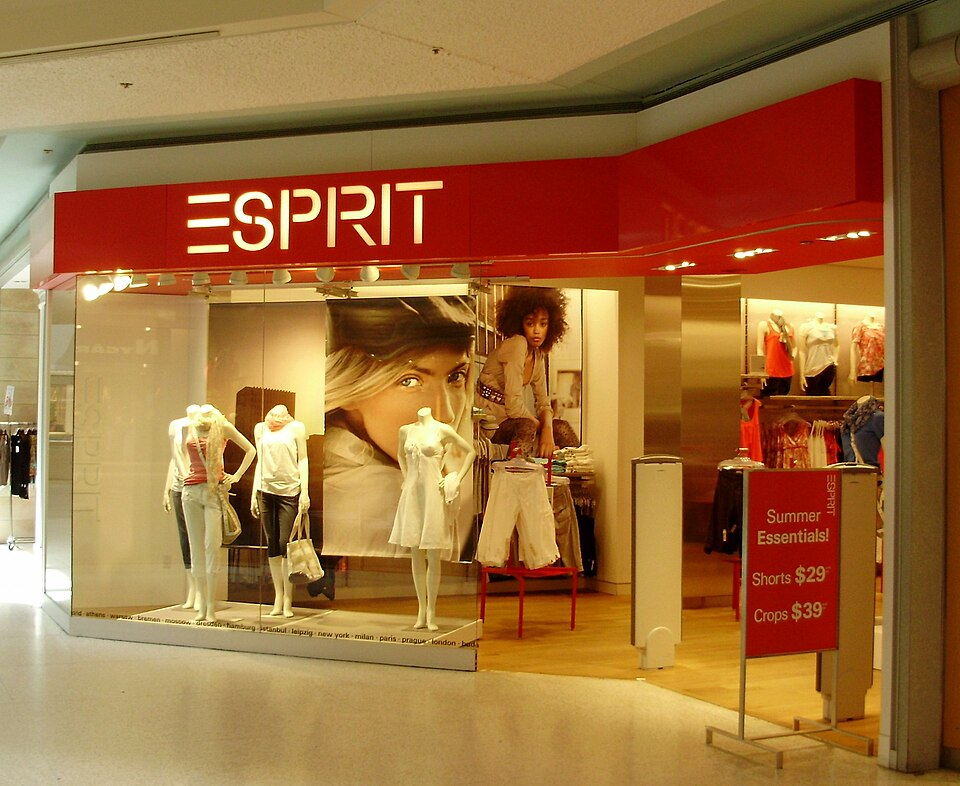
Montreal-based Freemark Apparel Brands brought the company back to Canada in 2016, beginning with a roughly 2,000-square-foot women’s store at West Edmonton Mall. The opening marked Esprit’s first North American retail location following the 2012 closures.
A second store opened at Metropolis at Metrotown in Burnaby. The approximately 2,500-square-foot location carried both men’s and women’s collections.
The new stores were smaller and more boutique-oriented than many of Esprit’s former mall locations. Freemark discussed a much larger Canadian rollout, with the possibility of eventually operating approximately 30 stores across the country.
A Square One location in Mississauga was also announced as part of the planned expansion, although confirmation that it ultimately opened has been difficult to establish.
The broader rollout did not take hold. Freemark later encountered financial trouble, and the Canadian Esprit stores closed.
Esprit Shifts Toward Licensing
Esprit considered another North American revival during the early 2020s, opening temporary spaces in markets including New York and Los Angeles and discussing plans to re-establish permanent stores.
Retail Insider reported in 2022 that Canada was among the markets being considered as part of that strategy.
The attempted comeback was followed by further financial difficulty. During 2024, Esprit operations in several European markets entered insolvency or bankruptcy proceedings, leading to store closures, job losses and a sharp contraction of the company’s directly operated business.
Esprit Holdings Limited, the Hong Kong-listed company that owns the brand, subsequently moved toward an intellectual-property management and licensing model.
Under that structure, Esprit can work with outside companies to design, source, manufacture, distribute and sell merchandise under its name.
Centric Brands is the partner involved in the Canadian Walmart launch. Esprit Holdings remains the brand owner, while Centric provides the operating expertise required to bring the collection to market.
The arrangement allows Esprit to earn revenue from its name and design heritage without rebuilding the costly store network that once supported the company.
For Walmart, the partnership provides access to an established label that can be developed for the retailer’s price points and customer base.
Centric Builds a Brand Pipeline at Walmart
Esprit follows the January 2026 Canadian launch of Lane Bryant, which arrived through a partnership involving Walmart Canada, Centric Brands and Lane Bryant owner KnitWell Group.
The Lane Bryant collection was introduced online and in 320 Walmart stores, giving the U.S. plus-size fashion brand a substantial Canadian presence without opening standalone locations.
The launch filled a gap in Walmart’s women’s fashion assortment while bringing a recognizable name into its apparel departments.
The Esprit partnership applies a similar model to a different customer group. Esprit carries broad recognition among Generation X and older Millennials, while its 1990s heritage may appeal to younger shoppers interested in fashion from the period.
Centric’s involvement in both launches points to a repeatable strategy. The company brings expertise in licensing, product development, sourcing, merchandising, marketing and distribution. Walmart supplies the physical and digital reach.
Centric has indicated to Retail Insider that other brands are expected to enter Walmart Canada, suggesting the partnership is developing into a broader pipeline of branded apparel. The names and timing of those future launches have not been disclosed.
Walmart Expands Its Fashion and Beauty Ambitions
Walmart has traditionally built much of its apparel business around value, wardrobe basics and private labels such as George.
Recognizable third-party and licensed brands can strengthen that assortment by increasing customer familiarity and giving shoppers a greater reason to browse the apparel department.
Walmart has also been giving greater prominence to established apparel labels, including Levi Strauss products, while adding exclusive brands aimed at particular customer groups.
A similar effort is underway in beauty. The retailer has introduced exclusive and younger-skewing beauty names, expanded inclusive product ranges and strengthened categories that can encourage shoppers to add discretionary purchases to routine store visits.
Apparel and beauty can help Walmart increase the value of each customer trip. Both categories may also shift perceptions among consumers who know the retailer primarily for groceries, household goods and opening-price-point merchandise.
Walmart’s scale gives it a considerable advantage. A brand entering the retailer’s network can quickly gain exposure across much of the country, including communities with limited access to department stores or dedicated fashion chains.
An Opening Following Hudson’s Bay
The disappearance of Hudson’s Bay has left Canada with fewer national retailers capable of selling multiple apparel and beauty brands under one roof.
Hudson’s Bay completed the liquidation of its remaining department stores in June 2025. Its departure removed a large amount of retail space and disrupted established distribution channels for fashion, cosmetics, footwear and home brands.
Walmart’s apparel strategy was likely in development before the Bay completed its liquidation. The department store’s closure nevertheless creates a larger opening for retailers willing to invest in branded discretionary categories.
Former Hudson’s Bay customers will not move to a single replacement. Their spending will be divided among specialty chains, ecommerce platforms, off-price retailers, beauty stores, warehouse clubs and mass merchants.
Walmart is well positioned to capture part of that market, particularly among shoppers seeking recognizable brands at accessible prices.
Esprit provides a useful test of that opportunity. The brand retains enough recognition to attract attention, while its licensing model allows the collection to be developed specifically for Walmart’s distribution network. The retailer can draw on Esprit’s history without assuming the cost of restoring the company’s former mall-based format.











I remember buying some men’s Esprit jeans from Sears St-Vital (#1436, 1225 St Mary’s Rd) as leftover Eatons clearance merchandise in the Summer of 2000 during the store’s extreme makeover from Eatons to Sears.