Mississauga-based ZoRaw Chocolates is building its retail footprint around a clear category decision: the company wants consumers and retailers to see its products as chocolate, not protein bars.
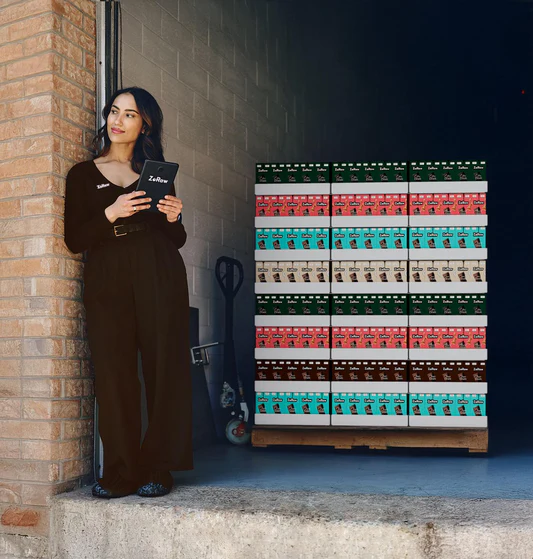
Founder Gigi Gill told Retail Insider that ZoRaw is now available in more than 4,000 retail locations. Grocery and club stores account for the largest portion of its physical retail business, with distribution through retailers including Costco, Whole Foods Market, Metro, Sobeys, Save-On-Foods and London Drugs.
The company is also preparing to enter Walmart Canada in 2026, while e-commerce remains its largest individual sales channel.
ZoRaw manufactures its products at its own facility in Mississauga. Gill said the plant has the capacity to produce approximately 30,000 chocolate bars per day, giving the company room to support larger retail accounts and future geographic expansion.
The factory was established beginning in 2020. ZoRaw launched its retail and e-commerce strategy in 2022.
Finding a Gap Between Chocolate and Protein Bars
Gill developed ZoRaw after identifying a gap between conventional chocolate, sugar-free confectionery and protein snacks.
“The gap was that there was no chocolate on the market that had that extra benefit of protein,” Gill said.
Consumers looking for protein were generally directed toward protein bars, while those seeking less sugar could choose from an existing range of sugar-free chocolate. Gill believed neither category fully addressed the consumer who wanted the taste and experience of chocolate with additional protein and fibre.
“When they miss chocolate, eating a protein bar doesn’t really satisfy that craving or taste because it’s not chocolate,” she said.
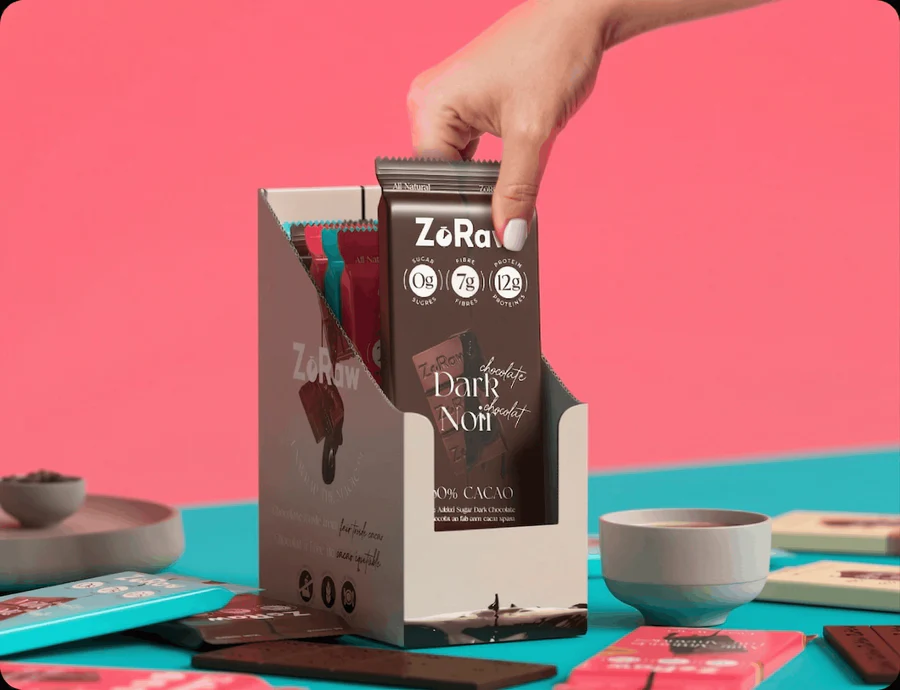
ZoRaw’s products are positioned around protein, fibre and no added sugar. The company’s challenge has been communicating those features without allowing them to define the product category.
That distinction became more important as ZoRaw pursued larger grocery and club retailers.
Moving Away from Sports Nutrition
Gill said the company initially considered positioning ZoRaw within sports nutrition, where shoppers were already familiar with protein-focused products.
The team later decided that placing the brand in that category could narrow its audience and put ZoRaw in direct competition with established protein-bar companies.
“We’ve got to be firm with our identity,” Gill said. “We’re chocolate first because we’re made from the cocoa all the way up.”
The protein-bar category also attracts shoppers who often compare products based on calories, protein content and nutritional efficiency. ZoRaw is targeting a different occasion.
“We’re not a protein bar. We’re a chocolate bar,” Gill said. “Our consumers see it the same way. They understand this is a chocolate bar first, and then the benefits are second.”
That positioning gives ZoRaw access to a wider consumer base, but it also places the company against established chocolate brands with strong recognition, large promotional budgets and extensive shelf space.
Gill described ZoRaw’s core customer as an everyday shopper who wants to make a modest change without adopting a strict fitness or nutritional routine.
“Our customer is an everyday person just looking to do a little better for themselves” she said.
Clearer Messaging Supported Retail Expansion
Gill said one of ZoRaw’s most important lessons has been the need to explain the product quickly.
Emerging consumer brands often work through several layers before reaching the shopper. The brand sells to a buyer, may work with a distributor and must then rely on the retailer’s merchandising and marketing teams to present the product.
Each participant has different priorities. Retailers are concerned with category sales, pricing, margins, promotions and inventory performance. The brand must make its point of difference understandable within that system.
“Keeping the consumer front and centre is always important” Gill said.
ZoRaw continued to adjust its packaging and sales messaging as it expanded into larger accounts. The objective was to communicate that the product belonged in chocolate while making the protein, fibre and sugar information visible enough to support the purchase.
Gill said this became especially important as the company entered retailers such as Costco and prepared for Walmart.
“We really make sure that we are a mass-appeal product” she said. “At the end of the day, it’s just chocolate. It’s made the same way as any other chocolate product.”
The company’s physical distribution gives it access to more shoppers, but maintaining those listings will depend on sales within each store. Repeat purchasing, promotional performance and retailer-specific assortment decisions will become more important as ZoRaw’s door count grows.
In-House Manufacturing Creates Room to Scale
ZoRaw’s decision to manufacture internally gives the company direct control over production, product development and capacity.
Gill began setting up the Mississauga factory during the pandemic, when travel restrictions made it difficult for international equipment specialists and engineers to enter Canada.
Her background was in biochemistry and management consulting, not industrial machinery. She learned the equipment while the facility was being assembled and continues to take a hands-on role when production issues arise.
Gill said the company used automation to create a facility capable of producing up to 30,000 bars per day without taking on the cost structure typically associated with a larger manufacturer.
“When you’re a small brand and you’re starting out, you want to maximize and be as nimble as possible without that overhead cost of what actually could produce 30,000 bars a day” she said.
The company’s approach to automation is focused on increasing output and improving how employees use their time.
“It doesn’t necessarily mean cutting headcount,” Gill said. “It’s how do you use that headcount to be more smart and intellectual and use that information to do better.”
The stated production figure represents capacity, not confirmed daily output. ZoRaw has not disclosed its current utilization rate, annual production volume or the number of shifts operating at the facility.
Gill said the company is examining further expansion as it takes on larger retailers and looks beyond Canada.
Cocoa Volatility Affects Pricing Decisions
Higher cocoa costs have created another challenge for ZoRaw as it tries to make the product accessible to mainstream consumers.
Gill said the company has worked to protect its shelf price by reviewing costs across the business, adjusting promotional spending and working with retail partners during periods when additional discounting is possible.
“We had to ensure that we were pulling all the other levers without having to change up our price” she said.
ZoRaw was able to limit some increases, but Gill said cocoa costs ultimately affected the suggested retail price.
The company now monitors commodity pricing closely and tracks how consumers respond when shelf prices change.
“We’re in this weird scenario where we’re trading cocoa like it’s a stock or like it’s gold” Gill said. “We’re always monitoring it.”
The pricing issue is especially important for a brand trying to move beyond natural-food and specialty retail. ZoRaw must justify its price through taste and nutritional attributes while competing against conventional chocolate products that benefit from greater purchasing scale.
Retail promotions are one way to narrow that gap. Gill said ZoRaw works with retail accounts to provide funding when market conditions allow the company to support a lower promotional price.
Product Preferences Differ by Channel
ZoRaw’s original chocolate bars remain its strongest-selling format, although sales patterns vary between online and store-based customers.
Gill said plain milk chocolate performs best through e-commerce. Almond products sell more strongly in physical retail.
The difference was unexpected.
“We would have thought our almond SKU would be the best seller across the board, but it wasn’t” Gill said.
ZoRaw has also introduced smaller bite-sized products. Gill said those formats have not been available long enough to replace the original bars as the company’s strongest sellers.
The company has reduced its emphasis on vegan products after they generated weaker sales. Gill connected that decision to changing consumer priorities and the growing attention given to protein.
The result is a more focused assortment built around products with wider appeal. It also shows why retailers and brands cannot assume that one product mix will perform equally across e-commerce, grocery and club channels.
New Products and Markets Will Drive the Next Stage
Gill expects ZoRaw’s next phase of growth to come from a combination of new products and geographic expansion.
“Growth will definitely come from launching more products and then just expanding outwards” she said. “More SKUs, more regions.”
The United States is a priority, although Gill said trade conditions and other external factors can affect the timing of expansion.
Retail calendars also influence how quickly a brand can grow. Paperwork may be completed months before a product reaches shelves, while changes in buyers or category plans can delay a rollout.
Gill said those external timelines are a larger constraint than ZoRaw’s current manufacturing capability.
The privately held company does not disclose revenue. Gill said ZoRaw has been growing between 150 and 200 percent annually, while acknowledging that percentage growth is easier to achieve from a smaller starting point.
Building a Woman-Led Manufacturing Business
Gill also wants ZoRaw’s growth to create more opportunities for women in manufacturing.
She recalled contractors directing equipment questions to her male business partner while the factory was under construction, even though Gill was leading the technical work.
“They would naturally go to him” she said. “He’s like, ‘You’ve got to talk to her.’ And then the contractors would look, like, ‘Her?’”
Gill said the experience motivated her to learn the machinery and take responsibility for troubleshooting production equipment.
“I’ve spent a lot of time learning our machinery, fixing our machinery” she said.
She wants more women to view manufacturing as an accessible career and business opportunity, particularly in Canadian food production.
That goal remains connected to ZoRaw’s commercial strategy. Building internal production capacity has allowed the company to develop products, respond to retailer demand and pursue larger accounts without relying entirely on outside manufacturers.
Competing for the Everyday Chocolate Occasion
ZoRaw’s longer-term objective is to become an everyday chocolate brand.
Gill wants the products to reach consumers beyond the health-food and fitness categories, including workplace snackers, families and shoppers looking for an alternative to conventional chocolate bars.
“It’s really a mainstream product” she said, adding that she sees ZoRaw competing for purchases that might otherwise go to established brands such as Hershey’s or Oh Henry.
The company has built the distribution and manufacturing base needed to test that ambition. Its next challenge will be converting wider availability into repeat sales.
That will require ZoRaw to maintain a clear product identity, manage price pressure and show retailers that chocolate with added protein and fibre can generate sustained demand beyond a specialized health and wellness audience.