As Canadians gear up for back-to-school shopping, brands are pouring marketing dollars into digital channels to capture purchase intent. But new research from Vistar Media suggests many buying decisions begin long before consumers ever open a browser.
The new national survey found that 39% of Canadians have taken action after seeing a billboard or digital out-of-home (DOOH) ad, reinforcing that out-of-home isn’t just an awareness channel, it’s helping drive real consumer behaviour.
At a time when marketers are largely focused on clicks, conversions and attribution, the findings suggest many may be overlooking one of the most effective ways to build intent before shopping begins – especially at a time when 99% of Canadian parents plan to shop in-store for at least some of their Back-to-School purchases.
“For years, marketers have optimized for what they can easily measure – clicks, conversions and attribution. But consumers don’t make decisions in a vacuum. By the time someone searches online, their consideration set has often already been shaped. Out-of-home builds that mental availability in the real world, helping create demand before digital captures it. Back-to-school is a perfect example of why marketers need to think beyond the click,” said Scott Mitchell, Managing Director, Canada at Vistar Media.
Key findings include:
- 39% of Canadians took at least one action after seeing a billboard or DOOH ad in the past month.
- 22% looked up a brand online after seeing an ad.
- 18% visited a company’s website.
- 36% say a billboard influenced or reinforced the last action they took.
- Gen Z is the most responsive audience, with 52% taking action after seeing an out-of-home ad, well above Boomers (32%).


In an interview with Retail Insider, Mitchell discussed the report’s findings.
Question: Back-to-school is one of the biggest retail moments of the year. How has the way Canadians shop evolved?
Answer: Back-to-school has become a season rather than a shopping trip. Parents are spreading purchases over several weeks, comparing prices across retailers, researching products online, watching for promotions and, for many, ultimately buying wherever they find the best value. Even shoppers who plan to purchase in-store often arrive after seeing them
throughout their daily routines, from digital channels to the places they visit every day.
That means the customer journey is much less linear than it once was. By the time someone searches for a product or walks into a store, they’ve often already encountered brands in a variety of places. For marketers, success isn’t about showing up more often. It’s about showing up in the moments that matter, when consumers are actively planning, researching or shopping.
Q: Your new research found Canadians are taking action after seeing out-of-home advertising. What does that tell marketers?
A: Our research confirms that out-of-home is doing far more than capturing
attention. It’s influencing what consumers do next. Nearly four in 10 Canadians told us they took at least one action after seeing a billboard or digital out-of-home ad in the past month, whether that was searching for a brand online, visiting a company’s website or making a purchase.
Clicks and conversions remain important, but they only capture part of the customer journey. Before someone searches for a brand or completes a purchase, they’re building familiarity, developing trust and narrowing their choices through a series of experiences that often happen offline.That’s where out-of-home creates value. It reaches people in the real world, while they’re commuting, shopping or going about their day, when brands can
become part of the decision-making process rather than simply responding to it.
In a fragmented customer journey, the brands that influence decisions aren’t always the ones consumers search for first. They’re the ones that become familiar before the search begins.
Q: Why should marketers rethink the idea that out-of-home is simply an “upper funnel” awareness channel?
A: We’ve reached a point where the traditional marketing funnel is a much less useful way to think about consumer behaviour. People don’t move neatly from awareness to consideration to purchase. They move fluidly between physical and digital environments, with every interaction helping shape a decision.
People move naturally between physical and digital environments throughout the day. Someone might see a digital billboard during their morning commute, look up the brand later that night and finally make a purchase several days later after seeing it again.
Our research found that 22% of Canadians searched for a brand after seeing an out-of-home ad and 18% visited a company’s website. That tells us out-of-home is doing more than creating awareness. It’s building familiarity and influencing consideration before consumers ever click on
an ad or enter a store. The opportunity for marketers isn’t to optimize for a single stage of the funnel. It’s to stay present in the moments that shape decisions.
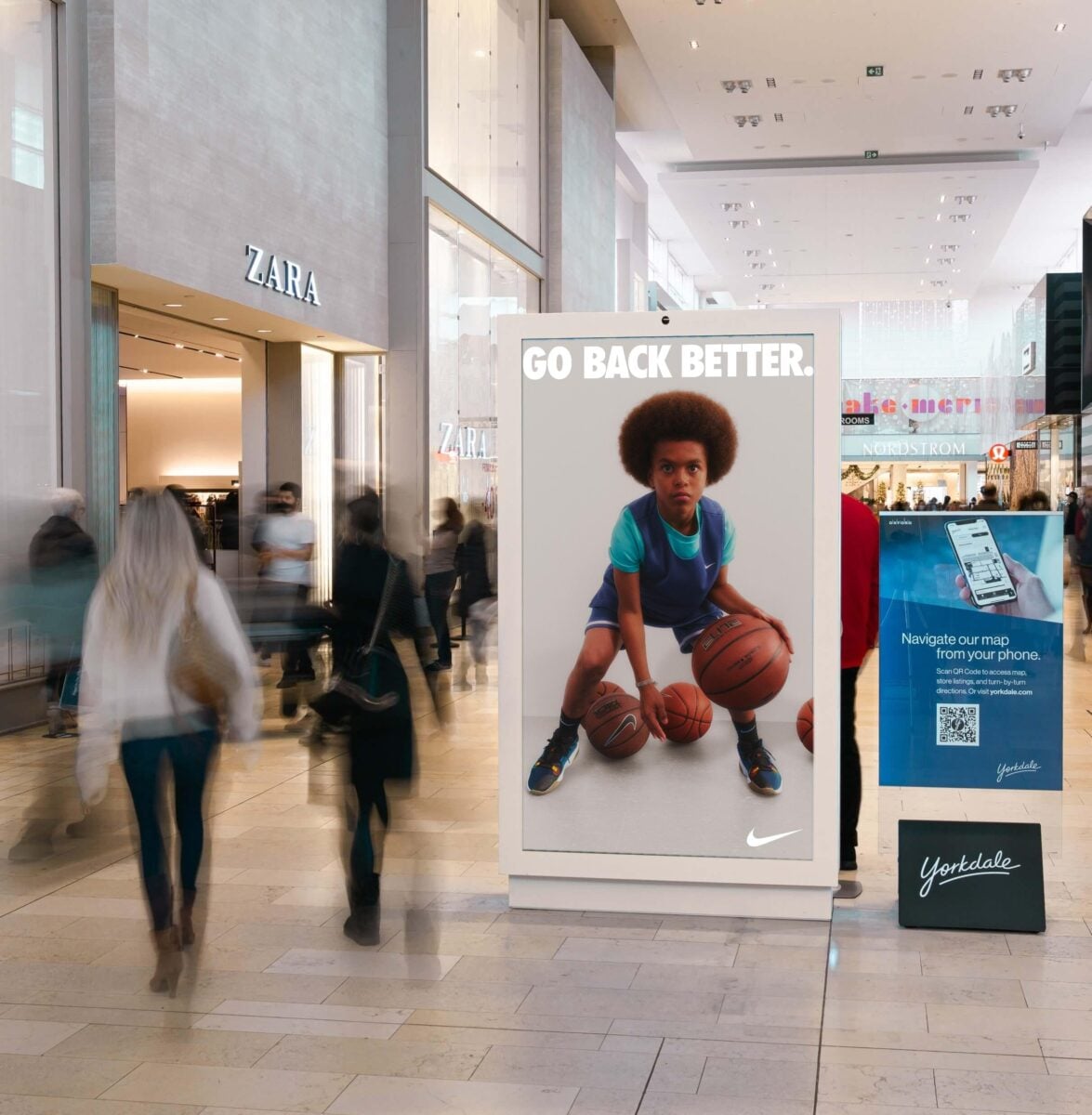
Q: How does digital out-of-home complement digital marketing during a busy retail season like back-to-school?
A: Consumers don’t experience marketing one channel at a time. They move seamlessly between physical and digital environments throughout the day, and the brands they remember are the ones that show up consistently across those experiences.
Search, retail media and social are highly effective at capturing demand when consumers are actively looking to make a purchase. Digital out-of-home helps shape that demand by building familiarity and trust while people are out living their daily lives, whether they’re commuting, shopping or spending time in their communities.
In fact, our research found that 62% of Canadians trust billboard advertising more than social media ads. That matters because trust influences the brands consumers remember and ultimately choose. When someone later encounters that same brand through search, retail media or social, it isn’t a first impression. It’s a familiar one. The strongest campaigns aren’t built around individual channels. They’re built around connected moments that work together to influence decisions.
Q: What should Canadian marketers keep in mind as they finalize their back-to-school campaigns?
A: The most effective back-to-school campaigns won’t be built around channels. They’lll be built around consumer behaviour. Consumers don’t separate their lives into online and offline experiences. Every interaction
contributes to how they perceive a brand, whether they’re researching products, commuting to work or walking through a shopping centre.
Back-to-school gives marketers an opportunity to be present throughout those moments, not just when someone is ready to buy. The brands that stand out will be the ones that create a consistent experience across every
stage of the consumer journey. When each channel builds on the next, brands become more familiar, more trusted and ultimately more likely to influence a purchase.
The brands that win won’t necessarily be the loudest. They’ll be the ones that show up consistently in the moments that matter most.
More from Retail Insider: