Brasa Peruvian Kitchen is opening a new location at Toronto Pearson Airport.
“We’re opening a location within a few weeks. We’re extremely proud of this achievement because we’re an emerging brand that was competing in a very competitive process to earn a retail location in Terminal 1,” said Founder and CEO Michel Falcon.
“We wanted to show that Brasa could bring something genuinely different to the airport. There are already plenty of familiar food options in airports, so our job was not to look like everyone else.
“Brasa sits at the intersection of Peruvian food, health and convenience. We serve food that is fast, but still has a strong point of view. You can get a bowl with 40 or 50 grams of protein, ingredients like quinoa, avocado and Peruvian sweety drop peppers from the Amazon, or a smoothie built around superfoods like maca and lucuma.

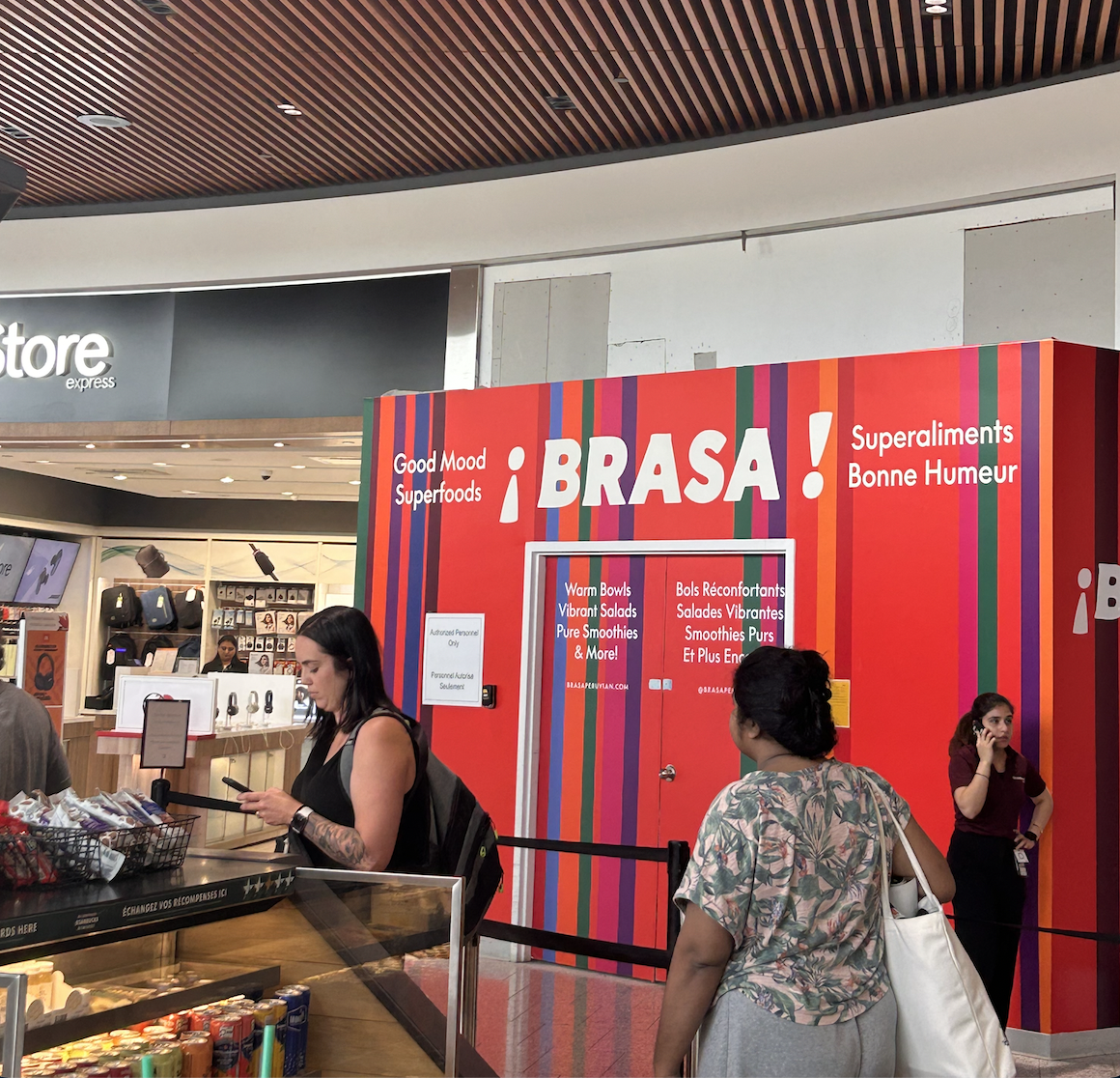
“I believe what ultimately helped us stand out was that Brasa has a very clear identity. The food is differentiated, the brand is colourful and energetic, and there is a real story behind it. Toronto Pearson gives us the opportunity to prove that the Brasa experience can translate successfully into an airport environment. I strongly believe Brasa has a place in every major metropolitan airport around the world.”
The brand has locations at: First Canadian Place (Toronto); Queen Street West (Toronto), One New York Plaza (FiDi, New York); Astoria (Queens, New York); and Midtown (3rd Ave, New York).
Falcon said the next move is a massive credibility moment for the brand.
“For an emerging brand, opening inside Toronto Pearson gives us exposure to millions of people who may have never heard of Brasa before.
Someone could discover us while travelling through Toronto and then encounter us again in another city later. It is also an important proof point for our growth strategy. We want Brasa to work in traditional street locations, office districts, airports and other high-volume environments,” he said.
“Toronto Pearson gives us the opportunity to prove that the brand can travel. Literally and figuratively.”
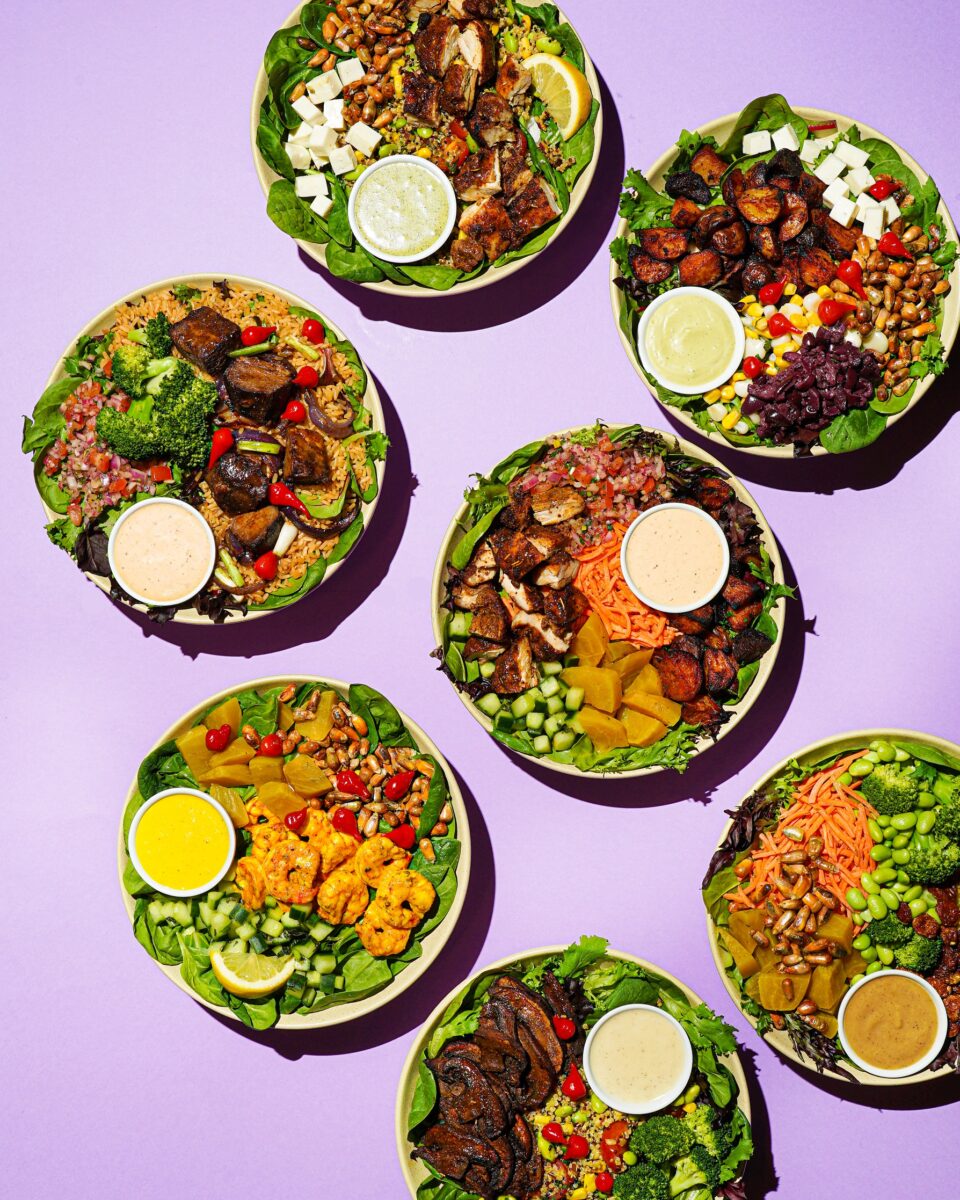
Falcon said Brasa is treating this expansion almost like a different operating model rather than simply a restaurant with more revenue.
“When you triple the revenue and introduce airport traffic, you must rethink everything from kitchen flow and prep capacity to training, scheduling, inventory and speed of service,” he explained.
“We are putting a lot more emphasis on systems and redundancy. At a smaller restaurant, you can sometimes solve a problem in the moment. At this scale, you have to design the operation so those problems are less likely to happen in the first place.
“We are also building a much larger team and making sure leadership is strong enough that the restaurant is not dependent on one or two people to operate successfully. The goal is to handle significantly more volume without losing the food quality or guest experience that built Brasa in the first place.”
For a location like Pearson, operating capability mattered more than anything, added Falcon.
“The Banmore Group, which operates Subway, Osmow’s and Booster Juice at Toronto Pearson, will be our operating partner and franchisee. I don’t use the word “partner” loosely. They truly define what partnership means. We needed a franchise partner who understood that this would not be a passive operation. Airports are complex environments. There are different staffing realities, security requirements, logistics and operating demands that you simply do not experience in a traditional restaurant,” he said.
“We have immense respect for the Banmore Group and their commitment to building a people-first culture and developing the right team. Most importantly, we wanted someone who understood that being a Brasa franchisee means being a steward of the brand. Growth is important to us, but I would rather grow slower with the right partners than grow quickly with the wrong ones.”
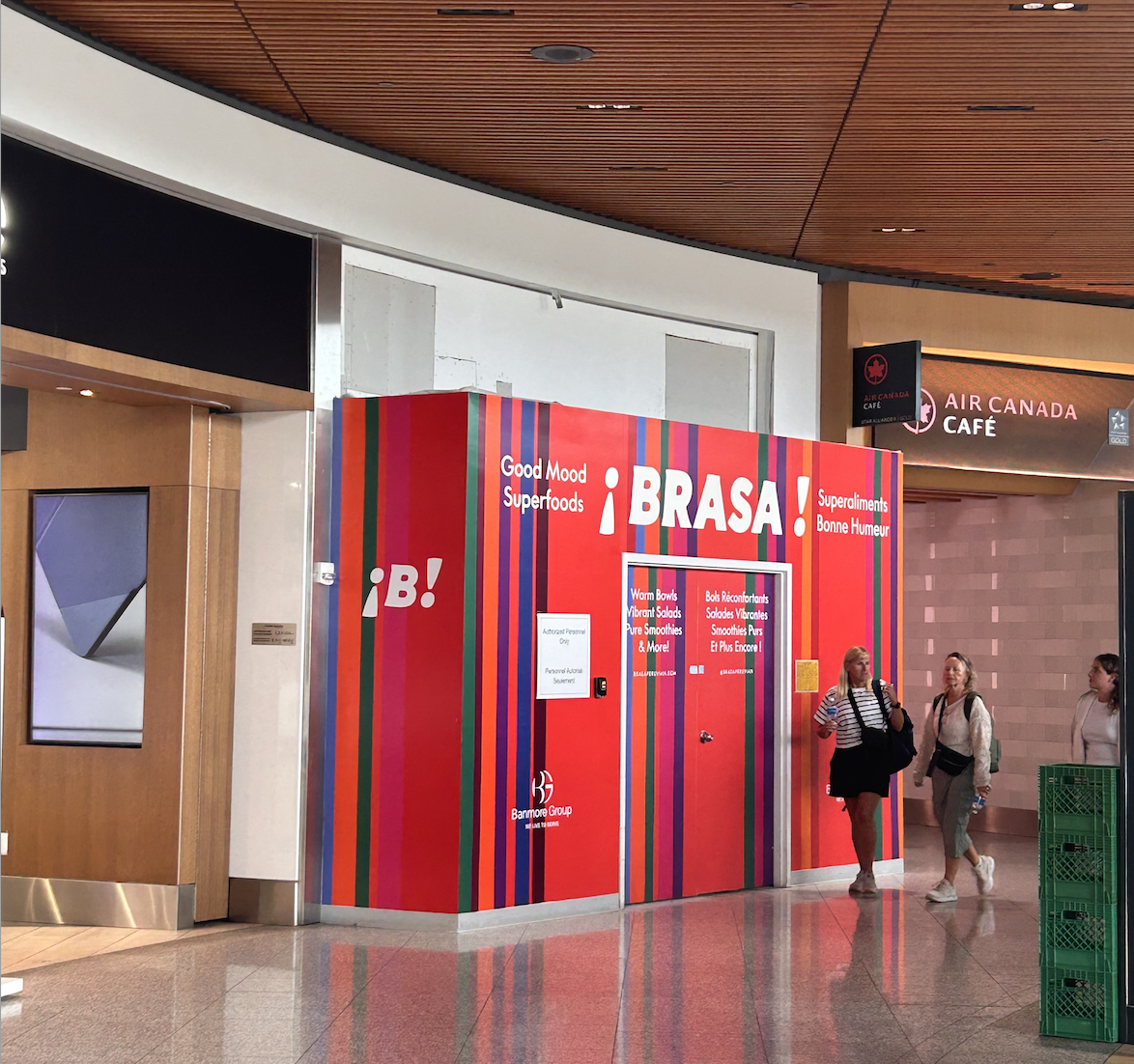
One of the biggest lessons Falcon has learned about scaling an emerging restaurant brand through the process of opening at one of Canada’s busiest airports is that you have to build the company before the opportunity arrives.
“A location like Toronto Pearson exposes every weakness in your business. If your recipes are not documented, your training is inconsistent, your supply chain is fragile or your brand standards live inside the founder’s head, scaling becomes very difficult,” said Falcon.
“We have had to ask ourselves whether Brasa can be taught, repeated and measured without me standing inside the restaurant. That is probably one of the biggest transitions every founder has to make. The other lesson is not to dilute what made people care about your brand in the first place.
“When companies start scaling, there can be a temptation to make everything more generic because generic feels easier to replicate. I believe the opposite. The bigger Brasa becomes, the more important it is that we protect the things that make us distinctly Brasa.”
More from Retail Insider: