HelloFresh is building out its ready-to-eat business in Canada as the global meal-delivery company puts greater emphasis on prepared food, longer-term customers and new distribution channels while navigating continued declines in its traditional meal-kit business.
The strategy is increasingly visible through Factor, HelloFresh’s prepared-meal brand, which opened a 50,000-square-foot kitchen and distribution centre in Calgary in June. The operation establishes a Western Canadian production base for Factor and supports its expansion into additional provinces as the brand moves toward nationwide availability. The facility is expected to create about 400 jobs.
The Canadian investment takes on greater significance following HelloFresh’s latest earnings call last week, when management outlined plans to expand its ready-to-eat business geographically and through additional sales channels. The company is working to make ready-to-eat profitable for the full year while investing in products intended to address demand for convenience, personalization and health-focused food.
Factor Builds Out Western Canadian Operations
The Calgary facility gives Factor localized production capacity in Western Canada rather than relying on longer-distance fulfillment. The operation includes commercial ovens, grills, braisers and blast-chilling systems, along with temperature-controlled production, storage and distribution areas.
Factor said when the facility opened that expansion into British Columbia and Saskatchewan was expected this fall. Parent company HelloFresh already has a substantial Canadian presence, saying its meal-kit service reaches approximately 95 per cent of the Canadian population and that the company employs more than 1,000 people across the country.
The Calgary project also received approximately $3.6 million in government support, including $2.3 million through Alberta’s Agri-Processing Investment Tax Credit and $1.3 million through the Sustainable Canadian Agricultural Partnership.
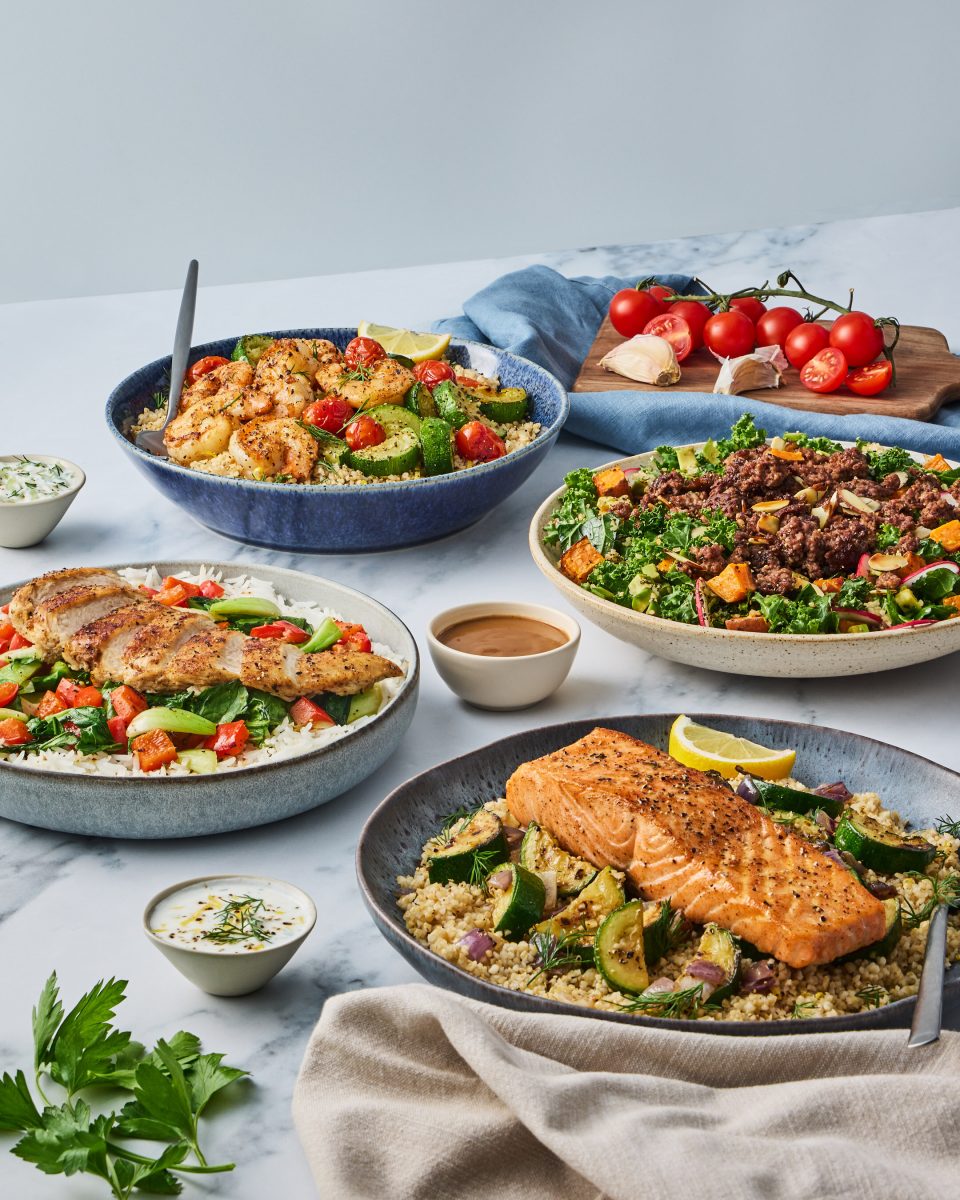
Factor occupies a different part of the meal-solutions market from HelloFresh’s core meal-kit offering. Rather than delivering ingredients and recipes for customers to prepare, Factor provides fully prepared refrigerated meals designed to be heated and eaten, giving HelloFresh access to additional eating occasions and consumers seeking convenience without meal preparation.
Ready-to-Eat Becomes a Larger Strategic Priority
HelloFresh’s second-quarter results show a ready-to-eat business that remains under pressure on revenue but is making progress toward profitability. Ready-to-eat revenue declined 8.4 per cent in constant currency during the quarter, while adjusted EBITDA was €13.1 million, representing a 3.0 per cent margin. For the first half, the segment’s adjusted EBITDA loss narrowed to €13.6 million from €26.4 million a year earlier.
HelloFresh said its U.S. ready-to-eat operation was close to breaking even during the first half and expects positive margins there during the second half. Management continues to target modest adjusted EBITDA profitability for the overall ready-to-eat business for the full year.
The company is simultaneously scaling Factor outside the U.S., including through new production infrastructure in Canada and Europe. CEO Dominik Richter said HelloFresh is deliberately prioritizing margins and product improvements before accelerating customer acquisition, part of a multi-year strategy that has already included significant reductions to its cost base.
HelloFresh said it was approximately 85 per cent through a €300-million efficiency program at the end of the first half. Some of those savings are being redirected toward product improvements intended to broaden the number of consumers and meal occasions its brands can serve.
Meal Kits Shift Toward a More Loyal Customer Base
HelloFresh’s traditional meal-kit business remains considerably larger, but its current trajectory helps explain the push into prepared food. Meal-kit revenue declined 8.9 per cent in constant currency during the second quarter. At the same time, existing customers are spending more and ordering more frequently. Average order value reached €64.50 during the quarter, up 7.1 per cent in constant currency, while management said first-half meal-kit order frequency increased 4.1 per cent.
Much of the revenue decline is tied to customer acquisition. HelloFresh has reduced marketing spending and tightened the return thresholds required before it will spend money attracting new subscribers. Group marketing expenditures fell 16.3 per cent year-over-year during the second quarter, faster than the decline in revenue.
Management said uncertainty around food, fuel and other operating costs during the first half made it more difficult to forecast returns from newly acquired customers. Rather than pursue subscriber growth at higher acquisition costs, HelloFresh has concentrated spending on customers and channels that meet its return requirements.
The result is fewer new customers entering the subscription business even as established customers demonstrate stronger spending and ordering behaviour. Over time, fewer new customers also means a smaller pool available to develop into long-term subscribers, making improved customer acquisition an important part of any return to revenue growth.
Higher-Income Families Anchor the Subscription Base
HelloFresh provided additional detail on the consumers who are staying with the service. Richter said long-tenured customers tend to come from the top 40 per cent of the income distribution, frequently live in multi-person households, often have children and show some overrepresentation in suburban areas.
The characteristics were discussed across HelloFresh’s business rather than specifically in Canada, but they provide insight into the consumer base supporting the subscription model during a period of cautious household spending.
Management said established customers tend to value the service for convenience, reduced food waste, recipe discovery and healthier eating. Consumers who have not already developed that habit appear more hesitant to begin a new subscription in an uncertain economic environment.
The shift toward longer-term customers has changed the composition of HelloFresh’s meal-kit revenue considerably. Customers who have used the service for more than four years generated 34 per cent of first-half meal-kit net revenue, compared with just 7 per cent in the first half of 2023.
HelloFresh Broadens the Meal Occasion
HelloFresh is also expanding its assortment in an effort to reach consumers beyond the traditional meal-kit occasion. The company has introduced lower-effort dinners using precut vegetables and premarinated proteins to reduce cooking time, while expanding protein choices and allowing customers to make more ingredient swaps within weekly menus. Factor has broadened its assortment with options including GLP-1-friendly recipes for consumers managing nutrition alongside the medications.
HelloFresh is also using customer ordering histories and onboarding information to personalize meal recommendations and has introduced more options aimed at households with children. Its recently launched CookBook allows users to save recipes found on social media or elsewhere online and convert them into HelloFresh-style recipe formats, with management saying more than three million recipes have been saved since launch.
The initiatives support HelloFresh’s stated ambition to become a “digital native CPG company,” positioning the business as a consumer-food platform built around data, direct customer relationships and multiple meal formats rather than a conventional meal-kit subscription service alone.
Ready-to-Eat Products Move Onto Retail Shelves
That broader strategy is also beginning to extend beyond HelloFresh’s direct-to-consumer model. Management said that following a successful trial during the first half of the year, HelloFresh is broadening retail-shelf distribution for its ready-to-eat products. The company did not identify the retailers or markets involved during the earnings call, and there was no indication that the initiative currently includes Canada.
Retail distribution could allow HelloFresh to reach consumers without requiring them to commit to recurring deliveries, while adding another sales and customer-acquisition channel alongside its digital platforms. It would also put its ready-to-eat products more directly alongside prepared foods and packaged meals sold by conventional grocery retailers.
The development is relevant to Canada because Factor is adding substantial production capacity here while its parent company experiments with broader distribution elsewhere. HelloFresh has not announced plans to put Factor products on Canadian grocery shelves, but the strategy shows the company testing how far the ready-to-eat business can extend beyond subscription delivery.
Competition Grows in Canada’s Prepared-Meal Market
Factor’s Western Canadian expansion comes as competition in the domestic prepared-meal market intensifies. Montreal-based WeCook announced its own major expansion in June, extending delivery into Winnipeg, Saskatoon, Regina, Edmonton, Calgary and Vancouver. The rollout gave WeCook a substantially broader national presence at almost the same time Factor was establishing Western Canadian production capacity in Calgary.
Goodfood is another established Canadian operator spanning meal kits and prepared-food offerings, while conventional grocery chains compete for many of the same meal occasions through prepared-food departments, refrigerated meals and other convenience offerings. That company recently went through financial troubles, indicating challenges in the industry.
The competitive landscape has expanded beyond the original meal-kit category. A Factor meal can compete with another direct-to-consumer prepared-meal service, but it can also replace a supermarket meal, restaurant takeout or food ordered through a delivery platform.
Federal packaged-food data illustrates the scale of the broader opportunity. Agriculture and Agri-Food Canada reported Canadian ready-meal retail sales of approximately $4.4 billion in 2023, considerably larger than the approximately $1.3 billion food-kit category. Those classifications extend well beyond subscription services such as Factor, but demonstrate the size of consumer spending around convenient prepared food.
Back-to-School Will Provide the Next Test
HelloFresh’s next major demand signal will come during the back-to-school period, which management described as one of its most important customer-acquisition windows of the year.
The company plans to use those results to determine whether product improvements are producing stronger new-customer conversion and how aggressively it should increase marketing. HelloFresh currently expects full-year constant-currency revenue performance to trend toward the lower end of its existing range while maintaining its adjusted EBITDA outlook.
The immediate challenge is rebuilding customer acquisition without sacrificing the economics of the business. HelloFresh has chosen to spend less aggressively while improving the proposition for existing customers, betting that stronger retention, higher order values and a broader range of meal formats can eventually support a return to growth.
Factor’s Canadian expansion gives that strategy a substantial physical foothold. With Western Canadian production now in place and national availability moving closer, HelloFresh is positioning its ready-to-eat business to compete across a wider portion of Canada’s convenience-food market than the meal-kit model that originally established the company here.