METRO Inc. is accelerating the expansion of its Food Basics discount banner in Ontario, with plans to convert 10 existing Metro supermarkets as consumers continue to prioritize value and the company adjusts its store network market by market.
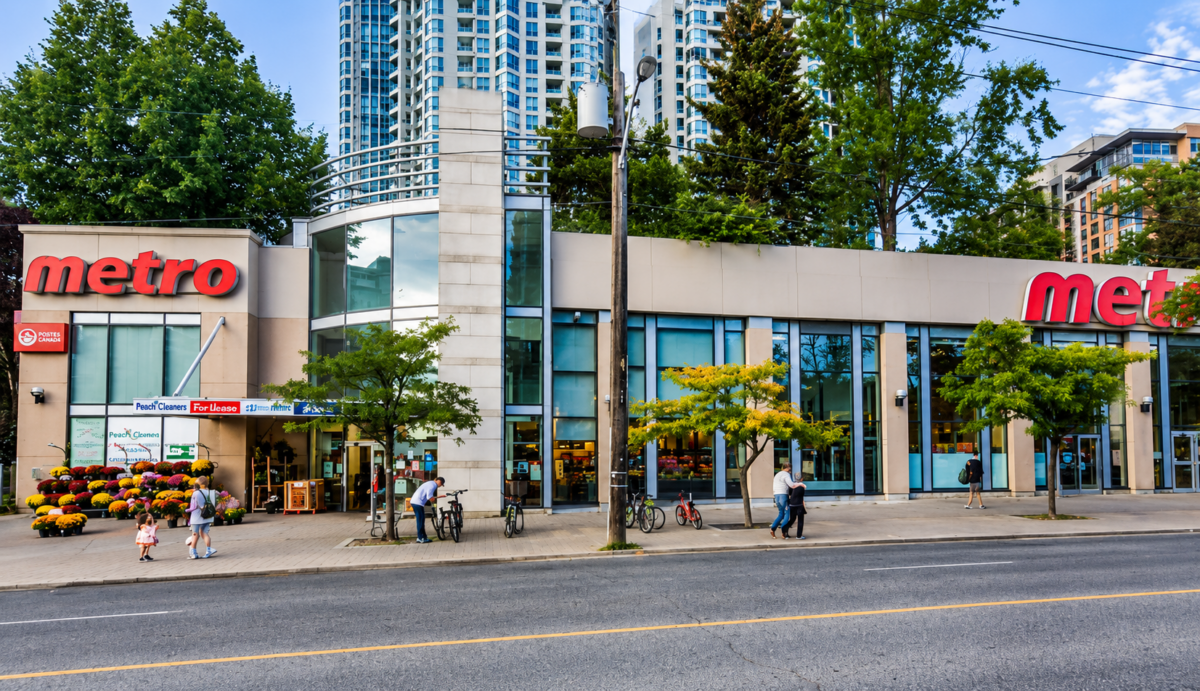
The conversions will take place across Ontario, including locations in the Greater Toronto Area, Ottawa and elsewhere in the province. Two have so far been identified: Metro Southgate in Ottawa and the Metro at 20 Church Avenue near Yonge and Finch in Toronto. METRO has not disclosed the remaining eight locations, saying stores and employees will be informed progressively as the program is rolled out.
The company is also planning to permanently close one additional, as-yet-unidentified Ontario store and a satellite warehouse as part of a broader network restructuring. METRO said the changes are intended to address customers’ continued search for value and strengthen its competitive position in targeted markets.
The moves come as discount grocery continues to capture more consumer spending. On METRO’s third-quarter earnings call Wednesday, Chief Operating Officer Marc Giroux said shopping patterns remain similar to recent quarters, with consumers purchasing proportionately more private-label products, participating in promotions and directing greater volume toward discount stores than conventional supermarkets.
“Consumers are focused on value,” Giroux told analysts, adding that METRO expects the trend to continue and is investing accordingly in what it considers the right store format for each market.
Food Basics Expected to Outperform Converted Metro Stores
METRO is positioning the 10 conversions as a targeted optimization of individual stores rather than a broad retreat from its conventional Metro banner.
President and CEO Eric La Flèche said the company continually evaluates its network and considers the most appropriate format for individual trade areas. For the 10 stores selected for conversion, management concluded that Food Basics provides a better fit for the markets they serve.

“If we’re deciding to convert a store, it’s because the store is not the right store for that market, and the store has not been performing as we would want to,” La Flèche told analysts.
METRO expects the conversions to increase sales and improve store contribution. Depending on the amount of construction required, an individual store could close for roughly two months during its transition, resulting in a temporary sales decline before reopening as Food Basics.
Once reopened, management expects the converted stores to generate higher sales than they did under the Metro banner, with further growth anticipated as the locations mature. The conversions are expected to begin improving store contribution in fiscal 2027, with benefits increasing over the following two years.
Toronto and Ottawa Stores Among First Conversions
The Metro at 20 Church Avenue in North York, near Yonge Street and Finch Avenue, is one of the stores slated to become Food Basics. METRO has confirmed the location as part of the 10-store program. The existing supermarket is scheduled to close August 13, with Food Basics expected to open at the site later in the fall.
METRO has also confirmed that Metro Southgate in Ottawa, at 2515 Bank Street, will be converted. La Flèche said during the earnings call that the Ottawa conversion is expected to open by the end of the current fiscal year.
The company has not identified the remaining eight stores. La Flèche said some locations had recently been advised or would be informed shortly, but METRO was withholding further details until affected employees had been notified. He said the conversions include stores in the GTA as well as other parts of Ontario.
The restructuring also has employment implications. METRO has not disclosed how many workers will ultimately be affected, but said employees at the Toronto and Ottawa stores have options under their respective collective agreements. Some employees will work at the incoming Food Basics stores, while others may pursue different options available under those agreements.
METRO recorded $25.7 million in restructuring expenses during the third quarter, primarily related to employee termination benefits, restoration and site-closure costs, and lease-related expenses. Those costs apply to the broader restructuring program, which includes the 10 conversions, the separate Ontario store closure, the satellite warehouse closure and changes to the company’s Montreal e-commerce operation.
Food Basics Network Continues to Grow
The 10 conversions build on several years of expansion for METRO’s discount banners. Over the past three years, the company has added 31 discount locations through new stores and conversions, bringing Food Basics to 155 stores in Ontario and Super C to 121 in Quebec. Management said customers have responded well to the discount formats and that new and converted locations are generating encouraging sales results and returns.
METRO is also on track to open approximately a dozen new or converted discount stores during fiscal 2026. Five discount stores opened during the third quarter, including one conversion and one relocation.
The expansion extends a strategy already underway before the latest restructuring, with METRO directing more of its store investment toward discount formats as consumers emphasize price and value. The latest 10-store program adds another dimension by repositioning existing conventional supermarkets in markets where management believes Food Basics can generate stronger sales and returns.
Ontario Grocery Market Remains Highly Competitive
The shift is taking place against a highly competitive grocery backdrop in Ontario. La Flèche said METRO is pleased with its business in the province and is holding market share, while acknowledging continued competition for consumer spending.
Population growth has also slowed considerably while grocery square footage continues to expand. La Flèche said population growth is now “very small or flat,” adding to competitive conditions as retailers pursue growth in the market.
La Flèche rejected the suggestion that the 10 conversions were simply a reaction to competing discount stores opening nearby. He described the decisions as part of METRO’s ongoing review of individual markets and store performance.
“This was a good time to relook at the network as we were preparing the plans for next year,” La Flèche said. “For those 10 locations, we feel discount’s the way to go.”
Broader Network Changes Underway
The Ontario conversions are part of a wider effort by METRO to adjust its network and lower costs in areas where consumer behaviour has changed. In Quebec, the company will close its dedicated Montreal e-commerce fulfilment centre and shift to store-based picking supported by third-party delivery. METRO said growing demand for same-day grocery delivery makes the store network better suited to fulfil online orders while reducing the fixed costs associated with a dedicated facility.
The overall network optimization program is expected to generate approximately $15 million in recurring annual after-tax earnings by the end of fiscal 2028, with about half of the benefit expected by the end of fiscal 2027. Management said roughly half of the eventual improvement should come from increased contribution at the converted Food Basics stores and half from the lower-cost e-commerce fulfilment model.
METRO expects the Ontario restructuring to be completed by the end of fiscal 2027. For now, eight of the 10 Metro locations slated for conversion remain undisclosed, with the company planning to identify stores progressively as affected employees are informed.